PGMCC's 2014 reading Volume ii
This is a continuation of the topic PGMCC's 2014 reading.
This topic was continued by PGMCC's 2015 reading (Very existentialist title.).
Talk The Green Dragon
Join LibraryThing to post.
This topic is currently marked as "dormant"—the last message is more than 90 days old. You can revive it by posting a reply.
1pgmcc
The Magician's Wife by Brian Moore

This is the first Brian Moore novel I have read and, it appears, it was the last novel he wrote.
I picked it up in a bargain bookstore and bought it as a first sampling of Brian Moore’s writing. The picture on the cover and the title led me to believe it was a medieval murder mystery but I was wrong. I discovered I was wrong in quite a pleasant way.
As I started reading the book I realised it was set in 1850s France and written, as the title might suggest, from the viewpoint of a woman married to a magician. As the story unfolded I learnt that the magician and his wife lived near Tours, the magician had a workshop where he had people make items to his design, and that he was marvellous at making automata. This was enough information to raise my suspicions. The details of the magician’s life struck me as familiar. Although the character of the magician in the book is called Harry Lambert his life reminded me of the details I had learnt during my visits to “La Maison de la Magie” (The house of the magician) in Blois, France, less than an hour’s drive East of Tours.
La Maison de la Magie is a museum containing the magic and automata of the great French magician Robert-Houdin, the man who so impressed another young magician that he used the name Houdini for his stage name, in honour of the French master.
It took very little effort in this Internet day to discover that Brian Moore had based his character on Robert-Houdin and that the main action of the story was based on Robert-Houdin’s journey to Algeria at the request of Napoleon III to impress the local population with his magic tricks and to undermine the local religious leaders who were drumming up resistance to France and claiming to work miracles.
Moore has played around with some of the facts of the journey to France, but the basic story is relatively intact. At the end of the day the novel is fiction, but with the aid of readily available material on the Internet I was able to see where the fact ended and the fantasy began.
This was an enjoyable read and I feel anyone wanting to get a sense of life in the court of Napoleon III could do worse than read this book. Reading this prompted me to delve into the history of Algeria a little more and a book that does that cannot be regarded as bad.

This is the first Brian Moore novel I have read and, it appears, it was the last novel he wrote.
I picked it up in a bargain bookstore and bought it as a first sampling of Brian Moore’s writing. The picture on the cover and the title led me to believe it was a medieval murder mystery but I was wrong. I discovered I was wrong in quite a pleasant way.
As I started reading the book I realised it was set in 1850s France and written, as the title might suggest, from the viewpoint of a woman married to a magician. As the story unfolded I learnt that the magician and his wife lived near Tours, the magician had a workshop where he had people make items to his design, and that he was marvellous at making automata. This was enough information to raise my suspicions. The details of the magician’s life struck me as familiar. Although the character of the magician in the book is called Harry Lambert his life reminded me of the details I had learnt during my visits to “La Maison de la Magie” (The house of the magician) in Blois, France, less than an hour’s drive East of Tours.
La Maison de la Magie is a museum containing the magic and automata of the great French magician Robert-Houdin, the man who so impressed another young magician that he used the name Houdini for his stage name, in honour of the French master.
It took very little effort in this Internet day to discover that Brian Moore had based his character on Robert-Houdin and that the main action of the story was based on Robert-Houdin’s journey to Algeria at the request of Napoleon III to impress the local population with his magic tricks and to undermine the local religious leaders who were drumming up resistance to France and claiming to work miracles.
Moore has played around with some of the facts of the journey to France, but the basic story is relatively intact. At the end of the day the novel is fiction, but with the aid of readily available material on the Internet I was able to see where the fact ended and the fantasy began.
This was an enjoyable read and I feel anyone wanting to get a sense of life in the court of Napoleon III could do worse than read this book. Reading this prompted me to delve into the history of Algeria a little more and a book that does that cannot be regarded as bad.
2pgmcc
INTENDED READS 2014
Title Author Status/end date
Longsword Thomas Leland
Benedict Kavanagh George A. Birmingham
The Street of Crocodiles & Sanatorium Under the Sign of the Hourglass Bruno Schulz
A Little History of Science William Bynum Reading
*The Golem Gustav Meyrink 18/02/2014 262pages
Stasiland Anna Funder Reading
The Bold Fenian Men Robert Kee
Red Plenty Francis Spuffoord
*The Red Commissar Jaroslav Hasek 10/11/2014 283pages
The House by the Churchyard Joseph Sheridan Le Fanu
The Planets by Dava Sobel Reading
The Conspiracy Against the Human Race by Thomas Ligotti
Gormenghast by Mervyn Peake Re-reading
The Lathe of Heaven by Ursula K. Le Guin
*The Siege by Arturo Perez Reverte 08/01/2014 563pages
S. by Doug Dorst & J J Abrams Reading
****Books below this line were added after the initial list was posted on 31/12/2013****
*The Return by Walter De La Mare 16/04/2014 298pages
The World According to Garp by John Irving
*The Eyre Affair by Jasper Fforde 19/01/2014 373pages
*Data Science for Business 04/01/2014 414pages
*Freaky Deaky by Elmore Leonard 11/01/2014 320pages
*Consider Phlebas by Iain M Banks A re-read: 28/01/2014 471pages
*Scapegoat by Daphne Du Maurier LT Recommendation from @MrsLee 31/03/2014 373pp
*The Stars My Destination by Alfred Bester 03/02/2014 258pages
*Mr Penumbra's 24 Hour Bookstore by Robin Sloan Recommended by many friends on LT 08/02/2014 288pp
*Doctor Who: Keeping up with the Joneses by Nick Harkaway 08/02/2014 62pages
*Dixon Grace 1.9.7 Hamburg by Alexa Camouro 26/02/2014 364pages
*Gone Girl by Gillian Flynn 07/03/2014 463pages
*Norwegian Wood by Haruki Murakami 15/03/2014 389pages
*London Falling by Paul Cornell 23/03/2014 416pages
*A Long Long way by Sebastian Barry 09/04/2014 304pages
*Kafka on the Shore by Haruki Murakami 24/04/2014 504pages
*Way Station by Simak 23/05/2014 189pges
*Descent by Ken MacLeod 05/05/2014 403pages
*Three Days to Never by Tim Powers 20/05/2014 420pages
*TigerMan by Nick Harkaway 02/06/2014 372pages
*Veritas by Monaldi & Sorti 10/07/2014 634pages
*A Most Wanted Man by John Le Carré 15/07/2014 416pages
*The Magician's Wife by Brian Moore 22/07/2014 262pages
*Roadside Picnic by Arkady & Boris Strugatsky 31/07/2014 209pages
*Excession by Iain M. Banks 28/08/2014 455pages
*Kill List by Frederick Forsyth 02/09/2014 395pages
*The Girl with all the Gifts by M.R. Carey 14/09/2014 460pages
*Colorless Tsukuru Tazaki and his years of pilgrimage by Haruki Murakami 18/09/2014 298pages
*Dreams of Shadow and Smoke edited by Brian J. Showers & James Rockhill 26/09/2014 195pages
*Ablutions by Patrick De Witt 03/10/2014 164pages
*Inversions by Iain M Banks 13/10/2014 346pages
*Cold Hand in Mine by Robert Aickman 25/10/2014
*The Turn of the Screw by Henry Jamse 29/10/2014 93pages
*Jamaica Inn by Daphne Du Maurier 18/11/2014 302pages
*The Woman in Black by Susan Hill 21/11/2014 200pages
*Dark Entries by Robert Aickman 07/12/2014 238pages
*Hard-Boiled Wonderland and the End of the World by Haruki Murakami 25/12/2014 400pages
-
The above list when posted on 31st December, 2013, contained mostly the books that were planned for 2013 and were either not started or were unfinished at the end of the year. As with the list of intended reads for 2013, the actual books read may differ from the books planned for reading in 2014.
Title Author Status/end date
Longsword Thomas Leland
Benedict Kavanagh George A. Birmingham
The Street of Crocodiles & Sanatorium Under the Sign of the Hourglass Bruno Schulz
A Little History of Science William Bynum Reading
*The Golem Gustav Meyrink 18/02/2014 262pages
Stasiland Anna Funder Reading
The Bold Fenian Men Robert Kee
Red Plenty Francis Spuffoord
*The Red Commissar Jaroslav Hasek 10/11/2014 283pages
The House by the Churchyard Joseph Sheridan Le Fanu
The Planets by Dava Sobel Reading
The Conspiracy Against the Human Race by Thomas Ligotti
Gormenghast by Mervyn Peake Re-reading
The Lathe of Heaven by Ursula K. Le Guin
*The Siege by Arturo Perez Reverte 08/01/2014 563pages
S. by Doug Dorst & J J Abrams Reading
****Books below this line were added after the initial list was posted on 31/12/2013****
*The Return by Walter De La Mare 16/04/2014 298pages
The World According to Garp by John Irving
*The Eyre Affair by Jasper Fforde 19/01/2014 373pages
*Data Science for Business 04/01/2014 414pages
*Freaky Deaky by Elmore Leonard 11/01/2014 320pages
*Consider Phlebas by Iain M Banks A re-read: 28/01/2014 471pages
*Scapegoat by Daphne Du Maurier LT Recommendation from @MrsLee 31/03/2014 373pp
*The Stars My Destination by Alfred Bester 03/02/2014 258pages
*Mr Penumbra's 24 Hour Bookstore by Robin Sloan Recommended by many friends on LT 08/02/2014 288pp
*Doctor Who: Keeping up with the Joneses by Nick Harkaway 08/02/2014 62pages
*Dixon Grace 1.9.7 Hamburg by Alexa Camouro 26/02/2014 364pages
*Gone Girl by Gillian Flynn 07/03/2014 463pages
*Norwegian Wood by Haruki Murakami 15/03/2014 389pages
*London Falling by Paul Cornell 23/03/2014 416pages
*A Long Long way by Sebastian Barry 09/04/2014 304pages
*Kafka on the Shore by Haruki Murakami 24/04/2014 504pages
*Way Station by Simak 23/05/2014 189pges
*Descent by Ken MacLeod 05/05/2014 403pages
*Three Days to Never by Tim Powers 20/05/2014 420pages
*TigerMan by Nick Harkaway 02/06/2014 372pages
*Veritas by Monaldi & Sorti 10/07/2014 634pages
*A Most Wanted Man by John Le Carré 15/07/2014 416pages
*The Magician's Wife by Brian Moore 22/07/2014 262pages
*Roadside Picnic by Arkady & Boris Strugatsky 31/07/2014 209pages
*Excession by Iain M. Banks 28/08/2014 455pages
*Kill List by Frederick Forsyth 02/09/2014 395pages
*The Girl with all the Gifts by M.R. Carey 14/09/2014 460pages
*Colorless Tsukuru Tazaki and his years of pilgrimage by Haruki Murakami 18/09/2014 298pages
*Dreams of Shadow and Smoke edited by Brian J. Showers & James Rockhill 26/09/2014 195pages
*Ablutions by Patrick De Witt 03/10/2014 164pages
*Inversions by Iain M Banks 13/10/2014 346pages
*Cold Hand in Mine by Robert Aickman 25/10/2014
*The Turn of the Screw by Henry Jamse 29/10/2014 93pages
*Jamaica Inn by Daphne Du Maurier 18/11/2014 302pages
*The Woman in Black by Susan Hill 21/11/2014 200pages
*Dark Entries by Robert Aickman 07/12/2014 238pages
*Hard-Boiled Wonderland and the End of the World by Haruki Murakami 25/12/2014 400pages
-
The above list when posted on 31st December, 2013, contained mostly the books that were planned for 2013 and were either not started or were unfinished at the end of the year. As with the list of intended reads for 2013, the actual books read may differ from the books planned for reading in 2014.
4pgmcc
>3 hfglen: I see where you are coming from but while the magician created automata they were not a significant part in either the novel version of the story or the real life activities of Robert-Houdin in Africa.
Interestingly, the French film director, Georges Méliès, bought Robert-Houdin's home from one of the magician's descendants. The home had a theatre which was used by Robert-Houdin for performances and Méliès used it to show his films. The recent film, "Hugo", is about the life of Georges Méliès and it features an automaton that can write with a pen. This was based on an automaton that Robert-Houdin had built.
Interestingly, the French film director, Georges Méliès, bought Robert-Houdin's home from one of the magician's descendants. The home had a theatre which was used by Robert-Houdin for performances and Méliès used it to show his films. The recent film, "Hugo", is about the life of Georges Méliès and it features an automaton that can write with a pen. This was based on an automaton that Robert-Houdin had built.
5DugsBooks
>1 pgmcc: Great review! - I surmise I am better educated by just reading your evaluation of the book than by reading the book itself!
6Meredy
>1 pgmcc: Minor crab: I'm getting a little tired of titles like this that define somebody by somebody else's role: The Time Traveler's Wife. The Bonesetter's Daughter. The Orphan Master's Son. They make it sound as if the character's main reason for existence were to reflect somebody else.
7SylviaC
>6 Meredy: I agree. It's become fashionable to give books that kind of title, and it puts me right off.
8pgmcc
>5 DugsBooks: I wish that were true, but thank you for the comment.
I must say I love it when a book, albeit fiction, prompts me to look up the facts of an historical event or period. At school I did not do very well at history and dropped it as a subject at the earliest opportunity.
I must say I love it when a book, albeit fiction, prompts me to look up the facts of an historical event or period. At school I did not do very well at history and dropped it as a subject at the earliest opportunity.
9pgmcc
>6 Meredy: & >7 SylviaC: I hear what you are saying and can see your point. I suspect, having looked at the books you have referred and considered others with similar titles, that the trend has more than one cause. One could be the author trying to tell a story, be it fictional or factual, from a, if you excuse the pun, novel point of view, or to give it a twist by not focusing on the key person of interest.
I must admit I loved The Time Traveller's Wife and I would say the "normal" person in the story was the one who anchored the reader in the real world and the time traveller was used to demonstrate the effect of unusual behaviour on emotions. With The Magician's Wife I feel Brian Moore was trying to demonstrate how he could write a female character (not perfectly I might add) while telling a tale about a real person, albeit a story that did not reflect the real events precisely.
Other people may feel they are waving the flag for the unnoticed person in the shadow of a famous person.
Now that you bring it to my attention I do get the feeling that there has been quite a large number of such titles over the past decade or so.
Interesting point!
(Of course, I will be late going to bed tonight because will have me trawling through my library compiling a list of these titles.)
I must admit I loved The Time Traveller's Wife and I would say the "normal" person in the story was the one who anchored the reader in the real world and the time traveller was used to demonstrate the effect of unusual behaviour on emotions. With The Magician's Wife I feel Brian Moore was trying to demonstrate how he could write a female character (not perfectly I might add) while telling a tale about a real person, albeit a story that did not reflect the real events precisely.
Other people may feel they are waving the flag for the unnoticed person in the shadow of a famous person.
Now that you bring it to my attention I do get the feeling that there has been quite a large number of such titles over the past decade or so.
Interesting point!
(Of course, I will be late going to bed tonight because will have me trawling through my library compiling a list of these titles.)
10pgmcc
Well, I looked through half my catalogue and this is what I came up with:
Uncle Silas by Joseph Sheridan Le Fanu
The Bankers’ New Clothes by Anat Admati
My Cousin Rachel by Daphne du Maurier
The Troublesome Offspring of Cardinal Guzman by Louis De Bernieres
Minnie’s Bishop by George A. Birmingham
Lalage’s Lovers by George A. Birmingham
Laura’s Bishop by George A. Birmingham
The Woman Who Shot Mussolini by Frances Stonor Saunders
The Woodcutter’s Dog by Nodier Charles
Now I'm going to bed. Night! Night!
Uncle Silas by Joseph Sheridan Le Fanu
The Bankers’ New Clothes by Anat Admati
My Cousin Rachel by Daphne du Maurier
The Troublesome Offspring of Cardinal Guzman by Louis De Bernieres
Minnie’s Bishop by George A. Birmingham
Lalage’s Lovers by George A. Birmingham
Laura’s Bishop by George A. Birmingham
The Woman Who Shot Mussolini by Frances Stonor Saunders
The Woodcutter’s Dog by Nodier Charles
Now I'm going to bed. Night! Night!
11MrsLee
>8 pgmcc: Best use for smart phones ever, instant research at hand, enabling us to look things up without having to set down our books!
12pgmcc
>11 MrsLee: You must be working the late shift or else you cannot sleep with the heat.
I use my phone when I am in a bookshop contemplating a purchase and suspect I might already own the book in question. It has saved me a fortune.
I use my phone when I am in a bookshop contemplating a purchase and suspect I might already own the book in question. It has saved me a fortune.
13hfglen
>8 pgmcc: "I ... dropped (history) as a subject at the earliest opportunity."
Me too. Fortunately I later discovered the yawning chasm, not just a gap pr a disconnect, between school history and the real thing.
Me too. Fortunately I later discovered the yawning chasm, not just a gap pr a disconnect, between school history and the real thing.
14pgmcc
>13 hfglen: Having grown up in Belfast I studied under the UK education system and the history we covered was primarily English history. Irish history was not given much time in the curriculum and what Irish history there was in the courses tended to have slant that didn't quite match the reality, as you indicate. Orwell was right when he wrote, "Whoever controls the present controls the past. Whoever controls the past controls the future." (Paraphrased somewhat I would suggest.)
I believe the ever increasing dependence on electronic documents increases the ability of powerful vested interests to rewrite history, and hence shape the future.
I believe the ever increasing dependence on electronic documents increases the ability of powerful vested interests to rewrite history, and hence shape the future.
15MrsLee
>12 pgmcc: - I did work a late shift, but I was posting that at 11:34pm. :)
Ditto on history in school. I used to fall asleep in history class, except when the teacher was slamming his binder down on my desk or throwing chalk at me, but now I love to read it.
Ditto on history in school. I used to fall asleep in history class, except when the teacher was slamming his binder down on my desk or throwing chalk at me, but now I love to read it.
16Jim53
>10 pgmcc: Local author Margaret Maron writes a series of mysteries about a female southern judge; the first, which introduces her, is
Bootlegger's Daughter. It's an interesting family. The first Mary Russell is The Beekeeper's Apprentice. Maybe this is a way to introduce characters? And don't forget the classic The Magician's Nephew.
Bootlegger's Daughter. It's an interesting family. The first Mary Russell is The Beekeeper's Apprentice. Maybe this is a way to introduce characters? And don't forget the classic The Magician's Nephew.
17Meredy
>16 Jim53: Yes, that's the pattern: not just a relationship or the use of a possessive but something that fits the formula: "The X's Y" -- that is, "The {role | profession | title}'s {noun identifying another person, expressed in terms of personal relationship}."
18pgmcc
No apologies for this "Proud Dad" post:
My son and his team are in Seattle at the World Finals of the Microsoft Imagine Cup. They have won Third Prize. Yay!
The App they developed assists people with disabilities to assess the accessibility of hotel and other premises before visiting them. It is called Access Earth.
Yay!
http://www.windowsphone.com/en-ie/store/app/access-earth/b94c5120-8830-4124-989d...
My son and his team are in Seattle at the World Finals of the Microsoft Imagine Cup. They have won Third Prize. Yay!
The App they developed assists people with disabilities to assess the accessibility of hotel and other premises before visiting them. It is called Access Earth.
Yay!
http://www.windowsphone.com/en-ie/store/app/access-earth/b94c5120-8830-4124-989d...
19Jim53
>18 pgmcc: that's wonderful!
23MrsLee
>18 pgmcc: Good for him! That is terrific. :D
24hfglen
>18 pgmcc: One-mendous, two-mendous, TREE-mendous! Congratulations, McClean team!
25imyril
>18 pgmcc: that's awesome (both the app itself, and the prize it very much deserves - the ones that came first and second better have been staggeringly amazing in their humanity as well as execution). No apologies for pride needed - group cheer! HOORAY!
26pgmcc
>19 Jim53: >21 suitable1: >22 SylviaC: >23 MrsLee: >24 hfglen: >25 imyril:
Thank you for all the positive comments that I will pass on to Access Earth...and my son. :-)
One last moment of proud dad madness: a video of the team receiving their prize. My son is the one on the left, not wearing the team T-shirt.
https://www.youtube.com/watch?v=iL4-N-AvLKU
Thank you for all the positive comments that I will pass on to Access Earth...and my son. :-)
One last moment of proud dad madness: a video of the team receiving their prize. My son is the one on the left, not wearing the team T-shirt.
https://www.youtube.com/watch?v=iL4-N-AvLKU
29pgmcc
>28 MrsLee: Flattery will get you everywhere.
30Meredy
Huge congratulations to all your clan, and especially to the proud son and his crew. Well done!
32sandragon
I'm late to the party, but let me add my congratulations as well. Well done Clan McLean!!
33Sakerfalcon
Yes, what a great result!
34pgmcc
Thank you, everyone for the words of congratulations. I have passed them on to my son and his team mates.
Now to get this thread back to its real purpose, books. I brought Iain M. Banks' Excession with me to Donegal last weekend. Due to the scenery and good company (my sister, her husband, their two boys and their wives, and the four grandchildren) I had a great time but did not read a single page. A flavour of the weekend can be gained from the view from my bedroom window:

and the sights of the walks we took.


I promise, the next post will say more about books. Honest!
Now to get this thread back to its real purpose, books. I brought Iain M. Banks' Excession with me to Donegal last weekend. Due to the scenery and good company (my sister, her husband, their two boys and their wives, and the four grandchildren) I had a great time but did not read a single page. A flavour of the weekend can be gained from the view from my bedroom window:

and the sights of the walks we took.


I promise, the next post will say more about books. Honest!
37Athabasca
Oh my! Great pictures. I was born in Donegal and I'm glad you saw it at its best! Thanks.
38pgmcc
>37 Athabasca: I have been going to Donegal for over forty years and I love it. As a teenager I got to see most of it from the passenger seat of a lorry distributing cement across the county. As a student I geologically mapped North West Inishowen. Donegal is the most beautiful county. Also, it is through to the All Ireland semi-final playing Dublin for a place in the final. Up Donegal!
39pgmcc
I have actually been doing a bit of reading. I finished Roadside Picnic and am currently reading Iain M. Banks' Excession.
Today I acquired The Truth about the Harry Quebert Affair and the new Haruki Murakami novel, Colorless Tsukuru Tazaki and his Years of Pilgrimage.
There, I did it: a post about books.
Today I acquired The Truth about the Harry Quebert Affair and the new Haruki Murakami novel, Colorless Tsukuru Tazaki and his Years of Pilgrimage.
There, I did it: a post about books.
40pgmcc
I finished Excession today. As with Consider Phlebas I picked up a lot more during this re-read than I did originally. Notes have been taken and a report will be forthcoming...soon...I hope.
I also want to produced some comments on Way Station and Roadside Picnic.
On the weekend just past I attended Shamrokon, the 2015 Eurocon, i.e. the European Science Fiction Convention which, despite the description, includes horror and fantasy. A report will be produced...sooo...
I did acquire books over the weekend and these are listed below:
Reflections in a Glass Darkly: Essays on J. Sheridan Le Fanu
Get it Down by Martin Hayes
Dreams and Shadows Stories for J.S. Le Fanu edited by Brian J. Showers and Jim Rockhill
The Silver Voices by John Howard
The Girl with all the Gifts by M.R. Carey
Kill Your Boss by Shane Kuhn
I also picked up issue 44 of Albedo1 magazine.
I also had the pleasure of meeting @Ringman and the two members of the @anglemark consortium, both the 90% and the 10% posters. Unfortunately I failed to meet up with @amysisson.
I also want to produced some comments on Way Station and Roadside Picnic.
On the weekend just past I attended Shamrokon, the 2015 Eurocon, i.e. the European Science Fiction Convention which, despite the description, includes horror and fantasy. A report will be produced...sooo...
I did acquire books over the weekend and these are listed below:
Reflections in a Glass Darkly: Essays on J. Sheridan Le Fanu
Get it Down by Martin Hayes
Dreams and Shadows Stories for J.S. Le Fanu edited by Brian J. Showers and Jim Rockhill
The Silver Voices by John Howard
The Girl with all the Gifts by M.R. Carey
Kill Your Boss by Shane Kuhn
I also picked up issue 44 of Albedo1 magazine.
I also had the pleasure of meeting @Ringman and the two members of the @anglemark consortium, both the 90% and the 10% posters. Unfortunately I failed to meet up with @amysisson.
41imyril
>40 pgmcc: I'm finding this reread fascinating - although I'm about to get onto Culture books I have only ever read once before, so I wonder whether I'll continue to pick things up or get distracted by unfamiliar detail, such as plot ;)
42pgmcc
I first read Excession when it was first published in 1996. Thinking back to that first read I remember thinking it was, “OK!” In the intervening years I have matured and my reread has revealed more meaning in the book than I originally observed. (No big surprise there.)
My original impression of Iain’s Science Fiction books as I read them when the came out was that they were primarily a good yarn, always had a sex scene, and somewhere along the way the reader would find a small bit of political commentary. I know Iain always wanted to write books with a political message but he said at one stage that he was never happy that he succeeded on this point. My rereading of Excession and Consider Phlebas with my more mature eye tells me that he was more successful than his comments would suggest and than I had initially discerned.
The plot in Excession is almost irrelevant. It is simply there as a structure on which to hang observations of human and political behaviour that are relevant for any age. It creates the scenarios that enable the author to point out certain political stances and actions. The first such commentary I noted was on page 294 in which Iain humorously presents the all too common position of, “Might is right!” albeit presented with all due politeness and civility. In the extract below the commander of a force taking over an orbital is laying down the law to the inhabitants who are now his prisoners. War had only been declared between the two factions a few hours before this episode. The commander and his invading force had arrived at the orbital the previous night as guests and had been treated to a reception party.
‘…”This is not an academic debate or some common room word-game. You are prisoners and hostages and all your lives are forfeit. The sooner you understand the realities of the situation, the better. I know as well as you that you are in no way in charge of the Orbital, but certain formalities have to be observed, regardless of their practical irrelevance. I consider that duty has now been discharged and frankly that’s all that matters, because I have the anti-matter warheads; and you don’t.” It drew quickly away, sucking a cool breeze behind it. It stopped just before the windows again. “Lastly,” it said, “I am sorry to have disturbed you. I thank you personally and on behalf of my crew for the reception party. It was most enjoyable.” ‘
The commander is basically saying, “Might is right. I have the big, dangerous weapons so you had better do what I say.”
Also, the comment, “…certain formalities have to be observed, regardless of their practical irrelevance. I consider that duty has now been discharged…” is a direct reference to the typically civil service approach of, “I did everything I was supposed to do…and that’s that…even if everything I did is obviously irrelevant and a total waste of time.”
The parting comments reminded me of George Orwell’s essay, The Lion and the Unicorn, which he wrote during WWII.
"As I write, highly civilized human beings are flying overhead, trying to kill me. They do not feel any enmity against me as an individual, nor I against them. They are ‘only doing their duty’, as the saying goes. Most of them, I have no doubt, are kind-hearted law-abiding men who would never dream of committing murder in private life."
--from "The Lion and the Unicorn (1941), Part I: England Your England"
It is the ultimate, “Do not take this personal. It is only business: nothing personal.”
On the very next page he goes on to state that when one admires the beauty and efficiency of a weapon that such admiration can only really be an admiration of the effect of such a device on others and is therefore a tragedy. Iain, of course, says this in a much more eloquent fashion but I do not intend typing out the entire book.
On page 309 the author speaks about special circumstances justifying setting aside civilian considerations. Do we not see that very often today?
Reflecting on the effect of one word on an individual, Iain prompts the reader to be mindful of how hurtful words can be, even if spoken, or possibly especially if spoken, unintentionally.
The final point I noted in Excession was a section in which a mind points out to an individual that all authorities, no matter how benevolent, are going to sacrifice individuals or use strong-arm tactics, when things get tough. I have seen this so often at company level, local government level, government level, and regional level.
Taking lessons from the plot, political machinations are happening all the time and their outward form never reveals their true nature or intent.
My reread of Excession gave me so much more than my original read I am more intent than ever to continue rereading Iain’s books.
Excession brought to mind two of my favourite quotes:
The best way to tell the truth is to write fiction.
Science Fiction is not about the future. It is about the present.
I have no idea who said the above quotes but whoever it was they were speaking the truth.
My original impression of Iain’s Science Fiction books as I read them when the came out was that they were primarily a good yarn, always had a sex scene, and somewhere along the way the reader would find a small bit of political commentary. I know Iain always wanted to write books with a political message but he said at one stage that he was never happy that he succeeded on this point. My rereading of Excession and Consider Phlebas with my more mature eye tells me that he was more successful than his comments would suggest and than I had initially discerned.
The plot in Excession is almost irrelevant. It is simply there as a structure on which to hang observations of human and political behaviour that are relevant for any age. It creates the scenarios that enable the author to point out certain political stances and actions. The first such commentary I noted was on page 294 in which Iain humorously presents the all too common position of, “Might is right!” albeit presented with all due politeness and civility. In the extract below the commander of a force taking over an orbital is laying down the law to the inhabitants who are now his prisoners. War had only been declared between the two factions a few hours before this episode. The commander and his invading force had arrived at the orbital the previous night as guests and had been treated to a reception party.
‘…”This is not an academic debate or some common room word-game. You are prisoners and hostages and all your lives are forfeit. The sooner you understand the realities of the situation, the better. I know as well as you that you are in no way in charge of the Orbital, but certain formalities have to be observed, regardless of their practical irrelevance. I consider that duty has now been discharged and frankly that’s all that matters, because I have the anti-matter warheads; and you don’t.” It drew quickly away, sucking a cool breeze behind it. It stopped just before the windows again. “Lastly,” it said, “I am sorry to have disturbed you. I thank you personally and on behalf of my crew for the reception party. It was most enjoyable.” ‘
The commander is basically saying, “Might is right. I have the big, dangerous weapons so you had better do what I say.”
Also, the comment, “…certain formalities have to be observed, regardless of their practical irrelevance. I consider that duty has now been discharged…” is a direct reference to the typically civil service approach of, “I did everything I was supposed to do…and that’s that…even if everything I did is obviously irrelevant and a total waste of time.”
The parting comments reminded me of George Orwell’s essay, The Lion and the Unicorn, which he wrote during WWII.
"As I write, highly civilized human beings are flying overhead, trying to kill me. They do not feel any enmity against me as an individual, nor I against them. They are ‘only doing their duty’, as the saying goes. Most of them, I have no doubt, are kind-hearted law-abiding men who would never dream of committing murder in private life."
--from "The Lion and the Unicorn (1941), Part I: England Your England"
It is the ultimate, “Do not take this personal. It is only business: nothing personal.”
On the very next page he goes on to state that when one admires the beauty and efficiency of a weapon that such admiration can only really be an admiration of the effect of such a device on others and is therefore a tragedy. Iain, of course, says this in a much more eloquent fashion but I do not intend typing out the entire book.
On page 309 the author speaks about special circumstances justifying setting aside civilian considerations. Do we not see that very often today?
Reflecting on the effect of one word on an individual, Iain prompts the reader to be mindful of how hurtful words can be, even if spoken, or possibly especially if spoken, unintentionally.
The final point I noted in Excession was a section in which a mind points out to an individual that all authorities, no matter how benevolent, are going to sacrifice individuals or use strong-arm tactics, when things get tough. I have seen this so often at company level, local government level, government level, and regional level.
Taking lessons from the plot, political machinations are happening all the time and their outward form never reveals their true nature or intent.
My reread of Excession gave me so much more than my original read I am more intent than ever to continue rereading Iain’s books.
Excession brought to mind two of my favourite quotes:
The best way to tell the truth is to write fiction.
Science Fiction is not about the future. It is about the present.
I have no idea who said the above quotes but whoever it was they were speaking the truth.
43pgmcc
Today is the 200th birthday of Irish ghost and vampire story author, Joseph Sheridan Le Fanu.
44Sakerfalcon
>43 pgmcc: Have you see the google tribute on the homepage today?
45imyril
>42 pgmcc: great points - I'd never really thought of the plot of Excession as being irrelevant, but you're absolutely right. It is a sequence of discussions on ethics (and politics), and utterly relevant to the now.
I'm still reading Tigerman, and came across the passage that states we went to war in Bosnia to punish those who crossed an absolute line. We went to war in Afghanistan to learn that we were willing to cross that line after all, in certain circumstances (I paraphrase) - which channels one of the many themes from Excession, and stings for being entirely true.
I'm still reading Tigerman, and came across the passage that states we went to war in Bosnia to punish those who crossed an absolute line. We went to war in Afghanistan to learn that we were willing to cross that line after all, in certain circumstances (I paraphrase) - which channels one of the many themes from Excession, and stings for being entirely true.
46pgmcc
>44 Sakerfalcon: Yes! It is nice to see some publicity for him. There also an article in The Guardian.
47pgmcc
>45 imyril: I find the points covered are real for every time in history. As someone on the all-knowing world wide web said the other day, "Those who ignore history are doomed to repeat it. Those who do not ignore history are doomed to watch others repeat it." (paraphased also)
48Jim53
>42 pgmcc: I believe the second one was Chip Delaney.
49pgmcc
I finished Kill List today. It was a typically competent thriller by Frederick Forsyth whose hallmark is accurate detail and much of it. I enjoyed the read. It is about the methods, tools and people behind the world of identifying kill targets for strikes under the auspices of anti-terrorism.
I have now started reading, The Girl with all the Gifts. It is fast paced and it is holding my attention.
I have now started reading, The Girl with all the Gifts. It is fast paced and it is holding my attention.
50pgmcc
A few thoughts on The Girl With All the Gifts as I work my way through it.
In the first part of the book I was thinking the children were clones bred to be weapons. It was only later in the book when I discovered they were being studied as they were particularly highly functioning "Hungries" that it became apparent that this is a zombie story with a fungal cause of the zombies.
I tend to shy away from zombie novels and films as they tend to be about a group of people travelling across zombie invested terrain and trying clever ways to survive, and I find this can be tedious, clichéd and boring.
Several things have kept me going with this book. Firstly, it is well written, an attribute that in my opinion does not, of itself, make a good book, but it does help smooth the way. Secondly, and partly linked to the previous point, the characters are quite well drawn. Thirdly, we are given several views of the same situation. (Some literary critics would complain that this is a weakness as the author could not have knowledge of what is happening in more than one character's mind. I categorise that type of criticism under BS, standing for BS.)
I am on page 244 at this stage and the sojourn across zombie invested territory is well underway. What is keeping me reading is my thoughts on what is likely to happen. Melanie, the "hungry kid", is key to the story and I am wondering is she going to be the key to resolving the struggle between the un-infected and the infected people. I am also wondering if there are parallels with Matheson's novel, I Am Legend, i.e. are the "hungries" the new normal. (Note, the Matheson novel was not accurately represented in either The Omega Man, starring Charlton Heston, or the more recent, I Am Legend, starring Will Smith. The novel is far superior.)
One other thing that is keeping me going is the unfortunate coincidence of my reading the line, "She wants her future to be like her past, but knows it won't be. The knowledge sits like a stone in her stomach." on the same day that our little cat, Smokie had to be put down after having been injured by a passing car. She was one of the kittens we rescued last year and she had bulldozed her way into our hearts.

Keep tuned for more revealing emotions on this novel.
In the first part of the book I was thinking the children were clones bred to be weapons. It was only later in the book when I discovered they were being studied as they were particularly highly functioning "Hungries" that it became apparent that this is a zombie story with a fungal cause of the zombies.
I tend to shy away from zombie novels and films as they tend to be about a group of people travelling across zombie invested terrain and trying clever ways to survive, and I find this can be tedious, clichéd and boring.
Several things have kept me going with this book. Firstly, it is well written, an attribute that in my opinion does not, of itself, make a good book, but it does help smooth the way. Secondly, and partly linked to the previous point, the characters are quite well drawn. Thirdly, we are given several views of the same situation. (Some literary critics would complain that this is a weakness as the author could not have knowledge of what is happening in more than one character's mind. I categorise that type of criticism under BS, standing for BS.)
I am on page 244 at this stage and the sojourn across zombie invested territory is well underway. What is keeping me reading is my thoughts on what is likely to happen. Melanie, the "hungry kid", is key to the story and I am wondering is she going to be the key to resolving the struggle between the un-infected and the infected people. I am also wondering if there are parallels with Matheson's novel, I Am Legend, i.e. are the "hungries" the new normal. (Note, the Matheson novel was not accurately represented in either The Omega Man, starring Charlton Heston, or the more recent, I Am Legend, starring Will Smith. The novel is far superior.)
One other thing that is keeping me going is the unfortunate coincidence of my reading the line, "She wants her future to be like her past, but knows it won't be. The knowledge sits like a stone in her stomach." on the same day that our little cat, Smokie had to be put down after having been injured by a passing car. She was one of the kittens we rescued last year and she had bulldozed her way into our hearts.

Keep tuned for more revealing emotions on this novel.
51Marissa_Doyle
Oh, ow. I'm sorry you lost Smokie. That's a wonderful photo of her.
53MrsLee
So sad about Smokie. If you accept hugs from strange women across the world, I offer one. *Hug*
54NorthernStar
>50 pgmcc: Very sorry to hear about Smokie. The book sounds interesting.
55AHS-Wolfy
Sorry to hear about Smokie. Always sad to lose a friend especially when our time with them has been so fleeting. Great picture to remember her by.
56Sakerfalcon
I'm so sorry to hear about Smokie; she sounded like a real character and I can only imagine how much you will miss her.
57pgmcc
>51 Marissa_Doyle: >52 SylviaC: >53 MrsLee: >54 NorthernStar: >55 AHS-Wolfy: >56 Sakerfalcon:
Thank you for your comments on Smokie. She was only a cat, but she was larger than life, precocious, brave, adventurous, friendly, fearless, really cute looking, and never having had a cat in my life before I was amazed at how she charmed people...and the dog. I do have several good photographs of her, some of which I have posted here over the past year. She will be impossible to forget.
On book matters, I am still reading The Girl With All the Gifts and wondering where it is going. I have high hopes that it will be more than just a hiding from zombies story. It is well written and it is touching on some moral issues.
Also, I was returning from a meeting this afternoon and found myself passing one of the few remaining independent bookshops in Dublin, "Books Upstairs". It is a real, old bookshop, with books everywhere and no such thing as a computer to tell one where any given book is. The shop assistant does that. It has an amazing mix of books but does not carry the high volume, cheap and cheerful books. (One will not find Dan Brown there.) It is a shop where I have discovered many non-English speaking authors that I have come to love. (e.g. Arturo Perez Reverte; Daniel Pennac; José Saramago)
What was I to do? It was not viable that I pass by. It would have been unforgiveable. You would never have conversed with me again.
So, I went in. I came across a book of short stories entitled, A Chapter of Hats, written by a Brazilian author, Machado De Assis. It struck me as someone I should try so I decided to buy the book.
While queuing to pay for the book I noticed a pile of books. It was recently received stock that was waiting to be priced. What I noticed was the new David Mitchell novel, The Bone Clocks. This was published last week. Mitchell is an author whose books I have enjoyed but after his last novel The Thousand Autumns of Jacob De Zoet, I relegated him to the category of authors whose books I would buy after they have dropped in price from the initial publication price.
Yes, I bought that too.
Thank you for your comments on Smokie. She was only a cat, but she was larger than life, precocious, brave, adventurous, friendly, fearless, really cute looking, and never having had a cat in my life before I was amazed at how she charmed people...and the dog. I do have several good photographs of her, some of which I have posted here over the past year. She will be impossible to forget.
On book matters, I am still reading The Girl With All the Gifts and wondering where it is going. I have high hopes that it will be more than just a hiding from zombies story. It is well written and it is touching on some moral issues.
Also, I was returning from a meeting this afternoon and found myself passing one of the few remaining independent bookshops in Dublin, "Books Upstairs". It is a real, old bookshop, with books everywhere and no such thing as a computer to tell one where any given book is. The shop assistant does that. It has an amazing mix of books but does not carry the high volume, cheap and cheerful books. (One will not find Dan Brown there.) It is a shop where I have discovered many non-English speaking authors that I have come to love. (e.g. Arturo Perez Reverte; Daniel Pennac; José Saramago)
What was I to do? It was not viable that I pass by. It would have been unforgiveable. You would never have conversed with me again.
So, I went in. I came across a book of short stories entitled, A Chapter of Hats, written by a Brazilian author, Machado De Assis. It struck me as someone I should try so I decided to buy the book.
While queuing to pay for the book I noticed a pile of books. It was recently received stock that was waiting to be priced. What I noticed was the new David Mitchell novel, The Bone Clocks. This was published last week. Mitchell is an author whose books I have enjoyed but after his last novel The Thousand Autumns of Jacob De Zoet, I relegated him to the category of authors whose books I would buy after they have dropped in price from the initial publication price.
Yes, I bought that too.
58suitable1
>57 pgmcc:
Good to see that you're keeping the economy going.
Good to see that you're keeping the economy going.
59imyril
>57 pgmcc: ah, but the thing about cats is that they're never 'only a cat'. My condolences.
...I'll be interested to hear your thoughts on The Bone Clocks in due course. It's on my wishlist for when the price comes down (I loved Jacob de Zoet, but that's because it mixed up the Dutch and the supernatural with Shogun, which I've loved forever, so it was just pandering to me in every way).
...I'll be interested to hear your thoughts on The Bone Clocks in due course. It's on my wishlist for when the price comes down (I loved Jacob de Zoet, but that's because it mixed up the Dutch and the supernatural with Shogun, which I've loved forever, so it was just pandering to me in every way).
60pgmcc
This weekend the Italian Ambassador to Ireland opened up the grounds of his residence to raise money for the local village festival. For the modest sum of 5 euros I was able to amble out the 18th century luxury of the gardens. There was a falconry exhibition and I was able to look at the old bath-house which was build about 1771.


The village is Lucan, County Dublin. That is where I live, so I was able to walk to the Lucan Demesne for my pleasant stroll through local history.


The village is Lucan, County Dublin. That is where I live, so I was able to walk to the Lucan Demesne for my pleasant stroll through local history.
62SylviaC
Lucan, Ontario isn't far from me, but it doesn't boast such a beautiful attraction. I love that bath house.
63pgmcc
This book tells a captivating story well and brings the reader along the traditional path for a zombie story. If one likes such post apocalyptic, zombie stories this could be for you. Carey does a good job of introducing characters and developing the relationships between them.
To say more about this novel I am afraid I will have to go into “spoiler” mode, so the following words are more suited for those of you who have read the book and are happy to exchange thoughts on its content.
I thought the overall structure of the book was fairly standard for a zombie thriller: Introduce the characters and their relationships; develop a few details about the current situation and how it developed; throw in a pseudo-scientific justification for the zombie behaviour; create a traumatic event that forces the main characters out of their safe environment; have the core team encounter and deal with various dangers while on their sojourn; develop a climax with dramatic reveals at the end.
I enjoyed the read well enough, but I found the story to be a rewrite of Richard Matheson’s novel, I Am Legend. (Do not thing film as none of the film adaptations reflected the main point of the novel.)
The two things that, in my opinion, Carey did that were different to Matheson are, one, his relationships were much deeper, and two, his ending was different, but not in a significant way. Now, if you have not read I Am Legend you should not read the next two paragraphs.
In Matheson’s book the main character is executed by the new world order while in Carey’s book Melanie’s love for the Miss Justineau saves her life, albeit as a caged bird, with the roles of captor and imprisoned reversed.
The overriding theme from I Am Legend is that the mutation (in the case of Matheson’s book the mutation is vampirism) becomes the norm and the human race as we know it comes to an end. Matheson’s last surviving human is hunted down as a monster by the now vampire good people and given a trial at which he is found guilty and sentenced to death. Carey’s last remaining human is kept as a captive teacher, but her life would be no more than that of a pet.
Is it Melanie’s love for Miss Justineau that saves the teacher or is it Melanie’s wish for her future to be like her past?
This is a good read and, if someone likes zombie novels it will be entertaining, but there is nothing new in it.
If I hadn't read I Am Legend many years ago I would probably have liked this book more.
To say more about this novel I am afraid I will have to go into “spoiler” mode, so the following words are more suited for those of you who have read the book and are happy to exchange thoughts on its content.
I thought the overall structure of the book was fairly standard for a zombie thriller: Introduce the characters and their relationships; develop a few details about the current situation and how it developed; throw in a pseudo-scientific justification for the zombie behaviour; create a traumatic event that forces the main characters out of their safe environment; have the core team encounter and deal with various dangers while on their sojourn; develop a climax with dramatic reveals at the end.
I enjoyed the read well enough, but I found the story to be a rewrite of Richard Matheson’s novel, I Am Legend. (Do not thing film as none of the film adaptations reflected the main point of the novel.)
The two things that, in my opinion, Carey did that were different to Matheson are, one, his relationships were much deeper, and two, his ending was different, but not in a significant way. Now, if you have not read I Am Legend you should not read the next two paragraphs.
In Matheson’s book the main character is executed by the new world order while in Carey’s book Melanie’s love for the Miss Justineau saves her life, albeit as a caged bird, with the roles of captor and imprisoned reversed.
The overriding theme from I Am Legend is that the mutation (in the case of Matheson’s book the mutation is vampirism) becomes the norm and the human race as we know it comes to an end. Matheson’s last surviving human is hunted down as a monster by the now vampire good people and given a trial at which he is found guilty and sentenced to death. Carey’s last remaining human is kept as a captive teacher, but her life would be no more than that of a pet.
Is it Melanie’s love for Miss Justineau that saves the teacher or is it Melanie’s wish for her future to be like her past?
This is a good read and, if someone likes zombie novels it will be entertaining, but there is nothing new in it.
If I hadn't read I Am Legend many years ago I would probably have liked this book more.
64pgmcc
>59 imyril: I liked Jacob de Zoet but I enjoyed the first half much better than the second. While the novel was filling in the history I loved it but when it became a rescue mission thriller in the second half I was a bit disappointed.
Thank you for your condolences about Smokie. She was a great wee character and I do have some lovely photographs to remember her by.
Thank you for your condolences about Smokie. She was a great wee character and I do have some lovely photographs to remember her by.

67AHS-Wolfy
>63 pgmcc: Sad to see you didn't like The Girl With All the Gifts quite as much as I did. Been too long since I read I am Legend so I couldn't compare between the two.
68pgmcc
>67 AHS-Wolfy: Do not be sad about it. I thought it was a good book and it did compensate for the traditional issues around SF novels, i.e. it did have characters and relationships. I think I was a bit niffed by the lack of acknowledgement of the use of the I Am Legend theme by reviewers and commentators of The Girl With All the Gifts.
I liked Carey's use of the theme introduced on page 106 about Melanie wanting her future to be the same as her past to shape an ending that leaves Melanie's motivation suspect and Helen's fate somewhat ambiguous.
When I bought the book and started reading it I had no idea who M.R. Carey was. It was only when I Googled (a modern verb if ever there was one) the name that I realised he was Mike Carey. He was introduced to me a couple of years ago at an Octocon (the Irish October Science Fiction convention) and I was told he wrote graphic novels. Not being into the graphic novel scene I didn't know his name or his work.
I liked Carey's use
When I bought the book and started reading it I had no idea who M.R. Carey was. It was only when I Googled (a modern verb if ever there was one) the name that I realised he was Mike Carey. He was introduced to me a couple of years ago at an Octocon (the Irish October Science Fiction convention) and I was told he wrote graphic novels. Not being into the graphic novel scene I didn't know his name or his work.
69AHS-Wolfy
>68 pgmcc: I only found out that it was Mike Carey when another LT member mentioned it in his review. As well as the graphic novels, he's also writing a series of urban fantasy books that I quite like about an exorcist called Felix Castor. Starts with The Devil You Know.
70pgmcc
If one is interested in zombies the video below may be of interest. It is a TEDx presentation by a neuroscientist on the neuroscience of zombies.
https://www.youtube.com/watch?v=pkv7wz7hCAI
Even if you are not interested in zombies you may find it amusing and one will learn something about the workings of the brain. The presenter is a neuroscientist of some renown.
https://www.youtube.com/watch?v=pkv7wz7hCAI
Even if you are not interested in zombies you may find it amusing and one will learn something about the workings of the brain. The presenter is a neuroscientist of some renown.
71pgmcc
I am having lunch with my daughter to celebrate her successful PhD defence. Ya! She is now Dr Ilten.!
73hfglen
That's a highly educated and obviously very intelligent family you have there, Pete! (Well they would be with pa a Dragoneer and all ;P )
Weee done, Dr Ilten!
Weee done, Dr Ilten!
74pgmcc
>72 SylviaC: & >73 hfglen: Thank you for your comments. She will be back from Geneva in December to graduate. Her husband graduated two weeks ago with his PhD.
Now, reading matters.
I finished Colorless Tsukuru Tazaki and His Years of Pilgrimage by Haruki Murakami last Thursday. This is the first Murakami I have read that did not have any totally surreal elements. There was one particular dream sequence that I think was there to trap his regular readers into seeking a supernatural solution to the events in the book.
The story was about self-doubt, misunderstanding and thoughtlessness. It explores the hopes individuals have and, by showing events from across the main characters life, how these hopes can be realised or not.
As always, I enjoyed Murakami's writing although this book was not as strong as the previous works I have read.
Now, reading matters.
I finished Colorless Tsukuru Tazaki and His Years of Pilgrimage by Haruki Murakami last Thursday. This is the first Murakami I have read that did not have any totally surreal elements. There was one particular dream sequence that I think was there to trap his regular readers into seeking a supernatural solution to the events in the book.
The story was about self-doubt, misunderstanding and thoughtlessness. It explores the hopes individuals have and, by showing events from across the main characters life, how these hopes can be realised or not.
As always, I enjoyed Murakami's writing although this book was not as strong as the previous works I have read.
75pgmcc
I am currently reading a collection of short stories entitled, Dreams of Shadow and Smoke, a collection put together by Brian J. Showers and Jim Rockhill to mark the 200th birthday of Joseph Sheridan Le Fanu.
Le Fanu was a master of the weird tale and his vampire novella, Carmilla, is believed to have influenced Bram Stoker to write Dracula.
Le Fanu was a master of the weird tale and his vampire novella, Carmilla, is believed to have influenced Bram Stoker to write Dracula.
76jillmwo
Congratulations on the daughter getting the Ph.D. My own son got his last December and its a lovely thing to celebrate!
I also loved the house in >65 pgmcc: . Now I see why you recommended the title on Irish country houses!
I also loved the house in >65 pgmcc: . Now I see why you recommended the title on Irish country houses!
77pgmcc
>76 jillmwo: Thank you for your congratulations on my daughter's PhD and congratulations on your son's PhD. What is his area of study?
If you liked the Lucan Demesne you will like Castletown house which is located at the next village, about fifteen minutes away. It is now in public ownership and is open to the public for visits. My sister-in-law is the architect in the Office of Public Works that is responsible for the on-going restoration and maintenance of the house. I have attended a wonderful concern (The Four Seasons) in the Long Room at the house and the place is just fantastic.

The website below has a short video on it which gives and overview of the history of the house and the rooms within it.
http://www.castletown.ie/
If you liked the Lucan Demesne you will like Castletown house which is located at the next village, about fifteen minutes away. It is now in public ownership and is open to the public for visits. My sister-in-law is the architect in the Office of Public Works that is responsible for the on-going restoration and maintenance of the house. I have attended a wonderful concern (The Four Seasons) in the Long Room at the house and the place is just fantastic.

The website below has a short video on it which gives and overview of the history of the house and the rooms within it.
http://www.castletown.ie/
78jillmwo
Wow! Seriously, wow! It's beautiful. (Of course, I also feel guilty thinking about later absentee landlords and the Potato Famine and other forms of misery. But the excesses in spending did lead to some beautiful, beautiful settings...)
Edited to add the info that my son's Ph.D. is in artificial intelligence. (You know the bit "I, for one, welcome our new robot overlords...")
Edited to add the info that my son's Ph.D. is in artificial intelligence. (You know the bit "I, for one, welcome our new robot overlords...")
79SylviaC
Oh, my. That is really impressive. And it has a Brown Study--so one can literally be "in a brown study". Too bad there's no library.
80pgmcc
I have finished the collection of short stories entitled, Dreams of Shadow and Smoke. As with all collections of short stories some were stronger than others. There were no total dogs, but neither were there any award winners.
Given the book was to commemorate the 200th birth-year of Joseph Sheridan Le Fanu the stories were all about scary things, but gently scary things.
Having finished this book I have been looking around for something to read that will cheer me up. I thought a classic might do that so I started reading Grimm's Fairy Tales. The first story was, "The Frog Prince". It left me wondering whether or not I will read them all or dip into the book. A few anachronisms hit me. I am the very one to say ignore these and read the story in its setting, both physical and temporal. The main anachronism was that the princess had no say in whether or not she would have the prince as her companion and husband. It was her father's decision.
One thing that did annoy me was what appeared to be the overall message of the story. The King's youngest daughter was the most beautiful. She was privileged and when she gave her promise she had no intention of keeping it. When forced to keep her word she throws the poor frog against the wall. Basically she behaved like a spoiled brat.
However, when the frog changes into a handsome prince the King swiftly agrees to her becoming his bride.
Now, one may say there is a lesson in the story about keeping your word, but what I took from it was that the dishonourable, spoiled brat gets the handsome prince, i.e. bad behaviour is rewarded. (Of course, perhaps being the handsome prince's wife may turn out to be a living hell, but in the world of fairy tales getting the handsome, oh, I forgot to mention, and rich price is considered a win.) Not only is bad behaviour rewarded, but riches are promoted as the to have.
I will probably continue reading the stories in the sequence presented in the book, but need something else as my main read. In the past twenty minutes I have picked up Ablutions by Patrick deWitt and the first few pages are promising.
Over the past few weeks I have been remiss in terms of reviews and thoughts on some books. These include Way Station and Roadside Picnic. I didn't get very excited about these books so I haven't felt the urge to comment.
Given the book was to commemorate the 200th birth-year of Joseph Sheridan Le Fanu the stories were all about scary things, but gently scary things.
Having finished this book I have been looking around for something to read that will cheer me up. I thought a classic might do that so I started reading Grimm's Fairy Tales. The first story was, "The Frog Prince". It left me wondering whether or not I will read them all or dip into the book. A few anachronisms hit me. I am the very one to say ignore these and read the story in its setting, both physical and temporal.
One thing that did annoy me was what appeared to be the overall message of the story. The King's youngest daughter was the most beautiful. She was privileged and when she gave her promise she had no intention of keeping it. When forced to keep her word she throws the poor frog against the wall. Basically she behaved like a spoiled brat.
However, when the frog changes into a handsome prince the King swiftly agrees to her becoming his bride.
Now, one may say there is a lesson in the story about keeping your word, but what I took from it was that the dishonourable, spoiled brat gets the handsome prince, i.e. bad behaviour is rewarded. (Of course, perhaps being the handsome prince's wife may turn out to be a living hell, but in the world of fairy tales getting the handsome, oh, I forgot to mention, and rich price is considered a win.) Not only is bad behaviour rewarded, but riches are promoted as the to have.
I will probably continue reading the stories in the sequence presented in the book, but need something else as my main read. In the past twenty minutes I have picked up Ablutions by Patrick deWitt and the first few pages are promising.
Over the past few weeks I have been remiss in terms of reviews and thoughts on some books. These include Way Station and Roadside Picnic. I didn't get very excited about these books so I haven't felt the urge to comment.
81MrsLee
>80 pgmcc: Wait, wait, you want to read something to cheer you up, so you chose Grimm's Fairy Tales? You have a very singular sense of cheer!
82imyril
>80 pgmcc: I too am amused that you picked up Grimm to cheer you up, although I look forward to further commentary as you read through :) I'd say you nailed The Frog Prince - I enjoyed my read through Pullman's annotated edition last year, but my word there's no description other than 'problematic' for the tropes and conclusions nested in those stories...
83pgmcc
>81 MrsLee: & >82 imyril:
Perhaps the Princess being married off to the Handsome Prince was actually a punishment. Perhaps the Brothers Grimm were being sarcastic. Perhaps that is where the amusement, and hence cheering up, lies. :-) Perhaps!
Also,perhaps the Brothers Grimm realised that a handsome Prince is as likely to be a hollow waster as a beautiful Princess is to be a spoiled brat.
Perhaps
Also,
84AHS-Wolfy
>80 pgmcc: I tried reading Grimm's Complete Fairy Tales last year as a year-long project. Started picking at it in January but gave up around July. Still wasn't even halfway through the book and felt all the stories were just too much of a muchness. Not enough variation for me to want to continue so eventually gave the book away. Hope it waorks out better for you.
85pgmcc
>84 AHS-Wolfy: I suspect I may have the same experience as you. However, one thing I like doing is reading the original of any story that has been dramatized. I am sure I will be reading stories that I have seen on screen a million times and will believe the original is totally different. Why do writers always get the original wrong?
86pgmcc
The Brothers Grimm - Fairy Tales
"The Tale of a Man Who Travelled to Learn What Shivering Meant"
This story had more to recommend it than The Frog Prince. It appears the "man" in question was too stupid to know that he was supposed to be afraid of certain things, such as ghosts, enchanted cats and dogs, the bodies of dead men, spirits, etc..." Through his stupidity he earns riches and a beautiful wife. Ultimately he learns what shivering means. I think this may be the earliest example of "The Ice Bucket Challenge".
"The Tale of a Man Who Travelled to Learn What Shivering Meant"
This story had more to recommend it than The Frog Prince.
87SylviaC
I have to agree with >81 MrsLee: and >82 imyril: that the Brothers Grimm don't exactly provide cheerful reading. As a child, one of my favourite books was my mother's 674 page copy of The Grimm's German Folk Tales (on the work page, it is the red one with the Braille on the cover). Forever after, whenever I've seen or read a sanitized version, I can't help whining to anyone nearby that "That's not the way the story is supposed to go!"
89pgmcc
>88 imyril: I am glad you are enjoying my comments. Of course you do realise that now I must continue with the fairy tales. Thank you for the encouragement.
By the way, stay tune for views on The Seven Little Goats.
By the way, stay tune for views on The Seven Little Goats.
90imyril
>89 pgmcc: oh no! More homework! :)
91pgmcc
>90 imyril: ...and I am already late with my book reports. @jillmwo will kill me.
92Meredy
>91 pgmcc: (Pssst...don't feel too bad. You're not the only one. I'm back deeply in arrears again myself, behind in my reviews by nine or ten. Time and again I seem to get caught up to within one or two, and then, I don't know, something happens. Are you a bad influence on me?)
93pgmcc
>92 Meredy: Are you a bad influence on me?
Au contraire mon ami! ;-)
It is nice sitting here in the back row together. We get to see everything.
Au contraire mon ami! ;-)
It is nice sitting here in the back row together. We get to see everything.
94pgmcc
"The Wolf and the Seven Little Goats"
Now this story contains a useful message for little children. "Do not open the door to strangers."
I wonder how many children, having heard this story, tried eating chalk to soften their voice. Or how many children put dough on their feet whenever their feet felt sore. While the story has one wonderful overriding message, the smaller details could be problematic.
In relation to the fate of the wolf, well, let us say it belongs to the more robust aspects of punishment for a crime, although the crime was simply the natural sating of an animal's hunger. Do you thing these fairy tales used animals to represent humans? Could that be the ploy? Is this a cunning tool for teaching children useful life skills, like cutting open a wolf with a pair of scissors while it sleeps?
Of course, we do not scare the little children who may be reading or listening to this story. While six of the seven little goats were gobbled up they were saved by their mother. Isn't that nice? Of course, the fate of the wolf was not so comforting. I think there was a touch of triumphalism there.
Now that I remember it, in The Frog Prince I believe I have discover a bit of homoeroticism. In relation to the relationship between the Prince and the beautiful princess, there appears to be no expression of love or passion. The forging of a marital bond between these two aristocrats is apparently simply based on the say-so of the King and the Prince. The Princess does not appear to have been consulted. I mentioned this earlier but what I did not mention was that the only sign of any passion is when the reader is told how much the Prince's servant, Henry, loved his master. When his master is turned into a frog Henry binds three bands of iron around his heart lest his heart burst with pain. At the end, when the Prince is returned to human form, Henry is so overwhelmed with joy and delight that the bands around his heart are broken, nay burst, with the love in his heart.
So what are we to make of this? Is it a tale where the matrimonial relationship between the Prince and Princess is merely a matter of convenience and social show required by the royal families, while the Prince is having a mad passionate affair with his servant? Or is this a message to the aristocrats from the authors of the story that their servants really love them, are loyal to them, and are never going to rise in revolt against the proper order of things? Who were the customers of the Brothers Grimm? Was there a feeling of comfort to be given to the readers? Or was Henry simply condemned to serving the apple of his eye as a silent servant, doomed to watch idly by as the Prince and the Princess enjoyed their lives together?
Now this story contains a useful message for little children. "Do not open the door to strangers."
In relation to the fate of the wolf, well, let us say it belongs to the more robust aspects of punishment for a crime, although the crime was simply the natural sating of an animal's hunger. Do you thing these fairy tales used animals to represent humans? Could that be the ploy? Is this a cunning tool for teaching children useful life skills, like cutting open a wolf with a pair of scissors while it sleeps?
Of course, we do not scare the little children who may be reading or listening to this story. While six of the seven little goats were gobbled up they were saved by their mother. Isn't that nice? Of course, the fate of the wolf was not so comforting. I think there was a touch of triumphalism there.
Now that I remember it, in The Frog Prince I believe I have discover a bit of homoeroticism.
So what are we to make of this? Is it a tale where the matrimonial relationship between the Prince and Princess is merely a matter of convenience and social show required by the royal families, while the Prince is having a mad passionate affair with his servant? Or is this a message to the aristocrats from the authors of the story that their servants really love them, are loyal to them, and are never going to rise in revolt against the proper order of things? Who were the customers of the Brothers Grimm? Was there a feeling of comfort to be given to the readers? Or was Henry simply condemned to serving the apple of his eye as a silent servant, doomed to watch idly by as the Prince and the Princess enjoyed their lives together?
95SylviaC
>94 pgmcc: My children's literature professor would have been so pleased with you!
96pwaites
The literature class I'm in this year began with the teacher telling everyone that he's giving them a short story with lots of analogies and depth to it which should be analyzed. The story turned out to be Grimm's "Little Red Cap." The three most commonly seen analyses focused were religion, social order, and repression of women respectively. It was very interesting and remind me a lot of what you're doing with these different stories.
97pgmcc
"Faithful John" by the Brothers Grimm.
This is a story about faith in the ones we trust. It does present fairly (if not fairy) extreme scenarios. Now, stealth mode:
The story opens with the old King on his death bed calling for his faithful servant, the eponymous hero, and asking him to watch over his son when he is gone and gives him some specific instructions, then dies. Isn’t it amazing how convent death is in these stories? The King has time to set things in order and then dies without any further ado.
Again we have the theme of the loyal servant who will do his master’s wishes even if it cause him his life.
Post the old King’s death Faithful John does all he has been requested, but the young King obviously requests John to do the one thing the old King said he should not.
Throughout the story John does things to save the young King and eventually loses his life in the process but at the same time proves to the King that he was nothing if not faithful to his master, even unto death…in the form of being turned into a statue.
Subsequently the statue tells the King that if he sacrifices his two sons and sprinkles their blood over the statue, then Faithful John will return to life.
Persuaded of Faithful John’s faithfulness in the past the King chops off his sons’ heads and sprinkles their blood on the statue. Faithful John returns to life and, hey presto, surprise, surprise, he brings the two sons back to life also. What a guy!
Now, overall the message is, “have faith in the actions of your most faithful servant even when his/her acts appear to be against your own benefit or wellbeing”. However, the story is full of such concepts as, “beauty is the all”, “wealth is best”, “infanticide is ok if you trust the memory of the person telling you to do it”, and “abduction is ok if you are a prince with lots of money”. The thing that reassured the princess that everything was ok after her being abducted from her home was the Prince telling her that he was a prince and therefore equal to her in rank. That put her at her ease and she never once looked back. I think the five tons of gold helped too.
This is a story about faith in the ones we trust. It does present fairly (if not fairy) extreme scenarios. Now, stealth mode:
The story opens with the old King on his death bed calling for his faithful servant, the eponymous hero, and asking him to watch over his son when he is gone and gives him some specific instructions, then dies. Isn’t it amazing how convent death is in these stories? The King has time to set things in order and then dies without any further ado.
Again we have the theme of the loyal servant who will do his master’s wishes even if it cause him his life.
Post the old King’s death Faithful John does all he has been requested, but the young King obviously requests John to do the one thing the old King said he should not.
Throughout the story John does things to save the young King and eventually loses his life in the process but at the same time proves to the King that he was nothing if not faithful to his master, even unto death…in the form of being turned into a statue.
Subsequently the statue tells the King that if he sacrifices his two sons and sprinkles their blood over the statue, then Faithful John will return to life.
Persuaded of Faithful John’s faithfulness in the past the King chops off his sons’ heads and sprinkles their blood on the statue. Faithful John returns to life and, hey presto, surprise, surprise, he brings the two sons back to life also. What a guy!
Now, overall the message is, “have faith in the actions of your most faithful servant even when his/her acts appear to be against your own benefit or wellbeing”. However, the story is full of such concepts as, “beauty is the all”, “wealth is best”, “infanticide is ok if you trust the memory of the person telling you to do it”, and “abduction is ok if you are a prince with lots of money”. The thing that reassured the princess that everything was ok after her being abducted from her home was the Prince telling her that he was a prince and therefore equal to her in rank. That put her at her ease and she never once looked back. I think the five tons of gold helped too.
98imyril
>97 pgmcc: My brain is now chucking out examples of child sacrifice and considering that the Prince must have read his Bible but not his Greek myth to go along with that idea...
99pgmcc
The Musicians of Bremen
This is one I have been familiar with from an early age. I am struggling to get too much meaning out of it other than a story of how some down-on-their-luck beings banded together to run away from their terminal fate with the dream of starting a new life elsewhere (in Bremen in case you were wondering) as musicians. On their way they find some BAD people (robbers) who have plenty of food and riches. Through their quick wit they manage to scare away the baddies leaving way for them to enjoy the robbers' food and cottage. A bit of luck helps them scare the robbers even more ensuring they will never have to be afraid of the evil people returning.
So, it was a tale of some beings with bad luck having some good luck at the expense of bad people.
The Twelve Brothers
Another story of paternal love for children.The King tells his expectant wife that if she has a baby girl their twelve sons will have to be killed to leave a sufficient inheritance for the daughter. He even goes as far as to have twelve coffins made.
This story was all over the place. The mother, of course, had no say in the matter. She did, however, tip off the sons who ran away to live in the woods, in an enchanted cottage, no less.
This story is a bit like Faithful John in that one of the characters, in this case the young sister, is put in a difficult predicament to save her brothers from a dreadful fate, but this leaves her open to accusations of dark intent from her mother-in-law to the extent that she is sentenced to death by burning at the stake. Being a fairy tale everything turns out just fine in the end. The story does, however, raise a question over the sincerity of members of royal families when it comes to their feelings for their loved ones. The father of the twelve brothers and the young daughter was willing to kill all the sons for the sake of the daughter, and the daughter's husband was watching her burn at the stake despite the fact that he loved her. A mother's influence can be a strong thing.
This is one I have been familiar with from an early age. I am struggling to get too much meaning out of it other than a story of how some down-on-their-luck beings banded together to run away from their terminal fate with the dream of starting a new life elsewhere (in Bremen in case you were wondering) as musicians.
So, it was a tale of some beings with bad luck having some good luck at the expense of bad people.
The Twelve Brothers
Another story of paternal love for children.
This story was all over the place. The mother, of course, had no say in the matter. She did, however, tip off the sons who ran away to live in the woods, in an enchanted cottage, no less.
This story is a bit like Faithful John in that one of the characters, in this case the young sister, is put in a difficult predicament to save her brothers from a dreadful fate, but this leaves her open to accusations of dark intent from her mother-in-law to the extent that she is sentenced to death by burning at the stake. Being a fairy tale everything turns out just fine in the end. The story does, however, raise a question over the sincerity of members of royal families when it comes to their feelings for their loved ones. The father of the twelve brothers and the young daughter was willing to kill all the sons for the sake of the daughter, and the daughter's husband was watching her burn at the stake despite the fact that he loved her. A mother's influence can be a strong thing.
100SylviaC
>99 pgmcc: The Musicians of Bremen—have you entirely dismissed the lesson that it is perfectly acceptable to profit from the proceeds of crime? I'm sure those robbers didn't come by their good stuff honestly, so the animals are benefitting from someone else's loss.
101MrsLee
>99 pgmcc: re: The Twelve Brothers, my experience in reading The Violet Fairy book recently, was that I wanted to go in and slap most of the parents, and possibly the writer as well. :)
102pgmcc
>100 SylviaC: That did strike me as I read it but I reckoned the story was not going to go into the difficulties of the musicians tracking down the proper owners of the goods. Without mass media it would have been difficult in the time of the fairy tale. I could also see someone making the argument that the musicians who were down on their luck in that their owners were going to kill them could be considered as proxies for the victims of the robbers' crimes and that balance was restored by the musicians acquiring the goods.
Given the circumstances, were they just going to walk away from a comfortable cottage leaving everything where it was? They were just animals, remember. :-)
Looking at your point from another angle, one does not have to delve deep to discover that most people in the Western World are benefiting from the loss of others, e.g. the use of child soldiers to control the locations where mining is taking place for minerals in Central Africa that make it possible for us to use touch screen technology on our smartphones and tablet computers; the working conditions in the Far East were many of our cheap clothes and products are manufactured. One has to draw a line in terms of how far down the sequence of events one goes. A good book on this subject is Margaret Heffernan's Wilful Blindness.
Given the circumstances, were they just going to walk away from a comfortable cottage leaving everything where it was? They were just animals, remember. :-)
Looking at your point from another angle, one does not have to delve deep to discover that most people in the Western World are benefiting from the loss of others, e.g. the use of child soldiers to control the locations where mining is taking place for minerals in Central Africa that make it possible for us to use touch screen technology on our smartphones and tablet computers; the working conditions in the Far East were many of our cheap clothes and products are manufactured. One has to draw a line in terms of how far down the sequence of events one goes. A good book on this subject is Margaret Heffernan's Wilful Blindness.
103pgmcc
>101 MrsLee: The parents are not scoring highly in today's terms for good parenting. In fact, some of them are downright evil.
However, when it comes to the writer one must remember that the Brothers Grimm were collecting these stories from the ordinary folk of Germany to preserve them for the future. They did not make the stories up but rather listened to them and tried to represent them as closely as they could to how they were told. Apparently the earlier editions of the work were considered too raunchy, sexy and crude by many and they had to censor the sex in later editions. Given that my copy is a Barnes & Noble Classics edition I suspect the stories I am reading are fairly heavily sanitised. Mores the pity. :-(
However, when it comes to the writer one must remember that the Brothers Grimm were collecting these stories from the ordinary folk of Germany to preserve them for the future. They did not make the stories up but rather listened to them and tried to represent them as closely as they could to how they were told. Apparently the earlier editions of the work were considered too raunchy, sexy and crude by many and they had to censor the sex in later editions. Given that my copy is a Barnes & Noble Classics edition I suspect the stories I am reading are fairly heavily sanitised. Mores the pity. :-(
104SylviaC
>102 pgmcc: You're good!
106jillmwo
I don't know whether to encourage you in your consideration of the Brothers Grimm or if I should instead be calling in the sociologists and child welfare authorities. I suppose I should tell you to continue if only to be able to supply documentation when called for...
107pgmcc
Ablutions by Patrick de Witt
This is written in an experimental fashion, supposedly as notes for writing a novel. I got used to the format sooner than I expected and it didn’t annoy me too much.
The story is told from the viewpoint of a person who works in a bar and is an alcoholic. Descriptions of people and events presented as notes for a novel soon build a mosaic of the main characters life, his failed hopes, and the general decline of his wellbeing.
I would not recommend this novel to people of a sensitive or conservative nature. The characters and events are not those generally found in polite society.
De Witt managed to keep me guessing about how the story would play out and he managed to do something that I recall Franz Kafka achieving in his novel The Castle. He had me experiencing the feelings and circumstances of the viewpoint character. At one point in the story the main character has been drinking heavily, he has had some personal hygiene accidents, and experienced some disappointments and letdowns. When I was reading that part of the book I felt grubby, woozy of mind, and could sense the building depression of the character.
The book grew on me as I read it and I do believe de Witt has demonstrated skill by making the reader experience the feelings of the character in the story and keeping the reader guessing as to how things will turn out, but I cannot bring myself to give it a full four stars. It will have to do with three and a half which is still good in my scoring scheme.
This is written in an experimental fashion, supposedly as notes for writing a novel. I got used to the format sooner than I expected and it didn’t annoy me too much.
The story is told from the viewpoint of a person who works in a bar and is an alcoholic. Descriptions of people and events presented as notes for a novel soon build a mosaic of the main characters life, his failed hopes, and the general decline of his wellbeing.
I would not recommend this novel to people of a sensitive or conservative nature. The characters and events are not those generally found in polite society.
De Witt managed to keep me guessing about how the story would play out and he managed to do something that I recall Franz Kafka achieving in his novel The Castle. He had me experiencing the feelings and circumstances of the viewpoint character. At one point in the story the main character has been drinking heavily, he has had some personal hygiene accidents, and experienced some disappointments and letdowns. When I was reading that part of the book I felt grubby, woozy of mind, and could sense the building depression of the character.
The book grew on me as I read it and I do believe de Witt has demonstrated skill by making the reader experience the feelings of the character in the story and keeping the reader guessing as to how things will turn out, but I cannot bring myself to give it a full four stars. It will have to do with three and a half which is still good in my scoring scheme.
108pgmcc
The Little Brother and Sister
To continue piling up the evidence for @jillmwo to call in the social services I must continue with my Grimm sojourn. This brings me to another story of evil deeds and ruthless retribution. On this occasion the evildoer is that most maligned relative, the step-mother.
The little brother and sister of the title flee their home because their step-mother, who turns out to be a witch (who'd have guessed), and her hatred for the two children.
Through the magical works of the step-mother the little brother is turned into a fawn. Through the brother's life as a fawn, and the arrival of a royal hunt, the sister meets a handsome king and again we find that love at first sight leads to true love and wedded bliss.
However, the evil step-mother is not finished with her step-children yet. When she hears the step-daughter has married a king she enlists the help of her own daughter, the ugly step-sister (do I detect a general theme going here?), with the resulting killing of the sister of the title.
All is not, however lost. The poor departed girl comes as a ghost to visit her child and through the Kings true love for her she is brought back to life, the witch burned at the stake, the ugly step-sister thrown into the forest where the wild beasts tear her apart, and the brother regains his human form.
I find this story contains extremes of noble and cruel deeds. It is the first of the stories I have read in the book in which we find something akin to true love winning the day. However, in the same story we find the people involved in this true love disposing of their enemies and pretty horrendous fashion.
To continue piling up the evidence for @jillmwo to call in the social services I must continue with my Grimm sojourn. This brings me to another story of evil deeds and ruthless retribution. On this occasion the evildoer is that most maligned relative, the step-mother.
Through the magical works of the step-mother the little brother is turned into a fawn. Through the brother's life as a fawn, and the arrival of a royal hunt, the sister meets a handsome king and again we find that love at first sight leads to true love and wedded bliss.
However, the evil step-mother is not finished with her step-children yet. When she hears the step-daughter has married a king she enlists the help of her own daughter, the ugly step-sister (do I detect a general theme going here?), with the resulting killing of the sister of the title.
All is not, however lost. The poor departed girl comes as a ghost to visit her child and through the Kings true love for her she is brought back to life, the witch burned at the stake, the ugly step-sister thrown into the forest where the wild beasts tear her apart, and the brother regains his human form.
I find this story contains extremes of noble and cruel deeds. It is the first of the stories I have read in the book in which we find something akin to true love winning the day. However, in the same story we find the people involved in this true love disposing of their enemies and pretty horrendous fashion.
110MrsLee
>109 pwaites: - That is what bothers me about so many of these tales, usually the father/king is right there and does nothing. That's not right.
111pgmcc
Inversions has been started.
112jillmwo
>108 pgmcc: I do have one question. You completely overlook the sister's super-power of being able to hear the stream speak a warning about not drinking from it. Her brother apparently lacks this ability. The brother brings his own trouble on himself by not listening to what his sister tells him. If he'd done as she said, he never would have been turned into a deer. (And we would have had less of a story, but that's neither here nor there.) My question is whether there is a life lesson for the little brother about listening intended in this tale? (For the record, the version I just read is here: http://www.pitt.edu/~dash/grimm011.html. It appears to be the same basic tale.)
(I could ask for 500 words on the topic, but I'll settle for fewer than that. I'm not unreasonable and one of these days, you're going to turn around and assign me something like War and Peace or Confederacy of Dunces and I will be lost...)
It's Monday morning and I'm procrastinating rather than deal with the beginning of my official work day.
(I could ask for 500 words on the topic, but I'll settle for fewer than that. I'm not unreasonable and one of these days, you're going to turn around and assign me something like War and Peace or Confederacy of Dunces and I will be lost...)
It's Monday morning and I'm procrastinating rather than deal with the beginning of my official work day.
113pgmcc
Apparently the translation for my edition of the Fairy tales of the Brothers Grimm was first published in 1869 and the translator is not credited.
The Three Little Men in the Wood
This starts with a widower and a widow who each have a daughter. In the opening paragraphs one gets the impression the two daughters are friends.
The widow starts pushing the idea of her and the widower getting married. This of course happens and then the father is mentioned no more but the step-mother and the step-sister, who now is revealed to be ugly, become jealous of the widower's beautiful daughter. (I didn't see that one coming...not half.)
The stepmother sets and impossible task for the beautiful step-daughter and she finds three little men in the wood who turn out be dwarves. She is kind to them and they in turn help her accomplish the impossible task and unbeknownst to herself they grant gifts to her (getting more beautiful every day; gold coins coming out of her mouth every time she speaks; a handsome king coming upon her and marrying her).
Of course the ugly daughter goes to accomplish the same task and is rude to the three little men when she finds them.
Long story short, once the king marries the beautiful daughter the story has the same end as The Little Brother and Sister.
A footnote informs me that in earlier versions of some of the Grimm Fairy Tales it was the biological mother who was cruel to the daughter and that this was changed to the stepmother to make the cruelty less shocking to the readers. The tails in which this change took place include "Little Snow-White", "Cinderella", and "The Juniper Tree".
In relation to the father disappearing and the mother/stepmother being the evil person one must remember in "The Twelve Brothers" it was the king who was going to have the twelve brothers killed to ensure the daughter would have a sufficiently large inheritance.
@jillmwo, having grown up with two older sisters, one of them referring to herself as my Fairy Godmother, I am going to ignore what you are saying about the boy in "The Little Brother and Sister". :-)
The Three Spinsters appears to be a story in how laziness is rewarded. It is quite a funny little story but one cannot but see that the person who skives off work is the one who is rewarded.
The Three Little Men in the Wood
The widow starts pushing the idea of her and the widower getting married. This of course happens and then the father is mentioned no more but the step-mother and the step-sister, who now is revealed to be ugly, become jealous of the widower's beautiful daughter. (I didn't see that one coming...not half.)
The stepmother sets and impossible task for the beautiful step-daughter and she finds three little men in the wood who turn out be dwarves. She is kind to them and they in turn help her accomplish the impossible task and unbeknownst to herself they grant gifts to her (getting more beautiful every day; gold coins coming out of her mouth every time she speaks; a handsome king coming upon her and marrying her).
Of course the ugly daughter goes to accomplish the same task and is rude to the three little men when she finds them.
Long story short, once the king marries the beautiful daughter the story has the same end as The Little Brother and Sister.
A footnote informs me that in earlier versions of some of the Grimm Fairy Tales it was the biological mother who was cruel to the daughter and that this was changed to the stepmother to make the cruelty less shocking to the readers. The tails in which this change took place include "Little Snow-White", "Cinderella", and "The Juniper Tree".
In relation to the father disappearing and the mother/stepmother being the evil person one must remember in "The Twelve Brothers" it was the king who was going to have the twelve brothers killed to ensure the daughter would have a sufficiently large inheritance.
@jillmwo, having grown up with two older sisters, one of them referring to herself as my Fairy Godmother, I am going to ignore what you are saying about the boy in "The Little Brother and Sister". :-)
The Three Spinsters appears to be a story in how laziness is rewarded. It is quite a funny little story but one cannot but see that the person who skives off work is the one who is rewarded.
114pgmcc
Hansel and Gretel
Another story that heaps more evidence on the side of stepmothers and old women being the source of evil ideas and plots to destroy young, innocent children. In this case the stepmother was the one that persuaded the father to abandon the children. (Hansel and Gretel is one of the stories in which the original version had the biological mother hatching the plot.)
Of course, the story also supports the idea that fathers are weak, absent, or just do not care.
Another story that heaps more evidence on the side of stepmothers and old women being the source of evil ideas and plots to destroy young, innocent children. In this case the stepmother was the one that persuaded the father to abandon the children. (Hansel and Gretel is one of the stories in which the original version had the biological mother hatching the plot.)
Of course, the story also supports the idea that fathers are weak, absent, or just do not care.
115AHS-Wolfy
Will be interesting to see Neil Gaiman's take on the Hansel and Gretel story. His graphic novel (due to be released later this month) has already been optioned for a movie.
116pgmcc
I had a lovely evening at a book launch this evening. The book was, Stones of Dublin: A History of Dublin in Ten Buildings by Lisa Marie Griffith, and published by Collins Press.

The launch took place at the Irish National Print Museum which is situated in the Garrison Chapel of the old
Beggars Bush Barracks.

Apart from the old printing presses on display there was a collection of typewriters of which two caught my attention. The first one:

would have been very interesting to Kevin Spacey's character in House of Stones.
The second:

caught my attention as it is very like the old portable typewriter my family had as I was growing up.
I bought three copies of the book, two as presents and one to feed my selfish desire to own books. I have actually given it to my wife for her to present to me for Christmas.
The buildings covered in the book are:
Christ Church Cathedral
Dublin Castle (Former seat of British rule in Ireland)
Trinity College Dublin (Home of the Book of Kells and where my wife and two daughters attended university)
Parliament House (Now a bank)
Dublin City Hall
St. James’s Gate Brewery (Guinness)
Kilmainham Gaol (The location where the British executed the leaders of the 1916 Rising)
General Post Office (GPO) (The head quarters for the 1916 Rising and the my current place of work)
The Abbey Theatre (The National Theatre, established by Y.B.Yeats and Lady Gregory)
Croke Park (Home of the Gaelic Athletic Association and the location of all Gaelic games national finals)
A review will have to wait until after Christmas but I must say that first impressions and a few quick browses through the book indicate that it will be an interesting read.

The launch took place at the Irish National Print Museum which is situated in the Garrison Chapel of the old
Beggars Bush Barracks.

Apart from the old printing presses on display there was a collection of typewriters of which two caught my attention. The first one:

would have been very interesting to Kevin Spacey's character in House of Stones.
The second:

caught my attention as it is very like the old portable typewriter my family had as I was growing up.
I bought three copies of the book, two as presents and one to feed my selfish desire to own books. I have actually given it to my wife for her to present to me for Christmas.
The buildings covered in the book are:
Christ Church Cathedral
Dublin Castle (Former seat of British rule in Ireland)
Trinity College Dublin (Home of the Book of Kells and where my wife and two daughters attended university)
Parliament House (Now a bank)
Dublin City Hall
St. James’s Gate Brewery (Guinness)
Kilmainham Gaol (The location where the British executed the leaders of the 1916 Rising)
General Post Office (GPO) (The head quarters for the 1916 Rising and the my current place of work)
The Abbey Theatre (The National Theatre, established by Y.B.Yeats and Lady Gregory)
Croke Park (Home of the Gaelic Athletic Association and the location of all Gaelic games national finals)
A review will have to wait until after Christmas but I must say that first impressions and a few quick browses through the book indicate that it will be an interesting read.
117Jim53
>116 pgmcc: that sounds delightful. Maybe I'll use it as an itinerary if I get to make my visit to Ireland.
118pgmcc
>117 Jim53: You could do worse. The buildings are accessible from the City centre. One could visit several in a day. It had struck me that it would be a useful guide for visitors.
The author is lecturing in history and heritage. Her PhD is in history I believe. Also, she used to be a tour guide.
The author is lecturing in history and heritage. Her PhD is in history I believe. Also, she used to be a tour guide.
119JannyWurts
Oh, jeez - my grandfather's typewriter looked like that first one!
And the second: MORE modern than the little royal portable I got at a flea market that wrote my first novels. Still have it. Failsafe/hurricane back up....
The egad moment: these are considered museum pieces?
Show me the computer or electronic device that old and STILL WORKING. I cringe to think of the money spent updating and updating and updating in the modern electronic world, when that little manual machine only required new ribbon/the occasional cleaning. Lo Tech's forgotten advantages.
Did you check out the Guinness? I have to ask - it tastes totally different in Dublin, and absolutely does not travel well. Fond memories.
And the second: MORE modern than the little royal portable I got at a flea market that wrote my first novels. Still have it. Failsafe/hurricane back up....
The egad moment: these are considered museum pieces?
Show me the computer or electronic device that old and STILL WORKING. I cringe to think of the money spent updating and updating and updating in the modern electronic world, when that little manual machine only required new ribbon/the occasional cleaning. Lo Tech's forgotten advantages.
Did you check out the Guinness? I have to ask - it tastes totally different in Dublin, and absolutely does not travel well. Fond memories.
120pgmcc
>119 JannyWurts: I tried out the Smithwicks in the nearby pub, also called Beggars Bush. The Smithwicks was good.
You are right about Guinnes tasting diiferently in places othrr than Ireland. It used to be good in Nigeria where the company had another brewery.
Janny, were you in Dublin for an Octocon convention?
You are right about Guinnes tasting diiferently in places othrr than Ireland. It used to be good in Nigeria where the company had another brewery.
Janny, were you in Dublin for an Octocon convention?
121JannyWurts
I was - unforgettable experience. I'd go back in a heartbeat.
122pgmcc
Morgan Llewellyn was a guest that year too if I am not mistaken. I was there in the audience. My memory is not failing. It was you. :-)
123JannyWurts
Yes, Morgan Llewewllyn was there - love her books.
Your memory certainly is right there - so we met but didn't speak?
What a missed moment!
It is awful how many times I go to an event - and discover there were people who just didn't come up and start a conversation. I spent a lot of time at a table drinking Guinness in great company - Morgan was there with us, and if I recall, so was Katheryn Kurtz? I have wonderful memories - moments like that - too short to experience all that is available, that's for sure!
Your memory certainly is right there - so we met but didn't speak?
What a missed moment!
It is awful how many times I go to an event - and discover there were people who just didn't come up and start a conversation. I spent a lot of time at a table drinking Guinness in great company - Morgan was there with us, and if I recall, so was Katheryn Kurtz? I have wonderful memories - moments like that - too short to experience all that is available, that's for sure!
124pgmcc
>123 JannyWurts: Yes, Katheryn Kurtz was there. I think Diane Duane attended too. The majority of the Octocons took place in the same hotel so they all blend into one memory eventually.
One of the great initiatives in Ireland was excluding earnings from the arts from Income Tax. The result was the arrival of many great authors to stay. Apart from those mentioned we had Harry Harrison, Anne McCaffrey, Fredrick Forsythe, Graham Greene, and, and, and...
One of the great initiatives in Ireland was excluding earnings from the arts from Income Tax. The result was the arrival of many great authors to stay. Apart from those mentioned we had Harry Harrison, Anne McCaffrey, Fredrick Forsythe, Graham Greene, and, and, and...
125hfglen
>116 pgmcc: I wrote my Ph.D. thesis on a portable considerably older than that. The line feed started slipping halfway through, so I took it to the local agents. The technician, like the machine, was Swiss. He took one look at it and said "Mein gootness, vot an ooold machine!" -- eventually told me it was a 1953 model and not repairable; I should buy a new one. Which, I pointed out, was three times the weight and four times the size (and still portable?!) But mine got such a fright it stopped slipping.
127pgmcc
Inversions by Iain M. Banks
I first read this novel when it was published in 1998. On that first reading I enjoyed the book but did not consider it great. On re-reading it I find my opinion of it has improved to the level of its being a good, enjoyable book but still not a great book.
On my first read I had not at first picked up that it was a Culture novel. It was only towards the end that I noticed the traces of the Culture, such as the note from the Doctor to the ship’s captain that she could not attend dinner due to special circumstances.
The main theme I am taking away from this story is something I have known for a long time, i.e. we can never be sure of history, or even the present. As for predicting the future, we only run the risk of making fools of ourselves by trying to do so, even in relation to what appear to be the most obvious potential outcomes. There are various points in the novel where this point is brought to the fore, e.g. on page 22:
”I have read, I think, all the various accounts of what happened in Tassasen during that momentous time, and the most significant difference between those reports seems to be the defree to which they depart most outrageously from what actually happened.”
Also, on page 22:
”-so truth is a question of where one stands, and the direction one is looking in at the time.”
Iain goes on to explain how the past is unknowable because any accounts we read or hear are invariably going to have been filtered in some fashion and amended, and that the present is just as unknowable as time must pass to gain access to the different accounts which will have been distorted based on viewpoint, stance, bias, or whatever, of the source of the accounts.
A key element of this book is its description of how Special Circumstances personnel may operate. It also introduces the debate of how a superior civilisation should behave towards a less developed civilisation.
This is a book I would recommend for fans of Iain M. Banks Culture novels, but it is not a must read. It is, however, an enjoyable read.
I first read this novel when it was published in 1998. On that first reading I enjoyed the book but did not consider it great. On re-reading it I find my opinion of it has improved to the level of its being a good, enjoyable book but still not a great book.
On my first read I had not at first picked up that it was a Culture novel. It was only towards the end that I noticed the traces of the Culture, such as the note from the Doctor to the ship’s captain that she could not attend dinner due to special circumstances.
The main theme I am taking away from this story is something I have known for a long time, i.e. we can never be sure of history, or even the present. As for predicting the future, we only run the risk of making fools of ourselves by trying to do so, even in relation to what appear to be the most obvious potential outcomes. There are various points in the novel where this point is brought to the fore, e.g. on page 22:
”I have read, I think, all the various accounts of what happened in Tassasen during that momentous time, and the most significant difference between those reports seems to be the defree to which they depart most outrageously from what actually happened.”
Also, on page 22:
”-so truth is a question of where one stands, and the direction one is looking in at the time.”
Iain goes on to explain how the past is unknowable because any accounts we read or hear are invariably going to have been filtered in some fashion and amended, and that the present is just as unknowable as time must pass to gain access to the different accounts which will have been distorted based on viewpoint, stance, bias, or whatever, of the source of the accounts.
A key element of this book is its description of how Special Circumstances personnel may operate. It also introduces the debate of how a superior civilisation should behave towards a less developed civilisation.
This is a book I would recommend for fans of Iain M. Banks Culture novels, but it is not a must read. It is, however, an enjoyable read.
128hfglen
>126 pgmcc: Systematics of Lampranthinae (Mesembryanthemaceae). You did ask, didn't you.
129Jim53
>128 hfglen: I prefer my lampranthinae unsystematic.
>127 pgmcc: Those themes resonate with my current re-read, The Tao of Physics, on the subjectivity of knowledge. I might take a look just to see how Banks handles that. As I recall, UKL played with that idea in a couple of her Hainish novels.
>127 pgmcc: Those themes resonate with my current re-read, The Tao of Physics, on the subjectivity of knowledge. I might take a look just to see how Banks handles that. As I recall, UKL played with that idea in a couple of her Hainish novels.
130pgmcc
>128 hfglen: Systematics of Lampranthinae (Mesembryanthemaceae). You did ask, didn't you.
Oh! Exotic gardening!
;-)
I did ask, but thanks to Google I have managed to see some nice pictures.
Oh! Exotic gardening!
;-)
I did ask, but thanks to Google I have managed to see some nice pictures.
131hfglen
>130 pgmcc: Or indigenous, natural undergrowth here ;-)
132pgmcc
Today I acquired:
The GPO: Two Hundred Years of History, a book about the building I work in and the events that took place in and around it.
Simulation: The Practice of Model Development and Use, a book for my work.
Haunted Ireland by Tarquin Blake, a book of pictures and stories of buildings in Ireland reputedly haunted. The touchstone did not work for the book but the book is on the catalogue and can be accessed via the author's page. Tarquin Blake has produced two excellent books on the subject of abandoned manions of Ireland.
The GPO: Two Hundred Years of History, a book about the building I work in and the events that took place in and around it.
Simulation: The Practice of Model Development and Use, a book for my work.
Haunted Ireland by Tarquin Blake, a book of pictures and stories of buildings in Ireland reputedly haunted. The touchstone did not work for the book but the book is on the catalogue and can be accessed via the author's page. Tarquin Blake has produced two excellent books on the subject of abandoned manions of Ireland.
133hfglen
>132 pgmcc: Book bullet! Hit squarely by The GPO: two hundred years of history!
134pgmcc
Interesting coincidence today!
I am reading Robert Aickman's Cold Hand in Mine collection. Currently I am reading the story, "Pages from a young girl's journal". It is about a young girl on holiday with her parents in Italy. Nearby the (in)famous Lord Byron is in residence and is being talked about as taking part id debauched actions. This is a vampire tale.
As it happened I checked my facebook account and discovered someone had posted a link to a paper which discusses the role of John William Polidari in the development of the vampire story, i.e. the significance of his story, "Vampyre".
Polidari was Byron's hired doctor and the two men had some difficulties between them.
The article describes the relationship between Polidari and Byron while they were resident in Italy and the Aickman story relates to the same time period.
http://www.mjrose.com/blog/2014/10/16/a-sordid-history-of-the-first-vampire-tale... The article.
I am reading Robert Aickman's Cold Hand in Mine collection. Currently I am reading the story, "Pages from a young girl's journal". It is about a young girl on holiday with her parents in Italy. Nearby the (in)famous Lord Byron is in residence and is being talked about as taking part id debauched actions. This is a vampire tale.
As it happened I checked my facebook account and discovered someone had posted a link to a paper which discusses the role of John William Polidari in the development of the vampire story, i.e. the significance of his story, "Vampyre".
Polidari was Byron's hired doctor and the two men had some difficulties between them.
The article describes the relationship between Polidari and Byron while they were resident in Italy and the Aickman story relates to the same time period.
http://www.mjrose.com/blog/2014/10/16/a-sordid-history-of-the-first-vampire-tale... The article.
135imyril
>134 pgmcc: good link - you can't help but think Polidori did himself no favours, but there's little doubt that Byron was the worst sort of man for him to be around. I remember quite enjoying The Vampyre though, so I have to consider it a shame that circumstances meant that it was such a disaster for Polidori.
136pgmcc
>135 imyril: I enjoyed The Vampyre too, but I had not realised the connection between Byron and the story until reading the Robert Aickman story and finding the link above on facebook. I notice the article is on M.J. Rose's website and I read a novel by her sometime ago. It was an Early Reviewer book. Having read that book and looked at Rose's website I realised there was a degree of "agenda" behind her works. Nonetheless, the article was of interest and it highlighted a linkage I was hitherto oblivious to.
137pgmcc
Cold Hand in Mine by Robert Aickman
This is a collection of eight stories, or as Aickman would have called them, "Weird Tales".
Pages from a Young Girl’s Journal
This story won Aickman the World Fantasy Award for short fiction in 1975. Reading it I can understand why it won.
As the title suggests, the story is an extract of pages from a young girl’s journal. The extracts cover the period from 3rd October to 17th October and their content is about the young girl’s experiences and feelings as she reluctantly accompanies her parents on a prolonged holiday on the continent. (The girl is English and in the context of this story, and for any English person, the term, “the continent”, means Europe.) The story starts with the family’s arrival in Ravenna. It must be set in 1820 or 1821. Lord Byron was resident in a nearby villa and from my researches he stayed in a hotel in the town of Ravenna near to Dante’s tomb, a tourist spot that features in the tale, during his stay in 1819. He returned to Ravenna in 1820, staying in the Guiccioli’s villa and departed Ravenna in November 1821 in the midst of some revolutionary turmoil, but the calmness of the terrain in this story leads me to conclude it is set in 1820.
Through the girl’s commentary the reader learns that her entire family shares the feelings of superiority of things foreign that was common amongst English people of the time. Aickman conveys this in several ways but one of his more humorous indications of this general distain is contained the following related passages:
”We’ve reached Ravenna only four days after leaving that horrid Venice. And all in a hired carriage! I feel sore and badly bitten too.”
…
”I do hate the lumps you get all over your body when you travel abroad, and so much hope I don’t get many more during the night.”
…
“I must admit that the horrid lumps are going down. I certainly do not seem to have acquired any more, which is an advantage when compared with what happened every night in Dijon, that smelly place.”
Aickman does an excellent job of painting a picture of a bored teenaged girl on holiday with her parents and who interminably complains about where they stay, the people they meet, her longing to be home with her friend, etc…
Having presented us with this girl’s character and predicament, Aickman then introduces a mysterious stranger at a party thrown in the family’s honour by their hostess, the contessa.
By hint and the occasional fact, we are informed that this stranger must be a vampire, although this word is not used. The girl’s journal entries present from the evening of the party a change in character to a more confident person strong in the knowledge that she is entering a more powerful phase of her existence and that her waning physical strength is merely a transition to the time when she becomes immortal and strong.
Until coming across the article at the link in post 134 above I had not realised that the author of The Vampyre was Bryon’s physician.
I enjoyed Aickman’s story and was glad of the opportunity to dig into Byron’s life.
This is a collection of eight stories, or as Aickman would have called them, "Weird Tales".
Pages from a Young Girl’s Journal
This story won Aickman the World Fantasy Award for short fiction in 1975. Reading it I can understand why it won.
As the title suggests, the story is an extract of pages from a young girl’s journal. The extracts cover the period from 3rd October to 17th October and their content is about the young girl’s experiences and feelings as she reluctantly accompanies her parents on a prolonged holiday on the continent. (The girl is English and in the context of this story, and for any English person, the term, “the continent”, means Europe.) The story starts with the family’s arrival in Ravenna. It must be set in 1820 or 1821. Lord Byron was resident in a nearby villa and from my researches he stayed in a hotel in the town of Ravenna near to Dante’s tomb, a tourist spot that features in the tale, during his stay in 1819. He returned to Ravenna in 1820, staying in the Guiccioli’s villa and departed Ravenna in November 1821 in the midst of some revolutionary turmoil, but the calmness of the terrain in this story leads me to conclude it is set in 1820.
Through the girl’s commentary the reader learns that her entire family shares the feelings of superiority of things foreign that was common amongst English people of the time. Aickman conveys this in several ways but one of his more humorous indications of this general distain is contained the following related passages:
”We’ve reached Ravenna only four days after leaving that horrid Venice. And all in a hired carriage! I feel sore and badly bitten too.”
…
”I do hate the lumps you get all over your body when you travel abroad, and so much hope I don’t get many more during the night.”
…
“I must admit that the horrid lumps are going down. I certainly do not seem to have acquired any more, which is an advantage when compared with what happened every night in Dijon, that smelly place.”
Aickman does an excellent job of painting a picture of a bored teenaged girl on holiday with her parents and who interminably complains about where they stay, the people they meet, her longing to be home with her friend, etc…
By hint and the occasional fact, we are informed that this stranger must be a vampire, although this word is not used. The girl’s journal entries present from the evening of the party a change in character to a more confident person strong in the knowledge that she is entering a more powerful phase of her existence and that her waning physical strength is merely a transition to the time when she becomes immortal and strong.
Until coming across the article at the link in post 134 above I had not realised that the author of The Vampyre was Bryon’s physician.
I enjoyed Aickman’s story and was glad of the opportunity to dig into Byron’s life.
138pgmcc
Looking forward to a week in France. Time to pack some books. My lesson from last year was not to pack too many books.
The list of my intended packing is:
The Power of Habit by Charles Duhigg - This was a book bullet from LibraryThing. You know who you are, marksperson.
The Castle of Otranto by Horace Walpole - Supposedly the first Gothic novel, though there are those who argue that Longsword by Thomas Leland, which predates "Otranto" by two years, is a Gothic novel.
In a Glass Darkly by Joseph Sheridan Le Fanu - It is the 200th anniversary or Le Fanu's birth and it is appropriate I read some of his material. I have been attending some interesting events over the year that have been arranged in honour of his anniversary.
The Turn of the Screw by Henry James - This is a story I have put off for far too long.
I suppose it is an apt selection for the week of Halloween.
The list of my intended packing is:
The Power of Habit by Charles Duhigg - This was a book bullet from LibraryThing. You know who you are, marksperson.
The Castle of Otranto by Horace Walpole - Supposedly the first Gothic novel, though there are those who argue that Longsword by Thomas Leland, which predates "Otranto" by two years, is a Gothic novel.
In a Glass Darkly by Joseph Sheridan Le Fanu - It is the 200th anniversary or Le Fanu's birth and it is appropriate I read some of his material. I have been attending some interesting events over the year that have been arranged in honour of his anniversary.
The Turn of the Screw by Henry James - This is a story I have put off for far too long.
I suppose it is an apt selection for the week of Halloween.
139jillmwo
Off to France again? You hedonist, you! Don't forget that you have book reports due! (It's a bit odd that none of the assigned titles appear on that list, isn't it?)
140pgmcc
>139 jillmwo: On your gentle (ouch!) prompting I have added The Red Commissar by Jaroslav Hasek, to the list. It is the sequel to The Good Soldier Svejk.
I have also thrown in David Mitchell's Bone Clocks.
I am on the last story in Cold Hand in Mine so that will probably be finished within an hour of getting on the ferry. I will also be bringing my Brothers Grimm. I have read a couple more stories but have not had time to put up notes. It's amazing how my reading and reporting is impacted by work. There should be a law against that.
I'm also thinking of bringing Longsword but that might be bit too much of an overload on the dark side.
I have also thrown in David Mitchell's Bone Clocks.
I am on the last story in Cold Hand in Mine so that will probably be finished within an hour of getting on the ferry. I will also be bringing my Brothers Grimm. I have read a couple more stories but have not had time to put up notes. It's amazing how my reading and reporting is impacted by work. There should be a law against that.
I'm also thinking of bringing Longsword but that might be bit too much of an overload on the dark side.
142imyril
Enjoy the wine and cheese (gourmet reports not required so long as the book reports come in on time ;)
143pgmcc
Usual caveat: I may not have Internet access. I find there is terrible interference from the wine; the cheese; the fois gras; the...
Pen & paper on hand so reports will appear after my return.
In terms of the Grimm tales I am inclined to develop a tally table indicating which tropes, themes and prejudices are used in each story. So far the evil female is the most common theme.
Pen & paper on hand so reports will appear after my return.
In terms of the Grimm tales I am inclined to develop a tally table indicating which tropes, themes and prejudices are used in each story. So far the evil female is the most common theme.
145pgmcc
As expected I finished Cold Hand in Mine on the ferry. I am now approaching the end of Henry James's Turn of the Screw. I expect to finish that tomorrow.
Evenings here have been busy. On Monday night we were taken to a restaurant by French friends who are moving to the South of France, near Biarritz, and who have invited us there for next Summer's holiday. :-)
On Tuesday night we invited some friends to our place for dinner.
Tonight we had aperitifs with friends and then I took my lady wife to the restaurant for dinner.
It is very difficult to find time to read.
By the way, it is the end of October and we are experiencing sunny days with temperatures in the high teens and low twenties. Most unexpected but very welcome.
I think I will start The Red Commissar when I finish The Turn of the Screw.
On another aside we watched Alaistair Sims's film of J. B. Priestley's, An Inspector Calls. It is an excellent film.
Evenings here have been busy. On Monday night we were taken to a restaurant by French friends who are moving to the South of France, near Biarritz, and who have invited us there for next Summer's holiday. :-)
On Tuesday night we invited some friends to our place for dinner.
Tonight we had aperitifs with friends and then I took my lady wife to the restaurant for dinner.
It is very difficult to find time to read.
By the way, it is the end of October and we are experiencing sunny days with temperatures in the high teens and low twenties. Most unexpected but very welcome.
I think I will start The Red Commissar when I finish The Turn of the Screw.
On another aside we watched Alaistair Sims's film of J. B. Priestley's, An Inspector Calls. It is an excellent film.
146pgmcc
I have plenty to say about The Turn of the Screw but I am discovering much of it has been said already. I tend to read works without first reading the "Introduction". A small press publisher friend of mine, i.e. a friend of mine who runs a small press publishing operation and not a small friend of mine who runs a publishing business, complains to me that the Introductions are put into a book to be read before the main text. With The Turn of the Screw my approach as been validated. Having read the story and noted my notes I turned my attention to the Introduction. Within the Introduction I discovered discussion along the lines that I had developed myself on reading the work. Had I read the Introduction first I would not have had the pleasure of having identified things in the work without first having been contaminated by the thoughts of others.
Anyway, notes to follow on my return to Ireland and greater Internet access.
I am enjoying the stories in The Red Commissar. They make me want to reread The Good Soldier Svejk.
By the way, I also have much to say about Robert Aickman and the stories in Cold Hand in Mine. Reading his stories and the afterwards from a friend of his makes me want to read not only his other stories but also his two autobiographies.
@jillmwo, are you adding these items to my overdue list of book reports?
Anyway, notes to follow on my return to Ireland and greater Internet access.
I am enjoying the stories in The Red Commissar. They make me want to reread The Good Soldier Svejk.
By the way, I also have much to say about Robert Aickman and the stories in Cold Hand in Mine. Reading his stories and the afterwards from a friend of his makes me want to read not only his other stories but also his two autobiographies.
@jillmwo, are you adding these items to my overdue list of book reports?
147jillmwo
You get extra credit for managing to get through ANYTHING by Henry James. Seriously. The credit from that might wipe out your overdue list entirely.
But keep on reading!
But keep on reading!
148MrsLee
I am right there with you on the Introductions in books. I read them, even enjoy many of them, but only after I have read the book.
149AHS-Wolfy
I learned my lesson on ntroductions by encountering too many spoilers. Especially on collected editions for comic books.
150pgmcc
>147 jillmwo: Yes, the language did take a bit of getting used to. I use a few complex sentences myself, but James seems to have developed a whole new definition for the complex sentence.
I must admit to liking the archaic words used and enjoyed working out the weird constructs.
I must admit to liking the archaic words used and enjoyed working out the weird constructs.
151pgmcc
Apart from encountering spoilers in introductions I have come across many that are actually in the book simply to get the name of the person who wrote the introduction associated with the book to boost its sales. Additionally, I have found discussions on the work in the introduction which are more suited to an afterword or a criticism section specifically highlighted as such. Such discussions can be useful for students of the work but should be labelled as critique, notes, discussion, study notes, or whatever, rather than "Introduction". To me an introduction is something that one must read before starting a work because without knowing the information in the introduction the reader will not gain full benefit from the work. This does not mean it should contain every possible interpretation of the work or explain why the butler did it in the third chapter instead of Mr Plumb, with the candlestick, in the conservatory, in chapter six.
I have come across the occasional introduction that gives an outline of the history of the work, what was happening in the author's life when he/she wrote it, what was happening in the broader world, or how a new edition came into existence and why are there differences between it and previous editions. These introductions are good, but reading them after reading the work can be just as good.
In summary, I will continue to read introductions after reading the works, unless, of course, it is an introduction that is an integral part of the work, i.e. the author setting the scene in a novel, rather than someone wanting to show how clever he/she is by telling you everything possible about the work before you read it.
I have come across the occasional introduction that gives an outline of the history of the work, what was happening in the author's life when he/she wrote it, what was happening in the broader world, or how a new edition came into existence and why are there differences between it and previous editions. These introductions are good, but reading them after reading the work can be just as good.
In summary, I will continue to read introductions after reading the works, unless, of course, it is an introduction that is an integral part of the work, i.e. the author setting the scene in a novel, rather than someone wanting to show how clever he/she is by telling you everything possible about the work before you read it.
152pgmcc
By the way, France is proving delightful. It is Halloween today and the temperature was 27 degrees C at lunch time. The sun has been shining everyday. I have managed to take a few nice pictures (not up to Fuzzi's resolution) which, when I have the security of my own Internet connection I will share. I have not managed to take pictures of the pesky Green Woodpeckers who always escape before I managed to snap a shot. They even laugh at me when I manage to miss taking pictures of other birds. Their cry, "Ha! Ha! Ha! Ha! Ha!", is hilarious and their timing perfection.
153Sakerfalcon
>148 MrsLee:, >149 AHS-Wolfy:, >151 pgmcc: I agree with you all about introductions. They are almost always better left until after reading the book. I want to think my own thoughts while reading, not someone else's.
154MrsLee
>151 pgmcc: Yep, yep and amen!
155SylviaC
I used to always read introductions, just because they were there. Now I'll read them if they are by the author, and clearly part of the story. If the introduction is by someone else, I skip it, and may or may not go back to it at the end. It seems like I've been seeing more and more spoilers in introductions lately.
156pgmcc
I acquired a book today called, Horror Stories: Classic Tales from Hoffmann to Hodgson edited by Darryl Jones. It is a lovely book which I have just enjoyed fondling, I mean browsing. As I browsed, I spotted a sentence in italics at the start of the Introduction. The sentence is:
Readers who are unfamiliar with the stories may prefer to treat the Introduction as an Afterwards.
Well done, Mr. Jones.
I quickly looked at the other Darryl Jones edited book I acquired today (I have been good to myself. I am suffering from PhD; Post Holiday Depression.), M. R. James Collected Ghost Stories. The Introduction had the same sentence at the start.
A nice coincidence given the discussion we have just had.
Readers who are unfamiliar with the stories may prefer to treat the Introduction as an Afterwards.
Well done, Mr. Jones.
I quickly looked at the other Darryl Jones edited book I acquired today (I have been good to myself. I am suffering from PhD; Post Holiday Depression.), M. R. James Collected Ghost Stories. The Introduction had the same sentence at the start.
A nice coincidence given the discussion we have just had.
158jillmwo
PGMCC -- are you fondling bindings in public? Where is your sense of discretion? I enjoyed M.R. James' stories when I discovered them a few years ago. I have a collection of the stories on my shelf somewhere around here, but I'm not sure who the editor was or if s/he has noted the same caution. (Must go check)
159pgmcc
"There stood before me productions of
earth, but of gigantic stature, which my uncle immediately named.
'It is only a forest of mushrooms,' said he."
(Jules Verne: Journey to the Centre of the Earth)

earth, but of gigantic stature, which my uncle immediately named.
'It is only a forest of mushrooms,' said he."
(Jules Verne: Journey to the Centre of the Earth)


161pgmcc
Carp are the main fish in the lake beside our holiday home. I caught a photograph of the cormorant below sunning himself after having just swallowed a quite sizeable carp.


One of the neighbours caught a carp and posed with it rather than swallow it in one gulp. The carp the cormorant swallowed was about half the size of the one caught by the neighbour.


One of the neighbours caught a carp and posed with it rather than swallow it in one gulp. The carp the cormorant swallowed was about half the size of the one caught by the neighbour.


163pgmcc

I had some fun with this picture. I posted it on facebook with the message that I was fortunate to capture a picture of this missile exploding in the sky shortly after launch. It was amazing how many people believed me. Even people I showed it to directly thought it was a missile exploding.
As you will have spotted (one cannot trick an LT audience), it is an airplane condensation trail that disappears in front of the Sun.
Unfortunately this turned out to be prophetic. I took the photograph on Sunday, 26th October, just two days before the unmanned rocket exploded at Wallop's Island and five days before the Virgin Atlantic tragedy that cost a test-pilot his life.
164MrsLee
I always love looking at fungi. Your other photos are terrific, too. I don't think I've ever seen a carp that huge. Do people eat them? When I catch them on Animal Crossing, they aren't very valuable. :)
165pgmcc
>164 MrsLee: Do people eat them?
The people fishing at the lake we are beside release the carp. I believe some people eat carp but it appears to be relate to national tradition.
Carp is a popular angling fish in Europe and there are many artificial fishing lakes across Europe which are always stocked with carp. The lake in the pictures is stocked with carp and pike.
Thanks for you kind comment on the photographs. The pictures of the cormorant were taken while I sat on our veranda. The mushrooms were around the holiday home. I didn't have to stray too far.
The "sky-burst" picture was snapped as I was crossing the bridge at Amboise where my wife and I had gone to shop at the Sunday morning market.
The people fishing at the lake we are beside release the carp. I believe some people eat carp but it appears to be relate to national tradition.
Carp is a popular angling fish in Europe and there are many artificial fishing lakes across Europe which are always stocked with carp. The lake in the pictures is stocked with carp and pike.
Thanks for you kind comment on the photographs. The pictures of the cormorant were taken while I sat on our veranda. The mushrooms were around the holiday home. I didn't have to stray too far.
The "sky-burst" picture was snapped as I was crossing the bridge at Amboise where my wife and I had gone to shop at the Sunday morning market.
166Sakerfalcon
Great pictures, thank you for sharing. I too love the fungi pictures; do you know if any of the mushrooms in that area are edible? And how lovely to be able to sit beside a lake and watch cormorants fishing.
167pgmcc
>166 Sakerfalcon: A neighbour identified a number that were edible and some that are not. I can't remember what he said about the ones in the pictures. Let us just say that we didn't eat any of them.
There were many people mushroom hunting. The weather conditions and the terrain were perfect for mushrooms when we were there. The French are, as you know, food experts. They never let the chance of a freely available delicacy pass them by. They would consider it a terrible waste and an insult to Nature.
There were many people mushroom hunting. The weather conditions and the terrain were perfect for mushrooms when we were there. The French are, as you know, food experts. They never let the chance of a freely available delicacy pass them by. They would consider it a terrible waste and an insult to Nature.
168pgmcc
My son finished his class exams on Friday. As a treat I brought him into town on Saturday to have lunch and browse a bookshop in search of something he would like.
Well, I couldn't just stand outside while he browsed the books. I had to go inside to ensure he did not have any trouble.
Ok! Ok! I bought a book: Confessions (no Touchstone) by Jaume Cabré.
I feel a big book coming on. I have now read more books this year than I managed last year and I feel justified in relaxing into a big book. Confessions is 751 pages. I think I will read that when I finish my reread of Daphne Du Maurier's Jamaica Inn.
Well, I couldn't just stand outside while he browsed the books. I had to go inside to ensure he did not have any trouble.
Ok! Ok! I bought a book: Confessions (no Touchstone) by Jaume Cabré.
I feel a big book coming on. I have now read more books this year than I managed last year and I feel justified in relaxing into a big book. Confessions is 751 pages. I think I will read that when I finish my reread of Daphne Du Maurier's Jamaica Inn.
170pgmcc
>169 SylviaC: That is what I keep telling people.
171Jim53
>168 pgmcc: That cover is pretty irresistible.
172pgmcc
>171 Jim53: I knew you would understand.
I did also read the blurb at the back and the first paragraph before deciding I had done enough to justify my buying the book. Honest!
I did also read the blurb at the back and the first paragraph before deciding I had done enough to justify my buying the book. Honest!
173pgmcc
I have finished reading The Red Commisar by Jaroslav Hasek and started reading Daphne Du Maurier's Jamaica Inn.
174pgmcc

Having been a long term fan of The Good Soldier Svejk I was immediately drawn to The Red Commissar (Including further adventures of the Good Soldier Svejk and other stories) when I discovered of its existence.
What was just as interested as Svejk in The Red Commissar were the stories based on the author’s experiences, including his time as Commandant of the town of Bugulma when he was helping with the Russian revolution. Hasek tells tales that may be as tall as any building in the world, but they are full of satire born from direct experience in the turmoil of a raging rising.
In addition to the translation of stories by Hasek, there are some articles about the life of Hasek. Especially the time he founded a political party in Prague, The Party of Moderate Progress within the Bounds of the Law. The primary purpose of the party was to arrange party meetings in a particular café so that the revenue of the café would be boosted hence putting the owner in good form and facilitating Hasek’s friend to woo one of the owner’s five daughters. At these meetings Hasek would give speeches for up to two hours on any subject and subsequently a collection would be taken up to raise money for the party. After the collection the Central Committee of the party, i.e. Hasek and his friends who sat at the top table, would share the money between them and buy drink.
The party’s Sunday evening meetings appear to have been very entertaining and they tell me something about self-made entertainment in the era before television and the omnipresent Net.
Much of the satire is aimed at politicians, bureaucrats, religious personages, members of the police force, and military men. Some of the humour and satire is still very valid today.
I always have a soft spot for translators and this book and the novel of The Good Soldier Svejk, were translated by Sir Cecil Parrott. On investigating Sir Parrott I learnt he had been the British Ambassador in Prague from 1960 to 1966. The Red Commissar was copyrighted in 1981 and first published in 1983. Apparently Sir Parrott died in 1984 having been born in 1909.
I would recommend the gentle humour and sometimes cutting satire of both The Good Soldier Svejk and The Red Commissar to anyone who likes to look at life from the funny side of the street and who is not against a bit of cynical analysis of life, in particular politics.
175Sakerfalcon
I loved Svejk when I read it last year and will have to seek out The red commisar as you praise it so highly.
Was it Hasek who for about 2 years had a job writing for a biology magazine, until it was discovered that all the creatures he'd written about were totally made-up? I'm sure it was either him or Capek. Whichever it was, it was a pretty audacious thing to get away with for so long!
Was it Hasek who for about 2 years had a job writing for a biology magazine, until it was discovered that all the creatures he'd written about were totally made-up? I'm sure it was either him or Capek. Whichever it was, it was a pretty audacious thing to get away with for so long!
176pgmcc
>175 Sakerfalcon: I do not know if that was Hasek but having read The Red Commissar it would not surprise me to learn that it was he.
Apparently Parrott wrote a biography of Hasek. I am tempted to seek that out.
Apparently Parrott wrote a biography of Hasek. I am tempted to seek that out.
177pgmcc
I have to confess that I am excited about the European Space Agency's comet landing which is in progress as I type. The lander has separated from the main spacecraft and is descending slowly to the comet's surface.
178pgmcc
The weather in Dublin has been changeable for the past week but it gave us a nice sunset on Wednesday evening.


179pgmcc

This is a stitching of five photographs using Microsoft's ICE software, hence the dark areas at the corners.
183pgmcc

We went to a performance of Agatha Christie's, "The Mousetrap", at the Bord Gais Energy Theatre last night. It was very entertaining.
It holds the record for the longest running first run of a play in the world. It opened in the London West End in 1952 and is still playing to full houses.
The secret of, "The Mousetrap", at the Bord Gais Energy Theatre, is...pre-book your parking.
186pgmcc
>185 suitable1: A great character. I will say no more lest I break the trust.
>184 MrsLee: It is still a big tourist draw.
>184 MrsLee: It is still a big tourist draw.
187jillmwo
I had no idea The Mousetrap was still running. I had heard that it held the record, but never realized it was on-going.
188pgmcc
I am approaching the end of, Jamaica Inn. It is a great adventure and I can understand my enjoying it so much when I first read it 43 years ago.
189pgmcc
I have finished reading Jamaica Inn and really enjoyed it. It was pure adventure with Daphne Du Maurier exposing the treatment of women and upsetting the established perception of a woman by having her heroine strong willed, action focused, and in the thick of the action. She also ensured Mary Yallen did not lose any of her femininity while being the shaker and mover in the story.
This story was first published in 1939 but I think it holds up well. There are a few archaic and clichéd phrases used, such as, "she worked her mouth", but that did not get in the way of a good tale.
I am now moving on to Susan Hill's The Woman in Black.
This story was first published in 1939 but I think it holds up well. There are a few archaic and clichéd phrases used, such as, "she worked her mouth", but that did not get in the way of a good tale.
I am now moving on to Susan Hill's The Woman in Black.
190MrsLee
>189 pgmcc: I read Jamaica Inn in high school and enjoyed it. It was my first introduction to Daphne du Maurier, but didn't stick. It took Rebecca to make me a devoted fan. I think it is time to read Jamaica Inn again. I probably would have a much different aspect on it now than I did then.
191pgmcc
>190 MrsLee: I was about 13 or 14 when I discovered Jamaica Inn in the school library. It was my first Du Maurier too. My recollection of that first read is of pure enjoyment of the adventure. In my reread I have also enjoyed the adventure but also observed deeper aspects of the story which are typical of the author. These include her presentation of her heroine's thoughts on her relationship with Jem; voicing what are likely to have been her own views on Christianity through the words of a villain; description of the domestic elements of her characters' lives.
I only returned to her works a small number of years ago and am enjoying the experience. I think it was also Rebbeca that enticed me to read more Du Maurier. That or My Cousin Rachel.
I only returned to her works a small number of years ago and am enjoying the experience. I think it was also Rebbeca that enticed me to read more Du Maurier. That or My Cousin Rachel.
192pgmcc
Thoughts
I am 50 pages into The Woman in Black and I have conflicting thoughts on the story so far.
At this stage I feel the introduction is too long. While the story was written to emulate the slow pace of a classic English ghost story I do not feel the writing supports a long introduction. I wait to see how relevant the introduction is to the main story.
So far we have been informed the main protagonist is a widower. In the introduction we are informed his first wife was called Stella. If Stella’s death turns out to be a result of the ghostly element of the story then some of the introduction will be justified. If not, then the introduction could be irrelevant.
I can see how Susan Hill is building up the potential for isolation and terror and how the scenario would make for a good horror film.
So far I do not see the story as outstanding. I wait to be amazed.
I am 50 pages into The Woman in Black and I have conflicting thoughts on the story so far.
At this stage I feel the introduction is too long. While the story was written to emulate the slow pace of a classic English ghost story I do not feel the writing supports a long introduction. I wait to see how relevant the introduction is to the main story.
So far we have been informed the main protagonist is a widower. In the introduction we are informed his first wife was called Stella. If Stella’s death turns out to be a result of the ghostly element of the story then some of the introduction will be justified. If not, then the introduction could be irrelevant.
I can see how Susan Hill is building up the potential for isolation and terror and how the scenario would make for a good horror film.
So far I do not see the story as outstanding. I wait to be amazed.
193Jim53
I read Hill's The Various Haunts of Men, which is the first in a series, and was underwhelmed.
194pgmcc
I was discussing Daphne Du Maurier with a colleague at work and she said she knew of a great video on YouTube that presented a variation on the story of Rebecca. I think my Du Muarier liking friends here will enjoy this variation on Rebecca.
https://www.youtube.com/watch?v=Tr59DKnFKx0&feature=youtu.be
Let me know what you think.
https://www.youtube.com/watch?v=Tr59DKnFKx0&feature=youtu.be
Let me know what you think.
195pgmcc
I have finished Susan Hill's Woman in Black and I have no desire to read another Susan Hill novel. I found it quite disappointing. It had nothing to recommend it over and above other ghost stories and there were several elements that I thought weakened it.
I found the introductory chapter to be far too long for its purpose and the story, while only taking up 200 pages, could have been told in half that space. I thought the story was too predictable. The author was obviously trying to get the reader to experience the horror of the main character but I felt her writing skills were not up to this. I felt she was telling me the man's feelings rather than showing them to me and having me experience them.
The introduction explains the man's new family life and all his wife's children and grandchildren. The only element this added was to make the reader think that some of these individuals could be at risk later in the story, but the story could have been told without the protagonist having a second family. I think it was an attempt at laying red-herrings that the author did not have the skill to carry off effectively.
I was also a bit taken aback at the author's use of the core part of a title of one of M.R. James's stories, "Whistle and I'll Come to You!", as a chapter title. I thought this was a cheap shot at trying to attract readers familiar with James's stories.
I can see how this story would work well as a film, but having finished the story I think it would be hard for the ending to be a surprise even if one hadn't read the book.
I read the book before seeking out the film but I do not care if I ever see the film. If you are considering reading the book in advance of watching the film I would suggest you watch the film and do not bother with the book.
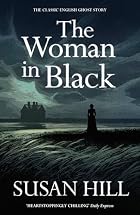
Having considered why I did not think this book was anything out of the ordinary I realise it was the absence of any wit or clever elements. There were no phrases or ideas I thought worthy of note. It was dull.
I found the introductory chapter to be far too long for its purpose and the story, while only taking up 200 pages, could have been told in half that space. I thought the story was too predictable. The author was obviously trying to get the reader to experience the horror of the main character but I felt her writing skills were not up to this. I felt she was telling me the man's feelings rather than showing them to me and having me experience them.
The introduction explains the man's new family life and all his wife's children and grandchildren. The only element this added was to make the reader think that some of these individuals could be at risk later in the story, but the story could have been told without the protagonist having a second family. I think it was an attempt at laying red-herrings that the author did not have the skill to carry off effectively.
I was also a bit taken aback at the author's use of the core part of a title of one of M.R. James's stories, "Whistle and I'll Come to You!", as a chapter title. I thought this was a cheap shot at trying to attract readers familiar with James's stories.
I can see how this story would work well as a film, but having finished the story I think it would be hard for the ending to be a surprise even if one hadn't read the book.
I read the book before seeking out the film but I do not care if I ever see the film. If you are considering reading the book in advance of watching the film I would suggest you watch the film and do not bother with the book.
Having considered why I did not think this book was anything out of the ordinary I realise it was the absence of any wit or clever elements. There were no phrases or ideas I thought worthy of note. It was dull.
196MrsLee
>195 pgmcc: - I didn't think much of the film, either. Although the furniture was lovely.
>194 pgmcc: - That is wrong on so many levels, and yet, just about fits my vision of Maxim perfectly!
>194 pgmcc: - That is wrong on so many levels, and yet, just about fits my vision of Maxim perfectly!
197imyril
>195 pgmcc: I'm sorry to hear you didn't get anything out of The Woman in Black as I thoroughly enjoyed my recent reread (noting I haven't read any Henry James or MR James).
>196 MrsLee: I too thought little of the film. There were an awful lot of arbitrary deaths added as modern horror doesn't seem to think atmospheric creeps suffice... but the furniture was indeed lovely :) I would point anyone at the play though. Perhaps simple ghost stories work best in a single sitting of the spoken word?
>196 MrsLee: I too thought little of the film. There were an awful lot of arbitrary deaths added as modern horror doesn't seem to think atmospheric creeps suffice... but the furniture was indeed lovely :) I would point anyone at the play though. Perhaps simple ghost stories work best in a single sitting of the spoken word?
198pgmcc
>195 pgmcc: It is not that I didn't get anything out of Woman In Black, it was just that I found it had nothing special to recommend it. I was having difficulty in identifying what I was missing, but I have started reading Robert Aickman's collection of weird tales, Dark Entries, and in the first story I found what I had been missing in The Woman in Black.
In the entire 200 pages of The Woman in Black I did not find anything that I felt the need to underline and take note of in the back page. In the first story in Dark Entries, the 36 page "The School Friend", I have noted nine things of interest. These range from asides which illustrate how women were viewed in the 1950s/60s, to subtle witticisms. An example of the former, and expressed by a female character, is:
"When a woman wears trousers, they need to be smart. These were slacks indeed."
An example of the latter is:
"I want to tell you something in confidence."
I smiled. Confidences pre-announced are seldom worthwhile.
As I read the story I was wondering was Aickman letting his own views of women come through, but towards the end he incorporates an aside that demonstrates he was making a point about the treatment and attitudes towards women at the time. With that one paragraph he turned the story into a feminist statement and, when one looks at the main thread of the story, this was presented as an aside, but is really the strongest element of the work.
I found The Woman in Black to be an okay ghost story, but I felt Susan Hill just told the story and did not create many layers.
I do not intend to take away from the pleasure you had reading the book, but if, as you say, you have not read any M.R. James or Henry James (I believe @jillmwo will provide a health warning on Henry James), nor indeed, any Robert Aickman, then you have much greater pleasures ahead of you. :-)
In the entire 200 pages of The Woman in Black I did not find anything that I felt the need to underline and take note of in the back page. In the first story in Dark Entries, the 36 page "The School Friend", I have noted nine things of interest. These range from asides which illustrate how women were viewed in the 1950s/60s, to subtle witticisms. An example of the former, and expressed by a female character, is:
"When a woman wears trousers, they need to be smart. These were slacks indeed."
An example of the latter is:
"I want to tell you something in confidence."
I smiled. Confidences pre-announced are seldom worthwhile.
As I read the story I was wondering was Aickman letting his own views of women come through, but towards the end he incorporates an aside that demonstrates he was making a point about the treatment and attitudes towards women at the time. With that one paragraph he turned the story into a feminist statement and, when one looks at the main thread of the story, this was presented as an aside, but is really the strongest element of the work.
I found The Woman in Black to be an okay ghost story, but I felt Susan Hill just told the story and did not create many layers.
I do not intend to take away from the pleasure you had reading the book, but if, as you say, you have not read any M.R. James or Henry James (I believe @jillmwo will provide a health warning on Henry James), nor indeed, any Robert Aickman, then you have much greater pleasures ahead of you. :-)
199imyril
>198 pgmcc: I think it is just a simple ghost story; whether I would like it so well if I hadn't met it so young is open for debate.
Of course, having liked it so long, I am sure I can safely read more broadly for context (protected by affection from disillusion if not from book bullets ;) pleasures ahoy!
Of course, having liked it so long, I am sure I can safely read more broadly for context (protected by affection from disillusion if not from book bullets ;) pleasures ahoy!
200jillmwo
It is true I do not advise Henry James. It probably indicates the shallow nature of my character, but there it is. On the other hand, I think I'm with @imyril when it comes to The Woman in Black. I enjoyed it as a ghost story -- a light entertainment -- but I appreciated the artistic craft required in delivering a ghost story to a readership that doesn't believe in ghosts. M.R. James was writing in a period when some percentage of the population still might find one plausible.
202pgmcc
Things are getting very Christmassy around here! The council workers were decorating the tree outside the General Post Office this morning at 07:30hrs.


203MrsLee
Too early! :) I noticed that a lot more neighbors have their Christmas lights on tonight than did last year at this time. Bah. Humbug.
Lovely tree though, and your photos are terrific. Who's the guy with his hands in the air standing on a pedestal?
Lovely tree though, and your photos are terrific. Who's the guy with his hands in the air standing on a pedestal?
204pgmcc
>203 MrsLee: The end of November would be quite normal for putting up the city Christmas tree. The traditional time for putting up decorations in people's homes is December 8th, the Feast of the Immaculate Conception. Schools would have been closed on that day and it was the traditional day for people to go to town to do their Christmas shopping and take the children to see Santa Claus, in a department store usually. The cities and towns were packed with people from the country coming up to town on buses or trains. Those were simpler, more innocent days, innocent in terms of retailing.
The traditional day for taking down home decorations in Ireland is January 6th, the Feast of the Epiphany.
Of course, most people now would not know those traditions and simply see Christmas as a time to make contact with family and friends and spend money on presents, as well has have a great big dinner on Christmas Day and eat leftovers until New Year.
As retailers have become more cunning and savvy they have done everything in their power to extend the Christmas season. It appears they are starting to introduce the US concept of “Black Friday” on this side of the Atlantic, even though US Thanksgiving is not celebrated. It is due to the influence of US culture on all media channels making people aware of the retail hype and now retailers here are offering Black Friday offers. This has led to some dreadful scenes in some UK shops. It is the influence of US culture that has changed the humble turnip to a pumpkin for Halloween, even to the extent that the majority of people in Ireland, home of Halloween, would not realise the turnip is the traditional item from which to make a lantern.
The man on the plinth is Jim Larkin. He founded the Irish Transport and General Workers Union and the Irish Labour Party. He played a big part in the 1913 Dublin Lockout.
Christmas is big business here with most retailers making most of their revenue and profit in the Christmas retailing frenzy. My father was a publican and he said that if it wasn't for the Christmas trade he would not make a profit for the year. Virtually everyone will organise some sort of Christmas outing at work so that colleagues can socialise for an evening. Hotels do well at this time of year in relation to Christmas functions for companies. There has even been a trend of families going to hotels for a few days at Christmas to avoid the work of making Christmas dinner at home.
My colleagues and I are going on a "Ghost Tour" of Dublin as our Christmas outing. Dublin Bus organises these tours. We will have a meal before hand.
I love the Christmas holiday as I can usually manage to save enough leave to take a week off between Christmas and New Year. Christmas day, St. Stephen's Day and New Year's Day are all public holidays here. If I can take the week off it is great to close the door on the world and have fun with my family. We are at the stage that the children return to us with their partners for Christmas, although this year our daughter who is married to a Wisconsinite is heading to his family for Christmas. They try to alternate between both sides of their family.
Sorry for the long rant, but I like Christmas. :-)
The traditional day for taking down home decorations in Ireland is January 6th, the Feast of the Epiphany.
Of course, most people now would not know those traditions and simply see Christmas as a time to make contact with family and friends and spend money on presents, as well has have a great big dinner on Christmas Day and eat leftovers until New Year.
As retailers have become more cunning and savvy they have done everything in their power to extend the Christmas season. It appears they are starting to introduce the US concept of “Black Friday” on this side of the Atlantic, even though US Thanksgiving is not celebrated. It is due to the influence of US culture on all media channels making people aware of the retail hype and now retailers here are offering Black Friday offers. This has led to some dreadful scenes in some UK shops. It is the influence of US culture that has changed the humble turnip to a pumpkin for Halloween, even to the extent that the majority of people in Ireland, home of Halloween, would not realise the turnip is the traditional item from which to make a lantern.
The man on the plinth is Jim Larkin. He founded the Irish Transport and General Workers Union and the Irish Labour Party. He played a big part in the 1913 Dublin Lockout.
Christmas is big business here with most retailers making most of their revenue and profit in the Christmas retailing frenzy. My father was a publican and he said that if it wasn't for the Christmas trade he would not make a profit for the year. Virtually everyone will organise some sort of Christmas outing at work so that colleagues can socialise for an evening. Hotels do well at this time of year in relation to Christmas functions for companies. There has even been a trend of families going to hotels for a few days at Christmas to avoid the work of making Christmas dinner at home.
My colleagues and I are going on a "Ghost Tour" of Dublin as our Christmas outing. Dublin Bus organises these tours. We will have a meal before hand.
I love the Christmas holiday as I can usually manage to save enough leave to take a week off between Christmas and New Year. Christmas day, St. Stephen's Day and New Year's Day are all public holidays here. If I can take the week off it is great to close the door on the world and have fun with my family. We are at the stage that the children return to us with their partners for Christmas, although this year our daughter who is married to a Wisconsinite is heading to his family for Christmas. They try to alternate between both sides of their family.
Sorry for the long rant, but I like Christmas. :-)
205MrsLee
Sooo, never having heard of turnip lanterns myself, I went to Google and found some fascinating images! I gotta say, they are much creepier than pumpkin carvings!
I didn't really take your post as a rant. I like the essence of Christmas myself; spending time with family, surprises, quiet contemplation and all. It's the commercialism which brings out the grump in me. Our family does the decorations on about the same timeline as your described family, give or take depending on what days we have off and such. I find the celebrations reduced (refined?) to the minimum in our household now that the children are grown and I am working. I am responsible at work to get everyone from the staff to the guests into the "happy holiday spirit" with decorations, gifts and all the other things we do. It leave very little energy in me for those at home. However, we focus on the essentials and are thankful. So long as I have my family, very little else matters to me. :)
I didn't really take your post as a rant. I like the essence of Christmas myself; spending time with family, surprises, quiet contemplation and all. It's the commercialism which brings out the grump in me. Our family does the decorations on about the same timeline as your described family, give or take depending on what days we have off and such. I find the celebrations reduced (refined?) to the minimum in our household now that the children are grown and I am working. I am responsible at work to get everyone from the staff to the guests into the "happy holiday spirit" with decorations, gifts and all the other things we do. It leave very little energy in me for those at home. However, we focus on the essentials and are thankful. So long as I have my family, very little else matters to me. :)
206hfglen
>204 pgmcc: In our family we put decorations up on Dec. 16 (Dingaan's Day / Day of the Vow / Day of Reconciliation, still (!) a public holiday) and take them down as soon after 6 Jan. as time and motivation permit.
207pgmcc
I am very much behind in relation to book reports. My objective for the next two weeks is to put up reports on two of Robert Aickman’s “Strange Tales” collections, namely, Dark Entries and Cold Hand in Mine, and comments on Henry James’s The Turn of the Screw.
I also have to get back to The Brothers Grimm. Interestingly there is a new English translation of the first edition of the Brothers Grimm Fairy Tales. This is the version that was not censored or amended to be more acceptable. I am tempted to chase up a copy of this. It was published in October and is already “temporarily not available” on Amazon.
I also have to get back to The Brothers Grimm. Interestingly there is a new English translation of the first edition of the Brothers Grimm Fairy Tales. This is the version that was not censored or amended to be more acceptable. I am tempted to chase up a copy of this. It was published in October and is already “temporarily not available” on Amazon.
208pgmcc
Dark Entries by Robert Aickman
This collection contains six “Strange Tales”, as Aickman preferred to call his works of fiction. These are:
The School Friend
Ringing the Changes
Choice of Weapons
The Waiting Room
The View
Bind Your Hair
In addition there is an “Introduction” written by Richard T. Kelly and a “Robert Aickman Remembered” at the end of the book which was written by Ramsey Campbell. It appears to be the standard structure for the Faber & Faber editions of Aickman’s works: introduction by someone the publisher thinks is of note and a remembrance by someone who knew the man.
As is my wont, I read the Introduction after having read all the stories and the remembrance piece. It is not only one of the introductions that should not be read before reading the book, but it is an introduction that should be avoided unless you have read all Aickman’s works. It is full of spoilers for many of Aickman’s stories, not just the ones in this collection. I did not finish it as it will spoil many stories if one has not already read them.
Campbell’s remembrance was interesting. He met Aickman when he delivered the World Fantasy Award to Aickman in 1975 for his story, Pages from a Young Girl’s Journal (an excellent story that I commented upon in post #137 above) and subsequently entered into a regular correspondence and friendship after chaperoning Aickman when he was Guest of Honour at the British Fantasy Convention in 1976.
Having read the remembrance piece in Cold Hand in Mine by Jean Richardson, I can saw I am developing an image of the man in my mind. He was a man out of place and time according to comments: a man from a different age.
The stories are most intriguing. Each one holds its own memories for me. I am going to make some comments on each story so I will use the spoiler mask.
The School Friend
The first quote I underlined in this was:
“You’re an artist, Mel. You can’t expect to be a success at the same time.”
That was a passing comment in the story but I suspect it gave away some of Aickman’s views on his writing. Apparently his publisher wanted him to write more commercial pieces and was rebuked by Aickman who explained that this was his art.
Apart from the quirky quotes that I loved, this story took me back to my own childhood and reminded me of adventures I had with school friends.
Ringing the Changes is a chilling tale of strangeness but it contains many hints at Aickman’s views of marriage. It tells the story of a honeymoon couple visiting a seaside town in off-season and the strangeness that befalls them. There appear to be parallels between the couple’s relationship and that of Aickman and one of his female friends. I suspect the story is a warning to his friend that marriage to him could be detrimental to her.
Choice of Weapons
This is another story about a relationship between a man and a woman. As with all Aickman’s stories there are hidden depths of darkness and hints at the supernatural. Again, an excellent story that has the reader wondering what is happening but also includes prose and asides that make the reader think, or even laugh. His description of houses in an area is just such an aside: ”The houses seemed identical: withdrawn, but only as if ashamed of their unfashionableness.”
The Waiting Room is a comparatively straightforward ghost story and is very enjoyable for that. It also evokes the whole experience of travelling by train in a bygone age: the age when there were no mobile phones; steam was king; central heating in a railway station was unheard of; customer service was a term never heard of.
The View is a wonderful tale touching on love, ageing, madness, and the rat-race. This was a story that I thought I would abandon after the first couple of pages but which turned into a gem that I will return to again and again. Noted quotes include: ”She has no idea how plain she is and of course you can’t tell her,” observed a conspicuously unattractive woman of about forty-five to replica of herself.
Bind Your Hair is a strange tale of the rustic supernatural. I believe it is working with the urban/rural divide and uses the occasion of the visit of a recently engaged couple to the man’s parents to introduce the city girl to the hidden weirdness of country life.
This book reinforced my liking of Robert Aickman’s work and pushes me closer to reading his two autobiographies in an attempt to learn more about the man.
This collection contains six “Strange Tales”, as Aickman preferred to call his works of fiction. These are:
The School Friend
Ringing the Changes
Choice of Weapons
The Waiting Room
The View
Bind Your Hair
In addition there is an “Introduction” written by Richard T. Kelly and a “Robert Aickman Remembered” at the end of the book which was written by Ramsey Campbell. It appears to be the standard structure for the Faber & Faber editions of Aickman’s works: introduction by someone the publisher thinks is of note and a remembrance by someone who knew the man.
As is my wont, I read the Introduction after having read all the stories and the remembrance piece. It is not only one of the introductions that should not be read before reading the book, but it is an introduction that should be avoided unless you have read all Aickman’s works. It is full of spoilers for many of Aickman’s stories, not just the ones in this collection. I did not finish it as it will spoil many stories if one has not already read them.
Campbell’s remembrance was interesting. He met Aickman when he delivered the World Fantasy Award to Aickman in 1975 for his story, Pages from a Young Girl’s Journal (an excellent story that I commented upon in post #137 above) and subsequently entered into a regular correspondence and friendship after chaperoning Aickman when he was Guest of Honour at the British Fantasy Convention in 1976.
Having read the remembrance piece in Cold Hand in Mine by Jean Richardson, I can saw I am developing an image of the man in my mind. He was a man out of place and time according to comments: a man from a different age.
The stories are most intriguing. Each one holds its own memories for me. I am going to make some comments on each story so I will use the spoiler mask.
The School Friend
The first quote I underlined in this was:
“You’re an artist, Mel. You can’t expect to be a success at the same time.”
That was a passing comment in the story but I suspect it gave away some of Aickman’s views on his writing. Apparently his publisher wanted him to write more commercial pieces and was rebuked by Aickman who explained that this was his art.
Apart from the quirky quotes that I loved, this story took me back to my own childhood and reminded me of adventures I had with school friends.
Ringing the Changes is a chilling tale of strangeness but it contains many hints at Aickman’s views of marriage. It tells the story of a honeymoon couple visiting a seaside town in off-season and the strangeness that befalls them. There appear to be parallels between the couple’s relationship and that of Aickman and one of his female friends. I suspect the story is a warning to his friend that marriage to him could be detrimental to her.
Choice of Weapons
This is another story about a relationship between a man and a woman. As with all Aickman’s stories there are hidden depths of darkness and hints at the supernatural. Again, an excellent story that has the reader wondering what is happening but also includes prose and asides that make the reader think, or even laugh. His description of houses in an area is just such an aside: ”The houses seemed identical: withdrawn, but only as if ashamed of their unfashionableness.”
The Waiting Room is a comparatively straightforward ghost story and is very enjoyable for that. It also evokes the whole experience of travelling by train in a bygone age: the age when there were no mobile phones; steam was king; central heating in a railway station was unheard of; customer service was a term never heard of.
The View is a wonderful tale touching on love, ageing, madness, and the rat-race. This was a story that I thought I would abandon after the first couple of pages but which turned into a gem that I will return to again and again. Noted quotes include: ”She has no idea how plain she is and of course you can’t tell her,” observed a conspicuously unattractive woman of about forty-five to replica of herself.
Bind Your Hair is a strange tale of the rustic supernatural. I believe it is working with the urban/rural divide and uses the occasion of the visit of a recently engaged couple to the man’s parents to introduce the city girl to the hidden weirdness of country life.
This book reinforced my liking of Robert Aickman’s work and pushes me closer to reading his two autobiographies in an attempt to learn more about the man.
209pgmcc
The Turn of the Screw by Henry James
As with every tale of horror “The Turn of the Screw” isolates the primary character, in this case the governess of two young children. It also isolates those around her as it takes place in a country home to which “The Master” never visits and from whence he wants no news or communications.
Within the residence the governess is the highest authority, followed by the housekeeper with the other servants being a social level further down in the pecking order.
The children in the care of the governess are, of course, the focus of the entire household.
There are several levels of isolation. As mentioned above, The Master minimised his contact with the household. The governess, while spending most of her time with the children is cautious of them and, as the substance of the story emerges she begins to distrust their manner and hence isolates herself from them.
The governess does, however, feel a level of affinity with the housekeeper but a difference in intellectual level is clearly identified and this, along with the expectations of their different positions in the household, limits the degree of association between the two women. For the climax of the story the housekeeper is removed from the scene entirely, along with one of the children. This serves to further isolate the governess.
Of course, the governess will have no social association with the other servants apart from being the recipient of the services provided by them within the remit of their function.
When Henry James organised his stories into categories he did not put “The Turn of the Screw” with his ghostly tales, but rather with his psychological stories. I can understand this. It was only the governess who observed the ghostly appearances. The story was a narration based on the writings of the governess. I questioned the alacrity of her story and believe we are dealing with an unreliable narrator.
I enjoyed this story as a ghost story, but also as a tale that can be interpreted as something else; a psychological tale of a person’s self delusion and her slow descent into paranoia.
As with every tale of horror “The Turn of the Screw” isolates the primary character, in this case the governess of two young children. It also isolates those around her as it takes place in a country home to which “The Master” never visits and from whence he wants no news or communications.
Within the residence the governess is the highest authority, followed by the housekeeper with the other servants being a social level further down in the pecking order.
The children in the care of the governess are, of course, the focus of the entire household.
There are several levels of isolation. As mentioned above, The Master minimised his contact with the household. The governess, while spending most of her time with the children is cautious of them and, as the substance of the story emerges she begins to distrust their manner and hence isolates herself from them.
The governess does, however, feel a level of affinity with the housekeeper but a difference in intellectual level is clearly identified and this, along with the expectations of their different positions in the household, limits the degree of association between the two women. For the climax of the story the housekeeper is removed from the scene entirely, along with one of the children. This serves to further isolate the governess.
Of course, the governess will have no social association with the other servants apart from being the recipient of the services provided by them within the remit of their function.
When Henry James organised his stories into categories he did not put “The Turn of the Screw” with his ghostly tales, but rather with his psychological stories. I can understand this. It was only the governess who observed the ghostly appearances. The story was a narration based on the writings of the governess. I questioned the alacrity of her story and believe we are dealing with an unreliable narrator.
I enjoyed this story as a ghost story, but also as a tale that can be interpreted as something else; a psychological tale of a person’s self delusion and her slow descent into paranoia.
210pgmcc
I have started reading Haruki Murakami's novel, Hard-Boiled Wonderland and the End of the World. Weird but captivating. I am about 110 pages into the 400 page book. My thoughts at this stage are that we imprison ourselves in our own world. This is the same message behind Patrick McGoohan's The Prisoner.
211Meredy
>210 pgmcc: That was my first Marukami, and I liked it. So far I've liked and disliked them in about equal numbers, but even in the ones I didn't care for, there's something intriguing.
212Sakerfalcon
Hard boiled wonderland is one of my favourites of Murakami's books. Perhaps I should reread it soon ...
213pgmcc
This is totally off-topic, non-bibliophilic, but appropriate in my mind as I am sharing an image with my friends of the Christmas cake my wife has just finished icing. She has already made four Christmas puddings.
I think I am going to enjoy our Christmas fare.

I think I am going to enjoy our Christmas fare.

214pgmcc
A few days ago I placed an order with Amazon. It was for three books:
Belfast Noir
The 7 Habits of Highly Effective People
First Things First
Amazon in its wisdom has decided to dispatch these items separately. Ironically "First Things First" is the third item to be despatched.
Belfast Noir
The 7 Habits of Highly Effective People
First Things First
Amazon in its wisdom has decided to dispatch these items separately. Ironically "First Things First" is the third item to be despatched.
215Meredy
>214 pgmcc: Does your Amazon source give you a shipment option to check when you order? Ours lets me choose between grouping into as few shipments as possible and sending each item as it becomes available. Of course they can only be grouped if they come from the same stock.
That cake looks positively wonderful. What's inside? I can almost taste the frosting. Is it for immediate consumption, or does she expect it to remain untouched until Christmas day?
That cake looks positively wonderful. What's inside? I can almost taste the frosting. Is it for immediate consumption, or does she expect it to remain untouched until Christmas day?
216pgmcc
>215 Meredy:
Amazon gives the option of for "free delivery" if one spends over €25 (and it takes a while); "standard", which is three to four business days at a cost; "Next day", which is more expensive or available to Amazon Prime members.
There is a "tick-box" option to keep the items for a single package or to send the items as they become available.
I went for the standard as the free indicated the goods would not arrive until December 25th. Hmmmm!
I also opted for the send all items together option.
It appears Amazon decides to send the items separately if there is a delay on getting some of the item or they come from different sources. On this occasion they have opted to send them separately.
With regards to the cake, it is a fruit cake containing raisons, sultanas, current, whiskey, flour, margarine, etc... It will be a very rich cake and the icing contains whiskey also which gives the cake a lovely rich flavour.
The Christmas cake will be kept until the evening meal on Christmas day. We would call that tea-time. The Christmas dinner will be about 3pm. We will have the turkey and ham accompanied by brussel sprouts, mashed potato, roast potato and gravy. Cranberry sauce will be available for the turkey.
Dessert will be Christmas pudding or trifle. Cream and ice-cream will be available.
Amazon gives the option of for "free delivery" if one spends over €25 (and it takes a while); "standard", which is three to four business days at a cost; "Next day", which is more expensive or available to Amazon Prime members.
There is a "tick-box" option to keep the items for a single package or to send the items as they become available.
I went for the standard as the free indicated the goods would not arrive until December 25th. Hmmmm!
I also opted for the send all items together option.
It appears Amazon decides to send the items separately if there is a delay on getting some of the item or they come from different sources. On this occasion they have opted to send them separately.
With regards to the cake, it is a fruit cake containing raisons, sultanas, current, whiskey, flour, margarine, etc... It will be a very rich cake and the icing contains whiskey also which gives the cake a lovely rich flavour.
The Christmas cake will be kept until the evening meal on Christmas day. We would call that tea-time. The Christmas dinner will be about 3pm. We will have the turkey and ham accompanied by brussel sprouts, mashed potato, roast potato and gravy. Cranberry sauce will be available for the turkey.
Dessert will be Christmas pudding or trifle. Cream and ice-cream will be available.
217MrsLee
I'm going to the kitchen for a snack now. I really want to make a fruit cake this year. Not sure if I will have time. Your frosting sounds intriguing, only I will probably use a hazelnut liqueur, because whiskey and I are not on speaking terms.
218imyril
>214 pgmcc: you have to enjoy the little ironies the world conjures up for us!
>216 pgmcc: ooooh that looks and sounds so good. Especially as there's no mention of *ick* marzipan :)
>217 MrsLee: ...as does hazelnut liqueur instead of whiskey!
As the good friend joining us for Christmas Day doesn't like Christmas pudding, I'm tempted to take a few days off baking bread to try my hand at steaming a ginger pudding or sticky toffee pudding instead. I suspect either could stand a little seasonal support - perhaps some rum?
>216 pgmcc: ooooh that looks and sounds so good. Especially as there's no mention of *ick* marzipan :)
>217 MrsLee: ...as does hazelnut liqueur instead of whiskey!
As the good friend joining us for Christmas Day doesn't like Christmas pudding, I'm tempted to take a few days off baking bread to try my hand at steaming a ginger pudding or sticky toffee pudding instead. I suspect either could stand a little seasonal support - perhaps some rum?
219pgmcc
>218 imyril: I think rum would be just the ticket.
220jillmwo
>213 pgmcc: Wow! And four plum puddings? I'm sure you are going to enjoy your holiday. (And of course, you must lay in a supply of rum. The brandy supply will have all been exhausted by the flaming plum puddings!)
221jillmwo
>213 pgmcc: Wow! And four plum puddings? I'm sure you are going to enjoy your holiday. (And of course, you must lay in a supply of rum. The brandy supply will have all been exhausted by the flaming plum puddings!)
222jillmwo
Wow! I am stunned by the cake in >213 pgmcc: And four plum puddings? I'm sure you are going to enjoy your holiday. (And of course, you must lay in a supply of rum. The brandy supply will have all been exhausted by the flaming plum puddings!)
223pgmcc
Books Upstairs

There are very few independent bookshops left in Dublin these days and it is nice to hear some good news about one of them, Books Upstairs on College Green. All too often we hear of the independent bookshops shrinking or closing. Books Upstairs, however, is moving to larger premises and it will have a coffee shop. Its new address will be 17 D’Olier Street.
I have been going into this shop since at least as far back as 1997. The present shop is long and narrow and there is a spiral staircase to a gantry which provides more space for customers to view books(I presume this to be the feature that gave the shop its name). I owe the discovery of many of my favourite authors to my visits to Books Upstairs. In particular I have found it to be a treasure trove of English translations of works by foreign authors. Authors whose work I have started reading as a result of finding one of their books in this shop include, Arturo Perez Reverte, Daniel Pennac and José Saramago.
I am delighted the shop is doing well enough to consider expansion and the addition of facilities like a coffee shop, but I will miss the old, quirky layout and the narrow passages between the central display tables and the book shelves. If you have never been in the old shop you should visit it now, before the move. I will miss the old shop but I am looking forward to happy browsing at 17 D’Olier Street.
(PS In case you are wondering, I have no connection to this shop other than being a happy, occasional customer.)

There are very few independent bookshops left in Dublin these days and it is nice to hear some good news about one of them, Books Upstairs on College Green. All too often we hear of the independent bookshops shrinking or closing. Books Upstairs, however, is moving to larger premises and it will have a coffee shop. Its new address will be 17 D’Olier Street.
I have been going into this shop since at least as far back as 1997. The present shop is long and narrow and there is a spiral staircase to a gantry which provides more space for customers to view books(I presume this to be the feature that gave the shop its name). I owe the discovery of many of my favourite authors to my visits to Books Upstairs. In particular I have found it to be a treasure trove of English translations of works by foreign authors. Authors whose work I have started reading as a result of finding one of their books in this shop include, Arturo Perez Reverte, Daniel Pennac and José Saramago.
I am delighted the shop is doing well enough to consider expansion and the addition of facilities like a coffee shop, but I will miss the old, quirky layout and the narrow passages between the central display tables and the book shelves. If you have never been in the old shop you should visit it now, before the move. I will miss the old shop but I am looking forward to happy browsing at 17 D’Olier Street.
(PS In case you are wondering, I have no connection to this shop other than being a happy, occasional customer.)
225pgmcc
I fell into a book trap this morning.
Last night my son let me know there is a new book that he would like for Christmas, Skulduggery Pleasant: The Dying of the Light. I was delighted to know something he actually wants so I went into the bookshop beside work on my way to the office. I found the target book and, would you believe it, the book was part of a 3 for the price of 2 offer.
I ask you, what was I to do?
What I did was:
Alan Turing: The Enigma and The Zone of Interest.
Confession over. I feel better now.
Last night my son let me know there is a new book that he would like for Christmas, Skulduggery Pleasant: The Dying of the Light. I was delighted to know something he actually wants so I went into the bookshop beside work on my way to the office. I found the target book and, would you believe it, the book was part of a 3 for the price of 2 offer.
I ask you, what was I to do?
What I did was:
Alan Turing: The Enigma and The Zone of Interest.
Confession over. I feel better now.
228jillmwo
Wait a minute, I know I'm mathematically challenged but you reference a "3 for the price of 2" offer, but you only list two titles that you picked up. What was the third one? The freebie? 'Fess up.
229pgmcc
>228 jillmwo:
The book my son wanted is Skulduggery Pleasant: The Dying of the Light. That is the third book.
The freebie was the cheapest, namely, Alan Turing: The Enigma.
It was because my son's book was in the 2 for 3 deal I had to buy two more books. I am also acutely aware that if my son's book had turned out to be the cheapest of the three, and hence the freebie, my LT friends would attempt to "guilt-trip" me. (Yes, I know that is all sorts of wrongness grammatically and noun-verbalisationally, but I don't care.)
The book my son wanted is Skulduggery Pleasant: The Dying of the Light. That is the third book.
The freebie was the cheapest, namely, Alan Turing: The Enigma.
It was because my son's book was in the 2 for 3 deal I had to buy two more books. I am also acutely aware that if my son's book had turned out to be the cheapest of the three, and hence the freebie, my LT friends would attempt to "guilt-trip" me. (Yes, I know that is all sorts of wrongness grammatically and noun-verbalisationally, but I don't care.)
230pgmcc
As it turns out, when I catalogued the Alan Turin book I was notified that I have an earlier edition of this book in my collection. This has prompted my decision to give the newer book, with the newer Preface and Foreword, to my other other son who is currently studying software engineering.
I have, therefore, ended up gaining only The Zone of Interest, the final book I picked to make up the three and which I was more or less just making do with.
I have, therefore, ended up gaining only The Zone of Interest, the final book I picked to make up the three and which I was more or less just making do with.
231MrsLee
>230 pgmcc: And now you can sleep easy with no guilt. Or, maybe you should go back and try again?
232SylviaC
>230 pgmcc: >231 MrsLee: I vote for giong back and trying again!
233jillmwo
>232 SylviaC: I am with you. And since its pgmcc, I think he needs to collect one of everything off that 3 for 2 table. Enough with this whole "Oh, I'm just out buying gifts for OTHER people" stuff.
234pgmcc
>231 MrsLee: >232 SylviaC: >233 jillmwo:
I suspect you all know how open the door that you're pushing is. You do realise that your comments are like putting a glass of whiskey in front of a chronic alcoholic?
Well, at least I can blame you temptresses for the consequences. Thank you for the push. Now, where is that credit card and does it need a new battery?
I suspect you all know how open the door that you're pushing is. You do realise that your comments are like putting a glass of whiskey in front of a chronic alcoholic?
Well, at least I can blame you temptresses for the consequences. Thank you for the push. Now, where is that credit card and does it need a new battery?
236pgmcc
>235 majkia: Thank you for the understanding and kind remark.
237Meredy
There's a bookshop next to your workplace? Ah, heaven, ah, hell.
So...are you working tomorrow? Next week? Your path of duty could hardly be clearer.
So...are you working tomorrow? Next week? Your path of duty could hardly be clearer.
238pgmcc
>237 Meredy: I am working tomorrow, Christmas Eve. I have taken a few days annual leave so that I do not go back to work until Friday, 2nd January. :-)
By the way, one of my younger son's Christmas presents is a book token. I will be forced to bring him into town to visit a bookshop, or perhaps two, or more, during the holidays. Is there no end to this delightful torture?
By the way, one of my younger son's Christmas presents is a book token. I will be forced to bring him into town to visit a bookshop, or perhaps two, or more, during the holidays. Is there no end to this delightful torture?
239pgmcc

@Meredy, the store with the clock in the middle of the block pictured above is Eason's bookshop. The ground floor and basement are given over to books, magazines and newspapers with a coffee shop on the ground floor. On the first floor (what you would call the second floor) one finds stationery, greeting cards, etc.... The second floor (your third) has a CD and DVD shop as well as a café.
The building on the extreme right of the picture, i.e. the one across the street to the right, is the General Post Office and that is where I work.
240pgmcc
Merry Christmas, one and all!

This is not a particularly seasonal photograph but I took it this afternoon, Christmas Eve, after having had a lovely lunch with my Daughter in a Japanese restaurant. That marked the start of my time off until January 2nd.
I hope everyone enjoys whatever break they have over the next week or so and that you get a chance to recover from 2014 and prepare for 2015. I know some of you will be working over this period to make life enjoyable for others. I thank everyone who works on holiday seasons to make live better for the rest of us. I hope you get appropriate time off in lieu. (Looking at you, @MrsLee.)
For those of you who are interested:
The road on the right is Cavendish Row. The buildings with the columns on the left side of that road is The Gate Theatre (where my daughter works). The building next to it, on the corner and with the round roof, is The Ambassador Event Centre, formerly a cinema. It is now used as an exhibition centre. The building behind The Ambassador is The Rotunda Maternity Hospital.
The road obscured by the monument is Parnell Street. The main entrance to the Rotunda is onto this road.
The monument is the Parnell Monument. This honours the memory of Charles Stewart Parnell, a great Irish parliamentarian who favoured home rule. (See image of the front of the monument below!)

This junction is located at the North end (or the top) of O'Connell Street Upper, the main thoroughfare of Dublin.
Have a great holiday, everyone and enjoy what time you have to read.


This is not a particularly seasonal photograph but I took it this afternoon, Christmas Eve, after having had a lovely lunch with my Daughter in a Japanese restaurant. That marked the start of my time off until January 2nd.
I hope everyone enjoys whatever break they have over the next week or so and that you get a chance to recover from 2014 and prepare for 2015. I know some of you will be working over this period to make life enjoyable for others. I thank everyone who works on holiday seasons to make live better for the rest of us. I hope you get appropriate time off in lieu. (Looking at you, @MrsLee.)
For those of you who are interested:
The road on the right is Cavendish Row. The buildings with the columns on the left side of that road is The Gate Theatre (where my daughter works). The building next to it, on the corner and with the round roof, is The Ambassador Event Centre, formerly a cinema. It is now used as an exhibition centre. The building behind The Ambassador is The Rotunda Maternity Hospital.
The road obscured by the monument is Parnell Street. The main entrance to the Rotunda is onto this road.
The monument is the Parnell Monument. This honours the memory of Charles Stewart Parnell, a great Irish parliamentarian who favoured home rule. (See image of the front of the monument below!)

This junction is located at the North end (or the top) of O'Connell Street Upper, the main thoroughfare of Dublin.
Have a great holiday, everyone and enjoy what time you have to read.

241MrsLee
Aww, thanks! I actually have Christmas Eve and Christmas Day off! Working New Years Eve and day though. :) Love the pretty photos, and now I can picture you enjoying your surroundings. Have a wonderful time eating your way through all the wonderful cakes, puddings, roasts and other delectables, and enjoying all the books!
242pgmcc
>241 MrsLee: We had to try the cake. It is delicious.
Enjoy your Christmas. It started here about an hour ago.
Enjoy your Christmas. It started here about an hour ago.
243Meredy
>242 pgmcc: And our Christmas Eve is just beginning (Pacific time). A merry day to you and all your family.
244pgmcc
Thank you, @Meredy. We welcomed the day viewing the film, Thick as Thieves with Morgan Freeman. Morgan Freeman was in the movie. He was not with us watching it. ;-)
Have a great Christmas.
Have a great Christmas.
247pgmcc
>246 imyril: Many happy returns of the day.
I will post a review of the pudding.
I will post a review of the pudding.
248jillmwo
Looking forward to hearing more about your pudding! Do you make your own? Is it challenging to do?
249pgmcc
The proof of the pudding!

Delicious!
@jillmwo My wife made four puddings. One was given to a friend. Another was consumed on December 17th when we had an early Christmas dinner before one of my daughters headed off to the USA to be with her husband's family for Christmas. The third you see above, or a least a portion thereof. The fourth awaits its fate.
Is it challenging to do?
No! I just came home from work and there they were. :-)
We used to steam them in a pressure cooker for hours. The pudding would be in a bowl that was covered in greaseproof paper which was tied with chord to keep the steam out of the pudding. Now my wife puts the puddings in a tray with some water and sticks the tray in the oven. The result is the same. Yum!

Delicious!
@jillmwo My wife made four puddings. One was given to a friend. Another was consumed on December 17th when we had an early Christmas dinner before one of my daughters headed off to the USA to be with her husband's family for Christmas. The third you see above, or a least a portion thereof. The fourth awaits its fate.
Is it challenging to do?
No! I just came home from work and there they were. :-)
We used to steam them in a pressure cooker for hours. The pudding would be in a bowl that was covered in greaseproof paper which was tied with chord to keep the steam out of the pudding. Now my wife puts the puddings in a tray with some water and sticks the tray in the oven. The result is the same. Yum!
250MrsLee
Looks delicious! My mother makes a persimmon pudding with the Brandy sauce. The sauce is my favorite reason to eat the pudding.
252pgmcc
>251 SylviaC: Trifle!
254pgmcc
>253 SylviaC: It was yummy!
257Meredy
>256 pgmcc: My mother always made it to go on plum pudding. I can't tell you what it was, but I think it was made to a traditional recipe. The tiniest taste of it made my teeth ache with the sweetness. She and my father used to have their own special Christmas dessert; the kids wouldn't have anything to do with it because it looked so alien.
258pgmcc
>257 Meredy: I just looked up a recipe for hard sauce and it appears to involve butter and to be quite sweet. We just use some fresh cream and whip with a whisk until it is of "dollopy" consistency. i.e. scoop it up in a spoon and dollop it on top of the dessert. :-)
259pgmcc

As with all the Murakami novels I have read,Hard-boiled Wonderland and the End of the World has the author twisting reality to get the reader thinking about real issues. Along the way he entertains with diverting philosophy, interesting meals and an eclectic music selection.
To discuss this book in more detail I have to move into “spoiler” mode.
Murakami brings us into the split brain of the main character. His brain has been doctored to enable the existence of more than one consciousness at a time. Our hero has what appears to be his real world consciousness and a separate consciousness existing within a part of his brain that he cannot access from his real world consciousness and from which his alternate consciousness cannot escape.
I inferred a number of messages from the twisted reality in this book. These reminded me of advice I received many years ago when I was complaining about my job. The person giving me the advice told me I could do something about my work situation or I could decide to stay. At the end of this novel I felt Murakami was telling the reader that unless one’s life is totally dysfunctional it is what one knows and that one never knows what life would be like if it was different, i.e. be careful what you wish for.
260MrsLee
If this thread can bear one more post about the pudding, today I rounded up my mother's persimmon pudding to send to my daughter. I had to laugh, because I looked online at "persimmon steamed puddings" and found one for "Mrs. Reagan's Persimmon Pudding, which sounded and looked similar to my mom's. Later, I got an email from my mom with a photo of her recipe which she has been using for 50 years at least, it was titled "Mrs. Reagan's Persimmon Pudding!" The secret is in the Brandy-Whipped Cream sauce. Yum.
261pgmcc
>260 MrsLee: I love coincidences like that.
262pgmcc
Time to set up the 2015 reading thread.
HAPPY NEW YEAR, everyone. I hope 2015 is good to you and brings you a surfeit of joy.
HAPPY NEW YEAR, everyone. I hope 2015 is good to you and brings you a surfeit of joy.
265pgmcc
Summary of 2014 reading - Part I
Books read in 2014: 39
Pages read in 2014: 13,235
Non-fiction books read: 1
Fiction books read: 39
Authors I tried for the first time: 17
Alexa Camouro
Gustav Meyrink
Walter De La Mare
Jasper Fforde
Paul Cornell
Sebastian Barry
M Carey
Susan Hill
Brian Moore
Arkacy & Boris Strugatsky
Provost & Fawcett
Elmore Leonard
Alfred Bester
Robin Sloan
Gillian Flynn
Simak
Henry James
Translations into English: 9
Books by original language
German: 1
Russian: 2
Japanese: 4
Italian: 1
Spanish: 1
English: 30
Books by author's nationality
Austrian: 1
Australian: 1
English: 14
Irish-Canadian: 1
Italian: 1
Japanese: 4
Russian: 2
Scottish: 4
Spanish: 1
United States: 9
Various: 1
Books by gender of author
Male: 32
Female: 5
Transgender: 0
Male & Female: 2
2014 execution of plan
Books listed as intended reading in 2014: 16
Books listed as intended reading in 2014 and actually read in 2014: 3
(The planning was perfect. It was the execution that left something to be desired.)
Books read in 2014: 39
Pages read in 2014: 13,235
Non-fiction books read: 1
Fiction books read: 39
Authors I tried for the first time: 17
Alexa Camouro
Gustav Meyrink
Walter De La Mare
Jasper Fforde
Paul Cornell
Sebastian Barry
M Carey
Susan Hill
Brian Moore
Arkacy & Boris Strugatsky
Provost & Fawcett
Elmore Leonard
Alfred Bester
Robin Sloan
Gillian Flynn
Simak
Henry James
Translations into English: 9
Books by original language
German: 1
Russian: 2
Japanese: 4
Italian: 1
Spanish: 1
English: 30
Books by author's nationality
Austrian: 1
Australian: 1
English: 14
Irish-Canadian: 1
Italian: 1
Japanese: 4
Russian: 2
Scottish: 4
Spanish: 1
United States: 9
Various: 1
Books by gender of author
Male: 32
Female: 5
Transgender: 0
Male & Female: 2
2014 execution of plan
Books listed as intended reading in 2014: 16
Books listed as intended reading in 2014 and actually read in 2014: 3
(The planning was perfect. It was the execution that left something to be desired.)
266pgmcc
2014 reading summary - Part II
Number of books by authors
Haruki Murakami: 4
Iain M Banks: 3 (All rereads forced upon my by @imyril (Thank you, imyril))
Daphne Du Maurier: 2
Nick Harkaway: 2
Robert Aickman: 2
All others: 1
Number of books by authors
Haruki Murakami: 4
Iain M Banks: 3 (All rereads forced upon my by @imyril (Thank you, imyril))
Daphne Du Maurier: 2
Nick Harkaway: 2
Robert Aickman: 2
All others: 1
267imyril
>266 pgmcc: you're very welcome *curtseys*

This topic was continued by PGMCC's 2015 reading (Very existentialist title.).

