
This topic is currently marked as "dormant"—the last message is more than 90 days old. You can revive it by posting a reply.
1bragan
Welcome to my last new thread, as we go sliding slowly towards the end of the year. (My previous thread, for the record, was here.)
And I start the last quarter of 2014 off with:
110. Snake Oil Science: The Truth About Complementary and Alternative Medicine by R. Barker Bausell
So-called "complementary and alternative" medicine (or CAM) is a big business these days, and a great many people, some of them doctors and scientists, are thoroughly convinced that these unconventional treatments really work. But do such things as acupuncture and homeopathy truly treat anything, or are they just placebos with good PR? R. Barker Bausell attempts to answer this question.
Actually, although the focus here is on CAM, I think the usefulness of this book is much broader than that: it's a good, thorough, detailed look at what it takes to determine with any reasonable degree of confidence whether something has a real, non-placebo-based medical effect or not. And that's not nearly as easy as it looks. There are a whole host of factors that can make it seem, or even make it seem obvious that something is working when it's not. And not all scientific studies are created equal when it comes to controlling for those factors. Bausell explains the hows and whys of all this clearly and in depth, and applies it towards an evaluation of various CAM fields.
There are a few things here I'm inclined to quibble with, notably his disturbingly off-hand dismissal of non-English-language studies and his suggestion that people with chronic problems might as well go out and get some scientifically unsupported CAM-based treatments, anyway, for the power of the placebo effect. I also think he does best when he concentrates on specific treatments, such as acupuncture, as CAM is almost too broad a subject to take on all at once. Still, overall it's a very worthwhile read, and provides some excellent lessons about how science works in medicine, how good science and sloppy science differ, and why that difference is so important.
Rating: 4/5
And I start the last quarter of 2014 off with:
110. Snake Oil Science: The Truth About Complementary and Alternative Medicine by R. Barker Bausell
So-called "complementary and alternative" medicine (or CAM) is a big business these days, and a great many people, some of them doctors and scientists, are thoroughly convinced that these unconventional treatments really work. But do such things as acupuncture and homeopathy truly treat anything, or are they just placebos with good PR? R. Barker Bausell attempts to answer this question.
Actually, although the focus here is on CAM, I think the usefulness of this book is much broader than that: it's a good, thorough, detailed look at what it takes to determine with any reasonable degree of confidence whether something has a real, non-placebo-based medical effect or not. And that's not nearly as easy as it looks. There are a whole host of factors that can make it seem, or even make it seem obvious that something is working when it's not. And not all scientific studies are created equal when it comes to controlling for those factors. Bausell explains the hows and whys of all this clearly and in depth, and applies it towards an evaluation of various CAM fields.
There are a few things here I'm inclined to quibble with, notably his disturbingly off-hand dismissal of non-English-language studies and his suggestion that people with chronic problems might as well go out and get some scientifically unsupported CAM-based treatments, anyway, for the power of the placebo effect. I also think he does best when he concentrates on specific treatments, such as acupuncture, as CAM is almost too broad a subject to take on all at once. Still, overall it's a very worthwhile read, and provides some excellent lessons about how science works in medicine, how good science and sloppy science differ, and why that difference is so important.
Rating: 4/5
2NanaCC
Snake Oil Science sounds interesting. I might add it to the wishlist.
On another note, I am having trouble getting the pages to load this morning. Anyone else?
On another note, I am having trouble getting the pages to load this morning. Anyone else?
3bragan
>2 NanaCC: Yeah, LT is definitely having issues this morning. Lots of pages have been failing to load for me the first time (and sometimes the second and third time), and it looked like the site was completely down for a few minutes just a little while ago. (With any luck, maybe that was them fixing things.)
4mabith
Snake Oil Science does sound interesting. Though I think those 'treatments' are necessary for the people who don't really have anything in particular wrong and need a placebo. Also, I've had severe chronic pain for 10 years, stemming from two diagnosed conditions. I would MUCH rather get a placebo from alternative medicine which isn't going to have any side effects than from a prescription medication which may have many side effects and long term effects on the liver and such that aren't immediately noticeable (or known at all, given that most drugs don't have long-term effect studies). Taking any medication for decades seems risky.
While strangers telling me that a supplement (or yoga or going gluten-free) will cure me is a great evil (why on earth do you care about a stranger's health enough to be intrusive??), a lot of us with chronic illnesses are pretty desperate for even a minor placebo effect, and it IS worth trying everything that's a reasonable price (versus shady clinics charging thousands).
While strangers telling me that a supplement (or yoga or going gluten-free) will cure me is a great evil (why on earth do you care about a stranger's health enough to be intrusive??), a lot of us with chronic illnesses are pretty desperate for even a minor placebo effect, and it IS worth trying everything that's a reasonable price (versus shady clinics charging thousands).
5bragan
This is such a thorny subject for me, really. I think a lot of is is that I have a problem with the whole idea of taking a treatment that's got no scientific validity, presenting it to people as if it does, and making money off of that. It feels wrong to me, and even dangerous, if it discourages people from seeking treatment that might actually work. (And, of course, some CAM treatments can, in fact, have negative effects, such as herbal remedies interacting badly with other drugs the person might be taking.) It's not an industry I can get behind the idea of supporting, you know? And I think Bausell just completely glosses over the ethical and "what's the harm?" issues in the book.
But, on the other hand, the placebo effect certainly is real, and can go some ways towards improving quality of life, even if it's not doing anything to actually fix the problem. And, not myself having chronic pain, or any other condition that medical science can't do much about, it is, I admit, pretty easy for me to sit here shaking my head and tsking.
(But, oh, man, spare us all from strangers who feel compelled to evangelize their favorite fad remedies at us!)
But, on the other hand, the placebo effect certainly is real, and can go some ways towards improving quality of life, even if it's not doing anything to actually fix the problem. And, not myself having chronic pain, or any other condition that medical science can't do much about, it is, I admit, pretty easy for me to sit here shaking my head and tsking.
(But, oh, man, spare us all from strangers who feel compelled to evangelize their favorite fad remedies at us!)
6RidgewayGirl
My SO and a few members of his family love nutritional and health fads. Whether it's the ideal temperature to eat food or little vials of homeopathic remedies, it's different every few months. From the outside, it looks like a waste of money.
7bragan
>6 RidgewayGirl: And you'd think, if any of it really worked as well as advertised, it'd last more than a few months before being replaced with something else.
Actually, that's something Bausell talks about, how it's really easy for something medically useless to seem like it's doing a great job for a while, only to be replaced by the next thing when that illusion finally fades away.
Actually, that's something Bausell talks about, how it's really easy for something medically useless to seem like it's doing a great job for a while, only to be replaced by the next thing when that illusion finally fades away.
8mabith
I think in general the people with real problems will always end up at the doctors as well, even if they start out only with CAM stuff. Most people aren't that into suffering. A lot of people are mild hypochondriacs though, so mostly it's probably cheaper to go the alternative route than to spend months on end at the doctor doing tests and trying different medications trying to diagnose something that doesn't exist (I mean the general health food store alternative medicine stuff, but also acupuncture). Doctors won't typically just say "there's nothing wrong with you."
The worst isn't actually when strangers tell you how to be cured, but when a family member (with no health problems, of course) gets into one of the fads. My sister has been very into the essential oils and it's been a test of patience. I mean, who WOULDN'T think that smelly oils rubbed on the skin would cure chronic nerve pain? Now, the oils that have a warming effect used for muscle soreness or maybe mild arthritis, sure, but it's a far cry from the neurological.
The worst isn't actually when strangers tell you how to be cured, but when a family member (with no health problems, of course) gets into one of the fads. My sister has been very into the essential oils and it's been a test of patience. I mean, who WOULDN'T think that smelly oils rubbed on the skin would cure chronic nerve pain? Now, the oils that have a warming effect used for muscle soreness or maybe mild arthritis, sure, but it's a far cry from the neurological.
9bragan
>8 mabith: I think in general the people with real problems will always end up at the doctors as well,
Well, I wouldn't say "always." Even if most people will go to a doctor with real problems, there are, alas, plenty of sad stories about people who've died -- or worse, had their children die -- of potentially treatable conditions after putting all their faith in things like wacky alternative cancer therapies. Although I fear that may always be the case.
Doctors won't typically just say "there's nothing wrong with you."
Yeah, I think doctors are, in general, taught to focus on problem-solving with tests and medication, and also know that "there's nothing wrong with you" is not something patients want to hear.
And, ugh, family members getting into stupid health fads is bad enough, but smelly ones? I think that would be enough to try anyone's patience.
Well, I wouldn't say "always." Even if most people will go to a doctor with real problems, there are, alas, plenty of sad stories about people who've died -- or worse, had their children die -- of potentially treatable conditions after putting all their faith in things like wacky alternative cancer therapies. Although I fear that may always be the case.
Doctors won't typically just say "there's nothing wrong with you."
Yeah, I think doctors are, in general, taught to focus on problem-solving with tests and medication, and also know that "there's nothing wrong with you" is not something patients want to hear.
And, ugh, family members getting into stupid health fads is bad enough, but smelly ones? I think that would be enough to try anyone's patience.
10.Monkey.
Doctors won't typically just say "there's nothing wrong with you."
Erm. Actually yeah, they will, if they don't see anything alarming. Try talking to people with fibromyalgia, chronic fatigue, and other "invisible" problems and ask them how many times drs told them they were fine. It happens all the time, and it's really disheartening.
Erm. Actually yeah, they will, if they don't see anything alarming. Try talking to people with fibromyalgia, chronic fatigue, and other "invisible" problems and ask them how many times drs told them they were fine. It happens all the time, and it's really disheartening.
11PawsforThought
My experience with doctors is that most of the time, they'll tell you "it'll be fine if you just rest a little" or "take some paracetamol and it'll be fine in a few days". Granted, that is often true, but I agree that some of them can be a bit dismissive. Besides the issues PM mentioned, this is very common when dealing with gastrointestinal issues.
12bragan
>11 PawsforThought: I suppose it depends a lot on the situation, and probably on the doctor. It has often seemed to me, in my own interactions with doctors, that there's often a real, and humanly understandable, motivation to do something even if it's probably not going to accomplish much. I am, for instance, a little disturbed by how often I've had doctors hand me antibiotic prescriptions for problems that even I am aware are probably not caused by bacteria.
13PawsforThought
>12 bragan: Oh, absolutely. I've had a doctor push antibiotics AND pollen allergy meds on me for a virus-induced sinusitis.
14rebeccanyc
Very interesting discussion. I can see that some "alternative" medicines may work, but I would want them tested scientifically rather than relying on anecdotal evidence. And I would be reluctant to take any medication that hadn't been around for a while so the side effects were well understood. That said, if I were really suffering, it probably would be difficult for me not to try something that promised to relieve my suffering.
15mabith
>9 bragan: That's why above I separated out drugstore/acupuncture/massage stuff from the cancer clinic scams (though it seems like a lot of those people have already gotten to the point where the doctors say they can't do anything else). In the end, there will always be an alternative medicine industry, and at least now it's more regulated than in decades past. For a fair swathe of people it does serve a purpose, at least.
>10 .Monkey.: As I said above, I do have chronic pain. I am disabled by fibromyalgia and RSD, both largely invisible and I spent two years being shuffled from doctor to doctor. That's why I said 'typically' and pain conditions are really a different boat (and a lot of the "nothing wrong with you" is because doctors think you just want medication and there are legal liabilities, not because they aren't happy to run you through a lot of tests, and a lot of that is HIGHLY dependent on your age, race, and sex. I got sick at 19, I didn't look mainstream, and I know exactly how dismissive doctors can be). However, most people who just want some attention/things to complain about, who don't really have anything wrong, know at least on a subconscious level, that claiming general chronic pain will not get them far. If someone is claiming stomach pain, chest pain, dizzyness, etc... and there's no immediate cause the doctor is always going to run them through tests because of the host of things that *could* be wrong. The dismissiveness from doctors towards chronic pain sufferers usually comes AFTER they've run all the usual tests which have come back negative.
>11 PawsforThought: from saying paracetamol I'd guess you're not in the US, which is a lot more over-prescribed than many countries, and there are a lot of TERRIBLE doctors who will happily just use a patient's worries to make money.
>10 .Monkey.: As I said above, I do have chronic pain. I am disabled by fibromyalgia and RSD, both largely invisible and I spent two years being shuffled from doctor to doctor. That's why I said 'typically' and pain conditions are really a different boat (and a lot of the "nothing wrong with you" is because doctors think you just want medication and there are legal liabilities, not because they aren't happy to run you through a lot of tests, and a lot of that is HIGHLY dependent on your age, race, and sex. I got sick at 19, I didn't look mainstream, and I know exactly how dismissive doctors can be). However, most people who just want some attention/things to complain about, who don't really have anything wrong, know at least on a subconscious level, that claiming general chronic pain will not get them far. If someone is claiming stomach pain, chest pain, dizzyness, etc... and there's no immediate cause the doctor is always going to run them through tests because of the host of things that *could* be wrong. The dismissiveness from doctors towards chronic pain sufferers usually comes AFTER they've run all the usual tests which have come back negative.
>11 PawsforThought: from saying paracetamol I'd guess you're not in the US, which is a lot more over-prescribed than many countries, and there are a lot of TERRIBLE doctors who will happily just use a patient's worries to make money.
16bragan
>14 rebeccanyc: There's an old joke in skeptical circles:
Q: What do you call alternative medicine that works?
A: Medicine.
Because treatments, of whatever provenance, that are scientifically tested and which hold up then do get incorporated into mainstream medicine. The classic example being willow bark as a traditional herbal remedy: it proved, in fact, to have an actual analgesic substance in it, and thanks to that, we now have aspirin.
Anyway, I'm with you on this one. I'm gonna wait until something's been carefully studied before I start applying it to my body. Of course, how good the scientific evidence that it works needs to be to make it worth a shot depends on how bad the problem is, how much harm the treatment might do, whether there are better-studied alternatives, and, of course, how expensive it is.
>15 mabith: My personal feeling is that the alternative medicine industry still has a long ways to go in terms of having adequate consumer protection regulations. For instance, with herbal supplements, not only do they not have to be proven effective, there's no guarantee about what dosage you're getting. And a lot of labeling and advertising on this stuff is, IMO, pretty deceptive.
Re: your comment to PolymathicMonkey, I'll note that Bausell focuses almost exclusively on chronic pain when talking about the placebo effect and suggesting people might try to make it work for them, in part precisely because there are limits to how much can be done for it.
Also, one thing that occurred to me after I wrote my last comment is that I have a strong suspicion that, in the US, how likely you are to get lots of tests or well-hey-maybe-this-might-do-something-so-why-not medication from a doctor who thinks there likely isn't anything serious wrong with you may depend a lot on the quality of your insurance. I'd guess the situation in places like the UK might be quite different.
Q: What do you call alternative medicine that works?
A: Medicine.
Because treatments, of whatever provenance, that are scientifically tested and which hold up then do get incorporated into mainstream medicine. The classic example being willow bark as a traditional herbal remedy: it proved, in fact, to have an actual analgesic substance in it, and thanks to that, we now have aspirin.
Anyway, I'm with you on this one. I'm gonna wait until something's been carefully studied before I start applying it to my body. Of course, how good the scientific evidence that it works needs to be to make it worth a shot depends on how bad the problem is, how much harm the treatment might do, whether there are better-studied alternatives, and, of course, how expensive it is.
>15 mabith: My personal feeling is that the alternative medicine industry still has a long ways to go in terms of having adequate consumer protection regulations. For instance, with herbal supplements, not only do they not have to be proven effective, there's no guarantee about what dosage you're getting. And a lot of labeling and advertising on this stuff is, IMO, pretty deceptive.
Re: your comment to PolymathicMonkey, I'll note that Bausell focuses almost exclusively on chronic pain when talking about the placebo effect and suggesting people might try to make it work for them, in part precisely because there are limits to how much can be done for it.
Also, one thing that occurred to me after I wrote my last comment is that I have a strong suspicion that, in the US, how likely you are to get lots of tests or well-hey-maybe-this-might-do-something-so-why-not medication from a doctor who thinks there likely isn't anything serious wrong with you may depend a lot on the quality of your insurance. I'd guess the situation in places like the UK might be quite different.
17PawsforThought
This discussion reminds me of a skit with one of my favourite comedians, Dara O'Briain: http://youtu.be/DHVVKAKWXcg (Spoiler: he's not fond of alternative medicine)
18bragan
>17 PawsforThought: Oh, yes! I've seen that one! And loved it. Dara O'Briain is terrific.
19PawsforThought
>18 bragan: I love him so much. Whenever I feel like I've been doused with alternative therapy mumbo-jumbo (I'm not against all alt. therapy stuff, but most of it is absolute baloney) I watch that clip.
20mabith
O'Briain is so amazing on all fronts.
There are definitely still big issues with regulation, but even if all the supplements said "NONE OF THESE CLAIMS ARE PROVEN ANYWHERE," I don't think the numbers of people buying them would decrease, honestly. People will listen to a friend or just refuse to go to doctors or put more faith in folk remedies, etc...
The trouble with severe chronic pain is that most long-term sufferers don't have the money to afford alternative treatments (whereas when we have insurance we can afford prescription medication)! My family know that if they pay for it, I will try whatever thing they think will help, but even if I have the cash, I'm not likely to shell out (books are probably more likely to help!). If say, acupuncture, were covered under their insurance then they could possibly get a placebo effect without side effects. It's a hard line, since the placebo effect is so useful, but I don't really want the government subsidizing nonsense, but if it works for people then it works and that is honestly all that matters. There was some good stuff about that in Bad Science.
There are definitely still big issues with regulation, but even if all the supplements said "NONE OF THESE CLAIMS ARE PROVEN ANYWHERE," I don't think the numbers of people buying them would decrease, honestly. People will listen to a friend or just refuse to go to doctors or put more faith in folk remedies, etc...
The trouble with severe chronic pain is that most long-term sufferers don't have the money to afford alternative treatments (whereas when we have insurance we can afford prescription medication)! My family know that if they pay for it, I will try whatever thing they think will help, but even if I have the cash, I'm not likely to shell out (books are probably more likely to help!). If say, acupuncture, were covered under their insurance then they could possibly get a placebo effect without side effects. It's a hard line, since the placebo effect is so useful, but I don't really want the government subsidizing nonsense, but if it works for people then it works and that is honestly all that matters. There was some good stuff about that in Bad Science.
21PawsforThought
>20 mabith: Oh, Bad Science! I've been itching to get that one. Ben Goldacre is a gem. Have you read Bad Pharma, too?
Acupuncture is one of the alt remedies I kind of like. You can get it prescribed over here and I know a few people - my mum being one of them - who've had it prescribed to them and it's helped. Obviously, it's not going to cure illnesses that are very severe but things that are rooted in tension in muscles (like tension headaches and other things) can be helped. It should of course be controlled in a way I don't think it really is now. (But I could be wrong on that point)
Acupuncture is one of the alt remedies I kind of like. You can get it prescribed over here and I know a few people - my mum being one of them - who've had it prescribed to them and it's helped. Obviously, it's not going to cure illnesses that are very severe but things that are rooted in tension in muscles (like tension headaches and other things) can be helped. It should of course be controlled in a way I don't think it really is now. (But I could be wrong on that point)
22mabith
I have read Bad Pharma! I enjoyed Bad Science a little bit more, but the pharmaceutical industry is just soo depressing for me. Plus it was talking about long term side effects of the only medication that's helped my nerve pain and I don't even want to think about having to go off of that.
Acupuncture has been helpful for me too, in the past. Plus it was always just soothing. After they put the pins in they typically leave you to just space out for half an hour or so (for my shoulder trouble a decade ago I was under a heat lamp too). The break from the world while being able to feel proactive is not to be underestimated in terms of healing power.
Acupuncture has been helpful for me too, in the past. Plus it was always just soothing. After they put the pins in they typically leave you to just space out for half an hour or so (for my shoulder trouble a decade ago I was under a heat lamp too). The break from the world while being able to feel proactive is not to be underestimated in terms of healing power.
23PawsforThought
>22 mabith: Ah, I'm going to have to buy both of them now.
Yes, the simple act of deep relaxation and shutting the world out (which is so difficult to do) is so helpful to a lot of issues.
Yes, the simple act of deep relaxation and shutting the world out (which is so difficult to do) is so helpful to a lot of issues.
24bragan
>19 PawsforThought: Homeopathy is a particularly bad form of baloney even among baloney, and deserves every shot he takes at it. :)
>20 mabith: My insurance actually covers acupuncture, and I can't find it in myself to be pleased about that, as it's a scientifically unsupported treatment that's coming out of my premiums. And, honestly, "if it works for people then it works" isn't something I can entirely buy into, certainly not in terms of what I'm paying for in tax dollars or insurance premiums. Because, well, there's working and then there's working, y'know? And you have to draw a line there, I think, because absolutely anything, any wacky claim anybody makes up, can elicit a good placebo effect if it's sold well enough. There's no real difference there between acupuncture and waving a crystal around and chanting, as long as the patient believes in it enough and feels good about it, but I think most of us might balk at seeing that second one listed on our insurance coverage.
Bad Science has been on my wishlist for a while.
>22 mabith: It seems pretty clear, really, that the big benefit that alternative therapies have over conventional medicine, and one of the main reasons so many people find them appealing, is that they and their practitioners are often really good at making people feel more relaxed, more listened to, more soothed and cared about, more in control of their own treatment, less intimidated and less stressed. All of which is extremely desirable, but it seems to me to be such a crying shame that that stuff mostly only comes yoked to treatments that are scientifically nonsense.
>20 mabith: My insurance actually covers acupuncture, and I can't find it in myself to be pleased about that, as it's a scientifically unsupported treatment that's coming out of my premiums. And, honestly, "if it works for people then it works" isn't something I can entirely buy into, certainly not in terms of what I'm paying for in tax dollars or insurance premiums. Because, well, there's working and then there's working, y'know? And you have to draw a line there, I think, because absolutely anything, any wacky claim anybody makes up, can elicit a good placebo effect if it's sold well enough. There's no real difference there between acupuncture and waving a crystal around and chanting, as long as the patient believes in it enough and feels good about it, but I think most of us might balk at seeing that second one listed on our insurance coverage.
Bad Science has been on my wishlist for a while.
>22 mabith: It seems pretty clear, really, that the big benefit that alternative therapies have over conventional medicine, and one of the main reasons so many people find them appealing, is that they and their practitioners are often really good at making people feel more relaxed, more listened to, more soothed and cared about, more in control of their own treatment, less intimidated and less stressed. All of which is extremely desirable, but it seems to me to be such a crying shame that that stuff mostly only comes yoked to treatments that are scientifically nonsense.
25mabith
Well, one thing we know about the placebo effect is that it works even when patients know it's a placebo. There is a difference with acupuncture though, because it's something ACTIVE. Just as a shot with no medicine gives a stronger placebo effect than a sugar pill because it feels more like serious medicine (you'll read about that in Bad Science). Again, there are so many mildly hypochondriac people out there who will take up doctors' time. Your premiums can go towards acupuncture or towards their appointments and prescriptions (and then they'll tie up the doctors' offices as well).
It is a shame that doctors can't usually make patients feel relaxed and listened to, but in the US at least the medical system is just terrible. I have seen SO many doctors in the last ten years and I feel lucky if I get someone who lets me finish my sentences and doesn't talk over me, let alone someone who ACTUALLY listens. That is quite literally a high bar, and it hasn't been easy for me to find someone who meets it.
It is a shame that doctors can't usually make patients feel relaxed and listened to, but in the US at least the medical system is just terrible. I have seen SO many doctors in the last ten years and I feel lucky if I get someone who lets me finish my sentences and doesn't talk over me, let alone someone who ACTUALLY listens. That is quite literally a high bar, and it hasn't been easy for me to find someone who meets it.
26bragan
>25 mabith: Oh, yes, Bausell discusses that aspect of the placebo effect at considerable length, too. A lot of CAM things do involve active, hands-on treatments, though.
I think one of the biggest problems with the medical system is that doctors are expected to get patients in and out very quickly and "efficiently," and can lose a lot of the human element in the process.
I think one of the biggest problems with the medical system is that doctors are expected to get patients in and out very quickly and "efficiently," and can lose a lot of the human element in the process.
27RidgewayGirl
Hey, if Prince Charles is for it, it must be effective, right? I've done acupuncture once. It was not a success, but I'm not a good fit for alternative medicine. And looking down at my legs covered in needles was creepy.
28bragan
>27 RidgewayGirl: It does seem really, really creepy to me. I honestly cannot imagine willingly letting anyone stick me with needles!
29mabith
Ha, the needles don't hurt at all (unless you start messing with them when the person leaves, and then you get these horrible twinges). I always felt very hardcore with the needles in, but the first time I had it I was 16. It is interesting, because when it was done for a shoulder complaint where my range of motion was severely limited, they wiggled a certain needle around and my range of motion improved, they wiggled it a bit more and it improved a bit more. I still had to do PT to strengthen the muscles so the cartilage with stop getting pinched and impeding things in the first place, but having had that experience I can understand why people believe in it wholeheartedly.
30PawsforThought
I have no fear of acupuncture whatsoever, and would quite like to try it (neck issues). I am very wary (read: scared sh*tless) of needles otherwise so it's a bit strange I'm so relaxed about the whole pin-cushion thing.
32bragan
111. The Hidden Land by Pamela Dean
This is book two in a one-story-in-three-books fantasy trilogy from the 80s, in which five children from our world find themselves in a fantasy realm they believe they made up as part of a game.
My feelings about this one are pretty much the same as they were about the first volume: I think the premise is great. Not so much the "people from our world find their way into a magical realm" thing, which is pretty standard, but the way it deals with just what it would be like to find yourself in a place you made up, as the children are surprised at details they never imagined, wonder why on earth they ever thought some of the ones they did imagine were a good idea, and try to figure out how much they can affect the pre-determined course of the narrative. The plot, which in this one involves a regicide and a war, isn't bad, either. But, frustratingly, thus far Dean hasn't really done much of anything really substantial or satisfying with either the premise or the plot.
I also find the writing frustrating. In her depictions of the Hidden Land, its characters, its history, its unfolding plot, and pretty much everything else about it, Dean seems to be going for "subtle" and mostly hitting "murky" instead. It's hard to get a good feel for any of it. The things that are supposed to be mysterious and confusing because we're seeing them from the kids' POV and they don't know everything are mysterious and confusing, but the things the kids know about perfectly well often aren't that much clearer. And the pseudo-Shakespearean (or, worse, often actually Shakespearean) dialog just annoys me. I'm not sure which irritates me more, the artificial look-how-clever-and-literary-I-am! feel of it, or the suspension-of-disbelief-breaking way that the kids slip in and out of the local speech patterns far too easily and without anyone ever noticing.
Part of me is kind of wishing I'd stopped after book one, because, while this story does have its good qualities, I'm not really enjoying it as a reading experience the way I'd like. But since I already have the final volume, since the last two chapters of this one are, promisingly, the most interesting in the book, and since I can be something of an obsessive completist, I am planning on finishing the series. But maybe not right away.
Rating: It's hard to rate something I have such mixed feelings about, but let's call it 3/5.
This is book two in a one-story-in-three-books fantasy trilogy from the 80s, in which five children from our world find themselves in a fantasy realm they believe they made up as part of a game.
My feelings about this one are pretty much the same as they were about the first volume: I think the premise is great. Not so much the "people from our world find their way into a magical realm" thing, which is pretty standard, but the way it deals with just what it would be like to find yourself in a place you made up, as the children are surprised at details they never imagined, wonder why on earth they ever thought some of the ones they did imagine were a good idea, and try to figure out how much they can affect the pre-determined course of the narrative. The plot, which in this one involves a regicide and a war, isn't bad, either. But, frustratingly, thus far Dean hasn't really done much of anything really substantial or satisfying with either the premise or the plot.
I also find the writing frustrating. In her depictions of the Hidden Land, its characters, its history, its unfolding plot, and pretty much everything else about it, Dean seems to be going for "subtle" and mostly hitting "murky" instead. It's hard to get a good feel for any of it. The things that are supposed to be mysterious and confusing because we're seeing them from the kids' POV and they don't know everything are mysterious and confusing, but the things the kids know about perfectly well often aren't that much clearer. And the pseudo-Shakespearean (or, worse, often actually Shakespearean) dialog just annoys me. I'm not sure which irritates me more, the artificial look-how-clever-and-literary-I-am! feel of it, or the suspension-of-disbelief-breaking way that the kids slip in and out of the local speech patterns far too easily and without anyone ever noticing.
Part of me is kind of wishing I'd stopped after book one, because, while this story does have its good qualities, I'm not really enjoying it as a reading experience the way I'd like. But since I already have the final volume, since the last two chapters of this one are, promisingly, the most interesting in the book, and since I can be something of an obsessive completist, I am planning on finishing the series. But maybe not right away.
Rating: It's hard to rate something I have such mixed feelings about, but let's call it 3/5.
33OscarWilde87
Followed you here after catching up on part 3 three of your thread. It's been a while since I had time to enjoy all the nice things here on LT... Loved the King discussion in the previous thread. Sorry I'm so late to say that...
34bragan
>33 OscarWilde87: Hello to you, and welcome back to the goodness of LT!
And, hey, as far as I'm concerned, it's never too late for book discussion comments. :)
And, hey, as far as I'm concerned, it's never too late for book discussion comments. :)
35bragan
112. Lucky Us by Amy Bloom

A novel about two half-sisters, the glamorous Iris and the bookish Eva, and their complicated and often very unlucky lives in the 1940s and beyond.
I have very mixed feelings about this one. On an intellectual level, it's doing a lot of things I like. I like the diverse cast of characters and their unusual points of view, and I like the way Bloom peels back the layers of those characters, slowly revealing various interesting and disturbing things about them. But the problem is, pretty much all my appreciation was on an intellectual level. The characters never really came alive for me, and whatever weird or tragic things might happen to them, it never really affected me emotionally. Something about the writing just kept me constantly at one remove from it all.
Rating: 3.5/5

A novel about two half-sisters, the glamorous Iris and the bookish Eva, and their complicated and often very unlucky lives in the 1940s and beyond.
I have very mixed feelings about this one. On an intellectual level, it's doing a lot of things I like. I like the diverse cast of characters and their unusual points of view, and I like the way Bloom peels back the layers of those characters, slowly revealing various interesting and disturbing things about them. But the problem is, pretty much all my appreciation was on an intellectual level. The characters never really came alive for me, and whatever weird or tragic things might happen to them, it never really affected me emotionally. Something about the writing just kept me constantly at one remove from it all.
Rating: 3.5/5
36rebeccanyc
I guess I liked Lucky Us more than you did, but you might enjoy some of Bloom's earlier stories, which are focused more on emotions and less on drama.
37bragan
>36 rebeccanyc: I have to admit, Lucky Us, as much as I appreciated some of what it was trying to do, didn't really make me want to go out and read more of Bloom's writing. But I could probably be persuaded to give her a second go.
38bragan
113. Outspoken: Free Speech Stories by Nan Levinson
This is a collection of a dozen or so accounts of people who have experienced conflicts over their freedom of speech in America. It's divided into three sections: The first involves conflicts with government, including the story of a reporter in Puerto Rico who, after filming a controversial interview, was pressured to give up her tapes and reveal her sources, and that of a soldier who believes that his application for conscientious objector status during the first Gulf War caused him problems with the army in part because he spoke out against the war. The second section features people dealing with various attempts, mostly by private individuals or organizations, to censor art, from a teacher ordered to remove LGBT-themed books from the classroom to a former porn star dealing with controversy over her sexually explicit performance art. The final section consists of two stories that didn't really fit anywhere else, one involving a fireman who sued for his right to read Playboy at the firehouse while off-duty, the other about a company trying to prevent a doctor from publishing a paper about an occupational health hazard facing their workers.
I have to say, I found the first section difficult going. I kept thinking that these stories are important, and so I should find them interesting, but they weren't written in a particularly gripping way, and they tended to get bogged down in large amounts of detail. It also didn't help that this book was published in 2003 and so all the stories in it are from the 1990s or earlier, as the post-9/11, internet-dominated landscape of today's government-vs-free speech issues is so different from that of the 90s that there are real limits to its relevance.
Fortunately, as I moved past that and into the rest of the book, I found things more engaging. Levinson uses these stories as a springboard for discussion about free speech issues, and while her commentary doesn't necessarily include any groundbreaking insights, it does provide a lot of food for thought. Unsurprisingly, for someone moved to write an entire book on the subject, Levinson tends to be a pretty hardline advocate for free speech protections, but even she recognizes that many of these situations are thorny and complex. They certainly made me think more about the questions of what exactly constitutes speech, why speech should be protected, and just where and when it's reasonable to draw the line on what's acceptable.
Rating: 3.5/5
This is a collection of a dozen or so accounts of people who have experienced conflicts over their freedom of speech in America. It's divided into three sections: The first involves conflicts with government, including the story of a reporter in Puerto Rico who, after filming a controversial interview, was pressured to give up her tapes and reveal her sources, and that of a soldier who believes that his application for conscientious objector status during the first Gulf War caused him problems with the army in part because he spoke out against the war. The second section features people dealing with various attempts, mostly by private individuals or organizations, to censor art, from a teacher ordered to remove LGBT-themed books from the classroom to a former porn star dealing with controversy over her sexually explicit performance art. The final section consists of two stories that didn't really fit anywhere else, one involving a fireman who sued for his right to read Playboy at the firehouse while off-duty, the other about a company trying to prevent a doctor from publishing a paper about an occupational health hazard facing their workers.
I have to say, I found the first section difficult going. I kept thinking that these stories are important, and so I should find them interesting, but they weren't written in a particularly gripping way, and they tended to get bogged down in large amounts of detail. It also didn't help that this book was published in 2003 and so all the stories in it are from the 1990s or earlier, as the post-9/11, internet-dominated landscape of today's government-vs-free speech issues is so different from that of the 90s that there are real limits to its relevance.
Fortunately, as I moved past that and into the rest of the book, I found things more engaging. Levinson uses these stories as a springboard for discussion about free speech issues, and while her commentary doesn't necessarily include any groundbreaking insights, it does provide a lot of food for thought. Unsurprisingly, for someone moved to write an entire book on the subject, Levinson tends to be a pretty hardline advocate for free speech protections, but even she recognizes that many of these situations are thorny and complex. They certainly made me think more about the questions of what exactly constitutes speech, why speech should be protected, and just where and when it's reasonable to draw the line on what's acceptable.
Rating: 3.5/5
39Oandthegang
>113 bragan: I think the magazine Index On Censorship is still around (I see there are a number of editions on the Touchstone) if the subject interests you.
40bragan
>39 Oandthegang: Haven't heard of that one. Maybe I'll take a look. Thanks.
41bragan
114. The Killing Moon by N. K. Jemisin

This is a fantasy novel set in a world where magic is powered -- in a very real and literal way -- by dreams.
I could say a lot more than that about it, but I went into it knowing almost nothing about what to expect and was very happy with the way my experience of it unfolded, so I think maybe I'll just leave it there. What I will say, though, is that this was one of the best fantasy novels I've read in a long time. The world-building is well-realized, and fascinated me completely right from the beginning. The plot features intrigue, corruption, secrets, a horrific monster, and a climax that made me feel many, many feelings. The characters are interesting, too, and offer the reader a variety of different perspectives from which to understand this world and its events. Basically, it's just great stuff in all kinds of ways.
While this one is self-contained and satisfying on its own, there is also a sequel, which I'm now very much looking forward to reading.
Rating: 4.5/5

This is a fantasy novel set in a world where magic is powered -- in a very real and literal way -- by dreams.
I could say a lot more than that about it, but I went into it knowing almost nothing about what to expect and was very happy with the way my experience of it unfolded, so I think maybe I'll just leave it there. What I will say, though, is that this was one of the best fantasy novels I've read in a long time. The world-building is well-realized, and fascinated me completely right from the beginning. The plot features intrigue, corruption, secrets, a horrific monster, and a climax that made me feel many, many feelings. The characters are interesting, too, and offer the reader a variety of different perspectives from which to understand this world and its events. Basically, it's just great stuff in all kinds of ways.
While this one is self-contained and satisfying on its own, there is also a sequel, which I'm now very much looking forward to reading.
Rating: 4.5/5
42valkyrdeath
>41 bragan: I might check that one out. Too many fantasy books seem to be just part of a massive series without having self contained stories of their own, which is what generally puts me off.
43bragan
>42 valkyrdeath: Yeah, that is pretty discouraging. Even when something sounds really good, I often balk at starting it when I know I'm just going to have to go out and get the next one and the next one and the next one if I ever want to see the end of the story. I was afraid this one was going to be more of the same, and was very glad when I realized it wasn't. Of course, in this case, I'm still going to end up going out and getting the next one, anyway, but at least I had an actually satisfying reading experience in the meantime.
44bragan
115. One for the Books by Joe Queenan
A collection of essays by Joe Queenan about his life in books, from memories of the bookmobile that visited his impoverished childhood neighborhood, to his compulsive habit of starting way too many books at once, to his experiences as a young man living in Paris and obsessing over French writers.
This... was an interesting reading experience for me. Because, first and foremost, Queenan does a whole bunch of things that annoy me. He constantly name-drops obscure literary works he's sure you've probably never heard of, but which he's clearly proud that he has. He off-handedly dismisses entire genres as trash and lobs insults at the people who read them. And by the third repetition, I was thoroughly tired of hearing "You can't do that with a Kindle." (Usually about things you could, in fact, do perfectly well with a Kindle.) The older I get, the less patience I have with this kind of book snobbishness, and several times I found myself expressing my opinions of Queenan's opinions by waving a middle finger in the direction of the page. Childish and pointless, I know, but strangely satisfying.
And yet... And yet, I can't say I disliked this book. In fact, overall, I found it fairly entertaining. Queenan's snark, however poorly aimed, is often pretty funny, and his curmudgeonliness is not without a certain acerbic charm. It helps, I think, that he comes across as playing it up a bit for effect, and that while he is certainly judgmental, he doesn't seem genuinely mean-spirited. So even when I was flipping him the bird, it was more in amusement than in real anger. Plus, even when our reading tastes, habits, and attitudes are diametrically opposed -- as they certainly are in this case -- I apparently just can't help but feel a certain warmth towards a fellow passionate book lover.
So. Am I ever going to read anything else by Queenan? Probably not. Did I mostly enjoy reading this one, almost despite myself? Yeah. Yeah, I did.
Rating: I'm going to call this one 3.5/5, with the caveat that if I were rating how much I agreed with the guy, that would be a much lower number.
A collection of essays by Joe Queenan about his life in books, from memories of the bookmobile that visited his impoverished childhood neighborhood, to his compulsive habit of starting way too many books at once, to his experiences as a young man living in Paris and obsessing over French writers.
This... was an interesting reading experience for me. Because, first and foremost, Queenan does a whole bunch of things that annoy me. He constantly name-drops obscure literary works he's sure you've probably never heard of, but which he's clearly proud that he has. He off-handedly dismisses entire genres as trash and lobs insults at the people who read them. And by the third repetition, I was thoroughly tired of hearing "You can't do that with a Kindle." (Usually about things you could, in fact, do perfectly well with a Kindle.) The older I get, the less patience I have with this kind of book snobbishness, and several times I found myself expressing my opinions of Queenan's opinions by waving a middle finger in the direction of the page. Childish and pointless, I know, but strangely satisfying.
And yet... And yet, I can't say I disliked this book. In fact, overall, I found it fairly entertaining. Queenan's snark, however poorly aimed, is often pretty funny, and his curmudgeonliness is not without a certain acerbic charm. It helps, I think, that he comes across as playing it up a bit for effect, and that while he is certainly judgmental, he doesn't seem genuinely mean-spirited. So even when I was flipping him the bird, it was more in amusement than in real anger. Plus, even when our reading tastes, habits, and attitudes are diametrically opposed -- as they certainly are in this case -- I apparently just can't help but feel a certain warmth towards a fellow passionate book lover.
So. Am I ever going to read anything else by Queenan? Probably not. Did I mostly enjoy reading this one, almost despite myself? Yeah. Yeah, I did.
Rating: I'm going to call this one 3.5/5, with the caveat that if I were rating how much I agreed with the guy, that would be a much lower number.
45dchaikin
>44 bragan: I'm not going I read this book, but that was a fun review.
46bragan
>45 dchaikin: Thank you. :)
47kidzdoc
>44 bragan: LOL at your great review of One for the Books!
48bragan
>47 kidzdoc: Thank you! I'm mostly just amused at my own failure to completely hate it.
49mabith
>44 bragan: Great review. The e-book snobbishness is far more insidious, as it's ableism as well. So many people can't read paper books at all, and small e-readers that don't emit light were a miracle for many (whether people who can't hold paper books or those with poor vision given how much you can change the font size and how few books are released in large print). When you can't use a format that people routinely refer to as "real books" it's annoying, upsetting, and just ridiculous.
50NanaCC
>44 bragan: thank you for the entertaining review.
51bragan
>49 mabith: It's an attitude that annoys me immensely, and I don't even use e-books. I can only imagine how infuriating it must be when e-books are the only format one can read in. I mean, I get liking paper books. I get fetishizing them a bit, even -- I admit to doing it myself. What I don't get is feeling threatened by other people reading e-books, or feeling the need to denigrate what works well for someone else, whatever their reasons. And, y'know, it's precisely that about Queenan and folks like him that irritates me, I think, even if he at least manages to amuse me while he's doing it. There seems to be this idea that there's One Right Way to be a reader and it is precisely their way, and everything else is stupid and worthless, whether it involves reading on a screen or reading a book for some reason other than that it's Deep and Challenging Literature, or whatever. I think there's very little thought there into what other people's needs might be, physical or psychological.
>50 NanaCC: I'm a little surprised how entertaining people are finding it! But thank you, too.
>50 NanaCC: I'm a little surprised how entertaining people are finding it! But thank you, too.
52rebeccanyc
Catching up. Enjoyed your review of Outspoken: Free Speech Stories and, building on what you say in >51 bragan:, I don't get "the need to denigrate what works well for someone else" in general, yet so many people think their way is the only way, and not just for books.
53bragan
>52 rebeccanyc: I know! I think all too often -- especially for men -- there's this odd notion that there's some sort of virtue in being opinionated at someone else's expense, that building yourself up involves putting other people down. In Queenan's case, to risk venturing into some pop psychology, I get the impression that a lot of it might come from insecurity, of clinging to the idea of being superior in some area after having experienced a childhood guaranteed to make one feel inferior. I imagine that's true of a lot of people in a lot of areas, actually. It's certainly something I've noticed (and tried to fight) in myself.
54bragan
116. NOS4A2 by Joe Hill
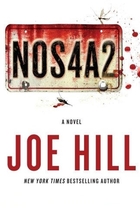
A horror novel about a guy in an antique Rolls Royce who kidnaps children, takes them to a real-but-imaginary land where it's always Christmas, and sucks their souls out of them. Also, about a girl who can find anything by riding her bike across a covered bridge, even after that bridge no longer exists. Eventually, of course, the two of them end up in a great big showdown, although the girl has to grow up first.
Unfortunately, I found this one a little disappointing. It's not bad, really. It's perfectly readable, in a not-terribly-demanding sort of way. It's got some cool ideas, a couple of characters I quite liked, and a decent ending. But overall, it feels like too little story stretched over too many pages. Plus, the bad guys are a little too cartoony, and generally much better in concept than in execution. And I never found the horror elements particularly scary. I often found myself thinking, "OK, that's a potentially creepy idea," but I never actually felt creeped out.
I'm beginning to think I like Joe Hill better as a writer of short stories and comics than of novels, even if I did quite enjoy Heart-Shaped Box.
Rating: 3.5/5
A horror novel about a guy in an antique Rolls Royce who kidnaps children, takes them to a real-but-imaginary land where it's always Christmas, and sucks their souls out of them. Also, about a girl who can find anything by riding her bike across a covered bridge, even after that bridge no longer exists. Eventually, of course, the two of them end up in a great big showdown, although the girl has to grow up first.
Unfortunately, I found this one a little disappointing. It's not bad, really. It's perfectly readable, in a not-terribly-demanding sort of way. It's got some cool ideas, a couple of characters I quite liked, and a decent ending. But overall, it feels like too little story stretched over too many pages. Plus, the bad guys are a little too cartoony, and generally much better in concept than in execution. And I never found the horror elements particularly scary. I often found myself thinking, "OK, that's a potentially creepy idea," but I never actually felt creeped out.
I'm beginning to think I like Joe Hill better as a writer of short stories and comics than of novels, even if I did quite enjoy Heart-Shaped Box.
Rating: 3.5/5
55RidgewayGirl
So, I had NOS4A2 recommended to me and here is your counter-recommendation. I did start it last night and the first chapter was unnerving.
56bragan
>55 RidgewayGirl: I don't know that I'd recommend against reading it, even if it's not a book I'd go around pressing into people's hands. It just wasn't quite the gripping, creepy thrill-ride I was hoping for. A lot of people do seem to have liked it a lot better than I did, though. And I've been wondering whether maybe some aspects of the horror might be a lot more effective for people who have kids.
57bragan
117. God's Problem: How the Bible Fails to Answer Our Most Important Question -- Why We Suffer by Bart D. Ehrman
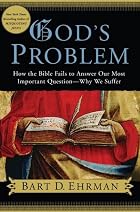
Biblical scholar Bart Ehrman considers a question much-debated by religious believers: "If there is an all-powerful and loving God in this world, why is there so much excruciating pain and unspeakable suffering?" Personally, I've always thought that the exploration of this question makes a good argument for atheism. Ehrman more or less agrees: it was precisely this question that led to him abandoning his once-deep Christian faith. These days, he considers himself an agnostic, saying that while he does not know whether or not there is a god, he's pretty sure that the all-powerful, all-loving interventionist deity he was taught to believe in doesn't exist.
This book is most definitely not an anti-religion screed, however, and while Ehrman presents his point of view and the reasons why he thinks as he does, he's not exactly rubbing his hands together and cackling gleefully at the thought of destroying anyone's belief system. What he is doing is carefully examining how the various authors of the Bible explained the existence of human suffering, putting those explanations in their proper historical context, and then commenting on the problems he sees with them.
Ehrman's writing is very clear and easy to understand. It's not exactly lively, though, and does get a bit repetitive in places. And, to someone like me for whom the best and most sensible answer to "If God exists, why do we suffer?" clearly seems to be that the premise itself is faulty, it often starts to feel a bit angels-on-the-head-of-a-pin pointless after a while. Still, I found much of it interesting and useful, if only for the perspectives it gives about ideas on sin and suffering that are still prevalent today, and just how deep the roots of some of those ideas go. I also appreciate how careful Ehrman is to keep himself grounded in the reality of human suffering, never reducing it to an abstract philosophical point. And I do think his conclusions are absolutely spot-on.
Rating: 3.5/5
Biblical scholar Bart Ehrman considers a question much-debated by religious believers: "If there is an all-powerful and loving God in this world, why is there so much excruciating pain and unspeakable suffering?" Personally, I've always thought that the exploration of this question makes a good argument for atheism. Ehrman more or less agrees: it was precisely this question that led to him abandoning his once-deep Christian faith. These days, he considers himself an agnostic, saying that while he does not know whether or not there is a god, he's pretty sure that the all-powerful, all-loving interventionist deity he was taught to believe in doesn't exist.
This book is most definitely not an anti-religion screed, however, and while Ehrman presents his point of view and the reasons why he thinks as he does, he's not exactly rubbing his hands together and cackling gleefully at the thought of destroying anyone's belief system. What he is doing is carefully examining how the various authors of the Bible explained the existence of human suffering, putting those explanations in their proper historical context, and then commenting on the problems he sees with them.
Ehrman's writing is very clear and easy to understand. It's not exactly lively, though, and does get a bit repetitive in places. And, to someone like me for whom the best and most sensible answer to "If God exists, why do we suffer?" clearly seems to be that the premise itself is faulty, it often starts to feel a bit angels-on-the-head-of-a-pin pointless after a while. Still, I found much of it interesting and useful, if only for the perspectives it gives about ideas on sin and suffering that are still prevalent today, and just how deep the roots of some of those ideas go. I also appreciate how careful Ehrman is to keep himself grounded in the reality of human suffering, never reducing it to an abstract philosophical point. And I do think his conclusions are absolutely spot-on.
Rating: 3.5/5
58dchaikin
Like you I would find the premise faulty. That might be enough to make me avoid this, but I think I've heard good things about Ehrman.
59bragan
>58 dchaikin: I've read several of Ehrman's books, and I do think he's worth reading for some interesting cultural and historical perspectives, even for us non-believers. Although for those who don't have a burning interest in this particular theological question, I don't think it's the first book of his I'd recommend.
60mabith
The historical perspectives are always interesting. His book Forged was just fascinating. I was an oblivious child and I thought all religions were treated the way we studied Greek mythology in school, but we were still using the traditions of the most recent large religions (I don't think I was ever in a church until I was 9, except for once or twice with my grandma when I was five or so). I've never personally believed in god/s, but I do love studying religion.
The suffering argument always makes me wonder about the people who say that god sent them a sale at the store and similar minor things. What does it say about you or god if god is sending you comparatively minor things but letting children starve? It's not a reason to believe or not, of course, but I do hate hearing people make those statements. When my aunt was in her early 20s and poor she'd say god sent them sales at the store, only once god sent a great sale on meat which then made the whole family horribly ill (my mom, not a believer, had to bite her tongue hard about that one).
The suffering argument always makes me wonder about the people who say that god sent them a sale at the store and similar minor things. What does it say about you or god if god is sending you comparatively minor things but letting children starve? It's not a reason to believe or not, of course, but I do hate hearing people make those statements. When my aunt was in her early 20s and poor she'd say god sent them sales at the store, only once god sent a great sale on meat which then made the whole family horribly ill (my mom, not a believer, had to bite her tongue hard about that one).
61bragan
>60 mabith: Forged is one I haven't read.
I was raised in a very vaguely Christian environment, myself -- my family was never much on church-going or prayer when I was a kid, but I attended Sunday school semi-regularly for a while and took it pretty seriously -- but I made a sharp break with it 'round about the sixth grade. It took me a while to be able to be objective enough about religion to see it as the interesting subject it is, culturally and historically, rather than just resenting it as a big lie that adults had foisted on me when I was too young to know better, as I did for a long time.
I'm always more than a little bemused by people who thank God for their survival in a disaster, for example, but seem not to put any thought into what that says about God and the people who didn't survive. But at least I find that understandable. In circumstances like that, the desire to thank someone or something, or to impart some kind of meaning to the experience, must be overwhelming, even for many of those who aren't deeply religious. But the "God sent us a sale at the store!" thing just sort of boggles me. Do they think the store management had nothing to do with it?
My dad is now very religious, in the most deeply fundamentalist kind of way, and he and his wife once told me, with every indication of great pride and pleasure, about how a hurricane that was initially headed their way swerved and did its damage elsewhere because they had prayed really, really hard.
"And what about the people it killed, or whose houses it destroyed when it missed you?" I asked. "Did they just not pray hard enough?"
They paused for a moment, clearly thinking that over, and then said, yeah, they guessed so.
I had to end the conversation there, before I said something I would have regretted. But, basically, I figure if there really is a god and he works like that, I personally want no part of him.
I was raised in a very vaguely Christian environment, myself -- my family was never much on church-going or prayer when I was a kid, but I attended Sunday school semi-regularly for a while and took it pretty seriously -- but I made a sharp break with it 'round about the sixth grade. It took me a while to be able to be objective enough about religion to see it as the interesting subject it is, culturally and historically, rather than just resenting it as a big lie that adults had foisted on me when I was too young to know better, as I did for a long time.
I'm always more than a little bemused by people who thank God for their survival in a disaster, for example, but seem not to put any thought into what that says about God and the people who didn't survive. But at least I find that understandable. In circumstances like that, the desire to thank someone or something, or to impart some kind of meaning to the experience, must be overwhelming, even for many of those who aren't deeply religious. But the "God sent us a sale at the store!" thing just sort of boggles me. Do they think the store management had nothing to do with it?
My dad is now very religious, in the most deeply fundamentalist kind of way, and he and his wife once told me, with every indication of great pride and pleasure, about how a hurricane that was initially headed their way swerved and did its damage elsewhere because they had prayed really, really hard.
"And what about the people it killed, or whose houses it destroyed when it missed you?" I asked. "Did they just not pray hard enough?"
They paused for a moment, clearly thinking that over, and then said, yeah, they guessed so.
I had to end the conversation there, before I said something I would have regretted. But, basically, I figure if there really is a god and he works like that, I personally want no part of him.
62Poquette
I got through half of Forged, but it got pretty deep into the weeds and I got the point early on and my interest sort of faded.
I have listened to several of Ehrman's Teaching Company courses, and I actually like his in-person presentations better than his writing. For whatever reason.
I have listened to several of Ehrman's Teaching Company courses, and I actually like his in-person presentations better than his writing. For whatever reason.
63bragan
>62 Poquette: I'm entirely unfamiliar with those, but apparently he has a lot of teaching experience, so maybe it shouldn't be too surprising if he's best in person.
64bragan
118. Three Graves Full by Jamie Mason
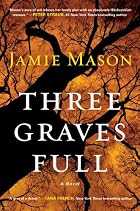
More than a year ago, Jason Getty killed a man in a fit of rage and buried him in his back yard. Since then, he's been consumed not with guilt, but with the fear of discovery. It's a fear that seems likely to come to fruition when some landscapers working in his front yard dig up another body -- one he knows nothing at all about.
It's a fantastic premise, the kind of setup that hooks your attention immediately. Unfortunately (as, it seems, with far too many things I've been reading lately), the execution fails to live up to the concept. Part of it is that the plot is thin and relies on a few too many implausibilities and coincidences, and the characterization feels like it involves more telling than showing. Plus, the parts that are written from the POV of a dog just seem downright silly. But mostly my problem with this novel was in the writing style. It reads far too much as if the author was told in a creative writing class that every sentence should be vivid and every metaphor original, and took it entirely too much to heart. The prose isn't exactly purple, but it does have a forced, trying-too-hard quality that's deeply distracting. Which is really too bad, because some of Mason's sentences and metaphors are actually pretty clever, and might have worked well enough if they'd been employed with a lighter touch.
As it is, though, I'd pretty much lost all the interest the premise originally generated by the time I got to the end.
Rating: 2.5/5
More than a year ago, Jason Getty killed a man in a fit of rage and buried him in his back yard. Since then, he's been consumed not with guilt, but with the fear of discovery. It's a fear that seems likely to come to fruition when some landscapers working in his front yard dig up another body -- one he knows nothing at all about.
It's a fantastic premise, the kind of setup that hooks your attention immediately. Unfortunately (as, it seems, with far too many things I've been reading lately), the execution fails to live up to the concept. Part of it is that the plot is thin and relies on a few too many implausibilities and coincidences, and the characterization feels like it involves more telling than showing. Plus, the parts that are written from the POV of a dog just seem downright silly. But mostly my problem with this novel was in the writing style. It reads far too much as if the author was told in a creative writing class that every sentence should be vivid and every metaphor original, and took it entirely too much to heart. The prose isn't exactly purple, but it does have a forced, trying-too-hard quality that's deeply distracting. Which is really too bad, because some of Mason's sentences and metaphors are actually pretty clever, and might have worked well enough if they'd been employed with a lighter touch.
As it is, though, I'd pretty much lost all the interest the premise originally generated by the time I got to the end.
Rating: 2.5/5
65bragan
119. Desert Solitaire: A Season in the Wilderness by Edward Abbey

This is Edward Abbey's 1968 memoir of his time in America's desert southwest, which he spent working as a park ranger in Utah's Arches National Park (and, occasionally, as a cowboy) and exploring the canyonlands on foot and by river. The book is full of rambling philosophical musings and poetic descriptions of the desert, accounts of his own adventures and of local folklore, and his thoughts -- which are at once snarky, well-considered, and almost painfully idealistic -- on the preservation of the wilderness and the damage wrought by what he calls "Industrial Tourism" and by modern man's unhealthy relationship with the automobile. ("Modern man" being the kind of phrase that Abbey uses because, well, it was 1968.)
I'm left at the end of this feeling distinctly unsure whether I would have liked Abbey the person. He feels, like many of the desert plants he writes about, a little too prickly for comfort. But his writing is lovely, thought-provoking, and evocative, and he clearly loves the desert with a soul-deep yet unsentimental kind of love.
I spent several days in the back country of Utah's canyonlands once, what seems like a lifetime ago, and reading this has left me with a poignant longing to go back.
Rating: 4/5

This is Edward Abbey's 1968 memoir of his time in America's desert southwest, which he spent working as a park ranger in Utah's Arches National Park (and, occasionally, as a cowboy) and exploring the canyonlands on foot and by river. The book is full of rambling philosophical musings and poetic descriptions of the desert, accounts of his own adventures and of local folklore, and his thoughts -- which are at once snarky, well-considered, and almost painfully idealistic -- on the preservation of the wilderness and the damage wrought by what he calls "Industrial Tourism" and by modern man's unhealthy relationship with the automobile. ("Modern man" being the kind of phrase that Abbey uses because, well, it was 1968.)
I'm left at the end of this feeling distinctly unsure whether I would have liked Abbey the person. He feels, like many of the desert plants he writes about, a little too prickly for comfort. But his writing is lovely, thought-provoking, and evocative, and he clearly loves the desert with a soul-deep yet unsentimental kind of love.
I spent several days in the back country of Utah's canyonlands once, what seems like a lifetime ago, and reading this has left me with a poignant longing to go back.
Rating: 4/5
66Poquette
Very much enjoyed your review of Desert Solitaire. I read it years ago and your comments bring back memories of Abbey's evocative prose. I have spent a lot of time in the areas he writes about and have an almost proprietary feeling about his writing. I agree with you that he may not have been as easy to live with as his writing is!
67bragan
>66 Poquette: I'm glad you enjoyed it, thanks. I can absolutely understand that kind of proprietary feeling.
68baswood
Enjoyed your review of Desert Solitaire
69bragan
>68 baswood: Thank you!
70VivienneR
Your great review of Queenan's book got a thumb from me. Very enjoyable - the review I mean!
71bragan
>70 VivienneR: Thanks! It was kind of fun to write, really.
72bragan
120. Ancillary Sword by Ann Leckie
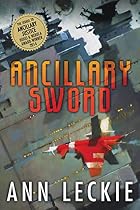
This is the sequel to Leckie's multi-award-winning SF novel Ancillary Justice, and, I believe, the second book in what's intended to be a trilogy. Like the first one, I enjoyed it greatly. Admittedly, the plot is perhaps not very thick, and much of it seems a bit tangential to the main conflict of the series. But I don't mind, because it continues to hit lots and lots of my buttons, with its thoughtful world-building, its fascinating and easy-to-feel-for main character, its pointed-but-not-preachy take on the evils of imperialism, and the original and interesting things it does with POV and language. Plus, my interest in what's going on in the larger story arc hasn't diminished any. I'm now very much looking forward to the next volume.
Rating: 4.5/5
This is the sequel to Leckie's multi-award-winning SF novel Ancillary Justice, and, I believe, the second book in what's intended to be a trilogy. Like the first one, I enjoyed it greatly. Admittedly, the plot is perhaps not very thick, and much of it seems a bit tangential to the main conflict of the series. But I don't mind, because it continues to hit lots and lots of my buttons, with its thoughtful world-building, its fascinating and easy-to-feel-for main character, its pointed-but-not-preachy take on the evils of imperialism, and the original and interesting things it does with POV and language. Plus, my interest in what's going on in the larger story arc hasn't diminished any. I'm now very much looking forward to the next volume.
Rating: 4.5/5
73bragan
121. Voices from the Moon: Apollo Astronauts Describe Their Lunar Experiences by Andrew Chaikin with Victoria Kohl
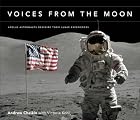
Space journalist Andrew Chaikin conducted extensive interviews with the Apollo astronauts in (I believe) the 80s and early 90s. In this book, he collects snippets of those interviews, along with high-quality photographs from various Apollo missions. I find these snippets fascinating and remarkable, because they feature the astronauts opening up in a very candid and (if I may use the phrase) down-to-Earth kind of way, a way that cuts through the often difficult expectations that people have of them to reveal something of what it was like to just be a guy doing a job, when that job involved going to the moon. (An example that gives you something of the flavor of the book: Alan Bean talking about what it was like for him to lift off from the moon, knowing that he was leaving an extraordinary place after an extraordinary mission and that it would probably be a very long time before anyone ever came back to that particular spot. There are things, he says, that people expect you to say about that, and he is capable of saying them, but what he was really thinking at that moment was that he hoped none of the little bits of foil that were falling off the lander would land on the science experiments he'd so carefully set up and mess them up.)
As someone with a deep and abiding fascination for this period of space history, someone who loves hearing the inspirational phrases but is even more interested in the unvarnished reality of it all, this book was utterly and completely up my alley, and I am delighted that it exits.
I should also add that I recommend Chaikin's history of the Apollo program A Man on the Moon very highly. Voices from the Moon may be interesting mainly to my fellow obsessive space nerds, but that one is a must-read for anybody with any interest in the subject at all.
Rating: 4/5
Space journalist Andrew Chaikin conducted extensive interviews with the Apollo astronauts in (I believe) the 80s and early 90s. In this book, he collects snippets of those interviews, along with high-quality photographs from various Apollo missions. I find these snippets fascinating and remarkable, because they feature the astronauts opening up in a very candid and (if I may use the phrase) down-to-Earth kind of way, a way that cuts through the often difficult expectations that people have of them to reveal something of what it was like to just be a guy doing a job, when that job involved going to the moon. (An example that gives you something of the flavor of the book: Alan Bean talking about what it was like for him to lift off from the moon, knowing that he was leaving an extraordinary place after an extraordinary mission and that it would probably be a very long time before anyone ever came back to that particular spot. There are things, he says, that people expect you to say about that, and he is capable of saying them, but what he was really thinking at that moment was that he hoped none of the little bits of foil that were falling off the lander would land on the science experiments he'd so carefully set up and mess them up.)
As someone with a deep and abiding fascination for this period of space history, someone who loves hearing the inspirational phrases but is even more interested in the unvarnished reality of it all, this book was utterly and completely up my alley, and I am delighted that it exits.
I should also add that I recommend Chaikin's history of the Apollo program A Man on the Moon very highly. Voices from the Moon may be interesting mainly to my fellow obsessive space nerds, but that one is a must-read for anybody with any interest in the subject at all.
Rating: 4/5
74rebeccanyc
Both space books sound fascinating. I'm not sure if I will ever read them, so I'm grateful for your review.
75bragan
>74 rebeccanyc: If there's anything I know how to do, it's recommend space books! :)
76dchaikin
>65 bragan: In 1995 when I took a raft down part of the Grand Canyon the river guides told us they loved Abbey's books, but really did not like Abbey the person. : )
>73 bragan: this sounds terrific. I really should read one of Andrew Chaikin's books, just for the name.
>73 bragan: this sounds terrific. I really should read one of Andrew Chaikin's books, just for the name.
77mabith
Voices From the Moon sounds really excellent. I found while reading The Martian that my space-love has not ebbed even a tiny bit. That's probably why I haven't read/enjoyed that much science-fiction, really. I wanted it all to be relatively near-future space travel and about those mechanics (versus war and world building and revolutions and evil corporations and such).
78bragan
>76 dchaikin: I will take that as vindication of my opinions about Abbey.
And yes, you should read it! Clearly, all Chaikins are awesome people. :)
>77 mabith: I am, admittedly, kind of easy to please when it comes to books on Apollo, because just about anything on the topic fascinates me. But I did find that one especially appealing, if only because it has a slightly different flavor to most of them. Interestingly, I think I might be slightly the opposite when it comes to tastes in SF, because when it comes to the detailed mechanics of near-future space travel, if I'm going to read about that, I often much prefer non-fiction. I am still very much looking forward to reading The Martian, though. It's on my TBR shelves.
And yes, you should read it! Clearly, all Chaikins are awesome people. :)
>77 mabith: I am, admittedly, kind of easy to please when it comes to books on Apollo, because just about anything on the topic fascinates me. But I did find that one especially appealing, if only because it has a slightly different flavor to most of them. Interestingly, I think I might be slightly the opposite when it comes to tastes in SF, because when it comes to the detailed mechanics of near-future space travel, if I'm going to read about that, I often much prefer non-fiction. I am still very much looking forward to reading The Martian, though. It's on my TBR shelves.
80bragan
122. Broken Monsters by Lauren Beukes
This novel starts, more or less, with the Detroit police department finding a gruesome murder scene: the top half of a boy crudely joined onto the bottom half of a deer. And from there, things get... stranger.
I really enjoyed this one, particularly the way it seems to twist around from one genre to another, starting out mostly as a police procedural and slowly becoming creepy supernatural horror, with a lot of interesting stops along the way. This feels like it should result in as much of a stitched-together mess as the boy/deer hybrid, but somehow it all flows together in a way that feels very natural, and while I imagine the surreal fantasy elements are not going to be everybody's cup of tea, they and the strange, skewed, almost low-key way they're approached worked extremely well for me. So did the wonderfully well-drawn characters, the assured and confident writing style, and the more-complex-than-they-look themes about art and urban decay and life in the age of the internet. Good stuff.
Rating: 4.5/5
This novel starts, more or less, with the Detroit police department finding a gruesome murder scene: the top half of a boy crudely joined onto the bottom half of a deer. And from there, things get... stranger.
I really enjoyed this one, particularly the way it seems to twist around from one genre to another, starting out mostly as a police procedural and slowly becoming creepy supernatural horror, with a lot of interesting stops along the way. This feels like it should result in as much of a stitched-together mess as the boy/deer hybrid, but somehow it all flows together in a way that feels very natural, and while I imagine the surreal fantasy elements are not going to be everybody's cup of tea, they and the strange, skewed, almost low-key way they're approached worked extremely well for me. So did the wonderfully well-drawn characters, the assured and confident writing style, and the more-complex-than-they-look themes about art and urban decay and life in the age of the internet. Good stuff.
Rating: 4.5/5
81mabith
>78 bragan: Oh there's a limit to how techy I want fiction to be, but I'm the opposite way. If I'm going to read about war and revolution then I'd much rather read non-fiction. I didn't find The Martian overly techy, but I think it's technology is something I'm better at understanding than some types.
82RidgewayGirl
So glad to finally see a review for Broken Monsters. I really liked The Shining Girls, although it was not without problems, but I thought that Beukes showed promise. I'll have to read it.
83bragan
>81 mabith: Whereas non-fiction about war and revolution can sometimes make my eyes glaze over.
>82 RidgewayGirl: I have The Shining Girls on my TBR shelves already, and after Broken Monsters I'm very much looking forward to ti.
>82 RidgewayGirl: I have The Shining Girls on my TBR shelves already, and after Broken Monsters I'm very much looking forward to ti.
84kaylaraeintheway
>73 bragan:: Yay, more space books! Added both to my list :)
85dchaikin
>80 bragan: don't see myself reading this, but your review tempts me. Excellent review.
86bragan
>84 kaylaraeintheway: You can never have enough good space books!
>85 dchaikin: Again, I do think it's the kind of book that's probably not going to be up everybody's alley, but, boy, was it right up mine.
>85 dchaikin: Again, I do think it's the kind of book that's probably not going to be up everybody's alley, but, boy, was it right up mine.
87bragan
123. Finding Zero: A Mathematician's Odyssey to Uncover the Origins of Numbers by Amir D. Aczel
Mathematican Amir D. Aczel, pursuing a lifelong fascination with the origins of both the so-called "Arabic numerals" and the concept of number itself, travels to India to look at ancient inscriptions that include numbers, and to Cambodia in search of a lost artifact said to feature the earliest known use of the zero (or at least the earliest known use outside the Americas).
Unfortunately, I found this book really disappointing. There are a few interesting tidbits of math and history, but far too much of it is taken up by the author's thoughts about Eastern philosophy and mysticism, which he admires to the point, apparently, of believing its "non-Western logic" is a good approach to curing cancer. He also believes that the zero was invented in the East because it resonated with the Buddhist concept of the void. Which is an interesting thought, and may well even be true, but Aczel doesn't support the idea in any particularly coherent or scholarly way. He just... believes it.
He also grossly overestimates how interesting the details of his life and his travels are. (Here's a hint for people writing books of this nature: unless you've got a good story to tell about it, or are including some vivid description that gives readers a good feel for the setting, we really don't need to know the names of all the hotels you stayed at, or what you had for lunch, or what route you took to get to the museum. Really.) And he's trying way too hard to paint this as some kind of exciting Indiana Jones-style adventure with himself as the protagonist, even at times when, as far as I can tell, he mostly just seems to be noodling around at tourist sites.
Basically, this book was just really not at all what I was expecting or hoping for.
Rating: 2/5
(Note: This was an ER book.)
Mathematican Amir D. Aczel, pursuing a lifelong fascination with the origins of both the so-called "Arabic numerals" and the concept of number itself, travels to India to look at ancient inscriptions that include numbers, and to Cambodia in search of a lost artifact said to feature the earliest known use of the zero (or at least the earliest known use outside the Americas).
Unfortunately, I found this book really disappointing. There are a few interesting tidbits of math and history, but far too much of it is taken up by the author's thoughts about Eastern philosophy and mysticism, which he admires to the point, apparently, of believing its "non-Western logic" is a good approach to curing cancer. He also believes that the zero was invented in the East because it resonated with the Buddhist concept of the void. Which is an interesting thought, and may well even be true, but Aczel doesn't support the idea in any particularly coherent or scholarly way. He just... believes it.
He also grossly overestimates how interesting the details of his life and his travels are. (Here's a hint for people writing books of this nature: unless you've got a good story to tell about it, or are including some vivid description that gives readers a good feel for the setting, we really don't need to know the names of all the hotels you stayed at, or what you had for lunch, or what route you took to get to the museum. Really.) And he's trying way too hard to paint this as some kind of exciting Indiana Jones-style adventure with himself as the protagonist, even at times when, as far as I can tell, he mostly just seems to be noodling around at tourist sites.
Basically, this book was just really not at all what I was expecting or hoping for.
Rating: 2/5
(Note: This was an ER book.)
88Poquette
Wow! What a shame that Finding Zero fell so short of expectations. Aczel's book Pendulum, which is about the famous Foucault pendulum, was outstanding — about both Foucault himself and the very colorful historical context. He is such a prolific writer, it is hard to account for such discrepancies, but maybe he is running out of steam.
89mabith
Very frustrating about Finding Zero! I just read his book about the compass and was pleased that he didn't spend time trying to pad things out unnecessarily. It's always hard to tell what's the author's fault and what problems are being caused by publisher issues (perhaps they decided he didn't need a dedicated editor anymore, I've come across a lot of new books that seem like no professional editor has touched them, and from proper publishers too).
90bragan
>88 Poquette: The front cover said his book on Fermat's Last Theorem had been a bestseller, and all I could think while reading Finding Zero was, "Seriously? This guy?" He seemed kind of... amateurish. Maybe the problem is that he was trying to write a different kind of book than he was used to, one that was a lot more personal.
>89 mabith: This one seemed to be almost all padding, to tell you the truth. I'm not at all sure a good editor could have fixed it.
>89 mabith: This one seemed to be almost all padding, to tell you the truth. I'm not at all sure a good editor could have fixed it.
92bragan
>91 dchaikin: Yeah, it looked pretty interesting. Ah, well.
93bragan
124. The Heart Is a Lonely Hunter by Carson McCullers

This novel, set in the deep South shortly before WWII, revolves around a man named Singer, who is deaf and (effectively) mute, and those who gravitate towards Singer because, in his silence, he is easy to talk to -- or, perhaps more importantly, easy to project oneself onto.
I hesitate to use it, because it's become a bit of a cliche, but if ever there was a book that merited the phrase "deceptively simple," this is it. I honestly wasn't too certain about the writing style at first, thinking it rather simplistic and choppy, but it quickly drew me in, and, in the end, I think it works extremely well. And while there's nothing remotely obscure or difficult about any of it, there's a lot going on under the surface here. It depicts, in many subtle and interlocking ways, the difficulties of communication, of forming true human connections, of bridging the gap between words and action, and of breaking away from what Thoreau called "lives of quiet desperation." It's also terribly poignant, with well-drawn and believable characters that one cannot help but feel for.
This one definitely deserves its reputation.
Rating: 4.5/5

This novel, set in the deep South shortly before WWII, revolves around a man named Singer, who is deaf and (effectively) mute, and those who gravitate towards Singer because, in his silence, he is easy to talk to -- or, perhaps more importantly, easy to project oneself onto.
I hesitate to use it, because it's become a bit of a cliche, but if ever there was a book that merited the phrase "deceptively simple," this is it. I honestly wasn't too certain about the writing style at first, thinking it rather simplistic and choppy, but it quickly drew me in, and, in the end, I think it works extremely well. And while there's nothing remotely obscure or difficult about any of it, there's a lot going on under the surface here. It depicts, in many subtle and interlocking ways, the difficulties of communication, of forming true human connections, of bridging the gap between words and action, and of breaking away from what Thoreau called "lives of quiet desperation." It's also terribly poignant, with well-drawn and believable characters that one cannot help but feel for.
This one definitely deserves its reputation.
Rating: 4.5/5
94bragan
125. Camp Concentration by Thomas M. Disch

A short SF novel from 1972, in which a poet is jailed for refusing the draft and then sent off to document a secret government program in which prisoners are experimented on to raise their intelligence. The prisoners spend a lot of time talking about religion and philosophy (and, oddly, alchemy).
There are individual moments here I really liked: a clever and insightful line of dialog, or a very dry, sly, intellectual bit of humor here and there. And the novel as a whole does capture something of the troubled spirit of its times. But for the most part, the only word I can use to describe it is "pretentious." Very, very pretentious. It also goes in for a trope that really bugs me: the use of an eidetic memory and a taste for high culture as signifiers of soaring intelligence. Admittedly, it's not quite as simplistic as that, but that doesn't stop it from annoying me. I did think, briefly, that it was at least going to pull off a very bold, very bleak sort of ending, but ultimately it cheated its way out.
A while back, I read Disch's The Prisoner, a novel based on the classic TV show which had some similar elements to this one: prisoners, psychological experiments, weirdness, philosophical commentary, and all. I must say, I liked that one a lot better. (And it may be as unusual among TV tie-in novels as its source material was among TV shows.)
Rating: an uncharitable 3/5.

A short SF novel from 1972, in which a poet is jailed for refusing the draft and then sent off to document a secret government program in which prisoners are experimented on to raise their intelligence. The prisoners spend a lot of time talking about religion and philosophy (and, oddly, alchemy).
There are individual moments here I really liked: a clever and insightful line of dialog, or a very dry, sly, intellectual bit of humor here and there. And the novel as a whole does capture something of the troubled spirit of its times. But for the most part, the only word I can use to describe it is "pretentious." Very, very pretentious. It also goes in for a trope that really bugs me: the use of an eidetic memory and a taste for high culture as signifiers of soaring intelligence. Admittedly, it's not quite as simplistic as that, but that doesn't stop it from annoying me. I did think, briefly, that it was at least going to pull off a very bold, very bleak sort of ending, but ultimately it cheated its way out.
A while back, I read Disch's The Prisoner, a novel based on the classic TV show which had some similar elements to this one: prisoners, psychological experiments, weirdness, philosophical commentary, and all. I must say, I liked that one a lot better. (And it may be as unusual among TV tie-in novels as its source material was among TV shows.)
Rating: an uncharitable 3/5.
95dchaikin
The Heart is a Lonely Hunter is one of those books I keep meaning to read, but never do. Enjoyed your review. Sorry Camp Concentration didn't work for you. I have to admit the title turns me off.
96bragan
>95 dchaikin: I definitely recommend The Heart Is a Lonely Hunter. It took me quite a while to get around to it, too, but it was worth waiting for.
And, personally, I think the title may well be the best thing about Camp Concentration. It's certainly not a thoughtless or insensitive pun; the legacy of WWII permeates the book even more than the then-current reality of Vietnam. Whether it does so effectively, though, is another question.
And, personally, I think the title may well be the best thing about Camp Concentration. It's certainly not a thoughtless or insensitive pun; the legacy of WWII permeates the book even more than the then-current reality of Vietnam. Whether it does so effectively, though, is another question.
97valkyrdeath
I had no idea there was a book of The Prisoner. I love the series. I can't really imagine it without those surreal visuals, but I'm quite curious now. Not sure if I'm as interested in Camp Concentration though.
98bragan
>97 valkyrdeath: There is! It's... maybe an adaptation, maybe a sequel, or maybe something else. It's as surreal and ambiguous as the show itself, and I was really rather surprised by how well it worked. Although I do remember thinking the ending made a little too much sense. :)
99RidgewayGirl
I loved The Heart is a Lonely Hunter when I read it last year.
100kidzdoc
I'm glad that you enjoyed The Heart Is a Lonely Hunter, Betty. It's one of my favorite American novels, and it's arguably the best debut novel that I've ever read.
101bragan
>100 kidzdoc: It really is amazing as a debut novel.
102valkyrdeath
>98 bragan: That's another book on my wishlist! I think I'll be reading it soon. Not sure I've ever read anything by Disch except maybe the odd short story in an anthology without realising it.
103bragan
>102 valkyrdeath: I hope you enjoy it as much as I did! As I recall, it's a weird book, but weird in exactly the right ways.
I'm pretty sure I've read a short story or maybe a novella by Disch here and there, but those are the only two novels of his I've read. Despite my lukewarm feelings about Camp Concentration, I'm pretty sure I'd be willing to try another sometime.
I'm pretty sure I've read a short story or maybe a novella by Disch here and there, but those are the only two novels of his I've read. Despite my lukewarm feelings about Camp Concentration, I'm pretty sure I'd be willing to try another sometime.
104dchaikin
>96 bragan: I don't think it's exactly the insensitivity of the title, Camp Concentration - it sounds immature to me somehow...don't I just sound snotty...
105bragan
>104 dchaikin: Hmm. While I may have a number of complaints about the book, I wouldn't count immaturity as one of them...
106bragan
126. The Secret Life of Pronouns: What Our Words Say About Us by James W. Pennebaker

James W. Pennebaker is a social psychologist who has spent a lot of time using computers to look for revealing patterns in people's written and spoken word use. He doesn't concentrate on the words you'd probably expect, though: the meaty, substantial nouns and verbs that convey most of the overt meaning of language. Instead, he finds subtler meanings in what he calls "functional words," all those little bits of language that hold sentences together but that we normally pay very little attention to, such as articles and prepositions.
Here's a small sample of his findings:
Women use more personal pronouns (such as "he" and "she") than men do, while men use more articles ("a" and "the"). The conclusion seems to be that women, statistically speaking, talk more about people and men more about objects. (There are, of course, multiple possible explanations for this.)
When two people of different social status are talking -- e.g. a boss and an employee -- the low-status person uses the word "I" much more frequently, while the high-status one uses "you" more often.
People who are lying tend to use "I" less often and to use less complex sentences than people telling the truth, among a number of other differences. Most people can't tell the difference at much more than chance levels, but Pennebaker has a computer program that he claims can manage about 75% accuracy. Which is not exactly a super-reliable lie detector, but is impressive, nonetheless
All of which is interesting stuff, and there are quite a few other intriguing tidbits in here, as well. Unfortunately, though, I didn't find the book as a whole nearly as fascinating a read as I'd hoped. Pennebaker may be an expert on other people's word choices, but I didn't necessarily find his own style all that gripping, and a lot of the examples he uses to illustrate his points aren't particularly great. The book also seems a bit padded in places. It's not really that long -- less than 300 pages, minus the end matter -- but it seemed to me it could have been a fair bit shorter without losing much.
I also wish he'd gone into some of his methodology a bit more. Obviously, this is a book written for the layman, not a scientific paper, but some of the things it does that annoy me could have been easily avoided. For instance, early in the book, there are a number of tables comparing what percentage of the time certain groups used certain words... but he doesn't always include the number of subjects in the study, which renders those numbers pretty much meaningless. And in the sections on personality and emotions, he makes some claims about how certain patterns of word use track with certain personality traits or emotional states, but, while he goes into detail about how the word patterns were measured, he often doesn't discuss how the presence of those personality traits or emotions were determined. In some cases, he almost gives the impression that it's based on nothing more than his own assumptions from reading the writing samples. Hopefully that's not actually true, but there's no way to tell. Fortunately, most of the rest of the book is better on that score, but since those sections come early on, it left me with a lingering mistrustful feeling I never entirely managed to overcome.
Still, while some of the conclusions seem much more solid than others -- which is probably inevitable in a squishy field like psychology -- and while Pennebaker might oversell some of his ideas a little bit, this kind of computerized word analysis does seem like an interesting and potentially useful tool, and some of the things he does with it are kind of nifty.
Rating: 3.5/5

James W. Pennebaker is a social psychologist who has spent a lot of time using computers to look for revealing patterns in people's written and spoken word use. He doesn't concentrate on the words you'd probably expect, though: the meaty, substantial nouns and verbs that convey most of the overt meaning of language. Instead, he finds subtler meanings in what he calls "functional words," all those little bits of language that hold sentences together but that we normally pay very little attention to, such as articles and prepositions.
Here's a small sample of his findings:
All of which is interesting stuff, and there are quite a few other intriguing tidbits in here, as well. Unfortunately, though, I didn't find the book as a whole nearly as fascinating a read as I'd hoped. Pennebaker may be an expert on other people's word choices, but I didn't necessarily find his own style all that gripping, and a lot of the examples he uses to illustrate his points aren't particularly great. The book also seems a bit padded in places. It's not really that long -- less than 300 pages, minus the end matter -- but it seemed to me it could have been a fair bit shorter without losing much.
I also wish he'd gone into some of his methodology a bit more. Obviously, this is a book written for the layman, not a scientific paper, but some of the things it does that annoy me could have been easily avoided. For instance, early in the book, there are a number of tables comparing what percentage of the time certain groups used certain words... but he doesn't always include the number of subjects in the study, which renders those numbers pretty much meaningless. And in the sections on personality and emotions, he makes some claims about how certain patterns of word use track with certain personality traits or emotional states, but, while he goes into detail about how the word patterns were measured, he often doesn't discuss how the presence of those personality traits or emotions were determined. In some cases, he almost gives the impression that it's based on nothing more than his own assumptions from reading the writing samples. Hopefully that's not actually true, but there's no way to tell. Fortunately, most of the rest of the book is better on that score, but since those sections come early on, it left me with a lingering mistrustful feeling I never entirely managed to overcome.
Still, while some of the conclusions seem much more solid than others -- which is probably inevitable in a squishy field like psychology -- and while Pennebaker might oversell some of his ideas a little bit, this kind of computerized word analysis does seem like an interesting and potentially useful tool, and some of the things he does with it are kind of nifty.
Rating: 3.5/5
108bragan
>107 dchaikin: I find myself thinking that, actually, a long magazine article just listing those and all the other significant conclusions might have been more interesting to read than the book itself.
109rebeccanyc
>106 bragan: How disappointing. I'd been interested in this book since reading about it earlier this year, but wanted to look at it in a store before deciding whether to buy it. Since I haven't seen it, I haven't bought it -- and maybe now I won't!
110bragan
>109 rebeccanyc: I see there are quite a few people who rated and reviewed it more highly than I did. But... Yeah, I can't unreservedly recommend it, really.
111bragan
127. The Turn of the Screw by Henry James
A young woman is hired as a governess for two orphaned children, with only one condition: the children's guardian, who lives elsewhere, doesn't want to be bothered with any reports or questions about them. Despite the worrying nature of this request, she very much enjoys her job and the two angelic children... until the ghosts start showing up. And until she starts wondering whether the children are quite as angelic as they seem.
The basic story here is decent. The disturbing elements are nicely subtle and slow-building, and there's an intriguing ambiguity about the whole thing. But Henry James' writing style I do not get along. I can deal with wordy Victorian prose, in general, but James takes it to an entirely new level. Reading one of his sentences is like navigating a labyrinth: it's full of unexpected turns and distracting side passages, and by the time you've reached the end of it, it's hard to remember the route you took to get there. It was just way too difficult for me to give myself over to a sense of creepiness when I often had to read a sentence over two or three times before I could extract the meaning out of it without getting lost in the middle (generally somewhere around the fifth or sixth comma). And James is definitely not an author you want to read while still working on your first cup of morning coffee, or while desperately trying not to nod off at bedtime -- which, unfortunately, are the main times I've had available to read lately.
Rating: 3/5
A young woman is hired as a governess for two orphaned children, with only one condition: the children's guardian, who lives elsewhere, doesn't want to be bothered with any reports or questions about them. Despite the worrying nature of this request, she very much enjoys her job and the two angelic children... until the ghosts start showing up. And until she starts wondering whether the children are quite as angelic as they seem.
The basic story here is decent. The disturbing elements are nicely subtle and slow-building, and there's an intriguing ambiguity about the whole thing. But Henry James' writing style I do not get along. I can deal with wordy Victorian prose, in general, but James takes it to an entirely new level. Reading one of his sentences is like navigating a labyrinth: it's full of unexpected turns and distracting side passages, and by the time you've reached the end of it, it's hard to remember the route you took to get there. It was just way too difficult for me to give myself over to a sense of creepiness when I often had to read a sentence over two or three times before I could extract the meaning out of it without getting lost in the middle (generally somewhere around the fifth or sixth comma). And James is definitely not an author you want to read while still working on your first cup of morning coffee, or while desperately trying not to nod off at bedtime -- which, unfortunately, are the main times I've had available to read lately.
Rating: 3/5
112mabith
It's interesting to suddenly see a book you just know by the title and find it's plot is completely unexpected. I had no idea The Turn of the Screw was a ghost story. Not something I'd have picked up regardless, but I'm glad to know that about James' style.
113bragan
>112 mabith: I think I'd heard the title for ages, too, before I knew what it was about. And then when I did, it sounded interesting and creepy, but... well. :)
114dchaikin
Well, even if you didn't love it, it's still an accomplishment. I laughed a tiny bit at your losing a sense of creepiness to the effort of comprehension.
115rebeccanyc
I read The Turn of the Screw a few years ago, after hearing about it for years, and found it definitely creepy but a little over the top.
116bragan
>114 dchaikin: Fortunately it's a very short book, or I would count managing to finish all those tortured sentences an accomplishment, indeed.
>115 rebeccanyc: Speaking of "over the top," I think the cover on this one may be just about my favorite ever. It's so wonderfully, hilariously pulpy The picture above does not do it justice.
>115 rebeccanyc: Speaking of "over the top," I think the cover on this one may be just about my favorite ever. It's so wonderfully, hilariously pulpy The picture above does not do it justice.
117valkyrdeath
I love your description of trying to read one of James' sentences. Probably much more entertaining to read than the book itself.
>112 mabith: I only discovered The Turn of the Screw was a ghost story a couple of years ago when I watched The Innocents, which is based on it. Didn't think a great deal of the film though. The title was very familiar years before that.
>112 mabith: I only discovered The Turn of the Screw was a ghost story a couple of years ago when I watched The Innocents, which is based on it. Didn't think a great deal of the film though. The title was very familiar years before that.
118bragan
>117 valkyrdeath: Thank you.
I did wonder if it's a story that might work well in movie form, without the ridiculous prose to wade through. Too bad that version, at least, didn't manage it.
I did wonder if it's a story that might work well in movie form, without the ridiculous prose to wade through. Too bad that version, at least, didn't manage it.
119valkyrdeath
>118 bragan: The film does seem to be generally highly regarded so it may just be me. I thought I would love it, considering that I love films like the original version of The Haunting. It was very atmospheric, but there didn't seem a proper ending to it to me. It felt very abrupt. I'm not sure how that compares to the book.
120bragan
>119 valkyrdeath: The book also has a very abrupt ending. I actually haven't been able to decide whether it's a good or a bad ending, but I do give it points for being an interestingly surprising ending.
121OscarWilde87
>106 bragan: As someone interested in linguistics, I found your review very interesting.
>111 bragan: This is a helpful review as well. Thanks!
>111 bragan: This is a helpful review as well. Thanks!
122bragan
>121 OscarWilde87: Glad to be of service! Linguistics is something that's always fascinated me, too.
123rebeccanyc
>117 valkyrdeath: I liked the movie "The Innocents," which I saw after someone recommended it on my thread. I thought it was creepy and a good interpretation of the novel.
124valkyrdeath
>123 rebeccanyc: I can't comment on how good an adaptation it was since I haven't read the book. I was enjoying the film at first, the atmosphere was great and it was creepy, but the ending ruined it for me. It left me no wiser as to what any of it was about than when it started.
125bragan
128. The Best American Nonrequired Reading 2011 edited by Dave Eggers
A collection of fiction and non-fiction from 2010, selected by Dave Eggers and a committee of high school students. It's a good, solid collection, overall. Some of the short stories were more to my taste than others, but they're all decent, and the non-fiction pieces are almost always interesting and sometimes very moving. And for a series created specifically to showcase American writing, it has an impressively global flavor, featuring glimpses into such far-flung places as Uganda and China.
What surprised me, though, is just how dark so much of the subject matter is. There are couple of pieces that are simply entertaining and fun: Sloane Crosley's wacky adventures in Paris, an article about a bank robber who, on his arrest, revealed all his secrets to the police (because, hey, who doesn't like a good heist story?). But mostly it's a cavalcade of poverty, injustice, violence, and bad things happening to not-always-bad people. It's not all unremittingly bleak, to be sure, but some of it is very disturbing indeed. Mac McClelland's piece about the technically-not-considered-a-genocide genocide of the Karen people in Burma is particularly difficult to read.
Not that I'm complaining about this, by any means. Sometimes the most distressing stories are the ones that most need to be told, and listened to. But, considering that these were all chosen by high school students, I find myself thinking two simultaneous things. One is that I greatly admire their social consciousness, which is surely much more well-developed than my own was at that age (and maybe, if I'm honest, more than it is even now). But the other is a feeling of sadness at the thought that, when these kids look out at the world they're about to inherit, this is mostly what they see.
Anyway. This is the first of the Nonrequired Reading series that I've read, but it's not going to be the last. Although I can't help hoping, perhaps foolishly, for a few more glimmerings of joy and optimism from the 2012 kids.
Rating: 4/5
A collection of fiction and non-fiction from 2010, selected by Dave Eggers and a committee of high school students. It's a good, solid collection, overall. Some of the short stories were more to my taste than others, but they're all decent, and the non-fiction pieces are almost always interesting and sometimes very moving. And for a series created specifically to showcase American writing, it has an impressively global flavor, featuring glimpses into such far-flung places as Uganda and China.
What surprised me, though, is just how dark so much of the subject matter is. There are couple of pieces that are simply entertaining and fun: Sloane Crosley's wacky adventures in Paris, an article about a bank robber who, on his arrest, revealed all his secrets to the police (because, hey, who doesn't like a good heist story?). But mostly it's a cavalcade of poverty, injustice, violence, and bad things happening to not-always-bad people. It's not all unremittingly bleak, to be sure, but some of it is very disturbing indeed. Mac McClelland's piece about the technically-not-considered-a-genocide genocide of the Karen people in Burma is particularly difficult to read.
Not that I'm complaining about this, by any means. Sometimes the most distressing stories are the ones that most need to be told, and listened to. But, considering that these were all chosen by high school students, I find myself thinking two simultaneous things. One is that I greatly admire their social consciousness, which is surely much more well-developed than my own was at that age (and maybe, if I'm honest, more than it is even now). But the other is a feeling of sadness at the thought that, when these kids look out at the world they're about to inherit, this is mostly what they see.
Anyway. This is the first of the Nonrequired Reading series that I've read, but it's not going to be the last. Although I can't help hoping, perhaps foolishly, for a few more glimmerings of joy and optimism from the 2012 kids.
Rating: 4/5
126rebeccanyc
>124 valkyrdeath: I found both the book and the movie mighty ambiguous and definitely the ending left a lot of questions unanswered.
127bragan
>126 rebeccanyc: I think it was meant to. Which I am more or less OK with, if only it had been more readable! Maybe I will check out the movie, after all.
128mabith
The phrase "non-required reading" always amuses me (since many students seem to avoid reading even the required reading). With this generation of high school and college students there always seems to be an unrelenting message from older generations that oh they're so lazy, so useless, so spoiled, so entitled, etc... That attitude seems to be much much stronger toward millenials than we've seen towards youth before, and it's pretty upsetting (it wasn't that strong when I was graudating high school, certainly). I constantly see stories about high schoolers inventing amazing things and just being generally great, and I think they're aware just how much the world is being messed up while many have no voting power.
There was a great response to that ridiculous Time magazine cover labeling millenials the "me me me generation" (which is every generation of youth) and called them lazy, self-entitled, narcissists (which again, YOUTH). The change was "The Indentured Generation: We trampled their rights, tanked the economy, and trashed the planet for our benefit -- but expect them to foot the bill. Why we call them narcissists."
There was a great response to that ridiculous Time magazine cover labeling millenials the "me me me generation" (which is every generation of youth) and called them lazy, self-entitled, narcissists (which again, YOUTH). The change was "The Indentured Generation: We trampled their rights, tanked the economy, and trashed the planet for our benefit -- but expect them to foot the bill. Why we call them narcissists."
129bragan
>128 mabith: Required reading is the worst kind of reading, and I often fear that its mere existence often puts kids off of any kind of reading. I know I resented it horribly when I was a kid, generally because it interfered with other kinds of reading I actually wanted to be doing. And classroom experiences, alas, put me off some supposedly classic authors for life. Here's to non-required reading, I say!
I think every generation, or at least every generation for a very long time, has gotten the "kids today are lazy good-for-nothings" attitude, but I can believe that in many ways it might be worse for the current generation. If nothing else, I think there may be an extra-large gulf between those of us born before the advent of the internet and those who grew up online, making it way too easy to criticize these kids with their cellphones and their Facebook and so and on and blah, blah, blah. But I do think the internet and everything that goes with it might well mean that they're more engaged, more aware of the world, than my generation was at their age.
I think every generation, or at least every generation for a very long time, has gotten the "kids today are lazy good-for-nothings" attitude, but I can believe that in many ways it might be worse for the current generation. If nothing else, I think there may be an extra-large gulf between those of us born before the advent of the internet and those who grew up online, making it way too easy to criticize these kids with their cellphones and their Facebook and so and on and blah, blah, blah. But I do think the internet and everything that goes with it might well mean that they're more engaged, more aware of the world, than my generation was at their age.
130bragan
129. The Age of Miracles by Karen Thompson Walker
Julia is an ordinary middle school girl living an ordinary life, until the day when everybody's definition of "ordinary" changes: a 25-hour day. It turns out the Earth's rotation is mysteriously slowing, and each day from then on is longer than the last. Which is not good news for humanity, although Julia and her family carry on as best they can.
Let me start by saying, this is a pretty good book. Honestly. It's very well-written (especially for a YA novel, which I think is how it was marketed), it captures the feel of those awkward middle school years well, the characters are believable, and it hits some nice, poignant emotional notes. And yet... Well, I think I was precisely the wrong reader for this one.
My biggest problem was that I kept getting hung up on the science (or the lack thereof). I told myself I wasn't going to, that I could just accept the premise for what it was, but I simply could not help it. The more details Walker threw in about what was happening, the more I felt compelled to question it all. So I spent a lot of the novel with this voice in the back of my head that went something like, "OK, if something magically increased the gravitational constant, that could account for most of this, including increased gravity and the slowing of the Earth's rotation due to tidal effects. Hey, maybe Q from Star Trek did it; he mentioned being able to once. But... But surely to account for a slowing this dramatic, it would have to be an increase big enough that it would cause way more havoc than is being described here. Hmm, I could dig out my old physics textbook and try to calculate it... No! No, my physics is too rusty, and I do not have the time to waste on that! Anyway, I'm sure it would turn out to be entirely inaccurate. But... But maybe..." And then the whole thing would repeat again. Eventually that voice faded a bit, but it was hard to concentrate on much else while it was nattering on.
And even aside from the science, I had some plausibility problems, including the fact that for ages I was trying to figure out what year this was, when every middle school kid has a cell phone but the internet doesn't exist. Eventually I decided it must be some kind of alternate universe. And then, 150 pages in, the narrator casually mentions something about blogs. So everybody was getting all their information from the newspaper and CNN and nobody ever found out anything about anything until they saw it on TV or heard if from a neighbor because...?
In fact, this lack-of-characters-being-aware-of-things-quickly-enough issue led to the book managing to inadvertently put me off with the very first sentence. The sentence is "we didn't notice right away," which by itself is a great first sentence. But what it's talking about is people not noticing that the day had increased by 56 minutes. And... OK. I work at an astronomical observatory. Every day, Thanksgiving and Christmas not excluded, we run a project for the US Naval Observatory designed to carefully measure the difference between rotation-of-the-Earth time and atomic clock time. They use our data to calculate this value down to, I believe, a hundred-thousandth of a second. And we pay attention to the results because if we don't, all our other observations will be a little bit off. The point is, we would notice. Long before the day slowed down by 56 minutes! And so would every amateur astronomer with a backyard telescope, for that matter. I think I almost felt personally insulted by this. Later, I decided this may have been unfair, as she seems to maybe be implying the 56-minute slowdown happened essentially overnight, rather than gradually, as I'd first assumed. Which, of course just takes us right back to the "I'm nearly certain that ought to have had even more dire consequences than it has in the book" problem.
And then there's the scene where the government announces -- reasonably enough, I thought, given how rapidly the days are lengthening -- that things are going to stay on 24-hour clock time, regardless of day or night. The protagonist is aghast. How can they possibly be expected to adapt to such a schedule?! Now, I work rotating shifts, and have for a very long time. I know all too well how badly being out of sync with the sun can screw with you, and probably I, of all people, should be sympathetic. But instead, all I could think at that moment was, "Welcome to my world, bitches! Now you'll see what it's like!" And then I started speculating about how maybe the slowing was actually the doing of some supervillain shiftworker who wanted to force the rest of the world to understand. Which, needless to say was not the effect the author was going for.
Indeed, none of that is remotely what this book is about. It's about a girl and her family living through difficult times. It's about the experience of early adolescence, and the fragility of everything, and a bit about humanity's relationship to time and to nature. And it doesn't do a bad job of being about those things, in a somewhat lightweight kind of way. I tried to appreciate it on that level, and I succeeded to a certain extent, but it was still hard for me to get past my various issues.
So. Basically, I think I would not recommend this book to people with physics degrees, people who have anything at all to do with astronomy, people who read a lot of hard SF and expect good scientific explanations for things, people who work night shifts and have some degree of resentment towards those who don't, or people whose suspension of disbelief snaps immediately when nobody in a modern-day story seems to have Facebook. For everybody else, if it sounds like your sort of thing, go for it!
Rating: Let's call it 3.5/5.
Julia is an ordinary middle school girl living an ordinary life, until the day when everybody's definition of "ordinary" changes: a 25-hour day. It turns out the Earth's rotation is mysteriously slowing, and each day from then on is longer than the last. Which is not good news for humanity, although Julia and her family carry on as best they can.
Let me start by saying, this is a pretty good book. Honestly. It's very well-written (especially for a YA novel, which I think is how it was marketed), it captures the feel of those awkward middle school years well, the characters are believable, and it hits some nice, poignant emotional notes. And yet... Well, I think I was precisely the wrong reader for this one.
My biggest problem was that I kept getting hung up on the science (or the lack thereof). I told myself I wasn't going to, that I could just accept the premise for what it was, but I simply could not help it. The more details Walker threw in about what was happening, the more I felt compelled to question it all. So I spent a lot of the novel with this voice in the back of my head that went something like, "OK, if something magically increased the gravitational constant, that could account for most of this, including increased gravity and the slowing of the Earth's rotation due to tidal effects. Hey, maybe Q from Star Trek did it; he mentioned being able to once. But... But surely to account for a slowing this dramatic, it would have to be an increase big enough that it would cause way more havoc than is being described here. Hmm, I could dig out my old physics textbook and try to calculate it... No! No, my physics is too rusty, and I do not have the time to waste on that! Anyway, I'm sure it would turn out to be entirely inaccurate. But... But maybe..." And then the whole thing would repeat again. Eventually that voice faded a bit, but it was hard to concentrate on much else while it was nattering on.
And even aside from the science, I had some plausibility problems, including the fact that for ages I was trying to figure out what year this was, when every middle school kid has a cell phone but the internet doesn't exist. Eventually I decided it must be some kind of alternate universe. And then, 150 pages in, the narrator casually mentions something about blogs. So everybody was getting all their information from the newspaper and CNN and nobody ever found out anything about anything until they saw it on TV or heard if from a neighbor because...?
In fact, this lack-of-characters-being-aware-of-things-quickly-enough issue led to the book managing to inadvertently put me off with the very first sentence. The sentence is "we didn't notice right away," which by itself is a great first sentence. But what it's talking about is people not noticing that the day had increased by 56 minutes. And... OK. I work at an astronomical observatory. Every day, Thanksgiving and Christmas not excluded, we run a project for the US Naval Observatory designed to carefully measure the difference between rotation-of-the-Earth time and atomic clock time. They use our data to calculate this value down to, I believe, a hundred-thousandth of a second. And we pay attention to the results because if we don't, all our other observations will be a little bit off. The point is, we would notice. Long before the day slowed down by 56 minutes! And so would every amateur astronomer with a backyard telescope, for that matter. I think I almost felt personally insulted by this. Later, I decided this may have been unfair, as she seems to maybe be implying the 56-minute slowdown happened essentially overnight, rather than gradually, as I'd first assumed. Which, of course just takes us right back to the "I'm nearly certain that ought to have had even more dire consequences than it has in the book" problem.
And then there's the scene where the government announces -- reasonably enough, I thought, given how rapidly the days are lengthening -- that things are going to stay on 24-hour clock time, regardless of day or night. The protagonist is aghast. How can they possibly be expected to adapt to such a schedule?! Now, I work rotating shifts, and have for a very long time. I know all too well how badly being out of sync with the sun can screw with you, and probably I, of all people, should be sympathetic. But instead, all I could think at that moment was, "Welcome to my world, bitches! Now you'll see what it's like!" And then I started speculating about how maybe the slowing was actually the doing of some supervillain shiftworker who wanted to force the rest of the world to understand. Which, needless to say was not the effect the author was going for.
Indeed, none of that is remotely what this book is about. It's about a girl and her family living through difficult times. It's about the experience of early adolescence, and the fragility of everything, and a bit about humanity's relationship to time and to nature. And it doesn't do a bad job of being about those things, in a somewhat lightweight kind of way. I tried to appreciate it on that level, and I succeeded to a certain extent, but it was still hard for me to get past my various issues.
So. Basically, I think I would not recommend this book to people with physics degrees, people who have anything at all to do with astronomy, people who read a lot of hard SF and expect good scientific explanations for things, people who work night shifts and have some degree of resentment towards those who don't, or people whose suspension of disbelief snaps immediately when nobody in a modern-day story seems to have Facebook. For everybody else, if it sounds like your sort of thing, go for it!
Rating: Let's call it 3.5/5.
131lesmel
>130 bragan: I love this review. I hardly ever suffer from a lack of my willing suspension of disbelief, but this is exactly how it runs in my head. The Voice of Improbability totally ruins my reading experience.
132bragan
>131 lesmel: It's amazing, sometimes, what I can suspend my disbelief for. But, man, once that voice gets going, it's really, really hard to shut it up.
133RidgewayGirl
That was a fun review to read. Thank you.
134bragan
>133 RidgewayGirl: Thank you! I'm glad it didn't seem too long and self-centered instead. :)
135baswood
Just catching up with your thread and was amused to find that your experiences of reading Henry James >111 bragan: were so similar to mine, when I read What Maisie Knew. I had hoped that Turn of the Screw would be more readable being such a famous novel, I have five other Henry James novels on my shelf waiting to be read - Oh dear.
I enjoyed your rant about people not noticing the world's rotation slowing down. A great illustration of the fact that there are some books we just should not read, because we know way too much more than the author.
Edited to make sense
I enjoyed your rant about people not noticing the world's rotation slowing down. A great illustration of the fact that there are some books we just should not read, because we know way too much more than the author.
Edited to make sense
136japaul22
>130 bragan: I think this kind of reaction is unfortunately typical for any expert reading fiction about their field. I almost completely avoid fiction about the classical music world as I find it almost always wildly inaccurate and annoying. There are exceptions, but they are hard to find.
137bragan
>135 baswood: Five other Henry James novels! Oh, dear. One was more than enough for me. I may have like the plot of The Turn of the Screw well enough, but that's not a prose style I'm willing to give a second chance.
And I had the feeling going in that The Age of Miracles might be one of those books I just shouldn't read, but... Well, I'm not exactly sorry I didn't listen to that feeling, because I don't exactly regret reading the book, but I guess the results should have been predictable.
>136 japaul22: It's very true! Knowing more about the subject matter than the author does can ruin almost any work of fiction.
And I had the feeling going in that The Age of Miracles might be one of those books I just shouldn't read, but... Well, I'm not exactly sorry I didn't listen to that feeling, because I don't exactly regret reading the book, but I guess the results should have been predictable.
>136 japaul22: It's very true! Knowing more about the subject matter than the author does can ruin almost any work of fiction.
138bragan
I almost feel like this one shouldn't count in my books read list. But it was on my to-read shelves, and I read all of it, so, hey.
130. The Book of Questions by Gregory Stock

A small volume from the late 80s consisting entirely of questions designed to provoke thought, discussion, or self-examination. Most of them are based on hypothetical scenarios. Some semi-random examples: "If you could use a voodoo doll to hurt anyone you chose, would you?", "Would you be willing to have horrible nightmares every night for a year if you would be rewarded with extraordinary wealth?", "What, if anything, is too serious to be joked about?" There's lots of moral dilemmas and artificial choices, and questions about what you would trade for wealth or money or love or fulfillment.
I bought this at a library sale something like twenty years ago, and it sat on my shelves all that time until I finally decided to pick it up and read through it. Alas, I think that long, long delay was unfortunate, because this sort of exercise is surely much more interesting, enlightening, and useful when you're college-age and still figuring out who you are and what you value. Coming to it in my 40s, though... Well, for most of the questions either I already had an answer I'd worked out years ago, or the questions just seemed kind of stupid.
Rating: a grumpy old 2.5/5
130. The Book of Questions by Gregory Stock

A small volume from the late 80s consisting entirely of questions designed to provoke thought, discussion, or self-examination. Most of them are based on hypothetical scenarios. Some semi-random examples: "If you could use a voodoo doll to hurt anyone you chose, would you?", "Would you be willing to have horrible nightmares every night for a year if you would be rewarded with extraordinary wealth?", "What, if anything, is too serious to be joked about?" There's lots of moral dilemmas and artificial choices, and questions about what you would trade for wealth or money or love or fulfillment.
I bought this at a library sale something like twenty years ago, and it sat on my shelves all that time until I finally decided to pick it up and read through it. Alas, I think that long, long delay was unfortunate, because this sort of exercise is surely much more interesting, enlightening, and useful when you're college-age and still figuring out who you are and what you value. Coming to it in my 40s, though... Well, for most of the questions either I already had an answer I'd worked out years ago, or the questions just seemed kind of stupid.
Rating: a grumpy old 2.5/5
139bragan
131. Eight Little Piggies: Reflections in Natural History by Stephen Jay Gould

This collection of Gould's essays was published in 1993, but contains material from as far back as 1989. As with all his collections, the focus is on evolutionary biology, but he ranges pretty far across that subject. Sometimes he's focusing on small scientific details, which he uses to make broader points. Sometimes he's poking into odd corners of scientific history and shedding light on the lives of the people involved, especially when he feels they've been misunderstood in some way. A couple of the essays appear to be about completely unrelated things -- Mozart's musical prodigy, or the unreliability of Gould's own childhood memories -- but he always brings even those digressions back around to his main theme in unexpectedly graceful ways.
As always, his writing is both enthusiastic and wonderfully erudite. I don't know quite what it is about Gould, but somehow I always feels smarter after reading him.
Rating: 4/5

This collection of Gould's essays was published in 1993, but contains material from as far back as 1989. As with all his collections, the focus is on evolutionary biology, but he ranges pretty far across that subject. Sometimes he's focusing on small scientific details, which he uses to make broader points. Sometimes he's poking into odd corners of scientific history and shedding light on the lives of the people involved, especially when he feels they've been misunderstood in some way. A couple of the essays appear to be about completely unrelated things -- Mozart's musical prodigy, or the unreliability of Gould's own childhood memories -- but he always brings even those digressions back around to his main theme in unexpectedly graceful ways.
As always, his writing is both enthusiastic and wonderfully erudite. I don't know quite what it is about Gould, but somehow I always feels smarter after reading him.
Rating: 4/5
140rebeccanyc
I love Steven Jay Gould but haven't read him in more than a decade, although I still have some of his books on the TBR. Thanks for reminding me about him.
141bragan
>140 rebeccanyc: That one had been sitting on my own TBR shelves way, way too long. And reminded me that there's still quite a few of his essay collections I haven't read. I'm going to have to rectify that sometime.
142FlorenceArt
I read a couple of collections of Gould's essays in translation some years ago, and loved them. I still remember some of his comments. Such as if you put a number of people in a room and ask them to place themselves randomly, they will instead unconsciously place themselves relative to each other, which will result in a remarkably regular distribution, which we tend to associate with randomness when in fact it is governed by predictable rules. While when we look at stars in the sky, or clouds, we insist on seeing patterns in the truly random distribution.
143bragan
>142 FlorenceArt: I'm not sure if I read that particular essay or not, but I've seen more or less that point made elsewhere, too. Human beings are incredibly bad at understanding randomness. Fascinatingly bad, even.
144FlorenceArt
>143 bragan: Yes, very true.
145bragan
132. Moon Over Soho by Ben Aaronovitch

Book two in the urban fantasy cop series that started with Midnight Riot (aka Rivers of London). This one features dead jazz musicians and vagina dentata (although not necessarily at the same time).
I had mixed feelings about the first book, as I really loved the setting, the way it handled the magic, and a number of other things, but I thought the pacing was way off and I had some issues with the plot, especially the way I was able to figure out certain things long, long before the characters did.
Well, I'm pleased to report that I didn't have the same problems with this one. The detective plot wasn't super-special, and it leaves a lot of things open to (presumably) be picked up on in the sequels. But it was entertaining enough, and never frustrating the way the first one was for me. I'm still liking the world-building and the way it handles the supernatural elements; a lot of what this series is doing could easily feel like a generic urban fantasy retread, but there's enough originality here to avoid that, as well as a very strong sense of place that really helps to ground things. I like the main character a lot, too, even if I do feel inclined to look askance at his willingness to hop into bed with a woman who is connected to a murder he's investigating. (Tsk, tsk!) There's a good sense of humor threaded through it all, too, as well as some appealing (to me, anyway) flashes of nerdiness.
So, overall, it was an enjoyable read, and I'm feeling much more interested in continuing on with the rest of the series now.
Rating: 4/5

Book two in the urban fantasy cop series that started with Midnight Riot (aka Rivers of London). This one features dead jazz musicians and vagina dentata (although not necessarily at the same time).
I had mixed feelings about the first book, as I really loved the setting, the way it handled the magic, and a number of other things, but I thought the pacing was way off and I had some issues with the plot, especially the way I was able to figure out certain things long, long before the characters did.
Well, I'm pleased to report that I didn't have the same problems with this one. The detective plot wasn't super-special, and it leaves a lot of things open to (presumably) be picked up on in the sequels. But it was entertaining enough, and never frustrating the way the first one was for me. I'm still liking the world-building and the way it handles the supernatural elements; a lot of what this series is doing could easily feel like a generic urban fantasy retread, but there's enough originality here to avoid that, as well as a very strong sense of place that really helps to ground things. I like the main character a lot, too, even if I do feel inclined to look askance at his willingness to hop into bed with a woman who is connected to a murder he's investigating. (Tsk, tsk!) There's a good sense of humor threaded through it all, too, as well as some appealing (to me, anyway) flashes of nerdiness.
So, overall, it was an enjoyable read, and I'm feeling much more interested in continuing on with the rest of the series now.
Rating: 4/5
146lilisin
129 -
As a substitute teacher I've had the opportunity to see first-hand the brains behind the new generation. Now, I work in a district with poor hispanic and black families so I can't say how schools in other districts perform these days. Unfortunately for my school district, however, they have no brains and have no desire to acquire any.
But I do think the internet and everything that goes with it might well mean that they're more engaged, more aware of the world, than my generation was at their age.
I disagree with this entirely. Students are using the internet primarily for entertainment value, not for engaging themselves. Many of my students could hardly place France on a map, let alone know that it is a country. Being aware of the world comes from curiosity, which my students do not have.
(As an almost 30-year-old but not yet there, I'm not that far removed from the current generation. Although internet use only became more of a thing when I was in 8th grade, I did more or less grow up with it, but my dad was very careful about my use of it.)
As a substitute teacher I've had the opportunity to see first-hand the brains behind the new generation. Now, I work in a district with poor hispanic and black families so I can't say how schools in other districts perform these days. Unfortunately for my school district, however, they have no brains and have no desire to acquire any.
But I do think the internet and everything that goes with it might well mean that they're more engaged, more aware of the world, than my generation was at their age.
I disagree with this entirely. Students are using the internet primarily for entertainment value, not for engaging themselves. Many of my students could hardly place France on a map, let alone know that it is a country. Being aware of the world comes from curiosity, which my students do not have.
(As an almost 30-year-old but not yet there, I'm not that far removed from the current generation. Although internet use only became more of a thing when I was in 8th grade, I did more or less grow up with it, but my dad was very careful about my use of it.)
147bragan
>146 lilisin: I suspect, sadly, that this does indeed have a heck of a lot more to do with location and socioeconomic status than with generation. I would have said most of the kids I went to school with had no brains and no interest in acquiring any in the first (and poorer) school system I attended decades ago, but that wasn't remotely true about the affluent suburban school I transferred to in my junior year.
Which is just such an incredibly depressing -- if not exactly surprising -- thought, that that has not changed at all, and that it's still so much easier for kids with economic advantages to keep a sense of curiosity and a motivation to care about learning or the world around them.
(I also suspect that substitute teachers see the very worst of everybody. I know they never saw the best side of me, and I was one of the "good" students.)
Which is just such an incredibly depressing -- if not exactly surprising -- thought, that that has not changed at all, and that it's still so much easier for kids with economic advantages to keep a sense of curiosity and a motivation to care about learning or the world around them.
(I also suspect that substitute teachers see the very worst of everybody. I know they never saw the best side of me, and I was one of the "good" students.)
148bragan
133. Keep Out of Reach of Children: Reye's Syndrome, Aspirin, and the Politics of Public Health by Mark A. Largent
Sometime in the early 80s, my mother suddenly stopped giving my sister and me aspirin, having seen warnings that it could lead to a rare disease in children called Reye's syndrome. I remember wondering just what this disease I'd never heard of actually was, and how aspirin, so familiar and so seemingly harmless, could possibly be responsible for it. Since we didn't have Google or Wikipedia around to answer all our questions back in those days, though, my curiosity went unsatisfied. Until now! Well... sort of.
It turns out that there's a lot about Reye's syndrome that nobody understands. To begin with, while there does seem to be a statistical correlation between children contracting the syndrome and having recently taken aspirin, the exact origins of the disease remains a mystery, and it seems very likely that, however it works, it's not nearly as simple as aspirin being the sole cause of Reye's. And scientists had a limited opportunity figure out any of the details, because not long after they began studying the link between Reye's and aspirin, the disease all but disappeared. Did that happen because the public was warned and the use of aspirin in children declined? Quite possibly. But like everything else about the subject, it's maddeningly hard to say.
It's an interesting medical mystery, and a good reminder of just how difficult it can sometimes be to pin down certainties in science, and especially in medical science. The topic also raises a lot of political and public health questions, as demonstrated by the controversy over putting warning labels on aspirin, which, predictably, was opposed by a number of pharmaceutical companies. How strong should our standards of scientific proof be before the government steps in to do something about a possible public health threat? What kinds of trade-offs are we willing to accept between protecting health and protecting the economy? How damaging is the influence of big business on government? These are complicated questions, and ones that, obviously, are applicable far beyond arguments over aspirin.
Unfortunately, Largent's writing isn't nearly as engaging as his subject matter. While he has a personal connection to the issue -- he survived Reye's syndrome at the age of two -- his treatment of it is mostly pretty dry. In places, it's also quite repetitive. There are a couple of chapters in the beginning where he seems to be constantly restating ideas or information he's already thoroughly established, as if not quite trusting his readers to remember what they just learned a few paragraphs before. That does seem to happen less as the book goes on, though. Which is good, as I was starting to find it seriously annoying.
Rating: 3.5/5
(Note: This was an LT Early Reviewers book.)
Sometime in the early 80s, my mother suddenly stopped giving my sister and me aspirin, having seen warnings that it could lead to a rare disease in children called Reye's syndrome. I remember wondering just what this disease I'd never heard of actually was, and how aspirin, so familiar and so seemingly harmless, could possibly be responsible for it. Since we didn't have Google or Wikipedia around to answer all our questions back in those days, though, my curiosity went unsatisfied. Until now! Well... sort of.
It turns out that there's a lot about Reye's syndrome that nobody understands. To begin with, while there does seem to be a statistical correlation between children contracting the syndrome and having recently taken aspirin, the exact origins of the disease remains a mystery, and it seems very likely that, however it works, it's not nearly as simple as aspirin being the sole cause of Reye's. And scientists had a limited opportunity figure out any of the details, because not long after they began studying the link between Reye's and aspirin, the disease all but disappeared. Did that happen because the public was warned and the use of aspirin in children declined? Quite possibly. But like everything else about the subject, it's maddeningly hard to say.
It's an interesting medical mystery, and a good reminder of just how difficult it can sometimes be to pin down certainties in science, and especially in medical science. The topic also raises a lot of political and public health questions, as demonstrated by the controversy over putting warning labels on aspirin, which, predictably, was opposed by a number of pharmaceutical companies. How strong should our standards of scientific proof be before the government steps in to do something about a possible public health threat? What kinds of trade-offs are we willing to accept between protecting health and protecting the economy? How damaging is the influence of big business on government? These are complicated questions, and ones that, obviously, are applicable far beyond arguments over aspirin.
Unfortunately, Largent's writing isn't nearly as engaging as his subject matter. While he has a personal connection to the issue -- he survived Reye's syndrome at the age of two -- his treatment of it is mostly pretty dry. In places, it's also quite repetitive. There are a couple of chapters in the beginning where he seems to be constantly restating ideas or information he's already thoroughly established, as if not quite trusting his readers to remember what they just learned a few paragraphs before. That does seem to happen less as the book goes on, though. Which is good, as I was starting to find it seriously annoying.
Rating: 3.5/5
(Note: This was an LT Early Reviewers book.)
149bragan
134. All the Pretty Horses by Cormac McCarthy

In (if I've figured the dates right) 1949, sixteen-year-old John Grady Cole leaves Texas with a friend when the ranch he grew up on is sold after his parents' divorce. The two boys head for Mexico on horseback, where Cole experiences violence, love, hardship, other people's perspectives on Mexican history, and some deep, subtle musings about the forces that shape our lives, whether fate, choice or chance. Also, horses. Lots and lots of horses.
McCarthy's writing varies wildly, from a little too sparse, to beautifully sparse, to nicely poetic, to really kind of overdone. But on the whole, it works; the novel drew me along very nicely, and even made me forget for long periods the fact that I'm really, really not interested in horses. It did, however, force me to remember all of my long-ago high school and college Spanish classes. And very glad I was of them, too, because otherwise I suspect the huge amount of untranslated Spanish would have quickly become frustrating.
Rating: 4/5

In (if I've figured the dates right) 1949, sixteen-year-old John Grady Cole leaves Texas with a friend when the ranch he grew up on is sold after his parents' divorce. The two boys head for Mexico on horseback, where Cole experiences violence, love, hardship, other people's perspectives on Mexican history, and some deep, subtle musings about the forces that shape our lives, whether fate, choice or chance. Also, horses. Lots and lots of horses.
McCarthy's writing varies wildly, from a little too sparse, to beautifully sparse, to nicely poetic, to really kind of overdone. But on the whole, it works; the novel drew me along very nicely, and even made me forget for long periods the fact that I'm really, really not interested in horses. It did, however, force me to remember all of my long-ago high school and college Spanish classes. And very glad I was of them, too, because otherwise I suspect the huge amount of untranslated Spanish would have quickly become frustrating.
Rating: 4/5
150bragan
135. Shadow Show: All-New Stories in Celebration of Ray Bradbury edited by Sam Weller and Mort Castle

An anthology of stories dedicated to and/or inspired by Ray Bradbury, including quite a few by big-name authors like Neil Gaiman, Margaret Atwood, and Harlan Ellison. In some there's an explicit and obvious connection to Bradbury, while for others he's more of a vague influence.
Being a fan of Bradbury's, I started this with high hopes, but found the first handful of stories to be quite a letdown, my reaction to them ranging from, "Well, I appreciate what the author is trying to do, but it's not really working for me" to "Geez, this reads like it was written by a high school student." Mostly it was just making me really wish I was reading Bradbury instead. But then, just as I was resigning myself to disappointment, the book took a complete turn and, as if rewarding me for making it that far, presented me with a lovely string of good-to-fantastic stories all in a row. (I will call special attention to Joe Hill's "By the Silver Water of Lake Champlain, in particular. It's inspired by a specific Bradbury story -- "The Foghorn" -- without feeling at all derivative, and the themes, tone, and language strongly evoke Bradbury, while the story remains very much Joe Hill's. It's pretty much the platonic ideal of what a story for a collection like this should be, and it's also just darned good.)
The rest of it gets more uneven after that, but I ended the book feeling orders of magnitude better about it all than I did at the start.
Rating: I'm going to give this one a (slightly tenuous) 4/5, as the best stories really do very nicely redeem it from the bad ones.

An anthology of stories dedicated to and/or inspired by Ray Bradbury, including quite a few by big-name authors like Neil Gaiman, Margaret Atwood, and Harlan Ellison. In some there's an explicit and obvious connection to Bradbury, while for others he's more of a vague influence.
Being a fan of Bradbury's, I started this with high hopes, but found the first handful of stories to be quite a letdown, my reaction to them ranging from, "Well, I appreciate what the author is trying to do, but it's not really working for me" to "Geez, this reads like it was written by a high school student." Mostly it was just making me really wish I was reading Bradbury instead. But then, just as I was resigning myself to disappointment, the book took a complete turn and, as if rewarding me for making it that far, presented me with a lovely string of good-to-fantastic stories all in a row. (I will call special attention to Joe Hill's "By the Silver Water of Lake Champlain, in particular. It's inspired by a specific Bradbury story -- "The Foghorn" -- without feeling at all derivative, and the themes, tone, and language strongly evoke Bradbury, while the story remains very much Joe Hill's. It's pretty much the platonic ideal of what a story for a collection like this should be, and it's also just darned good.)
The rest of it gets more uneven after that, but I ended the book feeling orders of magnitude better about it all than I did at the start.
Rating: I'm going to give this one a (slightly tenuous) 4/5, as the best stories really do very nicely redeem it from the bad ones.
151kidzdoc
Nice review of Keep Out of Reach of Children, Betty. I read it last week, and I largely agree with your comments about it. I'll write a review of it during one of my off days next week.
152bragan
>151 kidzdoc: I'll be very interested to see what thoughts you have about it! You'll undoubtedly have a more informed perspective than I did.
153rebeccanyc
>134 bragan: Someone gave me All the Pretty Horses a few years ago, and I still haven't gotten to it. So thanks for reminding me about it.
154Oandthegang
>130 bragan: I could almost wish more bad sci-fi on you just to have the pleasure of reading your review! Excellent!
>111 bragan: The Turn Of The Screw is the only book I have ever thrown. I remember nothing about the novel other than my anger at having slogged through to arrive at such a dull and unsatisfactory ending. I was so cross at James for wasting my time that I hurled the book across the room. And I am someone who winces at folded down corners and cracked backs, tries to put books back on shelves looking like they've never been read. That was in 1978 and I've never been so cross at another book.
>111 bragan: The Turn Of The Screw is the only book I have ever thrown. I remember nothing about the novel other than my anger at having slogged through to arrive at such a dull and unsatisfactory ending. I was so cross at James for wasting my time that I hurled the book across the room. And I am someone who winces at folded down corners and cracked backs, tries to put books back on shelves looking like they've never been read. That was in 1978 and I've never been so cross at another book.
155bragan
>153 rebeccanyc: We all need reminders about those old books on our shelves from time to time. Glad to be of service!
>154 Oandthegang: Oh, I've read much worse sci-fi than that, and I'm sure there will be more in the future for me to snark about. Heh. And thank you.
And at least The Turn of the Screw is a small enough book not to leave a dent in the wall when you throw it! Although, personally, I might have been fine with the weird, ambiguous ending if only the process of getting there had been less annoying. Well, hey, at least it gave you a memorable reading experience, right?
>154 Oandthegang: Oh, I've read much worse sci-fi than that, and I'm sure there will be more in the future for me to snark about. Heh. And thank you.
And at least The Turn of the Screw is a small enough book not to leave a dent in the wall when you throw it! Although, personally, I might have been fine with the weird, ambiguous ending if only the process of getting there had been less annoying. Well, hey, at least it gave you a memorable reading experience, right?
156dchaikin
I love reading your thought processes in these reviews. I just read your last several reviews back to The Age of Miracles. I most appreciated your review on All the Pretty Horses, since i'm hoping to read that next year. But your review of The Age of Miracles is just so classic you. That was fun to read.
157bragan
>156 dchaikin: I'm glad "classic me" is a good thing! :)
158bragan
136. The Time Traveler's Guide to Medieval England: A Handbook for Visitors to the Fourteenth Century by Ian Mortimer

Ian Mortimer invites readers to imagine stepping back into fourteenth century England, describing in detail what life was like then for everyone from the lowliest peasant all the way up to the king. What did people eat? What did they wear? What did they do for fun? What was their justice system like? How did they think about the society they were part of? To me, this kind of look at the everyday lives of people in a society different from our own has always been the most interesting aspect of history, much more so than lists of kings and battles and important dates. If my high school history classes had been more like this, I suspect I would have learned a lot more, or at least been much less bored.
Indeed, a large part of Mortimer's goal here seems to be to bring the reader away from the idea of history as something dry and dead and into the realization that the past was full of people who were just as real as us, living lives just as real and ordinary as ours, in a social context that shaped them just as much as our 21st century world shapes us. He does a pretty good job of this, too. The writing is engaging, and both the broad outlines and specific details he offers about this little part of the past are interesting. And the time traveler conceit is neither overdone nor cutesy; it's just a little trick to help put you into the right mindset. Because this is a book that attempts to view the past from street level, so to speak, rather than flying loftily over the larger landscape of history.
Rating: 4/5

Ian Mortimer invites readers to imagine stepping back into fourteenth century England, describing in detail what life was like then for everyone from the lowliest peasant all the way up to the king. What did people eat? What did they wear? What did they do for fun? What was their justice system like? How did they think about the society they were part of? To me, this kind of look at the everyday lives of people in a society different from our own has always been the most interesting aspect of history, much more so than lists of kings and battles and important dates. If my high school history classes had been more like this, I suspect I would have learned a lot more, or at least been much less bored.
Indeed, a large part of Mortimer's goal here seems to be to bring the reader away from the idea of history as something dry and dead and into the realization that the past was full of people who were just as real as us, living lives just as real and ordinary as ours, in a social context that shaped them just as much as our 21st century world shapes us. He does a pretty good job of this, too. The writing is engaging, and both the broad outlines and specific details he offers about this little part of the past are interesting. And the time traveler conceit is neither overdone nor cutesy; it's just a little trick to help put you into the right mindset. Because this is a book that attempts to view the past from street level, so to speak, rather than flying loftily over the larger landscape of history.
Rating: 4/5
159baswood
I like reading about places I will never visit and the 14th century qualifies on that score. I agree with you that Mortimer does a pretty good job.
160bragan
>159 baswood: I'm frankly just as happy never to visit the 14th century. Mortimer does entirely too good a job of evoking the smell. :) But, yes, it was fun to read.
161bragan
137. Mr g: A Novel About the Creation by Alan Lightman
An unnamed, ageless, transcendent being lives in the Void with his aunt and uncle. One day, for no particularly compelling reason, he decides to create a universe. Both he and we then get to watch it grow and evolve (in a nicely scientifically accurate fashion, it must be said), and there follow some low-key debates about moral and theological issues such as free will and the nature of good and evil and whether there could or ought to be an afterlife.
I sort of liked the idea of this, if only for its sheer audaciousness, but... I dunno. It grasps towards cleverness and profundity and moving commentary on the mortal condition, but for me, at least, it just never quite gets there. I appreciate the effort it's putting into what it's trying to do, but in the end, I'm afraid it's lacking some necessary creative spark that'd make the whole conceit work.
Rating: an apologetic 3/5
An unnamed, ageless, transcendent being lives in the Void with his aunt and uncle. One day, for no particularly compelling reason, he decides to create a universe. Both he and we then get to watch it grow and evolve (in a nicely scientifically accurate fashion, it must be said), and there follow some low-key debates about moral and theological issues such as free will and the nature of good and evil and whether there could or ought to be an afterlife.
I sort of liked the idea of this, if only for its sheer audaciousness, but... I dunno. It grasps towards cleverness and profundity and moving commentary on the mortal condition, but for me, at least, it just never quite gets there. I appreciate the effort it's putting into what it's trying to do, but in the end, I'm afraid it's lacking some necessary creative spark that'd make the whole conceit work.
Rating: an apologetic 3/5
162dchaikin
well, that review won't get me to read Mr. g. :) The Ian Mortimer sounds terrific...it's been on my wishlist awhile.
163bragan
>162 dchaikin: Looking at some of the other reviews on LT, it seems that people either love Mr g or are thoroughly "meh" about it. Too bad I fell into the "meh" camp.
And I do recommend the Mortimer book.
And I do recommend the Mortimer book.
164bragan
138. The Name of the Wind by Patrick Rothfuss
Kvothe was once a legendary hero, skilled in music and magic. Now, he's a quiet innkeeper living under an assumed name and mainly practicing the skill of tending bar. But he's decided to tell his life story, and there are strong hints that that story is about to become extremely relevant to the small, unassuming town he's settled in.
It's an extremely leisurely telling; by the end of this 720-page book, he's still talking about things that happened when he was fifteen. He hadn't done a whole lot of heroics by then, so it's not exactly packed with action, and, in the end, the story thus far is explicitly described as mere groundwork for more to come. But despite all that, it flowed along quite nicely, and although it did take me a while to finish, I never found it tedious or draggy. In fact, I think this kind of unhurried storytelling was exactly what I was in the mood for, and I was happy enough to just go along reliving Kvothe's life with him. The world and the way its magic works are interesting, too, even if there are limits to how thoroughly they're fleshed out. And we get some intriguing glimpses at a disturbing supernatural enemy that I'm sure we'll be learning lots more about in future volumes.
My only complaint, really, is that Kvothe himself often seems just a little too ridiculously good at everything. His ability, for instance, to effortlessly recall things he learned when he was eleven after not thinking about them for three years stretches my suspension of disbelief. And it's often a bit of a coin toss whether the fact that teenage Kvothe can also be painfully, stupidly naive serves as a redemptive flaw that makes him more human, or just makes his cleverness more annoying. But I think that coin ultimately lands the right way up often enough for the character to work, and I was never able to dislike him too much or for too long. He's fun, mostly, and I did get quite caught up in the details of his life.
I'm definitely looking forward to reading the next volume, although, while I didn't mind this installment's heft, the fact that that one is well over 1,000 pages is just a tiny bit daunting.
Rating: 4/5
Kvothe was once a legendary hero, skilled in music and magic. Now, he's a quiet innkeeper living under an assumed name and mainly practicing the skill of tending bar. But he's decided to tell his life story, and there are strong hints that that story is about to become extremely relevant to the small, unassuming town he's settled in.
It's an extremely leisurely telling; by the end of this 720-page book, he's still talking about things that happened when he was fifteen. He hadn't done a whole lot of heroics by then, so it's not exactly packed with action, and, in the end, the story thus far is explicitly described as mere groundwork for more to come. But despite all that, it flowed along quite nicely, and although it did take me a while to finish, I never found it tedious or draggy. In fact, I think this kind of unhurried storytelling was exactly what I was in the mood for, and I was happy enough to just go along reliving Kvothe's life with him. The world and the way its magic works are interesting, too, even if there are limits to how thoroughly they're fleshed out. And we get some intriguing glimpses at a disturbing supernatural enemy that I'm sure we'll be learning lots more about in future volumes.
My only complaint, really, is that Kvothe himself often seems just a little too ridiculously good at everything. His ability, for instance, to effortlessly recall things he learned when he was eleven after not thinking about them for three years stretches my suspension of disbelief. And it's often a bit of a coin toss whether the fact that teenage Kvothe can also be painfully, stupidly naive serves as a redemptive flaw that makes him more human, or just makes his cleverness more annoying. But I think that coin ultimately lands the right way up often enough for the character to work, and I was never able to dislike him too much or for too long. He's fun, mostly, and I did get quite caught up in the details of his life.
I'm definitely looking forward to reading the next volume, although, while I didn't mind this installment's heft, the fact that that one is well over 1,000 pages is just a tiny bit daunting.
Rating: 4/5
166bragan
>138 bragan: Well, I'm about out of time this year, anyway! But I think I'm going to take a breather with a few other books first.
167Poquette
I seem to have liked Mr. g better than you did, but I was interested in your comments nevertheless.
Have enjoyed your reviews and comments this year in general, especially since I learned that you were an astronomer! ;-)
Have a Happy New Year!
Have enjoyed your reviews and comments this year in general, especially since I learned that you were an astronomer! ;-)
Have a Happy New Year!
168bragan
>167 Poquette: It may be that I just wasn't in quite the right mood for Mr g, and so was a little harsher on it than I might have been otherwise. But I think the fact that there's something about it that almost works for me, but still falls kind of flat was almost more frustrating than if it just hadn't been at all to my taste.
And I'm not actually an astronomer, although I do have a (very out-of-date) undergraduate degree in astrophysics. I'm mostly just the chump who aims the telescopes. :)
Happy New Year!
And I'm not actually an astronomer, although I do have a (very out-of-date) undergraduate degree in astrophysics. I'm mostly just the chump who aims the telescopes. :)
Happy New Year!
169bragan
And I do believe that's it for my reading this year. Please do come and join me on my 2015 thread for a brand-new year of reading!

