This topic is currently marked as "dormant"—the last message is more than 90 days old. You can revive it by posting a reply.
1magicians_nephew
Well, I'm back. My name is Jim I love books and I love theater and I love Modern dance and all kinds of history and science too.
I live in New York City with my best Babboo Ffortsa (q.v.) and try to keep up with things.
I read slower than I used to and almost didn't re-up in here - but I decided to tag along with the people I enjoy talking to, and devil take the hindmost.
Flapping a mitt to all my friends old and new.
I live in New York City with my best Babboo Ffortsa (q.v.) and try to keep up with things.
I read slower than I used to and almost didn't re-up in here - but I decided to tag along with the people I enjoy talking to, and devil take the hindmost.
Flapping a mitt to all my friends old and new.
“I have sometimes dreamt ... that when the Day of Judgment dawns and the great conquerors and lawyers and statesmen come to receive their rewards -- their crowns, their laurels, their names carved indelibly upon imperishable marble -- the Almighty will turn to Peter and will say, not without a certain envy when He sees us coming with our books under our arms, "Look, these need no reward. We have nothing to give them here. They have loved reading.”
-- Virginia Woolfe
2magicians_nephew
Or to put it another way


3magicians_nephew
I had a teacher once who said she loved to read history - all the wars and deaths and worse - because then she could put the book aside and say, "Well thank goodness THAT isn't happening today".
So in the middle of the Presidential Primary season I went back to Double Down, Mark Halperin's breathless and meandering book about the last Presidential Primary season circa 2012.
Remember Michelle Bachman? And Herman Cain? Donald Trump puts in an appearance here as well, popping in and out and offering and withholding his "endorsement" which believe it or not , everybody on the GOP side was begging to get.
Chris Christie is here too, and Mitt Romney, and the bobbles and breakdowns that were front page news four years ago and are now all but forgotten. Sort of puts the current bobbles and breakdowns in perspective.
We see the hoorah and fumphering around this season and we forget - blessedly, perhaps - that it is ALWAYS like this. One day someone is going to come along and propose selling the whole works back to the Indians.
Or - we will find two candidates and have an election and find a president for the next four years.. Somehow or other.
The book is more gossip than history but it is a fun read.
Absent Teddy White and his "Making of the President" it's probably the best we are going to get.
Wonder if the same gang will turn out a book on the current shenanigans?
So in the middle of the Presidential Primary season I went back to Double Down, Mark Halperin's breathless and meandering book about the last Presidential Primary season circa 2012.
Remember Michelle Bachman? And Herman Cain? Donald Trump puts in an appearance here as well, popping in and out and offering and withholding his "endorsement" which believe it or not , everybody on the GOP side was begging to get.
Chris Christie is here too, and Mitt Romney, and the bobbles and breakdowns that were front page news four years ago and are now all but forgotten. Sort of puts the current bobbles and breakdowns in perspective.
We see the hoorah and fumphering around this season and we forget - blessedly, perhaps - that it is ALWAYS like this. One day someone is going to come along and propose selling the whole works back to the Indians.
Or - we will find two candidates and have an election and find a president for the next four years.. Somehow or other.
The book is more gossip than history but it is a fun read.
Absent Teddy White and his "Making of the President" it's probably the best we are going to get.
Wonder if the same gang will turn out a book on the current shenanigans?
5qebo
>3 magicians_nephew: I'd expect "Do we never learn?" Can't say I'd be keen on the day-to-day "fumphering" (excellent word) at a distance of a mere four years; multiplied by 10 or 100 I might take a more foibles-of-human-nature attitude.
Glad you're back. I enjoy your commentary regardless of the pace or numbers.
Happy 2016!
Glad you're back. I enjoy your commentary regardless of the pace or numbers.
Happy 2016!
6PaulCranswick

Have a wonderful bookfilled 2016, Jim.
7magicians_nephew
Thanks Paul.
Wasn't it Rod McKuen who said he liked to curl up with a good book or a friend who had read one?
Wasn't it Rod McKuen who said he liked to curl up with a good book or a friend who had read one?
8Chatterbox
Forget about selling it back to the Indians. Since we stole it in the first place, shouldn't we just hand it back with a polite, whoops, sorry we messed the place up, and please don't sue us for damages??
9cameling
Happy new year, Jim! Every time I think the current election year brings to the Big Top the craziest characters, the following election primaries unearth yet more lunatic participants. They would be entertaining if they weren't so embarrassing.
13magicians_nephew
My F2F book group (one of them anyway) took a crack at Enduring Love the dark and dreary little novel from Ian McEwan.
It's the story of Clarissa and John - living together in modern London, he's a science writer she's an academic and they are happy and together and have great sex.
Then they go on a picnic and they see a small boy being carried off by a runaway balloon. A group of men including John try to catch the balloon and in a horrific random accident, a man hangs on to the rope one minute too long and is carried into the sky, where he falls and dies.
Another man in the crowd is Jed, who shared John's experience in trying to catch the balloon, and now, for reasons not totally convincingly explained, feels that he and John and in love and that he - Jed - has been tasked to bring John to God.
So Jed is stalking John, not very subtly , and it is blowing John's mind - (and Clarissa's too) and things quickly spiral down into love and hatred and madness and violence.
McEwan is a terrific writer, (cf. Atonement ) and even when I suspect he is blowing smoke up my ass he is never less than worth reading.
But this one strained credulity in a lot of different ways, and John and Clarissa never rise above being self centered nitwits, and Jed never gets past being a very chatty caricature of a person of faith, and when the book was over i was mostly relieved.
Love and Faith and how fragile and easily upended is the days of our lives. I guess There is even a case study on the stalker syndrome as an appendix just to hit you over the head with it.
Your mileage may vary.
It's the story of Clarissa and John - living together in modern London, he's a science writer she's an academic and they are happy and together and have great sex.
Then they go on a picnic and they see a small boy being carried off by a runaway balloon. A group of men including John try to catch the balloon and in a horrific random accident, a man hangs on to the rope one minute too long and is carried into the sky, where he falls and dies.
Another man in the crowd is Jed, who shared John's experience in trying to catch the balloon, and now, for reasons not totally convincingly explained, feels that he and John and in love and that he - Jed - has been tasked to bring John to God.
So Jed is stalking John, not very subtly , and it is blowing John's mind - (and Clarissa's too) and things quickly spiral down into love and hatred and madness and violence.
McEwan is a terrific writer, (cf. Atonement ) and even when I suspect he is blowing smoke up my ass he is never less than worth reading.
But this one strained credulity in a lot of different ways, and John and Clarissa never rise above being self centered nitwits, and Jed never gets past being a very chatty caricature of a person of faith, and when the book was over i was mostly relieved.
Love and Faith and how fragile and easily upended is the days of our lives. I guess There is even a case study on the stalker syndrome as an appendix just to hit you over the head with it.
Your mileage may vary.
My aunt got me interested in journalism - she found an old typewriter, had it worked over, put it on the dining room table, gave me a stack of paper and said, 'Play like you're a writer.'
--Dan Jenkins
14scaifea
>13 magicians_nephew: Ooof, that one sounds intense - but good! Thanks for the review!
15michigantrumpet
>13 magicians_nephew: Always a bit conflicted over Ian MacEwan. I'm never quite as entranced as everyone else, but then it's not like I hate him either.
John and I are venturing to the Big Apple over the last weekend in January. Still working out the schedule -- with a lot of Michigan basketball and hockey at MSG -- but was wondering if the two of you were around?
John and I are venturing to the Big Apple over the last weekend in January. Still working out the schedule -- with a lot of Michigan basketball and hockey at MSG -- but was wondering if the two of you were around?
16magicians_nephew
for you guys - you bet!

18magicians_nephew
The man around the corner said he'd shoot the cat on sight.
He loaded up his shotgun full of nails and dynamite.
He waited... and he waited... 'till the cat came walking round
And ninety-nine pieces of the man was all they found...
But the cat came back the very next day.
The cat came back. They thought he was a goner
But the cat came back. He just wouldn't stay away.
Thanks Diana - even for a dog person like me - irresistible!
19michigantrumpet
>16 magicians_nephew: Thanks Jim! We get in on the train on Friday noonish and leave about the same time on Sunday. We're supposed to be spending time with some other Rapid Wolverine fans, but would love to see you if it works out with everyone's schedule. {{{hugs}}} to you both!
20magicians_nephew
The Secret History of Wonder Woman was a surprise and a delight.
Of course they had me with the big brassy almost vulgar Harry G. Peters drawing of our girl on the cover.
As a comic book nerd in good standing, I bought it to read about Wonder Woman and the early days of comic books in the 1940's and the first woman super hero. (Be quiet, Invisible Scarlett O'Neill!).
And the psychologist and doctor who invented WW, and his menage a trois household arrangements that everyone seems to think was nothing much t get excited about.
Well the book has that and more but Jill Lepore who is a serious scholar and historian did the Life and Times too !
This book offers a wonderful survey course on Woman's History in the 20th Century, from the "Votes for Women" movement to the early days of Birth Control liberation, and it's just amazing. Margaret Sanger puts in an appearance. Wonder Woman doesn't even show up (except for illustrations) until page 157.
Then you get a deep dive into Dr. William Charles Moulton and his two wives, basically one who was a Wonder Woman herself and one who was more or less the good down to earth housewife of the family. (But also a writer and a breadwinner - sometimes more than the Good Doctor!).
Lazy writers say that Moulton invented the lie detector, which isn't quite right - but it does explain why The Amazon Princess bears a lariat that makes people tell the truth
And why Dr. Psycho and the Psycho-Pirate feature prominently in her Villains Gallery. And the wonderful Duke of Deception.
And Moulton was a fervent advocate of women's rights, but you know, our Heroine wears the bracelets of submission and can be tamed if a man links them together. (If you can find an early WW story that does not find her in some form of bondage award yourself a gold star). PS - you can't.
The outsider in the star spangled bustier exploring "Man's World" was the Wonder Woman I fell in love with. And Etta Candy is my favorite Golden Age Sidekick. Woo-Hoo! (Not Now, Doiby Dickles!)
Highly recommended. And not just for comic book nerds.

Of course they had me with the big brassy almost vulgar Harry G. Peters drawing of our girl on the cover.
As a comic book nerd in good standing, I bought it to read about Wonder Woman and the early days of comic books in the 1940's and the first woman super hero. (Be quiet, Invisible Scarlett O'Neill!).
And the psychologist and doctor who invented WW, and his menage a trois household arrangements that everyone seems to think was nothing much t get excited about.
Well the book has that and more but Jill Lepore who is a serious scholar and historian did the Life and Times too !
This book offers a wonderful survey course on Woman's History in the 20th Century, from the "Votes for Women" movement to the early days of Birth Control liberation, and it's just amazing. Margaret Sanger puts in an appearance. Wonder Woman doesn't even show up (except for illustrations) until page 157.
Then you get a deep dive into Dr. William Charles Moulton and his two wives, basically one who was a Wonder Woman herself and one who was more or less the good down to earth housewife of the family. (But also a writer and a breadwinner - sometimes more than the Good Doctor!).
Lazy writers say that Moulton invented the lie detector, which isn't quite right - but it does explain why The Amazon Princess bears a lariat that makes people tell the truth
And why Dr. Psycho and the Psycho-Pirate feature prominently in her Villains Gallery. And the wonderful Duke of Deception.
And Moulton was a fervent advocate of women's rights, but you know, our Heroine wears the bracelets of submission and can be tamed if a man links them together. (If you can find an early WW story that does not find her in some form of bondage award yourself a gold star). PS - you can't.
The outsider in the star spangled bustier exploring "Man's World" was the Wonder Woman I fell in love with. And Etta Candy is my favorite Golden Age Sidekick. Woo-Hoo! (Not Now, Doiby Dickles!)
Highly recommended. And not just for comic book nerds.


22magicians_nephew
>21 DianaNL: Thanks Diana for stopping by.
My Book Circle took a look at The Death of Ivan Ilyich which is late Tolstoy and rather a mixed bag.
Our boy Ivan is a lawyer and then a judge (sort of) and he is young and then he's older and then he's alive and just going along and then he's dead.
This little book is a story not really about the person but about the death and how Ivan reacts to death -- first hope then despair first anger then perhaps at last acceptance.
Perhaps it's just the season that has just past but Ivan called to mind our friend Ebenezer Scrooge - another unrepentant sinner who comes to look death in the face.
But Ivan is one of Tolstoy's rather shopworn middle level apparatchiks, and neither his life nor his death really engaged me. Tolstoy is never less than readable, even when writing in this rather crabbed minimalist way, but he is not at the top of his game here.
Some funny bits in the funeral when the Tolstoy stock company gathers around are the main reward here. ("I'll go if a lunch is provided --but I must be fed") But it's pretty thin gruel.
Come back Anna Karenina All is forgiven!
My Book Circle took a look at The Death of Ivan Ilyich which is late Tolstoy and rather a mixed bag.
Our boy Ivan is a lawyer and then a judge (sort of) and he is young and then he's older and then he's alive and just going along and then he's dead.
This little book is a story not really about the person but about the death and how Ivan reacts to death -- first hope then despair first anger then perhaps at last acceptance.
Perhaps it's just the season that has just past but Ivan called to mind our friend Ebenezer Scrooge - another unrepentant sinner who comes to look death in the face.
But Ivan is one of Tolstoy's rather shopworn middle level apparatchiks, and neither his life nor his death really engaged me. Tolstoy is never less than readable, even when writing in this rather crabbed minimalist way, but he is not at the top of his game here.
Some funny bits in the funeral when the Tolstoy stock company gathers around are the main reward here. ("I'll go if a lunch is provided --but I must be fed") But it's pretty thin gruel.
Come back Anna Karenina All is forgiven!
They listened at his heart.
Little—less—nothing!—and that ended it.
No more to build on there. And they, since they
Were not the one dead, turned to their affairs.
-- Robert Frost
23magicians_nephew
I told this story over in Joe's thread. Here from the New York Times is the story of how Kevin Baker the author of Dreamland came to my book group incognito


I love book clubs. I love reading for them, I love talking to them, and if I had my choice I’d probably do nothing but visit them to promote my books. Where else do you find people who have already made a commitment to read your book, and to read it closely enough to discuss it in a knowledgeable fashion with their friends? The best insights I’ve ever been offered about my work have come from book club members. In a world full of readings attended by the inevitable, random 5-to-10 bookstore browsers and 20-year-old assistant night managers who consistently mangle the title of your work, book clubs are an oasis of intelligent thought and discussion.
A few years ago, I learned that the in-store book club of the old Barnes & Noble on Sixth Avenue in Chelsea was going to be reading a novel of mine, “Dreamland.” There were signs around the store announcing when the club would meet, inviting anyone to take part.
I was flattered. The book had already been out for a while, but I thought I might condescend to stop by and ask if the club members had any questions, maybe soak up a little adoration. Floating somewhere in my head was a line from that Joni Mitchell song: “I meant to go over and ask for a song / Maybe put on a harmony . . . ”
The night the club was to meet, I showed up early, thinking I’d introduce myself at the start and ask if they wanted me there or not. But it was an informal setting, and it just felt too pompous to pop up and exclaim, “Hello, I’m the author!” I decided to wait until we were all supposed to introduce ourselves. I’d identify myself then, quietly reveling in the murmurs of surprise and delight that were sure to follow when they discovered the great man himself was among them.
Soon someone cleared his throat, told us his name and said he was usually the club’s discussion moderator. But not tonight: “I just didn’t like this book that much, so it’s fine with me if somebody else wants to lead the discussion.”
Wait a minute. People were going to give it a thumbs up or down right from the beginning? Uh-oh. But so it went with the next person. And the next. And the next: “I didn’t really like it that much either.”
This was a disaster. And now it was my turn. I was embarrassed not only for myself but for the members of the club. How would they feel once they discovered the author they had just dissed was sitting right there? Everyone stared at me expectantly. I swallowed hard and did the only decent thing — I gave them the name of an old roommate. “I’m Richard Feeley,” I mumbled, eyes downcast, “and I rather liked it.”
As it happened, that was how most of the rest of the club felt. Of the remaining 20 to 25 readers, almost all were at least fairly positive. But how was I to get my adoration now? It was too late to admit who I was without looking like a lunatic, or worse. What followed was one of the weirdest and funniest nights of my writing career, my experience of Tom Sawyer attending his own funeral.
As the evening went on, I sat back and took only an occasional part in the discussion, fascinated to hear what my readers had to say, throwing in a comment now and then to clarify some point or another.
“What’s this guy supposed to represent?” the would-be moderator huffed, referring to a 19th-century New York gangster known — both historically and in “Dreamland” — solely as “the Grabber.”
“Um, I think maybe he’s supposed to stand for Death,” I suggested, cringing inwardly. The others gave me patronizing stares.
“I think the author is much too sophisticated for that,” one of my staunchest defenders gently chided.
My main fear was that someone would recognize me before the evening was out. There was, after all, a prominent author photo on the back of the paperback edition the club was using. But, as it happened, this was noticed only by the elderly woman sitting next to me.
“You look just like the author,” she remarked in a loud voice.
“Yes,” I told her, “I get that all the time.”
I don’t think she was fooled, but the other club members seemed to ignore most of what she said. The discussion ended without my subterfuge being unveiled, and I got out of the store as quickly as I could without actually sprinting.
A few days later, I gave a reading from my new book, at a different venue, and one of the club members (Me!) came up to get his copy signed.
“Our book club just did ‘Dreamland,’ ” he told me, smiling.
“Yes, I know,” I said. “I was there.”
“You were!” he replied, slowly frowning in recognition.
The next book the club read was written by a friend of mine, and after hearing my story he decided to put in an appearance. Later he told me that I’d been outed, and that the club members were none too pleased.
“They were quite indignant,” he reported — so he made sure to tell them, at the very beginning, who he was. But, he added, “It still didn’t keep them from tearing me apart.”
-- Kevin Baker New York Times 2014
24Whisper1
Jim, What a wonderful writer you are! Thanks for your excellent commentaries! I'm going to get a copy of Double Down. Will is going to enjoy this one. He is a political holic, though he always notes "I don't care; I just don't care!" Alas, he certainly does, or he would not spend so much time watching and reading all he can about the cast of characters striving for the crown.
All good wishes for a Happy Sunday.
All good wishes for a Happy Sunday.
25qebo
>23 magicians_nephew: one of the club members (Me!)
Hah, funny. Is his story accurate?
Hah, funny. Is his story accurate?
26jnwelch
>23 magicians_nephew: Fascinating. Thanks, Jim. What an unusual experience. So was he wrong about Grabber= Death? :-)
27magicians_nephew
>25 qebo: yes his story is pretty accurate. I think the group liked the book more than he said we did and i don't remember any 20-25 people in the group then - and I recognized HIM at the book signing before he said anything

29magicians_nephew
Thanks Diana. We're home in New York City looking out at the snow which is piling up pretty high.

This is a sculpture - not what the window of our apartment looks like.

This is a sculpture - not what the window of our apartment looks like.
30PaulCranswick
>29 magicians_nephew: I see something like that happening in my sleep more often than not, Jim.
31magicians_nephew
Operation Paperclip is a well researched scholarly book about a sliver of time at the end of World War II, when the rubble was still smoking in Berlin and America’s military was looking around to see what the next enemy might be.
There were German scientists, you see, experts in rocketry or atomic energy or chemical warfare, who had been the mainstay of Hitler’s war machine and who were now, to put it mildly, at loose ends.
America in 1945 was much more worried about Communist Russia than it was about Nazi Germany, and the State Department and the Army found itself with two goals:
(1) to gather Nazi war science up into American hands
(2) to keep Nazi war science out of the hands of the Russians
All well and good you say? Perhaps. But these new allies included men like Werner von Braun who ran a slave labor camp at Peenemunde while firing off V-1 and V-2 rockets at England and Belgium.
And other little charmers whose expertise included chemical warfare and biological warfare and other serious nastiness.
In another kind of world these men would have stood up to war crimes tribunals. In this world they had their Nazi party records expunged and they were given free passes into American citizenship and honors and privileges.
What do we think about that? I still don't know. What would the world have been like if these people had gone over to the Russians? Scary. But the guy who helped put America on the moon had blood on his hands - and he was Hello Kitty compared to some of the others we winkled out.
An important and very readable book. But it will make you think. And perhaps not sleep very well.
There were German scientists, you see, experts in rocketry or atomic energy or chemical warfare, who had been the mainstay of Hitler’s war machine and who were now, to put it mildly, at loose ends.
America in 1945 was much more worried about Communist Russia than it was about Nazi Germany, and the State Department and the Army found itself with two goals:
(1) to gather Nazi war science up into American hands
(2) to keep Nazi war science out of the hands of the Russians
All well and good you say? Perhaps. But these new allies included men like Werner von Braun who ran a slave labor camp at Peenemunde while firing off V-1 and V-2 rockets at England and Belgium.
And other little charmers whose expertise included chemical warfare and biological warfare and other serious nastiness.
In another kind of world these men would have stood up to war crimes tribunals. In this world they had their Nazi party records expunged and they were given free passes into American citizenship and honors and privileges.
What do we think about that? I still don't know. What would the world have been like if these people had gone over to the Russians? Scary. But the guy who helped put America on the moon had blood on his hands - and he was Hello Kitty compared to some of the others we winkled out.
An important and very readable book. But it will make you think. And perhaps not sleep very well.
War does not determine who is right - only who is left.
-- Bertrand Russell
32Whisper1
Operation Paperclip sounds great! And, I love your sense of humor regarding the snow/books.

34magicians_nephew
Thanks Diana for stopping by.
We were talking about The Destiny of the Republic last year the book about the life and times of President James Garfield - his early life, his out of nowhere nomination for the Presidency, his being elected president and then his being tragically shot by a demented office seeker and then his even more tragically killed by more than incompetent medical treatment after the attack.
Well Public Broadcasting in America has come out with an "American Experience" documentary based on the book and it is being broadcast this week. (In New York they are showing it Tuesday night). It's called "Murder of a President" and the early word is good.
Here's a link:
Murder of a President
I'll be watching - or taping more likely as it's the same night as our F2F book Meetup
We were talking about The Destiny of the Republic last year the book about the life and times of President James Garfield - his early life, his out of nowhere nomination for the Presidency, his being elected president and then his being tragically shot by a demented office seeker and then his even more tragically killed by more than incompetent medical treatment after the attack.
Well Public Broadcasting in America has come out with an "American Experience" documentary based on the book and it is being broadcast this week. (In New York they are showing it Tuesday night). It's called "Murder of a President" and the early word is good.
Here's a link:
Murder of a President
I'll be watching - or taping more likely as it's the same night as our F2F book Meetup
35qebo
>34 magicians_nephew: Oh, thanks for posting this! I often forget to check TV listings. I have but haven't yet read the book. You could post to the message board too.
36magicians_nephew
An Officer and a Spy is the always reliable Robert Harris tackling l'affaire Dreyfus.
So it's historical fiction, and of course we know the ending. Amazing what suspense Harris can stir up anyway.
Dreyfus is (do I have to do the synopsis?) a young Jewish officer in the French Army who is accused of treason - of sending military secrets to the German enemy - and he is convicted, "degraded" and sent to Devil's Island.
In the meanwhile another French Officer starts finding holes - big ones - in the Case against Dreyfus and starts to investigate - and comes up against an amazing and deep conspiracy to hide the truth "For the Good of France".
Of course in everyone's recent memory France has lost the Franco-Prussian war and gone through a degradation of its own.
The details of Dreyfus' railroading and the horrors of his imprisonment can still shock us after a century.
Dreyfus is himself a rather colorless figure, and Harris stays with Picard, the "whistleblower" who fights - not for Dreyfus, but for the honor of the French Army. There are some very dark and very grim parts to this story. I think if this was a novel and not based on real life, no one would believe it
Some people in my F2F book group thought this was just "light fiction" and not "literature" enough.
I Spit in all their faces!
Underneath the gloss of a spy thriller Harris is saying a lot about loyalty and betrayal, and pride and nationhood, and in the end what is really important. And the writing is slick and graceful and in the end very moving.
I liked it. Can you tell?
So it's historical fiction, and of course we know the ending. Amazing what suspense Harris can stir up anyway.
Dreyfus is (do I have to do the synopsis?) a young Jewish officer in the French Army who is accused of treason - of sending military secrets to the German enemy - and he is convicted, "degraded" and sent to Devil's Island.
In the meanwhile another French Officer starts finding holes - big ones - in the Case against Dreyfus and starts to investigate - and comes up against an amazing and deep conspiracy to hide the truth "For the Good of France".
Of course in everyone's recent memory France has lost the Franco-Prussian war and gone through a degradation of its own.
The details of Dreyfus' railroading and the horrors of his imprisonment can still shock us after a century.
Dreyfus is himself a rather colorless figure, and Harris stays with Picard, the "whistleblower" who fights - not for Dreyfus, but for the honor of the French Army. There are some very dark and very grim parts to this story. I think if this was a novel and not based on real life, no one would believe it
Some people in my F2F book group thought this was just "light fiction" and not "literature" enough.
I Spit in all their faces!
Underneath the gloss of a spy thriller Harris is saying a lot about loyalty and betrayal, and pride and nationhood, and in the end what is really important. And the writing is slick and graceful and in the end very moving.
I liked it. Can you tell?
In war, truth is the first casualty
--Aeschylus
37magicians_nephew
Reading another "footnote to World War II" book (though one much more pleasant than Operation Paperclip.
The Girls of Atomic City tells the story of a group of women and men who in service of their country dropped their lives and sometimes their families and went off to live and work in the dark and muddy hollow that would become Oak Ridge, Tennessee.
The boffins at Los Alamos worked out that they needed "enriched" uranium to build the Atomic Bomb.
How do you enrich uranium? Well at that time the best idea was to pass it through "cascades" tall as a skyscraper and long as a city block. You put in kilograms of Uranium ore (in its gaseous form - tricky) and after some days you get grams - grams - of U-235 out the other side.
The cascades needed people to sit patiently and watch dials and tweak control knobs. The men were off to war - the women were called upon to take this one on. And they did - while living in shacks (and for a while tents!) and wading through mud and doing without and keeping their mouths shut.
They needed to build the site and keep it secret. They went to the Senator from Tennessee for help getting the funding for a new huge construction site. "Fine" said the senator, "and where in Tennessee were you planning to put this site?"
Fun to read about the 'Oak Ridge Gazette" the local newspaper that basically wasn't allowed to publish anything about the town of Oak Ridge.
Two historical caveats only, please.
First: it was woman and men who worked at Oak Ridge and put up with privations and hardships to get this job done.
Second -- this book is subtitled "The Women who Helped to Win the War"? Or maybe the women (and men) who helped in building a component that helped in building a weapon that helped in putting pressure on Japan that helped to win the war against Japan. Just saying.
But a good book with a lot of i-was-there details and a great story to tell.
Recommended.
The Girls of Atomic City tells the story of a group of women and men who in service of their country dropped their lives and sometimes their families and went off to live and work in the dark and muddy hollow that would become Oak Ridge, Tennessee.
The boffins at Los Alamos worked out that they needed "enriched" uranium to build the Atomic Bomb.
How do you enrich uranium? Well at that time the best idea was to pass it through "cascades" tall as a skyscraper and long as a city block. You put in kilograms of Uranium ore (in its gaseous form - tricky) and after some days you get grams - grams - of U-235 out the other side.
The cascades needed people to sit patiently and watch dials and tweak control knobs. The men were off to war - the women were called upon to take this one on. And they did - while living in shacks (and for a while tents!) and wading through mud and doing without and keeping their mouths shut.
They needed to build the site and keep it secret. They went to the Senator from Tennessee for help getting the funding for a new huge construction site. "Fine" said the senator, "and where in Tennessee were you planning to put this site?"
Fun to read about the 'Oak Ridge Gazette" the local newspaper that basically wasn't allowed to publish anything about the town of Oak Ridge.
Two historical caveats only, please.
First: it was woman and men who worked at Oak Ridge and put up with privations and hardships to get this job done.
Second -- this book is subtitled "The Women who Helped to Win the War"? Or maybe the women (and men) who helped in building a component that helped in building a weapon that helped in putting pressure on Japan that helped to win the war against Japan. Just saying.
But a good book with a lot of i-was-there details and a great story to tell.
Recommended.
“Being a woman is a terribly difficult trade since it consists principally of dealings with men.”
― Joseph Conrad
38qebo
>37 magicians_nephew: I started The Girls of Atomic City last year, picked it up at the train station when I wasn't quite in the mood for any book I was already carrying, but then I set it down at home and now I've entirely forgotten who's who; IIRC it followed several individuals, how they got there and what they were doing, and the crucial thing is that everybody was told only what they needed to know for their part of the process, without knowing what the process was.
39magicians_nephew
>38 qebo: Yes they follow different women - the city girl, the rural farm girl, the young Black woman. Sorry to say none of them really stand out.
of course with a deal like Oak Ridge you have people who are dietitians and nurses and secretaries as much as yuo have women who are working on the cascades.
And there were women with advanced degrees in chemistry and physics who could not get work in their field anywhere else, even in wartime.
of course with a deal like Oak Ridge you have people who are dietitians and nurses and secretaries as much as yuo have women who are working on the cascades.
And there were women with advanced degrees in chemistry and physics who could not get work in their field anywhere else, even in wartime.
40michigantrumpet
You've gotten yourself stuck in WWII, haven't you? Never fear -- the era is full of wonderful reading. I find the time to be endlessly fascinating with a multitude of topics. My folks have now retired nearish to Oak Ridge and quite liked the book.
Next time you come to visit, you'll have to make time for the Museum of WWII in Natick. I've been several times and still find so much to cover. Much better than the one in NOLA.
http://museumofworldwarii.org/
Next time you come to visit, you'll have to make time for the Museum of WWII in Natick. I've been several times and still find so much to cover. Much better than the one in NOLA.
http://museumofworldwarii.org/
41magicians_nephew
>40 michigantrumpet: Marianne I remember you talking about it before - and seeing an Enigma machine there.
It is still by appointment only?
One of these days
It is still by appointment only?
One of these days
42michigantrumpet
The Enugma machines -- yes!
It is by appointment only. I've attached the link above for details.
It is by appointment only. I've attached the link above for details.
43PaulCranswick
>40 michigantrumpet: Those Enigma machines look so old hat nowadays but they played such a vital role in shortening the war when the Poles and Brits got some of their best bonces together to crack the codes.
Always a pleasure to visit Jim and read your reviews that cut to the chase in your own inimitable manner.
Always a pleasure to visit Jim and read your reviews that cut to the chase in your own inimitable manner.
44The_Hibernator
The Girls of Atomic City has always looked interesting to me...I'll probably read it some day.
Happy Valentine's Day!

Happy Valentine's Day!

45magicians_nephew
>43 PaulCranswick: Paul thanks for stopping by and many thanks for the kind words. I just calls 'em as I seez 'em.
>44 The_Hibernator: Happy Valentines Day (belatedly) to all
>44 The_Hibernator: Happy Valentines Day (belatedly) to all
Be brave, young lovers and follow your star
Be brave and faithful and true
Cling very close to each other tonight
I've been in love like you
-- Oscar Hammerstein
46magicians_nephew

If you haven't seen this - Bloom County's tribute to miss Nellie Harper Lee
47magicians_nephew
Took it into my head to dip into the Mrs. Polifax series about the New Jersey Grandmother - widow, kids grown and gone, bored and lonely - who takes it into her head to volunteer for the CIA - - because she's so "Expendable". O
The first one is The Unexpected Mrs. Polifax and if there was such a thing as a "cozy" spy novel this would be it.
Our girl Mrs. P is chosen rather by mistake to fly to Mexico to pick up a secret document -- a milk run, right? - and through a series of unfortunate events winds up in a rather grim prison in Albania.
She remains good and decent and caring even about her nominal enemies and is plucky and resourceful too.
But a lot of it dragged on and on, and a lot of it was just silly, and Mrs. P to me wasn't much of a character.
Doesn't work as comedy doesn't work as adventure doesn't really work as a spy novel either.
There are other books in the series and a movie or two , one with Roz Russell and one with Angela Landsbury.
If it's your favorite series in the world - well, glad you enjoy it. My curiosity has been satisfied
The first one is The Unexpected Mrs. Polifax and if there was such a thing as a "cozy" spy novel this would be it.
Our girl Mrs. P is chosen rather by mistake to fly to Mexico to pick up a secret document -- a milk run, right? - and through a series of unfortunate events winds up in a rather grim prison in Albania.
She remains good and decent and caring even about her nominal enemies and is plucky and resourceful too.
But a lot of it dragged on and on, and a lot of it was just silly, and Mrs. P to me wasn't much of a character.
Doesn't work as comedy doesn't work as adventure doesn't really work as a spy novel either.
There are other books in the series and a movie or two , one with Roz Russell and one with Angela Landsbury.
If it's your favorite series in the world - well, glad you enjoy it. My curiosity has been satisfied
And for the work of Savage Landor
I cannot speak with any candor
If you can read it, well and good;
But as for me, I never could.
-- Dorothy Parker

49magicians_nephew
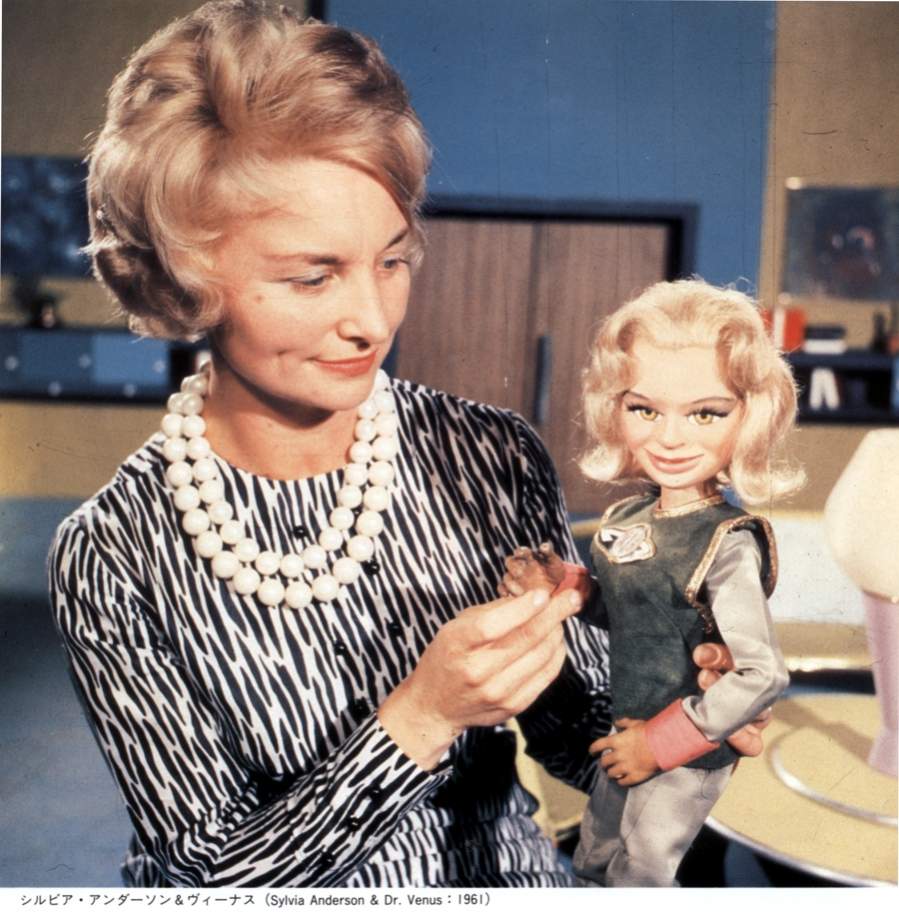
If you are my age or close to it you may have grown up watching Gerry Anderson's gloriously cheesy low budget puppet science fiction stories.
(Filmed in "Supermarionation" whatever the heck that was. You could usually still see the strings.)
There was "Supercar" and "Fireball XL5" and later "Thunderbirds".
But there was usually a cheeky sexy super competent female character, like Venus or Lady Penelope to help the plot along and sometimes drive a witty scene or two.
And usually voiced by (and the puppet modeled after) Sylvia Anderson, Gerry's wife and co-producer and voice director and uncredited "other female voice" for many of those shows.
Sylvia Anderson died today. Gonna miss her. She was "FAB"!
50PaulCranswick
I saw the news Jim about Sylvia Anderson's passing. Thunderbirds are stop, unfortunately.
51magicians_nephew
One of my face to face book groups took a try at Walden H. D. Thoreau's lyrical paean to living in the woods.
It's a book about building your own cabin and hoeing your own beans and living in a way we might now call "Off the Grid". And not needing money. And being "Free".
I first read this one in college in the '70's and was perhaps more impressed. Now when I read a whiff of self-satisfied Hippie smugness comes up to me.
Here's a guy who was never broke, never hungry, never desperate and he wants to give us advice on how to live? Hmm. Maybe. It's no secret that when he was offered to chance to get out of the woods and live in a nice house in town he couldn't say "yes" fast enough.
You can read this book as nature writing or you can read it as political philosophy, and the writing is good and clear in a crisp New England way, and it's never less than readable. Still think his A Week on the Concord and Merrimack Rivers is the better book.
But this feels like yesterday and not tomorrow if you know what I mean. Perhaps I'm just getting older
It's a book about building your own cabin and hoeing your own beans and living in a way we might now call "Off the Grid". And not needing money. And being "Free".
I first read this one in college in the '70's and was perhaps more impressed. Now when I read a whiff of self-satisfied Hippie smugness comes up to me.
Here's a guy who was never broke, never hungry, never desperate and he wants to give us advice on how to live? Hmm. Maybe. It's no secret that when he was offered to chance to get out of the woods and live in a nice house in town he couldn't say "yes" fast enough.
You can read this book as nature writing or you can read it as political philosophy, and the writing is good and clear in a crisp New England way, and it's never less than readable. Still think his A Week on the Concord and Merrimack Rivers is the better book.
But this feels like yesterday and not tomorrow if you know what I mean. Perhaps I'm just getting older
The butterfly counts not months but moments, and has time enough.
--Rabindranath Tagore
52PaulCranswick
Have a wonderful Easter.


54magicians_nephew
Thanks Diana and Paul.
Every faith seems to feel a need to celebrate the cycle of death and rebirth and renewal -- and resurrection
Here's to second chances and new beginnings.
Every faith seems to feel a need to celebrate the cycle of death and rebirth and renewal -- and resurrection
Here's to second chances and new beginnings.
55magicians_nephew
Just a few words to say about The Innovators Walter Issacson's new book (well it came out in 2014) about - well just about everybody.
Almost seems like the author had chapters of books he had started, on Ada, Lady Lovelace, or Alan Turing, or other inventors and creaters of the 20th century.
and so rather than write a whole book about one of them, he put together this book about all of them.
It's a tasting menu that leaves you wanting more. He's a great storyteller and he has some great stories to tell. Seems like he had more to say about the Steve Jobs - Steve Wozniack relationship than fit in his Steve Jobs book
Carlyle said that Genius is an infinite capacity for taking pains.
Issacson might say (especially about Steve Jobs and Ada Lovelace) that genius is an infinite capacity for being a pain in the ass.
This is a good one. Recommended. And now I have a signed copy!
Almost seems like the author had chapters of books he had started, on Ada, Lady Lovelace, or Alan Turing, or other inventors and creaters of the 20th century.
and so rather than write a whole book about one of them, he put together this book about all of them.
It's a tasting menu that leaves you wanting more. He's a great storyteller and he has some great stories to tell. Seems like he had more to say about the Steve Jobs - Steve Wozniack relationship than fit in his Steve Jobs book
Carlyle said that Genius is an infinite capacity for taking pains.
Issacson might say (especially about Steve Jobs and Ada Lovelace) that genius is an infinite capacity for being a pain in the ass.
This is a good one. Recommended. And now I have a signed copy!
56qebo
>55 magicians_nephew: That one's on my wishlist. I read Steve Jobs a few months ago, and I wouldn't've expected that there was more information available on the planet, considering its length.
57magicians_nephew
Having a good time with a book thats not really a book.
Dashiell Hammett wrote the book of The Thin Man and the movie made from it was a huge hit. So they asked Hammett to write a script for the sequel After the Thin Man and he did. But he never wrote it as a book.
So now on Kindle they have published Return of the Thin Man and its billed as a novella but it's really a film treatment. Lots of dialog but descriptions of action and scenery meant to be read more by the film director and the scenic artist than by the reading public. And sometimes some lovely little asides clearly not meant to be ready by anybody!
Made me want to watch the films again though by the time they got to "Song of the Thin Man" the formula was tired and the cast and crew were too -- not to mention the audience.
So its a strange mashup of film script and novel, but it really has the voice of Hammett and it's really a lot of fun.
If you have a Kindle - give it a try.
Dashiell Hammett wrote the book of The Thin Man and the movie made from it was a huge hit. So they asked Hammett to write a script for the sequel After the Thin Man and he did. But he never wrote it as a book.
So now on Kindle they have published Return of the Thin Man and its billed as a novella but it's really a film treatment. Lots of dialog but descriptions of action and scenery meant to be read more by the film director and the scenic artist than by the reading public. And sometimes some lovely little asides clearly not meant to be ready by anybody!
Made me want to watch the films again though by the time they got to "Song of the Thin Man" the formula was tired and the cast and crew were too -- not to mention the audience.
So its a strange mashup of film script and novel, but it really has the voice of Hammett and it's really a lot of fun.
If you have a Kindle - give it a try.
Nick:
How'd you like Grant's Tomb?
Nora:
It's lovely. I'm having a copy made for you.
58michigantrumpet
I always love your reviews, Jim! And especial.y look forward to your little closing quotes -- perfection!
Your Thin Man review is exactly what I needed on a Sunday afternoon. Now trying to decide wheather to finish catching up on people's thread or dig out an old tape of Nick, Nora and Asta!
Your Thin Man review is exactly what I needed on a Sunday afternoon. Now trying to decide wheather to finish catching up on people's thread or dig out an old tape of Nick, Nora and Asta!
59jnwelch
>57 magicians_nephew: We love the Thin Man movies (seen all of them). My wife's a big Myrna Loy fan.
60magicians_nephew
I was talking to some one about Bernie Saunders and I said ‘Izzy Stone would have loved him” and then I had to explain who Izzy Stone was. So I thought I would explain it to you all too.
I. F. Stone was a fiercely progressive New Deal Liberal commie socialist New York Jew who was a journalist and commentator in the 1960’s and 1970’s.
His one man newsletter “I. F. Stone’s Weekly” was full of political gossip, speculation and smart sassy writing backed up with some good old fashioned shoe-leather journalism. (Today the Weekly would probably be a blog ☺)
Then his heart couldn’t take the grind even of a weekly filing, and he more or less retired.
And turned to writing books about history that – like his newsletter – were smart elegant and thought provoking.
Which leads us to The Trial of Socrates which is my favorite of his history books because it reads like hot-deadline journalism.
From limited and fragmented commentaries and histories he builds up a picture of Athens and the complex day to day politics of the city-state.
He takes us on lovely little side trips into Greek mythology and epic poetry too. He's a hell of a lively tour guide.
And really really really what Socrates said to get condemned. And really really really what Socrates said before he died.
A lovely man. Wonder what he would say about today’s political merry go round.
I. F. Stone was a fiercely progressive New Deal Liberal commie socialist New York Jew who was a journalist and commentator in the 1960’s and 1970’s.
His one man newsletter “I. F. Stone’s Weekly” was full of political gossip, speculation and smart sassy writing backed up with some good old fashioned shoe-leather journalism. (Today the Weekly would probably be a blog ☺)
Then his heart couldn’t take the grind even of a weekly filing, and he more or less retired.
And turned to writing books about history that – like his newsletter – were smart elegant and thought provoking.
Which leads us to The Trial of Socrates which is my favorite of his history books because it reads like hot-deadline journalism.
From limited and fragmented commentaries and histories he builds up a picture of Athens and the complex day to day politics of the city-state.
He takes us on lovely little side trips into Greek mythology and epic poetry too. He's a hell of a lively tour guide.
And really really really what Socrates said to get condemned. And really really really what Socrates said before he died.
A lovely man. Wonder what he would say about today’s political merry go round.
"It is the duty of the free press to comfort the afflicted - and afflict the comfortable"
-- Finley Peter Dunne
61Whisper1
I always learn something new when I visit your thread! Thanks for being the super person you are, ever kind, ever sensitive, and keenly intelligent.
62The_Hibernator
I wonder what Socrates would say? Hopefully something wise. Maybe he'd just shake his head and give up on us.
63PaulCranswick
>60 magicians_nephew: What would Izzy Stone have made of Hilary, Jim?
64magicians_nephew

“We took space back quickly, expensively, with total panic and close to maximum brutality. Our machine was devastating. And versatile. It could do everything but stop.”
If you're my age you can remember when the Viet Nam War was what was on television and watching the war took up a lot of people's time.
This coverage with rare and honorable exceptions could be divided into two groups: Self deception -- and Criminal lies.
And then first in Esquire Magazine and then between covers, Michael Herr wrote "Dispatches".
Herr didn't sit around Saigon running up bar tabs ; he went out in the field with the grunts. And he brought back some amazing reporting. When you see the truth set down on white paper you have to take your hat off.
Death boredom and madness, all in one slim book.
Herr died this week. "Dispatches" was probably the peak of his writing career. Other people can wish they had a writing career one tenth as good.
I came to explore the wreck
The words are purposes
the words are maps.
I came to see the damage that was done
and the treasures that prevail
the thing i came for
the wreck and not the story of the wreck
― Adrienne Rich
65jnwelch
Oh no, I didn't know Herr died this week, Bill. Sorry to hear it. Dispatches is just a terrific book.
Poignant connection with that great Adrienne Rich poem.
Poignant connection with that great Adrienne Rich poem.
67michigantrumpet
Lots of meet up pics over on my thread!
68magicians_nephew
Housekeeping by Marilynne Robinson is a real "Touchstone" book -- a book that if people like it, you can tell a lot about them.
As for people who don't like it - well I haven't met many.
Ruthie and Lucille are two little girls in living in small town America, in a dry parched wasteland called "Fingerbone" The soil is shallow and not much takes root - the lake is dark and deep and not to be trusted - the trains thunder by, bestowing and taking away.
Through a number of casual and inexplicable tragedies they lose one responsible adult after another - grandfather, mother, and all - and so at last are left in the care of their not quite there semi-hobo aunt, Sylvie. (and what year is this anyway? and women hoboes?).
And their childhood becomes rather a jumble of living on the outskirts of town and and living alone in a ramshackle house build every which way by their grandfather - who didn't know how to build houses.
And the water transforms and baptizes and sometimes kills. It's that kind of a book,
The writing is shimmering and beautiful - double amazing since our narrator is the child Ruthie, who has the wide eyed acceptance of a child and the clenched teeth terror of maybe yet again having the fixed point in her life snatched away. She learns to make do with the not so fixed point of her "Transient" half-mad Aunt. And her fiercely practical and striving to be normal sister.
A lot to say here about family and loneliness and belonging and not belonging. And what we remember.
We are all transients in this life, and some of us travel in the warm and bright-lit safety of the passenger cars, and some of us ride, hanging on desperately, to the boogie-bolsters and the doors of half empty freight cars.
I loved it. Can you tell?
Why don't you read it and let me know what you think?
As for people who don't like it - well I haven't met many.
Ruthie and Lucille are two little girls in living in small town America, in a dry parched wasteland called "Fingerbone" The soil is shallow and not much takes root - the lake is dark and deep and not to be trusted - the trains thunder by, bestowing and taking away.
Through a number of casual and inexplicable tragedies they lose one responsible adult after another - grandfather, mother, and all - and so at last are left in the care of their not quite there semi-hobo aunt, Sylvie. (and what year is this anyway? and women hoboes?).
And their childhood becomes rather a jumble of living on the outskirts of town and and living alone in a ramshackle house build every which way by their grandfather - who didn't know how to build houses.
And the water transforms and baptizes and sometimes kills. It's that kind of a book,
The writing is shimmering and beautiful - double amazing since our narrator is the child Ruthie, who has the wide eyed acceptance of a child and the clenched teeth terror of maybe yet again having the fixed point in her life snatched away. She learns to make do with the not so fixed point of her "Transient" half-mad Aunt. And her fiercely practical and striving to be normal sister.
A lot to say here about family and loneliness and belonging and not belonging. And what we remember.
We are all transients in this life, and some of us travel in the warm and bright-lit safety of the passenger cars, and some of us ride, hanging on desperately, to the boogie-bolsters and the doors of half empty freight cars.
I loved it. Can you tell?
Why don't you read it and let me know what you think?
“Every memory is turned over and over again, every word, however chance, written in the heart in the hope that memory will fulfill itself, and become flesh, and that the wanderers will find a way home, and the perished, whose lack we always feel, will step through the door finally and stroke our hair with dreaming, habitual fondness, not having meant to keep us waiting long.”
― Marilynne Robinson, Housekeeping
69magicians_nephew
More to come
70Whisper1
What a great review of Homecoming! Thanks Jim. I hope you and Judy are having a lovely summer with lots of time for reading.


71michigantrumpet
Just posted our meet up photo over on my thread. So great to see you all again! Next up - Boston Book Festival! See you October 15th!
72magicians_nephew
E. M. Forster early novel A Room with a View is a sun drenched romantic comedy - or is it? But the brightest sunbeams often tend to cast the darkest shadows, don't they?
Sweet lovely obedient Victorian era "Good Girl" Lucy Honeychurch (Lord what a name) goes off to Italy with a proper chaperone and a guidebook in hand and somehow, madly (in a proper British way) falls in love. With a guy who's just "Not our kind, dear"
She goes shyly into the dark churches and grottoes to find beautiful vibrant art -- and life. The symbolism of light out of the darkness is very powerful here.
From drawing rooms and maiden aunts (and kindly British churchmen) Lucy makes a journey to fields of flowers and the first taste of independence.
Forster himself was always the outsider to proper British society and he writes sympathetically from that point of view.
The magnum opus is always A Passage to India. But Forster's talent and compassion for humanity come out in this one too.
Nice to revisit an old friend.
Sweet lovely obedient Victorian era "Good Girl" Lucy Honeychurch (Lord what a name) goes off to Italy with a proper chaperone and a guidebook in hand and somehow, madly (in a proper British way) falls in love. With a guy who's just "Not our kind, dear"
She goes shyly into the dark churches and grottoes to find beautiful vibrant art -- and life. The symbolism of light out of the darkness is very powerful here.
From drawing rooms and maiden aunts (and kindly British churchmen) Lucy makes a journey to fields of flowers and the first taste of independence.
Forster himself was always the outsider to proper British society and he writes sympathetically from that point of view.
The magnum opus is always A Passage to India. But Forster's talent and compassion for humanity come out in this one too.
Nice to revisit an old friend.
“Dear God," she prayed, "let me be something every minute of every hour of my life. Let me be gay; let me be sad. Let me be cold; let me be warm. Let me be honorable and let me sin. Only let me be something every blessed minute. And when I sleep, let me dream all the time so that not one little piece of living is ever lost.”
― Betty Smith, A Tree Grows in Brooklyn
>
73magicians_nephew
Of the Founding Fathers, it may be said that Thomas Jefferson is NOT my favorite.
If Franklin is the Founder you want to have a beer with Jefferson is the Founder you never want to turn your back on. Coward, liar, hypocrite, blackmailer - the list goes on.
But for one thing you have to forgive him all the rest.
"Jefferson's America" is the story of the Purchase - how America went to Europe hoping to buy a toehold in New Orleans (From the Spanish) and came home after buying half a continent (From the French) instead.
As an Anti-Federalist (Republican) Jefferson's stated view was that the Chief Magistrate did not have the authority to buy land that could become "new states". Another of his stated views was that the thirteen colonies had enough to do without taking on the new lands to the strange and dangerous West.
But only a fool would pass up a deal like this - and Jefferson was nobodies fool.
And suddenly "American" comes to mean not pseudo-Brits in knee-britches and periwigs but rough "Western" men in buckskins and furs. Men like Clark - and Zebulon Pike (Merriweather Lewis was an afterthought) - who were not planters and smallholders but explorers and adventurers -- and even naturalists.
The book is full of illuminating details and fine character studies. Lots of stuff here you didn't get in High School Social Studies. It wasn't quite as easy and straightforward as hiring Donna Reed and buying a couple of boats and setting out.
There have been other books about the Purchase but this one puts you down on the water with Clark and his men and really makes you see it. And the author reminds you that others besides Lewis and Clark did the work of discovery -- and that Jefferson was pretty good at keeping things moving in the right ways.
The author is a reliable guide on this voyage. The book is recommended.
If Franklin is the Founder you want to have a beer with Jefferson is the Founder you never want to turn your back on. Coward, liar, hypocrite, blackmailer - the list goes on.
But for one thing you have to forgive him all the rest.
"Jefferson's America" is the story of the Purchase - how America went to Europe hoping to buy a toehold in New Orleans (From the Spanish) and came home after buying half a continent (From the French) instead.
As an Anti-Federalist (Republican) Jefferson's stated view was that the Chief Magistrate did not have the authority to buy land that could become "new states". Another of his stated views was that the thirteen colonies had enough to do without taking on the new lands to the strange and dangerous West.
But only a fool would pass up a deal like this - and Jefferson was nobodies fool.
And suddenly "American" comes to mean not pseudo-Brits in knee-britches and periwigs but rough "Western" men in buckskins and furs. Men like Clark - and Zebulon Pike (Merriweather Lewis was an afterthought) - who were not planters and smallholders but explorers and adventurers -- and even naturalists.
The book is full of illuminating details and fine character studies. Lots of stuff here you didn't get in High School Social Studies. It wasn't quite as easy and straightforward as hiring Donna Reed and buying a couple of boats and setting out.
There have been other books about the Purchase but this one puts you down on the water with Clark and his men and really makes you see it. And the author reminds you that others besides Lewis and Clark did the work of discovery -- and that Jefferson was pretty good at keeping things moving in the right ways.
The author is a reliable guide on this voyage. The book is recommended.
"Never let your sense of morals prevent you from doing what is right"
-- Isaac Asimov
74magicians_nephew

Neil Gaiman is a force of nature. His wonderful The Graveyard Book reinvents The Jungle Book to our modern eyes and ears and is warm and human and funny besides. His amazing Marvel 1602 is blow your mind amazing even if you're not a comic book geek.
But when I came to this one I thought - really?
Is it news that to teenage boys, teenage girls are an alien species, strange and incomprehensible? Wouldn't this just be a one joke book?
No silly - its Neil Gaiman
So it starts with that as the stated premise (spoiler alert) but then goes off and riffs on dozen of other things too. This book is wise and knowing and gently insightful. Fabio Moon's artwork is soft focus and just the right amount of cartoon and just the right amount of realism.
(Did i tell you this was a comic book? Or a "Graphic Novel"? My Bad.)
One of the great talents of our time telling the truth. How can you beat it?
"The tragedy of Romeo and Juliet is not that they died so young but that the boy meets girl reflex should be so overpowering as to defeat all common sense.”
― Robert A Heinlein
75magicians_nephew

Solstice is my favorite time of year. After the darkness of winter the light returns - the promise is kept.
May all your Solstice wishes come true
76PaulCranswick

Wouldn't it be nice if 2017 was a year of peace and goodwill.
A year where people set aside their religious and racial differences.
A year where intolerance is given short shrift.
A year where hatred is replaced by, at the very least, respect.
A year where those in need are not looked upon as a burden but as a blessing.
A year where the commonality of man and woman rises up against those who would seek to subvert and divide.
A year without bombs, or shootings, or beheadings, or rape, or abuse, or spite.
2017.
Festive Greetings and a few wishes from Malaysia!
77magicians_nephew
Give me your love, on this Christmas Day.
Give me your thoughts, when the chimes are ringing.
Send me the happier along my way,
Deep in my soul let your words be singing.
Give me your wishes, as bells sound clear,
Charming the air with their golden measure.
Give me your hopes for the unborn year,
Fill up my heart with a secret treasure.
Give me the things that you long to say,
All of your tenderest dreams unfetter.
Give me your love, on this Christmas Day—
But come across, please, when times get better.
-- Dorothy Parker Christmas 1921
78magicians_nephew
Sometimes you put up a book and then you feel bad about it.
Ada's Algorithm is a book about Ada, Countess Lovelace and her involvement with William Babbage and his "difference engine" a prototype mechanical computing engine designed and never really quite completed in the late 1800's.
Babbage's machine was all cogs and pulleys and levers and rods and probably at the limit of what mechanical tooling could manufacture in those days.
(A lot of "steampunk" science fiction and fantasy spins off the idea that Babbage got the thing to work and it spun up a different kind of industrial revolution.)
Ada Lovelace was interested in mathematics and didn't know what the heck to do with herself when she met Babbage by chance at a salon somewhere and took it upon herself to edit and "clarify" his notes for publication.
Based on this writing she is seen as the world's first computer programmer and a pioneer in other ways also.
Or she was a nut and a hanger-on who annoyed Babbage more than she helped him. Your mileage may vary,
This book comes down hard on the side of Lovelace being a mathematical genius only held back by reason of her sex, and he works it hard.
But sorry to say his book is a mess and a muddle that will convince no one of anything.
Read Walter Isaacson's The Innovators for a readable and balanced account of Lady Lovelace and her contribution to the science of computing and mathematics.
This book has golly gee whiz passion about its subject but sorry to say not much else.
Ada's Algorithm is a book about Ada, Countess Lovelace and her involvement with William Babbage and his "difference engine" a prototype mechanical computing engine designed and never really quite completed in the late 1800's.
Babbage's machine was all cogs and pulleys and levers and rods and probably at the limit of what mechanical tooling could manufacture in those days.
(A lot of "steampunk" science fiction and fantasy spins off the idea that Babbage got the thing to work and it spun up a different kind of industrial revolution.)
Ada Lovelace was interested in mathematics and didn't know what the heck to do with herself when she met Babbage by chance at a salon somewhere and took it upon herself to edit and "clarify" his notes for publication.
Based on this writing she is seen as the world's first computer programmer and a pioneer in other ways also.
Or she was a nut and a hanger-on who annoyed Babbage more than she helped him. Your mileage may vary,
This book comes down hard on the side of Lovelace being a mathematical genius only held back by reason of her sex, and he works it hard.
But sorry to say his book is a mess and a muddle that will convince no one of anything.
Read Walter Isaacson's The Innovators for a readable and balanced account of Lady Lovelace and her contribution to the science of computing and mathematics.
This book has golly gee whiz passion about its subject but sorry to say not much else.
As soon as I have got flying to perfection, I have got a scheme about a steam engine.
-- Ada Lovelace
79qebo
>78 magicians_nephew: Ada's Algorithm
Well that's too bad. It's a book that would've interested me.
I haven't read The Innovators yet but it's on the agenda.
Well that's too bad. It's a book that would've interested me.
I haven't read The Innovators yet but it's on the agenda.
80magicians_nephew
People know G. K. Chesterton today - if they do - for his "Father Brown" mystery stories which have been charmingly if shallowly translated into an ongoing PBS TV series. (The real Father Brown stories are much better - dark and witty and psychological - try them!)
But my favorite of Chesterton's books is the wonderful The Man who Was Thursday a delicious metaphysical riffing on terrorists (anarchists) and spies and religion and society and who is after all spying on whom.
A young man of good character is asked to become a police spy and infiltrate the High Super Secret Council of Anarchists to prevent them from Doing Bad Things. (That's pretty much the level Chesterton is working on) The ring uses code names based on the days of the week and so he becomes the new Thursday.
After not much time he discovers that EVERYBODY on the super secret counsel of anarchists is a police spy and all of them about as harmless as so many butterflies. Except for the leader "Sunday". And the chase is on.
Chesterton is pretty funny about the mechanisms of spying and deceit - suggested that all humanity are members of a secret society observing each other in suspicion and uncertainty and doubt.
The end of the book turns sideways into mysticism - either you buy into it or you don't. I think it works but its a real change of tone for the book.
At a time when anarchists were as scary as "terrorists" are today this was an unusually fizzy book to write. But it's also a deeply religious book -it made people stop and think - and laugh too.
But my favorite of Chesterton's books is the wonderful The Man who Was Thursday a delicious metaphysical riffing on terrorists (anarchists) and spies and religion and society and who is after all spying on whom.
A young man of good character is asked to become a police spy and infiltrate the High Super Secret Council of Anarchists to prevent them from Doing Bad Things. (That's pretty much the level Chesterton is working on) The ring uses code names based on the days of the week and so he becomes the new Thursday.
After not much time he discovers that EVERYBODY on the super secret counsel of anarchists is a police spy and all of them about as harmless as so many butterflies. Except for the leader "Sunday". And the chase is on.
Chesterton is pretty funny about the mechanisms of spying and deceit - suggested that all humanity are members of a secret society observing each other in suspicion and uncertainty and doubt.
The end of the book turns sideways into mysticism - either you buy into it or you don't. I think it works but its a real change of tone for the book.
At a time when anarchists were as scary as "terrorists" are today this was an unusually fizzy book to write. But it's also a deeply religious book -it made people stop and think - and laugh too.
““Here in Prague they say that although the traffic police are communists the drivers are fascists, which would be all right if it were not that the pedestrians are anarchists.”
― Len Deighton
81magicians_nephew
Continuing our survey course on the Spy Novel as Literature we come to
The Secret Agent perhaps the ur-text on the gritty "realistic" spy novel referenced by John Le Carre and others who came after him.
And yet . . . and yet.
Our hero is a small and rather pathetic man who runs a little notions cum pornographer and sex toy shop, alongside his wife and his wife's more or less autistic younger brother. We're in England pretty much at the same time as Chesterton's book.
His masters (from Russia? It's never said) order him to plant a bomb as a terrorist and it all goes horribly wrong.
The police are merciless and autocratic. The spies are weak and foolish and sad.
It's Joseph Conrad and he knows what he writes about. But it's minor Conrad at best.
Perhaps for people who think all spies are James Bond. And all terrorists are criminal masterminds.
The Secret Agent perhaps the ur-text on the gritty "realistic" spy novel referenced by John Le Carre and others who came after him.
And yet . . . and yet.
Our hero is a small and rather pathetic man who runs a little notions cum pornographer and sex toy shop, alongside his wife and his wife's more or less autistic younger brother. We're in England pretty much at the same time as Chesterton's book.
His masters (from Russia? It's never said) order him to plant a bomb as a terrorist and it all goes horribly wrong.
The police are merciless and autocratic. The spies are weak and foolish and sad.
It's Joseph Conrad and he knows what he writes about. But it's minor Conrad at best.
Perhaps for people who think all spies are James Bond. And all terrorists are criminal masterminds.
One evening an actor asked me to write a play for an all Black cast. But I said -- What is a Black? First of all what is his color?
-- Jean Genet
82PaulCranswick
Looking forward to your continued company in 2017.
Happy New Year, Jim
83magicians_nephew
And one last book to round out the year.
Graham Greene put his books into two categories - "Catholic" and "Entertainments"
Our Man in Havana is classified as an entertainment - and yet . and yet.
Our Man Wormold (and are we meant to think of Wormwood the wisecracking devil of The Screwtape Letters? Maybe
And he's the British representative in Cuba for vacuum cleaner company that is basically not doing very well. It's the 1950's the rebels (Castro and company) are in the hills and the power goes out a lot.
He is offered a rather unlikely job as the Chief Agent for the British Secret Service, who would like to keep a better eye on things. He (Wormold) doesn't know beans about "The Great Game" but he has a teen age daughter with expensive tastes, and so he agrees.
But he doesn't know anything. So he send back reports cribbed from the local newspapers and when that doesn't answer starts - making stuff up. And it works.
If it's true that history always repeats itself - first as tragedy then as farce - then this is the farce that follows the tragedy that is the Conrad book.
It's bitterly funny but sort of sad also with strong real characters too get involved with and watch. Like the Conrad you get a sense that real agents in the field are closer to this than to 007 James Bond.
Fun to read and think about in these days of "El-Int" (Electronic intelligence) what things looked like in the days of "Hum-Int" (Human intelligence).
and Happy New year to all See you in the funny papers
Graham Greene put his books into two categories - "Catholic" and "Entertainments"
Our Man in Havana is classified as an entertainment - and yet . and yet.
Our Man Wormold (and are we meant to think of Wormwood the wisecracking devil of The Screwtape Letters? Maybe
And he's the British representative in Cuba for vacuum cleaner company that is basically not doing very well. It's the 1950's the rebels (Castro and company) are in the hills and the power goes out a lot.
He is offered a rather unlikely job as the Chief Agent for the British Secret Service, who would like to keep a better eye on things. He (Wormold) doesn't know beans about "The Great Game" but he has a teen age daughter with expensive tastes, and so he agrees.
But he doesn't know anything. So he send back reports cribbed from the local newspapers and when that doesn't answer starts - making stuff up. And it works.
If it's true that history always repeats itself - first as tragedy then as farce - then this is the farce that follows the tragedy that is the Conrad book.
It's bitterly funny but sort of sad also with strong real characters too get involved with and watch. Like the Conrad you get a sense that real agents in the field are closer to this than to 007 James Bond.
Fun to read and think about in these days of "El-Int" (Electronic intelligence) what things looked like in the days of "Hum-Int" (Human intelligence).
Truth is the first casualty of war
and Happy New year to all See you in the funny papers

