1utbw42
January: 3 books
February: 1 book
March: 0 books
April: 1 book
May: 3 books
June: 0 books
July: 2 books
August: 1 book
September: 1 book
October: 3 books
November: 3 books
December: 1 book
2010 thread here: http://www.librarything.com/topic/98279
2011 thread here: http://www.librarything.com/topic/105884
2012 thread here: http://www.librarything.com/topic/129459
2013 thread here: http://www.librarything.com/topic/147022
2014 thread here: http://www.librarything.com/topic/163211
2015 thread here: http://www.librarything.com/topic/185244
February: 1 book
March: 0 books
April: 1 book
May: 3 books
June: 0 books
July: 2 books
August: 1 book
September: 1 book
October: 3 books
November: 3 books
December: 1 book
2010 thread here: http://www.librarything.com/topic/98279
2011 thread here: http://www.librarything.com/topic/105884
2012 thread here: http://www.librarything.com/topic/129459
2013 thread here: http://www.librarything.com/topic/147022
2014 thread here: http://www.librarything.com/topic/163211
2015 thread here: http://www.librarything.com/topic/185244
2utbw42
1. Legends Of The Space Marines edited by Christian Dunn, Nick Kyme, and Lindsey Priestley (1-10-16) (284 pages)
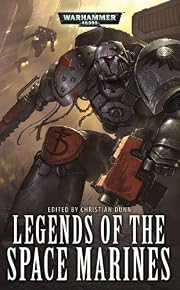
Another collection of outstanding Space Marines short stories by various excellent Warhammer 40K authors. The last story by Aaron Dembski-Bowden about Gaius Point really was the best one in this series.
To date: 1 book, 284 pages.
Another collection of outstanding Space Marines short stories by various excellent Warhammer 40K authors. The last story by Aaron Dembski-Bowden about Gaius Point really was the best one in this series.
To date: 1 book, 284 pages.
3utbw42
2. Relentless by Richard Williams (1-17-16) (287 pages)
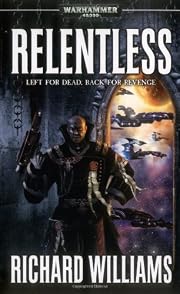
Followed up my last read with another WH40K entry. This one follows the trials of Captain Becket, newly appointed leader of the war vessel Relentless who begins to crack down on operations and discipline on the ship, much to the chagrin of Commander Ward, acting captain up till this point and involved in a covert siphoning of funds and goods off of ships currently in trading routes. Naturally, Ward considers Becket a threat to his operation and arranges for him to be involved in a shuttle "accident" after a contrived riot on a planet where Becket was needed to secure a treaty arrangement. What follows is Becket's own personal hell as he survives the "accident" and ends up as a lowest level slave on the very ship he used to command. No spoilers, but his goal is to find his way back to the top and confront Ward. Along the way the Dark Eldar show up and make things really interesting. I understand that this is Williams first venture into the 40K universe, and for the most part he pulls it off fairly well. I do wish he had fleshed out Becket's journey a little more and backed off the other 40K elements some (the Dark Eldar was more of a convenient plot point at the climax of the story), but I did enjoy how it all tied together at the somewhat rushed ending.
To date: 2 books, 571 pages.
Followed up my last read with another WH40K entry. This one follows the trials of Captain Becket, newly appointed leader of the war vessel Relentless who begins to crack down on operations and discipline on the ship, much to the chagrin of Commander Ward, acting captain up till this point and involved in a covert siphoning of funds and goods off of ships currently in trading routes. Naturally, Ward considers Becket a threat to his operation and arranges for him to be involved in a shuttle "accident" after a contrived riot on a planet where Becket was needed to secure a treaty arrangement. What follows is Becket's own personal hell as he survives the "accident" and ends up as a lowest level slave on the very ship he used to command. No spoilers, but his goal is to find his way back to the top and confront Ward. Along the way the Dark Eldar show up and make things really interesting. I understand that this is Williams first venture into the 40K universe, and for the most part he pulls it off fairly well. I do wish he had fleshed out Becket's journey a little more and backed off the other 40K elements some (the Dark Eldar was more of a convenient plot point at the climax of the story), but I did enjoy how it all tied together at the somewhat rushed ending.
To date: 2 books, 571 pages.
4johnsimpson
Hi Andy, just stopping by to say hello. I will be setting my 50 book challenge thread up shortly. Hope January has been good to you my friend and I will be popping by here on a regular basis to see how your reading is going and what you are reading.
5utbw42
3. The Survivor by Vince Flynn/Kyle Mills (1-31-16) (388 pages)

I was initially not going to read this with Vince Flynn being one of my all time favorite authors. The thought of someone else using Mitch Rapp as chief protagonist was both disappointing and a little painful to me, as I was fortunate enough to meet Vince a couple of years before his untimely death from cancer. My father had received this book as a Christmas gift and had read some and told me it was very, very good. I then received a copy for my birthday and decided to dive into it.
I'm very, very glad I did.
First off, the story is outstanding....no spoilers....bottom line: a disgruntled CIA agent has cleverly set up to have top secret details of past CIA missions made public all over the world from his grave. Familiar characters like Irene Kennedy, Mitch Rapp, Stan Hurley, et. al. all find themselves in deep trouble as the fate of the CIA is in danger from these secrets and they all try desperately to contain the damage. Add to this a plot by Pakistan for a coup to destablize the middle east and US/Pakistan relations and you have a tight, tension filled story right to the end.
Secondly, Mitch Rapp is written much in the way I remember him from early Flynn novels, a very welcome surprise. Late Flynn novels lost a bit of Rapp driving the plot throughout the books, but this one recaptures this plot driver in a big way. Rapp appears very much in command in the last 100 or so pages, even when things have basically gone to hell and no one has any idea what to do. This really carried the novel right to the end.
Lastly, this book really mirrors current world events, which to me really gives the story a degree of credibility and belief which keeps the reader engaged.
Bottom line....perhaps the best Rapp novel since Memorial Day. I am impressed with Mills writing, and I wonder if he will carry the torch for further Mitch Rapp novels.
To date: 3 books, 959 pages.

I was initially not going to read this with Vince Flynn being one of my all time favorite authors. The thought of someone else using Mitch Rapp as chief protagonist was both disappointing and a little painful to me, as I was fortunate enough to meet Vince a couple of years before his untimely death from cancer. My father had received this book as a Christmas gift and had read some and told me it was very, very good. I then received a copy for my birthday and decided to dive into it.
I'm very, very glad I did.
First off, the story is outstanding....no spoilers....bottom line: a disgruntled CIA agent has cleverly set up to have top secret details of past CIA missions made public all over the world from his grave. Familiar characters like Irene Kennedy, Mitch Rapp, Stan Hurley, et. al. all find themselves in deep trouble as the fate of the CIA is in danger from these secrets and they all try desperately to contain the damage. Add to this a plot by Pakistan for a coup to destablize the middle east and US/Pakistan relations and you have a tight, tension filled story right to the end.
Secondly, Mitch Rapp is written much in the way I remember him from early Flynn novels, a very welcome surprise. Late Flynn novels lost a bit of Rapp driving the plot throughout the books, but this one recaptures this plot driver in a big way. Rapp appears very much in command in the last 100 or so pages, even when things have basically gone to hell and no one has any idea what to do. This really carried the novel right to the end.
Lastly, this book really mirrors current world events, which to me really gives the story a degree of credibility and belief which keeps the reader engaged.
Bottom line....perhaps the best Rapp novel since Memorial Day. I am impressed with Mills writing, and I wonder if he will carry the torch for further Mitch Rapp novels.
To date: 3 books, 959 pages.
6utbw42
4. Daemonslayer by William King (2-21-16) (250 pages)
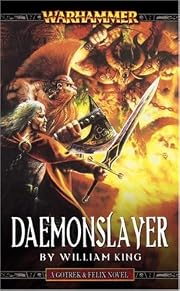
Easily the best of the three Gotrek & Felix novels I've read thus far, this tale is written slightly different in that it is a single, moving story that flows from chapter to chapter. The previous G&F novels are more of a bunch of loosely linked short stories that still read really well, but this one had outstanding pace and clarity.
King does an outstanding job of not making this story more than it is, pure entertainment. For the first time in the G&F series, Gotrek really seems to be on his way to getting his wish of dying a glorious death fighting pure evil (Chaos). Felix fulfills his duty, albeit somewhat reluctantly, of following Gotrek due to a life debt (drunkenly assumed in the past), and recording the annals of the powerful dwarf's demise. The two protagonists meet allies in the Lonely Tower, one of which is a phenomenal dwarf engineer who has created a flying vehicle, and find themselves on board on a journey in search of the lost city of Karag Dum. The catch is that the forces of Chaos overwhelmed the city some 200 years ago.
This plot vehicle sets several things in motion: Gotrek gets his previously mentioned wish of confronting forces of Chaos; Felix continues to follow Gotrek while being more frightened and reluctant than ever; the reader is introduced to new wonderful characters that join Gotrek in his mission (Snorri, Valek, and Malakai the engineer to name a few).
No spoilers here....the events that take place at Karag Dum in the Chaos Wastes are the best so far in this series. Powerful images, characters that really shine, and direct in your face dialogue take the reader right to the end.
I recommend this and the previous G&F books for any avid fantasy reader. I am also looking forward to future G&F novels...
To date: 4 books, 1209 pages.
Easily the best of the three Gotrek & Felix novels I've read thus far, this tale is written slightly different in that it is a single, moving story that flows from chapter to chapter. The previous G&F novels are more of a bunch of loosely linked short stories that still read really well, but this one had outstanding pace and clarity.
King does an outstanding job of not making this story more than it is, pure entertainment. For the first time in the G&F series, Gotrek really seems to be on his way to getting his wish of dying a glorious death fighting pure evil (Chaos). Felix fulfills his duty, albeit somewhat reluctantly, of following Gotrek due to a life debt (drunkenly assumed in the past), and recording the annals of the powerful dwarf's demise. The two protagonists meet allies in the Lonely Tower, one of which is a phenomenal dwarf engineer who has created a flying vehicle, and find themselves on board on a journey in search of the lost city of Karag Dum. The catch is that the forces of Chaos overwhelmed the city some 200 years ago.
This plot vehicle sets several things in motion: Gotrek gets his previously mentioned wish of confronting forces of Chaos; Felix continues to follow Gotrek while being more frightened and reluctant than ever; the reader is introduced to new wonderful characters that join Gotrek in his mission (Snorri, Valek, and Malakai the engineer to name a few).
No spoilers here....the events that take place at Karag Dum in the Chaos Wastes are the best so far in this series. Powerful images, characters that really shine, and direct in your face dialogue take the reader right to the end.
I recommend this and the previous G&F books for any avid fantasy reader. I am also looking forward to future G&F novels...
To date: 4 books, 1209 pages.
7utbw42
5. To Try Men's Souls by Newt Gingrich/William R. Forstchen (4-7-16) (345 pages)

I was very aware of the gravity of the subject of this book as I dove into it, but that did not damper my amazement and astonishment of just what these brave men did on that Christmas night back in 1776 to literally save this burgeoning and embryonic nation from being a permanent English colony. I have no doubts to the legitimacy of the events in this book, but what made this tale hit so deep is the wonderful characterizations that Gingrich/Forstchen gave historic people like Washington, Knox, Paine, Adams and various soldiers within the context of this event. If anything, I had trouble with the first half of the book or so because it was sooooo depressing, manifesting itself through the moods and actions of George Washington himself. I think that is the real brilliance of this book as the reader is transported from that to the successful actions of the patriot army as they stormed Trenton and literally caught the Hessians asleep in their homes and bunkers, Washington's pride beaming through all the way. The authors also very smartly portray the conflict Washington felt along the way. Paine's contributions to the morale through his publication of The American Crisis is neatly inserted here as well, Gingrich/Forstchen presenting him as a very, very tortured soul.
In short, entertaining, inspiring, and just amazing to think of what the founders of this nation had to do just so today we can call ourselves Americans and not bow to a king (well, for a while longer, anyway). I wish more middle/high school kids would read books like this to get an understanding of what it took to create the greatest political experiment in human history and just what is currently at stake.
To date: 5 books, 1554 pages.

I was very aware of the gravity of the subject of this book as I dove into it, but that did not damper my amazement and astonishment of just what these brave men did on that Christmas night back in 1776 to literally save this burgeoning and embryonic nation from being a permanent English colony. I have no doubts to the legitimacy of the events in this book, but what made this tale hit so deep is the wonderful characterizations that Gingrich/Forstchen gave historic people like Washington, Knox, Paine, Adams and various soldiers within the context of this event. If anything, I had trouble with the first half of the book or so because it was sooooo depressing, manifesting itself through the moods and actions of George Washington himself. I think that is the real brilliance of this book as the reader is transported from that to the successful actions of the patriot army as they stormed Trenton and literally caught the Hessians asleep in their homes and bunkers, Washington's pride beaming through all the way. The authors also very smartly portray the conflict Washington felt along the way. Paine's contributions to the morale through his publication of The American Crisis is neatly inserted here as well, Gingrich/Forstchen presenting him as a very, very tortured soul.
In short, entertaining, inspiring, and just amazing to think of what the founders of this nation had to do just so today we can call ourselves Americans and not bow to a king (well, for a while longer, anyway). I wish more middle/high school kids would read books like this to get an understanding of what it took to create the greatest political experiment in human history and just what is currently at stake.
To date: 5 books, 1554 pages.
8utbw42
6. The Truth About Chernobyl by Grigori Medvedev (5-5-16) (267 pages)
On April 26, 1986, at 1:23 in the morning, shift supervisor of the #4 reactor Aleksandr Akimov pressed the AZ-5 emergency shutdown button on the central control panel to lower the control rods in hopes of shutting down the reactor. What followed at the Lenin Nuclear Power Plant, more commonly known as Chernobyl, was a runaway power surge that produced an almost incomprehensible steam/gas explosion that literally blew the bio shield off the top of the reactor and exposed the interior of the reactor (UO2 fuel and graphite) to the atmosphere.
The author of this book, Grigori Medvedev, was a Soviet nuclear engineer who had spent time at Chernobyl during the construction and start-up phase of several of the reactors. While not working at the plant during the catastrophe, he eventually made his way back to the area (plant, Pripyat, Chernobyl, and other areas) days after to help in investigations and mobilizations for shutting down the exposed, burning reactor permanently. Some years after, he wrote this outstanding, frightening, and enlightening account of the events before, during, and after this tragedy.
The reader will learn that the Soviets had a very laid-back and almost hands off policy towards safety in the years during their nuclear plant buildup all over the USSR. Also noted is the inexperience of the operators at this particular plant and the inherent design flaws that existed in the type of reactor at Chernobyl. The Soviets also exhibited a policy of denial, cover-up, and just general incompetence in the aftermath of a destroyed, exposed reactor. However, not to be lost in this mass of errors, is the absolute bravery and courage exhibited by the plant operators and firefighters after the explosion. Their efforts have been documented as quite possibly preventing another reactor from suffering the same fate. Most of them died within 2 months from direct, lethal exposure to intense beta and gamma radiation, all of them not aware of the dangers they were immersed in.
Many feel the disaster at Chernobyl contributed to the downfall of the USSR. It also changed the world's view of nuclear power generation forever. Thankfully, the reactors operating around the world today are of advanced designs that prevent these events from being able to occur (Fukushima notwithstanding, a different kind of accident that will be addressed in the future as well).
I recommend this book to all science and history lovers, as it very well may be one of the most important books I have ever read. Medvedev deserves high praise for his efforts to expose the truth in hopes of saving lives in the future.
To date: 6 books, 1821 pages.
On April 26, 1986, at 1:23 in the morning, shift supervisor of the #4 reactor Aleksandr Akimov pressed the AZ-5 emergency shutdown button on the central control panel to lower the control rods in hopes of shutting down the reactor. What followed at the Lenin Nuclear Power Plant, more commonly known as Chernobyl, was a runaway power surge that produced an almost incomprehensible steam/gas explosion that literally blew the bio shield off the top of the reactor and exposed the interior of the reactor (UO2 fuel and graphite) to the atmosphere.
The author of this book, Grigori Medvedev, was a Soviet nuclear engineer who had spent time at Chernobyl during the construction and start-up phase of several of the reactors. While not working at the plant during the catastrophe, he eventually made his way back to the area (plant, Pripyat, Chernobyl, and other areas) days after to help in investigations and mobilizations for shutting down the exposed, burning reactor permanently. Some years after, he wrote this outstanding, frightening, and enlightening account of the events before, during, and after this tragedy.
The reader will learn that the Soviets had a very laid-back and almost hands off policy towards safety in the years during their nuclear plant buildup all over the USSR. Also noted is the inexperience of the operators at this particular plant and the inherent design flaws that existed in the type of reactor at Chernobyl. The Soviets also exhibited a policy of denial, cover-up, and just general incompetence in the aftermath of a destroyed, exposed reactor. However, not to be lost in this mass of errors, is the absolute bravery and courage exhibited by the plant operators and firefighters after the explosion. Their efforts have been documented as quite possibly preventing another reactor from suffering the same fate. Most of them died within 2 months from direct, lethal exposure to intense beta and gamma radiation, all of them not aware of the dangers they were immersed in.
Many feel the disaster at Chernobyl contributed to the downfall of the USSR. It also changed the world's view of nuclear power generation forever. Thankfully, the reactors operating around the world today are of advanced designs that prevent these events from being able to occur (Fukushima notwithstanding, a different kind of accident that will be addressed in the future as well).
I recommend this book to all science and history lovers, as it very well may be one of the most important books I have ever read. Medvedev deserves high praise for his efforts to expose the truth in hopes of saving lives in the future.
To date: 6 books, 1821 pages.
9utbw42
7. Victories Of The Space Marines edited by Christian Dunn, Nick Kyme, and Lindsey Priestley (5-19-16) (284 pages)

Another collection of outstanding Space Marines short stories by various excellent Warhammer 40K authors. Not really much more to say about it than that. Sorry so short.
To date: 7 books, 2105 pages.

Another collection of outstanding Space Marines short stories by various excellent Warhammer 40K authors. Not really much more to say about it than that. Sorry so short.
To date: 7 books, 2105 pages.
10utbw42
8. Red Rising by Pierce Brown (5-27-16) (382 pages)

Take a pinch of Hunger Games, add a dash of Game Of Thrones, stir in some Divergent, and ship the entire concoction to the planet Mars and you get the idea of the setting for this novel. Darrow, a lowBorn Red (all citizens are classified by color, from the peasants right up to royalty), is a miner in search of the element Helium 3, the substance that makes terraforming planets, specifically Mars, possible.
Darrow's wife, Eo, has grand designs for a better life for the slaves down in the mines, becomes rebellious and is ultimately hanged by the upper class Golds for her actions. Darrow follows as he breaks rules as well, being hanged as well.
Upon waking later, Darrow learns he has survived the execution with the help of the group Sons Of Ares, bent on overthrowing the current class structure, as it becomes apparent that the Red slaves have been kept in the mines permanently, unaware that Mars has been terraformed and thriving for decades. What follows is Darrow's transformation (physically) into a Gold as he infiltrates the Society and becomes part of the test to survive and conquer all the other incoming Golds as they are divided up into houses after being drafted by said houses.
This is one of the more original novels I've read in a while. The author takes parts from many past tales and weaves them together very well, making for an enjoyable read that paces really well. Being a huge science fiction fan, I love that element that Brown brings into this story. This really sets up for many tales that can branch out from this origin. I also love the revenge tale that permeates throughout the story as Darrow is focused almost solely on getting even for Eo's death. I will be tackling the next book in this series very soon.
To date: 8 books, 2487 pages.

Take a pinch of Hunger Games, add a dash of Game Of Thrones, stir in some Divergent, and ship the entire concoction to the planet Mars and you get the idea of the setting for this novel. Darrow, a lowBorn Red (all citizens are classified by color, from the peasants right up to royalty), is a miner in search of the element Helium 3, the substance that makes terraforming planets, specifically Mars, possible.
Darrow's wife, Eo, has grand designs for a better life for the slaves down in the mines, becomes rebellious and is ultimately hanged by the upper class Golds for her actions. Darrow follows as he breaks rules as well, being hanged as well.
Upon waking later, Darrow learns he has survived the execution with the help of the group Sons Of Ares, bent on overthrowing the current class structure, as it becomes apparent that the Red slaves have been kept in the mines permanently, unaware that Mars has been terraformed and thriving for decades. What follows is Darrow's transformation (physically) into a Gold as he infiltrates the Society and becomes part of the test to survive and conquer all the other incoming Golds as they are divided up into houses after being drafted by said houses.
This is one of the more original novels I've read in a while. The author takes parts from many past tales and weaves them together very well, making for an enjoyable read that paces really well. Being a huge science fiction fan, I love that element that Brown brings into this story. This really sets up for many tales that can branch out from this origin. I also love the revenge tale that permeates throughout the story as Darrow is focused almost solely on getting even for Eo's death. I will be tackling the next book in this series very soon.
To date: 8 books, 2487 pages.
11utbw42
9. A Feast For Crows by George R.R. Martin (7-10-16) (978 pages)

This one takes a step back from the previous three in this saga. Martin claims in the back of this novel that he had written so much material for this book that he had to divide it into two novels, the other being my future read, A Dance With Dragons. However, Martin took half the characters and wrote about them in this book, the other half being covered in the upcoming ADWD.
That made this read tougher. While reading about the characters in this novel, I was continually wondering what was going on with the other half. My concern is this saga is now bloating to the point where it is approaching Wheel Of Time glut. In Wheel Of Time novels, you may read about a character in book 3, then pick up his/her story in book 9. Maddening....
That being said, I am looking forward to the next book. Hopefully, at that point I will be ready to tackle the sixth book, if he ever releases it.
There were parts of this book that were enjoyable to read, just not on the scale of the previous books. This one seemed more concerned with establishing political alliances among the seven kingdoms and familial lineage where inheritances were concerned. Important, yes, but page after page of dozens and dozens of potential characters in line for a throne or a lordship produced heavy eyes at times. Here's to hoping that things pick back up soon...
To date: 9 books, 3465 pages.

This one takes a step back from the previous three in this saga. Martin claims in the back of this novel that he had written so much material for this book that he had to divide it into two novels, the other being my future read, A Dance With Dragons. However, Martin took half the characters and wrote about them in this book, the other half being covered in the upcoming ADWD.
That made this read tougher. While reading about the characters in this novel, I was continually wondering what was going on with the other half. My concern is this saga is now bloating to the point where it is approaching Wheel Of Time glut. In Wheel Of Time novels, you may read about a character in book 3, then pick up his/her story in book 9. Maddening....
That being said, I am looking forward to the next book. Hopefully, at that point I will be ready to tackle the sixth book, if he ever releases it.
There were parts of this book that were enjoyable to read, just not on the scale of the previous books. This one seemed more concerned with establishing political alliances among the seven kingdoms and familial lineage where inheritances were concerned. Important, yes, but page after page of dozens and dozens of potential characters in line for a throne or a lordship produced heavy eyes at times. Here's to hoping that things pick back up soon...
To date: 9 books, 3465 pages.
12utbw42
10. Know No Fear by Dan Abnett (7-24-16) (412 pages)

Getting back to the Horus Heresy after a somewhat lengthy break was easier than I thought it would be, helped greatly by how good this novel was. Dan Abnett, to me, has been one of the leading writers in the WH40K galaxy, and this book again proves just how good his novels are.
Unaware of the treachery of Horus Lupercal, the Ultramarines and their primarch, Roboute Guilliman, prepare for war with orks in the Ultramar system. Their supposed ally in this battle, the Word Bearers and their primarch, Lorgar, have different ideas. Following the traitorous Horus, Lorgar and his legions attack Calth and the Ultramarines in what can only be surmised as the ultimate betrayal.
Abnett's descriptions of the battle both on the surface and in orbit of Calth are outstanding. He also once again does an excellent job with characterization of factions of the Ultramarines and Word Bearers. The reader can feel the emotions leaping off the pages as the battle ensues. I would definitely put this one among the top 3 of the Heresy novels I have read so far....well written, fast-paced, and an emotional roller-coaster as well.
To date: 10 books, 3877 pages.

Getting back to the Horus Heresy after a somewhat lengthy break was easier than I thought it would be, helped greatly by how good this novel was. Dan Abnett, to me, has been one of the leading writers in the WH40K galaxy, and this book again proves just how good his novels are.
Unaware of the treachery of Horus Lupercal, the Ultramarines and their primarch, Roboute Guilliman, prepare for war with orks in the Ultramar system. Their supposed ally in this battle, the Word Bearers and their primarch, Lorgar, have different ideas. Following the traitorous Horus, Lorgar and his legions attack Calth and the Ultramarines in what can only be surmised as the ultimate betrayal.
Abnett's descriptions of the battle both on the surface and in orbit of Calth are outstanding. He also once again does an excellent job with characterization of factions of the Ultramarines and Word Bearers. The reader can feel the emotions leaping off the pages as the battle ensues. I would definitely put this one among the top 3 of the Heresy novels I have read so far....well written, fast-paced, and an emotional roller-coaster as well.
To date: 10 books, 3877 pages.
13utbw42
11. Gods Of Mars by Graham McNeill (8-11-16) (320 pages)
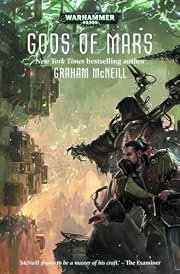
This is the third volume of Graham McNeill’s Adeptus Mechanicus trilogy and also one of the more complicated and sort of all encompassing WH40K novels I've read. Of note is how most of the plot takes place out of the reach of the Emperor and his perpetual Astronomicon beacon, thus making it kind of a rogue novel in this WH40K galaxy. Many WH40K characters are involved in the battle to stop the long lost Telok from executing his plan of destroying Mars and ultimately the Emperor.
The highlight of the book to me was the various protagonist groups battling the evil spawned Tindalosi. Reading this you could sense that many of the good characters in the book were about to perish. This was my first deeper exposure to the Eldar also, and I found them very mysterious and interesting characters. I also got my first real exposure to the Cadian shock troops, very interesting as well.
I am not rating this one as high as past WH40K efforts, due to how (unnecessarily) complex the novel was. It just didn't flow as well, but it was very enjoyable to read and dissect.
To date: 11 books, 4197 pages.
This is the third volume of Graham McNeill’s Adeptus Mechanicus trilogy and also one of the more complicated and sort of all encompassing WH40K novels I've read. Of note is how most of the plot takes place out of the reach of the Emperor and his perpetual Astronomicon beacon, thus making it kind of a rogue novel in this WH40K galaxy. Many WH40K characters are involved in the battle to stop the long lost Telok from executing his plan of destroying Mars and ultimately the Emperor.
The highlight of the book to me was the various protagonist groups battling the evil spawned Tindalosi. Reading this you could sense that many of the good characters in the book were about to perish. This was my first deeper exposure to the Eldar also, and I found them very mysterious and interesting characters. I also got my first real exposure to the Cadian shock troops, very interesting as well.
I am not rating this one as high as past WH40K efforts, due to how (unnecessarily) complex the novel was. It just didn't flow as well, but it was very enjoyable to read and dissect.
To date: 11 books, 4197 pages.
14utbw42
12. The Primarchs edited by Christian Dunn (9-29-16) (440 pages)
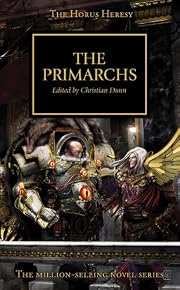
I had mixed feelings on this one. On one hand, it was fun reading about four of the primarchs involved in the Heresy. On the other hand, one of the stories was good, two were so-so, and one just bored me to tears.
The best was the last one concerning Omegon/Alpharius, although it took me a bit to realize that Sanders was jumping around in the story time-wise. The deception used by the Alpha Legion on both sides was very clever. The first and third stories concerning Fulgrim and Lion were ok to read, just not up to what I have experienced so far reading the Horus Heresy. I did enjoy how Fulgrim's Slaneeshi possessed body was dealt with and how Lion fought the forces of chaos in the warp as he fled the Night Lords.
The story concerning Ferrus Manus did nothing for me, did not advance any character in this portion at all. I've always read short stories with some trepidation as I feel that a lot of times there is simply not enough time to develop plot and characters to a sufficient degree as in a full length novel. This also seems to be the case here as all four authors in this collection seem very rushed or otherwise non-committal to the overall story. Here's to hoping that the next Heresy novel avoids this.
To date: 12 books, 4637 pages.
I had mixed feelings on this one. On one hand, it was fun reading about four of the primarchs involved in the Heresy. On the other hand, one of the stories was good, two were so-so, and one just bored me to tears.
The best was the last one concerning Omegon/Alpharius, although it took me a bit to realize that Sanders was jumping around in the story time-wise. The deception used by the Alpha Legion on both sides was very clever. The first and third stories concerning Fulgrim and Lion were ok to read, just not up to what I have experienced so far reading the Horus Heresy. I did enjoy how Fulgrim's Slaneeshi possessed body was dealt with and how Lion fought the forces of chaos in the warp as he fled the Night Lords.
The story concerning Ferrus Manus did nothing for me, did not advance any character in this portion at all. I've always read short stories with some trepidation as I feel that a lot of times there is simply not enough time to develop plot and characters to a sufficient degree as in a full length novel. This also seems to be the case here as all four authors in this collection seem very rushed or otherwise non-committal to the overall story. Here's to hoping that the next Heresy novel avoids this.
To date: 12 books, 4637 pages.
15utbw42
13. Golden Son by Pierce Brown (10-13-16) (444 pages)

The follow-up to Red Rising, this one really ratchets things up as Darrow continues his studies of the art of war under Augustus all the while wondering what his role in the Sons of Ares revolution still is. I really enjoyed how Brown further developed key characters and presented them in a very intriguing political environment. Darrow spends the whole novel conflicted as he tries to balance his Red/Gold status and his duties to the revolution with his ambitions to Augustus overthrowing the solar system rule of Octavius of Lune.
The book flows very well and I really am impressed with how Brown has taken the "Hunger Games In Space" theme and really expanded on it. No spoilers here, but the ending was a total surprise. On to the next one to see where this ends up.
To date: 13 books, 5081 pages.

The follow-up to Red Rising, this one really ratchets things up as Darrow continues his studies of the art of war under Augustus all the while wondering what his role in the Sons of Ares revolution still is. I really enjoyed how Brown further developed key characters and presented them in a very intriguing political environment. Darrow spends the whole novel conflicted as he tries to balance his Red/Gold status and his duties to the revolution with his ambitions to Augustus overthrowing the solar system rule of Octavius of Lune.
The book flows very well and I really am impressed with how Brown has taken the "Hunger Games In Space" theme and really expanded on it. No spoilers here, but the ending was a total surprise. On to the next one to see where this ends up.
To date: 13 books, 5081 pages.
16utbw42
14. Star Wars: Outcast by Aaron Allston (10-14-16) (353 pages)

I've been trying to get back into my Star Wars reading for some time now. This appears to have been a good place to pick things back up, a well-written tale in the classic Star Wars sense. The main plot centers around Luke's arrest for negligence in Jacen Solo's turn to the dark side. Luke then negotiates a self-imposed exile while secretly traveling to other worlds to investigate what caused Jacen to go bad. Other side tales, but somewhat loosely related, follow Han and Leia on a journey to Kessel to help Lando investigate the cause of earthquakes there. Jaina sets out to capture another Jedi who has fallen to an affliction that makes everyone appear "switched" with an imposter who looks like them (Body Snatchers reference?). Jaina and the Jedi wonder if examining this person will reveal clues about Jacen as well.
The book flows really well, bringing a sense of urgency along side already famous characters. This is the first of the Fate Of The Jedi series, so I am looking forward to moving on to other books in this series.
To date: 14 books, 5434 pages.

I've been trying to get back into my Star Wars reading for some time now. This appears to have been a good place to pick things back up, a well-written tale in the classic Star Wars sense. The main plot centers around Luke's arrest for negligence in Jacen Solo's turn to the dark side. Luke then negotiates a self-imposed exile while secretly traveling to other worlds to investigate what caused Jacen to go bad. Other side tales, but somewhat loosely related, follow Han and Leia on a journey to Kessel to help Lando investigate the cause of earthquakes there. Jaina sets out to capture another Jedi who has fallen to an affliction that makes everyone appear "switched" with an imposter who looks like them (Body Snatchers reference?). Jaina and the Jedi wonder if examining this person will reveal clues about Jacen as well.
The book flows really well, bringing a sense of urgency along side already famous characters. This is the first of the Fate Of The Jedi series, so I am looking forward to moving on to other books in this series.
To date: 14 books, 5434 pages.
17utbw42
15. Star Wars: Omen by Christie Golden (10-20-16) (276 pages)
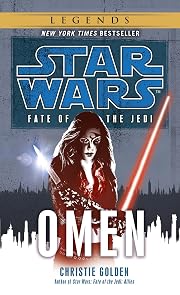
Solid follow up to the previous entry in the Fate Of The Jedi series. Most of the previous plotlines are continued in this one, the main one being Luke and Ben continuing their search for answers to Jacen's conversion to evil. Han and Leia are on Coruscant as the Jedi ever increasingly become exiled and ostracized by the media. More Jedi continue to go insane as previously. The difference here is the introduction of a planet of sith that can now travel through space. One can sense the inevitable conflict that will come of this. I enjoyed this one and am looking forward to see where the plotlines go in future Fate Of The Jedi entries.
To date: 15 books, 5710 pages.
Solid follow up to the previous entry in the Fate Of The Jedi series. Most of the previous plotlines are continued in this one, the main one being Luke and Ben continuing their search for answers to Jacen's conversion to evil. Han and Leia are on Coruscant as the Jedi ever increasingly become exiled and ostracized by the media. More Jedi continue to go insane as previously. The difference here is the introduction of a planet of sith that can now travel through space. One can sense the inevitable conflict that will come of this. I enjoyed this one and am looking forward to see where the plotlines go in future Fate Of The Jedi entries.
To date: 15 books, 5710 pages.
18utbw42
16. Rynn's World by Steve Parker (11-9-16) (536 pages)
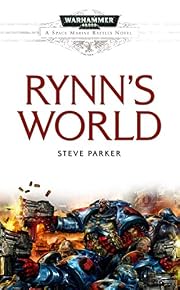
While not as deep or developed as some of the Horus Heresy books I've read, this is probably the best pure WH40K book I've read to date. The overwhelming scope of a massive ork invasion and the fairly linear plot make this a fairly fast and damn interesting read. I really liked the author's description of the surviving Crimson Fists and how they fought overwhelming odds not only to survive but to hold on to control of the planet until help arrives from Imperial fleets beyond the warp. Parker manages to make the super-human Space Marines seem downright human in these impossible situations. This is how you know you've read an outstanding novel: by the end of the book you really care quite a bit about the fate of the protagonists and desperately want all the orks to DIE. This book is also not for the feint of heart, as it contains graphic descriptions of characters demise, but this is not Star Wars either....
To date: 16 books, 6246 pages.
While not as deep or developed as some of the Horus Heresy books I've read, this is probably the best pure WH40K book I've read to date. The overwhelming scope of a massive ork invasion and the fairly linear plot make this a fairly fast and damn interesting read. I really liked the author's description of the surviving Crimson Fists and how they fought overwhelming odds not only to survive but to hold on to control of the planet until help arrives from Imperial fleets beyond the warp. Parker manages to make the super-human Space Marines seem downright human in these impossible situations. This is how you know you've read an outstanding novel: by the end of the book you really care quite a bit about the fate of the protagonists and desperately want all the orks to DIE. This book is also not for the feint of heart, as it contains graphic descriptions of characters demise, but this is not Star Wars either....
To date: 16 books, 6246 pages.
19utbw42
17. Where Nobody Knows Your Name by John Feinstein (11-15-16) (346 pages)
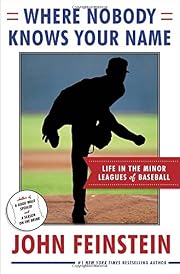
This is the first Feinstein book I've read and after reading I may need to tackle more in the future. Feinstein follows the trials and struggles of various baseball players (and some umpires as well) trying to get out of the minors and show their skills on a major league field. Many people, even ones who follow baseball closely, are unaware of how difficult it is to come up through the minors and make a major league team. This book does a magnificent job of describing what certain players go through, chronicling the ups as well as the major downs that these guys experience. Probably the quote that sums up the book the best is uttered by former Triple-A manager Ron Johnson to players that complain about being in the minors: "If you don't like it here, do a better job."
To date: 17 books, 6592 pages.
This is the first Feinstein book I've read and after reading I may need to tackle more in the future. Feinstein follows the trials and struggles of various baseball players (and some umpires as well) trying to get out of the minors and show their skills on a major league field. Many people, even ones who follow baseball closely, are unaware of how difficult it is to come up through the minors and make a major league team. This book does a magnificent job of describing what certain players go through, chronicling the ups as well as the major downs that these guys experience. Probably the quote that sums up the book the best is uttered by former Triple-A manager Ron Johnson to players that complain about being in the minors: "If you don't like it here, do a better job."
To date: 17 books, 6592 pages.
20utbw42
18. It IS About Islam by Glenn Beck (11-17-16) (229 pages)
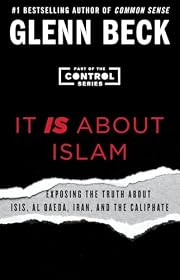
I really enjoyed this one and I agree with about 95% of the material in this book. Not going to say much more about this book as many out there have opinions on this subject that are all over the board and I am going to respect that. Thank you.
To date: 18 books, 6821 pages.
I really enjoyed this one and I agree with about 95% of the material in this book. Not going to say much more about this book as many out there have opinions on this subject that are all over the board and I am going to respect that. Thank you.
To date: 18 books, 6821 pages.
21utbw42
19. Duty by Robert M. Gates (12-14-16) (598 pages)
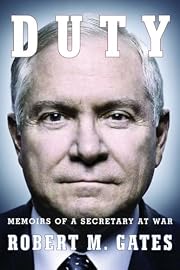
A direct, clinical examination of the time that Robert Gates spent as Secretary of Defense under Bush and Obama, narrated by Gates himself, this book provides the reader with outstanding and often surprising information on what Gates did and put up with during his service as secdef. One gets a feeling and understanding of just how difficult a job he had, and that all his training for this job is truly on-the-job. I still cannot figure out how someone can deal with that much stress and function day-to-day. Gates describes 9/11, the wars in Iraq and Afghanistan, and how he felt responsible for the lives of our servicemen every single day. His take on both Bush and Obama was very interesting, being that he served the same capacity under two very polar opposite administrations. My hat's off to this man for his service.
To date: 19 books, 7419 pages.
See you in 2017...:-)
A direct, clinical examination of the time that Robert Gates spent as Secretary of Defense under Bush and Obama, narrated by Gates himself, this book provides the reader with outstanding and often surprising information on what Gates did and put up with during his service as secdef. One gets a feeling and understanding of just how difficult a job he had, and that all his training for this job is truly on-the-job. I still cannot figure out how someone can deal with that much stress and function day-to-day. Gates describes 9/11, the wars in Iraq and Afghanistan, and how he felt responsible for the lives of our servicemen every single day. His take on both Bush and Obama was very interesting, being that he served the same capacity under two very polar opposite administrations. My hat's off to this man for his service.
To date: 19 books, 7419 pages.
See you in 2017...:-)

