thorold dips a toe into the world of books in 2016
This topic was continued by thorold is ankle-deep in anthologies in Q2 (2016 thread, part 2).
Talk Club Read 2016
Join LibraryThing to post.
This topic is currently marked as "dormant"—the last message is more than 90 days old. You can revive it by posting a reply.
1thorold
Getting started a little bit belatedly, here's my 2016 thread.
Main focus for Q1 is likely to be the Caribbean theme read I'm helping to run on Reading Globally: http://www.librarything.com/topic/209482
Caribbean explorations No.1 (see the thread for proper reviews):
- CLR James The black Jacobins - old-school Marxist history from a postcolonial angle. Excellent!
- Alejo Carpentier El reino de este mundo, Concierto barroco - a bit of Spanish-practice, and a writer I'm going to have to read more of.
- Sam Selvon The lonely Londoners - I didn't get the point of Selvon when I read his short stories a couple of years ago: suddenly I'm very interested...
- Andrea Levy Small Island - predictable bestseller stuff, unfortunately. Not worth the effort.
Main focus for Q1 is likely to be the Caribbean theme read I'm helping to run on Reading Globally: http://www.librarything.com/topic/209482
Caribbean explorations No.1 (see the thread for proper reviews):
- CLR James The black Jacobins - old-school Marxist history from a postcolonial angle. Excellent!
- Alejo Carpentier El reino de este mundo, Concierto barroco - a bit of Spanish-practice, and a writer I'm going to have to read more of.
- Sam Selvon The lonely Londoners - I didn't get the point of Selvon when I read his short stories a couple of years ago: suddenly I'm very interested...
- Andrea Levy Small Island - predictable bestseller stuff, unfortunately. Not worth the effort.
2thorold
Random relaxation No. 1:
The road to Little Dribbling by Bill Bryson - a kindly meant and amusing Christmas present, last year's Bryson, not all that different from all the previous ones, but a nice piece of well-crafted escapism for fogeys. Trivial fact: Skegness council are after his publishers because the cover artist seems to have forgotten to ask permission to use the "Jolly Fisherman" artwork. Oops!
The road to Little Dribbling by Bill Bryson - a kindly meant and amusing Christmas present, last year's Bryson, not all that different from all the previous ones, but a nice piece of well-crafted escapism for fogeys. Trivial fact: Skegness council are after his publishers because the cover artist seems to have forgotten to ask permission to use the "Jolly Fisherman" artwork. Oops!
3thorold
Random relaxation No. 2:
Never having tried any Val McDermid, I was able to borrow three of her Carol Jordan/Tony Hill series (Beneath the bleeding, Splinter the silence and Fever of the bone - I do like her jolly, light-hearted titles!).
I may well read some more - they struck me as intelligent, thoughtful crime stories. The character development is a bit simplistic, but she seems to avoid many of the worst clichés in that line, at least. Only thing I didn't like so much was that they all have a lot of computer-based detective work in them. And there still doesn't seem to be any good technique for representing that in a way that really engages the reader: it always ends up as a kind of black magic that the narrator doesn't claim to understand. Yawn!
Never having tried any Val McDermid, I was able to borrow three of her Carol Jordan/Tony Hill series (Beneath the bleeding, Splinter the silence and Fever of the bone - I do like her jolly, light-hearted titles!).
I may well read some more - they struck me as intelligent, thoughtful crime stories. The character development is a bit simplistic, but she seems to avoid many of the worst clichés in that line, at least. Only thing I didn't like so much was that they all have a lot of computer-based detective work in them. And there still doesn't seem to be any good technique for representing that in a way that really engages the reader: it always ends up as a kind of black magic that the narrator doesn't claim to understand. Yawn!
4thorold
Music for January:
- I had to listen to Vivaldi's rediscovered opera Motezuma whilst reading Concierto barroco, of course, but baroque opera isn't really my thing.
- For some reason I keep coming back to the violinist Saschko Gawriloff playing Janáček chamber works. Nothing to do with anything else, but simply great music.
- I had to listen to Vivaldi's rediscovered opera Motezuma whilst reading Concierto barroco, of course, but baroque opera isn't really my thing.
- For some reason I keep coming back to the violinist Saschko Gawriloff playing Janáček chamber works. Nothing to do with anything else, but simply great music.
5baswood
Welcome thorold. Nice start to your thread. I am a bit too squeamish to read that Val McDermid series. I quite enjoyed the TV series 'Wire in the Blood' another jolly title.
6theaelizabet
>3 thorold:. So true about the computer/technology aspect. Depictions in film and television are starting to be quite clever, but I can't think of a time where it reaches quite the same level in books, though maybe I'm overlooking some.
8kidzdoc
Good to see you here, Mark! I haven't made any significant progress in Texaco yet, but I'll probably read it in earnest the week after next, when I have a few days off from work.
9thorold
An excellent weekend - I spent Saturday finishing Texaco, which turned out to be a fantastic read (I've posted a review in the Caribbean thread) - go for it, Darryl!
And today was a beautiful, sunny, frosty winter Sunday, perfect for a long walk on the beach.
And today was a beautiful, sunny, frosty winter Sunday, perfect for a long walk on the beach.
10thorold
Whilst out walking yesterday I finally finished listening to the Wallander novel Before the frost, which I started on months ago. Whilst I like the idea of audiobooks, they just don't seem to fit into my life very well, and it takes me ages to get around to finishing them. This particular story didn't really grab me, either: too much reliance on Linda Wallander's insecurities, and a somewhat over-the-top villain. I'll post a review shortly.
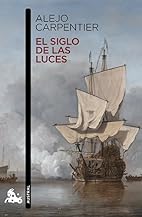
Whilst still in Nordic mode, I remembered that I must be the last person on the planet not to have read Stieg Larsson, so I started on The girl with the dragon tattoo (which I'm currently alternating with El siglo de las luces and a couple of poetry collections for the Caribbean theme).
ETA: I can't believe that I started three sentences in this post with "Whilst". What's happening to me...?
Whilst still in Nordic mode, I remembered that I must be the last person on the planet not to have read Stieg Larsson, so I started on The girl with the dragon tattoo (which I'm currently alternating with El siglo de las luces and a couple of poetry collections for the Caribbean theme).
ETA: I can't believe that I started three sentences in this post with "Whilst". What's happening to me...?
12NanaCC
>10 thorold: I've read or listened to almost all of the Wallander series, and avoided this one because of the reviews. On the other hand, I plowed through The Girl With the Dragon Tattoo series. It was one I had a hard time putting down.
13thorold
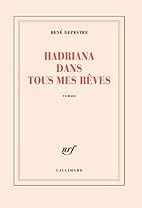
>12 NanaCC:
I think the reason I never picked up Larsson before was simply that I jumped to the wrong conclusion when I saw it was a thick paperback with dragons in the title.
I think the reason I never picked up Larsson before was simply that I jumped to the wrong conclusion when I saw it was a thick paperback with dragons in the title.
14thorold
Looking back to 2015:
The etiquette of this group seems to call for a summary of last year's reading - I don't normally bother to count, but it is interesting to do it once in a while. What I came up with is this:
In 2015 I read 106 books (of which 71 - 67% - were by female authors)
The books were by 87 different authors (30M, 57F) (I'm counting the M/F team Sjöwall & Wahlöö in the "F" basket, so cheating slightly)
20 of the books were non-fiction of various sorts, 27 crime stories, and the other 59 are "general fiction" I couldn't be bothered to break down further
83 (78%) of the books were in English, 10 in German, 4 in French, 4 in Spanish, and 5 in Italian.
Of the English books, 22 (27%) were translations: 17 of these from Swedish, 1 Norwegian, 1 Icelandic, 2 Chinese, 1 German

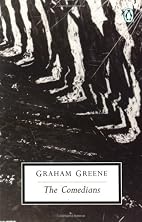
Most enjoyable reading experience: Sostiene Pereira
Oddest novel of the year: Blumenberg (followed closely by Harriet Hume: a London fantasy)
Oddest non-fiction: Memoiren einer Idealistin
Novelists I should have known about but didn't: Siri Hustvedt and Anne Tyler
Crime writers I should have known about but didn't: Sjöwall & Wahlöö
Least exciting sequel: The days of Anna Madrigal (but mere dullness won't stop me buying each new Maupin...)
General thoughts:
- My "summer without (books by) men" was a success: It wasn't any hardship to concentrate on books by women for a while, I ended up reading more books by women than by men over the year, and I discovered one or two writers I'd never have bothered with otherwise (Grazia Deledda, Malwida von Meysenbug, ...)
- Did I really not read anything in Dutch? There's plenty of good stuff on the TBR shelf, I should remedy that.
- Clearly I ought to learn Swedish. I did make a start on that last year, but it turns out to be surprisingly hard to get hold of Swedish books in Holland, so motivation faltered a bit.
- If I've counted right, only 13/106 were actual physical books off the TBR shelf: the rest were divided roughly equally between borrowed physical books, purchased e-books, and e-books on Scribd. Only three or four years ago, I would have expected at least 80% to be off the TBR shelf. Without any conscious decision, I seem to have come to a point where I always go for the e-book if available when I'm buying new fiction. Because of the instant gratification of e-books, I'm also less inclined than I used to be to buy secondhand books that I happen to see but don't want to read right now.
The etiquette of this group seems to call for a summary of last year's reading - I don't normally bother to count, but it is interesting to do it once in a while. What I came up with is this:
In 2015 I read 106 books (of which 71 - 67% - were by female authors)
The books were by 87 different authors (30M, 57F) (I'm counting the M/F team Sjöwall & Wahlöö in the "F" basket, so cheating slightly)
20 of the books were non-fiction of various sorts, 27 crime stories, and the other 59 are "general fiction" I couldn't be bothered to break down further
83 (78%) of the books were in English, 10 in German, 4 in French, 4 in Spanish, and 5 in Italian.
Of the English books, 22 (27%) were translations: 17 of these from Swedish, 1 Norwegian, 1 Icelandic, 2 Chinese, 1 German

Most enjoyable reading experience: Sostiene Pereira
Oddest novel of the year: Blumenberg (followed closely by Harriet Hume: a London fantasy)
Oddest non-fiction: Memoiren einer Idealistin
Novelists I should have known about but didn't: Siri Hustvedt and Anne Tyler
Crime writers I should have known about but didn't: Sjöwall & Wahlöö
Least exciting sequel: The days of Anna Madrigal (but mere dullness won't stop me buying each new Maupin...)
General thoughts:
- My "summer without (books by) men" was a success: It wasn't any hardship to concentrate on books by women for a while, I ended up reading more books by women than by men over the year, and I discovered one or two writers I'd never have bothered with otherwise (Grazia Deledda, Malwida von Meysenbug, ...)
- Did I really not read anything in Dutch? There's plenty of good stuff on the TBR shelf, I should remedy that.
- Clearly I ought to learn Swedish. I did make a start on that last year, but it turns out to be surprisingly hard to get hold of Swedish books in Holland, so motivation faltered a bit.
- If I've counted right, only 13/106 were actual physical books off the TBR shelf: the rest were divided roughly equally between borrowed physical books, purchased e-books, and e-books on Scribd. Only three or four years ago, I would have expected at least 80% to be off the TBR shelf. Without any conscious decision, I seem to have come to a point where I always go for the e-book if available when I'm buying new fiction. Because of the instant gratification of e-books, I'm also less inclined than I used to be to buy secondhand books that I happen to see but don't want to read right now.
15Poquette
Enjoyed your summary. Especially your highlights (most enjoyable, oddest, etc.) I may steal your idea if I can get my own list together and start a thread! You are inspiring me! 106 books — very impressive. I can't read that fast.
16theaelizabet
Sostiene Pereira is listed on my library's wishlist and I don't even remember what prompted its inclusion. Seeing it mentioned here reminds me to actually buy the thing so that I may read it.
106 books in one year!! Never in my life. Good for you.
106 books in one year!! Never in my life. Good for you.
17thorold
>15 Poquette:, >16 theaelizabet:
I'm glad you enjoyed the overview! I see I've been a member of LT for eight years nine months and in that time I've posted 871 reviews, so my long-term average must be fairly close to 100 books a year (I review almost every book I read). I suppose a serious novel usually lasts me about a week when I'm at home, but I can easily get through a book in one or two days on holiday or during business travel.
I'm glad you enjoyed the overview! I see I've been a member of LT for eight years nine months and in that time I've posted 871 reviews, so my long-term average must be fairly close to 100 books a year (I review almost every book I read). I suppose a serious novel usually lasts me about a week when I'm at home, but I can easily get through a book in one or two days on holiday or during business travel.
18thorold
I enjoyed El siglo de las luces - as I expected to! - and posted a long review over on the Caribbean thread. Also polished off The girl with the dragon tattoo, which was entertaining enough, but didn't stand out especially from all the other Scandinavian crime novels I've read. Although Ms Salander is definitely a step up from the rather dim and accident-prone Linda Wallander...
As well as starting the Haitian novel Amour, colère et folie - seems a bit depressing so far, but I'm not very far into it yet - I'm still working my way through a backlog of Caribbean poetry collections.
This evening I got totally sidetracked away from the Caribbean into an anthology intriguingly called The poetry of sex, compiled by the British poet Sophie Hannah, who seems to have had a lot of fun putting it together. An anthology of poems dealing with sex in all its many forms is of course not quite the same thing as a collection of erotic verse. Some of them will turn you on, but quite a few will make you laugh, and several will make you want to hide under the table out of embarrassment at the ridiculousness of our species (yes, Mr Whitman, I'm looking at you).
The great thing about this anthology is that the poems aren't arranged by period, act, or permutation of genders involved, but grouped together by arbitrary and occasionally slightly mischievous decisions about similarity of mood and subject, which makes for some very odd juxtapositions (like the two "Daniel Craig" poems...).
Lots of the usual suspects (Andrew Marvell, D.H. Lawrence, Cavafy, Walt Whitman, etc.), but also a great deal I haven't seen before. I think I'm going to be going around with the refrain of John Whitworth's "Love & sex & boys in showers" in my mind for quite some time...
Probably the sort of book it's worth putting aside a few copies of to give as frivolous presents.

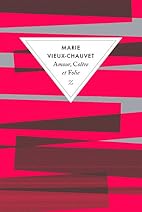

As well as starting the Haitian novel Amour, colère et folie - seems a bit depressing so far, but I'm not very far into it yet - I'm still working my way through a backlog of Caribbean poetry collections.
This evening I got totally sidetracked away from the Caribbean into an anthology intriguingly called The poetry of sex, compiled by the British poet Sophie Hannah, who seems to have had a lot of fun putting it together. An anthology of poems dealing with sex in all its many forms is of course not quite the same thing as a collection of erotic verse. Some of them will turn you on, but quite a few will make you laugh, and several will make you want to hide under the table out of embarrassment at the ridiculousness of our species (yes, Mr Whitman, I'm looking at you).
The great thing about this anthology is that the poems aren't arranged by period, act, or permutation of genders involved, but grouped together by arbitrary and occasionally slightly mischievous decisions about similarity of mood and subject, which makes for some very odd juxtapositions (like the two "Daniel Craig" poems...).
Lots of the usual suspects (Andrew Marvell, D.H. Lawrence, Cavafy, Walt Whitman, etc.), but also a great deal I haven't seen before. I think I'm going to be going around with the refrain of John Whitworth's "Love & sex & boys in showers" in my mind for quite some time...
Probably the sort of book it's worth putting aside a few copies of to give as frivolous presents.
19thorold
Back on-topic, I spent this rainy Sunday morning re-reading Cahier d'un retour au pays natal for the first time in about twenty years. It's another of those eternal set-texts that turn out to be quite readable as long as there isn't an essay-deadline approaching. But I did post a review in the Caribbean thread.
Back to Ms Salander for a bit of relaxation, now...
P.S. I see that Césaire sits between Cavafy and Chaucer on the poetry shelf. Interesting company...
Back to Ms Salander for a bit of relaxation, now...
P.S. I see that Césaire sits between Cavafy and Chaucer on the poetry shelf. Interesting company...
20baswood
I wonder if The Poetry of Sex will be a title that will sell a lot of copies.
21thorold
>20 baswood:
Penguin wouldn't commission a title like that unless they thought so. And they have a pretty good track record on anthologies. It got a terrible review from Germaine Greer in the New Statesman, which must have helped sales...
Penguin wouldn't commission a title like that unless they thought so. And they have a pretty good track record on anthologies. It got a terrible review from Germaine Greer in the New Statesman, which must have helped sales...
22thorold
Another side-track - after a passing mention somewhere got me to look Mary Seacole up on Wikipedia, I downloaded The wonderful adventures of Mrs Seacole in many lands from Project Gutenberg. I do have a weakness for Victorian memoirs, and Mrs S. was clearly a splendidly eccentric character, but unfortunately it looks as though she wasn't very good at picking good ghostwriters, so it may be a bit of a struggle to get through this one...
Edit: it wasn't, I romped through it in a day. Although I did skim through some bits quite rapidly.
What is striking when you read something like this is that Victorian bad writing is hardly ever technically wrong: they don't make language errors like modern bad writers, they just hide what they are trying to say in steaming piles of clichés.
Edit: it wasn't, I romped through it in a day. Although I did skim through some bits quite rapidly.
What is striking when you read something like this is that Victorian bad writing is hardly ever technically wrong: they don't make language errors like modern bad writers, they just hide what they are trying to say in steaming piles of clichés.
23thorold
More music:
One of the pleasanter things on my to-do list after the holidays is to find ways to use a number of gifts I've received in the form of credits for concert and theatre tickets. I made a start on this yesterday, but I've only barely scraped the surface by booking two concerts...
anyway, first thing on the horizon will be Schubert Lieder next week.
One of the pleasanter things on my to-do list after the holidays is to find ways to use a number of gifts I've received in the form of credits for concert and theatre tickets. I made a start on this yesterday, but I've only barely scraped the surface by booking two concerts...
anyway, first thing on the horizon will be Schubert Lieder next week.
24thorold
Finished The girl who played with fire last night.
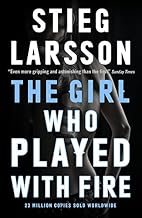
It is a good, exciting page-turner, of course, but I didn't enjoy this quite as much as the first part of the trilogy: there was far too much violence for my taste, and a lot more recapping of the plot than really necessary. The crucial point about who did the shooting was resolved surprisingly early in the book, and from that point on it became just a question of who would get to the correct remote farm/warehouse/summer cottage in time and succeed in beating up the other team most effectively.
The trick of these books is obviously that Larsson's readers should be persuaded that there's no need to feel guilty about the pleasure they get from reading about sex and violence if the beatings are all being handed out by the apparent underdog in justified retribution for all the injustices she's suffered at the hands of society. But in the end it's basically a book about a young woman beating up a bunch of bikers, and if that doesn't happen to turn you on...
It is a good, exciting page-turner, of course, but I didn't enjoy this quite as much as the first part of the trilogy: there was far too much violence for my taste, and a lot more recapping of the plot than really necessary. The crucial point about who did the shooting was resolved surprisingly early in the book, and from that point on it became just a question of who would get to the correct remote farm/warehouse/summer cottage in time and succeed in beating up the other team most effectively.
The trick of these books is obviously that Larsson's readers should be persuaded that there's no need to feel guilty about the pleasure they get from reading about sex and violence if the beatings are all being handed out by the apparent underdog in justified retribution for all the injustices she's suffered at the hands of society. But in the end it's basically a book about a young woman beating up a bunch of bikers, and if that doesn't happen to turn you on...
25baswood
>24 thorold: Now I know why I have never read any of Larsson's books
26kidzdoc
Nice review of The Girl Who Played with Fire, Mark. That's definitely not one for me, though.
27theaelizabet
>24 thorold: I read the first one to see what all of the fuss was and was done. No need to read further and your review pretty much explains why.
28ursula
>24 thorold: Hm. I read the first one because I intended to see the movie(s), which I still haven't gotten around to, at least 4 years later. Then I read the second one in spite of not being crazy about the first one because well, I might as well. And I intended to read the third one because then I would be done with the whole thing. But... yeah ... still haven't done it. I had issues with the presentation of violence in the first two, and it sounds like this one is more of the same, so maybe I'll just admit to myself that I'm probably not going to read it.
29thorold
>28 ursula:
It was the second one I read. I assume the third one will be more of the same, but l don't have any evidence for that at the moment.
I finished Amour, colère et folie last night, I'll try to post a review in the Caribbean thread today. Impressive, but pretty pessimistic. I'm still trying to work out why there were three provincial sisters in the first story and a confiscated orchard in the second, but no sign of any uncles or seabirds in the third.
It was the second one I read. I assume the third one will be more of the same, but l don't have any evidence for that at the moment.
I finished Amour, colère et folie last night, I'll try to post a review in the Caribbean thread today. Impressive, but pretty pessimistic. I'm still trying to work out why there were three provincial sisters in the first story and a confiscated orchard in the second, but no sign of any uncles or seabirds in the third.
30ursula
>29 thorold: Oh yeah, that shows how much I know/remember. That is the second in the series. The Hornet's Nest is the third one. Either way. :D
31thorold
Having started on Reinaldo Arenas, I got side-tracked today when I was reminded how long it's been since I read anything in Dutch: I managed to take up that challenge without being entirely derailed from the Caribbean theme by picking a short novel by Tip Marugg, a writer who lived on Curaçao: De morgen loeit weer aan. Very engaging: I've posted a review on the Caribbean thread. (Despite the cover-art, the dogs only play a very minor part in the story.)

32thorold
Reading summary for January:
20 books read (8 by female authors, i.e. 40%)
Genres: 6 crime, 2 memoirs/travel, 5 poetry, 7 general fiction
Languages: 1 Dutch; 3 French; 2 Spanish; 14 English (of which 3 translated from Swedish)
16 distinct authors (5 F, 11 M)
I added 13 physical books to the library this month. One is on the go now, I finished 6 and added 6 to the TBR shelf.
January is often a month in which I read a lot: I usually manage to stretch the Christmas holiday period until well after Twelfth Night, and the weekends don't tend to be very conducive to outdoor activities (even with the unusually mild weather we had this year, most of the weekends were extremely wet).
20 books read (8 by female authors, i.e. 40%)
Genres: 6 crime, 2 memoirs/travel, 5 poetry, 7 general fiction
Languages: 1 Dutch; 3 French; 2 Spanish; 14 English (of which 3 translated from Swedish)
16 distinct authors (5 F, 11 M)
I added 13 physical books to the library this month. One is on the go now, I finished 6 and added 6 to the TBR shelf.
January is often a month in which I read a lot: I usually manage to stretch the Christmas holiday period until well after Twelfth Night, and the weekends don't tend to be very conducive to outdoor activities (even with the unusually mild weather we had this year, most of the weekends were extremely wet).
33thorold
I've now finished Antes que anochezca and posted a ludicrously long review (even by my standards) in the Caribbean thread. I now know a little bit more about Cuban politics and literature, and a lot more about Cuban sex, than I did a week ago. After finishing the book , I watched the documentary Conducta impropria (Nestor Almendros, 1984) to which Arenas and many of the people he mentions in his book contributed. Some harrowing testimony from Cubans who were locked up simply for being "different", but there's also a certain entertainment value in all the 80s hairstyles, and in listening to Susan Sonntag speaking French with an appalling American accent. They cut an interview with Castro into the final part of the film in which Castro completely ignores the camera, grabs the interviewer by the lapel and looks straight into his eyes before telling him what we all know to be a pack of lies. Wonderful television!

Since it's the height of carnival season, I've put my TBR pile aside for the moment and started on Edwidge Danticat's After the dance, a short non-fiction book about the carnival in Jacmel.
Since it's the height of carnival season, I've put my TBR pile aside for the moment and started on Edwidge Danticat's After the dance, a short non-fiction book about the carnival in Jacmel.
34LolaWalser
>24 thorold:
It's been a while since I read the Millennium trilogy and I've forgotten most of the details, but I'm surprised you seem to ignore completely its major attraction (for most people who have liked it, as far as I noticed), the character of Lisbeth Salander.
I'm not a habitual reader of contemporary crime fiction and dislike violence, the more the more graphic it is, so I had low expectations when I picked this up (every now and then I choose whatever is "hot", just to see how alien I remain ;)). But Salander was magnetic, and so was the spectacle of, finally, no-holds-barred female rage and revenge on her torturers. However, there's more to it than that...
The first and third titles in the original don't have "girls" in them; the first one translates literally as Men who hate women. It's regrettable that the English translations betrayed the original, because the series isn't a mere thriller (and should not be reviewed as such). There's a strong political backbone to it, uncommon in English thrillers, the more so because of the central feminist message about the monstrosity and injustice of misogyny--heck, there's a plot involving a journalist similar to Larsson (who was a journalist and activist investigating and fighting the extreme right), which gave him the opportunity to give a mini-documentary on actual sex traffic across Europe.
From the Wikipedia (I just now read this, when I went to check the dates):
I would judge that, for all the shortcomings of the novels (most, IMO, in the first book), Larsson succeeded in expressing something tremendously authentic in both its anguish and redemption, and that this is the source of the fascination these books have exerted over many unlikely fans.
It's been a while since I read the Millennium trilogy and I've forgotten most of the details, but I'm surprised you seem to ignore completely its major attraction (for most people who have liked it, as far as I noticed), the character of Lisbeth Salander.
I'm not a habitual reader of contemporary crime fiction and dislike violence, the more the more graphic it is, so I had low expectations when I picked this up (every now and then I choose whatever is "hot", just to see how alien I remain ;)). But Salander was magnetic, and so was the spectacle of, finally, no-holds-barred female rage and revenge on her torturers. However, there's more to it than that...
The first and third titles in the original don't have "girls" in them; the first one translates literally as Men who hate women. It's regrettable that the English translations betrayed the original, because the series isn't a mere thriller (and should not be reviewed as such). There's a strong political backbone to it, uncommon in English thrillers, the more so because of the central feminist message about the monstrosity and injustice of misogyny--heck, there's a plot involving a journalist similar to Larsson (who was a journalist and activist investigating and fighting the extreme right), which gave him the opportunity to give a mini-documentary on actual sex traffic across Europe.
From the Wikipedia (I just now read this, when I went to check the dates):
When Larsson was 15 years old, he witnessed three of his friends gang-raping a young girl, which led to his lifelong abhorrence of violence and abuse against women.5 His longtime partner, Eva Gabrielsson, writes that this incident "marked him for life" in a chapter of her book that describes Larsson as a feminist.6 The author never forgave himself for failing to help the girl, and this inspired the themes of sexual violence against women in his books.31 According to Gabrielsson, the Millennium trilogy allowed Larsson to express a worldview he was never able to elucidate as a journalist.
I would judge that, for all the shortcomings of the novels (most, IMO, in the first book), Larsson succeeded in expressing something tremendously authentic in both its anguish and redemption, and that this is the source of the fascination these books have exerted over many unlikely fans.
35thorold
>34 LolaWalser:
Yes, I was picking out the one aspect of the books (especially the second book) that really didn't appeal to me, but of course there is a lot more to them than that. I found Salander fascinating and original too, and perhaps I should have said so. I'm especially impressed with the way he keeps skating around the "is she really mad?" thing until we've worked out for ourselves that the real question should be "would we think a boy who acted like this was mad?", but he never pushes that into our faces. Very neat.
I understand at least some of the reasons why Larsson found it necessary to include so much violence - if you want to make your readers aware of something bad in the world, you need to establish that it is bad. But I'm just a bit too squeamish for all those balletic fistfights.
Yes, I was picking out the one aspect of the books (especially the second book) that really didn't appeal to me, but of course there is a lot more to them than that. I found Salander fascinating and original too, and perhaps I should have said so. I'm especially impressed with the way he keeps skating around the "is she really mad?" thing until we've worked out for ourselves that the real question should be "would we think a boy who acted like this was mad?", but he never pushes that into our faces. Very neat.
I understand at least some of the reasons why Larsson found it necessary to include so much violence - if you want to make your readers aware of something bad in the world, you need to establish that it is bad. But I'm just a bit too squeamish for all those balletic fistfights.
36dchaikin
>32 thorold: I just wanted to mention that I really enjoyed reading through your last month of reviews. Seeing in this post (#32) that you had read 20 books in January, I realized I clearly hadn't been reading many of your reviews. I limit myself to CR so didn't head over to the Reading Globally group. But you do post on the book pages. So, I've been catching and just finished reading most of your January reviews. And I'll try to keep as I can from here on out.
37LolaWalser
>35 thorold:
As I read so little in that vein, I'm not really in a position to judge how much violence there is in Larsson relatively, or whether it's worse than the average genre standard, but I can say that, for example, Elizabeth George revolted me far more in the two books of hers I read. Outside genre, I think we're accustomed to such extreme violence in many classics and well-regarded books, even entire literatures (20th century French, for instance, both in its "prestigious" and popular wings), that fistfights can't well compare.
But, of course, we are used to seeing violence against women--I bet most people who'd disdain to read a book where the tables are even a little bit turned, find no difficulty in eroticisation of violence against women, or see any problem in their ubiquitous objectification. Not that the part of physical revenge in Larsson should be exaggerated--if Lisbeth and her allies fight men it's because the villains of the story happen to be male. We see plenty of women as victims in the trilogy, including Lisbeth.
As I read so little in that vein, I'm not really in a position to judge how much violence there is in Larsson relatively, or whether it's worse than the average genre standard, but I can say that, for example, Elizabeth George revolted me far more in the two books of hers I read. Outside genre, I think we're accustomed to such extreme violence in many classics and well-regarded books, even entire literatures (20th century French, for instance, both in its "prestigious" and popular wings), that fistfights can't well compare.
But, of course, we are used to seeing violence against women--I bet most people who'd disdain to read a book where the tables are even a little bit turned, find no difficulty in eroticisation of violence against women, or see any problem in their ubiquitous objectification. Not that the part of physical revenge in Larsson should be exaggerated--if Lisbeth and her allies fight men it's because the villains of the story happen to be male. We see plenty of women as victims in the trilogy, including Lisbeth.
38thorold
>37 LolaWalser:
I've never got anywhere with Elizabeth George either: the couple of times I tried I gave up after a few pages with the idea that she has as little sensitivity for the English language as she does for England, but I'm probably prejudiced.
I'm sure you're right that we are inconsistent and - probably - self-deceiving in the way we react to violence in fiction. Some of it probably has to do with how detailed and realistic the descriptions are, and how far the writer lets readers detach themselves from it. Larsson isn't especially realistic, but he doesn't let you step back and see the exaggeration as grand guignol, he makes sure the reader gets thoroughly splashed with blood.
I've never got anywhere with Elizabeth George either: the couple of times I tried I gave up after a few pages with the idea that she has as little sensitivity for the English language as she does for England, but I'm probably prejudiced.
I'm sure you're right that we are inconsistent and - probably - self-deceiving in the way we react to violence in fiction. Some of it probably has to do with how detailed and realistic the descriptions are, and how far the writer lets readers detach themselves from it. Larsson isn't especially realistic, but he doesn't let you step back and see the exaggeration as grand guignol, he makes sure the reader gets thoroughly splashed with blood.
39baswood
Enjoyed your excellent review of Antes que anochezca
40thorold
More music:
First concert of 2016 - Nathalie Stutzmann and Inger Södergren doing Schubert's Winterreise at the Nieuwe Kerk.
Hmmm. Interesting, and it was great to have the chance to listen to such a fabulous singer in such an atmospheric venue, but Stutzmann is about as far from my idea of how you should sing Schubert as it's possible to get.
She made a very good job of some of the high-emotional bits (e.g. In "Die Post", "Die Krähe" and "Der Wegweiser"), but her approach to the more intimate, lyrical bits just didn't grab me at all. To be fair, I should say that I've been listening to Dietrich Fischer-Dieskau's recordings of Schubert for the last forty years, so I'm probably biased. But as far as I'm concerned, Ms Stutzmann should stick to the baroque repertoire she does so amazingly well.
First concert of 2016 - Nathalie Stutzmann and Inger Södergren doing Schubert's Winterreise at the Nieuwe Kerk.
Hmmm. Interesting, and it was great to have the chance to listen to such a fabulous singer in such an atmospheric venue, but Stutzmann is about as far from my idea of how you should sing Schubert as it's possible to get.
She made a very good job of some of the high-emotional bits (e.g. In "Die Post", "Die Krähe" and "Der Wegweiser"), but her approach to the more intimate, lyrical bits just didn't grab me at all. To be fair, I should say that I've been listening to Dietrich Fischer-Dieskau's recordings of Schubert for the last forty years, so I'm probably biased. But as far as I'm concerned, Ms Stutzmann should stick to the baroque repertoire she does so amazingly well.
42thorold
>41 edwinbcn: A pity it couldn't be more favourable - I've enjoyed just about everything else by Stutzmann I've listened to, and it can't be easy making a living as a contralto in a world full of hungry young countertenors...
I read two carnival-related books last week, in keeping with the season: Amryl Johnson's Sequins for a ragged hem (which I enjoyed every bit as much as when I first read it 25 years ago) and Edwidge Danticat's After the dance (a disappointing pot-boiler). I posted a combined review in the Caribbean thread.
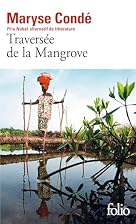
Went off walking yesterday, and read about half of Maryse Condé's Traversée de la mangrove on the train. Enjoying it so far - it's a kind of whodunnit set in an obscure village in Guadeloupe in the 1980s.
I read two carnival-related books last week, in keeping with the season: Amryl Johnson's Sequins for a ragged hem (which I enjoyed every bit as much as when I first read it 25 years ago) and Edwidge Danticat's After the dance (a disappointing pot-boiler). I posted a combined review in the Caribbean thread.
Went off walking yesterday, and read about half of Maryse Condé's Traversée de la mangrove on the train. Enjoying it so far - it's a kind of whodunnit set in an obscure village in Guadeloupe in the 1980s.
43japaul22
>40 thorold: Yes, Dietrich Fischer-Dieskau has ruined me for all other attempts at Schubert as well!
44thorold
I finished Traversée de la mangrove by Maryse Condé over the weekend and enjoyed it very much: I've posted a review over in the Caribbean thread. (PS: it isn't really a whodunnit!)
I'm not sure why - possibly just because so many people are talking about Knausgaard and tree-destroying literature is in fashion - I finally got around to taking Meneer Beerta down from the TBR shelf where it's been resting peacefully for some years. The reason for my reluctance to tackle it is that it's the first part of a 5000-page marathon, J.J. Voskuil's novel sequence Het Bureau ("The Office"), which my friends were all pressing me to read when it came out twenty years ago. It's a paperclip-by-paperclip account of thirty years working in an esoteric backwater of the Dutch civil service, apparently largely based on Voskuil's own experience of working in the Meertens Instituut in Amsterdam. So far (I've got to the end of the first of the 30 years, after about 130 pages) I'm enjoying it: there's a lot of dry irony in Voskuil's sharp observation of the absurdities of office life and the arbitrary ways it brings people together. I think there's every chance that it will drag me into reading all seven parts, but probably not all in one go. The bookshop where I bought Part 1 no longer exists, sadly, but I'm sure I'll be able to find the remaining parts somewhere.
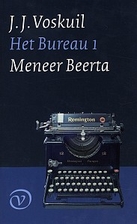
I'm not sure why - possibly just because so many people are talking about Knausgaard and tree-destroying literature is in fashion - I finally got around to taking Meneer Beerta down from the TBR shelf where it's been resting peacefully for some years. The reason for my reluctance to tackle it is that it's the first part of a 5000-page marathon, J.J. Voskuil's novel sequence Het Bureau ("The Office"), which my friends were all pressing me to read when it came out twenty years ago. It's a paperclip-by-paperclip account of thirty years working in an esoteric backwater of the Dutch civil service, apparently largely based on Voskuil's own experience of working in the Meertens Instituut in Amsterdam. So far (I've got to the end of the first of the 30 years, after about 130 pages) I'm enjoying it: there's a lot of dry irony in Voskuil's sharp observation of the absurdities of office life and the arbitrary ways it brings people together. I think there's every chance that it will drag me into reading all seven parts, but probably not all in one go. The bookshop where I bought Part 1 no longer exists, sadly, but I'm sure I'll be able to find the remaining parts somewhere.
45Trifolia
>44 thorold: I'm one of those persons who's yet to finish J.J. Voskuil's doorstopper. I started once but never got round to finishing. I don't know why really, because I thought it was brilliant and so similar to what I experienced on a daily basis: the joys of being a civil servant! Despite it's somewhat outdated setting, the general feeling's still very much the same.
46thorold
>45 Trifolia:
I'm seeing a lot that's frighteningly familiar!
I'm seeing a lot that's frighteningly familiar!
47deebee1
I'm not familiar with Maryse Condé but this book seems like a good introduction. As for the Voskuil tome - I don't suppose there's an English translation yet, is there? I like "sharp observation of absurdities", so this looks interesting.
48edwinbcn
I read Voskuil's Het Bureau, all seven volumes many years ago. It is really worthwhile to keep going.
Just the other day, I saw that Wikipedia has a page with a "List of longest novels" in the world. According to this list Voskuil's Het Bureau is #2, with a total of 7 volumes, 5,058 pages which comes to 1,590,000 words.
Of course, there were some other very interesting books on the list.....
Just the other day, I saw that Wikipedia has a page with a "List of longest novels" in the world. According to this list Voskuil's Het Bureau is #2, with a total of 7 volumes, 5,058 pages which comes to 1,590,000 words.
Of course, there were some other very interesting books on the list.....
49ELiz_M
>48 edwinbcn: Because I had to go look, List of longest novels
I am really curious where Story of the Stone would fit if there was a word count for it....
I am really curious where Story of the Stone would fit if there was a word count for it....
50baswood
Thank goodness Het Bureau has not been translated into English or I might have felt compelled to read it.
51thorold
>47 deebee1: I can't really advise, only having read one, but I certainly found Traversée de la mangrove worth reading. On LT, I, Tituba, black witch of Salem seems to be Condé's most popular book by quite a margin, but that presumably takes you into quite a different type of subject-matter.
>48 edwinbcn:, >49 ELiz_M: Oh, it's only about 15% longer than Proust. No problem then... :-)
>50 baswood: Apparently it has been translated into German!
I came back from work tonight with a pile of Andrea Camilleri detective stories and a Fred Vargas, so there might be more distractions in store.
>48 edwinbcn:, >49 ELiz_M: Oh, it's only about 15% longer than Proust. No problem then... :-)
>50 baswood: Apparently it has been translated into German!
I came back from work tonight with a pile of Andrea Camilleri detective stories and a Fred Vargas, so there might be more distractions in store.
52rebeccanyc
>51 thorold: I LOVE Andrea Camilleri and I'm growing to love Fred Vargas.
53thorold
>52 rebeccanyc:
Yes, lots of people are saying good things about Fred Vargas, I've been meaning to try some for a while. But this was the first time I've managed to grab one in French. I don't see the point of reading them in English or Dutch. Dipped into the first couple of chapters already, and it looks interesting.
When I looked closely at the pile of Camilleri I got, I found that one is a duplicate and two are non-Montalbano stories. Should still be interesting, anyway.
Yes, lots of people are saying good things about Fred Vargas, I've been meaning to try some for a while. But this was the first time I've managed to grab one in French. I don't see the point of reading them in English or Dutch. Dipped into the first couple of chapters already, and it looks interesting.
When I looked closely at the pile of Camilleri I got, I found that one is a duplicate and two are non-Montalbano stories. Should still be interesting, anyway.
54thorold
The postman brought me Hadriana dans tous mes rêves today - yet another one I feel like taking straight off the TBR. After all, it doesn't make sense to read a string of books set in Haiti without at least some zombies popping up...
55dchaikin
Enjoyed your latest three Caribbean reviews. Intrigued by Vaskuil, but I would need it in English. I was surprised to find I've read two the books on the longest list. (And I once started Proust, and got through the first two books...and then moved on.) I'm wondering how complete the list is.
56Simone2
>44 thorold: Here another fan of Voskuil. If you like Meneer Beerta you should definitely read on, it gets better with every book and it is also very addictive: afterwards I read all I could find by Voskuil. I wanted to know everything about his life, his wife etc.
I used to read every part of Het Bureau as soon as they were published, so that is a long time ago but still I remember many dialogues and situation. They are sometimes hilarious, sometimes sad, sometimes painfully recognizable. I won't ever forget people like Ad en Bart and Nicolien of course!
I envy you!
I used to read every part of Het Bureau as soon as they were published, so that is a long time ago but still I remember many dialogues and situation. They are sometimes hilarious, sometimes sad, sometimes painfully recognizable. I won't ever forget people like Ad en Bart and Nicolien of course!
I envy you!
57LolaWalser
>53 thorold:
Are you reading Vargas in sequence? There is some continuity regarding the characters, if that sort of thing matters to you. There are also some references to past events in various books, although not, I think, affecting the plots at hand.
Are you reading Vargas in sequence? There is some continuity regarding the characters, if that sort of thing matters to you. There are also some references to past events in various books, although not, I think, affecting the plots at hand.
58thorold
>57 LolaWalser: not at the moment: I chanced to find Un lieu incertain, which seems to be the sixth. But I'll probably go back to the first one if I like it.
59thorold
So, I finished two books over the weekend that coincidentally both turned out to centre around popular supernatural themes (vampires and zombies) presented in a way that doesn't actually make us to accept the existence of supernatural phenomena - as long as we acknowledge that "there are people who believe in this and act accordingly". Which is of course a well-known literary get-out clause. Anyway, I enjoyed both of them: I've put a review of Hadriana dans tous mes rêves in the Caribbean thread. Un lieu incertain, as I said, is the first Fred Vargas I've tried, and I liked it: fiction is full of eccentric detectives, but Adamsberg manages to have some entertainingly different eccentricities from the rest, and the plot wasn't too predictable. I loved the old-fashioned way the final identification of the murderer was based on a logical (but well-hidden) Clue that we could have worked out for ourselves if we'd noticed it in time. Not something you often see these days. The police-corruption plot reminded me rather of the TV series Engrenages, but I haven't bothered to check which came first...


60rebeccanyc
I haven't gotten to An Uncertain Place because I'm reading the Vargas series in order.
61FlorenceArt
I'm reading Vargas in total disorder, but I don't think I have read this one. Must remedy that soon.
62baswood
Also interested in your review of An Uncertain Place
63lilisin
My mom has been trying to get me to read Vargas for at least a decade. Now that all of LT seems to be reading Vargas I find myself impressed as I didn't think these would ever come out in English. (Although obviously you read it in French.) However, it'll probably be another decade before I do finally read Vargas.
64thorold
>63 lilisin:
I've just ordered the first three Adamsberg novels. No knowing how long they will spend on the TBR once they arrive - decades can't be ruled out, although crime stories usually move a bit more quickly than that...
I've just ordered the first three Adamsberg novels. No knowing how long they will spend on the TBR once they arrive - decades can't be ruled out, although crime stories usually move a bit more quickly than that...
65thorold
I finished re-reading The comedians - a bit disappointing, but that's probably inevitable given how much it impressed me at the time and long it is since I first read it. I've posted a review over on the Caribbean thread. I think my main problem with it was that it read too much like a Graham Greene novel, something that it probably isn't very fair to hold against it!
There was a very enjoyable concert on the radio last night - John Eliot Gardiner conducting Mendelssohn at the Barbican - so I carried right on and grabbed an old Virago off the TBR pile: Walking naked (1981) by Nina Bawden.
Nina Bawden (1925-2012) is one of those British novelists I vaguely know about but could never quite place on the map, partly because her name was also very familiar from her children's books that were very popular in the 60s and 70s (Carrie's War and The peppermint pig were the most famous).
Walking Naked reminded me of some of Anne Tyler's (much more recent) novels in its form: it describes a particularly hectic Saturday during which Laura and Andrew attend a Tennis game at Hampton Court, go to a Boat Race party, and then visit Laura's son in prison and her father in the country before rushing back to London for a domestic emergency. In the course of the day, Laura takes us back over her earlier life, her relationship with her friends Hilde and Rosie, her first marriage, and the development of her career as a novelist. She keeps on confronting herself and the reader with the large and small distortions that enter into different people's recollections of the same events, especially when they start to narrate them with a novelist's eye. The title comes from Yeats's poem, quoted as the epigraph to the book, in which the poet tells us that he has made his song into a richly embroidered coat, but "...there's more enterprise / In walking naked". Laura is constantly trying to peel off the garments that her literary instinct makes her stick onto the narrative - and of course we as readers guess that there's a similar process going on between the narrator and the novelist, as we recognise that the salient points of Laura's life have a strong resemblance to the publicly known facts about Bawden's own career.
Very interesting and intelligent writing, occasionally painful to read, but also often funny and perceptive.
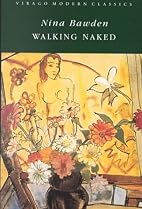
There was a very enjoyable concert on the radio last night - John Eliot Gardiner conducting Mendelssohn at the Barbican - so I carried right on and grabbed an old Virago off the TBR pile: Walking naked (1981) by Nina Bawden.
Nina Bawden (1925-2012) is one of those British novelists I vaguely know about but could never quite place on the map, partly because her name was also very familiar from her children's books that were very popular in the 60s and 70s (Carrie's War and The peppermint pig were the most famous).
Walking Naked reminded me of some of Anne Tyler's (much more recent) novels in its form: it describes a particularly hectic Saturday during which Laura and Andrew attend a Tennis game at Hampton Court, go to a Boat Race party, and then visit Laura's son in prison and her father in the country before rushing back to London for a domestic emergency. In the course of the day, Laura takes us back over her earlier life, her relationship with her friends Hilde and Rosie, her first marriage, and the development of her career as a novelist. She keeps on confronting herself and the reader with the large and small distortions that enter into different people's recollections of the same events, especially when they start to narrate them with a novelist's eye. The title comes from Yeats's poem, quoted as the epigraph to the book, in which the poet tells us that he has made his song into a richly embroidered coat, but "...there's more enterprise / In walking naked". Laura is constantly trying to peel off the garments that her literary instinct makes her stick onto the narrative - and of course we as readers guess that there's a similar process going on between the narrator and the novelist, as we recognise that the salient points of Laura's life have a strong resemblance to the publicly known facts about Bawden's own career.
Very interesting and intelligent writing, occasionally painful to read, but also often funny and perceptive.
66dchaikin
Interesting about Bawden and I enjoyed your thoughts on revisiting Greene's The Commedians.
67FlorenceArt
>65 thorold: Thank you for the great review. I had never come across Nina Bawden's name
68thorold
>67 FlorenceArt:
Glad you found it useful! I had heard of her, but I probably wouldn't have bothered to take the book off the shelf in the charity shop to find out why I remembered the name if it hadn't been published by Virago. They usually turn out to have a good reason for what they choose to print...
Glad you found it useful! I had heard of her, but I probably wouldn't have bothered to take the book off the shelf in the charity shop to find out why I remembered the name if it hadn't been published by Virago. They usually turn out to have a good reason for what they choose to print...
69Trifolia
>65 thorold: Thanks for the excellent review. You made me curious to read the book. From what you say, I think it's worth reading. And I'm pleased to know that Virago is a sort of vignette for quality. It might make it easier for me to choose a book.
70thorold
>69 Trifolia: Be careful - LT is crawling with hard-core Virago fans who will swoop in and strip your library bare before you can say "Vita Sackville-West". They hang out here: http://www.librarything.com/groups/viragomodernclassics
71thorold
More music:
Leonidas Kavakos (soloist & conductor), Rotterdams Philharmonisch Orkest, Zuiderstrandtheater
Mozart 3rd violin concerto, Haydn Symphony No.83, Brahms Symphony No.4.
I haven't heard Kavakos live before and I know next to nothing about violin music, so my opinion isn't worth all that much, but I couldn't find anything to criticise in his performance of the Mozart: very enjoyable. The Haydn and the Brahms were both exceptionally well played too. I suspect that in that kind of core repertoire the Rotterdammers don't need to pay much attention to the podium, though: the performance is probably more to their credit than the conductor's. I was there with a fairly mixed group of friends, and everyone had a good time, there's obviously nothing wrong with an occasional foray into the undemanding mainstream.
To be fair, it strikes me every time I hear Brahms live how much more complicated and interesting his music becomes when you really take the trouble to listen to it.
Unfortunately, Kavakos seems to have been a victim of the Nehru-jacket craze that is infecting classical music: the one he was wearing last night looked more than anything like the uniforms that British bus conductors had to wear in the 1960s...
It was the first time I've been to the Zuiderstrandtheater, which is standing in whilst the concert hall in the centre of The Hague is being rebuilt. It's a hideous concrete box in the middle of a windswept car-park next to Scheveningen harbour, the architect was clearly inspired by the idea that the site is a former container terminal. The inside of the theatre isn't too bad, and the acoustics seem pretty good for orchestral music.
Leonidas Kavakos (soloist & conductor), Rotterdams Philharmonisch Orkest, Zuiderstrandtheater
Mozart 3rd violin concerto, Haydn Symphony No.83, Brahms Symphony No.4.
I haven't heard Kavakos live before and I know next to nothing about violin music, so my opinion isn't worth all that much, but I couldn't find anything to criticise in his performance of the Mozart: very enjoyable. The Haydn and the Brahms were both exceptionally well played too. I suspect that in that kind of core repertoire the Rotterdammers don't need to pay much attention to the podium, though: the performance is probably more to their credit than the conductor's. I was there with a fairly mixed group of friends, and everyone had a good time, there's obviously nothing wrong with an occasional foray into the undemanding mainstream.
To be fair, it strikes me every time I hear Brahms live how much more complicated and interesting his music becomes when you really take the trouble to listen to it.
Unfortunately, Kavakos seems to have been a victim of the Nehru-jacket craze that is infecting classical music: the one he was wearing last night looked more than anything like the uniforms that British bus conductors had to wear in the 1960s...
It was the first time I've been to the Zuiderstrandtheater, which is standing in whilst the concert hall in the centre of The Hague is being rebuilt. It's a hideous concrete box in the middle of a windswept car-park next to Scheveningen harbour, the architect was clearly inspired by the idea that the site is a former container terminal. The inside of the theatre isn't too bad, and the acoustics seem pretty good for orchestral music.
72thorold
I finished the Haitian socialist epic Compère Général Soleil this morning - review in the Caribbean thread, as usual.
That gives me the chance to start on the little pile of Fred Vargas that arrived last week, and I'm also hoping to spend a bit of quality time with The Arrivants - a book I ordered weeks and weeks ago, it seems, but which only turned up a few days ago. (And had to be picked up from the post office, at that!)

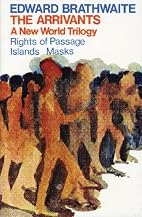
That gives me the chance to start on the little pile of Fred Vargas that arrived last week, and I'm also hoping to spend a bit of quality time with The Arrivants - a book I ordered weeks and weeks ago, it seems, but which only turned up a few days ago. (And had to be picked up from the post office, at that!)
73baswood
>71 thorold: I am one of those people that don't really care what a concert hall looks like from the outside as long as the music sounds good inside.
Great review of Walking naked, Nina bawden
I am a big fan of Graham Green's The Comedians, but it is not well liked by other people on theses threads.
Enjoying (and envious) of your concert going.
Great review of Walking naked, Nina bawden
I am a big fan of Graham Green's The Comedians, but it is not well liked by other people on theses threads.
Enjoying (and envious) of your concert going.
74thorold
>73 baswood: I am one of those people that don't really care what a concert hall looks like from the outside as long as the music sounds good inside.
Fair enough: the music is the most important part, and I'm well aware that I'm very lucky to live somewhere with so many major classical music venues within easy reach. And that the Zuiderstrandtheater is only a temporary fix whilst they build a new hall in the city centre.
But it does detract from the enjoyment quite a bit if you have to battle against the winter storms across a waste of building sites and car parks to walk to the nearest bars and restaurants, and it's a major drawback (for me) that it's about as far away from where I live as it's possible to be and still be in the same city. But I did meet some acquaintances there who told me that they only started going to concerts because they live in Scheveningen and it's so nice to have a symphony concert on the doorstep...
Fair enough: the music is the most important part, and I'm well aware that I'm very lucky to live somewhere with so many major classical music venues within easy reach. And that the Zuiderstrandtheater is only a temporary fix whilst they build a new hall in the city centre.
But it does detract from the enjoyment quite a bit if you have to battle against the winter storms across a waste of building sites and car parks to walk to the nearest bars and restaurants, and it's a major drawback (for me) that it's about as far away from where I live as it's possible to be and still be in the same city. But I did meet some acquaintances there who told me that they only started going to concerts because they live in Scheveningen and it's so nice to have a symphony concert on the doorstep...
75thorold
L'homme aux cercles bleus (1991; The chalk circle man) by Fred Vargas (1957 - )

This is the first of the Commissaire Adamsberg novels (and the second that I have read): Adamsberg has recently been transferred from the provinces to a police station in Paris, and he's still getting to know his new colleagues. A key element of this first book is the establishing of Adamsberg's relationship with his rationalist subordinate Danglard.
Adamsberg employs a more-Maigretish-than-Maigret approach to detection where he lets everyone else run around and find evidence whilst he immerses himself in the surroundings of the crime for 200 pages, then comes up with a brilliant solution based on a mixture of psychological insight and intuition. In Simenon this is just a convention we have to accept, but here it's made explicit and discussed at length, and Adamsberg has to defend his approach against Danglard's strong conviction that intuition leads to miscarriages of justice. Although her great predecessor is never mentioned, Vargas clearly has a bone to pick with Simenon: there are many ironic little reversals of iconic images from the Maigret books concealed in the text (most conspicuously in this book the pipe-smoking suspect and the way the book closes by running the opening scene of the first Maigret novel Pietr-le-Letton in reverse). And of course it is an entirely Maigret-like way of proceeding to take as the starting point for a major investigation a sequence of apparently harmless incidents where no crime has been reported yet.
Vargas is obviously also someone who enjoys playing around with gender reversals to make her characters less predictable: Adamsberg himself is a male detective with some very "feminine" personality traits (passive, silent, calming, beautiful...), and both the books I've read have had important minor characters who are women with strongly "masculine" personalities.
What makes these books interesting is really the combination of a quirky crime story with a serious, reflective style of writing that draws you into sympathy with the characters, odd and fragmented though they are. I'm obviously going to have to keep on reading...
This is the first of the Commissaire Adamsberg novels (and the second that I have read): Adamsberg has recently been transferred from the provinces to a police station in Paris, and he's still getting to know his new colleagues. A key element of this first book is the establishing of Adamsberg's relationship with his rationalist subordinate Danglard.
Adamsberg employs a more-Maigretish-than-Maigret approach to detection where he lets everyone else run around and find evidence whilst he immerses himself in the surroundings of the crime for 200 pages, then comes up with a brilliant solution based on a mixture of psychological insight and intuition. In Simenon this is just a convention we have to accept, but here it's made explicit and discussed at length, and Adamsberg has to defend his approach against Danglard's strong conviction that intuition leads to miscarriages of justice. Although her great predecessor is never mentioned, Vargas clearly has a bone to pick with Simenon: there are many ironic little reversals of iconic images from the Maigret books concealed in the text (most conspicuously in this book the pipe-smoking suspect and the way the book closes by running the opening scene of the first Maigret novel Pietr-le-Letton in reverse). And of course it is an entirely Maigret-like way of proceeding to take as the starting point for a major investigation a sequence of apparently harmless incidents where no crime has been reported yet.
Vargas is obviously also someone who enjoys playing around with gender reversals to make her characters less predictable: Adamsberg himself is a male detective with some very "feminine" personality traits (passive, silent, calming, beautiful...), and both the books I've read have had important minor characters who are women with strongly "masculine" personalities.
What makes these books interesting is really the combination of a quirky crime story with a serious, reflective style of writing that draws you into sympathy with the characters, odd and fragmented though they are. I'm obviously going to have to keep on reading...
76FlorenceArt
>75 thorold: Great review! I had never noticed the Maigret links.
77thorold
>76 FlorenceArt: Thanks!
The links could just be in be my imagination of course: it's quite possible that all Paris detective stories resemble Maigret for the same reason that all early 19th century English novels by women resemble Jane Austen...
The links could just be in be my imagination of course: it's quite possible that all Paris detective stories resemble Maigret for the same reason that all early 19th century English novels by women resemble Jane Austen...
78LolaWalser
>76 FlorenceArt:
Simenon never once crossed my mind while reading Vargas, in any context. The two could hardly be more different.
>77 thorold:
Simenon is certainly a big name in French crime fiction, but he's not the only one, and I bet few contemporary writers write in direct relation to him. It's like expecting every English crime writer to write in relation to Agatha Christie.
Glad to see you're hooked, fan to fan. That said, I hope you'll like the second instalment better than I did, it's the only one I found rather disappointing.
Simenon never once crossed my mind while reading Vargas, in any context. The two could hardly be more different.
>77 thorold:
Simenon is certainly a big name in French crime fiction, but he's not the only one, and I bet few contemporary writers write in direct relation to him. It's like expecting every English crime writer to write in relation to Agatha Christie.
Glad to see you're hooked, fan to fan. That said, I hope you'll like the second instalment better than I did, it's the only one I found rather disappointing.
79rebeccanyc
>75 thorold: Great review. I'm reading my fourth Vargas and the third Adamsberg, so obviously I'm a fan too.
80cabegley
>75 thorold: Great review of the Vargas. I picked up one of the Adamsberg novels at a mystery convention a few years ago (not the first one, unfortunately), and have since been toying with the idea of getting the first ones and checking out the series. I think you may have pushed me over the edge.
81thorold
I finished The Arrivants and started writing a review on the Caribbean thread, then realised I need more time to find a few lines to quote: it will have to stay incomplete until tonight.
>78 LolaWalser: like expecting every English crime writer to write in relation to Agatha Christie - maybe, but I'm sure every modern English crime writer has sneaked in a more or less jokey reference to Sherlock Holmes, Lord Peter Wimsey or Hercule Poirot at some point...
Anyway I took the message to heart and, before going on with the next Fred Vargas, picked up a policier by a French crime writer who is entirely new to me, Total Khéops by Jean-Claude Izzo. On the strength of the first couple of chapters it looks as though he's occupying a similar sort of territory to that which Ian Rankin does in British crime fiction (even though it's normally Athens, not Marseilles, that markets itself as the Edinburgh of the South...)

>78 LolaWalser: like expecting every English crime writer to write in relation to Agatha Christie - maybe, but I'm sure every modern English crime writer has sneaked in a more or less jokey reference to Sherlock Holmes, Lord Peter Wimsey or Hercule Poirot at some point...
Anyway I took the message to heart and, before going on with the next Fred Vargas, picked up a policier by a French crime writer who is entirely new to me, Total Khéops by Jean-Claude Izzo. On the strength of the first couple of chapters it looks as though he's occupying a similar sort of territory to that which Ian Rankin does in British crime fiction (even though it's normally Athens, not Marseilles, that markets itself as the Edinburgh of the South...)
82thorold
Izzo is very different in mood from Fred Vargas, but I enjoyed it, I'll probably have to go on and read the other two of these as well!
Total Khéops (1995; UK:2001, US:2005 ) by Jean-Claude Izzo (1945-2000)
This is the first of the three policiers written by the well-known left-wing journalist Jean-Claude Izzo in the 1990s. Like Izzo himself, his Marseilles detective Fabio Montale comes from an immigrant background in a working-class district of Marseilles, has served in the army in Djibouti, and still believes firmly in the socialist ideals of the community he grew up in, most especially in the notion of Marseilles as the French New York, a welcoming refuge for displaced people from all over the Mediterranean region. Which makes him something of an awkward fit in the modern police force, something not exactly helped by his somewhat eccentric private life and his fondness for poetry and fine Provençal cooking...
In this first book, Montale's two closest childhood friends, now small-time crooks, have both been killed within the space of a couple of months. According to the official reports, they've been caught up in a settling of accounts between rival gangs, but Montale suspects that there's more to it than that. We soon realise that the role of Montale's own colleagues in the whole affair is far from straightforward, and there seem to be links to right-wing terrorist organisations and the Neapolitan Mafia as well.
As a crime story, there are some technical weaknesses: too many awkward characters are arbitrarily killed off in the later chapters, and the necessary coincidences of the plot are slightly too visible as coincidences. But the colourful language, the Marseilles atmosphere, and Fabio's ironic and wonderfully negative reflections on life and on how a modern city works more than make up for this. Very noir, very neo (even though it's set way back in the era of the Minitel!).
Total Khéops (1995; UK:2001, US:2005 ) by Jean-Claude Izzo (1945-2000)
This is the first of the three policiers written by the well-known left-wing journalist Jean-Claude Izzo in the 1990s. Like Izzo himself, his Marseilles detective Fabio Montale comes from an immigrant background in a working-class district of Marseilles, has served in the army in Djibouti, and still believes firmly in the socialist ideals of the community he grew up in, most especially in the notion of Marseilles as the French New York, a welcoming refuge for displaced people from all over the Mediterranean region. Which makes him something of an awkward fit in the modern police force, something not exactly helped by his somewhat eccentric private life and his fondness for poetry and fine Provençal cooking...
In this first book, Montale's two closest childhood friends, now small-time crooks, have both been killed within the space of a couple of months. According to the official reports, they've been caught up in a settling of accounts between rival gangs, but Montale suspects that there's more to it than that. We soon realise that the role of Montale's own colleagues in the whole affair is far from straightforward, and there seem to be links to right-wing terrorist organisations and the Neapolitan Mafia as well.
As a crime story, there are some technical weaknesses: too many awkward characters are arbitrarily killed off in the later chapters, and the necessary coincidences of the plot are slightly too visible as coincidences. But the colourful language, the Marseilles atmosphere, and Fabio's ironic and wonderfully negative reflections on life and on how a modern city works more than make up for this. Very noir, very neo (even though it's set way back in the era of the Minitel!).
83FlorenceArt
Ah, the minitel! France's answer to the Internet. I read Total Kheops years ago and enjoyed it, but I guess not enough to read the following books, or maybe it just slipped my mind.
84LolaWalser
>82 thorold:
If you appreciate atmosphere (I think any fan of Vargas likely does), you really should try, if you haven't already, Léo Malet (be warned that, if you buy them online, the sellers sometimes don't distinguish between the original novels and the comics done by Jacques Tardi). The 1950s Nestor Burma mysteries happen in different arrondissements of Paris--Malet originally meant to publish one per each but ill health interrupted him.
I jumped in out of order with Micmac moche au Boul'Mich but in this case it didn't matter. Wonderful colour, language, characters.
If you appreciate atmosphere (I think any fan of Vargas likely does), you really should try, if you haven't already, Léo Malet (be warned that, if you buy them online, the sellers sometimes don't distinguish between the original novels and the comics done by Jacques Tardi). The 1950s Nestor Burma mysteries happen in different arrondissements of Paris--Malet originally meant to publish one per each but ill health interrupted him.
I jumped in out of order with Micmac moche au Boul'Mich but in this case it didn't matter. Wonderful colour, language, characters.
85thorold
>84 LolaWalser: Thanks for the tip! I'll keep an eye open for them next time I get to the charity shop. It looks as though a lot of them are available as ebooks, as well.
If I'm not careful, this is going to turn into a French crime theme-read...
If I'm not careful, this is going to turn into a French crime theme-read...
86rebeccanyc
>82 thorold: That sounds intriguing . . I may be in for a French crime theme read too!
87FlorenceArt
I second the Léo Malet recommendation. The BD version by Tardi should be pretty good too, though I don't think I have read any. Which reminds me that I should borrow some Tardi from the library and read something from his Adèle Blanc-Sec series. Also French polar, if you're making a list ;-)
88thorold
>87 FlorenceArt: I make it a point not to know anything about any graphic novels, BDs, strips, or comics more recent than Tintin. There are too many crazed BD enthusiasts around here for any other strategy to be feasible...
90thorold
Reading summary for February:
12 books finished (6 by female authors, i.e. 50%)
Genres: 3 crime, 3 memoirs/travel, 1 poetry, 5 general fiction
Languages: 6 French; 1 Spanish; 5 English
11 distinct authors (5 F, 6 M)
32 books finished this year so far.
As expected, February was a more normal month - fewer free days, more time in the open air, less travel...
12 books finished (6 by female authors, i.e. 50%)
Genres: 3 crime, 3 memoirs/travel, 1 poetry, 5 general fiction
Languages: 6 French; 1 Spanish; 5 English
11 distinct authors (5 F, 6 M)
32 books finished this year so far.
As expected, February was a more normal month - fewer free days, more time in the open air, less travel...
91baswood
Don't forget also the French T V series of Nestor Burma starring Guy Marchand. Good day time TV for those of us struggling to learn french.
92LolaWalser
Speaking of French crime novels--it's THE topic here, no? ;)--I just had the greatest surprise with Un crime by Bernanos--well, first, that is IS a "policier"; second, that it's excellent. Having said that, right now I also have no idea what exactly happened and who's the killer--seriously, I'll have to reread it (finished this morning on the train. Toyed with the idea of remaining on the train, rereading.)
Would love to discuss it with someone but it doesn't seem to have been even translated into English! Strange, for such an unusual book by a relatively well-known author.
Why was I surprised--well, obviously because, as usual, I didn't read up on it and assumed it would be regular Bernanos horrible Catholic angst and vicious misanthropy--which it is, but not only, this time. Nobody mentions it (I looked at some French sites for reviews), but the homosexual theme is also a novelty, at least so marquant. Also, while I always admit upfront that I hate every thought Bernanos ever had, but that he is someone worth grappling with--secretly I'm always prepared to be underwhelmed. But this was neat.
Would love to discuss it with someone but it doesn't seem to have been even translated into English! Strange, for such an unusual book by a relatively well-known author.
Why was I surprised--well, obviously because, as usual, I didn't read up on it and assumed it would be regular Bernanos horrible Catholic angst and vicious misanthropy--which it is, but not only, this time. Nobody mentions it (I looked at some French sites for reviews), but the homosexual theme is also a novelty, at least so marquant. Also, while I always admit upfront that I hate every thought Bernanos ever had, but that he is someone worth grappling with--secretly I'm always prepared to be underwhelmed. But this was neat.
93thorold
>92 LolaWalser: It has been translated into English, but the translation (appears both as "A crime" and "The crime") doesn't seem to have been reprinted since 1956.
The two reviews on the work page don't seem to find a consensus: one agrees with you that it's something to reread and think about, the other that it's two days wasted...
You're doing this on purpose, aren't you: every time I'm just about ready to read the next one you leap in and mention something else intriguing I ought to read first. I can see that Montalbano I bought a few weeks ago receding steadily into the distance behind a recursive stack of French novels...
OK, I'll bite, since I just finished the next Vargas.
The two reviews on the work page don't seem to find a consensus: one agrees with you that it's something to reread and think about, the other that it's two days wasted...
You're doing this on purpose, aren't you: every time I'm just about ready to read the next one you leap in and mention something else intriguing I ought to read first. I can see that Montalbano I bought a few weeks ago receding steadily into the distance behind a recursive stack of French novels...
OK, I'll bite, since I just finished the next Vargas.
94LolaWalser
>93 thorold:
Wow, great, did not expect such a quick bite!
Argh, you went and read reviews! :) Well, I guess it's hard to mention this Bernanos may be interesting to read without giving away that it's different from his usual stuff.
P.S. Perhaps I should note that my favourable impressions of mysteries never depend on how well they are constructed, the clues, the novelty of resolution etc! In fact, this one's probably a hopeless mess. Even I had some purely technical objections to the handling of the first victim... So, er... a caveat, I suppose.
Wow, great, did not expect such a quick bite!
Argh, you went and read reviews! :) Well, I guess it's hard to mention this Bernanos may be interesting to read without giving away that it's different from his usual stuff.
P.S. Perhaps I should note that my favourable impressions of mysteries never depend on how well they are constructed, the clues, the novelty of resolution etc! In fact, this one's probably a hopeless mess. Even I had some purely technical objections to the handling of the first victim... So, er... a caveat, I suppose.
95thorold
L'homme à l'envers (1999; Seeking whom he may devour) by Fred Vargas
Homo homini lupus est
When you have the feeling that the formula of a long-running crime series is getting a bit dull, the classic trick for varying the pace and inserting some extra tension is to use a plot where the detective is not brought into contact with the crime until somewhere in the final chapters, leaving your Harriet/Doctor Watson character the first two hundred pages or so to struggle with the mystery unsupported. There aren't many crime writers who would have the nerve to do this already in the second book of a series, especially when the Harriet in question was offstage for almost the whole of the first book. But Fred Vargas is clearly someone who doesn't feel the need to follow the rulebook (to paraphrase a catchphrase from this novel...).
What we get is an entertaining road-mouvie, in which a female plumber/composer drives the only-black-man-in-the-village and an ancient shepherd around southern France in the country's smelliest motor-caravan, in pursuit of a suspected werewolf. And why not? The actual mystery is almost an afterthought (with a solution that's not all that difficult to guess from the outset), but most of the interest of the story is in the engagingly offbeat interactions between the three eccentric pursuers, which become even more interesting once the chronically offbeat Commissaire Adamsberg joins the party. Great fun, and definitely not a book where you stop to ask yourself too many questions about how implausible it all is.
When you have the feeling that the formula of a long-running crime series is getting a bit dull, the classic trick for varying the pace and inserting some extra tension is to use a plot where the detective is not brought into contact with the crime until somewhere in the final chapters, leaving your Harriet/Doctor Watson character the first two hundred pages or so to struggle with the mystery unsupported. There aren't many crime writers who would have the nerve to do this already in the second book of a series, especially when the Harriet in question was offstage for almost the whole of the first book. But Fred Vargas is clearly someone who doesn't feel the need to follow the rulebook (to paraphrase a catchphrase from this novel...).
What we get is an entertaining road-mouvie, in which a female plumber/composer drives the only-black-man-in-the-village and an ancient shepherd around southern France in the country's smelliest motor-caravan, in pursuit of a suspected werewolf. And why not? The actual mystery is almost an afterthought (with a solution that's not all that difficult to guess from the outset), but most of the interest of the story is in the engagingly offbeat interactions between the three eccentric pursuers, which become even more interesting once the chronically offbeat Commissaire Adamsberg joins the party. Great fun, and definitely not a book where you stop to ask yourself too many questions about how implausible it all is.
96thorold
>92 LolaWalser: >94 LolaWalser: Right, I see what you mean. It's one of those one-and-a-half-day books where everything is revealed in the last twenty pages. Fatal for the morning commute!
And I can see why you would want to re-read it with the solution in mind.
And I should say that up to now I only know Bernanos by reputation: he's never really struck me as someone I would be likely to find very congenial, but maybe I should try to make space for one of his serious novels...
Un crime (1935 - A crime) by Georges Bernanos (France, 1888-1948)


This is a rather unlikely book, a lightweight crime story that appeared in between Bernanos's two most famous novels, Sous le soleil de Satan (1926) and Journal d'un curé de campagne (1936) and was obviously written as a pot-boiler. Maybe as a way of signalling that we shouldn't treat it as canonical, he sets it in the South, a long way away from his usual territory in Artois. But it does involve a priest.
A new parish priest arrives, late in the evening after a difficult journey, to take up his duties in the remote mountain village of Mégère. The same night, an old lady is murdered in her bedroom and a stranger with a fatal gunshot wound is found lying in the grounds of her château. The examining magistrate called in to investigate turns out to be a vague and dreamy little man (a foreshadowing of Adamsberg?), who is rather taken by the new curé, despite the latter's rather evasive answers.
This isn't a tight-knit detective story or police procedural in the usual sense: there is a mystery and an ingenious solution that (more-or-less) works technically, but the solution is revealed rather than detected: the answer is supplied direct to the reader, whilst the investigators seem to get left out of the story altogether in the final chapters. The solution takes Bernanos into what struck me as surprising moral territory, and he comes across as rather more sympathetic and broad-minded than I would have expected from the stereotype I have of him as a right-wing Catholic traditionalist. On the other hand, he doesn't seem to see much hope for any of his characters: having started off with a full set of disadvantages in life they can only expect things to get worse.
Your time would almost certainly be spent more productively reading a real policier or one of Bernanos's mainstream novels, but all the same this is a very interesting oddity, and I don't regret making a small diversion to look at it.
And I can see why you would want to re-read it with the solution in mind.
And I should say that up to now I only know Bernanos by reputation: he's never really struck me as someone I would be likely to find very congenial, but maybe I should try to make space for one of his serious novels...
Un crime (1935 - A crime) by Georges Bernanos (France, 1888-1948)


This is a rather unlikely book, a lightweight crime story that appeared in between Bernanos's two most famous novels, Sous le soleil de Satan (1926) and Journal d'un curé de campagne (1936) and was obviously written as a pot-boiler. Maybe as a way of signalling that we shouldn't treat it as canonical, he sets it in the South, a long way away from his usual territory in Artois. But it does involve a priest.
A new parish priest arrives, late in the evening after a difficult journey, to take up his duties in the remote mountain village of Mégère. The same night, an old lady is murdered in her bedroom and a stranger with a fatal gunshot wound is found lying in the grounds of her château. The examining magistrate called in to investigate turns out to be a vague and dreamy little man (a foreshadowing of Adamsberg?), who is rather taken by the new curé, despite the latter's rather evasive answers.
This isn't a tight-knit detective story or police procedural in the usual sense: there is a mystery and an ingenious solution that (more-or-less) works technically, but the solution is revealed rather than detected: the answer is supplied direct to the reader, whilst the investigators seem to get left out of the story altogether in the final chapters. The solution takes Bernanos into what struck me as surprising moral territory, and he comes across as rather more sympathetic and broad-minded than I would have expected from the stereotype I have of him as a right-wing Catholic traditionalist. On the other hand, he doesn't seem to see much hope for any of his characters: having started off with a full set of disadvantages in life they can only expect things to get worse.
Your time would almost certainly be spent more productively reading a real policier or one of Bernanos's mainstream novels, but all the same this is a very interesting oddity, and I don't regret making a small diversion to look at it.
97FlorenceArt
>92 LolaWalser: >94 LolaWalser: >96 thorold: Wow, that was quick! I'm intrigued, but maybe not enough to read it.
98thorold
>97 FlorenceArt:
That's one of the really good - and really bad - things about ebooks. Someone mentions a book you've never heard of, and half an hour (and a couple of euros) later you've downloaded it onto your device and you've got to the discovery of the first corpse...
Presumably Bernanos will be going out of copyright on 31.12.2018, so you can save yourself the few euros by being patient...
That's one of the really good - and really bad - things about ebooks. Someone mentions a book you've never heard of, and half an hour (and a couple of euros) later you've downloaded it onto your device and you've got to the discovery of the first corpse...
Presumably Bernanos will be going out of copyright on 31.12.2018, so you can save yourself the few euros by being patient...
99rebeccanyc
>96 thorold: I have Bernanos's Mouchette; have you read it and would you recommend it?
100thorold
>99 rebeccanyc: No, I haven't read it, so I'm not qualified to comment.
As I said, I'm hoping to explore a bit more Bernanos, but that sounds as though it might be a particularly depressing one.
As I said, I'm hoping to explore a bit more Bernanos, but that sounds as though it might be a particularly depressing one.
101LolaWalser
Bernanos is a tough sell, whether you're left or right, believer or not. He's just so sickeningly morose, misanthropic, and entirely devoid of humour. And totally obsessed with religion. Well, I guess if you know anyone like that, THEY might enjoy him. :)
His trademark character is a tortured priest, usually young and about to die because too pure of a cinnamon bun for this nasty, Satanic world.
Anyway, I guess previous acquaintance with the author made Un crime more interesting to me than it might be to someone else.
Incidentally, Mark, I don't think I agree with your solution (at least not completely--certainly there was cross-dressing, but I came to the opposite conclusion on orientation--the choir boy was gay. And what about the shoeless Corsican?) but you know what, I think it's great fun to have it remain ambiguous and mystifying. :)
His trademark character is a tortured priest, usually young and about to die because too pure of a cinnamon bun for this nasty, Satanic world.
Anyway, I guess previous acquaintance with the author made Un crime more interesting to me than it might be to someone else.
Incidentally, Mark, I don't think I agree with your solution (at least not completely--certainly there was cross-dressing, but I came to the opposite conclusion on orientation--the choir boy was gay. And what about the shoeless Corsican?) but you know what, I think it's great fun to have it remain ambiguous and mystifying. :)
102thorold
>101 LolaWalser: Yes, of course the choirboy was gay. And apparently rather shortsighted. The petit juge also had suspiciously well-tuned gaydar, although apparently not realising it. But I'm sure that Évangeline is meant to be madly in love with the niece from Chateauroux, even though the niece has betrayed her with some man. That's what she means when she talks about recognising an affinity with the choirboy, and it's the point of the business with the photo.
Or are you assuming that Èvangeline was really a man disguised as a girl to work his way into the niece's affections?
Isn't the shoeless man the real curé? Évangeline has shot him - because he can identify her as the murderer - and disguised herself in his boots, hat, and cassock. I'm guessing that she keeps the priest disguise on in the Bayonnne hotel so as not to undeceive the choirboy, but I don't really see how that would work.
Or are you assuming that Èvangeline was really a man disguised as a girl to work his way into the niece's affections?
103rebeccanyc
>101 LolaWalser: Bernanos is a tough sell, whether you're left or right, believer or not. He's just so sickeningly morose, misanthropic, and entirely devoid of humour. And totally obsessed with religion. Well, I guess if you know anyone like that, THEY might enjoy him. :)
I guess I won't be getting to Mouchette any time soon!
I guess I won't be getting to Mouchette any time soon!
104LolaWalser
>102 thorold:
OK, OK! I was trying to whip up some curiosity for the book. :) (Why mud? Why... THE PEBBLE???)
>103 rebeccanyc:
You could cheat by taking in the movies Robert Bresson made out of that and The diary of a country priest. BRING TISSUES.
As glum and dire as the books but at least there are pictures to look at.
OK, OK! I was trying to whip up some curiosity for the book. :) (Why mud? Why... THE PEBBLE???)
>103 rebeccanyc:
You could cheat by taking in the movies Robert Bresson made out of that and The diary of a country priest. BRING TISSUES.
As glum and dire as the books but at least there are pictures to look at.
105thorold
Following the advice of >84 LolaWalser: and >87 FlorenceArt: I went back to Paris after those two diversions to the French alps. And to yet another author who spent a chunk of his formative years hanging about with André Breton (was there anyone in those days who didn't, apart form Bernanos?).
Specifically, I headed to the 1st Arrondissement, in the first of Les Nouveaux Mystères de Paris:
Le soleil naît derrière le Louvre (1954 - Sunrise behind the Louvre) by Léo Malet (1909–1996)


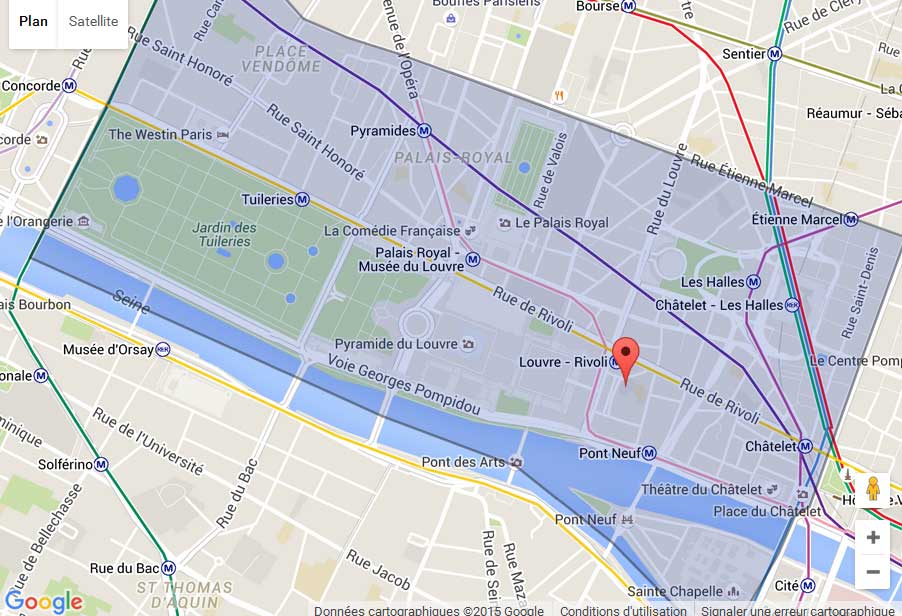
Malet started out as a surrealist poet (his first collection of poetry was rather alarmingly called Ne pas voir plus loin que le bout de son sexe) and trotskyist revolutionary, and before the war kept a newspaper shop in Paris. In the 1940s he turned to crime, initially writing fake "American" detective stories under various pen-names. His stories about the Paris private eye Nestor Burma, which appeared from 1943 onwards, adapt the American noir style to a French setting.
Le soleil naît derrière le Louvre was the first in a series of Nestor Burma novels each set in a different Paris Arrondissement. This one is set - logically enough - in the 1st, the central district around the Louvre. The plot involves a painting stolen from the Louvre, the first murder takes place in the basement of a banana warehouse in Les Halles, the femme fatale lives in the Transocéan Hotel (the Ritz?) on the Place Vendôme, and there are scenes in an antique shop in the Palais-Royal, a bird shop on the quais, a yacht on the Seine, etc. Burma's office is also in this district: we aren't explicitly told where in this book, but according to Wikipedia it was above the shop Malet used to keep, on the corner of the Rue Sainte-Anne and the Rue des Petits-Champs (https://goo.gl/maps/CuCq9Q3LohM2).
Apart from all the 1950s Paris atmosphere, which is great fun (I dug out a pile of records of French chansons to listen to whilst reading this book), the mood is very American-noir. Wisecracking first-person narrative, hyperbole, dry understatement (but also terrible French puns and jokey literary references), ludicrous numbers of corpses, gratuitous sex and alcohol, and of course the detective forever getting hit on the head, shot, or tied up. Burma is as sexist as any of his American confrères, but thankfully he's self-consciously aware of it as part of the role he has to play and refuses to take this aspect of himself seriously. In the scenes where he's trying to get Geneviève to lean forward so that he can look down her dress, it's made pretty clear to us that we're supposed to be laughing at him and not with him. Just in case we don't get the point, his competent and self-confident secretary is always standing by to take the mickey if he gets too full of himself.
I think it would be quite easy to get tired of this formula if you read too many at once, but for once in a while it is very entertaining. Definitely something to keep in stock as comfort reading for next time I'm ill...
Specifically, I headed to the 1st Arrondissement, in the first of Les Nouveaux Mystères de Paris:
Le soleil naît derrière le Louvre (1954 - Sunrise behind the Louvre) by Léo Malet (1909–1996)


Malet started out as a surrealist poet (his first collection of poetry was rather alarmingly called Ne pas voir plus loin que le bout de son sexe) and trotskyist revolutionary, and before the war kept a newspaper shop in Paris. In the 1940s he turned to crime, initially writing fake "American" detective stories under various pen-names. His stories about the Paris private eye Nestor Burma, which appeared from 1943 onwards, adapt the American noir style to a French setting.
Le soleil naît derrière le Louvre was the first in a series of Nestor Burma novels each set in a different Paris Arrondissement. This one is set - logically enough - in the 1st, the central district around the Louvre. The plot involves a painting stolen from the Louvre, the first murder takes place in the basement of a banana warehouse in Les Halles, the femme fatale lives in the Transocéan Hotel (the Ritz?) on the Place Vendôme, and there are scenes in an antique shop in the Palais-Royal, a bird shop on the quais, a yacht on the Seine, etc. Burma's office is also in this district: we aren't explicitly told where in this book, but according to Wikipedia it was above the shop Malet used to keep, on the corner of the Rue Sainte-Anne and the Rue des Petits-Champs (https://goo.gl/maps/CuCq9Q3LohM2).
Apart from all the 1950s Paris atmosphere, which is great fun (I dug out a pile of records of French chansons to listen to whilst reading this book), the mood is very American-noir. Wisecracking first-person narrative, hyperbole, dry understatement (but also terrible French puns and jokey literary references), ludicrous numbers of corpses, gratuitous sex and alcohol, and of course the detective forever getting hit on the head, shot, or tied up. Burma is as sexist as any of his American confrères, but thankfully he's self-consciously aware of it as part of the role he has to play and refuses to take this aspect of himself seriously. In the scenes where he's trying to get Geneviève to lean forward so that he can look down her dress, it's made pretty clear to us that we're supposed to be laughing at him and not with him. Just in case we don't get the point, his competent and self-confident secretary is always standing by to take the mickey if he gets too full of himself.
I think it would be quite easy to get tired of this formula if you read too many at once, but for once in a while it is very entertaining. Definitely something to keep in stock as comfort reading for next time I'm ill...
106LolaWalser
Lovely presentation, M. So have you started on another Vargas? Is it the one with the plague? All this talk about her has been giving me a yen to reread...
107thorold
Debout les morts, the first of the "three evangelists" novels. No plague yet.
108thorold
>105 thorold: >106 LolaWalser: Bother! It dawned on me this morning that what I should have said is "Paris vaut bien une carte (Paris is worth a map)". Too late now, it's not funny any more, if it ever was. :-(
109thorold
Anyway, it looks as though reports of plague were premature, but no doubt the deadly germs are waiting for me on my TBR shelf. This one turned out to have the most "normal" murder plot of the Fred Vargas novels I've read so far, even if the detectives are pretty unconventional:
Debout les morts (1995; The three Evangelists, 2006) by Fred Vargas
This was published between the first and second Adamsberg novels, and involves a different set of characters (although I believe that there's some overlap later on in the series). Three impoverished historians, Marc, Matthieu and Lucien, share a dilapidated old house with Marc's uncle, a former policeman, and the four of them are drawn into a murder investigation when their neighbour, Sophia, goes missing.
Vargas is well aware of the tension she's set up between the seriousness of the crime and the childish quality of this Enid Blyton arrangement (the "team of amateur investigators" isn't a formula that you often find in adult crime fiction). She has fun playing on the unworldliness of the three unemployed bachelor academics and their tendency to fall for the three main female characters, as well as showing us the odd ways their characters and detective skills have been shaped by the historical periods they specialise in (medieval, prehistoric and First World War, respectively). No doubt she is taking the opportunity to mock some of her own colleagues in the process. Contrasting with the innocence of the "evangelists" is the supremely crafty old ex-Commissaire Vandoosler, who doesn't make any of the big discoveries in the case himself, but is always at least one move ahead of his former sidekick, now the officer in charge of the police investigation.
The murder plot itself is surprisingly conventional: following the archaeological metaphor that keeps cropping up in the story, we have to dig down though a long series of red herrings, but at each level the (presumed) crime is always based on good old-fashioned motives like greed, lust, revenge and backstage rivalry. Nothing really exotic, apart from the enigmatic first clue, a beech tree that inexplicably appears in Sophia's garden one night.
Debout les morts (1995; The three Evangelists, 2006) by Fred Vargas
This was published between the first and second Adamsberg novels, and involves a different set of characters (although I believe that there's some overlap later on in the series). Three impoverished historians, Marc, Matthieu and Lucien, share a dilapidated old house with Marc's uncle, a former policeman, and the four of them are drawn into a murder investigation when their neighbour, Sophia, goes missing.
Vargas is well aware of the tension she's set up between the seriousness of the crime and the childish quality of this Enid Blyton arrangement (the "team of amateur investigators" isn't a formula that you often find in adult crime fiction). She has fun playing on the unworldliness of the three unemployed bachelor academics and their tendency to fall for the three main female characters, as well as showing us the odd ways their characters and detective skills have been shaped by the historical periods they specialise in (medieval, prehistoric and First World War, respectively). No doubt she is taking the opportunity to mock some of her own colleagues in the process. Contrasting with the innocence of the "evangelists" is the supremely crafty old ex-Commissaire Vandoosler, who doesn't make any of the big discoveries in the case himself, but is always at least one move ahead of his former sidekick, now the officer in charge of the police investigation.
The murder plot itself is surprisingly conventional: following the archaeological metaphor that keeps cropping up in the story, we have to dig down though a long series of red herrings, but at each level the (presumed) crime is always based on good old-fashioned motives like greed, lust, revenge and backstage rivalry. Nothing really exotic, apart from the enigmatic first clue, a beech tree that inexplicably appears in Sophia's garden one night.
110rebeccanyc
Yes, Marc turns up in Have Mercy on Us All which is as far as I've read.
111thorold
Still pursuing my French crime spree, I realised that what I was still missing was that whole French thing about the criminal as tragic existential hero (Camus, Genet, Jean-Luc Goddard, and all the rest of them). I could simply have stuck a DVD in the machine...

...but instead I persisted with my literary quest and scrounged a loan of this period piece from a helpful Frenchman:
L'affaire N'Gustro (1971) by Jean-Patrick Manchette (1942–1995)


Manchette was a middle-class college dropout, teacher, script-writer (according to his own account, most of his work was on porn and industrial-safety films), translator and left-wing political activist before he took to writing crime stories in the seventies. This was the second of two crime novels Manchette planned to write with Jean-Pierre Bastid, but in the event only Laissez bronzer les cadavres was published as a collaboration, and L'affaire N'Gustro, although a joint idea, was written by Manchette on his own.
The story was obviously inspired by the kidnapping and presumed murder of Moroccan politician Mehdi Ben Barka in Paris in 1965, which Bastid and Manchette had investigated together, and several of the characters have names that resemble those of people involved in the Ben Barka case.
This isn't really a j'accuse, though: Manchette takes the general turpitude of the establishment for granted, and doesn't really consider it worth the effort of attacking. He reserves most of his satirical ammunition for his fellow Soixante-huitards and the post-colonial politicians they are trying to help. The first-person narrator of most of the book is Henri Bruton, a young man who has taken up radical politics without the slightest conviction (first on the extreme right, then on the far left) simply because of the extra possibilities it gives him for getting into good fights and picking up girls. In between chapters of Henri's recorded "confession", we get a caustic commentary from the two cynical and self-interested African conspirators who are listening to the tape.
It's all rather hectic: Manchette seems to have crammed in most of the important plot elements of A bout de souffle, Rebel without a cause, A clockwork orange and Mrs Robinson before we even arrive at the African connection. And the whole thing is only 170 pages long. It's very politically incorrect in many different ways, and some of the violence in the early chapters is a bit hard to take. But it's supremely stylish in a Belmondo-takes-his-shirt-off-with-subtitles kind of way, and the language is always sharp, with some lovely noir similes (in the middle of a gunfight: "...la vitrine d’un fruits et primeurs qui dégringole comme un piano préparé").
Definitely a period piece, but I enjoyed it.

...but instead I persisted with my literary quest and scrounged a loan of this period piece from a helpful Frenchman:
L'affaire N'Gustro (1971) by Jean-Patrick Manchette (1942–1995)


Manchette was a middle-class college dropout, teacher, script-writer (according to his own account, most of his work was on porn and industrial-safety films), translator and left-wing political activist before he took to writing crime stories in the seventies. This was the second of two crime novels Manchette planned to write with Jean-Pierre Bastid, but in the event only Laissez bronzer les cadavres was published as a collaboration, and L'affaire N'Gustro, although a joint idea, was written by Manchette on his own.
The story was obviously inspired by the kidnapping and presumed murder of Moroccan politician Mehdi Ben Barka in Paris in 1965, which Bastid and Manchette had investigated together, and several of the characters have names that resemble those of people involved in the Ben Barka case.
This isn't really a j'accuse, though: Manchette takes the general turpitude of the establishment for granted, and doesn't really consider it worth the effort of attacking. He reserves most of his satirical ammunition for his fellow Soixante-huitards and the post-colonial politicians they are trying to help. The first-person narrator of most of the book is Henri Bruton, a young man who has taken up radical politics without the slightest conviction (first on the extreme right, then on the far left) simply because of the extra possibilities it gives him for getting into good fights and picking up girls. In between chapters of Henri's recorded "confession", we get a caustic commentary from the two cynical and self-interested African conspirators who are listening to the tape.
It's all rather hectic: Manchette seems to have crammed in most of the important plot elements of A bout de souffle, Rebel without a cause, A clockwork orange and Mrs Robinson before we even arrive at the African connection. And the whole thing is only 170 pages long. It's very politically incorrect in many different ways, and some of the violence in the early chapters is a bit hard to take. But it's supremely stylish in a Belmondo-takes-his-shirt-off-with-subtitles kind of way, and the language is always sharp, with some lovely noir similes (in the middle of a gunfight: "...la vitrine d’un fruits et primeurs qui dégringole comme un piano préparé").
Definitely a period piece, but I enjoyed it.
112rebeccanyc
I've read two books by Manchette which appeared in NYRB editions, Fatale and The Mad and the Bad, and enjoyed them, as you say, as period pieces.
113thorold
...and the next Vargas:
Un peu plus loin sur la droite (1996; Dog will have his day, 2014) by Fred Vargas

This is the second "Three Evangelists" book, although in practice only Marc and Matthieu play any role in this one: Lucien and Vandoosler Sr. have brief walk-on parts, whilst Adamsberg is mentioned but doesn't appear. The central character is someone new: Louis (or Ludwig) Kehlweiler, a former civil servant who has been pushed into early retirement because he is too good at what he calls "déminage" (mine-clearance), i.e. finding buried scandals in the ministry. By chance he spots something suspicious among the dog-waste under a tree on a Paris street, a bone that turns out to be a phalange from a human toe. It has evidently been through a dog's digestive system, but how did it get there?
The trail leads to a village in a remote corner of Brittany where it rains all the time anda small band of indomitable Gauls the locals play pub games, seek answers to life's big questions from a mechanical sculpture, and sell thalassothérapie to gullible visitors. Vargas has fun with the human tendency to build sense out of things even when we know they are random, with the pleasures of getting up late, the philosophy of pinball, pool and billiards, and a lot of other apparently irrelevant things, but underneath it all there's a reasonably solid murder mystery.
Fun, and with some very nice lines here and there, but probably not one of her best.
Un peu plus loin sur la droite (1996; Dog will have his day, 2014) by Fred Vargas

This is the second "Three Evangelists" book, although in practice only Marc and Matthieu play any role in this one: Lucien and Vandoosler Sr. have brief walk-on parts, whilst Adamsberg is mentioned but doesn't appear. The central character is someone new: Louis (or Ludwig) Kehlweiler, a former civil servant who has been pushed into early retirement because he is too good at what he calls "déminage" (mine-clearance), i.e. finding buried scandals in the ministry. By chance he spots something suspicious among the dog-waste under a tree on a Paris street, a bone that turns out to be a phalange from a human toe. It has evidently been through a dog's digestive system, but how did it get there?
The trail leads to a village in a remote corner of Brittany where it rains all the time and
Fun, and with some very nice lines here and there, but probably not one of her best.
114RidgewayGirl
I read another Manchette (The Mad and the Bad) on Rebecca's say so and would like to read more. I have to remember to keep an eye out for them. And now I want to watch old Belmondo films.
115rebeccanyc
>113 thorold: I'm skipping your review since I haven't read that one yet.
>114 RidgewayGirl: I'm glad you liked it. (And I love the English title!)
>114 RidgewayGirl: I'm glad you liked it. (And I love the English title!)
116thorold
Someone asked "why are you reading all these French crime stories when there are perfectly good Dutch ones?"
Never having read any Dutch crime apart from Nicholas Freeling's van der Valk stories (which don't really count, since Freeling was an English cook...), I didn't have an answer ready, so I thought I'd better read at least one:
Het lijk in de Haarlemmer Houttuinen (1975; Outsider in Amsterdam) by Janwillem van de Wetering (Netherlands, etc., 1931–2008)


The Dutch-born writer Janwillem van de Wetering (he wrote all his books in both Dutch and English versions) seems to have been pretty eccentric even by the exacting standards of crime novelists. He lived at various times in every continent, and did all kinds of jobs. His big interest was Zen Buddhism, which he studied in monasteries in Japan and the US, and he wrote extensively about his religious experiences. In the late sixties and early seventies he returned to the Netherlands for a while, running a small textile business in Amsterdam and serving as a volunteer police officer in his spare time. From this experience (he signed up as an alternative to doing his long-postponed military service) he got the material for his series of novels about the Amsterdam police officers Grijpstra and de Gier.
Het lijk in de Haarlemmer Houttuinen is the first of the Grijpstra and de Gier novels. A man's body is found hanging in the headquarters of an Eastern religious sect in a rambling old house in the centre of Amsterdam. It looks like suicide, but of course when something in a crime story looks like suicide it probably isn't...
The mystery isn't all that sophisticated, but the real interest of this book is in the detail of everyday police work and the interplay of personalities between the policemen and the suspects (one of whom turns out to be a former colonial police officer). I really enjoyed the way that the investigation keeps being held up by random small incidents that the police have to deal with - a drunk collapsing in the street, a minor car accident, an escaped prisoner they spot in a restaurant, a street fight, etc. - and by an amazing coincidence, not one of these incidents has any bearing on the case they are investigating. A trick I've never seen in a crime story before!
It's all very Dutch - improbable quantities of coffee, jenever and cigars are consumed during the investigation - and very 1970s - on the rare occasions the detectives are allowed to use a car it's a VW Beetle, and if they don't happen to be in a car they have to use public telephones to summon assistance. Which is another van de Wetering oddity, by the way: they always do summon assistance. They don't seem to realise that the first rule of fictional policing is always to go into dangerous situations without backup.
If you like novels about pets, you'll be pleased to know that de Gier's cat, Oliver, has an excessively large part in the story, and in a small gesture to the conventions of the genre, one of the policemen is allowed to go to bed with one of the witnesses, but that apart, this struck me as a charmingly off-beat example of the police procedural. To be added to my long list.
Never having read any Dutch crime apart from Nicholas Freeling's van der Valk stories (which don't really count, since Freeling was an English cook...), I didn't have an answer ready, so I thought I'd better read at least one:
Het lijk in de Haarlemmer Houttuinen (1975; Outsider in Amsterdam) by Janwillem van de Wetering (Netherlands, etc., 1931–2008)


The Dutch-born writer Janwillem van de Wetering (he wrote all his books in both Dutch and English versions) seems to have been pretty eccentric even by the exacting standards of crime novelists. He lived at various times in every continent, and did all kinds of jobs. His big interest was Zen Buddhism, which he studied in monasteries in Japan and the US, and he wrote extensively about his religious experiences. In the late sixties and early seventies he returned to the Netherlands for a while, running a small textile business in Amsterdam and serving as a volunteer police officer in his spare time. From this experience (he signed up as an alternative to doing his long-postponed military service) he got the material for his series of novels about the Amsterdam police officers Grijpstra and de Gier.
Het lijk in de Haarlemmer Houttuinen is the first of the Grijpstra and de Gier novels. A man's body is found hanging in the headquarters of an Eastern religious sect in a rambling old house in the centre of Amsterdam. It looks like suicide, but of course when something in a crime story looks like suicide it probably isn't...
The mystery isn't all that sophisticated, but the real interest of this book is in the detail of everyday police work and the interplay of personalities between the policemen and the suspects (one of whom turns out to be a former colonial police officer). I really enjoyed the way that the investigation keeps being held up by random small incidents that the police have to deal with - a drunk collapsing in the street, a minor car accident, an escaped prisoner they spot in a restaurant, a street fight, etc. - and by an amazing coincidence, not one of these incidents has any bearing on the case they are investigating. A trick I've never seen in a crime story before!
It's all very Dutch - improbable quantities of coffee, jenever and cigars are consumed during the investigation - and very 1970s - on the rare occasions the detectives are allowed to use a car it's a VW Beetle, and if they don't happen to be in a car they have to use public telephones to summon assistance. Which is another van de Wetering oddity, by the way: they always do summon assistance. They don't seem to realise that the first rule of fictional policing is always to go into dangerous situations without backup.
If you like novels about pets, you'll be pleased to know that de Gier's cat, Oliver, has an excessively large part in the story, and in a small gesture to the conventions of the genre, one of the policemen is allowed to go to bed with one of the witnesses, but that apart, this struck me as a charmingly off-beat example of the police procedural. To be added to my long list.
117RidgewayGirl
I do like that series. The characters are so interesting.
118baswood
Enjoying your crime spree.
I am addicted to Television European crime series programmes and of course enjoy the Scandinavian noirs and French and Italian crime series. Maybe there is a opportunity, even a gap in the market for a Dutch crime series: I could cope with the jenever and coffee drinking perhaps even the cigars.....
I am addicted to Television European crime series programmes and of course enjoy the Scandinavian noirs and French and Italian crime series. Maybe there is a opportunity, even a gap in the market for a Dutch crime series: I could cope with the jenever and coffee drinking perhaps even the cigars.....
119thorold
>118 baswood: There was a Grijpstra en de Gier TV series, and I think the Baantjer books have been televised as well. I haven't watched either, I don't know if they were any good. It could be that no-one thought it worthwhile exporting them outside Holland and Flanders.
The van der Valk books were filmed in the seventies, with English dialogue and a mixture of British and Dutch actors. Barry Foster played a man with curly blond hair. (The theme tune "Eye level" was a hit when I was at school, I don't remember the films, though...)
...and there's a very funny episode of Dalziel and Pascoe set in Amsterdam, for which they recruited quite a few noted Dutch actors.
The van der Valk books were filmed in the seventies, with English dialogue and a mixture of British and Dutch actors. Barry Foster played a man with curly blond hair. (The theme tune "Eye level" was a hit when I was at school, I don't remember the films, though...)
...and there's a very funny episode of Dalziel and Pascoe set in Amsterdam, for which they recruited quite a few noted Dutch actors.
120thorold
>119 thorold: The theme tune "Eye level" was a hit...
Note to self: avoid thinking about notorious earworms at breakfast time: they will be with you all day... :-(
Note to self: avoid thinking about notorious earworms at breakfast time: they will be with you all day... :-(
121thorold
>114 RidgewayGirl: And now I want to watch old Belmondo films.
I had a French-film-session planned for Sunday night, but all my lovely family seem to have decided that Sunday night is telephone/Facetime night, so I only got as far as the opening titles of L'homme qui aimait les femmes...
I had a French-film-session planned for Sunday night, but all my lovely family seem to have decided that Sunday night is telephone/Facetime night, so I only got as far as the opening titles of L'homme qui aimait les femmes...
122rebeccanyc
>116 thorold: I loved the whole Grijsptra-de Gier series, but I didn't he wrote both the Dutch and the English versions. That explains why there was no translator listed in any of the books I read. I'm impressed that you seem to have read it in Dutch, and I know you read French also. How many languages do you read?
123thorold
>122 rebeccanyc: What's the pleasure in knowing a language if you only use it to order meals or write business letters? I was lucky enough to grow up in a family where we spoke both English and German, then I got a job where I needed to upgrade my school French to something useable, and I found myself living in the Netherlands (so that makes four). Spanish and Italian aren't all that difficult to understand if you already know French - I don't claim to be able to string together a correct sentence in either, but I can read them well enough to enjoy a novel.
124NanaCC
It is lovely that you can read in so many languages. And, now you have me interested in another series.
125rebeccanyc
>123 thorold: I'm impressed. I once could read French (in high school), but my ability has deteriorated over the decades. I agree about Spanish and Italian. When I was in Spain and Italy I could figure out the labels in art museums based on my knowledge of French. I once got into trouble with a menu in Italy, though!
126thorold
>125 rebeccanyc: Yes: art vocabulary tends to be pretty academic and standardised, so it's usually easy to guess the equivalent terms (and there tends to be a great big visual clue hanging next to the label). And no-one's likely to challenge you when you explain authoritatively that "Vietato fumare" is an early work depicting a small backstreet in Palermo...
Food is much trickier, the vocabulary comes from deep down in the language and has a nasty tendency to vary in subtle ways from region to region. That word that looks like something safe you can recognise is bound to turn out to be either "tripe" or "octopus" when it arrives on your plate.
Food is much trickier, the vocabulary comes from deep down in the language and has a nasty tendency to vary in subtle ways from region to region. That word that looks like something safe you can recognise is bound to turn out to be either "tripe" or "octopus" when it arrives on your plate.
127thorold
...and the completion report for the latest stage of Project Fred:
Sans feu ni lieu (1997; not in English yet??) by Fred Vargas
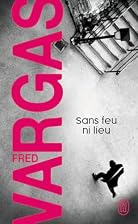
This is the last of the three novels featuring the "Three Evangelists", published between the first and second Adamsberg books. The former civil servant Louis Kehlweiler and his friend the retired prostitute Marthe, both introduced in Un peu plus loin sur la droite, reappear as key characters in this book as well.
Clément, a young man with learning difficulties, turns up on Marthe's doorstep. We learn that she acted as an informal foster-mother to him twenty years earlier when he was a neglected street-child, and she's the only person he can think of to turn to when he gets into trouble. The police are after him for the murder of two young women, but he maintains that he's innocent. Someone seems to have set him up, arranging that he's seen hanging around the women's flats and delivering gifts to them with his fingerprints on them...
Louis doesn't really believe this story, but he owes it to Marthe to help her protégé as far as he can, so he takes on the investigation, whilst Clément is stashed away in the Evangelists' house out of harm's way.
A clever and well-constructed crime story, with the emphasis, once again, more on the disentangling of the psychological roots of the crime than on physical evidence. And a lot of the usual comic business between Louis, the Evangelists, and the police, and even a small but entertaining role for Louis's pet toad. Fans of Flanders and Swann will be way ahead of the game when it comes to spotting the abstruse link between the murders.
Sans feu ni lieu (1997; not in English yet??) by Fred Vargas
This is the last of the three novels featuring the "Three Evangelists", published between the first and second Adamsberg books. The former civil servant Louis Kehlweiler and his friend the retired prostitute Marthe, both introduced in Un peu plus loin sur la droite, reappear as key characters in this book as well.
Clément, a young man with learning difficulties, turns up on Marthe's doorstep. We learn that she acted as an informal foster-mother to him twenty years earlier when he was a neglected street-child, and she's the only person he can think of to turn to when he gets into trouble. The police are after him for the murder of two young women, but he maintains that he's innocent. Someone seems to have set him up, arranging that he's seen hanging around the women's flats and delivering gifts to them with his fingerprints on them...
Louis doesn't really believe this story, but he owes it to Marthe to help her protégé as far as he can, so he takes on the investigation, whilst Clément is stashed away in the Evangelists' house out of harm's way.
A clever and well-constructed crime story, with the emphasis, once again, more on the disentangling of the psychological roots of the crime than on physical evidence. And a lot of the usual comic business between Louis, the Evangelists, and the police, and even a small but entertaining role for Louis's pet toad. Fans of Flanders and Swann will be way ahead of the game when it comes to spotting the abstruse link between the murders.
128rebeccanyc
I didn't realize there were more Three Evangelist books, but just ordered the second (which has been translated into English). As you note, the third one hasn't (at least, Amazon doesn't have it).
129thorold
>128 rebeccanyc: I wonder if Vargas was uncomfortable with the character of Adamsberg for some reason: with that eight-year interlude when the three "Evangelists" books came out, and then L'homme à l'envers where Adamsberg doesn't really appear until 2/3 of the way through. That doesn't look like someone eager to get on with writing a series...
Next in my progress through French crime fiction, a book I've been curious about since I first heard of it, a crime novel that has been judged to be criminal...
(The e-book I read has a rather boring cover, so I took the liberty of choosing something more representative of the ethos of the book...)
J'irai cracher sur vos tombes (1947; I spit on your graves) by Boris Vian (France, 1920-1959)


Boris Vian was one of the most colourful and controversial characters of his generation, and seems to have had a go at just about everything during his brief life. He started out as an engineer (his first publication was a physical chemistry monograph), but amongst many other things he played jazz trumpet, wrote journalism and experimental literature under dozens of different pen-names, painted, collected old cars, and had a moderately successful career as a singer-songwriter. Nowadays, he's chiefly remembered for his cult novel L'écume des jours (also published in 1947) and the classic anti-war song "Le Déserteur" (1954).
J'irai cracher sur vos tombes was written essentially as a prank, to provoke a reaction from the conservative establishment. Vian dashed it off in a fortnight in summer 1946, at the suggestion of a publisher acquaintance who was looking for something along the lines of Tropic of Cancer. The provocation was a bit too successful: the book caused the necessary scandal and became an overnight bestseller, but was attacked in court by a self-appointed guardian of public morals, starting a complicated series of legal actions that ultimately cost Vian and his publisher a great deal of time and money. As originally published, the book claimed to be a translation of a work by a black American writer, "Vernon Sullivan", who had not been able to get his work printed in the prejudiced USA. (This subterfuge led to the absurd situation that at one point during the court cases, Vian was producing evidence to try to show that the book was not his own work, whilst a year or two later he found himself having to prove exactly the opposite.)
So, it's an amusing little bit of literary history, but is there any more to it than that? Not a lot, really. It's fast-moving and cleverly written, but the subject-matter carefully sticks to the worst possible taste all the way through. The first-person narrator is Lee Anderson, a man who by an accident of genetics has a skin that is pale enough to let him "pass", but otherwise benefits from all the traditional advantages of the black male (deep voice, boxer's shoulders, innate ability to play tennis and the Blues, irresistible sex-appeal and a very large you-know-what). Working as a bookshop manager in a town where no-one knows his background, he's able to devote his spare time to having varied and entertaining sex with all the bobbysoxers who hang out at the drugstore (the boys lust after him as well, but he ignores them).
This small-town idyll occupies about half the book, then Anderson meets two rich and beautiful sisters from the next town and sees his great opportunity to get revenge on the white race for what they did to his brother, leading to some marginally more grown-up sex scenes and an extended road-movie section and Grand Guignol finale.
Something that struck me about the book was that the action, whether it's sex or car-chases, is never interrupted by trivialities. The picnics are free of wasps and poison-ivy, no parents or small siblings intrude into the parties, no zip ever gets stuck or shoelace knotted, there are no traffic cops to upset the speeding and drunken driving (until the final chapter when the plot needs them), and no-one ever worries about condoms. This looks to me like a strong indication that we're dealing with pornographic fantasy rather than literature, although I know that the French and Americans are nowhere near as obsessed with bathos as the British.
By today's standards the actual content of the sex scenes probably isn't all that shocking, but it's not very pleasant to read a long string of first-person descriptions of encounters that a less subjective narrator would probably consider to fit the definition of rape, not to mention a couple of violent killings. The get-out clause is that Anderson's (and presumably Sullivan's) experience of racism has twisted his moral perspective completely out of joint, but I'm not confident that that really flies, especially when you have to deal with all the complexities of a white Frenchman pretending to be a black American pretending to be a black American pretending to be a white American. There's definitely racism in there somewhere.
I think I'm going to file this one in the "strange twilight world of the heterosexual" category and move on.
Next in my progress through French crime fiction, a book I've been curious about since I first heard of it, a crime novel that has been judged to be criminal...
(The e-book I read has a rather boring cover, so I took the liberty of choosing something more representative of the ethos of the book...)
J'irai cracher sur vos tombes (1947; I spit on your graves) by Boris Vian (France, 1920-1959)


Boris Vian was one of the most colourful and controversial characters of his generation, and seems to have had a go at just about everything during his brief life. He started out as an engineer (his first publication was a physical chemistry monograph), but amongst many other things he played jazz trumpet, wrote journalism and experimental literature under dozens of different pen-names, painted, collected old cars, and had a moderately successful career as a singer-songwriter. Nowadays, he's chiefly remembered for his cult novel L'écume des jours (also published in 1947) and the classic anti-war song "Le Déserteur" (1954).
J'irai cracher sur vos tombes was written essentially as a prank, to provoke a reaction from the conservative establishment. Vian dashed it off in a fortnight in summer 1946, at the suggestion of a publisher acquaintance who was looking for something along the lines of Tropic of Cancer. The provocation was a bit too successful: the book caused the necessary scandal and became an overnight bestseller, but was attacked in court by a self-appointed guardian of public morals, starting a complicated series of legal actions that ultimately cost Vian and his publisher a great deal of time and money. As originally published, the book claimed to be a translation of a work by a black American writer, "Vernon Sullivan", who had not been able to get his work printed in the prejudiced USA. (This subterfuge led to the absurd situation that at one point during the court cases, Vian was producing evidence to try to show that the book was not his own work, whilst a year or two later he found himself having to prove exactly the opposite.)
So, it's an amusing little bit of literary history, but is there any more to it than that? Not a lot, really. It's fast-moving and cleverly written, but the subject-matter carefully sticks to the worst possible taste all the way through. The first-person narrator is Lee Anderson, a man who by an accident of genetics has a skin that is pale enough to let him "pass", but otherwise benefits from all the traditional advantages of the black male (deep voice, boxer's shoulders, innate ability to play tennis and the Blues, irresistible sex-appeal and a very large you-know-what). Working as a bookshop manager in a town where no-one knows his background, he's able to devote his spare time to having varied and entertaining sex with all the bobbysoxers who hang out at the drugstore (the boys lust after him as well, but he ignores them).
This small-town idyll occupies about half the book, then Anderson meets two rich and beautiful sisters from the next town and sees his great opportunity to get revenge on the white race for what they did to his brother, leading to some marginally more grown-up sex scenes and an extended road-movie section and Grand Guignol finale.
Something that struck me about the book was that the action, whether it's sex or car-chases, is never interrupted by trivialities. The picnics are free of wasps and poison-ivy, no parents or small siblings intrude into the parties, no zip ever gets stuck or shoelace knotted, there are no traffic cops to upset the speeding and drunken driving (until the final chapter when the plot needs them), and no-one ever worries about condoms. This looks to me like a strong indication that we're dealing with pornographic fantasy rather than literature, although I know that the French and Americans are nowhere near as obsessed with bathos as the British.
By today's standards the actual content of the sex scenes probably isn't all that shocking, but it's not very pleasant to read a long string of first-person descriptions of encounters that a less subjective narrator would probably consider to fit the definition of rape, not to mention a couple of violent killings. The get-out clause is that Anderson's (and presumably Sullivan's) experience of racism has twisted his moral perspective completely out of joint, but I'm not confident that that really flies, especially when you have to deal with all the complexities of a white Frenchman pretending to be a black American pretending to be a black American pretending to be a white American. There's definitely racism in there somewhere.
I think I'm going to file this one in the "strange twilight world of the heterosexual" category and move on.
130rebeccanyc
Wow! Sounds like a super strange book. And racism, let me count the ways!
131baswood
Write a cult classic in 2 weeks? That would be a great title for a creative writing course.
Enjoyed your review of I spit on your graves
Enjoyed your review of I spit on your graves
132LolaWalser
Vian would have been shocked and chagrined to hear himself called a racist; he idolised black culture, especially musicians (he was deeply interested in jazz as performer and a critic), and identified with the struggle of the underdogs everywhere (except, of course, if they were female). He was an important cultural figure and left fingerprints everywhere--on literature, existentialism, cinema, music, politics... Not someone dismissable as a prankster.
133rebeccanyc
>132 LolaWalser: Interesting, but his stereotyping sounds racist to me. I guess he was advanced for his time.
134LolaWalser
>133 rebeccanyc:
Agree about how we see that sort of thing today, and yes, it is racist (one might keep in mind though that in this book he's emulating American culture--with a touch of satire)--but Vian as a person was explicitly anti-racist according to the light of the times.
I'm not sure in what sense you mean "advanced"... I don't think he differed greatly in this regard from anyone on the left of the times. People like Vian took pride in the fact that black American artists found refuge in France from American racism. Using a black character to stick it (literally with a big dick) to the white bourgeoisie is to him foremost an expression of solidarity. Cendrars, Genet, many others did similar things, seemingly with the same unawareness of the racist aspects of that strategy.
Agree about how we see that sort of thing today, and yes, it is racist (one might keep in mind though that in this book he's emulating American culture--with a touch of satire)--but Vian as a person was explicitly anti-racist according to the light of the times.
I'm not sure in what sense you mean "advanced"... I don't think he differed greatly in this regard from anyone on the left of the times. People like Vian took pride in the fact that black American artists found refuge in France from American racism. Using a black character to stick it (literally with a big dick) to the white bourgeoisie is to him foremost an expression of solidarity. Cendrars, Genet, many others did similar things, seemingly with the same unawareness of the racist aspects of that strategy.
135thorold
>134 LolaWalser: That's how I understood it as well, but I probably didn't really make that clear. I certainly didn't want to give the impression of dismissing Vian as a prankster. J'irai cracher sur vos tombes was written to shock, though, and it's probably unfair to Vian to take it too seriously.
Just out of curiosity, do you know if Vian had actually visited America? With the war intervening, I suppose it's unlikely.
Just out of curiosity, do you know if Vian had actually visited America? With the war intervening, I suppose it's unlikely.
136LolaWalser
The book was written to shock, but Vian took shocking people seriously, like the absurdists and the Oulipians and the surrealists etc., people whose every gesture was part and expression of some artistic-political angle.
No idea about travel...
No idea about travel...
137thorold
Next stage of Project Fred, and another book that seems to deserve a map:
Pars vite et reviens tard (2001, Have mercy on us all 2003) by Fred Vargas


This is the third Adamsberg story, but the Three Evangelists manage to sneak in too, playing a small role as historical advisors. Rather to everyone's surprise, Adamsberg has been appointed head of a specialist murder brigade, and there's a running joke about his inability to remember the names of any of his new subordinates. As in L'homme aux cercles bleus, he gets involved in investigating a series of murders that are prefigured by the appearance of enigmatic symbols, and as in several of the other books, it turns out that the murderer is playing on one of the semi-rational fears that are lodged in our collective cultural memory: in this case the Plague.
The novel has its focus in a very specific spot in Paris, the Rue de la Gaîté/Boulevard Edgar-Quinet crossroads, in the shadow of the Tour Montparnasse, where a beached Breton fisherman, Joss Le Guern, has carved out a new career for himself by reinventing the profession of town-crier: for a 5 franc fee, he roars out small ads to the assembled locals three times a day. Vargas uses this quirky scenario as a clever way of leading us in to accept the idea of a village murder mystery set in the heart of a busy city, with all the main characters being the eccentrics who live or run businesses around this crossroads: an unfrocked schoolmaster who runs a Balzacian private hotel (complete with personalised serviette rings!) and makes lace on the side; the proprietor of a surf-shop whose sister is concerned that he'll catch his death of cold going around in a singlet all the time; a Norman barman descended directly from Thor; an ex-prostitute turned chanteuse, etc. It's all a bit M. Hulot, but it's so charming that Vargas manages to get us to suspend our disbelief for long enough to make it work.
Adamsberg gets involved when Joss becomes worried about some strange apocalyptic messages he's being asked to read out, and at the same time someone seems to be going around painting strange symbols on the doors of apartment buildings. With some help from Marc Vandoosler, he manages to work out the link between the two, but it doesn't get him very far. Then the first body is found, and things start getting very itchy...
Once again, this is a novel that's particularly enjoyable for the way it never goes quite where you're expecting it to: the characters are original, funny and believable, the dialogue very sharp. The mystery itself is absurdly complicated: it relies on a variant of a plot device that old-fashioned mystery writers occasionally used for a single murder (but generally avoided, because it is very hard to make it believable). Applying it to a serial-killer story shows considerable chutzpah - Vargas just about manages to get away with it, and she even adds a special twist of her own.
Pars vite et reviens tard (2001, Have mercy on us all 2003) by Fred Vargas

This is the third Adamsberg story, but the Three Evangelists manage to sneak in too, playing a small role as historical advisors. Rather to everyone's surprise, Adamsberg has been appointed head of a specialist murder brigade, and there's a running joke about his inability to remember the names of any of his new subordinates. As in L'homme aux cercles bleus, he gets involved in investigating a series of murders that are prefigured by the appearance of enigmatic symbols, and as in several of the other books, it turns out that the murderer is playing on one of the semi-rational fears that are lodged in our collective cultural memory: in this case the Plague.
The novel has its focus in a very specific spot in Paris, the Rue de la Gaîté/Boulevard Edgar-Quinet crossroads, in the shadow of the Tour Montparnasse, where a beached Breton fisherman, Joss Le Guern, has carved out a new career for himself by reinventing the profession of town-crier: for a 5 franc fee, he roars out small ads to the assembled locals three times a day. Vargas uses this quirky scenario as a clever way of leading us in to accept the idea of a village murder mystery set in the heart of a busy city, with all the main characters being the eccentrics who live or run businesses around this crossroads: an unfrocked schoolmaster who runs a Balzacian private hotel (complete with personalised serviette rings!) and makes lace on the side; the proprietor of a surf-shop whose sister is concerned that he'll catch his death of cold going around in a singlet all the time; a Norman barman descended directly from Thor; an ex-prostitute turned chanteuse, etc. It's all a bit M. Hulot, but it's so charming that Vargas manages to get us to suspend our disbelief for long enough to make it work.
Adamsberg gets involved when Joss becomes worried about some strange apocalyptic messages he's being asked to read out, and at the same time someone seems to be going around painting strange symbols on the doors of apartment buildings. With some help from Marc Vandoosler, he manages to work out the link between the two, but it doesn't get him very far. Then the first body is found, and things start getting very itchy...
Once again, this is a novel that's particularly enjoyable for the way it never goes quite where you're expecting it to: the characters are original, funny and believable, the dialogue very sharp. The mystery itself is absurdly complicated: it relies on a variant of a plot device that old-fashioned mystery writers occasionally used for a single murder (but generally avoided, because it is very hard to make it believable). Applying it to a serial-killer story shows considerable chutzpah - Vargas just about manages to get away with it, and she even adds a special twist of her own.
138thorold
Posted a review of The dragon can't dance by Trinidadian novelist Earl Lovelace in the Caribbean thread. Which gave me the perfect excuse to end the weekend with the opening chapters of the next Vargas on my list, while listening to the St Matthew Passion on the radio. And only one incoming phone call...
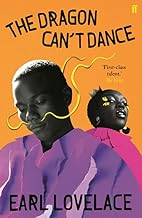
139rebeccanyc
>137 thorold: Nice review of Have Mercy on Us All. (I'm struck by how different the French titles of the Vargas novels are from the English.)
140thorold
>139 rebeccanyc: Yes, Un lieu incertain/An uncertain place is the only one so far that's a direct translation.
L'homme aux cercles bleus/The chalk circle man is recognisably the same idea. You can see the thought process working: "The man of the blue circles" - not snappy enough; "The blue circle man" - oops, trademark! - can we change a word...?
The others all seem to pick up a quite different idea from the one in the French title, with no very obvious reason for the change. Probably a direct translation would have left them with a title that the publisher thought sounded too much like something else, or not sinister enough for a crime novel, or not consistent with the author's brand image...
At least it looks as though the US and UK publishers have managed to agree with each other.
L'homme aux cercles bleus/The chalk circle man is recognisably the same idea. You can see the thought process working: "The man of the blue circles" - not snappy enough; "The blue circle man" - oops, trademark! - can we change a word...?
The others all seem to pick up a quite different idea from the one in the French title, with no very obvious reason for the change. Probably a direct translation would have left them with a title that the publisher thought sounded too much like something else, or not sinister enough for a crime novel, or not consistent with the author's brand image...
At least it looks as though the US and UK publishers have managed to agree with each other.
141thorold
...and the next Vargas - this time there is a strong connection between the English and the French titles (you'll miss it if you don't know your Macbeth, though):
Sous les vents de Neptune (2004; Wash this blood clean from my hand) by Fred Vargas
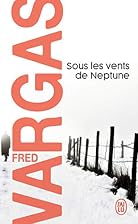
This is the blackest point in the Adamsberg series so far, the inevitable moment that arrives in all police series where the hero finds himself cut off from the support of his official role and fighting to clear his name when he's unjustly suspected of a crime himself. At the same time, he has been seriously upset by the resumption of activity from a serial killer whom he has been tracking since his earliest days in the police. Unfortunately, due to the killer's skill in always supplying a convenient (amnesiac) suspect for each killing, Adamsberg has never been able to convince anyone in authority that it is a serial killer at all, and things are now even messier, as the prime suspect has been dead for 16 years...
This, and other things going on in his personal life, all presents a pretty effective challenge to Adamsberg's normal dreamy imperturbability, and things look pretty bad before we get to the end of the book. Not that we don't get the normal share of eccentricity and comic dialogue: in this case most of the comedy is supplied by the confrontation between the Paris cops and their Québecois colleagues during a training course in Canada - Vargas makes them all warn each other not to laugh at how silly Québecois French sounds to a Parisian, but then makes sure we get ample opportunities to do so, and there are plenty of maple trees, squirrels, low temperatures, etc. The tank-like Lieutenant Betancourt starts to develop as a character in her own right in this book, and another suitably bizarre Vargas touch is provided by the elite hit squad of old ladies rallying round Adamsberg during the period when he has to go underground. Nice is also the irony of how Adamsberg solves the main mystery by his usual mixture of semiotics, psychology and intuition, but the part that most directly affects himself has to be solved by his colleagues using good old-fashioned logic and physical evidence.
Probably one of the best Adamsberg stories, but maybe not a good one to start with.
Sous les vents de Neptune (2004; Wash this blood clean from my hand) by Fred Vargas
This is the blackest point in the Adamsberg series so far, the inevitable moment that arrives in all police series where the hero finds himself cut off from the support of his official role and fighting to clear his name when he's unjustly suspected of a crime himself. At the same time, he has been seriously upset by the resumption of activity from a serial killer whom he has been tracking since his earliest days in the police. Unfortunately, due to the killer's skill in always supplying a convenient (amnesiac) suspect for each killing, Adamsberg has never been able to convince anyone in authority that it is a serial killer at all, and things are now even messier, as the prime suspect has been dead for 16 years...
This, and other things going on in his personal life, all presents a pretty effective challenge to Adamsberg's normal dreamy imperturbability, and things look pretty bad before we get to the end of the book. Not that we don't get the normal share of eccentricity and comic dialogue: in this case most of the comedy is supplied by the confrontation between the Paris cops and their Québecois colleagues during a training course in Canada - Vargas makes them all warn each other not to laugh at how silly Québecois French sounds to a Parisian, but then makes sure we get ample opportunities to do so, and there are plenty of maple trees, squirrels, low temperatures, etc. The tank-like Lieutenant Betancourt starts to develop as a character in her own right in this book, and another suitably bizarre Vargas touch is provided by the elite hit squad of old ladies rallying round Adamsberg during the period when he has to go underground. Nice is also the irony of how Adamsberg solves the main mystery by his usual mixture of semiotics, psychology and intuition, but the part that most directly affects himself has to be solved by his colleagues using good old-fashioned logic and physical evidence.
Probably one of the best Adamsberg stories, but maybe not a good one to start with.
142thorold
I've posted a review of Solibo Magnifique by Patrick Chamoiseau over on the Caribbean thread - a book that would arguably fit just as well into the "French crime" thread...
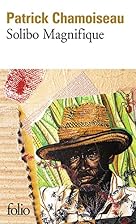
143thorold
About a week ago, Florence posted a link in her CR thread to an article bemoaning the state of contemporary French literature. The assembled pundits, having condemned everyone else, came to the (reluctant) conclusion that there are still a small number of French writers who are worth a look, namely Pascal Quignard and Annie Ernaux. Since I hadn't read either, and hadn't even heard of Ernaux, I decided to take action to inform myself...
Les Années (2008) by Annie Ernaux (France, 1940 - )

Sauver quelque chose du temps où l'on ne sera plus jamais
Annie Ernaux has published a string of mainly autobiographical works since the early seventies. La place (1984), a book about her relationship with her father, seems to be the best-known in English. In her day-job she taught literature in the French school system until her retirement.
Les Années is a very interesting attempt to mix the forms of memoir and social history to create a kind of depersonalised autobiography which is at the same time a history of living in France from the 1940s to the early 21st century - from de Gaulle to Sarko. She writes about herself in the third person ("elle", not "je") and avoids the perfect tense as far as possible to insist on the generality of the experiences she is describing. She isn't trying to rewrite Proust: "La recherche du temps perdu passait par le web", she notes ironically when discussing the first years of the new century. But the book does take concrete artefacts, in particular photographs of herself, as stimulants of memory.
The viewpoint is detached, none of the characters in the story is named, but she doesn't try to step entirely outside her own experience: she is explicitly writing as a woman born in the 1940s, coming from a provincial, working-class background, and spending her working life in an intellectual, left-leaning environment. The text is full of references to products, films, books, songs, political and cultural events, causes, technological change, and all the other markers that we use to place ourselves in history, but it becomes vague and allusive when it is talking about personal life. Births and deaths happen offstage, love affairs are commented on mostly in retrospect (Ernaux has written in detail about all these things elsewhere, of course).
Obviously you miss some of the fine detail of this if you haven't actually lived in France during the decades she is describing (I've probably seen about 1/10 of the films she mentions and heard of about half of the politicians and musicians...), but that isn't really important: it's a book that makes you think about history and memory and the way the two work together in literature, and that's always an interesting and worthwhile exercise. And it manages to look at nearly seventy years of social and political change without becoming morose and pessimistic. The tone is always pleasantly ironic, never overcome by events, but never so detached that it refuses to take a moral stand. Very nicely done!
Les Années (2008) by Annie Ernaux (France, 1940 - )

Sauver quelque chose du temps où l'on ne sera plus jamais
Annie Ernaux has published a string of mainly autobiographical works since the early seventies. La place (1984), a book about her relationship with her father, seems to be the best-known in English. In her day-job she taught literature in the French school system until her retirement.
Les Années is a very interesting attempt to mix the forms of memoir and social history to create a kind of depersonalised autobiography which is at the same time a history of living in France from the 1940s to the early 21st century - from de Gaulle to Sarko. She writes about herself in the third person ("elle", not "je") and avoids the perfect tense as far as possible to insist on the generality of the experiences she is describing. She isn't trying to rewrite Proust: "La recherche du temps perdu passait par le web", she notes ironically when discussing the first years of the new century. But the book does take concrete artefacts, in particular photographs of herself, as stimulants of memory.
The viewpoint is detached, none of the characters in the story is named, but she doesn't try to step entirely outside her own experience: she is explicitly writing as a woman born in the 1940s, coming from a provincial, working-class background, and spending her working life in an intellectual, left-leaning environment. The text is full of references to products, films, books, songs, political and cultural events, causes, technological change, and all the other markers that we use to place ourselves in history, but it becomes vague and allusive when it is talking about personal life. Births and deaths happen offstage, love affairs are commented on mostly in retrospect (Ernaux has written in detail about all these things elsewhere, of course).
Obviously you miss some of the fine detail of this if you haven't actually lived in France during the decades she is describing (I've probably seen about 1/10 of the films she mentions and heard of about half of the politicians and musicians...), but that isn't really important: it's a book that makes you think about history and memory and the way the two work together in literature, and that's always an interesting and worthwhile exercise. And it manages to look at nearly seventy years of social and political change without becoming morose and pessimistic. The tone is always pleasantly ironic, never overcome by events, but never so detached that it refuses to take a moral stand. Very nicely done!
144SassyLassy
>142 thorold: I notice you read this book in French. Having just finished Texaco, and wanting to read more Chamoiseau, I looked for it in English, but it is not to be found. What would you say was its reading level in French? I am tempted, but don't want to be defeated.
>143 thorold: It's so good to hear about contemporary writers from other countries. Are there shadows of Christa Wolf here? Thanks for also posting it on the Reading Globally thread.
The publisher And Other Stories has done much to bring current writing from other countries to readers in English.
-----------------
Touchstones not working.
>143 thorold: It's so good to hear about contemporary writers from other countries. Are there shadows of Christa Wolf here? Thanks for also posting it on the Reading Globally thread.
The publisher And Other Stories has done much to bring current writing from other countries to readers in English.
-----------------
Touchstones not working.
145thorold
>144 SassyLassy:
Chamoiseau in French: Solibo Magnifique is a fairly short book and definitely less challenging than Texaco, but perhaps not for the faint-hearted. The sort of book where you're going to need to guess or look up quite a few things (some local creole-based vocabulary, the police and medical terminology you would expect, and some fairly coarse street talk). The few bits of actual creole are always either paraphrased or translated, though. If you're a super-obsessive reader who needs to understand every single word you might find it a grind; if you're more like me and prepared to learn as you go along and guess a bit, then go for it!
Ernaux vs. Wolf: Difficult to say. I think there might be parallels. Les Années is much more detached and linear and less directly concerned about what's going on inside the writer's own head than anything I've read by Wolf, but that might not be true of Ernaux's earlier books. They seem to have a lot in common in their political and social ideas, but that comes out in quite different ways because of the huge difference in the political conditions they lived in. France is not the DDR!
Chamoiseau in French: Solibo Magnifique is a fairly short book and definitely less challenging than Texaco, but perhaps not for the faint-hearted. The sort of book where you're going to need to guess or look up quite a few things (some local creole-based vocabulary, the police and medical terminology you would expect, and some fairly coarse street talk). The few bits of actual creole are always either paraphrased or translated, though. If you're a super-obsessive reader who needs to understand every single word you might find it a grind; if you're more like me and prepared to learn as you go along and guess a bit, then go for it!
Ernaux vs. Wolf: Difficult to say. I think there might be parallels. Les Années is much more detached and linear and less directly concerned about what's going on inside the writer's own head than anything I've read by Wolf, but that might not be true of Ernaux's earlier books. They seem to have a lot in common in their political and social ideas, but that comes out in quite different ways because of the huge difference in the political conditions they lived in. France is not the DDR!
146thorold
I was planning to read another Vargas, but I got distracted again, and who should turn up but Georges Bernanos (see >96 thorold: above)...
Pas pleurer (2014) by Lydie Salvayre (France, Spain, 1948- )

Lydie Salvayre is a psychiatrist and novelist who grew up as the child of Spanish parents in a civil war exile community in the south of France. Her best-known novel in translation is La Compagnie des spectres (The company of ghosts, 1997). She was awarded the prestigious Prix Goncourt in 2014 for her most recent novel, Pas Pleurer.
Pas Pleurer brings together two contrasting sets of memories of the opening months of the Spanish Civil War: the author's mother, Montse, a teenage girl from a repressed peasant background who briefly gets to experience the excitement of the anarchist Revolution in Barcelona and finds her horizons shifted irrevocably; and the right-wing, Catholic writer Georges Bernanos, observing the rise of the Nationalists in Majorca and horrified by the - church-supported - violence he sees. The author reproduces Montse's vivid account of her experiences mostly as a first-person account, with occasional affectionate and exasperated editorial comments on her mother's appalling mixture of French and Spanish (and clinical reflections on how it is that her mother remembers these things so clearly 75 years on, when so much else has faded). Montse's narrative alternates with a running commentary on the author's experience of reading Bernanos's 1938 book about the nationalist atrocities in Majorca, Les grands cimetières sous la lune.
This all sounds like a rather awkward premise for a novel, but it actually comes together very well. Montse's voice is quite something, and the "fragnol" is used in carefully dosed ways - always characteristically individual, never a simple caricature. (Readers who don't know any Spanish might struggle a bit, but you probably don't need much.) The contrast with the much more measured and analytical language of Bernanos is used to bring out parallels in the ways that violence and hate lurk below the surface of our communities: the Le Pen clan is never actually mentioned, but we're clearly supposed to be drawing parallels to those who exploit the rise of similar fears and turn them into hatreds in our own time as well. A thoughtful, rewarding and entertaining book, and one that also brought back quite a few memories for me of stories I've heard from older family members (no fragnol in our background, but plenty of other interesting combinations...).
Pas pleurer (2014) by Lydie Salvayre (France, Spain, 1948- )

Lydie Salvayre is a psychiatrist and novelist who grew up as the child of Spanish parents in a civil war exile community in the south of France. Her best-known novel in translation is La Compagnie des spectres (The company of ghosts, 1997). She was awarded the prestigious Prix Goncourt in 2014 for her most recent novel, Pas Pleurer.
Pas Pleurer brings together two contrasting sets of memories of the opening months of the Spanish Civil War: the author's mother, Montse, a teenage girl from a repressed peasant background who briefly gets to experience the excitement of the anarchist Revolution in Barcelona and finds her horizons shifted irrevocably; and the right-wing, Catholic writer Georges Bernanos, observing the rise of the Nationalists in Majorca and horrified by the - church-supported - violence he sees. The author reproduces Montse's vivid account of her experiences mostly as a first-person account, with occasional affectionate and exasperated editorial comments on her mother's appalling mixture of French and Spanish (and clinical reflections on how it is that her mother remembers these things so clearly 75 years on, when so much else has faded). Montse's narrative alternates with a running commentary on the author's experience of reading Bernanos's 1938 book about the nationalist atrocities in Majorca, Les grands cimetières sous la lune.
This all sounds like a rather awkward premise for a novel, but it actually comes together very well. Montse's voice is quite something, and the "fragnol" is used in carefully dosed ways - always characteristically individual, never a simple caricature. (Readers who don't know any Spanish might struggle a bit, but you probably don't need much.) The contrast with the much more measured and analytical language of Bernanos is used to bring out parallels in the ways that violence and hate lurk below the surface of our communities: the Le Pen clan is never actually mentioned, but we're clearly supposed to be drawing parallels to those who exploit the rise of similar fears and turn them into hatreds in our own time as well. A thoughtful, rewarding and entertaining book, and one that also brought back quite a few memories for me of stories I've heard from older family members (no fragnol in our background, but plenty of other interesting combinations...).
147baswood
Must look out for some English translations of Annie Ernaux's work. Encouraged by your review.
148thorold
Since I'm not going to finish another book before tomorrow, I might as well tot up my stats whilst I have time:
Reading summary for March:
15 books finished (8 by female authors, i.e. 53%)
Genres: 11 crime, 4 general fiction
Languages: 13 French; 1 Dutch; 1 English
10 distinct authors (3 F, 7 M)
The French crime-spree clearly dominated my reading this month, but the Easter break gave me the chance to tie up a couple of loose ends from the Caribbean thread and try some general fiction.
Reading summary for March:
15 books finished (8 by female authors, i.e. 53%)
Genres: 11 crime, 4 general fiction
Languages: 13 French; 1 Dutch; 1 English
10 distinct authors (3 F, 7 M)
The French crime-spree clearly dominated my reading this month, but the Easter break gave me the chance to tie up a couple of loose ends from the Caribbean thread and try some general fiction.

150deebee1
Why indeed?! I like graphs and I like them even better when used for interesting things such as these!
>146 thorold: Seems like a very worthwhile read. I checked Amazon and found that the English translation is coming out in June. Your description reminds me of Juan Goytisolo's Marks of Identity where fiction is interspersed with his own memories of the Civil War years as an exile in France, and his return to Spain under Franco. Is "Fragnol" here a mix of French and Castilian? Or would that be French and Catalan? I'm assuming the latter but only because you mentioned Barcelona.
>146 thorold: Seems like a very worthwhile read. I checked Amazon and found that the English translation is coming out in June. Your description reminds me of Juan Goytisolo's Marks of Identity where fiction is interspersed with his own memories of the Civil War years as an exile in France, and his return to Spain under Franco. Is "Fragnol" here a mix of French and Castilian? Or would that be French and Catalan? I'm assuming the latter but only because you mentioned Barcelona.
151ursula
>149 thorold: Hmmm ... inspiring! I like graphs and visuals.
152thorold
>150 deebee1: Castilian. Most of the story takes place in a village somewhere unspecified, but Barcelona seems to be the nearest city. One of the minor characters is said to speak "trois langues, quatre avec le catalan", so it is probably in Catalonia. According to (French) Wikipedia Salvayre's mother is/was Catalan and her father Andalusian.
The book made me think a bit of Javier Cercas's non-fiction novels, especially Soldados de Salamina, which is on a similar theme. Marks of identity looks interesting, I hadn't come across it.
The book made me think a bit of Javier Cercas's non-fiction novels, especially Soldados de Salamina, which is on a similar theme. Marks of identity looks interesting, I hadn't come across it.
153SassyLassy
>145 thorold: Thanks for the info. I have just discovered a translation into English, so dithering between the two.
Another graph lover and yours works really well. I anticipate a number of them for year end. Is there a collective noun for graphs and other such visuals?
Another graph lover and yours works really well. I anticipate a number of them for year end. Is there a collective noun for graphs and other such visuals?
154thorold
>153 SassyLassy: Is there a collective noun for graphs and other such visuals?
There doesn't seem to be anything suitable on the Collective Noun Page (http://www.ojohaven.com/collectives/) yet. Maybe "an ergo of cartesians" would be heading in the right direction. (In everyday speech, the term for an excessive number of data charts would be "a PowerPoint", but that's a trademark, of course...).
There doesn't seem to be anything suitable on the Collective Noun Page (http://www.ojohaven.com/collectives/) yet. Maybe "an ergo of cartesians" would be heading in the right direction. (In everyday speech, the term for an excessive number of data charts would be "a PowerPoint", but that's a trademark, of course...).
155SassyLassy
>154 thorold: As one who spent some time reading the rationalists in another life, I love an "ergo of cartesians"
156LolaWalser
>146 thorold:
Bernanos as a character, what a curious idea. I hope I can remember that title, for my book-hunting expeditions.
Bernanos as a character, what a curious idea. I hope I can remember that title, for my book-hunting expeditions.
This topic was continued by thorold is ankle-deep in anthologies in Q2 (2016 thread, part 2).

