This topic is currently marked as "dormant"—the last message is more than 90 days old. You can revive it by posting a reply.
1ChocolateMuse
As I said in the introduction thread, I've been in a reading slump for a long time, years even, and am going to see if I can pull myself out of it. That's pretty much as far as my reading projects go for this year. The lists some of you guys make are immensely impressive!
There is one theme I'd like to look out for as I try to read this year, and it's one that sounds incredibly boring on the face of it: I want to read books featuring characters who actually mean well! Fiction seems to rely so much on lies, greed, lust and violence to get a good story told - that's ok, no issues there, but I want to find out if there's much high quality fiction out there that doesn't. One of the things that got me thinking along these lines is a short review by blackdogbooks of Trustee from the Toolroom by Nevile Shute: http://www.librarything.com/work/19194/reviews/83724572 - he puts it very well.
I have begun auspiciously with this theme, reading Gilead by Marilynne Robinson. What a brilliant book.
Recommendations arising in this thread
A River Runs Through it - dchaiken
Oblomov - deebee
The Book of Ebenezer Le Page - deebee
Wives and daughters - Eliz_M (I've read this one before ♥♥)
Deerbrook - me! Already read but highly recommended to anyone else.
The sea, the sea - thorold
Kim - thorold
Islandia - Brent (not from this thread)
A Constellation of Vital Phenomena - NanaCC
The Walls Came Tumbling Down by Henriette Roosenburg - Noel Perrin
Recommendations from the ever-prolific blackdogbooks
Anything by Kent Haruf
Winesburg, Ohio by Sherwood Anderson
Dandelion Wine by Ray Bradbury
Stones for Ibarra by Harriet Doerr
In This House of Brede by Rumer Goden
The Journal of Antonio Montoya by Rick Collignon
Angle of Repose or anything by Wallace Stegner
Death comes to the archbishop and My Antonia by Willa Cather
The Hero's Walk by Anita Rau Badami
There is one theme I'd like to look out for as I try to read this year, and it's one that sounds incredibly boring on the face of it: I want to read books featuring characters who actually mean well! Fiction seems to rely so much on lies, greed, lust and violence to get a good story told - that's ok, no issues there, but I want to find out if there's much high quality fiction out there that doesn't. One of the things that got me thinking along these lines is a short review by blackdogbooks of Trustee from the Toolroom by Nevile Shute: http://www.librarything.com/work/19194/reviews/83724572 - he puts it very well.
I have begun auspiciously with this theme, reading Gilead by Marilynne Robinson. What a brilliant book.
Recommendations arising in this thread
A River Runs Through it - dchaiken
Oblomov - deebee
The Book of Ebenezer Le Page - deebee
Wives and daughters - Eliz_M (I've read this one before ♥♥)
Deerbrook - me! Already read but highly recommended to anyone else.
The sea, the sea - thorold
Kim - thorold
Islandia - Brent (not from this thread)
A Constellation of Vital Phenomena - NanaCC
The Walls Came Tumbling Down by Henriette Roosenburg - Noel Perrin
Recommendations from the ever-prolific blackdogbooks
Anything by Kent Haruf
Winesburg, Ohio by Sherwood Anderson
Dandelion Wine by Ray Bradbury
Stones for Ibarra by Harriet Doerr
In This House of Brede by Rumer Goden
The Journal of Antonio Montoya by Rick Collignon
Angle of Repose or anything by Wallace Stegner
Death comes to the archbishop and My Antonia by Willa Cather
The Hero's Walk by Anita Rau Badami
2theaelizabet
May I be the first here?
Gilead has been sitting on my shelves for far too long. I find Robinson a deeply interesting, thoughtful person. I look forward to reading your response to her.
You've been reading Shute, too, right?
Gilead has been sitting on my shelves for far too long. I find Robinson a deeply interesting, thoughtful person. I look forward to reading your response to her.
You've been reading Shute, too, right?
3ChocolateMuse
Thanks Teresa, I'm honoured :) Yes I have been reading Shute, and fully intend to read more soon. Hopefully Shute will make an appearance in this thread, yay! (not a personal appearance, sadly, since he died in 1960).
You're so right about Robinson. It's my first encounter with her writing. The slow pace makes the reading immersive and contemplative without flagging, and I love the way there's an intensity in the quiet inner life of the narrator. There's nothing cheap driving this book along. It's reminding me a bit of George MacDonald.
You're so right about Robinson. It's my first encounter with her writing. The slow pace makes the reading immersive and contemplative without flagging, and I love the way there's an intensity in the quiet inner life of the narrator. There's nothing cheap driving this book along. It's reminding me a bit of George MacDonald.
4dchaikin
Nice to see you here Muse, and with an admirable goal. I had to read Gilead twice to pick up something special in it. My reaction was meh the first time through, but I adored it the second time.
You goal has me thinking, but the first book it brought to my mind was A River Runs Through It, which is odd because it's not a good match, a chronicle if a brother's fall. I guess I just really liked the narrator.
Anyway Muse, onward. The only solution to a slump is to find something you actually want to read. Not always an easy chore.
You goal has me thinking, but the first book it brought to my mind was A River Runs Through It, which is odd because it's not a good match, a chronicle if a brother's fall. I guess I just really liked the narrator.
Anyway Muse, onward. The only solution to a slump is to find something you actually want to read. Not always an easy chore.
5ChocolateMuse
Thanks Dan - reminds me of Middlemarch, which I tried three times before I finally got it... and when I did it was practically earth-shattering.
Thanks for the recommendation, it looks like a good one. A narrator one respects :) I should point out that my goal isn't especially to read books about people of faith or religion - anyone who means well will do! Speaking of Middlemarch, that would be an outstanding example. George Eliot is the epitome of intelligent compassion; and nobody 'means well' more than Dorothea.
Onward indeed. Onward and upward! When I finish Gilead, it will be a real achievement, considering my track record of late.
Thanks for the recommendation, it looks like a good one. A narrator one respects :) I should point out that my goal isn't especially to read books about people of faith or religion - anyone who means well will do! Speaking of Middlemarch, that would be an outstanding example. George Eliot is the epitome of intelligent compassion; and nobody 'means well' more than Dorothea.
Onward indeed. Onward and upward! When I finish Gilead, it will be a real achievement, considering my track record of late.
6deebee1
Hi ChocoMuse, your goal got me thinking too. Perhaps you've read them already but Oblomov comes to mind, another is The Book of Ebenezer Le Page. Stoner and The Man Who Loves Children would probably fit as well. Both Oblomov and Stoner are weak personalities, easily overcome by events around them, choosing to withdraw instead, unable to find fault in the world. Ebenezer is a curmudgeon but he is a good man deep inside, and while no big drama happens in his life, yet it is a full, rich life. Sam in The Man Who Loves Children always means well but in a twisted kind of way.
Interesting goal and quite a challenge, too. Good luck!
Interesting goal and quite a challenge, too. Good luck!
7ELiz_M
A very interesting idea and I hope you end up with too many suggestions. I recently read (listened to) Wives and Daughters and the phrase "impossibly good" comes to mind when describing the main characters -- Molly Gibson and Dr. Gibson. Neither is perfect, but their faults/wrongs are committed to avoid hurting others.
8blackdogbooks
Thanks for inviting me over here. Put anything and everything by Kent Haruf on your list, pal.
9dchaikin
>105 " I should point out that my goal isn't especially to read books about people of faith or religion - anyone who means well will do!
I wasn't thinking religioun, but I was thinking you had picked an especially well-meaning person in Gilead, in Ames.
It's fun to think this through partially because literature so loves the negative, and that well meaning characters tend to come out so badly.
I wasn't thinking religioun, but I was thinking you had picked an especially well-meaning person in Gilead, in Ames.
It's fun to think this through partially because literature so loves the negative, and that well meaning characters tend to come out so badly.
10ChocolateMuse
Thanks everyone.
Deebee, some great suggestions there. Ebenezer Le Page sounds like a particularly good one.
Eliz, thanks, so do I! I've read Wives and Daughters, absolutely love it. Characters who mean well will be much more predominantly found in the Victorian age, I guess. Another that springs to mind which I've already read, lesser known and most undeservedly so, is Deerbrook by Harriet Martineau. Anyone interested in my review of it will find it here: http://www.librarything.com/review/113131786 - it's a great book.
Howdy, blackdog :) That's the one! I was trying to think of Haruf's name, and hadn't yet got down to searching your reviews and threads for it. On the list he goes. Actually, I think after this I'll start a list in the top post of this thread. What a good idea.
Dan: It's fun to think this through partially because literature so loves the negative, and that well meaning characters tend to come out so badly Exactly! Every now and then in the past I've discovered books in which they don't come out badly, or if they do, that the reader's feelings about them are more like respect than like pity, and I think 'why isn't there more of this?' That thought has been slowly coming to the boil for years now I think, and hence my theme.
Deebee, some great suggestions there. Ebenezer Le Page sounds like a particularly good one.
Eliz, thanks, so do I! I've read Wives and Daughters, absolutely love it. Characters who mean well will be much more predominantly found in the Victorian age, I guess. Another that springs to mind which I've already read, lesser known and most undeservedly so, is Deerbrook by Harriet Martineau. Anyone interested in my review of it will find it here: http://www.librarything.com/review/113131786 - it's a great book.
Howdy, blackdog :) That's the one! I was trying to think of Haruf's name, and hadn't yet got down to searching your reviews and threads for it. On the list he goes. Actually, I think after this I'll start a list in the top post of this thread. What a good idea.
Dan: It's fun to think this through partially because literature so loves the negative, and that well meaning characters tend to come out so badly Exactly! Every now and then in the past I've discovered books in which they don't come out badly, or if they do, that the reader's feelings about them are more like respect than like pity, and I think 'why isn't there more of this?' That thought has been slowly coming to the boil for years now I think, and hence my theme.
11blackdogbooks
More suggestions - primarily from my favorites list on my profile:
Winesburg, Ohio by Sherwood Anderson
Dandelion Wine by Ray Bradbury
Stones for Ibarra by Harriet Doerr
In This House of Brede by Rumer Goden
The Journal of Antonio Montoya by Rick Collignon
Winesburg, Ohio by Sherwood Anderson
Dandelion Wine by Ray Bradbury
Stones for Ibarra by Harriet Doerr
In This House of Brede by Rumer Goden
The Journal of Antonio Montoya by Rick Collignon
12ChocolateMuse
Thanks Dawg - I'm surprised to see a Ray Bradbury in there, though I've never read anything by him.
I've been thinking more about this theme of mine and realising it's near impossible to define it properly. I was thinking Wives and Daughters can't really fit into the theme as I envision it because its plot is driven along by the ever-selfish Mrs Fitzpatrick whose self-absorbed manipulation arrives in well-meaning paradise and turns it all upside down. That's nothing more than the good old Good vs. Evil theme. But then, maybe one simply can't get away from that, except in books with anti-heroes and an Evil vs. Evil theme? Anyway, even Gilead, which seems to be the epitome of my theme as I see it, has a quiet but intense drama based on the arrival of a character with an unsavoury past and uncertain intentions. Even if a book could be totally about well-meaning people without exception, there would almost have to be a drama involving them fighting some kind of thing that represents Evil inside themselves. (I use the terms symbolically in the context of literature). There probably can't be a story about Good without there being an Evil in it too - just like life.
So where to draw the line and define my theme? I dunno - I can't do it! Good thing it doesn't matter.
I've been thinking more about this theme of mine and realising it's near impossible to define it properly. I was thinking Wives and Daughters can't really fit into the theme as I envision it because its plot is driven along by the ever-selfish Mrs Fitzpatrick whose self-absorbed manipulation arrives in well-meaning paradise and turns it all upside down. That's nothing more than the good old Good vs. Evil theme. But then, maybe one simply can't get away from that, except in books with anti-heroes and an Evil vs. Evil theme? Anyway, even Gilead, which seems to be the epitome of my theme as I see it, has a quiet but intense drama based on the arrival of a character with an unsavoury past and uncertain intentions. Even if a book could be totally about well-meaning people without exception, there would almost have to be a drama involving them fighting some kind of thing that represents Evil inside themselves. (I use the terms symbolically in the context of literature). There probably can't be a story about Good without there being an Evil in it too - just like life.
So where to draw the line and define my theme? I dunno - I can't do it! Good thing it doesn't matter.
13thorold
Nice idea! Trustee from the toolroom is a favourite of mine too, I think it's one of Shute's best.
Thomas Hardy might be a good place to find characters who mean well, but of course they are always opposed either by Fate or by other characters driven by self-interest or jealousy. What about Gabriel Oak in Far from the madding crowd?
There are plenty of books - comedies like Emma, Anne of Green Gables, and Miss Buncle's book or tragedies like Independent people - where a character with good intentions creates a terrible mess for everyone around - does that fit your model?
Thomas Hardy might be a good place to find characters who mean well, but of course they are always opposed either by Fate or by other characters driven by self-interest or jealousy. What about Gabriel Oak in Far from the madding crowd?
There are plenty of books - comedies like Emma, Anne of Green Gables, and Miss Buncle's book or tragedies like Independent people - where a character with good intentions creates a terrible mess for everyone around - does that fit your model?
14ChocolateMuse
Thanks thorold! I've read them all (except the Shute). D.E. Stevenson does it very well in nearly all her books - but although she's certainly an intelligent author, she's obviously in a very different league from, say, Marilynne Robinson or George Eliot. I'd class the Stevenson type of book as a comfort read - a pleasant alternative to thinking. But my theme is a pursuit of things more in the Robinson/Eliot league. I hope that doesn't make me sound snobby: allow me to say that I really love Austen, Montgomery and Stevenson and have read them all too often! But there's no challenge in it.
As for Independent People, a wonderful work it is - but could you really say that Bjartur means well! Oh dear - I think he does! How awful! But not really in the sense I mean - it's pride that motivates him if you get right down to it. He means well for himself, not for anyone else or for humanity in general. He doesn't internally explore the concept of 'meaning well' - that phrase is getting dumber the more times I say it! I wish I could find one that explains it better. There is that outdated and oh-so-British word 'decent', but that doesn't cover it either.
I can't define this crazy theme. I'm just gonna read stuff and leave it at that I think!
As for Independent People, a wonderful work it is - but could you really say that Bjartur means well! Oh dear - I think he does! How awful! But not really in the sense I mean - it's pride that motivates him if you get right down to it. He means well for himself, not for anyone else or for humanity in general. He doesn't internally explore the concept of 'meaning well' - that phrase is getting dumber the more times I say it! I wish I could find one that explains it better. There is that outdated and oh-so-British word 'decent', but that doesn't cover it either.
I can't define this crazy theme. I'm just gonna read stuff and leave it at that I think!
15ChocolateMuse
The more I think of it the less Independent People fits. A quote from my review of it sort of explains why:
Its heroism is a misplaced heroism, so utterly misplaced that it amounts to cruel lunacy. The idea that to maintain independence against all odds must be heroic is an idea that recurs again and again – mostly because this idea is the mainstay of Bjartur’s character...
For the record, my review can be found here: http://www.librarything.com/review/99804967
Its heroism is a misplaced heroism, so utterly misplaced that it amounts to cruel lunacy. The idea that to maintain independence against all odds must be heroic is an idea that recurs again and again – mostly because this idea is the mainstay of Bjartur’s character...
For the record, my review can be found here: http://www.librarything.com/review/99804967
16ChocolateMuse
thorold, you've got me thinking. And I realise you've taken the term 'meaning well' (ergh) in the sense it's usually used, when as you say the well-meaning person makes a mess of things with the best possible motives. That isn't what I mean at all. Such people are usually blind and self-absorbed (Emma and Bjartur being perfect examples). What I'm thinking of is pretty much the exact opposite of that.
But also, at the same time, my theme is miles away from pious sermon-stories which make everyone sick, in which Dear Little Betty Helps Mummy; or Darling Thomas Makes The Blind Beggar Believe In Humanity Again.
Something with more rigorous honesty than either.
But also, at the same time, my theme is miles away from pious sermon-stories which make everyone sick, in which Dear Little Betty Helps Mummy; or Darling Thomas Makes The Blind Beggar Believe In Humanity Again.
Something with more rigorous honesty than either.
17NanaCC
I've just read through your thread, and I love the challenge you've set for yourself. I'll be interested to see where it goes.
18thorold
>16 ChocolateMuse:
Yes, I see what you mean. It occurred to me after posting that there is also a whole class of books in which you have a character who's so blindingly saintly that normal people find it difficult to cope with. For some reason I'm having a hard time coming up with good examples that aren't explicitly about religion, but Shute's Round the bend, would fit if you do admit gurus, as would Kim, The sea, the sea and most of the Herman Hesse books we read when we were too young to know better.
Yes, I see what you mean. It occurred to me after posting that there is also a whole class of books in which you have a character who's so blindingly saintly that normal people find it difficult to cope with. For some reason I'm having a hard time coming up with good examples that aren't explicitly about religion, but Shute's Round the bend, would fit if you do admit gurus, as would Kim, The sea, the sea and most of the Herman Hesse books we read when we were too young to know better.
19rebeccanyc
I'm afraid I mostly read novels in which people don't mean well. I'd have to think about ones where they do.
20cabegley
I'm not sure if this fits your theme, and perhaps you've already read it, but Enchanted April is such a lovely, positive book that I thought I'd throw it out there.
21ChocolateMuse
It's funny you saying that. I've been reading Elizabeth and her German Garden on my iPad kindle app lately, where I keep the kind of books one can pick up and put down any time. I've read quite a lot of von Arnim (including Enchanted April) in the past and have only now, with my 'theme' in mind, realised a thing about her usual characters which isn't immediately apparent. I've realised they mostly go around simply getting their own way; and they do it in the most charming possible way that you end up admiring them for it. It's quite lovely if that's what you're looking for at the time, but doesn't really fit my theme.
Though by far my favourite von Arnim is different in that sense, and a really lovely and underrated novel: I highly recommend Fräulein Schmidt and Mr. Anstruther! Wonderful book.
>18 thorold: Very interesting ideas there: Kipling, Iris Murdoch and Hesse! Wow! Thank you!
>17 NanaCC: and >19 rebeccanyc:, Thanks and hello.
Though by far my favourite von Arnim is different in that sense, and a really lovely and underrated novel: I highly recommend Fräulein Schmidt and Mr. Anstruther! Wonderful book.
>18 thorold: Very interesting ideas there: Kipling, Iris Murdoch and Hesse! Wow! Thank you!
>17 NanaCC: and >19 rebeccanyc:, Thanks and hello.
22blackdogbooks
I've been thinking about E.M. Forrester as another potential source to plumb for these kind of reads. There's a lot of great characters written from the standpoint you're looking for.
23ChocolateMuse
Thanks dawg - but do you mean E.M Forster? Both LT and google searches don't seem to know an EM Forrester.
I've realised something - this isn't a 'theme'. It's more along the lines of a quest. It's a matter of reading things and keeping a weather eye out for this elusive idea as I go.
I certainly hit the jackpot with Gilead, which I've finished, but I'm having serious troubles with writing a review. I stutter, I stammer, and nothing of note comes out. And I really want to do it justice!
I've realised something - this isn't a 'theme'. It's more along the lines of a quest. It's a matter of reading things and keeping a weather eye out for this elusive idea as I go.
I certainly hit the jackpot with Gilead, which I've finished, but I'm having serious troubles with writing a review. I stutter, I stammer, and nothing of note comes out. And I really want to do it justice!
24blackdogbooks
Of course, hasty typing. That's who I meant.
25dchaikin
Muse, this whole thread is a review of Gilead.
>12 ChocolateMuse: "Even if a book could be totally about well-meaning people without exception, there would almost have to be a drama involving them fighting some kind of thing that represents Evil inside themselves
You are toying with a contradiction in this quest. It reminds me of a line in Master and Margarita when someone (the devil?, the narrator?) mocks another character for the quest for pure goodness. They describe the goal as a something like a blinding white light with no shadows for texture. (I know, it would help if I actually knew the line). For drama the good people tend to be idealized, but also have a dark world about them - the darker the better. Think of Atticus in To Kill a Mockingbird as an ultimate example. (But he's been exposed in the criticism as ultimately racist and cooperative with the culture of racism. )
>12 ChocolateMuse: "Even if a book could be totally about well-meaning people without exception, there would almost have to be a drama involving them fighting some kind of thing that represents Evil inside themselves
You are toying with a contradiction in this quest. It reminds me of a line in Master and Margarita when someone (the devil?, the narrator?) mocks another character for the quest for pure goodness. They describe the goal as a something like a blinding white light with no shadows for texture. (I know, it would help if I actually knew the line). For drama the good people tend to be idealized, but also have a dark world about them - the darker the better. Think of Atticus in To Kill a Mockingbird as an ultimate example. (But he's been exposed in the criticism as ultimately racist and cooperative with the culture of racism. )
26RidgewayGirl
Gilead is quite the book. I'm still half living in that Iowa town.
27ChocolateMuse
Thanks Dan. You're so right about the contradiction. Without a contrast or a conflict, there would be no story; of course 'goodness' wouldn't really have a definition without its counterpart. Pity I can't wrap this thread up and call it my review of Gilead though! I've started and stopped a number of times now and am no closer to getting it... I've actually never struggled with a review in this way before.
>26 RidgewayGirl: Yes, it's hard to leave it.
>26 RidgewayGirl: Yes, it's hard to leave it.
28SassyLassy
I love the idea of your quest. I think it is something that contemporary books lack. Yes there are many "good" people and examples of sacrifice, but they lack the weight of earlier writers, those of the nineteenth century come to mind. Perhaps they thought more deeply about these matters?
Thorold's idea of Neville Shute put me in mind of Shute's Pied Piper. There is also The Wrong Box (Robert Louis Stevenson and Lloyd Osbourne) and on a different note, Sylvia Townsend Warner's The Corner that Held Them. Robin Jenkins might be another author worth a look.
I love the idea of Kim as well, mentioned by Thorold above. His Gabriel Oak character suggestion is also a good one. It got me thinking of other Hardy novels, and of the theme of redemption, not necessarily in the religious sense, but in the sense of a characters overcoming their personal albatross. Life goes on, they live thoughtful and good inner lives (having the same difficulty with language here as in >14 ChocolateMuse: above), but there is a price, a loss along the way. This too is part of characters try to do something good. Of course Hardy took trying to help to the extreme with Little Father Time; there's the "rigorous honesty".
This is not expressed well at all, and I may have to seek out Elizabeth von Arnim just for her delightful way of distracting the reader from the world.
>15 ChocolateMuse: I'd agree that Independent People and Laxness in general doesn't fit.
Touchstones not working at all.
Thorold's idea of Neville Shute put me in mind of Shute's Pied Piper. There is also The Wrong Box (Robert Louis Stevenson and Lloyd Osbourne) and on a different note, Sylvia Townsend Warner's The Corner that Held Them. Robin Jenkins might be another author worth a look.
I love the idea of Kim as well, mentioned by Thorold above. His Gabriel Oak character suggestion is also a good one. It got me thinking of other Hardy novels, and of the theme of redemption, not necessarily in the religious sense, but in the sense of a characters overcoming their personal albatross. Life goes on, they live thoughtful and good inner lives (having the same difficulty with language here as in >14 ChocolateMuse: above), but there is a price, a loss along the way. This too is part of characters try to do something good. Of course Hardy took trying to help to the extreme with Little Father Time; there's the "rigorous honesty".
This is not expressed well at all, and I may have to seek out Elizabeth von Arnim just for her delightful way of distracting the reader from the world.
>15 ChocolateMuse: I'd agree that Independent People and Laxness in general doesn't fit.
Touchstones not working at all.
29ChocolateMuse
>28 SassyLassy: You know, the fact that we have difficulty finding words is probably because all the words that apply are completely out of fashion. We may be onto a profound insight here! Good/evil, right/wrong - words like that aren't acceptable now, because they're considered to be loaded with intolerance. And yet reading a book such as Gilead about someone whose life is quietly spent in a quest to be good, shows it has little or nothing to do with intolerance, and that the whole modern idea of tolerance has been completely politicised ("politicized", for the Americans present), like the Newspeak words in Orwell's Nineteen Eighty-Four.
Whoa. Is that a can of worms? The above is written dogmatically, but not meant that way. It's an idea.
Whoa. Is that a can of worms? The above is written dogmatically, but not meant that way. It's an idea.
30dchaikin
Hmmm... Interesting about the words and meaning. What if the words we need have all been unsurped by implication and association and then we can no longer express what we want to say? Muted by corrupt vocabulary. Somehow that was fun to write, but I'm not sure it makes sense. Words have many meanings and they seem to coexist happily all within the same word. Right isn't always right in that way, and so on. Although if I say I'm right, it does have an unpleasant superior aspect to it...i'm not saying I'm right, just for the record.
31lilisin
>30 dchaikin:
usurped by implication and association
That made complete sense and is entirely relevant to the current era in which we are living in the States. Take one step into a facebook thread about racism and bigotry and you'll see all the feelings people throw into words often forgetting (or rather often, ignoring) the basic definitions of the words.
For example the whole "all white people are racist towards black" argument that is in heat these days. Many on the opposing team are saying that blacks can't be racist towards white because that's not what racism means. But, what they truly want to say is that they don't feel it counts as racism due to their associations and feelings with the word rather than actually making a rational comment on the basic definition of the word itself.
It's one of the situations where people can argue "it's just semantics" but then, yes, let's discuss the semantics for once, please! And it's aggravating because it's making all those conversations just turn around in circles without any rational thought or any attempt at polite debate and decorum.
---
Feel free not to continue on this conversation if you feel it will take away from ChocolateMuse's lovely thread.
usurped by implication and association
That made complete sense and is entirely relevant to the current era in which we are living in the States. Take one step into a facebook thread about racism and bigotry and you'll see all the feelings people throw into words often forgetting (or rather often, ignoring) the basic definitions of the words.
For example the whole "all white people are racist towards black" argument that is in heat these days. Many on the opposing team are saying that blacks can't be racist towards white because that's not what racism means. But, what they truly want to say is that they don't feel it counts as racism due to their associations and feelings with the word rather than actually making a rational comment on the basic definition of the word itself.
It's one of the situations where people can argue "it's just semantics" but then, yes, let's discuss the semantics for once, please! And it's aggravating because it's making all those conversations just turn around in circles without any rational thought or any attempt at polite debate and decorum.
---
Feel free not to continue on this conversation if you feel it will take away from ChocolateMuse's lovely thread.
32thorold
>29 ChocolateMuse: Good/evil, right/wrong - words like that aren't acceptable now, because they're considered to be loaded with intolerance.
No. Even in a tolerant world, you still have to be able to make moral judgements, otherwise how would you be able to regulate your own behaviour? You have to be able to say "it's right to help this old lady cross the road" or "it's wrong to hate that person for being Belgian". What changes when you become tolerant is simply that you have to recognise that at least some of your moral judgments aren't shared by everyone else and don't have to be. But you still need the words.
No. Even in a tolerant world, you still have to be able to make moral judgements, otherwise how would you be able to regulate your own behaviour? You have to be able to say "it's right to help this old lady cross the road" or "it's wrong to hate that person for being Belgian". What changes when you become tolerant is simply that you have to recognise that at least some of your moral judgments aren't shared by everyone else and don't have to be. But you still need the words.
33ChocolateMuse
>32 thorold: That's exactly what I was trying to say - but my point was that it's becoming less acceptable in general usage to say it. Please don't think that I agree with that statement I made that you italicised! Oh dear, no. I meant that this state of things is worrying.
And I think that the word 'tolerance' is becoming heavily politicised too, and believe me I think it's a bad thing that it is so. As thorold points out, "tolerance" means accepting the differences and even respecting someone with whom you disagree. But for many people, the mere fact of disagreeing with someone's beliefs; or simply having a moral opinion about them, is considered "intolerance". And that is dangerous.
Cambridge online dictionary definition of tolerance: willingness to accept behaviour and beliefs that are different from your own, although you might not agree with or approve of them. emphasis mine.
But listen to the way people use the word in everyday speech, and on the news. It's increasingly coming to be seen as something more like: never claiming that anything anyone does is wrong, immoral or unacceptable (except terrorist attacks and Hitler).
And I think that the word 'tolerance' is becoming heavily politicised too, and believe me I think it's a bad thing that it is so. As thorold points out, "tolerance" means accepting the differences and even respecting someone with whom you disagree. But for many people, the mere fact of disagreeing with someone's beliefs; or simply having a moral opinion about them, is considered "intolerance". And that is dangerous.
Cambridge online dictionary definition of tolerance: willingness to accept behaviour and beliefs that are different from your own, although you might not agree with or approve of them. emphasis mine.
But listen to the way people use the word in everyday speech, and on the news. It's increasingly coming to be seen as something more like: never claiming that anything anyone does is wrong, immoral or unacceptable (except terrorist attacks and Hitler).
34ChocolateMuse
>31 lilisin: Feel free not to continue on this conversation if you feel it will take away from ChocolateMuse's lovely thread. - Oh please continue! The political use of semantics is a totally fascinating subject, and this is an awesome conversation!
Certainly racism is a semantically challenged word, I agree with you there lilisin. And I think the reason it's so hard to talk about it is that same reason again: language. Muted by corrupt vocabulary - that's a great one Dan! Maybe that usurpation you speak of is sometimes done on purpose? Or is that just a silly conspiracy theory?
Certainly racism is a semantically challenged word, I agree with you there lilisin. And I think the reason it's so hard to talk about it is that same reason again: language. Muted by corrupt vocabulary - that's a great one Dan! Maybe that usurpation you speak of is sometimes done on purpose? Or is that just a silly conspiracy theory?
35blackdogbooks
Quick interlude - don't let this get anyone sidetracked, as the conversation is quite provocative (I completely agree with you in 33, Choc).
Another suggestion on the reading theme - Wallace Stegner. At first I hesitated to recommend him because I've only read his Pulitzer Prize winner Angle of Repose, and one of the main narrators/characters is pretty bitter, but the story he tells about his grandmother that fills the book is about an essentially good woman struggling to make her way in the world. It's a favorite book, all time, for me, and put me on his trail collecting other books. This week I picked up two novels at my used shop, and the flap description on one was essentially describing your theme. I haven't added them here yet but I'll get them up and get you the titles later, but the more I read about him, the more I think any of his books would be up this path.
Another suggestion on the reading theme - Wallace Stegner. At first I hesitated to recommend him because I've only read his Pulitzer Prize winner Angle of Repose, and one of the main narrators/characters is pretty bitter, but the story he tells about his grandmother that fills the book is about an essentially good woman struggling to make her way in the world. It's a favorite book, all time, for me, and put me on his trail collecting other books. This week I picked up two novels at my used shop, and the flap description on one was essentially describing your theme. I haven't added them here yet but I'll get them up and get you the titles later, but the more I read about him, the more I think any of his books would be up this path.
36baswood
>32 thorold: Oh those poor Belgians
We are having dinner tonight with a Belgian family, I hope I do not get a fit of the giggles tonight if I think about your post.
Seriously though excellent points made about trying hard to communicate when language and it's use seem to mean different things to different people. So much better when it is face to face and we can get some more clues to help our understanding. It will be different for me tonight because I will be communicating in another language and with another culture that is not my own, but I will be very conscious of my body language and hope that gets me through.
We are having dinner tonight with a Belgian family, I hope I do not get a fit of the giggles tonight if I think about your post.
Seriously though excellent points made about trying hard to communicate when language and it's use seem to mean different things to different people. So much better when it is face to face and we can get some more clues to help our understanding. It will be different for me tonight because I will be communicating in another language and with another culture that is not my own, but I will be very conscious of my body language and hope that gets me through.
37ChocolateMuse
>35 blackdogbooks: Stegner looks really interesting. You're a rich mine of ideas, Dog!
>36 baswood: I was amused about the Belgians too. And what you say bas, about words meaning one thing to one person and something else to another - well that is quite bad enough! But worse still, I think, is when meanings of words are slowly changing for everyone, in a way that gradually prevents us from having a language to discuss certain things. It really is like Orwell's Newspeak.
I just looked up Newspeak and realised Orwell has said all this before, and much better!
On Newspeak in Wikipedia: The aim of Newspeak is to remove all shades of meaning from language, leaving simple concepts (pleasure and pain, happiness and sadness, goodthink and crimethink) that reinforce the total dominance of the State..."the purpose of Newspeak was not only to provide a medium of expression for the world-view and mental habits proper to the devotees of IngSoc, but to make all other modes of thought impossible. Its vocabulary was so constructed as to give exact and often very subtle expression to every meaning that a Party member could properly wish to express, while excluding all other meaning and also the possibility of arriving at them by indirect methods." (the bit in quotes is from Orwell himself) - https://en.wikipedia.org/wiki/Newspeak
I haven't read this yet but will: an essay by Orwell called Politics and the English Language. It seems to be more about academic writing, and goes in a different direction from the point that really interests me here, which is the gradual shift in meanings of individual words for political reasons - but still, I think this will be worth reading.
>36 baswood: I was amused about the Belgians too. And what you say bas, about words meaning one thing to one person and something else to another - well that is quite bad enough! But worse still, I think, is when meanings of words are slowly changing for everyone, in a way that gradually prevents us from having a language to discuss certain things. It really is like Orwell's Newspeak.
I just looked up Newspeak and realised Orwell has said all this before, and much better!
On Newspeak in Wikipedia: The aim of Newspeak is to remove all shades of meaning from language, leaving simple concepts (pleasure and pain, happiness and sadness, goodthink and crimethink) that reinforce the total dominance of the State..."the purpose of Newspeak was not only to provide a medium of expression for the world-view and mental habits proper to the devotees of IngSoc, but to make all other modes of thought impossible. Its vocabulary was so constructed as to give exact and often very subtle expression to every meaning that a Party member could properly wish to express, while excluding all other meaning and also the possibility of arriving at them by indirect methods." (the bit in quotes is from Orwell himself) - https://en.wikipedia.org/wiki/Newspeak
I haven't read this yet but will: an essay by Orwell called Politics and the English Language. It seems to be more about academic writing, and goes in a different direction from the point that really interests me here, which is the gradual shift in meanings of individual words for political reasons - but still, I think this will be worth reading.
38blackdogbooks
Okay - working with my new additions - the Stegner book is All the Little Live Things - from the flap:
"Why does the older feneration feel as it does about what is happening in the world today? Stegner answers the question, with sympathy and understanding, for one good human individual trying to come to terms with his world while retaining his own integrity."
Another suggestion - sorry, if I'm overwhelming you with all these, but I dig your theme - Nickel Mountain by John Gardner - again, right on point.
"Why does the older feneration feel as it does about what is happening in the world today? Stegner answers the question, with sympathy and understanding, for one good human individual trying to come to terms with his world while retaining his own integrity."
Another suggestion - sorry, if I'm overwhelming you with all these, but I dig your theme - Nickel Mountain by John Gardner - again, right on point.
39ChocolateMuse
Well I've finally put something together. I think it's about the best I can do at the moment.
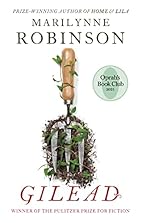
Gilead, by Marilynne Robinson
This is a novel about peace. Not the kind that means cessation of war; not even the kind that means absence of conflict. It’s the kind of inner peace inside one which remains there regardless of events, and which comes from a solid place. It's the kind of peace Christ meant when he said to his disciples, Peace I leave with you, my peace I give unto you: not as the world giveth, give I unto you (John 14:27).
I’ve been really struggling with this review. I just did not know how to write about this book - didn’t know how to start, didn’t know how to approach the things I wanted to say. I’ve realised that part of the reason for this was an inability to write anything meaningful about it while avoiding religious content. I was worried about alienating potential readers who are non-religious or anti-religious. But this can’t be helped. The novel does, after all, have a narrator who is an elderly minister in a small Iowa town, writing a letter to his seven-year-old son for the latter to read when he is grown up and his father is long dead. It’s a letter which also becomes a kind of diary. It’s a place for an old man of deep faith to write out his thoughts and to commune (as he’d probably say himself) with his soul. He writes about his faith because it is his life - so how could a truthful review avoid mentioning it?
Our narrator Reverend John Ames begins the letter because he’s been diagnosed with a heart condition and won’t live much longer. His wife is much younger than he is, and his son is still a child, though Ames himself is seventy-six. Over the course of writing this letter, which he adds to a little at a time over a period of months, he begins by writing out memories, family history and other things he’d like his son to know in the future. But eventually another character arrives in town who disturbs John Ames profoundly. The thought of dying and leaving this character to do potential damage after Ames is gone becomes a matter of serious and deep worry. That’s what I mean about the intricacies of peace in this novel. We see from his writing that he is disturbed; afraid even. That he feels a loss of peace. And yet the peace is still there. To mix cliches, you could say that although the depths are stirred, the foundation is not shaken.
This book reminded me very much of one by George Macdonald with a similar premise: Annals of a Quiet Neighbourhood, a book I also enjoyed (but which is emphatically not for everyone). It has the same quiet introspection and a similar type of narrator, though the character of John Ames has more depth and intricacy.
I’ve been thinking lately about what makes a novel work. So often it relies on people doing or feeling bad things - lies, violence, greed, lust and the like. I’ve become very interested in the idea of novels which do not rely on these, but which are about people who mean well, people who (to put it crudely) want to be good. How do we get drama, conflict and profundity out of that? The Victorians tried, but their style is completely out of fashion now, probably with good reason. Is there a modern alternative? And if so, can it be really Good Literature? Well, yes. Gilead makes that clear. This book is not a sermon; it hardly even points a moral. It’s a character study, and a brilliant one. What there is of plot moves slowly, as John Ames savours each moment of what is left to him of life, and the reader with him does the same. The book is golden, gentle and profound. It takes no high moral ground, and doesn’t really have much of an agenda. It’s intelligent, and it’s kind - a combination which is not all that common.
Do not assume, by the way, that Rev. Ames 'communes with his soul' with a series of groans and midnight chest-beating. Far from it. He has a quiet, dry sense of humour, and a simplicity and honesty in his writing which makes every sentence a joy to read. His age and approaching death heightens his senses, and he sees things around him with a profound appreciation of beauty. There is also a sense that he still looks upon his wife and child with a kind of humble awe. The reader really feels, with John Ames, what it is like to be old, quiet, slow, and waiting for a death that is neither dreaded nor particularly wanted. The old Reverend is a very likeable man, and Robinson has really made him live. That small Iowa town has a way of persisting in the mind long after the book is finished.
Gilead, by Marilynne Robinson
This is a novel about peace. Not the kind that means cessation of war; not even the kind that means absence of conflict. It’s the kind of inner peace inside one which remains there regardless of events, and which comes from a solid place. It's the kind of peace Christ meant when he said to his disciples, Peace I leave with you, my peace I give unto you: not as the world giveth, give I unto you (John 14:27).
I’ve been really struggling with this review. I just did not know how to write about this book - didn’t know how to start, didn’t know how to approach the things I wanted to say. I’ve realised that part of the reason for this was an inability to write anything meaningful about it while avoiding religious content. I was worried about alienating potential readers who are non-religious or anti-religious. But this can’t be helped. The novel does, after all, have a narrator who is an elderly minister in a small Iowa town, writing a letter to his seven-year-old son for the latter to read when he is grown up and his father is long dead. It’s a letter which also becomes a kind of diary. It’s a place for an old man of deep faith to write out his thoughts and to commune (as he’d probably say himself) with his soul. He writes about his faith because it is his life - so how could a truthful review avoid mentioning it?
Our narrator Reverend John Ames begins the letter because he’s been diagnosed with a heart condition and won’t live much longer. His wife is much younger than he is, and his son is still a child, though Ames himself is seventy-six. Over the course of writing this letter, which he adds to a little at a time over a period of months, he begins by writing out memories, family history and other things he’d like his son to know in the future. But eventually another character arrives in town who disturbs John Ames profoundly. The thought of dying and leaving this character to do potential damage after Ames is gone becomes a matter of serious and deep worry. That’s what I mean about the intricacies of peace in this novel. We see from his writing that he is disturbed; afraid even. That he feels a loss of peace. And yet the peace is still there. To mix cliches, you could say that although the depths are stirred, the foundation is not shaken.
This book reminded me very much of one by George Macdonald with a similar premise: Annals of a Quiet Neighbourhood, a book I also enjoyed (but which is emphatically not for everyone). It has the same quiet introspection and a similar type of narrator, though the character of John Ames has more depth and intricacy.
I’ve been thinking lately about what makes a novel work. So often it relies on people doing or feeling bad things - lies, violence, greed, lust and the like. I’ve become very interested in the idea of novels which do not rely on these, but which are about people who mean well, people who (to put it crudely) want to be good. How do we get drama, conflict and profundity out of that? The Victorians tried, but their style is completely out of fashion now, probably with good reason. Is there a modern alternative? And if so, can it be really Good Literature? Well, yes. Gilead makes that clear. This book is not a sermon; it hardly even points a moral. It’s a character study, and a brilliant one. What there is of plot moves slowly, as John Ames savours each moment of what is left to him of life, and the reader with him does the same. The book is golden, gentle and profound. It takes no high moral ground, and doesn’t really have much of an agenda. It’s intelligent, and it’s kind - a combination which is not all that common.
Do not assume, by the way, that Rev. Ames 'communes with his soul' with a series of groans and midnight chest-beating. Far from it. He has a quiet, dry sense of humour, and a simplicity and honesty in his writing which makes every sentence a joy to read. His age and approaching death heightens his senses, and he sees things around him with a profound appreciation of beauty. There is also a sense that he still looks upon his wife and child with a kind of humble awe. The reader really feels, with John Ames, what it is like to be old, quiet, slow, and waiting for a death that is neither dreaded nor particularly wanted. The old Reverend is a very likeable man, and Robinson has really made him live. That small Iowa town has a way of persisting in the mind long after the book is finished.
40blackdogbooks
Wonderful. Makes me want to read it again.
41FlorenceArt
Wonderful review. I'm one of those who hesitate to read the book because of its religious aspect, but you and others may be slowly convincing me.
42baswood
There are 263 reviews of this book and yours is one of the best. The religious aspect has made me think twice about reading Gilead, but it would be a good choice for my book club.
43theaelizabet
Choc, I was really anxious to read your review of this book because I knew it would be so thoughtful. Well done.
44rebeccanyc
That's been on my TBR for years, and I really should get to it . . Thanks for your review.
45SassyLassy
>39 ChocolateMuse: As others have said, wonderful review. I had to check to see if Annals of a Quiet Neighbourhood was thatGeorge MacDonald, and sure enough it was, so I am now on a quest.
46ChocolateMuse
Thank you all very much. Blackdog, your cheering on of my 'quest' is incredibly encouraging.
Florence and bas, I'd be very interested in what you would think of the book, coming from a non-religious angle. I really can't work out if it would have the same impact or not. Probably still an impact, but different, I guess.
Thea and Rebeca, many thanks.
SassyLassy, I got Annals of a Quiet Neighbourhood from Project Gutenberg and downloaded it to my Kindle app - less romantic to 'find' a book that way, but at least one gets hold of it! It's a long book, and as I say in the review, not for everyone. If you read it I'll be fascinated to see what you think of it. It's the kind of book that makes me wonder if I might be the only person in the world who would actually enjoy it! Unlike Gilead, similar and yet so different.
Florence and bas, I'd be very interested in what you would think of the book, coming from a non-religious angle. I really can't work out if it would have the same impact or not. Probably still an impact, but different, I guess.
Thea and Rebeca, many thanks.
SassyLassy, I got Annals of a Quiet Neighbourhood from Project Gutenberg and downloaded it to my Kindle app - less romantic to 'find' a book that way, but at least one gets hold of it! It's a long book, and as I say in the review, not for everyone. If you read it I'll be fascinated to see what you think of it. It's the kind of book that makes me wonder if I might be the only person in the world who would actually enjoy it! Unlike Gilead, similar and yet so different.
47dchaikin
Muse, I've forgotten how well you write. It's just a pleasure to spend time in your thoughts. I can say that I'm not religious and had no issues of that kind in the book.
I was thinking, while reading your thoughts, that it's really difficult to find or create something peaceful in our world. There is so much conflict and tension and problems and clashes. It's such an unfocused world. I know there are those who love this cacophony. But it is interesting how Robinson created Ames's peace, in Iowa in the mythically quiet middle America 1950's.
I was thinking, while reading your thoughts, that it's really difficult to find or create something peaceful in our world. There is so much conflict and tension and problems and clashes. It's such an unfocused world. I know there are those who love this cacophony. But it is interesting how Robinson created Ames's peace, in Iowa in the mythically quiet middle America 1950's.
48ChocolateMuse
Aw thanks Dan.
I'm thinking the peace permeating through the book isn't so much to do with the mythically quiet town and more to do with John Ames himself - although now that I try, I find I can't separate the two!
I'm thinking the peace permeating through the book isn't so much to do with the mythically quiet town and more to do with John Ames himself - although now that I try, I find I can't separate the two!
49cabegley
Lovely review of Gilead. I am in the nonreligious, hesitant contingent, but your review has gone a far way in persuading me.
Thank you as well for the nudge (above) on Deerbrook (another excellent review, although I waited to read it until after I read the book). I see what you're looking for, and you're right--it's very hard to come up with modern books that fit the criteria.
Thank you as well for the nudge (above) on Deerbrook (another excellent review, although I waited to read it until after I read the book). I see what you're looking for, and you're right--it's very hard to come up with modern books that fit the criteria.
50ChocolateMuse
>49 cabegley: Thank you! It's great I haven't alienated potential readers like I was afraid I might.
I'm delighted that you've just read Deerbrook, too. Can't wait to see what you thought of it!
I'm delighted that you've just read Deerbrook, too. Can't wait to see what you thought of it!
51ChocolateMuse
>18 thorold: if you're still reading this thread, thorold, I can't help wondering why you recommended The sea, the sea as fitting in with this theme of mine, considering this review:
http://www.librarything.com/review/123159240
I'd be very interested to know what was in your mind.
http://www.librarything.com/review/123159240
I'd be very interested to know what was in your mind.
52thorold
>51 ChocolateMuse:
Valid question, and unfortunately not one that can be answered in detail without giving too much of the plot away! The viewpoint character, Charles, is a disaster area, but there's another character who turns out to be extremely important and - I think - fits in with what you're after. But a lot of the point of the book is that you share Charles's difficulty in seeing that at the beginning.
Valid question, and unfortunately not one that can be answered in detail without giving too much of the plot away! The viewpoint character, Charles, is a disaster area, but there's another character who turns out to be extremely important and - I think - fits in with what you're after. But a lot of the point of the book is that you share Charles's difficulty in seeing that at the beginning.
53ChocolateMuse
Oh I see! How interesting! Thanks for that, I'll put it back in circulation as a possibility.
54Yells
I am about 100 pages in to The Sea, The Sea and these comments have made me very curious now.
55theaelizabet
Thought of you and this thread when I read this:
http://www.theparisreview.org/blog/2013/08/08/it-can-be-embarrassing-to-love-dor...
http://www.theparisreview.org/blog/2013/08/08/it-can-be-embarrassing-to-love-dor...
56ChocolateMuse
That's a really great article! Thanks thea. It has that same apologetic and defensive tone I have about my theme/quest, and says a lot of the things I've been thinking of myself, plus more. Dorothea is the epitome of what I'm in quest of here, because her pursuit of goodness is "not sappy and sentimental but fed by strength and understanding." I've always loved the way Middlemarch depicts the complexity of pursuing goodness, and that it requires as deep a journey of the human soul as Crime and Punishment does, in its own way.
57ChocolateMuse

A Town Like Alice, by Nevil Shute
One thing Shute does incredibly well is create a sense of place and atmosphere. He does it with plain straightforward prose which you could almost call 'workmanlike'. From the Wilkie Collins-esque setup, where an elderly lawyer in rainy Scotland begins his narration; to the hot steamy danger of Malaya in the war; to Australia's Top End and over to outback Queensland, the reader is firmly in place every time. Shute is a storyteller you can trust (in every way but one - more on that later). We know we are in good hands.
In all his novels (or at least those I've read), Shute writes mainly about good people who are doing their best wherever they happen to be. His characters are courageous and kind, hard-working and just, so the drama lies less in their character development than in their extraordinary situations. Yet there's something more to it than a mindless thriller - in this novel there's a wandering over the world, searching for one's right place in it. People overcome great hardships and make good. It has a vast geographical scope and a generous spirit throughout. And it all escapes being anything like a moral tale, far from it. It's a page-turner and a ripping good yarn.
Many things that are most interesting in this novel are things that Shute himself never intended. He is an author of his times, firmly entrenched in mid-century British ideas and values. This novel of Australia is firmly in the colonial mindset and reveals a great deal about post-colonial thinking and culture. I learned so much about my parents and grandparents in reading this book - realising that their values and ways of looking at the world come straight out of this era, this not-so-very-old and terribly white Australia.
And the racism! Oh, the racism. It hurts badly, from the very first moment we meet the first Australian character in the Malayan jungle. This is what makes this novel so conflicting and difficult for me. The thing is this: Shute is not in any sense writing a book about racism. He's inside it, part of it, unable to see outside it, like a fish in water. And it's what seems to me a specifically Australian type of racism, and to my mind the worst kind. There's no hatred in their attitude to Aboriginal people. No emotions at all. No anger, no violence, nothing to work with. It's a casual assumption that black people are sub-human. It's offhand, dismissive, ingrained. Aboriginal people have names like Moonshine and Palmolive - white people have named them like dogs. And if you read this book be warned and prepared for the dreadful word "boong" to be used casually and often. I never thought I'd be so shocked about racism that is of its time, but I was. I still am. In fact I think the book is important for that alone; it shows where we've come from, and how recently, in this country. No wonder the problems are still there, still so strong, still so baffling. Up until the 1950s, Aboriginal people were officially listed as part of Australian flora and fauna. This book is of that mindset, and is horrifyingly illuminating, without in the least intending to be.
58theaelizabet
Well, first thumber here. Your review gives much to think about. I read it just after watching a heated debate on CNN where a white man tried to "school" an African American on the history and ramifications of the KKK. "No wonder the problems are still there, still so strong, still so baffling." Indeed.
59blackdogbooks
Thumb.
Been thinking about Willa Cather. The two I've read fit you're theme, and they are both primers on the American West and Midwest. Death Comes for the Archbishop and My Antonia. These would be a good add to your list above.
Been thinking about Willa Cather. The two I've read fit you're theme, and they are both primers on the American West and Midwest. Death Comes for the Archbishop and My Antonia. These would be a good add to your list above.
60FlorenceArt
>57 ChocolateMuse: Wonderful review. I haven't read Nevil Shute and I'm not sure what I expected, but not this.
61thorold
>57 ChocolateMuse: Interesting! I haven't read ATLA for a long time, but seeing your review, I wonder how much it was about the real Australia and how much about his idealised view of it as a place that was not post-war Britain. The book was published in 1950, the same year he emigrated, so he can't have had much time for really getting to know the country. I don't think Shute was really a racist (in some of his other books he argues quite strongly against racist attitudes) but maybe he was either blinded to white Australian attitudes by his ideal of the new country, or he'd spotted that thong-wearing Australians have sensitive toes...
62baswood
Enjoyed your review of A Town like Alice. Perhaps it's a good thing to think we have come a long way since 1950. Assuming that is, that most of us have come a long way.
63ChocolateMuse
>61 thorold: I truly think it was about the real Australia. Like I say in the review, the sense of place is strong - and I recognise those dead-beat outback towns and the flies on the verandah and the people who are still exactly the same. And the Top End, which I've only visited once, felt just like he paints it. And when you say Shute wasn't a racist, that is my point: Australian racism as permeates the book and which I still see today is a negative thing, a lack of something; not an active positive hatred or fear. Shute would never have abused or been in any way knowingly unkind; and neither would the employers of Aboriginal stockmen on stations as depicted in the novel. But as I say, these people name them like dogs - affectionately, patronisingly. It's a head-patting kindness to an inferior being.
>62 baswood: We haven't, not in this country anyway. One feels defeated at the sheer futility of trying to do anything.
>60 FlorenceArt: and >58 theaelizabet: Thank you - this feels like it's become an important review somehow. Like someone finally mentioning the elephant in the room.
>59 blackdogbooks: Thanks dawg; and I've added Willa Cather to the list. I've long intended to read those anyway!
>62 baswood: We haven't, not in this country anyway. One feels defeated at the sheer futility of trying to do anything.
>60 FlorenceArt: and >58 theaelizabet: Thank you - this feels like it's become an important review somehow. Like someone finally mentioning the elephant in the room.
>59 blackdogbooks: Thanks dawg; and I've added Willa Cather to the list. I've long intended to read those anyway!
64NanaCC
Lovely review of Gilead. It has been on my wishlist for a while, but I didn't note who put it there. A Town Like Alice also sounds good. Your reviews are very thought provoking.
I second the thoughts on Willa Cather. They might fit the bill for your quest.
I was just thinking more about your project, and I was wondering if A Constellation of Vital Phenomena would fit. Despite the horror depicted, it is a story that shows there are still good people trying to do good things.
I second the thoughts on Willa Cather. They might fit the bill for your quest.
I was just thinking more about your project, and I was wondering if A Constellation of Vital Phenomena would fit. Despite the horror depicted, it is a story that shows there are still good people trying to do good things.
65ChocolateMuse
Yesterday I finished The Ivy Tree by Mary Stewart and then proceeded to read Brat Farrar - the whole thing - till about two in the morning. (I read the latter online at openlibrary.org). Mary Stewart makes it clear that Brat Farrar was very influential for her book, which is obvious as both have essentially the same plot, though with some significant differences and twists. For suspenseful light reading they are both really fantastic novels, unless you're one of those people who can't handle anything dated. The basic set up of both books has as protagonist a carefully coached impostor, pretending to be a family member (thought dead) rejoining the family after a long absence in order to claim their inheritance. I thought they were worth recommending here.
It was my first introduction to Josephine Tey, and I'm definitely going to read more of her work. I think she's going to be quite a discovery. Mary Stewart, on the other hand, I've loved for ages.
It was my first introduction to Josephine Tey, and I'm definitely going to read more of her work. I think she's going to be quite a discovery. Mary Stewart, on the other hand, I've loved for ages.
66ChocolateMuse
>64 NanaCC: Thanks Colleen. I'm interested in your recommendation of A Constellation of Vital Phenomena and am adding it to The List.
68RidgewayGirl
Catching up...you have me thinking, both about your comments about the form racism takes in A Town Like Alice and about your lovely review of Gilead, which gets to the heart of why it is such a memorable and thought-provoking book.
69ChocolateMuse
Thank you, Dan and RG.
I wrote a quick offhand review of The Franchise Affair by Josephine Tey, so just thought I'd copy it here too:
 _
_
The Franchise Affair, by Josephine Tey
Tey breaks all the rules of cozy mysteries here in one fell swoop. She presumably did it on purpose and the result got me through a night of insomnia with comparative ease. Her series detective Inspector Grant only appears in the background, and fails to solve the case himself. There is no murder, but a completely different crime. What's more, some vital clues are provided out of the blue, quite literally coming as answered prayers, which are offered up by a silly aunt. That's a lot of big rules to break in one short cozy mystery, and Tey does it with aplomb. Wikipedia tells me the story is based on a true one about Elizabeth Canning, which explains a lot. Tey herself was a rather interesting person. She features as a character in a series by Nicola Upson, The Josephine Tey Mysteries (I haven't read them). She was a nonconformist and every bit as strong an author as the more conventional Dame Agatha. Oh and she's a pseudonym - her real name was Elizabeth Mackintosh, an 'obsessively private' Scotswoman.
I've been working steadily through everything by Tey with great enjoyment since my discovery of her in post >65 ChocolateMuse:. One can get them all free from the University of Adelaide, along with many others: https://ebooks.adelaide.edu.au/
I wrote a quick offhand review of The Franchise Affair by Josephine Tey, so just thought I'd copy it here too:
 _
_
The Franchise Affair, by Josephine Tey
Tey breaks all the rules of cozy mysteries here in one fell swoop. She presumably did it on purpose and the result got me through a night of insomnia with comparative ease. Her series detective Inspector Grant only appears in the background, and fails to solve the case himself. There is no murder, but a completely different crime. What's more, some vital clues are provided out of the blue, quite literally coming as answered prayers, which are offered up by a silly aunt. That's a lot of big rules to break in one short cozy mystery, and Tey does it with aplomb. Wikipedia tells me the story is based on a true one about Elizabeth Canning, which explains a lot. Tey herself was a rather interesting person. She features as a character in a series by Nicola Upson, The Josephine Tey Mysteries (I haven't read them). She was a nonconformist and every bit as strong an author as the more conventional Dame Agatha. Oh and she's a pseudonym - her real name was Elizabeth Mackintosh, an 'obsessively private' Scotswoman.
I've been working steadily through everything by Tey with great enjoyment since my discovery of her in post >65 ChocolateMuse:. One can get them all free from the University of Adelaide, along with many others: https://ebooks.adelaide.edu.au/
70sibylline
Truly an interesting theme you have taken on. As I sat here thinking about various novels, I think I tend, in fact, to seek out books that are more about essentially decent people trying to remain decent in the face of various obstacles, some greater, some lesser. To me it seems that huge numbers of novels would fit this definition, so I'm not sure I fully understand. Would Leopold Bloom fit? Lily Bart? Poor old Slothrop in Gravity's Rainbow? Or is there a further criteria -- something more out in the open as in the Marilynne Robinson.
71ChocolateMuse
Yes, you're totally right about further criteria and it's something that's evolved in my mind since beginning this thread. Many if not most books will have a character or characters who mean well and try to remain decent in the face of obstacles. But that's all too easy, too glib, for what I'm looking for. Part of it is, as you say, something more like Robinson where the idea of decency is explored with serious, complicated intent. Where essentially the book is in some way about being 'decent', in the real world, with real and complicated aspects of life. Grey areas. The problem of the darkness inside every human person. The way things can seem like trying to be good when the motives are not. Integrity and rigorous honesty in the pursuit of 'being good'.
But it's all very complicated and I still can't define it the way I'd like to. I think part of my theme is simply the attempt to find out what my theme is.
And I can't say I'm doing much reading which furthers my quest at the moment... :(
But it's all very complicated and I still can't define it the way I'd like to. I think part of my theme is simply the attempt to find out what my theme is.
And I can't say I'm doing much reading which furthers my quest at the moment... :(
72theaelizabet
I'm sorry to hear about your reading funk, especially since I've been looking forward to the further development of your theme.
My reading has been fine; it's my reviewing that has been lacking. I now need to sit down and weigh in on the mostly good books that I've been reading. Sadly, I think my reading goes better when I approach it with abandon, not worrying at all about reviewing or summing up. I do enjoy the give and take around what we all read though, and the only way to be a part of that is by writing down some thoughts. Sigh. Discipline, Teresa, discipline.
Which is worse, a reading funk or a writing one?
My reading has been fine; it's my reviewing that has been lacking. I now need to sit down and weigh in on the mostly good books that I've been reading. Sadly, I think my reading goes better when I approach it with abandon, not worrying at all about reviewing or summing up. I do enjoy the give and take around what we all read though, and the only way to be a part of that is by writing down some thoughts. Sigh. Discipline, Teresa, discipline.
Which is worse, a reading funk or a writing one?
73ChocolateMuse
I dunno, but I think a reading funk is worse for the victim, whereas the writing funk is worse for everyone else :) Never mind thea. At least you're reading Mary Beard. Anyway, you just read with abandon. I've had LT make me feel tied down before, and when it's like that, I don't think it's worth it.
As for me, I'm only having half a funk. A theme-funk. I look on the bright side: at least I'm still reading something... and when I get through all the distractions, I intend to read Islandia which I hope will fit into my theme in a whole different way.
As for me, I'm only having half a funk. A theme-funk. I look on the bright side: at least I'm still reading something... and when I get through all the distractions, I intend to read Islandia which I hope will fit into my theme in a whole different way.
74theaelizabet
True, though I'm a victim of guilt ;)
Knowing how skittish we both are when it comes to enforced/group reads, I won't suggest that we read Islandia together. I have it on my shelves, though, and am really intrigued by it, so I'll suggest that we get to it during the same reading year so that we can discuss it eventually. Think that's safe enough?
Knowing how skittish we both are when it comes to enforced/group reads, I won't suggest that we read Islandia together. I have it on my shelves, though, and am really intrigued by it, so I'll suggest that we get to it during the same reading year so that we can discuss it eventually. Think that's safe enough?
75ChocolateMuse
That's a brilliant idea! Exactly right! Let us add the proviso that neither of us really expects the other to read it at all...
76theaelizabet
Read this morning and thought of your reading...
http://www.theguardian.com/books/2016/feb/04/toni-morrison-god-help-the-child-ne...
http://www.theguardian.com/books/2016/feb/04/toni-morrison-god-help-the-child-ne...
78ChocolateMuse
Sometimes human beings are hard to like. We are selfish, cruel and greedy. We foul the earth. We exterminate other species. (We've got tigers down to about four thousand, meanwhile increasing our own numbers more than that every hour.) We are full of self-pity.
In an anti-heroic age such as the present, any sense of human niceness is especially hard to come by. Our literature is devoted to deriding concepts like courage and self-sacrifice; our biographers specialize in revealing that persons previously thought to be heroes had feet, ankles, and even thighs of clay - and were probably hollow, to boot. Depressing.
Henriette Roosenburg's The Walls Came Tumbling Down is a splendid antidote to all this. Here is a book full of utterly unselfconscious heroism. Here is an author who shows in the most matter-of-fact way just how generous and brave human beings can be. She even shows, without particularly meaning to, that patriotism can be a solemn and lofty thing - it may be the last refuge of scoundrels, but under the right circumstances it is also the first thought of heroes. Best of all, her story is both true and well told.
- from A reader's delight by Noel Perrin.
An extract which both adds to my 'theme' and recommends another book for it...
In an anti-heroic age such as the present, any sense of human niceness is especially hard to come by. Our literature is devoted to deriding concepts like courage and self-sacrifice; our biographers specialize in revealing that persons previously thought to be heroes had feet, ankles, and even thighs of clay - and were probably hollow, to boot. Depressing.
Henriette Roosenburg's The Walls Came Tumbling Down is a splendid antidote to all this. Here is a book full of utterly unselfconscious heroism. Here is an author who shows in the most matter-of-fact way just how generous and brave human beings can be. She even shows, without particularly meaning to, that patriotism can be a solemn and lofty thing - it may be the last refuge of scoundrels, but under the right circumstances it is also the first thought of heroes. Best of all, her story is both true and well told.
- from A reader's delight by Noel Perrin.
An extract which both adds to my 'theme' and recommends another book for it...
79ChocolateMuse
Teresa and edwin, thank you both!
80blackdogbooks
There's a review of a book on Hot Review I read and really enjoyed. When I looked at my review, I thought this would be another good suggestion for you - Heros Walk.
81ChocolateMuse
Thanks Dawg, and I agree. I'm adding it to the list. For the record, blackdog's excellent review can be found here: http://www.librarything.com/review/53814761
82ChocolateMuse
I just read an interesting article in The Guardian which relates very much to our conversation from around >29 ChocolateMuse: - about #34. ...Haldane identified a trend that is no longer a fringe tendency in Australia and in many parts of the western world. Labeling people who have an unpopular view as somehow intrinsically bad or immoral, declaring such views as intolerable even to hold, is now a big part of our culture and is having an impact on our conversations and our politics.
http://www.theguardian.com/commentisfree/2016/apr/26/conservatives-love-to-hate-...
http://www.theguardian.com/commentisfree/2016/apr/26/conservatives-love-to-hate-...

