The 2017 Nonfiction Challenge Part IX: Gods, Demons and Spirits in September
This is a continuation of the topic The 2017 Nonfiction Challenge Part VIII: "I've Always Been Curious About..." in August.
This topic was continued by The 2017 Nonfiction Challenge Part X: Current Affairs in October.
Talk 75 Books Challenge for 2017
This group has been archived. Find out more.
Join LibraryThing to post.
1Chatterbox
Welcome to fall/autumn! -- at least for those of us in the northern hemisphere, that is. It's time to turn our non-fiction reading in the direction of spiritual matters of any and all kinds. Want to read about St. Paul? Animism in Africa or Native American shamanism? Witchcraft, whether the Puritan attempts to banish it in Salem or the modern embrace of Wiccans as a way to connect us with "Gaia"? It all counts...
Tell us what you're reading, and perhaps why you chose it. And do try to come back and tell your fellow non-fiction addicts how it's working out for you -- you never know when you'll score a book bullet or warn someone away from a book that looked very appealing (you know, lovely cover, enticing title) but proved to be anything but once you got into it. As always, if you've got any questions and I don't respond rapidly enough to a message here, try sending me a PM.
What we're reading this month:








For the purposes of planning ahead for what's left of 2017:
October: The World We Live In: Current Affairs
It will be a year after Brexit; a year after Trump's election. What does the world look like? What forces are driving us? Find a book about some of the themes and issues that are at the top of the news by then.
November: Science and Technology
Probably self-explanatory, another holdover.
December: Out of Your Comfort Zone
A nonfiction book that isn't something that you would normally gravitate to, about a subject you'd never normally read about, or that is a "book bullet" you'd never previously heard about from another LT reader.
Tell us what you're reading, and perhaps why you chose it. And do try to come back and tell your fellow non-fiction addicts how it's working out for you -- you never know when you'll score a book bullet or warn someone away from a book that looked very appealing (you know, lovely cover, enticing title) but proved to be anything but once you got into it. As always, if you've got any questions and I don't respond rapidly enough to a message here, try sending me a PM.
What we're reading this month:


For the purposes of planning ahead for what's left of 2017:
October: The World We Live In: Current Affairs
It will be a year after Brexit; a year after Trump's election. What does the world look like? What forces are driving us? Find a book about some of the themes and issues that are at the top of the news by then.
November: Science and Technology
Probably self-explanatory, another holdover.
December: Out of Your Comfort Zone
A nonfiction book that isn't something that you would normally gravitate to, about a subject you'd never normally read about, or that is a "book bullet" you'd never previously heard about from another LT reader.
2Chatterbox
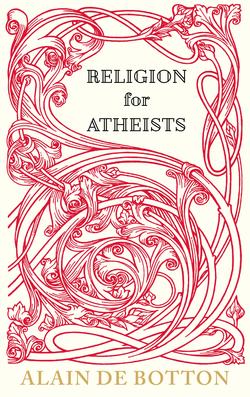
I've listed five books, although I doubt very much I'll get through more than two or three.
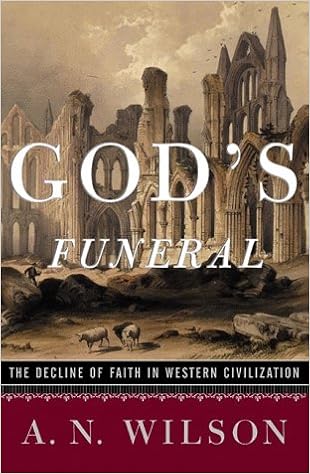
The one I'd very much like to read is The Evangelicals, by Frances Fitzgerald. The other long one is The Souls of China by Ian Johnson. The one that has been one my bookshelf the longest is by A.N. Wilson, God's Funeral and tells the story of how Victorian-era progressivism, coming on the heels of the Enlightenment, led to a decline in religion, or at least in real faith. The other two I've had on my Kindle for a while -- one was a Kindle sale book, and the other a NetGalley offering...
The one I'd very much like to read is The Evangelicals, by Frances Fitzgerald. The other long one is The Souls of China by Ian Johnson. The one that has been one my bookshelf the longest is by A.N. Wilson, God's Funeral and tells the story of how Victorian-era progressivism, coming on the heels of the Enlightenment, led to a decline in religion, or at least in real faith. The other two I've had on my Kindle for a while -- one was a Kindle sale book, and the other a NetGalley offering...
4banjo123
I still don't have my August read completed, but I do have September's picked out. Zealot by Reza Aslan Aslan is speaking at the Portland Arts and Lecture Series, so I wanted to read the book in advance. And if I get to it, I may look for The Book of Separation, by Tova Mivris
5charl08
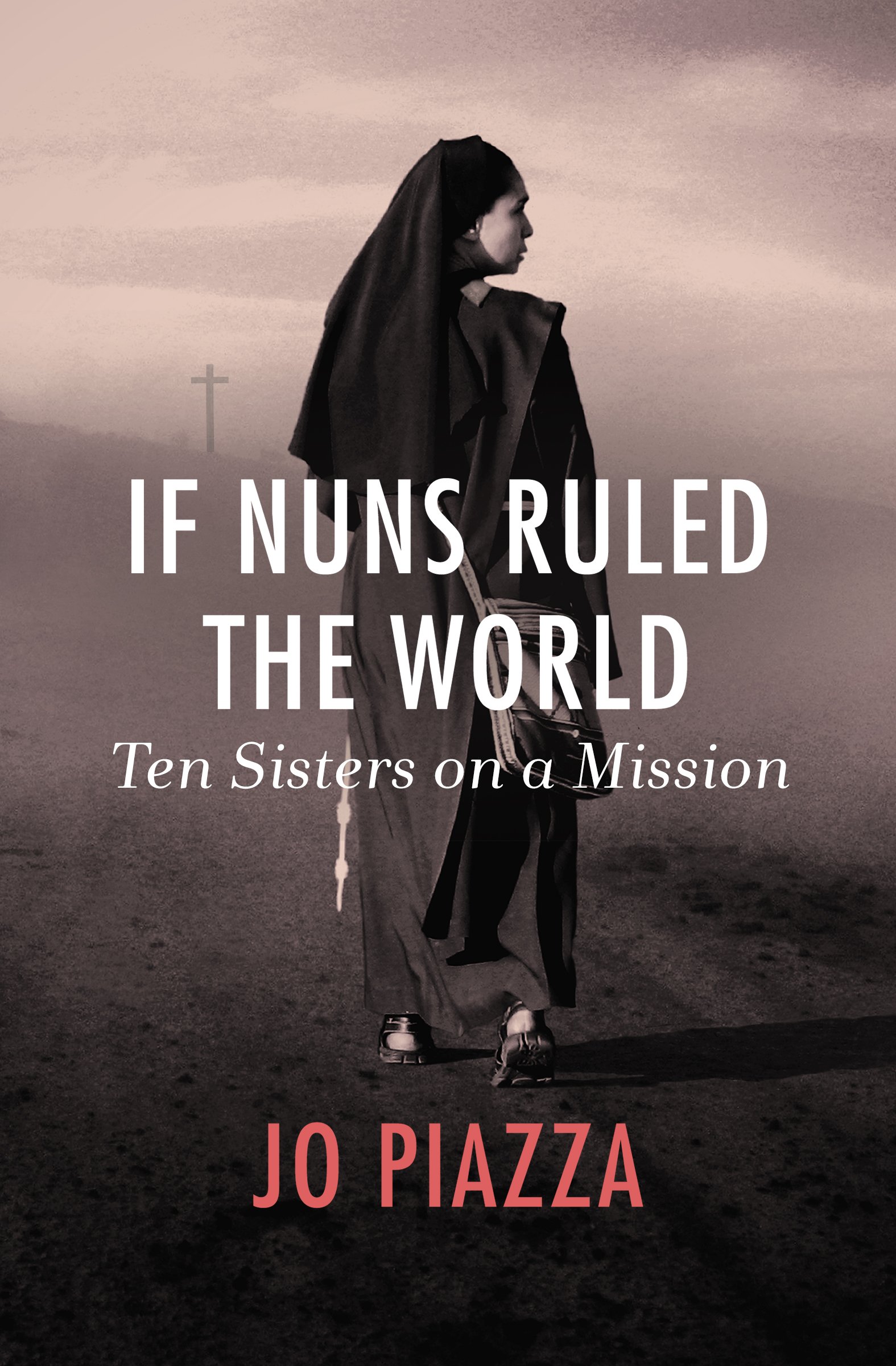
I do rather fancy If Nuns Ruled the World but still looking for one that I own already...
6cbl_tn
I received From Cairo to Christ from a publisher's representative at a conference earlier this summer so I'll plan to read that.
7streamsong
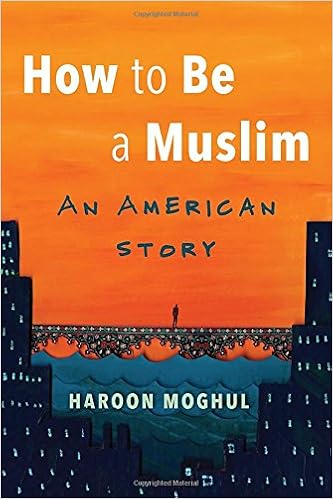
I also have How To Be a Muslim as a LTER book, so I'll read that one for sure. It looks pretty short, so perhaps I'll get to another one.
8charl08
>7 streamsong: Yikes. The reviews on the LT page are a big polarised, to say the least.
9Caroline_McElwee
Hmmm, many possibilities on the shelves. Will ponder.
10streamsong
>8 charl08: Ah well. If it must be done, it must be done. And books with polarized reviews are often interesting.
11jnwelch
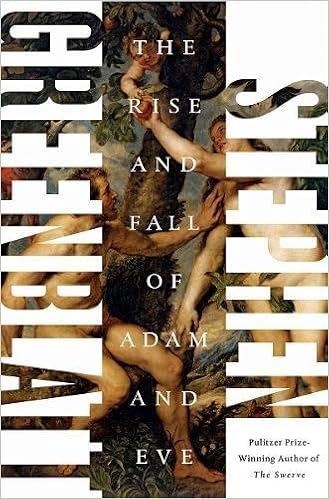
I'll be reading Stephen Greenblatt's The Rise and Fall of Adam and Eve when it comes out mid-September.
12Chatterbox
>11 jnwelch: I was thinking of that, too, as I have an ARC, but I'm hopelessly over-committed as it is... Well, it's still a possibility!!
13benitastrnad
I am going to try to read Desire of the Everlasting Hills: The World Before and After Jesus by Thomas Cahill. This is part of his "Hinges of History" series. I read the first two in the series and enjoyed them and have been trying to read all of them but stopped before finishing. I am also going to try to read Cube and the Cathedral: Europe, America, and Politics Without God by George Weigel or The Seekers: The Story of Man's Continuing Quest to Understand His World by Daniel J. Boorstein. The former title might be more political than religious and the later might be more philosophy than religion. What do you think?
14Chatterbox
>13 benitastrnad: Take a look at the table of contents in the last one, Benita -- I'm not sure about that. If you think it seems specifically to deal with questions of faith as well as of philosophy, then let me know and go for it. I think the Weigel book is fine -- it deals with an attempt to move away from religion, which is related to the theme, albeit in a different way.
For the record, I'm perfectly fine with books about atheism -- these are books that deal with people who have wrestled with questions of faith and who have rejected it.
For the record, I'm perfectly fine with books about atheism -- these are books that deal with people who have wrestled with questions of faith and who have rejected it.
15charl08
>11 jnwelch: Ooh. I know this shouldn't make any difference, but a) it's a penguin and b) doesn't it have a lovely cover!


16Caroline_McElwee
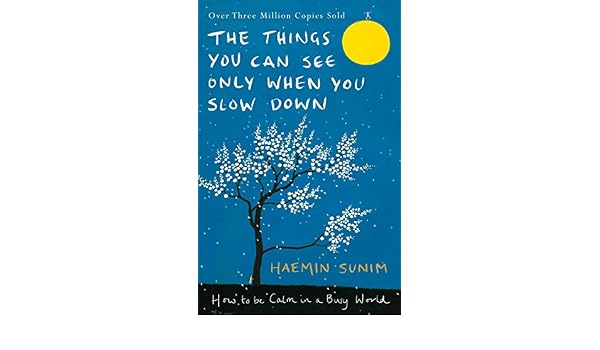
Actually, I've been slowly reading The Things You can see only when you slow down by Haemin Sunim, beautifully illustrated by Youngcheol Lee.
I think I will focus on that.
I think I will focus on that.
17weird_O
When I saw that my sister had a copy of Zealot, I borrowed it. And not only because it would fit into this challenge slot. But that helps.
18jnwelch
>12 Chatterbox: Greenblatt's one of my favorite authors, Suz. What a smart guy. I'm really looking forward to it. Hey, if he can make Lucretius fascinating, Adam and Eve will be a piece of cake.
>15 charl08: Penguins are the best, aren't they, Charlotte? :-) That is a beautiful cover, for sure. I'm getting the hard copy for meself, as a present for being such an enthusiastic reader.
>15 charl08: Penguins are the best, aren't they, Charlotte? :-) That is a beautiful cover, for sure. I'm getting the hard copy for meself, as a present for being such an enthusiastic reader.
19laytonwoman3rd
I didn't get to anything for August's challenge, but I've always been curious about comparative religion, and I started Reza Aslan's No God But God some time ago, so I think I will try to finish that one in September, and count it for both months. Dispensation, please, Suzanne?
20GerrysBookshelf
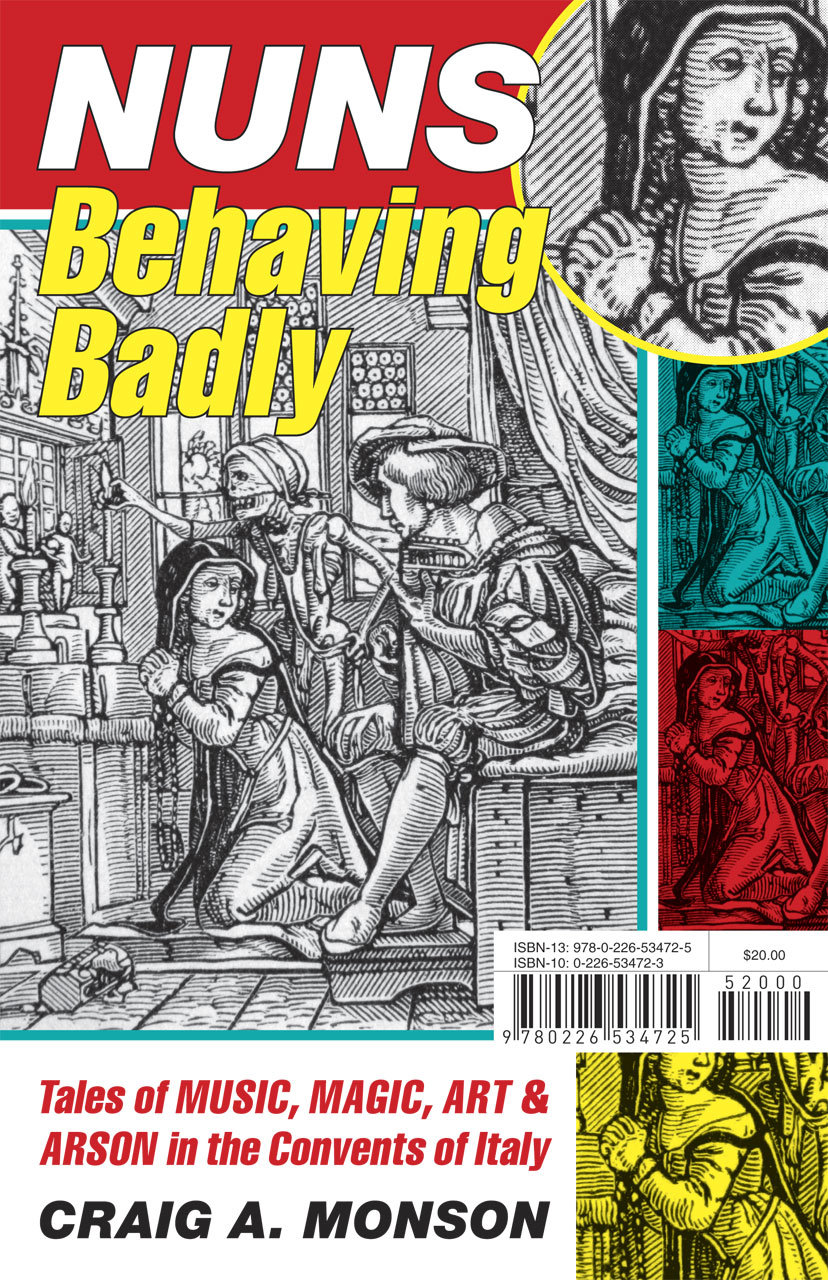
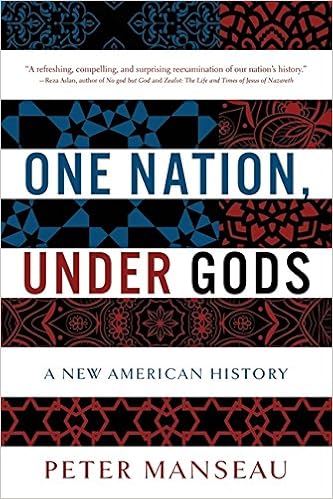
I have a number of books that would fit this month's challenge including Zealot and a couple by Karen Armstrong. But I think I will start with One Nation Under Gods by Peter Manseau.
21nittnut
I had nothing particular in mind for this month, thought I'd see what other people were reading and if something grabbed me, I'd choose that. I have a serious problem Lol. Top of my list will be The Souls of China, if I can find a copy. I've asked the library to order it for overdrive. We shall see.
22Familyhistorian
>18 jnwelch: Wait, you get presents for being an enthusiastic reader? How does that work, Joe?
23Familyhistorian
Would Ghosts from our Past: Both Literally and Figuratively: The Study of the Paranormal fit for the Gods, Demons and Spirits theme?
24jnwelch
>22 Familyhistorian: It takes some training, Meg, but it's worth it. First you become an enthusiastic reader. Then you go out and get yourself book presents as a reward. I've found you can keep that up for a whole lifetime if you work at it. :-)
25m.belljackson
Three ready to go:
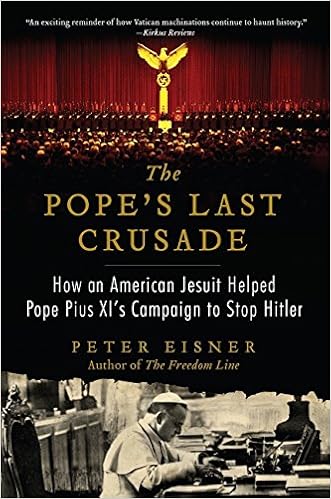
The POPE'S LAST CRUSADE by Peter Eisner
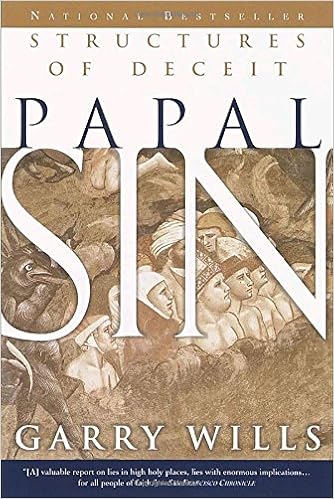
PAPAL SIN by Garry Wills
and a related novel, THE END OF THE JEWS, by Adam Mansbach
The POPE'S LAST CRUSADE by Peter Eisner
PAPAL SIN by Garry Wills
and a related novel, THE END OF THE JEWS, by Adam Mansbach
26lindapanzo
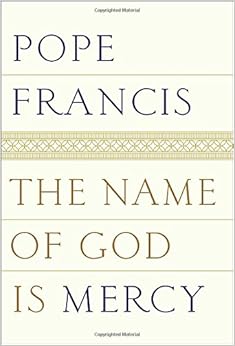
I'll be reading The Name of God Is Mercy by Pope Francis.
27charl08
My digital library has Religion for atheists which I'm quite tempted by. I liked de Botton' s early stuff.
28Chatterbox
Will catch up on the images, etc. tomorrow.
>23 Familyhistorian: I just answered this on last month's theme. I think it would, if it deals with questions of faith in some kind of greater "thing", and not just ghoulies and ghosties and things that go bump in the night and spooks. Does that make sense? The idea I was trying to arrive at is the sense that most cultures/societies (well, all) seem to come up with some kind of religion or spiritual explanation for the world and human existence. What are they? How do humans deal with that? How do those explanations (in the shape of religions) then interact with other aspects of society? Etc. That's the 30,000 foot view...
>23 Familyhistorian: I just answered this on last month's theme. I think it would, if it deals with questions of faith in some kind of greater "thing", and not just ghoulies and ghosties and things that go bump in the night and spooks. Does that make sense? The idea I was trying to arrive at is the sense that most cultures/societies (well, all) seem to come up with some kind of religion or spiritual explanation for the world and human existence. What are they? How do humans deal with that? How do those explanations (in the shape of religions) then interact with other aspects of society? Etc. That's the 30,000 foot view...
29FAMeulstee
>27 charl08: That sounds like a book I would like, Charlotte.
It is available in the e-library, so I will try to read it this month.
It is available in the e-library, so I will try to read it this month.
30benitastrnad
#14
I checked the blurb on the back of the book for The Seekers by Daniel J. Boorstin and decided that it is more history and philosophy than having to do with religion, so ditched that book for this month. Besides that I wouldn't get it read in one month anyway.
I checked the blurb on the back of the book for The Seekers by Daniel J. Boorstin and decided that it is more history and philosophy than having to do with religion, so ditched that book for this month. Besides that I wouldn't get it read in one month anyway.
31benitastrnad
I went to the library last night to get Desire of the Everlasting Hills fully intending to read it and because all these wonderful book covers caught my eye I ended up taking four others out. I found God: A Biography by Jack Miles. This novel won the Pulitzer Prize in 1996 for biography, and somehow I missed it. I am slipping, and there are just to many good books out there from which to pick. But it is long, so I thought I would just cruise the shelves and see what else I could find.
Find I did.
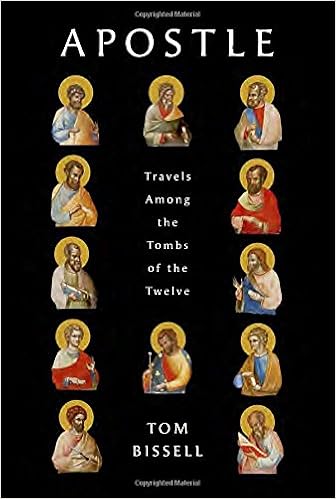
Then I spied Apostle: Travels Among the Tombs of the Twelve by Tom Bissell. This one was already on my TBR wishlist here in LT and I didn't know that until I got home. I thought it was a travel book, but the dust jacket says that it is "Written with empathy and a rare acumen—and often extremely funny—Apostle is an intellectual, spiritual, and personal adventure fit for believers, scholars, and wanderers alike." It says that "The story of Twelve Apostles is the story of early Christianity: its competing versions of Jesus’s ministry, its countless schisms, and its ultimate evolution from an obscure Jewish sect to the global faith we know today in all its forms and permutations." So I brought that one home as well.
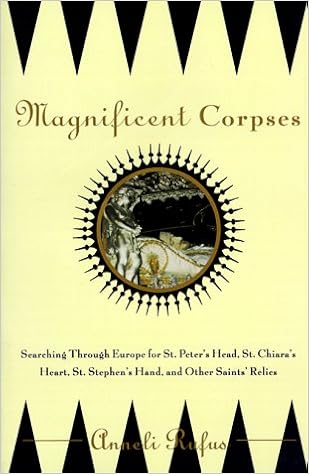
But, my trip to the library wasn't over. I then found Magnificent Corpses: Searching Through Europe for St. Peter's Head, St. Claire's Heart, St. Stephen's Hand, and Other Saints' Relics by Anneli Rufus. Turned out this one was also on my TBR wishlist. The blurb on this book says that "Holy relics -- the bodily remains of saints and other sacred figures -- were for centuries the most revered objects in the Western world, at center-stage in Europe's great churches and cathedrals. Today some relics have been shunted to side chapels and dark crypts, yet many continue to draw prayerful pilgrims, as they have for centuries, seeking solace, inspiration, and signs of miracles."
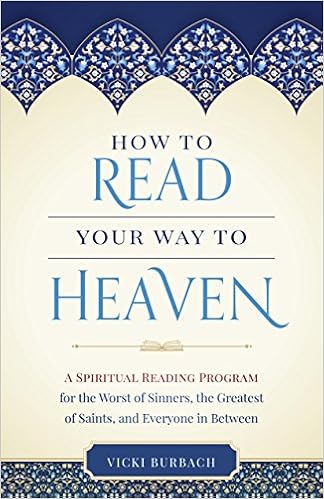
I also discovered a book titled How to Read Your Way to Heaven by Vicki Burbach. The blurb for that book says "How to Read Your Way to Heaven is not merely another book to read. It is designed to be an invaluable tool for guiding and organizing your reading to help you on your journey to become a saint. And best of all, this fully integrated do-it-yourself spiritual reading program that can be easily followed by the busiest of Catholics with the tightest of schedules." And all along I thought I was reading myself into heaven, or finding heaven on earth in my living room, with all the books I already have on my shelf, but I walked out with this book as well. I probably won't get time to read it, but ...
Find I did.
Then I spied Apostle: Travels Among the Tombs of the Twelve by Tom Bissell. This one was already on my TBR wishlist here in LT and I didn't know that until I got home. I thought it was a travel book, but the dust jacket says that it is "Written with empathy and a rare acumen—and often extremely funny—Apostle is an intellectual, spiritual, and personal adventure fit for believers, scholars, and wanderers alike." It says that "The story of Twelve Apostles is the story of early Christianity: its competing versions of Jesus’s ministry, its countless schisms, and its ultimate evolution from an obscure Jewish sect to the global faith we know today in all its forms and permutations." So I brought that one home as well.
But, my trip to the library wasn't over. I then found Magnificent Corpses: Searching Through Europe for St. Peter's Head, St. Claire's Heart, St. Stephen's Hand, and Other Saints' Relics by Anneli Rufus. Turned out this one was also on my TBR wishlist. The blurb on this book says that "Holy relics -- the bodily remains of saints and other sacred figures -- were for centuries the most revered objects in the Western world, at center-stage in Europe's great churches and cathedrals. Today some relics have been shunted to side chapels and dark crypts, yet many continue to draw prayerful pilgrims, as they have for centuries, seeking solace, inspiration, and signs of miracles."
I also discovered a book titled How to Read Your Way to Heaven by Vicki Burbach. The blurb for that book says "How to Read Your Way to Heaven is not merely another book to read. It is designed to be an invaluable tool for guiding and organizing your reading to help you on your journey to become a saint. And best of all, this fully integrated do-it-yourself spiritual reading program that can be easily followed by the busiest of Catholics with the tightest of schedules." And all along I thought I was reading myself into heaven, or finding heaven on earth in my living room, with all the books I already have on my shelf, but I walked out with this book as well. I probably won't get time to read it, but ...
32Familyhistorian
>24 jnwelch: Hmm, I think I have been in training for that my whole life, Joe. I seem to have the buying book gifts for self down pretty well too.
33Familyhistorian
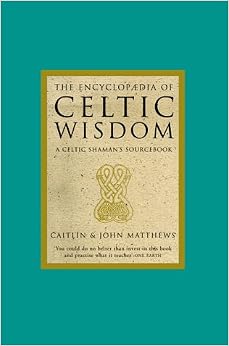
>28 Chatterbox: Ghosts from Our Past is basically about the history of the study of the paranormal. It looks like a fun read and it is relatively slim so probably won't fit the month's theme. So onto the weightier tomes on my shelves. So a toss up between Rival Jerusalems: The Geography of Victorian Religion, The Huguenots or The Encyclopaedia of Celtic Wisdom: A Celtic Shaman's Source Book.
34jessibud2
>24 jnwelch:, >32 Familyhistorian: - Add me to that group as well. I was good to myself just yesterday, as a matter of fact....
35Chatterbox
>33 Familyhistorian: Do you have to choose?? Why not all three?? *grin* That said, I LOVE the idea of adding Celtic shamans to the mix this month. If you allow me to vote on it!
36Familyhistorian
>34 jessibud2: Shelley welcome to the enthusiastic readers who deserve rewards group. Unfortunately, I have the giving of rewards to self down pat and am currently trying to rework the shelves to house all those "gifts".
>35 Chatterbox: All three? They are all aiming for door stopper status so no, not unless they were the only books on hand then they might have a chance. The Celtic shamans does seem to fit going back to the basics of coming up with religion better than the others, doesn't it. I'll give it a go even though Library Thing predicts that I won't like it. I have always been a contrarian so will probably like it to spite LT, ha!
>35 Chatterbox: All three? They are all aiming for door stopper status so no, not unless they were the only books on hand then they might have a chance. The Celtic shamans does seem to fit going back to the basics of coming up with religion better than the others, doesn't it. I'll give it a go even though Library Thing predicts that I won't like it. I have always been a contrarian so will probably like it to spite LT, ha!
37jessibud2
>36 Familyhistorian: - I've actually run out of shelves. Now the floor piles are in competition.....
38Familyhistorian
>37 jessibud2: Floor piles eh? I have lots of shelves, book and otherwise though I don't really think the shelves in my walk-in-closet are made for books so I have to be gentle with them. LOL.
39Chatterbox
>19 laytonwoman3rd: Oh, no dispensation needed for that! That's excellent serendipity, when books fit into multiple challenges that happen to follow each other sequentially.
Also -- please feel free, everyone, if you're still reading August's books, and feel more inclined to do THAT than to pick up a book for September's theme, by all means, forge ahead! I'd love to keep this "challenge" as un-doctrinaire as humanly possible, with the themes more as guidelines for those of us who are ready to move on to something new. But for those for whom a particular month's theme doesn't really appeal, well, go back and pick up something from the previous month or so. There is absolutely no reason why some of those threads can't stay alive longer.
>27 charl08: I KNOW that I have read that de Botton book, and I have absolute zero memory of anything it contained. I suspect the emphasis was on humanism and what all religions share, but I say that out of common sense/logic, rather than from any memory of the book! That said, I think I liked it? Which is kind of ominous in terms of my brain, isn't it??
>36 Familyhistorian: I try to pay no attention to those recommendations about you will/won't like this. I detest it when some arbitrary algorithm tries to decide what my preferences will be. (I would hate it still more if said algorithm happened to be correct. *shudder*)
Also -- please feel free, everyone, if you're still reading August's books, and feel more inclined to do THAT than to pick up a book for September's theme, by all means, forge ahead! I'd love to keep this "challenge" as un-doctrinaire as humanly possible, with the themes more as guidelines for those of us who are ready to move on to something new. But for those for whom a particular month's theme doesn't really appeal, well, go back and pick up something from the previous month or so. There is absolutely no reason why some of those threads can't stay alive longer.
>27 charl08: I KNOW that I have read that de Botton book, and I have absolute zero memory of anything it contained. I suspect the emphasis was on humanism and what all religions share, but I say that out of common sense/logic, rather than from any memory of the book! That said, I think I liked it? Which is kind of ominous in terms of my brain, isn't it??
>36 Familyhistorian: I try to pay no attention to those recommendations about you will/won't like this. I detest it when some arbitrary algorithm tries to decide what my preferences will be. (I would hate it still more if said algorithm happened to be correct. *shudder*)
40charl08
>39 Chatterbox: Gosh, that's not exactly a ringing endorsement of de Botton. Maybe I will keep looking for something that fits the challenge.
41Chatterbox
>40 charl08: Oh, it probably was quite good! It's simply that I have absolutely NO MEMORY OF IT. It could be that it's not a ringing endorsement of my memory...
42m.belljackson
Having read many mentions of a Pope Pius and his collaborations with Mussolini and Hitler during World War II,
I was astonished - for many reasons - with THE POPE'S LAST CRUSADE.
First, despite many previous references in both novels and non-fiction to Pope Pius,
it quickly became obvious that there were two Popes during the start of World War II,
one good man, Pius XI, and one shrewdly evil, his successor, Pius XII.
The book notes that this has confused many people,
mostly us non-Catholics and non-Historians.
Second, it is one of the few non-fiction books I've ever read straight through -
and will remember forever.
I was astonished - for many reasons - with THE POPE'S LAST CRUSADE.
First, despite many previous references in both novels and non-fiction to Pope Pius,
it quickly became obvious that there were two Popes during the start of World War II,
one good man, Pius XI, and one shrewdly evil, his successor, Pius XII.
The book notes that this has confused many people,
mostly us non-Catholics and non-Historians.
Second, it is one of the few non-fiction books I've ever read straight through -
and will remember forever.
43Chatterbox
>43 Chatterbox: I don't think I had realized that there were two different popes! Which one signed the concordat with Hitler??
44m.belljackson
>43 Chatterbox:
In 1929, Pope Pius XI signed a Condorat, the Lateran Accords, with Mussolini to set up the Vatican as a city-state.
He was criticized for working with Mussolini at all, but said his actions would preserve the Church.
In 1933, he signed a Condorat ("a diplomatic accord") with Hitler to keep peace,
then immediately attacked Hitler for his violence and racism.
Pope Pius XII moved beyond the Condorats to appease and collaborate with both Mussolini and Hitler.
In 1929, Pope Pius XI signed a Condorat, the Lateran Accords, with Mussolini to set up the Vatican as a city-state.
He was criticized for working with Mussolini at all, but said his actions would preserve the Church.
In 1933, he signed a Condorat ("a diplomatic accord") with Hitler to keep peace,
then immediately attacked Hitler for his violence and racism.
Pope Pius XII moved beyond the Condorats to appease and collaborate with both Mussolini and Hitler.
45Chatterbox
He was probably right to some extent, in that the Vatican was an oasis of neutrality within Italy. Some convents and monasteries did help Jews and refugees; others did not and some priests collaborated, with the backing of Pius XII. Ironically, the same convents and monasteries that gave safe haven to Jews offered refuge to Nazis, including the SS. I'm less familiar with the papal end of it, and am more familiar with the rank and file church actions from 1939 to 1945 and beyond. There's a great film by Costa-Gavras, entitled "Amen", in which a Catholic SS officer tries to alert Pius XII to what is happening, with the help of a Jesuit priest. (The SS officer is himself outraged less because of the Jews; his moral boundaries are crossed when the "hygiene" program begins exterminating feeble-minded and disabled non-Jewish Germans.) Absolutely unforgettable movie. In fact, I may have to see if it's available on Netflix and watch it...
46m.belljackson
>45 Chatterbox:
Without giving away the plot of THE POPE'S LAST CRUSADE,
I'll just add that it is as suspenseful as any murder (yes or no?) mystery.
Without giving away the plot of THE POPE'S LAST CRUSADE,
I'll just add that it is as suspenseful as any murder (yes or no?) mystery.
47Caroline_McElwee
>42 m.belljackson: >46 m.belljackson: OK, hit by a bullet, though may not have time for it this month.
48Chatterbox
OK, you got me. Adding it to a list to read sometime...
49m.belljackson
>47 Caroline_McElwee:
>48 Chatterbox:
"Oliver complied; marveling where the people could be found to read such a great number of books
as seemed to be written to make the world wiser."
>48 Chatterbox:
"Oliver complied; marveling where the people could be found to read such a great number of books
as seemed to be written to make the world wiser."
50Chatterbox
>49 m.belljackson: Well, I'm doing my best, even if not all of the books I read would help me qualify for the title of "wiser"!
51m.belljackson
Keeping thread moving along so we don't have to race for 150 on September 30th,
PAPAL SIN by Garry Wills is more rigorous (mentally stimulating, yet confusing at times)
reading than was THE POPE'S LAST CRUSADE.
His scope is way larger and, by now, 17 years after book publication, he would
be having a field day with the connections between rampant world population,
the Vatican's idiocy on contraception, and world climate change.
He also offers an expanded perspective on Pope Pius XI, not as heroic as in LAST CRUSADE.
Other updates?
PAPAL SIN by Garry Wills is more rigorous (mentally stimulating, yet confusing at times)
reading than was THE POPE'S LAST CRUSADE.
His scope is way larger and, by now, 17 years after book publication, he would
be having a field day with the connections between rampant world population,
the Vatican's idiocy on contraception, and world climate change.
He also offers an expanded perspective on Pope Pius XI, not as heroic as in LAST CRUSADE.
Other updates?
52Chatterbox
Nor yet. Picked up the book on Hasidic Jews, and was promptly smitten with a migraine. God speaking??
54banjo123
Zealot by Reza Aslan
I wanted to read this book about the historical Jesus because Aslan is coming to the Literary Arts series, and also it fit in for the non-fiction read this month. It's a pretty easy non-fiction read, and short if you don't count the foot-notes. (which, full disclosure, I skipped.) Aslan has a readable style for non-fiction, but...
My problem with the book is that first he tells us that we know almost nothing about the historical Jesus, then he proceeds to tell us what Jesus was like. He describes Jesus as a Zealot, belonging to a strain of Nationalistic Jews, opposed to Roman rule and the corruption of a religious elite.
This is an interesting picture, seems overly speculative. Previously Aslan explained that all we know about Jesus is that he did live, he was Jewish, and from Nazareth. (The Gospels are not very reliable as historical sources, because they were all written decades after the fact, and there is very little mention of Jesus in other contemporary writings.)
I wanted to read this book about the historical Jesus because Aslan is coming to the Literary Arts series, and also it fit in for the non-fiction read this month. It's a pretty easy non-fiction read, and short if you don't count the foot-notes. (which, full disclosure, I skipped.) Aslan has a readable style for non-fiction, but...
My problem with the book is that first he tells us that we know almost nothing about the historical Jesus, then he proceeds to tell us what Jesus was like. He describes Jesus as a Zealot, belonging to a strain of Nationalistic Jews, opposed to Roman rule and the corruption of a religious elite.
This is an interesting picture, seems overly speculative. Previously Aslan explained that all we know about Jesus is that he did live, he was Jewish, and from Nazareth. (The Gospels are not very reliable as historical sources, because they were all written decades after the fact, and there is very little mention of Jesus in other contemporary writings.)
55Chatterbox
>53 m.belljackson: LOL, Jews as a general rule don't take converts, in my understanding (or only in a desultory fashion; they certainly don't proselytize, with the exception of the Lubavitchers trying to convince non-Orthodox Jews to become Hasids).
Finished The Pious Ones, which was a good, objective and thorough look at the Hasidic community in the US, which is important given that they are on track to become the largest part of America's Jewish population (by virtue of their extremely large birthrights and utter lack of assimilation.) It's the latter that has always perplexed me -- the complete rejection of the country in which they live, to an extent that goes well beyond the Amish. The Hasids consciously use their political power in ways that the Amish never do, with results that are -- odd. The results affect non-Hasidic Jews and non-Jews alike in areas where Hasids have decided to settle, as resources get siphoned off from secular school boards, for instance, and building codes are changed to dramatically change the nature of neighborhoods and communities. I may not have changed my views on some of these issues, but I have a greater understanding on the belief system behind them, and this is a remarkably even-handed book -- Berger, I think, sometimes even bends over backwards to describe sympathetically the behavior of people who have ended up convicted of fraud for misuse of educational grants intended for college students (the yeshiva students just kept studying Torah and kosher butchering, with the latter being described as an introduction to biology and anatomy...) I'm giving it 3.7 stars for its comprehensiveness and even-handedness, although it's a bit pedestrian in terms of writing and structure, and I sometimes felt as if Berger was checking off items on a list (yes, I've covered that, and that, and this, OK, good...) Recommended to those already curious, but if you're not, I wouldn't bother, necessarily. Also, it's confined to the US, so if you're looking for something that encompasses the haredim in Israel, you won't find it here.
Finished The Pious Ones, which was a good, objective and thorough look at the Hasidic community in the US, which is important given that they are on track to become the largest part of America's Jewish population (by virtue of their extremely large birthrights and utter lack of assimilation.) It's the latter that has always perplexed me -- the complete rejection of the country in which they live, to an extent that goes well beyond the Amish. The Hasids consciously use their political power in ways that the Amish never do, with results that are -- odd. The results affect non-Hasidic Jews and non-Jews alike in areas where Hasids have decided to settle, as resources get siphoned off from secular school boards, for instance, and building codes are changed to dramatically change the nature of neighborhoods and communities. I may not have changed my views on some of these issues, but I have a greater understanding on the belief system behind them, and this is a remarkably even-handed book -- Berger, I think, sometimes even bends over backwards to describe sympathetically the behavior of people who have ended up convicted of fraud for misuse of educational grants intended for college students (the yeshiva students just kept studying Torah and kosher butchering, with the latter being described as an introduction to biology and anatomy...) I'm giving it 3.7 stars for its comprehensiveness and even-handedness, although it's a bit pedestrian in terms of writing and structure, and I sometimes felt as if Berger was checking off items on a list (yes, I've covered that, and that, and this, OK, good...) Recommended to those already curious, but if you're not, I wouldn't bother, necessarily. Also, it's confined to the US, so if you're looking for something that encompasses the haredim in Israel, you won't find it here.
56benitastrnad
I finally settled down on reading Magnificent Corpses: Searching Through Europe for St. Peter's Head, St. Claire's Heart, St. Stephen's Hand, and Other Saints' Relics by Anneli Rufus. This is a book written by a Jewish woman about catholic saints. I thought it was going to be a book about why relics are venerated (that was the direction that the introduction was headed) but it has taken a different turn - at least here in the beginning. I am going to read a bit further before I make a judgement about where this book is headed.
57fuzzi
Too bad, I just finished reading You Don't Know Jack on August 31st, a bio of the prolific tract writer and illustrator, Jack Chick. I recommend it, even if you're not a Christian, as it doesn't sugar-coat his past, or make him into a saint.
Now, what can I read for this month that's already on my shelves?
Aha! How about Corrie ten Boom's Prison Letters?
Now, what can I read for this month that's already on my shelves?
Aha! How about Corrie ten Boom's Prison Letters?
58jnwelch
Hey, I just realized something. I'm reading Why Buddhism is True, and it may qualify for this? Western Buddhism is more practical science than religion, but still . . .
I'll also be reading Stephen Greenblatt's Adam and Eve, so that one will do it if this one doesn't.
I'll also be reading Stephen Greenblatt's Adam and Eve, so that one will do it if this one doesn't.
59drneutron
And I just realized that I finished up Through A Glass Darkly, which mostly dealt with Arthur Conan Doyle's attempt to establish Spiritualism as a "rational religion" for a scientific age. Not a bad book, though not the best I've read on the subject.
60Chatterbox
>58 jnwelch: Absolutely, that qualifies... spiritual practice meets the criteria.
61jnwelch
>60 Chatterbox:. Yes! Thanks, Suz.
62Oberon
How about Shinto Shrines? It covers the religious, architectural and artistic merit of the various shrines.
63Chatterbox
>62 Oberon: Pushing the envelope slightly... If there are references within the book to the religious ideas behind the architecture (i.e. why something was built or designed one way and not another for in compliance with Shinto principles), or the history of their construction (which would inevitably involve a discussion of the religion and the various priests involved) then go for it. If it's purely about them as works of art and unconnected with their function, I'd suggest saving it for a catch-all category (December?), putting it in an arts category (if we have one left this year) or just reading it anyway and not worrying about this month's challenge! I suspect with the wide parameters, above, you'll be able to squeeze it in? I'm doing my best... :-)
64fuzzi
I discovered a bunch of unread smaller books that I bought in 2015, theological stuff that would fit both this and my ROOT challenge for the month. I think I'll work on those.
To name a few:
The Two Raptures
Seven Sevens
Seven Resurrections
The Judgement Seat of Christ
Fact, Faith, and Feeling
and a few more, all by Peter S. Ruckman.
To name a few:
The Two Raptures
Seven Sevens
Seven Resurrections
The Judgement Seat of Christ
Fact, Faith, and Feeling
and a few more, all by Peter S. Ruckman.
65Oberon
>63 Chatterbox: About 1/4 of the book is an outline of Shintoism and the how the belief system has waxed and waned in Japan. The background is necessary to understand the shrines as they varied quite a bit depending on religious practices at the time (some Shinto shrines were built adjacent to Buddhist shrines as Buddhism became more dominant). There is a fair bit about the faith and how it relates to the places of worship.
66Chatterbox
>65 Oberon: Yes, absolutely, go for it!
67Chatterbox
Adding to the list of stuff I didn't know... Frances Fitzgerald, author of the book on the Evangelical phenomenon that I plan to read this year, is actually the wife of a former WSJ colleague of mine. Which I learned when he posted a festive notice about her book being on the shortlist for the National Book Award on Facebook today. Cue a performance of "it's a small word after all..."
68Chatterbox
For those looking for interesting and new non-fiction books, here is the complete longlist of non-fiction nominees for this year's National Book Award:
Erica Armstrong Dunbar,
Never Caught: The Washingtons’ Relentless Pursuit of Their Runaway Slave, Ona Judge
Frances FitzGerald
The Evangelicals: The Struggle to Shape America
James Forman, Jr.
Locking Up Our Own: Crime and Punishment in Black America
Masha Gessen
The Future Is History: How Totalitarianism Reclaimed Russia
David Grann
Killers of the Flower Moon: The Osage Murders and the Birth of the F.B.I.
Naomi Klein
No Is Not Enough: Resisting Trump’s Shock Politics and Winning the World We Need
Nancy MacLean
Democracy in Chains: The Deep History of the Radical Right’s Stealth Plan for America
Richard Rothstein
The Color of Law: A Forgotten History of How Our Government Segregated America
Timothy B. Tyson
The Blood of Emmett Till
Kevin Young
Bunk: The Rise of Hoaxes, Humbug, Plagiarists, Phonies, Post-Facts, and Fake News
Erica Armstrong Dunbar,
Never Caught: The Washingtons’ Relentless Pursuit of Their Runaway Slave, Ona Judge
Frances FitzGerald
The Evangelicals: The Struggle to Shape America
James Forman, Jr.
Locking Up Our Own: Crime and Punishment in Black America
Masha Gessen
The Future Is History: How Totalitarianism Reclaimed Russia
David Grann
Killers of the Flower Moon: The Osage Murders and the Birth of the F.B.I.
Naomi Klein
No Is Not Enough: Resisting Trump’s Shock Politics and Winning the World We Need
Nancy MacLean
Democracy in Chains: The Deep History of the Radical Right’s Stealth Plan for America
Richard Rothstein
The Color of Law: A Forgotten History of How Our Government Segregated America
Timothy B. Tyson
The Blood of Emmett Till
Kevin Young
Bunk: The Rise of Hoaxes, Humbug, Plagiarists, Phonies, Post-Facts, and Fake News
69amanda4242

Nuns Behaving Badly: Tales of Music, Magic, Art, and Arson in the Convents of Italy by Craig A. Monson
Not as salacious as the title and cover imply, but a well-researched and interesting read about cloistered nuns clashing with the church.
70Chatterbox
It does look like a "redtop" tabloid newspaper exposé! Were they clashing because of their behavior -- in reality -- or because they simply wanted more freedom or because they were at odds theologically?
71banjo123
>68 Chatterbox:. I heard an interview with David Grann, and the flower moon book sounds fascinating
72Chatterbox
I finished reading How to be a Muslim by Haroon Moghul, and wish I could suggest that folks run out and get it, even from the library, but I really can't. There are fragments that are interesting, as when the author describes what it's like to attend a sermon during Ramadan in the Gulf, how people there scan the news listings eagerly for favored clerics to decide which recitations to attend, and where there are "religiously-induced traffic jams" as a result. But fascinating glimpses of Islam and the author's serious engagement with his religion (as opposed to relentless agonizing) are a small fraction of what this memoir contains. Part of the problem is that Moghul is bipolar, and has many physical ailments (which is coy about naming, although he will describe the symptoms openly enough throughout the book) and it's hard to discern (and may be hard for him to discern) what part of his struggles are due to his illness(es). That's frustrating, and as a result, the reader is left floundering. A suicidal author wrestling with his demons, some involving religion, and working them out in the public domain, is always tricky, and I don't think the Moghul has enough distance or understanding to tackle this in a way that works. He lurches back and forth all over the place. For all his stated willingness to be progressive enough to welcome women into the leadership of the Islamic Center at NYU that he led, he displays no sense of seeing women as people at all, or any consciousness of the division between Muslim theology and practice (eg women couldn't have gone to those mosques where he had transcendent experiences...) Even his ex-wife, for whom he professes friendship, warm feelings, guilt and responsibility, still emerges as a two-dimensional figure. He's also prone to suddenly come out with doctrinaire and alienating declamations such as "We humans know, deep down, that God created us, but we can deny it and forget it or at least divert ourselves from it. We are good at lying to ourselves." Erm, wait just a minute here. If I truly believed that statement, don't you think that I'd have explored it? There's a LOT of arrogance of this kind in this book for a youngish man who claims to have abandoned arrogance as part of his treatment for bipolar disease. Sigh. Just not what the title suggests it is, not a useful insight into Islam, not a useful or even interesting insight into anything except this particular individual, who isn't someone I really wanted to get to know any better. At least with many memoirs, I ended up with empathy. In this case, it's only frustration and irritation. 2.9 stars, all awarded for those moments of interest and insight into his outer world, and zero for the navel-gazing.
73amanda4242
>70 Chatterbox: Definitely not theological, but not always because they wanted more freedom. Convents used to be dumping grounds for the unmarried female relatives of the nobility, so a lot of the conflicts come off as rich people arguing with each other. In one story Monson relates, a nun from an affluent family who funded a lavish new chapel destroyed some cushions another nun donated because rich nun thought she was being upstaged; letters were fired off to Church authorities, rich nun was ordered to remake the cushions as penance and dragged her feet for years before finally fulfilling her penance in the least gracious way possible.
74Chatterbox
>73 amanda4242: Good heavens! I knew they were dumping grounds, especially in Venice, where rules restricting marriage left a lot of bachelor sons (who caused trouble and ruckus) and spinster daughters, who were sent off to convents (which I read about in a distinct book on Venetian convents that I found in an Edinburgh B&B when I was laid up with flu years ago.) That also helped create a booming red light district for courtesans in Venice, needless to say. But this sounds much more diverse and entertaining...
75FAMeulstee
 Dutch translation of Religion for Atheists by Alain de Botton
If we are done with deïties and religion, we might miss parts in our life that used to be filled by religion. Religious rituals are as old as humanity, and clearly fill a gap that we haven't been able to fill after the declation of the death of God. We seem to have ended up as isolated, self-absorbed, egocentrical individuals.
The writer explores how religions deal with death, grief, anger and other hard parts of life. Mainly by creating a community with a common goal. He tries to think of ways how these things can be transplanted in a seculair way. He doesn't really convince me that it is possible, most of us are too attached to our individual freedom and expression, so we will avoid the possible mass movement that would be needed to succeed...

76m.belljackson
>73 amanda4242:
>74 Chatterbox:
From my second book for the month, (PAPAL SIN), published in 2000,
comes this related quote:
"Yet the Vatican continues to deny that there is a major problem in the recruitment or retention of priests -
just as they denied the problem of disappearing nuns, though they are all but gone now."
>74 Chatterbox:
From my second book for the month, (PAPAL SIN), published in 2000,
comes this related quote:
"Yet the Vatican continues to deny that there is a major problem in the recruitment or retention of priests -
just as they denied the problem of disappearing nuns, though they are all but gone now."
77Chatterbox
>76 m.belljackson: I was so curious about this reference to the vanishing nuns that I consulted Dr. Google. In the US, as of about 2014, and according to the Vatican itself, there were only 50,000 nuns, down from 175,000 in the mid-1960s. The average age was in the mid- to late-70s, and there were more over 90 than under 60... Only 1% is under the age of 40. Although in my googling, I also found this fascinating article about groups being formed of younger nuns.
78benitastrnad
#72
Haroon Moghul was a featured author yesterday (Saturday) on C-SPANN's BookTV. He was doing a book talk/reading at Politics and Prose Bookstore in Washington, D.C. He didn't do much talking. He read mostly from his book. He was born and raised here in the U.S. in a predominately non-Islamic community - somewhere in Connecticut. The parts of the talk I listened to had to do with his high school years and trying to sneak out to the prom. He did say that being one of only two Muslim families in the town was a handicap to him and his parents and he fought constantly over the concept of dating. He sounded very conflicted.
Haroon Moghul was a featured author yesterday (Saturday) on C-SPANN's BookTV. He was doing a book talk/reading at Politics and Prose Bookstore in Washington, D.C. He didn't do much talking. He read mostly from his book. He was born and raised here in the U.S. in a predominately non-Islamic community - somewhere in Connecticut. The parts of the talk I listened to had to do with his high school years and trying to sneak out to the prom. He did say that being one of only two Muslim families in the town was a handicap to him and his parents and he fought constantly over the concept of dating. He sounded very conflicted.
79m.belljackson
>77 Chatterbox:
These are unusual young women (brave or ?) to join an organization which allows them no chance of advancement
because they are too "impure" and/or "imperfect" to become the priests who can touch the Holy Sacrament.
These are unusual young women (brave or ?) to join an organization which allows them no chance of advancement
because they are too "impure" and/or "imperfect" to become the priests who can touch the Holy Sacrament.
80Chatterbox
>78 benitastrnad: Yes, his broader community (i.e. school, etc.) may have been non-Muslim, but his family limited their socialization to only Muslims (which is why he had to sneak out to the prom, and lie to them a lot about where he was going and what he was doing.) He definitely did NOT strike me as a balanced young man, even though he claims to have resolved his youthful issues with religion.
>79 m.belljackson: Indeed! It's interesting to think through the psychology of that. There always will be those comfortable in a more passive role, but to require that all of one gender adopt that role -- well....
I just finished another book that I realized fits into this category -- another memoir. This one is by Rebecca Stott, whose novels I've read with some enjoyment. It turns out that her earliest years were spent in an extreme form of the Plymouth Brethren, as she chronicles in In the Days of Rain: A Daughter, a Father, a Cult. It's a complex story, as she tells it -- starting with the death of her father, essentially bankrupt, addicted to gambling, and still not at peace with his past as a member of the "Essential Brethren" during the years when the already hardcore group went from being merely extremely fundamentalist to splitting up families in the name of purity and even driving some to suicide as they lost their jobs, livelihoods and connection to family members. Roger, Stott's father, was one of the young men who supported the de facto cult (as the religion had morphed into) in its excesses, until he recoiled from them during a critical kind of theological schism. Thanks to that, Stott -- then aged about nine or ten -- had the chance to grow up reading books from the library, going to the movies, talking to classmates and eating alongside them instead of completely shunning them. Even so, the ramifications of that early training linger on, as she makes clear, and of particular interest are her thoughts on the way society as a whole bends over backwards to tolerate what she sees as "cult" like excesses, even at the cost of the sanity and wellbeing of individual people, in the name of accommodating religious faith. While this was a fascinating glimpse at a group that I knew little of beyond the name, as well as a father/daughter relationship, there are some holes in it that irked me. Why don't we here about the perspective of Stott's mother on all of this? There's nothing of her contemporary point of view -- nor any explanation for the lack of it. Yes, she is telling the story of her father, but given her frequently voiced irritation at the way the Brethren excluded women from any participation in worship, relegating them to secondary roles, it's odd that Stott deprives her mother of a voice here. Then, too, she never takes a step back to form broader conclusions about the Brethren, or cults in general, except in a limited, personal context. It's a very narrow perspective, and fascinating but imperfect. 3.7 stars.
>79 m.belljackson: Indeed! It's interesting to think through the psychology of that. There always will be those comfortable in a more passive role, but to require that all of one gender adopt that role -- well....
I just finished another book that I realized fits into this category -- another memoir. This one is by Rebecca Stott, whose novels I've read with some enjoyment. It turns out that her earliest years were spent in an extreme form of the Plymouth Brethren, as she chronicles in In the Days of Rain: A Daughter, a Father, a Cult. It's a complex story, as she tells it -- starting with the death of her father, essentially bankrupt, addicted to gambling, and still not at peace with his past as a member of the "Essential Brethren" during the years when the already hardcore group went from being merely extremely fundamentalist to splitting up families in the name of purity and even driving some to suicide as they lost their jobs, livelihoods and connection to family members. Roger, Stott's father, was one of the young men who supported the de facto cult (as the religion had morphed into) in its excesses, until he recoiled from them during a critical kind of theological schism. Thanks to that, Stott -- then aged about nine or ten -- had the chance to grow up reading books from the library, going to the movies, talking to classmates and eating alongside them instead of completely shunning them. Even so, the ramifications of that early training linger on, as she makes clear, and of particular interest are her thoughts on the way society as a whole bends over backwards to tolerate what she sees as "cult" like excesses, even at the cost of the sanity and wellbeing of individual people, in the name of accommodating religious faith. While this was a fascinating glimpse at a group that I knew little of beyond the name, as well as a father/daughter relationship, there are some holes in it that irked me. Why don't we here about the perspective of Stott's mother on all of this? There's nothing of her contemporary point of view -- nor any explanation for the lack of it. Yes, she is telling the story of her father, but given her frequently voiced irritation at the way the Brethren excluded women from any participation in worship, relegating them to secondary roles, it's odd that Stott deprives her mother of a voice here. Then, too, she never takes a step back to form broader conclusions about the Brethren, or cults in general, except in a limited, personal context. It's a very narrow perspective, and fascinating but imperfect. 3.7 stars.
81m.belljackson
PAPAL SIN is a meticulously researched and documented, chapter by chapter,
demonstration of the most recent (starting around Pius IX) Vatican deceits.
It is an eye-opening jaw dropper for any reader, religious or not.
demonstration of the most recent (starting around Pius IX) Vatican deceits.
It is an eye-opening jaw dropper for any reader, religious or not.
82Chatterbox
I've started reading Heirs to Forgotten Kingdoms by Gerard Russell. It's a look at the very, very minority religions in the middle east, primarily Iraq, Syria, Egypt, etc. We've heard a lot about Yazidis, but what do you know about the Mandeans, whose roots go back to Babylon? exactly... I think it will be a good book to read before I delve into another memoir, The Last Girl, about one of the young Yazidi women seized by the Islamic State. Plus, Russell's book was on my list of books to read this year...
How are other people doing with their books??
How are other people doing with their books??
83katiekrug
I've decided to give myself permission to forego this month. I was going to listen to Zealot, but my listening time has been practically non-existent, though I've been wading through The Prime of Miss Jean Brodie in fits and starts. I just can't get myself excited about reading about gods, demons, and spirits at the moment...
84m.belljackson
Well, for Demons, all you have to do is turn on The News.
85m.belljackson
>78 benitastrnad:
Free online Penguin Random House "Season of Stories" starts off with "The Prom"
by Hasan Minhaj which also has the main character sneaking out.
Free online Penguin Random House "Season of Stories" starts off with "The Prom"
by Hasan Minhaj which also has the main character sneaking out.
86katiekrug
>84 m.belljackson: - I was thinking for next month's theme of current events of just counting my Twitter feed... Heh.
87fuzzi
>82 Chatterbox: I'm on my second book, Seven Sevens, about numerology and the number 7 in the Bible. It's actually quite interesting.
The first book was Seven Resurrections, by the same author.
The first book was Seven Resurrections, by the same author.
88Chatterbox
>84 m.belljackson: That's precisely what I was thinking!!
>87 fuzzi: That sounds intriguing! There is a whole set of little books, each with a long essay or short non-fiction prose piece, each of which is devoted to one of the seven sins. They are great. One is by Joseph Epstein, I remember. I think I have most of them.
>87 fuzzi: That sounds intriguing! There is a whole set of little books, each with a long essay or short non-fiction prose piece, each of which is devoted to one of the seven sins. They are great. One is by Joseph Epstein, I remember. I think I have most of them.
89charl08
I found a biography of Julian of Norwich, the anchorite and writer, by Janina Ramirez so am hoping that might fit. The subtitle (a very brief history) encourages me that I might get it read before the end of the month. The author has presented a number of history and art documentaries, so I'm hoping her writing style is similarly engaging.
Ed to fix my slip up
Ed to fix my slip up
90amanda4242
>89 charl08: I remember reading a bit of Julian of Norwich for a lit class. Most of the students didn't have a high opinion of her, questioning why she thought she had to pray for the entire world and not listening when I pointed out that as an anchoress it was literally her job to do just that. Ah, the joys of class discussions!
91benitastrnad
I am making progress on Magnificent Corpses but am thinking that the author needs a spanking. I am getting tired of her snarky comments about her fellow pilgrims.
92Chatterbox
>89 charl08: Who knew that there were still anchorites? Interesting...
>91 benitastrnad: Pity... I really liked her book on loners, Party of One: The Loners' Manifesto. And, for some reason, touchstones are not working at all. That is the correct title, and I'm not getting any options at all...
>91 benitastrnad: Pity... I really liked her book on loners, Party of One: The Loners' Manifesto. And, for some reason, touchstones are not working at all. That is the correct title, and I'm not getting any options at all...
93charl08
>92 Chatterbox: Argh, that post was meant to say that Julian was the anchorite, not Dr Ramirez!
94m.belljackson
Sunday, September 24th offers this confirmation of Garry Wills PAPAL SIN -
"Vatican Heresy: Several dozen tradition-minded Roman Catholic theologians, priests,
and academics have formally accused Pope Francis of spreading heresy with his 2016 opening
to divorced and civilly remarried Catholics. In a 25-page letter delivered to Francis last month
and provided Saturday to The Associated Press, the 62 signatures issued a "filial correction"
to the pope."
Garry Wills not only sets the stage for such absurd nonsense, but he traces the early
history of Catholic marriages - which were civil. According to Wills, most lay Catholics
will ignore this, as they have ignored dictates on contraception.
"Vatican Heresy: Several dozen tradition-minded Roman Catholic theologians, priests,
and academics have formally accused Pope Francis of spreading heresy with his 2016 opening
to divorced and civilly remarried Catholics. In a 25-page letter delivered to Francis last month
and provided Saturday to The Associated Press, the 62 signatures issued a "filial correction"
to the pope."
Garry Wills not only sets the stage for such absurd nonsense, but he traces the early
history of Catholic marriages - which were civil. According to Wills, most lay Catholics
will ignore this, as they have ignored dictates on contraception.
95ronincats
This doesn't technically fit, but it showed up from the library this month and a very big part of it involves Teilhard du Chardin's conceptualization of God.
The Jesuit and the Skull: Teilhard de Chardin, Evolution, and the Search for Peking Man by Amir D. Aczel (289 pp.)
Hmm, the touchstone function AND the search function for LT seem to be on the blink right now. I'll try to add the image later.
I encountered this book on Mabith's thread and ordered it from the library. I had heard of Teilhard du Chardin and had always wanted to know more about him, and this book delivered. Also, my nonfiction reads have included a lot about evolution in the last year, and this book was a perfect mixture of the history of the evolutionary theory, the paleontological discoveries supporting it, a biography of Teilhard du Chardin's life, and an introduction to his writings as he strove to make clear his conclusions that evolution was essentially the Hand of God, rather than the static system supported by religious orthodoxy, and the implications of this for us. Now I feel like I may be ready to read some of his own writings. Thank you, mabith!
The Jesuit and the Skull: Teilhard de Chardin, Evolution, and the Search for Peking Man by Amir D. Aczel (289 pp.)
Hmm, the touchstone function AND the search function for LT seem to be on the blink right now. I'll try to add the image later.
I encountered this book on Mabith's thread and ordered it from the library. I had heard of Teilhard du Chardin and had always wanted to know more about him, and this book delivered. Also, my nonfiction reads have included a lot about evolution in the last year, and this book was a perfect mixture of the history of the evolutionary theory, the paleontological discoveries supporting it, a biography of Teilhard du Chardin's life, and an introduction to his writings as he strove to make clear his conclusions that evolution was essentially the Hand of God, rather than the static system supported by religious orthodoxy, and the implications of this for us. Now I feel like I may be ready to read some of his own writings. Thank you, mabith!
97jnwelch
I'm about halfway through Why Buddhism is True. I can see why it's getting the buzz. He's building his case brick by brick with common sense, real life examples, and the results of scientific studies. I'm still amazed it's sticking on the NYTimes bestseller list. I don't remember that happening with a Buddhism book that doesn't involve the Dalai Lama.
98Caroline_McElwee
>97 jnwelch: ouch, hit by a bullet me thinks. Thanks Joe.
99m.belljackson
>97 jnwelch:
Good to learn of a recent Buddhist book without the Dalai Lama since he thinks animal experimentation is okay.
Buddha would disagree.
Good to learn of a recent Buddhist book without the Dalai Lama since he thinks animal experimentation is okay.
Buddha would disagree.
100Familyhistorian
The book on Celtic shamans is turning into a bit of a slog. I won't finish it before the end of the month but will keep reading it slowly (it is necessary to go slow as it keeps putting me to sleep so I can only read a few pages at a time).
101jnwelch
>98 Caroline_McElwee: Ah, good, Caroline. Glad to have contributed from the book armory. :-)
>99 m.belljackson: I'll have to find out more about the animal experimentation part, mbj, as I love the Dalai Lama. I can say that Why Buddhism is True looks to have none of that.
>99 m.belljackson: I'll have to find out more about the animal experimentation part, mbj, as I love the Dalai Lama. I can say that Why Buddhism is True looks to have none of that.
102charl08
>97 jnwelch: I've never read anything about Buddhism (unless you count 7 Years in Tibet) but this sounds intriguing.
I'm reading about Pepys in The Curious World of Samuel Pepys and John Evelyn and whilst the bulk of the book doesn't fit into the theme, the final section talks about his religious beliefs in comparison to the rather more pious (and a tad pompous) friend, John Evelyn. I'm surprised to read that he owned an enormous polyglot Bible including texts in nine languages, for his own study.
I'm reading about Pepys in The Curious World of Samuel Pepys and John Evelyn and whilst the bulk of the book doesn't fit into the theme, the final section talks about his religious beliefs in comparison to the rather more pious (and a tad pompous) friend, John Evelyn. I'm surprised to read that he owned an enormous polyglot Bible including texts in nine languages, for his own study.
103m.belljackson
I finished PAPAL SIN yesterday and just want to add:
An unintended result of reading this book is that, whatever religion you do or do not have,
you will become more aware of ALL lies and deceit, thanks to the chapter on Saint Augustine,
and are likely to become a more moral person.
An unintended result of reading this book is that, whatever religion you do or do not have,
you will become more aware of ALL lies and deceit, thanks to the chapter on Saint Augustine,
and are likely to become a more moral person.
104Chatterbox
>103 m.belljackson: That's an intriguing point, and might make me read that chapter of the book at the very least...
I am about 2/3 of the way through Heirs to Forgotten Kingdoms; I'm reading about the Samaritans now, after which it's on to the Copts and finally to a group called the Kalasha, the only one in this book that I've never heard of before. (Russell also writes about the Mandeans, the Yazidis, the Zoroastrians, and the Druze, with varying levels of success.) It reminds me a bit of From the Holy Mountain by William Dalrymple, still my favorite of his books, in which he writes about following in the footsteps of a Byzantine monk around what was then a thriving Byzantine Christian community (circa the 5th century CE) and writing about the traces of Christian communities that still exist today and what has replaced them, from Islam (obviously) to Judaism and even the Druze and Coptic variant of Christianity. Of course, since he wrote that (it was published in 1998) and prompted me to visit Syria, Jordan and return to visit Turkey again, Syria and the sites he wrote about have vanished into rubble. Nonetheless -- he was writing about how traces of religions persist, like little flickers. Zoroastrianism was once a major state religion, in the days when Persia tried to crush Athens -- and now it's a tiny minority attempting to survive and not be dubbed heretical because they have fire temples. (They claim to worship God through fire, and not to worship fire, a critical distinction for the mullahs in Iran.)
A quick reminder that we have a few days to go before I'll post October's thread, and as always it will be much simpler if we have 150 posts here and thus people can find there way seamlessly from September to October, and automatically find October's thread starred for them. So if you feel like chattering away, this would be the time to do it!
Any great non-fiction books that you're looking forward to reading among the autumn's new release calendar? What do you think of the National Book Award nominees in >68 Chatterbox:?
I am about 2/3 of the way through Heirs to Forgotten Kingdoms; I'm reading about the Samaritans now, after which it's on to the Copts and finally to a group called the Kalasha, the only one in this book that I've never heard of before. (Russell also writes about the Mandeans, the Yazidis, the Zoroastrians, and the Druze, with varying levels of success.) It reminds me a bit of From the Holy Mountain by William Dalrymple, still my favorite of his books, in which he writes about following in the footsteps of a Byzantine monk around what was then a thriving Byzantine Christian community (circa the 5th century CE) and writing about the traces of Christian communities that still exist today and what has replaced them, from Islam (obviously) to Judaism and even the Druze and Coptic variant of Christianity. Of course, since he wrote that (it was published in 1998) and prompted me to visit Syria, Jordan and return to visit Turkey again, Syria and the sites he wrote about have vanished into rubble. Nonetheless -- he was writing about how traces of religions persist, like little flickers. Zoroastrianism was once a major state religion, in the days when Persia tried to crush Athens -- and now it's a tiny minority attempting to survive and not be dubbed heretical because they have fire temples. (They claim to worship God through fire, and not to worship fire, a critical distinction for the mullahs in Iran.)
A quick reminder that we have a few days to go before I'll post October's thread, and as always it will be much simpler if we have 150 posts here and thus people can find there way seamlessly from September to October, and automatically find October's thread starred for them. So if you feel like chattering away, this would be the time to do it!
Any great non-fiction books that you're looking forward to reading among the autumn's new release calendar? What do you think of the National Book Award nominees in >68 Chatterbox:?
105katiekrug
Somehow I had missed that Masha Gessen's new book was on the list of National Book Award nominees. I would like to read that one. And The Killers of the Flower Moon - will have to investigate the others.
For October, I am thinking of listening to Putin Country: A Journey into the Real Russia by Anne Garrels. I also just a copy of Hillary Clinton's book about the election, so I might pick that up, too/instead...
For October, I am thinking of listening to Putin Country: A Journey into the Real Russia by Anne Garrels. I also just a copy of Hillary Clinton's book about the election, so I might pick that up, too/instead...
106banjo123
I am also thinking of reading What Happened for this challenge. Another option is TaNehisi Coates new book, do you think that would qualify? I think it is due out soon.
107m.belljackson
>104 Chatterbox:
For 2018, in either this month's category (Christianity and Bible) or the creativity one (surprising paintings), you might enjoy Akiane.
For 2018, in either this month's category (Christianity and Bible) or the creativity one (surprising paintings), you might enjoy Akiane.
108Chatterbox
Masha Gessen's new book comes out next week -- I have it pre-ordered for my Kindle, one of a tiny handful of books that I'll actually buy.
I have an ARC of David GRann's book, The Killers of the Flower Moon. Maybe next month I'll just read as many of these nominees as I can!
>106 banjo123: Either of those would work. The Ta-Nehisi Coates book seems as if it's a collection of essays he wrote that are more looking back -- written during the Obama presidency. But the context of the book as a whole is where we are now; how did we get from there to here, and what opportunities were squandered there that resulted in this outcome, in his view, so it would work. (Killers of the Flower Moon, although it does speak to the current state of native peoples, is primarily a historic narrative, so I wouldn't say it qualifies, for contrast.) Hillary Clinton's memoir certainly passes muster. She will have thoughts on how we ended up here and where we should go -- what the election results mean. We're only a year into the Trump presidency, and the results of the voting are still so disputed (the inquiry into the alleged Russian tampering) that I think it's eminently reasonable to delve into this.
>107 m.belljackson: Thanks for the suggestion.
A tidbit of intriguing information. Did you know (this is from Heirs to Forgotten Kingdoms by Gerard Russell) that there are only about 750 Samaritans left in the entire world? Incidentally, that figure is up from only about 146 a century or so ago. Astonishing. An entire religious and cultural group with its distinct identity (and an iconic Biblical reference -- the good Samaritan...) came within a whisker of dying out completely.
I have an ARC of David GRann's book, The Killers of the Flower Moon. Maybe next month I'll just read as many of these nominees as I can!
>106 banjo123: Either of those would work. The Ta-Nehisi Coates book seems as if it's a collection of essays he wrote that are more looking back -- written during the Obama presidency. But the context of the book as a whole is where we are now; how did we get from there to here, and what opportunities were squandered there that resulted in this outcome, in his view, so it would work. (Killers of the Flower Moon, although it does speak to the current state of native peoples, is primarily a historic narrative, so I wouldn't say it qualifies, for contrast.) Hillary Clinton's memoir certainly passes muster. She will have thoughts on how we ended up here and where we should go -- what the election results mean. We're only a year into the Trump presidency, and the results of the voting are still so disputed (the inquiry into the alleged Russian tampering) that I think it's eminently reasonable to delve into this.
>107 m.belljackson: Thanks for the suggestion.
A tidbit of intriguing information. Did you know (this is from Heirs to Forgotten Kingdoms by Gerard Russell) that there are only about 750 Samaritans left in the entire world? Incidentally, that figure is up from only about 146 a century or so ago. Astonishing. An entire religious and cultural group with its distinct identity (and an iconic Biblical reference -- the good Samaritan...) came within a whisker of dying out completely.
109nittnut
The Pope's Last Crusade: How an American Jesuit Helped Pope Pius XI's Campaign to Stop Hitler is rather short, but well researched and well written. I do believe that the full title is somewhat misleading, but that would be a spoiler. The book is a fascinating look into the inner workings of the Vatican with all its rivalry and intrigue, and a very good look at an overlooked Pope. It is a pleasure to learn about how Pius XI stood up to Hitler and Mussolini at great personal risk. It was disappointing to see the way some around the Pope, including the future Pius XII, worked to undermine his opposition to Hitler and fascism and how they were ultimately successful in that goal. In the epilogue, there was some discussion about what the motivation might have been and whether it was justified. I will end this with two quotes. The first is Pius XII, the second is Joseph Hurley (who was banished from the Vatican after saying it).
You must not forget, dear friend, that there are millions of Catholics in the German army. Would you like to place them in the middle of a conflict of conscience?" Pius XII
We have sympathy for the pacifists, but they are wrong. No word in the Gospel or in papal teaching suggests that justice should go undefended, that it is not worth dying for... The Church is no conscientious objector." Joseph Hurley
You must not forget, dear friend, that there are millions of Catholics in the German army. Would you like to place them in the middle of a conflict of conscience?" Pius XII
We have sympathy for the pacifists, but they are wrong. No word in the Gospel or in papal teaching suggests that justice should go undefended, that it is not worth dying for... The Church is no conscientious objector." Joseph Hurley
110nittnut
>108 Chatterbox: Heirs to Forgotten Kingdoms looks like something I need to read. :)
113amanda4242
Adding to the count.
114FAMeulstee
Always
115FAMeulstee
happy
116FAMeulstee
to help :-)
117charl08
I think this has been posted elsewhere, but I wondered if anyone was planning to (or already had) read this shortlist of science non-fiction.
Royal Society Insight Investment Science Book Prize 2017.
This year’s six-strong 30th anniversary shortlisted books provide a fascinating insight into some of the biggest questions facing us today. The shortlisted authors include two practising scientists (Eugenia Cheng and Joseph Jebelli), a psychologist and a philosophy professor (Cordelia Fine and Peter Godfrey-Smith) and two writers with journalism backgrounds (Mark O’Connell and Ed Yong).
Joseph Jebelli’s compelling debut, In Pursuit of Memory, which explores the difficulty scientists face in finding a cure for Alzheimer’s is up against Cordelia Fine’s explosive study of gender politics, Testosterone Rex, which weighs up the latest evidence to debunk the myth that the inequality of the sexes is hardwired. Mark O’Connell’s To Be a Machine looks wryly at the age-old human quest to live longer and better and the latest fixes, from exosuits to cryogenics. Peter Godfrey-Smith’s Other Minds, a close-up look at the octopus, is a fascinating examination of intelligent life on our own planet. On the subject of infinity, international maths sensation Eugenia Cheng’s Beyond Infinity takes readers on a hugely enjoyable journey into the world of maths to reveal the inner workings of infinity. Lastly, Ed Yong’s I Contain Multitudes looks at our internal ecosystems in a fascinating study of the millions of microbes that live within us.
From :
https://royalsociety.org/news/2017/08/shortlist-for-royal-society-insight-invest...
(Cordelia Fine won)
Royal Society Insight Investment Science Book Prize 2017.
This year’s six-strong 30th anniversary shortlisted books provide a fascinating insight into some of the biggest questions facing us today. The shortlisted authors include two practising scientists (Eugenia Cheng and Joseph Jebelli), a psychologist and a philosophy professor (Cordelia Fine and Peter Godfrey-Smith) and two writers with journalism backgrounds (Mark O’Connell and Ed Yong).
Joseph Jebelli’s compelling debut, In Pursuit of Memory, which explores the difficulty scientists face in finding a cure for Alzheimer’s is up against Cordelia Fine’s explosive study of gender politics, Testosterone Rex, which weighs up the latest evidence to debunk the myth that the inequality of the sexes is hardwired. Mark O’Connell’s To Be a Machine looks wryly at the age-old human quest to live longer and better and the latest fixes, from exosuits to cryogenics. Peter Godfrey-Smith’s Other Minds, a close-up look at the octopus, is a fascinating examination of intelligent life on our own planet. On the subject of infinity, international maths sensation Eugenia Cheng’s Beyond Infinity takes readers on a hugely enjoyable journey into the world of maths to reveal the inner workings of infinity. Lastly, Ed Yong’s I Contain Multitudes looks at our internal ecosystems in a fascinating study of the millions of microbes that live within us.
From :
https://royalsociety.org/news/2017/08/shortlist-for-royal-society-insight-invest...
(Cordelia Fine won)
118charl08
(Full confession, I bought the Fine to read on my trip. Fingers crossed for the right reading mood).
119charl08
There's another list here - I think only the Bellaigue would fit this month, but a few for next month? (I'm still waiting for the borders book from the library. Argh)
The Baillie Gifford Prize aims to reward the best of non-fiction and is open to authors of any nationality. It covers all non-fiction in the areas of current affairs, history, politics, science, sport, travel, biography, autobiography and the arts.
Formerly known as The Samuel Johnson Prize (1999 – 2015) it is the most prestigious non-fiction prize in the UK, worth £30,000 to the winner.
The 2017 longlist:
Red Famine: Stalin’s War on Ukraine, Anne Applebaum (Allen Lane)
The Islamic Enlightenment: The Modern Struggle Between Faith and Reason, Christopher de Bellaigue (The Bodley Head)
Why I’m No Longer Talking to White People About Race, Reni Eddo-Lodge (Bloomsbury Circus)
How to Survive A Plague, David France (Picador)
Plot 29, Allan Jenkins (4th Estate)
Border: A Journey to The Edge of Europe, Kapka Kassabova (Granta Books)
I Was Told to Come Alone: My Journey Behind The Lines of Jihad, Soaud Mekhennet (Virago)
An Odyssey: A Father, A Son and an Epic, Daniel Mendelsohn (William Collins)
A Bold and Dangerous Family: The Rossellis and the Fight Against Mussolini, Caroline Moorehead (Chatto & Windus)
To Be A Machine: Adventures Among Cyborgs, Utopians, Hackers, and the Futurists Solving the Modest Problem of Death, Mark O’Connell (Granta Books)
Belonging: the Story of the Jews, 1492-1900, Simon Schama (The Bodley Head)
Mr Lear: A Life of Art and Nonsense, Jenny Uglow (Faber & Faber)
http://thebailliegiffordprize.co.uk/years/2017
The Baillie Gifford Prize aims to reward the best of non-fiction and is open to authors of any nationality. It covers all non-fiction in the areas of current affairs, history, politics, science, sport, travel, biography, autobiography and the arts.
Formerly known as The Samuel Johnson Prize (1999 – 2015) it is the most prestigious non-fiction prize in the UK, worth £30,000 to the winner.
The 2017 longlist:
Red Famine: Stalin’s War on Ukraine, Anne Applebaum (Allen Lane)
The Islamic Enlightenment: The Modern Struggle Between Faith and Reason, Christopher de Bellaigue (The Bodley Head)
Why I’m No Longer Talking to White People About Race, Reni Eddo-Lodge (Bloomsbury Circus)
How to Survive A Plague, David France (Picador)
Plot 29, Allan Jenkins (4th Estate)
Border: A Journey to The Edge of Europe, Kapka Kassabova (Granta Books)
I Was Told to Come Alone: My Journey Behind The Lines of Jihad, Soaud Mekhennet (Virago)
An Odyssey: A Father, A Son and an Epic, Daniel Mendelsohn (William Collins)
A Bold and Dangerous Family: The Rossellis and the Fight Against Mussolini, Caroline Moorehead (Chatto & Windus)
To Be A Machine: Adventures Among Cyborgs, Utopians, Hackers, and the Futurists Solving the Modest Problem of Death, Mark O’Connell (Granta Books)
Belonging: the Story of the Jews, 1492-1900, Simon Schama (The Bodley Head)
Mr Lear: A Life of Art and Nonsense, Jenny Uglow (Faber & Faber)
http://thebailliegiffordprize.co.uk/years/2017
120charl08
I've added the book about the Jeffersons attempts to chase their escapee slave to the wishlist.
Really don't want to read about Brexit though. Head firmly in the sand.
Really don't want to read about Brexit though. Head firmly in the sand.
121Chatterbox
>119 charl08: THANK YOU for posting that list!!! I had forgotten that it was time for the Bailllie Gifford prize list...
I literally just pre-ordered the Caroline Moorehead book for Audible -- completed the order about five minutes ago. I have ARCs of Applebaum's book and Why I'm No Longer Talking to White People About Race, which is one that I'd already earmarked to read next month.
I can heartily recommend Souad Mekhennet's memoir. It gives a great insight into what it's like growing up as a 2nd generation (Turkish/Moroccan) "immigrant" in Germany, and how that in turn gave her the ability to write about ISIS and those who had the same background that she had, and who, in response to the same kind of experiences she did, reacted differently and opted to reject Western secular values. It's a valuable book that goes beyond a memoir.
Got the de Bellaigue on my Kindle; will put in a purchase request for Daniel Mendelsohn's book at the Athenaeum on Friday. And hurrah, the Kapka Kassabova book FINALLY APPEARED for purchase here, so I bought it. I shouldn't have; I can't afford to buy any more books, but I've been coveting it for months -- it's not been available for Kindle in the UK though.
The others are less "must read!" books for me, but this list is always a gold mine in terms of the type of non-fiction I like to read.
I literally just pre-ordered the Caroline Moorehead book for Audible -- completed the order about five minutes ago. I have ARCs of Applebaum's book and Why I'm No Longer Talking to White People About Race, which is one that I'd already earmarked to read next month.
I can heartily recommend Souad Mekhennet's memoir. It gives a great insight into what it's like growing up as a 2nd generation (Turkish/Moroccan) "immigrant" in Germany, and how that in turn gave her the ability to write about ISIS and those who had the same background that she had, and who, in response to the same kind of experiences she did, reacted differently and opted to reject Western secular values. It's a valuable book that goes beyond a memoir.
Got the de Bellaigue on my Kindle; will put in a purchase request for Daniel Mendelsohn's book at the Athenaeum on Friday. And hurrah, the Kapka Kassabova book FINALLY APPEARED for purchase here, so I bought it. I shouldn't have; I can't afford to buy any more books, but I've been coveting it for months -- it's not been available for Kindle in the UK though.
The others are less "must read!" books for me, but this list is always a gold mine in terms of the type of non-fiction I like to read.
122charl08
I'm really tempted by the Moorehead, as I thought Village of Secrets was brilliant.
123charl08
I have Why I'm No Longer Talking to White People About Race out from the library, I was really impressed by it being in stock already. (I still need to read it though)
124charl08
I have been so tempted to buy my own copy of Kapka Kassabova's book about borders, I am finally number one in the queue, and the library has ordered another copy, but given the relevance of the book in times of Brexit, was a bit surprised this took so long.
125charl08
I thought How to Survive a Plague was brilliant, and sadly is still timely, as British activists are currently mounting a legal case against the state over the infected blood products that were used in the 1980s.
126charl08
And Ill have a look to see if I can get a kindle deal on I Was Told to Come Alone: My Journey Behind The Lines of Jihad Soaud Mekhennet (Virago) - thanks for the recommendations!
128Caroline_McElwee
Failed this month, though the book I had planned to read will get finished this year. It is meant to be a slow read anyway.... that's my excuse :-)
I did add The Pope's Last Crusade to my TBR mountain, thanks for that >42 m.belljackson:!
I did add The Pope's Last Crusade to my TBR mountain, thanks for that >42 m.belljackson:!
129Chatterbox
I'm rather disappointed with my own failure to make any inroads with Frances Fitzgerald's magnum opus on Evangelicals, but it may still fit into the current affairs category, given the last election. I'll ponder that one.
130Oberon
>104 Chatterbox: Well Heirs to Forgotten Kingdoms just went on the wishlist. So thanks for that.
131benitastrnad
I haven't made much progress on Magnificent Corpses in the last week. It will soon be due back at the library. I have already renewed it once, so won't be able to do so again. I do intend to finish it, but other things have had to move up in the TBR pile.
132streamsong
I also haven't yet finished How to be a Muslim, but it will be my primary book for the next few days. I hope to actually get it done in the month of the challenge (rare for me this year!)
133benitastrnad
Publisher's Weekly is featuring books on religion this week in its on-line newsletter. Here are some that interested me.
What the Qur’an Meant: And Why It Matters by Garry Wills (Viking, $25, ISBN 978-1-101-98102-3). Wills, a Pulitzer Prize–winning historian and religious scholar, introduces lay readers to the Qur’an with a measured reading of the ancient text.
Fire Road: The Napalm Girl’s Journey Through the Horrors of War to Faith, Forgiveness, and Peace by Kim Phuc Phan Thi, with Ashley Wiersma (Tyndale Momentum, $25.99, ISBN 978-1-4964-2429-7). Phan Thi, whose photo taken during the Vietnam War fleeing raining napalm epitomized the horror and violence of the conflict, explores her experiences with horror, hope, and resilience.
(The story of the famous photograph was told last night on Ken Burn's Vietnam series on PBS. The series showed her then and now - and how badly she was scarred.)
Martin Luther: The Man Who Rediscovered God and Changed the World by Eric Metaxas (Viking, $30; ISBN 978-1-101-98001-9). Biographer Metaxas portrays Luther as a humble man with adamant faith and whose teachings can be traced to modern life. 75,000-copy announced first printing.
(October marks the 500th anniversary of the birth of the Reformation and there is a plethora of books on that subject being released in October.)
Church of the Small Things by Melanie Shankle (Zondervan, $22.99; ISBN 978-0-310-34887-0). Founder of the popular Big mama blog Shankle emphasizes the importance of everyday moments through personal stories about “the smallest, most ordinary acts of faithfulness,” according to the publisher.
The Simple Faith of Franklin Delano Roosevelt: Religion’s Role in the FDR Presidency by Christine Wicker (Smithsonian, $24.95, ISBN 978-1-58834-524-0). Religion journalist Wicker argues that faith was at the heart of everything Roosevelt wanted for the American people.
(I am interested in this title)
Single White Monk by Shozan Jack Haubner (Shambhala, $14.95 paper, 978-1-6118-0363-1). The author of Zen Confidential takes readers behind the scenes of life in a Zen monastery once again, this time examining death, illness, and humor.
Jewish Comedy: A Serious History by Jeremy Dauber (Norton, $28.95, ISBN 978-0-393-24787-9). Dauber, professor of Yiddish language, literature, and culture at Columbia University, traces the origins of Jewish comedy and its development from biblical times to the age of Twitter.
The Burning Time: Henry VIII, Bloody Mary, and the Protestant Martyrs of London by Virginia Rounding (St. Martin’s, $29.99, ISBN 978-1-250-04064-0) looks at the number of Protestant martyrs burned at the stake in Tudor England and two very different characters of the era: Richard Rich, Thomas Cromwell’s protégé, and John Deane, rector of St. Bartholomew’s.
PTL: The Rise and Fall of Jim and Tammy Faye Bakker’s Evangelical Empire by John Wigger (Oxford Univ., Aug.) – History professor at the University of Missouri Wigger explores the rise, stumble, and fall of the PTL evangelical empire founded in 1973 by Jim and Tammy Faye Bakker. Jim Bakker was sentenced to 45 years in prison for wire and mail fraud.
Looks like there is lots going on in the world of faith and things of faith. Might be some interesting reading here.
What the Qur’an Meant: And Why It Matters by Garry Wills (Viking, $25, ISBN 978-1-101-98102-3). Wills, a Pulitzer Prize–winning historian and religious scholar, introduces lay readers to the Qur’an with a measured reading of the ancient text.
Fire Road: The Napalm Girl’s Journey Through the Horrors of War to Faith, Forgiveness, and Peace by Kim Phuc Phan Thi, with Ashley Wiersma (Tyndale Momentum, $25.99, ISBN 978-1-4964-2429-7). Phan Thi, whose photo taken during the Vietnam War fleeing raining napalm epitomized the horror and violence of the conflict, explores her experiences with horror, hope, and resilience.
(The story of the famous photograph was told last night on Ken Burn's Vietnam series on PBS. The series showed her then and now - and how badly she was scarred.)
Martin Luther: The Man Who Rediscovered God and Changed the World by Eric Metaxas (Viking, $30; ISBN 978-1-101-98001-9). Biographer Metaxas portrays Luther as a humble man with adamant faith and whose teachings can be traced to modern life. 75,000-copy announced first printing.
(October marks the 500th anniversary of the birth of the Reformation and there is a plethora of books on that subject being released in October.)
Church of the Small Things by Melanie Shankle (Zondervan, $22.99; ISBN 978-0-310-34887-0). Founder of the popular Big mama blog Shankle emphasizes the importance of everyday moments through personal stories about “the smallest, most ordinary acts of faithfulness,” according to the publisher.
The Simple Faith of Franklin Delano Roosevelt: Religion’s Role in the FDR Presidency by Christine Wicker (Smithsonian, $24.95, ISBN 978-1-58834-524-0). Religion journalist Wicker argues that faith was at the heart of everything Roosevelt wanted for the American people.
(I am interested in this title)
Single White Monk by Shozan Jack Haubner (Shambhala, $14.95 paper, 978-1-6118-0363-1). The author of Zen Confidential takes readers behind the scenes of life in a Zen monastery once again, this time examining death, illness, and humor.
Jewish Comedy: A Serious History by Jeremy Dauber (Norton, $28.95, ISBN 978-0-393-24787-9). Dauber, professor of Yiddish language, literature, and culture at Columbia University, traces the origins of Jewish comedy and its development from biblical times to the age of Twitter.
The Burning Time: Henry VIII, Bloody Mary, and the Protestant Martyrs of London by Virginia Rounding (St. Martin’s, $29.99, ISBN 978-1-250-04064-0) looks at the number of Protestant martyrs burned at the stake in Tudor England and two very different characters of the era: Richard Rich, Thomas Cromwell’s protégé, and John Deane, rector of St. Bartholomew’s.
PTL: The Rise and Fall of Jim and Tammy Faye Bakker’s Evangelical Empire by John Wigger (Oxford Univ., Aug.) – History professor at the University of Missouri Wigger explores the rise, stumble, and fall of the PTL evangelical empire founded in 1973 by Jim and Tammy Faye Bakker. Jim Bakker was sentenced to 45 years in prison for wire and mail fraud.
Looks like there is lots going on in the world of faith and things of faith. Might be some interesting reading here.
134benitastrnad
For those looking for a title for the next couple of months. Here are a few that are going to be released in October.
Extreme Cities: The Peril and Promise of Urban Life in the Age of Climate Change by Ashley Dawson (Verso, Oct.) - Many books have elucidated the ever-increasing dangers of climate change, particularly the disastrous impact that rising sea levels will have on coastal regions, but Dawson goes further as he outlines some potential solutions to this crisis. Massive technological projects may not be what’s needed, he finds; instead, the solution may already exist in radical movements to forge a more just and equitable society.
Spineless: The Science of Jellyfish and the Art of Growing a Backbone by Juli Berwald (Riverhead, Nov.) - In this excellently timed exploration of the humble jellyfish, Berwald shares her personal journey to better understand these potential bellwethers of climate change’s effects on the oceans. Full of captivating tales of this bizarre and largely unfamiliar creature, the book sheds light on jellyfish research as it offers perspective on the jellyfish’s place on the planet—and our own.
Bible Nation: The United States of Hobby Lobby by Candida R. Moss and Joel S. Baden (Princeton Univ., Oct.) – Bible scholars Moss and Baden examine the Hobby Lobby-owning Green family’s collection of Bible-related antiquities and how they have aspired to influence national politics by funding a network of projects related to the Bible.
Extreme Cities: The Peril and Promise of Urban Life in the Age of Climate Change by Ashley Dawson (Verso, Oct.) - Many books have elucidated the ever-increasing dangers of climate change, particularly the disastrous impact that rising sea levels will have on coastal regions, but Dawson goes further as he outlines some potential solutions to this crisis. Massive technological projects may not be what’s needed, he finds; instead, the solution may already exist in radical movements to forge a more just and equitable society.
Spineless: The Science of Jellyfish and the Art of Growing a Backbone by Juli Berwald (Riverhead, Nov.) - In this excellently timed exploration of the humble jellyfish, Berwald shares her personal journey to better understand these potential bellwethers of climate change’s effects on the oceans. Full of captivating tales of this bizarre and largely unfamiliar creature, the book sheds light on jellyfish research as it offers perspective on the jellyfish’s place on the planet—and our own.
Bible Nation: The United States of Hobby Lobby by Candida R. Moss and Joel S. Baden (Princeton Univ., Oct.) – Bible scholars Moss and Baden examine the Hobby Lobby-owning Green family’s collection of Bible-related antiquities and how they have aspired to influence national politics by funding a network of projects related to the Bible.
135m.belljackson
>133 benitastrnad:
After reading Garry Wills' totally excellent and often challenging PAPAL SIN, I'll definitely look for
his book on the Qur'an. I read the Koran long ago, found it a lot like the Old Testament,
and wished for a counterpart to Psalms.
I wish Wills would write a biography of Martin Luther - it would be enlightening to read his comparisons
of Luther's hatred of the Jews with the feelings of the different Popes - and how they all influenced
the current revival of anti-semitism.
FDR did a lot of good for America, yet, because of his fear of losing Southern Democrat voters,
he refused to support bills making lynching a federal crime. A disaster for African Americans.
Napalm > forgiving the unforgivable.
After reading Garry Wills' totally excellent and often challenging PAPAL SIN, I'll definitely look for
his book on the Qur'an. I read the Koran long ago, found it a lot like the Old Testament,
and wished for a counterpart to Psalms.
I wish Wills would write a biography of Martin Luther - it would be enlightening to read his comparisons
of Luther's hatred of the Jews with the feelings of the different Popes - and how they all influenced
the current revival of anti-semitism.
FDR did a lot of good for America, yet, because of his fear of losing Southern Democrat voters,
he refused to support bills making lynching a federal crime. A disaster for African Americans.
Napalm > forgiving the unforgivable.
136Chatterbox
>132 streamsong: Any thoughts on how to improve the challenge, if you are having trouble finishing books in the month of the challenge? Or is this more of a personal thing (as it has been with me) with lots of books competing for your attention? I'm starting to think about next year's challenge, so I'd welcome idea for ways to improve things.
139banjo123
>136 Chatterbox: One option would be to have broader categories, and do them quarterly. But personally I like the monthly challenge, and I think people always have the option to take longer to read if they need to. Or skip a month.
140m.belljackson
Here's one from Samuel Coleridge:
"...I distinctly recollect the anxious and fearful eagerness with which I used to watch the window where the book lay,
and when the sun came upon it I would seize it, carry it by the wall, and bask, and read.
My father found out the effect which these books had produced and burned them."
Ideas for categories? "Books that Make YOU Feel Like Samuel Coleridge" or "Bad Dads"...
"...I distinctly recollect the anxious and fearful eagerness with which I used to watch the window where the book lay,
and when the sun came upon it I would seize it, carry it by the wall, and bask, and read.
My father found out the effect which these books had produced and burned them."
Ideas for categories? "Books that Make YOU Feel Like Samuel Coleridge" or "Bad Dads"...
141benitastrnad
#136
I like this challenge. I don't always finish the book in the month allotted to it and that is because there are lots of books competing for my attention. What I really like about this challenge is that it keeps non-fiction books up on my reading list. I am apt to let those slide down to the bottom of the pile and there is great stuff out there. It would be a shame not to read them. I also like hearing what other people have to say about the titles they have selected and what they have learned. I like the categories. I think they allow plenty of leeway in selection of titles and they sometimes force me to broaden my bookish horizon. I also like the way you define the categories. That post is always fun to read. Keep it up and I will participate when I can.
I like this challenge. I don't always finish the book in the month allotted to it and that is because there are lots of books competing for my attention. What I really like about this challenge is that it keeps non-fiction books up on my reading list. I am apt to let those slide down to the bottom of the pile and there is great stuff out there. It would be a shame not to read them. I also like hearing what other people have to say about the titles they have selected and what they have learned. I like the categories. I think they allow plenty of leeway in selection of titles and they sometimes force me to broaden my bookish horizon. I also like the way you define the categories. That post is always fun to read. Keep it up and I will participate when I can.
142m.belljackson
Here's a fun website: AbeBooks.co.uk
is currently featuring "A Literary Tour of London" that goes beyond the expected Dickens.
is currently featuring "A Literary Tour of London" that goes beyond the expected Dickens.
143jnwelch
Why Buddhism is True turned out to be most excellent. My review is here: http://www.librarything.com/topic/269689#6193146
144charl08
>143 jnwelch: Great review, I've wishlisted this one.
145jnwelch
>143 jnwelch: Thanks, Charlotte. I'll look forward to your thoughts on it.
146charl08
>141 benitastrnad: I agree with Benita: good to have the sustained focus on non-fiction, even if we don't get through them all.
147amanda4242
I picked up Cynthia Barnett's Rain: a natural and cultural history for next month. Sounds like a stretch, but with all of the storms lately, and the fact I live in a place just coming off a years-long drought, I think it fits.
148amanda4242
Just
149amanda4242
need
150amanda4242
one
151amanda4242
more.
152m.belljackson
>147 amanda4242:
Rain looks like a winner given that major droughts OR catastrophic rain storms are now to increase due to the effects of Climate Change.
It will be hard to feed the increasing world population with dry land or soil washed away.
Rain looks like a winner given that major droughts OR catastrophic rain storms are now to increase due to the effects of Climate Change.
It will be hard to feed the increasing world population with dry land or soil washed away.
153katiekrug
Where do we stand on Greek myths. Fiction or nonfiction? I am listening to the audio of a childhood favorite - D'aulaire's Book of Greek Myths. Not sure if I'm being biased by my own personal beliefs in considering them pure fiction..... I mean, at some point, there were people who considered them real/true, yes?
154benitastrnad
I think that Greek myths fall into the religion category, and that D'aulaire book was a great one. It taught lots of kids about one of the cultural foundations of the West. I will be interested to hear what Suz has to say on the topic. Myth or religion?
155benitastrnad
I finished reading Magnificent Corpses: Searching Through Europe for St. Peter's Head, St. Claire's Heart, St. Stephen's Hand and Other Saints' Relics by Anneli Rufus. This was a short book, but it was a slog and it has several problems. The first is that none of the Saints mentioned in the title are actually in the book. Instead, the book is about the author's trek around Europe looking for relics of obscure saints that are found in obscure places. At the beginning of the book the author says that she wondered why people venerated these objects, but she never does anything or writes anything that answers that question.
The book is structured in a series of vignettes about each saint and the trials and tribulations of trying to find these obscure relics and the equally obscure churches that house them. The searches themselves would be fodder for a book, but the author chooses to make snarky remarks about the churches, the relics, the saints, and the people she sees and meets along the way. In fact it is her snarky attitude about the people she meets that set my teeth on edge. I don't think a book about relics has to be totally glorified praise or filled with excessive reverence, but this kind of remark totally disrupt the flow of the book and are just plain sarcastic and mean-spirited. A sample of her snark - At one of the last churches she visits she sees an American frat boy who is visiting. He leans up against the glass casket, lays his hand on it, and says "Hi Amigo." The author then adds. He has buttocks that are going to grow larger and larger with age. As a reader, you are thinking "What?" And then "Why would she say that?"
The book is structured in a series of vignettes about each saint and the trials and tribulations of trying to find these obscure relics and the equally obscure churches that house them. The searches themselves would be fodder for a book, but the author chooses to make snarky remarks about the churches, the relics, the saints, and the people she sees and meets along the way. In fact it is her snarky attitude about the people she meets that set my teeth on edge. I don't think a book about relics has to be totally glorified praise or filled with excessive reverence, but this kind of remark totally disrupt the flow of the book and are just plain sarcastic and mean-spirited. A sample of her snark - At one of the last churches she visits she sees an American frat boy who is visiting. He leans up against the glass casket, lays his hand on it, and says "Hi Amigo." The author then adds. He has buttocks that are going to grow larger and larger with age. As a reader, you are thinking "What?" And then "Why would she say that?"
156Oberon

Shinto Shrines by Joseph Cali
This is my overdue book for the September Non-Fiction challenge - Gods, Demons and Spirits in September.
The book certainly fit the bill despite the fact that the book is structured as a guidebook. To lead an otherwise positive review off with criticism, this book deserves to be turned into a massively illustrated coffee table book and not a cramped guide. The subject matter is historic Shinto shrines and it covers the history and beliefs that lead to the shrines. Because Shinto is not a unified religion with a holy book it is not as easy to define as religions like Christianity, Islam, etc. Rather, Shinto is based on a belief in Kami which can be roughly thought of as spirits and asking the Kami for intervention upon behalf of worshippers and also venerating Kami. People and places can be Kami. Thus, shrines for Kami can be very specific to a locale.
To give a few examples to illustrate the point - Japan's founding myths involve the sun goddess Amaterasu. In one story, Amaterasu hides in cave thus depriving the world of sun. She is lured out of the cave, in part, with a mirror. This mirror subsequently passes to the first emperor and become part of the Japanese Imperial Regalia. This mirror is believed to still exist and is supposedly housed at the Ise Grand Shrine. The shrine was supposedly built in 4BCE after Amaterasu told a semi-divine imperial daughter to build the shrine in that place. This is the stuff of legend but there are records for the Ise Shrine going back to at least the 6th century. Thus, to understand the shrine, its history and the architecture of the building requires a significant amount of understanding of the Shinto belief.
Another famous shrine involved a local merchant who converted to Buddhism shortly before his death and who an effigy of supposedly granted miracles to venerators. When the statue was being transported it supposedly could no longer be lifted while on the journey so a shrine was simply erected on the spot. The shrine and the statue have remained in the same spot for hundreds of years.
So, for the vast majority of important Shinto shrines it is necessary to understand the Kami being venerated in the shrine and how the Kami came to be in that place. The book does an excellent job of explaining this history, religion significance and architecture of each shrine that it covers. However, because it is structured like a guidebook actually reading all of the small print on each shrine can be difficult. I assume this was done to allow a tourist to carry the book along on visits to the shrine and grasp the importance of each building but it made it much harder to simply sit and read - thus my desire for a big coffee table book with photos of the shrines (which are nearly all unique) with photos of the gardens and art work representative of each (many of which are national treasures).
Worth the read, especially if you are going to Japan.
157Familyhistorian
It took me a while but I read through The Encyclopedia of Celtic Wisdom: A Celtic Shaman's Source Book. It was interesting but, as I am not familiar with Celtic mythology it was hard to follow many of the stories. Which begs the question, why am I unfamiliar with that mythology when I have passing knowledge of the mythology of other cultures. The Celtic culture is partly my own.
This topic was continued by The 2017 Nonfiction Challenge Part X: Current Affairs in October.

