The 2018 Nonfiction Challenge Part III: Travel in March
This is a continuation of the topic The 2018 Nonfiction Challenge Part II: Biographies in February.
This topic was continued by The 2018 Nonfiction Challenge Part IV: History in April.
Talk 75 Books Challenge for 2018
Join LibraryThing to post.
This topic is currently marked as "dormant"—the last message is more than 90 days old. You can revive it by posting a reply.
1Chatterbox
What, it's the middle of the school year/you're trapped in a work project/you're broke, and you can't go anywhere interesting? Well, that's the fun of reading good non-fiction. Pick up a travel book, and you can be wafted away to the destination of your choice and introduced to its wonders, or taken on a hair-curling adventure of the kind that you might never (in your right mind) consider undertaking, like walking the length of the Nile. Isn't it nice that someone else did it on your behalf and wrote about it for you??
The travel can be any kind of travel, in any era. Want to read Ibn Battutah's travels in the 14th century? He beat Marco Polo handy, making it to China and 39 other countries (modern nations, that is) over 29 years, and all he'd done was plan to go to Mecca. Whoops... You can read his own narrative, or Travels With a Tangerine by Tim Mackintosh-Smith, who translated Ibn Battutah's writings and who followed in his footsteps. Or go read Marco Polo, or if you prefer, read On the Noodle Road, a reverse Silk Road trip from China to Italy following noodles as they become pasta (with recipes!) The world is full of all kinds of unexpected journeys. Settle down in your armchair, and follow one -- or more.
But do come back and tell us about your traveler/travels/voyage of exploration. We're all eager for that next great book -- and keen on avoiding the duds, of course. Also, please stick to the spirit of the challenge. We're not talking spiritual voyages here (there's a spot for that in December) or other creative interpretations. Also, if this is a hybrid book (a history or biography that includes travel or discovery as part of it), please be sure that someone else who approaches it expecting a travel book won't be disappointed. For instance, I WON'T be including An Odyssey: A Father, a Son, An Epic, even though half of Daniel Mendelssohn's memoir is set against the backdrop of visiting the sites mentioned in the Odyssey. But the book actually is a memoir, and anyone expecting a real travel yarn would be disappointed.
Any other questions, ask me or PM me if I don't respond quickly. I may not always be able to check threads as frequently as I would like to, but if I log on to add a book to my "read' list, I'll notice that I have a PM and be able to answer you instantly.
Bon voyage!
What we're reading:



What's coming up during the rest of the year? Here's the list...
April – History -- another perennial.
May – Boundaries: Geography, Geopolitics and Maps -- a new offering. Anything about places, and boundaries, and how they affect our lives. So, a book about maps, about geographical features (Krakatoa?) or about geopolitics (Samuel Huntington?) or anything like that -- all are OK. I'm making this as eclectic as possible.
June – The Great Outdoors -- another hybrid challenge. Want to write about gardening? About the environment? About outdoor sporting events, from baseball to sailing? Do you want to read Cheryl Strayed's book about hiking and her misadventures on the Pacific Coast trail? As long as it happens out of doors, it's all fine.
July – The Arts -- from ballet to classical music, to jazz and rock and roll, to sculpture and painting, and the people involved in these -- oh, and books about books, of course!
August – Short and Sweet: Essays and Other Longform Narratives -- self explanatory. Essays from any anthology, longform pieces from the New Yorker, etc. Please make them reasonably long and not just an 800-word news feature from Mashable. Think, New York Times Magazine, perhaps, or London Review of Books, or...
September – Gods, Demons, Spirits, and Supernatural Beliefs -- from the Book of Common Prayer to things that go bump in the night. A biography of the Dalai Lama? Go for it.
October – First Person Singular -- This is the spot for anything first person. Anything that anyone has written about themselves and their lives in any way. Tina Fey? Paul Kalinithi? (sp?)
November – Politics, Economics & Business -- The stuff we all know we should know about but sometimes hate to think about, especially these days. Call it the hot button issues challenge. Immigration/Racism? Banking regulation? Minimum wage debates?
December – 2018 In Review -- Frustrated because you've got leftover books? You've got too many book bullets from other people? Or -- omigod -- that new biography was just published and you must must must read it? Or you've been reading the lists of best reading of 2018 in the NY Times and just realized, omigod, you MUST READ this one book before the end of the year? This is your holiday gift, from the challenge that keeps on giving...
The travel can be any kind of travel, in any era. Want to read Ibn Battutah's travels in the 14th century? He beat Marco Polo handy, making it to China and 39 other countries (modern nations, that is) over 29 years, and all he'd done was plan to go to Mecca. Whoops... You can read his own narrative, or Travels With a Tangerine by Tim Mackintosh-Smith, who translated Ibn Battutah's writings and who followed in his footsteps. Or go read Marco Polo, or if you prefer, read On the Noodle Road, a reverse Silk Road trip from China to Italy following noodles as they become pasta (with recipes!) The world is full of all kinds of unexpected journeys. Settle down in your armchair, and follow one -- or more.
But do come back and tell us about your traveler/travels/voyage of exploration. We're all eager for that next great book -- and keen on avoiding the duds, of course. Also, please stick to the spirit of the challenge. We're not talking spiritual voyages here (there's a spot for that in December) or other creative interpretations. Also, if this is a hybrid book (a history or biography that includes travel or discovery as part of it), please be sure that someone else who approaches it expecting a travel book won't be disappointed. For instance, I WON'T be including An Odyssey: A Father, a Son, An Epic, even though half of Daniel Mendelssohn's memoir is set against the backdrop of visiting the sites mentioned in the Odyssey. But the book actually is a memoir, and anyone expecting a real travel yarn would be disappointed.
Any other questions, ask me or PM me if I don't respond quickly. I may not always be able to check threads as frequently as I would like to, but if I log on to add a book to my "read' list, I'll notice that I have a PM and be able to answer you instantly.
Bon voyage!
What we're reading:


What's coming up during the rest of the year? Here's the list...
April – History -- another perennial.
May – Boundaries: Geography, Geopolitics and Maps -- a new offering. Anything about places, and boundaries, and how they affect our lives. So, a book about maps, about geographical features (Krakatoa?) or about geopolitics (Samuel Huntington?) or anything like that -- all are OK. I'm making this as eclectic as possible.
June – The Great Outdoors -- another hybrid challenge. Want to write about gardening? About the environment? About outdoor sporting events, from baseball to sailing? Do you want to read Cheryl Strayed's book about hiking and her misadventures on the Pacific Coast trail? As long as it happens out of doors, it's all fine.
July – The Arts -- from ballet to classical music, to jazz and rock and roll, to sculpture and painting, and the people involved in these -- oh, and books about books, of course!
August – Short and Sweet: Essays and Other Longform Narratives -- self explanatory. Essays from any anthology, longform pieces from the New Yorker, etc. Please make them reasonably long and not just an 800-word news feature from Mashable. Think, New York Times Magazine, perhaps, or London Review of Books, or...
September – Gods, Demons, Spirits, and Supernatural Beliefs -- from the Book of Common Prayer to things that go bump in the night. A biography of the Dalai Lama? Go for it.
October – First Person Singular -- This is the spot for anything first person. Anything that anyone has written about themselves and their lives in any way. Tina Fey? Paul Kalinithi? (sp?)
November – Politics, Economics & Business -- The stuff we all know we should know about but sometimes hate to think about, especially these days. Call it the hot button issues challenge. Immigration/Racism? Banking regulation? Minimum wage debates?
December – 2018 In Review -- Frustrated because you've got leftover books? You've got too many book bullets from other people? Or -- omigod -- that new biography was just published and you must must must read it? Or you've been reading the lists of best reading of 2018 in the NY Times and just realized, omigod, you MUST READ this one book before the end of the year? This is your holiday gift, from the challenge that keeps on giving...
2Chatterbox
This message has been deleted by its author.
3benitastrnad
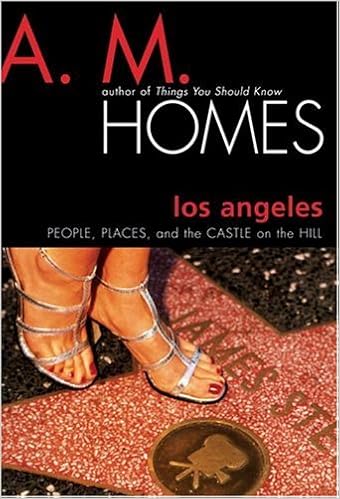
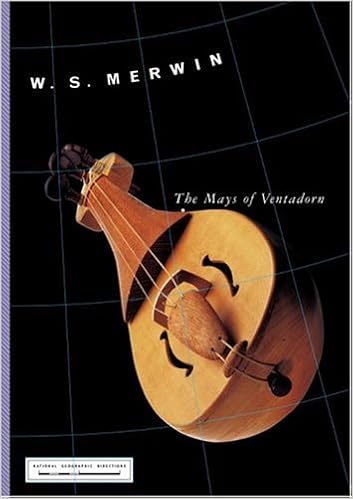
I am going to try to read three travel books this month. I have been trying to read through the National Geographic DIrections series, so have requested Los Angeles: People, Places, and the Castle on the Hill by A. M. Homes and Mays of Ventadorn by W.S. Merwin in that series. I am also going to read Art of Travel by Alain de Boutton. All of these are fairly short books and together amount to only 650 pages. I should be able to get those done this month.
4m.belljackson
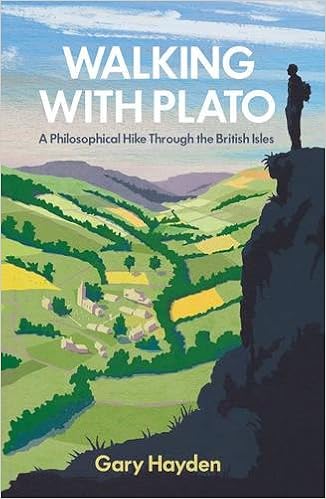
WALKING WITH PLATO, from the top of Scotland to Land's End, and Steinbeck's
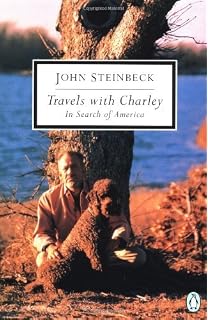
TRAVELS WITH CHARLEY will be my choices.
TRAVELS WITH CHARLEY will be my choices.
5brenzi
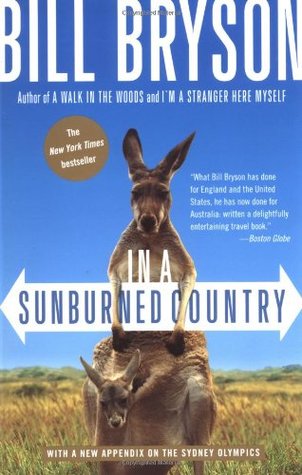
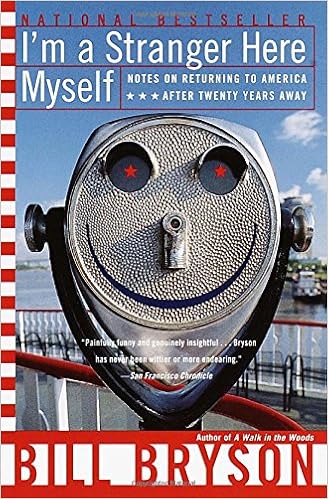
I’m planning to read Travels with Charley too and maybe Bill Bryson’s In a Sunburned Country or I’m a Stranger Here Myself. Just like in the previous two months I’m reading books I have sitting on my shelf or on my Kindle.
6Jackie_K
I'm planning on reading Pilgrimage to Dollywood: A Country Music Road Trip through Tennessee by Helen Morales.
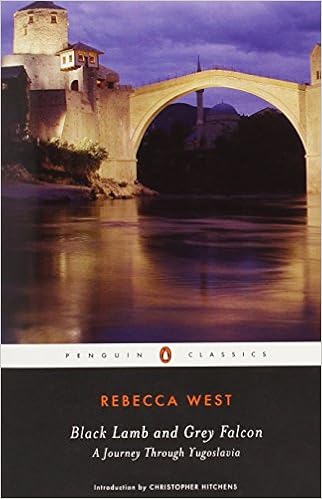
I'm also still ploughing my way through Black Lamb & Grey Falcon: A Journey Through Yugoslavia by Rebecca West. Although this comes with a content warning that a) it is super long (I've been reading it since mid-December and have 28 hours of reading behind me and 7 or 8 hours still to go), because b) she can't make up her mind if she's writing a travelogue or an epic history. Some of the writing is sublime, but elsewhere the history totally swamps the travelogue. I actually really like travel books which drop in history relevant to the particular places being visited (last year I read the three books by Patrick Leigh Fermor of his epic walk in 1933-4 through Europe from the Hook of Holland to Constantinople and then on to Mount Athos, and he was a master at this), but BL&GF really doesn't get the balance between the two nearly so well. But, there it is, I'll count it for this challenge but with a significant 'reader beware' caveat.
I'm also still ploughing my way through Black Lamb & Grey Falcon: A Journey Through Yugoslavia by Rebecca West. Although this comes with a content warning that a) it is super long (I've been reading it since mid-December and have 28 hours of reading behind me and 7 or 8 hours still to go), because b) she can't make up her mind if she's writing a travelogue or an epic history. Some of the writing is sublime, but elsewhere the history totally swamps the travelogue. I actually really like travel books which drop in history relevant to the particular places being visited (last year I read the three books by Patrick Leigh Fermor of his epic walk in 1933-4 through Europe from the Hook of Holland to Constantinople and then on to Mount Athos, and he was a master at this), but BL&GF really doesn't get the balance between the two nearly so well. But, there it is, I'll count it for this challenge but with a significant 'reader beware' caveat.
7streamsong
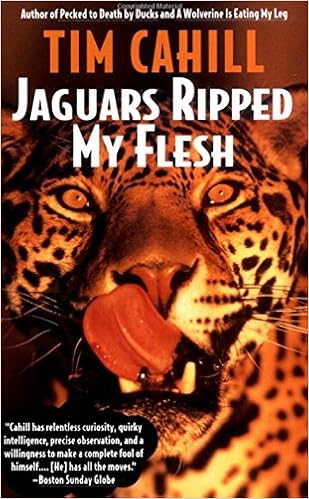
I'm going to be reading Jaguars Ripped My Flesh by Tim Cahill. I may have proposed to read this one last year, and then didn't. :)
8jessibud2
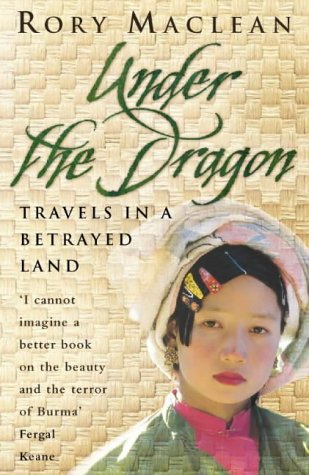
The one off my shelf that is lined up for March is Under the Dragon by Rory Maclean. I've had it for years and have been urged to get to it by more than one friend so that it is!
9Jackie_K
>8 jessibud2: I've not read that one, but he wrote one of my all time favourite books (Stalin's Nose: Across the Face of Europe) so I'm definitely interested to hear what you think about Under the Dragon.
10jessibud2
>9 Jackie_K: - Thankfully, it isn't a tome, but a rather reasonable length so I should not have any problem finishing it. I heard it was a bit harrowing and a sad tale but at least 3 of my friends have urged me to read it and it's been on my shelf for a dog's age. So, perfect timing.
11Caroline_McElwee
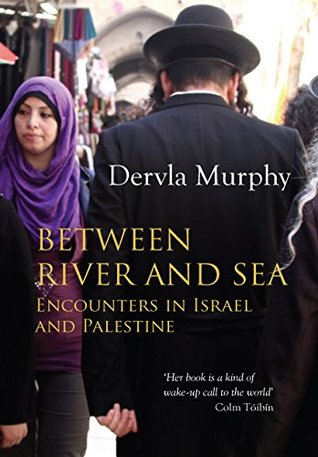
I plan to pull Between River and Sea by Dervla Murphy off the pile.
12cbl_tn
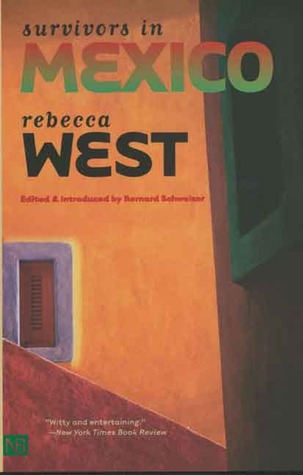
I have many choices in my TBR stash since this is one of my favorite genres. At the moment I think I'm going with Survivors in Mexico by Rebecca West.
13katiekrug
I'm another who is thinking of reading Travels with Charley for this month. I love Steinbeck. I have several books on my shelves that would work for this challenge, so I may try to fit in more than one.
14Matke
I have enough travel books to fill up two months, but this year I’m striving to be realistic and to carefully consider what I want to read before I get going.
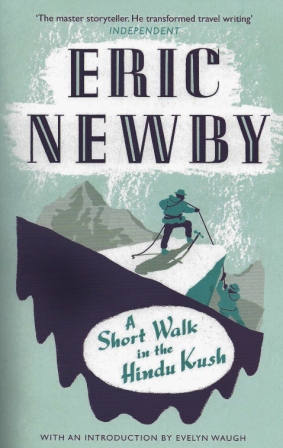
One definite choice is A Short Walk in the Hindu Kush by Eric Newby. This is a classic in the genre and promises humor along with the travel.
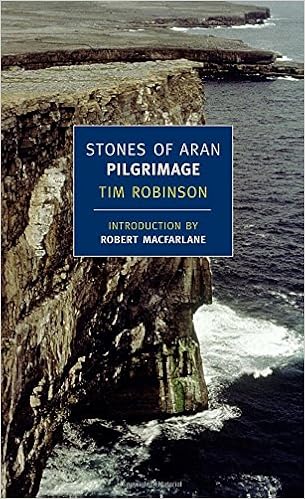
The other is Stones of Aran: Pilgrimage by Tim Robinson, a New York Review Books Classic. I bought this one because of my interest in the area.
Both of these are hardcovers which have been languishing on the shelves.
One definite choice is A Short Walk in the Hindu Kush by Eric Newby. This is a classic in the genre and promises humor along with the travel.
The other is Stones of Aran: Pilgrimage by Tim Robinson, a New York Review Books Classic. I bought this one because of my interest in the area.
Both of these are hardcovers which have been languishing on the shelves.
15Matke
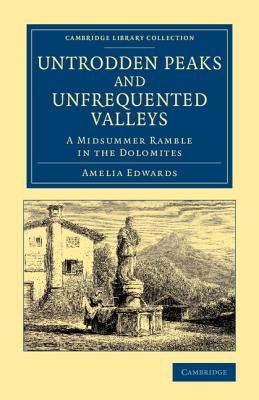
I’d love to add Untrodden Peaks and Unfrequented Valleys by Amelia Edwards. I’ve had this as an e-book for years and years, and I’d love to get to it this month.
16Chatterbox
Some fascinating books here! I'm going to have to check into a couple of these -- like Walking with Plato. And it's always nice to see some classic travel writers on this list, like Dervla Murphy and Eric Newby. I've got some books by them, and some by Norman Lewis that were available for a deep, deep discount on Kindle, like The Tomb in Seville, about Spain just as the civil war was about to break out.
I've had a copy of Black Lamb and Grey Falcon for eons -- it's a paperback and it's so thick and heavy that I'm afraid that reading it/opening it would break the spine, simply because of the weight of the pages! One of these years, but it won't be this year...
I've had a copy of Black Lamb and Grey Falcon for eons -- it's a paperback and it's so thick and heavy that I'm afraid that reading it/opening it would break the spine, simply because of the weight of the pages! One of these years, but it won't be this year...
17Fourpawz2
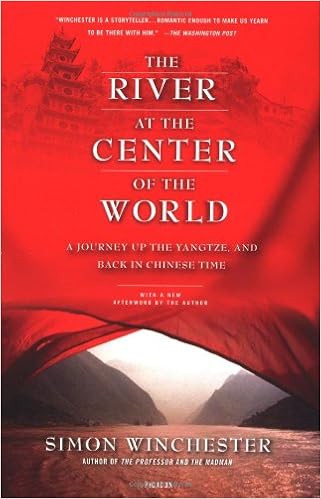
I've picked The River at the Center of the World by Simon Winchester. All of Asia is pretty much of a mystery to me so I'm really excited about this book.
18Oberon
So I was planning to read The Storied City which covers the European efforts to find Timbuktu intertwined with the recent history of trying to preserve its treasures. Does that count?
19jessibud2
>17 Fourpawz2: - I haven't read that one yet but if you've never read Winchester before, you are in for a treat. Even better, if you can find it on audiobooks (if you are into that), and he narrates, even better. He is a great reader of his own work.
20Familyhistorian
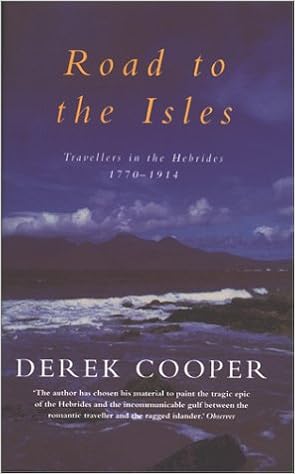
Hmm, I don't have much about travel on my shelves except for books about airlines, railways, shipping lines and immigration. I don't think they would really work for this topic. I do have Road to the Isles: Travellers in the Hebrides, 1770-1914 which would work, I think.
21Chatterbox
>18 Oberon: I just finished that book, and I'm not sure. In the spirit of openness, I'll say yes, but it's with big reservations. The "travel" is as much history as it is travel, and even then, it's only half the book -- the other half (as you know) is the struggle to save the manuscripts. Overall, I'd say it's history and historiography, with elements that are about early Africa exploration. There are two books I know of that would be more directly on point: The Race for Timbuktu by Frank Kryza, which deals with Laing's fatal trip to the city and others in that era, and a modern travel narrative, To the Moon and Timbuktu by Nina Sovich, a more conventional "I'm going to an exotic place" yarn. I'll leave it up to you, but have registered my reservations.
>20 Familyhistorian: Yes, that would work -- and it would be interesting, given that that was the era in which Scottish travel went from being exotic to mainstream (week-long trips to hunt stags, etc.) Queen Victoria and Balmoral had something to do with the fascination with the Highlands, but I'd be curious to see what you think about this book's thoughts about the Hebrides specifically....
Winchester is indeed a good, interesting writer -- and he delves into all kinds of natural history phenomena as well as writing about people. I think that's the one I had autographed when I was at a travel-writing workshop eons ago.
>20 Familyhistorian: Yes, that would work -- and it would be interesting, given that that was the era in which Scottish travel went from being exotic to mainstream (week-long trips to hunt stags, etc.) Queen Victoria and Balmoral had something to do with the fascination with the Highlands, but I'd be curious to see what you think about this book's thoughts about the Hebrides specifically....
Winchester is indeed a good, interesting writer -- and he delves into all kinds of natural history phenomena as well as writing about people. I think that's the one I had autographed when I was at a travel-writing workshop eons ago.
22Chatterbox
My books for the month -- over-ambitious as always!
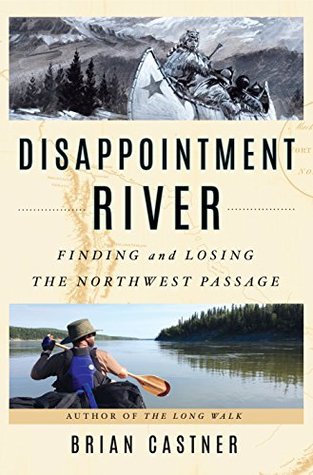
Disappointment River by Brian Castner -- the author tries to follow in the footsteps of Mackenzie, the man for whom the Mackenzie River was named, traveling on foot and by canoe. Whereas his famous predecessor didn't find the NW passage, Castner is aiming to get there. Picked up the ARC at ALA Midwinter; the book will be out in mid-March.
Border: A Journey to the Edge of Europe by Kapka Kassabova. I've heard a lot of buzz about this one, about Bulgaria, by someone born and raised in that country who travels back to revisit it as a kind of European hinterland. A finalist for the Baillie Gifford Prize last year.
then come the optional additions!
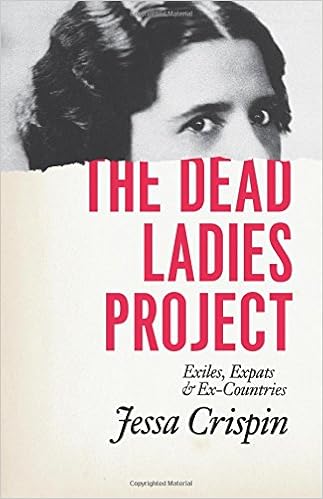
The Dead Ladies Project by Jessa Crispin -- a woman traveling the world to places where literary women lived; a voyage of self-exploration and actual exploration at once. A bit of a hybrid, but a friend tells me it's primarily a travel book, rather than a memoir...
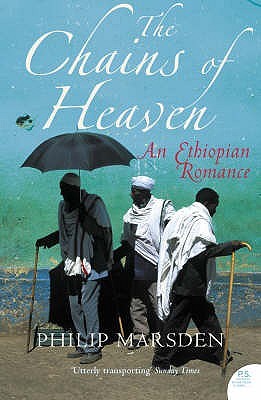
The Chains of Heaven by Philip Marsden -- another in the category of 'you did WHAT?' travel narratives. The author first discovered Ethiopia in the early 90s, when it was mired in war, and finally is able to go back and explore. By mule. Not the first to do this (I think Dervla Murphy did so) but this is a recent book and has been praised for the high caliber of the writing so...
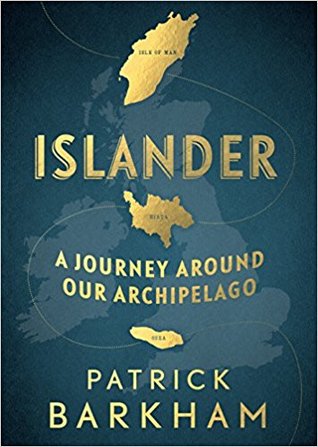
Islander: A Journey Around Our Archipelago by Patrick Barkham -- Reminds me of Paul Theroux's book about traveling around the circumferance of the UK, but seems to emphasize unusual things that his book didn't, such as the many islands -- the Isle of Man, St. Kilda's, Eigg, and all kinds of others.
So, that's March taken care of!!!
Disappointment River by Brian Castner -- the author tries to follow in the footsteps of Mackenzie, the man for whom the Mackenzie River was named, traveling on foot and by canoe. Whereas his famous predecessor didn't find the NW passage, Castner is aiming to get there. Picked up the ARC at ALA Midwinter; the book will be out in mid-March.
Border: A Journey to the Edge of Europe by Kapka Kassabova. I've heard a lot of buzz about this one, about Bulgaria, by someone born and raised in that country who travels back to revisit it as a kind of European hinterland. A finalist for the Baillie Gifford Prize last year.
then come the optional additions!
The Dead Ladies Project by Jessa Crispin -- a woman traveling the world to places where literary women lived; a voyage of self-exploration and actual exploration at once. A bit of a hybrid, but a friend tells me it's primarily a travel book, rather than a memoir...
The Chains of Heaven by Philip Marsden -- another in the category of 'you did WHAT?' travel narratives. The author first discovered Ethiopia in the early 90s, when it was mired in war, and finally is able to go back and explore. By mule. Not the first to do this (I think Dervla Murphy did so) but this is a recent book and has been praised for the high caliber of the writing so...
Islander: A Journey Around Our Archipelago by Patrick Barkham -- Reminds me of Paul Theroux's book about traveling around the circumferance of the UK, but seems to emphasize unusual things that his book didn't, such as the many islands -- the Isle of Man, St. Kilda's, Eigg, and all kinds of others.
So, that's March taken care of!!!
23Oberon
>21 Chatterbox: That is why I asked. I also have Explorers of the Nile on the shelves and some Paul Theroux so I can easily find something more traditional.
24Familyhistorian
>21 Chatterbox: Thanks Suzanne, it will be interesting to read, especially as there is such a wide range of years. I'm sure things changed lots in the Hebrides from the 1700s to the time of WW1.
25Jackie_K
>16 Chatterbox: The size of Black Lamb & Grey Falcon is one reason I'm so grateful I'm reading it as an ebook - I don't think my poor wrists would ever recover from the paper copy!
>22 Chatterbox: The book by Kapka Kassabova is already on my wishlist, but thanks to your post I've just added Patrick Barkham's book as well! Thank goodness for the wishlist - it's the only reason I'm not now drowning in both books and debt!
>22 Chatterbox: The book by Kapka Kassabova is already on my wishlist, but thanks to your post I've just added Patrick Barkham's book as well! Thank goodness for the wishlist - it's the only reason I'm not now drowning in both books and debt!
26GerrysBookshelf
I plan on heading over to the Himalayas for my armchair travelling by reading Beyond the Sky and the Earth: A Journey into Bhutan by Jamie Zeppa and The Waiting Land: A Spell in Nepal by Dervla Murphy
27jnwelch
>26 GerrysBookshelf: I liked Beyond the Sky and Earth a lot. Nice to see that one come up. I hope you enjoy it.
28SuziQoregon
I plan to finally read A Walk in the Woods by Bill Bryson
29Chatterbox
>25 Jackie_K: I have Amazon UK's "if you liked this..." feature for introducing me to Patrick Barkham. A lot of the British travel writers don't cross the pond to the the US -- British readers seem to have much, much more of an appetite for this kind of classic travel narrative (versus writers like Bill Bryson or memoir travel writers -- I went here and my experiences there transformed my life, like Elizabeth Gilbert's Eat, Pray, Love.) Not that one is better or worse than the other; it's just that one kind of writing seems to be less in demand (with a few exceptions) in the US.
>23 Oberon: Let us know what you plan to read! The book about the explorers of the Nile sounds fascinating. I know that there's a way of looking at these stories -- oh it's imperialism/colonialism -- and yes, some of the motives behind those travels were indeed about staking out imperialistic claims. But others, like Joseph Banks, were motivated at least as much by an immense and intense scientific curiosity. Imagining living in a world where so much of the physical land mass, and the peoples inhabiting it, were completely and utterly unknown, in today's era of Google maps? Of course, in the Google maps world, we delude ourselves that we "know", when in fact we don't begin to understand. But the process of exploration -- wow.
>23 Oberon: Let us know what you plan to read! The book about the explorers of the Nile sounds fascinating. I know that there's a way of looking at these stories -- oh it's imperialism/colonialism -- and yes, some of the motives behind those travels were indeed about staking out imperialistic claims. But others, like Joseph Banks, were motivated at least as much by an immense and intense scientific curiosity. Imagining living in a world where so much of the physical land mass, and the peoples inhabiting it, were completely and utterly unknown, in today's era of Google maps? Of course, in the Google maps world, we delude ourselves that we "know", when in fact we don't begin to understand. But the process of exploration -- wow.
30benitastrnad
Wow! There are so many good titles in this list already. I can't wait to read what everybody has to say about them. And I already got hit by several book bullets. Walking with Plato is one. It would pair nicely with Dispatches from Pluto. (I couldn't resist that attempt at a pun.) Or even Travels with Epicurus or Travels with Herodotus?
31lindapanzo
I'm still trying to bring more humor into my life with ongoing medical issues and so I may give a not-yet-read Bill Bryson book a try.
32Chatterbox
>30 benitastrnad: I loved Travels with Herodotus. But then I think Kapuscinski was a god among travel writers, so....
>31 lindapanzo: Sorry to hear that you are still not firmly back on your feet, health wise. Yes, lighter reading is definitely what is called for in these circumstances! Or even one of those "Best American Travel" article anthologies published annually, that you can dip into and find something short that suits your mood.
>31 lindapanzo: Sorry to hear that you are still not firmly back on your feet, health wise. Yes, lighter reading is definitely what is called for in these circumstances! Or even one of those "Best American Travel" article anthologies published annually, that you can dip into and find something short that suits your mood.
33avatiakh
>22 Chatterbox: I also have Kassabova's Border: A Journey to the Edge of Europe on my tbr pile so will try to join you on that one. I picked up Travellers in the Third Reich: The Rise of Fascism Through the Eyes of Everyday People from the library today which looks like it should fit the challenge.
....and I still have my January read This is London to finish.
....and I still have my January read This is London to finish.
34cbl_tn
I placed a hold on the Overdrive audio of Our Hearts Were Young and Gay by Cornelia Otis Skinner and Emily Kimbrough. This is one of the first travel memoirs I read after picking it out of the RIF books one school year. I wonder if it’s still as laugh-out-loud funny as I remember it?
35Chatterbox
>33 avatiakh: Yup, the Third Reich book would fit the challenge. It actually would be an interesting one, because while it's definitely all about people who travel to a place and what they said, wrote, recorded, the significance of the book transcends comments on cute Bavarian architecture, etc. The author was mining those travel writings in search of comments (or the absence of comments) on the politics of the era. It's a neat twist on the genre, while still being IN the genre.
36thornton37814
I won a book on Goodreads where the author discusses his pilgrimage on the Camino in Spain. It was of interest to me since one of our professors did that last year on her sabbatical and presented on it at our faculty workshop in January. That one will fill the bill, but I may find others later in the month if I catch up with the ARCs.
37Chatterbox
>36 thornton37814: That's one of those "great hikes/walks" that I'd love to do. Another is to complete the Cornish coastal path (i've done chunks of it, including a few of the hard bits on the N. Coast). It would take a few weeks to do the whole thing and not be exhausted, though.
38benitastrnad
#37
That same jaunt through the South England Walkway continuing on through the Cornish Coastal Path and the Poets Trail, is one that I would like to do someday. I think I better hurry up as I am not sure I will be able to walk it if I wait a few years.
That same jaunt through the South England Walkway continuing on through the Cornish Coastal Path and the Poets Trail, is one that I would like to do someday. I think I better hurry up as I am not sure I will be able to walk it if I wait a few years.
39cbl_tn
>36 thornton37814: I read a book about a pilgrimage to Santiago de Compostela a couple of years ago for the religion theme in this challenge. I think it was one of the free ebooks I downloaded from the University of Chicago Press one month. It wasn't great literature, but I learned quite a bit from it.
40lindapanzo
>34 cbl_tn: Laugh out loud funny sounds great, Carrie. Maybe I'll look for that one.
41Chatterbox
>38 benitastrnad: I don't know the Poet's Trail. Shall have to look into that.
>39 cbl_tn: I think there are a few books about the Compostela pilgrimage, and yes, they would work well for either category. Didn't Cees Nooteboom tackle this? After checking, I was sort of right. The title, Roads to Santiago, hints that this is the focus, but what he describes as a "pilgrimage" is about Spain more broadly. That said, it's an older book, so possibly more focus on religious sites, too. I think I have/had a copy, but haven't read it.
>39 cbl_tn: I think there are a few books about the Compostela pilgrimage, and yes, they would work well for either category. Didn't Cees Nooteboom tackle this? After checking, I was sort of right. The title, Roads to Santiago, hints that this is the focus, but what he describes as a "pilgrimage" is about Spain more broadly. That said, it's an older book, so possibly more focus on religious sites, too. I think I have/had a copy, but haven't read it.
42Chatterbox
I will catch up on all the cover images in the next day or two...
43Jackie_K
>39 cbl_tn: I think I read that free UoC Press Santiago de Compostela ebook too. I remember being a bit frustrated that it couldn't make up its mind if it was a 'how to do the Camino' or a 'my experiences on the Camino', it ended up being a not great mish-mash of both.
I've read a few books on the pilgrimage over the years, some better than others. Truly the worst book I have ever read was Paulo Coelho's The Pilgrimage which should be avoided at all costs.
I've read a few books on the pilgrimage over the years, some better than others. Truly the worst book I have ever read was Paulo Coelho's The Pilgrimage which should be avoided at all costs.
44Chatterbox
>43 Jackie_K: Generally, I'm not sure how to approach Paulo Coelho. A serious writer? Someone that people who lionize and whose ideas are far more interesting than their execution.
45raidergirl3
My book club selection this month is What the Psychic told the Pilgrim which is subtitled A Midlife Misadventure on Spain's Camino de Santiago. Sounds like it fits this category!
46Jackie_K
>44 Chatterbox: Yeah, I know what you mean. I honestly can't see what all the fuss is about, but he obviously speaks to lots of people. I was underwhelmed by The Alchemist, but honestly - The Pilgrimage I just wanted to throw against the wall. I almost never have that sort of visceral reaction to a book, but I just hated it!
47banjo123
I was planning to read An Odyssey; A Father, A Son, and and Epic by Mendelsohn, but do you think it's too little about travel to count? I figured that since The Odyssey is all about travel anyway, it ought to work,
48benitastrnad
#41
I read Roads to Santiago at some point in the past, and thought it was very well done. It is about Northern Spain, but it actually is about the roads. He did the pilgrimage but he drove, so his route was a bit different. He also stayed in a variety of places that weren't exactly on the pilgrimage route. I liked the book, so if you have a copy I would recommend reading it. It was where I learned that as the Church has closed many of the old monasteries and convents that the Spanish government has taken some of them over and turned them into hotels, hostels, and bed and breakfasts. Nooteboom liked staying in these as he thought that they were very atmospheric. There is a great deal of the idea of pilgrimage in the book and what that means in many different aspects.
I read Roads to Santiago at some point in the past, and thought it was very well done. It is about Northern Spain, but it actually is about the roads. He did the pilgrimage but he drove, so his route was a bit different. He also stayed in a variety of places that weren't exactly on the pilgrimage route. I liked the book, so if you have a copy I would recommend reading it. It was where I learned that as the Church has closed many of the old monasteries and convents that the Spanish government has taken some of them over and turned them into hotels, hostels, and bed and breakfasts. Nooteboom liked staying in these as he thought that they were very atmospheric. There is a great deal of the idea of pilgrimage in the book and what that means in many different aspects.
49EllaTim
>48 benitastrnad: I am reading it right now, by coincidence. He writes a lot about history, and art, the landscape.
The dutch title "De Omweg naar Santiago" could be translated as "Detour to Santiago ", and that would fit the book very well, as the destination of Santiago doesn't seem very important to him, but maybe later in the book.
The dutch title "De Omweg naar Santiago" could be translated as "Detour to Santiago ", and that would fit the book very well, as the destination of Santiago doesn't seem very important to him, but maybe later in the book.
50Chatterbox
>47 banjo123: Yes, I made this point about this very book in my introduction. I've now read about 2/3 of the book, and while there's a lot about Homer's "Odyssey", and some of this is set against the backdrop of a father and son voyage (in the second half), it's really a family memoir and the author writing about (a) his relationship with his family, (b) Homer's classic work and its themes and (c) the whole idea of ties between fathers and sons, as in between himself and his own father, and Odysseus and Telemachus. You wouldn't read that and come away from it saying, wow, what a great travel book, or, hey, I learned so much about the places they visited. Because that wasn't Mendelssohn's goal: the physical backdrop -- the classroom in the first half, and the sea voyage in the second half -- is incidental to a literary and personal exploration of these themes, in Homer and in his own family life. So I would have to say no. That said, I'd encourage you to read it, and I definitely plan to wrap it up in March -- I just won't be counting it for this challenge...
There probably are some other books that do look at the Greek islands more closely, linking them to ancient history. Or you could try one of Lawrence Durrell's short and lovely little books about Rhodes, Corfu, etc. They aren't at all long, and Mendelssohn's book isn't a difficult read -- I've been dawdling as I've been listening to the excellent audiobook in 15-minute snippets -- so you might be able to add one of those in as a bonus? Just a thought.
There probably are some other books that do look at the Greek islands more closely, linking them to ancient history. Or you could try one of Lawrence Durrell's short and lovely little books about Rhodes, Corfu, etc. They aren't at all long, and Mendelssohn's book isn't a difficult read -- I've been dawdling as I've been listening to the excellent audiobook in 15-minute snippets -- so you might be able to add one of those in as a bonus? Just a thought.
51Chatterbox
>48 benitastrnad: >49 EllaTim: Thanks for the additional detail on Nooteboom's book! Clearly one to drag out from wherever it's hiding (hopefully on my shelf of travel narratives, fingers crossed.) And I'd like to look and see what else he has written. This is my year to investigate lesser-known books by authors I'm already familiar with. (In the fictional sphere, I've just raided the stack of novels by Barry Unsworth at the Providence Athenaeum; publishers are re-releasing The Songs of Kings, set in Aulis at the outset of the Trojan war, and that prompted me to look for others of his lesser-known books that might now see the light of day. Success!!)
>47 banjo123: There are authors/books like that, I guess. I do have a copy of his novel about Mata Hari on my Kindle (I was pre-approved for it on NetGalley) but it remains unread as it appeared at almost the same time as one written by a friend of mine, Michelle Moran, and I didn't want the two to blur in my mind, and books written by friends get priority.
I STILL have not read the concluding volume of the Patrick Leigh Fermor trilogy (speaking of epic walks), The Broken Road. Partly because when I do so, it will be over, and I don't want that to happen. Partly because I know it was extensively edited posthumously, and that it probably won't compete with the first two volumes. So it sits there on my shelf, a physically gorgeous hardcover with an iconic illustration from the UK. Sigh.
>47 banjo123: There are authors/books like that, I guess. I do have a copy of his novel about Mata Hari on my Kindle (I was pre-approved for it on NetGalley) but it remains unread as it appeared at almost the same time as one written by a friend of mine, Michelle Moran, and I didn't want the two to blur in my mind, and books written by friends get priority.
I STILL have not read the concluding volume of the Patrick Leigh Fermor trilogy (speaking of epic walks), The Broken Road. Partly because when I do so, it will be over, and I don't want that to happen. Partly because I know it was extensively edited posthumously, and that it probably won't compete with the first two volumes. So it sits there on my shelf, a physically gorgeous hardcover with an iconic illustration from the UK. Sigh.
52banjo123
>50 Chatterbox:, OK, I actually started the Mendelsohn, and, will definitely finish it this month, but not for the challenge. I will either find something else, or skip this month.
53Chatterbox
>52 banjo123: Thanks for your understanding.... Hope you enjoy the Mendelssohn book; I definitely am, which is one reason I've been reading it so slowly (Had originally hoped to finish it in January...)
54Jackie_K
>51 Chatterbox: If it's any help, when I read The Broken Road at the end of the last year, I didn't notice a huge change in style from the previous two (although I share the sense of bereavement about it all being over). I actually thought the editors showed quite a light touch overall. The main disappointment for me was that although PLF had extensively written his draft up to leaving Bulgaria (although annoyingly he finished literally mid-sentence!), he'd done nothing about his walk through Turkey to Constantinople, so there are about 3 weeks where there's nothing, and then all they had was his at-the-time diary in Constantinople, which is reproduced verbatim, but is quite sparse. However, after that he carried on to Mount Athos in Greece, and his diary of that is much more expansive, and that is also included. I actually thought it was a worthy final installment, although of course I am sad that he didn't finish it himself.
After I finished that, I then read a modern retracing of PLF's journey by Nick Hunt, Walking the Woods and the Water (his walk took place in 2011-2012). That was actually a fine way to finish it all off. Now I really want to get hold of Artemis Cooper's biography of PLF.
After I finished that, I then read a modern retracing of PLF's journey by Nick Hunt, Walking the Woods and the Water (his walk took place in 2011-2012). That was actually a fine way to finish it all off. Now I really want to get hold of Artemis Cooper's biography of PLF.
55Chatterbox
>54 Jackie_K: I have read the biography of PLF, which was good but not great -- and I suppose the fact that it wasn't great lies at the root of my reservations re vol. 3 of the trilogy. Have you read PLF's other travel books (especially his slim volume about spending time at a monastery in France?) or his letters? I think he spent a lot of time later on Athos, which would explain why those sections of The Broken Road were so well-developed. I gather from the bio that he was a consummate procrastinator. Kinda like me... :-)
56Jackie_K
>55 Chatterbox: Ah I see. I have read A Time to Keep Silence which I loved, although that's it (so far) - I do want to read his other books and letters too.
I understood from the editors' note at the start of The Broken Road that he basically spent years agonising over what he'd already written (I think the bulk of it was written decades earlier), and although he extensively annotated his draft that's as far as he got. That sounded scarily like me writing up my PhD thesis (and I so hear you re the procrastination!).
I understood from the editors' note at the start of The Broken Road that he basically spent years agonising over what he'd already written (I think the bulk of it was written decades earlier), and although he extensively annotated his draft that's as far as he got. That sounded scarily like me writing up my PhD thesis (and I so hear you re the procrastination!).
57m.belljackson
>54 Jackie_K: >55 Chatterbox:
Artemis Cooper's PLF biography was well-written, but repeated about 90% of what he had written.
Artemis Cooper's PLF biography was well-written, but repeated about 90% of what he had written.
58Jackie_K
>57 m.belljackson: Interesting. So it might actually be better for me to read it before reading many more of his books?
I've just finished Helen Morales' Pilgrimage to Dollywood: a Country Music Road Trip through Tennessee which I enjoyed. I did get a sense of the various places she visited (Graceland, Loretta Lynn's museum, Nashville (including the Parthenon, and the Country Music Hall of Fame and Museum), and various places more closely associated with Dolly Parton, culminating in a day spent at the Dollywood theme park). There was a bit of musing about the author's own place in the scheme of things (she is an English academic, and had moved to California the previous year, but was still feeling unsettled and rootless, and an something of an 'outsider'), but it didn't detract from the various destinations; nor did her discussions about country music itself and the Dolly phenomenon. It wasn't an earth-shattering or life-changing read, but it was a good way to spend a few not-too-demanding hours. 4/5.
I've just finished Helen Morales' Pilgrimage to Dollywood: a Country Music Road Trip through Tennessee which I enjoyed. I did get a sense of the various places she visited (Graceland, Loretta Lynn's museum, Nashville (including the Parthenon, and the Country Music Hall of Fame and Museum), and various places more closely associated with Dolly Parton, culminating in a day spent at the Dollywood theme park). There was a bit of musing about the author's own place in the scheme of things (she is an English academic, and had moved to California the previous year, but was still feeling unsettled and rootless, and an something of an 'outsider'), but it didn't detract from the various destinations; nor did her discussions about country music itself and the Dolly phenomenon. It wasn't an earth-shattering or life-changing read, but it was a good way to spend a few not-too-demanding hours. 4/5.
59m.belljackson
>58 Jackie_K:
Yes! Start with A Time of Gifts (to me, his best), with your own detailed map showing the Hook of Holland through Constantinople.
If you enjoy it, Between the Woods and the Water should follow, then either the Artemis Cooper and his others.
One strangely compelling guy!
Yes! Start with A Time of Gifts (to me, his best), with your own detailed map showing the Hook of Holland through Constantinople.
If you enjoy it, Between the Woods and the Water should follow, then either the Artemis Cooper and his others.
One strangely compelling guy!
60Caroline_McElwee
I may squeeze in a reread of A Time of Gifts this month if I can.
61m.belljackson
Walking with Plato might work better for fans and residents of the John O'Groats to
Land's End passage. I wanted this "Philosophical Hike Through the British Isles" to be
so much better - with its promise of Plato's wisdom and a nice long 876 mile walking journey -
than it was.
Early chapters were crowded with avoidable...see my LT review for more.
Land's End passage. I wanted this "Philosophical Hike Through the British Isles" to be
so much better - with its promise of Plato's wisdom and a nice long 876 mile walking journey -
than it was.
Early chapters were crowded with avoidable...see my LT review for more.
62benitastrnad
#58
I have several of the titles in that series from the University of Chicago, (and the Dollywood book is one of them) but have chosen to read the National Geographic series instead. Glad to hear that they are good travel books. Or at least entertaining.
I have several of the titles in that series from the University of Chicago, (and the Dollywood book is one of them) but have chosen to read the National Geographic series instead. Glad to hear that they are good travel books. Or at least entertaining.
63Chatterbox
>61 m.belljackson: You may have spared me from this -- I did read Walking Home by Simon Armitage, in which the author writes about walking the Pennine Way and essentially supporting himself doing poetry readings. There's a lot of "and I got blisters" and "and I met these people along the way" and gripes about the rain, but it ends up being just the right balance of that, the history of the area, his personal ties to it, the kind of lyrical and transcendent experiences you can have (even in the rain with blisters). Robert Macfarlane is another writer I hear mentioned a lot who is more of the "here is the countryside in its beauties" writer, and who specializes in going back and finding the "old" countryside that has been neglected or even torn up as agriculture and modern approaches to caring for the land have destroyed hedgerows, etc.
I love PLF, even if he is kind of a prototypical Englishman of his era. I can't help thinking that he would be the kind of person who you'd never be bored talking to or listening to. Or at least, I wouldn't be. Because he himself was curious about any number of things. I also loved A Time to Keep Silence, which is about his time in various monasteries in France, and his travels to Cappadocia. What IS monasticism? It's a fascinating question, even to me, as an agnostic. To remove oneself from society and embrace silence (as at La Grande Trappe, one of the monasteries he visits) is even more unusual now than it was when Leigh Fermor wrote this. And his writing about Cappadocia in central Turkey were what first motivated me to go there myself (although William Dalrymple's book, From the Holy Mountain has the distinction of getting me to pack my bag and actually GO -- in fact, it holds the record for that, prompting my Turkey trip in March 1999 and my trip to Jordan and Syria in the early summer of 2001. And wow, am I glad that I went when I did -- I have zero desire to go to Erdogan's Turkey, and much of what I saw in Syria, especially, doesn't even EXIST any more. Mosques, crusader castles, souks more than 1,000 years old, all destroyed/in ruins. The Syrian air forced bombed Krak des Chevaliers, a crusader castle that was the sole place to hold out against the forces of Saladin and his heirs for more than a century; it was eventually surrendered and never conquered. And now it's in ruins. Heartbreaking. What Dalrymple wrote about can't be seen any more. Ironically, he was writing about the vanishing Christian communities in that region, but it's the whole landscape that has changed in the last 20 years. In Egypt, the Copts are under even more pressure.
And that, to me, is part of the value of "travel" writing. It captures an era, a moment in time. PLF did it with his trilogy, because WW2 would uproot all those families, the way of life that he documents/chronicles in central Europe. It wasn't idyllic, except perhaps for his aristocratic friends, but neither was what replaced it. And in that trilogy, there's a real person's experience of that time/era.
I love PLF, even if he is kind of a prototypical Englishman of his era. I can't help thinking that he would be the kind of person who you'd never be bored talking to or listening to. Or at least, I wouldn't be. Because he himself was curious about any number of things. I also loved A Time to Keep Silence, which is about his time in various monasteries in France, and his travels to Cappadocia. What IS monasticism? It's a fascinating question, even to me, as an agnostic. To remove oneself from society and embrace silence (as at La Grande Trappe, one of the monasteries he visits) is even more unusual now than it was when Leigh Fermor wrote this. And his writing about Cappadocia in central Turkey were what first motivated me to go there myself (although William Dalrymple's book, From the Holy Mountain has the distinction of getting me to pack my bag and actually GO -- in fact, it holds the record for that, prompting my Turkey trip in March 1999 and my trip to Jordan and Syria in the early summer of 2001. And wow, am I glad that I went when I did -- I have zero desire to go to Erdogan's Turkey, and much of what I saw in Syria, especially, doesn't even EXIST any more. Mosques, crusader castles, souks more than 1,000 years old, all destroyed/in ruins. The Syrian air forced bombed Krak des Chevaliers, a crusader castle that was the sole place to hold out against the forces of Saladin and his heirs for more than a century; it was eventually surrendered and never conquered. And now it's in ruins. Heartbreaking. What Dalrymple wrote about can't be seen any more. Ironically, he was writing about the vanishing Christian communities in that region, but it's the whole landscape that has changed in the last 20 years. In Egypt, the Copts are under even more pressure.
And that, to me, is part of the value of "travel" writing. It captures an era, a moment in time. PLF did it with his trilogy, because WW2 would uproot all those families, the way of life that he documents/chronicles in central Europe. It wasn't idyllic, except perhaps for his aristocratic friends, but neither was what replaced it. And in that trilogy, there's a real person's experience of that time/era.
64Jackie_K
>59 m.belljackson: No, I've already read all 3 of them (A Time of Gifts, Between the Woods and the Water and The Broken Road). What I meant was it might make more sense for me to read Cooper's PLF biography before reading any more of PLF's other books.
>63 Chatterbox: I'm another Robert MacFarlane fan - I love his writing. I've also found that any book that has a foreward or endorsement by him is well worth a read!
>63 Chatterbox: I'm another Robert MacFarlane fan - I love his writing. I've also found that any book that has a foreward or endorsement by him is well worth a read!
65m.belljackson
>63 Chatterbox:
It would be welcome if someone could channel PLF from John O'Groats to Land's End!
Meanwhile, I'm waiting for responses to Walking with Plato from those with more direct experience.
It would be welcome if someone could channel PLF from John O'Groats to Land's End!
Meanwhile, I'm waiting for responses to Walking with Plato from those with more direct experience.
66nittnut
I was just given a copy of Turn Right at Machu Picchu, so I think I will read that.
67Jackie_K
I finally finished Black Lamb & Grey Falcon: A Journey Through Yugoslavia, having taken the best part of 3 months on it! (her journey was only 6 weeks!) Infuriating, in need of ruthless editing, very history-heavy, and some 'of its time' things that she wouldn't have got away with today (including occasional use of the n-word, and quite a lot more gender and ethnic essentialism) but also in places evocative and beautifully written. I realised about mid-way through that I would have been less wound up with it if it had been subtitled "A Journey Through Yugoslavia and its History", as that would have given me more realistic expectations.
68Chatterbox
>67 Jackie_K: Do you think that some of this was because of the era in which it was written? Not just the n-word (obviously) but the overall ponderousness and emphasis on history? (That said, I confess I like a travel writer who can blend history artfully with travel experiences; it saves me from reading about -- as noted above -- reading about his/her blisters, boring conversations with fellow travelers, gawking at cathedrals or whatever, etc. The best travel writers somehow pull it all together and make it feel effortless... like more than the sum of the parts.)
69Jackie_K
>68 Chatterbox: Oh yes I think it was entirely because of the era! And also she was already by that time a very well-known author, and also fabulously rich (and subsequently became a Dame, towards the end of the 50s) so very 'establishment' - I think it would have taken a brave editor to be as ruthless as I would have liked! I think it was probably the taste of the times too - as one of the LT reviews points out, it was published in 2 volumes in 1941, at the height of the war when paper and money were in short supply, so clearly the publisher thought it was worth the investment despite the general trend towards belt-tightening and rationing.
This one was so long there was lots of history *and* lots of unnecessary fellow traveller conversations etc (including one awful woman, the wife of the Yugoslav functionary who was their companion for most of the trip, who was a toxic presence not only on the journey but also in the book for the 2 weeks that she joined them). As mentioned above, Patrick Leigh Fermor just got the balance better, for me. After all, his 3 volumes cover over a year of travelling, and still come out at fewer pages than this one, which covers a 6 week journey! Less is definitely more :)
This one was so long there was lots of history *and* lots of unnecessary fellow traveller conversations etc (including one awful woman, the wife of the Yugoslav functionary who was their companion for most of the trip, who was a toxic presence not only on the journey but also in the book for the 2 weeks that she joined them). As mentioned above, Patrick Leigh Fermor just got the balance better, for me. After all, his 3 volumes cover over a year of travelling, and still come out at fewer pages than this one, which covers a 6 week journey! Less is definitely more :)
70benitastrnad
I finished Los Angeles: People, Places, and the Castle on the Hill by A. M. Homes. This is part of the National Geographic Directions series. This delightful set of travel books were all published between 2002 and 2012. There are 21 titles in the series. They are long essays that were commissioned by the National Geographic Society. The Society asked well known writers who have lived, live part-time, or have some kind of history with a place to write about that place. I stumbled across this series a few years ago, and have now read 9 of the titles in the series. I have resolved to read all of them - eventually.
I started reading this volume on the plane trip back from the ALA conference in Denver, but had put it aside to finish a couple of other books I have been reading. I was unacquainted with the author or her work and was surprised to learn that she is a well known screenplay author for television. She spends a good deal of time in Los Angeles and when she is there she lives at the Chateau Marmont. This is an old school Hollywood hotel that caters to the film and TV crowd. The book is about the culture and atmosphere of Los Angeles and what it is like to be a part of the "Biz" and live in that city. However, the author also goes out of the box and takes a trip to Palm Springs, since that city is so connected to famous Hollywood people. I found that chapter of the book to be very amusing as the author get side-tracked and visits a wind farm and decides that the famous spa hotel at which she is booked just won't work for her and she leaves a half-hour after she checks in to move to another hotel. This was a good little volume to read while traveling and I enjoyed it very much. This one ranks right up there with the best titles in the series I have read. Oaxaca Journal and Barcelona: The Great Enchantress.
I started reading this volume on the plane trip back from the ALA conference in Denver, but had put it aside to finish a couple of other books I have been reading. I was unacquainted with the author or her work and was surprised to learn that she is a well known screenplay author for television. She spends a good deal of time in Los Angeles and when she is there she lives at the Chateau Marmont. This is an old school Hollywood hotel that caters to the film and TV crowd. The book is about the culture and atmosphere of Los Angeles and what it is like to be a part of the "Biz" and live in that city. However, the author also goes out of the box and takes a trip to Palm Springs, since that city is so connected to famous Hollywood people. I found that chapter of the book to be very amusing as the author get side-tracked and visits a wind farm and decides that the famous spa hotel at which she is booked just won't work for her and she leaves a half-hour after she checks in to move to another hotel. This was a good little volume to read while traveling and I enjoyed it very much. This one ranks right up there with the best titles in the series I have read. Oaxaca Journal and Barcelona: The Great Enchantress.
71cbl_tn
>70 benitastrnad: Several years ago I read My Famous Evening by Howard Norman from this series and I really liked that one. I have another one, Imagined London by Anna Quindlen, in my TBRS. I thought about reading it this month, but I decided it might be a better fit for the books about books theme.
72jessibud2
>71 cbl_tn: - I read Imagined London several years ago and loved it!
73cbl_tn
>72 jessibud2: That’s good to know!
74benitastrnad
#71
I have read Imagined London too and liked it. It will work well with the “books about books” category.
I will start reading the other title I have from this series for this month. I am taking Mays of Ventadorn with me on my spring break trip.
I have read Imagined London too and liked it. It will work well with the “books about books” category.
I will start reading the other title I have from this series for this month. I am taking Mays of Ventadorn with me on my spring break trip.
75m.belljackson
John Steinbeck's Travels With Charley offers wonderful, gentle insights -
until the final chapter in New Orleans.
This plants indelible memories as it recounts the terrifying "savage fear" of Southern racism.
until the final chapter in New Orleans.
This plants indelible memories as it recounts the terrifying "savage fear" of Southern racism.
76benitastrnad
I, unexpectedly, finished reading Alain De Botton's book Art of Travel last night. I had been reading this one in short bursts and found myself close to the end yesterday. I decided to stay up until I had finished it. I did.
This is a long essay about travel. Specifically, the art of travel. The author combines art and travel, and art and writing about travel, into one essay. The essay is a call on us to be more observant during our travel and to consider the little things about travel that bring pleasure and discomfort as well to our lives. He points out that often it is that intersection between between pleasure and discomfort that is the most clarifying aspect of travel. The author uses literature and art as points of departure and of comparison in his thoughts, actions, and words about travel. For instance, he uses the art of Edward Hopper as a starting point to talk about the loneliness of travel, the work and writings of Alexander Humbolt to expound on the adventure of travel, the exuberance of Van Gogh during his sojourn in Provance to write about the uplift we should get when experiencing new places and cultures during out travel. The book also uses works of art and literary quotations as if they were points on a compass for him to guide him in his writing. The effect was one of calm reassurance that there is value in travel that can enrich and enhance our lives, but we need to be observant and mindful of these people and places in order for the act of travel to turn into the art of travel.
This is a long essay about travel. Specifically, the art of travel. The author combines art and travel, and art and writing about travel, into one essay. The essay is a call on us to be more observant during our travel and to consider the little things about travel that bring pleasure and discomfort as well to our lives. He points out that often it is that intersection between between pleasure and discomfort that is the most clarifying aspect of travel. The author uses literature and art as points of departure and of comparison in his thoughts, actions, and words about travel. For instance, he uses the art of Edward Hopper as a starting point to talk about the loneliness of travel, the work and writings of Alexander Humbolt to expound on the adventure of travel, the exuberance of Van Gogh during his sojourn in Provance to write about the uplift we should get when experiencing new places and cultures during out travel. The book also uses works of art and literary quotations as if they were points on a compass for him to guide him in his writing. The effect was one of calm reassurance that there is value in travel that can enrich and enhance our lives, but we need to be observant and mindful of these people and places in order for the act of travel to turn into the art of travel.
77benitastrnad
I started reading my third travel book selection for this month, Mays of Ventadorn by W. S. Merwin and was surprised to find out that it is about a village in Provance famous for its troubadours. What an unexpected connection to my previous book, where one of the chapters was on Van Gogh and his experiences while he lived in Provance. Van Gogh saw Provance through new eyes in ways that it had not been seen before and that vision eventually turned the art world on its head.
The current book is still in the early stages of reading, but it seems to be concerned, at the moment, with language. Specifically, Occitan, or as it was also known Provençal. This is one of the old languages found in France that were almost wiped out over the centuries. Occitan is now experiencing a revival. A friend of mine, who is a recent visitor to the area, told me that road signs are now written in three languages in many places in that part of France. French, Occitan, and English.
The current book is still in the early stages of reading, but it seems to be concerned, at the moment, with language. Specifically, Occitan, or as it was also known Provençal. This is one of the old languages found in France that were almost wiped out over the centuries. Occitan is now experiencing a revival. A friend of mine, who is a recent visitor to the area, told me that road signs are now written in three languages in many places in that part of France. French, Occitan, and English.
78Jackie_K
>76 benitastrnad: I really like the sound of this one! Yet another one onto the wishlist!
79m.belljackson
>77 benitastrnad:
If you haven't read MONTAILLOU and other books by Emmanuel Le Roy Ladurie,
you might enjoy the earlier history of mountainous Southern France.
L'Occitan beauty products are also fun, though pricey.
If you haven't read MONTAILLOU and other books by Emmanuel Le Roy Ladurie,
you might enjoy the earlier history of mountainous Southern France.
L'Occitan beauty products are also fun, though pricey.
80Chatterbox
I picked up a couple of additional travel books from the Providence Athenaeum today that look fascinating. One is Love of Country: A Hebridean Journey by Madeleine Bunting, all about (natch) the Hebrides, originally published by Granta. The other is White Mountain by Robert Twigger, about the Himalayas. Both look so fascinating, it's going to be hard to decide what takes priority!! Actually, the problem is that this month I'm taking an Academy class at the Athenaeum, and that means reading a classic work of fiction each week -- and this coming week is Light in August by William Faulkner. Daunting, in length and style. Oh dear, oh dear.
81Jackie_K
Love of Country is on my wishlist - it has received a lot of praise this side of the Pond. I think her previous book The Plot: A Biography of an English Acre is also meant to be very good.
82Caroline_McElwee
I've taken a bite out of Dervla Murphy's Between River and Sea, choc full of information, so it will certainly need a reread down the line. Some information is not surprisingly unsettling, and will require broader reading.
I may start A Time of Gifts next week, to have a lighter counterweight.
I have Love of Country: A Hebridean Country too. Hmmm, unlikely I'll squeeze it in this month.
I may start A Time of Gifts next week, to have a lighter counterweight.
I have Love of Country: A Hebridean Country too. Hmmm, unlikely I'll squeeze it in this month.
83torontoc
>34 cbl_tn: >40 lindapanzo: oh, yes -do read Our Hearts Were Young and Gay - it is still funny when I reread it for the third time- great book if you are in a reading funk or just want to read about a much more innocent time- although maybe not so innocent after I read my Feb book A Bold and Dangerous Family
84Matke
Finished up A Short Walk in the Hindu Kush by Eric Newby. Written in the nearly legendary style of the complete British amateur setting off to do unheard-of feats of action, this fairly short book is quite entertaining.
There’s lots of geographic information about the Hindu Kush and about Nuristan in particular. Newby, who led a colorful and sometimes dangerous life, including three years as a WW2 prisoner of war, is just petulant enough to prevent the reader from completely admiring him.
With four weeks of mountain-climbing training in Wales, he and a friend from the diplomatic corps set off on a foolhardy trek across the completely wild Afghanistan in an attempt to climb an impossible mountain. They nearly succeed in reaching the summit, despite injured feet and that scary lack of training.
The book is slightly spoiled my Newby’s attitude toward the Afghanis, and by an extremely abrupt ending.
There’s lots of geographic information about the Hindu Kush and about Nuristan in particular. Newby, who led a colorful and sometimes dangerous life, including three years as a WW2 prisoner of war, is just petulant enough to prevent the reader from completely admiring him.
With four weeks of mountain-climbing training in Wales, he and a friend from the diplomatic corps set off on a foolhardy trek across the completely wild Afghanistan in an attempt to climb an impossible mountain. They nearly succeed in reaching the summit, despite injured feet and that scary lack of training.
The book is slightly spoiled my Newby’s attitude toward the Afghanis, and by an extremely abrupt ending.
85Chatterbox
I'm more than halfway through Love of Country: a Hebridean Journey by Madeleine Bunting, and it's brilliant. She is blending in history, ruminations on everything from what it means to be an island that is part of an "island nation"; the idea of Scottish identity vs English identity vs British identity; the way the Hebrides has moved from being at the center of Britain to being on the fringes as the sea ceased being the primary transportation route (we think of Iona as being remote, but in its time it was a big hub and a hive of activity -- those monks weren't hermits.) The Clearances and the concept of ownership of the land; Gaelic identity, the modern day Iona Community; what is meant by community in the broader sense in an area of the world with a hostile environment... So much to think about. Oh, and it's one of those books that makes you want to get out of your chair and go see for yourself. Increasingly rare, for me.
86Caroline_McElwee
>85 Chatterbox: oh no, I hoped you weren't going to say that...
87benitastrnad
Book Bullet for me. Got to add this to my ever growing list.
89Jackie_K
It's going higher up my wishlist too (ie when my husband asks what I want for my birthday, it will be on the list of books I give him!).
90Chatterbox
Sorry/not sorry... :-) I have to maintain my status as an enabler somehow, don't I?
92m.belljackson
>90 Chatterbox:
Yes, you do!
On another site, I just read that TRAVELS WITH CHARLEY is mostly fiction...?
Yes, you do!
On another site, I just read that TRAVELS WITH CHARLEY is mostly fiction...?
93Jackie_K
Today I finally received the book I won in January's LT Early Reviewer programme, and it's perfect for this theme so I will start it next: Michael Kohn's Dateline Mongolia.
94cbl_tn
>93 Jackie_K: That's good to know! I'm supposed to be getting that one, too, but my copy hasn't arrived yet.
95Jackie_K
>94 cbl_tn: It's the first hard-copy ER book I've had, so I didn't really know what to expect (I'm used to getting the ebook almost immediately!). The parcel came from Hong Kong, so I presume it's international transit that slowed things down a bit. It actually looks pretty good (and has photos, always a plus for me for travel books!).
96benitastrnad
#95
Maps are also good in travel books. At least I find them helpful.
Maps are also good in travel books. At least I find them helpful.
97benitastrnad
I finished reading my second title for the month from the National Geographic Directions series. This one was Mays of Ventadorn and I am so stoked by this series that I just completed ordering another title from our Inter-Library Loan Department. The one I selected this time was South of the Northeast Kingdom by David Mamet. It is only 192 pages in length, so I may get it done this month - if the ILL department can get it quickly.
98SuziQoregon
I finally started my book for March. I'm reading A Walk in the Woods by Bill Bryson. I'm not very far into it yet but loved his trip to the store to buy equipment and supplies. This is my first Bryson book. I'm considering another of his that's on my bookshelf already (One Summer: America 1927) for next month's History topic.
99jessibud2
>98 SuziQoregon: - I am a big Bryson fan so I will cheer you on. Great choices! :-) If you are into audiobooks, he happens to be a very good narrator of his own works. Just saying...
100SuziQoregon
>99 jessibud2: I've heard that from others so will definitely keep the audio editions of his books as options.
101benitastrnad
#99 & 100
I like Bryson as a narrator as well. Most of the time authors don't make the best narrators, but this guy is an exception to the rule.
I like Bryson as a narrator as well. Most of the time authors don't make the best narrators, but this guy is an exception to the rule.
102jessibud2
I think I am going to ditch the book I am reading this month, Under the Dragon. It is billed as non-fiction but I am having my doubts. I couldn't get into it when I attempted it about 10 or so years ago and am not having much better luck now. The chapter I just finished sounded very much like a novel to me, as the descriptions of what is happening and going on in another character's head (not the author) just doesn't sound NF to me. I am not very far in but it is a slog. Oh well.
I might just begin my book for next month, to get a jump start
I might just begin my book for next month, to get a jump start
103Matke
I’m having a hard time getting involved in my second and third choices for the month. One is very dense with material, and the other is almost comically old-fashioned. I hope to finish at least one more by tend of March...but not sure it’s going to happen.
104Matke
I may have underestimated my power to concentrate. The further I get into Stones of Aran, the better I like it.
It remains a dense and long work, however, so still not sure of completion by month’s end.
It remains a dense and long work, however, so still not sure of completion by month’s end.
105mdoris
I'm reading Dark Star Safari by Paul Theroux and really enjoying it. I am reading it slowly to savour the experience and right now about to enter Kenya from Ethiopia and heading south.
106Chatterbox
>104 Matke: Oh well, you can keep reading into April!!
>105 mdoris: Isn't armchair reading fabulous...
I have been very, very slow with reading for this month's challenge, but did finish Love of Country: a Hebridean Journey by Madeleine Bunting. It was simply wonderful, although very dense and requiring close reading in parts, not because it's difficult, but simply because she puts so much thought on different subjects, from art to history and on to politics, into what is at heart a travel book. Which is what I like, but there is a lot here, from discussion about what it means to "own" land and how land ownership (communal, lairds, remote ownership by landlords who exploited crofters) affected the Hebrides and its people; about a sense of identity; about what makes something the center vs the periphery and about how islands like Iona that people glibly describe as remote, and then assume that monks occupied them because of that remoteness, were actually hubs of activity back a thousand years or more ago when Iona's monastery flourished, and it was the water routes that were the highways of the era. The monks actually had to go to REAL isolated islands on retreat to escape people, as Norwegian kings, etc. sought to be buried or married in Iona, and it was a place where everyone went who passed between Iceland, Norway, Scotland, Ireland, etc. Bunting and the people she talks to made me ponder the way we look at maps -- with a North/South orientation, and the equator as the center, whereas if we looked at the Hebrides as if we had encountered them from the West, sailing East, and with them at the center, you'd see something quite different. The idea of a Gaelic culture and identity that is distinctive from Scots identity but that has been coopted by Scottish politicians in pursuit of independence. There is so much here that anyone remotely curious about anything from the patience that weather requires you to acquire, or about the importance of community and communal ties, really should read. I gave it a full five stars, although sometimes the reason for picking one island over another, etc. or even the central driving force of the expedition, is a bit open to question, and the writing itself isn't always (sometimes, but not always) as beautiful or elegant as I'd hope for from a five-star book.
>105 mdoris: Isn't armchair reading fabulous...
I have been very, very slow with reading for this month's challenge, but did finish Love of Country: a Hebridean Journey by Madeleine Bunting. It was simply wonderful, although very dense and requiring close reading in parts, not because it's difficult, but simply because she puts so much thought on different subjects, from art to history and on to politics, into what is at heart a travel book. Which is what I like, but there is a lot here, from discussion about what it means to "own" land and how land ownership (communal, lairds, remote ownership by landlords who exploited crofters) affected the Hebrides and its people; about a sense of identity; about what makes something the center vs the periphery and about how islands like Iona that people glibly describe as remote, and then assume that monks occupied them because of that remoteness, were actually hubs of activity back a thousand years or more ago when Iona's monastery flourished, and it was the water routes that were the highways of the era. The monks actually had to go to REAL isolated islands on retreat to escape people, as Norwegian kings, etc. sought to be buried or married in Iona, and it was a place where everyone went who passed between Iceland, Norway, Scotland, Ireland, etc. Bunting and the people she talks to made me ponder the way we look at maps -- with a North/South orientation, and the equator as the center, whereas if we looked at the Hebrides as if we had encountered them from the West, sailing East, and with them at the center, you'd see something quite different. The idea of a Gaelic culture and identity that is distinctive from Scots identity but that has been coopted by Scottish politicians in pursuit of independence. There is so much here that anyone remotely curious about anything from the patience that weather requires you to acquire, or about the importance of community and communal ties, really should read. I gave it a full five stars, although sometimes the reason for picking one island over another, etc. or even the central driving force of the expedition, is a bit open to question, and the writing itself isn't always (sometimes, but not always) as beautiful or elegant as I'd hope for from a five-star book.
107Chatterbox
Sorry to have been AWOL. Have been battling Nor'Easterly winter storms at the rate of one every five days (the last one fizzled out by the time it got to Providence, but I got the first bit of it in NYC) and migraines at an even more rapid rate. Poof. Can't keep up with threads, or travel reading, or real life, or... Well, you know. C'est la vie. I will try to get Disappointment River read before the end of the month, IF I can figure out where I left the ARC. It's somewhere around here. I'm sure it must be. *eyes roll*
108Matke
>107 Chatterbox: Very sorry to learn that the migraines are adding to the “normal” angst of life, Suzanne. I hope they ease up shortly.
>106 Chatterbox: Wow! You’ve made this book a must-read for me. It’s exactly the kind of thing I want in a travel book, and your review is excellent.
>106 Chatterbox: Wow! You’ve made this book a must-read for me. It’s exactly the kind of thing I want in a travel book, and your review is excellent.
109Chatterbox
>108 Matke: Glad my efforts at "book pushing" bore fruit!
I located Disappointment River and have launched into that. It is looking as if it, too, will be a thumping good read. Something that this reminded me: how many Americans are absolutely convinced that Lewis and Clark were the first Europeans to cross the North American continent (north of the Mexican border) from the Atlantic to the Pacific coasts? WRONG. Alexander Mackenzie, whose adventures form the basis of this travel narrative (the author tries to replicate his earlier adventure, the European discovery of the giant river that would later bear his name, leading into the Arctic Ocean), did so a full 12 years before the American duo. But, you know, he was just a Brit doing so in what became Canada, so it didn't really count. He ended up hitting the Pacific in what is today British Columbia in 1793. For those interested in historical accuracy... :-)
I located Disappointment River and have launched into that. It is looking as if it, too, will be a thumping good read. Something that this reminded me: how many Americans are absolutely convinced that Lewis and Clark were the first Europeans to cross the North American continent (north of the Mexican border) from the Atlantic to the Pacific coasts? WRONG. Alexander Mackenzie, whose adventures form the basis of this travel narrative (the author tries to replicate his earlier adventure, the European discovery of the giant river that would later bear his name, leading into the Arctic Ocean), did so a full 12 years before the American duo. But, you know, he was just a Brit doing so in what became Canada, so it didn't really count. He ended up hitting the Pacific in what is today British Columbia in 1793. For those interested in historical accuracy... :-)
110mdoris
>109 Chatterbox: Suzanne, so fun to read this! We had a canoe trip (a large freighter canoe ) and we went to the spot on Burke Channel near Bella Coola British Columbia where there is the Mackenzie monument where he chiseled his initials in a rock (touched the Pacific) and we took pictures of our girls there. I will try and find them. But what is more fun is one daughter who went to school in Spokane, Gonzaga, (years ago) and for her "history"class where they were making a BIG fuss about Lewis and Clark, she made up a completely fabricated supposedly "historic "story about Mackenzie and all was accepted. Yes, fiction only......but good grades to the Canadian! Many Jesuit priests also made these trips in the very early days.


111Jackie_K

This is an Early Reviewers book I won in January but didn't receive till March - perfect timing for this month's non-fiction challenge!
I knew very little about Mongolia, but love good travel writing, and this turned out to be a great introduction to a fascinating country. The author got a job as a reporter/editor with an English language newspaper in the Mongolian capital in the late 1990s, and this is his account of the three years he spent there. He coincided with a lot of pretty momentous political and religious transitions, and as well as writing about that he also covers how Mongolia was starting to negotiate the transition from Communist single-party rule to a fledgling democracy and multi-party state. He didn't just stay in the capital, but also travelled round the country, so we see amazing festivals, join a hunt with eagles, and catch a fascinating glimpse of nomad and herding life. Colourful characters add to the mix, and overall I thoroughly enjoyed this 'immersed expat' take on Mongolia. This 2nd edition includes an Epilogue which details some of the changes in the country after the author left in 2000 (largely increased economic prosperity and its impact on the more traditional ways of life) which was interesting.
I would have given this 4.5 stars rather than 4, but there were quite a lot of missing words (usually things like 'in' or 'with') which got increasingly annoying, as well as a few typos which really should have been spotted, especially as this is a 2nd edition. However, that is a pretty minor quibble, and I would definitely recommend this book, I really enjoyed reading it. 4/5.
112benitastrnad
#111
I suspect that what you received is an ARC. Advanced Reader's Copy of the book. Typo's and lack of punctuation are common in these. Was it a hardbound copy or a paperback? If it was a paperback it was probably an ARC. If it says anywhere on the cover not for resale it is an ARC.
That said, I find mistakes in spelling and punctuation are becoming more and more common in books of all kinds. This is due to a lack of editors and proof-readers on the part of the publishers. They don't want to spend the money to hire fact checkers, editors, and proof-readers and leave it to those of us who read ARC's to report these problems. I encourage you to put your review up on the book page here on LT. That will mean that the likelihood of an editor for the publisher will see it goes up. With that, there is an increased chance that these mistakes get corrected before the book goes to publication. Early reviews are important to publishers for all kinds of reasons, and your opinion is welcomed by publishers and is important.
I suspect that what you received is an ARC. Advanced Reader's Copy of the book. Typo's and lack of punctuation are common in these. Was it a hardbound copy or a paperback? If it was a paperback it was probably an ARC. If it says anywhere on the cover not for resale it is an ARC.
That said, I find mistakes in spelling and punctuation are becoming more and more common in books of all kinds. This is due to a lack of editors and proof-readers on the part of the publishers. They don't want to spend the money to hire fact checkers, editors, and proof-readers and leave it to those of us who read ARC's to report these problems. I encourage you to put your review up on the book page here on LT. That will mean that the likelihood of an editor for the publisher will see it goes up. With that, there is an increased chance that these mistakes get corrected before the book goes to publication. Early reviews are important to publishers for all kinds of reasons, and your opinion is welcomed by publishers and is important.
113Jackie_K
>112 benitastrnad: Thanks - it doesn't say not for resale anywhere, and I suspect that your second paragraph is more likely (it is a relatively small publisher, based in Hong Kong and specialising in books about Asia, so I'm guessing it is still trying to get more established, and proofreaders etc are a luxury not yet available to them). I've already put my review up, and I hope they see it (the praise about the book, which I thought was really good, as well as the moan about the typos and missing words).
114Chatterbox
It's amazing how much can creep past editors and proofreaders. A friend of mine hired me to do a final proofread of his book (non-fiction, coming out next month) and I caught a LOT of stuff that his editor, a copy-editor, a proofreader and he himself all had missed. It's all about having yet another set of eyes. Alas, by the time an ARC is printed, it's often too late to change anything except very minor things, as anything that will alter pagination or even what fits into a line (eg inserting a word) can't be done without redoing a page, which can be costly, especially for a small press. ARCs usually are the equivalent of "second pass" proofs, when only the author can make the most urgent/vital changes (i.e. you'll get sued if you don't, or damn, you misspelled the main character's name three different ways.) I agree that the author is expected to play more of a role in this himself/herself, and take more responsibility for the final product. Ultimately, though, I don't mind doing that, as a writer -- if it's my work, my name is on it, and I have a responsibility to literally check every word. At least, that's my POV. And yes, there have been cutbacks, which are a problem, but it's not just about publishers (unless the publisher doesn't give the author a chance to review the galleys...)
115Fourpawz2
Finished The River at the Center of the World earlier today. I know nothing about China or its history so, to me, it was a good read. However, it is dated, being written back in the nineties. If it had been a book of pure history, that would not have mattered, but as a travel book, several of the big things that Winchester set out to see have changed quite a lot since then. One of those things - the Three Gorges Dam - was the only bit I did not care for; I thought he would never get through that bit of his journey and get on to taking himself (and me) to the source of the Yangtze River.
Generally speaking, though, it was a good book and I got a lot out of it. I even enjoyed the weird stuff, such as "The Boneless Pig" - an item that I can see being as useful and it is disgusting.
Generally speaking, though, it was a good book and I got a lot out of it. I even enjoyed the weird stuff, such as "The Boneless Pig" - an item that I can see being as useful and it is disgusting.
116Familyhistorian
>106 Chatterbox: Another BB for Love of Country: a Hebridean Journey here. I am now #2 for holds on it at the library. It sounds like a good book for my ongoing Scottish research.
117charl08
Just read Black Earth City on the train home, after a quick trip to the LRB cafe and bookshop. Annoyingly (because she was so young, and it so well written), Hobson turned her student year in (short interval, whilst I go back to her book to check) Voronezh, middle of nowhere, Russia, into a beautiful (short) travel book about the USSR turning into Russia. As usual,
my favourite bits are about language learning*
*Not to be confused with the skill or dedication required to speak other languages.
my favourite bits are about language learning*
The few poems that I'd learnt in Russian were wheeled out again and again. Lermontov's mediation on a lonely white sail at sea supplied several useful phrases. For instance, when the windows in the bus were broken I could remark in beautiful Russian, 'The wind whistles, and the mast creaks and groans!' When a cockroach scuttled out of our room, I exclaimed wittily, 'Alas, he is not seeking happiness, nor is he fleeing from it.' When I was tired, there was Pushkin: 'It's time, my friend, it's time: my heart begs for peace.') As a student living in a hostel full of other students, Hobson gets to know young people trying to make sense of a new state in the middle of hyperinflation, new borders and strange new opportunities (and risks), as well as the old ones (alcoholism). Written about the collapse of the Soviet Union, it's now a period piece, but as the (2017 edition's) preface points out, in some ways this makes it more intriguing - what might have happened to some of the characters in Putin's Russia?
*Not to be confused with the skill or dedication required to speak other languages.
118nittnut
I'm about half way through Turn Right at Machu Picchu, which I am mostly enjoying. I hope I get it finished by the end of the month. I don't seem to have as much reading time lately. Or maybe I'm using it all up reading a massive text on water fitness for a certification. It's only 400 pp, but I seem to have lost the ability to retain technical information. Sigh.
119benitastrnad
#118
If it is any comfort, it is probably not the book, it is that you don’t have the time to concentrate on it. At least, that is what I find when I have to do heavy studying now. I have to make an effort to set aside the time and that in itself makes it more difficult to get the studying done.
If it is any comfort, it is probably not the book, it is that you don’t have the time to concentrate on it. At least, that is what I find when I have to do heavy studying now. I have to make an effort to set aside the time and that in itself makes it more difficult to get the studying done.
120thornton37814
On the way to and from Lexington (until we met up with another team member) Carrie and I listened to Our Hearts Were Young and Gay. We didn't quite finish listening, but she finished it, returned it to Tennessee Reads, and I checked it out and listened to the rest of it. It's a quite humorous account of travels to Europe around 1920-ish.
121Jackie_K
>117 charl08: I'm adding that to my wishlist! I'm of the view that you can never have enough travel books about central/eastern Europe and the Former Soviet Union, and the transition period is particularly fascinating.
122Chatterbox
I definitely will finish Disappointment River this month, and it's a relief to report that it's not a case of "Disappointment Book". It's amazing that Alexander Mackenzie baptized this amazing river with this name, simply because it didn't lead where he wanted/hoped/thought it would -- to the Pacific. And what a trip, to canoe its length. It's almost like voyaging on a sea or giant lake, at times, based on the descriptions of its width.
And I just realized that I really did want to get to the book about Bulgaria by Kapka Kassabova. Sigh. Still, since it's about borders, I may get another chance during the month devoted to geography, geopolitics, etc. Thank you to whoever suggested that as a category!!
And I just realized that I really did want to get to the book about Bulgaria by Kapka Kassabova. Sigh. Still, since it's about borders, I may get another chance during the month devoted to geography, geopolitics, etc. Thank you to whoever suggested that as a category!!
123Chatterbox
How are other folks faring with their reads? Time to report back when you get a chance, so that I can get ready to post a link to the April thread. Which, in case you have forgotten, will be devoted to books on historical subjects.
In case we devolve into random quibbles about "what is history? when does "history" start?", I'm going to lay down a line in the sand. For the purposes of this challenge, the bulk of the events chronicled in the book should take place prior to 1945. If you want to include a book about the Nuremberg war crimes trials, I wouldn't argue, because they dealt with events that happened during WW2 and thus prior to 1945, but if you wanted to read a book about the Cold War, why not leave it for the geopolitics part of the geography challenge? I'm somewhat open to debate on this, but we do have to draw a line somewhere, and inevitably it will feel somewhat random. A history teacher of mine once defined the "contemporary" as that which is within the memory of the older member of our society, and so that's kind of where I left things, with a date that captures people of 75 plus, who might have a real firsthand memory of VE and VJ Day.
In case we devolve into random quibbles about "what is history? when does "history" start?", I'm going to lay down a line in the sand. For the purposes of this challenge, the bulk of the events chronicled in the book should take place prior to 1945. If you want to include a book about the Nuremberg war crimes trials, I wouldn't argue, because they dealt with events that happened during WW2 and thus prior to 1945, but if you wanted to read a book about the Cold War, why not leave it for the geopolitics part of the geography challenge? I'm somewhat open to debate on this, but we do have to draw a line somewhere, and inevitably it will feel somewhat random. A history teacher of mine once defined the "contemporary" as that which is within the memory of the older member of our society, and so that's kind of where I left things, with a date that captures people of 75 plus, who might have a real firsthand memory of VE and VJ Day.
124katiekrug
I am enjoying the audio of Travels with Charley - yes, I know some argue it's more fiction than non-fiction, but he did load up a camper truck and go for a drive, so I'm counting it! The audio is read by Gary Sinise - I listened to him narrate Of Mice and Men, and his flat, non-emotive but very effective delivery just seems perfect for Steinbeck.
>123 Chatterbox: - I think it's smart to draw a line. Surely anyone interested in reading history will have something that fits the bill! I am spoiled for choice, so it will likely be a game-time decision...
>123 Chatterbox: - I think it's smart to draw a line. Surely anyone interested in reading history will have something that fits the bill! I am spoiled for choice, so it will likely be a game-time decision...
125charl08
>117 charl08: Oh, I hope you like it. I have her newer book on the shelf, and really must pick it up. I did have a bit of a moment in the LRB bookshop, where I got this one (I mention the bookshop, because I would have expected Better Things of it, it's indy, and it should be able to reflect diverse authors) - I started trying to find women travel writers and wondered why there were so few stocked.
126m.belljackson
After reading the decent WIKI on Travels With Charley
and concluding that it is a fictionalized travelogue based on facts,
I vote for counting at least half of it!
and concluding that it is a fictionalized travelogue based on facts,
I vote for counting at least half of it!
127SuziQoregon
I'm really enjoying A Walk in the Woods. According to my Kobo I'm currently 41% done with it. I have the day off tomorrow and hope to spend at least part of it reading. I've already told The Hubster that he needs to read this.
128jessibud2
As mentioned earlier in this thread, I abandoned the book I had chosen for this month. However, I have started my book for next month and will finish it within April possibly even be able to squeeze in another. I am enjoying it so far. Did you want me to mention the name here or save it for the new thread?
129kidzdoc
I won't read any books for this month's challenge. I will read The Butchering Art: Joseph Lister's Quest to Transform the Grisly World of Victorian Medicine by Lindsey Fitzharris in April, as it was shortlisted for this year's Wellcome Book Prize.
130Jackie_K
I managed two books for this month's category - I could have chosen many more, but 'Travel' is one of my Category Challenge categories as well so want to leave some for that! I have two books lined up for the history theme - one a bit of an 'idiot's guide' (suits me fine!), and one on an aspect of WW2.
>125 charl08: I hope you made enough of a fuss that they rectify the lack of women travel writers in the shop! Speaking of which, it's been many years since I lived in London but one of my favourite bookshops in the world is Stanfords. When a colleague of mine retired she intended to return home (to Sri Lanka) and do a bit of travelling, and the doctors we were working for gave her £100 of Stanfords vouchers. She was really disappointed, didn't want them ("what do I want to be carrying books around the world for?" - this was pre-ebooks!), so she gave them to me and wouldn't take a penny for them! That is still officially my jammiest bookshop story, I couldn't believe my luck!
>125 charl08: I hope you made enough of a fuss that they rectify the lack of women travel writers in the shop! Speaking of which, it's been many years since I lived in London but one of my favourite bookshops in the world is Stanfords. When a colleague of mine retired she intended to return home (to Sri Lanka) and do a bit of travelling, and the doctors we were working for gave her £100 of Stanfords vouchers. She was really disappointed, didn't want them ("what do I want to be carrying books around the world for?" - this was pre-ebooks!), so she gave them to me and wouldn't take a penny for them! That is still officially my jammiest bookshop story, I couldn't believe my luck!
131benitastrnad
I so enjoyed the two travel books Los Angeles: People, Places, and the Castle on the Hill and Mays of Ventadorn that I have place an Interlibrary Loan request for another in this series. South of the Northeast Kingdom by David Mamet. These books are just the right length to fully describe why the author was attracted to the place about which they wrote. Most often these are places in which the authors resided for a substantial period of time.
Of the two I read for this month Mays of Ventadorn was the most interesting and just sucked me into the Dordogne region of France. Several years ago I had watched a Rick Steves episode on this area and found it fascinating. This book brought the history of the place alive and compelled me to put this on my bucket list of places to visit.
Of the two I read for this month Mays of Ventadorn was the most interesting and just sucked me into the Dordogne region of France. Several years ago I had watched a Rick Steves episode on this area and found it fascinating. This book brought the history of the place alive and compelled me to put this on my bucket list of places to visit.
132streamsong
I finished an LTER book, The Emerald Labyrinth: A Scientist's Adventure in the Jungles of the Congo by Eli Greenbaum that definitely fits into the category. The author is a herpetologist traveling through the Republic of the Congo in order to find new and rare species of amphibians. He started each chapter by talking about a subject such as the history, current events, geology, and endangered gorillas, elephants and okapi in the area he was traveling through.
I don't know if I would have been able to tell you what an okapi looked like before reading this book, so here's an image of a mama and her baby at a zoo:

But with all the recent strife in the Congo, I wonder how much of his adventuring is still descriptive of the area. :(
I haven't yet started Jaguars Ripped My Flesh but since I didn't get it read last year, I am determined to read it this time, even if I will be a bit late with it.
Lots of tearing about in the jungles (different continents though) between the two books. ETA: Everyone else is reading such civilized books!
I don't know if I would have been able to tell you what an okapi looked like before reading this book, so here's an image of a mama and her baby at a zoo:
But with all the recent strife in the Congo, I wonder how much of his adventuring is still descriptive of the area. :(
I haven't yet started Jaguars Ripped My Flesh but since I didn't get it read last year, I am determined to read it this time, even if I will be a bit late with it.
Lots of tearing about in the jungles (different continents though) between the two books. ETA: Everyone else is reading such civilized books!
133Caroline_McElwee
Failing miserably this month, but will catch up in the next couple of months. RL has got in the way a bit.
134cbl_tn
I finished two books for this month's challenge and I'm working on a third. Survivors in Mexico by Rebecca West was published posthumously. It was edited from her rough drafts. It is as much history as travel. She would describe her visit to a house or museum and then go off on a long tangent about the associated history. I don't think it breaks any new ground.
Our Hearts Were Young and Gay was a re-read, but my first experience of it in audio format. This was the book that got me started on the travel genre. I picked up a copy from the RIF book program when I was in middle school. Cornelia Otis Skinner and Emily Kimbrough have the spirit of L.M. Montgomery's Anne Shirley and Diana Barry. Or maybe a young Lucy Ricardo and Ethel Mertz. It struck me this time around just how terrifying it likely was to sail through the Atlantic ice fields less than a decade after the Titanic disaster.
I am currently reading an ER book that conveniently fits this month's challenge. Dateline Mongolia is a travel memoir written by a journalist who went to Mongolia in the mid-1990s to edit a small newspaper. It's interesting so far.
Our Hearts Were Young and Gay was a re-read, but my first experience of it in audio format. This was the book that got me started on the travel genre. I picked up a copy from the RIF book program when I was in middle school. Cornelia Otis Skinner and Emily Kimbrough have the spirit of L.M. Montgomery's Anne Shirley and Diana Barry. Or maybe a young Lucy Ricardo and Ethel Mertz. It struck me this time around just how terrifying it likely was to sail through the Atlantic ice fields less than a decade after the Titanic disaster.
I am currently reading an ER book that conveniently fits this month's challenge. Dateline Mongolia is a travel memoir written by a journalist who went to Mongolia in the mid-1990s to edit a small newspaper. It's interesting so far.
135Jackie_K
>134 cbl_tn: Interesting - I read another Rebecca West book for this challenge (also very history-heavy - sounds like it's her modus operandi), and also just finished Dateline Mongolia too (reviewed in post >111 Jackie_K: above). I'll be interested to read your thoughts on it when you're done.
>132 streamsong: A book I read last year which featured travel in the Congo was Radio Congo: Signals of Hope from Africa's Deadliest War by Ben Rawlence which I would recommend if you wanted to read more about that particular country. He travelled in areas usually avoided not only by tourists but also by the aid/development insiders too.
>132 streamsong: A book I read last year which featured travel in the Congo was Radio Congo: Signals of Hope from Africa's Deadliest War by Ben Rawlence which I would recommend if you wanted to read more about that particular country. He travelled in areas usually avoided not only by tourists but also by the aid/development insiders too.
136nittnut
>119 benitastrnad: Yes, thank you Benita! It is comforting. I was fearing I'd lost the ability altogether. Lol
>123 Chatterbox: A line in the sand! I approve! For what it's worth. I am also spoiled for choice. I've got Catherine the Great breathing down my neck, and there's Empress Dowager Cixi, so I could do an empress theme, or I've got Bury My Heart at Wounded Knee, and so many more on my shelves. So many choices. So little April.
>132 streamsong: I'm adding The Emerald Labyrinth to the pile. Sounds fascinating. I'm tearing around the jungles on the Inca Trail, but in a very stay-on-the-trail-with-a-guide fashion. I love the zoology stuff. Aren't okapi odd? It's like all the leftover bits of other animals got put together.
>123 Chatterbox: A line in the sand! I approve! For what it's worth. I am also spoiled for choice. I've got Catherine the Great breathing down my neck, and there's Empress Dowager Cixi, so I could do an empress theme, or I've got Bury My Heart at Wounded Knee, and so many more on my shelves. So many choices. So little April.
>132 streamsong: I'm adding The Emerald Labyrinth to the pile. Sounds fascinating. I'm tearing around the jungles on the Inca Trail, but in a very stay-on-the-trail-with-a-guide fashion. I love the zoology stuff. Aren't okapi odd? It's like all the leftover bits of other animals got put together.
137m.belljackson
>132 streamsong:
What remarkably beautiful animals are the okapi -
with eyes asking to be loved and protected...
What remarkably beautiful animals are the okapi -
with eyes asking to be loved and protected...
138streamsong
>134 cbl_tn: >135 Jackie_K: Dateline Mongolia sounds interesting. I'm reading around the world in The Global Challenge group so I've made a note of this one. It's a lifetime challenge for me - 5 books from each of the 192 countries that are members of the UN - plus a few strays.
Have you seen the movie The Eagle Huntress?
>135 Jackie_K: Thanks, Jackie. I've made a note of Radio Congo: Signals of Hope from Africa's Deadliest War. It sounds interesting, too.
>136 nittnut: I hope you enjoy it, Jenn!
>136 nittnut: >137 m.belljackson: Yes, the okapi are odd but beautiful. I would love to see one in person one day. Eli Greenbaum did not see any in the wild, but visited a captive breeding colony of 13 animals. I am hiding this as a spoiler to be avoided by the tender hearted: The 13 okapi of the colony and 6 humans were killed in January 2012 by Simba/Mai-Mai raiders in revenge for a crackdown on elephant poaching.
Have you seen the movie The Eagle Huntress?
>135 Jackie_K: Thanks, Jackie. I've made a note of Radio Congo: Signals of Hope from Africa's Deadliest War. It sounds interesting, too.
>136 nittnut: I hope you enjoy it, Jenn!
>136 nittnut: >137 m.belljackson: Yes, the okapi are odd but beautiful. I would love to see one in person one day. Eli Greenbaum did not see any in the wild, but visited a captive breeding colony of 13 animals. I am hiding this as a spoiler to be avoided by the tender hearted:
140Jackie_K
>138 streamsong: Wow, that is an awesome challenge! I reckon I'd struggle with 1 from each, although I'd love to have a go sometime. I haven't seen that film, but will look out for it.
141Chatterbox
>138 streamsong: That does sound extreme! I have contemplated that, or at least looked at the feasibility, but there are always a handful of countries that just don't have an extensive literary tradition, or where books are hard to find in translation. It's one thing to find books written ABOUT them, but to find books written BY natives of that country -- wow. And to find them in English? I think Brunei is a big stumbling block, for instance.
142streamsong
>140 Jackie_K:, >141 Chatterbox: I started it just to keep track of the books I've read. And it's up to you whether to require an author, or location, or other connection. In that regard, it's less restrictive than the 'Reading Globally' group also here on LT.
Like I say, I've been working on it several years and it consider it a lifetime challenge. I'm not obsessive, but it's nice to add 'new' countries or to finish up other ones.
Here's the group: http://www.librarything.com/groups/theglobalchallenge
Like I say, I've been working on it several years and it consider it a lifetime challenge. I'm not obsessive, but it's nice to add 'new' countries or to finish up other ones.
Here's the group: http://www.librarything.com/groups/theglobalchallenge
143Chatterbox
>142 streamsong: Ah, phew, so "set in" a country counts -- that makes it MUCH more manageable!!
I've already lined up about nine books that I would LIKE to try reading for the history challenge in April. Clearly the first "challenge" will be winnowing down that list to a more manageable number. *eyes roll* Especially since I haven't been doing as well as I would like on this challenge. I've been reading a decent amount of non-fiction, but not always books that fit neatly into the challenge.
Another few posts and we'll be up to the magic #150 and I'll be able to get April's thread up and running. No rush, and no need to put extraneous/irrelevant posts to boost the count. Just tell us if you're hoping to get something finished before month's end, or picking up something extra, or have spotted something intriguing. I'm enjoying Disappointment River so much that I'm actually SLOWING DOWN in my reading, which is counterproductive if I actually want to wrap it up by month's end. So I may be reading for this month's challenge into the month of April. Which is just fine -- and I'd encourage other folks to join me if you haven't finished your books!
I've already lined up about nine books that I would LIKE to try reading for the history challenge in April. Clearly the first "challenge" will be winnowing down that list to a more manageable number. *eyes roll* Especially since I haven't been doing as well as I would like on this challenge. I've been reading a decent amount of non-fiction, but not always books that fit neatly into the challenge.
Another few posts and we'll be up to the magic #150 and I'll be able to get April's thread up and running. No rush, and no need to put extraneous/irrelevant posts to boost the count. Just tell us if you're hoping to get something finished before month's end, or picking up something extra, or have spotted something intriguing. I'm enjoying Disappointment River so much that I'm actually SLOWING DOWN in my reading, which is counterproductive if I actually want to wrap it up by month's end. So I may be reading for this month's challenge into the month of April. Which is just fine -- and I'd encourage other folks to join me if you haven't finished your books!
144nittnut
I finished Turn Right at Machu Picchu. I was a little skeptical at the start of this book. At first, I was concerned it was going to become one of those dreary travelogues where the inexperienced author gets in over their head and the whole thing is a disaster and then they write a book. But it really wasn't that at all. He's definitely inexperienced in terms of that kind of rigorous trekking, but he was all in. The book is a nice mix of historical information about the discovery of Machu Picchu and the author's personal discovery. There are some great stories about things that happen along the way too, but they don't dominate the narrative. It's well written, and if you enjoy travel books, this is a good one. I don't know that I will ever hike the Inca Trail, but I definitely want to visit Peru someday.
145brenzi
Well I’m not sure what planet I’m on but I had no idea Steinbeck’s Travels with Charley is not entirely non-fiction. At any rate I tried to see if Steinbeck was at all prescient since he wrote the book in 1961. He was appalled at the racism in New Orleans as they tried to desegregate the schools and I think he’d be pretty discouraged at the racism that still exists in this country. I found that part of the book most telling. He also compared the litter on the roadside to roads he traveled in Europe which of course were free of litter. Hmmm I guess we’ve improved in that area with all the recycling we do. Anyway, I really enjoyed the book. Charley was definitely the star.
I also read Bill Bryson’s In a Sunburned Country. The one thing that stood out with that book was the immense size of Australia. I had no idea it was as big as Bryson made apparent as he traveled all over the country. He seemed to hit every corner. His humor was in top form and made that one a humorous as well as informative read with his many references to oddball occurrences in Australia.
Looking forward to next month.
I also read Bill Bryson’s In a Sunburned Country. The one thing that stood out with that book was the immense size of Australia. I had no idea it was as big as Bryson made apparent as he traveled all over the country. He seemed to hit every corner. His humor was in top form and made that one a humorous as well as informative read with his many references to oddball occurrences in Australia.
Looking forward to next month.
146m.belljackson
>145 brenzi:
I too had thought TRAVELS WITH CHARLEY was a true and engaging travel commentary on the state of life in America.
Then other threads started mentioning that "scholars" had discovered that a lot of fiction was involved.
WIKI has a decent presentation, resulting in my conclusion that it is a fictionalized travelogue based on facts.
None of which makes me enjoy it any less!
I too had thought TRAVELS WITH CHARLEY was a true and engaging travel commentary on the state of life in America.
Then other threads started mentioning that "scholars" had discovered that a lot of fiction was involved.
WIKI has a decent presentation, resulting in my conclusion that it is a fictionalized travelogue based on facts.
None of which makes me enjoy it any less!
147Jackie_K
>142 streamsong: Oh I'm really tempted now by that! I have just checked, and reckon I have at least one book for at least 40 countries already completed. I like the idea of a non-obsessive, lifetime challenge, that will also open up the possibility of discovering new places and authors.
148GerrysBookshelf
I read The Waiting Land: A Spell in Nepal by Dervla Murphy and Beyond the Sky and the Earth: A Journey into Bhutan by Jamie Zeppa and enjoyed them both. Dervla Murphy is absolutely fearless and I plan on reading more about her travels. Jamie Zeppa's writing is just beautiful. I picked this book up in a used book store and it turned out to be a gem. Especially interesting was watching her evolve from wanting to take the first plane out of Bhutan to falling in love with the country and its people.
149Chatterbox
>145 brenzi: >146 m.belljackson: I'm fine with Travels With Charley being in this challenge. For so long, it has been accepted as "non-fiction" -- I'm using the quotation marks advisedly. Let's call it "faction" or tweaked non-fiction, or something like that. I think it's kind of grandfathered in, in this case... ?
150kidzdoc
It seems very likely that I'll make my first visit to Portugal in June, so I'll read Journey to Portugal by José Saramago later this spring.
151benitastrnad
#150
I have Portugal on my bucket list. I have a strange hankering to hear Fado in its native land.
I love reading travel books, and I liked having this category placed as our March selection. I know that I will never get to visit most of the places I read about, but if I ever do, I have knowledge about the place store up. It is fun to read these books in March when winter is almost over and I have to start thinking about scheduling my vacation time for the summer. It gets me in the mood for travel.
The travel book I read that really impressed me this month was Mays of Ventadorn. I have had the Dordogne region of France on my bucket list for some time. This book just confirmed that it is a place I need to visit.
I have Portugal on my bucket list. I have a strange hankering to hear Fado in its native land.
I love reading travel books, and I liked having this category placed as our March selection. I know that I will never get to visit most of the places I read about, but if I ever do, I have knowledge about the place store up. It is fun to read these books in March when winter is almost over and I have to start thinking about scheduling my vacation time for the summer. It gets me in the mood for travel.
The travel book I read that really impressed me this month was Mays of Ventadorn. I have had the Dordogne region of France on my bucket list for some time. This book just confirmed that it is a place I need to visit.
152Jackie_K
>148 GerrysBookshelf: I've just added Beyond the Sky and the Earth to my wishlist, that sounds great! And I also signed up to the Global Challenge group here on LT too (a very happy hour or so procrastinating getting my thread going!).
>151 benitastrnad: I've really enjoyed this month too - both the books I've read, and everyone's reviews. It makes the awful weather outside the window that bit more bearable, dreaming of travelling somewhere else!
>151 benitastrnad: I've really enjoyed this month too - both the books I've read, and everyone's reviews. It makes the awful weather outside the window that bit more bearable, dreaming of travelling somewhere else!
153Chatterbox
The history challenge will go live tomorrow, for those waiting and wondering... :-)
154Matke
I’m glad I completed one of my proposed books for this month’s challenge. Somehow I’ve lost steam on the other two.
I did find it intriguing that the remains of coral reefs have somehow wound up as the Dolomites, next to the Alps. I read that and thought, “What?” Did a tiny bit of research and sure enough, it’s true. So I’ll definitely be returning to Untrodden Peaks at some point this year. It’s of course completely dated and quite snobby, but that can have its own charm if one is in the mood.
I did find it intriguing that the remains of coral reefs have somehow wound up as the Dolomites, next to the Alps. I read that and thought, “What?” Did a tiny bit of research and sure enough, it’s true. So I’ll definitely be returning to Untrodden Peaks at some point this year. It’s of course completely dated and quite snobby, but that can have its own charm if one is in the mood.
155Chatterbox
>154 Matke: I'm thinking what, too, only I'm thinking WHAT???
OK, folks, the history challenge is live. Looking forward to seeing what you all have in mind for April, to brighten up what risk being some gloomy skies, if March is any indicator!!
OK, folks, the history challenge is live. Looking forward to seeing what you all have in mind for April, to brighten up what risk being some gloomy skies, if March is any indicator!!
156karspeak
I finished Lost on Planet China yesterday, which is a tongue-in-cheek but also very honest travelogue of China by J. Maarten Troost, who also wrote The Sex Lives of Cannibals. It was published in 2009. To summarize, he found China very, very polluted and growing at a frenetic pace. Umm, well, yes. Although he included some history and background research into his travels, I didn't find much insight at all into Chinese culture. It was more of a Lonely Planet travel guide account, with some humor thrown in. I did appreciate that he was very good at gauging the touristic worth and enjoyment of each specific travel experience. I am always a bit slow to discern exactly where my foreign travel experiences fall on the genuine/informative/enjoyable travel spectrum.
157SuziQoregon
One of these months I'm going to finish the book for the month before the last day of the month. I finished A Walk in the Woods by Bill Bryson yesterday afternoon and thoroughly enjoyed it. I'm going to read another Bryson One Summer: America, 1927 for April's history topic.
158raidergirl3
I'm not finished yet, but What the Psychic Told the Pilgrim: A Midlife Misadventure on Spain's Camino de Santiago de Compostela certainly fits last month's theme. I started it the last day of March.
159Familyhistorian
Road to the Isles: Travellers in the Hebrides 1770-1914 was only a short book but it took a while to read it. The writer has done his research and gone back to the accounts of the travellers who made their way to the Western Isles in various eras. He quotes liberally from their writing but sometimes I found it hard to keep everything straight. I was more interested in the places travelled and people seen than in the travellers themselves and appreciated all the strangely biased glimpses that were given of the natives through the eyes of various privileged travellers.
160Oberon

Explorers of the Nile by Tim Jeal
Explorers of the Nile is a history of European exploration of Africa in an effort to ascertain the source of the Nile river. The book provides exhaustive details about the individuals involved and the extent of their explorations.
Of particular interest to me was the discussion of the competing claims of Speke and Burton. While it seems impossibly esoteric to us today, there was a raging debate about whether Lake Tanganyika or Lake Victoria Nyanza was the true source of the Nile and thus which of the two men deserved credit for finding the source (Burton having claimed Lake Tanganyika and Speke Lake Victoria). There were debates in England about which was the true source that both men attended. Speke then died in what appeared to be a hunting accident which led some to suggest that he had committed suicide rather than debate Burton.
Tim Jeal is clearly on the side of Speke in this debate and is thoroughly convinced that Burton was a reprehensible individual. I learned this as I read Captain Sir Richard Francis Burton by Edward Rice (a book I enjoyed a lot) and was discussing it with my father who had very uncharitable views of Burton from having read Explorers of the Nile. I have no capacity to accurately judge which of the accounts of Burton is more accurate but I did find it interesting that the debate is still very much raging well after both men are long dead (and fairly forgotten).
Aside from Speke and Burton, the book also covers Livingston and Stanley (including Stanley's later work for King Leopold of Belgium) as well as James Grant and Samuel Baker. All of the accounts are interesting and fairly harrowing. To me, one of the more interesting aspects of the explorations was how hostile the native people were and how this was a direct effect of Islamic slaving raids on the East coast of Africa. The accounts describe people largely laid waste by slave traders. Most people, when thinking of African slavery, think of the trans-Atlantic slave trade and West Africa but it is clear that virtually the whole of the continent was decimated by slaving on both sides of the continent.
Explorers of the Nile is a well written and captivating account of the explorations that led to solving one of the great geographical questions of the age. At the same time, Jeal shows how these explorations paved the way for subsequent colonial depredations by European powers.
Recommended.
This topic was continued by The 2018 Nonfiction Challenge Part IV: History in April.

