This topic is currently marked as "dormant"—the last message is more than 90 days old. You can revive it by posting a reply.
1bragan
Hello, all! I'm a little late getting this new thread set up, but I haven't finished my first book of the year yet, so it's all good.
For anyone who might need an introduction, I'm Betty, and I've been a member of Club Read since 2010, and I am not going to think too hard about exactly how long that's been. I like to think of my reading as "eclectic." It's fairly heavy on stuff that comes under the broad head of speculative fiction, and on various kinds of non-fiction, but there may be a little of just about everything.
I'm looking forward to a nice, juicy year of reading, and to, hopefully, beating back the insane, out-of-control TBR back just a little more. I did fairly well with that last year, so I'm optimistic about it continuing. Even if it might require decades, at this rate, to get through it all.
Happy New Year and Happy Reading!
For anyone who might need an introduction, I'm Betty, and I've been a member of Club Read since 2010, and I am not going to think too hard about exactly how long that's been. I like to think of my reading as "eclectic." It's fairly heavy on stuff that comes under the broad head of speculative fiction, and on various kinds of non-fiction, but there may be a little of just about everything.
I'm looking forward to a nice, juicy year of reading, and to, hopefully, beating back the insane, out-of-control TBR back just a little more. I did fairly well with that last year, so I'm optimistic about it continuing. Even if it might require decades, at this rate, to get through it all.
Happy New Year and Happy Reading!
2valkyrdeath
Hope you have a good year ahead, I'm looking forward to following along with your reading again!
3bragan
>2 valkyrdeath: Thanks! My first book is coming very soon.
4bragan
In fact, here we are! My first read of the new year:
1. The City of Brass by S. A. Chakraborty

The first book in a fantasy series about a city of djinn (although not all of them like being called that) and a young thief/con artist from the streets of Cairo who discovers that she has a deep connection to them.
I enjoyed this one. There's a lot of interesting and well-realized world-building and complicated politics and magic, and the characters are very realistic, with no clear-cut good and bad guys, just lots of people with various attitudes, agendas, and pasts.
It's a pretty chunky volume -- over 500 pages -- and for the most part it's somewhat leisurely paced, but not in a way that ever made me really impatient with it. And the last 50 pages or so held me absolutely riveted when I should have been putting the book down to do other things. I believe volume two is already out, so I must definitely get to that soon.
Rating: 4/5
1. The City of Brass by S. A. Chakraborty

The first book in a fantasy series about a city of djinn (although not all of them like being called that) and a young thief/con artist from the streets of Cairo who discovers that she has a deep connection to them.
I enjoyed this one. There's a lot of interesting and well-realized world-building and complicated politics and magic, and the characters are very realistic, with no clear-cut good and bad guys, just lots of people with various attitudes, agendas, and pasts.
It's a pretty chunky volume -- over 500 pages -- and for the most part it's somewhat leisurely paced, but not in a way that ever made me really impatient with it. And the last 50 pages or so held me absolutely riveted when I should have been putting the book down to do other things. I believe volume two is already out, so I must definitely get to that soon.
Rating: 4/5
5dchaikin
I don’t have my thread up yet, so you’re earlier than me. Happy New Year. Looks like a fun first book. Following. Should I not mention it will be year eleven that I’m following? 🙂
6bragan
>5 dchaikin: You should definitely mention that, as it might make me feel very slightly less old and creaky. Very, very slightly, but I'll take it. :)
7ELiz_M
I am happy to see your thread. I love your review/review style the most (don't tell the other CR members that I also enjoy following) -- short with a good balance of plot summary and critique.
8bragan
>7 ELiz_M: Awww, thank you! :)
9avaland
Happy New Year, Betty. Yes, I'd call your reading eclectic, also. Which is why I like popping over here from time to time.
10bragan
>9 avaland: Glad if my eclectic reading habits are of interest. :) And Happy New Year!
11bragan
2. The Heap by Sean Adams
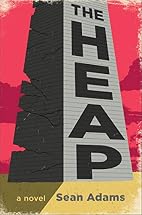
Orville is working as a volunteer digging in the rubble of a collapsed apartment building that once housed as many people as a decent-sized city. He's looking for his brother, Bernard, who, improbably, appears to have survived and to be broadcasting from a radio station somewhere deep in the ruins. And then Orville turns down an offer for a side job and finds himself falling afoul of... a secret society of murderous voice actors?
It's a strange, somewhat surreal story, but an enjoyable one. Also a humorous one, although not so much laugh-out-loud funny as entertainingly absurd, in a constant, low-key sort of way. And, interestingly enough, the little glimpses into what life was like in the city-sized apartment building were actually pretty clever and intriguing.
Rating: 4/5
(Note: This was a LibraryThing Early Reviewers book.)
Orville is working as a volunteer digging in the rubble of a collapsed apartment building that once housed as many people as a decent-sized city. He's looking for his brother, Bernard, who, improbably, appears to have survived and to be broadcasting from a radio station somewhere deep in the ruins. And then Orville turns down an offer for a side job and finds himself falling afoul of... a secret society of murderous voice actors?
It's a strange, somewhat surreal story, but an enjoyable one. Also a humorous one, although not so much laugh-out-loud funny as entertainingly absurd, in a constant, low-key sort of way. And, interestingly enough, the little glimpses into what life was like in the city-sized apartment building were actually pretty clever and intriguing.
Rating: 4/5
(Note: This was a LibraryThing Early Reviewers book.)
12bragan
3. Because Internet: Understanding the New Rules of Language by Gretchen McCulloch
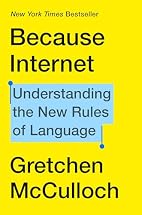
Linguist Gretchen McCullough looks at the way we use language online and in texting: how it's evolving, how it replicates features of verbal speech, how it varies among different groups of people (mainly by when you first started using the internet), and what linguists can learn from it.
It's all really interesting, even if it did reinforce my impression that I, as what McCullough categorizes as an Old Internet Person -- a label I can neither dispute nor find offense in -- have a real disconnect in communications style and conventions from Those Kids Today, to the extent that I may well be sending off entirely the wrong signals with my punctuation. Oops. Well, I guess it's at least better to know, right?
Despite the fact that I find this realization a bit depressing, the book as a whole was extremely enjoyable. McCullough's writing is clear, entertaining, breezy, and humorous. It's obvious she's having fun writing about this topic, and she makes it a lot of fun to read about, as well as providing a lot of interesting food for thought.
Rating: 4.5/5
Linguist Gretchen McCullough looks at the way we use language online and in texting: how it's evolving, how it replicates features of verbal speech, how it varies among different groups of people (mainly by when you first started using the internet), and what linguists can learn from it.
It's all really interesting, even if it did reinforce my impression that I, as what McCullough categorizes as an Old Internet Person -- a label I can neither dispute nor find offense in -- have a real disconnect in communications style and conventions from Those Kids Today, to the extent that I may well be sending off entirely the wrong signals with my punctuation. Oops. Well, I guess it's at least better to know, right?
Despite the fact that I find this realization a bit depressing, the book as a whole was extremely enjoyable. McCullough's writing is clear, entertaining, breezy, and humorous. It's obvious she's having fun writing about this topic, and she makes it a lot of fun to read about, as well as providing a lot of interesting food for thought.
Rating: 4.5/5
13AnnieMod
>11 bragan: Ah, good to see a review of this one. I am waiting for my library to receive its copies (it is on order) - it caught my eye in one of Locus's lists.
>12 bragan: And that is a book I really want to read now - linguistics is one of my pet topics that I like to explore. And my library has copies so on the list it goes. :)
>12 bragan: And that is a book I really want to read now - linguistics is one of my pet topics that I like to explore. And my library has copies so on the list it goes. :)
14bragan
>13 AnnieMod: I hope you like The Heap too. I don't know if it's likely to be everyone's cup of tea, or even if it would have worked as well for me if I was in a very different mood, but I certainly enjoyed it.
And linguistics is one of my favorite pet topics, too, so I really couldn't resist this one when I started hearing good things about it.
And linguistics is one of my favorite pet topics, too, so I really couldn't resist this one when I started hearing good things about it.
15rachbxl
>12 bragan: I like the sound of Because Internet, and I’ve downloaded a sample to my Kindle. Just this morning, actually, I found myself leaving a post on someone else’s thread which included the phrase ‘because too many books’, and I realized it was the first time I’d used ‘because’ like that. I find how language changes fascinating.
16bragan
>15 rachbxl: "Because x" is a fascinating construction, and a weirdly contagious one. I've often found myself wondering if it's just going to become a perfectly normal feature of English sometime in the future. It's weird and wonderful (if occasionally confusing) to watch this kind of language change in action.
17bragan
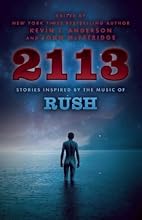
4. 2113: Stories Inspired by the Music of Rush edited by Kevin J. Anderson and John McFetridge
I was really bummed out by the news of the recent death of Neil Peart. I've said more than once that seeing Peart performing one of his extended virtuoso percussion solos live is the closest thing I've had to a religious experience, and that's only very slightly hyperbolic. It certainly wouldn't be at all hyperbolic to call it a transcendent experience.
So I was sort of wondering what I might do in memoriam, when I remembered I still had this volume sitting on my TBR shelves. And picking up a book seemed like a fitting way to pay tribute to a member of a band known for retiring to their hotel rooms to read while the other rock stars partied.
This anthology is pretty much exactly what the title says it is: stories inspired by various Rush songs, including both big hits and deep cuts. It also includes the story "A Nice Morning Drive" by Richard S. Foster, which directly inspired the song "Red Barchetta," and "Gonna Roll the Bones" by Fritz Leiber, which apparently was a vague and half-forgotten inspiration for "Roll the Bones."
I'll be honest, there are maybe three or four stories in here that I'd remotely describe as "good," and that's if you include the Fritz Leiber piece, which was written in 1967, and whose imaginative writing and fascinating weirdness are seriously marred by a couple of gratuitous racial slurs that felt like sudden and awful slaps across the face. Only one of them, Greg van Eekhout's "On the Fringes of the Fractal" (which I'd actually already encountered somewhere before, but which was worth re-reading), truly stands out. And even that one has a slightly weak ending.
The rest of them vary quite a bit in quality, but in general they're just... not terribly well-written. And yet, I did find the collection as a whole a bit more enjoyable than it seems to me that it objectively deserves. I'm sure some of that is me being in a forgiving and nostalgic mood. But I was also genuinely impressed by how even most of the weaker stories approached the subject matter. I more than half expected that we'd get a lot of pieces that read like novelizations of some of the more story-like songs, of which there are certainly plenty to choose from. But all of the authors put some real creativity into the assignment, and almost all of them gave us stories that have clear connections to the songs but build something unexpected on top of them. And even if I didn't think the results were always that great, I found that interesting enough to keep me fairly engaged. Mostly.
Rating: 3/5
I was really bummed out by the news of the recent death of Neil Peart. I've said more than once that seeing Peart performing one of his extended virtuoso percussion solos live is the closest thing I've had to a religious experience, and that's only very slightly hyperbolic. It certainly wouldn't be at all hyperbolic to call it a transcendent experience.
So I was sort of wondering what I might do in memoriam, when I remembered I still had this volume sitting on my TBR shelves. And picking up a book seemed like a fitting way to pay tribute to a member of a band known for retiring to their hotel rooms to read while the other rock stars partied.
This anthology is pretty much exactly what the title says it is: stories inspired by various Rush songs, including both big hits and deep cuts. It also includes the story "A Nice Morning Drive" by Richard S. Foster, which directly inspired the song "Red Barchetta," and "Gonna Roll the Bones" by Fritz Leiber, which apparently was a vague and half-forgotten inspiration for "Roll the Bones."
I'll be honest, there are maybe three or four stories in here that I'd remotely describe as "good," and that's if you include the Fritz Leiber piece, which was written in 1967, and whose imaginative writing and fascinating weirdness are seriously marred by a couple of gratuitous racial slurs that felt like sudden and awful slaps across the face. Only one of them, Greg van Eekhout's "On the Fringes of the Fractal" (which I'd actually already encountered somewhere before, but which was worth re-reading), truly stands out. And even that one has a slightly weak ending.
The rest of them vary quite a bit in quality, but in general they're just... not terribly well-written. And yet, I did find the collection as a whole a bit more enjoyable than it seems to me that it objectively deserves. I'm sure some of that is me being in a forgiving and nostalgic mood. But I was also genuinely impressed by how even most of the weaker stories approached the subject matter. I more than half expected that we'd get a lot of pieces that read like novelizations of some of the more story-like songs, of which there are certainly plenty to choose from. But all of the authors put some real creativity into the assignment, and almost all of them gave us stories that have clear connections to the songs but build something unexpected on top of them. And even if I didn't think the results were always that great, I found that interesting enough to keep me fairly engaged. Mostly.
Rating: 3/5
18rhian_of_oz
>16 bragan: My friend and I (women in our late 40s) use "because reasons" all the time. The usual context is talking about an action we took or decision we made where the point of the discussion is the consequences of the action/decision rather than the reasons behind it.
19bragan
>18 rhian_of_oz: Yeah, it's actually a strangely handy turn of phrase, I think.
I've seen it used for when the reasons are, in retrospect, rather unclear, too. Sort of an "it seemed like a good idea at the time," kind of thing.
I've seen it used for when the reasons are, in retrospect, rather unclear, too. Sort of an "it seemed like a good idea at the time," kind of thing.
20bragan
5. Where'd You Go, Bernadette by Maria Semple.

Bernadette Fox was a brilliant architect in LA, until something terrible happened, after which she moved to Seattle with her hotshot tech sector husband and her bright teenage daughter. But she hates Seattle. The life she's living might be driving her crazy, and an upcoming family trip to Antarctica may just push her over the edge. Finally, she just up and disappears, and her daughter desperately tries to piece together the clues to where she's gone.
None of that really captures the feel or the plot of the book, though. It's a bit of an odd one. There's a lot of humor, including some pretty strong satirizing of private school administrators and parents, but sometimes it seems more like a flat-out comedy than others. It's told largely in epistolary form, in a way that requires a fair amount of suspension of disbelief because nobody writes e-mails like that, but it mostly works. I think. Actually, pretty much all of it requires suspension of disbelief, now that I think about it. And it's hard to know quite what to make of the characters, especially the eccentric Bernadette. How sympathetic she is varies a lot, but she is at least interesting to watch.
Overall, I enjoyed it well enough. It's a fun read, in its own slightly off-kilter way. I do think it suffered a bit from over-hype, though, since when it first came out I seemed to be hearing it praised to the heavens all over the place. And it's not a book that I think deserves to be praised to the heavens. But it is entertaining.
Rating: Oh, let's call it 4/5.

Bernadette Fox was a brilliant architect in LA, until something terrible happened, after which she moved to Seattle with her hotshot tech sector husband and her bright teenage daughter. But she hates Seattle. The life she's living might be driving her crazy, and an upcoming family trip to Antarctica may just push her over the edge. Finally, she just up and disappears, and her daughter desperately tries to piece together the clues to where she's gone.
None of that really captures the feel or the plot of the book, though. It's a bit of an odd one. There's a lot of humor, including some pretty strong satirizing of private school administrators and parents, but sometimes it seems more like a flat-out comedy than others. It's told largely in epistolary form, in a way that requires a fair amount of suspension of disbelief because nobody writes e-mails like that, but it mostly works. I think. Actually, pretty much all of it requires suspension of disbelief, now that I think about it. And it's hard to know quite what to make of the characters, especially the eccentric Bernadette. How sympathetic she is varies a lot, but she is at least interesting to watch.
Overall, I enjoyed it well enough. It's a fun read, in its own slightly off-kilter way. I do think it suffered a bit from over-hype, though, since when it first came out I seemed to be hearing it praised to the heavens all over the place. And it's not a book that I think deserves to be praised to the heavens. But it is entertaining.
Rating: Oh, let's call it 4/5.
21avaland
>12 bragan: Sounds intriguing. I'm afraid I might be categorized as "caveperson," LOL. Hmm. Might be interested after I finish with the early 17th century and an overview of heredity.
22bragan
>21 avaland: I do think it's very much worth a read, even if it does make some of us feel very, very old. :)
23RidgewayGirl
>12 bragan: Not too long ago, my daughter told me that my texts come across as angry because of my habit of ending a text with a period. It's a hard habit to break!
24bragan
>23 RidgewayGirl: I know! After reading the book, I keep thinking I ought to try to stop doing that, myself, but I'm not sure I physically can.
25dchaikin
complete sentences in a text? (I question without a complete sentence.)
I kind of outgrew RUSH (although I do have the greatest hits collection in my Apple Music and might play 2112 intentionally every once in a while), but they, and Neil Peart, meant a lot to me high school and college years, my rebellion from popular new music. I was sad to hear of his passing. Feels like a lost era to me somehow. I will, however, pass on the book. 🙂
I kind of outgrew RUSH (although I do have the greatest hits collection in my Apple Music and might play 2112 intentionally every once in a while), but they, and Neil Peart, meant a lot to me high school and college years, my rebellion from popular new music. I was sad to hear of his passing. Feels like a lost era to me somehow. I will, however, pass on the book. 🙂
26bragan
>25 dchaikin: I swear, I think in complete, carefully punctuated sentences. How am I supposed to keep myself from texting that way?
I'm not as obsessed with Rush as I once was, but I never did outgrow them.
I'm not as obsessed with Rush as I once was, but I never did outgrow them.
27dchaikin
hmm. My thoughts have no grammar until I try to write them down and realize they don't make sense until I put some structure to them, to explain them to the outside world.
29stretch
>12 bragan: Growing up in an ASL house, we have been ready for this age for decades and I for one am excited the rest of world is catching up with deaf and their informal use of punctuation, grammar, and spelling.
30bragan
>29 stretch: McCullough talks a lot about how that informality arises because it's writing becoming a lot more like speech. I suppose it makes sense if Deaf folks have been using it that way ahead of the rest of us, but she doesn't mention it, and it wouldn't have occurred to me, so that's interesting to know!
I do find it fascinating how different groups use language and writing in different ways for different reasons. I just don't find it all equally easy to fall in with. There was a period in there when internet was full of nerds communicating to each other in wordy paragraphs, and being a wordy nerd, I was utterly in my element. Oh, well. I guess the world accommodated me wonderfully for a while, and now it's someone else's turn. :)
I do find it fascinating how different groups use language and writing in different ways for different reasons. I just don't find it all equally easy to fall in with. There was a period in there when internet was full of nerds communicating to each other in wordy paragraphs, and being a wordy nerd, I was utterly in my element. Oh, well. I guess the world accommodated me wonderfully for a while, and now it's someone else's turn. :)
31bragan
6. Wish You Were Here: The Official Biography of Douglas Adams by Nick Webb
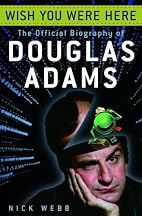
Like most right-thinking nerds -- or, at the very least, most right-thinking nerds of my own generation -- I am and always have been a huge fan of Douglas Adams. When pressed to name my all-time favorite book, a question that seems like it ought to be absurdly difficult for me, the only answer I ever find myself giving is The Hitchhiker's Guide to the Galaxy.
So you'd think this would be a book I'd snatch up immediately, but I somehow missed it when it was first published, in 2003, and even once I acquired a copy it sat on my TBR shelves for entirely too long. I think that having read Neil Gaiman's Don't Panic, a biography more of the Hitchhiker's series in its various incarnations than of the man himself, I thought this one would be a bit extraneous, of interest more for completeness' sake than anything else.
Well, that was silly of me, and I'm glad I finally got around to it, because it's terrific. I admit, I wasn't entirely certain of that at first. For a brief while I found myself thinking that perhaps Nick Webb was trying a little to hard to mimic Adams' style and sense of humor. But I quickly realized that, no, Webb is just a very witty and thoughtful author in his own right. I often look askance at biographers who insert too much of themselves and their own thoughts into their work, but Webb's asides about various topics that Adams was interested in, from evolutionary biology to computer technology to music, are delightful and fascinating and very much feel as if they belong here. The insights into the publishing industry that he brings from his personal experience are useful, too.
Webb knew Adams personally, and clearly liked and respected him a great deal, so this portrait is full of affection, but doesn't turn a blind eye to his faults and foibles. The resulting picture of Adams feels well-rounded and endearingly human.
It's not a flawless effort, admittedly. The non-chronological structure does sometimes make for a slight awkwardness when people or projects are mentioned before they're properly introduced. And Webb clearly doesn't know very much about Doctor Who, even getting the airdates wrong. But I am very much inclined to forgive these faults, given how thoroughly I enjoyed reading this.
And now I'm sad all over again at how unfairly early the world was deprived of Adams' presence.
Rating: 4.5/5
Like most right-thinking nerds -- or, at the very least, most right-thinking nerds of my own generation -- I am and always have been a huge fan of Douglas Adams. When pressed to name my all-time favorite book, a question that seems like it ought to be absurdly difficult for me, the only answer I ever find myself giving is The Hitchhiker's Guide to the Galaxy.
So you'd think this would be a book I'd snatch up immediately, but I somehow missed it when it was first published, in 2003, and even once I acquired a copy it sat on my TBR shelves for entirely too long. I think that having read Neil Gaiman's Don't Panic, a biography more of the Hitchhiker's series in its various incarnations than of the man himself, I thought this one would be a bit extraneous, of interest more for completeness' sake than anything else.
Well, that was silly of me, and I'm glad I finally got around to it, because it's terrific. I admit, I wasn't entirely certain of that at first. For a brief while I found myself thinking that perhaps Nick Webb was trying a little to hard to mimic Adams' style and sense of humor. But I quickly realized that, no, Webb is just a very witty and thoughtful author in his own right. I often look askance at biographers who insert too much of themselves and their own thoughts into their work, but Webb's asides about various topics that Adams was interested in, from evolutionary biology to computer technology to music, are delightful and fascinating and very much feel as if they belong here. The insights into the publishing industry that he brings from his personal experience are useful, too.
Webb knew Adams personally, and clearly liked and respected him a great deal, so this portrait is full of affection, but doesn't turn a blind eye to his faults and foibles. The resulting picture of Adams feels well-rounded and endearingly human.
It's not a flawless effort, admittedly. The non-chronological structure does sometimes make for a slight awkwardness when people or projects are mentioned before they're properly introduced. And Webb clearly doesn't know very much about Doctor Who, even getting the airdates wrong. But I am very much inclined to forgive these faults, given how thoroughly I enjoyed reading this.
And now I'm sad all over again at how unfairly early the world was deprived of Adams' presence.
Rating: 4.5/5
32stretch
>31 bragan: I'm terrified biographies. They either glowing or tear downs. I'm genuinely afraid of what might be learned about someone I admire and was so formative. Douglas Adams Hitchhiker Guide is a bedrock book and I've refused to color that impression by learning anything deeper even about it's many adaptations. But I might have to give this biography a try.
33bragan
>32 stretch: That's fair enough. I've certainly learned things about people I've admired that I really, really don't want in my brain. I wouldn't say this one is either glowing or a teardown. It just makes the guy seem human in ways I could understand easily enough. Certainly flawed, but also very special. But the flaws still may or may not be something you want to hear about, even if I don't think they're anything particularly awful, myself.
34bragan
7. The Bear by Andrew Krivak
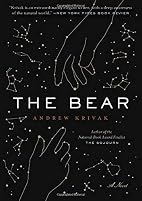
A short, beautiful little novel about a girl and her father, the last two people on Earth, who live halfway up an isolated mountain.
The writing in this really is just lovely. Not fancy, not clever in a show-offy sort of way, but clean and elegant and perfect.
The story itself surprised me a little. Partway through, it becomes partially a survival story, which I expected, and partly an odd sort of fable, in which various animals begin to talk to the girl and help her to survive. That took me aback a bit at first, and I found myself thinking that I preferred the earlier, more realistic parts of the story. But the writing continued to be lovely, and in the end, it all worked for me, very well. Indeed, I wasn't at all prepared for just how much the ending affected me, emotionally.
Rating: 4.5/5
(Note: This was a LibraryThing Early Reviewers book.)
A short, beautiful little novel about a girl and her father, the last two people on Earth, who live halfway up an isolated mountain.
The writing in this really is just lovely. Not fancy, not clever in a show-offy sort of way, but clean and elegant and perfect.
The story itself surprised me a little. Partway through, it becomes partially a survival story, which I expected, and partly an odd sort of fable, in which various animals begin to talk to the girl and help her to survive. That took me aback a bit at first, and I found myself thinking that I preferred the earlier, more realistic parts of the story. But the writing continued to be lovely, and in the end, it all worked for me, very well. Indeed, I wasn't at all prepared for just how much the ending affected me, emotionally.
Rating: 4.5/5
(Note: This was a LibraryThing Early Reviewers book.)
35mabith
Definitely putting Because Internet on my list, and another review tempting me towards The Bear.
Looking forward to seeing your reading again!
Looking forward to seeing your reading again!
36lisapeet
>I had passed by a galley of The Bear earlier, but after reading your comments and grabbed one. Looking forward to it.
37sallypursell
>4 bragan: Bragan, this is only year two for me, and I can't recall whether we ever met. If not, well met. I just bought The City of Brass, but won't be reading it for awhile. I've got so much else to read first. I am truly looking forward to it.
38sallypursell
>14 bragan: Count me in as another person who has taken linguistics as a favorite pet topic. And who uses Standard English in texting. I'm yet another Older Internet Person. I once was sysop of a BBS in my house.
39sallypursell
>34 bragan: All of these are enticing. Dropping a star.
40bragan
>35 mabith: Thanks! I'm hoping to do a lot more good reading. Even if my pace does seem to have slowed down a bit these days.
I hope you enjoy those two as much as I did.
>36 lisapeet: Honestly, The Bear isn't one that seems like it should be as good as it is, but it's written with such poise that it just can't not work beautifully. Well, that was my feeling, anyway. I hope you like it, too!
>37 sallypursell: I know I recognize your username, and I have the feeling we've maybe interacted at some point, but my memory for such things is so terrible that I'm honestly not at all sure. So I'll just say a hearty "well met!" back atcha.
City of Brass took me quite a while to get to after I picked it up, too, but it was worth it.
>38 sallypursell: Yeah, that's some high-quality Old Internet Person credentials!
I hope you enjoy those two as much as I did.
>36 lisapeet: Honestly, The Bear isn't one that seems like it should be as good as it is, but it's written with such poise that it just can't not work beautifully. Well, that was my feeling, anyway. I hope you like it, too!
>37 sallypursell: I know I recognize your username, and I have the feeling we've maybe interacted at some point, but my memory for such things is so terrible that I'm honestly not at all sure. So I'll just say a hearty "well met!" back atcha.
City of Brass took me quite a while to get to after I picked it up, too, but it was worth it.
>38 sallypursell: Yeah, that's some high-quality Old Internet Person credentials!
41valkyrdeath
>12 bragan: I was going to stick Because Internet onto my list but found it's already there. The perils of a far too long To Read list. I do love that sort of language book so you've definitely made me want to get to it soon.
>31 bragan: Douglas Adams always seems an interesting person. I've certainly heard plenty about his flaws and it sounds like he could be infuriating to work with, but I don't think I've really heard anything that made him sound particularly unlikable thankfully. Did the book cover much about his work on the Infocom games?
>31 bragan: Douglas Adams always seems an interesting person. I've certainly heard plenty about his flaws and it sounds like he could be infuriating to work with, but I don't think I've really heard anything that made him sound particularly unlikable thankfully. Did the book cover much about his work on the Infocom games?
42bragan
>41 valkyrdeath: Oh, I hear you on the too-large wishlist/To Read list. That happens to me all the time.
And, yes, Wish You Were Here does talk a bit about his Infocom game stuff. Not in great detail, but more than I'd seen elsewhere. And there's quite a bit about the Starship Titanic game development.
And, yes, Wish You Were Here does talk a bit about his Infocom game stuff. Not in great detail, but more than I'd seen elsewhere. And there's quite a bit about the Starship Titanic game development.
43valkyrdeath
>42 bragan: I was already interested in the book, but I'm even more curious now. I've read quite a bit about the Infocom games and his work (or lack of) on them but I've actually seen very little about the development of Starship Titanic before.
44bragan
8. The Wishing Spell by Chris Colfer
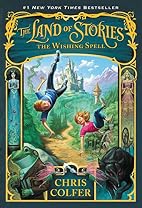
This first volume in the Land of Stories series of kids' novels features eleven-year-old twins who are magically drawn into a book of fairy tales and have to go on a sort of quest through the realms of various classic fairy tale characters in an attempt to put together a spell to get home.
This one got off on the wrong foot with me a bit, with a rather slow start and some well-meaning but very wrong-headed lecturing about the nature and value of fairy tales in the modern world. Once the story got going, I found myself thinking it was a mixture of the pleasantly cute and the slightly too silly, but the more of it I read, the more it won me over. It's not the single most creative riff on fairy tales I've ever seen, but it's decently so, and it does a surprisingly good job at making the familiar characters feel like actual people, even the ones that we don't spend a whole lot of time with. Its take on the Evil Queen from Snow White is particularly interesting and well-done, even if elements of her story do maybe remind me just a little too much of the version from TV's Once Upon a Time. And while the plot isn't much, I'm not sure it really needs to be. It seems to serve mostly to move the kids around and introduce them to various characters and their kingdoms and stories, and it works OK for that.
Anyway, on the whole this turned out, ultimately, to be a fun read that I'm sure I would have enjoyed as a kid, and still found reasonably entertaining as an adult.
I already have the rest of the books in the series, so I'll definitely be getting to them at some point.
Rating: a slightly generous 4/5
This first volume in the Land of Stories series of kids' novels features eleven-year-old twins who are magically drawn into a book of fairy tales and have to go on a sort of quest through the realms of various classic fairy tale characters in an attempt to put together a spell to get home.
This one got off on the wrong foot with me a bit, with a rather slow start and some well-meaning but very wrong-headed lecturing about the nature and value of fairy tales in the modern world. Once the story got going, I found myself thinking it was a mixture of the pleasantly cute and the slightly too silly, but the more of it I read, the more it won me over. It's not the single most creative riff on fairy tales I've ever seen, but it's decently so, and it does a surprisingly good job at making the familiar characters feel like actual people, even the ones that we don't spend a whole lot of time with. Its take on the Evil Queen from Snow White is particularly interesting and well-done, even if elements of her story do maybe remind me just a little too much of the version from TV's Once Upon a Time. And while the plot isn't much, I'm not sure it really needs to be. It seems to serve mostly to move the kids around and introduce them to various characters and their kingdoms and stories, and it works OK for that.
Anyway, on the whole this turned out, ultimately, to be a fun read that I'm sure I would have enjoyed as a kid, and still found reasonably entertaining as an adult.
I already have the rest of the books in the series, so I'll definitely be getting to them at some point.
Rating: a slightly generous 4/5
45bragan
9. Homes and Other Black Holes by Dave Barry

Dave Barry's short, humorously useless 1988 guide to home-buying and home-ownership.
I find Dave Barry less side-splittingly funny now than I used to back in the day. Maybe that's just because having read approximately a gazillion of his books, his humor has become a little over-familiar. Still, this one did make me chuckle out loud a few times. And it made me remember how glad I am not to be buying a new house and moving any time soon. Or, if I can help it, at all. Ever.
Rating: A possibly overly generous 4/5

Dave Barry's short, humorously useless 1988 guide to home-buying and home-ownership.
I find Dave Barry less side-splittingly funny now than I used to back in the day. Maybe that's just because having read approximately a gazillion of his books, his humor has become a little over-familiar. Still, this one did make me chuckle out loud a few times. And it made me remember how glad I am not to be buying a new house and moving any time soon. Or, if I can help it, at all. Ever.
Rating: A possibly overly generous 4/5
46bragan
10. No One Is Coming to Save Us by Stephanie Powell Watts

This novel centers on an African-American family in a small town in North Carolina, and primarily on the aging Sylvia and her daughter Ava, who is dealing with infertility, a philandering husband, and the return to town of her childhood best friend/old flame after a long absence.
My feelings about this one are so mixed that it's actually kind of hard to articulate them. There is certainly quite a bit here to like. Sylvia is a good character, complex and interesting. Ava was less so to me, but there were times when Watts made me feel for her pretty effectively. And there are some genuinely insightful moments, about all kinds of things: family relationships and those between men and women, aging, regrets, class and race and sex, the human experience in general and that of black women in particular.
And yet, there was just something about the writing here that I struggled with, and I can't even entirely put my finger on what it is. Or rather, I can identify some of it: The way it sometimes randomly changes POV for a few sentences or a few pages (a style some people can pull off, but which usually just really irritates me, and mostly did here). The way it also sometimes slips into flashback without warning in a way that can be briefly confusing. The way the characters sometimes slip out of realistic-sounding dialog and start speaking more in Meaningful Abstractions.
Actually, now that I look at that list, maybe that's explanation enough. I don't know. What I do know is that for a while in the middle, I was absorbed enough in these people's lives to be reasonably happy with it, anyway, but by the end I was feeling impatient and a little unsatisfied.
Rating: I kind of don't want to, but I have to call this one 3.5/5.

This novel centers on an African-American family in a small town in North Carolina, and primarily on the aging Sylvia and her daughter Ava, who is dealing with infertility, a philandering husband, and the return to town of her childhood best friend/old flame after a long absence.
My feelings about this one are so mixed that it's actually kind of hard to articulate them. There is certainly quite a bit here to like. Sylvia is a good character, complex and interesting. Ava was less so to me, but there were times when Watts made me feel for her pretty effectively. And there are some genuinely insightful moments, about all kinds of things: family relationships and those between men and women, aging, regrets, class and race and sex, the human experience in general and that of black women in particular.
And yet, there was just something about the writing here that I struggled with, and I can't even entirely put my finger on what it is. Or rather, I can identify some of it: The way it sometimes randomly changes POV for a few sentences or a few pages (a style some people can pull off, but which usually just really irritates me, and mostly did here). The way it also sometimes slips into flashback without warning in a way that can be briefly confusing. The way the characters sometimes slip out of realistic-sounding dialog and start speaking more in Meaningful Abstractions.
Actually, now that I look at that list, maybe that's explanation enough. I don't know. What I do know is that for a while in the middle, I was absorbed enough in these people's lives to be reasonably happy with it, anyway, but by the end I was feeling impatient and a little unsatisfied.
Rating: I kind of don't want to, but I have to call this one 3.5/5.
47RidgewayGirl
>46 bragan: I've got this on my tbr and I'm still going to read it, but I'm glad to know that it mind-hops before I start it.
48bragan
>47 RidgewayGirl: It only does it occasionally, really, and only in the longer chapters, but I'm not sure if that makes it any better. The novels I've read where doing that actually works are at least more consistent in the way they do it.
49bragan
11. Strange Planet by Nathan W. Pyle

A small collection of Nathan W. Pyle's Strange Planet cartoons, featuring aliens who experience normal, everyday events and emotions but describe them in ways that are literally accurate but quirkily off-kilter, and who always seem adorably surprised by the newness of it all.
That description doesn't really give you any sense of what this is like at all, though. It certainly doesn't capture how hilarious and charming it is, or the way it somehow makes you see the familiar world from a fresh, new perspective in an astonishingly effective sort of way. It's much better, I think, if you just go here and sample a few for yourself. Or just get the book, because it's a cover-to-cover delight.
Rating: 5/5

A small collection of Nathan W. Pyle's Strange Planet cartoons, featuring aliens who experience normal, everyday events and emotions but describe them in ways that are literally accurate but quirkily off-kilter, and who always seem adorably surprised by the newness of it all.
That description doesn't really give you any sense of what this is like at all, though. It certainly doesn't capture how hilarious and charming it is, or the way it somehow makes you see the familiar world from a fresh, new perspective in an astonishingly effective sort of way. It's much better, I think, if you just go here and sample a few for yourself. Or just get the book, because it's a cover-to-cover delight.
Rating: 5/5
50avidmom
Stopping by to wave hi and hang my star. :)
>6 bragan: That looks fantastic! I really liked Where'd You Go Bernadette but felt the same way about the e-mails. It was a bit hard to believe.
>6 bragan: That looks fantastic! I really liked Where'd You Go Bernadette but felt the same way about the e-mails. It was a bit hard to believe.
51bragan
>50 avidmom: Greetings!
52bragan
12. Paradox Bound by Peter Clines

It turns out the American dream is an actual physical (or maybe metaphysical?) object, created by America's founders with the help of an Egyptian god and imbued with the power to shape the character of the nation. Only it went missing sometime in the 1960s, and now a group of travelers in various classic vehicles are on a giant road trip back and forth through all of the country's history searching for it, while the (literally) faceless men created to guard the thing attempt to stop them.
It's a ridiculous premise, but one with all kind of glorious potential for wacky time travel hijinks and a bit of satiric social commentary, but while I found it mildly entertaining (although more in some places than others), I mostly wish I liked it more than I did. It's not bad, really. It does deliver on the wacky time travel hijinks. There are also some genuinely creepy villains and some sly pop culture references of the kind that I always appreciate. (There's a very stealthy Doctor Who one in there you have to be a true geek to get, and it made me laugh out loud.) But there are a lot of plot elements that are sillier than they probably should be, even given the silliness of the concept, and the satiric social commentary, which could have been sharp and interesting, is barely gestured at, rather than explored. The ending's not super satisfying, either. In principle, maybe it works. In execution, it's a bit anticlimactic.
Still, I don't want to be too hard on it. It is kind of fun, and I suspect the fact that I've had kind of a rough week that wasn't entirely conducive to immersing oneself in this kind of a crazy romp is responsible for maybe half of my somewhat lukewarm reaction. I certainly wouldn't recommend against it for anyone who thinks the premise sounds good. But I do wish it had been more the reading experience I wanted it to be.
Rating: 3.5/5

It turns out the American dream is an actual physical (or maybe metaphysical?) object, created by America's founders with the help of an Egyptian god and imbued with the power to shape the character of the nation. Only it went missing sometime in the 1960s, and now a group of travelers in various classic vehicles are on a giant road trip back and forth through all of the country's history searching for it, while the (literally) faceless men created to guard the thing attempt to stop them.
It's a ridiculous premise, but one with all kind of glorious potential for wacky time travel hijinks and a bit of satiric social commentary, but while I found it mildly entertaining (although more in some places than others), I mostly wish I liked it more than I did. It's not bad, really. It does deliver on the wacky time travel hijinks. There are also some genuinely creepy villains and some sly pop culture references of the kind that I always appreciate. (There's a very stealthy Doctor Who one in there you have to be a true geek to get, and it made me laugh out loud.) But there are a lot of plot elements that are sillier than they probably should be, even given the silliness of the concept, and the satiric social commentary, which could have been sharp and interesting, is barely gestured at, rather than explored. The ending's not super satisfying, either. In principle, maybe it works. In execution, it's a bit anticlimactic.
Still, I don't want to be too hard on it. It is kind of fun, and I suspect the fact that I've had kind of a rough week that wasn't entirely conducive to immersing oneself in this kind of a crazy romp is responsible for maybe half of my somewhat lukewarm reaction. I certainly wouldn't recommend against it for anyone who thinks the premise sounds good. But I do wish it had been more the reading experience I wanted it to be.
Rating: 3.5/5
53bragan
13. Pain Studies by Lisa Olstein

The author of this short book about pain is a poet, and although it's described as "an extended essay" it really does feel more like poetry than prose. Olstein, who suffers from horrific chronic migraines, seems to be grasping for words and metaphors and associations with which to describe the experience of pain, something so personal and so much of the animal part of ourselves that it is perhaps almost impossible to capture it meaningfully in language. In the process, she draws on various pieces of culture and history, from the TV show House (whose relevance to the subject is pretty obvious) to an almost obsessive fascination with Joan of Arc (whose significance in this context still feels obscure to me, even after many pages spent on her, given that it seems to have little to do with actual the pain of being burned at the stake).
It's hard for me to even know how to review this. All I can say is that there were moments where I really got what she was saying, where she seemed to have captured something insightful and visceral. And many other moments where, although I respect the thought and the effort and the deeply personal nature of the writing, it failed to do anything I could really connect with. Part of that might be due to the fact that I, mercifully, haven't experienced the same kind of pain she has. A lot of it no doubt is that I just don't naturally think very much like a poet.
Rating: Rating this solely on my own experience of it and how well it worked for me, I'm giving it a 3.5/5, but I'm not sure that rating means much of anything.
(Note: This was a LibraryThing Early Reviewers book.)

The author of this short book about pain is a poet, and although it's described as "an extended essay" it really does feel more like poetry than prose. Olstein, who suffers from horrific chronic migraines, seems to be grasping for words and metaphors and associations with which to describe the experience of pain, something so personal and so much of the animal part of ourselves that it is perhaps almost impossible to capture it meaningfully in language. In the process, she draws on various pieces of culture and history, from the TV show House (whose relevance to the subject is pretty obvious) to an almost obsessive fascination with Joan of Arc (whose significance in this context still feels obscure to me, even after many pages spent on her, given that it seems to have little to do with actual the pain of being burned at the stake).
It's hard for me to even know how to review this. All I can say is that there were moments where I really got what she was saying, where she seemed to have captured something insightful and visceral. And many other moments where, although I respect the thought and the effort and the deeply personal nature of the writing, it failed to do anything I could really connect with. Part of that might be due to the fact that I, mercifully, haven't experienced the same kind of pain she has. A lot of it no doubt is that I just don't naturally think very much like a poet.
Rating: Rating this solely on my own experience of it and how well it worked for me, I'm giving it a 3.5/5, but I'm not sure that rating means much of anything.
(Note: This was a LibraryThing Early Reviewers book.)
54OscarWilde87
I only found my way here today, so there was a lot of catching up to do. Interesting books you read so far. I was especially interested in the linguistics book about how the internet has changed/is changing the way we communicate.
55bragan
>54 OscarWilde87: Hello! Never too late to read about interesting books, right?
I've always been really interested in linguistics, and as someone born before it existed, I'm almost as fascinated by the cultural impact the internet has had, so there was no way I was going to pass up that particular book.
I've always been really interested in linguistics, and as someone born before it existed, I'm almost as fascinated by the cultural impact the internet has had, so there was no way I was going to pass up that particular book.
56rocketjk
Hey! I finally found your thread, here. Great stuff! I'll be following along the rest of the year. Cheers!
57bragan
>56 rocketjk: Hello!
58OscarWilde87
>55 bragan: Very true. I'll try and find my way here more often. But as always, the time I spend here is less time spent reading. Work just consumes too much time, I'm afraid.
I am also interested in the way languages evolve over time and the Internet is certainly a factor one should not disregard. I am not sure whether I like the development, though.
I am also interested in the way languages evolve over time and the Internet is certainly a factor one should not disregard. I am not sure whether I like the development, though.
59bragan
>58 OscarWilde87: That's the problem with life, really. Every minute you spend doing something else is time spent not reading! Well, unless you can read while you're doing it. :)
60rocketjk
>59 bragan: This is the reason why I resisted a Netflix subscription for so long!
61bragan
14. The Testaments by Margaret Atwood

This is, of course, the long-belated sequel to Atwood's classic The Handmaid's Tale. I read the original novel back in the 90s and don't remember a lot of specifics about it (although from what I do remember, I am positive it would read very differently to me now than it did then). I've also seen the TV adaptation, or at least the first two seasons.
Knowing what an impact The Handmaid's Tale the novel has had, and having fairly fresh in my mind just how powerful and disturbing and relevant the TV series felt, it was hard not to have high expectations of this sequel. Which is too bad, because...
Well. It's not a bad book, to start with. I'm not sure Atwood is capable of writing a bad book. The writing in his one flowed along nicely, and it was an engaging enough read. The plot isn't much, but the depictions of life in Gilead are always interesting, in their own depressing way.
But it's impossible not to feel like it ought to have been something more. That there ought to be a lot of new things for this sequel to say to us, in this world we're living in today. But mostly it just all felt... familiar. More of the same. Readable enough, yes. But powerful? Not really.
I suppose it does try to say some interesting things about complicity and collaboration and the possibility of bringing down the system from the inside, with what it does with the character of Aunt Lydia. But none of it feels particularly deep, I'm afraid. And while this version of Lydia is interesting... Well, I almost feel bad saying it, but I think I find the version from the TV series more so.
Rating: It's hard to know how to rate this, because it's almost impossible to divorce the reality of it from the expectation. And maybe divorcing the two isn't really the right thing to do, anyway. With that in mind, I'm giving it a 3.5/5.

This is, of course, the long-belated sequel to Atwood's classic The Handmaid's Tale. I read the original novel back in the 90s and don't remember a lot of specifics about it (although from what I do remember, I am positive it would read very differently to me now than it did then). I've also seen the TV adaptation, or at least the first two seasons.
Knowing what an impact The Handmaid's Tale the novel has had, and having fairly fresh in my mind just how powerful and disturbing and relevant the TV series felt, it was hard not to have high expectations of this sequel. Which is too bad, because...
Well. It's not a bad book, to start with. I'm not sure Atwood is capable of writing a bad book. The writing in his one flowed along nicely, and it was an engaging enough read. The plot isn't much, but the depictions of life in Gilead are always interesting, in their own depressing way.
But it's impossible not to feel like it ought to have been something more. That there ought to be a lot of new things for this sequel to say to us, in this world we're living in today. But mostly it just all felt... familiar. More of the same. Readable enough, yes. But powerful? Not really.
I suppose it does try to say some interesting things about complicity and collaboration and the possibility of bringing down the system from the inside, with what it does with the character of Aunt Lydia. But none of it feels particularly deep, I'm afraid. And while this version of Lydia is interesting... Well, I almost feel bad saying it, but I think I find the version from the TV series more so.
Rating: It's hard to know how to rate this, because it's almost impossible to divorce the reality of it from the expectation. And maybe divorcing the two isn't really the right thing to do, anyway. With that in mind, I'm giving it a 3.5/5.
62OscarWilde87
>59 bragan: Aptly put! :)
63dchaikin
>49 bragan: love Strange Planet
>62 OscarWilde87: yeah, I felt all your concerns. The Testaments was a flat meh for me. I haven’t watched the series, so you have me curious what they do with Aunt Lydia there.
Also, it’s been too long since I stopped by and waved hello. I enjoyed visiting and catching up.
>62 OscarWilde87: yeah, I felt all your concerns. The Testaments was a flat meh for me. I haven’t watched the series, so you have me curious what they do with Aunt Lydia there.
Also, it’s been too long since I stopped by and waved hello. I enjoyed visiting and catching up.
64sallypursell
Hi, bragan, just topping by to catch up.
65bragan
>63 dchaikin: Mostly what they do with Aunt Lydia is some damned fine acting that gives you the sense that she genuinely does care about these people to whom she's doing utterly unforgivable and horrific things. It may just be me making assumptions or reading into the performance, and for all I know they will (or already have, since I haven't seen the most recent season) incorporate the ideas about her we see in The Testaments. But my sense of the TV version, in the episodes I've seen, is that she probably actually believes in what she's doing, even if she's not always happy about the specifics of what happens. Which feels very real and complex and gut-wrenching to me in a way that The Testaments' ruthlessly calculating and utterly hypocritical version doesn't. Indeed, one thing The Testaments is notably lacking in is people who do terrible things because they've convinced themselves they're the right things (or at least necessary things), as opposed to because it serves their selfish ends, or is what they feel they have to do to survive inside the system. But the real world is full of such people.
Also, hello, and good to see you here!
>64 sallypursell: Hello to you, too!
Also, hello, and good to see you here!
>64 sallypursell: Hello to you, too!
67avaland
>61 bragan:, >65 bragan: Thanks for that thoughtful review. if I'm remembering correctly we get Aunt Lydia's background early in season 3. And I'm not sure it entirely jives with the book sequel (now I'm going to have to pull out the book and see). But she has definitely drunk the Gilead Kool-aid. Season 4 is due this fall apparently.
68bragan
>67 avaland: Thanks for the note on TV Lydia. I'll be interested to see how it plays out when I get the chance to see season 3. Which I think should be reasonably soon. I don't have Hulu, so I've been waiting for it to come out on DVD. (I have kept my Netflix DVD subscription for just such situations. You can still get stuff from other streaming services from them that way, if you're willing to wait for them, which I find much more congenial than subscribing to a gazillion different things.) But after reading The Testaments, I went and checked, and season 3 is now out. I just need to finish watching, oh, four or five other things first.
69avaland
>68 bragan: Interesting. I have to say, there are some fabulous, well-crafted, intelligent shows out there now.
70bragan
>69 avaland: There are! TV has really come into its own as a medium, and I love it. But it's left me with more good stuff than I can possibly watch. Which I did not need on top of having more books than I can possibly read. :)
71RidgewayGirl
>65 bragan: ...one thing The Testaments is notably lacking in is people who do terrible things because they've convinced themselves they're the right things (or at least necessary things)...
That is a very good point!
That is a very good point!
72bragan
>71 RidgewayGirl: And it's something that I think takes some of the ring of truth out of it, honestly.
73bragan
15. Dead Man's Hand: An Anthology of the Weird West edited by John Joseph Adams
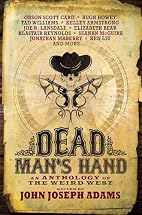
An anthology of stories set in versions of the Wild West populated by supernatural creatures, clockwork gunfighters, dark magic, steampunk contraptions, and other kinds of, well, weirdness.
This blending of genres has the potential for all kinds of fun, imaginative storytelling, and I've really liked the other anthologies of Adams' that I've read, so I had high hopes for this one. Unfortunately, I found it disappointing. There are a number of good stories, although even most of those aren't particularly memorable. (Jonathan Maberry's "Red Dreams," with its eerie image of a procession of the West's murdered dead is a notable exception, as is Walter Jon Williams' delightful, pitch-perfect Gold Rush superhero story, "The Golden Age.") But it seems like for every reasonably enjoyable piece I read, I'd turn the page and find myself sighing, "Oh, goodie, yet another pointless, flatly written monster hunt plot featuring characters who spend half their time expositing their backstories at each other." There hardly seems to be an excuse for something like a weird western to be dull, but far too many of them managed it anyway. Throw all of those out, and I think you'd end up with a collection half as long and at least ten times as good.
Rating: 3/5, with apologies to the truly good stories in here
An anthology of stories set in versions of the Wild West populated by supernatural creatures, clockwork gunfighters, dark magic, steampunk contraptions, and other kinds of, well, weirdness.
This blending of genres has the potential for all kinds of fun, imaginative storytelling, and I've really liked the other anthologies of Adams' that I've read, so I had high hopes for this one. Unfortunately, I found it disappointing. There are a number of good stories, although even most of those aren't particularly memorable. (Jonathan Maberry's "Red Dreams," with its eerie image of a procession of the West's murdered dead is a notable exception, as is Walter Jon Williams' delightful, pitch-perfect Gold Rush superhero story, "The Golden Age.") But it seems like for every reasonably enjoyable piece I read, I'd turn the page and find myself sighing, "Oh, goodie, yet another pointless, flatly written monster hunt plot featuring characters who spend half their time expositing their backstories at each other." There hardly seems to be an excuse for something like a weird western to be dull, but far too many of them managed it anyway. Throw all of those out, and I think you'd end up with a collection half as long and at least ten times as good.
Rating: 3/5, with apologies to the truly good stories in here
74bragan
16. One Giant Leap by Charles Fishman

First off, it's probably good to be clear on what this book isn't. It's not a simple history of the Apollo space program. If you're looking for an account of what happened on the various space missions, especially one that's at all focused on the astronauts, this isn't the book you want. (I wholeheartedly recommend Andrew Chaikin's A Man on the Moon for that.)
This one, I think, assumes you know the general outline of how it all went, and chooses to focus instead on aspects of the moon missions that don't necessarily get a lot of attention and on putting the program in context, both the context of its own time and of what it means to us today.
To that end, Fishman talks a lot about the politics of the time, how Kennedy approached the decisions involved in his directive to put a man on the moon by the end of the decade, and in the way that the moon program was inextricably linked with the politics of the Cold War.
He also goes into a lot of detail about how the computers used on the spacecraft where designed and built, while putting forth the idea that NASA's use of the then-new technology of integrated circuits was instrumental in pushing the development of computers forward, meaning that whether or not Apollo truly heralded the dawn of the Space Age, it was important in ushering in the Digital Age to an extent that's not usually sufficiently appreciated.
And he talks a fair amount about Apollo in the popular consciousness, then and now, the ways in which we think about the legacy of the program, the ways in which, perhaps we should think about it, and whether, in the end, it counts as a success or a failure. (Spoiler: he goes for "success," arguing that those who call it a failure based on the fact that it didn't ultimately lead to the glorious future in space that a lot of people were hoping for really aren't looking at things the right way.)
As someone who's had a long fascination with the early days of spaceflight in general and the Apollo program in particular, I found this an interesting addition to my store of knowledge of and thinking about the topic. After having read so many books on the subject, it's always good to come across one that has new things to say and tells me a few things I didn't already know.
Rating: 4/5

First off, it's probably good to be clear on what this book isn't. It's not a simple history of the Apollo space program. If you're looking for an account of what happened on the various space missions, especially one that's at all focused on the astronauts, this isn't the book you want. (I wholeheartedly recommend Andrew Chaikin's A Man on the Moon for that.)
This one, I think, assumes you know the general outline of how it all went, and chooses to focus instead on aspects of the moon missions that don't necessarily get a lot of attention and on putting the program in context, both the context of its own time and of what it means to us today.
To that end, Fishman talks a lot about the politics of the time, how Kennedy approached the decisions involved in his directive to put a man on the moon by the end of the decade, and in the way that the moon program was inextricably linked with the politics of the Cold War.
He also goes into a lot of detail about how the computers used on the spacecraft where designed and built, while putting forth the idea that NASA's use of the then-new technology of integrated circuits was instrumental in pushing the development of computers forward, meaning that whether or not Apollo truly heralded the dawn of the Space Age, it was important in ushering in the Digital Age to an extent that's not usually sufficiently appreciated.
And he talks a fair amount about Apollo in the popular consciousness, then and now, the ways in which we think about the legacy of the program, the ways in which, perhaps we should think about it, and whether, in the end, it counts as a success or a failure. (Spoiler: he goes for "success," arguing that those who call it a failure based on the fact that it didn't ultimately lead to the glorious future in space that a lot of people were hoping for really aren't looking at things the right way.)
As someone who's had a long fascination with the early days of spaceflight in general and the Apollo program in particular, I found this an interesting addition to my store of knowledge of and thinking about the topic. After having read so many books on the subject, it's always good to come across one that has new things to say and tells me a few things I didn't already know.
Rating: 4/5
75bragan
17. The Enchantress Returns by Chris Colfer
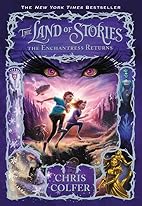
This is book two in the Land of Stories series of kids' novels. I had mixed feelings about the first volume in the beginning, but found that eventually it won me over. This one, I'm pleased to report, I enjoyed all the way through. It doesn't exactly have that memorable, instant-classic quality I'm always secretly hoping for when I open up a book aimed at kids, but it's fun. I particularly enjoy Colfer's versions of classic fairy tale characters. They're flawed, quirky, and always entertaining. Especially the earthy, hard-drinking Mother Goose, who I just wish had been in more of the story and who I'm hoping to see again in future installments.
I do hope we're done with collect-the-items quest plots for the rest of the series, though. I know it's a venerable fantasy trope, but two of them in as many books seems like about enough of that for a while.
Rating: 4/5
This is book two in the Land of Stories series of kids' novels. I had mixed feelings about the first volume in the beginning, but found that eventually it won me over. This one, I'm pleased to report, I enjoyed all the way through. It doesn't exactly have that memorable, instant-classic quality I'm always secretly hoping for when I open up a book aimed at kids, but it's fun. I particularly enjoy Colfer's versions of classic fairy tale characters. They're flawed, quirky, and always entertaining. Especially the earthy, hard-drinking Mother Goose, who I just wish had been in more of the story and who I'm hoping to see again in future installments.
I do hope we're done with collect-the-items quest plots for the rest of the series, though. I know it's a venerable fantasy trope, but two of them in as many books seems like about enough of that for a while.
Rating: 4/5
76bragan
18. The Orville Season 1.5: New Beginnings by David A. Goodman, David Cabeza, and Michael Atiyeh
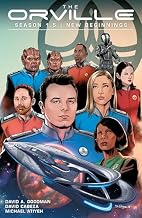
I binge-wached the TV show The Orville last year and was genuinely surprised by how much I enjoyed it. So of course I had to pick up this collection of comics based on the show when it came out. There are two stories included in here, and, as the title indicates, they're set sometime after the end of season 1. They do fill in a few gaps that existed between season 1 and season 2, although not any that I felt really needed filling, so it's hardly essential reading for fans of the show.
But it is reasonably entertaining. And I'm truly impressed by just how faithfully this version has captured the look and feel of the TV series. The characters all look very much like themselves -- which is not always guaranteed in comics adaptations -- and they sound like themselves, too. I could easily hear all their voices in my head, which is always a sign that the characterization an the dialog are right. The plots are fairly slight, but interesting enough, and the humor is spot-on.
So, essential or not, it's a pleasant enough way to spend a short amount of time while waiting to find out when we're getting season three.
Rating: 4/5
I binge-wached the TV show The Orville last year and was genuinely surprised by how much I enjoyed it. So of course I had to pick up this collection of comics based on the show when it came out. There are two stories included in here, and, as the title indicates, they're set sometime after the end of season 1. They do fill in a few gaps that existed between season 1 and season 2, although not any that I felt really needed filling, so it's hardly essential reading for fans of the show.
But it is reasonably entertaining. And I'm truly impressed by just how faithfully this version has captured the look and feel of the TV series. The characters all look very much like themselves -- which is not always guaranteed in comics adaptations -- and they sound like themselves, too. I could easily hear all their voices in my head, which is always a sign that the characterization an the dialog are right. The plots are fairly slight, but interesting enough, and the humor is spot-on.
So, essential or not, it's a pleasant enough way to spend a short amount of time while waiting to find out when we're getting season three.
Rating: 4/5
77sallypursell
74 My father was an important engineer on most of the Apollo missions. He ran the team that made the instruments, and he invented the testing devices for the mission (and the Geminis, too). It was all top secret at the time, so I had no idea what his job was, but I am very proud of him now. A technician I met later told me that my father was the best engineer he ever met. This happened after he tried to fix a machine for my department, and couldn't, and I showed him what was wrong just by inspecting it and observing some marks that the machine was making with a rotor running into the casing. When he asked me how I did that I told him that my father was an engineer, and after he heard my father's name, he said he understood now how I had done that. I doubt that was the reason, but I was pleased when he complimented my father so lavishly.
78bragan
>77 sallypursell: Ooh, that is really awesome, and something to be proud of!
79bragan
19. The Argonauts by Maggie Nelson

In this short, strange book, Maggie Nelson reflects on her life with her spouse, who might perhaps be described as something between transgender and nonbinary; on pregnancy and motherhood; on sex and sexuality and being, to use the word she prefers, queer; on art and death and nonconformity and a whole bunch of other complicated things.
I thought at first that I was going to find this a frustrating read. It's disjointed, full of out-of-context quotes and allusions to things like literary theory (a subject with which I have little patience). But Nelson definitely won me over. She's talking about things very much worth talking about (and perhaps not talked about nearly enough) in a way that's somehow simultaneously contemplative and raw. And while her life and her experiences and perspectives are wildly different from mine in just about every respect, I found myself feeling a certain kinship with her in our apparently mutual frustration with the way in which categories and labels never seem to do justice to the messy, individual specificity of human lives and identities.
Rating: 4/5

In this short, strange book, Maggie Nelson reflects on her life with her spouse, who might perhaps be described as something between transgender and nonbinary; on pregnancy and motherhood; on sex and sexuality and being, to use the word she prefers, queer; on art and death and nonconformity and a whole bunch of other complicated things.
I thought at first that I was going to find this a frustrating read. It's disjointed, full of out-of-context quotes and allusions to things like literary theory (a subject with which I have little patience). But Nelson definitely won me over. She's talking about things very much worth talking about (and perhaps not talked about nearly enough) in a way that's somehow simultaneously contemplative and raw. And while her life and her experiences and perspectives are wildly different from mine in just about every respect, I found myself feeling a certain kinship with her in our apparently mutual frustration with the way in which categories and labels never seem to do justice to the messy, individual specificity of human lives and identities.
Rating: 4/5
80dukedom_enough
>77 sallypursell: So cool!
81bragan
20. Golden State by Ben. H. Winters

Sometime in the future, California, or some portion of it, has become the Golden State, a country unto itself founded on the principle that truth is the absolute bedrock of society. In the Golden State, lying is a terrible crime, every action is monitored and documented as a record of reality, and the state is the ultimate arbiter of what is or isn't Objectively So.
Our protagonist, Laszlo Ratesic, is a law enforcement officer charged with rooting out untruths, but also with speculating about how crimes may or may not have actually happened. (Not something just anybody can be trusted to do, obviously!) He finds himself investigating a seemingly accidental death, which turns out to be surrounded by anomalies.
It's an interesting novel. The premise is fascinating, and while it could very easily have felt like a simplistic commentary on government surveillance or fake news or any of a number of things, what it has to say about government and reality and truth feels complicated and slippery.
The mystery plot is interesting too, although in the end it goes some weird, twisty, surprising places, and I'm not entirely sure how I feel about those or whether I even entirely understand them. Nor am I entirely sure whether my uncertainly about it all is a good or a bad thing. I suppose evoking uncertainty about one's uncertainty actually fits very well on a thematic level.
Regardless, it was an engaging and fairly thought-provoking read.
Rating: 4/5

Sometime in the future, California, or some portion of it, has become the Golden State, a country unto itself founded on the principle that truth is the absolute bedrock of society. In the Golden State, lying is a terrible crime, every action is monitored and documented as a record of reality, and the state is the ultimate arbiter of what is or isn't Objectively So.
Our protagonist, Laszlo Ratesic, is a law enforcement officer charged with rooting out untruths, but also with speculating about how crimes may or may not have actually happened. (Not something just anybody can be trusted to do, obviously!) He finds himself investigating a seemingly accidental death, which turns out to be surrounded by anomalies.
It's an interesting novel. The premise is fascinating, and while it could very easily have felt like a simplistic commentary on government surveillance or fake news or any of a number of things, what it has to say about government and reality and truth feels complicated and slippery.
The mystery plot is interesting too, although in the end it goes some weird, twisty, surprising places, and I'm not entirely sure how I feel about those or whether I even entirely understand them. Nor am I entirely sure whether my uncertainly about it all is a good or a bad thing. I suppose evoking uncertainty about one's uncertainty actually fits very well on a thematic level.
Regardless, it was an engaging and fairly thought-provoking read.
Rating: 4/5
82sallypursell
>78 bragan: >80 dukedom_enough: I never thought my father got enough appreciations, since his work was so secret, and it feels great when you say that about him. Thanks!
I remember the day President Kennedy shook hands with him and called him by name.
I remember the day President Kennedy shook hands with him and called him by name.
83bragan
>82 sallypursell: I have a lot of appreciation for all the unsung heroes who made those missions work. A few people got a lot of personal glory from Apollo, and deservedly so, but they would never have have taken the first step towards the giant leap if it weren't for a lot of very smart, very dedicated people laboring here on Earth. Of which it sounds like your dad was very much one!
84dukedom_enough
>81 bragan: Interesting. Have you ever read City of Truth by James Morrow? Similar idea; a place where people are conditioned not to lie.
85bragan
>84 dukedom_enough: I have, but it was so long ago that I don't seem to remember much of anything about it.
86bragan
21. The Minor Adjustment Beauty Salon by Alexander McCall Smith
Book fourteen in the No. 1 Ladies' Detective Agency Series. As usual, this "detective" series isn't really much about the mysteries at all (although the ones we get here do turn out to have mildly interesting solutions), and much more about the characters (which now include a small new addition) and their various musings about tradition and modernity and men and women and the beauty of Botswana.
Really, this series is 100% comfort reading for me. Although I don't think this installment, at least for most of its length, quite gave me the warm fuzzy blanket feeling I get from these books at their best. That might be because one of these days I am finally going to get tired of them, and may be very, very slowly getting there. More likely it's because it's a bit too much to expect any book to provide as much comfort as I might require right now, between the general state of the world and the specific state of my own annoying problems. But, still, by the end I was smiling and feeling very warmed by thoughts of how much I love these characters, and how much they love each other.
Rating: 4/4
Book fourteen in the No. 1 Ladies' Detective Agency Series. As usual, this "detective" series isn't really much about the mysteries at all (although the ones we get here do turn out to have mildly interesting solutions), and much more about the characters (which now include a small new addition) and their various musings about tradition and modernity and men and women and the beauty of Botswana.
Really, this series is 100% comfort reading for me. Although I don't think this installment, at least for most of its length, quite gave me the warm fuzzy blanket feeling I get from these books at their best. That might be because one of these days I am finally going to get tired of them, and may be very, very slowly getting there. More likely it's because it's a bit too much to expect any book to provide as much comfort as I might require right now, between the general state of the world and the specific state of my own annoying problems. But, still, by the end I was smiling and feeling very warmed by thoughts of how much I love these characters, and how much they love each other.
Rating: 4/4
87bragan
22. Leonard: My Fifty-Year Friendship with a Remarkable Man by William Shatner, with David Fisher
This is William Shatner's reminiscence about and tribute to his friend and co-star, written sometime after Nimoy's death in 2015. Although it really is about Shatner's relationship with and feelings about Nimoy, as much as it is about Nimoy himself. Even when talking about Nimoy's background, before they ever met, Shatner takes a compare-and-contrast approach to discussing their lives, from the similarities in their childhoods to their different approaches to acting. Yeah, insert joke about Shatner's ego here, and said ego is definitely on display, sometimes in mildly irritating ways, along with a number of slightly uncomfortable examples of his notorious ability to be difficult even with his friends, but I think it mostly works. Certainly Shatner's respect for Nimoy as an actor, an artist, and a human being does come through strongly.
Rating: 3.5/5
This is William Shatner's reminiscence about and tribute to his friend and co-star, written sometime after Nimoy's death in 2015. Although it really is about Shatner's relationship with and feelings about Nimoy, as much as it is about Nimoy himself. Even when talking about Nimoy's background, before they ever met, Shatner takes a compare-and-contrast approach to discussing their lives, from the similarities in their childhoods to their different approaches to acting. Yeah, insert joke about Shatner's ego here, and said ego is definitely on display, sometimes in mildly irritating ways, along with a number of slightly uncomfortable examples of his notorious ability to be difficult even with his friends, but I think it mostly works. Certainly Shatner's respect for Nimoy as an actor, an artist, and a human being does come through strongly.
Rating: 3.5/5
88bragan
23. To Be Taught, If Fortunate by Becky Chambers

This is a novella-length story about four astronauts exploring four alien planets while decades pass on Earth and things change significantly there.
I've really loved some of Chambers' other books, but I found this one kind of a disappointment by contrast. It seems like the sort of thing that should appeal to me, space enthusiast and giant science nerd that I am. It's all about the satisfaction of scientific discovery and the choices we make about whether exploration is something we value or not. But the truth is, I found it absurdly slow-reading for something this short. The science stuff wasn't nearly in-depth enough or the the thrill of discovery thrilling enough to satisfy the science-nerd part of my brain, and the rest of me kept wishing for a little more plot. The mystery of exactly what's happened back on Earth while our heroes were out exploring elsewhere provides a tiny bit of tension, but less than you'd think, and the answer, when it came, did not remotely land for me with the kind of emotional impact you'd expect.
Not that it's a bad book. The writing is fine. The alien planets are at least mildly interesting. The characters, while lightly sketched, do feel like people. And I really do appreciate the themes and questions it raises, especially at the end. But I do wish it had been a little bit more... something.
Rating: 3.5/5

This is a novella-length story about four astronauts exploring four alien planets while decades pass on Earth and things change significantly there.
I've really loved some of Chambers' other books, but I found this one kind of a disappointment by contrast. It seems like the sort of thing that should appeal to me, space enthusiast and giant science nerd that I am. It's all about the satisfaction of scientific discovery and the choices we make about whether exploration is something we value or not. But the truth is, I found it absurdly slow-reading for something this short. The science stuff wasn't nearly in-depth enough or the the thrill of discovery thrilling enough to satisfy the science-nerd part of my brain, and the rest of me kept wishing for a little more plot. The mystery of exactly what's happened back on Earth while our heroes were out exploring elsewhere provides a tiny bit of tension, but less than you'd think, and the answer, when it came, did not remotely land for me with the kind of emotional impact you'd expect.
Not that it's a bad book. The writing is fine. The alien planets are at least mildly interesting. The characters, while lightly sketched, do feel like people. And I really do appreciate the themes and questions it raises, especially at the end. But I do wish it had been a little bit more... something.
Rating: 3.5/5
89dukedom_enough
>88 bragan: This is the only Chambers I've yet read. Sounds like I should try The Long Way....
90bragan
>89 dukedom_enough: I really, really enjoyed that one. The kinda-sorta sequel, A Closed and Common Orbit is very good, too, in a different sort of way. Record of a Spaceborn Few I didn't enjoy quite as much as those, but I still found it more satisfying than this one.
91rhian_of_oz
>88 bragan: This is on my list of "books to buy when they come out in paperback" and I'll still get it but I will temper my expectations based on your experience.
92bragan
>91 rhian_of_oz: That sounds like a good way to approach it. It's certainly not terrible, but if you go in expecting something more, it is disappointing.
93dukedom_enough
>91 rhian_of_oz: It's already in paperback.
94rhian_of_oz
>93 dukedom_enough: According to the Australian publisher it's not due out until 14 April here.
95dukedom_enough
>94 rhian_of_oz: Ah, sorry.
96bragan
24. The Kingdom of Copper by S. A. Chakraborty

Book two in the The Daevabad Trilogy, featuring a hidden city of djinn. This one is set five years after the first novel. And it reads very much the same as that one did: rather slow-moving, but never in a way that made me feel impatient, with well-realized, interesting world-building and complex characters and politics. There are plots and revelations and injustices and reunions and, ultimately, a climax in which a heck of a lot of things happen all at once, leaving me very eager for the release of book three.
Rating: 4/5

Book two in the The Daevabad Trilogy, featuring a hidden city of djinn. This one is set five years after the first novel. And it reads very much the same as that one did: rather slow-moving, but never in a way that made me feel impatient, with well-realized, interesting world-building and complex characters and politics. There are plots and revelations and injustices and reunions and, ultimately, a climax in which a heck of a lot of things happen all at once, leaving me very eager for the release of book three.
Rating: 4/5
97bragan
25. @NATGEO: The Most Popular Instagram Photos by National Geographic
This is exactly what it says on the tin: a collection of the most popular photographs posted on National Geographic's Instagram account. Unsurprisingly, they're all very good photos: vivid images of a wide variety of people, places, animals, and other things from all around the world. The book is cleverly put together, too, with photos on facing pages often reflecting or echoing each other in surprising and interesting ways.
Most of the images have only single line captions, but a number of them -- including some vintage photos dating back as far as 1907 -- have a brief paragraph of explanation included. A few instead include a handful of the comments people left on them on Instagram, which didn't seem to me to add very much, but for all I know maybe that's just because they needed an extra page of text on those to make the layout work.
Anyway, it was nice to spend an hour or so appreciating all of these very cool pictures, and perhaps even nicer, in this time of nervous isolation, to escape with a bit of armchair travel. I'm glad Nat Geo felt moved to provide these in book form for those of us who don't much bother with Instagram.
Rating: 4/5
(And, huh, today I learned that touchstones don't much like the @ symbol.)
This is exactly what it says on the tin: a collection of the most popular photographs posted on National Geographic's Instagram account. Unsurprisingly, they're all very good photos: vivid images of a wide variety of people, places, animals, and other things from all around the world. The book is cleverly put together, too, with photos on facing pages often reflecting or echoing each other in surprising and interesting ways.
Most of the images have only single line captions, but a number of them -- including some vintage photos dating back as far as 1907 -- have a brief paragraph of explanation included. A few instead include a handful of the comments people left on them on Instagram, which didn't seem to me to add very much, but for all I know maybe that's just because they needed an extra page of text on those to make the layout work.
Anyway, it was nice to spend an hour or so appreciating all of these very cool pictures, and perhaps even nicer, in this time of nervous isolation, to escape with a bit of armchair travel. I'm glad Nat Geo felt moved to provide these in book form for those of us who don't much bother with Instagram.
Rating: 4/5
(And, huh, today I learned that touchstones don't much like the @ symbol.)
99sallypursell
>97 bragan: In your first paragraph, I thought of how difficult it would by to arrange it as described, and it sounds like a hellish job. But also fun.
100bragan
>99 sallypursell: Yeah, I'm genuinely impressed with whoever designed it. Some of the combinations of photos are really very cool and clever.

