zuzaer and her Stack Of Books through the year
Original topic subject: zuzaer and her Stack Of Books a.k.a. New Year's Eve Marathon
This topic was continued by zuzaer and her Stack Of Books through the year (2).
Talk 75 Books Challenge for 2022
Join LibraryThing to post.
1zuzaer
Hi!
(Let me just say that it's my first day on this website, came here primarily to get a grip on my family's little library and finally catch on with all the books we tend to buy)
I have no hopes of reaching 75 books per year right now (well, unless I counted all the things I'm required to read?...), but I'm definitely starting the New Year with something grand. My friends asked me what I am doing on the 31st, and I'm not in the mood to go out and meet anyone, so I jokingly said I'll be doing a reading marathon.
...and then I thought, why not?---so I made my Stack Of Books, consisting of too much (twelve) books, with the intent to spend the most of 48 hours (Dec 31st---Jan1st) reading them. The goal is to start reeading every one, and finish, well, maybe one or two.
I hope the Reading Marathon will help me with reading more this year---at least twelve is a good start, don't you think?
I've got less than two hours until the midnight of Dec 31st, so now I have to decide whether I start reading or go to sleep!
---

Stack Of Books:
1. Nieskończoność w papirusie by Irene Vallejo Moreu, an essay about book in the ancient world | Did Not Finish (but planning to)
2. Pamiętnik księgarza by Shaun Bythell, a diary-style novel about being a bookseller |
3. Słynne zdjęcia by Michael Koetzle, an album containing revolutionary photographs, staring with the very beginning of the photography. | Read Partially
4. Bóg nigdy nie mruga by Regina Brett, 50 lessons on life
5. Barbarzyńca w ogrodzie by Zbigniew Herbert, a group of essays concentrating on Italian art and culture | *reading
6. Klasyczne miary i świat współczesny, a conversation with one of the best specialists of the Ancient world | *
---
More Than Stack Of Books, or: a list of books that I write about in this topic
JANUARY
10. Atonement by Ian McEwan (read-it-in-English class) | DNF
12. Tekstologia i edytorstwo dzieł literackich by Konrad Górski, or, a textual studies textbook | *
13. The House of the Baskervilles by Sir Arthur Conan Doyle (read-it-in-English class)
14. Roverandom from J. R. R. Tolkien's Tales from the Perilous Realm | DNF
15. Prawdziwa Królowa by Andrew Marr
FEBRUARY
16. Beatlesi w Polsce, a story of The Beatles and their reception in Poland | *
17. Maus. Opowieść ocalałego by Art Spiegelman | *
18. Normal People by Sally Rooney
19. "Mille anni di storie da ridere", red. Anne Jonas
20. The Prime of Miss Jean Brodie by Muriel Spark | DNF
MARCH
21. Czarne lato by Szymon Drobniak | *
22. Pan Wołodyjowski by Henryk Sienkiewicz | *
23. "Władza platform" by Jan Kreft | DNF
JULY
24. As You Like It by William Shakespeare | *
25. Mansfield Park (in Italian) by Jane Austen | *
---
My plans, so I don't forget:
British Author Challenge:
Jan: Alice in Wonderland, Chronicles of Narnia, Roverandom (Tolkien)
Feb:
March: Georgette Hayer
April:
---
11. I also decided to make my own little challenge. I've got this wonderful book, Short stories in Italian: Racconti in Italiano. It contains nine short stories in Italian (on verso side) and translated into English (on recto). If I am to begin reading in Italian (and I've been trying to do it for probably over a year), surely a less-than-20 pages story a month will be a nice start.
(Let me just say that it's my first day on this website, came here primarily to get a grip on my family's little library and finally catch on with all the books we tend to buy)
I have no hopes of reaching 75 books per year right now (well, unless I counted all the things I'm required to read?...), but I'm definitely starting the New Year with something grand. My friends asked me what I am doing on the 31st, and I'm not in the mood to go out and meet anyone, so I jokingly said I'll be doing a reading marathon.
...and then I thought, why not?---so I made my Stack Of Books, consisting of too much (twelve) books, with the intent to spend the most of 48 hours (Dec 31st---Jan1st) reading them. The goal is to start reeading every one, and finish, well, maybe one or two.
I hope the Reading Marathon will help me with reading more this year---at least twelve is a good start, don't you think?
I've got less than two hours until the midnight of Dec 31st, so now I have to decide whether I start reading or go to sleep!
---

Stack Of Books:
1. Nieskończoność w papirusie by Irene Vallejo Moreu, an essay about book in the ancient world | Did Not Finish (but planning to)
2. Pamiętnik księgarza by Shaun Bythell, a diary-style novel about being a bookseller |
3. Słynne zdjęcia by Michael Koetzle, an album containing revolutionary photographs, staring with the very beginning of the photography. | Read Partially
4. Bóg nigdy nie mruga by Regina Brett, 50 lessons on life
5. Barbarzyńca w ogrodzie by Zbigniew Herbert, a group of essays concentrating on Italian art and culture | *reading
6. Klasyczne miary i świat współczesny, a conversation with one of the best specialists of the Ancient world | *
---
More Than Stack Of Books, or: a list of books that I write about in this topic
JANUARY
10. Atonement by Ian McEwan (read-it-in-English class) | DNF
12. Tekstologia i edytorstwo dzieł literackich by Konrad Górski, or, a textual studies textbook | *
13. The House of the Baskervilles by Sir Arthur Conan Doyle (read-it-in-English class)
14. Roverandom from J. R. R. Tolkien's Tales from the Perilous Realm | DNF
15. Prawdziwa Królowa by Andrew Marr
FEBRUARY
16. Beatlesi w Polsce, a story of The Beatles and their reception in Poland | *
17. Maus. Opowieść ocalałego by Art Spiegelman | *
18. Normal People by Sally Rooney
19. "Mille anni di storie da ridere", red. Anne Jonas
20. The Prime of Miss Jean Brodie by Muriel Spark | DNF
MARCH
21. Czarne lato by Szymon Drobniak | *
22. Pan Wołodyjowski by Henryk Sienkiewicz | *
23. "Władza platform" by Jan Kreft | DNF
JULY
24. As You Like It by William Shakespeare | *
25. Mansfield Park (in Italian) by Jane Austen | *
---
My plans, so I don't forget:
British Author Challenge:
Jan: Alice in Wonderland, Chronicles of Narnia, Roverandom (Tolkien)
Feb:
March: Georgette Hayer
April:
---
11. I also decided to make my own little challenge. I've got this wonderful book, Short stories in Italian: Racconti in Italiano. It contains nine short stories in Italian (on verso side) and translated into English (on recto). If I am to begin reading in Italian (and I've been trying to do it for probably over a year), surely a less-than-20 pages story a month will be a nice start.
2mahsdad
Welcome to the group. There’s absolutely no pressure to actually read 75 books, or even one.
Happy New Year, and enjoy your marathon. Sounds like a fine idea to me
Dropping a star, to follow your adventures
Happy New Year, and enjoy your marathon. Sounds like a fine idea to me
Dropping a star, to follow your adventures
3zuzaer
>2 mahsdad: Thank you for your kind words! I'm not sure where I'm going, but it's bound to be fantastic! Yesterday I've been re-reading one of my favourite series and it brought me lots of joy just to sit and read whatever I want.
4PawsforThought
Welcome to the group! Like Jeff said, don’t feet pressure to actually read 75 books. I’ve been on LT for ten years and have only hit 75 once.
5zuzaer
Dec 31st, 00:15 a.m.
Since it's a new day, technically, I decided I can start enjoying my Stack. To initiate, I picked Irene Vallejo Moreu and her El infinito en un junco. I couldn't find any English translation (Amazon suggests the title, though: "Infinity in a Reed: The Invention of Books in the Ancient World"), which is interesting bordering on strange, because LT notes seven languages apart from the original Spanish version, mine is eighth, and I found some review on the Italian one (https://www.italy24news.com/entertainment/tv/61229.html), which makes it at least nine languages without English.
Anyway. (Book 1) "Infinity In A Reed". It starts with an interesting image of the pharaoh, king of Alexandria, sending his people to Europe in order to acquire books, lots of books. Of course, back then they were in scrolls. This essay is proving to be as interesting as its cover was suggesting, written in a lively, a bit personal style (although that may only be the case of introduction). I love books about history of the book and now can't decide if I want to read all the 460+ pages in two days or rather split it into more days... Maybe I'll read the first part, dedicated to Ancient Greece (the second talks about Rome).
(I would have posted a photo of my Stack Of Books, but have no idea how to do it...)
Since it's a new day, technically, I decided I can start enjoying my Stack. To initiate, I picked Irene Vallejo Moreu and her El infinito en un junco. I couldn't find any English translation (Amazon suggests the title, though: "Infinity in a Reed: The Invention of Books in the Ancient World"), which is interesting bordering on strange, because LT notes seven languages apart from the original Spanish version, mine is eighth, and I found some review on the Italian one (https://www.italy24news.com/entertainment/tv/61229.html), which makes it at least nine languages without English.
Anyway. (Book 1) "Infinity In A Reed". It starts with an interesting image of the pharaoh, king of Alexandria, sending his people to Europe in order to acquire books, lots of books. Of course, back then they were in scrolls. This essay is proving to be as interesting as its cover was suggesting, written in a lively, a bit personal style (although that may only be the case of introduction). I love books about history of the book and now can't decide if I want to read all the 460+ pages in two days or rather split it into more days... Maybe I'll read the first part, dedicated to Ancient Greece (the second talks about Rome).
(I would have posted a photo of my Stack Of Books, but have no idea how to do it...)
6zuzaer
>4 PawsforThought: 75 is a huge number... People everywhere are doing 52 /insert a thing/ challenge, and that's one thing a week. To read more than that? Not doable for the most of time... But it's good to have some goal, of course if one can follow it without the pressure of "failing".
7drneutron
Welcome to LT and the 75ers! First, feel free to ask questions about the site if you have them. We’re happy to help as we can.
Also, we’ll likely have a Readathon this weekend - keep an eye out for a thread on this. It’s a space where we can share what we’re reading as we go.
And, in case you haven’t found them, we have a Threadbook where we keep links to each member’s thread and a wiki with the group’s important links. There are links to these on the group home page.
Finally, yeah, 75 is just a number. We mostly care about sharing and talking about books. I’m glad you decided to join us!
Also, we’ll likely have a Readathon this weekend - keep an eye out for a thread on this. It’s a space where we can share what we’re reading as we go.
And, in case you haven’t found them, we have a Threadbook where we keep links to each member’s thread and a wiki with the group’s important links. There are links to these on the group home page.
Finally, yeah, 75 is just a number. We mostly care about sharing and talking about books. I’m glad you decided to join us!
8Familyhistorian
Welcome aboard. If you're wondering how to do things on LT like posting pictures, check out this thread https://www.librarything.com/topic/177029
9zuzaer
>7 drneutron: Thank you, I'll be sure to look out for the Readathon. I've seen the Threadbook, but I wasn't sure whether I can add something (and I'm getting a little clueless in the terms of "how" but I'll work it out.)
>8 Familyhistorian: Thank you for this thread, I was wondering how to work on the text typography on this website :)
>8 Familyhistorian: Thank you for this thread, I was wondering how to work on the text typography on this website :)
10drneutron
>9 zuzaer: Both the Threadbook and the group wiki are shared resources, so for any of group members to edit. Most don’t because they’re unfamiliar with wiki editing. I make sure everyone gets in the Threadbook and all our challenge and group read threads get added.
Anyway, happy reading!
Anyway, happy reading!
11PaulCranswick
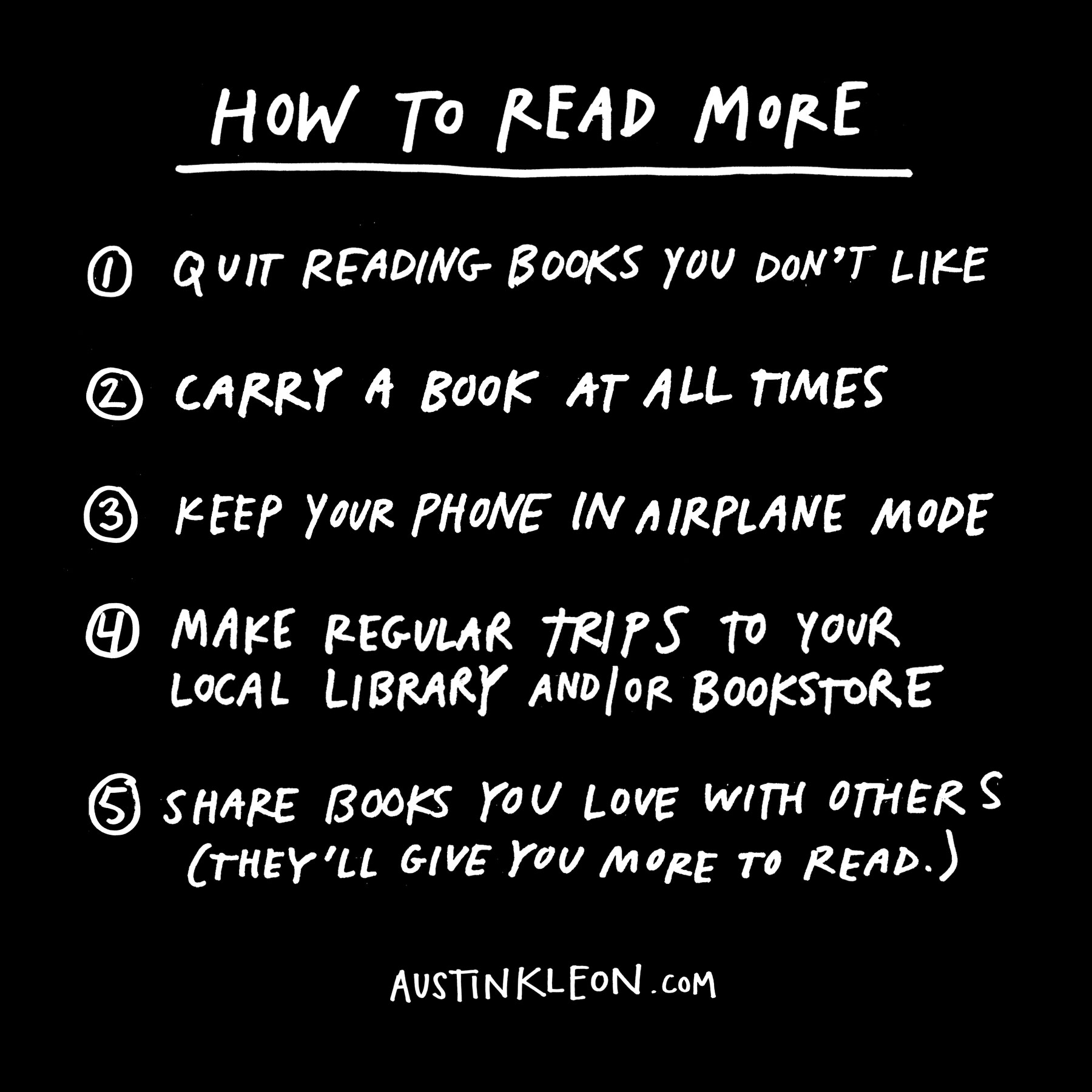
This group always helps me to read; welcome to the group. Don't feel any pressure to keep up reading wise as we all go at our own pace. Are you from Poland?
One of my best holidays ever was to Zakopane some years ago.
12The_Hibernator
The readathon thread is here:
https://www.librarything.com/topic/338012
It was made in last year's group, but come on in!
https://www.librarything.com/topic/338012
It was made in last year's group, but come on in!
13zuzaer
>11 PaulCranswick: Thank you! (The infographic is very precise and will certainly help)
Yes, I'm from Poland, and very literature-oriented, so about half my books in the marathon are related to the literature part of the academia. Nevertheless, I'll try describing every one as I go through them. (And I agree, Zakopane is very nice)
>12 The_Hibernator: Thank you, I'm inviting myself in!
Yes, I'm from Poland, and very literature-oriented, so about half my books in the marathon are related to the literature part of the academia. Nevertheless, I'll try describing every one as I go through them. (And I agree, Zakopane is very nice)
>12 The_Hibernator: Thank you, I'm inviting myself in!
15zuzaer
>14 PaulCranswick: Dzień dobry :) (Although it's afternoon here... huh) I'll try not to disappoint.
16PaulCranswick
>15 zuzaer: And already 2022 over here in Kuala Lumpur by 45 minutes already. I'll say "Dobry Wieczor" while I still can, then.
17zuzaer
>16 PaulCranswick: Happy new year, then! (I've got six hours left... Every time I'm on international websites like this the time zones amaze me)
18zuzaer
Dec 31st, 7:30 p.m.
(2) This time, a novel: The Diary of a Bookseller by Shaun Bythell. LT tells me it's the first of a whole series (wow!), and I wonder whether only the first volume has been translated.
In short, it's a diary-type novel, containing a bookseller's musings about his second hand bookshop (which, from what I gather, is very real). It starts in February 2014 and lasts all the way through 2014, ending on February 2015.
To be frank, I expected a very witty, very funny book. Maybe I exaggerated it in my mind, basing pre-opinions on the cover blurb. I'm halfway through Feb 2014 and it's interesting, of course it's interesting—it's about books, and booksellers! But I'm still waiting for the witty part. Not gonna finish here, though, that's for sure.
What I really like is the amount of titles that the author writes down, both the random ones as objects of the daily conversations and those concerning bookshops (like Orwell's essay, about which I've never heard before).
(2) This time, a novel: The Diary of a Bookseller by Shaun Bythell. LT tells me it's the first of a whole series (wow!), and I wonder whether only the first volume has been translated.
In short, it's a diary-type novel, containing a bookseller's musings about his second hand bookshop (which, from what I gather, is very real). It starts in February 2014 and lasts all the way through 2014, ending on February 2015.
To be frank, I expected a very witty, very funny book. Maybe I exaggerated it in my mind, basing pre-opinions on the cover blurb. I'm halfway through Feb 2014 and it's interesting, of course it's interesting—it's about books, and booksellers! But I'm still waiting for the witty part. Not gonna finish here, though, that's for sure.
What I really like is the amount of titles that the author writes down, both the random ones as objects of the daily conversations and those concerning bookshops (like Orwell's essay, about which I've never heard before).
21FAMeulstee
Welcome, and happy reading in 2022.
22zuzaer
It's hilarious, but for a two-day reading marathon I surely spent a lot of time, a.k.a. around two hours, reading.
But I got some family time out of it, so I'm not complaining my plans got disturbed.
But I got some family time out of it, so I'm not complaining my plans got disturbed.
23zuzaer
Jan 1st, 2:30 a.m.
(2) The Diary of a Bookseller: I finished February and am still not sure. It got a little depressing, maybe because of the month, the rain, etc. At the same time, I feel ambiguous because it's not a bad book and it's easy to read; the narrator's problems are real, established in a simple manner, something like "well, it is what it is, we need to do what we can". The book is interesting given it's about selling books. At the same time, I don't see where it's witty or sharp, and that creates a strange division in my perception of the book.
Edit: reading my way through March, I started wondering if it wasn't me who has a wrong viewpoint. I must admit I've seen more internet memes than I've read books lately, and maybe my current definition of "funny" is skewed a bit. Or maybe I'm too close to see certain things as witty or funny (do I use "witty" too much?). Either way, I'm not putting this book on a shelf yet
(3) Paged though Photo Icons I. Very interesting introduction. It's interesting to see that Michael Koetzle doesn't just dig up the most famous photos (maybe that's the case of the second volume, since it contains the newer ones)---he chooses those that changed something in photography, it's reception, or culture.
One of the thing I'll be sure to check out: a described exhibition by Michael Schirner titled "Bilder im Kopf" (Images in your head). It presented black squares with white descriptions like "Albert Einstein showing his tongue". Can you see it, in your head? I do.
(2) The Diary of a Bookseller: I finished February and am still not sure. It got a little depressing, maybe because of the month, the rain, etc. At the same time, I feel ambiguous because it's not a bad book and it's easy to read; the narrator's problems are real, established in a simple manner, something like "well, it is what it is, we need to do what we can". The book is interesting given it's about selling books. At the same time, I don't see where it's witty or sharp, and that creates a strange division in my perception of the book.
Edit: reading my way through March, I started wondering if it wasn't me who has a wrong viewpoint. I must admit I've seen more internet memes than I've read books lately, and maybe my current definition of "funny" is skewed a bit. Or maybe I'm too close to see certain things as witty or funny (do I use "witty" too much?). Either way, I'm not putting this book on a shelf yet
(3) Paged though Photo Icons I. Very interesting introduction. It's interesting to see that Michael Koetzle doesn't just dig up the most famous photos (maybe that's the case of the second volume, since it contains the newer ones)---he chooses those that changed something in photography, it's reception, or culture.
One of the thing I'll be sure to check out: a described exhibition by Michael Schirner titled "Bilder im Kopf" (Images in your head). It presented black squares with white descriptions like "Albert Einstein showing his tongue". Can you see it, in your head? I do.
24thornton37814
Enjoy your 2022 reads!
25zuzaer
Jan 1st, 4:00 p.m.
(2) The Diary of a Bookseller: I've stayed late reading through April. I know what my problem with this book was (is?). I opened it expecting a funny fictional novel about a bookseller who's trying to keep up with his shop and having lots of interesting encounters. Instead, I got a warm and leisurely-paced Truth about this difficult business, told in a spot-on manner, seen with a sharp eye of a writer who knows his job.
That's why it's so enrapturing to me, even if I don't always see the humour: it's just realistic to the bones, and that strucks a chord.
(4) Four essays of Regina Brett's God never blinks. I've got all 150 Regina Brett's lessons on a shelf and I must admit I usually forget they're here, but they're a great inspiration—either for specific things or just to remind yourself that you can change little things that will turn into the bigger ones.
(2) The Diary of a Bookseller: I've stayed late reading through April. I know what my problem with this book was (is?). I opened it expecting a funny fictional novel about a bookseller who's trying to keep up with his shop and having lots of interesting encounters. Instead, I got a warm and leisurely-paced Truth about this difficult business, told in a spot-on manner, seen with a sharp eye of a writer who knows his job.
That's why it's so enrapturing to me, even if I don't always see the humour: it's just realistic to the bones, and that strucks a chord.
(4) Four essays of Regina Brett's God never blinks. I've got all 150 Regina Brett's lessons on a shelf and I must admit I usually forget they're here, but they're a great inspiration—either for specific things or just to remind yourself that you can change little things that will turn into the bigger ones.
26PaulCranswick
>25 zuzaer: I do sometimes wonder how humour translates. I have gotten used to telling jokes to my colleagues (more like funny stories) in Malay which I know would not work as well in English and some English jokes leave some of my colleagues bemused.
27zuzaer
>26 PaulCranswick: I've heard somewhere that English people have their own kind of humour. All in all, there are various kinds of humour, and my family often jokes that I don't see many things (usually directed at me) as humorous, taking them personally. At the same time, I quite enjoy dry humour.
And then there's the case of the translation itself, and what the translator can do with a language he's suppose to convert the story into. Although I don't think it's the case here, since the humour is not language-oriented.
As for the Bookseller, I guess the case might be the subtleness and my own closeness to the subject that may render me unmoved towards certain things. I don't know, and it's been bothering me a bit. But even if I don't see the book as particularly "entertaining" in terms of humour, it's still a good read (cf. me reading it up to 4 a.m.)
And then there's the case of the translation itself, and what the translator can do with a language he's suppose to convert the story into. Although I don't think it's the case here, since the humour is not language-oriented.
As for the Bookseller, I guess the case might be the subtleness and my own closeness to the subject that may render me unmoved towards certain things. I don't know, and it's been bothering me a bit. But even if I don't see the book as particularly "entertaining" in terms of humour, it's still a good read (cf. me reading it up to 4 a.m.)
28zuzaer
Jan 1st, 11:30 p.m.
(5) Barbarzyńca w ogrodzie: Two essays, about Orvieto and Siena. Written with erudition and the knowledge, Herbert's Italian essays always give me a sense of peace and a feeling of Italian sun.
Herbert is, first and foremost, a poet, but that wasn't all he wrote. His essays are composed out of two things: the books he read on the subject (usually guides and history of art) and his own experiences during his travels. I'm told he also wrote his essays for many readers who've never had the opportunity to travel abroad (which wasn't strange at all in the second half of the 20th century).
(6) Klasyczne miary i świat współczesny: the first conversation, titled "A secret of immortality". An interesting dispute about defining a "classic" literature, and how it is that some works are simply immortal by being ever-actual and accurate.
Zygmunt Kubiak (1929–2004) is a big person in the antiquity academia. I think he worked all his life with the intent of popularizing the worlds of Ancient Greece and Rome; one of his major works were books about Ancient mithology, history and literature. He translated a lot (Aeneid, Flavius, St. Augustine, Anthologia Palatina). "He was even looking at the contemporary politics and turmoils in the stock market from the perspective of Bible's verses and phrases of Virgil or Horace" (from the Afterword, translation is mine).
---
While I was deciding to spend those two days on reading, I didn't count on the amount of things I would do besides reading (I'd like to point out that both days were free of work for me, I had nothing else to do and suddenly... bam) or that would pop up as the hours passed.
I managed to start reading six out of twelve books. (The seventh is one that I got for Christmas and immediately started reading, but I didn't touch it for the last few days.) I haven't finished any one of them.
I decided that, one, it's not important; way more important is the fact that I found this community that will helpfully encourage me to read more, reflect on what I've read (and hopefully write reviews) and keep up with my own books. Two, Because I'm posting also on Readathon, I'll continue reading my way through the Stack Of Books for another day. Three, it's not my new year resolution, but I plan on staying here, with you, read more, being aware of what I'm reading, and generally enjoying the reading.
(By the way, I was sure I can change the topic's name... can I?)
(5) Barbarzyńca w ogrodzie: Two essays, about Orvieto and Siena. Written with erudition and the knowledge, Herbert's Italian essays always give me a sense of peace and a feeling of Italian sun.
Herbert is, first and foremost, a poet, but that wasn't all he wrote. His essays are composed out of two things: the books he read on the subject (usually guides and history of art) and his own experiences during his travels. I'm told he also wrote his essays for many readers who've never had the opportunity to travel abroad (which wasn't strange at all in the second half of the 20th century).
(6) Klasyczne miary i świat współczesny: the first conversation, titled "A secret of immortality". An interesting dispute about defining a "classic" literature, and how it is that some works are simply immortal by being ever-actual and accurate.
Zygmunt Kubiak (1929–2004) is a big person in the antiquity academia. I think he worked all his life with the intent of popularizing the worlds of Ancient Greece and Rome; one of his major works were books about Ancient mithology, history and literature. He translated a lot (Aeneid, Flavius, St. Augustine, Anthologia Palatina). "He was even looking at the contemporary politics and turmoils in the stock market from the perspective of Bible's verses and phrases of Virgil or Horace" (from the Afterword, translation is mine).
---
While I was deciding to spend those two days on reading, I didn't count on the amount of things I would do besides reading (I'd like to point out that both days were free of work for me, I had nothing else to do and suddenly... bam) or that would pop up as the hours passed.
I managed to start reading six out of twelve books. (The seventh is one that I got for Christmas and immediately started reading, but I didn't touch it for the last few days.) I haven't finished any one of them.
I decided that, one, it's not important; way more important is the fact that I found this community that will helpfully encourage me to read more, reflect on what I've read (and hopefully write reviews) and keep up with my own books. Two, Because I'm posting also on Readathon, I'll continue reading my way through the Stack Of Books for another day. Three, it's not my new year resolution, but I plan on staying here, with you, read more, being aware of what I'm reading, and generally enjoying the reading.
(By the way, I was sure I can change the topic's name... can I?)
29mahsdad
>28 zuzaer: I'm not sure if you're able to change the topic title, but I think Jim (@drneutron), as the admin, can. Send him a PM and see if he can.
30drneutron
Yes, I can change the topic name. Just let me know what you’d like it to be, and I’m happy to help.
31zuzaer
>30 drneutron: If it's not a problem, could you change it into "zuzaer and her Stack Of Books through the year"? I'm definitely staying here a little longer and might as well use this topic.
32PaulCranswick
>31 zuzaer: I am pleased that you will be staying with us! I can see that you will introduce plenty of writing that I should go and look for if >28 zuzaer: is anything to go by.
33zuzaer
>32 PaulCranswick: I'm glad I can provide some interesting things to read. Fair warning, I'm still reading mostly in Polish (as it should be, really), and there's a good chance at least half of those titles were never translated. I also can't for the life of me figure how the touchstones work on this website, since sometimes I get exactly what I want, and sometimes the specific title isn't even "available", but I'll try to link also English translations, if they exist.
(As for Herbert, I'm certain he's been translated into couple of languages, not sure if that included his essays.)
(As for Herbert, I'm certain he's been translated into couple of languages, not sure if that included his essays.)
34drneutron
>31 zuzaer: Done!
>33 zuzaer: Like Paul, I’m watching your book list - my main exposure to Polish authors has been English translations of the Witcher books.
Touchstones are, well, touchy. It is possible to use a hard link to a particular work, but it’s more work.
>33 zuzaer: Like Paul, I’m watching your book list - my main exposure to Polish authors has been English translations of the Witcher books.
Touchstones are, well, touchy. It is possible to use a hard link to a particular work, but it’s more work.
35zuzaer
>34 drneutron: Haha, I'm at the moment concerning my studies where I'm supposed to read lots of 16th and 17th century literature. I'll try to acknowledge the more popular works here, since there's a slight chance of some anthology. I'm curious what I will find through LT.
Thank you for the topic change!
Thank you for the topic change!
36thornton37814
>33 zuzaer: I find it easiest to use the work number followed by 2 colons and then the title for titles. For example, for Twisted Tea Christmas, I would use angle brackets instead of these parentheses, but format it as (26132544::Twisted Tea Christmas). For the author Laura Childs, using angle brackets instead of parentheses again, I'd type (childslaura::Laura Childs). Using those specific things, helps it find the right work or author.
37SilverWolf28
Welcome and Happy New Year!
I host the readathons and you're welcome anytime. Let me know if you would like me to remind you of the readathon every week.
I host the readathons and you're welcome anytime. Let me know if you would like me to remind you of the readathon every week.
38zuzaer
>36 thornton37814: Thank you for this suggestion, I'll be sure to use it if LT doesn't show what I want
>37 SilverWolf28: Hello! Readathons are a really nice idea, I liked participating in the New Year's one a lot. Unfortunately, I don't think I can do this every week.
>37 SilverWolf28: Hello! Readathons are a really nice idea, I liked participating in the New Year's one a lot. Unfortunately, I don't think I can do this every week.
39zuzaer
(10) For my read-it-in-English class: Atonement by Ian McEwan. I decided to read it without any previous knowledge about the story, although I looked at the LoC cataloging-in data, written on the editor's page (is that the correct term? That page in a book with copyrights and ISBNs), and now I'm slightly confused why is Battle of Dunkerque here, but well, I've only read the first chapter.
An interesting motto, a quote from Jane Austen, that I'll surely keep coming back to try and understand why it was used here.
The novel starts innocuously; Briony Tallis is actually quite Anne Shirley-ish with her big words, imagination, and a tendency to have strong emotions. At the same time, I think she'll have to adjust to a lot of things since the arrival of her cousins; from what I gather up to that moment she's been quite alone, almost an only child, and three other children (one of whom is a two years older girl! Slightly scary and so out of depth for her, I can still remember this kind of encounters) being suddenly in the same place may make things quite different.
A side note---I was pleasantly surprised to see "A note about the type", acknowledging my copy has been typeset in Garamond, at the end of the book. It's not really common, but thankfully more and more editing presses start to acknowledge type designers.
(4) I didn't know what to read last night, and then I promptly delved into Regina Brett once again. If I were able to make a nice poster, I would have written down a sentence or two to hang on the wall.
An interesting motto, a quote from Jane Austen, that I'll surely keep coming back to try and understand why it was used here.
The novel starts innocuously; Briony Tallis is actually quite Anne Shirley-ish with her big words, imagination, and a tendency to have strong emotions. At the same time, I think she'll have to adjust to a lot of things since the arrival of her cousins; from what I gather up to that moment she's been quite alone, almost an only child, and three other children (one of whom is a two years older girl! Slightly scary and so out of depth for her, I can still remember this kind of encounters) being suddenly in the same place may make things quite different.
A side note---I was pleasantly surprised to see "A note about the type", acknowledging my copy has been typeset in Garamond, at the end of the book. It's not really common, but thankfully more and more editing presses start to acknowledge type designers.
(4) I didn't know what to read last night, and then I promptly delved into Regina Brett once again. If I were able to make a nice poster, I would have written down a sentence or two to hang on the wall.
40zuzaer
(2) A diary of a Bookseller -- May and June. I think I'm getting used to it, even if the perplexed feeling remains. I spotted another book-related book on my shelf; that'll be my February read.
I don't know if it's still true, but the amount of control Amazon has on British book market is terrifying... I understand the "cheaper on the internet" thinking, because in Poland it's the same, but I'm also a big believer of bookshops and editing presses. That's why I usually buy the book from the publisher (also, they tend to have lower prices on their websites), and if not, then in some local bookshop, not necessarily big. That's my private campaign against empik and other chain 'book'stores.
I don't know if it's still true, but the amount of control Amazon has on British book market is terrifying... I understand the "cheaper on the internet" thinking, because in Poland it's the same, but I'm also a big believer of bookshops and editing presses. That's why I usually buy the book from the publisher (also, they tend to have lower prices on their websites), and if not, then in some local bookshop, not necessarily big. That's my private campaign against empik and other chain 'book'stores.
41zuzaer
(4) I finished Regina Brett, my night-time read of the week. I've read all three books of her once, but now I think it's one of those books that need to be paged-through and reread every once in a while. Lots of wisdom, given in a nice, chatty way, with humour and distance.
(2) slowly making my way through "The Diary of a Bookseller". I'm liking the characters more and more.
I was asked to participate in an end-of-the-year book summary (what I've read, my favourites, interesting reads, etc.) and I realised I remember almost nothing about what I've read last year. There is a strong possibility that I almost didn't read apart from the required books and articles. Either way, I'm seriously thinking about starting a reading journal this year; I'm awfully inconsistent in this kind of things (on and off documenting my reads since primary school, to no avail), but maybe this time it will stick with me. Right now I'm doing a trial version in one of my old notebooks. If I stick with it for a month, it will be with it to try doing a proper journal (although, with my few years' experience with bullet journaling and such, it will be pretty simple. I don't want to have to make time for decorating instead of reading).
(2) slowly making my way through "The Diary of a Bookseller". I'm liking the characters more and more.
I was asked to participate in an end-of-the-year book summary (what I've read, my favourites, interesting reads, etc.) and I realised I remember almost nothing about what I've read last year. There is a strong possibility that I almost didn't read apart from the required books and articles. Either way, I'm seriously thinking about starting a reading journal this year; I'm awfully inconsistent in this kind of things (on and off documenting my reads since primary school, to no avail), but maybe this time it will stick with me. Right now I'm doing a trial version in one of my old notebooks. If I stick with it for a month, it will be with it to try doing a proper journal (although, with my few years' experience with bullet journaling and such, it will be pretty simple. I don't want to have to make time for decorating instead of reading).
43zuzaer
Heh, kind of is :D Maybe I'll just find my old notebook (it is sweet and has teddy bears on the cover; as I said, primary) and write down only the books' titles to have a written testament.
Additionally, this thread enables me to write about couple books at the same time, whereas I would have problems letting myself write chaotically in a notebook. A good side of writing digitally.
Additionally, this thread enables me to write about couple books at the same time, whereas I would have problems letting myself write chaotically in a notebook. A good side of writing digitally.
44EllaTim
Welcome to LT!
I agree, keeping up your thread here, you’ll have a good reading diary.
Books, translations, languages: I often use the WorldCat feature. On a book page, on the right side, you’ll find a link to WorldCat. You can find there if a book has been translated, if it is available in a library near you (don’t know how well that works for Poland), and lots of other interesting information, if you like that kind of thing.
I agree, keeping up your thread here, you’ll have a good reading diary.
Books, translations, languages: I often use the WorldCat feature. On a book page, on the right side, you’ll find a link to WorldCat. You can find there if a book has been translated, if it is available in a library near you (don’t know how well that works for Poland), and lots of other interesting information, if you like that kind of thing.
45zuzaer
>44 EllaTim: WorldCat is a wonderful tool, although so far I've only used it to find the books (and authors) printed around 16th/17th century...
They note the National Library, and that is enough -- the law states that every book printed in Poland should be sent in two copies to the National (also to the Jagellonian Library, from which I can borrow books, but that's beside the point). If course, the library doesn't have any tools to enforce that, but if something is there, then I know it has been published -> probably translated.
They note the National Library, and that is enough -- the law states that every book printed in Poland should be sent in two copies to the National (also to the Jagellonian Library, from which I can borrow books, but that's beside the point). If course, the library doesn't have any tools to enforce that, but if something is there, then I know it has been published -> probably translated.
46PaulCranswick
>40 zuzaer: I agree with you completely that we need to ensure that bookstores don't die. One of my greatest pleasures in life is browsing in bookstores. It is also something I probably do far too much considering that I have almost 5,000 books unread at home and I keep adding more than I read.
Have a great Sunday.
Have a great Sunday.
47zuzaer
I hoped to get a bit of reading on Sunday, but alas.
Today I decided to finally start on my No. (11) that will be a looong journey: a bilingual edition of Italian short stories (Racconti in Italiano), meant, of course, to help the reader with reading in Italian. I've read the first page. Of course, there are many words that I don't recognize yet; the grammatical structures I'm more or less aware of. I decided to really "work" on the text, that is, search the word in the dictionary and try to understand the whole sentence or its part, rather than immediately go to the English translation; unfortunately, that was the first thing my brain wanted to do, so establishing some basic operations took me half the page. But, as for the first read, I think it was good enough. (Oh, the first story, by Leonardo Sciascia, is bound to be about Italian immigrants going to the U.S.)

"Chi ha lingua passa il mare", says the Italian proverb---"with a tongue in your head you can travel the world."
(2) Reading the Diary of a Bookseller on and off; I think now, since I've finished Regina Brett, it will be my night-time read. I'm quite shocked, but it looks like I've read more than half of the book!
Today I decided to finally start on my No. (11) that will be a looong journey: a bilingual edition of Italian short stories (Racconti in Italiano), meant, of course, to help the reader with reading in Italian. I've read the first page. Of course, there are many words that I don't recognize yet; the grammatical structures I'm more or less aware of. I decided to really "work" on the text, that is, search the word in the dictionary and try to understand the whole sentence or its part, rather than immediately go to the English translation; unfortunately, that was the first thing my brain wanted to do, so establishing some basic operations took me half the page. But, as for the first read, I think it was good enough. (Oh, the first story, by Leonardo Sciascia, is bound to be about Italian immigrants going to the U.S.)

"Chi ha lingua passa il mare", says the Italian proverb---"with a tongue in your head you can travel the world."
(2) Reading the Diary of a Bookseller on and off; I think now, since I've finished Regina Brett, it will be my night-time read. I'm quite shocked, but it looks like I've read more than half of the book!
48zuzaer

From Biblioteca San Valentino's (San Valentino in Abruzzo Citeriore, Pescara, Italy) tumblr page.
5 good reasons to read:
1. SLEEP -- Reading reduces the stress in 68% and helps to sleep better
2. MEDITATION -- Reading and meditation activate the same areas of the brain, with the same benefits
3. JOY -- 76% of readers feel more serene and joyful thanks to reading
4. CREATIVITY -- reading regularly helps in the transition of information, structualization and linking ideas together
5. EMPATHY -- books are the "simulators of the reality"; they develop empathy and the ability to connect with others
49PaulCranswick
>48 zuzaer: I would say that the Biblioteca is quite right!
50zuzaer
>49 PaulCranswick: On that note, I'll go read a bit before going to sleep ;)
51zuzaer
>42 drneutron: >44 EllaTim: I've thought the problem out and decided you're right: for now, this thread is all I need to have my thoughts all in one place. I'll only use my very old notebook to write down the titles, and out of an A4 page I've made a small booklet, in which I'll write down my TBR (in progress), favourites of the year, classics and books in English or Italian. That's all. Let the LT be the bearer of my thoughts on the books, I'll also try to write a review or two. To try to add more would only complicate things.
52drneutron
I use LT as my record of reading - my thread is where I write down my thoughts about books, and I have a collection for each year so I can see what I read. I use the data fields for reading dates so that I can sort by time order and can remind myself of when I read something.
I do use a spreadsheet to track data on books that's harder to get from LT - author gender, whether an author is living or dead, what format I read (hardback, paperback, ebook), etc. I also use the spreadsheet to calculate percentages and plots for the data by year. This is mostly so I can work on diversification of my reading and break out of my reading habits.
I do use a spreadsheet to track data on books that's harder to get from LT - author gender, whether an author is living or dead, what format I read (hardback, paperback, ebook), etc. I also use the spreadsheet to calculate percentages and plots for the data by year. This is mostly so I can work on diversification of my reading and break out of my reading habits.
53zuzaer
>52 drneutron: thank you for sharing this, a food for thoughts! I think this year I'll above all try to get in a habit of reading, regardless of what's happening in my life. Interesting approach to use collections for each year of reading.
54mahsdad
>52 drneutron: I'm a little insane with all the different places I keep track of my reading. I use LT to record my reading, and my Wishlists and such, its the main place. I use tags to keep track of what year I read stuff, and the reading dates for when. I also record my reading physically in a small moleskin journal book. I have a big spreadsheet that I also use on Google sheets to "physically" record my reads. Its where I'm calculating any demographics and how many pages an such, like Jim.
I use GoodReads, and TheStoryGraph to just record what I've read. I always did that just in case LT every just disappeared (heaven forbid!), I would still have a record of my reading history elsewhere.
I use GoodReads, and TheStoryGraph to just record what I've read. I always did that just in case LT every just disappeared (heaven forbid!), I would still have a record of my reading history elsewhere.
55zuzaer
>54 mahsdad: That's a long list of places... I was tempted do to something similar, but for now I'll just focus on reading more. If writing my thoughts down on LT won't be sufficient, I can always start a reading journal.
Google sheets is certainly an interesting option, calculating all the data for us and such. The possibilities!
How do you remember to write down every book in each place? I've counted five of them... That's a lot.
Google sheets is certainly an interesting option, calculating all the data for us and such. The possibilities!
How do you remember to write down every book in each place? I've counted five of them... That's a lot.
56mahsdad
>55 zuzaer:. I know, it didn’t start out quite so crazy. It’s just part of my ritual when I finish a book. My weak point is actually reviewing a book, I’m gonna try to be better about that, this year
57EllaTim
>47 zuzaer: I looked at the pages in your picture and experienced the same thing: the mind wanting to move over from what it doesn’t understand and finds confusing, to what it does, the page in English. Good for you, for starting this. Good luck.
>48 zuzaer: This reminds me of my most familiar Italian: e pericoloso sporgersi. Much quoted in jokes, because it rolls off the tongue so nicely.
>48 zuzaer: This reminds me of my most familiar Italian: e pericoloso sporgersi. Much quoted in jokes, because it rolls off the tongue so nicely.
58PaulCranswick
I am another obsessive keeper of records and statistics both here on LT and via spreadsheets on my laptop.
59zuzaer
>56 mahsdad: Good luck with the reviews! Sometimes it's so hard to write them.
>57 EllaTim: You're right, it sounds great.
>58 PaulCranswick: I'm getting the feeling I'll be as obsessive as you all here in no way :)
>57 EllaTim: You're right, it sounds great.
>58 PaulCranswick: I'm getting the feeling I'll be as obsessive as you all here in no way :)
60zuzaer
My next two days, in-between classes and getting ready for them, will be allocated (a new word for today) to (10) Atonement, since I have to read it for my Friday class.
Can somebody tell me why it doesn't matter if I've got a week or more, I never seem to finish the novels for this class on time?...
I'm glad I've found this corner of the Internet; usually I'm using my English in a quite lax, irregular way, as it is popular online, and LT reminds me to actually use it in a somewhat more proper way. It's good for the language health.
Can somebody tell me why it doesn't matter if I've got a week or more, I never seem to finish the novels for this class on time?...
I'm glad I've found this corner of the Internet; usually I'm using my English in a quite lax, irregular way, as it is popular online, and LT reminds me to actually use it in a somewhat more proper way. It's good for the language health.
61PaulCranswick
>60 zuzaer: If you follow the same routines I used to at University, you'll be leaving your work until too late to start thinking you'll have plenty of time when you don't!
62zuzaer
>61 PaulCranswick: I try to start doing things at the time I still have time to do them, because I hate doing things in rush and leaving them not perfect/not good enough, but lately it looks like I'm doing exactly that over and over again. Thankfully, only two weeks left, and next semester I'll try to make a respectable schedule (you would think after four years I already know how much I can do in a week, but actually, I don't). The goal is to allow myself a bit of breathe without lowering the overall quality of my work (I tend to think that I'll manage, and then I don't.)
Today came the textbook that I ordered too late; now I have 10 chapters, which is around 160 pages, to read due Monday. And I've known it for a whole month, only couldn't get myself to order it sooner. Oh, well, I'll read and annotate it during the weekend.
Today came the textbook that I ordered too late; now I have 10 chapters, which is around 160 pages, to read due Monday. And I've known it for a whole month, only couldn't get myself to order it sooner. Oh, well, I'll read and annotate it during the weekend.
63zuzaer
(10) Atonement is going slowly, but I am enjoying it more and more. At this moment (Ch 4) I'm probably before the beginning of the action itself, but what a collection of interesting musings about life and literature! This sounds funny, since the musings were made by a thirteen-year-old girl, but I assure you they're honest and intriguing. I adore Briony's sense of order (I'm the same), and if I were writing (at that age I fortunately wasn't anymore), I would probably have the same observations about the impossibility of making a home theater as good as the author-and-director wanted it to be. At the same time, I almost laughed (in a bus) at the way in which she'd seen the scene, completely misunderstood it and tailored into her own imagination, only then stopping and wondering about how life is different than fiction. But I've known what the scene was really about, so maybe that was it. I unfortunately read the book's description on LT, so now I'm waiting for a big mistake Briony's going to do.
64zuzaer
(12) Tekstologia i edytorstwo dzieł literackich by Konrad Górski, or, a textual studies textbook: I've got to read over 160 pages for Monday (of course, I've known that for a whole month, but let's forget about the fact I've ordered it only last week). For some fact, reading a textbook, even an interesting one, always takes slightly more or much more time than reading something different. Today was that day -- I've gone to my friend's to study with her (the exam session is coming up and we all can feel that) and I've managed to read only a third of what I wanted. Well, tomorrow is still the day.
I've tried annotating my textbook with a pencil (I wouldn't do that otherwise!) and it was strange but helpful. Keeping the books "clean", a notion started in 19th century for some reasons, and right now sometimes a well-founded idea (and sometimes not), is still very strong in me. But I'm glad it's a second book in a week that I've started writing on. (Of course, nothing crazy.)
It looks like the two books out of my library borrowed are requested by someone else and I have until Friday to give them back. The Bookseller will have to wait, I'm going back to Irene Moreu and her tale of scrolls in the Ancient World.
I've tried annotating my textbook with a pencil (I wouldn't do that otherwise!) and it was strange but helpful. Keeping the books "clean", a notion started in 19th century for some reasons, and right now sometimes a well-founded idea (and sometimes not), is still very strong in me. But I'm glad it's a second book in a week that I've started writing on. (Of course, nothing crazy.)
It looks like the two books out of my library borrowed are requested by someone else and I have until Friday to give them back. The Bookseller will have to wait, I'm going back to Irene Moreu and her tale of scrolls in the Ancient World.
65zuzaer
For the last two days I've spent approximately 10 hours reading course syllabi in Italian; taking into acount that on Friday I have an Italian test to prepare for, I think that will be enough Italian for this week.
(1) Papyri, books et al. -- tonight's read is about the Bibliotheca in Alexandria and its origins. The author quotes Borges' "Babel" and compares its vision of the library to the internet; an interesting approach. Even more interesting is how she sees the fact that for quite an amount of time, we go through more and more websites, not really knowing what we're doing or chasing something nonexistent.
(1) Papyri, books et al. -- tonight's read is about the Bibliotheca in Alexandria and its origins. The author quotes Borges' "Babel" and compares its vision of the library to the internet; an interesting approach. Even more interesting is how she sees the fact that for quite an amount of time, we go through more and more websites, not really knowing what we're doing or chasing something nonexistent.
66zuzaer
(13) Next in my English class, a classic: The Hound of the Baskervilles by Sir Arthur Conan Doyle. I haven't read Doyle's works at all yet, I think (I was more a Christie reader). Nevertheless, it's capturing and I'm eagerly awaiting Sherlock's wit and knowledge.
67PaulCranswick
>66 zuzaer: Best place to start with Sherlock is A Study in Scarlet right at the beginning, but the Hound is good too.
68zuzaer
>67 PaulCranswick: I'll keep that in mind, thank you. Maybe it'll go to my February English reading, since I won't have classes to read things for.
Since my wizard's query I was thinking about e-books available online. Today I was able to enter into a library-powered portal; not a lot to read, but I still have around 20 books on my virtual shelf. That is, of course, for the impossible moment of me not having books to read :)
Since my wizard's query I was thinking about e-books available online. Today I was able to enter into a library-powered portal; not a lot to read, but I still have around 20 books on my virtual shelf. That is, of course, for the impossible moment of me not having books to read :)
69zuzaer
(13) (1) Today's reads: all the texts from my Italian texbook that I needed to read once agin before the test. But I'm a bit tired and don't want to to anything else that would be productive, so it will be another "The Hound of the Baskervilles" chapter (or two) -- I'm at the moment where things are starting to get interesting and I have my own suspicions, probably not right, about who is behind the Hound -- and then a bit of Irene Vallejo and her papyri essay. Yesterday I've read about the Oxford library being its own small city under the city -- a fascinating idea -- and now I'll quote that fragment to anyobe who complains that our university's library lends the books an hour after the requests.
I'm starting to realize that I won't be able to read Vallejo in time: it's got 540 pages and I've only read about 80. I think I'll try to finish the first part, that is, the one talking about Ancient Greece, give it back, put a request to borrow once more, wait the month during which the person who probably requested it and that's why I can't move the giving-back-date forward will try to read it, then borrow it once again and read the rest.
I'm starting to realize that I won't be able to read Vallejo in time: it's got 540 pages and I've only read about 80. I think I'll try to finish the first part, that is, the one talking about Ancient Greece, give it back, put a request to borrow once more, wait the month during which the person who probably requested it and that's why I can't move the giving-back-date forward will try to read it, then borrow it once again and read the rest.
70zuzaer
(14) I started reading a suggested story for British Author Challenge (January: Children's Classics): J.R.R. Tolkien's Roverandom from the Tales of the Perilous Realm. Or, I've read an introduction, very interesting and making me want to read the whole book. To be honest, I didn't know Tolkien has written "children stories", knowing him only as an author of the Middle Earth mythology (which I haven't read at all). I'm still wondering what the preface author meant by what was essentially translated as "Wonder Land".
I'm second in the waiting queue for Irene Vallejo. Looks like the book was spotted by someone(s) else(s).
I'm second in the waiting queue for Irene Vallejo. Looks like the book was spotted by someone(s) else(s).
71zuzaer
(2) Diary of a Bookseller -- November and December -- before afternoon classes. I'm nearing the end (two more months left) and decided to check whether the other two books from the series were by chance translated. Alas. When I have some time, I'll try to see if there's a possibility to reach them in English for a good price (but I won't hold my breath).
Yesterday was a strange, tiring day, so after the evening classes I decided to read a bit, then changed my mind and tried to choose a movie to watch. Lately it looks like I'm a bit mistrustful and prefer to re-watch the movies I like. All in all, I made a good decision and had a great evening. (And I still wonder why I don't have time to read?!)
Yesterday was a strange, tiring day, so after the evening classes I decided to read a bit, then changed my mind and tried to choose a movie to watch. Lately it looks like I'm a bit mistrustful and prefer to re-watch the movies I like. All in all, I made a good decision and had a great evening. (And I still wonder why I don't have time to read?!)
72EllaTim
>70 zuzaer: I’d never heard of Tolkien writing real children’s stories either. But The Hobbit reads like it was written for older children.
73zuzaer
(2) And I finished the Diary of a Bookseller. All in all, it was an interesting read, full of insides of the work and book trade in another country. I wasn't so sure at the beginning, but the story has grown on me. I'm actually sorry that there aren't translations of his other books -- I'm not sure I'll be able to somehow get the English ones (and I'm definitely NOT buying them on Amazon).
(14) Roverandom for the rest of the night. The title's translation is peculiar, almost silly and maybe a bit strange all at once; but it definitely suits a children's story.
(14) Roverandom for the rest of the night. The title's translation is peculiar, almost silly and maybe a bit strange all at once; but it definitely suits a children's story.
74zuzaer
(15) Today's the last day of the semester, and I'm planning to read only what I want for the next few days. (After that it will be trying to finish lecture notes, start working on some longer projects, and reading books from my obligatory readings list.) For the last few months, I've been reading Andrew Marr's biography of the Queen Elizabeth II (The Real Elizabeth), a fascinating lecture, more so since I have only a basic knowledge about Britain's history in the 20th century. I think it would be interesting to compare it then to "The Crown", a TV series I'm planning to watch after I'm sure watching Netflix won't impede on my academic performance. So, it will be Queen Elisabeth and the story of Princess Diane today.
75FAMeulstee
>70 zuzaer: I found Tolkien's Sprookjes (would translate as "Fairytales" in English, a Dutch edition containing three stories, published in 1977) soon after reading The Hobbit and The Lord of the Rings early in my teens.
It looks like the latest edition of Sprookjes includes all the stories from Tales of the Perilous Realm, I didn't notice when it was published, so thanks for mentioning :-)
It looks like the latest edition of Sprookjes includes all the stories from Tales of the Perilous Realm, I didn't notice when it was published, so thanks for mentioning :-)
77zuzaer
>75 FAMeulstee: My pleasure :) I didn't even know Tolkien has written children's stories, so that was something entirely new to me. I couldn't concentrate properly two days ago while reading the beginning of the tale, but it sounded like an interesting, sweet story about a dog. I'm looking forward for the rest of the story.
79zuzaer
>78 Berly: Thank you!
80zuzaer
(15) "A Real Elizabeth" finished and now I feel the need to watch "The Diamond Queen" (screenplay by the same Andrew Marr) and of course "The Crown". Reading about the British monarchy in always interesting because it's so different from the rest of the world, especially if you live in a democratic country whose last king abdicated in 1795. I'm sure I didn't understand the nuances described in the biography, but it surely provided me some kind of overview of the British history from the Buckingham palace's perspective.
81zuzaer
Today I received my first State of the Things newsletter, which I didn't expect at all! (At first I thought it will be done kind of my stats) It'll be an interesting read when I have a moment to look at it closely.
82FAMeulstee
>81 zuzaer: Every month the latest new features of LT, the most populair books, and some other. That is the State of the Thing, enjoy!
84zuzaer
I've been to two libraries---and that was a mistake. Obviously, I had to go, with books to give back and requested to borrow (by the way, if I'm not using the correct terminology, you're welcome to correct me). But.
I meant to get two books, then three. Now I'm in my room with nine borrowed books, as follows:
Four in Italian, out of which two are for children (easier language?) and a QR code for more info about some Italian conversations the library is organising;
One in English, for my read-it-in-English class; unfortunately, the one that I'll need sooner is all on hold, in any language, anywhere, and I'll be buying an e-book soon (still debating that one; is "Normal People" a book I want to own? The English paperback in the bookshop costs 150% of the e-book's price, which makes it 10 PLN more. But I'm trying to only buy books that I know I will want to read again, and I have no idea what to do with Sally Rooney);
Art Spiegelman's Maus that everyone's talking about right now and of which there's a group reading;
A book about Beatles and their reception in Poland;
A textual scholarship book with some academic papers about romanticism;
A sheet music with etudes.
I'm simultaneously glad and not at all, because how am I supposed to read all these books?! (Fingers crossed!)
I meant to get two books, then three. Now I'm in my room with nine borrowed books, as follows:
Four in Italian, out of which two are for children (easier language?) and a QR code for more info about some Italian conversations the library is organising;
One in English, for my read-it-in-English class; unfortunately, the one that I'll need sooner is all on hold, in any language, anywhere, and I'll be buying an e-book soon (still debating that one; is "Normal People" a book I want to own? The English paperback in the bookshop costs 150% of the e-book's price, which makes it 10 PLN more. But I'm trying to only buy books that I know I will want to read again, and I have no idea what to do with Sally Rooney);
Art Spiegelman's Maus that everyone's talking about right now and of which there's a group reading;
A book about Beatles and their reception in Poland;
A textual scholarship book with some academic papers about romanticism;
A sheet music with etudes.
I'm simultaneously glad and not at all, because how am I supposed to read all these books?! (Fingers crossed!)
85drneutron
>84 zuzaer: Go to the library for two, come home with nine. Story of my life... 😀
86zuzaer
>85 drneutron: That's right!
Fortunately (in this case, apart from that it might be a downside) my univeristy library doesn't allow you to browse the books on the shelves (there are too many), so that means apart from the reading room shelves that are pretty great you need to know what you'll be borrowing, request the title from the catalogue and then wait an hour or two.
BUT my stare library (is it? It's clearly run by the voivodeship, which is a translated term of what we call counties or political regions, and it's got the "voivodeship" in its name) allows you to browse, and I'm thankful I didn't have a loan to get from the main branch (?), only from the departments dedicated to foreign languages and music, because I'd surely get home with another two or three.
Fortunately (in this case, apart from that it might be a downside) my univeristy library doesn't allow you to browse the books on the shelves (there are too many), so that means apart from the reading room shelves that are pretty great you need to know what you'll be borrowing, request the title from the catalogue and then wait an hour or two.
BUT my stare library (is it? It's clearly run by the voivodeship, which is a translated term of what we call counties or political regions, and it's got the "voivodeship" in its name) allows you to browse, and I'm thankful I didn't have a loan to get from the main branch (?), only from the departments dedicated to foreign languages and music, because I'd surely get home with another two or three.
87drneutron
Our public library systems work the same way - it's run at the county level, but in each state, the local libraries have a consortium that allows them to share resources. In my county, all the library books are on shelves and we can browse. Or I can find things on line and reserve them for pick up, even if the item is at another branch.
I have to limit myself when I go, because I always get more books than I can read. 😀
I have to limit myself when I go, because I always get more books than I can read. 😀
88zuzaer
>87 drneutron: I may be a bit disoriented because apart from that big public library (that is probably one of those that you can borrow a book from a different library through) and my university library (which is the first in which I encountered the concept of not browsing the shelves---but it's one of the two libraries in the country that receives all the book production, so that makes sense) there is also a chain of city libraries; they mostly have popular books, classics, and such, but sometimes I can find literature textbooks and such. As for reserving books---that's a great characteristic of an online catalog, except the one at the stare library is... I don't get it. Sometimes it shows you what you want, and sometimes not. I even heard a librarian (my quasi-aunt) say also librarians have problems with it.
That's the power of a library, isn't it? You can borrow so many books, and you genuinely want to, but don't have time to read them...
That's the power of a library, isn't it? You can borrow so many books, and you genuinely want to, but don't have time to read them...
89zuzaer
(16) Maciej Hen, Beatlesi w Polsce
I've started reading an account of a phenomenon called "Beatlemania". The Beatles never gave a concert in Poland---and yet, everyone knew them.
It's also kind of my own story; my Mum loved the Beatles, she learned English from their songs, those times were basically the times of her adolescence---and, thanks to her, I too know their music. Not everything, of course, and I have grand plans to get to know all their albums chronologically.
Back to the book. It looks at The Beatles' history, but at the same time the author writes what was happening in the Polish rock-and-roll/big-beat music. For me, even if I don't know Polish postwar/pop music so well, it is interesting to ser how the first bands were evolving at the time The Beatles were growing and changing.
At the end of the book there's a subjective ranking of all The Beatles' albums and songz by the author.
I'm adding the photos because I love the layout.


I've started reading an account of a phenomenon called "Beatlemania". The Beatles never gave a concert in Poland---and yet, everyone knew them.
It's also kind of my own story; my Mum loved the Beatles, she learned English from their songs, those times were basically the times of her adolescence---and, thanks to her, I too know their music. Not everything, of course, and I have grand plans to get to know all their albums chronologically.
Back to the book. It looks at The Beatles' history, but at the same time the author writes what was happening in the Polish rock-and-roll/big-beat music. For me, even if I don't know Polish postwar/pop music so well, it is interesting to ser how the first bands were evolving at the time The Beatles were growing and changing.
At the end of the book there's a subjective ranking of all The Beatles' albums and songz by the author.
I'm adding the photos because I love the layout.


90FAMeulstee
>84 zuzaer: Happens to me too, I try not to take many books home, but sometimes so many books call to me.
It goes best if I walk to the library (5km) and have to carry the books home in my backpack.
Today I went to pick up one reserved book, came home with only two.
Maus is a fairly quick read. The Italian children's books probably too.
Can you renew the books online (prolonging the lending time)?
It goes best if I walk to the library (5km) and have to carry the books home in my backpack.
Today I went to pick up one reserved book, came home with only two.
Maus is a fairly quick read. The Italian children's books probably too.
Can you renew the books online (prolonging the lending time)?
91zuzaer
>90 FAMeulstee: I'm hoping the Italian children's books will be quick to read. I've paged through them and, unfortunately, they have the dreaded historic tense, but it's not so difficult to understand, there are more problems with writing with it (how to conjugate?!).
Yes, I can prolong the dates, fortunately; I should've borrowed the books (especially the Italian ones) one book a time, but even when making photos of the covers I don't always remember to pick them up the next time I'm at the library.
Yes, I can prolong the dates, fortunately; I should've borrowed the books (especially the Italian ones) one book a time, but even when making photos of the covers I don't always remember to pick them up the next time I'm at the library.
92EllaTim
>89 zuzaer: Fun looking book, love the art!
93PaulCranswick
>89 zuzaer: I haven't seen the book before but I am another huge fan of the Fab Four.
Struggle to choose my favourite Beatles album but probably would just about side with Rubber Soul.
Struggle to choose my favourite Beatles album but probably would just about side with Rubber Soul.
94zuzaer
>93 PaulCranswick: Well, it's strictly Polish, so I guess no one will translate it.
I'm still on the two (three?... no, two) first albums, enjoying the oldies very much. Always amazed by how they were able to singlehandedly invent such an amount of genres...
I'm still on the two (three?... no, two) first albums, enjoying the oldies very much. Always amazed by how they were able to singlehandedly invent such an amount of genres...
95zuzaer
Yesterday (writing this at 1 a.m.) was kind of rushed, and then I spend the evening at the cinema (beautiful "C'mon c'mon"), so it was only a bit of (16) The Beatles.
Since it's Saturday, I can sleep in late, and, after doing the last thing I need to do, I can finally start reading Maus. Not sure how I'll be feeling, since I think it's good to have a proper mindset to read such a book, but we'll see how it goes.
Since it's Saturday, I can sleep in late, and, after doing the last thing I need to do, I can finally start reading Maus. Not sure how I'll be feeling, since I think it's good to have a proper mindset to read such a book, but we'll see how it goes.
96PaulCranswick
>95 zuzaer: I'm sure that you'll "enjoy" Maus. Enjoy your sleep in and have a great weekend.
97zuzaer
>96 PaulCranswick: Thank you! Am I right thinking that it's already morning in your time zone?
98PaulCranswick
>97 zuzaer: Indeed it is! I am overseeing a Saturday morning at work. It is 10.02 am here and I will be done and dusted in two hours. Just on my tea/coffee break.
99zuzaer
>98 PaulCranswick: I'm always amazed by the time zones :) have a nice evening!
100zuzaer
(17) Art Spiegelman's Maus, parts one, two, three of book I, which is the amount we agreed to read for this Friday on a group read of Maus.
The thing that I feel the most is---language. I'm reading a translation, and while (from the translator's note) I gather that in the English version Włądek Szpigelman is slightly deforming English, the Polish translator decided to use a kind of Polish-Jewish dialect. I've seen that before, but can't say whether it was really the way Polish Jews were talking; nevertheless, it is characteristic enough to make a difference and add this special flavour to the Polish language. Artie is speaking in a "normal" way, slightly colloquial at times.
Next thing---graphics itself. Somehow I didn't realise before that the Poles were depicted as pigs. It would be too much to interpret it in any way past "Spiegelman decided to differenciate the three major nations of the plot", but I personally were reminded of some wartime anti-German slogans that people would write on the walls, like "only pigs go to the theatre" (cinema), giving a direct disrespect to people who collaborated with the occupant in any way.
The story itself? In a strange way it's both something that I've already known about and entirely new. It's probably the case of perspective; the war had many faces, and your fate depended on who you were (also professionally) and where you lived. I admit I've read mostly stories about soldiers, the underground, and such. Apart from Hanna Krall, probably nothing about Holocaust. So it's always about the history that we all know in an overall way, but reading the specific stories about specific people leaves us breathless and wondering: what will happen? (Also, why did it happen?!)
In the strangest way I want to read further, but it's getting late and tomorrow I'm leaving for a few days (a well-deserved break!). Maus will need to wait until next Friday. I get the feeling---no, I know---that this was only a warm-up.
(by the way, it's a 100th post in the thread, yay!)
The thing that I feel the most is---language. I'm reading a translation, and while (from the translator's note) I gather that in the English version Włądek Szpigelman is slightly deforming English, the Polish translator decided to use a kind of Polish-Jewish dialect. I've seen that before, but can't say whether it was really the way Polish Jews were talking; nevertheless, it is characteristic enough to make a difference and add this special flavour to the Polish language. Artie is speaking in a "normal" way, slightly colloquial at times.
Next thing---graphics itself. Somehow I didn't realise before that the Poles were depicted as pigs. It would be too much to interpret it in any way past "Spiegelman decided to differenciate the three major nations of the plot", but I personally were reminded of some wartime anti-German slogans that people would write on the walls, like "only pigs go to the theatre" (cinema), giving a direct disrespect to people who collaborated with the occupant in any way.
The story itself? In a strange way it's both something that I've already known about and entirely new. It's probably the case of perspective; the war had many faces, and your fate depended on who you were (also professionally) and where you lived. I admit I've read mostly stories about soldiers, the underground, and such. Apart from Hanna Krall, probably nothing about Holocaust. So it's always about the history that we all know in an overall way, but reading the specific stories about specific people leaves us breathless and wondering: what will happen? (Also, why did it happen?!)
In the strangest way I want to read further, but it's getting late and tomorrow I'm leaving for a few days (a well-deserved break!). Maus will need to wait until next Friday. I get the feeling---no, I know---that this was only a warm-up.
(by the way, it's a 100th post in the thread, yay!)
101dchaikin
>100 zuzaer: hi. I’m jumping straight to post 100, a terrific post. I found your translation comment really interesting in light of Vladek. He speaks in an eastern-European immigrant English, the point being to pick up on that he isn’t speaking a native language he’s comfortable in, but managing a second language in a quirky way (one of several second languages, in his case.). So, in theory a Jewish Polish might be the wrong impression since it’s someone’s first language. Not sure. Some kind of Polish-as-second language with imperfections and quirks might work better to give that impression.
102zuzaer
>101 dchaikin: Hi, nice to see you there :)
What you're saying about Vladek's English is what I found in the translator's note; a quirky way of using the language that is not your native. I'm not sure if you're then talking about the original or translation, but in case it's about the translation I described: the translator had a serious problem, how do you show that Vladek is not using the "standard/proper" language? Because, in P. Bikont's words, Vladek, as a guy from Częstochowa, probably spoke the perfect Polish. So, to give his language a specific flavour, and I suspect also to differentiate his language from his son's, the translator decided to use Jewish-Polish, which, I cannot stress this enough, I can't say whether it was the real way Polish Jews were speaking. Maybe it somehow depended on how much they blended into society, and that's why P. Bikont writes that Vladek probably spoke perfect Polish. But, again, I think it was a decision of whether to give his language some specific flavour or not.
On Polish-as-second language: I personally think that if the translator wanted to achieve that, he surely did. Vladek is speaking Polish, you can understand him without problems, but the syntax is, as you said, quirky, and characteristic enough.
What you're saying about Vladek's English is what I found in the translator's note; a quirky way of using the language that is not your native. I'm not sure if you're then talking about the original or translation, but in case it's about the translation I described: the translator had a serious problem, how do you show that Vladek is not using the "standard/proper" language? Because, in P. Bikont's words, Vladek, as a guy from Częstochowa, probably spoke the perfect Polish. So, to give his language a specific flavour, and I suspect also to differentiate his language from his son's, the translator decided to use Jewish-Polish, which, I cannot stress this enough, I can't say whether it was the real way Polish Jews were speaking. Maybe it somehow depended on how much they blended into society, and that's why P. Bikont writes that Vladek probably spoke perfect Polish. But, again, I think it was a decision of whether to give his language some specific flavour or not.
On Polish-as-second language: I personally think that if the translator wanted to achieve that, he surely did. Vladek is speaking Polish, you can understand him without problems, but the syntax is, as you said, quirky, and characteristic enough.
103dchaikin
Sounds like the translator got it right. It is ironic that Vladek is being translated back to his native language.
104zuzaer
>103 dchaikin: I know! But alas, we have only one account of his experiences.
105zuzaer
Coincidentally, today I visited The Ulma Family Musem of Poles Saving Jews in World War II. It's in a small village Markowa (Podkarpackie region, Poland) where eight Polish families were independently saving Jews. The Ulma family (the parents, Józef and Wiktoria, and their six, or rather seven children, since Wiktoria was pregnant at the time) were killed after someone informed Germans that they sheltered six Jews in their attic. The Ulmas were posthumously honoured with the Righteous Among the Nations title in 1995.
The museum is quite small (and we've had a guide, so we didn't look closely at everything) and, I would say, concentrates on the bigger picture: the life of people in Markowa before the war (the 1920 census showed there were approx. 4,5 thousand people in Markowa, out of them 120 Jews; only 21 survived), the war in the whole region, some examples of Polish behaviour towards Jews: from denunciating and helping Germans in order to i.e. get their belongings to helping them with hiding and surviving (after the war someone made a list of Jews who survived from the whole region; there were 466 names out of 5 thousand, if I remember correctly). There's also a contemporary glass design of how the Ulma family house looks like (interestingly, it hasn't been burned) with the original furniture.
What was probably the most interesting was a small temporary exhibition made out of the United States Holocaust Memorial Museum "Some were neighbours", which was trying to answer the questions: how was it possible and why did people help with/support the anti-Jewish propaganda. The general behavious towards Jews depended on various factors: the moment of the war, the place (in Eastern Europe people caught with helping Jews in any way were killed on the spot), personal morals and ethics etc.
The museum is quite small (and we've had a guide, so we didn't look closely at everything) and, I would say, concentrates on the bigger picture: the life of people in Markowa before the war (the 1920 census showed there were approx. 4,5 thousand people in Markowa, out of them 120 Jews; only 21 survived), the war in the whole region, some examples of Polish behaviour towards Jews: from denunciating and helping Germans in order to i.e. get their belongings to helping them with hiding and surviving (after the war someone made a list of Jews who survived from the whole region; there were 466 names out of 5 thousand, if I remember correctly). There's also a contemporary glass design of how the Ulma family house looks like (interestingly, it hasn't been burned) with the original furniture.
What was probably the most interesting was a small temporary exhibition made out of the United States Holocaust Memorial Museum "Some were neighbours", which was trying to answer the questions: how was it possible and why did people help with/support the anti-Jewish propaganda. The general behavious towards Jews depended on various factors: the moment of the war, the place (in Eastern Europe people caught with helping Jews in any way were killed on the spot), personal morals and ethics etc.
106zuzaer
(16) a late afternoon and evening with The Beatles. I'm still amazed by how fast their popularity has spread throughout the world. Another thing is I get to know the beginnings of some Polish rock'n'roll and big-beat groups, some of them I've known before, mostly by their names and a one or two songs, the others I'm hearing about for the first time. This book is very... happy? Energetic? Also a bit melancholic; people reminiscing are talking about the very beginnings of rock and roll in Poland, early 60s that feel almost like a prehistory now.
Apart from The Beatles, there's also lots of The Rolling Stones. Right now the best thing in the book are the quotes from the music magazines---what was available in Poland, who thought what, how did it influence the public.
Apart from The Beatles, there's also lots of The Rolling Stones. Right now the best thing in the book are the quotes from the music magazines---what was available in Poland, who thought what, how did it influence the public.
107FAMeulstee
>100 zuzaer: Specific stories brings the history close, specific Holocaust stories are always harrowing. The first ever I read was Diary of a young girl by Anne Frank.
108zuzaer
Can you describe a music album in a book? Yes, you can. I've just read a great depictions of "Revolver" and "Sgt. Pepper's Lonely Hearts Club Band", about ten pages each. I haven't listened to any of these albums as a whole before (although I know some songs, like "Sgt. Pepper's...", from my mum's homemade cassettes that I listen to while driving a car), since I'm still chronologically at the beginning of The Beatles' music, but right now I desperately want to do it, to listen and compare the descriptions to the music itself. I can feel the emotions that the author feels towards the albums, the liveness that is still there, even so many years later, comparing the audio (it's better to listen to "Sgt. Pepper's" in mono, because that's how you get the shock of the rock band intruding on the philharmonic orchestra).
109zuzaer
>107 FAMeulstee: That they are.
I've never read Anne Frank, maybe it's time to change that.
I've never read Anne Frank, maybe it's time to change that.

111Familyhistorian
Looks like you are spending your time off by exploring different times in 20th century history. It's interesting where reading can lead.
112zuzaer
>111 Familyhistorian: I haven't thought about my reading in these categories, but you're right; consciously or not, despite being enamoured by 16th-18th century "professionally", I tend to choose readings that are somehow connected to the 20th century.
113FAMeulstee
So quiet here, I hope all is well with you.
114zuzaer
Hello all, I'm back from a long-ish pause. I didn't feel well for over a week (maybe omicron? who knows) and that's the main reason of my absence (thank you >113 FAMeulstee: for caring!). I managed to read only one book and that was solely because I had to read it for my class. (Sadly, that was the last one; due to changes in the timetable, I had to switch the English course to a standard English group instead of my lovely read-it-in-English class)
(18) Sally Rooney, Normal People. My teacher said "let's read it and see why it is so popular", because it apparently is; there was even a BBC TV series made in 2020. I think the most important thing I've learned (via BBC website) is that the novel quite accurately depicts the life of teenagers in 2010s Ireland.
The title is baffling. I was discussing it with a classmate, because it surely doesn't mean that the main characters, Connell and Marianne, are your typical teenagers; then he said something along the line of "they have normal things happening to them" and it actually makes sense. Even if I, personally, was wondering whether it's the Polish university that is remarkably different from the West (and I know that in few key points it is) or it's just me who has different experiences (and again, it's also true, since i.e. I still live with my parents and don't really believe in partying), the overall atmosphere of growing up, feeling slightly (or more than slightly) lonely in a new setting, whether it's a different city or new people around you, discovering yourself in relation to other people, trying to get on with your studies (the mention of literature students who discuss a book they only pretend to have read certainly does ring a bell)---it's all here, and it's so universal, or should I say: normal.
At the same time, there are of course things and themes that lead us to a very specific location and time (see the link above), like students from Dublin (who in the novel appear to be very closed and non-accepting of people from the rest of the country), the specific major scholarship and the social class issues that I don't feel I have the right to discuss as an outsider.
Did I like the novel? I'm still not sure, although I haven't spent much of the week thinking about it. There were parts that were deeply troubling for me, mostly because I really felt for the characters and their situation. All in all, it was definitely interesting, not only but also because of the depiction of our (students') everyday lives and how sometimes one decision can significantly change one's future.
Now, it's Saturday, and I need to get the reserved books on Monday (Irene Vallejo will be back with me! yay!), and to do that, I need to return at least one book---so today and tomorrow will be spent on me trying to read (14) Tolkien's Roverandom (and maybe other stories) that I've barely started as a Januare British Author Challenge book. My mind is still mostly caught on what is going on on the other side of our east border, and I have trouble concentrating on anything else, but I hope the fact that I have things to do (new semester has started yesterday) will help me somehow focus on other things. Trying to wrap my head around what is going on is almost unbelievable.
(18) Sally Rooney, Normal People. My teacher said "let's read it and see why it is so popular", because it apparently is; there was even a BBC TV series made in 2020. I think the most important thing I've learned (via BBC website) is that the novel quite accurately depicts the life of teenagers in 2010s Ireland.
The title is baffling. I was discussing it with a classmate, because it surely doesn't mean that the main characters, Connell and Marianne, are your typical teenagers; then he said something along the line of "they have normal things happening to them" and it actually makes sense. Even if I, personally, was wondering whether it's the Polish university that is remarkably different from the West (and I know that in few key points it is) or it's just me who has different experiences (and again, it's also true, since i.e. I still live with my parents and don't really believe in partying), the overall atmosphere of growing up, feeling slightly (or more than slightly) lonely in a new setting, whether it's a different city or new people around you, discovering yourself in relation to other people, trying to get on with your studies (the mention of literature students who discuss a book they only pretend to have read certainly does ring a bell)---it's all here, and it's so universal, or should I say: normal.
At the same time, there are of course things and themes that lead us to a very specific location and time (see the link above), like students from Dublin (who in the novel appear to be very closed and non-accepting of people from the rest of the country), the specific major scholarship and the social class issues that I don't feel I have the right to discuss as an outsider.
Did I like the novel? I'm still not sure, although I haven't spent much of the week thinking about it. There were parts that were deeply troubling for me, mostly because I really felt for the characters and their situation. All in all, it was definitely interesting, not only but also because of the depiction of our (students') everyday lives and how sometimes one decision can significantly change one's future.
Now, it's Saturday, and I need to get the reserved books on Monday (Irene Vallejo will be back with me! yay!), and to do that, I need to return at least one book---so today and tomorrow will be spent on me trying to read (14) Tolkien's Roverandom (and maybe other stories) that I've barely started as a Januare British Author Challenge book. My mind is still mostly caught on what is going on on the other side of our east border, and I have trouble concentrating on anything else, but I hope the fact that I have things to do (new semester has started yesterday) will help me somehow focus on other things. Trying to wrap my head around what is going on is almost unbelievable.
115dchaikin
>114 zuzaer: have been thinking about you since the invasion. I’m unable to make sense of all that’s going on. The Ukraine now feels a lot like Czechoslovakia in all my ww2 history books.
116zuzaer
>115 dchaikin: Thank you; obviously I'm not the one to think about at the moment, in Poland it's peaceful apart from the army (?) helicopters I've seen today and people trying to help in any way. Well, I guess at the border it's not really peaceful, the media say people are coming from all the country (and EU) to get their relatives or friends or even to provide accomodation to strangers. I live 250 km from the Ukrainian border so can only rely on the media coverage.
Frankly, I have the same feeling; I think now I know what were people in the Central-European countries thinking back in 1939, be it March or September. It's 'funny' in a scary way that once again we're saying "this is 21st century" and yet here we are. It's hard to believe and visualise and then there are the photos and videos of people in shelters and soldiers and tanks and it's painfully real, too real.
I don't think we can make sense of the war, especially this one. Even if it doesn't escalate further west (and who's to say what will happen...), I get the feeling it will change us, at least those in the proximity. Nevertheless, it's terrifying.
(And "Ukraine" without "the", please.)
Right now I'm just hoping for a good night for Kyiv.
Frankly, I have the same feeling; I think now I know what were people in the Central-European countries thinking back in 1939, be it March or September. It's 'funny' in a scary way that once again we're saying "this is 21st century" and yet here we are. It's hard to believe and visualise and then there are the photos and videos of people in shelters and soldiers and tanks and it's painfully real, too real.
I don't think we can make sense of the war, especially this one. Even if it doesn't escalate further west (and who's to say what will happen...), I get the feeling it will change us, at least those in the proximity. Nevertheless, it's terrifying.
(And "Ukraine" without "the", please.)
Right now I'm just hoping for a good night for Kyiv.
117dchaikin
>116 zuzaer: (And "Ukraine" without "the", please.) - Noted! ☺️ I didn’t know or even think about it before.
I agree this is a unsettling moment of change.
I agree this is a unsettling moment of change.
119FAMeulstee
Glad to see you are back!
War is always terrible, wherever it takes place. And more fearful if it is near :'(
War is always terrible, wherever it takes place. And more fearful if it is near :'(
120zuzaer
(14*) Today's reading is Tolkien's essay "On Fairy-stories" from Tales of the Perilous Realm; so far, it's very interesting and provides some kind of structure (well, it is a university lecture) of the fairy-stories genre.
Also in plans for today, rescheduled, hopefully for tomorrow:
-- post some reviews out of things I've written here; early in the month, I decided to try participating in Early Reviewers and thought I might as well write some reviews of what I've already read and written about;
-- start my new nighttime read: a nice Einaudi Ragazzi collection of children stories in Italian Mille anni di storie per ridere (looks like it was translated from French) that I got during my library haul at the beginning of February. It contains 24 stories, printed in a bigger than normal type (is that a correct term? I should probably know that), with helpful adnotations of appropriate age, time of reading, the scenery and main characters involved (and four different indexes! now that is a proper way to make a book). The biggest disadvantage is that the stories use passato remoto, a tense designed for history etc. that is still a bit too much for me (although it's easier to comprehend than to use). Well, at the worst I'll get used to it.
>117 dchaikin: I was informed that in English using "the" may sound as if referring to a region, not a sovereign country, so I guess I'm spreading this knowledge further.
On an unrelated (to anything, really) note, I think I found my March title for British Author Challenge (the Interwar period: books published between 1918 and 1939) that so far I'm "failing" :') The convenient marriage by Georgette Hayer is either an absolute delight (according to GoodReads, this may be further elevated by Richard Armitage's audiobook) or the dullest and most tedious Regency story. Unfortunately, I need to give back one of my non-Polish books in order to borrow Heyer, so it will be at least another week before I can see for myself. Will I like it or not? That is the question... (But I have a great joy in reading all these contradictory reviews)
Also in plans for today, rescheduled, hopefully for tomorrow:
-- post some reviews out of things I've written here; early in the month, I decided to try participating in Early Reviewers and thought I might as well write some reviews of what I've already read and written about;
-- start my new nighttime read: a nice Einaudi Ragazzi collection of children stories in Italian Mille anni di storie per ridere (looks like it was translated from French) that I got during my library haul at the beginning of February. It contains 24 stories, printed in a bigger than normal type (is that a correct term? I should probably know that), with helpful adnotations of appropriate age, time of reading, the scenery and main characters involved (and four different indexes! now that is a proper way to make a book). The biggest disadvantage is that the stories use passato remoto, a tense designed for history etc. that is still a bit too much for me (although it's easier to comprehend than to use). Well, at the worst I'll get used to it.
>117 dchaikin: I was informed that in English using "the" may sound as if referring to a region, not a sovereign country, so I guess I'm spreading this knowledge further.
On an unrelated (to anything, really) note, I think I found my March title for British Author Challenge (the Interwar period: books published between 1918 and 1939) that so far I'm "failing" :') The convenient marriage by Georgette Hayer is either an absolute delight (according to GoodReads, this may be further elevated by Richard Armitage's audiobook) or the dullest and most tedious Regency story. Unfortunately, I need to give back one of my non-Polish books in order to borrow Heyer, so it will be at least another week before I can see for myself. Will I like it or not? That is the question... (But I have a great joy in reading all these contradictory reviews)
121zuzaer
February Stats (numbers valid for books read, 2022 in brackets)
Books read: 1 (6)
Number of pages: 190 (1336)
In English: 1 (2)
Books not finished: 2 (10)
Not really good, but that's sadly a norm these past few years. What does university do to a person! But March will hopefully be better.
Books read: 1 (6)
Number of pages: 190 (1336)
In English: 1 (2)
Books not finished: 2 (10)
Not really good, but that's sadly a norm these past few years. What does university do to a person! But March will hopefully be better.
122FAMeulstee
>121 zuzaer: Hoping with you that March treats you better!
123PaulCranswick
>120 zuzaer: I will spend my March BAC reading with Lolly Willowes.
Joining Anita in wishing you a much better March than February!
Joining Anita in wishing you a much better March than February!
124zuzaer
Thank you! I've started well---alternating between Tolkien and children's stories in Italian (easier than I thought, I'm even trying to understand words from the context instead of looking them up). It also looks like one book will need to be returned to the library at the end of March, so I'll read about fires in Australia sooner rather than later.
(Lolly Willowes sounds interesting!)
Yesterday was my first day full of classes and reading in preparation; it mainly showed that being busy and having things to do is the best solution to being calm and not thinking constantly about the world. At the same time, it's surreal to go on as always.
(Lolly Willowes sounds interesting!)
Yesterday was my first day full of classes and reading in preparation; it mainly showed that being busy and having things to do is the best solution to being calm and not thinking constantly about the world. At the same time, it's surreal to go on as always.
125zuzaer
Because apparently I can't be reading less than four books at the same time, I started another one. (I prefer to see it as "I gave booked ready for whichever mood I find myself in".)
(20.) The prime of miss Jean Brodie is, surprisingly, a book about a teacher. Miss Brodie is quite unconventional and prefers to tell her girls about her own romantic experiences or that they are the crème de la crème (uhh... debatable?) to simply teaching them maths or history. So far (20 pages in) I find it more peculiarly-funny than brilliant (as is stated on the back of the cover), but I'm interested in what will happen next, since Miss Brodie is "one of the best-loved characters in twentieth-century fiction". There's also mention of a great movie, starring Dame Maggie Smith, that I'd like to watch (not only because I love her as Professor McGonagall---yes, I'm from the young generation that knows her solely for that one role which, I was informed, was really a side for this great theatre and movie actress.)
(20.) The prime of miss Jean Brodie is, surprisingly, a book about a teacher. Miss Brodie is quite unconventional and prefers to tell her girls about her own romantic experiences or that they are the crème de la crème (uhh... debatable?) to simply teaching them maths or history. So far (20 pages in) I find it more peculiarly-funny than brilliant (as is stated on the back of the cover), but I'm interested in what will happen next, since Miss Brodie is "one of the best-loved characters in twentieth-century fiction". There's also mention of a great movie, starring Dame Maggie Smith, that I'd like to watch (not only because I love her as Professor McGonagall---yes, I'm from the young generation that knows her solely for that one role which, I was informed, was really a side for this great theatre and movie actress.)
126FAMeulstee
>125 zuzaer: That happens to me as well, "only" 4 on the go right now. Well, one put aside temporarely, finished one, started the next, makes four books I have been reading today.
128FAMeulstee
>127 zuzaer: Congratulations!
129Familyhistorian
>125 zuzaer: I've never read The Prime of Miss Jean Brodie but I do remember the movie. It's really good.
130zuzaer
Hello, just wanted to say I'm here. Last week was quite eventful:
I've classes and they've actually started for real (from Monday we'll finally be offline!), as always, they keep me busy;
we have a semi-permanent guest that I'm teaching Polish, we speak English all the time which is unusual in my family's household and we both try to read in foreign languages using Penguin Readers (her) or children's books (me);
no significant dent in my February stack of borrowed books, but I have at least one that I'll need to return by the end of the month so it'll be a priority;
I haven't yet gotten to borrowing my British Author Challenge novel, maybe I'll just not read one of the Italian books;
last but not least, yesterday I volunteered (and don't ask me why, I'm kind of regretting it) to creat a Discord server (it's a platform mostly for gamers to chat, allows to create many "rooms" for different conversations, as well as videocalls) about a Polish 19th century novelist Henryk Sienkiewicz (you may know him from a Nobel-prized "Quo Vadis") and his historical works about the 17th century Polish-Lithuanian Commonwealth known as "The Trylogy", which is interesting as a sociological fact because it's difficult to find people who actually like those three novels... how may the internet connect people!
The point of this post is, I think, that things change, I'm busy getting my life in order after the February pause that certainly didn't help me, and I have no idea how much on hiatus I'll be here. So just know that I'm still there. Have a great Sunday, I hope it'll be as sunny as my Saturday was!
I've classes and they've actually started for real (from Monday we'll finally be offline!), as always, they keep me busy;
we have a semi-permanent guest that I'm teaching Polish, we speak English all the time which is unusual in my family's household and we both try to read in foreign languages using Penguin Readers (her) or children's books (me);
no significant dent in my February stack of borrowed books, but I have at least one that I'll need to return by the end of the month so it'll be a priority;
I haven't yet gotten to borrowing my British Author Challenge novel, maybe I'll just not read one of the Italian books;
last but not least, yesterday I volunteered (and don't ask me why, I'm kind of regretting it) to creat a Discord server (it's a platform mostly for gamers to chat, allows to create many "rooms" for different conversations, as well as videocalls) about a Polish 19th century novelist Henryk Sienkiewicz (you may know him from a Nobel-prized "Quo Vadis") and his historical works about the 17th century Polish-Lithuanian Commonwealth known as "The Trylogy", which is interesting as a sociological fact because it's difficult to find people who actually like those three novels... how may the internet connect people!
The point of this post is, I think, that things change, I'm busy getting my life in order after the February pause that certainly didn't help me, and I have no idea how much on hiatus I'll be here. So just know that I'm still there. Have a great Sunday, I hope it'll be as sunny as my Saturday was!
131FAMeulstee
>130 zuzaer: Glad to see you are still around.
Happy week ahead!
Happy week ahead!
132zuzaer
March isn't going as planned (what is?...), but the first days of spring have come (at least, until next week...) and the sun spreads its positivity in the air. After two weeks or who knows how long, I was finally able to pick a book up again on Wednesday.
(21) Czarne lato (A Black Summer) by Szymon Drobniak. Reportage on the aftermath of the Black Summer, featuring hundreds of fires covering the Australian continent during the summer of 2019/2020. The author, a biologist, writes in a captivating manner: describes small details, concentrates on them instead of on the big numbers and terms that don’t really say anything. The aim, as I understand after the first two chapters, is to show the reader what can (will?) happen to the whole planet if we aren’t careful.
I need to go to the library because I forgot to request the change of turning-in date for another month. Hopefully I'll also manage to study for a bit. Also I'm trying to get my head around the new translation of Anne of Green Gables and find the courage to read an excerpt (it's very complicated because I love Anne, and I love the first translation of Anne, which admittedly happened a hundred years ago and was a product of its own times as well as probably a translation from Swedish, not directly from English, and it's all very convoluted even without adding the fact that Anne has a special place in my heart. Also, I haven't yet read the original.) To sum up, they are advertising it as THE one, because it's supposed to be as close to the original as it's possible which does not make a translation better in any way just because.
(21) Czarne lato (A Black Summer) by Szymon Drobniak. Reportage on the aftermath of the Black Summer, featuring hundreds of fires covering the Australian continent during the summer of 2019/2020. The author, a biologist, writes in a captivating manner: describes small details, concentrates on them instead of on the big numbers and terms that don’t really say anything. The aim, as I understand after the first two chapters, is to show the reader what can (will?) happen to the whole planet if we aren’t careful.
I need to go to the library because I forgot to request the change of turning-in date for another month. Hopefully I'll also manage to study for a bit. Also I'm trying to get my head around the new translation of Anne of Green Gables and find the courage to read an excerpt (it's very complicated because I love Anne, and I love the first translation of Anne, which admittedly happened a hundred years ago and was a product of its own times as well as probably a translation from Swedish, not directly from English, and it's all very convoluted even without adding the fact that Anne has a special place in my heart. Also, I haven't yet read the original.) To sum up, they are advertising it as THE one, because it's supposed to be as close to the original as it's possible which does not make a translation better in any way just because.
133drneutron
>132 zuzaer: March is definitely not going as planned! 😀 Glad you got back to a book this week.
134zuzaer
>133 drneutron: Thank you, I definitely plan to read it through because someone is waiting for this particular book and I have time until Tuesday. Hopefully that books will be all I'll need to kick me up and start reading again. (Ouch, this sounds so serious! It's been only half a month! Bu I didn't feel full without reading.)
Also, the Early Reviewers book is waiting for me, along with a Stack of Boks. So I'd better find time to read from now on :D
Also, the Early Reviewers book is waiting for me, along with a Stack of Boks. So I'd better find time to read from now on :D
135zuzaer
Happy Easter!
Easter Monday and I found some time to read, so decided to go back to (1) Irene Vallejo and her captivating essay on books. It's the first day of celebrating by doing (almost) nothing and relaxing with my family, since I've been singing with my choir at the Holy Week Triduum liturgies, and of course if I wasn't at the rehearsals then I was helping my Mum to prepare a traditional Easter Sunday breakfast.
22. In the last days of March, I had an evening when I didn't have the energy to do anything productive, even though it was only Tuesday. I wanted to watch an episode or two, but my internet acquaintances from the Discord server (see >130 zuzaer:) convinced me to go read a few chapters from the book instead. That's why I ended up reading the third book of Henryk Sienkiewicz's historical Trylogy, Pan Wołodyjowski (Eng: Mr. Wołodyjowski, in translations Colonel Wołodyjowski/Fire In The Steppe) until 1 a.m. and then almost finishing it in the following days :)
(Unfortunately, then I lost my ability to find the time to read so it's waiting for me to pick it up for the last quarter of the story.)
The historical background are the years 1669-1672 and the very real threat of the Ottoman Empire's aggression on the Polish-Lithuanian Commonwealth, which is unable to protect itself mostly due to the ruling class' inability to reach any consensus on the most important things like the army funding. Because it was written as an uplifting-of-the-reader's-spirit story, the main character, Michał Wołodyjowski, is a gifted and well-known but humble and religious soldier. The whole second part of the book focuses on his life on the border---in the region that due to previous wars was almost uninhabited, but various groups, including the Tatars, needed to be defeated to maintain a bit of peace---and then him being a co-commander of defence in Kamieniec Podolski (now: Kamianets-Podilskyi in Ukraine), a small fortress (probably the only one standing in the Ottoman Empire's way) that he vows to defend with his life.
As always, Sienkiewicz adds a bit of romance, and I still can't decide whether it's the most strange one in the entire series; anyway, my internet acquaintances called it a romcom and as absurd as it sounds, there's something to it: there's a bit of misunderstanding, a secret engagement, a meddling old 'uncle' and a handsome, elegant foreigner. So, a bit funny, a lot of "I can't believe they're doing/saying this!!!" exclamations from the reader, and then four years of the four's Happily Ever After. (Because then, unfortunately, the above-mentioned threat comes, and our protagonists are honourable.)
And just before the romance part, there are interesting bits (that I paged through this time) about Warsaw during the time of the election of a new king (in theory, in the Commonwealth every nobleman could become a king; in practice, of course, the elected ones came from aristocracy or even from abroad, preferably with some ties to Poland).
Easter Monday and I found some time to read, so decided to go back to (1) Irene Vallejo and her captivating essay on books. It's the first day of celebrating by doing (almost) nothing and relaxing with my family, since I've been singing with my choir at the Holy Week Triduum liturgies, and of course if I wasn't at the rehearsals then I was helping my Mum to prepare a traditional Easter Sunday breakfast.
22. In the last days of March, I had an evening when I didn't have the energy to do anything productive, even though it was only Tuesday. I wanted to watch an episode or two, but my internet acquaintances from the Discord server (see >130 zuzaer:) convinced me to go read a few chapters from the book instead. That's why I ended up reading the third book of Henryk Sienkiewicz's historical Trylogy, Pan Wołodyjowski (Eng: Mr. Wołodyjowski, in translations Colonel Wołodyjowski/Fire In The Steppe) until 1 a.m. and then almost finishing it in the following days :)
(Unfortunately, then I lost my ability to find the time to read so it's waiting for me to pick it up for the last quarter of the story.)
The historical background are the years 1669-1672 and the very real threat of the Ottoman Empire's aggression on the Polish-Lithuanian Commonwealth, which is unable to protect itself mostly due to the ruling class' inability to reach any consensus on the most important things like the army funding. Because it was written as an uplifting-of-the-reader's-spirit story, the main character, Michał Wołodyjowski, is a gifted and well-known but humble and religious soldier. The whole second part of the book focuses on his life on the border---in the region that due to previous wars was almost uninhabited, but various groups, including the Tatars, needed to be defeated to maintain a bit of peace---and then him being a co-commander of defence in Kamieniec Podolski (now: Kamianets-Podilskyi in Ukraine), a small fortress (probably the only one standing in the Ottoman Empire's way) that he vows to defend with his life.
As always, Sienkiewicz adds a bit of romance, and I still can't decide whether it's the most strange one in the entire series; anyway, my internet acquaintances called it a romcom and as absurd as it sounds, there's something to it: there's a bit of misunderstanding, a secret engagement, a meddling old 'uncle' and a handsome, elegant foreigner. So, a bit funny, a lot of "I can't believe they're doing/saying this!!!" exclamations from the reader, and then four years of the four's Happily Ever After. (Because then, unfortunately, the above-mentioned threat comes, and our protagonists are honourable.)
And just before the romance part, there are interesting bits (that I paged through this time) about Warsaw during the time of the election of a new king (in theory, in the Commonwealth every nobleman could become a king; in practice, of course, the elected ones came from aristocracy or even from abroad, preferably with some ties to Poland).
136zuzaer
Library haul!
In my library, there's this Reference Reading Room that also has a small exhibition of the newest purchases. About a month ago I decided to look at the exhibition, found a few interesting books, and wrote down their signatures to make a reservation via the online catalogue. The initial dates stated that the books'll be available mid-June. Then, a few days ago, I logged in to see when I need to extend the loans, and discovered that they are ready for me to borrow them! So, I've got:
-- a history of one of Polish noble families (Radziwiłł)
-- Mary Hollingsworth's The Medici
-- Fiona MacCarthy's Walter Gropius. Visionary Founder of the Bauhaus
-- a book on social media, their algorythms and how they work
-- a book with an interesting title "the art of a feedback"
Also, it looks like for three out of those five I can't extend the loan, so I'm not sure yet how I'll manage reading everything that I need to.
I hope your spring is good! Here it's a mix of sunny days and lots of rain, and adding all the trees blooming I'm having either allergic reactions or strange migraines. Hopefully in a week or two it will get better.
There's going to be a longer weekend---in Poland, we celebrate both the 1st (feast of labour?) and the 3rd of May*. I have additional two free days to use as I please, and this year I'm going to use it to... yes, to study (so obvious!). I'm hoping to finish two or three big projects so that for the remaining six weeks of studying I can spend more time on preparations for my exams. Also in my plans are: sleeping in, watching some movies, and finally reading something! :)
---
* on this day in 1791, our Great Sejm adopted the first constitution in Europe; the story behind it is a complicated one, but to simplify---after the first partition of Poland by Austria, Prussia and Austria, there was a dire need of reforms; the more progressive magnates were finally able to pass the constitution when a lot of people gathered for the sejm, the governmental institution, left Warsaw due to a break in the proceedings, thus leaving the informed ones in the majority, which they promptly used to vote in favour; the constitution didn't last two years, and two more partitions followed, erasing the Polish-Lithuanian Commonwealth from the maps for 123 years, but it has become a symbol of a (legal) fight for Poland.
In my library, there's this Reference Reading Room that also has a small exhibition of the newest purchases. About a month ago I decided to look at the exhibition, found a few interesting books, and wrote down their signatures to make a reservation via the online catalogue. The initial dates stated that the books'll be available mid-June. Then, a few days ago, I logged in to see when I need to extend the loans, and discovered that they are ready for me to borrow them! So, I've got:
-- a history of one of Polish noble families (Radziwiłł)
-- Mary Hollingsworth's The Medici
-- Fiona MacCarthy's Walter Gropius. Visionary Founder of the Bauhaus
-- a book on social media, their algorythms and how they work
-- a book with an interesting title "the art of a feedback"
Also, it looks like for three out of those five I can't extend the loan, so I'm not sure yet how I'll manage reading everything that I need to.
I hope your spring is good! Here it's a mix of sunny days and lots of rain, and adding all the trees blooming I'm having either allergic reactions or strange migraines. Hopefully in a week or two it will get better.
There's going to be a longer weekend---in Poland, we celebrate both the 1st (feast of labour?) and the 3rd of May*. I have additional two free days to use as I please, and this year I'm going to use it to... yes, to study (so obvious!). I'm hoping to finish two or three big projects so that for the remaining six weeks of studying I can spend more time on preparations for my exams. Also in my plans are: sleeping in, watching some movies, and finally reading something! :)
---
* on this day in 1791, our Great Sejm adopted the first constitution in Europe; the story behind it is a complicated one, but to simplify---after the first partition of Poland by Austria, Prussia and Austria, there was a dire need of reforms; the more progressive magnates were finally able to pass the constitution when a lot of people gathered for the sejm, the governmental institution, left Warsaw due to a break in the proceedings, thus leaving the informed ones in the majority, which they promptly used to vote in favour; the constitution didn't last two years, and two more partitions followed, erasing the Polish-Lithuanian Commonwealth from the maps for 123 years, but it has become a symbol of a (legal) fight for Poland.
137PaulCranswick
Quiet here this month?
Any update from Central Europe?
Any update from Central Europe?
138zuzaer
Hello, world (if anyone is still here after all this time)...
I's been a long time---a few months that were hectic, tiring, full of things to do and learn, coupled with more or less stressful atmosphere at home and everywhere. I'm not even sure I've read anything at all during the past two months. Overall, this semester was suposed to finish (with exams) in late June. I've actually worked on things until last Monday, when I woke up at 5 am to catch the train---because yes, I finally got to go on holiday. A week with my friends from my youth catholic group, filled with nature, talks, prayer: I've enjoyed it a lot, I finally felt that summer's here and, what's best, I managed to relax and start recovering. Bonus points for me trying to read---it was actually difficult to start again after all this time (why?!).
I've actually gone a bit crazy while packing---I've brought two Shakespeare's comedies in English (old English? will have to check) and Italian translation of Austen's Mansfield Park (I bought it long ago in Italy and had difficulties reading it. Now I was able to pick up on Ch 4 and read it whole with understanding. Of course, reading a book that you already know helps a lot and that's why I bought it in the first place). So I'm slowly reading this on and As You Like It---Penguin Popular Classics is a great edition, with notes and glossary, and the text itself based on the Folio edition (1623), with modernised spelling but original arrangement and punctuation (which reflects the recitative purpose of the play).
Now that I'll be home for almost two weeks, I intend to get back to regular reading. I've got a draft of daily plan (still lots of things to do), and there's at least an hour and a half set for reading. I've got my language readings, I've got an Early Reviewers book that I was unable to start reading earlier, and at least five books that I need to return to the library at the end of summer. I'm just hoping I'll be able to read at least few of them!
I's been a long time---a few months that were hectic, tiring, full of things to do and learn, coupled with more or less stressful atmosphere at home and everywhere. I'm not even sure I've read anything at all during the past two months. Overall, this semester was suposed to finish (with exams) in late June. I've actually worked on things until last Monday, when I woke up at 5 am to catch the train---because yes, I finally got to go on holiday. A week with my friends from my youth catholic group, filled with nature, talks, prayer: I've enjoyed it a lot, I finally felt that summer's here and, what's best, I managed to relax and start recovering. Bonus points for me trying to read---it was actually difficult to start again after all this time (why?!).
I've actually gone a bit crazy while packing---I've brought two Shakespeare's comedies in English (old English? will have to check) and Italian translation of Austen's Mansfield Park (I bought it long ago in Italy and had difficulties reading it. Now I was able to pick up on Ch 4 and read it whole with understanding. Of course, reading a book that you already know helps a lot and that's why I bought it in the first place). So I'm slowly reading this on and As You Like It---Penguin Popular Classics is a great edition, with notes and glossary, and the text itself based on the Folio edition (1623), with modernised spelling but original arrangement and punctuation (which reflects the recitative purpose of the play).
Now that I'll be home for almost two weeks, I intend to get back to regular reading. I've got a draft of daily plan (still lots of things to do), and there's at least an hour and a half set for reading. I've got my language readings, I've got an Early Reviewers book that I was unable to start reading earlier, and at least five books that I need to return to the library at the end of summer. I'm just hoping I'll be able to read at least few of them!
139FAMeulstee
>138 zuzaer: Hi Zuzaer, glad to see a message from you.
Life can be hectic, and get in the way of reading. I hope you get to some of your books now.
Life can be hectic, and get in the way of reading. I hope you get to some of your books now.
142zuzaer
(21) A Black Summer: once again I'm returning the Australia. Ch 4 evolves around academia and schools---the kids that the author asked about fires all said they didn't really talk about it at school (this is, of course, a fraction of the population etc., and it's not as if schools anyywhere else are better). Interesting description of a university in Sydney that even in the evenings turns lights in in every room and corridor. The dreadful notion returns---it's our planet, and we often don't think about it while making our decisions.
On an only partially unrelated note, I've been watching YouTube videos made by dress historians---in particular one that sews her own clothes based on actual historical clothing, clothes that are made frok natural fabric. I'm not able to start learning how to sew now, and won't be for some time, but right now I'm remembering her long rant about how mass-produced clothes are made from less durable, plastic materials by overworked and underpaid workers, not to mention how much garbage is produced during and after the process. Maybe it's time to start thinking on what sort of clothes am I buying.
On an only partially unrelated note, I've been watching YouTube videos made by dress historians---in particular one that sews her own clothes based on actual historical clothing, clothes that are made frok natural fabric. I'm not able to start learning how to sew now, and won't be for some time, but right now I'm remembering her long rant about how mass-produced clothes are made from less durable, plastic materials by overworked and underpaid workers, not to mention how much garbage is produced during and after the process. Maybe it's time to start thinking on what sort of clothes am I buying.
143FAMeulstee
>142 zuzaer: We try to think about the clothes we are buying, although that is not always easy with a small budget.
144zuzaer
>143 FAMeulstee: I agree, I'd say it's a constant balance between what we feel we need to do and what we actually can do.
145zuzaer
I spent the morning (and a biiit of early afternoon) on catching up here, and at the end finally worked out what was going on with the strange time displayed: I haven't, of course, set my timezone.
(21) back in Australia; ch. 5 revolves about the Aboriginal culture and its connections to the fire. It looks like the fire is treated as we in Europe treat water---just a part of nature that comes and goes, and sometimes you can use it to your purposes, but generally you live with it peacefully. Peace---that's what I've sensed through the pages. Also there's lots about the "cultural burning"---apparently it's a method of conscious and purposeful burning of some parts of earth in order to streighten the nature (a "fire-stick farming" is the second term I learned today).
Two cited books: The Biggest Estate on Earth. How Aborigines made Australia (about the connection of Aboriginal culture to nature and how it evolved for the past, you know, tens of thousands years); Dark Emu. Black Seeds: Agriculture or Accident? (once again about agriculture in Australia). Both books were described as reinstating the truth about the pre-colonial lands of Australia.

Samuel Thomas Gill, "Night Fishing", chromolithograph, (1864?) (https://nla.gov.au/nla.obj-139536465/view; https://www.nma.gov.au/explore/collection/highlights/the-australian-sketchbook)
(21) back in Australia; ch. 5 revolves about the Aboriginal culture and its connections to the fire. It looks like the fire is treated as we in Europe treat water---just a part of nature that comes and goes, and sometimes you can use it to your purposes, but generally you live with it peacefully. Peace---that's what I've sensed through the pages. Also there's lots about the "cultural burning"---apparently it's a method of conscious and purposeful burning of some parts of earth in order to streighten the nature (a "fire-stick farming" is the second term I learned today).
Two cited books: The Biggest Estate on Earth. How Aborigines made Australia (about the connection of Aboriginal culture to nature and how it evolved for the past, you know, tens of thousands years); Dark Emu. Black Seeds: Agriculture or Accident? (once again about agriculture in Australia). Both books were described as reinstating the truth about the pre-colonial lands of Australia.

Samuel Thomas Gill, "Night Fishing", chromolithograph, (1864?) (https://nla.gov.au/nla.obj-139536465/view; https://www.nma.gov.au/explore/collection/highlights/the-australian-sketchbook)
146zuzaer
I had to go to the city centre (ouch!...) and, more specifically, travel by bus to the other side of the city, so I took (1) Irene Vallejo and her book/essay on books in Ancient times. Fascinating as always, although I started doubting whether I'll ever finish reading it: I haven't even read 200 pages, and it's got over 460! (looks like a third of the codex since there's a huge bibliography and commentary at the very end). Anyway, I still got about 1/3 of part one, Ancient Greece, before I get to Ancient Rome. Maybe I'll take it as a train book next week. Six hours and then coming back should do the trick.
147FAMeulstee
>145 zuzaer: I just saw an article about cultural burning on a Dutch news site, very intereseting>
148zuzaer
(1) once more Ancient Greece; this chapter was about women who dared to write---from the first woman to write down her name to Sappho, from women confined to their homes to Penelope, who manipulated time---sewing---material (nad to this day we talk of the text as if it was sewn).
149zuzaer
Hello on this fine Sunday almost-noon. Yesterday was, once again, occupated by (1) Ancient Greece (in terms of reading, which consisted of approximately half an hour). This time a bit of polonicum: from Herodotus, a fine and curious about the world traveller, Vallejo jumped straight into 20th century and... reporter (reportager? How do you call a writer who writes reportages?!) Ryszard Kapuściński, who apparently on his first journey outside the Soviet Union & 'friends' was given Historiai by his editor. He later wrote Travels with Herodotus to show the importance of the Greek historian to him.
(Side note: I checked English Wiki to find the title of the translation, and found out that there's another polonicum connected with Herodotus: apparently, when Bolesław Prus wrote his Pharaoh in the late 19th century (a historical novel about the reign of Ramses XIII), he based the labyrinth scenes on Herodotus' descriptions!)
Once again, sun is shining and the sky is blue; a direct contrast to last evening: the wind was so strong that when me and my Mum were driving back home from a family visit outside the city, we could see fallen branches everywhere, not to mention fallen trees in the neighbourhood we used to live in. It was a long night for the firefighters...
(Side note: I checked English Wiki to find the title of the translation, and found out that there's another polonicum connected with Herodotus: apparently, when Bolesław Prus wrote his Pharaoh in the late 19th century (a historical novel about the reign of Ramses XIII), he based the labyrinth scenes on Herodotus' descriptions!)
Once again, sun is shining and the sky is blue; a direct contrast to last evening: the wind was so strong that when me and my Mum were driving back home from a family visit outside the city, we could see fallen branches everywhere, not to mention fallen trees in the neighbourhood we used to live in. It was a long night for the firefighters...
150FAMeulstee
>149 zuzaer: Yes, that is reporter in English.
So there was a summer storm last night, are those common at your place?
So there was a summer storm last night, are those common at your place?
151zuzaer
They're not---I live about 700 kms from the Baltic Sea, and as for the mountains (about 1,5 hr drive), the only wind that comes is warm foehn wind, so nothing stressful. I am not so well-versed in geography and meteorology, but the current situation is somehow connected to the heat and pressure and, from what I understand, the border between cold wave coming from the West and the hot temperatures in Central and Eastern Europe. So, it was a bit of rain and a strong wind, along with a slightly lower temperature.
152zuzaer
I've decided to do a bit of a catch-up in terms of recording my readings here on the thread as well as in my notebook. There wasn't much to catch up with in the first place, so I managed to do that fairly quickly. Next week: closing up July (I hope to start a book or two before the end of the month though), and maybe starting up a new thread, since this one is quite long already?
Going back to reading. Maybe Shakespeare for today.
Going back to reading. Maybe Shakespeare for today.
153zuzaer
Thanks to @Familyhistorian, I managed to copy today's Wordles:
literalnie.fun 191 5/6
⬜⬜⬜⬜⬜
🟨🟨🟨⬜🟨
🟨⬜⬜🟨🟨
🟨🟨🟨🟨⬜
🟩🟩🟩🟩🟩
slownikowo.fun 131 14/15
0️⃣3️⃣⬇️⬇️⬇️⬇️
0️⃣4️⃣⬇️⬇️⬇️⬇️
0️⃣5️⃣⬇️⬇️⬇️⬇️
0️⃣8️⃣⬇️⬇️⬇️⬇️
0️⃣9️⃣⬇️⬇️⬇️⬇️
1️⃣0️⃣⬇️⬇️⬇️⬇️
1️⃣1️⃣⬇️⬇️⬇️⬇️
✅✅✅✅✅✅
1️⃣3️⃣⬆️⬆️⬆️⬆️
1️⃣2️⃣⬆️⬆️⬆️⬆️
0️⃣7️⃣⬆️⬆️⬆️⬆️
0️⃣6️⃣⬆️⬆️⬆️⬆️
0️⃣2️⃣⬆️⬆️⬆️⬆️
0️⃣1️⃣⬆️⬆️⬆️⬆️
(If anyone, especially @magicians_nephew, were wondering, the second game looks like on the image below, the words slide up and down when you type them to indicate whether they are before or after the target word in the dictionary. The results above apparently express exactly that, albeit in numbers.)

I'll be sure not to fill this thread only with Wordles. (Besides, I think it's time for a new thread! Yaay!)
literalnie.fun 191 5/6
⬜⬜⬜⬜⬜
🟨🟨🟨⬜🟨
🟨⬜⬜🟨🟨
🟨🟨🟨🟨⬜
🟩🟩🟩🟩🟩
slownikowo.fun 131 14/15
0️⃣3️⃣⬇️⬇️⬇️⬇️
0️⃣4️⃣⬇️⬇️⬇️⬇️
0️⃣5️⃣⬇️⬇️⬇️⬇️
0️⃣8️⃣⬇️⬇️⬇️⬇️
0️⃣9️⃣⬇️⬇️⬇️⬇️
1️⃣0️⃣⬇️⬇️⬇️⬇️
1️⃣1️⃣⬇️⬇️⬇️⬇️
✅✅✅✅✅✅
1️⃣3️⃣⬆️⬆️⬆️⬆️
1️⃣2️⃣⬆️⬆️⬆️⬆️
0️⃣7️⃣⬆️⬆️⬆️⬆️
0️⃣6️⃣⬆️⬆️⬆️⬆️
0️⃣2️⃣⬆️⬆️⬆️⬆️
0️⃣1️⃣⬆️⬆️⬆️⬆️
(If anyone, especially @magicians_nephew, were wondering, the second game looks like on the image below, the words slide up and down when you type them to indicate whether they are before or after the target word in the dictionary. The results above apparently express exactly that, albeit in numbers.)

I'll be sure not to fill this thread only with Wordles. (Besides, I think it's time for a new thread! Yaay!)
154zuzaer
(26) A long-awaited Early Reviewers book... I'm just sorry I couldn't get to it sooner.
Secrets of a River Swimmer by Simon S. Turner. The beginning goes like this: the narrator decides to end his life by jumping into the very cold river (near or in Edinburgh, Scotland). And then drifts. Throughout it all, he keeps thinking---about everything, really, from how Google is wrong that you can freeze after just 20 minutes in the water to how to scare fishermen. The book... flows like a river, as thoughts are prone to do. We'll see how it goes.
literalnie.fun 193 5/6
⬛️🟨⬛️⬛️⬛️
🟨🟩⬛️⬛️⬛️
⬛️⬛️🟨⬛️⬛️
🟩🟩⬛️⬛️⬛️
🟩🟩🟩🟩🟩
And 12 out of 15
Secrets of a River Swimmer by Simon S. Turner. The beginning goes like this: the narrator decides to end his life by jumping into the very cold river (near or in Edinburgh, Scotland). And then drifts. Throughout it all, he keeps thinking---about everything, really, from how Google is wrong that you can freeze after just 20 minutes in the water to how to scare fishermen. The book... flows like a river, as thoughts are prone to do. We'll see how it goes.
literalnie.fun 193 5/6
⬛️🟨⬛️⬛️⬛️
🟨🟩⬛️⬛️⬛️
⬛️⬛️🟨⬛️⬛️
🟩🟩⬛️⬛️⬛️
🟩🟩🟩🟩🟩
And 12 out of 15
155zuzaer
First of August has come, and I'll be with you with July stats and a brand new thread, but that'll need to wait for tomorrow. It's 1st of August, and as every year I'm in Warsaw to remember and reflect, and to remind people who happen to be there at this time what happened 78 years ago.
"There Is A City"
1944. Nazi Germany was losing the war. Soviet Russia was quickly advancing and came near Warsaw. It was a great opportunity to do what the underground planned in the whole country: liberate the capital and ensure that no one else dictated the terms. So they decided, first of August, 5 p.m., they'll strike German soldiers throughout the city. Two or three days of fight and Warsaw, after five years, will be free.
It wasn't so easy. They didn't have enough ammunition or even guns. Some started fighting earlier, which blocked their advantage. They were brave and they fought as best as they could, winning here or there, but in the end, after 63 days, they had to surrender. In retaliation, Warsaw was crushed to the very ground.
"City of Ruins"
People say it was a mistake from the very beginning. Others say it was impossible to stop all these people after five years of a reign of terror. When I come to Warsaw at the end of July, I always think of those young people, people who were my age or even younger, how they had their normal life and youth and dreams swiped away, and how they somehow knew what was important enough to be fought for. Maybe it was insane, maybe it was a mistake, but they were so brave and all that was to give us a better life.
A time of reflection, indeed.
---
The Warsaw Uprising* lasted from August 1st to October 2nd, 1944. Every year, on August 1st at 5 p.m., the capital (and, hopefully, other cities too) stops to commemorate those who fought, died, were killed (too many civillians, including the Wola massacre) during the fighting as well as those who survived the war (and then were more or less subjected to the communists' persecution).
In 2004, the Warsaw Uprising Museum (1944.pl) was opened. The staff there works tirelessly to preserve the memories and possible memorabilia, to help the veterans who live to this day (although the number is decreasing every year) and to educate. Last year, they begun to publish historical documents: the orders and instructions issued by the authorities during the uprising.
"Warsaw Uprising" (2014): trailers 1 2
Jakub Różalski, "72" (2016)
---
I'm not even sure why I keep writing about it in worldwide media, other than the fact that this is an important topic to me. I'll be back to my usual irregular musings about books in a day or two.
*Please do not confuse it with the Warsaw Ghetto Uprising (19 April - 16 May 1943), a brave act of resistance in the face of the annihilation of the whole ghetto.
"There Is A City"
1944. Nazi Germany was losing the war. Soviet Russia was quickly advancing and came near Warsaw. It was a great opportunity to do what the underground planned in the whole country: liberate the capital and ensure that no one else dictated the terms. So they decided, first of August, 5 p.m., they'll strike German soldiers throughout the city. Two or three days of fight and Warsaw, after five years, will be free.
It wasn't so easy. They didn't have enough ammunition or even guns. Some started fighting earlier, which blocked their advantage. They were brave and they fought as best as they could, winning here or there, but in the end, after 63 days, they had to surrender. In retaliation, Warsaw was crushed to the very ground.
"City of Ruins"
People say it was a mistake from the very beginning. Others say it was impossible to stop all these people after five years of a reign of terror. When I come to Warsaw at the end of July, I always think of those young people, people who were my age or even younger, how they had their normal life and youth and dreams swiped away, and how they somehow knew what was important enough to be fought for. Maybe it was insane, maybe it was a mistake, but they were so brave and all that was to give us a better life.
A time of reflection, indeed.
---
The Warsaw Uprising* lasted from August 1st to October 2nd, 1944. Every year, on August 1st at 5 p.m., the capital (and, hopefully, other cities too) stops to commemorate those who fought, died, were killed (too many civillians, including the Wola massacre) during the fighting as well as those who survived the war (and then were more or less subjected to the communists' persecution).
In 2004, the Warsaw Uprising Museum (1944.pl) was opened. The staff there works tirelessly to preserve the memories and possible memorabilia, to help the veterans who live to this day (although the number is decreasing every year) and to educate. Last year, they begun to publish historical documents: the orders and instructions issued by the authorities during the uprising.
"Warsaw Uprising" (2014): trailers 1 2
Jakub Różalski, "72" (2016)
---
I'm not even sure why I keep writing about it in worldwide media, other than the fact that this is an important topic to me. I'll be back to my usual irregular musings about books in a day or two.
*Please do not confuse it with the Warsaw Ghetto Uprising (19 April - 16 May 1943), a brave act of resistance in the face of the annihilation of the whole ghetto.
156FAMeulstee
>155 zuzaer: It is important to remember, not only to you.
The Warsaw Uprise was briefly mentioned in one of my recent reads De reparatie van de wereld by Slobodan Šnajder.
The Warsaw Uprise was briefly mentioned in one of my recent reads De reparatie van de wereld by Slobodan Šnajder.
157magicians_nephew
>155 zuzaer:
This story will be told forever. Thanks for telling it today.
who lives
who dies
who tells your story
This story will be told forever. Thanks for telling it today.
158zuzaer
>157 magicians_nephew: I hope it will be, thank you.
Hello from the train that goes North, to the Baltic Sea. I've got three hours to read and reflect, and hopefully tidy up here a bit.
July Stats (numbers valid for books read, 2022 in brackets)
Books read: 0 (6)
Number of pages: 0 (1336)
In English: 0 (2)
Books not finished: 3 (18)
Hello from the train that goes North, to the Baltic Sea. I've got three hours to read and reflect, and hopefully tidy up here a bit.
July Stats (numbers valid for books read, 2022 in brackets)
Books read: 0 (6)
Number of pages: 0 (1336)
In English: 0 (2)
Books not finished: 3 (18)
This topic was continued by zuzaer and her Stack Of Books through the year (2).

