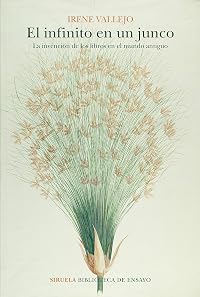
Papyrus: The Invention of Books in the Ancient World
by Irene Vallejo
On This Page
Description
"Papyrus is an enthralling journey through the history of books and libraries in the ancient world and those who have helped preserve their rich literary traditions. Long before books were mass-produced, those made of reeds from along the Nile were worth fighting and dying for. Journeying along the battlefields of Alexander the Great, beneath the eruptions of Mount Vesuvius, at Cleopatra's palaces and the scene of Hypatia's murder, award-winning author Irene Vallejo chronicles the excitement show more of literary culture in the ancient world, and the heroic efforts that ensured this extraordinary tradition would continue. Weaved throughout are fascinating stories about the spies, scribes, illuminators, librarians, booksellers, authors, and statesmen whose rich and sometimes complicated engagement with the written word bears remarkable similarities to the world today: Aristophanes and the censorship of the humorists, Sappho and the empowerment of women's voices, Seneca and the problem of a post-truth world. Vallejo takes us to mountainous landscapes and the roaring sea, to the capitals where culture flourished and the furthest reaches where knowledge found refuge in chaotic times. In this sweeping tour of the history of books, the wonder of the ancient world comes alive and, along the way, we discover the singular power of the written word"-- show lessTags
Recommendations


















Member Recommendations


alv Las referencias clásicas y las reflexiones sobre la lengua y los libros abundan en ambas obras. Estilísticamente, ambas autoras comparten cierto regusto en leerse, y cierta predilección por la anécdota, lo cual hará la lectura amena para algunos y ligeramente tediosa para otros.
11
Member Reviews
We are the only animals who imagine fables, who scatter darkness with stories, who learn to live with chaos thanks to the tales we tell, who stoke the ember of fires with the air of their words, who travel great distances to carry their chronicles to strangers. And when we share the same stories, we are no longer strangers anymore.
from Papyrus by Irene Vallejo
What a delightful book! The book is as gorgeous as the writing, so I looked forward to holding it and reading it every night. It took me on a journey back in time, to the first letters and first writing, to soft clay tablets that could be smoothed over, to the papyrus scrolls that ancient Egypt exported across the known world, to parchment and codices. What was in those fragile show more books, how they were preserved or destroyed, sheltered in libraries or lost in war or in conflagrations spurred by anger. It traces Western heritage from the Greeks, whose culture was adopted by the Romans (who were better at war than philosophy.)
This is the serious book lover’s dream of a book, wide ranging across time and topics, but always coming back to the attachment we have to books, their power to reach across time and space. Librarians are liberal heroes, in the past and today; our own local librarian watches people scan the shelves, bringing their complaints, pressuring the offerings to conform to their truth. In the ancient world, booksellers were punished for the books they sold. Books are dangerous things! They hold ideas and ideals that challenge the status quo.
Vallejo begins with a journey, thousands of years ago, when brave men crossed the world and risked everything to bring rare manuscripts back to Ptolemy for his library in Alexandrea. And she ends with the loss of literacy after the fall of Rome, and their revival with the printing press. Books no longer had to be hand copied by slaves, distributed to the few.
How my mind soared while reading, filled with insight–there is so much packed into this volume! It’s a book to return to, for the beautiful writing, and the knowledge, the sheer pleasure of reading it.
I received a free book from A. A. Knopf. My review is fair and unbiased. show less
from Papyrus by Irene Vallejo
What a delightful book! The book is as gorgeous as the writing, so I looked forward to holding it and reading it every night. It took me on a journey back in time, to the first letters and first writing, to soft clay tablets that could be smoothed over, to the papyrus scrolls that ancient Egypt exported across the known world, to parchment and codices. What was in those fragile show more books, how they were preserved or destroyed, sheltered in libraries or lost in war or in conflagrations spurred by anger. It traces Western heritage from the Greeks, whose culture was adopted by the Romans (who were better at war than philosophy.)
This is the serious book lover’s dream of a book, wide ranging across time and topics, but always coming back to the attachment we have to books, their power to reach across time and space. Librarians are liberal heroes, in the past and today; our own local librarian watches people scan the shelves, bringing their complaints, pressuring the offerings to conform to their truth. In the ancient world, booksellers were punished for the books they sold. Books are dangerous things! They hold ideas and ideals that challenge the status quo.
Vallejo begins with a journey, thousands of years ago, when brave men crossed the world and risked everything to bring rare manuscripts back to Ptolemy for his library in Alexandrea. And she ends with the loss of literacy after the fall of Rome, and their revival with the printing press. Books no longer had to be hand copied by slaves, distributed to the few.
How my mind soared while reading, filled with insight–there is so much packed into this volume! It’s a book to return to, for the beautiful writing, and the knowledge, the sheer pleasure of reading it.
I received a free book from A. A. Knopf. My review is fair and unbiased. show less
Este es un libro sobre la historia de los libros. Un recorrido por la vida de ese fascinante artefacto que inventamos para que las palabras pudieran viajar en el espacio y en el tiempo. La historia de su fabricación, de todos los tipos que hemos ensayado a lo largo de casi treinta siglos: libros de humo, de piedra, de arcilla, de juncos, de seda, de piel, de árboles y, los últimos llegados, de plástico y luz.
Es, además, un libro de viajes. Una ruta con escalas en los campos de batalla de Alejandro y en la Villa de los Papiros bajo la erupción del Vesubio, en los palacios de Cleopatra y en el escenario del crimen de Hipatia, en las primeras librerías conocidas y en los talleres de copia manuscrita, en las hogueras donde ardieron show more códices prohibidos, en el gulag, en la biblioteca de Sarajevo y en el laberinto subterráneo de Oxford en el año 2000. Un hilo que une a los clásicos con el vertiginoso mundo contemporáneo, conectándolos con debates actuales: Aristófanes y los procesos judiciales contra humoristas, Safo y la voz literaria de las mujeres, Tito Livio y el fenómeno fan, Séneca y la posverdad...
Pero, sobre todo, esta es una fabulosa aventura colectiva protagonizada por miles de personas que, a lo largo del tiempo, han hecho posibles y han protegido los libros: narradoras orales, escribas, iluminadores, traductores, vendedores ambulantes, maestras, sabios, espías, rebeldes, monjas, esclavos, aventureras... Lectores en paisajes de montaña y junto al mar que ruge, en las capitales donde la energía se concentra y en los enclaves más apartados donde el saber se refugia en tiempos de caos. Gente común cuyos nombres en muchos casos no registra la historia, esos salvadores de libros que son los auténticos protagonistas de este ensayo. show less
Es, además, un libro de viajes. Una ruta con escalas en los campos de batalla de Alejandro y en la Villa de los Papiros bajo la erupción del Vesubio, en los palacios de Cleopatra y en el escenario del crimen de Hipatia, en las primeras librerías conocidas y en los talleres de copia manuscrita, en las hogueras donde ardieron show more códices prohibidos, en el gulag, en la biblioteca de Sarajevo y en el laberinto subterráneo de Oxford en el año 2000. Un hilo que une a los clásicos con el vertiginoso mundo contemporáneo, conectándolos con debates actuales: Aristófanes y los procesos judiciales contra humoristas, Safo y la voz literaria de las mujeres, Tito Livio y el fenómeno fan, Séneca y la posverdad...
Pero, sobre todo, esta es una fabulosa aventura colectiva protagonizada por miles de personas que, a lo largo del tiempo, han hecho posibles y han protegido los libros: narradoras orales, escribas, iluminadores, traductores, vendedores ambulantes, maestras, sabios, espías, rebeldes, monjas, esclavos, aventureras... Lectores en paisajes de montaña y junto al mar que ruge, en las capitales donde la energía se concentra y en los enclaves más apartados donde el saber se refugia en tiempos de caos. Gente común cuyos nombres en muchos casos no registra la historia, esos salvadores de libros que son los auténticos protagonistas de este ensayo. show less
This marvelous tome describes not only how books helped to shape the ancient world, but ours as well. In Papyrus, Spanish historian and philologist Irene Vallejo provides in rich detail how both the production of books and reading advanced, hand in hand, down through the centuries. She traces how the earliest texts were first set onto stone tablets, then on papyrus scrolls, and finally paper (a Chinese invention). Writing emerged from –– and at first mimicked –– humankind’s oral tradition, as the first readers spoke the earliest works aloud rather than perusing silently.
Vallejo’s book does not follow a strict chronological order; rather she jumps back and forth through time to present a complete picture of the topics show more addressed. While much of her story focuses on the importance of books in Greece, Alexandria, and Rome, it takes numerous detours to detail the emergence of published works across Europe during the Middle Ages. Also highlighted is the key role that libraries (and librarians) played to ensure the survival of countless manuscripts despite warfare, wanton destruction by rulers, and natural calamities.
Published in the US in 2022, Papyrus is a paean to the importance of the written word as it traces the birth of alphabetic script, literacy, and books’ lasting impacts on our world up to this day. A lively and captivating work, on almost every page there is a fresh discovery that is sure to inform and delight. Papyrus should be added to every reader’s short list. show less
Vallejo’s book does not follow a strict chronological order; rather she jumps back and forth through time to present a complete picture of the topics show more addressed. While much of her story focuses on the importance of books in Greece, Alexandria, and Rome, it takes numerous detours to detail the emergence of published works across Europe during the Middle Ages. Also highlighted is the key role that libraries (and librarians) played to ensure the survival of countless manuscripts despite warfare, wanton destruction by rulers, and natural calamities.
Published in the US in 2022, Papyrus is a paean to the importance of the written word as it traces the birth of alphabetic script, literacy, and books’ lasting impacts on our world up to this day. A lively and captivating work, on almost every page there is a fresh discovery that is sure to inform and delight. Papyrus should be added to every reader’s short list. show less
While the subtitle of this work is not totally misleading, this really isn't a history of the invention of books. I think it's equal parts memoir and a consideration of how readers were created, with all the implications that flow from that. I actually enjoyed it quite a bit. However, whereas on completion I had seriously considered giving it five stars, the more I think about the work the slighter it feels. Still, I would read more essays from this lady.
There are great books about the history of writing, the history of books, the history of publishing, and the history of libraries--but this book is not one of them. It is instead an overlong and tedious personal essay about what specific ancient books have meant to this author. The books includes plenty of conjecture, romantic thoughts about libraries and writers, and "I imagine..." instead of a dispassionate account of historical evidence, enough to make me think this book should be reclassified as fiction. Not recommended.
A poorly translated title (the Spanish title translates as Infinity in a Reed) will cause some disappointment among those looking for a book specifically on the topic of papyrus or Egyptian writing. While these topics are discussed, they are not the true focus of the book, which is a beautifully written love letter to "the classics," i.e, the writings of the ancient Greeks and Romans. Go in with that topic in mind and you will be enthralled.
Un nuevo ensayo de filología. ¿Nuevo? Admítanse preguntas retóricas: ¿Aporta algo nuevo?¿Existe un enfoque diferente?¿Arriesga alguna hipótesis interesante?A todas estas cuestiones la respuesta se yergue inevitablemente lacónica: No. Y sin embargo, su estilo sencillo, sus incursiones literarias, sus citas conocidas… hacen que sea una obra amena y entretenida.
Aún así, no es suficiente. Un ensayo ha de ser riguroso, u original en sus planteamientos, o denso sin necesidad de ser farragoso, o, al menos, divulgativo. La obra de Irene Vallejo se queda escasa en casi todo. Y no parece que se deba a sus aptitudes: cultura parece que tiene e incluso raya en la erudición; sino a su actitud acomodaticia. Se ha instalado show more confortablemente, quizá por convicción, en el pensamiento mayoritario, a saber: leer es bueno, leer desarrolla el sentido crítico, los libros hacen libres a las personas,… Cualquier lector asiduo empatizará con estas ideas pero a poco que se les dedique algo de tiempo se observará que no son consistentes, al menos no dogmáticamente consistentes. Quizá debería aplicar su propia receta : “...sabemos que toda imagen edulcorada o reverencial de la cultura es ingenua, además de estéril.” (II Los caminos de Roma. Atrévete a recordar 48 p. 396) Ni todos los libros, ni todos los lectores, ni todas las lecturas son equiparables. Ni siquiera la obra es realmente divulgativa pues para aquellos con cierta cultura resulta parco en proposiciones; para el común de los lectores tampoco aporta nada, casi nada, que no conozcan ya, lo que se traduce en cierto engreimiento lector en lugar de reto intelectual, pues las citas y referencias son en su mayoría harto conocidas; por último, para aquellos lectores cuyo bagaje lector aún es incipiente, aunque válida, no es la mejor guía. Se echa en falta una evolución más detallada en tanto que objeto físico del protagonista de la obra: el libro; pareciendo que todo se desarrolló inevitablemente a lo largo de los siglos. .
En fin, es comprensible el éxito obtenido pues tanto estilo como contenido se dedican a arrullar al lector en lugar de provocarle, de desafiarle para que abandone su confortable papel de un biempensante amante de los libros. Un buen libro de entretenimiento, un mediocre ensayo para intelectuales mediocres (valga el oxímoron). show less
Aún así, no es suficiente. Un ensayo ha de ser riguroso, u original en sus planteamientos, o denso sin necesidad de ser farragoso, o, al menos, divulgativo. La obra de Irene Vallejo se queda escasa en casi todo. Y no parece que se deba a sus aptitudes: cultura parece que tiene e incluso raya en la erudición; sino a su actitud acomodaticia. Se ha instalado show more confortablemente, quizá por convicción, en el pensamiento mayoritario, a saber: leer es bueno, leer desarrolla el sentido crítico, los libros hacen libres a las personas,… Cualquier lector asiduo empatizará con estas ideas pero a poco que se les dedique algo de tiempo se observará que no son consistentes, al menos no dogmáticamente consistentes. Quizá debería aplicar su propia receta : “...sabemos que toda imagen edulcorada o reverencial de la cultura es ingenua, además de estéril.” (II Los caminos de Roma. Atrévete a recordar 48 p. 396) Ni todos los libros, ni todos los lectores, ni todas las lecturas son equiparables. Ni siquiera la obra es realmente divulgativa pues para aquellos con cierta cultura resulta parco en proposiciones; para el común de los lectores tampoco aporta nada, casi nada, que no conozcan ya, lo que se traduce en cierto engreimiento lector en lugar de reto intelectual, pues las citas y referencias son en su mayoría harto conocidas; por último, para aquellos lectores cuyo bagaje lector aún es incipiente, aunque válida, no es la mejor guía. Se echa en falta una evolución más detallada en tanto que objeto físico del protagonista de la obra: el libro; pareciendo que todo se desarrolló inevitablemente a lo largo de los siglos. .
En fin, es comprensible el éxito obtenido pues tanto estilo como contenido se dedican a arrullar al lector en lugar de provocarle, de desafiarle para que abandone su confortable papel de un biempensante amante de los libros. Un buen libro de entretenimiento, un mediocre ensayo para intelectuales mediocres (valga el oxímoron). show less
Members
- Recently Added By
Lists

Books Read in 2022
5,166 works; 112 members

Llibres que he llegit el 2024
77 works; 1 member

Las mejores obras literarias leídas en 2022 -- Magistrales (R. D.)
30 works; 1 member

Books Read in 2025
4,091 works; 97 members

Top Five Books of 2025
954 works; 303 members
Author Information

22 Works 2,034 Members
All Editions
Some Editions
Awards and Honors
Awards
Distinctions
Notable Lists
Series
Belongs to Publisher Series
Biblioteca de Ensayo (105)
Work Relationships
Common Knowledge
- Canonical title
- Papyrus: The Invention of Books in the Ancient World
- Original title
- El infinito en un junco: La invención de los libros en el mundo antiguo
- Alternate titles*
- Papyrus : een geschiedenis van de wereld in boeken
- Original publication date
- 2019; 2021 (Nederlands) (Nederlands)
- People/Characters
- Ptolemy II "Mikros" Philadelphos; Umberto Eco; Jorge Luis Borges; Thucydides; Demetrius of Phaleron; Cleopatra VII (show all 152); Marcus Antonius; Plutarch; Constantine Cavafy; Lawrence Durrell; Alexander III the Great, 326-253 BC; Strabo; Augustine of Hippo (354-430); John Tzetzes; Alberto Manguel; Elias Ashmole; Ashurbanipal, King of Assyria, son of Esarhaddon "Osnappar"; Hecataeus of Abdera; Jean-François Champollion; Herodotus; Niccolò de' Niccoli; Aristophanes; Aristotle (384-322); Hiram Bingham; Hesiod; Archilochus; Aristophanes of Byzantium; Philipp Blom; Callimachus; Maria Moliner; Stephane Mallarme; Philo of Byblos; Sappho; Pilar Iranzo; Enheduanna; Artemisia I of Caria; Pericles; Aspasia; Hipparchia of Maroneia; Sophia de Mello; Margaret Atwood; Circe; Aeschylus; Europa; Ryszard Kapuściński; William of Baskerville; Euripides; St Paul of Tarsus; Winston Churchill; Milan Kundera; Charles Chaplin; J. M. Coetzee; Pliny the Elder; Livy; Mikhail Bakhtin; Menander; Julian the Apostate; Demosthenes; Atticus Finch; Antiphon the Sophist; Viktor Frankl; James Finn Garner; George Orwell; Karl Popper; Gorgias; Mark Twain; Captain Haddock; Flannery O'Connor; Santiago Roncagliolo; Cleombrotus of Ambracia; Jeffrey Eugenides; H. P. Lovecraft; Abdul Alhazred; Johann Wolfgang von Goethe; Romano Prodi; Gabriele D'Annunzio; Alexander Dumas; Catherine de Medici; Heinrich Heine; Julius Caesar; Ammianus Marcellinus; Zenobia of Palmyra; Anna Blume; Paul Auster; Hypatia of Alexandria; Palladas; Theon of Alexandria; Synesius of Cyrene; Pope Theophilus of Alexandria; Amr ibn al-As al-Sahmi; Naguib Mahfouz; Salman Rushdie; Arturo Perez-Reverte; Ivan Lovrenovic; Ray Bradbury; Juan Goytisolo; Susan Sontag; Reinaldo Arenas; G. K. Chesterton; Joseph Brodsky; Samuel Johnson; Martial; Caerellia; Juvenal; Ausonius; László Bíró; Ovid; Prudentius; Quintilian; Jean-Michel Basquiat; Vladimir Nabokov; Roger Bacon; Catullus; Helene Hanff; Frank Doel; Cesar Vallejo; Jorge Carrion; Hermogenes of Tarsus; Domitian; George Borrow; Francisco Franco; Fernando VII; Françoise Frenkel; Mao Zedong; Hitoshi Igarashi; W. G. Sebald; Alan Kay; Sumner Stone; Izet Sarajlic; Luis García Berlanga; Emperor Justinian; Georges Méliès; Themistius; Jerome, 331-420; Suetonius; John Wilkes Booth; Abraham Lincoln; Marcus Terentius Varro; Gaius Asinius Pollio; Aulus Gellius; Marcus Aurelius; Vespasian; Tiberius Caesar Augustus, Emperor of Rome; Trajan, Marcus Ulpius, c. 53-117; Seneca the Younger; Simeon Stylites; Clement of Alexandria; Stefan Zweig; Cicero, Marcus Tullius, 106-43 BC; Marcus Tullius Tiro; Tiro; Jerome (331-420)
- Important places
- Alexandria, Egypt
- Epigraph
- "Parecen dibujos,
pero dentro de las letras están las voces.
Cada página es una caja infinita de voces" - Dedication
- A mi madre, mano firme de algodón
- First words
- Misteriosos grupos de hombres a caballo recorren los caminos de Gracia.
- Quotations*
- S. 14 In den Regalen von Alexandria wurden die Grenzen abgeschafft, und dort lebten die Worte der Griechen, Juden, Ägypter, Perser und Inder endlich in Ruhe zusammen. Dieses geistige Territorium war vielleicht der einzige Ra... (show all)um, der sie alle willkommen hieß.
S. 56: Diese universelle Adresse [im Internet] - fachsprachlich URL - ist das genaue Äquivalent zur Signatur in einer Bibliothek.
S. 77 Und nie zuvor hatten die besten Denker Zugang zu so vielen Büchern gehabt, zur Erinnerung an das Wissen der Vorläufer, ans Flüstern der Vergangenheit, aus dem sich das Handwerk des Denkens lernen ließ.
S. 86/87, zum Lesen: Die Gedanken, die sich Ihnen da mitteilen, sind unabhängig von der Welt, die Sie gegenwärtig umgibt. Sie haben sich gewissermaßen in einen inneren Raum zurückgezogen, in dem Abwesende zu Ihnen spreche... (show all)n, das heißt Gespenster, die nur Sie sehen können [...] Augustinus bemerkt, dass dieser Leser trotz seiner großen körperlichen Nähe nicht bei ihm ist, sondern in einer anderen, freieren, fließenderen Welt, die er sich selbst ausgesucht hat.
S. 95, Oxford / Carrol: Draußen Tunnel, Schilder, verrückte Teegesellschaften, Unterhaltungen, deren Logik ungreifbar blieb. Und aus der Zeit gefallene Figuren, versunken in bizarre Zeremonien.
S. 150 [..] alle großen Neuerungen - die Schrift, der Buchdruck, das Internet - mussten sich Kritikern stellen, die den Teufel an die Wand malten. [.. Aber:] Der Akt des Schreibens verlängerte das Leben der Erinnerungen, er... (show all) verhinderte, dass sich die Vergangenheit für immer in nichts auflöste.
S. 207: - die griechische Knabenliebe hatte eine pädagogische Funktion.
S. 243: In unserer virtuellen Welt entsprechen die sozialen Netzwerke den Leporellos [Bezug zu Don Juan, Leporello-Arie]. Indem sie ein Inventar der von uns eroberten Freunde, Fans und >Likes< führen, nähren sie den N... (show all)arzissmus und den Sammlertrieb, die beide in uns schlummern.
S. 249 Der erste [Bibliothekar], der mit eigener Stimme zu uns spricht, ist Kallimachos, und so sehen wir ihn mit seinem klaren Profil bei der geduldigen Arbeit, beim Katalogisieren und in seinen langen Nächten des Schreiben... (show all)s.
S. 259: Von allen Gewürzen der Küche ist das wichtigste die Angeberei.
S. 274: Sappho zufolge schafft derjenige, der liebt, Schönheit; er ergibt sich ihr nicht, wie man zu denken pflegt.
S. 292: Cercas weiß, dass es in jeder Epoche Soldaten von Salamis geben kann: solche, die in eine entscheidende - und scheinbar aussichtslose - Schlacht ziehen, um ihr Land, die Demokratie und ihre eigenen Träume zu verteid... (show all)igen.
S. 297: Nur im Kontrast zu anderen Identitäten verstehen wir unsere eigene. Der Andere erzählt mir meine Geschichte, er sagt mir, wer ich bin.
S. 316: das Lachen [hat] ein enormes Potenzial, der Macht ihre Legitimation zu entziehen, weshalb es beunruhigt und bestraft wird. [..] Intolerante Menschen oder auch Regierungen wissen Humor selten zu schätzen.
S. 346: [..] die gesamte abendländische Philosophie bestehe aus Fußnoten zur Platonischen Philosophie.
S. 349 Ein bereinigter Huck Finn mag den jungen Lesenden vieles beibringen, er beraubt sie jedoch einer essentiellen Lektion: dass es einmal eine Zeit gab, in der fast alle ihre Sklaven >Nigger< nannten und dass das Wor... (show all)t aufgrund dieser Geschichte der Unterdrückung zum Tabu geworden ist.
S. 354 Lovecraft machte sich einen Spaß daraus, eine detailreiche Geschichte des Necronomicon und seiner Übersetzungen zu verfassen. Die bibliografischen Belege waren so ausführlich, dass zahlreiche Leser felsenfest an die... (show all) Existenz des Buches glaubten und Hunderte betrügerischer Antiquare unbedarften Kunden ein Exemplar anboten.
S. 361 Und die von Büchern genährten Flammen säten Dunkelheit.
S. 382 Bibliotheken, Schulen und Museen sind fragile Institutionen, die in gewalttätiger Umgebung nicht lange überleben.
S. 392 Auf der Asche der verbrannten Texte lässt sich eine Version der Ereignisse errichten, die den Interessen der Sieger dient.
S. 409 Was hilft es, Dokumente anzuhäufen, wenn sie in Unordnung geraten und die Informationen, die man benötigt, Nadeln in endlosen Heuschobern gleichen?
S. 410 [..] nicht die angelsächsische Bezeichnung zu übernehmen, die nur auf Rechenoperationen Bezug nimmt, also computer, sondern das Wort ordinateur zu verwenden, das auf die viel wichtigere - entscheidende - Funktion abh... (show all)ebt, Daten zu ordnen. Die Geschichte technologischer Umwälzungen von der Erfindung der Schrift bis zur Informatik ist im Grunde eine Chronik der Methoden, die geschaffen wurden, um über Wissen zu verfügen, um es zu archivieren und wiederzugewinnen. Der Weg all dieser Fortschritte gegen das Vergessen und das Durcheinander, der einst in Mesopotamien begann, erreichte in der Antike seinen Höhepunkt im Bücherpalast von Alexandria und zieht sich noch heute durch die digitalen Netze.
S. 454 Denn Sklavenhalter (wie Diktatoren, Tyrannen, Absolutisten und andere unlautere Machthaber) glaubten fest an die Macht des Lesens; sie wussten, dass das geschriebene Wort eine Kraft ist und dass es nur wenige Wörter b... (show all)raucht, um eine zwingende Wirkung zu evozieren.
S. 456 Der Text missbraucht den Lesenden. Wer liest, leiht seinen Körper einem unbekannten Autor; ein gewagter, promiskuitiver Akt. Rang und Ansehen eines Bürgers waren damit nicht gänzlich unvereinbar, aber die orthodoxen... (show all) Denker jener Zeit ließen wissen, dass das Lesen mit einer gewissen Mäßigung praktiziert werden müsse, damit es nicht zum Laster würde.
S. 464 Wer in Rom das volle Bürgerrecht hatte, konnte sich künstlerisch und literarisch betätigen, wie er wollte, solange das gelegentlich und vor allem uneigennützig geschah. Der Versuch, von der Literatur zu leben, war ... (show all)für rechtschaffene Leute ein wenig ehrenvolles Streben.
S. 539 Neue [Speicher-]Formate lassen eine große Anzahl von Opfern dieser Veränderung im Straßengraben zurück. Alles, was nicht vom alten auf das neue Medium übertragen wird, verschwindet für immer.
S. 580 Zensoren aller Zeiten laufen Gefahr, eine gegenteilige Wirkung zu erzielen, und das ist das große Paradox: Sie richten das Rampenlicht genau auf das, was sie zu verbergen suchen.
S. 600 Nach Steven Pinker wird die Geschichte weniger von den Siegern geschrieben als vielmehr von den Wohlhabenden, jenem kleinen Teil der Menschheit, der die Zeit, die Muße und die Bildung hat, um sich das Nachdenken erlau... (show all)ben zu können. Wir neigen dazu, das Elend anderer Epochen zu vergessen, auch weil Literatur, Poesie und Legenden diejenigen feiern, denen es gut ging, und diejenigen vergessen, die in stiller Armut untergingen. - Last words
- (Click to show. Warning: May contain spoilers.)Los olvidados, las anónimas. Personas que lucharon por nosotros, por los rostros nebulosos del futuro.
- Original language
- Spanish
- Canonical DDC/MDS
- 002.09
*Some information comes from Common Knowledge in other languages. Click "Edit" for more information.
Classifications
- Genres
- History, General Nonfiction, Nonfiction
- DDC/MDS
- 002.09 — Computer science, information & general works Computer science, knowledge & systems Books (Science and history of the book) Standard subdivisions Biography and History
- LCC
- Z5 .V34 — Bibliography, Library Science and Information Resources Books (General). Writing. Paleography History of books and bookmaking
- BISAC
Statistics
- Members
- 1,740
- Popularity
- 12,673
- Reviews
- 54
- Rating
- (4.20)
- Languages
- 17 — Basque, Catalan, Danish, Dutch, English, Finnish, French, German, Galician, Hungarian, Italian, Norwegian, Polish, Portuguese, Spanish, Swedish, Turkish
- Media
- Paper, Audiobook, Ebook
- ISBNs
- 62
- ASINs
- 14