
Bragan Keeps Turning Pages in 2022, Part 1
This topic was continued by Bragan Keeps Turning Pages in 2022, Part 2.
Talk Club Read 2022
Join LibraryThing to post.
1bragan
Hello, all! Happy New Year!
I'm Betty, I've been here at Club Read for enough years now that I keep losing track of exactly how many it's been, and I have pretty eclectic reading tastes, although with a noticeable slant towards speculative fiction of various kinds.
I'm also an inveterate book-hoarder with 1,076 books currently sitting on the TBR shelves forlornly crying "Read me! Read me next!" We'll see how many of their pitiable cries are answered this year, and how many new volumes end up beside them to add their voices to the chorus.
And I think that's enough of an introduction. On with the reading! I should have my first book of the year done reasonably soon...
I'm Betty, I've been here at Club Read for enough years now that I keep losing track of exactly how many it's been, and I have pretty eclectic reading tastes, although with a noticeable slant towards speculative fiction of various kinds.
I'm also an inveterate book-hoarder with 1,076 books currently sitting on the TBR shelves forlornly crying "Read me! Read me next!" We'll see how many of their pitiable cries are answered this year, and how many new volumes end up beside them to add their voices to the chorus.
And I think that's enough of an introduction. On with the reading! I should have my first book of the year done reasonably soon...
3bragan
>2 dchaikin: Thanks, and Happy New Year to you! I vaguely remember when I had only about 700. :)
4labfs39
>1 bragan: sitting on the TBR shelves forlornly crying "Read me! Read me next!" We'll see how many of their pitiable cries are answered this year, and how many new volumes end up beside them to add their voices to the chorus.
Lol. I only have 598 little pitiful voices (plus another 237 on the wish list that are fainter, but perhaps even more strident).
Lol. I only have 598 little pitiful voices (plus another 237 on the wish list that are fainter, but perhaps even more strident).
5bragan
>4 labfs39: You don't even want to know how many I have on my wishlist...
6bragan
All right, time to get this reading party started!
1. The Pillars of the Earth by Ken Follett
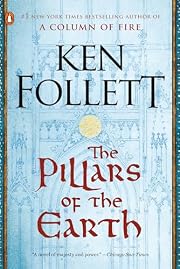
This one's a big old saga set in the 12th century, revolving around the building of a cathedral in England. And I really wish I could give it a better review than I'm about to. The medieval setting is interesting, and the story is entertaining enough, full of politics and romance and family drama. It also features some not-at-all-fun-to-read sadistic violence and multiple rape scenes, which I found somewhat off-putting, but that didn't stop me from finding it engaging, overall.
What did eventually stop me was the fact that the thing is just shy of 1,000 pages long, and it really, really did not need to be. Follett's writing is not exactly what I'd call good, but it's readable enough, except for one major flaw: his unfortunate tendency to repeat himself. Things happen, and then -- sometimes only a few pages later! -- we'll get a long, dry, utterly unnecessary passage in which character mentally recaps it all while I mutter, "Yeah, I know, I was there" in increasingly impatient tones. Follett does this over and over and over, and while no particular instance of it is too much of a problem, the end result is a book that very much wears out its welcome long before the end. Cut out all that repetition and tighten up some other stuff with a bit of judicious editing, and you'd have a novel that, while it was never going to be a work of art on par with the cathedrals it praises so much, would at least be a pretty decent beach read. As it is, it's a book with a pretty decent beach read buried inside it, trying desperately not to be crushed by the weight of at least 300 unnecessary pages.
Rating: 3/5, although I can only rate it that high if I make an effort to remember how I felt about it before I got to about page 700 and realized I was getting sick of reading it. If it had only managed to finish by that point, it'd be a very solid 3 and a half.
1. The Pillars of the Earth by Ken Follett
This one's a big old saga set in the 12th century, revolving around the building of a cathedral in England. And I really wish I could give it a better review than I'm about to. The medieval setting is interesting, and the story is entertaining enough, full of politics and romance and family drama. It also features some not-at-all-fun-to-read sadistic violence and multiple rape scenes, which I found somewhat off-putting, but that didn't stop me from finding it engaging, overall.
What did eventually stop me was the fact that the thing is just shy of 1,000 pages long, and it really, really did not need to be. Follett's writing is not exactly what I'd call good, but it's readable enough, except for one major flaw: his unfortunate tendency to repeat himself. Things happen, and then -- sometimes only a few pages later! -- we'll get a long, dry, utterly unnecessary passage in which character mentally recaps it all while I mutter, "Yeah, I know, I was there" in increasingly impatient tones. Follett does this over and over and over, and while no particular instance of it is too much of a problem, the end result is a book that very much wears out its welcome long before the end. Cut out all that repetition and tighten up some other stuff with a bit of judicious editing, and you'd have a novel that, while it was never going to be a work of art on par with the cathedrals it praises so much, would at least be a pretty decent beach read. As it is, it's a book with a pretty decent beach read buried inside it, trying desperately not to be crushed by the weight of at least 300 unnecessary pages.
Rating: 3/5, although I can only rate it that high if I make an effort to remember how I felt about it before I got to about page 700 and realized I was getting sick of reading it. If it had only managed to finish by that point, it'd be a very solid 3 and a half.
7rhian_of_oz
>6 bragan: Happy new year! The Pillars of the Earth isn't on my wishlist but I was very much entertained by your review.
8bragan
>7 rhian_of_oz: It not being on your wishlist may be just as well, anyway. Although it's also possible I'm just unreasonably grumpy about it. Anyway, glad to entertain! Happy New Year!
9DieFledermaus
Looking forward to what I assume will be extremely eclectic and interesting books!
Entertaining first review--thanks for saving me from a book bullet.
Entertaining first review--thanks for saving me from a book bullet.
11bragan
>9 DieFledermaus: Other people have liked it a lot more than I did, admittedly, but other people might have more patience than I do at this point in my life.
>10 dukedom_enough: I haven't seen the miniseries version, but I can only imagine that watching it is a much more efficient use of time than reading the book.
>10 dukedom_enough: I haven't seen the miniseries version, but I can only imagine that watching it is a much more efficient use of time than reading the book.
12labfs39
>6 bragan: I read Pillars of the Earth for a book club years ago. Yes, that behemoth for a once-a-month book club. It rated 3.5 stars from me, but I wasn't enticed to continue with the next in the series of behemoths. Great review.
ETA: I just went to the book page to drop you a thumb, and had to laugh. Out of the top five reviews (sorted by votes), there were 2 five-star reviews, a 1 one-star, and two half-star reviews! Love it or hate it, I guess.
ETA: I just went to the book page to drop you a thumb, and had to laugh. Out of the top five reviews (sorted by votes), there were 2 five-star reviews, a 1 one-star, and two half-star reviews! Love it or hate it, I guess.
13bragan
>12 labfs39: Wow, did anybody but you actually finish it in time for the book club meeting? :)
14NanaCC
>6 bragan: I see that I was still giving star rating when I read Pillars of the Earth and gave it 3 stars. I didn’t go any further with the series.
15sallypursell
Happy New Year, Betty, and best wishes for the new year--and for better reading. I remember liking Pillars of the Earth, but not why.
Dropping off my star.
Dropping off my star.
16dchaikin
>6 bragan: wondering what you might rank the 700 good pages on their own. I’m intrigued by the idea of this book and the idea of getting lost in a 1000 page easy and hopefully interesting read. But I haven’t got closer to it than thinking about that idea. (In the back of my head is The Eye of the Needle, which i saw on tv and then read as a kid - and remember the mostly drama of the type I think I would find silly now.)
17labfs39
>13 bragan: Who says I finished the whole thing before the meeting? ;-) I did finish it though. I think I liked it a smidge more than you, my biggest gripe was that every invention/innovation on the century was attributed to them. Sort of like in the Jean Auel books. I understand it's a plot device, but it annoys me.
18bragan
>14 NanaCC: I am definitely not going any further with the series!
>15 sallypursell: You're probably just a more patient person than I am. In any case, I am much happier with my currently-in-progress second book of the year. That one is going a little slowly only because I am taking my time to properly savor it!
>16 dchaikin: I mean, if a good editor had been ruthless with it and cut it down to what it should have been, I would have given it a 3.5 star rating, and honestly considered it on the upper end of that. Even if you eliminated the repetition, I don't think the writing is quite good enough to make it 4-star, but it would have been very firmly in the flawed-but-still-entertaining category for me. So if you want to brave it and are actually in the mood for something very long and leisurely -- which I maybe wasn't, exactly -- I wouldn't try too hard to talk you out of it, or anything. Some folks really do seem to have loved it.
>17 labfs39: Yeah, that bugged me a little bit -- I think Jean Auel crossed my mind, too -- but nowhere near as much as my other issues with it. I was able to extend at least a little suspension of disbelief for that.
>15 sallypursell: You're probably just a more patient person than I am. In any case, I am much happier with my currently-in-progress second book of the year. That one is going a little slowly only because I am taking my time to properly savor it!
>16 dchaikin: I mean, if a good editor had been ruthless with it and cut it down to what it should have been, I would have given it a 3.5 star rating, and honestly considered it on the upper end of that. Even if you eliminated the repetition, I don't think the writing is quite good enough to make it 4-star, but it would have been very firmly in the flawed-but-still-entertaining category for me. So if you want to brave it and are actually in the mood for something very long and leisurely -- which I maybe wasn't, exactly -- I wouldn't try too hard to talk you out of it, or anything. Some folks really do seem to have loved it.
>17 labfs39: Yeah, that bugged me a little bit -- I think Jean Auel crossed my mind, too -- but nowhere near as much as my other issues with it. I was able to extend at least a little suspension of disbelief for that.
19wandering_star
>6 bragan: I love your reviews, and this one is a cracker! Great way to start the year for everyone reading your thread, even if maybe not for you...
My pet hate is things being over-explained so I recognise your impatient muttering. I used to find this happened a lot in movies but my partner told me he wouldn't sit next to me in the cinema any more if I kept the muttering up so now I am reduced to silent gesticulation.
My primo example of a book that could have been a decent beach read with better editing is The Goldfinch, in which everything happened THREE TIMES. I managed to finish it but there was a lot of 'Not this again' muttering/gesticulation in the process.
My pet hate is things being over-explained so I recognise your impatient muttering. I used to find this happened a lot in movies but my partner told me he wouldn't sit next to me in the cinema any more if I kept the muttering up so now I am reduced to silent gesticulation.
My primo example of a book that could have been a decent beach read with better editing is The Goldfinch, in which everything happened THREE TIMES. I managed to finish it but there was a lot of 'Not this again' muttering/gesticulation in the process.
20bragan
>19 wandering_star: I don't even necessarily always mind things being explained a bit more than they need to be, and maybe in a 1,000 page novel sometimes I might genuinely need to be reminded of small things that happened a few hundred pages ago, but when an author starts laboriously recapping the big, memorable events that I just read about ten minutes earlier, I really start to doubt either his writing skills or his estimation of my memory, or both.
The Goldfinch is on my TBR shelves, so I will perhaps brace myself for more repetition when I get to it!
The Goldfinch is on my TBR shelves, so I will perhaps brace myself for more repetition when I get to it!
21bragan
I actually finished this second book last night, but I wasn't able to post about it because my internet was down. Although, admittedly, it's entirely possibly I wouldn't have finished it last night if my internet wasn't down.
2. Beyond Earth’s Edge: The Poetry of Spaceflight edited by Julie Swarstad and Christopher Cokinos.
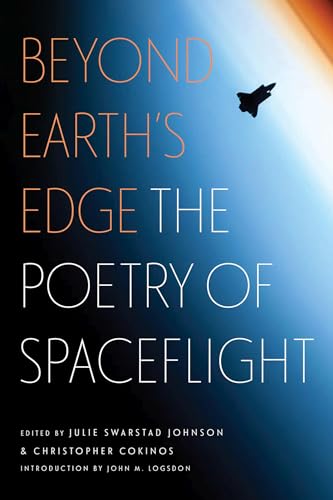
I'm not really much of a reader of poetry, and I'm definitely not someone who can speak in a particularly informed and useful way about it, being very much of the "eh, I just know what I like" school of poetry appreciation. But if ever there was a collection of poetry aimed directly at my heart, it would be one on the theme of space travel.
Which, of course, is exactly what this is. Here we have poems about watching space shuttles lift off or break apart into pieces, poems about the experience of living on Earth while Sputnik orbits overhead, about humanity chasing a fresh start in space or bringing all of Earth's problems up there with us. There are poems inspired by pictures from the Hubble Space Telescope, the explorations of Mars rovers, and the loneliness of Voyager craft leaving the solar system. Other poems look ahead to imagine terraforming Mars or meeting alien life or escaping the death of the solar system. There are even a few about Star Trek.
And, of course, there's a whole section of poems about the Apollo moon landings. Unsurprisingly, I found these some of the most affecting and thought-provoking in the collection. I was really struck, in particular, by how many of them seem to be grappling, in various ways and with various conclusions, with the seeming contrast between the numinous moon of symbol and myth and that actual gray rock being explored by unpoetic military men and sterile machines. In retrospect, it makes perfect sense that this is something poets would concern themselves with, but it genuinely took me by surprise, no doubt largely because I personally find the reality of that rock and our travels to it incredibly meaningful and moving and resonant. But it was really fascinating to me to see all these poets having what amounts to a sort of extended conversation among themselves about how to think about it.
Ultimately I can't say that all of these poems worked for me, or interested me quite that much, but the majority of them did, and I found many of them incredibly powerful. The one about Laika the doomed space dog, for instance, damned near had me crying in public. And I could read Archibald MacLeish's "Voyage to the Moon" an infinite number of times and still get a lump in my throat and a soaring feeling in my heart every single time. I also really appreciate the diversity of viewpoints represented here, even if the collection is deliberately US-centric. The poets' attitudes towards space travel range from the celebratory to the cynical, with a vast and complicated spectrum of feelings in-between, and while it may have just been twelve white guys walking on the moon, there were a lot of people who don't fit that description down here on Earth watching them do it, and they are not neglected here.
Rating: 4.5/5
2. Beyond Earth’s Edge: The Poetry of Spaceflight edited by Julie Swarstad and Christopher Cokinos.
I'm not really much of a reader of poetry, and I'm definitely not someone who can speak in a particularly informed and useful way about it, being very much of the "eh, I just know what I like" school of poetry appreciation. But if ever there was a collection of poetry aimed directly at my heart, it would be one on the theme of space travel.
Which, of course, is exactly what this is. Here we have poems about watching space shuttles lift off or break apart into pieces, poems about the experience of living on Earth while Sputnik orbits overhead, about humanity chasing a fresh start in space or bringing all of Earth's problems up there with us. There are poems inspired by pictures from the Hubble Space Telescope, the explorations of Mars rovers, and the loneliness of Voyager craft leaving the solar system. Other poems look ahead to imagine terraforming Mars or meeting alien life or escaping the death of the solar system. There are even a few about Star Trek.
And, of course, there's a whole section of poems about the Apollo moon landings. Unsurprisingly, I found these some of the most affecting and thought-provoking in the collection. I was really struck, in particular, by how many of them seem to be grappling, in various ways and with various conclusions, with the seeming contrast between the numinous moon of symbol and myth and that actual gray rock being explored by unpoetic military men and sterile machines. In retrospect, it makes perfect sense that this is something poets would concern themselves with, but it genuinely took me by surprise, no doubt largely because I personally find the reality of that rock and our travels to it incredibly meaningful and moving and resonant. But it was really fascinating to me to see all these poets having what amounts to a sort of extended conversation among themselves about how to think about it.
Ultimately I can't say that all of these poems worked for me, or interested me quite that much, but the majority of them did, and I found many of them incredibly powerful. The one about Laika the doomed space dog, for instance, damned near had me crying in public. And I could read Archibald MacLeish's "Voyage to the Moon" an infinite number of times and still get a lump in my throat and a soaring feeling in my heart every single time. I also really appreciate the diversity of viewpoints represented here, even if the collection is deliberately US-centric. The poets' attitudes towards space travel range from the celebratory to the cynical, with a vast and complicated spectrum of feelings in-between, and while it may have just been twelve white guys walking on the moon, there were a lot of people who don't fit that description down here on Earth watching them do it, and they are not neglected here.
Rating: 4.5/5
22labfs39
>21 bragan: and while it may have just been twelve white guys walking on the moon, there were a lot of people who don't fit that description down here on Earth watching them do it, and they are not neglected here
I love that line. Great review
I love that line. Great review
23bragan
>22 labfs39: Thanks!
24rocketjk
Finally checking in with your thread, here. Sorry about Pillars of the Earth running out of road so far before the end of the book. I well know the feeling. Happy 2022 reading the rest of the way. Great review of the space poetry book. Cheers!
25bragan
>24 rocketjk: Thanks, and good to see you here!
26dchaikin
>21 bragan: I wouldn’t have touched this. But your review is eye opening and now I’m curious and kind of moved (without having read the poetry) Wish you better Internet luck.
27AnnieMod
>21 bragan: *le sigh* My "I am really trying not to buy a lot of books this year" is crumbling...
28bragan
>26 dchaikin: It's poetry so good it even moves people at second hand! :)
And my internet is back up now. Whew!
>27 AnnieMod: Sorry! :)
I may have given up on the "trying not to buy a lot of books" thing this year. I'm still sort of pretending I haven't, but I may not even be fooling myself.
And my internet is back up now. Whew!
>27 AnnieMod: Sorry! :)
I may have given up on the "trying not to buy a lot of books" thing this year. I'm still sort of pretending I haven't, but I may not even be fooling myself.
29AnnieMod
>28 bragan: Well, one of my favorite publishers has a sale and I could not resist and I already managed to order some Russian and Bulgarian books this week so at this point I am also just pretending. But still... :)
30wandering_star
>21 bragan: That sounds great - and well-tailored for you!
Have you heard of the album The Race For Space by the UK band Public Service Broadcasting? It's a concept album based around the space race, more or less alternating tracks about the US and Soviet elements (so the first track uses samples from the Kennedy speech, followed by tracks about Sputnik and Yuri Gagarin). I don't know how to describe the genre, maybe alternative dance music?
Have you heard of the album The Race For Space by the UK band Public Service Broadcasting? It's a concept album based around the space race, more or less alternating tracks about the US and Soviet elements (so the first track uses samples from the Kennedy speech, followed by tracks about Sputnik and Yuri Gagarin). I don't know how to describe the genre, maybe alternative dance music?
31bragan
>30 wandering_star: Huh. I haven't, but it does sound relevant to my interests.
32avaland
>6 bragan:, >10 dukedom_enough: As hubby notes we watched the dramatization, but I also read those books back around '89 or '90 (I had three young children then and would read almost anything....). I can't remember a thing about them now, but they were probably as good as the Kent Family Chronicles I read in the late 70s. ;-)
33bragan
>32 avaland: Ah, I seem to remember my mother having some of those John Jakes books, but I never read any of them.
34labfs39
>32 avaland: >33 bragan: Oh, my. John Jakes. There's a name I haven't heard in a long time. Yes, I too read those back when there was nothing else. There were a lot of them, so it kept me busy for a minute or two.
35OscarWilde87
Hi there!
I'm a bit late to the game this year, but still dropping my star. Happy reading in 2022! :)
I'm a bit late to the game this year, but still dropping my star. Happy reading in 2022! :)
36bragan
>35 OscarWilde87: Hello, and back atcha!
37lisapeet
>21 bragan: As a big dog lover, just reading the name Laika makes me a little teary...
38bragan
>37 lisapeet: I'm not even a dog person, myself, but it gets to be a bit, too. And that poem, man... I may be choking up again just thinking about it.
39bragan
3. We Ride Upon Sticks by Quan Barry

It's 1989, and the high school field hockey team from Danvers, Massachusetts, a stone's throw from the site of the Salem witch trials, has very little hope of a winning season. That is, until the girls indulge in some witchcraft of their own by signing a pledge to the forces of darkness in the pages of a notebook with a picture of Emilio Estevez on the cover.
This book got a lot of buzz last year. I remember talking to a couple of people who'd really liked it, and saying that I'd heard it was good but wasn't sure if it was something I actually wanted to read, because stories about sports are a big turnoff for me. "Don't worry," everyone said. "It's not really a novel about field hockey at all. It's about things like growing up, and friendship." And it turns out, they're right, it is about those things. But I fear those who recommended it to me still dramatically underestimated how hard it is not only for me to care about sports, but to care about people caring about sports. And, whatever else it's about, this is also a story about people who care about their team enough to sell their souls to Emilio Estevez over it.
Which is an entertaining sentence to write, admittedly. But I still had a hard time getting into it. And it wasn't just the sports angle. The narrative style is sort of clever, but it didn't necessarily work for me all that well, as it kept me feeling oddly detached from all the characters as individuals. Indeed, I had a surprising amount of trouble keeping track of who was who much of the time. The supposed supernatural elements did interest me, but they turned out not to be quite what I was expecting, and most of the actual witchiness is kind of vague and mostly off-screen. Ultimately, it is much more about these kids' high school experience than anything else, and, well... Look, I was a high school girl in 1989, too, and I didn't enjoy the experience enough that I have any real interest in reminiscing about it.
All of which is to say that my first impulse, apparently, was correct, and I just wasn't the right audience for this one. Which I genuinely feel bad about, because there is a lot here that's good. There's some offbeat humor, some thoughtfulness, some heart, and in among all the weirdness, the time and the place and the experience of being a teenager all feel quite realistic. I can absolutely see why people liked it. In some respects, I liked it, too. But never quite the way I wanted to.
Rating: I'm going to give this one a subjective and apologetic 3.5/5.

It's 1989, and the high school field hockey team from Danvers, Massachusetts, a stone's throw from the site of the Salem witch trials, has very little hope of a winning season. That is, until the girls indulge in some witchcraft of their own by signing a pledge to the forces of darkness in the pages of a notebook with a picture of Emilio Estevez on the cover.
This book got a lot of buzz last year. I remember talking to a couple of people who'd really liked it, and saying that I'd heard it was good but wasn't sure if it was something I actually wanted to read, because stories about sports are a big turnoff for me. "Don't worry," everyone said. "It's not really a novel about field hockey at all. It's about things like growing up, and friendship." And it turns out, they're right, it is about those things. But I fear those who recommended it to me still dramatically underestimated how hard it is not only for me to care about sports, but to care about people caring about sports. And, whatever else it's about, this is also a story about people who care about their team enough to sell their souls to Emilio Estevez over it.
Which is an entertaining sentence to write, admittedly. But I still had a hard time getting into it. And it wasn't just the sports angle. The narrative style is sort of clever, but it didn't necessarily work for me all that well, as it kept me feeling oddly detached from all the characters as individuals. Indeed, I had a surprising amount of trouble keeping track of who was who much of the time. The supposed supernatural elements did interest me, but they turned out not to be quite what I was expecting, and most of the actual witchiness is kind of vague and mostly off-screen. Ultimately, it is much more about these kids' high school experience than anything else, and, well... Look, I was a high school girl in 1989, too, and I didn't enjoy the experience enough that I have any real interest in reminiscing about it.
All of which is to say that my first impulse, apparently, was correct, and I just wasn't the right audience for this one. Which I genuinely feel bad about, because there is a lot here that's good. There's some offbeat humor, some thoughtfulness, some heart, and in among all the weirdness, the time and the place and the experience of being a teenager all feel quite realistic. I can absolutely see why people liked it. In some respects, I liked it, too. But never quite the way I wanted to.
Rating: I'm going to give this one a subjective and apologetic 3.5/5.
40rhian_of_oz
>39 bragan: Makes me think what I would've sold my soul for, and to whom, when I was at school. Or now :-).
41bragan
>40 rhian_of_oz: That's an interesting question to contemplate. I'm not sure what my answer would be, but I'm sure it would be supremely nerdy. :)
42lisapeet
>39 bragan: Thinking about this from two different points of entry:
1. I haven't read that one, but I very much liked her upcoming When I'm Gone, Look for Me in the East, which was kind of a buddy road trip novel about Tibetan Buddhist monks. Nothing earth-shattering about it, but it was just different enough, and quite charming, to leave me feeling warmly about it.
2. I interviewed Emilio Estevez a few years ago when his film The Public came out, and he was so sweet and unassuming. I mean obviously he's had a whole lifetime of being the interviewee to perfect that, but he was genuinely nice to talk to—I showed up to the room where we were going to talk early, and so did he, none of his people or anything, and we just hung out and ate cookies and chatted for a while before folks showed up (and even then it was only me, my boss, and a colleague from another magazine, so it was pretty intimate as these things go). It must be so weird being the subject of fandom.
1. I haven't read that one, but I very much liked her upcoming When I'm Gone, Look for Me in the East, which was kind of a buddy road trip novel about Tibetan Buddhist monks. Nothing earth-shattering about it, but it was just different enough, and quite charming, to leave me feeling warmly about it.
2. I interviewed Emilio Estevez a few years ago when his film The Public came out, and he was so sweet and unassuming. I mean obviously he's had a whole lifetime of being the interviewee to perfect that, but he was genuinely nice to talk to—I showed up to the room where we were going to talk early, and so did he, none of his people or anything, and we just hung out and ate cookies and chatted for a while before folks showed up (and even then it was only me, my boss, and a colleague from another magazine, so it was pretty intimate as these things go). It must be so weird being the subject of fandom.
43bragan
>42 lisapeet: For all that this particular novel just really wasn't for me, I can definitely see a certain amount of charm in her writing.
And I should probably add, just for complete clarity, that the kids in the story don't actually sell their souls to Emilio Estevez. They just sort of semi-jokingly dub whatever dark force it is they think they've contacted "Emilio" because it's his picture on the notebook. But it certainly did occur to me to wonder just how deeply, deeply weird it would surely be to be the actual Emilio Estevez and encounter something like this.
Glad to know he is, in fact, a nice guy and not a force of darkness, in any case. :)
And I should probably add, just for complete clarity, that the kids in the story don't actually sell their souls to Emilio Estevez. They just sort of semi-jokingly dub whatever dark force it is they think they've contacted "Emilio" because it's his picture on the notebook. But it certainly did occur to me to wonder just how deeply, deeply weird it would surely be to be the actual Emilio Estevez and encounter something like this.
Glad to know he is, in fact, a nice guy and not a force of darkness, in any case. :)
44bragan
4. Ignorance: How It Drives Science by Stuart Firestein
There's a popular conception of science and scientists that drives me absolutely crazy. It's one that looks on science as a supposed collection of hard, irrefutable Established Facts, and scientists as rigid, closed-minded sorts who care only about being able to say "Yes, yes, we have explained that," and who will deny the existence of anything they haven't already explained even when it's staring them plainly in the face. And it drives me crazy because it's absolutely, 100% the opposite of the truth. It's clear that anyone who buys into it, even the slightest bit, never heard an actual scientist talking about, say, the Pioneer Anomaly, in which the far-flung Pioneer space probes departed from their expected trajectories in a way that no one initially knew how to explain. Some of these scientists got positively giddy at the fantastically unlikely but nevertheless real possibility that this wasn't due to some overlooked but utterly mundane issue with the spacecraft themselves, but that it might, just possibly, represent some area where our current understanding of physics breaks down. (Sadly, in this case, the answer did ultimately turn out to be less exciting than that.)
Stuart Firestein doesn't talk about the Pioneer Anomaly in this short book, but he's making very much the point that I think those giddy physicists were demonstrating. The excitement of science, he says, and the key to its advancement, lies not in tidily accumulated lists of Facts That Are Known, but in identifying the areas of our ignorance and groping our way into them to try to figure out what might or, just as importantly, might not be concealed there. And this is a process that involves not so much finding the right answers, but asking the right questions, and, in some cases, in questioning even the things we think we already know.
The book itself is pretty slight, and for anyone who already understands this point, I don't think there's going to be a whole lot here that's new. And the half of the book that he spends on "case histories" -- that is, on looking at a few particular scientists and their perspectives on the unanswered questions in their fields, as well as on his own history of research and exploration -- was not nearly as interesting to me as I had expected it to be, although that may have to do with the fact that a fair amount of it wasn't new to me, either. But the basic point he's making is deeply important, and he formulates it clearly and well, in a way that's aimed at an audience of non-scientists, and there are a lot of people out there I can only wish would read it.
Rating: 4/5
There's a popular conception of science and scientists that drives me absolutely crazy. It's one that looks on science as a supposed collection of hard, irrefutable Established Facts, and scientists as rigid, closed-minded sorts who care only about being able to say "Yes, yes, we have explained that," and who will deny the existence of anything they haven't already explained even when it's staring them plainly in the face. And it drives me crazy because it's absolutely, 100% the opposite of the truth. It's clear that anyone who buys into it, even the slightest bit, never heard an actual scientist talking about, say, the Pioneer Anomaly, in which the far-flung Pioneer space probes departed from their expected trajectories in a way that no one initially knew how to explain. Some of these scientists got positively giddy at the fantastically unlikely but nevertheless real possibility that this wasn't due to some overlooked but utterly mundane issue with the spacecraft themselves, but that it might, just possibly, represent some area where our current understanding of physics breaks down. (Sadly, in this case, the answer did ultimately turn out to be less exciting than that.)
Stuart Firestein doesn't talk about the Pioneer Anomaly in this short book, but he's making very much the point that I think those giddy physicists were demonstrating. The excitement of science, he says, and the key to its advancement, lies not in tidily accumulated lists of Facts That Are Known, but in identifying the areas of our ignorance and groping our way into them to try to figure out what might or, just as importantly, might not be concealed there. And this is a process that involves not so much finding the right answers, but asking the right questions, and, in some cases, in questioning even the things we think we already know.
The book itself is pretty slight, and for anyone who already understands this point, I don't think there's going to be a whole lot here that's new. And the half of the book that he spends on "case histories" -- that is, on looking at a few particular scientists and their perspectives on the unanswered questions in their fields, as well as on his own history of research and exploration -- was not nearly as interesting to me as I had expected it to be, although that may have to do with the fact that a fair amount of it wasn't new to me, either. But the basic point he's making is deeply important, and he formulates it clearly and well, in a way that's aimed at an audience of non-scientists, and there are a lot of people out there I can only wish would read it.
Rating: 4/5
45labfs39
>44 bragan: Although it may have been preaching to the choir, I'm glad you read and reviewed this book for us. I wish it were a bestseller.
46bragan
>45 labfs39: Sadly, it's one of those far too many books where the people most in need of hearing what it has to say are probably among the least likely to actually read it.
47dchaikin
I’m also glad to know Emilio Estevez is not a force of darkness. (Although I do wonder if those girls went far enough. I haven’t read the book. But, as they didn’t actually sell their souls, maybe they just weren’t all in.)
Enjoyed these last reviews. Science is, of course, a human thing. (Anti science seems typically more willful ignorance than unenlightened ignorance. Maybe it just feels that way.)
Enjoyed these last reviews. Science is, of course, a human thing. (Anti science seems typically more willful ignorance than unenlightened ignorance. Maybe it just feels that way.)
48ursula
>43 bragan: In the 80s I would have sold my soul to Emilio Estevez.
>42 lisapeet: It makes me happy to hear this, I feel like having a whole lifetime to perfect it can go a few different ways, as evidenced just in his own family.
>42 lisapeet: It makes me happy to hear this, I feel like having a whole lifetime to perfect it can go a few different ways, as evidenced just in his own family.
49bragan
>47 dchaikin: Yes, really, those kids were kind of lightweights when it came to really dedicated meddling with the forces of darkness. :)
I like that pretty much the first thing Firestein does in his book is to differentiate between bad, willful ignorance and good, productive ignorance.
>48 ursula: He was pretty cute. :)
I like that pretty much the first thing Firestein does in his book is to differentiate between bad, willful ignorance and good, productive ignorance.
>48 ursula: He was pretty cute. :)
50DieFledermaus
>39 bragan: - Too bad this one didn't work for you, although all the comments about Emilio Estevez were very amusing.
>46 bragan: - Ditto, unfortunately.
>46 bragan: - Ditto, unfortunately.
51bragan
>50 DieFledermaus: Hey, if you can't enjoy a book as much as you want to, it's some consolation to at least be able to get some amusing comments about it.
52bragan
5. Wastelands 2: More Stories of the Apocalypse edited by John Joseph Adams
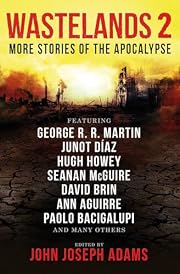
A collection of post-apocalyptic stories, published as a follow-up to the editor's earlier anthology, unsurprisingly titled Wastelands: Stories of the Apocalypse. I remembered that earlier volume quite favorably. Looking back on the review I wrote of it at the time, I see that I did describe it as something of a mixed bag, as anthologies usually are, but noted that all the stories were well-written and that the best of them were "wonderfully original and memorable."
I don't think this one was quite as good: some of the stories here are definitely better written than others, and there are, I think, fewer real standouts. (Mind you, it probably didn't help, either, that some of the best stories in this volume were ones I'd already encountered before elsewhere, even if I could probably read Tananarive Due's "Patient Zero" any number of times and still get the same emotional impact from it.)
And yet, taken as a whole, there's a feeling to it all that really worked for me, even if I find it difficult to describe exactly. Something, perhaps, about how low-key so much of it is, despite the subject matter. There's a strong focus on ordinary people, and a general foregrounding of human emotions, particularly regret, over violence and spectacle. And there are surprisingly few cliches to be found here, given how riddled this particular subgenre is with them.
Rating: I've been wavering a little, but I think I'm going to give this one a more-than-the-sum-of-its-parts 4/5
A collection of post-apocalyptic stories, published as a follow-up to the editor's earlier anthology, unsurprisingly titled Wastelands: Stories of the Apocalypse. I remembered that earlier volume quite favorably. Looking back on the review I wrote of it at the time, I see that I did describe it as something of a mixed bag, as anthologies usually are, but noted that all the stories were well-written and that the best of them were "wonderfully original and memorable."
I don't think this one was quite as good: some of the stories here are definitely better written than others, and there are, I think, fewer real standouts. (Mind you, it probably didn't help, either, that some of the best stories in this volume were ones I'd already encountered before elsewhere, even if I could probably read Tananarive Due's "Patient Zero" any number of times and still get the same emotional impact from it.)
And yet, taken as a whole, there's a feeling to it all that really worked for me, even if I find it difficult to describe exactly. Something, perhaps, about how low-key so much of it is, despite the subject matter. There's a strong focus on ordinary people, and a general foregrounding of human emotions, particularly regret, over violence and spectacle. And there are surprisingly few cliches to be found here, given how riddled this particular subgenre is with them.
Rating: I've been wavering a little, but I think I'm going to give this one a more-than-the-sum-of-its-parts 4/5
53bragan
6. Oddball: A Sarah's Scribbles Collection by Sarah Andersen
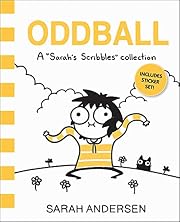
This fourth collection of comics by Sarah Andersen is just as delightful as all the previous ones. If you've read those previous ones, the topics are mostly pretty familiar, too: art, friendship, cats, fandom, introversion, internet memes, and the joys and tribulations of "being an oddball with hyperspecific interests." But it all still feels fresh and fun and, for me at least, ridiculously easy to relate to (never mind that I'm... let's say "significantly older" than Sarah Andersen). I found myself laughing out loud on nearly every page.
Rating: 4.5/5
This fourth collection of comics by Sarah Andersen is just as delightful as all the previous ones. If you've read those previous ones, the topics are mostly pretty familiar, too: art, friendship, cats, fandom, introversion, internet memes, and the joys and tribulations of "being an oddball with hyperspecific interests." But it all still feels fresh and fun and, for me at least, ridiculously easy to relate to (never mind that I'm... let's say "significantly older" than Sarah Andersen). I found myself laughing out loud on nearly every page.
Rating: 4.5/5
54dukedom_enough
>52 bragan: "Patient Zero" is a great story.
55bragan
>54 dukedom_enough: It really is. And apparently I am actually capable of reading pandemic stories again now, so go me. :)
56ursula
>52 bragan: Interesting! The library doesn't have this second volume, but it does have the first one. I might give that one a shot!
57bragan
>56 ursula: It's worth a look, I think, if you're interested in imaginative apocalypse-themed stories. And I would recommend the first volume over the second one anyway.
58bragan
7. Harlem Shuffle by Colson Whitehead

This one takes place in Harlem between 1959 and 1964, and centers on Ray Carney, who prides himself on not being a criminal like his father. He's a solid citizen who runs his own furniture store, and runs it well. Any mildly shady activities he might be involved in don't make him crooked, really. Just very slightly bent. Or so he's very good at telling himself.
I think, going in, I expected this to be essentially a literary heist novel, but that turned out to not really be accurate. Indeed, the exact plot details of the criminal enterprises Carney finds himself drawn into (or, in one notable case, instigating) almost feel incidental. The novel is much more about Carney himself, about the ways in which he lives his life, about this particular time and place, and implicitly (and rather depressingly) about the more-things-change-the-more-they-stay-the-same reflections of our own time in Carney's when it comes to the dynamics of race and class, anger and power.
And it does all of this well and interestingly, with a light but effective touch. I didn't find it nearly as powerful as The Underground Railroad or quite as fascinating as Zone One, those being the two Whitehead novels I'd read previously, but it's good stuff nevertheless, and I continue to be impressed with not just Whitehead's writing, but his range.
Rating: 4/5

This one takes place in Harlem between 1959 and 1964, and centers on Ray Carney, who prides himself on not being a criminal like his father. He's a solid citizen who runs his own furniture store, and runs it well. Any mildly shady activities he might be involved in don't make him crooked, really. Just very slightly bent. Or so he's very good at telling himself.
I think, going in, I expected this to be essentially a literary heist novel, but that turned out to not really be accurate. Indeed, the exact plot details of the criminal enterprises Carney finds himself drawn into (or, in one notable case, instigating) almost feel incidental. The novel is much more about Carney himself, about the ways in which he lives his life, about this particular time and place, and implicitly (and rather depressingly) about the more-things-change-the-more-they-stay-the-same reflections of our own time in Carney's when it comes to the dynamics of race and class, anger and power.
And it does all of this well and interestingly, with a light but effective touch. I didn't find it nearly as powerful as The Underground Railroad or quite as fascinating as Zone One, those being the two Whitehead novels I'd read previously, but it's good stuff nevertheless, and I continue to be impressed with not just Whitehead's writing, but his range.
Rating: 4/5
59dchaikin
>58 bragan: he has some many books now, I haven't read him yet. Enjoyed your review.
60bragan
>59 dchaikin: I feel like I'm constantly thinking I need to catch up with his stuff, and never quite managing it. I still have a copy of his first novel, The Intuitionist, that's been sitting on my TBR shelves approximately forever.
61AnnieMod
>58 bragan: Nice review. :) I have 3 of his on my shelves and I keep pushing them down my TBR list - maybe it is time to finally get around to them.
62bragan
>61 AnnieMod: I made a bit of a priority out of getting to this one and also (finally!) The Underground Railroad, and I don't regret it.
63Nickelini
>1 bragan: I'm also an inveterate book-hoarder with 1,076 books currently sitting on the TBR shelves forlornly crying "Read me! Read me next!" We'll see how many of their pitiable cries are answered this year, and how many new volumes end up beside them to add their voices to the chorus.
Oh yes, I hear you. According to my LT To Read library, I have 1,050 TBR books in my house. I know the number isn't exactly right, but pretty close. I was doing really well with not bringing any new books into the house, and then 5 months into COVID the floodgates opened. I figure I wasn't spending money on anything else so I might as well single-handedly support the publishing industry.
Oh yes, I hear you. According to my LT To Read library, I have 1,050 TBR books in my house. I know the number isn't exactly right, but pretty close. I was doing really well with not bringing any new books into the house, and then 5 months into COVID the floodgates opened. I figure I wasn't spending money on anything else so I might as well single-handedly support the publishing industry.
64bragan
>63 Nickelini: It really is nice to know that I am not alone in this! Including the covid floodgates, because, boy, did I open those, too. Book-buying, it seems, is my go-to comfort activity during times of stress, and when you can easily justify it as "the booksellers need my support"... Well. Possibly it's only surprising the TBR shelves didn't swell even more than they did. Of course, I seem to be working on that again this year.
65bragan
8. Who Is the Doctor by Graeme Burk & Robert Smith?
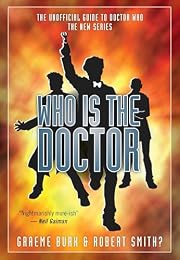
An informative and opinionated guide to modern Doctor Who, episode by episode, starting with "Rose" in 2005 and covering everything up through "The Wedding of River Song" at the end of season 6, partway through the Eleventh Doctor's stint. It also (briefly) covers some additional material that was aired on TV, including a couple of animated specials and some individual scenes filmed for charity programs, and provides some background on various elements of the show, which may be especially helpful for viewers not fully versed in the classic series.
The analysis of each episode includes things like references made in it to previous stories, how the episode relates to whatever the ongoing story arc might be, a few lines about things like the Doctor's characterization and the development of his relationship with his main companion, plot nitpicks, and the episode's best and worst individual moments (although some of the selections for those are... surprising).
But it's the sections at the end of each segment, in which the two authors take turns offering up their own opinions on the story, that are by far the most interesting. Some times they both agree with me on something and I get to feel the nice, warm fuzzy glow of fannish harmony as we all reminisce happily about, say, how unbelievably good Christopher Eccleston's acting could be. Other times, of course, they are just very, very wrong. Smith?, in particular, often comes across as rather bizarrely contrarian, and Burk eventually spends way too much time pouting about how story after story isn't nearly enough of a "romp" for him. But disagreeing passionately with other Doctor Who fans, if it's done good-naturedly, is a venerable and highly entertaining pastime. The authors do it amongst themselves here, too, often cheerfully accusing each other of "having no soul" for disliking some bit or other of the Doctor Who canon.
It's all good fun, really, and it's also given me a bit of a hankering to go back and watch some stories that I haven't revisited in entirely too long.
There is, by the way, already a followup volume to this: Who Is the Doctor 2, which takes things up through season eleven (the first year of the Thirteenth's Doctor's era). I may have already added it to my TBR pile...
Rating: 4/5
An informative and opinionated guide to modern Doctor Who, episode by episode, starting with "Rose" in 2005 and covering everything up through "The Wedding of River Song" at the end of season 6, partway through the Eleventh Doctor's stint. It also (briefly) covers some additional material that was aired on TV, including a couple of animated specials and some individual scenes filmed for charity programs, and provides some background on various elements of the show, which may be especially helpful for viewers not fully versed in the classic series.
The analysis of each episode includes things like references made in it to previous stories, how the episode relates to whatever the ongoing story arc might be, a few lines about things like the Doctor's characterization and the development of his relationship with his main companion, plot nitpicks, and the episode's best and worst individual moments (although some of the selections for those are... surprising).
But it's the sections at the end of each segment, in which the two authors take turns offering up their own opinions on the story, that are by far the most interesting. Some times they both agree with me on something and I get to feel the nice, warm fuzzy glow of fannish harmony as we all reminisce happily about, say, how unbelievably good Christopher Eccleston's acting could be. Other times, of course, they are just very, very wrong. Smith?, in particular, often comes across as rather bizarrely contrarian, and Burk eventually spends way too much time pouting about how story after story isn't nearly enough of a "romp" for him. But disagreeing passionately with other Doctor Who fans, if it's done good-naturedly, is a venerable and highly entertaining pastime. The authors do it amongst themselves here, too, often cheerfully accusing each other of "having no soul" for disliking some bit or other of the Doctor Who canon.
It's all good fun, really, and it's also given me a bit of a hankering to go back and watch some stories that I haven't revisited in entirely too long.
There is, by the way, already a followup volume to this: Who Is the Doctor 2, which takes things up through season eleven (the first year of the Thirteenth's Doctor's era). I may have already added it to my TBR pile...
Rating: 4/5
66OscarWilde87
>44 bragan: This sounds intriguing and should probably recommended reading for all those with the narrow view of science and scientists you describe.
>58 bragan: This went right on my list. I have only read Whitehead's Underground Railroad so far and am halfway through the screen adaptation on Amazon Prime. I liked the book, better, though.
I do want to give Harlem Shuffle a try.
>58 bragan: This went right on my list. I have only read Whitehead's Underground Railroad so far and am halfway through the screen adaptation on Amazon Prime. I liked the book, better, though.
I do want to give Harlem Shuffle a try.
67bragan
>66 OscarWilde87: I'd really like to see books like Ignorance: How It Drives Science, or other works that make basically the same point, or even just some lectures on the subject by genuinely clueful teachers be required for high school science classes. It's sadly unsurprising that so many people have a weirdly distorted view of science when they're never educated otherwise.
And one of these days I should maybe check out the TV adaptation of The Underground Railroad, but I still haven't quite recovered from reading the book. It's honestly kind of hard to imagine any production quite doing it justice.
And one of these days I should maybe check out the TV adaptation of The Underground Railroad, but I still haven't quite recovered from reading the book. It's honestly kind of hard to imagine any production quite doing it justice.
68bragan
9. Nyxia by Scott Reintgen

A YA novel, the first in a trilogy, about a group of teenagers who are recruited to do a job on an alien planet mining for a truly precious substance. But first they have to compete with each other for the available positions.
I'm afraid this one really didn't work for me. I like to think I have a healthy suspension-of-disbelief ability, but the repeated body blows to it here were just entirely too much. I was willing to grant the extremely contrived reason why teenagers had to be used for this job. But then there was the alien substance that's not just indistinguishable from magic but seemingly actually magic, able to do any ridiculous (but narratively convenient) thing you might possibly ask of it. And the incredibe giant, apparently secret spaceship. And the fact that this competition seems like a really dumb way to run a recruitment drive/training course. And the offensively nonsensical rules change that happens partway through. And the stilted "hey, let's all share our tragic backstories!" bit. And... Well, you get the idea.
Oh, and there's also the fact that, while those who win the competition are promised a cool job and a giant fortune, the losers are promised... A slightly smaller very large amount of money, which is still enough to make a life-changing difference to their families, who will have already received badly needed medical services in the meantime. Which makes the lengths they're willing and expected to go to to win feel massively disproportionate and the stakes feel kind of low, at least for most of the story.
It is, at least, a pretty quick read. And it actually is trying to do some reasonably interesting things with the main character, who is fairly believable as an adolescent struggling between his more violently competitive impulses and his desire to be a good person. And the ending has a bit of an effect, although it would have had more of one if made any sense, either.
But, in any case, this isn't going to be a series I'm continuing on with.
Rating: 2.5/5

A YA novel, the first in a trilogy, about a group of teenagers who are recruited to do a job on an alien planet mining for a truly precious substance. But first they have to compete with each other for the available positions.
I'm afraid this one really didn't work for me. I like to think I have a healthy suspension-of-disbelief ability, but the repeated body blows to it here were just entirely too much. I was willing to grant the extremely contrived reason why teenagers had to be used for this job. But then there was the alien substance that's not just indistinguishable from magic but seemingly actually magic, able to do any ridiculous (but narratively convenient) thing you might possibly ask of it. And the incredibe giant, apparently secret spaceship. And the fact that this competition seems like a really dumb way to run a recruitment drive/training course. And the offensively nonsensical rules change that happens partway through. And the stilted "hey, let's all share our tragic backstories!" bit. And... Well, you get the idea.
Oh, and there's also the fact that, while those who win the competition are promised a cool job and a giant fortune, the losers are promised... A slightly smaller very large amount of money, which is still enough to make a life-changing difference to their families, who will have already received badly needed medical services in the meantime. Which makes the lengths they're willing and expected to go to to win feel massively disproportionate and the stakes feel kind of low, at least for most of the story.
It is, at least, a pretty quick read. And it actually is trying to do some reasonably interesting things with the main character, who is fairly believable as an adolescent struggling between his more violently competitive impulses and his desire to be a good person. And the ending has a bit of an effect, although it would have had more of one if made any sense, either.
But, in any case, this isn't going to be a series I'm continuing on with.
Rating: 2.5/5
69RidgewayGirl
>63 Nickelini: & >64 bragan: Glad to know I wasn't the only one determined to do my part to support authors and the publishing industry during the pandemic.
70bragan
>69 RidgewayGirl: We were practically a movement, I guess! Go us, for saving the entire industry! :)
71Nickelini
>70 bragan: LOL. My husband does not appreciate this. When I go down this road he reminds me how I utterly failed to save the iconic Canadian department store Eatons, although I spent a lot of money trying
72bragan
10. The Orville Season 2.5: Launch Day by David A. Goodman, David Cabeza, and Michael Atiyeh
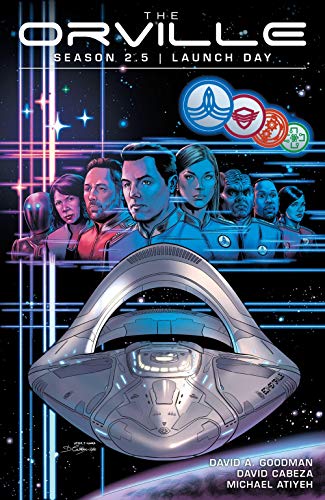
A slim graphic novel containing two stories based on the TV show The Orville, set between its second season, which aired what seems like a million years ago on Fox, and its upcoming continuation on Hulu.
The first story, "Launch Day," was rather disappointing. The plot, involving a planet that withdrew from the Union twenty years ago and might or might not now be building a superweapon, was slight and full of details that didn't really work, and there was a satirical element that simultaneously felt entirely too on-the-nose and not remotely developed enough to be interesting. Although there were at least some amusing lines.
The second, "Heroes," in which the crew visits a planet where people are being forced by aliens to work themselves to death in a mine and Talla gets to play superhero on their behalf, was a lot more fun, if not necessarily a lot more substantial, and featured a nice little kicker of an ending. I also quite liked the design of the nasty aliens. They're an interesting combination of slightly silly and genuinely menacing that fits the sensibility of The Orville really well.
Actually, I'm incredibly impressed by the art in these comics, overall, and especially with how perfectly the artist captures the faces of all the actors. It's amazing how often you get tie-in comics like these where the characters are practically unrecognizable, but here they feel like they've just walked straight of the TV and into the comics panels.
Rating: The first story drags things down enough that I'm only going to give this one a 3/5, but the art taken by itself would get a much higher rating, for sure.
A slim graphic novel containing two stories based on the TV show The Orville, set between its second season, which aired what seems like a million years ago on Fox, and its upcoming continuation on Hulu.
The first story, "Launch Day," was rather disappointing. The plot, involving a planet that withdrew from the Union twenty years ago and might or might not now be building a superweapon, was slight and full of details that didn't really work, and there was a satirical element that simultaneously felt entirely too on-the-nose and not remotely developed enough to be interesting. Although there were at least some amusing lines.
The second, "Heroes," in which the crew visits a planet where people are being forced by aliens to work themselves to death in a mine and Talla gets to play superhero on their behalf, was a lot more fun, if not necessarily a lot more substantial, and featured a nice little kicker of an ending. I also quite liked the design of the nasty aliens. They're an interesting combination of slightly silly and genuinely menacing that fits the sensibility of The Orville really well.
Actually, I'm incredibly impressed by the art in these comics, overall, and especially with how perfectly the artist captures the faces of all the actors. It's amazing how often you get tie-in comics like these where the characters are practically unrecognizable, but here they feel like they've just walked straight of the TV and into the comics panels.
Rating: The first story drags things down enough that I'm only going to give this one a 3/5, but the art taken by itself would get a much higher rating, for sure.
73bragan
11. The Year Without Summer: 1816 and the Volcano That Darkened the World and Changed History by William K. Klingaman and Nicholas P. Klingaman
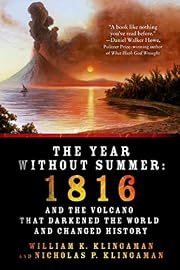
In April of 1815, Mount Tambora in Indonesia erupted spectacularly, throwing immense amounts of ash and droplets of sulfuric acid into the atmosphere. By the next year, a good portion of the world was experiencing summer temperatures lower than any in living memory. Some areas were plagued by drought, others by seemingly perpetual torrential rains. Crops failed, and famine and unrest predictably followed. No one at the time knew what was causing this, although plenty of theories were put forward, and it wasn't until much later that the volcano's contribution was truly understood.
This book covers in some depth the effect of this weather on Europe and North America (with a lot of attention paid, in particular, to France, England, and the United States), including its influences on politics, economics, emigration, and literature. The writing is a bit dry, and it gets very, very repetitive, with endless, near-identical quotes from various local weather reports and news sources, in a way that feels more suitable for an academic tome than a supposedly popular work of historical non-fiction. And yet, it's rather compelling, nonetheless, and does leave one reflecting in interesting ways on the precariousness of the world and the highly contingent nature of history.
Rating: 3.5/5
In April of 1815, Mount Tambora in Indonesia erupted spectacularly, throwing immense amounts of ash and droplets of sulfuric acid into the atmosphere. By the next year, a good portion of the world was experiencing summer temperatures lower than any in living memory. Some areas were plagued by drought, others by seemingly perpetual torrential rains. Crops failed, and famine and unrest predictably followed. No one at the time knew what was causing this, although plenty of theories were put forward, and it wasn't until much later that the volcano's contribution was truly understood.
This book covers in some depth the effect of this weather on Europe and North America (with a lot of attention paid, in particular, to France, England, and the United States), including its influences on politics, economics, emigration, and literature. The writing is a bit dry, and it gets very, very repetitive, with endless, near-identical quotes from various local weather reports and news sources, in a way that feels more suitable for an academic tome than a supposedly popular work of historical non-fiction. And yet, it's rather compelling, nonetheless, and does leave one reflecting in interesting ways on the precariousness of the world and the highly contingent nature of history.
Rating: 3.5/5
74labfs39
>73 bragan: It sounds like it was an interesting topic poorly executed. I'll go poke around online instead.
75wandering_star
>73 bragan: What a shame, because it’s a potentially fascinating topic. I think it was the In Our Time episode on the subject that told me that it led to inventions including formula milk (because of the need to look after babies whose mothers had died) and the bicycle (because horses had died for lack of fodder).
76bragan
>74 labfs39: I did find it worth reading, anyway, and honestly more interesting that it should have been, given the writing style, but I'm not sure I'd exactly recommend it.
>75 wandering_star: Huh, those details weren't mentioned, but that's interesting!
>75 wandering_star: Huh, those details weren't mentioned, but that's interesting!
77bragan
12. Klara and the Sun by Kazuo Ishiguro

Klara is an sort of android created as a companion for youngsters, and through her eyes we see the store she is initially for sale in, the teenage girl and her family whom she ends up with, the world in general (or her limited experience of it), and the all-benevolent sun who provides the power by which she lives.
I'm genuinely having a really hard time deciding how I feel about this one. The dialog has an odd, almost stilted quality to it (and not just the AI's dialog, either) and the world it's set in is underwritten in a way that is probably at least somewhat deliberate, but which bothered me a little anyway. But the writing is often still quite engaging. Klara's perspective on things, the sort of sideways glimpses she gets into human dramas and human emotions of which she has varying levels of understanding are really fascinating. And Ishiguro is really, really good at evoking whole complex layers of emotion and psychology with just the lightest, simplest touch, and there are some moments where he does that really well and painfully here. And yet... I'm not sure how satisfying it really is. There are a lot of elements I'm not sure quite come together. But I honestly can't tell if the deficit is in me, or in the novel. It feels like there's some really, really interesting thematic stuff swirling around here, involving perception and the extent to which we perhaps interact with others mostly by projecting onto them, that maybe the real meat of the novel is more about that than anything, and that the "lesson" Klara learns at the end should perhaps not be taken entirely at face value. So, definite points for being thought-provoking. But is it thought-provoking in a way that works? I don't know. I might have to think about it.
Rating: I've been dithering over this one, but I'm going to give it 4/5, regardless of my uncertainties.

Klara is an sort of android created as a companion for youngsters, and through her eyes we see the store she is initially for sale in, the teenage girl and her family whom she ends up with, the world in general (or her limited experience of it), and the all-benevolent sun who provides the power by which she lives.
I'm genuinely having a really hard time deciding how I feel about this one. The dialog has an odd, almost stilted quality to it (and not just the AI's dialog, either) and the world it's set in is underwritten in a way that is probably at least somewhat deliberate, but which bothered me a little anyway. But the writing is often still quite engaging. Klara's perspective on things, the sort of sideways glimpses she gets into human dramas and human emotions of which she has varying levels of understanding are really fascinating. And Ishiguro is really, really good at evoking whole complex layers of emotion and psychology with just the lightest, simplest touch, and there are some moments where he does that really well and painfully here. And yet... I'm not sure how satisfying it really is. There are a lot of elements I'm not sure quite come together. But I honestly can't tell if the deficit is in me, or in the novel. It feels like there's some really, really interesting thematic stuff swirling around here, involving perception and the extent to which we perhaps interact with others mostly by projecting onto them, that maybe the real meat of the novel is more about that than anything, and that the "lesson" Klara learns at the end should perhaps not be taken entirely at face value. So, definite points for being thought-provoking. But is it thought-provoking in a way that works? I don't know. I might have to think about it.
Rating: I've been dithering over this one, but I'm going to give it 4/5, regardless of my uncertainties.
78dchaikin
>73 bragan: sent me down a Wikipedia rabbit hole.
>77 bragan: I like that you might have to think about whether it’s thought-provoking (I know there’s more to what you said than that.) I also like how you capture some of the things done well here. I enjoyed Klara and still think about it.
>77 bragan: I like that you might have to think about whether it’s thought-provoking (I know there’s more to what you said than that.) I also like how you capture some of the things done well here. I enjoyed Klara and still think about it.
79ursula
>77 bragan: I also felt conflicted about Klara and the Sun. But I felt that way about Never Let Me Go too, and I still have the characters and stories clearly in my mind, which is more than I can say for a lot of books. So I can say they both at least have staying power.
80bragan
>78 dchaikin: Sorry (but only a little) for sending you down the rabbit hole!
I admit, I probably amused myself a little too much with that line about having to think about whether it's thought-provoking. :)
>79 ursula: It's been a while, but from what I remember, I felt that way a bit about Never Let Me Go too, but that in the end it really gelled for me in terms of what I felt like it meant (to me, anyway), in a way that Klara hasn't quite.
I admit, I probably amused myself a little too much with that line about having to think about whether it's thought-provoking. :)
>79 ursula: It's been a while, but from what I remember, I felt that way a bit about Never Let Me Go too, but that in the end it really gelled for me in terms of what I felt like it meant (to me, anyway), in a way that Klara hasn't quite.
81bragan
13. The Word Is Murder by Anthony Horowitz

A murder mystery novel with an odd little gimmick: The author writes himself as a character in the novel, pretending that he's been approached by an oddball detective who wants him to write about a case he's currently working on. And, boy, does Horowitz commit to the bit. Parts of the novel read like he's writing his autobiography, as he talks about his writing process, his other novels, real TV shows he's worked on, real famous people he knows, etc. More than that, one of the characters involved in the murder mystery is a supposedly famous actor, and Horowitz casually inserts him into actual TV shows and movies. And I have to say, there's something about that blurring of the lines between reality and fiction that kind of does my head in. It's one thing if the reality in question is far enough in the past that I can think of it as historical fiction, but telling me that a guy who doesn't exist had a major part in a movie I've seen just kind of makes me want to yell at the author to stop messing with my mind, even if intellectually I can concede that the conceit is at least kind of interesting.
The murder mystery plot is also kind of interesting, with an intriguing setup and at least one moment where, after a lot of thought, I got to put together one little piece of the puzzle myself and have a nice little "aha!" moment, even if it didn't actually get me any closer to knowing whodunnit. Sadly, though, it all falls apart a little bit at the end, with the clue to who the real killer is coming as part of a big, weirdly out-of-nowhere exposition dump, followed by a very eye-rollingly cliche "Now, before I kill you, let me tell you my life story and explain all my villainous plans!" speech from the bad guy.
Despite all of which, it was still reasonably entertaining, for the most part, but I'm definitely not feeling any great urge to read the rest of the books in this series.
Rating: 3.5/5

A murder mystery novel with an odd little gimmick: The author writes himself as a character in the novel, pretending that he's been approached by an oddball detective who wants him to write about a case he's currently working on. And, boy, does Horowitz commit to the bit. Parts of the novel read like he's writing his autobiography, as he talks about his writing process, his other novels, real TV shows he's worked on, real famous people he knows, etc. More than that, one of the characters involved in the murder mystery is a supposedly famous actor, and Horowitz casually inserts him into actual TV shows and movies. And I have to say, there's something about that blurring of the lines between reality and fiction that kind of does my head in. It's one thing if the reality in question is far enough in the past that I can think of it as historical fiction, but telling me that a guy who doesn't exist had a major part in a movie I've seen just kind of makes me want to yell at the author to stop messing with my mind, even if intellectually I can concede that the conceit is at least kind of interesting.
The murder mystery plot is also kind of interesting, with an intriguing setup and at least one moment where, after a lot of thought, I got to put together one little piece of the puzzle myself and have a nice little "aha!" moment, even if it didn't actually get me any closer to knowing whodunnit. Sadly, though, it all falls apart a little bit at the end, with the clue to who the real killer is coming as part of a big, weirdly out-of-nowhere exposition dump, followed by a very eye-rollingly cliche "Now, before I kill you, let me tell you my life story and explain all my villainous plans!" speech from the bad guy.
Despite all of which, it was still reasonably entertaining, for the most part, but I'm definitely not feeling any great urge to read the rest of the books in this series.
Rating: 3.5/5
82bragan
14. Sex, Drugs, and Cocoa Puffs by Chuck Klosterman

This collection of essays from the early 2000s is described on the cover as "a low culture manifesto," and it does, indeed, feature a lot of discussion of supposedly lowbrow pop cultural topics, from tribute bands to Saved by the Bell to internet porn.
Klosterman is an interesting writer. He has lots of opinions, and the sillier and less defensible they are, the more deliberately loud and hyperbolic he gets about them. He also gives the impression, reasonably often, that he might be just a liiiiiiiitle bit talking out of his ass, and that he knows it and expects you to know it, too. Now, more often than not, I find people like that obnoxious and offputting, but Klosterman actually really pulls it off. He's funny, he can be genuinely thought-provoking, and he very much conjures up the feeling of someone trying to pick an entertaining, good-natured argument with a friend over a beer, rather than a serious and nasty one on the internet with a stranger. The result, more often than not, is fun to read, whether you agree with anything he says or not.
The fact that this collection is something like twenty years old does make it dated, but in a way that makes it feel, to me, like a fascinating little time capsule. Mind you, it probably helps that I'm the same age as Klosterman and remember all the stuff he's referencing, even if I didn't necessarily pay attention to all of it at the time.
It's also interesting to me how very, very Gen X Klosterman's voice and attitude and general everything are. It makes me a little nostalgic, if I'm honest, for the vanishingly brief period when my generation actually seemed to have some kind of cultural relevance.
I've seen, by the way, that he has a new book out now looking at the 90s with another twenty years of perspective. I'm definitely going to have to pick that one up. I'll be curious to see how much differently it reads from this one.
Rating: 4/5

This collection of essays from the early 2000s is described on the cover as "a low culture manifesto," and it does, indeed, feature a lot of discussion of supposedly lowbrow pop cultural topics, from tribute bands to Saved by the Bell to internet porn.
Klosterman is an interesting writer. He has lots of opinions, and the sillier and less defensible they are, the more deliberately loud and hyperbolic he gets about them. He also gives the impression, reasonably often, that he might be just a liiiiiiiitle bit talking out of his ass, and that he knows it and expects you to know it, too. Now, more often than not, I find people like that obnoxious and offputting, but Klosterman actually really pulls it off. He's funny, he can be genuinely thought-provoking, and he very much conjures up the feeling of someone trying to pick an entertaining, good-natured argument with a friend over a beer, rather than a serious and nasty one on the internet with a stranger. The result, more often than not, is fun to read, whether you agree with anything he says or not.
The fact that this collection is something like twenty years old does make it dated, but in a way that makes it feel, to me, like a fascinating little time capsule. Mind you, it probably helps that I'm the same age as Klosterman and remember all the stuff he's referencing, even if I didn't necessarily pay attention to all of it at the time.
It's also interesting to me how very, very Gen X Klosterman's voice and attitude and general everything are. It makes me a little nostalgic, if I'm honest, for the vanishingly brief period when my generation actually seemed to have some kind of cultural relevance.
I've seen, by the way, that he has a new book out now looking at the 90s with another twenty years of perspective. I'm definitely going to have to pick that one up. I'll be curious to see how much differently it reads from this one.
Rating: 4/5
83ursula
I read Sex, Drugs and Cocoa Puffs when it came out and felt seen. (Also the same age as Klosterman.)
Speaking of feeling seen ...
It's also interesting to me how very, very Gen X Klosterman's voice and attitude and general everything are. It makes me a little nostalgic, if I'm honest, for the vanishingly brief period when my generation actually seemed to have some kind of cultural relevance.
Oof.
I have a hold on his book about the 90s, I am curious to read it and hopefully also to get my husband to read it and see how we each react to it, since it's his decade rather than mine (he's 10 years younger).
Speaking of feeling seen ...
It's also interesting to me how very, very Gen X Klosterman's voice and attitude and general everything are. It makes me a little nostalgic, if I'm honest, for the vanishingly brief period when my generation actually seemed to have some kind of cultural relevance.
Oof.
I have a hold on his book about the 90s, I am curious to read it and hopefully also to get my husband to read it and see how we each react to it, since it's his decade rather than mine (he's 10 years younger).
84bragan
>83 ursula: Yeah, that thought hit me in an "oof"-y kind of way when I had it, too.
It's my Thingaversary this month, which seems like a good excuse to pick up The Nineties.
It's my Thingaversary this month, which seems like a good excuse to pick up The Nineties.
86bragan
>85 dchaikin: I've read his I Wear the Black Hat and But What If We're Wrong?, as well, and really enjoyed both of those.
87japaul22
I've never read any of his books, but The Nineties immediately went on my library hold list. I saw a cover for it with that see-through phone with neon insides which, as a 90s tween/teenager, I of course owned. :-)
88Yells
>82 bragan: I've had this book on my shelf for longer than I care to admit. I really should get to it one of these days. I'm of that 'oof' generation as well. :)
89MissBrangwen
>81 bragan: I read this and also the second book and I will continue with the series. I agree that these are not absolutely amazing, but I enjoy the blurring of reality and fiction and to read about the "behind the scenes". I liked the case in the second book more than the one in the first book, although it seemed fabricated and not very natural.
90bragan
>87 japaul22: Yeah, I'd almost forgotten those phones existed, until I saw that cover! And now I'm feeling kind of nostalgic for them.
>88 Yells: Members of the "oof!" generation, unite! But, like, with ironic detachment, or something. :)
>89 MissBrangwen: The level of discomfort I feel with the blurring of reality and fiction like that seems to be fairly idiosyncratic. I've sometimes had an issue with it in other contexts, too, when nobody else seemed bothered by it at all. It's funny. Once, when I was younger, my father told me that he was sometimes worried that I might not have a good understanding of the line between reality and fiction. (I think because he was worried that playing tabletop RPGs would lead me to join some kind of Satanic cult, which definitely says something about his grasp of the difference between fantasy and reality.) But the opposite seems to be true. I may often prefer to hang out on the other side of it, but having a clear sense of where the dividing line between reality and fiction is seems to be extremely important to my peace of mind. (Possibly this is why I never seem to have much peace of mind these days...)
>88 Yells: Members of the "oof!" generation, unite! But, like, with ironic detachment, or something. :)
>89 MissBrangwen: The level of discomfort I feel with the blurring of reality and fiction like that seems to be fairly idiosyncratic. I've sometimes had an issue with it in other contexts, too, when nobody else seemed bothered by it at all. It's funny. Once, when I was younger, my father told me that he was sometimes worried that I might not have a good understanding of the line between reality and fiction. (I think because he was worried that playing tabletop RPGs would lead me to join some kind of Satanic cult, which definitely says something about his grasp of the difference between fantasy and reality.) But the opposite seems to be true. I may often prefer to hang out on the other side of it, but having a clear sense of where the dividing line between reality and fiction is seems to be extremely important to my peace of mind. (Possibly this is why I never seem to have much peace of mind these days...)
91bragan
15. This Is How You Die, edited by Ryan North, Matthew Bennardo, and David Malki

This is the second anthology of stories (and some cartoons) featuring the Machine of Death. (The first, imaginatively enough, was called Machine of Death.) What is the Machine of Death? It's a mysterious device that, when provided with a blood sample, will tell you how you die. It's short on details, and its answers are sometimes ambiguous, cryptic, or downright misleading, but they're never, ever wrong. No matter what you do.
A lot of the stories in this one expand the original idea in new directions. Some put versions of the death machine into different historical periods, the far future, or alternate fantasy worlds. Others toy a bit with the question of how the machine works in the first place. There are several that deal with the idea of fake machines and quite a few that take the idea that a person's death prediction never changes and enjoy trying to find a loophole in it, while others continue to explore the questions of how individuals and societies respond to such a thing.
And my feeling about this volume is much the same as with the first one. Individually, most of these stories aren't necessarily incredibly well-written or interesting (although there some very good exceptions). But a whole kaleidoscope of different explorations and interpretations of this idea is truly compelling, more than enough so to keep me engaged through two fairly thick books.
Rating: 4/5

This is the second anthology of stories (and some cartoons) featuring the Machine of Death. (The first, imaginatively enough, was called Machine of Death.) What is the Machine of Death? It's a mysterious device that, when provided with a blood sample, will tell you how you die. It's short on details, and its answers are sometimes ambiguous, cryptic, or downright misleading, but they're never, ever wrong. No matter what you do.
A lot of the stories in this one expand the original idea in new directions. Some put versions of the death machine into different historical periods, the far future, or alternate fantasy worlds. Others toy a bit with the question of how the machine works in the first place. There are several that deal with the idea of fake machines and quite a few that take the idea that a person's death prediction never changes and enjoy trying to find a loophole in it, while others continue to explore the questions of how individuals and societies respond to such a thing.
And my feeling about this volume is much the same as with the first one. Individually, most of these stories aren't necessarily incredibly well-written or interesting (although there some very good exceptions). But a whole kaleidoscope of different explorations and interpretations of this idea is truly compelling, more than enough so to keep me engaged through two fairly thick books.
Rating: 4/5
92bragan
16. Fortunately, the Milk by Neil Gaiman, illustrated by Skottie Young
A kids' book in which a dad goes out to the store for some milk and takes a surprisingly long time getting back with it. The excuse he spins to his kids for the delay involves aliens, pirates, time travel, and dinosaurs, among other things. It's a delightful little story, with equally delightful illustrations, and definitely not something you have to be a kid to be charmed and entertained by.
Rating: 4/5
A kids' book in which a dad goes out to the store for some milk and takes a surprisingly long time getting back with it. The excuse he spins to his kids for the delay involves aliens, pirates, time travel, and dinosaurs, among other things. It's a delightful little story, with equally delightful illustrations, and definitely not something you have to be a kid to be charmed and entertained by.
Rating: 4/5
93Nickelini
>92 bragan: I just bought that one on a recommendation of an LT-friend a few months ago. I'd never heard of it before
94bragan
>92 bragan: I initially mistakenly thought it was a picture book for very little kids, so I didn't pay much attention until a friend of mine read it and told me how much he enjoyed it. I'm glad he did!
95labfs39
>91 bragan: Oh, interesting. I didn't realize another volume had been published. I found the original stories very thought-provoking. I still think about some of them from time to time. For anyone who would like to see what they are about, the podcast is free.
96bragan
>95 labfs39: It's actually been out since 2013. (And I've had it since 2015 and have only not gotten around to reading it, because that's just how backed up my TBR shelves.)
And, yeah, there's one or two from the original volume that have stayed stuck in my head, too.
I've never listened to the podcast, though. Maybe I should sometime, although I probably need another podcast to listen to like I need, well, another book... :)
And, yeah, there's one or two from the original volume that have stayed stuck in my head, too.
I've never listened to the podcast, though. Maybe I should sometime, although I probably need another podcast to listen to like I need, well, another book... :)
97labfs39
>96 bragan: It's actually been out since 2013.
Lol. That seems to feel like a blink of an eye lately. Do you think the stories in this volume were as good as the first ones? I never read them, only listened to them on podcast, something I don't do anymore, now that I don't have a commute.
Lol. That seems to feel like a blink of an eye lately. Do you think the stories in this volume were as good as the first ones? I never read them, only listened to them on podcast, something I don't do anymore, now that I don't have a commute.
98bragan
>97 labfs39: Yeah, I know. I have to keep reminding myself of low long that's been.
It's been a while since I read the first volume, so it's hard for me to compare them directly, but my feeling is the overall quality is pretty much the same, although a lot of the stories in the second volume get more creative with using the premise in different settings and so on.
It's been a while since I read the first volume, so it's hard for me to compare them directly, but my feeling is the overall quality is pretty much the same, although a lot of the stories in the second volume get more creative with using the premise in different settings and so on.
99bragan
17. James Tiptree, Jr.: The Double Life of Alice B. Sheldon by Julie Phillips
James Tiptree, Jr. wrote some truly astonishing science fiction stories, works that were bleak, poetic, and beautiful, filled with themes of love and death, sex and gender, power and empathy, and twin longings for the alien and for home. He was also a prolific letter-writer, forming many long-distance friendships in the SF community... and a notorious recluse who would never agree to meet anyone in person or even talk on the phone. There were many rumors about his true identity, including one that he was so secretive because he worked for the CIA. When Tiptree's secret finally came out -- that "he" was, in fact, a woman named Alice Sheldon -- it was to a chorus of both shocked surprise and "Aha, I knew it!"
Sheldon's life was a complex and fascinating one, from accompanying her famous explorer parents on their African expeditions as a small child, to the murder-suicide that finally ended her life. At various points, she was a painter, an army officer, a psychological researcher, and the co-runner of a chicken hatchery. Oh, and yes, she did in fact also work for the CIA.
This biography covers all of that, but its main focus is Sheldon's psychology, and on the matters that obsessed and troubled her and found reflection in her work. Including, most particularly, the question, as author Julie Phillips puts it, of "what is a woman and am I one." It's a question she never did seem to unravel, even with the assistance of a male alter ego. Which seems like no surprise at all to me, being as it is, a tangled, thorny complicated mess of social expectation, biology, sexuality, personal identity, and power dynamics. Hell, I can't unravel it, either, and I was born many decades later into a world where the expectations and the limits placed on women were already significantly changing.
Anyway. This is an interesting, thoughtful, and thought-provoking bio, and I do recommended it to those interested in Sheldon's life and work.
Rating: 4/5
James Tiptree, Jr. wrote some truly astonishing science fiction stories, works that were bleak, poetic, and beautiful, filled with themes of love and death, sex and gender, power and empathy, and twin longings for the alien and for home. He was also a prolific letter-writer, forming many long-distance friendships in the SF community... and a notorious recluse who would never agree to meet anyone in person or even talk on the phone. There were many rumors about his true identity, including one that he was so secretive because he worked for the CIA. When Tiptree's secret finally came out -- that "he" was, in fact, a woman named Alice Sheldon -- it was to a chorus of both shocked surprise and "Aha, I knew it!"
Sheldon's life was a complex and fascinating one, from accompanying her famous explorer parents on their African expeditions as a small child, to the murder-suicide that finally ended her life. At various points, she was a painter, an army officer, a psychological researcher, and the co-runner of a chicken hatchery. Oh, and yes, she did in fact also work for the CIA.
This biography covers all of that, but its main focus is Sheldon's psychology, and on the matters that obsessed and troubled her and found reflection in her work. Including, most particularly, the question, as author Julie Phillips puts it, of "what is a woman and am I one." It's a question she never did seem to unravel, even with the assistance of a male alter ego. Which seems like no surprise at all to me, being as it is, a tangled, thorny complicated mess of social expectation, biology, sexuality, personal identity, and power dynamics. Hell, I can't unravel it, either, and I was born many decades later into a world where the expectations and the limits placed on women were already significantly changing.
Anyway. This is an interesting, thoughtful, and thought-provoking bio, and I do recommended it to those interested in Sheldon's life and work.
Rating: 4/5
101bragan
>100 dchaikin: Thanks!
102qebo
>99 bragan: I read this... I was going to say several years ago but I checked and it was 2012. Yikes.
103bragan
>102 qebo: Yeah, tell me about it. I think I have that "yikes" reaction anytime I realize the date of anything these days... 2012 was only, like, three years ago, right? Right?
104Nickelini
>103 bragan: I think I have that "yikes" reaction anytime I realize the date of anything these days... 2012 was only, like, three years ago, right? Right?
Yes! This is so true. Also, the Covid pandemic has gone on for 5 or 6 years, right?
Yes! This is so true. Also, the Covid pandemic has gone on for 5 or 6 years, right?
105bragan
>104 Nickelini: Absolutely. I'm not sure how those things are true simultaneously, but they are.
106bragan
18. Meet Mr. Mulliner by P.G. Wodehouse

A short collection of stories narrated by the titular Mr. Mulliner, who enjoys sitting around his club telling somewhat unlikely tales about his various relatives and their adventures and romantic entanglements. I liked some of these better than others, but even the lesser ones were pleasantly silly, frothy, fun, while the best of them had Wodehouse's delightful trademark wit on full display. Although I still think nothing quite comes close to Jeeves & Wooster.
Rating: 4/5

A short collection of stories narrated by the titular Mr. Mulliner, who enjoys sitting around his club telling somewhat unlikely tales about his various relatives and their adventures and romantic entanglements. I liked some of these better than others, but even the lesser ones were pleasantly silly, frothy, fun, while the best of them had Wodehouse's delightful trademark wit on full display. Although I still think nothing quite comes close to Jeeves & Wooster.
Rating: 4/5
107dukedom_enough
>99 bragan:
I read this biography when it came out; maybe the best biography I've ever read. Even if one is not interested in science fiction, one can close the book at about the 60% point, when her SF career hasn't even started, and have read an amazing story of a remarkable woman, who deserved a better world to live in.
I read this biography when it came out; maybe the best biography I've ever read. Even if one is not interested in science fiction, one can close the book at about the 60% point, when her SF career hasn't even started, and have read an amazing story of a remarkable woman, who deserved a better world to live in.
108bragan
>107 dukedom_enough: Yeah, I can definitely see it being of interest even for people who've never read, or had any interest in reading her fiction.
And, god, I think we all deserve a better world to live in.
And, god, I think we all deserve a better world to live in.
109bragan
19. In the Unlikely Event by Judy Blume
Like a lot of people (or at least a lot of people my age), I grew up reading Judy Blume, and still have fond memories of some of her stuff. So when I saw that she was still around and now writing books for adults, such as this based-on-real-events novel involving a series of plane crashes in New Jersey in the 1950s, I was intrigued. And then, sadly, I was disappointed. Honestly, the writing in this one might be suitable for a kids' novel, but it's just really not up to the subject matter here. Which is a pity, because that subject matter is potentially really interesting. I mean, what's more horrifically compelling than a plane crash? We've also got all kinds of interpersonal drama, too: young love, adultery, illness, long-lost fathers, and secret weddings. But none of it is at all immersive, thanks to a writing style that consistently tells us things -- this character is sad, that one is in love, the plane crash is awful, these people are friends -- instead of showing or convincing us of any of it. And a lot of the minor characters are so devoid of personality that even by the end, I was still having to remind myself of who they were. Mostly, the effect was very much of listening to someone gossip rather boringly about people I neither know nor care about.
Rating: I'm giving this a 2.5/5, although I'm cranky enough about it to feel like maybe even that "thoroughly mediocre" rating may be more than it deserves.
Like a lot of people (or at least a lot of people my age), I grew up reading Judy Blume, and still have fond memories of some of her stuff. So when I saw that she was still around and now writing books for adults, such as this based-on-real-events novel involving a series of plane crashes in New Jersey in the 1950s, I was intrigued. And then, sadly, I was disappointed. Honestly, the writing in this one might be suitable for a kids' novel, but it's just really not up to the subject matter here. Which is a pity, because that subject matter is potentially really interesting. I mean, what's more horrifically compelling than a plane crash? We've also got all kinds of interpersonal drama, too: young love, adultery, illness, long-lost fathers, and secret weddings. But none of it is at all immersive, thanks to a writing style that consistently tells us things -- this character is sad, that one is in love, the plane crash is awful, these people are friends -- instead of showing or convincing us of any of it. And a lot of the minor characters are so devoid of personality that even by the end, I was still having to remind myself of who they were. Mostly, the effect was very much of listening to someone gossip rather boringly about people I neither know nor care about.
Rating: I'm giving this a 2.5/5, although I'm cranky enough about it to feel like maybe even that "thoroughly mediocre" rating may be more than it deserves.
110labfs39
>109 bragan: Yikes, I'll avoid that one.
111AlisonY
>109 bragan: Shame. I'll dodge that one, but will keep hold of my happy memories of devouring Judy Blume books from the ages of 10-13.
112japaul22
I'm with Alison - I love her children's books and have read the whole Fudge series to my boys (who LOVED it). I've been slightly tempted by her adult novels but will just stick with her wonderful books for kids.
113bragan
>110 labfs39:, >111 AlisonY:, >112 japaul22: Yeah, I think I'm going to just try to remember how much I loved the Fudge books, myself, and try to forget this one.
114AnnieMod
>102 qebo: Several covers 10. Barely. I mean - I moved just several years ago, right? (It was 2010…)
>105 bragan: “People assume that time is a strict progression of cause to effect, but actually, from a nonlinear, non-subjective viewpoint, it's more like a big ball of wibbly-wobbly, timey-wimey... stuff”. :)
>105 bragan: “People assume that time is a strict progression of cause to effect, but actually, from a nonlinear, non-subjective viewpoint, it's more like a big ball of wibbly-wobbly, timey-wimey... stuff”. :)
115bragan
>114 AnnieMod: I swear, my perception of time gets more like that every day. Any day now, I'm probably going to qualify as an honorary Time Lord. :)
116bragan
20. The Apollo Missions: In the Astronauts' Own Words by Rod Pyle
A short and image-heavy account of the Apollo moon missions. The "astronauts' own words" of the title are mostly extracts of transcripts from the missions, sometimes featuring astronauts doing their jobs, sometimes joking around, sometimes both. These are occasionally interspersed with comments they made about the experience later, giving a bit of context. There's also a few words (and paintings) from Apollo 12's Alan Bean at the end to wrap things up.
I'd say the transcript snippets and the variety of pictures included make this worth adding to my shelf of books about Apollo, but, the writing isn't especially great, overall, and aside from the moments the transcripts cover its treatment of the missions is pretty cursory, so it wouldn't be the first book of this kind I'd recommend to people.
Rating: 3.5/5
A short and image-heavy account of the Apollo moon missions. The "astronauts' own words" of the title are mostly extracts of transcripts from the missions, sometimes featuring astronauts doing their jobs, sometimes joking around, sometimes both. These are occasionally interspersed with comments they made about the experience later, giving a bit of context. There's also a few words (and paintings) from Apollo 12's Alan Bean at the end to wrap things up.
I'd say the transcript snippets and the variety of pictures included make this worth adding to my shelf of books about Apollo, but, the writing isn't especially great, overall, and aside from the moments the transcripts cover its treatment of the missions is pretty cursory, so it wouldn't be the first book of this kind I'd recommend to people.
Rating: 3.5/5
117lisapeet
>99 bragan: That sounds fascinating—noted. And as much as I loved Judy Blume's kids' and YA books, I'm not particularly tempted by that one. Thanks for taking one for the team.
118bragan
>117 lisapeet: Mind you, it's possible I'm being extra harsh on the Judy Blume one because I have such fond memories of her from my childhood, but, yeah. I don't recommend it at all.
119bragan
21. Foundryside by Robert Jackson Bennett
This fantasy novel, the first in a trilogy, features a thief who is hired to steal what turns out to be a powerful ancient magical artifact, which then draws her into events of potentially world-altering proportions.
I didn't love this one nearly as much as I did the books of Bennett's Divine Cities trilogy, but considering that for quite a while there City of Stairs was my go-to book for pressing into people's hands whenever they asked me for a recommendation (and often when they didn't), that constitutes a pretty high bar. Even if I didn't find the plot of this one as compelling, though, it was still plenty entertaining enough, with an exciting finale that sets things up for the next book in a way that makes me very much interested in reading it sooner rather than later.
Its main strength, though, is in the world-building involved in the way magic works. There are strong resemblances to computer programming, but with some wonderfully original twists... but then, beneath that technological surface there is also something deeper that feels genuinely, mystically magical. Those two things combine in a way that is utterly fascinating, kind of fun, and very cool.
Rating: 4/5
This fantasy novel, the first in a trilogy, features a thief who is hired to steal what turns out to be a powerful ancient magical artifact, which then draws her into events of potentially world-altering proportions.
I didn't love this one nearly as much as I did the books of Bennett's Divine Cities trilogy, but considering that for quite a while there City of Stairs was my go-to book for pressing into people's hands whenever they asked me for a recommendation (and often when they didn't), that constitutes a pretty high bar. Even if I didn't find the plot of this one as compelling, though, it was still plenty entertaining enough, with an exciting finale that sets things up for the next book in a way that makes me very much interested in reading it sooner rather than later.
Its main strength, though, is in the world-building involved in the way magic works. There are strong resemblances to computer programming, but with some wonderfully original twists... but then, beneath that technological surface there is also something deeper that feels genuinely, mystically magical. Those two things combine in a way that is utterly fascinating, kind of fun, and very cool.
Rating: 4/5
120bragan
22. Let Us Compare Mythologies by Leonard Cohen
A collection of poetry first published in 1956, before much of anybody knew who Leonard Cohen was. A lot of the themes are certainly familiar to anyone who knows his music, though: love and sex, death and loss, ache and longing, and lots of religious elements and imagery. (I have, by the way, long been both confused and impressed by the way in which Leonard Cohen is pretty much the only person able to make my stubborn atheist's heart truly understand the profoundness of religious feeling on a deep and intuitive level.)
While I've long been a big fan of his music, this is the first time I'd read any of his poetry... Although even to say that feels a bit wrong, as it seems ridiculous to look at any of his lyrics and think of them as anything other than poetry. Except that apparently the difference between the two is significant to me, in ways that I'm finding really interesting to contemplate now, especially as I'd already been kind of re-thinking my feelings about and relationship to poetry in general lately.
So, here's the thing I've just realized: When poetry connects for me on an intellectual and/or emotional level, it's amazing. When it doesn't immediately do that, though, it seems to trigger one of two reactions in me, albeit to widely varying degrees. Either I feel as if I've just failed some sort of test by failing to properly "get" the poem and thus feel bad and inferior, or I kind of start resenting the poet for not speaking a language people like me can understand. Or both at once. Now, with the poems in this collection, some of them I got instantly and loved (or felt like I'd been hit in the heart by, which is perhaps even better). Others were more obscure to me, though, and when I found myself starting to have one of those previously mentioned reactions to them, I suddenly realized just how huge a difference there is between that and how I react when the exact same type of thing is presented to me as a song lyric. I don't instantly get or connect to every line of Cohen's songs, either, but when I don't, it's fine. It's great, even! I feel perfectly comfortable and perfectly allowed to just feel however I want about those lines or songs, to interpret them in any way that feels meaningful to me, to let them sit in my brain indefinitely in case they maybe connect to something later, or even just to enjoy them without fully understanding them. So why don't I feel like I can do that with poetry?
Ah, but it's simple, isn't it? Somewhere along the line, I internalized the impression that anyone who writes serious poetry is supposed to be (and presumably believes they are) intellectually and culturally superior to me, declaiming their Deep Thoughts in a fancy highbrow code it's my job to decipher correctly; whereas songwriting comes with absolutely none of that there's-gonna-be-a-quiz-later high school English class baggage. And I guess it took a case of the poet and the songwriter being the same person doing essentially the same thing to snap that into focus for me (and thus hopefully to help me overcome it). So I guess I owe thanks to Leonard Cohen yet again.
Rating: The poems themselves are just enough of a mixed bag for me that maybe I should rate this lower, but between how much the best of them did for me and how useful an insight reading this provided, I could hardly give it less than an approving 4/5.
A collection of poetry first published in 1956, before much of anybody knew who Leonard Cohen was. A lot of the themes are certainly familiar to anyone who knows his music, though: love and sex, death and loss, ache and longing, and lots of religious elements and imagery. (I have, by the way, long been both confused and impressed by the way in which Leonard Cohen is pretty much the only person able to make my stubborn atheist's heart truly understand the profoundness of religious feeling on a deep and intuitive level.)
While I've long been a big fan of his music, this is the first time I'd read any of his poetry... Although even to say that feels a bit wrong, as it seems ridiculous to look at any of his lyrics and think of them as anything other than poetry. Except that apparently the difference between the two is significant to me, in ways that I'm finding really interesting to contemplate now, especially as I'd already been kind of re-thinking my feelings about and relationship to poetry in general lately.
So, here's the thing I've just realized: When poetry connects for me on an intellectual and/or emotional level, it's amazing. When it doesn't immediately do that, though, it seems to trigger one of two reactions in me, albeit to widely varying degrees. Either I feel as if I've just failed some sort of test by failing to properly "get" the poem and thus feel bad and inferior, or I kind of start resenting the poet for not speaking a language people like me can understand. Or both at once. Now, with the poems in this collection, some of them I got instantly and loved (or felt like I'd been hit in the heart by, which is perhaps even better). Others were more obscure to me, though, and when I found myself starting to have one of those previously mentioned reactions to them, I suddenly realized just how huge a difference there is between that and how I react when the exact same type of thing is presented to me as a song lyric. I don't instantly get or connect to every line of Cohen's songs, either, but when I don't, it's fine. It's great, even! I feel perfectly comfortable and perfectly allowed to just feel however I want about those lines or songs, to interpret them in any way that feels meaningful to me, to let them sit in my brain indefinitely in case they maybe connect to something later, or even just to enjoy them without fully understanding them. So why don't I feel like I can do that with poetry?
Ah, but it's simple, isn't it? Somewhere along the line, I internalized the impression that anyone who writes serious poetry is supposed to be (and presumably believes they are) intellectually and culturally superior to me, declaiming their Deep Thoughts in a fancy highbrow code it's my job to decipher correctly; whereas songwriting comes with absolutely none of that there's-gonna-be-a-quiz-later high school English class baggage. And I guess it took a case of the poet and the songwriter being the same person doing essentially the same thing to snap that into focus for me (and thus hopefully to help me overcome it). So I guess I owe thanks to Leonard Cohen yet again.
Rating: The poems themselves are just enough of a mixed bag for me that maybe I should rate this lower, but between how much the best of them did for me and how useful an insight reading this provided, I could hardly give it less than an approving 4/5.
121labfs39
>120 bragan: I have a tentative relationship with poetry and enjoyed reading your thoughts on your own complicated relationship. Thank you for sharing.
122qebo
>120 bragan: essentially the same thing to snap>
Well put, though it's not going to get me to pick up a poetry book, even by Leonard Cohen.
>120 bragan: make my stubborn atheist's heart
I have this reaction to spirituals and traditional gospel music.
Well put, though it's not going to get me to pick up a poetry book, even by Leonard Cohen.
>120 bragan: make my stubborn atheist's heart
I have this reaction to spirituals and traditional gospel music.
123bragan
>121 labfs39: Poetry and I may be slowly working on coming to some sort of understanding. It's too early to tell yet. It's a process. :)
>122 qebo: I may very occasionally have that reaction to such music, too, but it's a fragile one. Cohen, however, just zooms right past all my defenses somehow.
>122 qebo: I may very occasionally have that reaction to such music, too, but it's a fragile one. Cohen, however, just zooms right past all my defenses somehow.
124dianeham
As a poet, I have a license (poetic license). If I say it’s poetry then it’s poetry. I highly recommend frank : sonnets by Diane Seuss. It won the National Book Critics Circle award for poetry.
125bragan
>124 dianeham: Heh. The other poetry-related epiphany I've had lately involved just how much I hadn't thought of as poetry is, in fact, poetry. I recently listened to someone read a piece of writing I really liked and then refer to it afterward as a poem while I sat there feeling genuinely puzzled, thinking, "How in the world is that a poem? That was just you doing some creative and interesting things with words and structure.... oh." LOL.
126dianeham
>125 bragan: that’s great.
127bragan
23. Scratchman by Tom Baker, with James Goss
A Doctor Who novel from the Fourth Doctor himself! (Well, with a little help from James Goss, apparently. Which is a good choice. He's definitely one of the best writers doing DW tie-ins these days.) Apparently this began life way back when Baker was filming the show, when he and Ian Marter, who played companion Harry Sullivan, started kicking around their own ideas for a script. Eventually he worked up a very rough version of a screenplay, which was considered for a movie version, but, of course, never actually made.
I am glad we finally got to see a version of it, though, because it's very enjoyable in novel form. The first half really feels like it would fit perfectly into that era of the show, with pitch-perfect characterization and just the right blend of scariness, silliness, and humor. I found it utterly delightful. The second half takes kind of an unexpected turn and gets downright surreal, which didn't work for me quite as well as the first part, but it was still imaginative and interesting, and entertaining in its own completely bonkers way.
I do recommend it for fans of Classic Who.
Rating: 4/5
A Doctor Who novel from the Fourth Doctor himself! (Well, with a little help from James Goss, apparently. Which is a good choice. He's definitely one of the best writers doing DW tie-ins these days.) Apparently this began life way back when Baker was filming the show, when he and Ian Marter, who played companion Harry Sullivan, started kicking around their own ideas for a script. Eventually he worked up a very rough version of a screenplay, which was considered for a movie version, but, of course, never actually made.
I am glad we finally got to see a version of it, though, because it's very enjoyable in novel form. The first half really feels like it would fit perfectly into that era of the show, with pitch-perfect characterization and just the right blend of scariness, silliness, and humor. I found it utterly delightful. The second half takes kind of an unexpected turn and gets downright surreal, which didn't work for me quite as well as the first part, but it was still imaginative and interesting, and entertaining in its own completely bonkers way.
I do recommend it for fans of Classic Who.
Rating: 4/5
128dchaikin
>120 bragan: your my personal point source for actually listening to Leonard Cohen. Enjoyed your review and thoughts in poetry. (And taking the poet off the pedestal and humanizing him or her is definitely helpful to me.)
129bragan
>128 dchaikin: your my personal point source for actually listening to Leonard Cohen
I will regard that as something to be proud of!
I will regard that as something to be proud of!
130AnnieMod
>120 bragan: Poetry is all about feelings and images in words. And a well done poetry collection will almost always end up being more than the sum of its parts.
I need to chase this one down.
Interesting thoughts on poetry and how it connects (or does not). I think I never got that bad with poetry - I did not read any for a long time but that was just my 20-something idiotic self. But back in high school, a teacher made sure we all read enough poetry which we did not need to analyze and fully understand - just so that we know that you can enjoy it without bisecting each line (which was what needed to be done for the poetry we had to study). Did it work? Maybe... the fact is that I am just fine not understanding and not getting everything and still enjoying a poem.
I need to chase this one down.
Interesting thoughts on poetry and how it connects (or does not). I think I never got that bad with poetry - I did not read any for a long time but that was just my 20-something idiotic self. But back in high school, a teacher made sure we all read enough poetry which we did not need to analyze and fully understand - just so that we know that you can enjoy it without bisecting each line (which was what needed to be done for the poetry we had to study). Did it work? Maybe... the fact is that I am just fine not understanding and not getting everything and still enjoying a poem.
131bragan
>130 AnnieMod: I do wish I'd had teachers who did that for me!
132bragan
24. Trinity: a Graphic History of the First Atomic Bomb by Jonathan Fetter-Vorm

This is basically what the title indicates: a short history of the making, testing, consequences, and aftermath of the first atomic bomb, in graphic novel format. It doesn't go into the science and engineering aspects of things much, although it does give a very clear layman's-level explanation of how nuclear fission and nuclear explosions work. But it does cover the beginnings of the Manhattan Project, the Trinity test, the bombing of Hiroshima and Japan, and the changes that the existence of nuclear weapons brought about in the world.
Honestly, I was more impressed with this than I expected to be. From other things I've read on the subject, I think the historical accuracy is good. The writing is also good, using an effective mixture of the matter-of-fact and the appropriately portentous in its language. The black-and-white art illustrates its subject matter well (and quite harrowingly, in the case of its depiction of the bombing of Nagasaki). And, ultimately, it leaves us to sit thoughtfully with the moral questions involved and the implications of living in this Atomic Age future.
Rating: 4/5

This is basically what the title indicates: a short history of the making, testing, consequences, and aftermath of the first atomic bomb, in graphic novel format. It doesn't go into the science and engineering aspects of things much, although it does give a very clear layman's-level explanation of how nuclear fission and nuclear explosions work. But it does cover the beginnings of the Manhattan Project, the Trinity test, the bombing of Hiroshima and Japan, and the changes that the existence of nuclear weapons brought about in the world.
Honestly, I was more impressed with this than I expected to be. From other things I've read on the subject, I think the historical accuracy is good. The writing is also good, using an effective mixture of the matter-of-fact and the appropriately portentous in its language. The black-and-white art illustrates its subject matter well (and quite harrowingly, in the case of its depiction of the bombing of Nagasaki). And, ultimately, it leaves us to sit thoughtfully with the moral questions involved and the implications of living in this Atomic Age future.
Rating: 4/5
133dchaikin
>129 bragan: you should be. : )
>130 AnnieMod: what a terrific teacher
>132 bragan: you might have sold me on this one.
>130 AnnieMod: what a terrific teacher
>132 bragan: you might have sold me on this one.
134bragan
>133 dchaikin: you should be. : )
Yay!
you might have sold me on this one.
I do think I'd recommend it, especially as an introduction if you haven't read much else about the topic.
Yay!
you might have sold me on this one.
I do think I'd recommend it, especially as an introduction if you haven't read much else about the topic.
135labfs39
>132 bragan: This would be a great addition to our graphic stories thread. Maybe you could cross post?
136bragan
>135 labfs39: I wondered if I should, but I hadn't been paying a whole lot of attention to that thread, and wasn't sure if it fit.
137AnnieMod
>136 bragan: Yup. If it is graphic work of any type or in any form (or graphic adjacent...), it is welcome. :)
138bragan
>137 AnnieMod: Well, all right, will do, then!
139bragan
25. Swamplandia! by Karen Russell
This novel is about a family of alligator wrestlers living in the Florida swampland, but I feel like neither that nor anything else I could possibly think to say about it adequately describes it. It's absurd, touching, sometimes dreamlike, very disturbing in places, and deeply weird. I can say that I'm rather impressed with Russell's writing. She has a way of coming up with metaphors and descriptions that are sometimes bizarre and off-kilter but somehow work for this particular story and other times are just incredibly apt and beautiful.
Ultimately, it's as hard to know quite what to make of Swamplandia! as it is to describe it, but I can definitely say this much about it: at a time when I find myself increasingly distracted and often unable to settle into a book for as long as I'd like, this one grabbed me by the brain and left me wanting to do nothing else but read. And, boy, was it good to sink into that experience again.
Rating: 4.5/5. I could argue with myself about whether it deserves the extra half-star, and maybe if I'd read it at a different time I'd be less generous, but I think that last point pretty well clinches it for me right now.
This novel is about a family of alligator wrestlers living in the Florida swampland, but I feel like neither that nor anything else I could possibly think to say about it adequately describes it. It's absurd, touching, sometimes dreamlike, very disturbing in places, and deeply weird. I can say that I'm rather impressed with Russell's writing. She has a way of coming up with metaphors and descriptions that are sometimes bizarre and off-kilter but somehow work for this particular story and other times are just incredibly apt and beautiful.
Ultimately, it's as hard to know quite what to make of Swamplandia! as it is to describe it, but I can definitely say this much about it: at a time when I find myself increasingly distracted and often unable to settle into a book for as long as I'd like, this one grabbed me by the brain and left me wanting to do nothing else but read. And, boy, was it good to sink into that experience again.
Rating: 4.5/5. I could argue with myself about whether it deserves the extra half-star, and maybe if I'd read it at a different time I'd be less generous, but I think that last point pretty well clinches it for me right now.
140labfs39
>139 bragan: I read Swamplandia when I moved to Florida, as it had been on my TBR for years and it seemed like the time was apropos. I remember roadside alligator shows from trips to Florida as a kid. Although the book didn't resonate with me when I read it, my memories of it are much more vivid than of most books I read back then, so something stuck. It was definitely off-kilter, as you say.
141bragan
>140 labfs39: Yeah, I can definitely see it being memorable even if it doesn't completely click with you!
I'm planning a trip to Florida later this year (assuming covid rates stay down), so now seemed like a good time to read this one.
I'm planning a trip to Florida later this year (assuming covid rates stay down), so now seemed like a good time to read this one.
142avaland
>92 bragan: You remind me that I have that Gaiman book here somewhat and I should pass it on to one of the grands....
>99 bragan: Both Michael and I have read many Tiptree books in the (what now seems) distant past. He was the one to read the biography, though, and he said pretty much the same thing you did.
>99 bragan: Both Michael and I have read many Tiptree books in the (what now seems) distant past. He was the one to read the biography, though, and he said pretty much the same thing you did.
144bragan
>142 avaland: There's still some Tiptree I haven't read yet, which I really should rectify at some point. Very glad I didn't put the biography off any longer, though.
145dukedom_enough
>144 bragan: Philips is working on a biography of Ursula K. Le Guin. Don't expect Le Guin's story to be as dramatic as Sheldon's, but I'm sure the book will be good nonetheless.
146qebo
>145 dukedom_enough: Oh that'll be interesting.
147bragan
>145 dukedom_enough: Oooh, I am very interested in that!
148bragan
26. Red Clocks by Leni Zumas

In the US, a constitutional amendment has recently passed declaring any fertilized cell to have the full rights of a human being, meaning that anyone who gets or provides an abortion can and will be charged with murder. Another law is about to go into effect, too, preventing single parents from adopting, because "Every Child Needs Two." In this world, we meet four women: One who is desperate to have a child of her own. One who is being driven crazy by her life with her children and her might-as-well-be-a-child husband. One who gave her own baby up for adoption, and who now lives in the woods treating other women with herbs. And a teenage girl who finds herself accidentally pregnant.
I'll be honest, I was a bit leery of this book going in, thinking the odds were higher than I'd like that it'd either be a heavy-handed political screed (which aren't super enjoyable even when I very much agree with them) or an incredibly depressing dystopia (which I might find a little hard to handle these days). But I think it does avoid being either of those. The situation faced by women in this all-too-plausible world is infuriating -- at least, it is if you value reproductive rights, although I imagine the novel would be infuriating in entirely different ways if you think those laws sound like fantastic ideas -- but the novel itself isn't as bleak as I'd feared. And giving us the stories of four different women (or five, if you count the snippets from the biography one of the women is writing), all with very different experiences and desires and perspectives when it comes to their own reproduction, is a great way to explore things.
All that having been said, I still didn't love it, although I keep second-guessing the reasons why. One of them is that I had trouble getting along with the writing style. Zumas hit a major misstep for me almost immediately with the way that she refuses to use her character's names when writing in their POV. That, in itself, is a literary device that can be interesting, but in this case, it turned out that all the characters know each other and readily use each other's names, so it seemed to accomplish absolutely nothing other than keeping me confused, early on, about which names went with which POV characters and who was being talked about at any given moment. I may have started muttering to myself about stupid literary gimmicks and "yet another MFA type whose writing is so 'clever' it can't get out of its own way" or words to that effect. Which is maybe unfair, and I did more or less warm up to the writing eventually, but I think that initial reaction colored a lot of my response to the whole thing.
Also not helping was the fact that I found almost all of the characters annoying. Which is probably also unfair, Hell, the carefully calibrated surgical-strike awfulness of the most irritating character in the book -- the husband of the married POV character -- is actually a fairly impressive artistic accomplishment. And the women are supposed to be flawed, with their issues and capacity for pettiness and so on no doubt being very much part of the point. Women are complicated human beings, people are judgmental because no one ever fully understands another's POV, society's attitudes about women mess with everyone's head, and so on. I get it. And, again, it did work better for me as the novel went on. But as a reading experience, it didn't exactly thrill me. Although it did leave me asking myself uncomfortable and thought-provoking questions about my own ability to sympathize with women whose experiences and desires differ significantly from my own, which I think is probably a worthwhile result in itself.
Anyway. Can't say I entirely enjoyed it, for reasons that might well be as much my fault as the author's, but I certainly did appreciate aspects of it, and in the end I'm not sorry I read it, anyway.
Rating: Let's call it 3.5/5

In the US, a constitutional amendment has recently passed declaring any fertilized cell to have the full rights of a human being, meaning that anyone who gets or provides an abortion can and will be charged with murder. Another law is about to go into effect, too, preventing single parents from adopting, because "Every Child Needs Two." In this world, we meet four women: One who is desperate to have a child of her own. One who is being driven crazy by her life with her children and her might-as-well-be-a-child husband. One who gave her own baby up for adoption, and who now lives in the woods treating other women with herbs. And a teenage girl who finds herself accidentally pregnant.
I'll be honest, I was a bit leery of this book going in, thinking the odds were higher than I'd like that it'd either be a heavy-handed political screed (which aren't super enjoyable even when I very much agree with them) or an incredibly depressing dystopia (which I might find a little hard to handle these days). But I think it does avoid being either of those. The situation faced by women in this all-too-plausible world is infuriating -- at least, it is if you value reproductive rights, although I imagine the novel would be infuriating in entirely different ways if you think those laws sound like fantastic ideas -- but the novel itself isn't as bleak as I'd feared. And giving us the stories of four different women (or five, if you count the snippets from the biography one of the women is writing), all with very different experiences and desires and perspectives when it comes to their own reproduction, is a great way to explore things.
All that having been said, I still didn't love it, although I keep second-guessing the reasons why. One of them is that I had trouble getting along with the writing style. Zumas hit a major misstep for me almost immediately with the way that she refuses to use her character's names when writing in their POV. That, in itself, is a literary device that can be interesting, but in this case, it turned out that all the characters know each other and readily use each other's names, so it seemed to accomplish absolutely nothing other than keeping me confused, early on, about which names went with which POV characters and who was being talked about at any given moment. I may have started muttering to myself about stupid literary gimmicks and "yet another MFA type whose writing is so 'clever' it can't get out of its own way" or words to that effect. Which is maybe unfair, and I did more or less warm up to the writing eventually, but I think that initial reaction colored a lot of my response to the whole thing.
Also not helping was the fact that I found almost all of the characters annoying. Which is probably also unfair, Hell, the carefully calibrated surgical-strike awfulness of the most irritating character in the book -- the husband of the married POV character -- is actually a fairly impressive artistic accomplishment. And the women are supposed to be flawed, with their issues and capacity for pettiness and so on no doubt being very much part of the point. Women are complicated human beings, people are judgmental because no one ever fully understands another's POV, society's attitudes about women mess with everyone's head, and so on. I get it. And, again, it did work better for me as the novel went on. But as a reading experience, it didn't exactly thrill me. Although it did leave me asking myself uncomfortable and thought-provoking questions about my own ability to sympathize with women whose experiences and desires differ significantly from my own, which I think is probably a worthwhile result in itself.
Anyway. Can't say I entirely enjoyed it, for reasons that might well be as much my fault as the author's, but I certainly did appreciate aspects of it, and in the end I'm not sorry I read it, anyway.
Rating: Let's call it 3.5/5
149Nickelini
>139 bragan: That sounds like a great, bizarre book that I'll never read. As an aside, at a work meeting today, I was one of 3 out of 15 people who guessed that Florida has the highest rate of insurance fraud of the US states (I'm in Canada, so what does that say about Florida's reputation?)
150ursula
>148 bragan: I relate to the feeling of going "I bet you have an MFA, don't you?"
Anyway, I read Red Clocks earlier this year. In this case I felt like the point of not mentioning anyone's name in their own chapters had to do with introducing them by their roles. Women are so often seen and judged by their roles - the mother, the daughter etc, and they tend to fit themselves into those roles too. It's not until we get to see the interactions of the characters and their views on each other that we start to get a fuller picture of any of them.
Although it did leave me asking myself uncomfortable and thought-provoking questions about my own ability to sympathize with women whose experiences and desires differ significantly from my own, which I think is probably a worthwhile result in itself.
Ahh! Yeah, it left me with some (different but also uncomfortable) questions from my own reading, and from my reading of others' thoughts on it.
Anyway, I read Red Clocks earlier this year. In this case I felt like the point of not mentioning anyone's name in their own chapters had to do with introducing them by their roles. Women are so often seen and judged by their roles - the mother, the daughter etc, and they tend to fit themselves into those roles too. It's not until we get to see the interactions of the characters and their views on each other that we start to get a fuller picture of any of them.
Although it did leave me asking myself uncomfortable and thought-provoking questions about my own ability to sympathize with women whose experiences and desires differ significantly from my own, which I think is probably a worthwhile result in itself.
Ahh! Yeah, it left me with some (different but also uncomfortable) questions from my own reading, and from my reading of others' thoughts on it.
151bragan
>149 Nickelini: Somehow, that fact about Florida surprises me not at all!
>150 ursula: If I had a nickel for every time I thought "I bet you have an MFA, don't you?" and turned to the author bio to have that immediately confirmed, I'd definitely have some funds to add to my retirement savings.
That thought that it might be an attempt to make a point about women being seen by their roles did occur to me, but if so, it kind of misfired for me.
But, hey, being challenged to face uncomfortable questions is good, at least. If they're good questions. And I'll give Zumas credit for that.
>150 ursula: If I had a nickel for every time I thought "I bet you have an MFA, don't you?" and turned to the author bio to have that immediately confirmed, I'd definitely have some funds to add to my retirement savings.
That thought that it might be an attempt to make a point about women being seen by their roles did occur to me, but if so, it kind of misfired for me.
But, hey, being challenged to face uncomfortable questions is good, at least. If they're good questions. And I'll give Zumas credit for that.
152raton-liseur
>148 bragan: I've read Red clocks at the end of 2019 I think, and did not really like it. I was re-reading my review after I read yours, and pointed that Zumas is a creative writting professor and it showed (similar to your MFA comment, I guess). All the tricks are there, so the books is highly sellable (if that's a word...), but in the end, it did not really worked for me either: too many tricks, too many strings and at the end of the day, a forgettable book for an interesting subject...
And I really don't like the cover. I see its point, I guess, but feel it's a bit too explicit.
And I really don't like the cover. I see its point, I guess, but feel it's a bit too explicit.
153bragan
>152 raton-liseur: Yeah, much trickier with the writing than it needed to be, I think, even if I did at least mostly get less annoyed by it as I went along.
And, oh, god, I'll be honest with you, I mainly read that one now because it was the last book on the last of the fiction TBR shelves -- they're alphabetical by author, y'know -- and after I rearranged my shelves a bit it happened that the cover was on very full view, and I kept finding my eye drifting towards it and feeling vaguely embarrassed. I decided I wanted to read it before anybody else saw it. Which is interesting, because, really, it's just some abstract geometric shapes, right? The fact that something that simple manages to feel that explicit maybe says something impressive about the design, but, well. Yeah.
And, oh, god, I'll be honest with you, I mainly read that one now because it was the last book on the last of the fiction TBR shelves -- they're alphabetical by author, y'know -- and after I rearranged my shelves a bit it happened that the cover was on very full view, and I kept finding my eye drifting towards it and feeling vaguely embarrassed. I decided I wanted to read it before anybody else saw it. Which is interesting, because, really, it's just some abstract geometric shapes, right? The fact that something that simple manages to feel that explicit maybe says something impressive about the design, but, well. Yeah.
154raton-liseur
>153 bragan: That's an unusual reason to pick a book! It made me chukkle (nice way to start the day, thanks!).
Strangely, M'sieur Raton did not see the rather heavy allusion in the cover before I pointed it to him... I guess you're right, the designer did a great job. I think the combinaison of shapes and colours did the trick. I'm glad I read this at home and not in public transports...
Strangely, M'sieur Raton did not see the rather heavy allusion in the cover before I pointed it to him... I guess you're right, the designer did a great job. I think the combinaison of shapes and colours did the trick. I'm glad I read this at home and not in public transports...
155bragan
>154 raton-liseur: It might be interesting to show it to different people and see who has a sufficiently dirty mind, but it's not an experiment I'm going to do. :)
And, of course, after picking the book to read sooner rather than later in part because I didn't want anybody else to see it, I then happened to accidentally forget it at work (I was getting off of a solo night shift) just long enough for my co-worker to see it, grab it, and helpfully put it on my desk for me. I'm just glad it was a female co-worker who doesn't remotely seem like the kind of be easily shocked by book covers.
And, of course, after picking the book to read sooner rather than later in part because I didn't want anybody else to see it, I then happened to accidentally forget it at work (I was getting off of a solo night shift) just long enough for my co-worker to see it, grab it, and helpfully put it on my desk for me. I'm just glad it was a female co-worker who doesn't remotely seem like the kind of be easily shocked by book covers.
156lisapeet
>130 AnnieMod: If my parents did one thing right (kidding, mostly—they did a lot of things right), they gave me books of adult poetry aimed at kids when I was little. They were perfect gateway drugs, and I grew up loving poetry for its imagery and sound before I had any preconception of how I was supposed to feel about it. I always recommend doing that for kids... I'm thinking Reflections on a Gift of Watermelon Pickle, which was just the best thing ever.
>139 bragan: This has been on my list forever. I've only read Russell's short stories, and recently a novella (Sleep Donation), so I'm interested to see how her fabulosity with language translates into a full-length work.
>148 bragan: I read Red Clocks, liked it well enough, but I have to say for such a hefty topic it hasn't stayed with me.
>139 bragan: This has been on my list forever. I've only read Russell's short stories, and recently a novella (Sleep Donation), so I'm interested to see how her fabulosity with language translates into a full-length work.
>148 bragan: I read Red Clocks, liked it well enough, but I have to say for such a hefty topic it hasn't stayed with me.
157bragan
>156 lisapeet: I grew up loving kids' poetry -- to this day I have an unmitigated adoration for Shel Silverstein -- but of course nobody expected me to take that seriously or seemed to want me to squeeze any coded meaning out of it or anything, so I was able to just enjoy it on its own terms. I was able to do that with some adult poetry, too, including developing a deep fondness for Robert Frost all on my own thanks to a collection I found in my grandmother's attic, but as with so many other things, my English classes often backfired badly when it came to helping me understand and appreciate poetry. Although I will say that not all my experiences in that area were bad. Just enough to give me something of a complex about it, apparently.
The only other thing of Russell's I've read was the short story collection Vampires in the Lemon Grove, but I have Sleep Donation on my TBR, and I've recently picked up Orange World. I'm looking forward to Sleep Donation. As a shiftworker, anything dealing with sleep is instantly of personal interest to me.
And I suspect Red Clocks isn't going to stay with me all that long, either, at least not in any great detail.
The only other thing of Russell's I've read was the short story collection Vampires in the Lemon Grove, but I have Sleep Donation on my TBR, and I've recently picked up Orange World. I'm looking forward to Sleep Donation. As a shiftworker, anything dealing with sleep is instantly of personal interest to me.
And I suspect Red Clocks isn't going to stay with me all that long, either, at least not in any great detail.
158labfs39
>157 bragan: Now that I have little ones to read to again (my nieces), I have dug out all my Silverstein and Prelutsky books, as well as some collections of adult poetry selected for children, like Beauty of the Beast: Poems and Animal Poems. I also have a picture book of Stopping by Woods on a Snowy Evening. I too like Robert Frost, a must if you grew up in New England, as I did. I only taught for a couple of years, but one of my favorite memories is of having second graders illustrate passages from The Rime of the Ancient Mariner.
The ice was here, the ice was there,
The ice was all around:
It cracked and growled, and roared and howled,
Like noises in a swound!
Yea, slimy things did crawl with legs
Upon the slimy sea.
The pictures were amazing. The kids loved it.
The ice was here, the ice was there,
The ice was all around:
It cracked and growled, and roared and howled,
Like noises in a swound!
Yea, slimy things did crawl with legs
Upon the slimy sea.
The pictures were amazing. The kids loved it.
159rocketjk
>158 labfs39: How about . . .
Yea, slimy things did crawl with legs
Upon the slimy sea.
The pictures were amazing. The kids were full of glee.
Yea, slimy things did crawl with legs
Upon the slimy sea.
The pictures were amazing. The kids were full of glee.
160bragan
>158 labfs39: I did really like Rime of the Ancient Mariner when I read it last year, so I am definitely expanding my poetic horizons, despite my patchy history with it.
>159 rocketjk: Now, that's poetry I can definitely appreciate!
>159 rocketjk: Now, that's poetry I can definitely appreciate!
161labfs39
>159 rocketjk: Bwah, ha, ha! If only I were a tad more witty, I too could come up with a ditty. But sadly I'm a bit too dull, and all I come up with is doggerel.
162bragan
>161 labfs39: LOL!
This topic was continued by Bragan Keeps Turning Pages in 2022, Part 2.

