
Sibylline's (Lucy's) 2025: The First
This topic was continued by Sibylline's (Lucy's) 2025: The Second Half.
Talk 75 Books Challenge for 2025
Join LibraryThing to post.

2sibylline
Currently reading in June


 ♬
♬
Reading in June
lib The House on Vesper Sands Paraic O'Donnell mys british victorian
bbg new Smoke and Ashes Amitav Ghosh history world
wbg new Metaphysics as a Guide to Morals Iris Murdoch philosophy
wbg RR The Bell Iris Murdoch contemp fic
lib Selected Poetry of William Wordsworth William Wordsworth Poetry 19th
RR ♬ First Rider's Call Kristen Britain fantasy
Books Read in June
55. new The Bullet That Missed Richard Osman mys british
56. ♬ The Death of the Necromancer Martha Wells fantasy ****1/2
57. ♬ Valour and Vanity (4) Mary Robinette Kowal fantasy
58. bbg lib new If Beale Street Could Talk James Baldwin fiction american ****
59. ✔ new City of Bones Martha Wells fantasy ***1/2
60. lib Nettle and Bone T. Kingfisher fantasy
61. ✔ Wheel of the Infinite Martha Wells fantasy
62. ♬ The Furies of Calderon (1) Jim Butcher fantasy
63. ♬ RR Green Rider Kristen Britain fantasy
64. ✔ Alternate Realities: Three short novels Port Eternity/Voyager in Night/Wave Without a Shore (Alliance-Union Universe) C.J. Cherryh sf
65. new Coming Home Michael McCaughan irish memoir, irish language
♬ audio
lib library
new - new in 2025
✔ on shelf for over a year
RR reread
bbg Bridgeside Book Group
wbg Wally Book Group
DNF 100 pages attentively. If less, not counted


 ♬
♬
Reading in June
lib The House on Vesper Sands Paraic O'Donnell mys british victorian
bbg new Smoke and Ashes Amitav Ghosh history world
wbg new Metaphysics as a Guide to Morals Iris Murdoch philosophy
wbg RR The Bell Iris Murdoch contemp fic
lib Selected Poetry of William Wordsworth William Wordsworth Poetry 19th
RR ♬ First Rider's Call Kristen Britain fantasy
Books Read in June
55. new The Bullet That Missed Richard Osman mys british
56. ♬ The Death of the Necromancer Martha Wells fantasy ****1/2
57. ♬ Valour and Vanity (4) Mary Robinette Kowal fantasy
58. bbg lib new If Beale Street Could Talk James Baldwin fiction american ****
59. ✔ new City of Bones Martha Wells fantasy ***1/2
60. lib Nettle and Bone T. Kingfisher fantasy
61. ✔ Wheel of the Infinite Martha Wells fantasy
62. ♬ The Furies of Calderon (1) Jim Butcher fantasy
63. ♬ RR Green Rider Kristen Britain fantasy
64. ✔ Alternate Realities: Three short novels Port Eternity/Voyager in Night/Wave Without a Shore (Alliance-Union Universe) C.J. Cherryh sf
65. new Coming Home Michael McCaughan irish memoir, irish language
♬ audio
lib library
new - new in 2025
✔ on shelf for over a year
RR reread
bbg Bridgeside Book Group
wbg Wally Book Group
DNF 100 pages attentively. If less, not counted
3sibylline
Reading stats from 2024
Total=124
19 audiobooks
49 ‘new’ (to the house)
30 Off the Shelf (owned longer than a year)
6 rereads
5 Did not finish
5 ebooks
4 library
Doesn't quite add up, but close enough
Best of the Best:
Fiction
Waverly Sir Walter Scott hist fic 18th ****
The Patrick Melrose novels (4) Edward St. Aubyn *****
My Oedipus Complex Frank O'Connor SS *****
History
Britain AD & Seahenge & Britain BC Francis Pryor archaeology *****
Wellington: Pillar of State(2 of 2) Elizabeth Longford bio **** (I read vol 1 in 2023: The Years of the Sword
Essays
Daemon Voices Phillip Pullman essays on writing/books *****
Mystery
The series starting with The Cold Cold Ground by Adrian McKinty*****
f/sf
The Cinder Spires series starting with The Olympian AffairJim Butcher f/sf ****1/2
EVERYTHING BY Victoria Goddardf fantasy *****
The Raksura series beginning with The Cloud Roads Martha Wells fantasy *****
The Morgaine Saga (4 in all)s/sf C.J. Cherryh
And Just Plain Intriguing
Diary of William Tayler Footman 1837 Dorothy Wise ed. *****
How to Do Nothing Jenny Odell philosophy? *****
Books read in January
1. new (to me) The Lifer's Club (1) Francis Pryor mys ***3/4
2. ♬ RR What Darkness Brings (8) C.S. Harris hist mys ****1/2
3. new The Courage of Birds Pete Dunne nat sci ***
4. ♬ Why Kings Confess C.S. Harris hist mys ****
5. ✔ Hammerfall (1) C.J. Cherryh sf ****
6. ♬ RR Who Buries the Dead C.S. Harris hist mys
7. new The Age of Wonder Richard Holmes 19th history *****
8. wbg lib The Book of Illusions Paul Auster contemp fic ***
Books read in February
9. ✔ Forge of Heaven (2) C.J. Cherryh sf♬
10. RR♬When Falcons Fall (11) C.S. Harris hist mys ****
11. new bbg Loot Tania James fiction India hist 19th ****1/2
12. new The Thursday Murder Club Richard Osman mys ****1/2
13. RR ♬ Where the Dead Lie (12) C.S. Harris hist mys ****
14. ✔ Running Grave Robert Galbraith contemp mys ****2/2
15. ✔Georgette Heyer Jennifer Kloester bio ****
16. RR ♬ Why Kill the Innocent? 13 C.S. Harris hist mys
Total=124
19 audiobooks
49 ‘new’ (to the house)
30 Off the Shelf (owned longer than a year)
6 rereads
5 Did not finish
5 ebooks
4 library
Doesn't quite add up, but close enough
Best of the Best:
Fiction
Waverly Sir Walter Scott hist fic 18th ****
The Patrick Melrose novels (4) Edward St. Aubyn *****
My Oedipus Complex Frank O'Connor SS *****
History
Britain AD & Seahenge & Britain BC Francis Pryor archaeology *****
Wellington: Pillar of State(2 of 2) Elizabeth Longford bio **** (I read vol 1 in 2023: The Years of the Sword
Essays
Daemon Voices Phillip Pullman essays on writing/books *****
Mystery
The series starting with The Cold Cold Ground by Adrian McKinty*****
f/sf
The Cinder Spires series starting with The Olympian AffairJim Butcher f/sf ****1/2
EVERYTHING BY Victoria Goddardf fantasy *****
The Raksura series beginning with The Cloud Roads Martha Wells fantasy *****
The Morgaine Saga (4 in all)s/sf C.J. Cherryh
And Just Plain Intriguing
Diary of William Tayler Footman 1837 Dorothy Wise ed. *****
How to Do Nothing Jenny Odell philosophy? *****
Books read in January
1. new (to me) The Lifer's Club (1) Francis Pryor mys ***3/4
2. ♬ RR What Darkness Brings (8) C.S. Harris hist mys ****1/2
3. new The Courage of Birds Pete Dunne nat sci ***
4. ♬ Why Kings Confess C.S. Harris hist mys ****
5. ✔ Hammerfall (1) C.J. Cherryh sf ****
6. ♬ RR Who Buries the Dead C.S. Harris hist mys
7. new The Age of Wonder Richard Holmes 19th history *****
8. wbg lib The Book of Illusions Paul Auster contemp fic ***
Books read in February
9. ✔ Forge of Heaven (2) C.J. Cherryh sf♬
10. RR♬When Falcons Fall (11) C.S. Harris hist mys ****
11. new bbg Loot Tania James fiction India hist 19th ****1/2
12. new The Thursday Murder Club Richard Osman mys ****1/2
13. RR ♬ Where the Dead Lie (12) C.S. Harris hist mys ****
14. ✔ Running Grave Robert Galbraith contemp mys ****2/2
15. ✔Georgette Heyer Jennifer Kloester bio ****
16. RR ♬ Why Kill the Innocent? 13 C.S. Harris hist mys
4sibylline
Books read in March
17. lib wbg A Tidewater Morning William Styron contemp fic ****
18. new bbgWindswept Annie Worsley nat Scotland DNF
19. ✔ Defiance (22 Foreigner) C.J. Cherryh sf
20. ✔ RRColeridge: Selected Poems Samuel Taylor Coleridge poetry ***** duh
21. new The Siren Depths Raksura 3 Martha Wells fantasy ****1/2
22. ♬ RR Who Speaks for the Damned? 14 C.S. Harris hist mys ****
23. ✔ Pitch Dark Renata Adler contemp fic *****
24. newThe Edge of Worlds Raksura 4 Martha Wells fantasy ****
25. ♬ What the Devil Knows 15 C.S. Harris hist mys 19th ****
26. newThe Harbors of the Sun Raksura 5 Martha Wells ****1/2
27. new Jane Austen's Ghost Jennifer Kloester DNF
28. new bbg The Marriage Portrait Maggie O'Farrell hist fic ***1/2
Books read in April
29. ♬ rr When Blood Lies (17) C. S. Harris hist mys 19th ****1/2
30. new The Way, the Truth and the Dead Francis Pryor mys contemp archaeo ***1/2
31. ♬ rr Who Cries for the Lost (18) C. S. Harris hist mys 19th
32. new Georgette Heyer, History and Historical Fiction Samantha J. Rayner ed
33. new wbg Paris Stories Mavis Gallant
34. new Stories of the Raksura: Volume 1 Martha Wells
fantasy
35. ♬ rr What Cannot Be Said (19) C.S. Harris hist mys 19th ****
36. new Stories of the Raksura: Volume 2 Martha Wells fantasy ****
37. new ♬ Killing Time Jodi Taylor sf time travel ****
38. rr lib wbg Mrs. Bridge Evan S. Connell fic american 20th *****
17. lib wbg A Tidewater Morning William Styron contemp fic ****
18. new bbgWindswept Annie Worsley nat Scotland DNF
19. ✔ Defiance (22 Foreigner) C.J. Cherryh sf
20. ✔ RRColeridge: Selected Poems Samuel Taylor Coleridge poetry ***** duh
21. new The Siren Depths Raksura 3 Martha Wells fantasy ****1/2
22. ♬ RR Who Speaks for the Damned? 14 C.S. Harris hist mys ****
23. ✔ Pitch Dark Renata Adler contemp fic *****
24. newThe Edge of Worlds Raksura 4 Martha Wells fantasy ****
25. ♬ What the Devil Knows 15 C.S. Harris hist mys 19th ****
26. newThe Harbors of the Sun Raksura 5 Martha Wells ****1/2
27. new Jane Austen's Ghost Jennifer Kloester DNF
28. new bbg The Marriage Portrait Maggie O'Farrell hist fic ***1/2
Books read in April
29. ♬ rr When Blood Lies (17) C. S. Harris hist mys 19th ****1/2
30. new The Way, the Truth and the Dead Francis Pryor mys contemp archaeo ***1/2
31. ♬ rr Who Cries for the Lost (18) C. S. Harris hist mys 19th
32. new Georgette Heyer, History and Historical Fiction Samantha J. Rayner ed
33. new wbg Paris Stories Mavis Gallant
34. new Stories of the Raksura: Volume 1 Martha Wells
fantasy
35. ♬ rr What Cannot Be Said (19) C.S. Harris hist mys 19th ****
36. new Stories of the Raksura: Volume 2 Martha Wells fantasy ****
37. new ♬ Killing Time Jodi Taylor sf time travel ****
38. rr lib wbg Mrs. Bridge Evan S. Connell fic american 20th *****
5sibylline
Books read in May
39. new Cast in Chaos (6) Michelle Sagara fantasy ***1/2
40. ♬ rr Who Will Remember? (20) C.S. Harris hist mys 19th
41. new bbg The Notebook: A History of Thinking on Paper Roland Allen hist writing ****1/2
42. new The Birth of the Modern Paul Johnson hist 19th *****
43. new Cast in Ruin (7) Michelle Sagara fantasy ***1/2
44. ♬ Shades of Milk and Honey (1) Mary Robinette Kowal regency fantasy ****
45. new Under Another Sky: Journeys in Roman Britain Charlotte Higgins romano-british hist ****1/2
46. new The English Landed Estate in the Nineteenth Century David Spring hist 19th ****
47. ♬ Glamour in Glass (2) Mary Robinette Kowal fantasy***1/2
48. ♬ Without A Summer (3) Mary Robinette Kowal fantasy ***1/2
49. new Cast in Peril (8) Michelle Sagara fantasy ***1/2
50. ✔ I Will Have Vengeance (1) Maurizio di Giovanni mys italian 1930's ****
51. ♬ The Element of Fire Martha Wells fantasy ****
52. new Cast in Sorrow (9) Michelle Sagara fantasy***
53. new Cast in Flame (10) Michelle Sagara fantasy ***
54. new The Man Who Died Twice (2) Richard Osman mys British *****
39. new Cast in Chaos (6) Michelle Sagara fantasy ***1/2
40. ♬ rr Who Will Remember? (20) C.S. Harris hist mys 19th
41. new bbg The Notebook: A History of Thinking on Paper Roland Allen hist writing ****1/2
42. new The Birth of the Modern Paul Johnson hist 19th *****
43. new Cast in Ruin (7) Michelle Sagara fantasy ***1/2
44. ♬ Shades of Milk and Honey (1) Mary Robinette Kowal regency fantasy ****
45. new Under Another Sky: Journeys in Roman Britain Charlotte Higgins romano-british hist ****1/2
46. new The English Landed Estate in the Nineteenth Century David Spring hist 19th ****
47. ♬ Glamour in Glass (2) Mary Robinette Kowal fantasy***1/2
48. ♬ Without A Summer (3) Mary Robinette Kowal fantasy ***1/2
49. new Cast in Peril (8) Michelle Sagara fantasy ***1/2
50. ✔ I Will Have Vengeance (1) Maurizio di Giovanni mys italian 1930's ****
51. ♬ The Element of Fire Martha Wells fantasy ****
52. new Cast in Sorrow (9) Michelle Sagara fantasy***
53. new Cast in Flame (10) Michelle Sagara fantasy ***
54. new The Man Who Died Twice (2) Richard Osman mys British *****
8Crazymamie
Happy New Year, Lucy! Your topper is so joyful, it made me smile.
9PaulCranswick
Happy 2025, Lucy
10lauralkeet
Happy new year, Lucy!
12sibylline
If you stopped by early you might want to check out the stats from 2024 at >3 sibylline:
13RebaRelishesReading
Happy new one, Lucy!
15thornton37814
Have a great year of reading!

19sibylline
1.  mys
mys
The Lifer's Club Francis Pryor
Pryor's first foray into fiction-mystery writing and while there are some clunky moments, his marvellous energy and voice, so familiar from his books about archaeology, and deep knowledge of his field thrum through the pages. Nor does Pryor shy away from hurling himself and his characters (Alan Cadbury being a barely disguised Francis Pryor) into a complex story--both socially and literally--not to mention a fabulously disgusting finale. He is, clearly, a born storyteller--his lectures and books on his field demonstrate that as well as his persona on Time Team. I am such a fan of Pryor that I'm not sure you can completely trust my judgement, but I think he's done very well for a first mystery and will read the second. ***1/2
 mys
mysThe Lifer's Club Francis Pryor
Pryor's first foray into fiction-mystery writing and while there are some clunky moments, his marvellous energy and voice, so familiar from his books about archaeology, and deep knowledge of his field thrum through the pages. Nor does Pryor shy away from hurling himself and his characters (Alan Cadbury being a barely disguised Francis Pryor) into a complex story--both socially and literally--not to mention a fabulously disgusting finale. He is, clearly, a born storyteller--his lectures and books on his field demonstrate that as well as his persona on Time Team. I am such a fan of Pryor that I'm not sure you can completely trust my judgement, but I think he's done very well for a first mystery and will read the second. ***1/2
20sibylline
2. RR♬ hist mys
What Darkness Brings C.S. Harris
A great blue diamond from the French monarchy's trove has surfaced and Prinny wants it. But the man who has it is murdered on the night he was to meet with the purchasing agent and the diamond has vanished. I love the descriptions of the decrepit Tudor mansion, now in a poor neighborhood, and all the treasures in it. Harris evokes the layers of time and history in and around the city of London (in one earlier Roman walls, in another the Arthur legend). Just as good as the first time around. And the cat! Sometimes even better! ****1/2
 hist mys
What Darkness Brings C.S. Harris
A great blue diamond from the French monarchy's trove has surfaced and Prinny wants it. But the man who has it is murdered on the night he was to meet with the purchasing agent and the diamond has vanished. I love the descriptions of the decrepit Tudor mansion, now in a poor neighborhood, and all the treasures in it. Harris evokes the layers of time and history in and around the city of London (in one earlier Roman walls, in another the Arthur legend). Just as good as the first time around. And the cat! Sometimes even better! ****1/2
21LizzieD
HAPPY THINGAVERSARY, Lucy! The day almost slipped by me, and I'll bet you forgot it too. One of these years we should celebrate together!
I had no idea that FP had written a mystery. I'll certainly put it on my list. Thanks!
I had no idea that FP had written a mystery. I'll certainly put it on my list. Thanks!
22sibylline
3. 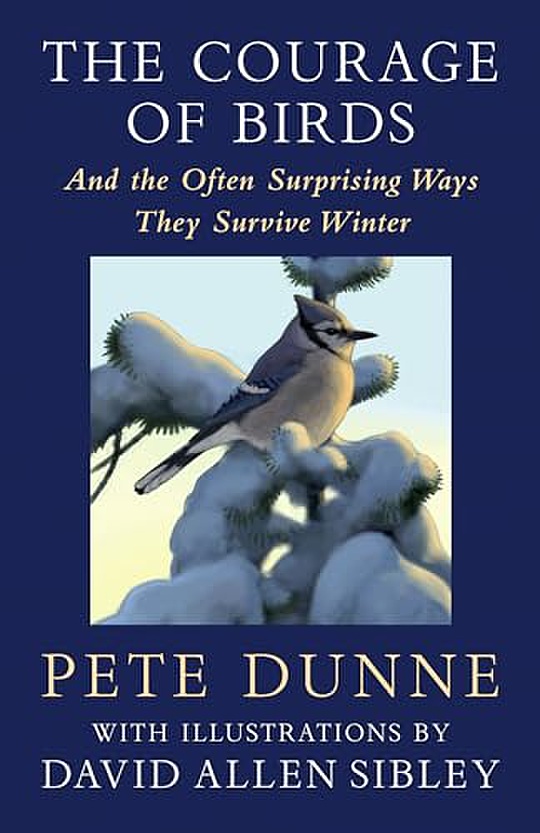 *** birds
The Courage of Birds Pete Dunne
I wish I could wax more enthusiastic -- Dunne is clearly deeply knowledgeable and utterly smitten and absorbed in anything/everything to do with birds. I imagine being on a tour with him, say, would be a delight. I would also guess that some editor tore his/her hair out trying to figure out how to help Dunne organize the information and gave up. However, it is very very birdlike, the text darting here and there as Dunne remembers an experience, or pulls out a tidbit of cached information that is tangentially related there, shifting the pace from lists to anecdotes to meditations. There's a good bit of repetition but no matter,it's a pleasant read and you do end up with an understanding that birds deal with winter in a staggeringly wide variety of ways. That's a great survival strategy overall, because whatever happens next to this planet, some birds will survive somehow, somewhere. ***
 *** birds
 The Courage of Birds Pete Dunne
I wish I could wax more enthusiastic -- Dunne is clearly deeply knowledgeable and utterly smitten and absorbed in anything/everything to do with birds. I imagine being on a tour with him, say, would be a delight. I would also guess that some editor tore his/her hair out trying to figure out how to help Dunne organize the information and gave up. However, it is very very birdlike, the text darting here and there as Dunne remembers an experience, or pulls out a tidbit of cached information that is tangentially related there, shifting the pace from lists to anecdotes to meditations. There's a good bit of repetition but no matter,it's a pleasant read and you do end up with an understanding that birds deal with winter in a staggeringly wide variety of ways. That's a great survival strategy overall, because whatever happens next to this planet, some birds will survive somehow, somewhere. ***
23sibylline
>21 LizzieD: TWO mysteries actually, both with the same protagonist, Alan Cadbury.
24BLBera
I enjoy the C. S. Harris mysteries; you remind me I should read the next one. The Pryor mystery sounds interesting as well.
26sibylline
4.  hist mys ****
Why Kings Confess (10) C.S. Harris
So much is going on! A gruesome murder, of course, and one with huge implications . . . and Hero is about to give birth and the babe is breech, a truly awful thing in that time, still problematical even now. Sebastian's good friend Dr. Paul Gibson stumbles on the body which has been mutilated, but brings home the woman who was with him, who turns out to be a 'doctoress' - trained in Italy - who, ta-da! shares a violent past incident with Hector (so they loathe one another). Gibson, of course, falls madly in love with her, as well he should. But the sub plot is the doozy -- what if the Dauphin had been smuggled out of prison in 1795 replaced by a dying child? What if that person grew up and . . . How would the other Bourbons, in line for the throne should that child be . . . . (and let me tell you the Bourbons were mostly a vile bunch--convincing yourself that God has appointed you to rule. Period. makes for bad judgement.). Harris is at the top of her game. ****
 hist mys ****
Why Kings Confess (10) C.S. Harris
So much is going on! A gruesome murder, of course, and one with huge implications . . . and Hero is about to give birth and the babe is breech, a truly awful thing in that time, still problematical even now. Sebastian's good friend Dr. Paul Gibson stumbles on the body which has been mutilated, but brings home the woman who was with him, who turns out to be a 'doctoress' - trained in Italy - who, ta-da! shares a violent past incident with Hector (so they loathe one another). Gibson, of course, falls madly in love with her, as well he should. But the sub plot is the doozy -- what if the Dauphin had been smuggled out of prison in 1795 replaced by a dying child? What if that person grew up and . . . How would the other Bourbons, in line for the throne should that child be . . . . (and let me tell you the Bourbons were mostly a vile bunch--convincing yourself that God has appointed you to rule. Period. makes for bad judgement.). Harris is at the top of her game. ****
27sibylline
5.  sf ****
Hammerfall C.J. Cherryh
Marak, the protagonist of Hammerfall is the son of an ambitious village chieftain who has plotted to overthrow 'the Ila' -- the woman who rules everyone but the few tribes that have moved out of her reach -- . At first it is a little unclear why he has this ambition, but his son Marak is loyal and is proving himself to be better and stronger than his father. Uh oh. Marak also turns out to be one of the 'mad' -- people who have visions of apocalypse and fits of collapse and are usually driven to travel 'east east east' Dad, who is worried about Marak's competition, has his son rounded up with the new crop of the mad and sent to the Ila who lives in a giant tower. Have I said this is a world with scant water? Essentially desert? The Ila has water so she has a big city around her tower, which you the reader begin to wonder about because you (and me) like Marak have no clue what is really going on. But the Ila has some plan and she sends this latest crop of the mad east to see what is there. What is there is another huge tower . . . . with two people living in it who are utterly different. And Marak and his cohort learn that they have been 'infected' with nanoceles by both the Ila and these new people and that there is a battle going on between them in their bodies part of the greater struggle to resolve and maintain peace with an alien race and up there are two stations, one of humans, one of the mysterious ondat whom the humans have wronged and damaged with their careless use of nanotechnology . . . anyway, that gives you the idea. Throughout Marak is the sanest, steadiest person of all and he is probably among the most 'lovable' (if such is possible) of Cherryh's characters, and he is also believable despite being so great. The story is perhaps a tad too complex but really I'll take on Cherryh anytime.
Sorry this is so long! ****
 sf ****
Hammerfall C.J. Cherryh
Marak, the protagonist of Hammerfall is the son of an ambitious village chieftain who has plotted to overthrow 'the Ila' -- the woman who rules everyone but the few tribes that have moved out of her reach -- . At first it is a little unclear why he has this ambition, but his son Marak is loyal and is proving himself to be better and stronger than his father. Uh oh. Marak also turns out to be one of the 'mad' -- people who have visions of apocalypse and fits of collapse and are usually driven to travel 'east east east' Dad, who is worried about Marak's competition, has his son rounded up with the new crop of the mad and sent to the Ila who lives in a giant tower. Have I said this is a world with scant water? Essentially desert? The Ila has water so she has a big city around her tower, which you the reader begin to wonder about because you (and me) like Marak have no clue what is really going on. But the Ila has some plan and she sends this latest crop of the mad east to see what is there. What is there is another huge tower . . . . with two people living in it who are utterly different. And Marak and his cohort learn that they have been 'infected' with nanoceles by both the Ila and these new people and that there is a battle going on between them in their bodies part of the greater struggle to resolve and maintain peace with an alien race and up there are two stations, one of humans, one of the mysterious ondat whom the humans have wronged and damaged with their careless use of nanotechnology . . . anyway, that gives you the idea. Throughout Marak is the sanest, steadiest person of all and he is probably among the most 'lovable' (if such is possible) of Cherryh's characters, and he is also believable despite being so great. The story is perhaps a tad too complex but really I'll take on Cherryh anytime.
Sorry this is so long! ****
28sibylline
6. ♬ hist mys ****1/2
Who Buries the Dead (10) C.S. Harris
This is the 'famous' St Cyr in which Jane Austen and her brother figure. Of course there is a murder, of an irascible fellow of the prosperous gentry who is a collector of oddities, including heads of famous people such as that of Oliver Cromwell. But. Another hugely important head has gone missing from a recently rediscovered in a nasty cramped little tomb out at Windsor Castle where many Royals are buried-- that of Charles I (a nasty piece of work) executed for treason in 1649. Jarvis is not happy because the new King, the former Prinny, wants to view it. While he and Sebastian are not working 'together' they have an interest in common, finding the head, solving the murder. Jane figures because her bro Henry is friends with the deceased and comes under suspicion. The most fun part of the story though is how Harris wove in suggestive hints at where, from real life, Austen might have collected some of her plots. She is delightful and well done. ****1/2
 hist mys ****1/2
Who Buries the Dead (10) C.S. Harris
This is the 'famous' St Cyr in which Jane Austen and her brother figure. Of course there is a murder, of an irascible fellow of the prosperous gentry who is a collector of oddities, including heads of famous people such as that of Oliver Cromwell. But. Another hugely important head has gone missing from a recently rediscovered in a nasty cramped little tomb out at Windsor Castle where many Royals are buried-- that of Charles I (a nasty piece of work) executed for treason in 1649. Jarvis is not happy because the new King, the former Prinny, wants to view it. While he and Sebastian are not working 'together' they have an interest in common, finding the head, solving the murder. Jane figures because her bro Henry is friends with the deceased and comes under suspicion. The most fun part of the story though is how Harris wove in suggestive hints at where, from real life, Austen might have collected some of her plots. She is delightful and well done. ****1/2
29LizzieD
>27 sibylline: Not so long at all! I think that Hammerfall is a second book? I'm now off to check that possibility, not that I need to start more Cherryh. I still have 3 *Fortress*es to read and my next *Foreigner*. Such richness! *sigh*
ETA: I see that it's the first of two.
ETA: I see that it's the first of two.
30sibylline
>30 sibylline: I have the 'new Foreigner and I cannot decide if I should start all over again or just read it . . .
Just two and very loosely connected, you'll see.
Just two and very loosely connected, you'll see.
31sibylline
7.  hist 19 *****
The Age of Wonder Richard Holmes
Holmes examines the transition period between 1770 to 1830 with his closest focus on the period between 1800-1830 when scientific categories of study and the methodologies required begin to emerge and solidify. Most significantly -- Holmes illuminates the fact, seldom mentioned, of the interplay between the romantic poets and scientists -- how will poetic imagination and the new hyper-rational inductive methods interact and influence each other? They are not yet seen as mutually exclusive (which, in fact, is a false view). Coleridge, in 1819 gives a lecture on the topic at the Royal Society that epitomizes this relationship of scientific genius and poetic inspiration as necessary to one another. The two men Holmes focusses on the most involved in broadening the movement are Joseph Banks, the botanist who accompanied Cook on his first voyage and William Herschel the astronomer who created the first enormous telescopes that could penetrate the universe and then studied, theorized and put to rest any thought that the universe is anything other than unimaginably immense (unless you are a stubborn git, of course) and many other discoveries we take for granted now but were almost shattering then. As the president of the Royal Society Banks nurtured the next generation of scientists, a lively and engaging person. Herschel by revolutionizing astronomy provided an example, literally, of 'no limits' to study. Holmes examines many other aspects of the period, not the least of which is that this is when 'explainers' (my word) began to emerge to make the concepts of maths and sciences accessible. Books and public lectures become popular. Holmes also examines how Mary Shelley's Frankenstein embodies this union between imagination and science, and unites the anxieties evoked by learning about the micro and macroscopic, and spectrums of sound and vision invisible to our senses. All of the romantic poets from Wordsworth to Keats were drawing from this urge to unlock and reveal the unknown: was there any mystery that could not be dissected and explained? I had no idea of this close relationship -- this most certainly wasn't ever mentioned by any teacher or professor of mine and I had two rounds with romanticism, one in high school (and intense) and the other in college -- the separation, academically, at that time was too complete. For me it suggests a new dimension to consider of the poetry of that time. I've always been drawn to this time period and now I've been swept in deeper. *****
 hist 19 *****
The Age of Wonder Richard Holmes
Holmes examines the transition period between 1770 to 1830 with his closest focus on the period between 1800-1830 when scientific categories of study and the methodologies required begin to emerge and solidify. Most significantly -- Holmes illuminates the fact, seldom mentioned, of the interplay between the romantic poets and scientists -- how will poetic imagination and the new hyper-rational inductive methods interact and influence each other? They are not yet seen as mutually exclusive (which, in fact, is a false view). Coleridge, in 1819 gives a lecture on the topic at the Royal Society that epitomizes this relationship of scientific genius and poetic inspiration as necessary to one another. The two men Holmes focusses on the most involved in broadening the movement are Joseph Banks, the botanist who accompanied Cook on his first voyage and William Herschel the astronomer who created the first enormous telescopes that could penetrate the universe and then studied, theorized and put to rest any thought that the universe is anything other than unimaginably immense (unless you are a stubborn git, of course) and many other discoveries we take for granted now but were almost shattering then. As the president of the Royal Society Banks nurtured the next generation of scientists, a lively and engaging person. Herschel by revolutionizing astronomy provided an example, literally, of 'no limits' to study. Holmes examines many other aspects of the period, not the least of which is that this is when 'explainers' (my word) began to emerge to make the concepts of maths and sciences accessible. Books and public lectures become popular. Holmes also examines how Mary Shelley's Frankenstein embodies this union between imagination and science, and unites the anxieties evoked by learning about the micro and macroscopic, and spectrums of sound and vision invisible to our senses. All of the romantic poets from Wordsworth to Keats were drawing from this urge to unlock and reveal the unknown: was there any mystery that could not be dissected and explained? I had no idea of this close relationship -- this most certainly wasn't ever mentioned by any teacher or professor of mine and I had two rounds with romanticism, one in high school (and intense) and the other in college -- the separation, academically, at that time was too complete. For me it suggests a new dimension to consider of the poetry of that time. I've always been drawn to this time period and now I've been swept in deeper. *****
32sibylline
I'm feeling slightly insane, but I can't help myself -- the next book I've decided to read (not so sure about the deciding part) about this period (early 19th) is 1000 pages long -- (albeit a decent size print) AND at the same time I can no longer wait to read the bio of Georgette Heyer that has been waiting on my Gotta Read Soon shelf next the tBoM.
33sibylline
8.  wbg contemp fic ***
The Book of Illusions Paul Auster
This was a selection of my writer's book group, not sure why. I'm not an Auster fan and haven't read one of his in decades, now I remember why. He's uneven but so confident of himself that he bowls along and carries readers and critics through the dull patches, but not me. David Zimmer, a professor of literature (tragically widowed) and the person he becomes obsessed with (which obsession helps him to live again) a silent film comedian and film maker Hector Mann who abruptly disappeared in 1929. So David writes a book about Mann. Hector's family contact him. Things (mostly bad) happen. There are long descriptive passages of Hector's movies and much biographical info - the source for which we learn later. But for me, by the time later came, I was fed up. When Auster is describing the story flows well enough, when people actually interact--talk and do things together, well, it's unconvincing to put it politely. The contrast between the two is so glaring it's hard to ignore. Finally, a quiet but intense beef is the painfully superficial use of Vermont as the locale where this writer has been living. I could go into a rant about it, but I'll spare you. Years ago I invented the SPCAF (the Society for the Prevention of Cruelty to Animals in Fiction). Vermont might need a similar protective society. There are states that symbolize things to people beyond the reality of the place itself. Many don't, but Vermont, Montana, Alaska come to mind as places with powerful connotations that reach ridiculously far beyond the reality of actually living in them. ***
 wbg contemp fic ***
The Book of Illusions Paul Auster
This was a selection of my writer's book group, not sure why. I'm not an Auster fan and haven't read one of his in decades, now I remember why. He's uneven but so confident of himself that he bowls along and carries readers and critics through the dull patches, but not me. David Zimmer, a professor of literature (tragically widowed) and the person he becomes obsessed with (which obsession helps him to live again) a silent film comedian and film maker Hector Mann who abruptly disappeared in 1929. So David writes a book about Mann. Hector's family contact him. Things (mostly bad) happen. There are long descriptive passages of Hector's movies and much biographical info - the source for which we learn later. But for me, by the time later came, I was fed up. When Auster is describing the story flows well enough, when people actually interact--talk and do things together, well, it's unconvincing to put it politely. The contrast between the two is so glaring it's hard to ignore. Finally, a quiet but intense beef is the painfully superficial use of Vermont as the locale where this writer has been living. I could go into a rant about it, but I'll spare you. Years ago I invented the SPCAF (the Society for the Prevention of Cruelty to Animals in Fiction). Vermont might need a similar protective society. There are states that symbolize things to people beyond the reality of the place itself. Many don't, but Vermont, Montana, Alaska come to mind as places with powerful connotations that reach ridiculously far beyond the reality of actually living in them. ***
 sf ****
35sibylline
10. ♬ hist mys 19th ****
When Falcons Fall(11)C.S. Harris
Sebastian accompanied by wife, and various servants head up to Shropshire, Jamie Knox's home to give his grandmother a gift Jamie meant for her (an automaton nightingale) and to see if he can ferret out more about their mysterious shared father. Instead he finds another mystery to solve, a lovely young widow is found dead by the river Tyne, (or a tributary, not sure). Did she see something she shouldn't have? Was it a suicide or murder? Body count in this one is a bit excessive and maybe a somewhat repetitious of previous scenarios and situations, but finally, at the end, we do get one further clue: of the potential three fathers, stablehand, Welsh cavalry captain and the 'English lord" one is eliminated. Satisfying as always.****
 hist mys 19th ****
When Falcons Fall(11)C.S. Harris
Sebastian accompanied by wife, and various servants head up to Shropshire, Jamie Knox's home to give his grandmother a gift Jamie meant for her (an automaton nightingale) and to see if he can ferret out more about their mysterious shared father. Instead he finds another mystery to solve, a lovely young widow is found dead by the river Tyne, (or a tributary, not sure). Did she see something she shouldn't have? Was it a suicide or murder? Body count in this one is a bit excessive and maybe a somewhat repetitious of previous scenarios and situations, but finally, at the end, we do get one further clue: of the potential three fathers, stablehand, Welsh cavalry captain and the 'English lord" one is eliminated. Satisfying as always.****
36RebaRelishesReading
>33 sibylline: Sounds dismal. So happy to read about a book I can just skip and move past.
Hope things are good with you and yours.
Hope things are good with you and yours.
37sibylline
>36 RebaRelishesReading: You are a dear to stop by. I occasionally lope around the threads of my favourite folks here, but mostly I keep track of my reading on this thread as I severely limit my time on line. Conscious of my age, I am devoting my time and effort to writing stories and novels! And when not that to music and exercise.
My best to you.
My best to you.
38sibylline
11.  hist fict 19th, india ****
Loot Tania James
In 1799 the British siege of Seringapatam in India took place, significant as Tipu Sultan, an intelligent and resourceful leader was killed, eliminating one of the enduring obstacles to domination of the southern portion of India. Not long before he had commissioned a large automaton of a tiger killing a British soldier and James's story is an imaginative rendering of the life of Abbas, the woodcarver who helped create this original item (you can see it on-line -- Tipu's tiger, Victoria and Albert Museum). The story moves through the creation of the Tiger to the war, and then beyond to France as Abbas seeks out the man, Lucien du Leze, with whom he worked on the Tiger so he can apprentice and then later, with du Leze's daughter, Jehanne, to England, seeking the Tiger. Along the way James enters the minds of a few of the other characters in a close or more distant 3rd point of view, deftly done and full of interest.
Loot is excellent although I did find two egregious errors. When Rum, one of the side-characters, moves from England to France to work with Abbas and Jehanne it is well after both Bourbon Restorations. When Rum lands in France, he sees a plaque that he can only read a little of as his French isn't very good: Here is the quote: "He squints at the brass plaque on the cay,* the French words illegible to him, except for Roi...Louis XVIII...pied...1792. ** Napoleon left to rot in Corsica.***" The book is otherwise very very well researched, but this is so awful I may have to change my rating. I let it slip by earlier because I so enjoyed the book and felt I had to go back and read carefully but now I am sure.
*that also is a nunh-unh, should be quay.
**1792 is the beginning of the Terror. Louis XVIII left France (for England) in 1791. James and the editors both failed to catch the problem: Restoration #1 of Louis XVIII was in 1814 when N. abdicated and was sent to Elba and #2 1815 after Waterloo when N was exiled to St. H.)
*** In 1792 Napoleon was 22, just getting going, in fact. He wasn't rotting anywhere.
We all make mistakes and historical fiction is hard hard hard -- no one gets everything right, but this compound error is unusually bad. It does not spoil the book, but in this new world in which we live where sloppiness at every level is allowed--even encouraged by some--I must protest.
Does an error like this cause a half star to be removed? Reluctantly, I expect so, so I am dropping to a ****.
 hist fict 19th, india ****
Loot Tania James
In 1799 the British siege of Seringapatam in India took place, significant as Tipu Sultan, an intelligent and resourceful leader was killed, eliminating one of the enduring obstacles to domination of the southern portion of India. Not long before he had commissioned a large automaton of a tiger killing a British soldier and James's story is an imaginative rendering of the life of Abbas, the woodcarver who helped create this original item (you can see it on-line -- Tipu's tiger, Victoria and Albert Museum). The story moves through the creation of the Tiger to the war, and then beyond to France as Abbas seeks out the man, Lucien du Leze, with whom he worked on the Tiger so he can apprentice and then later, with du Leze's daughter, Jehanne, to England, seeking the Tiger. Along the way James enters the minds of a few of the other characters in a close or more distant 3rd point of view, deftly done and full of interest.
Loot is excellent although I did find two egregious errors. When Rum, one of the side-characters, moves from England to France to work with Abbas and Jehanne it is well after both Bourbon Restorations. When Rum lands in France, he sees a plaque that he can only read a little of as his French isn't very good: Here is the quote: "He squints at the brass plaque on the cay,* the French words illegible to him, except for Roi...Louis XVIII...pied...1792. ** Napoleon left to rot in Corsica.***" The book is otherwise very very well researched, but this is so awful I may have to change my rating. I let it slip by earlier because I so enjoyed the book and felt I had to go back and read carefully but now I am sure.
*that also is a nunh-unh, should be quay.
**1792 is the beginning of the Terror. Louis XVIII left France (for England) in 1791. James and the editors both failed to catch the problem: Restoration #1 of Louis XVIII was in 1814 when N. abdicated and was sent to Elba and #2 1815 after Waterloo when N was exiled to St. H.)
*** In 1792 Napoleon was 22, just getting going, in fact. He wasn't rotting anywhere.
We all make mistakes and historical fiction is hard hard hard -- no one gets everything right, but this compound error is unusually bad. It does not spoil the book, but in this new world in which we live where sloppiness at every level is allowed--even encouraged by some--I must protest.
Does an error like this cause a half star to be removed? Reluctantly, I expect so, so I am dropping to a ****.
39LizzieD
>38 sibylline: Shoot! 4½ stars from you means that I probably need to put it on my Kindle no matter when I get to it. They might boost the price, and you know I love India!
40sibylline
12.  mys ****
The Thursday Murder Club Richard Osman
Good fun! Great characters, nicely balanced humor with thoughtfulness. ****
 mys ****
The Thursday Murder Club Richard Osman
Good fun! Great characters, nicely balanced humor with thoughtfulness. ****
41sibylline
13. ♬ rr  hist mys ****
Where the Dead Lie C.S. Harris
Just as great the second time around! Kind of a creepy one though. ****
 hist mys ****
Where the Dead Lie C.S. Harris
Just as great the second time around! Kind of a creepy one though. ****
42lauralkeet
>40 sibylline: Isn't it?! I really enjoyed all four books and although he took a break, there will be another book released in September.
44sibylline
14.♬ rr  ****
****
Why Kill the Innocent? C.S. Harris
It's the middle of the coldest winter of the 19th century and Princess Charlotte's piano teacher is found dead by Alexi and Hero. The palace wants to hush up her death, Sebastian wants to figure out what happened. Some ill-advised letters are missing. Prinny wants to use them to bully her into marrying the Prince of Orange, the Whigs want to scotch that effort . . . meanwhile the last and most legendary Frost Fair is taking place on the Thames. . . Princess Charlotte is an engaging character -- and I just learned in a bio of Georgette Heyer, the doyenne of the regency period -- that she wished to write a biography of her. For various reasons, GH never could. A shame. Also anyone interested in the Frost Fairs -- a fascinating little book -- Helen Humphreys' book The Frozen Thames is worth a look! ****
 ****
****Why Kill the Innocent? C.S. Harris
It's the middle of the coldest winter of the 19th century and Princess Charlotte's piano teacher is found dead by Alexi and Hero. The palace wants to hush up her death, Sebastian wants to figure out what happened. Some ill-advised letters are missing. Prinny wants to use them to bully her into marrying the Prince of Orange, the Whigs want to scotch that effort . . . meanwhile the last and most legendary Frost Fair is taking place on the Thames. . . Princess Charlotte is an engaging character -- and I just learned in a bio of Georgette Heyer, the doyenne of the regency period -- that she wished to write a biography of her. For various reasons, GH never could. A shame. Also anyone interested in the Frost Fairs -- a fascinating little book -- Helen Humphreys' book The Frozen Thames is worth a look! ****
45sibylline
15.  mys ****
Running Grave Robert Galbraith
Probably the most intense of the Strike and Ellacott series: The agency is hired to find out what is going on at a religious retreat into which the son, in his twenties, has disappeared. Robin goes undercover to figure out what the deal is -- and finds much much more is going on than simple extortion of money and that she has taken on much more danger than she had expected. At the end there is a twist to the story and also in 'their' relationship . . . and we are, of course, left hanging. ****
 mys ****
Running Grave Robert Galbraith
Probably the most intense of the Strike and Ellacott series: The agency is hired to find out what is going on at a religious retreat into which the son, in his twenties, has disappeared. Robin goes undercover to figure out what the deal is -- and finds much much more is going on than simple extortion of money and that she has taken on much more danger than she had expected. At the end there is a twist to the story and also in 'their' relationship . . . and we are, of course, left hanging. ****
47sibylline
16.  bio ***1/2
Georgette Heyer Jennifer Kloester
I was languishing in the infirmary of my boarding school when the headmistress brought me my first Heyers -- These Old Shades and Devil's Cub. And that was that. By the time I was in my early twenties I had all of her books (which I gave away to someone who needed them more than me when I was thirty). She got me through hard times and I love her for it. However, J. Kloester had a task I don't envy. It's hard to write a scintillating biography of a somewhat retiring and very well-behaved writer, in fact, the epitome of a lady which Mrs. Ronald Rougier (as she would have addressed herself), that is, Georgette Heyer to you and me, very much was. But what Kloester does do is offer a good outline of Heyer's literary development and enough biographical information to satisfy. GH's private and public (such as the latter was) lives were kept separate. She adored her father who adored her back and gave her the very solid grounding in literature and storytelling that formed the basis of her style. She married a man who would become her best friend and companion, a quiet solid marriage. She had one son. She was a traditional wife to all appearances, except that she wasn't. She lived to write. And she was ruthless in pursuit of it, including (to my surprise) not only drinking vast quantities of coffee and smoking a lot of cigarettes but staying up all night to finish books with the help (during one period, not perpetually) of amphetamines (there was a period where they were distributed very freely). I was very interested to know that her first few books were historical, 17th-18th and written in the early twenties, the first published when she was 19. In 1926 These Old Shades set in the late 18th took off. She also wrote about five contemporary novels (all of which she suppressed later), short stories, and crime novels. Her truly great historical novel about Waterloo, Infamous Army, came out in 1937 and the novel set in the Peninsular wars, The Spanish Bride, in 1940. For both of these GH did prodigious research. And I mean prodigious, she read all of Wellington's war correspondence and also filled shelves of notebooks on everything from clothing to vocabulary, duelling pistols and carriages. Her first true Regency novel, was Regency Buck. Her last was Lady of Quality.
And she could be very funny in a biting way --
"Like Brummell, I am very good at Depressing Pretension." She didn't care for the Russian oeuvre "I am Wholly Allergic to Russian Literature . . " and once declared "the sooner Anna Karenina flung herself under a train the better it would be."
I can't wait to start all over and read/listen to all of her novels. This time in chronological order!
This is a bio for a fan -- and full of info for one already addicted, just not even the tiniest bit exciting. ****
 bio ***1/2
Georgette Heyer Jennifer Kloester
I was languishing in the infirmary of my boarding school when the headmistress brought me my first Heyers -- These Old Shades and Devil's Cub. And that was that. By the time I was in my early twenties I had all of her books (which I gave away to someone who needed them more than me when I was thirty). She got me through hard times and I love her for it. However, J. Kloester had a task I don't envy. It's hard to write a scintillating biography of a somewhat retiring and very well-behaved writer, in fact, the epitome of a lady which Mrs. Ronald Rougier (as she would have addressed herself), that is, Georgette Heyer to you and me, very much was. But what Kloester does do is offer a good outline of Heyer's literary development and enough biographical information to satisfy. GH's private and public (such as the latter was) lives were kept separate. She adored her father who adored her back and gave her the very solid grounding in literature and storytelling that formed the basis of her style. She married a man who would become her best friend and companion, a quiet solid marriage. She had one son. She was a traditional wife to all appearances, except that she wasn't. She lived to write. And she was ruthless in pursuit of it, including (to my surprise) not only drinking vast quantities of coffee and smoking a lot of cigarettes but staying up all night to finish books with the help (during one period, not perpetually) of amphetamines (there was a period where they were distributed very freely). I was very interested to know that her first few books were historical, 17th-18th and written in the early twenties, the first published when she was 19. In 1926 These Old Shades set in the late 18th took off. She also wrote about five contemporary novels (all of which she suppressed later), short stories, and crime novels. Her truly great historical novel about Waterloo, Infamous Army, came out in 1937 and the novel set in the Peninsular wars, The Spanish Bride, in 1940. For both of these GH did prodigious research. And I mean prodigious, she read all of Wellington's war correspondence and also filled shelves of notebooks on everything from clothing to vocabulary, duelling pistols and carriages. Her first true Regency novel, was Regency Buck. Her last was Lady of Quality.
And she could be very funny in a biting way --
"Like Brummell, I am very good at Depressing Pretension." She didn't care for the Russian oeuvre "I am Wholly Allergic to Russian Literature . . " and once declared "the sooner Anna Karenina flung herself under a train the better it would be."
I can't wait to start all over and read/listen to all of her novels. This time in chronological order!
This is a bio for a fan -- and full of info for one already addicted, just not even the tiniest bit exciting. ****
48sibylline
17.  fiction american, ss ****
A Tidewater Morning William Styron
Three stories, mixed chronologically. The first is set in WW2. The twenty year old marine officer is on a ship in the Pacific and he is steaming toward his first encounter with the 'enemy' -- Styron juxtaposes a childhood memory with the present -- and the effect of the interaction on a young but not quite adult man. It is dated, however, despite being a true portrait of how a southern white lad would regard the world and a little hard to read therefore. In the second story a boy of ten or twelve has neighbors, a big family, who, while now very poor, were once of consequence. An ancient black man turns up (this is 1935 or so) and it turns out he was born a slave on the family plantation, sold to the deep south. He wants to die where he was born. This story grabs and holds throughout. The third takes place on the day of a slightly older boy's mother's death. It was wrenching but I stayed on the outside of the emotional core, not sure why. The middle story made the book worthwhile for me. ***1/2
 fiction american, ss ****
A Tidewater Morning William Styron
Three stories, mixed chronologically. The first is set in WW2. The twenty year old marine officer is on a ship in the Pacific and he is steaming toward his first encounter with the 'enemy' -- Styron juxtaposes a childhood memory with the present -- and the effect of the interaction on a young but not quite adult man. It is dated, however, despite being a true portrait of how a southern white lad would regard the world and a little hard to read therefore. In the second story a boy of ten or twelve has neighbors, a big family, who, while now very poor, were once of consequence. An ancient black man turns up (this is 1935 or so) and it turns out he was born a slave on the family plantation, sold to the deep south. He wants to die where he was born. This story grabs and holds throughout. The third takes place on the day of a slightly older boy's mother's death. It was wrenching but I stayed on the outside of the emotional core, not sure why. The middle story made the book worthwhile for me. ***1/2
49sibylline
18.  nat hist DNF
Windswept Annie Worsley
These are comments. What I write here aren't reviews, that is, I am not recommending or discouraging a reader. My intention is a response and my taste and reactions are mine. At different times I know too I might respond differently to a book. That said. I could not finish reading the book. I found the prose too dense, too many adjectives, repetive descriptions altogether too much -- as in not enough variety? I found myself thinking of the painter who might draw every single brick of a house. That doesn't work and this doesn't either. Not for me. I am sad because this is a genre I normally love. I think of Connemara by Tim Robinson and the contrast is painful. I respect Worsley for her thoroughness, her honesty, her passion for the place (west coast Scottish highlands, on a croft) where she is living and I was almost desperate to like the book. (I did read my 'required' 100 p. and skimmed the rest so that I could comment here.) So a DNF, no stars. But you might LOVE it.
 nat hist DNF
Windswept Annie Worsley
These are comments. What I write here aren't reviews, that is, I am not recommending or discouraging a reader. My intention is a response and my taste and reactions are mine. At different times I know too I might respond differently to a book. That said. I could not finish reading the book. I found the prose too dense, too many adjectives, repetive descriptions altogether too much -- as in not enough variety? I found myself thinking of the painter who might draw every single brick of a house. That doesn't work and this doesn't either. Not for me. I am sad because this is a genre I normally love. I think of Connemara by Tim Robinson and the contrast is painful. I respect Worsley for her thoroughness, her honesty, her passion for the place (west coast Scottish highlands, on a croft) where she is living and I was almost desperate to like the book. (I did read my 'required' 100 p. and skimmed the rest so that I could comment here.) So a DNF, no stars. But you might LOVE it.
50LizzieD
I'm always interested in what you're reading, Lucy. You know that I started the Heyer bio long ago. I think I read one of Melville instead. Weird.
Styron, I'm not trying.
I'm sorry that Worsley didn't work for you. I doubt that it would for me either. I know I'm adverb crazy in my posts here, but I don't appreciate them or too many adjectives in what I read. (Sorry!)
Hope your current reading is better!
Styron, I'm not trying.
I'm sorry that Worsley didn't work for you. I doubt that it would for me either. I know I'm adverb crazy in my posts here, but I don't appreciate them or too many adjectives in what I read. (Sorry!)
Hope your current reading is better!
51sibylline
19.  sf ****1/2
Defiance (19 Foreigner) C.J. Cherryh
This was a bit slow-moving -- the story focussed still around the railroad improvement scheme. Not a complaint, actually, because this is Cherryh's style, some of the books work like this, wrapping up a previous crisis and setting the next one in place. In this case, the next one -- the arrival of several thousand humans from the doomed space station (several books back) is likely to be a non-stop doozy. Can't wait! ****1/2
 sf ****1/2
Defiance (19 Foreigner) C.J. Cherryh
This was a bit slow-moving -- the story focussed still around the railroad improvement scheme. Not a complaint, actually, because this is Cherryh's style, some of the books work like this, wrapping up a previous crisis and setting the next one in place. In this case, the next one -- the arrival of several thousand humans from the doomed space station (several books back) is likely to be a non-stop doozy. Can't wait! ****1/2
52sibylline
20.  ♬ poetry *****
Selected Poems of Samuel Taylor Coleridge Samuel Taylor Coleridge
This is a revisit, I spent a couple of months reading and rereading -- and I'm glad to have done it. Moving on to Wordsworth now. I have to confess that at this juncture in my life I am as much if not more interested in the romantic poets in the context of their time period. I am not done with Coleridge the man and philosopher -- will read his essay on the connection between the poet and the scientist, for example and maybe a biography. He exemplifies the response of an educated and thoughtful person during a period of almost epic change in every sphere of life. Some of his poems are surprisingly racy, btw, but are I guess the result of his opium adventures which tend to loosen inhibitions--but this conflicts with his conservatism and faith. Two poems grabbed me by the throat- in the first he takes his fretful son out to see the moon:
lines 97 to 106 in The Nightingale
". . . . . . . . . . . . He knows well
The evening star; and once when he awoke
In most distressful mood (some inward pain
Had made up that strange thing, an infant's dream--)
I hurried with him to our orchard-plot,
And he beheld the moon, and, hushed at once,
Suspends his sobs, and laughs most silently,
While his fair eyes, that swam with undropped tears,
Did glitter in the yellow moon-beam! Well!--
It is a father's tale . . . "
and A Sunset
Upon the mountain's edge with light touch resting,
There a brief while the globe of splendour sits
And seems a creature of the earth, but soon
More changeful than the Moon,
To wane fantastic his great orb submits,
Or cone or mow of fire: till sinking slowly
Even to a star he lessens wholly.
Abrupt, as Spirits vanish, he is sunk!
A soul-like breeze possesses all the wood.
The boughs, the sprays have stood
As motionless as stands the ancient trunk!
But every leaf through all the forest flutters,
And deep the cavern of the fountain mutters.
 ♬ poetry *****
Selected Poems of Samuel Taylor Coleridge Samuel Taylor Coleridge
This is a revisit, I spent a couple of months reading and rereading -- and I'm glad to have done it. Moving on to Wordsworth now. I have to confess that at this juncture in my life I am as much if not more interested in the romantic poets in the context of their time period. I am not done with Coleridge the man and philosopher -- will read his essay on the connection between the poet and the scientist, for example and maybe a biography. He exemplifies the response of an educated and thoughtful person during a period of almost epic change in every sphere of life. Some of his poems are surprisingly racy, btw, but are I guess the result of his opium adventures which tend to loosen inhibitions--but this conflicts with his conservatism and faith. Two poems grabbed me by the throat- in the first he takes his fretful son out to see the moon:
lines 97 to 106 in The Nightingale
". . . . . . . . . . . . He knows well
The evening star; and once when he awoke
In most distressful mood (some inward pain
Had made up that strange thing, an infant's dream--)
I hurried with him to our orchard-plot,
And he beheld the moon, and, hushed at once,
Suspends his sobs, and laughs most silently,
While his fair eyes, that swam with undropped tears,
Did glitter in the yellow moon-beam! Well!--
It is a father's tale . . . "
and A Sunset
Upon the mountain's edge with light touch resting,
There a brief while the globe of splendour sits
And seems a creature of the earth, but soon
More changeful than the Moon,
To wane fantastic his great orb submits,
Or cone or mow of fire: till sinking slowly
Even to a star he lessens wholly.
Abrupt, as Spirits vanish, he is sunk!
A soul-like breeze possesses all the wood.
The boughs, the sprays have stood
As motionless as stands the ancient trunk!
But every leaf through all the forest flutters,
And deep the cavern of the fountain mutters.
53sibylline
21.  fantasy *****
The Siren Depths Martha Wells
Couldn't put it down! Moon is settling in, but he is terribly worried that he and Jade haven't achieved a 'clutch' yet and that it is his fault. His confidence in belonging at Indigo Cloud is evolving, but slowly. His own birth court has identified him and THEY WANT HIM BACK. He doesn't want to go! And on the way stuff begins happening! *****
 fantasy *****
The Siren Depths Martha Wells
Couldn't put it down! Moon is settling in, but he is terribly worried that he and Jade haven't achieved a 'clutch' yet and that it is his fault. His confidence in belonging at Indigo Cloud is evolving, but slowly. His own birth court has identified him and THEY WANT HIM BACK. He doesn't want to go! And on the way stuff begins happening! *****
54sibylline
22. ♬ RR 
What the Devil Knows C.S. Harris hist mys 19th
As gripping as ever. The characters and the research and how it all is woven together! ****1/2

What the Devil Knows C.S. Harris hist mys 19th
As gripping as ever. The characters and the research and how it all is woven together! ****1/2
56sibylline
23.  contemp fic *****
Pitch Dark Renata Adler
Zounds. Not just good, but extraordinary. Not long, but a slow read or why bother. Unlikely I can do the novel justice either. The protagonist, Kate, wants to break up with the married man she has been with for about a decade. There are three distinct 'parts' -- the first is a portrait of her house, which appears to be practically next door to his somewhere rural up the Hudson valley. The 'situation' is set. She is fragmenting in some way. The second takes place in Ireland where she loses herself temporarily and panics and comes undone. In the third . . . she slowly returns home, and you could say, comes to her senses, puts the pieces together. Along the way she gives her history, studies, career, a little about how she met this man, though it's still opaque somehow, and there are these moments that are purely her thoughts about life--about the way we structure our thoughts, mainly--say in either/or and good/bad dichotomies we are so addicted to, even though they don't work! Also rationalizations for awful behaviour. Also how an explanation for a mysterious circumstance can change how a landscape looks. Also, how hard it is to get out of yourself and listen. Can I tell you whether she does break up with this man? No. This is a novel of contemporary and thoughtful about the human condition--with the main focus on women-- that one encounters in Rachel Cusk, Deborah Levy, Olga Tocarszuk, (sp!) Annie Ernaux.
 contemp fic *****
Pitch Dark Renata Adler
Zounds. Not just good, but extraordinary. Not long, but a slow read or why bother. Unlikely I can do the novel justice either. The protagonist, Kate, wants to break up with the married man she has been with for about a decade. There are three distinct 'parts' -- the first is a portrait of her house, which appears to be practically next door to his somewhere rural up the Hudson valley. The 'situation' is set. She is fragmenting in some way. The second takes place in Ireland where she loses herself temporarily and panics and comes undone. In the third . . . she slowly returns home, and you could say, comes to her senses, puts the pieces together. Along the way she gives her history, studies, career, a little about how she met this man, though it's still opaque somehow, and there are these moments that are purely her thoughts about life--about the way we structure our thoughts, mainly--say in either/or and good/bad dichotomies we are so addicted to, even though they don't work! Also rationalizations for awful behaviour. Also how an explanation for a mysterious circumstance can change how a landscape looks. Also, how hard it is to get out of yourself and listen. Can I tell you whether she does break up with this man? No. This is a novel of contemporary and thoughtful about the human condition--with the main focus on women-- that one encounters in Rachel Cusk, Deborah Levy, Olga Tocarszuk, (sp!) Annie Ernaux.
57sibylline
I am reading too many books -- but two of them are 'long-term' -- The Birth of the Modern is 1000 pages and really, it does not make any sense to read more than ten pages a day, so much information is packed into it. The other is, as of recently, a book of William Wordsworth's poetry--having spent the last several months with Coleridge. I expect Byron to be next, although I may abandon Wordsworth for a time in order to read Byron as I've never read much of his work and have become interested in him as a result of reading so much about the period in which he lived, caroused, wrote and generally made a spectacle of himself. I have a biography stashed somewhere which I also have never read . . .
58LizzieD
The Coleridge poems you quote stopped my breath too, Lucy. How narrow my view of him has been! I really don't know any of the Romantics to any extent. Because I've read Don Juan, I guess I could say that I know Byron best, but that's not saying a lot. When you get to him and are ready for it, I'd love to do a reread with you. Karen might want to join in too. I think in my old age that I'll go back and read or reread all the old dead white men, but apparently I'm not old enough yet - another reason to live 20 more years with brain and eyes no worse than they are now.
Oh dear. I'm afraid that I have to look for the Wells after such a sterling review, and I haven't finished Murderbot (hoarding, alas) yet! I'll see what you have to say about R. Adler before looking more into it.
Oh dear. I'm afraid that I have to look for the Wells after such a sterling review, and I haven't finished Murderbot (hoarding, alas) yet! I'll see what you have to say about R. Adler before looking more into it.
60sibylline
24.  fantasy ****
The Edge of Worlds (raksura 4) Martha Wells
Moon is settled and accepted and Indigo Cloud is starting to thrive, but there is serious trouble on the horizon -- a race to reach a strange 'island' which various peoples think holds something they want (and others are afraid that the thing is a weapon and dangerous). Indigo and Opal Night cooperate and get inside this city-island but then things go wrong. It is the complex social structure of the Courts (having some of the flavor I treasure in Cherry's Foreigner series) which holds my attention most! ****
 fantasy ****
The Edge of Worlds (raksura 4) Martha Wells
Moon is settled and accepted and Indigo Cloud is starting to thrive, but there is serious trouble on the horizon -- a race to reach a strange 'island' which various peoples think holds something they want (and others are afraid that the thing is a weapon and dangerous). Indigo and Opal Night cooperate and get inside this city-island but then things go wrong. It is the complex social structure of the Courts (having some of the flavor I treasure in Cherry's Foreigner series) which holds my attention most! ****
61sibylline
25. ♬ RR hist mys 19th ****
What the Devil Knows (16) C.S. Harris
I have comments posted already--this is a re-listen. High body count, this one, and a sweet surprise at the end.
 hist mys 19th ****
What the Devil Knows (16) C.S. Harris
I have comments posted already--this is a re-listen. High body count, this one, and a sweet surprise at the end.
62sibylline
26. 
Harbors of the Sun Raksura 5 Martha Wells
This installment completes the story arc set in motion in the previous novel in the series. A quest and a race against those who would use some of the technology/magic of the ancients against those beings they either fear or compete with . . . For the Raksura the pressure is on to accept the half-Fell and also to work together. There are, as always, misunderstandings, assumptions, and other conflicts between the main characters. All good fun. ****

Harbors of the Sun Raksura 5 Martha Wells
This installment completes the story arc set in motion in the previous novel in the series. A quest and a race against those who would use some of the technology/magic of the ancients against those beings they either fear or compete with . . . For the Raksura the pressure is on to accept the half-Fell and also to work together. There are, as always, misunderstandings, assumptions, and other conflicts between the main characters. All good fun. ****
63figsfromthistle
I somehow lost track of your thread. Better late than never :)
Hope you have a great week!
Hope you have a great week!
64sibylline
27.  DNF
DNF
Jane Austen's Ghost Jennifer Kloester
Absolutely nothing at all 'wrong' with J. A.'s Ghost. It's sweet and fun and solid -- great names and a good plot, but . . . I feel the same way as I do about the TV series, Lost in Austen. A bit wistful that it is just a little too sweet for me. There is also the fact (and that is why I call these comments not reviews!!!!) that I am in one of those 'nothing pleaseth me' moods, at least as regards fiction. (See below -- another entirely subjective response that has nothing to do with merit!). DNF
 DNF
DNF Jane Austen's Ghost Jennifer Kloester
Absolutely nothing at all 'wrong' with J. A.'s Ghost. It's sweet and fun and solid -- great names and a good plot, but . . . I feel the same way as I do about the TV series, Lost in Austen. A bit wistful that it is just a little too sweet for me. There is also the fact (and that is why I call these comments not reviews!!!!) that I am in one of those 'nothing pleaseth me' moods, at least as regards fiction. (See below -- another entirely subjective response that has nothing to do with merit!). DNF
65sibylline
28.  hist fic sort of DNF
The Marriage Portrait Maggie O'Farrell
I adored Hamnet so it breaks my heart to say I could not get engaged. I've read most of the book, skimmed all of it, puzzling over why I never got drawn in. I knew Hamnet was doomed, so that isn't it. Was it the tiger? Maybe a little? I do have a big problem with animals standing in as metaphors (starting say, with Old Yeller). Maybe it is just the Italian rapaciousness of that period? I know it was so and can't bear reading about it? Lucrezia is feisty and won't go down without a fight, that much is evident from the get-go. On the craft side, I also admit I am not usually much of a fan for use of the present tense. There are huge exceptions, but it is so. And I also tend to be impatient with narratives that jump back and forth in time. So there you go. Nothing at all 'wrong' here, just one reader's failings and quirks. I'll count it as read because I got more than half way and heavily skimmed the remainder.
 hist fic sort of DNF
The Marriage Portrait Maggie O'Farrell
I adored Hamnet so it breaks my heart to say I could not get engaged. I've read most of the book, skimmed all of it, puzzling over why I never got drawn in. I knew Hamnet was doomed, so that isn't it. Was it the tiger? Maybe a little? I do have a big problem with animals standing in as metaphors (starting say, with Old Yeller). Maybe it is just the Italian rapaciousness of that period? I know it was so and can't bear reading about it? Lucrezia is feisty and won't go down without a fight, that much is evident from the get-go. On the craft side, I also admit I am not usually much of a fan for use of the present tense. There are huge exceptions, but it is so. And I also tend to be impatient with narratives that jump back and forth in time. So there you go. Nothing at all 'wrong' here, just one reader's failings and quirks. I'll count it as read because I got more than half way and heavily skimmed the remainder.
 hist mys 19th *****
67sibylline
30.  contemp archaeo mys ***1/2
The Way, the Truth and the Dead Francis Pryor
I am a Time Team/Francis Pryor fan and I have enjoyed his two carefully crafted mysteries very much, as his 'voice' comes through as strongly as it does on the screen and in his books about ancient Britain. It helps to a) be a fan of archaeology b) also a fan of British pre-and-early-history c) finally, a fan of Time Team. I am amazed by how much I have learned from how to behave on a dig site to the current methods for analyzing finds and sites. Knowing at least a little increased my enjoyment of the story. There are many jokes as well -- Alan's 'signature frown' is pure Pryor, the name "Test Pit Challenge" for the TV show (that is clearly Time Team) is funny every time I encountered it. And so on. The plot has more clarity than in the first mystery which got almost too convoluted and the writing is, overall, smoother. It was, perhaps, a bit overlong, but I understand why -- the details of the dig are as important to Pryor as the plot, perhaps more and he just 'had' to have it all in there, I expect! ***1/2
 contemp archaeo mys ***1/2
The Way, the Truth and the Dead Francis Pryor
I am a Time Team/Francis Pryor fan and I have enjoyed his two carefully crafted mysteries very much, as his 'voice' comes through as strongly as it does on the screen and in his books about ancient Britain. It helps to a) be a fan of archaeology b) also a fan of British pre-and-early-history c) finally, a fan of Time Team. I am amazed by how much I have learned from how to behave on a dig site to the current methods for analyzing finds and sites. Knowing at least a little increased my enjoyment of the story. There are many jokes as well -- Alan's 'signature frown' is pure Pryor, the name "Test Pit Challenge" for the TV show (that is clearly Time Team) is funny every time I encountered it. And so on. The plot has more clarity than in the first mystery which got almost too convoluted and the writing is, overall, smoother. It was, perhaps, a bit overlong, but I understand why -- the details of the dig are as important to Pryor as the plot, perhaps more and he just 'had' to have it all in there, I expect! ***1/2
68LizzieD
Thou temptress! I was able to skip the first Pryor mystery, especially since I still need to read Britain AD, but this looks like something I need. Thank you!
ETA: Uh oh. I guess not. It's not readily available and way too expensive at least for right now.
ETA: Uh oh. I guess not. It's not readily available and way too expensive at least for right now.
69sibylline
31. ♬ hist mys ****
Who Cries for the Lost? (18) C.S. Harris
Home again, Napoleon on the verge of defeat. A miserable man is dead, too many with a grudge to figure out who dunnit. Some very ugly realities of war-time revealed. ****
 hist mys ****
Who Cries for the Lost? (18) C.S. Harris
Home again, Napoleon on the verge of defeat. A miserable man is dead, too many with a grudge to figure out who dunnit. Some very ugly realities of war-time revealed. ****
70sibylline
32.  regency essays literary ****
Georgette Heyer, History and Historical Fiction Samantha J. Rayner
In 2020, moments before covid hit, there took place a conference on GH and this tome is the outcome. The essays range over four categories: Gender, Genre, Sources, and what is called 'Circulation and Reception' --that being a catchall. In 'Gender" the essayists examine the roles women and men play in the books and the character types as well as touching on the evolution of the historical novel, written mostly by women and thus disregarded as worthy of notice. This bleeds into the next set of essays on Genre which focus more about the literary influences on and of GH in her development as a writer: the romantic, the realistic, the Gothic and on science fiction -- particularly the sub-genre known as space opera. Section 3 addresses GH's own sources: she had a profound acquaintanceship with Shakespeare thanks to her father and used that knowledge throughout all her books, as sources for plots, for names, for humor. She also read original sources, including Wellington's dispatches to write her war books. The final category examines the not very successful rendering of "The Reluctant Widow" on screen in the late forties, the 'guilty pleasures' of reading GH (she really and truly is NOT remotely pc or woke but she seems to transcend all that because of the joy she does offer -- and that essayist offers some though-provoking reasons for that). The last essay in this mixed bag section is all data mining -- education levels of readers, who recommended to reader, favourites, vocabulary changes and so on. Even the shift in her earlier books (with the exception of The Infamous Army and The Spanish Bride -- both war books of usage of male and female pronouns! (As she grows older women equalize and then surpass men.) This is a book for the GH afficionado much like the bio mentioned above and not at all disappointing. ****
 regency essays literary ****
Georgette Heyer, History and Historical Fiction Samantha J. Rayner
In 2020, moments before covid hit, there took place a conference on GH and this tome is the outcome. The essays range over four categories: Gender, Genre, Sources, and what is called 'Circulation and Reception' --that being a catchall. In 'Gender" the essayists examine the roles women and men play in the books and the character types as well as touching on the evolution of the historical novel, written mostly by women and thus disregarded as worthy of notice. This bleeds into the next set of essays on Genre which focus more about the literary influences on and of GH in her development as a writer: the romantic, the realistic, the Gothic and on science fiction -- particularly the sub-genre known as space opera. Section 3 addresses GH's own sources: she had a profound acquaintanceship with Shakespeare thanks to her father and used that knowledge throughout all her books, as sources for plots, for names, for humor. She also read original sources, including Wellington's dispatches to write her war books. The final category examines the not very successful rendering of "The Reluctant Widow" on screen in the late forties, the 'guilty pleasures' of reading GH (she really and truly is NOT remotely pc or woke but she seems to transcend all that because of the joy she does offer -- and that essayist offers some though-provoking reasons for that). The last essay in this mixed bag section is all data mining -- education levels of readers, who recommended to reader, favourites, vocabulary changes and so on. Even the shift in her earlier books (with the exception of The Infamous Army and The Spanish Bride -- both war books of usage of male and female pronouns! (As she grows older women equalize and then surpass men.) This is a book for the GH afficionado much like the bio mentioned above and not at all disappointing. ****
71sibylline
33. wbg  ss
ss
Paris Stories Mavis Gallant
I read most of these stories at some point, 90's? -- and could not recall reading a single one of them, even when I looked up what I might have written in one of my old notebooks. What I did write was very straightforward, almost clinical: about a family falling apart, about failed marriages, a person who can't manage money and that sort of thing. Then the other night the thought came to me that a Gallant story is recounted to you as if you are sitting in a corner of a cafe with someone you don't know very well and are not even sure you trust or even like while she (definitely a she) tells you the life story about this or that person at a nearby table--people you don't know and will forget about as soon as you leave. The stories seem formless but generally pause at a simple but skewering insight somewhere toward the end. In "August" the pause is to reflect upon how we visit on others the things done to us, by doing them again, or avoiding them or a story will circle back to a recurring image, such as the ice wagon coming down the street, in the eponymous story. The stories wander from one viewpoint to another and appear formless but are always moving toward either that pause or consist of a steady layering up one or two recurring images. Masterful stuff! The afterward, by Gallant herself, is also worth a read. ****
 ss
ssParis Stories Mavis Gallant
I read most of these stories at some point, 90's? -- and could not recall reading a single one of them, even when I looked up what I might have written in one of my old notebooks. What I did write was very straightforward, almost clinical: about a family falling apart, about failed marriages, a person who can't manage money and that sort of thing. Then the other night the thought came to me that a Gallant story is recounted to you as if you are sitting in a corner of a cafe with someone you don't know very well and are not even sure you trust or even like while she (definitely a she) tells you the life story about this or that person at a nearby table--people you don't know and will forget about as soon as you leave. The stories seem formless but generally pause at a simple but skewering insight somewhere toward the end. In "August" the pause is to reflect upon how we visit on others the things done to us, by doing them again, or avoiding them or a story will circle back to a recurring image, such as the ice wagon coming down the street, in the eponymous story. The stories wander from one viewpoint to another and appear formless but are always moving toward either that pause or consist of a steady layering up one or two recurring images. Masterful stuff! The afterward, by Gallant herself, is also worth a read. ****
72sibylline
34.  ***1/2
Stories of the Raksura Volume 1 Martha Wells
Lovely to read about the love affair of the progenitors of Indigo Cloud. I love the Raksura, but for some reason I did find the book slow going, not sure why. I still love Moon, so who cares. ***1/2
 ***1/2
Stories of the Raksura Volume 1 Martha Wells
Lovely to read about the love affair of the progenitors of Indigo Cloud. I love the Raksura, but for some reason I did find the book slow going, not sure why. I still love Moon, so who cares. ***1/2
73sibylline
35.  mys 19th ****
What Cannot Be Said (19) C.S. Harris
The war is over, but evil deeds continue to haunt London and keep Sebastian busy. A mother and daughter have been viciously murdered in Richmond Park. The clues lead Sebastian and Hero to a very ugly conclusion. Not for the faint of heart or the sentimentalist this one. Perhaps just a wee bit over the top? But, the characters and setting are what drive the books, not the mysteries themselves.
****
 mys 19th ****
What Cannot Be Said (19) C.S. Harris
The war is over, but evil deeds continue to haunt London and keep Sebastian busy. A mother and daughter have been viciously murdered in Richmond Park. The clues lead Sebastian and Hero to a very ugly conclusion. Not for the faint of heart or the sentimentalist this one. Perhaps just a wee bit over the top? But, the characters and setting are what drive the books, not the mysteries themselves.
****
 fantasy ****
 time travel ****
76sibylline
38.  contemp fic *****
Mrs. Bridge Evan S. Connell
When I read this the first time it was from the pov of a daughter. This time, 30 years later, the POV of a mother. If anything the resonance is deeper. I am not exactly an adventurous person in real life and although there are many ways I have done 'better' than India Bridge in carving out space for myself, for my time? Not so much. Anyhow, the structure of the vignettes is part of the magic here, almost imperceptibly, like Douglas's tower (the son) he builds as a body, the structure coheres and becomes 'something' solid. Much of what would normally be told is left out (India's background is very vague), later her husband's death is covered with a caesura. That implies that Mrs. Bridge's life is not greatly changed by his absence -- he already was absent. Brilliant and moving book in all ways. *****
 contemp fic *****
Mrs. Bridge Evan S. Connell
When I read this the first time it was from the pov of a daughter. This time, 30 years later, the POV of a mother. If anything the resonance is deeper. I am not exactly an adventurous person in real life and although there are many ways I have done 'better' than India Bridge in carving out space for myself, for my time? Not so much. Anyhow, the structure of the vignettes is part of the magic here, almost imperceptibly, like Douglas's tower (the son) he builds as a body, the structure coheres and becomes 'something' solid. Much of what would normally be told is left out (India's background is very vague), later her husband's death is covered with a caesura. That implies that Mrs. Bridge's life is not greatly changed by his absence -- he already was absent. Brilliant and moving book in all ways. *****
77sibylline
39.  fantasy ***1/2
Cast in Chaos (6) Michelle Sagara
The story here is that a 'portal' is threatening to open on one of the busiest streets in the main part of Elantra. Why? There seem to be a group of people from another world trying to get in, but also they are fleeing from something monstrous. Kaylin to the rescue! The imagination or world-building in this series is what keeps me going, not really the characters and certainly not the writing itself which is workmanlike, adequate. The books are at least a hundred pages too long--for me, that is, you might love it!--I have taken to leafing through the 'crisis' scenes, just reading enough to get the point. It's curious because she is, step-by-step, trying to reveal just how the critical shift to understanding or cessation of conflict or whatever the crisis is occurs, but it takes too long. I think of Cherryh, here who will spend the first third of the book setting up, the next third winding you up, and then the last, slamming you with pure story. Sagara interrupts that last third momentum as if she can't bear to leave the moment. Not that what you learn is unimportant, far from it, but the process drags for me. In another topic--There is just the tiniest building here of two key relationships-- between Kaylin and the Barrani out-caste fief lord Nightshade and Kaylin to Severn. Mostly crumbs, but so welcome, for it is book 6 for heaven's sake, although I know there are another thirteen or fourteen . . . Right now I prefer Nightshade because he is not too saintly, Severn is in danger of becoming too controlled. ***1/2
 fantasy ***1/2
Cast in Chaos (6) Michelle Sagara
The story here is that a 'portal' is threatening to open on one of the busiest streets in the main part of Elantra. Why? There seem to be a group of people from another world trying to get in, but also they are fleeing from something monstrous. Kaylin to the rescue! The imagination or world-building in this series is what keeps me going, not really the characters and certainly not the writing itself which is workmanlike, adequate. The books are at least a hundred pages too long--for me, that is, you might love it!--I have taken to leafing through the 'crisis' scenes, just reading enough to get the point. It's curious because she is, step-by-step, trying to reveal just how the critical shift to understanding or cessation of conflict or whatever the crisis is occurs, but it takes too long. I think of Cherryh, here who will spend the first third of the book setting up, the next third winding you up, and then the last, slamming you with pure story. Sagara interrupts that last third momentum as if she can't bear to leave the moment. Not that what you learn is unimportant, far from it, but the process drags for me. In another topic--There is just the tiniest building here of two key relationships-- between Kaylin and the Barrani out-caste fief lord Nightshade and Kaylin to Severn. Mostly crumbs, but so welcome, for it is book 6 for heaven's sake, although I know there are another thirteen or fourteen . . . Right now I prefer Nightshade because he is not too saintly, Severn is in danger of becoming too controlled. ***1/2
78sibylline
40.♬ hist mys 19th ****
Who Will Remember? (20) C.S. Harris
All caught up now as this was the latest offering. A Lord is found strung up in the pose of Le Pendu from the tarot. As Devlin investigates he finds the man was both respected and reviled. The deeper he goes the more the scale tips to the latter. The man had scores of enemies.
I do have to say that there was a mite too much repetition of previous cases--jumbled around of course--the valet who is planning to sell the contents of his murdered master's wardrobe, for example, the murderous triumvirate, the false leads similar to those in other books. I've listened to these with my spousal unit and we both laugh whenever Devlin asks someone he's interviewing, 'Who do you think did it?'. Also I begin to wonder, gee whiz, why do Devlin and Hero always shoot to kill? I would think that especially Devlin knows how to incapacitate someone without murdering them . . . au fond I can't help thinking that he just feels he might as well? It is morally suspect given his own code. Just saying.
Of course I never tire of Devlin's confrontations with Jarvis!
Here and there Harris drops clues as to McLellan's whereabouts. The Bourbons are after him, trying to kill everyone who they deem dangerous to their regime, and Devlin is terrified that he will end up dead before they meet . . . so we await the next installment . . .
Finally, yet another new reader, Tom Kiteley and he was very good, second to Ms Porter. Hope he will read the next one too. ****
 hist mys 19th ****
Who Will Remember? (20) C.S. Harris
All caught up now as this was the latest offering. A Lord is found strung up in the pose of Le Pendu from the tarot. As Devlin investigates he finds the man was both respected and reviled. The deeper he goes the more the scale tips to the latter. The man had scores of enemies.
I do have to say that there was a mite too much repetition of previous cases--jumbled around of course--the valet who is planning to sell the contents of his murdered master's wardrobe, for example, the murderous triumvirate, the false leads similar to those in other books. I've listened to these with my spousal unit and we both laugh whenever Devlin asks someone he's interviewing, 'Who do you think did it?'. Also I begin to wonder, gee whiz, why do Devlin and Hero always shoot to kill? I would think that especially Devlin knows how to incapacitate someone without murdering them . . . au fond I can't help thinking that he just feels he might as well? It is morally suspect given his own code. Just saying.
Of course I never tire of Devlin's confrontations with Jarvis!
Here and there Harris drops clues as to McLellan's whereabouts. The Bourbons are after him, trying to kill everyone who they deem dangerous to their regime, and Devlin is terrified that he will end up dead before they meet . . . so we await the next installment . . .
Finally, yet another new reader, Tom Kiteley and he was very good, second to Ms Porter. Hope he will read the next one too. ****
79sibylline
41.  history books ****1/2
bbgThe Notebook: A History of Thinking on Paper Roland Allen hist books/writing
A look into the effect that the invention of paper, in about 1300 in Fabriano, near Florence had on just about every intellectual and artistic endeavour you can think of -- from double-entry bookkeeping (1299) to enabling artists to sketch freely prior to putting a composition together and geniuses to ponder and make thought experiements from Leonardo to Newton, Chaucer to Agatha Christie. Anyone who keeps a journal or notebook, is interested in the effects of the Renaissance on modern life, Allen has put together a fine account--a look at the process of intellectual development over time from a different angle. An interesting side topic is that despite the computer (and here I am writing what is in essence my book journal, here) writing by hand enhances thought process, encourages problem-solving, calms emotional trauma. ****1/2
 history books ****1/2
bbgThe Notebook: A History of Thinking on Paper Roland Allen hist books/writing
A look into the effect that the invention of paper, in about 1300 in Fabriano, near Florence had on just about every intellectual and artistic endeavour you can think of -- from double-entry bookkeeping (1299) to enabling artists to sketch freely prior to putting a composition together and geniuses to ponder and make thought experiements from Leonardo to Newton, Chaucer to Agatha Christie. Anyone who keeps a journal or notebook, is interested in the effects of the Renaissance on modern life, Allen has put together a fine account--a look at the process of intellectual development over time from a different angle. An interesting side topic is that despite the computer (and here I am writing what is in essence my book journal, here) writing by hand enhances thought process, encourages problem-solving, calms emotional trauma. ****1/2
80sibylline
42. History 19th *****
The Birth of the Modern Paul Johnson
Warning: These comments are under construction and will be for some time to come, I expect. I will remove this warning when I think the comments are complete. As always, this is not a review. These are my responses and they are as much for me as an aide-memoire as for you to read and enjoy.
Johnson's oeuvre deserves ten or a hundred stars as far as I'm concerned! He barely steps outside of the boundaries he sets, 1815 to 1830 as he demonstrates his thesis that this fifteen year period marks the beginning of the 'modern' era. He marks this era as the moment when the rise of 'the demos' and the beginning of the end of a ruling caste system both in Europe and the places deeply influenced by the European exodus, became unstoppable, inevitable.
He opens with Andrew Jackson's defeat of the British in New Orleans--a fruitless battle as the peace treaty ending the war of 1812 had been signed and sealed before it took place. Johnson opens and closes with Jackson and his unruly and disobedient generalship. Why? Because he broke all the rules. He would just do what he thought needed doing without orders. So he wrested Florida from the Spaniards (for example)
What rules, you ask? The residue in the officer class of the military of medieval courtly landed 'born to rule' castes - which still clung to the military establishment (don't exclude George Washington) Jackson will turn up from time to time throughout the one thousand page book (I had to arrange a special pillow on which to rest the tome as I read my ten pages per night).
Johnson never relents in this thesis that this was the moment when 'the demos' rule by the people, by the rule of law agreed upon by a majority emerged. Many factors had to reach a degree of development for this to be possible: a rising middle-classes, rising literacy rates, the fourth estate becoming a powerful voice. Rising birthrates, inventions that made life better for everyone, tentative medical advances (enlightened docs were backing off of blood-letting, a few were even washing their hands). Jackson is the product of this new 'non' caste-bound man,--independent, ruthless, self-taught, charming when he wished to be, and somehow convincingly able to promise everything to everyone. And altogether something new.
I'll be back. Just getting started.
 History 19th *****
The Birth of the Modern Paul Johnson
Warning: These comments are under construction and will be for some time to come, I expect. I will remove this warning when I think the comments are complete. As always, this is not a review. These are my responses and they are as much for me as an aide-memoire as for you to read and enjoy.
Johnson's oeuvre deserves ten or a hundred stars as far as I'm concerned! He barely steps outside of the boundaries he sets, 1815 to 1830 as he demonstrates his thesis that this fifteen year period marks the beginning of the 'modern' era. He marks this era as the moment when the rise of 'the demos' and the beginning of the end of a ruling caste system both in Europe and the places deeply influenced by the European exodus, became unstoppable, inevitable.
He opens with Andrew Jackson's defeat of the British in New Orleans--a fruitless battle as the peace treaty ending the war of 1812 had been signed and sealed before it took place. Johnson opens and closes with Jackson and his unruly and disobedient generalship. Why? Because he broke all the rules. He would just do what he thought needed doing without orders. So he wrested Florida from the Spaniards (for example)
What rules, you ask? The residue in the officer class of the military of medieval courtly landed 'born to rule' castes - which still clung to the military establishment (don't exclude George Washington) Jackson will turn up from time to time throughout the one thousand page book (I had to arrange a special pillow on which to rest the tome as I read my ten pages per night).
Johnson never relents in this thesis that this was the moment when 'the demos' rule by the people, by the rule of law agreed upon by a majority emerged. Many factors had to reach a degree of development for this to be possible: a rising middle-classes, rising literacy rates, the fourth estate becoming a powerful voice. Rising birthrates, inventions that made life better for everyone, tentative medical advances (enlightened docs were backing off of blood-letting, a few were even washing their hands). Jackson is the product of this new 'non' caste-bound man,--independent, ruthless, self-taught, charming when he wished to be, and somehow convincingly able to promise everything to everyone. And altogether something new.
I'll be back. Just getting started.
81sibylline
43.  fantasy ****1/2
Cast in Ruin(7) Michelle Sagara
The best one yet! Something is happening in Tiamaris's new fief . . . murder or ? Kaylin and Severn are sent to find out what they can. Meanwhile Kaylin is supposed to be having etiquette lessons so she can meet the Emperor without offending him. Kaylin semi-accidentally 'takes' someone's name and sets things into motion. ****1/2.
 fantasy ****1/2
Cast in Ruin(7) Michelle Sagara
The best one yet! Something is happening in Tiamaris's new fief . . . murder or ? Kaylin and Severn are sent to find out what they can. Meanwhile Kaylin is supposed to be having etiquette lessons so she can meet the Emperor without offending him. Kaylin semi-accidentally 'takes' someone's name and sets things into motion. ****1/2.
82sibylline
Not that too many stop by here any more - but just in case -

The Wizard Hunters Martha Wells
This is not a review but a warning! Began this book on audio.Terrible reader. Truly abysmal. Talmadge Ragan. I'm sorry to have to diss someone but she can't pronounce simple words like ducal=dukle like ankle NOT do-cal as in hair-do and calories! That is just one example of many and something in her delivery was also simply weird and uneven and totally maddening. I also blame Tantor Audio for releasing it. Sloppy sloppy, greedy. The book was free with Audible Plus but I returned it and have bought the pbk.
Also this is really book 3 of 5 that are SET in Ile-Rien. It is the first of three where Tremayne Valliard is the main character, but her father is the sorcerer in book 2. (n.b. for audio listeners: The reader for books 1 and 2 is fine.)

The Wizard Hunters Martha Wells
This is not a review but a warning! Began this book on audio.Terrible reader. Truly abysmal. Talmadge Ragan. I'm sorry to have to diss someone but she can't pronounce simple words like ducal=dukle like ankle NOT do-cal as in hair-do and calories! That is just one example of many and something in her delivery was also simply weird and uneven and totally maddening. I also blame Tantor Audio for releasing it. Sloppy sloppy, greedy. The book was free with Audible Plus but I returned it and have bought the pbk.
Also this is really book 3 of 5 that are SET in Ile-Rien. It is the first of three where Tremayne Valliard is the main character, but her father is the sorcerer in book 2. (n.b. for audio listeners: The reader for books 1 and 2 is fine.)
83LizzieD
I stop by, but I am currently not an audiophile. Thanks for the warning, and I look forward to getting anywhere close to Elantra 7!
Read on, my friend, read on!
Read on, my friend, read on!
85sibylline
44. ♬ romantasy ****Shades of Milk and Honey Mary Robinette Kowal
Faithful to the style of Jane Austen's prose and the customs of the period, Kowal adds 'glamour' -- that is the ability to create illusions of varying kinds. As were many skills at that time (playing music, painting) glamour is mostly considered a skill a lady should have, but not in excess. Leave the real practice of high art to the men, please. There are two young unmarried women in the Ellsworth household and one is accomplished in glamour and not pretty and the other is beautiful and has no skill (at music or painting or anything else either). There is conflict as various eligible men appear and, of course, are the proprieties there to be observed or broken?! The end gets rather exciting and very handily disposes of the various suitors 'who would not do' for Jane or Melody. Fun! ****
As for Kowal reading her own book, she just about does all right with it, her pleasure in reading is very high, the tone and pace are very good, but there are far too many words she has no idea how to pronounce properly and left me bug-eyed. Who says de-CORE-iss??? DEHkruss. 'DISconsoLATE????? dis-CON-slate. I am now listening to Book 2 and there are worse problems. Monsieur as Mooshoo? Hertford is not Hurtford but Hartford.
I realize this makes me a curmudgeon. So be it.
 romantasy ****Shades of Milk and Honey Mary Robinette Kowal
Faithful to the style of Jane Austen's prose and the customs of the period, Kowal adds 'glamour' -- that is the ability to create illusions of varying kinds. As were many skills at that time (playing music, painting) glamour is mostly considered a skill a lady should have, but not in excess. Leave the real practice of high art to the men, please. There are two young unmarried women in the Ellsworth household and one is accomplished in glamour and not pretty and the other is beautiful and has no skill (at music or painting or anything else either). There is conflict as various eligible men appear and, of course, are the proprieties there to be observed or broken?! The end gets rather exciting and very handily disposes of the various suitors 'who would not do' for Jane or Melody. Fun! ****
As for Kowal reading her own book, she just about does all right with it, her pleasure in reading is very high, the tone and pace are very good, but there are far too many words she has no idea how to pronounce properly and left me bug-eyed. Who says de-CORE-iss??? DEHkruss. 'DISconsoLATE????? dis-CON-slate. I am now listening to Book 2 and there are worse problems. Monsieur as Mooshoo? Hertford is not Hurtford but Hartford.
I realize this makes me a curmudgeon. So be it.
86sibylline
45.  ****1/2
Under Another Sky: Journeys in Roman Britain Charlotte Higgins
These are comments, not a review, and as much for me as for you, remember that.
As a devoted reader and rereader of Rosemary Sutcliffe from the age of nine or so, I've never viewed the Roman period of occupation of Britain as 'irrelevant' which, apparently, is the case in the 'real' England (not my American one) where starting with the incursion of the Anglo-Saxons is the more popular notion. Of course, I think Porius which takes place around fifty to a hundred years after the Roman departure, was arguably 'channeled' by John Cowper Powys--that is essentially true-- a heady tossed salad of ethnicities, religious beliefs overlapping (form Mithras to Christ), 'civiized' vs non (albeit always a matter of opinion) sexual orientations, you name it. Everyone then, around 500 A.D. knows that Constantinople is all that is left of any 'real' civilization. Even in nowhere-under-mynydd in Wales people know that. In all ages people get around more than you think and are pretty much the way people always are but pretend they aren't. Higgins probably is in this same camp(y) corner of the historiverse. She takes the reader on a thoughtful and occasionally emotional tour of the major roman sites of England from Wales to Norfolk and Gloucestershire to Hadrian's Wall, ending in Sussex. She even walked the Antonine Wall insofar as that is possible. The question that arises always to me is why does a particular time period resonate? I know the Romans were rather awful, but they still fascinate me. She asks one stellar question that I don't recall anyone else ever asking: Why did the Romans murder all the Druids? Generally they didn't care what faith you practiced as long as you paid your taxes (until Christians, yeh, who preached equality for all, not that anyone pays much attention to that, Jesus the original woke person?) What did the Druids offer that was a threat. I have no idea! But what a question! Wonderful book if you have the Roman bug. *****
 ****1/2
Under Another Sky: Journeys in Roman Britain Charlotte Higgins
These are comments, not a review, and as much for me as for you, remember that.
As a devoted reader and rereader of Rosemary Sutcliffe from the age of nine or so, I've never viewed the Roman period of occupation of Britain as 'irrelevant' which, apparently, is the case in the 'real' England (not my American one) where starting with the incursion of the Anglo-Saxons is the more popular notion. Of course, I think Porius which takes place around fifty to a hundred years after the Roman departure, was arguably 'channeled' by John Cowper Powys--that is essentially true-- a heady tossed salad of ethnicities, religious beliefs overlapping (form Mithras to Christ), 'civiized' vs non (albeit always a matter of opinion) sexual orientations, you name it. Everyone then, around 500 A.D. knows that Constantinople is all that is left of any 'real' civilization. Even in nowhere-under-mynydd in Wales people know that. In all ages people get around more than you think and are pretty much the way people always are but pretend they aren't. Higgins probably is in this same camp(y) corner of the historiverse. She takes the reader on a thoughtful and occasionally emotional tour of the major roman sites of England from Wales to Norfolk and Gloucestershire to Hadrian's Wall, ending in Sussex. She even walked the Antonine Wall insofar as that is possible. The question that arises always to me is why does a particular time period resonate? I know the Romans were rather awful, but they still fascinate me. She asks one stellar question that I don't recall anyone else ever asking: Why did the Romans murder all the Druids? Generally they didn't care what faith you practiced as long as you paid your taxes (until Christians, yeh, who preached equality for all, not that anyone pays much attention to that, Jesus the original woke person?) What did the Druids offer that was a threat. I have no idea! But what a question! Wonderful book if you have the Roman bug. *****
88bell7
>85 sibylline: Oh interesting... I would've said de-CORE-iss (Merriam-Webster has this as a less common pronunciation) and dis-CON-suh-let. But I've also been known to mispronounce words because I mostly learn them from reading. Mooshoo would drive me up a wall. But your description reminds me that I enjoyed reading Shades of Milk and Honey but never read the rest of the series. Maybe I should go back to it (as paper books).
89CDVicarage
>85 sibylline: The ebook is available for 99p on Amazon and Kobo so I thought I'd give it a try. Mary Robinette Kowal is described as a professional voice actor so her mispronunciations are a surprise - unless they are only mispronunciations to Canadians and Brits!
90sibylline
>88 bell7: and >89 CDVicarage: I assure you they are neither Canadian or Britishisms, of that I'm positive! Some up my upbringing was (I realize now, didn't then) unusual for an American including much mingling among English, Scottish, Irish folks. Plus I live near the border of Canada and my sister has lived in Quebec (Keh-beck, btw) for fifty odd years. Many folks I play Irish music with are Canadian, Irish or English!
>88 bell7: I'm interested that you would emphasize the CORE in decorous. And it is occurs to me this is understandable, especially for heavy readers -- given how decorum is pronounced! But we are together on disconsolate!
I also read a huge amount as a child and adolescent and was frequently corrected (yuh, surrounded by know-it-alls) when I said something which puzzled the listener -- which might have something to do with it.
The internet is a fabulous place for checking pronunciation.
Anyway Lady Hertford, is hartford not hurtford. Men wear weskitts not the labor intensive waist-coats and breeches should sound like scritches. I'm so often driving when I hear one of these that I have trouble remembering what they were! The thing is too, just how far to bother being 'authentic'.
Even though the french in the second book is pretty bad, it is equally evident that Kowal has worked hard, so I should be more gracious. She really does read well. It makes a person understand how hard it is! A friend of mine (actor) just did the narration for Edmund Wilson's To the Finland Station and said it was gruelling and terrifying-- he had to consult many people, look up several words per page, practice a lot etcetera. I know that the version of Ulysses read by Donal Donaldson was combed over by the Joyce Society, sentence by sentence, even to singing the songs properly. Probably the other most impressive recording is Alan Rickman reading The Return of the Native. Only book he ever did. Everything perfect, the accents for the locale, the class of each person, everything. He brought Hardy to life for me.
Thank you both for stopping by.
>88 bell7: I'm interested that you would emphasize the CORE in decorous. And it is occurs to me this is understandable, especially for heavy readers -- given how decorum is pronounced! But we are together on disconsolate!
I also read a huge amount as a child and adolescent and was frequently corrected (yuh, surrounded by know-it-alls) when I said something which puzzled the listener -- which might have something to do with it.
The internet is a fabulous place for checking pronunciation.
Anyway Lady Hertford, is hartford not hurtford. Men wear weskitts not the labor intensive waist-coats and breeches should sound like scritches. I'm so often driving when I hear one of these that I have trouble remembering what they were! The thing is too, just how far to bother being 'authentic'.
Even though the french in the second book is pretty bad, it is equally evident that Kowal has worked hard, so I should be more gracious. She really does read well. It makes a person understand how hard it is! A friend of mine (actor) just did the narration for Edmund Wilson's To the Finland Station and said it was gruelling and terrifying-- he had to consult many people, look up several words per page, practice a lot etcetera. I know that the version of Ulysses read by Donal Donaldson was combed over by the Joyce Society, sentence by sentence, even to singing the songs properly. Probably the other most impressive recording is Alan Rickman reading The Return of the Native. Only book he ever did. Everything perfect, the accents for the locale, the class of each person, everything. He brought Hardy to life for me.
Thank you both for stopping by.
91sibylline
46.  history english 19th****
The English Landed Estate in the Nineteenth Century: Its Administration David Spring
These are as much notes to myself to help me remember -- not very well organized!
When I saw that there was an actual book on this topic I quailed but went ahead to purchase it as it was not expensive. I have no idea how David Spring got entangled in this subject matter (prof at Johns Hopkins), but the book is well-written and well-organized and succinct. Spring's stated purpose as a scholar was achieving a 'rounded' portrait of the British land-owner of that time, but the question lurking throughout is whether or not the great landowners of the period were 'good' or 'bad' stewards. Were they (as Spring deliciously puts it) afflicted with 'the contagion of business' or were they the arrogant nobs of popular conception?
The 19th century was a pivotal time as in this period the feudal arrangement is deteriorating and the business model evolving and beginning to infiltrate almost every aspect of life--which is how we live today. (We are no longer protected by a benevolent king or duke or whoever but by our laws and don't you forget it!!!)
During this time the great land-owners of Great Britain were, as was everyone else, affected by the pressures of these changes, social and practical. Spring chooses three categories of land-owners to examine, in essence small, medium and large. The small landowners (say, under a thousand, usually less) would soon find that they could not anymore make enough money from farming to prosper, nor could they afford professionals to help them. Even if they got loans and made improvements it would be difficult unless they found other sources of income--some sort of profession or good investments. The medium and large land-owners faced a number of choices improving yields the main one and the driver of the Inclosure movement-- moving people off the land, enlarging fields, draining and etcetera for more efficient farming. The relationship between these land-owners and the government that evolved retained features of the feudal element for as long as the landowners could sustain in the houses of Parliament their cherished view that keeping estates intact, passing them on was the most desirable thing. This view gradually eroded during the course of the century . . . However the landowner was generally more sensitive of the needs of the people under their care than, say, a businessman who might purchase a property and immediately start a mine, or build houses to rent or whatever. The conflict and tension and even some benefits, were real. And the great land-owners fortunate enough to own land with precious metals or real estate in thriving cities had to face difficult choices (ruination of countryside, good or bad landlording etc.) The shifting of farming to a business model was enabled by lawyers specializing in agricultural affairs and estate (or land) agents also receiving training in business (accounting, for example) as well as agricultural concerns -- and so a new professional class was arising --men conscious of their particular roles and responsibilities and regarding themselves as of a higher social standing, conceivably gentry. One of the toughest tasks was educating farmers in the new techniques (say of best treatment and use of manure), of feeding animals, as well as using new equipment. Design of new buildings and of course the endless endless draining of fields. The owner and the agents owed it to themselves to learn. Spring's conclusion is that the land-owners for the most part stepped up to the challenges and did their best to balance custom with common sense most of them regarding themselves as being social leaders with responsibilities.
By the way, what many large landowners, wherever they live, do today to protect land--is by placing their acreage into varying degrees of conservation status (from public use park to land that can be sold but must be left undeveloped) strikes me as an interesting remnant of the 'responsible' caretaker burden that formerly the great land-owners shouldered individually.
I loved this book! Weird, I know!!
 history english 19th****
The English Landed Estate in the Nineteenth Century: Its Administration David Spring
These are as much notes to myself to help me remember -- not very well organized!
When I saw that there was an actual book on this topic I quailed but went ahead to purchase it as it was not expensive. I have no idea how David Spring got entangled in this subject matter (prof at Johns Hopkins), but the book is well-written and well-organized and succinct. Spring's stated purpose as a scholar was achieving a 'rounded' portrait of the British land-owner of that time, but the question lurking throughout is whether or not the great landowners of the period were 'good' or 'bad' stewards. Were they (as Spring deliciously puts it) afflicted with 'the contagion of business' or were they the arrogant nobs of popular conception?
The 19th century was a pivotal time as in this period the feudal arrangement is deteriorating and the business model evolving and beginning to infiltrate almost every aspect of life--which is how we live today. (We are no longer protected by a benevolent king or duke or whoever but by our laws and don't you forget it!!!)
During this time the great land-owners of Great Britain were, as was everyone else, affected by the pressures of these changes, social and practical. Spring chooses three categories of land-owners to examine, in essence small, medium and large. The small landowners (say, under a thousand, usually less) would soon find that they could not anymore make enough money from farming to prosper, nor could they afford professionals to help them. Even if they got loans and made improvements it would be difficult unless they found other sources of income--some sort of profession or good investments. The medium and large land-owners faced a number of choices improving yields the main one and the driver of the Inclosure movement-- moving people off the land, enlarging fields, draining and etcetera for more efficient farming. The relationship between these land-owners and the government that evolved retained features of the feudal element for as long as the landowners could sustain in the houses of Parliament their cherished view that keeping estates intact, passing them on was the most desirable thing. This view gradually eroded during the course of the century . . . However the landowner was generally more sensitive of the needs of the people under their care than, say, a businessman who might purchase a property and immediately start a mine, or build houses to rent or whatever. The conflict and tension and even some benefits, were real. And the great land-owners fortunate enough to own land with precious metals or real estate in thriving cities had to face difficult choices (ruination of countryside, good or bad landlording etc.) The shifting of farming to a business model was enabled by lawyers specializing in agricultural affairs and estate (or land) agents also receiving training in business (accounting, for example) as well as agricultural concerns -- and so a new professional class was arising --men conscious of their particular roles and responsibilities and regarding themselves as of a higher social standing, conceivably gentry. One of the toughest tasks was educating farmers in the new techniques (say of best treatment and use of manure), of feeding animals, as well as using new equipment. Design of new buildings and of course the endless endless draining of fields. The owner and the agents owed it to themselves to learn. Spring's conclusion is that the land-owners for the most part stepped up to the challenges and did their best to balance custom with common sense most of them regarding themselves as being social leaders with responsibilities.
By the way, what many large landowners, wherever they live, do today to protect land--is by placing their acreage into varying degrees of conservation status (from public use park to land that can be sold but must be left undeveloped) strikes me as an interesting remnant of the 'responsible' caretaker burden that formerly the great land-owners shouldered individually.
I loved this book! Weird, I know!!
92LizzieD
Fun! I love talking and reading about pronunciations, and listening to people talk. "Hartford," eh? It's one of those reading-child/adult words that I guess I never actually heard pronounced. It's always been close to "Hairford" in my mind. I've been humiliated by my incorrect assumptions but always grateful to be corrected by somebody who knew. I love the pronunciation options on the internet until they disagree........
Anyway, I don't think objecting to that makes you a curmudgeon. I think professional readers should be as responsible as your friend reading EW.
That said, I grow closer and closer to starting the Glamour books, and I already have a copy of both Porius and Under Another Sky unread. So why would I want to add Kowal? Well, BECAUSE!
I'm just remembering another conversation we had about the Time Team's Roman digs being the most interesting. Oh yeah!
Meanwhile, I don't have to think about rejecting the *English Estate Admin* book. I'm sure I'll be perfectly happy with your review.
Anyway, I don't think objecting to that makes you a curmudgeon. I think professional readers should be as responsible as your friend reading EW.
That said, I grow closer and closer to starting the Glamour books, and I already have a copy of both Porius and Under Another Sky unread. So why would I want to add Kowal? Well, BECAUSE!
I'm just remembering another conversation we had about the Time Team's Roman digs being the most interesting. Oh yeah!
Meanwhile, I don't have to think about rejecting the *English Estate Admin* book. I'm sure I'll be perfectly happy with your review.
93sibylline
>91 sibylline: My brother is reading Porius now after years of resistance. He sends me snippets constantly and is utterly smitten. If you do decide to read it I will read it with you. I'd love an excuse to read it again.
94sibylline
47. ♬ fantasy ****
Glamour in Glass Mary Robinette Kowal
Jane and Vincent are hired to make a glamoural in Brussels . . . it's 1814 and guess who gets out of jail. Yep. Ole Boney and he's on the warpath. But things are not quite as they seem, Vincent is only making a glamoural, of course. And he and Jane have just come up with a truly innovative advance that has a military use . . . Except for the usual glitches in pronunciation (the French is hopeless, despite a noble effort) Kowal reads wonderfully well and the story gripped. ****
 fantasy ****
Glamour in Glass Mary Robinette Kowal
Jane and Vincent are hired to make a glamoural in Brussels . . . it's 1814 and guess who gets out of jail. Yep. Ole Boney and he's on the warpath. But things are not quite as they seem, Vincent is only making a glamoural, of course. And he and Jane have just come up with a truly innovative advance that has a military use . . . Except for the usual glitches in pronunciation (the French is hopeless, despite a noble effort) Kowal reads wonderfully well and the story gripped. ****
95sibylline
48. ♬ fantasy
Without a Summer (3) Mary Robinette Kowal
2016 the year with terrible weather after Mt. Tambora erupted on the other side of the world--but the effect of ash in the atmosphere not being understood, the 'cold-mongers', glamourists who could make and keep things cold, are accused of plotting to overthrow the status-quo, by a public already nervous about the Luddites. Are they? Or is someone else behind the plot? Naturally Jane and Vincent get right into the middle of the conflict. ****
 fantasy
Without a Summer (3) Mary Robinette Kowal
2016 the year with terrible weather after Mt. Tambora erupted on the other side of the world--but the effect of ash in the atmosphere not being understood, the 'cold-mongers', glamourists who could make and keep things cold, are accused of plotting to overthrow the status-quo, by a public already nervous about the Luddites. Are they? Or is someone else behind the plot? Naturally Jane and Vincent get right into the middle of the conflict. ****
96sibylline
49.  fantasy ***1/2
new Cast in Peril (8) Michelle Sagara fantasy
In her 'thank you's' at the end, Sagara admits this was a tough one to write. I have noticed that some of the novels in the series seem to slip out easily--and are both much easier to read and coherent--and others are more formless. You get from here to there eventually, but zig-zaggingly and confusingly. Anyway, Kaylin has been selected to be the 'harmoniste' in the mysterious land of the Barrani outside of Elantra. They must journey there and this novel covers just that, the journey to get there. Stuff happens, probably the most interesting being Kaylin's relationship with the Barrani consort. There is a tantalizing moment with Severn early on, but cold water (if not ice) is thrown definitively over it. Sigh. Onward to book 9. ***1/2
 fantasy ***1/2
new Cast in Peril (8) Michelle Sagara fantasy
In her 'thank you's' at the end, Sagara admits this was a tough one to write. I have noticed that some of the novels in the series seem to slip out easily--and are both much easier to read and coherent--and others are more formless. You get from here to there eventually, but zig-zaggingly and confusingly. Anyway, Kaylin has been selected to be the 'harmoniste' in the mysterious land of the Barrani outside of Elantra. They must journey there and this novel covers just that, the journey to get there. Stuff happens, probably the most interesting being Kaylin's relationship with the Barrani consort. There is a tantalizing moment with Severn early on, but cold water (if not ice) is thrown definitively over it. Sigh. Onward to book 9. ***1/2
97sibylline
50.  mys italian 1930's ***1/2
rr ✔ I Will Have Vengeance (1) Maurizio di Giovanni
A reread because we have most of the series and I'd never moved on . . . but I did remember this story in flashes soon after starting inand at about the half-way mark I remembered all. The premise is that the detective, actually an Italian aristocrat, has inherited a terrible 'gift' -- he can see the ghosts, the final moments, of violent death until they fade and these have made him extraordinary at solving murders, but also torment him, of course. I will continue the series out of stubborness, to see how the story progresses, but I expect that the DI will remain miserable. ***1/2
 mys italian 1930's ***1/2
rr ✔ I Will Have Vengeance (1) Maurizio di Giovanni
A reread because we have most of the series and I'd never moved on . . . but I did remember this story in flashes soon after starting inand at about the half-way mark I remembered all. The premise is that the detective, actually an Italian aristocrat, has inherited a terrible 'gift' -- he can see the ghosts, the final moments, of violent death until they fade and these have made him extraordinary at solving murders, but also torment him, of course. I will continue the series out of stubborness, to see how the story progresses, but I expect that the DI will remain miserable. ***1/2
98sibylline
51 ♬ fantasy ****+
The Element of Fire (1 of 5) Martha Wells
Loved it, loved the reader (Derek Perkins, I think). Set in an Ile-Rien with hints of the late 17th -- rapiers and doublets and so forth. Sorcerers and fay -- a plot to unseat a king with just the wrong allies (the unseelie, how stupid can you get?). Swashbuckler that I apparently read about eight years ago, and was a bit, 'it's ok' -- I do think that a good reader can lift a book into another level (and as you know, do a good no favors if not done well). ****1/2
 fantasy ****+
The Element of Fire (1 of 5) Martha Wells
Loved it, loved the reader (Derek Perkins, I think). Set in an Ile-Rien with hints of the late 17th -- rapiers and doublets and so forth. Sorcerers and fay -- a plot to unseat a king with just the wrong allies (the unseelie, how stupid can you get?). Swashbuckler that I apparently read about eight years ago, and was a bit, 'it's ok' -- I do think that a good reader can lift a book into another level (and as you know, do a good no favors if not done well). ****1/2
99sibylline
52.  fantasy ***1/2
Cast in Sorrow (9) Michelle Sagara
I've figured out how to read these -- it's a bit plowing through Moby Dick or War and Peace (minus classic status, duh). Kaylin is the Chosen because she has been given the ability to manipulate 'True Words' without having a clue what she's doing, just going on her feelings and common sense. It's a reasonable world-building premise compare to some, but every book has at least one long (and I mean endless) passage where Kaylin is doing her interpreting. Skim or skip, that's my method. There's always a little bit of a rationale involved that Kaylin has to figure out, but you can find it and move on to the story.
That said -- the gang is still in the West March and the task is to free these eleven Barrani who were trapped there as children in an experiment (bad, bad parenting going on here) that failed. Some nice character developments, and the usual frustrations otherwise. But I appear to be hooked, if always a little tentatively. ***1/2
 fantasy ***1/2
Cast in Sorrow (9) Michelle Sagara
I've figured out how to read these -- it's a bit plowing through Moby Dick or War and Peace (minus classic status, duh). Kaylin is the Chosen because she has been given the ability to manipulate 'True Words' without having a clue what she's doing, just going on her feelings and common sense. It's a reasonable world-building premise compare to some, but every book has at least one long (and I mean endless) passage where Kaylin is doing her interpreting. Skim or skip, that's my method. There's always a little bit of a rationale involved that Kaylin has to figure out, but you can find it and move on to the story.
That said -- the gang is still in the West March and the task is to free these eleven Barrani who were trapped there as children in an experiment (bad, bad parenting going on here) that failed. Some nice character developments, and the usual frustrations otherwise. But I appear to be hooked, if always a little tentatively. ***1/2
100sibylline
53.  fantasy ***1/2
Cast in Flame (10) Michelle Sagara
Mission in the West March accomplished, Kaylin is back in Elantra and she is determined to get out of the Palace and being underfoot a bunch of dragons. The one female dragon, Bellusdeo, her friend is furious with all the male dragons who just want to wrap her up in bubble-wrap and protect her so she will pick one of them and breed more dragons. For a thousand or more years she ruled a planet (or place or however it works here) until it was finally eaten by shadow and they emerged here in Elantra etcetera, you know if you've read the others, and she is just NOT GOING TO HAVE IT with these men. Especially the Emperor who can't even be bothered to think of her as a person NOT just part of his hoard. So dragon scales fly and lots of ear-splitting shouting but Evanton comes up with a possible place and when Kaylin goes there (as always with an entourage) all hell breaks loose and it turns out to be like a 'tower' (don't ask if you don't already know, but think sentient building) and in need of rescue. Yep. Word repair. So look above for my counsel on that unless you enjoy minutia. Some good stuff toward the end to do with character-development. ***1/2
 fantasy ***1/2
Cast in Flame (10) Michelle Sagara
Mission in the West March accomplished, Kaylin is back in Elantra and she is determined to get out of the Palace and being underfoot a bunch of dragons. The one female dragon, Bellusdeo, her friend is furious with all the male dragons who just want to wrap her up in bubble-wrap and protect her so she will pick one of them and breed more dragons. For a thousand or more years she ruled a planet (or place or however it works here) until it was finally eaten by shadow and they emerged here in Elantra etcetera, you know if you've read the others, and she is just NOT GOING TO HAVE IT with these men. Especially the Emperor who can't even be bothered to think of her as a person NOT just part of his hoard. So dragon scales fly and lots of ear-splitting shouting but Evanton comes up with a possible place and when Kaylin goes there (as always with an entourage) all hell breaks loose and it turns out to be like a 'tower' (don't ask if you don't already know, but think sentient building) and in need of rescue. Yep. Word repair. So look above for my counsel on that unless you enjoy minutia. Some good stuff toward the end to do with character-development. ***1/2
101sibylline
54.  mys british ****
The Man Who Died Twice (2) Richard Osman
Good plain fun and probably there are a million reviews. ****
 mys british ****
The Man Who Died Twice (2) Richard Osman
Good plain fun and probably there are a million reviews. ****
102sibylline
This is kind of lame, but I would like to start a new thread at the end of June (mainly for the lists at the top which--I should have saved a couple of more spaces!) so if you do stop by, please leave a comment so I can get to 150 by June 30 -- no rush -- don't need a blizzard yet (not that that is likely!)
103CDVicarage
>102 sibylline: You're welcome, Lucy. I, too, will be starting a new thread at the end of June, which I feel is quite an accomplishment as I usually only need one for a year. However the new system of attaching a review to a post has increased my post numbers as each book gets its own post instead of a week's worth being posted in one as I used to do. So I don't actually need any help to get to the magic 150 this time!
104sibylline
You lucky thing! I have always posted one-at-a-time. And thank you!
I like making lists of what I've read to keep at the top of the thread, really for my own reference, and if I cram too many in one comment space they won't load!
I don't know what it is about 'getting older' but I obviously do things more slowly than of yore, which is why I have become terrible about visiting other threads. I can barely keep this one in any kind of order and I need it to remember what I've read and what I thought about it.
Sigh.
I like making lists of what I've read to keep at the top of the thread, really for my own reference, and if I cram too many in one comment space they won't load!
I don't know what it is about 'getting older' but I obviously do things more slowly than of yore, which is why I have become terrible about visiting other threads. I can barely keep this one in any kind of order and I need it to remember what I've read and what I thought about it.
Sigh.
105CDVicarage
It was nice to see you in my thread, Lucy.
Some American audiobook readers can do a good British accent - presumably more than I think as the good ones don't register as American! The one that sticks in my mind is a reader of The Secret Garden, Johanna Ward, who did very well, with the standard English and even the Yorkshire English, but fell down on one word: she said d-TAILS instead of DE-tails. It was more of a shock than it might have been as I'd had no idea that she wasn't English!
Some American audiobook readers can do a good British accent - presumably more than I think as the good ones don't register as American! The one that sticks in my mind is a reader of The Secret Garden, Johanna Ward, who did very well, with the standard English and even the Yorkshire English, but fell down on one word: she said d-TAILS instead of DE-tails. It was more of a shock than it might have been as I'd had no idea that she wasn't English!
107bell7
Making a point of de-lurking to help you get to 150. Hope you're having a great weekend, Lucy!
108lauralkeet
I lurk here all the time but seldom say anything. But since you asked ... !
I'm always glad to see what you're reading, Lucy.
I'm always glad to see what you're reading, Lucy.
109sibylline
>105 CDVicarage: It was nice to visit a thread- I race in and out of here barely keeping up with the books I've read!
That is a classic case and I didn't even know I differed (although maybe in this northeast region more people say it this way-- I say DEE-tail, but I'm used to the other and I'm not sure I would notice in an audiobook! When I was aupairing in France (aged 15) I was told by an English family (super posh, son going to Eton!!) that I didn't have a proper American accent. Whatever that is.
I won't say where but I am still stunned by a person in an audiobook referring to a chaise longue as a chayz lounge. (drag out the ay) I mean, it's obviously a french word? Wouldn't a person check how to say it properly, assuming that genteel people in the 19th century would say the word as the French do? (The book is set in the regency period.) Dickens or Thackeray might have used this pronunciation to show that someone had pretensions, I think.
As you see, I have obviously listened a) to too many audiobooks and b) allowed myself to go down a dark and dusty rabbit hole.
>106 markon:, 107, >108 lauralkeet: Thank you! My reading has become kind of strange -- either history or biography to do with period research (late 18th early 19th), mysteries, fantasies, and book group choices (I have two and that is two too many!). Mostly I am working (except right now!) desperate to finish the novel I've been (happily) slaving over for almost two years. I am ready to move on, but this end part of the process is always like this. Like the DEE-tails at the end of house-building -- as in, say, nailing the baseboards to the wall (which we forgot to do in one room of a house we rehabbed so were always kicking them over . . . and, yeah, it became a thing and we never nailed the in until we were selling the house.)
That is a classic case and I didn't even know I differed (although maybe in this northeast region more people say it this way-- I say DEE-tail, but I'm used to the other and I'm not sure I would notice in an audiobook! When I was aupairing in France (aged 15) I was told by an English family (super posh, son going to Eton!!) that I didn't have a proper American accent. Whatever that is.
I won't say where but I am still stunned by a person in an audiobook referring to a chaise longue as a chayz lounge. (drag out the ay) I mean, it's obviously a french word? Wouldn't a person check how to say it properly, assuming that genteel people in the 19th century would say the word as the French do? (The book is set in the regency period.) Dickens or Thackeray might have used this pronunciation to show that someone had pretensions, I think.
As you see, I have obviously listened a) to too many audiobooks and b) allowed myself to go down a dark and dusty rabbit hole.
>106 markon:, 107, >108 lauralkeet: Thank you! My reading has become kind of strange -- either history or biography to do with period research (late 18th early 19th), mysteries, fantasies, and book group choices (I have two and that is two too many!). Mostly I am working (except right now!) desperate to finish the novel I've been (happily) slaving over for almost two years. I am ready to move on, but this end part of the process is always like this. Like the DEE-tails at the end of house-building -- as in, say, nailing the baseboards to the wall (which we forgot to do in one room of a house we rehabbed so were always kicking them over . . . and, yeah, it became a thing and we never nailed the in until we were selling the house.)
110RebaRelishesReading
Hi Lucy -- nothing to add really except another notch toward "150".
111LizzieD
Me too, Lucy. As to chaise lounge, you know I grew up hearing "chase lownge," so my pronunciation will still depend on the person I'm talking to - if I ever say it or think about saying it. *grin* That's obviously a DEE-tail that you needed.
So what kind of accent did the posh Brits think you had???
So what kind of accent did the posh Brits think you had???
112sibylline
>111 LizzieD: I don't know! I was 16 and was so startled/taken aback that I didn't ask.
You've met me! I think I sound just like what I am, a Yank!
You've met me! I think I sound just like what I am, a Yank!
113lauralkeet
>111 LizzieD: I didn't know the French (therefore correct) pronunciation of chaise until I took French lessons in my 40s. A native French speaker would probably still consider my pronunciation an abomination. Not that I use chaise/chaze very often but like you Peggy, it would depend on who (whom?) I'm speaking with. If I really wanted to show off my sub-par French, I would also have to change lounge/lownge to longue/longh.
I love language.
I love language.
114sibylline
>113 lauralkeet: Me too!
115sibylline
55.  mys british ****
The Bullet That Missed Richard Osman
Good fun! No need to say more as others have said it.
 mys british ****
The Bullet That Missed Richard Osman
Good fun! No need to say more as others have said it.
116sibylline
56. ♬ fantasy ****1/2
The Death of the Necromancer Martha Wells
Hugely enjoyable -- it's a hundred or so years later in Ile-Rien and Nicholas Vaillard, aka Donatien is working to wreak revenge on a nobleman named Montesque who was responsible for having his foster-father put to death as a necromancer. And that's only the surface of this plot . . . Wells can manage a complex fight scene and very involved relationships of different kinds. Altogether appealing!
Spousal unit and myself have taken to eschewing the teev and listening to audiobooks in the evenings. The first (see Element of Fire above and this one have Derek Perkins reading -- can't recommend him more highly! ****1/2
 fantasy ****1/2
The Death of the Necromancer Martha Wells
Hugely enjoyable -- it's a hundred or so years later in Ile-Rien and Nicholas Vaillard, aka Donatien is working to wreak revenge on a nobleman named Montesque who was responsible for having his foster-father put to death as a necromancer. And that's only the surface of this plot . . . Wells can manage a complex fight scene and very involved relationships of different kinds. Altogether appealing!
Spousal unit and myself have taken to eschewing the teev and listening to audiobooks in the evenings. The first (see Element of Fire above and this one have Derek Perkins reading -- can't recommend him more highly! ****1/2
117sibylline
>105 CDVicarage: Just to beat this topic to death -- I was pondering the dee-tail and deh-tail issue and realized I use both, dee-tail more often but nonetheless both--and there is nothing consistent about it but has much to do with emphasis and how it 'scans' rhythmically in the sentence!
What I suspect is a curious and probably American usage that is ALWAYS dee-tail is that any time you hire a service to clean your car thoroughly, inside and out, it is called dee-tailing (in whatever other form of the word you might use in that context). And I think it has to do with emphasizing that you are using the word about a very specific action.
I don't know if you have that usage over on your side the Atlantic?
What I suspect is a curious and probably American usage that is ALWAYS dee-tail is that any time you hire a service to clean your car thoroughly, inside and out, it is called dee-tailing (in whatever other form of the word you might use in that context). And I think it has to do with emphasizing that you are using the word about a very specific action.
I don't know if you have that usage over on your side the Atlantic?
118sibylline
♬ fantasy regency
Valour and Vanity (glamourist 4) Mary Robinette Kowal
Good story -- Jane and Vincent go to Italy, to Venice to find glassmakers in Murano to make the sphere they need to 'capture' their etheric images, but they encounter layer upon layer of deceit and end up penniless and not knowing who they can trust.
If I continue the series I will have to read the books. Kowal reads the books herself and while I know she has worked hard, I find something in her voice . . . well, it doesn't work for me, is enough. ***1/2 overall.
 fantasy regency
Valour and Vanity (glamourist 4) Mary Robinette Kowal
Good story -- Jane and Vincent go to Italy, to Venice to find glassmakers in Murano to make the sphere they need to 'capture' their etheric images, but they encounter layer upon layer of deceit and end up penniless and not knowing who they can trust.
If I continue the series I will have to read the books. Kowal reads the books herself and while I know she has worked hard, I find something in her voice . . . well, it doesn't work for me, is enough. ***1/2 overall.
119sibylline
57. ♬ fantasy regency
Valour and Vanity (glamourist 4) Mary Robinette Kowal
Good story -- Jane and Vincent go to Italy, to Venice to find glassmakers in Murano to make the sphere they need to 'capture' their etheric images, but they encounter layer upon layer of deceit and end up penniless and not knowing who they can trust.
If I continue the series I will have to read the books. Kowal reads the books herself and while I know she has worked hard, I find something in her voice . . . well, it doesn't work for me, is enough. ***1/2 overall.
fantasy regencyValour and Vanity (glamourist 4) Mary Robinette Kowal
Good story -- Jane and Vincent go to Italy, to Venice to find glassmakers in Murano to make the sphere they need to 'capture' their etheric images, but they encounter layer upon layer of deceit and end up penniless and not knowing who they can trust.
If I continue the series I will have to read the books. Kowal reads the books herself and while I know she has worked hard, I find something in her voice . . . well, it doesn't work for me, is enough. ***1/2 overall.
120sibylline
58.  contemp fic ****
lib bbg If Beale Street Could Talk James Baldwin
In my copy of the book (a recent paperback Vintage 2018) starting on p. 58 and finishing up at the top of p.60) is an analysis (not sure what else to call it) of the man/woman 'problem" (not sure what else to call it) that I could sit down and discuss for the rest of my life. In essence Baldwin is saying, I think, that men are entirely creatures of their own imaginings, that only a woman with whom they become intimate and trust, can lead them out of their imaginary lives and into maturity--and that by no means are all men able to become adults. Concomitant to that is that women, while men (like to imagine) tell them they are the imagining ones, they are not at all 'imaginative' in the sense he means, as in not seeing reality as it is. They grow up because they must. Absolutely fascinating to think about this. And, at the core, that is what this book, a love story and a family story, and a tragedy is about. My other comment is that here we are decades later and has anything changed? You can only close this book with a sigh and with sadness. ****
 contemp fic ****
lib bbg If Beale Street Could Talk James Baldwin
In my copy of the book (a recent paperback Vintage 2018) starting on p. 58 and finishing up at the top of p.60) is an analysis (not sure what else to call it) of the man/woman 'problem" (not sure what else to call it) that I could sit down and discuss for the rest of my life. In essence Baldwin is saying, I think, that men are entirely creatures of their own imaginings, that only a woman with whom they become intimate and trust, can lead them out of their imaginary lives and into maturity--and that by no means are all men able to become adults. Concomitant to that is that women, while men (like to imagine) tell them they are the imagining ones, they are not at all 'imaginative' in the sense he means, as in not seeing reality as it is. They grow up because they must. Absolutely fascinating to think about this. And, at the core, that is what this book, a love story and a family story, and a tragedy is about. My other comment is that here we are decades later and has anything changed? You can only close this book with a sigh and with sadness. ****
121sibylline
59.  fantasy ***1/2
City of Bones Martha Wells fantasy
I am so enjoying bingeing on Martha Wells -- this is and earlier novel and a standalone (which is the only thing I am sorry about as I love the protagonist, Khat). It's fun to watch her develop as a writer. You could say this novel is a bit long and involved, but the good bones are there as are the characters and their interactions and thoughts. Khat is a krismen, an engineered human in a world that has been devastated by an alien invasion. Only too much has been forgotten since the Ancients who created the krismen to be able to survive the wrecked planet and somehow were able to close the opening the aliens were using to get in. Powers wielded by the Warders that are meant also to protect, have also weakened. Krismen are regarded as freaks and live in isolation out in The Waste, and naturally there is an idiot who is plotting to gain power without thinking through the matter. Khat and Elen, a Warder, to the rescue. ***1/2
 fantasy ***1/2
City of Bones Martha Wells fantasy
I am so enjoying bingeing on Martha Wells -- this is and earlier novel and a standalone (which is the only thing I am sorry about as I love the protagonist, Khat). It's fun to watch her develop as a writer. You could say this novel is a bit long and involved, but the good bones are there as are the characters and their interactions and thoughts. Khat is a krismen, an engineered human in a world that has been devastated by an alien invasion. Only too much has been forgotten since the Ancients who created the krismen to be able to survive the wrecked planet and somehow were able to close the opening the aliens were using to get in. Powers wielded by the Warders that are meant also to protect, have also weakened. Krismen are regarded as freaks and live in isolation out in The Waste, and naturally there is an idiot who is plotting to gain power without thinking through the matter. Khat and Elen, a Warder, to the rescue. ***1/2
122sibylline
60.  fantasy ****
Nettle and Bone T. Kingfisher
There is something . . . truly fey and dare I say charming about this tale? Kingfisher deftly uses wit and humour to leaven what could be a very dark story, weaving in bits and bobs of other tales and folkways, sometimes only hints... such as the dust-wife with her chicken, suggesting baba-yaga but only the lightest hint and . . . for the reader not familiar with tales, unnecessary to know. I did not expect to enjoy it so much. A writerly comment would be that I suspect someone had Kingfisher begin the novel with the making of the dog and that was confusing in the time-line, as once she had done that, she left the desolate lands (or whatever they were called--book is back at the library!). The idea was to start with something exciting, no doubt. I weary of editorial interventions such as these -- it's all from television. Novels are not television, dammit! ****
 fantasy ****
Nettle and Bone T. Kingfisher
There is something . . . truly fey and dare I say charming about this tale? Kingfisher deftly uses wit and humour to leaven what could be a very dark story, weaving in bits and bobs of other tales and folkways, sometimes only hints... such as the dust-wife with her chicken, suggesting baba-yaga but only the lightest hint and . . . for the reader not familiar with tales, unnecessary to know. I did not expect to enjoy it so much. A writerly comment would be that I suspect someone had Kingfisher begin the novel with the making of the dog and that was confusing in the time-line, as once she had done that, she left the desolate lands (or whatever they were called--book is back at the library!). The idea was to start with something exciting, no doubt. I weary of editorial interventions such as these -- it's all from television. Novels are not television, dammit! ****
123sibylline
61.  fantasy ****
Wheel of the Infinite Martha Wells
My Martha Wells bingeing continues apace. I enjoyed this offering immensely. Wells, in common with so many fantasy and sf writers, revels in the 'ancient' overlapping and threatening the present, of inexplicable relics, of habits and customs that continue but without any understanding of why they came to be in the first place--often that includes a fear of the magical. Here, borrowing from Tibetan practice, there is a sand 'painting' that must be created yearly and at other intervals (as in a century) to preserve the lands and people as they are. There is also a single woman, fortyish, in the religious order who represents or channels, for lack of a better word, the wild card. In this case all will depend on her steadfast character. One thing I very much liked here was that almost immediately she is joined by a 'warrior' body-guard, himself mysterious (even to himself, sometimes) whose life she saves and from then on they are partners in love and endeavour, so instead of breathlessly waiting for the two people to commit to each other, we get to watch their relationship mature right from the beginning. As an older reader, I like this approach!! On now to the last three Wells books I have left to read -- the last three Ile-Riens. ****
 fantasy ****
Wheel of the Infinite Martha Wells
My Martha Wells bingeing continues apace. I enjoyed this offering immensely. Wells, in common with so many fantasy and sf writers, revels in the 'ancient' overlapping and threatening the present, of inexplicable relics, of habits and customs that continue but without any understanding of why they came to be in the first place--often that includes a fear of the magical. Here, borrowing from Tibetan practice, there is a sand 'painting' that must be created yearly and at other intervals (as in a century) to preserve the lands and people as they are. There is also a single woman, fortyish, in the religious order who represents or channels, for lack of a better word, the wild card. In this case all will depend on her steadfast character. One thing I very much liked here was that almost immediately she is joined by a 'warrior' body-guard, himself mysterious (even to himself, sometimes) whose life she saves and from then on they are partners in love and endeavour, so instead of breathlessly waiting for the two people to commit to each other, we get to watch their relationship mature right from the beginning. As an older reader, I like this approach!! On now to the last three Wells books I have left to read -- the last three Ile-Riens. ****
124sibylline
62. ♬ fantasy ***
The Furies of Calderon (1) Jim Butcher
I (or we, as I was listening with my spousal unit) will be stopping here as endless battle scenes are not 'our' thing. A shame as there is a lot to like about the setting and characters and situation. A good High Lord/King, but aging with no heir as his son was killed fifteen years earlier fighting to protect the borders, and a plot to overthrow him by a younger and very ambitious Lord. A clan on the vulnerable border. Adults who come into a magical skill, using the four elements. Nothing all that original, but nicely put together with characters of interest and potential. But a battle that lasts the whole last quarter of the book? And one after which, not to spoil, but it is obvious if the series is to continue, just about everyone who 'died' didn't really? I don't think so. Butcher's new series (The Cinder Spires) has such effervescence and humor along with the fight scenes (bringing to mind of Wells with her new Murderbot series) that seem to fold in everything she has learned about writing ripping good stories that are balanced. This series, Codes Alera is not there yet.***
 fantasy ***
The Furies of Calderon (1) Jim Butcher
I (or we, as I was listening with my spousal unit) will be stopping here as endless battle scenes are not 'our' thing. A shame as there is a lot to like about the setting and characters and situation. A good High Lord/King, but aging with no heir as his son was killed fifteen years earlier fighting to protect the borders, and a plot to overthrow him by a younger and very ambitious Lord. A clan on the vulnerable border. Adults who come into a magical skill, using the four elements. Nothing all that original, but nicely put together with characters of interest and potential. But a battle that lasts the whole last quarter of the book? And one after which, not to spoil, but it is obvious if the series is to continue, just about everyone who 'died' didn't really? I don't think so. Butcher's new series (The Cinder Spires) has such effervescence and humor along with the fight scenes (bringing to mind of Wells with her new Murderbot series) that seem to fold in everything she has learned about writing ripping good stories that are balanced. This series, Codes Alera is not there yet.***
125sibylline
63. 
Green Rider Kristen Britain
Fun this second time around, this time listening. Danger/battle scenes do seem . . . maddening even excruciating . . . way too much thinking? Although, likely somewhat accurate as a young inexperienced person likely would panic and overthink. I'd forgotten how reluctant and resistant Karrigan is to becoming a king's messenger, e.g. a green rider. The kingdom is under threat from more than one quarter, both a local plot within borders to overthrow a king by his envious older brother (not chosen by his father to inherit for good reason) and from without. As ever it is the development of relationships that matters most. I'd forgotten a great deal, in fact, but that made the listening more enjoyable. ***1/2
Green Rider Kristen Britain
Fun this second time around, this time listening. Danger/battle scenes do seem . . . maddening even excruciating . . . way too much thinking? Although, likely somewhat accurate as a young inexperienced person likely would panic and overthink. I'd forgotten how reluctant and resistant Karrigan is to becoming a king's messenger, e.g. a green rider. The kingdom is under threat from more than one quarter, both a local plot within borders to overthrow a king by his envious older brother (not chosen by his father to inherit for good reason) and from without. As ever it is the development of relationships that matters most. I'd forgotten a great deal, in fact, but that made the listening more enjoyable. ***1/2
126sibylline
64.  sf
sf
Alternate Realities: Three short Novels C.J. Cherryh
An odd assortment of not-quite tales: I'll start with the last one Wave Without a Shore which I did not complete. This offering seemed . . . more like an exercise or allegory: pitting the laws of behavioral science against the philosophy of ethics, Kantian style, rather than a story. Oh and the presentation style also evoked something Ayn Rand-ish, I found particularly disturbing in our present moment (2025 for those of you who might read this later).
The other two took on the classic Cherryh themes of the unknowability of aliens. In Voyager in the Night a tiny mining ship with three passengers is pulled into a huge and ancient space-faring behemoth, full of . . . no longer living aliens . . . everyone a copy of the original. The three find themselves caught up a) in that weirdness, seeing copies of yourself and b) a battle between different copies of the same fellow, the one who pulled them in . . . because he was curious. The first story has a ship full of 'made' humans that work the ship, are servants (slaves, really) of one fabulously wealthy woman who is aboard with her husband who get sucked into a spatial anomaly and find themselves facing many questions that must be reconsidered and also a constant struggle between the methane vs oxygen breathers. Tossed into the mix is the fact that the woman chose and named the for the literary inhabitants of La Morte D'Artur -- a story the crew doesn't know until they get hold of a tape telling the story . . . . you can guess that Modred wasn't too happy. That was, perhaps, the best story (to me) of the lot. *** and almost a half.
 sf
sfAlternate Realities: Three short Novels C.J. Cherryh
An odd assortment of not-quite tales: I'll start with the last one Wave Without a Shore which I did not complete. This offering seemed . . . more like an exercise or allegory: pitting the laws of behavioral science against the philosophy of ethics, Kantian style, rather than a story. Oh and the presentation style also evoked something Ayn Rand-ish, I found particularly disturbing in our present moment (2025 for those of you who might read this later).
The other two took on the classic Cherryh themes of the unknowability of aliens. In Voyager in the Night a tiny mining ship with three passengers is pulled into a huge and ancient space-faring behemoth, full of . . . no longer living aliens . . . everyone a copy of the original. The three find themselves caught up a) in that weirdness, seeing copies of yourself and b) a battle between different copies of the same fellow, the one who pulled them in . . . because he was curious. The first story has a ship full of 'made' humans that work the ship, are servants (slaves, really) of one fabulously wealthy woman who is aboard with her husband who get sucked into a spatial anomaly and find themselves facing many questions that must be reconsidered and also a constant struggle between the methane vs oxygen breathers. Tossed into the mix is the fact that the woman chose and named the for the literary inhabitants of La Morte D'Artur -- a story the crew doesn't know until they get hold of a tape telling the story . . . . you can guess that Modred wasn't too happy. That was, perhaps, the best story (to me) of the lot. *** and almost a half.
127sibylline
65.  Memoir Irish, Irish Language ***1/2
Coming Home: One Man's Return to the Irish Language Michael McCaughan
I have to regard this memoir much as I regard these comments that I write. They are the personal record of my engagement with the book at hand, no more, no less. So what I say doesn't mean anything towards your decision whether or not to find and read a particular book. That said, I was alternately engaged and . . . excluded from McCaughan's account of his journey. McCaughan's own experiences learning Irish alternate with a portrait of how Irish language teaching has evolved over time since Independence and what the attitudes are now (not that good -- completely hypocritical on the part of the government.). Ironically the strongest Irish speaking communities today are in Northern Ireland.
Overall though I felt . . . pushed out and irrelevant as a no more than 'a cupla focal' (literally 'a few words') Irish learner, and hopelessly so due to age and constraints. Therefore doomed to be someone learning Irish but with no ability to converse or understand much beyond basics. Nor am I Irish beyond perhaps a pinky toe from Dal Riada days when Northern Ireland and Western Scotland were one and the same with a bit of water between. I do have many deep and complex associations with Ireland from my childhood and fell in love with the music decades ago and play harp and concertina. I also faithfully learn the music in the 'old way' by listening and learning, not from sheet music but from a particular musicians, in person whenever possible. My interest in learning Irish grew out of the singing, especially the sean-nos, but I was overwhelmed last summer when I took a class at an Irish music festival week in the Catskills with a singer/harper so far out of my league that I was utterly lost.
I've moved along very slowly in duolingo for three and a half years, have listened to folks on you-tube and the radio, keep a vocabulary list . . . I don't even know why I'm doing this or what my ultimate ambition is. To understand the songs? I guess? McCaughan has also struggled with this issue, why learn a language not that many speak--that even in Ireland today is still regarded as a somewhat frivolous pastime (which I find shocking and depressing)? I have encountered Irish indifference and the general (and mistaken) lumping of Irish music into the 'folk' category so I should know better. I love the music and love the feel of the words in my mouth and find something marvelous about the layers of meaning in the language itself. Go figure. I'll keep on with it because the language like the music both haunt and fill me with joy. ***1/2
 Memoir Irish, Irish Language ***1/2
Coming Home: One Man's Return to the Irish Language Michael McCaughan
I have to regard this memoir much as I regard these comments that I write. They are the personal record of my engagement with the book at hand, no more, no less. So what I say doesn't mean anything towards your decision whether or not to find and read a particular book. That said, I was alternately engaged and . . . excluded from McCaughan's account of his journey. McCaughan's own experiences learning Irish alternate with a portrait of how Irish language teaching has evolved over time since Independence and what the attitudes are now (not that good -- completely hypocritical on the part of the government.). Ironically the strongest Irish speaking communities today are in Northern Ireland.
Overall though I felt . . . pushed out and irrelevant as a no more than 'a cupla focal' (literally 'a few words') Irish learner, and hopelessly so due to age and constraints. Therefore doomed to be someone learning Irish but with no ability to converse or understand much beyond basics. Nor am I Irish beyond perhaps a pinky toe from Dal Riada days when Northern Ireland and Western Scotland were one and the same with a bit of water between. I do have many deep and complex associations with Ireland from my childhood and fell in love with the music decades ago and play harp and concertina. I also faithfully learn the music in the 'old way' by listening and learning, not from sheet music but from a particular musicians, in person whenever possible. My interest in learning Irish grew out of the singing, especially the sean-nos, but I was overwhelmed last summer when I took a class at an Irish music festival week in the Catskills with a singer/harper so far out of my league that I was utterly lost.
I've moved along very slowly in duolingo for three and a half years, have listened to folks on you-tube and the radio, keep a vocabulary list . . . I don't even know why I'm doing this or what my ultimate ambition is. To understand the songs? I guess? McCaughan has also struggled with this issue, why learn a language not that many speak--that even in Ireland today is still regarded as a somewhat frivolous pastime (which I find shocking and depressing)? I have encountered Irish indifference and the general (and mistaken) lumping of Irish music into the 'folk' category so I should know better. I love the music and love the feel of the words in my mouth and find something marvelous about the layers of meaning in the language itself. Go figure. I'll keep on with it because the language like the music both haunt and fill me with joy. ***1/2
128sibylline
Ok, well tomorrow is July and I do so wish to start a new thread, so anyone who stops in, just pour it on. I will come back a few times today to move things along. 150 will do it.
Much obliged!
Much obliged!
129CDVicarage
>128 sibylline: I'm going to do the same, Lucy!
130sibylline
Oh dear! Thank you so much, Kerry, for stopping by! I can see this will likely take a couple of days, which is really quite all right.
131RebaRelishesReading
>128 sibylline: Here's another one for you :)
132bell7
Trying to help you get to the magic number with my de-lurking.
Glad to see you're enjoying the Martha Wells books. Other than the Murderbot books, I've only read Witch King and the updated/revised City of Bones. You remind me I really should check out the rest!
Glad to see you're enjoying the Martha Wells books. Other than the Murderbot books, I've only read Witch King and the updated/revised City of Bones. You remind me I really should check out the rest!
133sibylline
>132 bell7: I really enjoyed the Raksura series and the first Ile-Rien especially -- I listened to the first two read by Derek Perkins, wonderful! I'm holding off on the Witch King until fall when the next one comes out!
>131 RebaRelishesReading: >132 bell7: And thank you both for stopping by!
>131 RebaRelishesReading: >132 bell7: And thank you both for stopping by!
134lauralkeet
Happy July 1, Lucy! Just adding my greetings on the way to 150.
135sibylline
Thank you Laura -- I think it'll take a few days to get there, but progress is being made! It takes me ages to set up a new thread so I'm hoping for the weekend.
136LizzieD
Hi, Lucy! I just came by to say that I'm saving Witch King for the fall too. In the meantime, you have managed to get me to start The Cloud Roads, and I'll do my best to read all *Raksura* before fall. Ile-Rien will probably have to wait until later, and believe it or not, I still have a couple of Murderbots that I'm hoarding like crazy.
Cat feeding! I'll be back later to say what else you have me starting!
Cat feeding! I'll be back later to say what else you have me starting!
137CDVicarage
>135 sibylline: I meant to start mine on 1st July but I'm about to go away for ten days so you will probably be ready before I am!
138sibylline
>136 LizzieD: I envy you your Murderbots!
>137 CDVicarage: Thanks for stopping in. Have a wonderful holiday wherever you are going.
It's been years since I've spent almost the whole summer here in Vermont and so far it has been wonderfully relaxing not to push myself to music festivals and all that driving up and down the East Coast.
>137 CDVicarage: Thanks for stopping in. Have a wonderful holiday wherever you are going.
It's been years since I've spent almost the whole summer here in Vermont and so far it has been wonderfully relaxing not to push myself to music festivals and all that driving up and down the East Coast.
139LizzieD
>138 sibylline: I know......... I feel very rich in Wellses.
I had such a lovely day for reading. We had shower after shower today, and I got to stay right here and read a lot.
So ---- not only did I make a bit of progress in *Raks1* but I also read a decent amount of Blue Lightning. Both will be fun.
Did you turn me on to *Pagan Religions/Ancient Brit*? I read a decent amount of it too. I'm finally, finally about out of prehistory.
I've also started and enjoyed about 20 pp of E. Longford's first volume of her Wellington bio. I'm enjoying her almost chatty style. I know nothing but the bare bones about him, and I think I'm also picking up a lot about his era. Good stuff!!!!
Your influence is strongly felt!
I had such a lovely day for reading. We had shower after shower today, and I got to stay right here and read a lot.
So ---- not only did I make a bit of progress in *Raks1* but I also read a decent amount of Blue Lightning. Both will be fun.
Did you turn me on to *Pagan Religions/Ancient Brit*? I read a decent amount of it too. I'm finally, finally about out of prehistory.
I've also started and enjoyed about 20 pp of E. Longford's first volume of her Wellington bio. I'm enjoying her almost chatty style. I know nothing but the bare bones about him, and I think I'm also picking up a lot about his era. Good stuff!!!!
Your influence is strongly felt!
140ronincats
I'm glad you are seeing what keeps me reading the Elantra series--it is the characters. The latest books seem to have more draggy parts but the overall story arc and the characters keep me going.
141ronincats
I see you finally finished Valour and Vanity. And gave it a fairly good rating. Did the layers get past the aversion you felt at some of the early plot points?
142ronincats
I enjoyed Nettle & Bone a lot too.
143sibylline
Peggy -- it may have been me reading the pagan religions etc. but it's lost in the murk now. Longford has a great writing style -- I read her bio of Victoria yonks ago, right down from Lytton Strachey, I think. Erudite and correct but a wee bit gossipy, just the right amount. I think there is one on Victorian women but I haven't read that and her memoir might actually be good. I think that Antonia Fraser is her daughter, btw. I am semi-engaged with Fraser's The King and the Catholics at the moment -- (builds up to Catholic Emancipation in Ireland in 1829) but I have it as an audio book and it's really too dense, have to get the book . . . also I associate the reader (a good one) with the Shardlake series and it is kind of distracting!
144sibylline
Oh -- excellently done, Roni! I'm getting so close!
I have three more Elantra's waiting. I'm thinking August!
As for the Glamourist books -- I think I'll try reading the rest of them because they are a lot of fun, researched, plotted, etc. I think it is more about Kowal as a reader. I am sure there are some who love her, but I just can't.
We're listening to The Green Rider series now and I don't much like the reader--an American, Ellen Archer, doing English (posh and not-posh), Irish, Scottish, and . . . unspecified but foreign . . . and she gets irritating too, makes some flubbers, but maybe because but I'm doing ok, I can pretend that on this planet, in this world, that is how they sound? Too fussy by half, eh?
Nettle and Bone got under my skin, so to say, with the goofy charm of it.
I have three more Elantra's waiting. I'm thinking August!
As for the Glamourist books -- I think I'll try reading the rest of them because they are a lot of fun, researched, plotted, etc. I think it is more about Kowal as a reader. I am sure there are some who love her, but I just can't.
We're listening to The Green Rider series now and I don't much like the reader--an American, Ellen Archer, doing English (posh and not-posh), Irish, Scottish, and . . . unspecified but foreign . . . and she gets irritating too, makes some flubbers, but maybe because but I'm doing ok, I can pretend that on this planet, in this world, that is how they sound? Too fussy by half, eh?
Nettle and Bone got under my skin, so to say, with the goofy charm of it.
145ronincats
Can't speak to Kowal as a reader as I don't do audio books.
Kingfisher makes a habit of that. But I can't read her horror. Tried The Twisted Ones and had nightmares.
Kingfisher makes a habit of that. But I can't read her horror. Tried The Twisted Ones and had nightmares.
148sibylline
I'm putting a message here . . . I'm so close to the goal now.
Very quiet Independence Day here, not feeling remotely festive. John Adams and Thomas Jefferson both died on July 4th 1826. Frenemies pretty much always, they also knew how to cooperate and shared much of the same vision. Both also flawed, certainly, Jefferson very much so, and yet . . .
Very quiet Independence Day here, not feeling remotely festive. John Adams and Thomas Jefferson both died on July 4th 1826. Frenemies pretty much always, they also knew how to cooperate and shared much of the same vision. Both also flawed, certainly, Jefferson very much so, and yet . . .
149ronincats
I knew that about Adams and Jefferson. They became friends again at the end of their lives and carried on frequent correspondence.
150LizzieD
Oh my goodness! Here I am making 150!
I had no idea that Longford was Antonia Fraser's mother! What a great connection to have in mind. I'll have to look for her other books, especially the second volume of her Wellington.
I also have the second Elantra lined up to read after I finish the first Raksura. I like Moon more and more.
Now. Happy new thread when you get around to creating it!
I had no idea that Longford was Antonia Fraser's mother! What a great connection to have in mind. I'll have to look for her other books, especially the second volume of her Wellington.
I also have the second Elantra lined up to read after I finish the first Raksura. I like Moon more and more.
Now. Happy new thread when you get around to creating it!
This topic was continued by Sibylline's (Lucy's) 2025: The Second Half.

