
1FlorenceArt
Welcome to the new non fiction thread.
Last year I was minding (not very well I'm afraid) the greenhouse thread, which petered out after a few months. So with Dan's agreement, this year we'll try something a bit different. Come here to discuss your non fiction reads or read about others'!
Last year I was minding (not very well I'm afraid) the greenhouse thread, which petered out after a few months. So with Dan's agreement, this year we'll try something a bit different. Come here to discuss your non fiction reads or read about others'!
2SassyLassy
Looking forward to following this thread in 2026.
4Julie_in_the_Library
I just starred the thread
7susanj67
I'm reading Malice in Wonderland by Hugo Vickers. It's his edited diaries from the early 1980s when he was commissioned to write a biography of the photographer Cecil Beaton. It's a very entertaining read - the sort of thing that could never have been published at the time when everyone he spoke to was still alive.
Vickers also edited the excellent The Quest for Queen Mary, which is the diaries of James Pope-Hennessy, who wrote the famous biography of Queen Mary (the wife of George V, not the one who burned people at the stake). I read The Quest for Queen Mary a few years ago and then the biography and loved them both.
Vickers also edited the excellent The Quest for Queen Mary, which is the diaries of James Pope-Hennessy, who wrote the famous biography of Queen Mary (the wife of George V, not the one who burned people at the stake). I read The Quest for Queen Mary a few years ago and then the biography and loved them both.
8japaul22
I always have a nonfiction book going, so I will happily follow this thread. Right now I'm reading a book that Dan led me to, Keats: A Brief Life in Nine Poems and One Epitaph. I'm not a poetry reader, but I love historical biographies and was intrigued by the format of letting a poem open up info about the different aspects of Keat's life. I'm really enjoying it so far.
9Julie_in_the_Library
I'm currently nine essays into The Best American Essays 2005. I have the 1988 and 2016 editions, as well, though I haven't started those yet. (I collect them from library book sales).
I'm thinking of getting into the food writing and science writing collections from The Best American series, as well, one of these days.
I also have a bunch of other nonfiction on my TBR, including plenty of BOMBs and a new book I bought a couple weeks ago. I tend to be pretty eclectic with my nonfiction reading - probably more so than in my fiction reading, though there are certain topics that I have a special interest in and that reoccur.
I started the 2005 best essays in January of 2024, but I never posted any essay reviews back then because i was planning on waiting until I finished the whole book. (Pause for laughter). I have all of my notes on the essays I've read though, so I could post reviews on them in this thread, if that would be appropriate?
Either way, I'll definitely be posting reviews of the two essays I read in 2025 in my 2026 thread, especially since I read one of them literally last week.
I'm thinking of getting into the food writing and science writing collections from The Best American series, as well, one of these days.
I also have a bunch of other nonfiction on my TBR, including plenty of BOMBs and a new book I bought a couple weeks ago. I tend to be pretty eclectic with my nonfiction reading - probably more so than in my fiction reading, though there are certain topics that I have a special interest in and that reoccur.
I started the 2005 best essays in January of 2024, but I never posted any essay reviews back then because i was planning on waiting until I finished the whole book. (Pause for laughter). I have all of my notes on the essays I've read though, so I could post reviews on them in this thread, if that would be appropriate?
Either way, I'll definitely be posting reviews of the two essays I read in 2025 in my 2026 thread, especially since I read one of them literally last week.
11FlorenceArt
Welcome everyone!
>9 Julie_in_the_Library: Of course! We want to know what you thought of these essays.
>9 Julie_in_the_Library: Of course! We want to know what you thought of these essays.
12dchaikin
>7 susanj67: The Quest for Queen Mary sounds wonderful. Enjoy more Vickers
>8 japaul22: gosh, I loved that book on Keats so much. Just seeing the title revives my sense of inspiration.
>9 Julie_in_the_Library: you’ve have a lot to share 🙂
>8 japaul22: gosh, I loved that book on Keats so much. Just seeing the title revives my sense of inspiration.
>9 Julie_in_the_Library: you’ve have a lot to share 🙂
13dchaikin
My nonfiction reading is mainly audio and mainly unplanned. Last year it worked out terrifically. And i have a thing for memoirs and biographies.
Currently Margaret Atwood’s wonderful Book of Lives awaits me, halfway through, on audible. I’ll next listen my next commute. Possibly tomorrow.
Currently Margaret Atwood’s wonderful Book of Lives awaits me, halfway through, on audible. I’ll next listen my next commute. Possibly tomorrow.
14Julie_in_the_Library
Reviews of eight* of the first nine essays in The Best American Essays 2005 then:
La Vie en Rose by Roger Angell: 2 stars
A brief positive mention of former king Edward and Wallis Simpson left a sour taste in my mouth regarding the whole essay, but it also was not my topic or style (too many passages of imagery without enough connective tissue, too impressionistic for my taste), so I likely wouldn’t have liked it anyway. Not badly written, just not for me.
The Sea of Information by Andrea Barrett: 4 stars
Very good. Well written, interesting, talks about writing, a subject I already care about and find interesting.
Storm Country by Paul Crenshaw: 4 stars
Great imagery. Lovely, easily readable prose. Very vivid imagery. Interesting topic. I was expecting a thesis statement of some type, but by the end of the essay, I realized that it didn’t really need one.
Joyas Valedoras by Brian Doyle: 4 stars
almost like prose poetry. Lots of great imagery, poetic techniques like alliteration, anadiplosis, parachesis, consonance, metaphor, and simile. Short and sweet, easy read. Well composed, well written. I enjoyed reading it.
Sister Bernadette’s Barking Dog by Kathy Burns Florey: 4 stars
Enjoyed reading. Made me smile. Interesting. Just the right length. Well written. Made me want to look into sentence diagraming.
Against Exercise by Mark Grief: 4 stars
a lot of insightful observations; some ignoring of certain economic realities. some potential conflating and confusing of cause and effect. I don’t agree with all of his conclusions, especially as to causes, but I do agree with a lot of his observations and some of his conclusions on how what he’s seeing effects society. As a man writing in 2005, he had not actually seen “the liquidation of of the last untouched spheres of privacy” by a long shot, but the state of privacy in 2025/2026 was probably unthinkable then, and owes a lot to post ‘05 technological strides. definitely enjoyed reading. Very good prose, interesting, sometimes witty; a lot has changed, but still very much worth a read.
Small Silences by Edward Hoagland: 4 stars
essay moves in circles and spirals, rather than linearly. Circumscribes his main points, touching on them briefly and them spiraling out for a bit before circling back around, with the spirals getting tighter and the digressions shorter as the essay reaches its end. Very interesting structure. Works very well in this essay. Meandering, but in a good way. Beautiful, vivid descriptions of nature and the joys of it, with surprising, fresh metaphors and turns of phrase. very much of its time, specific and unique and not at all generic or bland. able to discuss larger, more general topics by using lots of very specific examples and details. interesting and kept my attention without being tense. very enjoyable and pleasant to read, especially his recountings of his experiences in and with nature. the odd line or two that felt anti-intellectual, but only hints, and I'm overly sensative to that and coming from a very different time, place, and context. a good essay.
*I read all nine, but for some reason I never typed up my notes on number six. I'll post a review if I find the notebook they're written in.
La Vie en Rose by Roger Angell: 2 stars
A brief positive mention of former king Edward and Wallis Simpson left a sour taste in my mouth regarding the whole essay, but it also was not my topic or style (too many passages of imagery without enough connective tissue, too impressionistic for my taste), so I likely wouldn’t have liked it anyway. Not badly written, just not for me.
The Sea of Information by Andrea Barrett: 4 stars
Very good. Well written, interesting, talks about writing, a subject I already care about and find interesting.
Storm Country by Paul Crenshaw: 4 stars
Great imagery. Lovely, easily readable prose. Very vivid imagery. Interesting topic. I was expecting a thesis statement of some type, but by the end of the essay, I realized that it didn’t really need one.
Joyas Valedoras by Brian Doyle: 4 stars
almost like prose poetry. Lots of great imagery, poetic techniques like alliteration, anadiplosis, parachesis, consonance, metaphor, and simile. Short and sweet, easy read. Well composed, well written. I enjoyed reading it.
Sister Bernadette’s Barking Dog by Kathy Burns Florey: 4 stars
Enjoyed reading. Made me smile. Interesting. Just the right length. Well written. Made me want to look into sentence diagraming.
Against Exercise by Mark Grief: 4 stars
a lot of insightful observations; some ignoring of certain economic realities. some potential conflating and confusing of cause and effect. I don’t agree with all of his conclusions, especially as to causes, but I do agree with a lot of his observations and some of his conclusions on how what he’s seeing effects society. As a man writing in 2005, he had not actually seen “the liquidation of of the last untouched spheres of privacy” by a long shot, but the state of privacy in 2025/2026 was probably unthinkable then, and owes a lot to post ‘05 technological strides. definitely enjoyed reading. Very good prose, interesting, sometimes witty; a lot has changed, but still very much worth a read.
Small Silences by Edward Hoagland: 4 stars
essay moves in circles and spirals, rather than linearly. Circumscribes his main points, touching on them briefly and them spiraling out for a bit before circling back around, with the spirals getting tighter and the digressions shorter as the essay reaches its end. Very interesting structure. Works very well in this essay. Meandering, but in a good way. Beautiful, vivid descriptions of nature and the joys of it, with surprising, fresh metaphors and turns of phrase. very much of its time, specific and unique and not at all generic or bland. able to discuss larger, more general topics by using lots of very specific examples and details. interesting and kept my attention without being tense. very enjoyable and pleasant to read, especially his recountings of his experiences in and with nature. the odd line or two that felt anti-intellectual, but only hints, and I'm overly sensative to that and coming from a very different time, place, and context. a good essay.
*I read all nine, but for some reason I never typed up my notes on number six. I'll post a review if I find the notebook they're written in.
15dchaikin
>14 Julie_in_the_Library: Roger Angell was a terrific baseball writer. He passed away in 2022
Great post!
Great post!
16Julie_in_the_Library
>15 dchaikin: That's interesting. The Best American Essays books don't include author bios, and I wish that they did. I think it would be interesting, and also provide some extra context, especially since some of the essays do seem to assume that the reader has at least a general idea of who they are. I could look the authors up myself, but I know myself well enough to know I probably won't. And it would be much more convenient to have that information in the book itself, anyway.
17labfs39
I'm currently reading a Master's Thesis by Noa Verboom from the University of Leiden entitled "Fact and Fiction: Chinese History and Fantasy in R.F. Kuang’s The Poppy War Trilogy". It's available online here.
18dchaikin
>17 labfs39: wait, what? Why? How did you find this/get interested? I’m so intrigued
19labfs39
>17 labfs39: I've been reading Chinese history off and on for a couple of years, so when I saw that R.F. Kuang's Poppy Wars trilogy is rooted in Chinese history, I was immediately intrigued. I've been looking for literary criticism on her work and stumbled across this thesis which is well-done for a student paper. It documents the historical elements and influences that Kuang has incorporated, some of which I had recognized and some I had not. The Opium Wars, the massacre at Nanking after Chiang Kai-shek and the army fled, the fall of Shanghai—it's all there, but interestingly reconceived. I'll write more about this when I set up my thread later today for I'm completely hooked.
20dchaikin
>19 labfs39: you’re going to hook me. I’m fascinated
21WelshBookworm
I've got two NF I'll be reading this month: The Wolf Hall Companion and Decoding the Celts. I also have quite a few NF books picked out for this year on the Dark Ages and the Druids.
22kidzdoc
Last night I finished And Finally: Matters of Life and Death by the British neurosurgeon Henry Marsh, which was...okay. He discusses his career, including his successes and failures, his tragic and inexplicable years long decision to ignore clear signs of worsening prostate enlargement (illnesses apparently happen to other people, not physicians), and his ultimate diagnosis of metastatic prostate cancer that may well claim his life. I have what is thought to be benign prostatic hypertrophy but my urologist has ordered an MRI of my prostate to look for malignant cells, so I was looking, perhaps unreasonably, for detailed clinical information about his specific case, whereas he chose to discuss his life as a whole, the great difference between being a doctor and being a patient, particularly in the impersonal British National Health Service, life in Oxford and London, and practicing abroad, particularly in the Ukraine before Putin's heightened onslaught against its long suffering people. I initially gave this book 3½ stars but I'll give it more thought, and I suspect I'll bump up my rating by half a star.
I immediately began reading the Prologue of Baldwin: A Love Story by Nicholas Boggs, one of my Christmas presents to myself, which arrived on New Year's Day. James Baldwin is my all time favorite writer, and because this book has garnered widespread praise, including a 4.44 rating on LibraryThing, I knew that I would want to read it ASAP...and I wasn't disappointed. It's a doorstopper, but I should have plenty of down time this month, and I may be able to finish it before the group read of America, América: A New History of the New World begins on January 21st. Regardless, I have regained my long lost reading mojo, at least for the time being.
I immediately began reading the Prologue of Baldwin: A Love Story by Nicholas Boggs, one of my Christmas presents to myself, which arrived on New Year's Day. James Baldwin is my all time favorite writer, and because this book has garnered widespread praise, including a 4.44 rating on LibraryThing, I knew that I would want to read it ASAP...and I wasn't disappointed. It's a doorstopper, but I should have plenty of down time this month, and I may be able to finish it before the group read of America, América: A New History of the New World begins on January 21st. Regardless, I have regained my long lost reading mojo, at least for the time being.
23FlorenceArt
Well, we’re off to a lively start! Welcome everyone.
I am currently reading several books about the Renaissance period in France:
La France de la Renaissance by Arlette Jouanna
Une autre histoire de la Renaissance by Didier Le Fur
Journal d'un bourgeois de Paris sous François Ier
I am currently reading several books about the Renaissance period in France:
La France de la Renaissance by Arlette Jouanna
Une autre histoire de la Renaissance by Didier Le Fur
Journal d'un bourgeois de Paris sous François Ier
24qebo
I'm about halfway through (audio book) A Flower Traveled in My Blood, non-fiction about a group of grandmothers finding and identifying grandchildren who were disappeared in the 1970s. It gives an historical overview, and follows the stories of specific people. The current chapter is about genetic research to determine grandparent-grandchild relationships, which was cutting edge science in the 1980s.
25labfs39
>24 qebo: That sounds fascinating, if sad. I am adding it to my list of possibilities for my America's reading challenge.
26susanj67
I've moved on to Raised By A Serial Killer, because it seems I have an interest in serial killers. I recently finished all the series (so far) of Criminal Minds and thought that maybe I was all killered out, but no. I was loitering in the 360s of my new library last week and snagged two killery books.
27dchaikin
>23 FlorenceArt: we are. This thread seems to have found a need. I’m enjoying my visits here
>22 kidzdoc: Baldwin and reading mojo make beautiful partners.
>22 kidzdoc: Baldwin and reading mojo make beautiful partners.
28Julie_in_the_Library
>22 kidzdoc: Good luck with your MRI.
29kidzdoc
>28 Julie_in_the_Library: Thanks, Julie. I'll schedule it after my cataract surgery on January 13th.
30Julie_in_the_Library
Some more reviews of essays from The Best American Essays 2005:
Small Rooms in Time by Ted Kooser: 3 stars
very short. I found the writing slightly disorienting, though I’m not quite sure why. Essay also didn’t do anything for as a whole. Didn’t like it or dislike it. It was fine.
Speak, Hoyst-Schermerhorn by Jonathan Lethem: 3 stars
interesting enough, not unpleasant to read. Felt disorganized, scattered. I didn’t dislike it, but I don’t think I liked it, either.
Mastering the Art of French Cooking by E. J. Levy: 3.5 stars
interesting enough, kept my attention, easy to read. Prose was good, unique voice. Not a subject I’d seek out. Nothing wrong with it, just not really for me.
Small Rooms in Time by Ted Kooser: 3 stars
very short. I found the writing slightly disorienting, though I’m not quite sure why. Essay also didn’t do anything for as a whole. Didn’t like it or dislike it. It was fine.
Speak, Hoyst-Schermerhorn by Jonathan Lethem: 3 stars
interesting enough, not unpleasant to read. Felt disorganized, scattered. I didn’t dislike it, but I don’t think I liked it, either.
Mastering the Art of French Cooking by E. J. Levy: 3.5 stars
interesting enough, kept my attention, easy to read. Prose was good, unique voice. Not a subject I’d seek out. Nothing wrong with it, just not really for me.
31Dilara86
>13 dchaikin: That's one I want to read or listen to! Is the Audible version read by Margaret Atwood herself? As much as I love her, her speaking voice is rather slow and soporific :-D
At the moment, I am reading Brève histoire du Cambodge, a 253-page history of Cambodia, found on Everand. I thought I'd get a bit of background information on the country I am focusing on this month for my Food and Lit challenge. It was published in 2014, but it feels older, and rather old-fashioned. I can sense a slight nostalgia for French-protectorate era Cambodia that is at odds with the facts we are given.
At the moment, I am reading Brève histoire du Cambodge, a 253-page history of Cambodia, found on Everand. I thought I'd get a bit of background information on the country I am focusing on this month for my Food and Lit challenge. It was published in 2014, but it feels older, and rather old-fashioned. I can sense a slight nostalgia for French-protectorate era Cambodia that is at odds with the facts we are given.
32dchaikin
>31 Dilara86: I’m loving Book of Lives. Atwood reads it herself. She reads it flat with a touch of annoyance, and i find it perfect for her dry humor. It’s a beautiful life. It’s very entertaining on audio
33rasdhar
>14 Julie_in_the_Library: Love these notes on the essays you're reading, thanks for typing them up.
34FlorenceArt
In preparation for reading Erasmus, I read the article on him in the Stanford Encyclopedia of Philosophy. I often don't read the SEP articles to the end, as they tend to get very technical after the introduction. But this one was relatively short and entirely readable. Thus duly prepared, I have started The Praise of Folly.
35cindydavid4
The Wolf Hall Companion If you are a fan you absolutely must get this the author takes the fiction that is in the Series and explains the history behind I'm not that far in but so far I'm really loving it by the way if you buy the hardback realize that the text is extremely small I recommend getting ebook instead which is what I did last when I got frustrated with reading to hardback and if you don't know who Wolf Hall is I encourage you to try to look to find out
36kidzdoc
>35 cindydavid4: Thanks, Cindy. I just added The Wolf Hall Companion from Amazon, which I added to my earlier order of We Slaves of Suriname today.
37dchaikin
>34 FlorenceArt: how interesting. Erasmus!
38baswood
>34 FlorenceArt: I enjoyed The Praise of Folly perhaps he saved his most biting satire for the Theologians. Hope you enjoy it
39FlorenceArt
>35 cindydavid4: Thanks for the recommendation Cindy. I haven’t dared tackle Wolf Hall yet, because I know absolutely nothing about English history. This book could probably help.
40Julie_in_the_Library
>33 rasdhar: I'm glad that you enjoy them! Speaking of which, I've finished another two essays from the 2005 Best American:
Contributor’s Note by Michael Martone: 3.5 stars
bizarre. Funny, but not in a laugh out loud way. Entertaining. Felt maybe a touch too long – I was glad to see that there wasn’t a whole page left when I turned the page. Felt a little bit like a joke, or not a joke, but maybe a stand-up comic’s bit, especially with the final line, which served almost like a punch line. I had trouble rating this one. I didn’t dislike it, but it was very weird, and difficult to compare to other essays.
My Friend Lodovico by David Masello: 3 stars
made me smile. Not much to it beyond that. Largely forgettable. Didn’t really make me think. Average.
Contributor’s Note by Michael Martone: 3.5 stars
bizarre. Funny, but not in a laugh out loud way. Entertaining. Felt maybe a touch too long – I was glad to see that there wasn’t a whole page left when I turned the page. Felt a little bit like a joke, or not a joke, but maybe a stand-up comic’s bit, especially with the final line, which served almost like a punch line. I had trouble rating this one. I didn’t dislike it, but it was very weird, and difficult to compare to other essays.
My Friend Lodovico by David Masello: 3 stars
made me smile. Not much to it beyond that. Largely forgettable. Didn’t really make me think. Average.
41Julie_in_the_Library
Some more essays reviews, all from The Best American Essays 2005:
Living Well by Danielle Ofri: 4 stars
interesting. Kept my attention from start to finish. Lots vivid sensory detail and visual descriptions. Thought-provoking and still highly relevant today.
Dog Days by Sam Pickering: 2 stars
rambling and too long. Unfocused. Some nice imagery. Melancholy in tone. Didn’t enjoy it. I didn’t care for Pickering’s prose style. There didn’t seem to be any point to the essay. Just rambling.
Speed by Oliver Sacks: 4.5 stars
Very interesting. A lot of the science was beyond me, but I still got the general ideas. Lots of fascinating facts and ideas. Very cerebral, with formal language. Feels slightly old-fashioned, but in a good way. Made me think and gave me ideas.
Dog Trouble by Cathleen Schine: 4 stars
highly engaging. I didn’t get bored or distracted once despite the length. Well written. Enjoyed the prose. Enjoyed reading. Last line was perfect.
Old Faithful by David Sedaris: 3.5 stars
bizarre and a little gross, and I wonder what the boyfriend thought of it, and whether he minded it being published. Funny and engaging, kept my attention. Not too long.
Six Seconds by Paula Speck: 3 stars
interesting, if morbid. Short. No real conclusions, and misses the seemingly obvious point that the money judgments are for suffering, not because they saw death coming, specifically. A window into a world that most people never think about.
Living Well by Danielle Ofri: 4 stars
interesting. Kept my attention from start to finish. Lots vivid sensory detail and visual descriptions. Thought-provoking and still highly relevant today.
Dog Days by Sam Pickering: 2 stars
rambling and too long. Unfocused. Some nice imagery. Melancholy in tone. Didn’t enjoy it. I didn’t care for Pickering’s prose style. There didn’t seem to be any point to the essay. Just rambling.
Speed by Oliver Sacks: 4.5 stars
Very interesting. A lot of the science was beyond me, but I still got the general ideas. Lots of fascinating facts and ideas. Very cerebral, with formal language. Feels slightly old-fashioned, but in a good way. Made me think and gave me ideas.
Dog Trouble by Cathleen Schine: 4 stars
highly engaging. I didn’t get bored or distracted once despite the length. Well written. Enjoyed the prose. Enjoyed reading. Last line was perfect.
Old Faithful by David Sedaris: 3.5 stars
bizarre and a little gross, and I wonder what the boyfriend thought of it, and whether he minded it being published. Funny and engaging, kept my attention. Not too long.
Six Seconds by Paula Speck: 3 stars
interesting, if morbid. Short. No real conclusions, and misses the seemingly obvious point that the money judgments are for suffering, not because they saw death coming, specifically. A window into a world that most people never think about.
42susanj67
I'm reading The Almost Nearly Perfect People, about Scandinavia (well, strictly the "Nordic" countries, as the author points out that "Scandinavia" is only Norway, Sweden and Denmark, but the book also looks at Finland and Iceland). It's new to my elibrary, but published in 2014.
43FlorenceArt
>42 susanj67: That sounds really interesting, do tell us how you liked it, when you’re ready.
44qebo
Finished A Flower Traveled in My Blood, review on my thread. About to start America, América by Greg Grandin for the group read.
45FlorenceArt
I am reading L’Art au XVIe siècle (European Art of the Sixteenth Century by Stefano Zuddi (translated from the Italian). I like it very much. It’s a paperback, the many illustrations are small but accompanied by enlightening comments, and the text is concise but very interesting too.
46japaul22
I just finished Keats: A Brief Life in Nine Poems and One Epitaph. I really enjoyed the format. The author starts each chapter with one of Keats's poems and then uses it to talk both about the poetry and aspects of Keats's life that informed it. I'm really not a poetry reader, but this was a great way to get to know some of Keats's poetry and his life at the same time. Definitely recommended if you like biographies.
47Julie_in_the_Library
Some more essay reviews from The Best American Essays 2005:
Skill Display in Birding Groups by Bert O. States: 4 stars
fun, entertaining, interesting, engaging. Maintains the conceit from start to finish and does it well. Parody, but the affectionate parody of one making fun of his own. I haven’t encountered the birding types described in this so far in my own adventures in birding, but I haven’t done any group birding yet. I did recognize the tropes from varying episodes of Midsomer Murders that have featured birders.
The Prince of Possibility by Robert Stone: 3 stars
very nostalgic tone on the author’s part. Did not hold my attention well; a bit too long. I was checking to see how much more there was pages before the end. Discusses a world I know next to nothing about, but assumes reader familiarity. Lots of names and events mentioned that are outside my frame of reference; alienating. Very fond of a lifestyle, attitude, and leading figure that I find pretty contemptible as described. Keeps saying “libertarian” like it’s a good thing. Otherwise, prose was fine, structure worked, and final paragraph wrapped things up well. Some very nice imagery and vivid description, and some beautiful and evocative language, as well. Not unpleasant to read. A technically good essay for which I am not the right audience.
Dining with Robots by Ellen Ullman: 3.5 stars
interesting, enjoyable, largely still relevant, though it loses something due to the huge changes in the conversation and reality re tech and ai between 2004 and now. I wonder what the author would add or change if writing now, or writing a follow up essay now. Lots of sensual description. Good prose. The point she makes in the concluding paragraph is still very true and relevant – perhaps more so than it was then.
Skill Display in Birding Groups by Bert O. States: 4 stars
fun, entertaining, interesting, engaging. Maintains the conceit from start to finish and does it well. Parody, but the affectionate parody of one making fun of his own. I haven’t encountered the birding types described in this so far in my own adventures in birding, but I haven’t done any group birding yet. I did recognize the tropes from varying episodes of Midsomer Murders that have featured birders.
The Prince of Possibility by Robert Stone: 3 stars
very nostalgic tone on the author’s part. Did not hold my attention well; a bit too long. I was checking to see how much more there was pages before the end. Discusses a world I know next to nothing about, but assumes reader familiarity. Lots of names and events mentioned that are outside my frame of reference; alienating. Very fond of a lifestyle, attitude, and leading figure that I find pretty contemptible as described. Keeps saying “libertarian” like it’s a good thing. Otherwise, prose was fine, structure worked, and final paragraph wrapped things up well. Some very nice imagery and vivid description, and some beautiful and evocative language, as well. Not unpleasant to read. A technically good essay for which I am not the right audience.
Dining with Robots by Ellen Ullman: 3.5 stars
interesting, enjoyable, largely still relevant, though it loses something due to the huge changes in the conversation and reality re tech and ai between 2004 and now. I wonder what the author would add or change if writing now, or writing a follow up essay now. Lots of sensual description. Good prose. The point she makes in the concluding paragraph is still very true and relevant – perhaps more so than it was then.
48AlisonY
I've started a book by Richard Askwith which is about running (and generally keeping moving) in the senior years.
I'm not entirely sure why I'm reading it (or indeed why I had it on my wish list) given a previous (running) injury generally keeps me from running any distance these days, plus I'm not quite in the senior bracket yet, However, the author has a very smart turn of phrase which I'm enjoying.The book is called The Race Against Time, but I can't quite figure out the touchstone yet.
I'm not entirely sure why I'm reading it (or indeed why I had it on my wish list) given a previous (running) injury generally keeps me from running any distance these days, plus I'm not quite in the senior bracket yet, However, the author has a very smart turn of phrase which I'm enjoying.The book is called The Race Against Time, but I can't quite figure out the touchstone yet.
50qebo
Started Enshittification by Cory Doctorow yesterday. Behind schedule in America, América; it's an audio book, I read while walking, and walking this week means bracing against the cold and picking through snow and ice, don't also want to be holding onto a phone.
51AlisonY
>49 AnnieMod: Merci! 🙂
53Julie_in_the_Library
Reviews of the last two essays in The Best American Essays 2005:
Consider the Lobster by David Foster Wallace: 4.5 stars
funny, witty, entertaining. Fun. *Snarky.* enjoyed reading. Discusses genuine questions and concerns re the ethics of eating animal proteins, but approaches it in a palatable way, no pun intended. Not preachy – and, in fact, outright refuses to provide any neat conclusions. Acknowledges at every step the complexity of the issues and questions at hand. Asks a lot of questions directly to the reader, and asks the reader to think. Does not suggest that either he or the reader will or even should change their eating habits as a result of this article. Openly mentions his own discomfort. Succeeded in making me think. Prose style was both conversational – addressing the reader directly as “you,” referring to his own emotional reactions and opinions – and formal – using complete, grammatical sentences, structured paragraphs, and footnotes. Clearly well researched. Still highly relevant. Snark is very much of its time in the early 2000s without comign across as dated or archaic now. I really like how instead of presenting any neat conclusions or trying to convince readers of anything, he just asks us to think actively about our food.
Satin Worship by Holly Welker: 4 stars
a pleasure to read. Prose is good. Pace and length feel right. Interesting. Welker’s love of not just her hobby but of the tools of her hobby are both relatable and joyful to read about. Lots of interesting little facts and tidbits as well as interesting musings on womanhood and personal anecdotes. Quiet, calm, serene read. A very nice note on which to end the essay collection, although that is a serendipitous artifact of arranging the essays by author’s surname rather than artfulness on Orleans’ part as editor.
Consider the Lobster by David Foster Wallace: 4.5 stars
funny, witty, entertaining. Fun. *Snarky.* enjoyed reading. Discusses genuine questions and concerns re the ethics of eating animal proteins, but approaches it in a palatable way, no pun intended. Not preachy – and, in fact, outright refuses to provide any neat conclusions. Acknowledges at every step the complexity of the issues and questions at hand. Asks a lot of questions directly to the reader, and asks the reader to think. Does not suggest that either he or the reader will or even should change their eating habits as a result of this article. Openly mentions his own discomfort. Succeeded in making me think. Prose style was both conversational – addressing the reader directly as “you,” referring to his own emotional reactions and opinions – and formal – using complete, grammatical sentences, structured paragraphs, and footnotes. Clearly well researched. Still highly relevant. Snark is very much of its time in the early 2000s without comign across as dated or archaic now. I really like how instead of presenting any neat conclusions or trying to convince readers of anything, he just asks us to think actively about our food.
Satin Worship by Holly Welker: 4 stars
a pleasure to read. Prose is good. Pace and length feel right. Interesting. Welker’s love of not just her hobby but of the tools of her hobby are both relatable and joyful to read about. Lots of interesting little facts and tidbits as well as interesting musings on womanhood and personal anecdotes. Quiet, calm, serene read. A very nice note on which to end the essay collection, although that is a serendipitous artifact of arranging the essays by author’s surname rather than artfulness on Orleans’ part as editor.
54cindydavid4
really looked forward to cromwell a revolutioary life but after a few pages I felt myself gettind dizzy from his high language altitde, I consider myself a good reader but im not sure this is for me. but i didnt get alot of sleep so maybe ill try again when I am more awake
55Willoyd
Just found this thread. I'm amazed that after such a lively and interesting start, it seems to have gone so quiet for the last few weeks. Am I missing something?
Anyway: am currently reading Franny Moyle's latest art biography Mrs Kauffman and Madame Le Brun. I'd vaguely heard of the former, had no knowledge of the latter, but had become increasingly aware of how so many outstanding female painters have been forgotten in art history. So a combination of reliable author, promising subject(s) and some excellent production values has led to my initially borrowing from the library, then buying my own copy. About halfway through, and loving it!
Anyway: am currently reading Franny Moyle's latest art biography Mrs Kauffman and Madame Le Brun. I'd vaguely heard of the former, had no knowledge of the latter, but had become increasingly aware of how so many outstanding female painters have been forgotten in art history. So a combination of reliable author, promising subject(s) and some excellent production values has led to my initially borrowing from the library, then buying my own copy. About halfway through, and loving it!
56labfs39
Thank you, Will, for bumping this thread up to the top again. I had forgotten about it. I haven't read much nonfiction yet this year, with the exception of a few good memoirs.
A Fortunate Life by A.B. Facey was excellent. About a boy growing up in the Western Australian outback.
The Boy on the Back of the Turtle by Paul Quarrington was also very good. A writer from Ontario goes to the Galapagos with his 75-year-old father and 7-year-old daughter.
A Time to Hide by Marion Seidemann Fredman is a children's book about the Holocaust. Fredman's parents had to hide in the Netherlands for the war, and Marion was born during that time.
Guidelines for Accurate Reporting and Speaking about the Genocide in Srebrenica by Melina Borčak is a paper written for journalists, but applicable to everyone. A guide to speaking about genocide in a responsible way.
A Fortunate Life by A.B. Facey was excellent. About a boy growing up in the Western Australian outback.
The Boy on the Back of the Turtle by Paul Quarrington was also very good. A writer from Ontario goes to the Galapagos with his 75-year-old father and 7-year-old daughter.
A Time to Hide by Marion Seidemann Fredman is a children's book about the Holocaust. Fredman's parents had to hide in the Netherlands for the war, and Marion was born during that time.
Guidelines for Accurate Reporting and Speaking about the Genocide in Srebrenica by Melina Borčak is a paper written for journalists, but applicable to everyone. A guide to speaking about genocide in a responsible way.
57mabith
I've recently finished the very superb Revolusi: Indonesia and the Birth of the Modern World. I'm not sure the subtitle was appropriate or well argued in the book, but it was great for filling in a history I was largely ignorant of and the format, with lots of personal interviews, really worked for me.
58FlorenceArt
>55 Willoyd: Thanks for bumping this up! My fault I guess that it dropped to the bottom. I’m not a very good thread minder, and the non fiction I’ve read lately was mainly in French and about French politics, which I didn’t think would be very interesting for most members.
59WelshBookworm
Looks like the only non-fiction I've read so far this year is How the Irish Saved Civilization. It was breezy and entertaining, but it made a lot of assumptions. I gave it 3.5 stars.
60FlorenceArt
Looking back on this year’s reading so far, the only nonfiction book I finished was Reconnaitre le fascisme by Umberto Eco, which I found rather disappointing. I need to read it again and take notes, in the hope that I will see what I missed the first time.
Also, I have taken up A Sand County Almanac. I started this one ages ago but had difficulties with it, because it’s not at all what I expected. I’m trying to appreciate it for what it is rather than look for what it’s not, but I’m still puzzled.
Also, I have taken up A Sand County Almanac. I started this one ages ago but had difficulties with it, because it’s not at all what I expected. I’m trying to appreciate it for what it is rather than look for what it’s not, but I’m still puzzled.
61cindydavid4
>59 WelshBookworm: those assumptions made me give it s 3 bad enough that his making comments about things he has no way of knowing were true but he is giving the reader the idea they are all true. he does make some interesting comments and it was a very quick interesting read. but there is much more to the story. its a good start, but read on.
62qebo
I've read four non-fiction since last checking in here, but I'm way behind in posting comments on my thread.
The Flower Bearers by Rachel Eliza Griffiths
Enshittification by Cory Doctorow
Solito by Javier Zamora
Daughters of the Bamboo Grove by Barbara Demick
The Flower Bearers by Rachel Eliza Griffiths
Enshittification by Cory Doctorow
Solito by Javier Zamora
Daughters of the Bamboo Grove by Barbara Demick
63japaul22
I just finished The Notebook: A Hisory of Thinking on Paper that I really enjoyed and inspired me to take up journaling again.
I forget that we have a separate non-fiction thread sometimes, but I do enjoy having it!
I forget that we have a separate non-fiction thread sometimes, but I do enjoy having it!
64Julie_in_the_Library
>63 japaul22: I've been thinking about reading that one since I first found out about it. With your positive review, it's definitely going on my TBR.
65Willoyd
>58 FlorenceArt:
and the non fiction I’ve read lately was mainly in French and about French politics, which I didn’t think would be very interesting for most members.
French politics is fascinating - and a complete mystery! (As I suspect is British politics to any non-Brit!).
and the non fiction I’ve read lately was mainly in French and about French politics, which I didn’t think would be very interesting for most members.
French politics is fascinating - and a complete mystery! (As I suspect is British politics to any non-Brit!).
66chlorine
I've read Wild Swans: Three daughters of China by Jung Chang. The author recounts her grandmother's, mother's and her life in China. The grandmother was born at the beginning of the 20th century. The mother lived throught second world war and the advent of "communism" and the daughter through the cultural revolution. The book tells the story of these three women and of the historical events in China.
This was very interesting to me as I am very ignorant in Chinese history so this set some things straight for me (hopefully I remember some of it in the future).
This was a harrowing book to read because of all the suffering these women endured. A large part of it is caused by the horrors that happened in the country (Japanese occupation before the war and then various atrocities during the "communist" regime) but a very large part of it is due to misogyny, starting with the grandmother having bandaged feet. I knew it was a torture but didn't realise until I read this book that it left the women crippled because (obviously, in hindsight) they cannot walk properly.
Though it was very interesting it was not a very pleasant read, both because it was harrowing and, IMO, not that very well written. Since it's very long (more than 600 pages) it was somewhat of a chore to go through it, but I'm glad I read it. This was a readalong with a friend, if it hadn't been I probably wouldn't have finished it.
I put quotes around "communist" above because it seemed to me that the regime was communist only in name, because inequalites were officially at the root of it. For instance the official salaries of government officials vary on a scale from 1 to 20: the highest rank workers officially earned 20 times as much as the lowest rank ones. I'm very ignorant about these topics though so I would be interested in others' opinions about this.
This was very interesting to me as I am very ignorant in Chinese history so this set some things straight for me (hopefully I remember some of it in the future).
This was a harrowing book to read because of all the suffering these women endured. A large part of it is caused by the horrors that happened in the country (Japanese occupation before the war and then various atrocities during the "communist" regime) but a very large part of it is due to misogyny, starting with the grandmother having bandaged feet. I knew it was a torture but didn't realise until I read this book that it left the women crippled because (obviously, in hindsight) they cannot walk properly.
Though it was very interesting it was not a very pleasant read, both because it was harrowing and, IMO, not that very well written. Since it's very long (more than 600 pages) it was somewhat of a chore to go through it, but I'm glad I read it. This was a readalong with a friend, if it hadn't been I probably wouldn't have finished it.
I put quotes around "communist" above because it seemed to me that the regime was communist only in name, because inequalites were officially at the root of it. For instance the official salaries of government officials vary on a scale from 1 to 20: the highest rank workers officially earned 20 times as much as the lowest rank ones. I'm very ignorant about these topics though so I would be interested in others' opinions about this.
67markon
>66 chlorine: I think Lisa (labfs39) made a list of readings on Chinese history a year or two ago. She might have a recommendation if you want to learn more about China.
68Jackie_K
>66 chlorine: I credit Wild Swans with introducing me to the marvels of narrative non-fiction. I read it in the mid-90s, when it came out, and was blown away. I've always felt a bit nervous about revisiting it in case I'm disappointed, but I'm very grateful for the direction my reading journey has taken since reading it.
69chlorine
>67 markon: Thanks for the information! I think I remember this now that you mention it. After more than 600 hundred pages of Chinese history I'm ready to explore something else but I'm noting this down for the future. :)
>66 chlorine: That is so cool. :) It's impressive how one book can have such an influence. Did you read any notable narrative non-fiction lately?
>66 chlorine: That is so cool. :) It's impressive how one book can have such an influence. Did you read any notable narrative non-fiction lately?
70chlorine
I read Apprendre à résister (learn how to resist) by Olivier Houdé. He is a neuropsychologist and developmental psychologist (meaning studying how children's reasoning evolve as they grow up).
This is a small, easy to read book aimed at the general public. His argument is that inhibition plays a key role in the development of cognitive capacities and should be trained more. This is quite interesting as, by collaborating with school teachers, he revisits mistakes that children make repetitively as errors of inhibition rather than misunderstandings of concepts.
For instance, in France pupils tend to fail the problem: "Fatima has 20 candies and has 5 candies more than Gabriel. How many candies does Gabriel have?" Pupils tend to answer 25 and according to Houdé this is because the French word for more is the same as "plus" that is used for addition. So children see the word and make an addition. The natural tendency for teachers is to explain substraction, which is not needed because children already understand it but need to train inhibition instead to resist the urge of making an addition.
Though interesting this was not terribly well written and some parts are IMO not possible to understand for someone who doesn't have a formal training in logic. Also his point is that inhibition helps resisiting fake news and showing empathy. He may be right but he proposes too few arguments and too late in the book so while reading I was really fretting that he did not provide arguments for what he said.
Also there's a kind ongoing marketing war among Parisian universities for claiming the "Sorbonne" title and as a Parisian academic I'm a little irked that he participates in that war.
This is a small, easy to read book aimed at the general public. His argument is that inhibition plays a key role in the development of cognitive capacities and should be trained more. This is quite interesting as, by collaborating with school teachers, he revisits mistakes that children make repetitively as errors of inhibition rather than misunderstandings of concepts.
For instance, in France pupils tend to fail the problem: "Fatima has 20 candies and has 5 candies more than Gabriel. How many candies does Gabriel have?" Pupils tend to answer 25 and according to Houdé this is because the French word for more is the same as "plus" that is used for addition. So children see the word and make an addition. The natural tendency for teachers is to explain substraction, which is not needed because children already understand it but need to train inhibition instead to resist the urge of making an addition.
Though interesting this was not terribly well written and some parts are IMO not possible to understand for someone who doesn't have a formal training in logic. Also his point is that inhibition helps resisiting fake news and showing empathy. He may be right but he proposes too few arguments and too late in the book so while reading I was really fretting that he did not provide arguments for what he said.
Also there's a kind ongoing marketing war among Parisian universities for claiming the "Sorbonne" title and as a Parisian academic I'm a little irked that he participates in that war.
71Dilara86
>70 chlorine: The subject matter is interesting. How disappointing the book doesn't deliver...
72labfs39
>66 chlorine: >67 markon: The list I compiled (with many recommendations from other LTers) is here. I haven't made any progress on it this year, but then my reading in general is way down compared to usual years. I hope to return to it.
As for your question about the regime being communist in name only, I think the gap between theory and implementation is wide (democracy in America being another perfect example). There are many different flavors of communism too, as every country that has tried communism has developed a different path. Chinese communism developed first with the aid of the USSR then in opposition to it. Chinese communism evolved so that there are distinct phases of implementation (even beyond the Five Year Plans). What constitutes communism depends a great deal on location and time period. Unfortunately, I believe that human nature makes perfect implementation impossible. Greed leads inevitably to corruption, and ambition leads to power grabs.
>71 Dilara86: I agree.
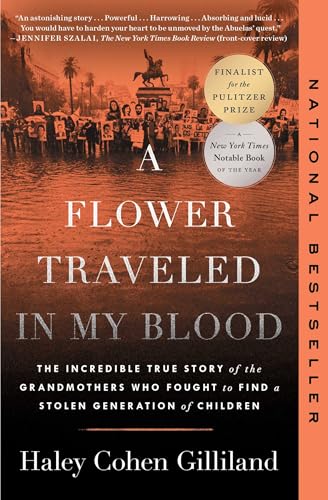
I started a very compelling book yesterday, A Flower Traveled in My Blood: The Incredible True Story of the Grandmothers Who Fought to Find a Stolen Generation of Children by Haley Cohen Gilliland.
As for your question about the regime being communist in name only, I think the gap between theory and implementation is wide (democracy in America being another perfect example). There are many different flavors of communism too, as every country that has tried communism has developed a different path. Chinese communism developed first with the aid of the USSR then in opposition to it. Chinese communism evolved so that there are distinct phases of implementation (even beyond the Five Year Plans). What constitutes communism depends a great deal on location and time period. Unfortunately, I believe that human nature makes perfect implementation impossible. Greed leads inevitably to corruption, and ambition leads to power grabs.
>71 Dilara86: I agree.
I started a very compelling book yesterday, A Flower Traveled in My Blood: The Incredible True Story of the Grandmothers Who Fought to Find a Stolen Generation of Children by Haley Cohen Gilliland.
73rasdhar
>57 mabith: I read Revolusi last year and really enjoyed it. If you're looking for a good audio follow up, the podcast "The Dig" is doing a great deep dive into Dutch colonialism in Indonesia. It's called 'Nusantara'. https://thedigradio.com/podcast/nusantara-ep-1-the-long-arc-of-dutch-colonialism...
>63 japaul22: I had The Notebook on my list last year, but never got around to it! Thanks for the review.
>63 japaul22: I had The Notebook on my list last year, but never got around to it! Thanks for the review.
74chlorine
>72 labfs39: Impressive list! Thanks for the link and your thoughts about communism.
76chlorine
>75 labfs39: This sounds quite interesting.
I'm a bit surprised that she had a hair trasplanted to her leg: have the ethics of that been discussed? Even though it's very minor this seems like surgery and I thought there had to be some sort of reason other than "let's try that for fun" for performing surgery? But maybe I'm reading this wrong. :)
77Jackie_K
>69 chlorine: I mainly read non-fiction, and have had some good reads lately! I just finished Ten Steps to Nanette which was excellent.
78labfs39
>76 chlorine: In the US people get surgery for all sorts of reasons these days. No permission or rational required. Mary Roach had been interviewing and shadowing surgeons and researchers for the book, and rather than sit in on a patient's procedure, in this case, she had a hair from her head moved to her leg. It's an example of donor dominance, the fact that transplanted cells will persist with their original purpose, even when relocated. (Heart cells will continue to beat, even when transferred to a petri dish.) Donor dominance is important in hair transplants because men who transfer hair from their chest, pubes, or legs, are often startled by the difference with their head hair.
She also tried out an iron lung.
She also tried out an iron lung.
79chlorine
>78 labfs39: I had never heard of donor dominance. That's interesting!
80chlorine
>77 Jackie_K: This does seem excellent and now I want to watch the show Nanette!
82chlorine
>81 labfs39: This is incredibly interesting.
My notions of the history of Argentina are terribly wrong. I thought the grandmothers of the plaza de Mayo were Chilean and Peron was a dictator (while a quick research seems to indicate that he was one of the few democratic leaders in a long period).
I have added this book to my wishlist.
My notions of the history of Argentina are terribly wrong. I thought the grandmothers of the plaza de Mayo were Chilean and Peron was a dictator (while a quick research seems to indicate that he was one of the few democratic leaders in a long period).
I have added this book to my wishlist.
83chlorine
I read Pour une pensée systémique (thinking in systems) by Donella Meadows.
This is an accessible book about the science of modelling many pheonomena of the real world (population growth or decline, the economy, heater systems, fishing and fish population, ...)
Meadows explains the different types of laws that play a role in these systems behaviour and how they can have counter-intuitive effects leading for instance to fluctuations in prices or stocks, or the rapid depletion or resources.
She also presents some specific examples that show that changing a system is complicated and that many state measures can have an effect that in the other direction that what is wanted in the long term.
I think I will remember this book and that it will colour the way I think about many things I see in the news (but I just finished it so this remains to be seen :)
This is an accessible book about the science of modelling many pheonomena of the real world (population growth or decline, the economy, heater systems, fishing and fish population, ...)
Meadows explains the different types of laws that play a role in these systems behaviour and how they can have counter-intuitive effects leading for instance to fluctuations in prices or stocks, or the rapid depletion or resources.
She also presents some specific examples that show that changing a system is complicated and that many state measures can have an effect that in the other direction that what is wanted in the long term.
I think I will remember this book and that it will colour the way I think about many things I see in the news (but I just finished it so this remains to be seen :)

