1benitastrnad
Hello fellow readers!
I am the moderator for this group. I have been a member of this group for many years ( I didn't want to go back to check exactly how many it was) and am happy to fill the moderator role for this group. I also moderate a mystery series reading group for the 75'ers as well.
What follows are the instructions for how we are going to use this thread. The thread is open to anybody who wants to join. I hope that those who participated last year will stay on for 2026. I hope that those of us who participate will post a short introductory post about themselves, but this is not mandatory.
We will run a continuous string on the thread until we reach the 250 posts line and then I will establish a new thread that will continue this one. This will enable us to have better linkage between threads when we start a new one. Last year we had two threads, and I suspect that we will have about the same for 2026.
This group was established to encourage reading and discussion of works of nonfiction using a guided topics format. That means that you get to read what you want, but the moderator sets the parameters for the topics. At the end of the year, the group decides what topics they will pursue for the coming year. The moderator then assigns months in which these topics will be read and discussed. The list for 2026 will be in the next post on this thread.
The 2025 group decided on the monthly topics and that list will be posted in the next post along with the explanations of what the boundaries are for the topic. Each person generally will post the title and other information about the book they have chosen for the month at the beginning (or whenever they make the decision about what to read) and when they have finished the book write about their opinions, recommendations, and other comments about the book. Thoughts of this nature generally elicit comments so sometimes there will be discussion about the book. In fact, that is what this thread is, a forum for discussing nonfiction titles. You can attack the title you have chosen to read for whatever reason you as a reader have, but do not attack the people in this discussion group. We want to be critical readers, not critical people.
There is no publication limit for the books chosen by readers. If you want to read a classic published in 1820, go ahead.
If you don't finish a book in the month that topic was to be read, don't feel bad, just let us know when you finished the book, and your thoughts about it, then move on to the next topic. Or skip a topic in order to play catchup.
I will try to make a reminder announcement about the next topic on the last day of the month for the next month. Please don't jump the gun and announce what you are going to be reading for the month until the first day of the month. It will get confusing if you post your selection before the moderator has made the beginning post for the month.
Along with the posting of the topic for the month I will sketch out the parameters for that topic. If there are questions about those parameters bring them forward in the discussion posts so that I can clarify the parameters for you. If you can make a good case for choosing that title, even if it may not appear there is a connection between the book and the topic, bring your good reasons to the discussion screen and make your argument. We are a wide open group so generally almost any type of title is acceptable. Just remember, this is a Nonfiction group, so keep the works read to nonfiction.
I am looking forward to sharing this nonfiction reading year with you.
I am the moderator for this group. I have been a member of this group for many years ( I didn't want to go back to check exactly how many it was) and am happy to fill the moderator role for this group. I also moderate a mystery series reading group for the 75'ers as well.
What follows are the instructions for how we are going to use this thread. The thread is open to anybody who wants to join. I hope that those who participated last year will stay on for 2026. I hope that those of us who participate will post a short introductory post about themselves, but this is not mandatory.
We will run a continuous string on the thread until we reach the 250 posts line and then I will establish a new thread that will continue this one. This will enable us to have better linkage between threads when we start a new one. Last year we had two threads, and I suspect that we will have about the same for 2026.
This group was established to encourage reading and discussion of works of nonfiction using a guided topics format. That means that you get to read what you want, but the moderator sets the parameters for the topics. At the end of the year, the group decides what topics they will pursue for the coming year. The moderator then assigns months in which these topics will be read and discussed. The list for 2026 will be in the next post on this thread.
The 2025 group decided on the monthly topics and that list will be posted in the next post along with the explanations of what the boundaries are for the topic. Each person generally will post the title and other information about the book they have chosen for the month at the beginning (or whenever they make the decision about what to read) and when they have finished the book write about their opinions, recommendations, and other comments about the book. Thoughts of this nature generally elicit comments so sometimes there will be discussion about the book. In fact, that is what this thread is, a forum for discussing nonfiction titles. You can attack the title you have chosen to read for whatever reason you as a reader have, but do not attack the people in this discussion group. We want to be critical readers, not critical people.
There is no publication limit for the books chosen by readers. If you want to read a classic published in 1820, go ahead.
If you don't finish a book in the month that topic was to be read, don't feel bad, just let us know when you finished the book, and your thoughts about it, then move on to the next topic. Or skip a topic in order to play catchup.
I will try to make a reminder announcement about the next topic on the last day of the month for the next month. Please don't jump the gun and announce what you are going to be reading for the month until the first day of the month. It will get confusing if you post your selection before the moderator has made the beginning post for the month.
Along with the posting of the topic for the month I will sketch out the parameters for that topic. If there are questions about those parameters bring them forward in the discussion posts so that I can clarify the parameters for you. If you can make a good case for choosing that title, even if it may not appear there is a connection between the book and the topic, bring your good reasons to the discussion screen and make your argument. We are a wide open group so generally almost any type of title is acceptable. Just remember, this is a Nonfiction group, so keep the works read to nonfiction.
I am looking forward to sharing this nonfiction reading year with you.
2benitastrnad
Here is the list of topics for 2026.
January - Prize Winners - This is a traditional topic for January and would like readers to concentrate on the lesser known prizes that are awarded. I will post a list of prizes that will help you to get started. You can check the next couple of posts on this thread for a list of some of those prizes to see what might interest you.
February - All That Jazz - These should be books about the musical genre of Jazz or things having to do with the Jazz Age. This could include biographies of jazz figures or the music business during the Jazz Age.
March - Off the Beaten Path Religious Sects - books about religions and religious figures that are not in the mainstream. Books about Christian Science, Quakers, Shakers, Jainism, Sikhism, Voodoo, even quasi-religious cults and pseudoreligions such as secular humanism and New Age movements.
April - Internal Matters - The human body. Books about the internal workings of the human body from teeth to toenails. Dieses, pathogens and how they work, and drugs would all fit in.
May - Been there. Bought the t-shirt - travel, tourists, and tourism - the impact on the planet, economies, etc.
June - Who Built That Beautiful Building and Why? - buildings, architects, design, historical value, etc. Biographies, histories of buildings, and even the modern monument controversy. Architecture not natural wonders is the focus with this one.
July - US revolution years from 1760 to 1788 - US revolution. It is the 250th anniversary of the American Revolution. The word for that is semiquincentennial, also known as a sestercentennial, bisesquicentennial, or quarter-millennial anniversary.
August - Tweet, Tweet - books about birds
September - Talk, Talk - Linguistics - the scientific study of language. study of the syntax, semantics, morphology, phonetics, phonology, and pragmatics of human language.
October - Diaspora - A diaspora is a population that is scattered across regions which are separate from its geographic place of origin. The word is used in reference to people who identify with a specific geographic location, but currently reside elsewhere.
November - Epistolography - Epistolary Biographies & Diaries. Collections of edited letters.
December - Bibliography - books as physical and cultural objects and the systematic description of them, as well as the housing of them and the institutions created around them. (such as libraries, archives, etc.)
January - Prize Winners - This is a traditional topic for January and would like readers to concentrate on the lesser known prizes that are awarded. I will post a list of prizes that will help you to get started. You can check the next couple of posts on this thread for a list of some of those prizes to see what might interest you.
February - All That Jazz - These should be books about the musical genre of Jazz or things having to do with the Jazz Age. This could include biographies of jazz figures or the music business during the Jazz Age.
March - Off the Beaten Path Religious Sects - books about religions and religious figures that are not in the mainstream. Books about Christian Science, Quakers, Shakers, Jainism, Sikhism, Voodoo, even quasi-religious cults and pseudoreligions such as secular humanism and New Age movements.
April - Internal Matters - The human body. Books about the internal workings of the human body from teeth to toenails. Dieses, pathogens and how they work, and drugs would all fit in.
May - Been there. Bought the t-shirt - travel, tourists, and tourism - the impact on the planet, economies, etc.
June - Who Built That Beautiful Building and Why? - buildings, architects, design, historical value, etc. Biographies, histories of buildings, and even the modern monument controversy. Architecture not natural wonders is the focus with this one.
July - US revolution years from 1760 to 1788 - US revolution. It is the 250th anniversary of the American Revolution. The word for that is semiquincentennial, also known as a sestercentennial, bisesquicentennial, or quarter-millennial anniversary.
August - Tweet, Tweet - books about birds
September - Talk, Talk - Linguistics - the scientific study of language. study of the syntax, semantics, morphology, phonetics, phonology, and pragmatics of human language.
October - Diaspora - A diaspora is a population that is scattered across regions which are separate from its geographic place of origin. The word is used in reference to people who identify with a specific geographic location, but currently reside elsewhere.
November - Epistolography - Epistolary Biographies & Diaries. Collections of edited letters.
December - Bibliography - books as physical and cultural objects and the systematic description of them, as well as the housing of them and the institutions created around them. (such as libraries, archives, etc.)
3benitastrnad
January - Prize Winners
It has been traditional for this group to start off the year with one of our most popular themes - Prize Winners and nominees. This year we are going to change it up a bit and request that you read a winner of a literary prize from off the beaten track. Any prize, any year. Try not to read the well known prizes like the National Book Award, Pulitzer Prize, or other prizes of that ilk, unless these same titles also won a more off the beaten track award. Just make sure it is a work of nonfiction. While it is true that some of these prizes bring large monetary rewards to authors, many of the prizes come only with congratulations and handshakes. Give some of these prize winning titles a look and see what might be out there hiding in obscurity but be a great read!
Here is a list of some of the many literary prizes given each year and some examples of titles in those prizes to get you started. Web addresses are included in some of these entries so you can go their directly. Most of these entries have Wikipedia pages so just look them up there and the winners will be listed there. You can also find the awards listed here in LT.
Baillie Gifford Prize, formerly Samuel Johnson Prize is an annual British book prize for the best non-fiction writing in the English language.
PEN/John Kenneth Galbraith Award --is awarded by PEN America (formerly PEN American Center) biennially "to a distinguished book of general nonfiction possessing notable literary merit and critical perspective and illuminating important contemporary issues which have been published in the United States during the previous two calendar years. It is intended that the winning book possess the qualities of intellectual rigor, perspicuity of expression, and stylistic elegance conspicuous in the writings of author and economist John Kenneth Galbraith, whose four dozen books and countless other publications continue to provide an important and incisive commentary on the American social, intellectual and political scene.
Wellcome Book Prize -- mixed fiction/nonfiction, so you'll need to pay attention!
The Orwell Prize -- 2017 longlist -- includes some fiction so read the reviews to see if it is fiction or nonfiction.
Andrew Carnegie Medals of Excellence
https://en.wikipedia.org/wiki/Andrew_Carnegie_Medals_for_Excellence_in_Fiction_a....
Edward Stanford Travel Writing Awards
The James Tait Black Memorial Prize
There's a great biography category here.
Los Angeles Times book prizes -- any non-fiction category
Royal Society Trivedi Science Book prize
https://royalsociety.org/grants-schemes-awards/book-prizes/science-book-prize/
Testosterone Rex by Cordelia Fine, A (Very) Short History of Life on Earth by Henry Gee
And there's a biography category for the Costa prize (used to be Whitbread).
https://en.m.wikipedia.org/wiki/Costa_Book_Awards
In the Days of Rain by Rebecca Stott; H is for Hawk by Helen Macdonald; Young Stalin by Simon Sebag Montefiore.
the Wainwright Prize
Books (with a focus on England) about nature, the outdoors, and English-focused travel.
The Seabird's Cry by Adam Nicolson
The J. Anthony Lukas Prize Project
The Nieman School at Harvard and the Columbia Journalism School award two book prizes each year to published works and one to works in progress.
The Frederick Douglass Prize
Awarded to books writing about the themes of slavery, abolition, resistance, etc.
The Phi Beta Kappa Society Awards
Rather academic in nature; includes books like Bloodlands by Timothy Snyder or Short Nights of the Shadow Catcher by Timothy Egan (winners of the Ralph Waldo Emerson Award, one of the categories). Siddhartha Mukherjee won their science award for his book on the gene; there's also an award for literary criticism.
The Hawthornden Prize
The majority of books here are fiction, but occasionally a work of non-fiction creeps through, such as Bruce Chatwin's In Patagonia and Stalingrad by Anthony Beevor.
The Chatauqua Prize
NOTE: The nominees include both fiction and non-fiction, so do your due diligence!! The prize goes to "a book of fiction or literary/narrative nonfiction that provides a richly rewarding reading experience and honors the author for a significant contribution to the literary arts."
(examples, Why Read Moby Dick by Nathaniel Philbrick; In the Garden of Beasts by Erik Larson, Devil in the Grove by Gilbert King, It's What I Do by Lynsey Addorio.)
Hilary Weston Writers Trust Prize for Non-Fiction
Awarded to a top work of non-fiction by a Canadian author -- All Things Consoled by Elizabeth Hay, a memoir, by a great Canadian novelist. Nominees in recent past include Mad Enchantment by Ross King, about Monet and his water lily paintings, Seven Fallen Feathers by Tanya Talaga, an indigenous writer, about racism; Pumpkinflowers by Matti Friedman, A Disappearance in Damascus by Deborah Campbell and a book about the Arctic by novelist Kathleen Winter, Boundless: Tracing Land and Dream in a New Northwest Passage.
The Wolfson History Prize
The Wolfson History Prizes are literary awards given annually in the United Kingdom to promote and encourage standards of excellence in the writing of history for the general public.
https://en.wikipedia.org/wiki/Wolfson_History_Prize
The Financial Times & McKinsey Business Book of the Year
Formerly the Financial Times & Goldman Sachs Business Book of the Year. Titles like Black Swan by Nassim Nicholas Taleb; Lean In by Sheryl Sandberg; McMafia by Misha Glenny, Dragnet Nation by Julia Angwin and More Money Than God by Sebastian Mallaby.
Edna Staeble Award for Creative Non-fiction
The Edna Staebler Award for Creative Non-Fiction is an annual literary award recognizing the previous year's best creative nonfiction book with a "Canadian locale and/or significance" that is a Canadian writer's "first or second published book of any type or genre".
https://en.wikipedia.org/wiki/Edna_Staebler_Award
William Hill Sports Book of the Year
The William Hill Sports Book of the Year is an annual British sports literary award sponsored by bookmaker William Hill.
https://en.wikipedia.org/wiki/William_Hill_Sports_Book_of_the_Year
Cundill History Prize
The Cundill History Prize is an annual Canadian book prize for "the best history writing in English". It was established in 2008 by Peter Cundill and is administered by McGill University. The prize encourages "informed public debate through the wider dissemination of history writing to new audiences around the world" and is awarded to an author whose book, published in the past year, demonstrates "historical scholarship, originality, literary quality and broad appeal". No restrictions are set on the topic of the book or the nationality of the author, and English translations are permitted.
https://en.wikipedia.org/wiki/Cundill_Prize#Recipients
Ondaatje Prize
Be careful with this one it can be fiction or nonfiction
The Royal Society of Literature Ondaatje Prize is an annual literary award given by the Royal Society of Literature. The award is for a work of fiction, non-fiction or poetry that evokes the "spirit of a place", and is written by someone who is a citizen of or who has been resident in the Commonwealth or the Republic of Ireland.
https://en.wikipedia.org/wiki/Ondaatje_Prize
Lincoln Prize
The Gilder Lehrman Lincoln Prize, founded by the late Richard Gilder and Lewis Lehrman in partnership with Gabor Boritt, Director Emeritus of the Civil War Institute at Gettysburg College, is administered by the Gilder Lehrman Institute for American History. It has been awarded annually since 1991 for "the finest scholarly work in English on Abraham Lincoln, the American Civil War soldier, or the American Civil War era.
https://en.wikipedia.org/wiki/Lincoln_Prize
Silver Gavel Awards
The Silver Gavel Award (also known as the ABA Silver Gavel Awards for Media and The Arts) is an annual award the American Bar Association gives to honor outstanding work by those who help improve comprehension of jurisprudence in the United States.
National Outdoor Books Awards
The National Outdoor Book Awards (NOBA) is the outdoor world's largest and most prestigious book award program. It is a non-profit, educational program, sponsored by the National Outdoor Book Awards Foundation, Association of Outdoor Recreation and Education, and Idaho State University.
http://www.noba-web.org/
Rachel Carson Environmental Book Awards
The Society of Environmental Journalists' annual Awards for Reporting on the Environment honor the best environmental journalism in 10 categories, bringing recognition to the stories that are among the most important on the planet.
https://www.sej.org/rachel-carson-environment-book-award-sej-22nd-annual-awards-....
Sigurd Olson Nature Writing Award
The Sigurd F. Olson Nature Writing Awards recognize the best in environmental writing in adult nonfiction
https://www.northland.edu/centers/soei/sonwa
There are many other awards, honors, prizes, and lists out there, with no shortage of good books to read and gain some kind of knowledge. You can rely on your own knowledge or mine the LT resources to find one.
It has been traditional for this group to start off the year with one of our most popular themes - Prize Winners and nominees. This year we are going to change it up a bit and request that you read a winner of a literary prize from off the beaten track. Any prize, any year. Try not to read the well known prizes like the National Book Award, Pulitzer Prize, or other prizes of that ilk, unless these same titles also won a more off the beaten track award. Just make sure it is a work of nonfiction. While it is true that some of these prizes bring large monetary rewards to authors, many of the prizes come only with congratulations and handshakes. Give some of these prize winning titles a look and see what might be out there hiding in obscurity but be a great read!
Here is a list of some of the many literary prizes given each year and some examples of titles in those prizes to get you started. Web addresses are included in some of these entries so you can go their directly. Most of these entries have Wikipedia pages so just look them up there and the winners will be listed there. You can also find the awards listed here in LT.
Baillie Gifford Prize, formerly Samuel Johnson Prize is an annual British book prize for the best non-fiction writing in the English language.
PEN/John Kenneth Galbraith Award --is awarded by PEN America (formerly PEN American Center) biennially "to a distinguished book of general nonfiction possessing notable literary merit and critical perspective and illuminating important contemporary issues which have been published in the United States during the previous two calendar years. It is intended that the winning book possess the qualities of intellectual rigor, perspicuity of expression, and stylistic elegance conspicuous in the writings of author and economist John Kenneth Galbraith, whose four dozen books and countless other publications continue to provide an important and incisive commentary on the American social, intellectual and political scene.
Wellcome Book Prize -- mixed fiction/nonfiction, so you'll need to pay attention!
The Orwell Prize -- 2017 longlist -- includes some fiction so read the reviews to see if it is fiction or nonfiction.
Andrew Carnegie Medals of Excellence
https://en.wikipedia.org/wiki/Andrew_Carnegie_Medals_for_Excellence_in_Fiction_a....
Edward Stanford Travel Writing Awards
The James Tait Black Memorial Prize
There's a great biography category here.
Los Angeles Times book prizes -- any non-fiction category
Royal Society Trivedi Science Book prize
https://royalsociety.org/grants-schemes-awards/book-prizes/science-book-prize/
Testosterone Rex by Cordelia Fine, A (Very) Short History of Life on Earth by Henry Gee
And there's a biography category for the Costa prize (used to be Whitbread).
https://en.m.wikipedia.org/wiki/Costa_Book_Awards
In the Days of Rain by Rebecca Stott; H is for Hawk by Helen Macdonald; Young Stalin by Simon Sebag Montefiore.
the Wainwright Prize
Books (with a focus on England) about nature, the outdoors, and English-focused travel.
The Seabird's Cry by Adam Nicolson
The J. Anthony Lukas Prize Project
The Nieman School at Harvard and the Columbia Journalism School award two book prizes each year to published works and one to works in progress.
The Frederick Douglass Prize
Awarded to books writing about the themes of slavery, abolition, resistance, etc.
The Phi Beta Kappa Society Awards
Rather academic in nature; includes books like Bloodlands by Timothy Snyder or Short Nights of the Shadow Catcher by Timothy Egan (winners of the Ralph Waldo Emerson Award, one of the categories). Siddhartha Mukherjee won their science award for his book on the gene; there's also an award for literary criticism.
The Hawthornden Prize
The majority of books here are fiction, but occasionally a work of non-fiction creeps through, such as Bruce Chatwin's In Patagonia and Stalingrad by Anthony Beevor.
The Chatauqua Prize
NOTE: The nominees include both fiction and non-fiction, so do your due diligence!! The prize goes to "a book of fiction or literary/narrative nonfiction that provides a richly rewarding reading experience and honors the author for a significant contribution to the literary arts."
(examples, Why Read Moby Dick by Nathaniel Philbrick; In the Garden of Beasts by Erik Larson, Devil in the Grove by Gilbert King, It's What I Do by Lynsey Addorio.)
Hilary Weston Writers Trust Prize for Non-Fiction
Awarded to a top work of non-fiction by a Canadian author -- All Things Consoled by Elizabeth Hay, a memoir, by a great Canadian novelist. Nominees in recent past include Mad Enchantment by Ross King, about Monet and his water lily paintings, Seven Fallen Feathers by Tanya Talaga, an indigenous writer, about racism; Pumpkinflowers by Matti Friedman, A Disappearance in Damascus by Deborah Campbell and a book about the Arctic by novelist Kathleen Winter, Boundless: Tracing Land and Dream in a New Northwest Passage.
The Wolfson History Prize
The Wolfson History Prizes are literary awards given annually in the United Kingdom to promote and encourage standards of excellence in the writing of history for the general public.
https://en.wikipedia.org/wiki/Wolfson_History_Prize
The Financial Times & McKinsey Business Book of the Year
Formerly the Financial Times & Goldman Sachs Business Book of the Year. Titles like Black Swan by Nassim Nicholas Taleb; Lean In by Sheryl Sandberg; McMafia by Misha Glenny, Dragnet Nation by Julia Angwin and More Money Than God by Sebastian Mallaby.
Edna Staeble Award for Creative Non-fiction
The Edna Staebler Award for Creative Non-Fiction is an annual literary award recognizing the previous year's best creative nonfiction book with a "Canadian locale and/or significance" that is a Canadian writer's "first or second published book of any type or genre".
https://en.wikipedia.org/wiki/Edna_Staebler_Award
William Hill Sports Book of the Year
The William Hill Sports Book of the Year is an annual British sports literary award sponsored by bookmaker William Hill.
https://en.wikipedia.org/wiki/William_Hill_Sports_Book_of_the_Year
Cundill History Prize
The Cundill History Prize is an annual Canadian book prize for "the best history writing in English". It was established in 2008 by Peter Cundill and is administered by McGill University. The prize encourages "informed public debate through the wider dissemination of history writing to new audiences around the world" and is awarded to an author whose book, published in the past year, demonstrates "historical scholarship, originality, literary quality and broad appeal". No restrictions are set on the topic of the book or the nationality of the author, and English translations are permitted.
https://en.wikipedia.org/wiki/Cundill_Prize#Recipients
Ondaatje Prize
Be careful with this one it can be fiction or nonfiction
The Royal Society of Literature Ondaatje Prize is an annual literary award given by the Royal Society of Literature. The award is for a work of fiction, non-fiction or poetry that evokes the "spirit of a place", and is written by someone who is a citizen of or who has been resident in the Commonwealth or the Republic of Ireland.
https://en.wikipedia.org/wiki/Ondaatje_Prize
Lincoln Prize
The Gilder Lehrman Lincoln Prize, founded by the late Richard Gilder and Lewis Lehrman in partnership with Gabor Boritt, Director Emeritus of the Civil War Institute at Gettysburg College, is administered by the Gilder Lehrman Institute for American History. It has been awarded annually since 1991 for "the finest scholarly work in English on Abraham Lincoln, the American Civil War soldier, or the American Civil War era.
https://en.wikipedia.org/wiki/Lincoln_Prize
Silver Gavel Awards
The Silver Gavel Award (also known as the ABA Silver Gavel Awards for Media and The Arts) is an annual award the American Bar Association gives to honor outstanding work by those who help improve comprehension of jurisprudence in the United States.
National Outdoor Books Awards
The National Outdoor Book Awards (NOBA) is the outdoor world's largest and most prestigious book award program. It is a non-profit, educational program, sponsored by the National Outdoor Book Awards Foundation, Association of Outdoor Recreation and Education, and Idaho State University.
http://www.noba-web.org/
Rachel Carson Environmental Book Awards
The Society of Environmental Journalists' annual Awards for Reporting on the Environment honor the best environmental journalism in 10 categories, bringing recognition to the stories that are among the most important on the planet.
https://www.sej.org/rachel-carson-environment-book-award-sej-22nd-annual-awards-....
Sigurd Olson Nature Writing Award
The Sigurd F. Olson Nature Writing Awards recognize the best in environmental writing in adult nonfiction
https://www.northland.edu/centers/soei/sonwa
There are many other awards, honors, prizes, and lists out there, with no shortage of good books to read and gain some kind of knowledge. You can rely on your own knowledge or mine the LT resources to find one.
4benitastrnad
I have chosen to read Man in the White Sharkskin Suit by Lucette Lagnado as my selection for January 2026. This book won the Sami Rohr Prize for Jewish Literature back in 2008. I have it and the sequel both on my shelves and hope to get both read this month. The sequel is Arrogant Years: One Girl's Search For Her Lost Youth, from Cairo to Brooklyn. The sequel did not win any prizes, so only the first book will count for this month.
Man in the White Sharkskin Suit is a memoir of a Jewish family who lived in Cairo. The memoir covers the years from 1939 to roughly 1968. I have read several books about the Sephardic and Mizrahi Jews in the last several years and have enjoyed learning about this group of people. It is easy to forget that North Africa and other parts of the Ottoman Empire were hospitable places for Jews to live for centuries. Books like this one are reminders of them and the Jewish culture that survived there.
Man in the White Sharkskin Suit is a memoir of a Jewish family who lived in Cairo. The memoir covers the years from 1939 to roughly 1968. I have read several books about the Sephardic and Mizrahi Jews in the last several years and have enjoyed learning about this group of people. It is easy to forget that North Africa and other parts of the Ottoman Empire were hospitable places for Jews to live for centuries. Books like this one are reminders of them and the Jewish culture that survived there.
5Tess_W
>4 benitastrnad: Definitely taking a BB for Man in the White Sharkskin Suit. I'm reading Stealing Little Moon: The Legacy of the American Indian Boarding Schools by Dan SaSuWeh Jones. I'm about half way through and have realized that the author is a very angry man and that no child (this is written for ages 8-12) of this age group would willingly read or be able to understand this book. The book is 280 pages in length and I'm getting bored with all the treaties and government department personnel appointments from the 1870's. I'm currently in the 1940's and it is reading like a litany of isolated facts.
It's won many award,amongst them:
BCCB Blue Ribbon Book (Nonfiction – 2024)
Orbis Pictus Award (Winner – 2025)
Carter G. Woodson Book Award (Winner – Secondary Level – 2025)
It's won many award,amongst them:
BCCB Blue Ribbon Book (Nonfiction – 2024)
Orbis Pictus Award (Winner – 2025)
Carter G. Woodson Book Award (Winner – Secondary Level – 2025)
6m.belljackson
Will Barry Lopez' ARCTIC DREAMS qualify?
It won the National Book Award for Nonfiction, the Christopher Medal,
a Pacific Northwest Booksellers Association Award, and an
Oregon Book award for literary nonfiction.
It won the National Book Award for Nonfiction, the Christopher Medal,
a Pacific Northwest Booksellers Association Award, and an
Oregon Book award for literary nonfiction.
7alcottacre
>4 benitastrnad: >5 Tess_W: I am taking a BB for that one too. I will have to see if I can locate a copy.
I am hoping to read a couple of books for this month's challenge, The Information by James Gleick which either won or was nominated for a raft of awards including:
Los Angeles Times Book Prize (Finalist – Science & Technology – 2011)
National Book Critics Circle Award (Finalist – Nonfiction – 2011)
Royal Society Trivedi Science Book Prize (Winner – General – 2012)
Salon Book Award (Nonfiction – 2011)
Andrew Carnegie Medals for Excellence in Fiction and Nonfiction (Finalist/Shortlist – Nonfiction – 2012)
PEN/E. O. Wilson Literary Science Writing Award (Winner – 2012)
SB&F's Best Books (Junior High and Young Adult Books – 2011)
PEN Hessell-Tiltman Prize (Winner – 2012)
The other book I have on tap to read is Birth, Sex, and Abuse: Women’s Voices Under Nazi Rule by Beverley Chalmers which either won or was nominated for the following awards, most of which I had never even heard of, lol:
National Jewish Book Award (Winner – Women's Studies – 2015)
Eric Hoffer Book Award (Winner – Legacy Nonfiction – 2016)
Book Excellence Award (Finalist – Non-Fiction – 2017)
Vine Awards for Canadian Jewish Literature (Winner – History – 2016)
I am hoping to read a couple of books for this month's challenge, The Information by James Gleick which either won or was nominated for a raft of awards including:
Los Angeles Times Book Prize (Finalist – Science & Technology – 2011)
National Book Critics Circle Award (Finalist – Nonfiction – 2011)
Royal Society Trivedi Science Book Prize (Winner – General – 2012)
Salon Book Award (Nonfiction – 2011)
Andrew Carnegie Medals for Excellence in Fiction and Nonfiction (Finalist/Shortlist – Nonfiction – 2012)
PEN/E. O. Wilson Literary Science Writing Award (Winner – 2012)
SB&F's Best Books (Junior High and Young Adult Books – 2011)
PEN Hessell-Tiltman Prize (Winner – 2012)
The other book I have on tap to read is Birth, Sex, and Abuse: Women’s Voices Under Nazi Rule by Beverley Chalmers which either won or was nominated for the following awards, most of which I had never even heard of, lol:
National Jewish Book Award (Winner – Women's Studies – 2015)
Eric Hoffer Book Award (Winner – Legacy Nonfiction – 2016)
Book Excellence Award (Finalist – Non-Fiction – 2017)
Vine Awards for Canadian Jewish Literature (Winner – History – 2016)
8benitastrnad
>5 Tess_W:
That is an interesting observation. The Center for Children's Books Bulletin is a highly respected review source in Libraryland and one I consulted frequently. The Woodson Award is the same. I am curious enough that I add the title to my TBR list. It will be interesting to see what you think when you finish it.
That is an interesting observation. The Center for Children's Books Bulletin is a highly respected review source in Libraryland and one I consulted frequently. The Woodson Award is the same. I am curious enough that I add the title to my TBR list. It will be interesting to see what you think when you finish it.
9benitastrnad
>6 m.belljackson:
yes. It is nonfiction and a multiple award winner, so read on!
yes. It is nonfiction and a multiple award winner, so read on!
10benitastrnad
>7 alcottacre:
The Information is a title I have waiting on the shelves but it has not called to me - yet. Perhaps it will soon. Looking forward to see what you think of it.
The Information is a title I have waiting on the shelves but it has not called to me - yet. Perhaps it will soon. Looking forward to see what you think of it.
11alcottacre
>10 benitastrnad: I am hoping it turns out to be a good read given the number of awards it either won or was nominated for. I am not sure who put it on my radar. I am starting it tonight and will keep you posted, Benita.
12benitastrnad
>11 alcottacre:
It made a big splash when it was published, so you probably heard about it then, but like me, just put off reading it.
It made a big splash when it was published, so you probably heard about it then, but like me, just put off reading it.
13alcottacre
>12 benitastrnad: That is always a distinct possibility!
14mdoris
Thank you Benita for setting this thread up. There are always so many books of interest over here!
15Tess_W
I have completed my reading of Stealing Little Moon: The Legacy of the American Indian Boarding Schools by Dan SaSuWeh Jones. This nonfiction work addresses the late nineteenth- and early twentieth-century practice—sometimes forcible—of removing Native American children from their homes and placing them in government boarding schools, ostensibly for education but in reality, for “Americanization.” There is no question that this was an abominable and unjust practice.
However, I found that the author does not effectively demonstrate how or why this system was as horrific as it undoubtedly was. With a few substitutions of names and terms, the book could just as easily have been about women forcibly committed to lunatic asylums, children placed in orphanages, or African American boys sent to “reform” homes in the Jim Crow South. This book does not evoke a sense of time or place.
The author further weakens his argument by including the story of his sister, who reportedly loved the boarding school in question and went on to remain there as a teacher for years after her graduation. The author himself also worked at this same institution for two years as an adult.
I also believe the intended audience (ages 8-12) is misjudged. I teach students aged fifteen to eighteen and serve on a reading task force that coordinates ELA selections with History class topics for students aged 12-18. Based on that experience, this book would miss the mark for both middle-grade readers and older students.
Finally, the dominant tone of the book is one of anger and resentment. While such emotions are entirely understandable given the subject matter, the persistent tone may alienate some readers. Additionally, the frequent naming of government officials across multiple presidential administrations seems misplaced for a book aimed at children. Having just finished the book, I cannot recall the names of any of the individuals mentioned or clearly articulate what specific actions they took or failed to take.
I recognize that I may be in the minority in my assessment, as Stealing Little Moon has received numerous awards.
However, I found that the author does not effectively demonstrate how or why this system was as horrific as it undoubtedly was. With a few substitutions of names and terms, the book could just as easily have been about women forcibly committed to lunatic asylums, children placed in orphanages, or African American boys sent to “reform” homes in the Jim Crow South. This book does not evoke a sense of time or place.
The author further weakens his argument by including the story of his sister, who reportedly loved the boarding school in question and went on to remain there as a teacher for years after her graduation. The author himself also worked at this same institution for two years as an adult.
I also believe the intended audience (ages 8-12) is misjudged. I teach students aged fifteen to eighteen and serve on a reading task force that coordinates ELA selections with History class topics for students aged 12-18. Based on that experience, this book would miss the mark for both middle-grade readers and older students.
Finally, the dominant tone of the book is one of anger and resentment. While such emotions are entirely understandable given the subject matter, the persistent tone may alienate some readers. Additionally, the frequent naming of government officials across multiple presidential administrations seems misplaced for a book aimed at children. Having just finished the book, I cannot recall the names of any of the individuals mentioned or clearly articulate what specific actions they took or failed to take.
I recognize that I may be in the minority in my assessment, as Stealing Little Moon has received numerous awards.
16m.belljackson
>9 benitastrnad: Great - I also had The Sound of a Wild Snail Eating
and Why Read Moby Dick? for back-ups.
and Why Read Moby Dick? for back-ups.
17benitastrnad
>16 m.belljackson:
Sound of a Wild Snail Eating was a very good memoir. I would highly recommend it as well.
Sound of a Wild Snail Eating was a very good memoir. I would highly recommend it as well.
18markon

For all you nonfiction readers, there is a group read of America, América: A New History of the New World starting later this month. I anticipate it will take us until the end of March/early April to read this book, and anyone who wants to join in is welcome to drop a post at the thread here.
From publisher's blurb: A finalist for the National Book Critics Circle Award, 2025 Kirkus Prize, 2025 Cundill History Prize, and 2026 Andrew Carnegie Medal for Excellence in Nonfiction • Named a Best Book of the Year by The New Yorker,The New Republic, and Mother Jones
19zuzaer
Hello, you got me interested about the challenge even though I probably won't be present each month. A quick question about January theme: is "off the beaten track" universal (as in, in the reader's point of view) or North America-central? Obviously, the majority of people here is from that region, but if I were to read something written in my own language (as opposed to translated from another one) or just look at Europe in general, can I look at prizes that are more well-known in their language group or should I look up more niche ones, too? (Again, I've never thought of, say, German literary prizes, so I'm not sure what is really niche there.)
20benitastrnad
>19 zuzaer:
The answer to you questions is "yes." There are German literary prizes, but I am not sure that they are listed in LT. I will check on that. I know that Wikipedia has an entry for German Literary Awards. That page does not break them out into fiction, nonfiction, children's, etc. but the list seems to be extensive.
For us here in the English speaking world, any German literary prizes are going to be off the beaten track, so I would say read what you want in your own language. Post the title and author on this thread, tell us what prize it won, or was short-listed for, and give us your review of the book after you have finished it. (If you don't finish reading it - what we call DNF - did not finish) tell us why. Your review does not have to be favorable. Give us your honest opinion. Please give us the title and the author in English so that we can try to track it down if it interests us.
This group started as a way to get LT'ers to read more nonfiction. For this month it doesn't matter if the book is a biography, memoir, history, political, travel, or self-help. It just needs to be a prize winner, or short-listed for a prize. The reason the topic is narrowed down to "off the beaten track" prizes, is that we wanted to be able to tell other LT'ers about books that are good, but might not have had as much publicity as they deserve.
If you have more questions don't hesitate to ask them. Somebody here will be sure to give you an answer.
The answer to you questions is "yes." There are German literary prizes, but I am not sure that they are listed in LT. I will check on that. I know that Wikipedia has an entry for German Literary Awards. That page does not break them out into fiction, nonfiction, children's, etc. but the list seems to be extensive.
For us here in the English speaking world, any German literary prizes are going to be off the beaten track, so I would say read what you want in your own language. Post the title and author on this thread, tell us what prize it won, or was short-listed for, and give us your review of the book after you have finished it. (If you don't finish reading it - what we call DNF - did not finish) tell us why. Your review does not have to be favorable. Give us your honest opinion. Please give us the title and the author in English so that we can try to track it down if it interests us.
This group started as a way to get LT'ers to read more nonfiction. For this month it doesn't matter if the book is a biography, memoir, history, political, travel, or self-help. It just needs to be a prize winner, or short-listed for a prize. The reason the topic is narrowed down to "off the beaten track" prizes, is that we wanted to be able to tell other LT'ers about books that are good, but might not have had as much publicity as they deserve.
If you have more questions don't hesitate to ask them. Somebody here will be sure to give you an answer.
21Chatterbox
So glad to see people read Lucette's memoir! I knew her as a colleague for many years, and was blown away to learn more about her personal/family history when the first book came out.
I'm going to try to read Daughters of the Bamboo Grove by Barbara Demick and Lone Wolf by Adam Weymouth, both on the list last year for the Baillie Gifford, which always is a great source of reading ideas for me. I'm also going to be reading the new book by Richard Holmes about the young Tennyson this year, but probably not this month.
Also on my TBR, maybe for this month, On the Shadow Tracks by Clare Hammond, nominated for the Edward Stanford Travel Writing Award, about Myanmar, and Is a River Alive? by Robert Macfarlane, a nominee for the Wainwright. Also for the latter, a shout out to Raising Hare by Chloe Dalton, which I just finished yesterday and loved as an antidote to those books that anthropomorphize animals. At the same time, Dalton captures the experience of bonding with an animal and with the wild environment more generally.
I'm going to try to read Daughters of the Bamboo Grove by Barbara Demick and Lone Wolf by Adam Weymouth, both on the list last year for the Baillie Gifford, which always is a great source of reading ideas for me. I'm also going to be reading the new book by Richard Holmes about the young Tennyson this year, but probably not this month.
Also on my TBR, maybe for this month, On the Shadow Tracks by Clare Hammond, nominated for the Edward Stanford Travel Writing Award, about Myanmar, and Is a River Alive? by Robert Macfarlane, a nominee for the Wainwright. Also for the latter, a shout out to Raising Hare by Chloe Dalton, which I just finished yesterday and loved as an antidote to those books that anthropomorphize animals. At the same time, Dalton captures the experience of bonding with an animal and with the wild environment more generally.
22zuzaer
>20 benitastrnad: Thank you, I'll see what I can find in the last few years of Polish literary prizes that appeals to me and has been translated into English. Maybe I'll find something completely new for me, too.
23alcottacre
>21 Chatterbox: I very much enjoyed Raising Hare too, Suzanne. Glad to see that the book has another fan.
Thanks for the mention of the Baillie Gifford award. I am going to have to check it out.
Thanks for the mention of the Baillie Gifford award. I am going to have to check it out.
24m.belljackson
While checking to see if ARCTIC DREAMS was listed with The National Outdoor Book Awards,
it noted that awards started in 1997, so only books published since then would qualify.
it noted that awards started in 1997, so only books published since then would qualify.
25benitastrnad
>24 m.belljackson:
It won the Pacific Northwest Booksellers Association Award in 1987. That award certainly qualifies as an "Off the Beaten Track" award, so if it is catching your fancy, go ahead and read it. Besides, it was a National Book Award Winner and, while it may not be off the beaten track, it is still an award winner. So if it is singing to you, read it. It will count.
It won the Pacific Northwest Booksellers Association Award in 1987. That award certainly qualifies as an "Off the Beaten Track" award, so if it is catching your fancy, go ahead and read it. Besides, it was a National Book Award Winner and, while it may not be off the beaten track, it is still an award winner. So if it is singing to you, read it. It will count.
26zuzaer
The Angelus Award, or Angelus Central European Literature Award, is an annual award given for the best prose book published in the previous year written in or translated into the Polish language by an author originating from Central Europe whose works "undertake themes most relevant to the present day, encourage reflection and deepen the knowledge of the world of other cultures." Automatically, the translator of the chosen work is awarded the translator's award (or, if it has been written in Polish, the jury chooses one translator from the shortlist).
The award has been established by city of Wrocław in Lower Silesia region (fun fact: there's also a Silesius Award and both awards' names come from Silesius Angelus OFM (c. 1624 – 1677)) and comes with a statuette as well as a cash prize of PLN 150,000 (€35,000).
Most of the winning books were fiction, with a notable exception of 2011's The Unwomanly Face of War by Svetlana Alexievich (who got the Nobel prize in 2015). Thus, I decided to look at the shortlists and found Border: A Journey to the Edge of Europe by Kapka Kassabova, shortlisted in 2020, in which the author explores her homeland and the border of Bulgaria with Greece and Turkey. I know next to nothing about this part of the Southern-Eastern Europe, so I expect a journey through history and nationality, definitely with a map printed and put next to the book.
According to the Polish publisher, the book has been shortlisted for: Baillie Gifford Prize, Gordon Burn Prize, National Book Critics Circle Award, Ondaatje Prize, and Duff Cooper Prize, as well as won the Prix Nicolas Bouvier, Highland Book Prize, The Stanford-Dolman Travel Book of the Year Award, The Saltire Scottish Book of the ear, and The Nayef Al-Rodhan Prize.
As far as I can tell, this is the original cover (and then the Polish edition's that I will be reading):


The award has been established by city of Wrocław in Lower Silesia region (fun fact: there's also a Silesius Award and both awards' names come from Silesius Angelus OFM (c. 1624 – 1677)) and comes with a statuette as well as a cash prize of PLN 150,000 (€35,000).
Most of the winning books were fiction, with a notable exception of 2011's The Unwomanly Face of War by Svetlana Alexievich (who got the Nobel prize in 2015). Thus, I decided to look at the shortlists and found Border: A Journey to the Edge of Europe by Kapka Kassabova, shortlisted in 2020, in which the author explores her homeland and the border of Bulgaria with Greece and Turkey. I know next to nothing about this part of the Southern-Eastern Europe, so I expect a journey through history and nationality, definitely with a map printed and put next to the book.
According to the Polish publisher, the book has been shortlisted for: Baillie Gifford Prize, Gordon Burn Prize, National Book Critics Circle Award, Ondaatje Prize, and Duff Cooper Prize, as well as won the Prix Nicolas Bouvier, Highland Book Prize, The Stanford-Dolman Travel Book of the Year Award, The Saltire Scottish Book of the ear, and The Nayef Al-Rodhan Prize.
As far as I can tell, this is the original cover (and then the Polish edition's that I will be reading):


27Familyhistorian
I found one. The Haunting of Alma Fielding: A True Ghost Story was shortlisted for the 2020 Baillie Gifford prize.
28Mary_Mignano
>3 benitastrnad: Wow! Thanks for all your hard work!
29Dejah_Thoris
I've read This Land Is Their Land: The Wampanoag Indians, Plymouth Colony, and the Troubled History of Thanksgiving by David J. Silverman, which was a finalist for the New England Book Award in 2020.
Here's wht I posted on my thread:
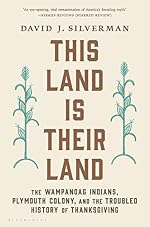
This Land Is Their Land: The Wampanoag Indians, Plymouth Colony, and the Troubled History of Thanksgiving by David J. Silverman ⭐⭐⭐⭐
Rather than an extended treatise on the U.S.'s problematic celebration of Thanksgiving, This Land Is Their Land is more a history of the Wampanoag people's interactions with Europeans and colonists from around 1600 through the early 1700s - particularly with Plymouth. The flawed 'traditional' idea of Thanksgiving bookends the work, which in less detail, brings the history of the Wampanoag to within the last decade. Heavily cited and well written, I confess I occasionally lost interest, although it's difficult to say if the fault lies with the writing or me, because this was yet another book whose subject matter was more disturbing than I'm really ready to read. The Pilgrims, and Puritans, and pretty much all the Europeans were horrible to the Native Americans, which is in no way a shock. The details, though - I found the details distressing, even though I've read of situations just as vile, perhaps more so.
Recommended.
Here's wht I posted on my thread:
This Land Is Their Land: The Wampanoag Indians, Plymouth Colony, and the Troubled History of Thanksgiving by David J. Silverman ⭐⭐⭐⭐
Rather than an extended treatise on the U.S.'s problematic celebration of Thanksgiving, This Land Is Their Land is more a history of the Wampanoag people's interactions with Europeans and colonists from around 1600 through the early 1700s - particularly with Plymouth. The flawed 'traditional' idea of Thanksgiving bookends the work, which in less detail, brings the history of the Wampanoag to within the last decade. Heavily cited and well written, I confess I occasionally lost interest, although it's difficult to say if the fault lies with the writing or me, because this was yet another book whose subject matter was more disturbing than I'm really ready to read. The Pilgrims, and Puritans, and pretty much all the Europeans were horrible to the Native Americans, which is in no way a shock. The details, though - I found the details distressing, even though I've read of situations just as vile, perhaps more so.
Recommended.
30atozgrl
>29 Dejah_Thoris: I've got that one in the black hole, waiting for me to get to it. I'm glad to see you recommend it, even though it was unsurprisingly distressing.
31alcottacre
I just finished The Information: A History, A Theory, A Flood by James Gleick. I enjoyed this read because not only does Gleick make the book, which requires a time investment, accessible and readable for the general reader. I can see why it won numerous awards and was on "best of" lists the year it was published.
32m.belljackson
Within ARCTIC DREAMS, Barry Lopez creates an entrancing tale of the life of the Musk Ox.
Though we part ways on hunting, his ongoing beautiful words and wisdom are truly welcome.
Though we part ways on hunting, his ongoing beautiful words and wisdom are truly welcome.
33benitastrnad
I have both of these books (#31 and #32) in my TBR list. I will have to move them up on the TBR list and get to them sooner. Thanks for the report on them.
34weird_O
Having now finished reading Growing Up, Russell Baker's prize autobiography, I've plunged into The Sixth Extinction by Elizabeth Kolbert. Several fellow readers here have recommended it. I have a good start in Lincoln at Gettysburg, but I'm keeping it warm on a back burner for a few days.
35benitastrnad
I finished reading Man in the White Sharkskin Suit by Lucette Lagnado and started the second of her two memoirs Arrogant Years. The titles of both books are interesting. The first comes from the type of flashy suit that the author's father wore on his daily rounds as a "businessman" in Cairo, as well as for his nightly appointments with the glitterati set in that same city. The second title comes from a quote from F. Scott Fitzgerald. The first memoir covers the years when the author was a child and a teen. There is an epilogue written about her first return trip to Cairo in which she returns to the apartment house in which she lived until she was 6. The second covers her teenage years growing up in a conservative Jewish household in New York City.
I hesitate to state fully my assessment of these books, because I don't want to influence potential readers on this thread who have expressed interest in reading the books. For that reason, my review of Man in the White Sharkskin Suit might be a little sketchy.
I have had these books on my shelves for a long time. (since 2014) I wanted to read them because there is little written about the Sephardic Jews. These are Jews who settled in Muslim lands and primarily came from Spain and Portugal after the expulsions from those countries in the early 1500s. I hoped to get more information about this branch of the Jews family. In that regard this book did not disappoint. It was full of information about the lifestyle of an upper-class Cairene family in the 20th century. The family immigrated from Aleppo Syria during WWI and came to Cairo with money. The description of life in Cairo included religious practices as told from a child's and a feminine point-of-view.
It is also clear that this memoir is based on memories of a child who worshipped and adored her father. She did not see his faults. The major fault was that he was a spoiled rich upper-class man of privilege, but it is never clear how he maintained that wealth or what he really did for a living. My suspicion is that he was living off of generational wealth, but that is not clear either.
The story of the family is very interesting. There was a sizable Jew population in Egypt, and it was not until the Suez Crisis of 1956 that the Egyptian government began to make laws restricting Jewish activity. The family waited as long as possible to immigrate and left Egypt in 1963. They spent 1 year in Paris waiting for the immigration papers so that they could come to the US. It is not clear why they decided on the US rather than on immigration to Israel.
As you can see from this review that there are a great many holes in the family story. This is accountable to the fact that the author was only 6 and 7 years old when all of these decisions were made and therefore, unlikely to have been a part of the decision making. In fact, the age of the author accounts for many of the holes in this memoir. For people wanting a more accurate picture of life in an Egyptian Jewish enclave I would recommend Andre Acimen's book Out of Egypt: A Memoir.
I hesitate to state fully my assessment of these books, because I don't want to influence potential readers on this thread who have expressed interest in reading the books. For that reason, my review of Man in the White Sharkskin Suit might be a little sketchy.
I have had these books on my shelves for a long time. (since 2014) I wanted to read them because there is little written about the Sephardic Jews. These are Jews who settled in Muslim lands and primarily came from Spain and Portugal after the expulsions from those countries in the early 1500s. I hoped to get more information about this branch of the Jews family. In that regard this book did not disappoint. It was full of information about the lifestyle of an upper-class Cairene family in the 20th century. The family immigrated from Aleppo Syria during WWI and came to Cairo with money. The description of life in Cairo included religious practices as told from a child's and a feminine point-of-view.
It is also clear that this memoir is based on memories of a child who worshipped and adored her father. She did not see his faults. The major fault was that he was a spoiled rich upper-class man of privilege, but it is never clear how he maintained that wealth or what he really did for a living. My suspicion is that he was living off of generational wealth, but that is not clear either.
The story of the family is very interesting. There was a sizable Jew population in Egypt, and it was not until the Suez Crisis of 1956 that the Egyptian government began to make laws restricting Jewish activity. The family waited as long as possible to immigrate and left Egypt in 1963. They spent 1 year in Paris waiting for the immigration papers so that they could come to the US. It is not clear why they decided on the US rather than on immigration to Israel.
As you can see from this review that there are a great many holes in the family story. This is accountable to the fact that the author was only 6 and 7 years old when all of these decisions were made and therefore, unlikely to have been a part of the decision making. In fact, the age of the author accounts for many of the holes in this memoir. For people wanting a more accurate picture of life in an Egyptian Jewish enclave I would recommend Andre Acimen's book Out of Egypt: A Memoir.
36alcottacre
>35 benitastrnad: I already own Acimen's book - I just need to get it read. Thank you for the reminder, Benita!
37Tess_W
I read The Trial of Socrates by I.F. Stone Stone's thesis is that the charges of impiety and corrupting the youth against Socrates was just a contrived charge to get rid of a man that was always in their face. Stone posits that the real reason Socrates was charged is that there was a fear that Socrates encouraged civic disloyalty by questioning the status quo. Athens had just been defeated in the Peloponnesian War and was suspicious of any anti-democratic activity. The author emphasizes Socrates’ association with oligarchic figures such as Critias and Alcibiades (Thirty Tyrants) and his open contempt for democratic decision-making. According to the author, it was a strategic move that the accusers called for the banishment of Socrates, for they knew that would not be acceptable to him, that he would opt for death. By his death, Socrates became one of the most famous martyrs for free speech. Had he lived, he might have become just another old man wandering the streets talking to himself. This book made the New York Times Best-Seller List and the 501 Books YMR List. I may have read this book before—the arguments feel familiar—but if so, it would have been twenty-five to thirty years ago.
38alcottacre
I finished Birth, Sex and Abuse: Women’s Voices Under Nazi Rule by Beverley Chalmers tonight. This was an emotionally hard read. I was not sad to have read it, but the details of what these women went through are just hard to stomach at points. I had to put the book down periodically. Well worth the read, I gave it 5 stars.
39Tess_W
>38 alcottacre: She also writes one about Child Sex Abuse in the Holocaust. I could not finish it because it made me sick to my stomach. If I can this book at a good price, I will try to pick it up. Seems very expensive, $25 for a used copy. No copies through Libby.
40PaulCranswick
I read Question 7 by Australian Author Richard Flanagan. He won the Baillie Gifford for this book. He is the only author who has won the UK's leading fiction and non-fiction prizes. He won the Booker earlier for The Narrow Road to the Deep North
41weird_O
I am sequestered at Son the Elder's home. I arrived here Saturday evening with two non-fiction books I want to complete by January 31 (not that I expect to be here until the 31st). I am close to completion of Lincoln at Gettysburg. I'm into the appendices thereof. The second nf prize-winner is The Sixth Extinction, which I've started.
44atozgrl
I read What an owl knows : the new science of the world's most enigmatic birds by Jennifer Ackerman. It was a Gold Winner of the Nautilus Book Award in 2024. It covers just about anything you want to know about owls. Ackerman tells us about owls' superpowers, including their night vision, hearing, and silent flight. We also learn about how they communicate, their breeding, and migration patterns, which vary quite a bit between species. She also covers how people have viewed owls through time and the superstitions and folklore that various cultures have developed about owls. Through all of this, Ackerman introduces us to the many scientists who are studying owls, and we find out how they have discovered what we know about owls. The book ends with some thoughts about things we can do to help save owls.
I thought the book was really well done. There is a section for "Further Reading," which includes notes for each chapter as well as general reading. There are photos throughout, a section of color photos, and an index. I would definitely recommend this for anyone who is interested in owls.
I thought the book was really well done. There is a section for "Further Reading," which includes notes for each chapter as well as general reading. There are photos throughout, a section of color photos, and an index. I would definitely recommend this for anyone who is interested in owls.
45alcottacre
>43 atozgrl: I loved that one when I read it - so much so that I bought a copy for my personal library as the copy I read came from my local public library. Glad to see you enjoyed it, Irene!
46benitastrnad
It is February 1st and time to move on to a topic for a different month. It is Mardi Gras time and our when I think of New Orleans, jazz is one of the subjects that comes to mind. February's topic is "All That Jazz."
For this topic we can read anything about Jazz or the Jazz Age. Wikipedia describes the Jazz Age as the time period of the 1920's to the early 1930's. The term Jazz Age was coined by the author F. Scott Fitzgerald with the publication of his book of short stories titled Tales of the Jazz Age.
Jazz is a musical genre that originated in the Black communities of New Orleans, Louisiana. For this month you can read anything about the musical genre Jazz that you want. This means that biographies, histories of jazz bands or jazz movements are acceptable. Biographies of early jazz artists all the way to jazz figures of today fit. Books about Blues and Ragtime are also part of jazz so they work too. Biographies of Scott Joplin all the way to Ella Fitzgerald and Aretha work.
Nonfiction books about the Jazz Age are also part of this topic. Books about Prohibition, the culture of the 1920's (things such as speakeasies and the rise of the mob and the FBI are part of this), European jazz figures (think Josephine Baker and the Paris Jazz scene), rum-running and bootlegging in the US (those doggone revenuers) are all part of the scene. Wikipedia has a great list of titles under its "Further Reading" heading, so if you are just cruising for a title that might work take a look at that list.
What is off limits is anything political or pertaining to Jim Crow in the American South. The rise of the automobile, airplanes, or other technology outside of sound recording and the music industry. The goal here is to learn more about the musical genre of jazz: its roots, its heroes, its villains, and the environment that gave rise to the music that defined that, roughly, 12 year period. Jazz had lots of spill-over into culture and the music and its spill-over is the focus here.
Ken Burn's did a fine 10 part documentary on Jazz and there is a good list of books on that web site.
For this topic we can read anything about Jazz or the Jazz Age. Wikipedia describes the Jazz Age as the time period of the 1920's to the early 1930's. The term Jazz Age was coined by the author F. Scott Fitzgerald with the publication of his book of short stories titled Tales of the Jazz Age.
Jazz is a musical genre that originated in the Black communities of New Orleans, Louisiana. For this month you can read anything about the musical genre Jazz that you want. This means that biographies, histories of jazz bands or jazz movements are acceptable. Biographies of early jazz artists all the way to jazz figures of today fit. Books about Blues and Ragtime are also part of jazz so they work too. Biographies of Scott Joplin all the way to Ella Fitzgerald and Aretha work.
Nonfiction books about the Jazz Age are also part of this topic. Books about Prohibition, the culture of the 1920's (things such as speakeasies and the rise of the mob and the FBI are part of this), European jazz figures (think Josephine Baker and the Paris Jazz scene), rum-running and bootlegging in the US (those doggone revenuers) are all part of the scene. Wikipedia has a great list of titles under its "Further Reading" heading, so if you are just cruising for a title that might work take a look at that list.
What is off limits is anything political or pertaining to Jim Crow in the American South. The rise of the automobile, airplanes, or other technology outside of sound recording and the music industry. The goal here is to learn more about the musical genre of jazz: its roots, its heroes, its villains, and the environment that gave rise to the music that defined that, roughly, 12 year period. Jazz had lots of spill-over into culture and the music and its spill-over is the focus here.
Ken Burn's did a fine 10 part documentary on Jazz and there is a good list of books on that web site.
47cbl_tn
In January I read The Tiger in the Attic, a memoir that won the New Hampshire Literary Award for outstanding nonfiction. It is one of the most unusual holocaust memoirs I've read because the author barely mentions the holocaust. She was part of the Kindertransport and she was young enough that she coped by assimilating into her new environment and her host family.
I had planned to read a biography of Josephine Baker for the February theme, and then my RL book club chose a different biography of Josephine Baker than the one I had planned to read. I've started Agent Josephine and I need to finish it by next Sunday for our book club meeting. Its primary focus is on Baker's role as a spy in WWII, but since she was active in her musical career throughout that time it covers that aspect of her life as well.
I had planned to read a biography of Josephine Baker for the February theme, and then my RL book club chose a different biography of Josephine Baker than the one I had planned to read. I've started Agent Josephine and I need to finish it by next Sunday for our book club meeting. Its primary focus is on Baker's role as a spy in WWII, but since she was active in her musical career throughout that time it covers that aspect of her life as well.
48Tess_W
I've been waiting for a "reason" to read Josephine Baker's Secret War by Hanna Diamond Supposedly it tells about her time pre-occupation and time actively serving in the French Women's Auxilary Corp which was part of the Free French Underground.
49Tess_W
>47 cbl_tn: I'm also reading a Baker and I think it's the same foci: musical career & "military" career.
50JayneCM
I have Billie Holiday's autobiography, Lady Sings The Blues.
51alcottacre
>46 benitastrnad: I am planning on reading Robin Kelley's biography of Thelonius Monk for this month's challenge. It was highly recommended several years ago to me so I best get to finally reading it!
52m.belljackson
Got started reading early and so finished THE FREEDOM PRINCIPLE - EXPERIMENTS IN ART AND MUSIC - 1965 to Now.
It covers Jazz" or "Creative Improvised Music" from origins in the 1960s South Side of Chicago where
The AACM (Advancement for Creative Musicians), AfriCOBRA art collective, and The Art Ensemble of Chicago
expanded over America to Europe and Japan.
The book includes biographies of AACM founder Muhal Richard Abrams, Painter Aye Aton,
and master musicians Anthony Braxton (eclectic visual compositions),
Roscoe Mitchell (featured first album SOUND), and Douglas Ewart, instrument builder.
Next book will be George Lewis' challenging A POWER STRONGER THAN ITSELF.
It covers Jazz" or "Creative Improvised Music" from origins in the 1960s South Side of Chicago where
The AACM (Advancement for Creative Musicians), AfriCOBRA art collective, and The Art Ensemble of Chicago
expanded over America to Europe and Japan.
The book includes biographies of AACM founder Muhal Richard Abrams, Painter Aye Aton,
and master musicians Anthony Braxton (eclectic visual compositions),
Roscoe Mitchell (featured first album SOUND), and Douglas Ewart, instrument builder.
Next book will be George Lewis' challenging A POWER STRONGER THAN ITSELF.
53benitastrnad
I don't have a book in mind yet. I have 2 books on my home shelves that meet the requirement for Jazz or the Jazz Age and neither of them is tickling my brain. I have books on rock 'n roll, classical, pop songs. I have books on girl groups, women in music, and several on various stages of Elvis's career. There are books on the music industry itself, the history of music, and the science of music. But, there is a great dearth of books in my collection on Jazz. It is looking like I am going to have to place an ILL request for something and I was hoping to avoid that at this point. I will give it one more day and then make a decision on a title.
Who knew I had such a hole in my 19,000 Librarything list of titles?
Who knew I had such a hole in my 19,000 Librarything list of titles?
54m.belljackson
Here are two more good ones:
1. MESSAGE TO OUR FOLKS where Paul Steinbeck opens up the vibrant world of
Chicago's Bronzeville and
traces the origin of "Ancient to the Future," the brand guiding The Art Ensemble of Chicago.
2. The Freedom Principle, Jazz after 1958 - I've not yet read this one,
but, given author John Litweiler's declaration of Roscoe Mitchell
as "The World's Greatest Living Saxophone Player," it should be rewarding!
1. MESSAGE TO OUR FOLKS where Paul Steinbeck opens up the vibrant world of
Chicago's Bronzeville and
traces the origin of "Ancient to the Future," the brand guiding The Art Ensemble of Chicago.
2. The Freedom Principle, Jazz after 1958 - I've not yet read this one,
but, given author John Litweiler's declaration of Roscoe Mitchell
as "The World's Greatest Living Saxophone Player," it should be rewarding!
55thornton37814
>53 benitastrnad: Your public library should have at least something on Louis Armstrong--even if it is in the Juvenile collection. There are several award-winning books on him for children.
56Tess_W
>47 cbl_tn: Interesting aside...the Holocaust was the topic of my PhD studies. In 2005 I went to England and met Sir Nicholas Winton, the brains & wallet of The Kindertransport. He was about 95 years old at the time and while in a wheel chair and sporting an oxygen tank, he was quick-witted and coherent.
57Tess_W
I read Josephine Baker's Secret War: The African American Star Who Fought for France and Freedom by Hanna Diamond. This biography of the WWII jazz star began with her move from the US to Paris. Her original show seemed to be quite risque. However, it evolved into more music and less flesh as time progressed. This book tells of her fame which allowed her to move freely (mostly) across borders with secrets pinned to her clothing or mixed in with her music. Details a lot of her work in North Africa and after serving in the Ladies Auxiliary Air Force of France, part of the Free French Underground, often called Gaullists. While jazz and performance were the basis for the book, the book focused almost exclusively on Baker's intelligence work. 352 pages 4 stars
I may try to read something else, maybe a YA, actually about jazz music or the time period, if I can work it in. Have 3 hours each way on a plane next week so prime reading time.
I may try to read something else, maybe a YA, actually about jazz music or the time period, if I can work it in. Have 3 hours each way on a plane next week so prime reading time.
58markon
>57 Tess_W: I'm glad to hear it was a good read, as it's the most recent Baker biography in our library's collection.
59thornton37814
>56 Tess_W: I'm sure that was an interesting meeting.
60m.belljackson
More for February Jazz Challenge:
1. douglasewart.com/artwork
and
2. Roscoe Mitchell = both WIKI and a Search where click Images, videos, etc.
1. douglasewart.com/artwork
and
2. Roscoe Mitchell = both WIKI and a Search where click Images, videos, etc.
61Familyhistorian
For January’s challenge I read The Haunting of Alma Fielding: A True Ghost Story by Kate Summerscale which was shortlisted for the 2020 Baillie Gifford prize. Unlike Summerscale’s usual works, this was not about an historical murder or murderer it focused on Alma Fielding and her poltergeist. Also in focus was Nandor Fodor, a Hungarian ghost hunter, who was living in London and working for the International Institute of Psychical Research.
An account of an odd semi-scientific investigation, it conveyed the uncertain times in England, particularly London, in the tense waiting times between the wars.
An account of an odd semi-scientific investigation, it conveyed the uncertain times in England, particularly London, in the tense waiting times between the wars.
62cbl_tn
>56 Tess_W: There is a YouTube video clip from a British TV program honoring Sir Nicholas Winton where everyone in the audience turns out to be one of the children he saved or one of their children or grandchildren. I can't watch it without crying.
>57 Tess_W: Your book sounds a lot like Agent Josephine through a slightly different lens. Lewis is (or has been) a war correspondent, while Diamond's university profile says she specializes in the social and cultural history of WWII France.
>57 Tess_W: Your book sounds a lot like Agent Josephine through a slightly different lens. Lewis is (or has been) a war correspondent, while Diamond's university profile says she specializes in the social and cultural history of WWII France.
63alcottacre
>62 cbl_tn: I watched the Sir Nicholas Winton video to which you are referring, Carrie. I am with you - I could not watch it without crying either.
I was thinking the same thing about Agent Josephine, which I read not that long ago.
I was thinking the same thing about Agent Josephine, which I read not that long ago.
64Tess_W
>62 cbl_tn: Diamond's PhD dissertation was on JSTOR, but our university dropped the service this year. However, somebody told me that it was removed when the dissertation was published as a book. This from somebody who has read the dissertation: there was a lot in the paper about how women were just as active in the underground resistance as the men. However, when commendation time came, the commendations were really disproportionate, which one would expect, especially in the 1940's.
65m.belljackson
February moved up to top.
66Whisper1
I'm thanking Marianne for pointing me to this group that I did not know existed. Thanks Marianne, I added Small Snail Eating
>32 m.belljackson: Thanks for mentioning Artic Dreams. It is now on my TBR list
>32 m.belljackson: Thanks for mentioning Artic Dreams. It is now on my TBR list
67m.belljackson
>66 Whisper1: Linda - ARCTIC DREAMS works really well a few pages a night!
And I just got The Sound of a Wild Snail Eating down from my Save Shelf.
Hope you will also enjoy checking the JAZZ websites here - even if you aren't (yet)
a fan of Creative Improvisational Music, they are inspiring and great fun.
Do a Search for Douglasewart.com! (can't get touchstone to do this)
His website is very rewarding and he lives in Minneapolis.
And I just got The Sound of a Wild Snail Eating down from my Save Shelf.
Hope you will also enjoy checking the JAZZ websites here - even if you aren't (yet)
a fan of Creative Improvisational Music, they are inspiring and great fun.
Do a Search for Douglasewart.com! (can't get touchstone to do this)
His website is very rewarding and he lives in Minneapolis.
68alcottacre
I finished Thelonius Monk: The Life and Times of an American Original by Robin D. G. Kelley tonight for this month's challenge. I gave the book 4.25 stars. Kelley clearly loved his subject and spent 14 years researching the man. I thought this a very worthwhile read - and loved the time I spent listening to Monk's music while reading the book!
69Whisper1
>67 m.belljackson: Hi Marianne. I ordered Artic Dreams from Thriftbooks.com. I received it yesterday. I will follow your recommendation and read a few pages a night. And I received The Sound of a Wild Snail Eating from the library.
70Whisper1
>63 alcottacre: Stasia, I recommend a beautifully illustrated book that I read today regarding Josephine Baker. You might like this one.
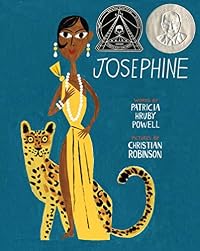
71Whisper1
>61 Familyhistorian: Meg, I added The Haunting of Alma Fielding: A True Ghost Story to my TBR list.
72Familyhistorian
>71 Whisper1: I hope you enjoy the read when you get to it, Linda.
73benitastrnad
I finally got my copy of Nica's Dream: The Life and Legend of the Jazz Baroness by David Kastin. I had to request it through Inter-Library Loan. I know it will be a late start but this seems like a good choice for this month. I am starting it today. This one is the story of Nica Rothschild. She loved jazz and started a jazz club in New York City. She also provided living quarters for many jazz musicians. She was the patroness of Thelonious Monk and Charlie Parker and many lesser known jazz musicians. She, and her French Baron husband, was also a French citizen and was a lieutenant in the Free French Resistance.
74m.belljackson
For a Dog who Loves Jazz, Linda, go to "Shuggie's Debut" on Youtube!
75cbl_tn
I listened to Who Was Louis Armstrong? in the car on my way to and from work today. It's a middle grade book and you can tell that. The writing is a little bland, and the narrator didn't do much to elevate it. I did learn things from the book. I didn't know that Armstrong was an author as well as a musician. He wrote the first jazz autobigraphy, Swing That Music, which was originally published in 1936. He also wrote another autobiography/memoir.
76alcottacre
>70 Whisper1: I will look and see if my local library has a copy. Thanks, lovey!
77alcottacre
>75 cbl_tn: Coincidentally, the book I am currently reading, Second Reading, mentions Louis Armstrong's memoir, Satchmo: My Life in New Orleans and calls it "the definitive work, not merely splendid in its own right but one of the essential American memoirs."
78JayneCM
I read Billie Holiday's autobiography, Lady Sings The Blues.
79Jackie_K
I read Duke Ellington's America by Harvey G Cohen. This is a pretty meaty biography, and places Ellington in the wider social and cultural as well as musical context of the time. It took me the best part of a month to read, but was worth it - what an interesting life!
80thornton37814
I finished two books for this challenge:
Agent Josephine: American Beauty, French Hero, British Spy by Damien Lewis
Louis Armstrong: A Cultural Legacy by Marc H. Miller and Donald Bogle
Agent Josephine: American Beauty, French Hero, British Spy by Damien Lewis
Louis Armstrong: A Cultural Legacy by Marc H. Miller and Donald Bogle
81Jackie_K
Better late than never, I also just finished my prizewinning book for January. Free by Lea Ypi is a memoir of growing up in Albania at the end of communism/start of the so-called transition to a market economy, and amongst other prizes it won the Ondaatje Prize in 2022.
82thornton37814
Finished a third one:
Josephine: The Dazzling Life of Josephine Baker by Patricia Hruby Powell; illustrated by Christian Robinson
Josephine: The Dazzling Life of Josephine Baker by Patricia Hruby Powell; illustrated by Christian Robinson
83benitastrnad
It is now time for us to start on our nonfiction books for March. If you are like me and haven't finished your book for February, don't worry: when you finish it go ahead and post it here and let use know what you think of it.
The topic for March is "Off the Beaten Path Religious Sects." This is a time to read all about those books about religions and religious figures that are not in the mainstream. Books about Christian Science, Quakers, Amish and Mennonite, along with other Anabaptist groups, Shakers, Jainism, Sikhism, Shaminism, Kabbalah, Voodoo, even quasi-religious cults and pseudoreligions such as secular humanism and New Age movements all fit into the topic. You might think it will be hard to find books on this subject, but the topic can be widened. Think about a book about Malcolm X and the Nation of Islam. Or one about Mahatma Gandhi's practice of non-violent protest. Even books about Ultra Orthodox Jews, or Ultra Right Wing Christians would fit in here. Books about groups that blur the lines between religion and politics are also part of this topic. For instance, a book about the ultra right wing Christians and their support of right wing politics would work. There are a couple of books out about the Jonestown group and books about Scientiology would also fit into this topic.
Take a look at your lists of books and see what you can come up with in the way of the odd and curious religions, or the out-of-the-norm kinds of religious differences that can be found.
The topic for March is "Off the Beaten Path Religious Sects." This is a time to read all about those books about religions and religious figures that are not in the mainstream. Books about Christian Science, Quakers, Amish and Mennonite, along with other Anabaptist groups, Shakers, Jainism, Sikhism, Shaminism, Kabbalah, Voodoo, even quasi-religious cults and pseudoreligions such as secular humanism and New Age movements all fit into the topic. You might think it will be hard to find books on this subject, but the topic can be widened. Think about a book about Malcolm X and the Nation of Islam. Or one about Mahatma Gandhi's practice of non-violent protest. Even books about Ultra Orthodox Jews, or Ultra Right Wing Christians would fit in here. Books about groups that blur the lines between religion and politics are also part of this topic. For instance, a book about the ultra right wing Christians and their support of right wing politics would work. There are a couple of books out about the Jonestown group and books about Scientiology would also fit into this topic.
Take a look at your lists of books and see what you can come up with in the way of the odd and curious religions, or the out-of-the-norm kinds of religious differences that can be found.
84benitastrnad
I have been reading much in the last few years about Jews from unexpected places, such as Kurdish Iraq and Egypt. I plan on continuing that reading and will be reading We Look Like the Enemy: The Hidden Story of Israel's Jews From Arab Lands by Rachel Shabi. It is a rather short book, so if I get time I will also read Unorthodox: The Scandalous Rejection of My Hasidic Roots by Deborah Feldman.
Both of these books are about different sects of Judiasm, but don't think that you have to read about Judiasm. I am reading these because I have been moving book boxes again and I need to be reading things from my own collection.
Both of these books are about different sects of Judiasm, but don't think that you have to read about Judiasm. I am reading these because I have been moving book boxes again and I need to be reading things from my own collection.
85PaulCranswick
I read Becoming Ella Fitzgerald for February's challenge and was much looking forward to doing so. Quite a let down as the author seemed to concentrate much more on song and performance than the person herself.
86PaulCranswick
For March, I will likely read something on spiritualism by Richard Holloway or Braiding Sweetgrass by Kimmerer.
87Dejah_Thoris
For February, I joined Lori and read Agent Josephine: American Beauty, French Hero, British Spy by Damien Lewis. Her music was only part of the story, but I enjoyed it very much.
For March, I'm going to read The Barn at the End of the World: the Apprenticeship of a Quaker, Buddhist Shepherd by Mary Rose O'Reilley.
For March, I'm going to read The Barn at the End of the World: the Apprenticeship of a Quaker, Buddhist Shepherd by Mary Rose O'Reilley.
88Tess_W
Raised as a Quaker until I was 12 years of age when my parents moved to a town without such a church, most of my religious reading for this month will be about Quakers. One of the foremost Quaker historians was Rufus Matthew Jones (died 1948). I have to date not read one of his works, so I requested it as an ILL and they told me 14 weeks! (The Faith and Practice of the Quakers). While I was at the library I found two books that I could read in a day and checked them both out and read them!
1. The Underground Railroad Adventure of Allen Jay by Marlene Targ Brill This book was written for ages 10-12 in graphic novel form, although this is work of non-fiction. It's very simple and straight forward and besides telling of the Quaker participation in the underground railroad, also portrays the Quaker abstinence of handling weapons or physical fighting. 36 pages
2. Susanna's Sisters by Patricia Brown and Simon Webb This book documents the rise of Quakerism and other sects during the 17th century in England. It centers particularly on the experiences and roles of women within these movements by giving multiple concrete examples. There were a plethora of topics that were just barely mentioned, so it seems for mentioning's sake. 58 pages
1. The Underground Railroad Adventure of Allen Jay by Marlene Targ Brill This book was written for ages 10-12 in graphic novel form, although this is work of non-fiction. It's very simple and straight forward and besides telling of the Quaker participation in the underground railroad, also portrays the Quaker abstinence of handling weapons or physical fighting. 36 pages
2. Susanna's Sisters by Patricia Brown and Simon Webb This book documents the rise of Quakerism and other sects during the 17th century in England. It centers particularly on the experiences and roles of women within these movements by giving multiple concrete examples. There were a plethora of topics that were just barely mentioned, so it seems for mentioning's sake. 58 pages
89atozgrl
>83 benitastrnad: I don't really have anything on my shelves dealing with religious sects. I would have to find something at the library, but I too am trying to work more on the books I already have this year.
Books about groups that blur the lines between religion and politics are also part of this topic. For instance, a book about the ultra right wing Christians and their support of right wing politics would work.
Would Jesus and John Wayne work for this? That might be the closest thing I have on hand. I do have a couple of books about Christian nationalism, but they are more about that movement and how it's corrupting Christianity rather than about a specific Christian group. I've also got The kingdom, the power, and the glory : American evangelicals in an age of extremism, but that's a long book and it's a heavy topic that I'm not sure I want to tackle right now.
Books about groups that blur the lines between religion and politics are also part of this topic. For instance, a book about the ultra right wing Christians and their support of right wing politics would work.
Would Jesus and John Wayne work for this? That might be the closest thing I have on hand. I do have a couple of books about Christian nationalism, but they are more about that movement and how it's corrupting Christianity rather than about a specific Christian group. I've also got The kingdom, the power, and the glory : American evangelicals in an age of extremism, but that's a long book and it's a heavy topic that I'm not sure I want to tackle right now.
90benitastrnad
>89 atozgrl:
I think that would work. I looked at the Description here on LT and then at the Amazon blurb and it seems that this book is about that significant minority of American Christians who are almost a seperate sect. The Duck Dynasty set of Christians. They may not be formally recogized as a seperate sect but they have had a significant impact on the world. Go ahead and try it and report back to us.
I think that would work. I looked at the Description here on LT and then at the Amazon blurb and it seems that this book is about that significant minority of American Christians who are almost a seperate sect. The Duck Dynasty set of Christians. They may not be formally recogized as a seperate sect but they have had a significant impact on the world. Go ahead and try it and report back to us.
91atozgrl
>90 benitastrnad: Thanks, Benita. I'll go ahead with it then, and let you all know what I think of it.
92alcottacre
I am like Irene in that I pretty much have nothing on hand to read for this month's challenge and due to time constraints on my part - I will be out of town for about a week - I may be passing rather than having to get something from the library. We will see how things shake out in the end. Mary (bell7) recommended Going Clear by Lawrence Wright a while ago, so I may read that one if I have the time. It deals with Scientology, about which I know relatively little.
93cbl_tn
For those looking for a March read, I read a memoir that I really enjoyed about 15 years ago. I Am Hutterite by Mary-Ann Kirkby describes her childhood in a Hutterite community in Canada.
94Dejah_Thoris
>93 cbl_tn: I strongly considered I Am Hutterite for March - it's been on my radar for years. It's entirely possible that's because you read it, Carrie. :)
95Familyhistorian
Looking for something for March's challenge on my shelves, I found American Cult: A Graphic History of Religious Cults in America from the Colonial Era to Today. This should be interesting!
96Tess_W
I can recommend The Great Divorce: A Nineteenth-Century Mother's Extraordinary Fight against Her Husband, the Shakers, and Her Times by Ilyon Woo. It's technically about a custody case, but the Shakers are complicit and one of the main players in this case and one will learn a lot about the sect from this book.
97benitastrnad
>92 alcottacre:
Going Clear was one of the books that I was trying to think of, for myself this month. It had very good reviews when it was published and comes with high recommendations.
Some of Thomas cahill books would also work for this challenge. Gifts of the Jews: How a Tribe of Desert Nomads Changed the Way Everyone Thinks and Feels is the one that comes to my mind. Remember - Judaism was a cult before it was an established religion. Karen Armstrong's book Fields of Blood: Religion and the History of Violence is full of things about obscure religious cults - especially Christian cults. Also Great Transformation: The Beginnings of Our Religious Traditions by Karen Armstrong. It is about some of the, now, lost and obscure groups that laid some of the foundations for our current religious beliefs. Books about Rumi. He founded the Sufi branch of Islam.
Going Clear was one of the books that I was trying to think of, for myself this month. It had very good reviews when it was published and comes with high recommendations.
Some of Thomas cahill books would also work for this challenge. Gifts of the Jews: How a Tribe of Desert Nomads Changed the Way Everyone Thinks and Feels is the one that comes to my mind. Remember - Judaism was a cult before it was an established religion. Karen Armstrong's book Fields of Blood: Religion and the History of Violence is full of things about obscure religious cults - especially Christian cults. Also Great Transformation: The Beginnings of Our Religious Traditions by Karen Armstrong. It is about some of the, now, lost and obscure groups that laid some of the foundations for our current religious beliefs. Books about Rumi. He founded the Sufi branch of Islam.
98alcottacre
>97 benitastrnad: Thank you for mentioning The Gifts of the Jews, Benita. I own that one and would not have to worry about rushing to read it to return it to the library :)
99Tess_W
Like a few others, I secured a copy of I Am Hutterite immediately from Libby, so don't have to wait!
ETA: I also found A Billion Years: My Escape From a Life in the Highest Ranks of Scientology by Mike Rinder with no wait! So I have 2 on deck. Looks like I'll be spending my March with religious sects!
ETA: I also found A Billion Years: My Escape From a Life in the Highest Ranks of Scientology by Mike Rinder with no wait! So I have 2 on deck. Looks like I'll be spending my March with religious sects!
100Tess_W
I completed A Billion Years: My Escape From a Life in the Highest Ranks of Scientology by Mike Rinder This memoir is Mike Rinder’s personal account of his more than forty years in the Church of Scientology. Over time, Rinder rose into the upper ranks of the organization and became one of its most visible representatives. Born and educated in Australia, he was introduced to Scientology through his parents, who became involved with the movement during his youth. Although Rinder won a scholarship to attend Adelaide University, he declined the opportunity in order to join the staff of Scientology through the Sea Organization, signing the well-known “Billion Year Contract,” a symbolic pledge of lifelong service.
The Sea Organization originally functioned as L. Ron Hubbard’s floating headquarters, allowing the founder of Church of Scientology to operate from ships and, as critics later suggested, move quickly if necessary. Rinder’s tell-all account describes an intense and demanding environment within the organization. He recounts periods of working five or six days without sleep, abusive leadership practices, and what he claims were questionable tax and labor practices. Also interesting that they courted "famous" people and treated them much differently that "ordinary" members.
Over time, Rinder became increasingly disillusioned, particularly with directives requiring members to target critics—often former members or government investigators—with aggressive tactics. At the age of fifty-two, he quietly left the organization one evening, ending a life that had been almost entirely devoted to Scientology.
Rinder also describes the personal sacrifices required of members. The church discouraged having children, and although he and his wife had two, he saw them only once or twice a year for brief visits lasting just a few hours. After leaving, Rinder says he himself became a target of the organization. His departure led to estrangement from family members who remained in the church. The Church of Scientology, however, strongly denies the accuracy of the claims made in the book. Rinder dedicated this book to his children, that one day they may realize the "truth."
The basic premise of scientology: human beings are spiritual entities who have lived many past lives and possess far greater abilities than they currently realize. Scientology teaches that people can regain these abilities and achieve spiritual freedom through a structured process of self-examination and spiritual training.
The seems to be quite believable and seems to line up with other cursory read statements of others. 352 pages 4 stars
I listened to this on audio/w PDF , read by the author, and he was such a bad reader. Nobody could guess he was from Australia, because he had a harsh Boston accent. I sped it up to 1.25 and the accent wasn't quite as harsh.
The Sea Organization originally functioned as L. Ron Hubbard’s floating headquarters, allowing the founder of Church of Scientology to operate from ships and, as critics later suggested, move quickly if necessary. Rinder’s tell-all account describes an intense and demanding environment within the organization. He recounts periods of working five or six days without sleep, abusive leadership practices, and what he claims were questionable tax and labor practices. Also interesting that they courted "famous" people and treated them much differently that "ordinary" members.
Over time, Rinder became increasingly disillusioned, particularly with directives requiring members to target critics—often former members or government investigators—with aggressive tactics. At the age of fifty-two, he quietly left the organization one evening, ending a life that had been almost entirely devoted to Scientology.
Rinder also describes the personal sacrifices required of members. The church discouraged having children, and although he and his wife had two, he saw them only once or twice a year for brief visits lasting just a few hours. After leaving, Rinder says he himself became a target of the organization. His departure led to estrangement from family members who remained in the church. The Church of Scientology, however, strongly denies the accuracy of the claims made in the book. Rinder dedicated this book to his children, that one day they may realize the "truth."
The basic premise of scientology: human beings are spiritual entities who have lived many past lives and possess far greater abilities than they currently realize. Scientology teaches that people can regain these abilities and achieve spiritual freedom through a structured process of self-examination and spiritual training.
The seems to be quite believable and seems to line up with other cursory read statements of others. 352 pages 4 stars
I listened to this on audio/w PDF , read by the author, and he was such a bad reader. Nobody could guess he was from Australia, because he had a harsh Boston accent. I sped it up to 1.25 and the accent wasn't quite as harsh.
101markon
I am going to check out Remnants: a memoir of spirit, activism, and mothering by and about Rosmarie Freeney Harding, edited by her daughter Rachel Harding.
102Tess_W
I completed I Am Hutterite by Mary Ann Kirkby. It is a poignant memoir of one family’s place within the religious community of the Hutterites in Manitoba, Canada. It is also the story of leaving that closed community and trying to assimilate outside the community.
The Hutterites are an Anabaptist Christian group who live communally, sharing possessions, labor, and daily life. Kirkby spent the first ten years of her life in this tightly structured society before her parents made the difficult decision to leave the colony and enter mainstream society. Once outside the community, life was very difficult and most of the family would have preferred to return. However, the pride of her father makes the return not possible.
This book was both specific to the Hutterite community and universal in telling the story about family, faith, and identity.
While I greatly enjoyed this book, its story reminded me of experiences that many people have had growing up in close religious communities—including my own. I was raised in a very strong Quaker community that, in many ways, resembled the Hutterite world described in the book, though without the communal living. We shared many of the same beliefs, practices, and ways of thinking, and it provided a wonderful childhood.
Like Mary-Ann in the memoir, my life changed when my family moved about thirty miles away because of my father’s new job. I struggled with that transition and did not care for my “new” life. In many ways, I experienced the same emotions and adjustments that Ann-Marie describes in the book. I did not fully feel settled again until I went away to college several years later. Looking back, however, I can say that growing up in that close-knit community was a truly great early childhood.
The only “problem” I had with this book is that it often grouped all religious communities together, such as the Mennonites, Amish, etc. My experience has been that notion is very far from reality, even generally. 274 pages 5 stars
The Hutterites are an Anabaptist Christian group who live communally, sharing possessions, labor, and daily life. Kirkby spent the first ten years of her life in this tightly structured society before her parents made the difficult decision to leave the colony and enter mainstream society. Once outside the community, life was very difficult and most of the family would have preferred to return. However, the pride of her father makes the return not possible.
This book was both specific to the Hutterite community and universal in telling the story about family, faith, and identity.
While I greatly enjoyed this book, its story reminded me of experiences that many people have had growing up in close religious communities—including my own. I was raised in a very strong Quaker community that, in many ways, resembled the Hutterite world described in the book, though without the communal living. We shared many of the same beliefs, practices, and ways of thinking, and it provided a wonderful childhood.
Like Mary-Ann in the memoir, my life changed when my family moved about thirty miles away because of my father’s new job. I struggled with that transition and did not care for my “new” life. In many ways, I experienced the same emotions and adjustments that Ann-Marie describes in the book. I did not fully feel settled again until I went away to college several years later. Looking back, however, I can say that growing up in that close-knit community was a truly great early childhood.
The only “problem” I had with this book is that it often grouped all religious communities together, such as the Mennonites, Amish, etc. My experience has been that notion is very far from reality, even generally. 274 pages 5 stars
103Familyhistorian
For February’s jazz theme I read Empire of Sin: A Story of Sex, Jazz, Murder, and the Battle for Modern New Orleans. Information about the birth, early instigators and adopters of jazz were woven into the narrative. Also explained were the laws and quest for reform in the city that had the musicians spreading out to different parts of the country, spreading the music to new locals. Of particular interest was the life and career of Louis Armstrong.
104atozgrl
I have finished reading Jesus and John Wayne. It definitely fits the topic of "a book about the ultra right wing Christians and their support of right wing politics." The author, Du Mez, gives us a history of evangelicalism in the 20th century, and goes up to about 2018. There's a little bit about the early 20th century, but the majority of what she covers starts in the 1940's. The book attempts to answer the puzzle of why Bible-believing, "Moral Majority" Christians would seemingly ignore everything they believed in to vote for Donald Trump. The history that Du Mez records shows how right wing evangelicals have made gender issues central to their beliefs and teachings, and have adopted a militant masculinity that holds John Wayne and Mel Gibson's William Wallace as their heroes. They have turned Jesus into a warrior leader. Du Mez concludes that their support of Trump was the culmination of their half-century pursuit of this militant Christian masculinity.
105benitastrnad
I finished reading We Look Like the Enemy: The Hidden Story of Israel's Jews from Arab Lands by Rachel Shabi. This book was about the Mizrahi Jews. In 2023 I read a book My Father's Paradise that was about the Kurdish Jews and was fascinated with this memoir. I had no idea that there were Jews living in Arab lands, let alone the numbers of them. I wanted to explore this part of Jewish life, culture, and immigration, so I choose this book for the monthly topic. The book is written by a Mizrahi Jewish woman whose ancestry is rooted in Baghdad and the first diaspora in 497 BCE. This is important because it gives her a viewpoint that runs contrary to the accepted view of modern Israel.
It turns out that the Jews from Arab lands are NOT a minority. They make up the majority of the population of the state of Israel. They are almost 60% as of 2008 - the date this book was published. There are three kinds of Jews. All of them trace their ancestry back to various diasporas. The first diaspora was in 497 BCE and these are the Mizrahi - the Jews from Arab lands and India. They lived throughout North Africa, Turkey, Persia, and even parts of India. The Sephardic Jews came from Spain and Portugal. Ashkenazi Jews are from Europe. Both the Sephardic and Ashkenazi are products of the second diaspora before 500 CE. This book dealt with the political and cultural problems that the Mizrahi face in modern Israel due to the dominance and the prejudice of the European Jews that stems from the fallout surrounding the Shoah in Europe. Unbeknownst to many, is the fact that the laws of the state of Israel provide preference to European Jews, even though Mizrahi Jews are the majority of the population they are not considered to be equal and that creates problems politically, socially, and culturally. The irony here is that to the outside world, Israel appears to be a democracy, when this is not the case. I found this view fascinating and very disconcerting to what I thought Israel is, and was. The Mizrahi Jews immigrated, mostly, at the same time as the European Jews (after WWII and the 1948 War for Independence) but did not receive equal treatment upon immigrating and have lower educational, economic, and political outcomes than does the minority Ashkenazi population. This turned out to be a book about a majority, rather than a minority, who have many of the same problems as true numerical minorities.
This is not an easy book to read. It is an academic book. (I suspect that it was a PhD dissertation that was turned into a book.) It is not a work of narrative nonfiction so it takes some work to read it. However, it is worthwhile.
It turns out that the Jews from Arab lands are NOT a minority. They make up the majority of the population of the state of Israel. They are almost 60% as of 2008 - the date this book was published. There are three kinds of Jews. All of them trace their ancestry back to various diasporas. The first diaspora was in 497 BCE and these are the Mizrahi - the Jews from Arab lands and India. They lived throughout North Africa, Turkey, Persia, and even parts of India. The Sephardic Jews came from Spain and Portugal. Ashkenazi Jews are from Europe. Both the Sephardic and Ashkenazi are products of the second diaspora before 500 CE. This book dealt with the political and cultural problems that the Mizrahi face in modern Israel due to the dominance and the prejudice of the European Jews that stems from the fallout surrounding the Shoah in Europe. Unbeknownst to many, is the fact that the laws of the state of Israel provide preference to European Jews, even though Mizrahi Jews are the majority of the population they are not considered to be equal and that creates problems politically, socially, and culturally. The irony here is that to the outside world, Israel appears to be a democracy, when this is not the case. I found this view fascinating and very disconcerting to what I thought Israel is, and was. The Mizrahi Jews immigrated, mostly, at the same time as the European Jews (after WWII and the 1948 War for Independence) but did not receive equal treatment upon immigrating and have lower educational, economic, and political outcomes than does the minority Ashkenazi population. This turned out to be a book about a majority, rather than a minority, who have many of the same problems as true numerical minorities.
This is not an easy book to read. It is an academic book. (I suspect that it was a PhD dissertation that was turned into a book.) It is not a work of narrative nonfiction so it takes some work to read it. However, it is worthwhile.
106cbl_tn
I've been meaning to read The Quiet Rebels for years since I have Quaker ancestry on both sides of my family. This is one of my grandmother's books that I kept. Quakers were involved with the abolition movement, the women's movement from its earliest days, the peace movement, and the civil rights movement, among other causes. In the absence of footnotes and endnotes, I recommend verifying facts and dates in other sources. I caught one dating error - the Bill of Rights was adopted nearly a decade after the Revolutionary War ended, and not at the beginning of the war as stated in the book. There may be other factual errors that I didn't catch.
107m.belljackson
>106 cbl_tn: German Quaker friends have told us about their role in Germany during World War II.
108Whisper1
>105 benitastrnad:.106.107 MANY THANKS FOR ALL THIS INFORMATION.
109Dejah_Thoris
I read two books for March. First came The Barn at the End of the World: the Apprenticeship of a Quaker, Buddhist Shepherd by Mary Rose O'Reilley. O'Reilley was born and raised Catholic, joined the Society of Friends, and is a Quaker Buddhist, which is a legit thing - I've met several. She is also a poet (and winner of the Walt Whitman Award), and taught English and environmental studies at the university level. All in all, she's an interesting person.
That said, The Barn at the End of the World didn't entirely work for me. She states that she writes what she feels she needs/wants to write (basically short essays), and then goes back and puts the essays together in the order she feels they work best. Some sections worked better for me than others. I was hoping for more Quaker faith and practice than I got, didn't connect well with her writing about a Buddhist retreat in France (in fact, the whole thing came across as very off-putting), and learned more about small scale commercial lamb production (albeit in an academic setting) than I really wanted to know. There were moments, however, when her writing truly spoke to me - speaking to my condition, as the Quakers would say - and that largely made up for the rest.
I also read Quaker Faith and Practice Around the World: A Study Guide for Friends by Simon Gray. Quakers are not united with a single system of beliefs and practices in the United States, or around the world. This work uses quotes from various Books of Discipline or Faith and Practices from Yearly Meetings (a regional organizational structure) from around the world to illuminate views on a range of subjects. The subjects, which are covered in individual chapters, include Spiritual Gifts, Peace, Worship, Jesus Christ, Equality, and several other topics.
The quotes are left to stand for themselves, but there are discussion questions at the end of each section. The author (and, presumably, his editors) failed to catch his bias in the phrasing of the discussion questions; I don't believe he adequately addressed the entire range of beliefs and practices represented by the quotes he chose. Nevertheless, I believe the quotes to have been well chosen, because while I am not Quaker myself, the quotes that spoke to me most were from Yearly Meetings that align with the version of Quakerism to which I am drawn - unprogrammed, liberal.
Published in 2011, Quaker Faith and Practice Around the World is probably somewhat outdated, but it's an interesting resource, nonetheless.
That said, The Barn at the End of the World didn't entirely work for me. She states that she writes what she feels she needs/wants to write (basically short essays), and then goes back and puts the essays together in the order she feels they work best. Some sections worked better for me than others. I was hoping for more Quaker faith and practice than I got, didn't connect well with her writing about a Buddhist retreat in France (in fact, the whole thing came across as very off-putting), and learned more about small scale commercial lamb production (albeit in an academic setting) than I really wanted to know. There were moments, however, when her writing truly spoke to me - speaking to my condition, as the Quakers would say - and that largely made up for the rest.
I also read Quaker Faith and Practice Around the World: A Study Guide for Friends by Simon Gray. Quakers are not united with a single system of beliefs and practices in the United States, or around the world. This work uses quotes from various Books of Discipline or Faith and Practices from Yearly Meetings (a regional organizational structure) from around the world to illuminate views on a range of subjects. The subjects, which are covered in individual chapters, include Spiritual Gifts, Peace, Worship, Jesus Christ, Equality, and several other topics.
The quotes are left to stand for themselves, but there are discussion questions at the end of each section. The author (and, presumably, his editors) failed to catch his bias in the phrasing of the discussion questions; I don't believe he adequately addressed the entire range of beliefs and practices represented by the quotes he chose. Nevertheless, I believe the quotes to have been well chosen, because while I am not Quaker myself, the quotes that spoke to me most were from Yearly Meetings that align with the version of Quakerism to which I am drawn - unprogrammed, liberal.
Published in 2011, Quaker Faith and Practice Around the World is probably somewhat outdated, but it's an interesting resource, nonetheless.
110Dejah_Thoris
>83 benitastrnad: I'm really looking forward to April, Benita, and your thoughtful introductions!
111benitastrnad
It is almost the last day of the month and time to wrap up the topic for this month. I don't know about you other readers, but this was a hard topic for me. There are books out there on Off the Beaten Track religious practices, but when I searched my gargantuan reading list the books often had many more pages than I had reading time in one month. I also noticed that many of the books on my list were works of fiction and therefore useless for a nonfiction reading.
If you have books started for this topic and have not finished them - don't despair. Continue to read them anyway and post your short summary, review, or random thoughts about it on this thread. We will be happy to hear about why it took so long to read, or why you stopped reading it.
Or you can skip posting about your book and start with a new book for April.
If you have books started for this topic and have not finished them - don't despair. Continue to read them anyway and post your short summary, review, or random thoughts about it on this thread. We will be happy to hear about why it took so long to read, or why you stopped reading it.
Or you can skip posting about your book and start with a new book for April.
112thornton37814
I read Death in the Jungle by Candace Fleming about the People's Temple/Jim Jones murders and suicides in the jungles of Guyana.
113benitastrnad
The April topic is Internal Matters - The human body. Search your TBR lists, your local library catalogs, or even that amazing Amazon catalog of books, and see what you can find regarding the human body that interests you. The book should be about the internal workings of the human body from teeth to toenails, but keep it to a focus on the human body. How does it work? What marvelous new things have been discovered about the human body. The human body should be the focus of the book not the people who made the discoveries. So a book like Heart: A History works even though there are biographies in it about the people who discovered how the heart works, but a book like Masters of Medicine: Our Greatest Triumphs in the Race to Cure Humanity's Deadliest Diseases doesn't because it is is about the people who made the discoveries - not the discoveries themselves. I know it is a subtle difference, but it is important to this topic. Concentrate on the body, or the organ. Think anatomy, physiology, chemistry, evolution, etc., It's the science we are after here. For that reason Michael Pollan's book How to Change Your Mind: What the New Science of Psychedelics Teaches Us About ... works because it is about the science of how psychedelic drugs work on the human brain.
Books about how the brain works are part of this topic. Titles such as, In Search of Now: The Science of the Present Moment is a book about how the brain measures time. Books about specific organs of the body work here. Sublime Engine: A Biography of the Human Heart by Stephen Amidon, Immune: A Journey Into the Mysterious System That Keeps You Alive by Philipp Dettmer, Forgotten Sense: The Fascinating Science of Smell with the Mind-Expanding Perspective, Discover the Power of Your Nose by Jonas Olofsson, or The Gene: An Intimate History by Siddartha Mukherjee.
There are also general books about the human body such as Bill Bryson's book The Body: A Guide for Occupants, I Contain Multitudes: The Microbes Within Us and a Grander View of Life by Ed Yong, or Gulp: Adventures on the Alimentary Canal by Mary Roach. And there are specific books about specific topics that have to do with the human body.
Breath: The New Science of a Lost Art by James Nestor
Song of the Cell by Siddartha Mukherjee
From One Cell: A journey into Life's Origins and the Future of Medicine by Ben Stanger
How Emotions Are Made: The Secret Life of the Brain by Lisa Feldman Barrett
Flush: The Remarkable Science of an Unlikely Treasure by Bryn Nelson
Books about specific diseases are not out of line here. John Greene's book on Tuberculosis comes to mind or Emperor of All Maladies. Or books about specific deficiences such as Vitaman C: A 500-Year Scientific Biography from Scurvy to Psuedoscience by Stephen M. Sagar
There is a multiplicity of directions in which you can read on this topic. So read on!
Books about how the brain works are part of this topic. Titles such as, In Search of Now: The Science of the Present Moment is a book about how the brain measures time. Books about specific organs of the body work here. Sublime Engine: A Biography of the Human Heart by Stephen Amidon, Immune: A Journey Into the Mysterious System That Keeps You Alive by Philipp Dettmer, Forgotten Sense: The Fascinating Science of Smell with the Mind-Expanding Perspective, Discover the Power of Your Nose by Jonas Olofsson, or The Gene: An Intimate History by Siddartha Mukherjee.
There are also general books about the human body such as Bill Bryson's book The Body: A Guide for Occupants, I Contain Multitudes: The Microbes Within Us and a Grander View of Life by Ed Yong, or Gulp: Adventures on the Alimentary Canal by Mary Roach. And there are specific books about specific topics that have to do with the human body.
Breath: The New Science of a Lost Art by James Nestor
Song of the Cell by Siddartha Mukherjee
From One Cell: A journey into Life's Origins and the Future of Medicine by Ben Stanger
How Emotions Are Made: The Secret Life of the Brain by Lisa Feldman Barrett
Flush: The Remarkable Science of an Unlikely Treasure by Bryn Nelson
Books about specific diseases are not out of line here. John Greene's book on Tuberculosis comes to mind or Emperor of All Maladies. Or books about specific deficiences such as Vitaman C: A 500-Year Scientific Biography from Scurvy to Psuedoscience by Stephen M. Sagar
There is a multiplicity of directions in which you can read on this topic. So read on!
114benitastrnad
I am going to read I Contain Multitudes: The Microbes Within Us and a Grander View of Life by Ed Yong. If I get time I am going to read and listen to Heart: A History by Sandeep Jauhar. I picked the book by Ed Yong because I am making an effort to read books I have on my shelves in the house and I have TWO (yes double copies) of this book, so reading it will take 2 books off my shelves. And that, my fellow readers, is a good thing. (getting books off my shelves, and I admit, that I hope to learn something as well.)
115m.belljackson
SCIENCE OF BREATH by Yogi Ramacharaka is a short sweet enlivening way to check for pure breathing.
116cbl_tn
I'll be reading Replaceable You by Mary Roach.
117Dejah_Thoris
For anyone who hasn't read John Green's Everything is Tuberculosis, I can recommend it highly.
Like Benita, I am also trying to read off of my shelves. My primary book will be Cholera: The Victorian Plague. After that, I'm looking at The Black Death: A Personal History. It's apparently a mix of history and 'docudrama' - whatever that is. I'm not certain it'll be any good, but I'm curious to find out.
Like Benita, I am also trying to read off of my shelves. My primary book will be Cholera: The Victorian Plague. After that, I'm looking at The Black Death: A Personal History. It's apparently a mix of history and 'docudrama' - whatever that is. I'm not certain it'll be any good, but I'm curious to find out.
118Tess_W
Also trying to read from shelf, I will read Born On A Blue Day: Inside the Extraordinary Mind of an Autistic Savant by Daniel Tammet. If I find that doesn't follow the prompt well enough, I will try to get from ILL Everything is Tuberculosis.
I can recommend:
1.The Hot Zone: A Terrifying True Story by Richard Preston This has a lot of vivid description of what happens when the ebola virus enters the body.
2. Polio: An American Story by David Oshinsky
3. Hidden Valley Road: Inside the Mind of an American Family mental illness within a family, afflicting multiple members by Robert Kolker
I can recommend:
1.The Hot Zone: A Terrifying True Story by Richard Preston This has a lot of vivid description of what happens when the ebola virus enters the body.
2. Polio: An American Story by David Oshinsky
3. Hidden Valley Road: Inside the Mind of an American Family mental illness within a family, afflicting multiple members by Robert Kolker
119alcottacre
>116 cbl_tn: I will be reading that one with you, Carrie. I am also going to try and squeeze in The Secret Family by David Bodanis.
ETA: Of course, I still have to finish up my read for March. . .
ETA: Of course, I still have to finish up my read for March. . .
120benitastrnad
>118 Tess_W:
I read Polio: An American Story by Oshinsky back in 2007 and found it a fascinating book. Oshinsky is an academic historian and parts of the book are very academic, but it still makes for fascinating reading.
I read Polio: An American Story by Oshinsky back in 2007 and found it a fascinating book. Oshinsky is an academic historian and parts of the book are very academic, but it still makes for fascinating reading.
121Jackie_K
I didn't participate in the March challenge, but did read two books which fit perfectly for April. The aforementioned Everything is Tuberculosis, and also A Hole in the Head: A Gruesomely Grisly History of Medical Firsts which is a children's (age 7/8+, I'd say) non-fiction book about the history of medicine by Dr Suzie Edge.
122Familyhistorian
For March, I read American Cult: A Graphic History of Religious Cults in America from the Colonial Era to Today and it did what the title promised. It was a slow read, there were so many cults and so many weird ideas going back to the beginning of Colonial America. There were many I hadn’t heard about back in history but the more modern ones were familiar from news stories. But until I saw them all in one book, I hadn’t realized how many and how strange they all were.
123Familyhistorian
I'm already reading Everything is Tuberculosis so I'll make that my book for April's challenge.
124Dejah_Thoris
>122 Familyhistorian: >123 Familyhistorian: That sounds fascinating! I just checked, and there are two copies in our nearly statewide system. I placed a hold on it.
Thanks! And enjoy Everything is Tuberculosis - if that's the right word.
Thanks! And enjoy Everything is Tuberculosis - if that's the right word.
125benitastrnad
>122 Familyhistorian:
That was a BB for me. I added it to the gargantuan TBR list.
I like nonfiction graphic books, but I find them to be very slow books for me to read. They pack lots of information in the pictures and even though the text is sparse they take concentration to "read." But I like the different ways of seeing things that are possible in graphic nonfiction.
That was a BB for me. I added it to the gargantuan TBR list.
I like nonfiction graphic books, but I find them to be very slow books for me to read. They pack lots of information in the pictures and even though the text is sparse they take concentration to "read." But I like the different ways of seeing things that are possible in graphic nonfiction.
126Familyhistorian
>124 Dejah_Thoris: >125 benitastrnad: I must admit that the cover got to me when I saw it on the shelf
 .
.
It was really interesting even the ones that made it to the news in the last decades.
 .
.It was really interesting even the ones that made it to the news in the last decades.
127Tess_W
After further checking my digital shelves, I also have The American Plague (yellow fever) and Gut. Will see how many I can get to!
128Familyhistorian
For April I chose a disease that had an impact on my family in the past, TB or Phtisis as it was called on their death certificates.
I appreciated the skill with which Everything is Tuberculosis was told. It gave a short history of the disease and treatments in the more affluent nations but showed how, while the richer nations have mostly been able to get the disease under control, the poorer nations are still struggling and losing people in alarming numbers. By focusing on one patient in Sierra Leone, the author showed the human face of the disease and the possibilities of what can be achieved.
I appreciated the skill with which Everything is Tuberculosis was told. It gave a short history of the disease and treatments in the more affluent nations but showed how, while the richer nations have mostly been able to get the disease under control, the poorer nations are still struggling and losing people in alarming numbers. By focusing on one patient in Sierra Leone, the author showed the human face of the disease and the possibilities of what can be achieved.
129alcottacre
I just finished reading Replaceable You: Adventures in Human Anatomy by Mary Roach and very much enjoyed the read. I can recommend this one!
130Tess_W
I finished Born on a Blue Day by Daniel Tammet. This is a memoir by Tammet, an autistic savant, who also has synesthesia, in which numbers are seen by colors and shapes, not by digits as we see them. The author can easily memorize Pi up to 20,000 digits and has memorized prime numbers to the millions. However, he was hard pressed to solve many ordinary math problems in school. In fact, he was just an "average" student in school. He is also fluent in 10 languages. The book focuses not only on his special abilities, but also of the struggles: epilepsy, social isolation (mostly self-imposed), and bullying.
While I found the book well-written and thoughtful, I don't believe Tammet's case was exceptionally "special." I could change just one or two abilities and/or struggles and be able to identify a dozen students. If the reader is looking for an extreme case to study, this would not be the book. 258 pages 3.5*
Well, this is the mind, although it did affect the body greatly. I hope to get to more "body" before the month is up!
While I found the book well-written and thoughtful, I don't believe Tammet's case was exceptionally "special." I could change just one or two abilities and/or struggles and be able to identify a dozen students. If the reader is looking for an extreme case to study, this would not be the book. 258 pages 3.5*
Well, this is the mind, although it did affect the body greatly. I hope to get to more "body" before the month is up!
131Dejah_Thoris
I hate to admit this, but I'm finding my book for this month, Cholera: The Victorian Plague, a bit of a slog. I'll finish it, but it may not be any time soon.
While it doesn't really fit the guidelines for April, I thought I'd mention And If I Perish: Frontline U.S. Army Nurses in World War II by Evelyn Monahan & Rosemary Neidle-Greenlee. It's about the nurses, but there's also some very interesting bits about gas gangrene, amputations, prosthetic eyeballs/limbs, malaria, penicillin, venereal diseases, whole blood vs plasma for the wounded, and more.
While it doesn't really fit the guidelines for April, I thought I'd mention And If I Perish: Frontline U.S. Army Nurses in World War II by Evelyn Monahan & Rosemary Neidle-Greenlee. It's about the nurses, but there's also some very interesting bits about gas gangrene, amputations, prosthetic eyeballs/limbs, malaria, penicillin, venereal diseases, whole blood vs plasma for the wounded, and more.
132benitastrnad
>131 Dejah_Thoris:
That does sound interesting. I got lots of that when I read The Mold in Dr. Florey's Coat. Lots of medical technology and many things we take for granted now came out of WWI and WWII.
That does sound interesting. I got lots of that when I read The Mold in Dr. Florey's Coat. Lots of medical technology and many things we take for granted now came out of WWI and WWII.
133Tess_W
I completed Butts: A Backstory by Heather Radke The author takes what could be an amusing and educational topic and used it to promote the ideas of queerness and racism. She begins by saying that all non-Africans appropriated the “ideal butt” from the exploitation of Sarah Baartman, a Black South African woman who was displayed in 19th-century Europe because of her body. Baartman becomes a key example of how Black bodies were objectified and turned into spectacles for white audiences, who later appropriated the idea or style. Radke also brings into some of her essays her queerness and her discomfort when somebody commented on her butt when she was younger. I’m not sure what the point was, that idea surfaced several times but was not fully developed. I feel her sexual orientation interrupted the narrative rather than augmented it. I’m going to step out here and say something that I know nothing about, that I think she was hinting, very weakly, that gender identification shapes ideas of beauty. There was a modicum of history about the obsession with the butt, from the 19th century to the pop icons of today such as Jennifer Lopez, Kim Kardashian, and Beyonce, just to name a few. Her point in this essay was to show how the “ideal” body—particularly the butt—moves from stigmatized to widely accepted once it becomes profitable. It was difficult for me to focus. Just when I thought I was settling in on a topic, a new one appeared, leading me to think the topics were in general superficial. Fun factoid: without the gluteal muscles, humans would not be able to run, and that the shape of the butt can influence speed—a detail that stands out more clearly than many of the book’s other arguments. 307 pages 2.5 stars I was hoping for something more fun and amusing!
134benitastrnad
Earlier this week I finished reading I Contain Multitudes: The Microbes Within Us and a Grander View of Life by Ed Yong for the April topic. This book was all about the microbiomes that we carry around within us. It was a very exciting, interesting, and thoughtful overview of the newest scientific and medical discoveries about the microbes we have on our skin and inside of us that are beneficial and harmful. I am no stranger to the topic of microbes within us, but Yong covers microbes in humans and other animals. He even covers microbes inside of the microbes. This makes the book a very comprehensive look at the whole idea of microbiomes. The book was written in such a way that it was easy to read, and yet, whenever some scientific term was used, the author was careful to make sure that these terms were defined and explained. This book was well worth the time to read it, and I highly recommend it to anybody who is interested in this kind of topic.
135benitastrnad
Today is May 2, 2026 and that means that it is time for us to turn our attention to a new topic - Been there, Bought the T-shirt, is the titled for this month. Spring is the time of year when people start making their travel plans for the summer and so travel books are a natural fit for this time of year. However, we are going to take a slightly different look at travel. For this month we will be concentrating of the economics of travel.
Travelers have been a economic boon to places ever since people got to be affluent enough to travel. The Ancient Greeks and Romans traveled. There have always been religious pilgrims and they have brought economic prosperity to eastern and western civilizations. Is it good or bad? What is the impact on the places, the environment, and our lives? Are tourists really ruining Venice? Is Paris too crowded? Should the numbers of people climbing to the top of Mount Everest be limited because they are polluting that environment and endangering themselves and the people who live there? What exactly are the economic benefits to a place of all those travelers, pilgrims, and just general wanderers?
You can read about ancient travelers, modern travelers, religious pilgrims, adventure travelers, and even space tourism. You can read about the Cameno, the Road to Canterbury, Route 66, Herodotus and his travels, travels in Japan. You can read about the development of modes of travel. Planes, trains, automobiles, RVs, and ships and how the rise and fall of the travel industry has contributed to the growth of each of these industries and their attendant services.
Here are some suggestions for books to read that fit into the category.
The travel essay books of Donna Leon. My Venice and Other Essays for example.
The work of Alain De Button. A Week At the Airport, and Art of Travel.
Simon Winchester has some good books that cover the enviromental impact of travel. River At the Center of the World and Korea: A Walk Through the Land of Miracles.
Volcanoes, Palm Trees, and Privilege by Liz Prato takes a hard look at the travel industry in Hawaii.
Route 66 A.D. by Tony Perrottet.
Timothy Egan has several travel books that speak to environmental issues in farming, ranching, and at our National Parks. He also has one on pilgrimage. Pilgrimage to Eternity
Paul Theroux has several books that take an unflinching look at the consequences of travel and the rise and fall of tourist sites.
Travel As a Political Act by Rick Steves.
Overbooked: The Exploding Business of Travel and Tourism by Elizabeth Becker
Jon Krakauer's Into Thin Air addresses the issue of overbooking climbs on Mount Everest.
Bill Bryson is another author who takes on the issue of too many travelers and their ignorance in several of his books.
Airplane Mode: An Irreverant History of Travel by Shahnaz Habib
Art of Stillness: Adventures in Going Nowhere by Pico Iyer
Before They're Gone: A Family's Year-Long Quest to Explore America's Most Endangered National Parks by Michael Lanza
Buried in the Sky: The Extraordinary Story of the Sherpa Climbers on K2's Deadliest Day by Peter Zuckerman
Cabin Fever: The Harrowing Journey of a Cruise Ship at the Dawn of a Pandemic by Michael Smith
Come Fly the World: The Jet-Age Story of the Women of Pan Am by Julia Cooke
Driving the Green Book by Alvin Hall
The Best American Travel Writing series has a large contengient of essays and magazine articles about the economics of travel and tourism. You can read recent yearbooks or go back to 2010.
Start digging through your TBR lists and see what you can come up with that deals with the economics and consquenses of travel.
Travelers have been a economic boon to places ever since people got to be affluent enough to travel. The Ancient Greeks and Romans traveled. There have always been religious pilgrims and they have brought economic prosperity to eastern and western civilizations. Is it good or bad? What is the impact on the places, the environment, and our lives? Are tourists really ruining Venice? Is Paris too crowded? Should the numbers of people climbing to the top of Mount Everest be limited because they are polluting that environment and endangering themselves and the people who live there? What exactly are the economic benefits to a place of all those travelers, pilgrims, and just general wanderers?
You can read about ancient travelers, modern travelers, religious pilgrims, adventure travelers, and even space tourism. You can read about the Cameno, the Road to Canterbury, Route 66, Herodotus and his travels, travels in Japan. You can read about the development of modes of travel. Planes, trains, automobiles, RVs, and ships and how the rise and fall of the travel industry has contributed to the growth of each of these industries and their attendant services.
Here are some suggestions for books to read that fit into the category.
The travel essay books of Donna Leon. My Venice and Other Essays for example.
The work of Alain De Button. A Week At the Airport, and Art of Travel.
Simon Winchester has some good books that cover the enviromental impact of travel. River At the Center of the World and Korea: A Walk Through the Land of Miracles.
Volcanoes, Palm Trees, and Privilege by Liz Prato takes a hard look at the travel industry in Hawaii.
Route 66 A.D. by Tony Perrottet.
Timothy Egan has several travel books that speak to environmental issues in farming, ranching, and at our National Parks. He also has one on pilgrimage. Pilgrimage to Eternity
Paul Theroux has several books that take an unflinching look at the consequences of travel and the rise and fall of tourist sites.
Travel As a Political Act by Rick Steves.
Overbooked: The Exploding Business of Travel and Tourism by Elizabeth Becker
Jon Krakauer's Into Thin Air addresses the issue of overbooking climbs on Mount Everest.
Bill Bryson is another author who takes on the issue of too many travelers and their ignorance in several of his books.
Airplane Mode: An Irreverant History of Travel by Shahnaz Habib
Art of Stillness: Adventures in Going Nowhere by Pico Iyer
Before They're Gone: A Family's Year-Long Quest to Explore America's Most Endangered National Parks by Michael Lanza
Buried in the Sky: The Extraordinary Story of the Sherpa Climbers on K2's Deadliest Day by Peter Zuckerman
Cabin Fever: The Harrowing Journey of a Cruise Ship at the Dawn of a Pandemic by Michael Smith
Come Fly the World: The Jet-Age Story of the Women of Pan Am by Julia Cooke
Driving the Green Book by Alvin Hall
The Best American Travel Writing series has a large contengient of essays and magazine articles about the economics of travel and tourism. You can read recent yearbooks or go back to 2010.
Start digging through your TBR lists and see what you can come up with that deals with the economics and consquenses of travel.
136benitastrnad
I have a copy of Overbooked: The Exploding Business of Travel and Tourism by Elizabeth Becker. I am going to dig it out of the box it is in and read it this month. If I get time I will read Naked Tourist: In Search of Adventure and Beauty in the Age of the Airport Mall by Lawrence Osborne.
I have lots of reading to get done this month, so I need to get those books dug out and get them cracked open.
I have lots of reading to get done this month, so I need to get those books dug out and get them cracked open.
137Familyhistorian
I found The Victorian Visitors: Culture Shock in Nineteenth Century Britain on my shelves which seems to fit the bill.
138Tess_W
I think I have several which may fit, but I won't know until I read them! This is a "difficult" one..the economics of and consequences of..........hard to judge a book by its cover!
The Best American Travel Writing 2000 by Bill Bryson
I've Got a Guy: Stories, Thoughts, and a Few Confessions from a Hospitality Rebel by Michael Albanese
On the Hippie Trail: Istanbul to Kathmandu and the Making of a Travel Writer by Rick Steves
World Travel: An Irreverent Guide by Anthony Bourdain
A Walk in the Woods by Bill Bryson
The Road to Oxiana by Robert Byron
The New Tourist: Waking Up to the Power and Perils of Travel by Paige McClanahan
The Cruel Way: Switzerland to Afghanistan in a Ford, 1939 by Ella Maillart
The Best American Travel Writing 2000 by Bill Bryson
I've Got a Guy: Stories, Thoughts, and a Few Confessions from a Hospitality Rebel by Michael Albanese
On the Hippie Trail: Istanbul to Kathmandu and the Making of a Travel Writer by Rick Steves
World Travel: An Irreverent Guide by Anthony Bourdain
A Walk in the Woods by Bill Bryson
The Road to Oxiana by Robert Byron
The New Tourist: Waking Up to the Power and Perils of Travel by Paige McClanahan
The Cruel Way: Switzerland to Afghanistan in a Ford, 1939 by Ella Maillart
139alcottacre
I will be reading Karma Cola by Gita Mehta for this challenge.
140m.belljackson
Here's a Traveling Book of Great Consequences that Has Not been written yet:
Bravo to those Brave Travelers who came to Ridglant Farms in Wisconsin to Free 2,000 Beagles!
Bravo to those Brave Travelers who came to Ridglant Farms in Wisconsin to Free 2,000 Beagles!
141Jackie_K
I don't think this fully fits, I'll see when I read it. I will be reading The Travel Writing Tribe by Tim Hannigan, about what travel writing is, who it's for, and its intended and unintended impacts. Whether it touches on economic issues I don't know yet.
142benitastrnad
All of these sound like they will work for the topic.
Personally, I love reading travel books, and beling an armchair traveler. However, when it came to putting this list together for the challenge, I wanted us to delve deeper into the world's largest industry and perhaps, one of the world's oldest industries. I read Rick Steves book, Travel As a Political Act and Donna Leon's My Venice and things that they both wrote made me sit up and take notice of the travel industry. Not just of travel. I knew it would be a hard topic, but I hope that it will make all of us better travelers.
Personally, I love reading travel books, and beling an armchair traveler. However, when it came to putting this list together for the challenge, I wanted us to delve deeper into the world's largest industry and perhaps, one of the world's oldest industries. I read Rick Steves book, Travel As a Political Act and Donna Leon's My Venice and things that they both wrote made me sit up and take notice of the travel industry. Not just of travel. I knew it would be a hard topic, but I hope that it will make all of us better travelers.
144benitastrnad
>143 Tess_W:
I haven't started mine either. I have been doing reading for other obligations. But I will get to it.
I haven't started mine either. I have been doing reading for other obligations. But I will get to it.
145Tess_W
I posted this somewhere, in some group a few minutes ago....but I can't find it! If it's a repeat, I'm sorry!
I read The Road to Oxiana by Robert Byron. This book tells of Byron’s travel through the Middle East, particularly Persia (Iran) and Afghanistan in search of architecture. It’s more than the normal travelogue, more like a detailed diary of culture observations. Byron can be witty, snobbish, and even cruel (speaking). His traveling partner, Christopher Sykes, seems to be the exact opposite, he seems to be Jerry Lewis to the author’s Dean Martin. His descriptions of the mosques are particularly “breathtaking.” However, he is very opinionated, and his judgements of cultures would today be classified as almost racist, but for 1937, I feel that it would be labeled “harsh.” In addition to harsh, I would also suggest that his writing at times could also be apologetic or dismissive towards the local people and customs. If one wants to read an interesting book about Middle Eastern travel, this is it. If one wants to read an unbiased book about Middle Eastern travel, this is NOT it.
I don't think this fulfills the prompt for this month, because it really didn't contain economic information or consequences of......However, sometimes, it's hard to judge a book by its cover. I would like to say I will choose another, but the last 2 weeks of this month is filled with graduations, graduation parties, anniversaries, and Memorial Day activities.
I read The Road to Oxiana by Robert Byron. This book tells of Byron’s travel through the Middle East, particularly Persia (Iran) and Afghanistan in search of architecture. It’s more than the normal travelogue, more like a detailed diary of culture observations. Byron can be witty, snobbish, and even cruel (speaking). His traveling partner, Christopher Sykes, seems to be the exact opposite, he seems to be Jerry Lewis to the author’s Dean Martin. His descriptions of the mosques are particularly “breathtaking.” However, he is very opinionated, and his judgements of cultures would today be classified as almost racist, but for 1937, I feel that it would be labeled “harsh.” In addition to harsh, I would also suggest that his writing at times could also be apologetic or dismissive towards the local people and customs. If one wants to read an interesting book about Middle Eastern travel, this is it. If one wants to read an unbiased book about Middle Eastern travel, this is NOT it.
I don't think this fulfills the prompt for this month, because it really didn't contain economic information or consequences of......However, sometimes, it's hard to judge a book by its cover. I would like to say I will choose another, but the last 2 weeks of this month is filled with graduations, graduation parties, anniversaries, and Memorial Day activities.
146benitastrnad
>145 Tess_W:
I would say that this book fulfills the prompt for May - and for June. Sounds like you had a very interesting read for this month. I have not even started my book. I have had book club commitments and lots of personnel life events, so my reading has been slow. What I need is to find a slow doctor's or dentist appointment so I can get some reading done.
I would say that this book fulfills the prompt for May - and for June. Sounds like you had a very interesting read for this month. I have not even started my book. I have had book club commitments and lots of personnel life events, so my reading has been slow. What I need is to find a slow doctor's or dentist appointment so I can get some reading done.
147Tess_W
>146 benitastrnad: Ok, it fits then! I will definitely read another for June's prompt.
148alcottacre
I am finally getting started on Karma Cola: Marketing the Mystic East for this month's challenge. I am very curious about the author's take on "the West's invasion of India."
ETA: Well, it does not look like I will be finishing a book for this month's challenge. I read about 40 pages of Karma Cola and gave up. I did not understand the point of the book at all, if there was one, and the humor that the author was trying to get across just did not work for me.
ETA: Well, it does not look like I will be finishing a book for this month's challenge. I read about 40 pages of Karma Cola and gave up. I did not understand the point of the book at all, if there was one, and the humor that the author was trying to get across just did not work for me.
149Dejah_Thoris
It took me a while to settle on something for this month's challenge, but I'm going with Everest, Inc.: The Renegades and Rogues Who Built an Industry at the Top of the World. I have some fairly strong feelings about the commercialization of Everest, but I suspect the author of this book thinks differently. I'll be interested to see how this goes.
150benitastrnad
I spent the month hunting for my book amongst the boxes. I didn't find the book, but it did prompt me to start working on organizing my boxes so that I don't have to spend so much time hunting a title down each time I want to find a book. As soon as I find the book I plan on reading it. It was going to be Overbooked by Elizabeth Becker. I had purchased the book at the Chautauqua Book Store at the Chautauqua Institute in 2019, after I heard the author give a presentation at the Institute. I have been wanting to read it for a long time.
151alcottacre
>150 benitastrnad: I hope you find the book, Benita! I originally thought that you had found it when reading your post.
152Jackie_K
I finished The Travel Writing Tribe: Journeys in Search of a Genre by Tim Hannigan. Although probably only very loosely connected to the theme of the economic impact of travel and tourism, it did make the point early on that much of the early texts of what we now call travel writing were designed to promote and enhance the colonial project across the world, and that particular project has obviously had an economic and social impact which still reverberates today. For anyone interested in travel writing as a genre I highly recommend this book, I found it entertaining, funny, challenging, and really interesting.
153benitastrnad
Tomorrow is June 1, 2026 and it is time for us to change topics.
June's topic is Who Built That Beautiful Building and Why? The topic is all about architecture. Buildings, architects, design, monuments, historical value, etc. Biographies, histories of buildings, and even the modern monument controversy. Architecture not natural wonders or the architecture that are sometimes a part of natural wonders is the focus with this topic.
Biographies of Le Corbusier, Frank Lloyd Wright, and other famous architects are part of this topic, as are biographies of buildings. That means that a book about the Empire State Building or the Colleseum in Rome are acceptable. A book about Angor Wat or Machu Pichu would not be, but a book about the Pyramids would be. The difference - Angor Wat and Machu Pichu are cities sites and we don't know for sure who built them or why. We do know who built the Pyramids so there could be a biography of the Pharoh or we sometimes know who the architect was for Ancient Ecyptians structures. The emphasis for this month is on the individual buildings.
To further narrow down the topic we are going to bar books about bridges, tunnels, canals, highways, etc. because those are most often done by engineers and this topic is more about the building and who built it. Oftentimes monuments, such as the Lincoln Memorial, the Gateway Arch, or the Viet Nam Memorial have architects/designers and that is what we are concentrating on. The Eiffel Tower or the Statue of Liberty are also considered monuments, so they would be included in this topic.
Tastes change, and sometimes the reasons for building something also changes, so the controversies about some monuments are a hot topic at the moment. Back in the day, the Pompidou Center in Paris was also controversial, so books about it would be acceptable. Books about skyscrapers also work.
Books about design are also included. Naked Airport and Architecture of Happiness would work because they are both books of critical essays about architecture.
The focus here is the architect and the architecture. If there is enough controversey so that books were written about it, then the controversy will be included as part of this topic.
June's topic is Who Built That Beautiful Building and Why? The topic is all about architecture. Buildings, architects, design, monuments, historical value, etc. Biographies, histories of buildings, and even the modern monument controversy. Architecture not natural wonders or the architecture that are sometimes a part of natural wonders is the focus with this topic.
Biographies of Le Corbusier, Frank Lloyd Wright, and other famous architects are part of this topic, as are biographies of buildings. That means that a book about the Empire State Building or the Colleseum in Rome are acceptable. A book about Angor Wat or Machu Pichu would not be, but a book about the Pyramids would be. The difference - Angor Wat and Machu Pichu are cities sites and we don't know for sure who built them or why. We do know who built the Pyramids so there could be a biography of the Pharoh or we sometimes know who the architect was for Ancient Ecyptians structures. The emphasis for this month is on the individual buildings.
To further narrow down the topic we are going to bar books about bridges, tunnels, canals, highways, etc. because those are most often done by engineers and this topic is more about the building and who built it. Oftentimes monuments, such as the Lincoln Memorial, the Gateway Arch, or the Viet Nam Memorial have architects/designers and that is what we are concentrating on. The Eiffel Tower or the Statue of Liberty are also considered monuments, so they would be included in this topic.
Tastes change, and sometimes the reasons for building something also changes, so the controversies about some monuments are a hot topic at the moment. Back in the day, the Pompidou Center in Paris was also controversial, so books about it would be acceptable. Books about skyscrapers also work.
Books about design are also included. Naked Airport and Architecture of Happiness would work because they are both books of critical essays about architecture.
The focus here is the architect and the architecture. If there is enough controversey so that books were written about it, then the controversy will be included as part of this topic.
154benitastrnad
I have already started my book for the month. (because I couldn't find the one I wanted to read for May, and I know I have seen it amongst the boxes of books, but...) I am reading Universe of Stone: A Biography of Chartres Cathedral by Philip Ball. If I finish it in time I am going to read Architecture of Happiness or Architectures Odd Couple: Frank Lloyd Wright and Philip Johnson. The former is a book of essays about architectural design and the latter is a comparative look at the different architectural philosophy of these two 20th century giants of architecture. However, I don't think I will get to a second book, because Universe of Stone is proving to be a very challenging book, full of theology and philosophy. Guess I will find out as the month goes on.
155m.belljackson
Here's a beautiful and comprehensive old classic for Ancient Architecture: WONDERS OF THE ANCIENT WORLD by Charles Walker.
156Familyhistorian
I'm thinking of reading Buildings of Britain by Roger Fitzgerald, a practising architect. It is more of an overview of various buildings, if that fits.
157Tess_W
I'm going to read Barns: A Pictorial History which I purchased at a Shaker Seminar at Siena College. We spent an entire day investigating (in person) different structures and architecture of barns in the North East (Mennonite, Quaker, Shaker, New England Barn, Bank Barn, etc.). This book, while pictorial in nature, has lots of info explaining the design structures of each particular barn. I've wanted to read this for about 10 years!
158benitastrnad
>156 Familyhistorian: & >157 Tess_W:
Both of those sound interesting and fit into the category. Happy Reading
Both of those sound interesting and fit into the category. Happy Reading
159m.belljackson
The Great Stupa at Sanchi, with its impressive north gateway, is a standout building in India built by King Asoka.
(from WONDERS OF THE ANCIENT WORLD)
(from WONDERS OF THE ANCIENT WORLD)
160Familyhistorian
>158 benitastrnad: Thanks Benita.
161cbl_tn
I finally finished my May book a few days ago. Memories of War: Visiting Battlegrounds and Bonefields in the Early American Republic is one of those books I wanted to like more than I did. The most interesting aspect of the book to me is the account of the Marquis de Lafayette's tour of Revolutionary War battlegrounds and landmarks in the mid-1820s.
162Tess_W
I completed my read of American Barns: A Pictorial History by Jill Caravan. This is a coffee table book and so the pictures were worth a thousand words--very nostalgic. Topics covered included: basic styles, form and function, custom and tradition, and evolution. Well worth the time to read!
163benitastrnad
>162 Tess_W:
There are great pieces of information in the text of picture books and most people just read/look the pictures. It takes both text and visuals to get the value in that kind of book.
There are great pieces of information in the text of picture books and most people just read/look the pictures. It takes both text and visuals to get the value in that kind of book.
164benitastrnad
>161 cbl_tn:
That can be a problem with many of these books. I have tried to read Tocqueville and have never made it through the book yet. I will just have to wait for somebody to write a narrative nonfiction about Tocqueville's trip.
That can be a problem with many of these books. I have tried to read Tocqueville and have never made it through the book yet. I will just have to wait for somebody to write a narrative nonfiction about Tocqueville's trip.
165alcottacre
I am starting Brunelleschi's Dome by Ross King today and hoping to finish it before the end of the month. It is one of those books that has been hanging around my house forever and is finally going to get read, one way or the other!
ETA: I finished the book, giving it 4 stars. It was a good read!
ETA: I finished the book, giving it 4 stars. It was a good read!
166Tess_W
>163 benitastrnad: Yes, I just wish the words were in a larger font....but I understand! I had to use a magnifying class to really "enjoy" the text.
167Familyhistorian
In Buildings of Britain the author chose various buildings to illustrate topics he wanted to cover, such as prehistoric, military, notable and public buildings. It ran the gamut. The author also illustrated the book throughout explaining his technique at the beginning of the book. The illustrations are very effective and I’ve recently become interested in urban painting so this will be a good resource.
Thanks for choosing this topic, Benita. I really enjoyed this one!
Thanks for choosing this topic, Benita. I really enjoyed this one!
168benitastrnad
It is July 1st and time for a new topic. This month the U.S. is celebrating its 250th anniversary of the Declaration of Independence. The word for that is semi quincentennial, also known as a sestercentennial, bisesquicentennial, or quarter-millennial anniversary. Any of those terms will work. We will be devoting our nonfiction reading time to the U. S. Revolution. Specifically, to the US revolution. And quite specifically to the years from 1760 to 1788. This includes the Treaty of Paris, which ended the Revolution in 1783 and up to the ratification of the Constitution of the United in 1788. You can read books about the Boston Massacre, the Battles of the Revolution, the Stamp Act, the Articles of Confederation, or the Treaty of Amity and Commerce signed by the pre-U.S. states and the French government in 1778. You can read about the lives of the people living at that time, or a biography of the Marquis de Lafeyette, as well as one about Cornwallis or George III, as long as the book contains information about the American Revolution. You could even expand on this theme and read a book about the celebrating of American Independence in 1876 or the 1976 celebration. Have a good time celebrating the American Revolution in books this month.
169Tess_W
I'm going to read The Ride: Paul Revere and the Night That Saved America by Kostya Kennedy. This is fitting as I will be visiting the Old North Church in Boston in just 2 weeks.
170m.belljackson
Going with THE BOOK OF Abigail & John - Selected Letters from 1762-1784 - definitely Revolutionary times!
171atozgrl
I will be reading Benjamin Franklin: an American life, which I had hoped to read last year but couldn't fit it in. I'm looking forward to finally getting to this book.
172Familyhistorian
I recently picked up the graphic edition of The British are Coming which will probably be a faster read than the actual book of the same name. I'm also waiting for delivery of Obstinate Daughters. It will be interesting to see the women written back into the history of this time.
173Tess_W
I completed my read of The Ride: Paul Revere and the Night That Saved America by Kostya Kennedy I've always been enamored of Longfellow's version of Paul Revere, so thought I would separate fact from fiction. I was always told that Longfellow embellished. After reading a non-fiction account, I believe that Longfellow, far from embellishing, condensed the event(s) to a manageable read. Although the book centers on the events of April 18-19, 1775, Kennedy spends time establishing the political climate in Boston and the character of Paul Revere. Revere is truly a national hero: hardworking silversmith, engraver, entrepreneur, courier, and devoted family man whose years of intelligence gathering and dangerous messenger work prepared him for the ride. Prior to his famous ride Revere helped organize and participated in the Boston Tea Party. Great read!
174benitastrnad
I still haven't decided for sure what I am going to read. If I can find it in the boxes of books, I am going to try to read Founding Myths: Stories That Hide Our Patriotic Past by Ray Raphael or For Liberty and Glory: Washington, Lafayette, and Their Revolutions by James R. Gaines. I own both of them but the question will be: Can I find one of them? (I also have a copy of Founding Mothers by Cokie Roberts, but it isn't calling to me right now like the other two are doing.
175alcottacre
I will be reading The Escapes of David George by Gregory E. O’Malley for this month's challenge. David George was mentioned quite a few times in my recent reading of Simon Schama's Rough Crossings and I am curious to learn more of the man.
