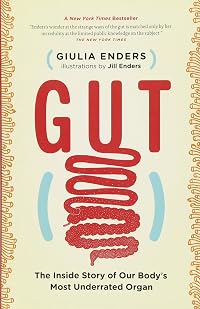
Gut: The Inside Story of Our Body's Most Underrated Organ
by Giulia Enders
On This Page
Description
Our gut is almost as important to us as our brain and yet we know very little about how it works. Gut: The Inside Story is an entertaining, informative tour of the digestive system from the moment we raise a tasty morsel to our lips until the moment our body surrenders the remnants to the toilet bowl. No topic is too lowly for the author's wonder and admiration, from the careful choreography of breaking wind to the precise internal communication required for a cleansing vomit. Along the way, show more the author provides practical advice such as the best ways to sit on the toilet to have a comfortable bowel movement, how clean your kitchen should be for optimum gut health, and how different laxatives work. She tells stories of gut bacteria that can lead to obesity, autoimmune diseases, or even suicide, and she discusses the benefits of dietary supplements such as probiotics. This book is a fascinating primer for anyone interested in how our ideas about the gut are changing in the light of cutting-edge scientific research. In the words of the author, “We live in an era in which we are just beginning to understand just how complex the connections are between us, our food, our pets and the microscopic world in, on, and around us. We are gradually decoding processes that we used to believe were part of our inescapable destiny.". show less
Tags
Recommendations
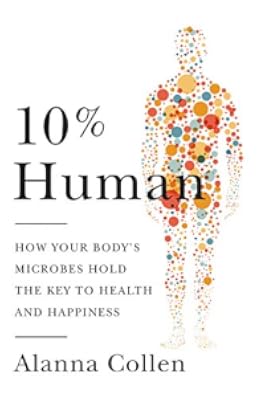
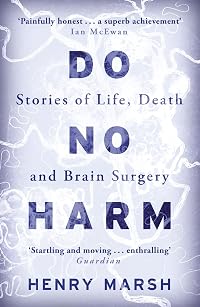
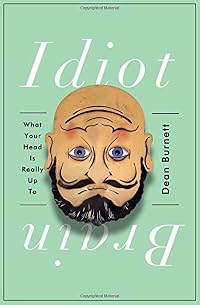
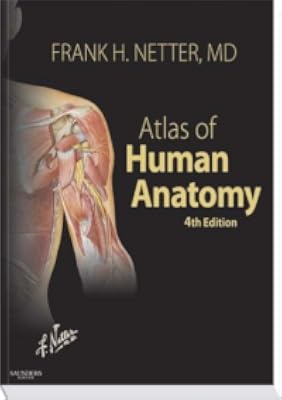


Member Recommendations

Member Reviews
This was a fun (yes, fun) and interesting look at the most current research about what goes on in our gut. Enders goes through all this information with humor and clarity, even when the subject could be confusing.
The most interesting parts to me were the speculation that the gut is a center that sort of runs the body, much like the brain, and that it probably is a contributor to anxiety and depression. It's not all "in our minds". Also, I'm of course interested in the new research about the role of our gut flora and probiotics and prebiotics.
The only thing I wish is that there had been more actual answers in this book, but the research needs to be done first. It seems to be a very new field of study. I think you can find more detail show more about probiotics and prebiotics in other books, but it is all so new that I think it's probably based on untested hypotheses. I also have [The Good Gut], another book published in 2015, and I'll be interested to compare the two. It looks more like a plan to make use of the current research to influence your diet and health. I'm hoping the two books complement each other. show less
The most interesting parts to me were the speculation that the gut is a center that sort of runs the body, much like the brain, and that it probably is a contributor to anxiety and depression. It's not all "in our minds". Also, I'm of course interested in the new research about the role of our gut flora and probiotics and prebiotics.
The only thing I wish is that there had been more actual answers in this book, but the research needs to be done first. It seems to be a very new field of study. I think you can find more detail show more about probiotics and prebiotics in other books, but it is all so new that I think it's probably based on untested hypotheses. I also have [The Good Gut], another book published in 2015, and I'll be interested to compare the two. It looks more like a plan to make use of the current research to influence your diet and health. I'm hoping the two books complement each other. show less
"The gut is our body's most underrated organ. This is its inside story."
Gut is a rollicking ride through the vast organ that is the human digestive system. Enders takes us through the whole thing from top to, er, bottom, and from inside to out.
The book is similar in tone to Mary Roach's book: Gulp: Adventures on the Alimentary Canal, but where Roach excels at going into the kooky culture behind the science, Enders gives us the low down on the anatomy and physiology of our most ignored organ (appropriate, as she is--at the time of this writing--a medical student). We move through the structure of the various components of the digestive system, on to the structure of the nervous system which services the gut, and make a nice little show more stopover with the microbiome: the bacterial cells living in our gut that outnumber our or human cells by 9 to 1.
Enders has that rare and precious gift: she is able to impart knowledge in an engaging manner. Many, many nonfiction writers would kill for her delivery. The entire book is written in a wry, accessible tone, making Gut the most fun your going to have with your colon for quite a while. In addition, the book is cunningly (and humorously) illustrated (by Jill Enders) throughout, treating us to images of ballerinas toe dancing on slices of cake, babies diving through a sea of bacteria while being born, and the immune system fitting bad bacteria with little hats, among many, many others.
Gut gives us the best of science writing. You will learn quite a bit while perusing this book, but you won't realize it right away. I'm almost sad that Enders is seeking a career in medicine, I hope she'll still find time for her writing; the world needs more books this fun.
Check out more reviews on my site!
www.theirregularreaderblog.wordpress.com show less
Gut is a rollicking ride through the vast organ that is the human digestive system. Enders takes us through the whole thing from top to, er, bottom, and from inside to out.
The book is similar in tone to Mary Roach's book: Gulp: Adventures on the Alimentary Canal, but where Roach excels at going into the kooky culture behind the science, Enders gives us the low down on the anatomy and physiology of our most ignored organ (appropriate, as she is--at the time of this writing--a medical student). We move through the structure of the various components of the digestive system, on to the structure of the nervous system which services the gut, and make a nice little show more stopover with the microbiome: the bacterial cells living in our gut that outnumber our or human cells by 9 to 1.
Enders has that rare and precious gift: she is able to impart knowledge in an engaging manner. Many, many nonfiction writers would kill for her delivery. The entire book is written in a wry, accessible tone, making Gut the most fun your going to have with your colon for quite a while. In addition, the book is cunningly (and humorously) illustrated (by Jill Enders) throughout, treating us to images of ballerinas toe dancing on slices of cake, babies diving through a sea of bacteria while being born, and the immune system fitting bad bacteria with little hats, among many, many others.
Gut gives us the best of science writing. You will learn quite a bit while perusing this book, but you won't realize it right away. I'm almost sad that Enders is seeking a career in medicine, I hope she'll still find time for her writing; the world needs more books this fun.
Check out more reviews on my site!
www.theirregularreaderblog.wordpress.com show less
The more books I read about my gut, the less I seem to know. This book is one of the better ones because it (a) gets into the details of why scientists might think this or that, (b) tells you when the information is somewhat or largely conjectural and should be taken with a grain of salt and (c) takes more of a common sense approach in giving the advice (e. g., saying a certain advice is from her grandmother and, although the scientific backup for it is still a little sketchty, her grandmother was right about a lot of other things...: )
Enders writes in an entertaining and witty way although without the "belly-laughs" I had with Mary Roach's similar book (Gulp). Katy Sobey does a wonderful job turning this excellent writing into the show more audio format. show less
Enders writes in an entertaining and witty way although without the "belly-laughs" I had with Mary Roach's similar book (Gulp). Katy Sobey does a wonderful job turning this excellent writing into the show more audio format. show less
Knowing that this was translated from the German (Darm mit Charme) keeps forcing me to pronounce the title "goot" - despite the intestines hanging off the word. And it is "gut," I enjoyed it. Enders's writing is reader-friendly while being informative. And it seems oh so German and frank (haha, see what I did there?).
Enders tells us that the digestive system has its own brain and it communicates with the one belonging to the nervous system as well, both affecting each other. She describes the system in a way that makes it interesting and attractive. Her sister's illustrations are light-hearted yet enable the concepts to stick in your mind. I now have an indelible image in my mind of intestinal villii and what foods are pre-biotics.
The show more book might not be for the faint-hearted, especially if they are germ-phobic, but they should probably read it anyway. Bacteria is not necessarily bad for you (are you listening, Debbie?) and, in fact, it might be crucial to your well-being.
There's something about translation or perhaps the very Germanish of this that makes the narrative a little stilted. Enders's tone is playful but somehow still seems to come off as stiff. I also wonder about the wealth of US statistics cited. Were they in the original or did they replace the more eurocentric statistics? Of course, I might be more interested in US statistics, but maybe not. I certainly wondered about all the US stats. We do seem to be obsessed here with antibacterial products (not at my house, obviously). Is it the same in Europe? show less
Enders tells us that the digestive system has its own brain and it communicates with the one belonging to the nervous system as well, both affecting each other. She describes the system in a way that makes it interesting and attractive. Her sister's illustrations are light-hearted yet enable the concepts to stick in your mind. I now have an indelible image in my mind of intestinal villii and what foods are pre-biotics.
The show more book might not be for the faint-hearted, especially if they are germ-phobic, but they should probably read it anyway. Bacteria is not necessarily bad for you (are you listening, Debbie?) and, in fact, it might be crucial to your well-being.
There's something about translation or perhaps the very Germanish of this that makes the narrative a little stilted. Enders's tone is playful but somehow still seems to come off as stiff. I also wonder about the wealth of US statistics cited. Were they in the original or did they replace the more eurocentric statistics? Of course, I might be more interested in US statistics, but maybe not. I certainly wondered about all the US stats. We do seem to be obsessed here with antibacterial products (not at my house, obviously). Is it the same in Europe? show less
This is a jaunty, easily digestible précis of intestinal biology, an enterological cornucopia of facts and figures and buttock-clenching anecdotes. Expect a lot of often fascinating talk about poo and farting, rather like a Monty Python sketch without the punchlines, as well as layman's introductions to the latest research into probiotics, prebiotics, antibiotics, the human biome, and the mysterious relationship between your gut and your brain. I learned a lot. I also made several strategic alterations to my diet, so it clearly connected on that level.
The author, Giulia Enders, is still studying for her PhD, and the book came about after a TED-style talk she gave at a Science Slam event went viral in 2012; if you understand German, you show more can watch it here (she's so young!). She writes about her subject with a smile on her face, fending off embarrassment with a no-nonsense, almost mumsy joviality, leavened with a few judicious euphemisms. It's all rendered into perfect colloquial English thanks to David Shaw's translation, which, at least in this edition, is refreshingly British in idiom. I'm not sure how it compares to Mary Roach's Gulp: Adventures on the Alimentary Canal, which I haven't read, but if you're interested in what you eat, how your body works, or just want to binge on some high-fibre factoids, Gut is a solid pop-science choice. show less
The author, Giulia Enders, is still studying for her PhD, and the book came about after a TED-style talk she gave at a Science Slam event went viral in 2012; if you understand German, you show more can watch it here (she's so young!). She writes about her subject with a smile on her face, fending off embarrassment with a no-nonsense, almost mumsy joviality, leavened with a few judicious euphemisms. It's all rendered into perfect colloquial English thanks to David Shaw's translation, which, at least in this edition, is refreshingly British in idiom. I'm not sure how it compares to Mary Roach's Gulp: Adventures on the Alimentary Canal, which I haven't read, but if you're interested in what you eat, how your body works, or just want to binge on some high-fibre factoids, Gut is a solid pop-science choice. show less
My gut unfortunately fell out with me around 3 years ago, and whatever I did to upset it, clearly it's not forgiving me any time soon. I therefore hoped upon hope that this book would have a "Yes! That's it!" moment for me, but sadly (and not overly unexpectedly) there were no such revelations.
Still, it's an interesting, popular science read, and I did learn a number of new things along the way about this most complex of organs and how it works when it's working well. Particularly interesting was the new research which points to the relationship between the health of our gut bacteria and mood / depression.
I'd hoped that within these pages would be some new insights of the 'got this symptom? Perhaps check out x, y, z', but this is more show more of a popular gallop through the gut with a light touch on some general dysfunctions. An interesting read, written in a light and entertaining way, but nothing ground-breaking sadly.
3.5 stars - informative but not life-changing. show less
Still, it's an interesting, popular science read, and I did learn a number of new things along the way about this most complex of organs and how it works when it's working well. Particularly interesting was the new research which points to the relationship between the health of our gut bacteria and mood / depression.
I'd hoped that within these pages would be some new insights of the 'got this symptom? Perhaps check out x, y, z', but this is more show more of a popular gallop through the gut with a light touch on some general dysfunctions. An interesting read, written in a light and entertaining way, but nothing ground-breaking sadly.
3.5 stars - informative but not life-changing. show less
Excellent. Given the book's popularity and the author's youth, I was half expecting an easy-read potboiler. Not at all. Lively style, some goodish jokes and a driving commitment to enlighten the reader make it very accessible. But it covers a huge range of human biology, much of it entirely new to me (a reasonably well-informed layman). Including that we belong to a class of living things "opisthokonts" (I still can't spell it), which includes fungi as well as homo sapiens. Slight disappointment: the illustrations (by her sister who is meant to be a prize-winning scientific illustrator); they are not very elegant and often unclear what they are meant to show. Intend to re-read the book in German.
Members
- Recently Added By
Lists

8x8 Challenge 2015
64 works; 1 member

Books Read in 2017
4,249 works; 130 members

READ IN 2020
172 works; 1 member

Club Read's Recommended Nonfiction Written by Women
618 works; 30 members

In Our Time books
4,934 works; 2 members
Author Information

Giulia Enders was born in 1990 in Mannheim, Germany. She is a graduate of Goethe University in Frankfurt, Germany and is enrolled in their doctoral program in gastroenterology. Her talk, Charming Bowels, won first prize at the Science Slam in Freiburg, Berlin and Karlsruhe (2012). She is the author of Gut: The Inside Story of Our Body's Most show more Underrated Organ, which won the 2016 Australian Book Industry Awards International book of the year. (Bowker Author Biography) show less
All Editions
Some Editions
Awards and Honors
Awards
Distinctions
Notable Lists
Common Knowledge
- Canonical title
- Gut: The Inside Story of Our Body's Most Underrated Organ
- Original title
- Darm mit Charme: alles über ein unterschätztes Organ
- Original publication date
- 2014
- Dedication
- Für alle alleinerziehenden Eltern, die so viel Energie und Liebe für ihre Kinder aufbringen wie unsdere Mutter für meine Schwester uind mich.
Und für Hedi.
For all single parents who put as much energy and love into bringing up their children as our mother did for my sister and me.
And for Hedi. - First words
- Ich wurde per Kaiserschnitt geboren und konnte nicht gestillt werden. Das machte mich zum perfekten Vorzeigekind der Darmwelt im 21. Jahrhundert.
I was born by caesarean section, and was not able to be breast-fed. That makes me a perfect poster child for the intractability in the 21st century. - Last words
- (Click to show. Warning: May contain spoilers.)If the good and the bad are in equilibrium, the bad ones can make us stronger, and the good ones can take care of us and make us healthy.
- Original language
- German
- Canonical DDC/MDS
- 612.33
Classifications
Statistics
- Members
- 2,087
- Popularity
- 9,901
- Reviews
- 74
- Rating
- (4.01)
- Languages
- 18 — Arabic, Czech, Danish, Dutch, English, Estonian, Finnish, French, German, Greek, Hungarian, Italian, Norwegian (Bokmål), Polish, Russian, Spanish, Swedish, Portuguese (Portugal)
- Media
- Paper, Audiobook, Ebook
- ISBNs
- 84
- UPCs
- 1
- ASINs
- 28