rocketjk presents - Now Waddaya Reading?
This topic was continued by rocketjk presents - Now Waddaya Reading? (The sequel!).
Talk Club Read 2026
Join LibraryThing to post.
1rocketjk
Here I am back for more reading and yakking as we swing into 2026
To review: After a long project of investigation and exploration, my wife and I are now two years into our new live in New York City, having moved in mid-August of 2024 from Mendocino County, northern California, USA, to Manhattan. As 2026 dawns, we feel like we've begun the happy project of building community and finding ways to give back through volunteering and some political activity. We are both retired. As for me, my checkered work life included, in no particular order, public radio producer, teacher, freelance writer and used bookstore owner, busman, waiter, dishwasher and publications coordinator at the Federal Reserve Bank of San Francisco. My reading is an eclectic mix of fiction, history, memoirs, bios and more. In addition to the books I read straight through, I like to read anthologies, collections and other books of short entries one story/chapter at a time instead of plowing through them all at once. I have a couple of stacks of such books from which I read in this manner between the books I read from cover to cover (novels and histories, mostly). So I call these my "between books." When I finish a "between book," I add it to my yearly list. Last year, with the move behind us, I was able to increase my books read total to 46 from 2024's 41. Cheers and happy continued reading one and all!

Just for fun, here's Rosie the German shepherd pondering winter from her window seat (the only bit of furniture she's allowed on). At first we tried to keep her off it but then we thought, well the cushion sure does look like a dog bed, and also, it's the only way she'll be able to look out the window. And finally, it's right above the cabinet that contains the living room radiator. What kind of monsters would we have to be to forbid her that pleasure?
To review: After a long project of investigation and exploration, my wife and I are now two years into our new live in New York City, having moved in mid-August of 2024 from Mendocino County, northern California, USA, to Manhattan. As 2026 dawns, we feel like we've begun the happy project of building community and finding ways to give back through volunteering and some political activity. We are both retired. As for me, my checkered work life included, in no particular order, public radio producer, teacher, freelance writer and used bookstore owner, busman, waiter, dishwasher and publications coordinator at the Federal Reserve Bank of San Francisco. My reading is an eclectic mix of fiction, history, memoirs, bios and more. In addition to the books I read straight through, I like to read anthologies, collections and other books of short entries one story/chapter at a time instead of plowing through them all at once. I have a couple of stacks of such books from which I read in this manner between the books I read from cover to cover (novels and histories, mostly). So I call these my "between books." When I finish a "between book," I add it to my yearly list. Last year, with the move behind us, I was able to increase my books read total to 46 from 2024's 41. Cheers and happy continued reading one and all!

Just for fun, here's Rosie the German shepherd pondering winter from her window seat (the only bit of furniture she's allowed on). At first we tried to keep her off it but then we thought, well the cushion sure does look like a dog bed, and also, it's the only way she'll be able to look out the window. And finally, it's right above the cabinet that contains the living room radiator. What kind of monsters would we have to be to forbid her that pleasure?
2rocketjk
Keeping Track of 2026's Who/What/How/Where I Read
I've had fun charting my reading travels the last sixteen years. 2025's reading brought me to 18 countries, including the U.S., and 4 states within the U.S. Although there were, as always, several "U.S. non-state specific" books, and a few "Non-country specific" books on the 2025 list as well.
I don't select my reading to purposefully "travel" in any particular way. Rather, I just have fun seeing where my more random reading choices take me!
Who: Author/Editor
Female: 2
Male: 18
What
Novels: 10
Short Stories: 1
Histories: 1
Contemporary (when published) Events: 1
Biographies: 1
Memoirs: 5
Essays:
Periodicals: 1
How (Original Language)
English: 15
French: 1
Icelandic: 1
Spanish: 1
Japanese: 1
Yiddish: 1
Where
The High Seas
The End of the Tether by Joseph Conrad
Non-Country Specific
Life Magazine November, 7, 1955 edited by Edward K. Thompson
ASIA
Non-Country Specific
Heart of Asia by Nicholas Roerich
Japan
The Heiké Story by Eiji Yoshikawa
EUROPE
Non-Country Specific
Theodor Herzl: The Charismatic Leader by Derek Penslar
England
Spycatcher: the Candid Autobiography of a Senior Intelligence Officer by Peter Wright
France
Montaillou: The Promised Land of Error by Emmanuel Le Roy Ladurie
Iceland
Independent People by Halldór Laxness
Scotland
Chronicles of the Canongate by Sir Walter Scott
MIDDLE EAST
Israel
The Penitent by Isaac B. Singer
NORTH AMERICA
The United States
Non-State Specific
The Story Continued: The New York Times Magazine, January 13, 1974 by J. Anthony Lukas
What Are You Going Through by Sigrid Nunez
Alabama
How Far to the Promised Land: One Black Family's Story of Hope and Survival in the American South by Esau McCaulley
Connecticut
The Emperor of Gladness by Ocean Vuong
Lousiana
The Yellow House by Sarah M. Broom
New York
The Doorman by Chris Pavone
Roy White: From Compton to the Bronx by Roy White with Paul Semendinger
Flood by Andrew H. Vachss
North Carolina
A Fool's Errand by One of the Fools (a.k.a. Albion W. Tourgee)
SOUTH AMERICA
Argentina
No-one Loves a Policeman by Guillermo Orsi
I've had fun charting my reading travels the last sixteen years. 2025's reading brought me to 18 countries, including the U.S., and 4 states within the U.S. Although there were, as always, several "U.S. non-state specific" books, and a few "Non-country specific" books on the 2025 list as well.
I don't select my reading to purposefully "travel" in any particular way. Rather, I just have fun seeing where my more random reading choices take me!
Who: Author/Editor
Female: 2
Male: 18
What
Novels: 10
Short Stories: 1
Histories: 1
Contemporary (when published) Events: 1
Biographies: 1
Memoirs: 5
Essays:
Periodicals: 1
How (Original Language)
English: 15
French: 1
Icelandic: 1
Spanish: 1
Japanese: 1
Yiddish: 1
Where
The High Seas
The End of the Tether by Joseph Conrad
Non-Country Specific
Life Magazine November, 7, 1955 edited by Edward K. Thompson
ASIA
Non-Country Specific
Heart of Asia by Nicholas Roerich
Japan
The Heiké Story by Eiji Yoshikawa
EUROPE
Non-Country Specific
Theodor Herzl: The Charismatic Leader by Derek Penslar
England
Spycatcher: the Candid Autobiography of a Senior Intelligence Officer by Peter Wright
France
Montaillou: The Promised Land of Error by Emmanuel Le Roy Ladurie
Iceland
Independent People by Halldór Laxness
Scotland
Chronicles of the Canongate by Sir Walter Scott
MIDDLE EAST
Israel
The Penitent by Isaac B. Singer
NORTH AMERICA
The United States
Non-State Specific
The Story Continued: The New York Times Magazine, January 13, 1974 by J. Anthony Lukas
What Are You Going Through by Sigrid Nunez
Alabama
How Far to the Promised Land: One Black Family's Story of Hope and Survival in the American South by Esau McCaulley
Connecticut
The Emperor of Gladness by Ocean Vuong
Lousiana
The Yellow House by Sarah M. Broom
New York
The Doorman by Chris Pavone
Roy White: From Compton to the Bronx by Roy White with Paul Semendinger
Flood by Andrew H. Vachss
North Carolina
A Fool's Errand by One of the Fools (a.k.a. Albion W. Tourgee)
SOUTH AMERICA
Argentina
No-one Loves a Policeman by Guillermo Orsi
4rocketjk
>3 labfs39: Like Yurtle the Turtle, queen of all she surveys!
5rhian_of_oz
The scene through the window looks like a painting. Looks like Rosie has the best seat in the house.
6rocketjk
>5 rhian_of_oz: She does! The reason the window shot looks somewhat painting-like is that there's a screen window on the other side of the glass, which lends a little haziness to the scene, I think. My wife took the picture, by the way. Credit where due.
8rocketjk
Thanks for the kind words about the pooch. She can be a knucklehead, but she is mostly a source of joy.
And now to reading! I finished up last year reading a wonderful jazz memoir, We Called It Music: A Generation of Jazz, by guitarist Eddie Condon. So I begin this year with my post-We Called it Music "between books," via Stack 1:
* “A Last Will” by Williston Fish in Literature - Book Two edited by Thomas H. Briggs
* “The Dismemberment” from The Infernal Tales of Agha-ye Ayyaz by Reza Baraheni from New Writing from the Middle East edited by Leo Hamalian and John D. Yohannan
* “Golden Glove, Even if it Wasn’t” from Baseball in Pinellas County by Dan Hirshberg
* “Don’t Talk When the Red Light Is On” from My Ears Are Bent by Joseph Mitchell
* “The Vagina Dialogue: Repurposing Your Parts” from Replaceable You: Adventures in Human Anatomy by Mary Roach
* “The ‘Doomed Daredevils’ of the I.R.A. Warm Up Their 40 Years’ War” by Seán O'Faoláin from Life, November, 7, 1955 edited by Edward K. Thompson
I've now started The Doorman, a thriller by Chris Pavone, for my monthly (more or less) book group.
And now to reading! I finished up last year reading a wonderful jazz memoir, We Called It Music: A Generation of Jazz, by guitarist Eddie Condon. So I begin this year with my post-We Called it Music "between books," via Stack 1:
* “A Last Will” by Williston Fish in Literature - Book Two edited by Thomas H. Briggs
* “The Dismemberment” from The Infernal Tales of Agha-ye Ayyaz by Reza Baraheni from New Writing from the Middle East edited by Leo Hamalian and John D. Yohannan
* “Golden Glove, Even if it Wasn’t” from Baseball in Pinellas County by Dan Hirshberg
* “Don’t Talk When the Red Light Is On” from My Ears Are Bent by Joseph Mitchell
* “The Vagina Dialogue: Repurposing Your Parts” from Replaceable You: Adventures in Human Anatomy by Mary Roach
* “The ‘Doomed Daredevils’ of the I.R.A. Warm Up Their 40 Years’ War” by Seán O'Faoláin from Life, November, 7, 1955 edited by Edward K. Thompson
I've now started The Doorman, a thriller by Chris Pavone, for my monthly (more or less) book group.
9Ameise1

I wish you a healthy and happy New Year filled with many exciting books. May all your wishes come true.
10labfs39
>8 rocketjk: I've read three of Pavone's thrillers, and liked his first, The Expats, the best. They seemed to get steadily more "meh" afterwards. I'll be curious as to your impressions of his latest, which has the advantage, for you, of being set in your town.
11rocketjk
>10 labfs39: Yes, set in my town, and also I live in a building with doormen.
12WelshBookworm
>1 rocketjk: I'm taking a page from your "between books" practice. I've added a couple of things that I'm calling "long term projects" - a book of Dickens' short stories that has been on my TBR almost since I started keeping track. It was a library book that I no longer physically have, but I copied down the contents to check off as I finish them. Since I had previously read maybe half of the book, I don't think I will count the book when I finish it as the page count wouldn't be right, but will add each story separately. And then I've added a non-fiction book Decoding the Celts and will dip into that a few pages at a time.
Love the dog picture! Happy Reading!
Love the dog picture! Happy Reading!
13rocketjk
>12 WelshBookworm: I hope the between book concept works for you, in whatever form you employ it. Glad you like Rosie's portrait. Happy reading to you, as well.
14Fourpawz2
Wow - what a view Rosie has! And not only is it a seat with a view - it’s on top of a radiator! My cat would kill for that.
15ursula
Go Rosie! Our cats also love to hang out on the ledges above the radiators. I don't blame them, I would do it if I were small enough!
What floor do you live on?
What floor do you live on?
16rocketjk
>15 ursula: We're on the 8th floor. We were lucky enough to find an apartment with a west-facing view, which makes for enjoyable sunset watching just about any time of the year other than winter.
17susanj67
Rosie looks very happy there! It looks cold but pretty outside. We've had some news reports about the snow in New York.
I've read at least one Chris Pavone, but I think it was set in Europe.
I've read at least one Chris Pavone, but I think it was set in Europe.
18markon
Welcome to a new year of reading and music. Thank for sharing the picture of Rosie & the view out your window!
20AlisonY
Happy new year, Jerry! Love the photo - it would indeed be monstrous to not allow her the heat, the cushion and the view. :)
21rocketjk
The Doorman by Chris Pavone
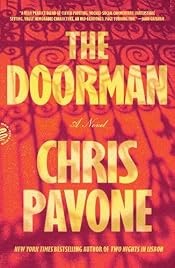
My first book of 2026 was a selection of my monthly book group. Billed as a thriller, The Doorman doesn't really become particularly thrillerish until maybe the final fifth of the narrative. Before that we get Pavone's description of life inside a famed old high-tone co-op apartment building on Central Park West in New York City's Upper West Side. The only character of any appeal and, for me at least, interest is the book's title character, one of the building's doormen, known as Chicky Diaz, a working class fellow of 50 whose wife died a few years back and whose kids are grown and moved away. Otherwise, we get a roster of over-the-top stereotypes. The well-intentioned art consultant, Emily Longworth, who has traded a decade of just getting by for marriage to an ultra-rich, who has gradually revealed himself to be, you guessed it, emotionally manipulative and controlling, and a villain to boot, being in the arms business and all. And yet his fortune is so vast by now that the money is, basically, bottomless. Emily is, of course extremely beautiful. We are brought inside a meeting of the co-op board, and here, too, stereotypes abound. What plot there is through the book's first three quarters takes place within the context of police shootings that have the city on edge. The final section, when the action heats up, does flow nicely.
Pavone's writing is pretty good, on a paragraph and sentence level, and as I understand it from some LT members, Pavone has written better books.
My first book of 2026 was a selection of my monthly book group. Billed as a thriller, The Doorman doesn't really become particularly thrillerish until maybe the final fifth of the narrative. Before that we get Pavone's description of life inside a famed old high-tone co-op apartment building on Central Park West in New York City's Upper West Side. The only character of any appeal and, for me at least, interest is the book's title character, one of the building's doormen, known as Chicky Diaz, a working class fellow of 50 whose wife died a few years back and whose kids are grown and moved away. Otherwise, we get a roster of over-the-top stereotypes. The well-intentioned art consultant, Emily Longworth, who has traded a decade of just getting by for marriage to an ultra-rich, who has gradually revealed himself to be, you guessed it, emotionally manipulative and controlling, and a villain to boot, being in the arms business and all. And yet his fortune is so vast by now that the money is, basically, bottomless. Emily is, of course extremely beautiful. We are brought inside a meeting of the co-op board, and here, too, stereotypes abound. What plot there is through the book's first three quarters takes place within the context of police shootings that have the city on edge. The final section, when the action heats up, does flow nicely.
Pavone's writing is pretty good, on a paragraph and sentence level, and as I understand it from some LT members, Pavone has written better books.
22Ameise1
>21 rocketjk: I read 'The Expat' and The Paris Diversion. I liked the former a little better than the latter. After that, I decided not to read any more of his books for a while.
23rocketjk
>22 Ameise1: The Expat is the one I think I've heard was particularly good.
24Ameise1
>23 rocketjk: Yes, it was exciting, and when we were in Luxembourg at the beginning of December, various scenes from the story came back to me.
25baswood
>21 rocketjk: you don't sound blown away. what about the other members of your book club?
26rocketjk
>25 baswood: Definitely not blown away. The discussion is scheduled for next week. I will let you know what transpires.
27dchaikin
>21 rocketjk: well, good riddance. Bring on more Singer
28rocketjk
My post-The Doorman "Between Book" reading provided a journey down Stack 2 Avenue:
* “Forest Hills Journal” by Herbert Warren Wind (The New Yorker) from Best Sports Stories 1965 edited by Irving T. Marsh and Edward Ehre
* “Mr. Webster at Home—Welcome” from The Public and Private Life of Daniel Webster by General S. P. Lyman
* “Buddy Daley” from Sweet Seasons: Recollections of the 1955-64 New York Yankees by Dom Forker
* “The ‘Problem of Evil’ in Postwar Europe” from When the Facts Change: Essays 1995-2010 by Tony Judt
* “The Highland Widow” from Chronicles of the Canongate by Sir Walter Scott - Newly added
* “Einstein Memorial: Medical school honoring the scientist opens in New York” from Life, November, 7, 1955 edited by Edward K. Thompson
I've now started The Penitent by Isaac B. Singer, as mentioned in a post above, the next in my two-per-year project of reading all of Singer's novels in order of their publishing in English.
* “Forest Hills Journal” by Herbert Warren Wind (The New Yorker) from Best Sports Stories 1965 edited by Irving T. Marsh and Edward Ehre
* “Mr. Webster at Home—Welcome” from The Public and Private Life of Daniel Webster by General S. P. Lyman
* “Buddy Daley” from Sweet Seasons: Recollections of the 1955-64 New York Yankees by Dom Forker
* “The ‘Problem of Evil’ in Postwar Europe” from When the Facts Change: Essays 1995-2010 by Tony Judt
* “The Highland Widow” from Chronicles of the Canongate by Sir Walter Scott - Newly added
* “Einstein Memorial: Medical school honoring the scientist opens in New York” from Life, November, 7, 1955 edited by Edward K. Thompson
I've now started The Penitent by Isaac B. Singer, as mentioned in a post above, the next in my two-per-year project of reading all of Singer's novels in order of their publishing in English.
29kidzdoc
The article about Albert Einstein College of Medicine is intriguing to me, Jerry. Do you happen to have a link to that article? I looked, but I couldn't find it.
30rocketjk
>29 kidzdoc: Well, this is Life Magazine, which you may remember would each month include two or three longer stories and several that were only very short (a paragraph or two) snippets with photographs. The Einstein Memorial was one of the latter, which I present to you here:
That's the whole thing. The article includes a photo of the "nine-story, $10-million building" with the road at the opening ceremony in front, a small photo of Herman Wouk giving and address at the ceremony, and another of Albert Einstein's son, Hans, "professor of engineering at the University of California (presumably at Berkeley)" with a "circle of admirers."
Although the article doesn't mention it, the Albert Einstein College of Medicine is in Brooklyn, near Pelham Bay. More information about the school and its history here: https://en.wikipedia.org/wiki/Albert_Einstein_College_of_Medicine
A long-held dream of the American Jewish community had its realization last week with the dedication in New York of the first medical school in the U.S. under Jewish auspices, the Albert Einstein College of Medicine of Yeshiva University. A nonsectarian institution whose faculty and student body are chosen solely on the basis of character and ability, without regard to national origin, creed or race, the new college will be part of New York's planned $100-million "medical city" which will also include a municipal hospital and a state psychiatric center.
At opening ceremonies, a congratulatory telegram from President Eisenhower was read, and New York's Governor Averell Harriman and other public officials hailed the school's anticipated contribution toward helping to relieve the current shortage of doctors in the U.S. A pioneer class of 56 already is enrolled in first year courses. Future classes will average 100 students for a total enrollment of 400. Said New York's Senator Irving Ives, "Nothing would have pleased Albert Einstein more; no monument would have moved him more profoundly."
That's the whole thing. The article includes a photo of the "nine-story, $10-million building" with the road at the opening ceremony in front, a small photo of Herman Wouk giving and address at the ceremony, and another of Albert Einstein's son, Hans, "professor of engineering at the University of California (presumably at Berkeley)" with a "circle of admirers."
Although the article doesn't mention it, the Albert Einstein College of Medicine is in Brooklyn, near Pelham Bay. More information about the school and its history here: https://en.wikipedia.org/wiki/Albert_Einstein_College_of_Medicine
31kidzdoc
>30 rocketjk: Thanks, Jerry. Oddly enough I don't think we subscribed to LIFE Magazine, even though Wikipedia says that it was active until 1972 and we had plenty of newspapers and magazines in both our house, and especially in the homes of my maternal and paternal grandparents, as both of my grandfathers, my father and one of his older brothers were all voracious readers.
Thanks for posting that excerpt. Albert Einstein College of Medicine is in the Bronx, not Brooklyn, and Montefiore Medical Center, its main teaching hospital, is especially important and sadly memorable to me, as that is where my beloved maternal grandmother was taken after she had a massive stroke and died in the mid 1960s. The family was all at her bedside and, IIRC, I didn't want to be left alone in their nearby home in the Bronx after she was taken there, so I spent the night in my father's station wagon in the main hospital parking lot, as kids weren't allowed to visit after hours, and even though it was roughly 60 years ago I vividly remember a friendly security guard shining a flashlight and checking in on me periodically throughout the night. I should ask my mother's younger sister to refresh my memory of that night.
My mother got her certificate from the New York Institute of Dietetics in 1954 or 1955, after she graduated from high school and did her rotations at Montefiore Medical Center. If you meet my mother now one of the first things she will tell you is that she worked as a dietician at Jewish Memorial Hospital, a facility on the Upper West Side of Manhattan that closed in, I believe, the 1970s or 1980s. She was employed there in the mid 1950s when she met my father, and they moved to nearby Jersey City after they were married.
Thanks for posting that excerpt. Albert Einstein College of Medicine is in the Bronx, not Brooklyn, and Montefiore Medical Center, its main teaching hospital, is especially important and sadly memorable to me, as that is where my beloved maternal grandmother was taken after she had a massive stroke and died in the mid 1960s. The family was all at her bedside and, IIRC, I didn't want to be left alone in their nearby home in the Bronx after she was taken there, so I spent the night in my father's station wagon in the main hospital parking lot, as kids weren't allowed to visit after hours, and even though it was roughly 60 years ago I vividly remember a friendly security guard shining a flashlight and checking in on me periodically throughout the night. I should ask my mother's younger sister to refresh my memory of that night.
My mother got her certificate from the New York Institute of Dietetics in 1954 or 1955, after she graduated from high school and did her rotations at Montefiore Medical Center. If you meet my mother now one of the first things she will tell you is that she worked as a dietician at Jewish Memorial Hospital, a facility on the Upper West Side of Manhattan that closed in, I believe, the 1970s or 1980s. She was employed there in the mid 1950s when she met my father, and they moved to nearby Jersey City after they were married.
32rocketjk
>31 kidzdoc: "Thanks for posting that excerpt."
That wasn't an excerpt. That was the entire piece. And you're welcome.
"Albert Einstein College of Medicine is in the Bronx, not Brooklyn,"
Yes, brain blip on my part.
Thanks for sharing your memory of the place, though I'm sorry it is a sad one, save for that friendly security guard. We didn't get Life magazine, either. My parents did get Time magazine, which was weekly and had more news. They were also devotees of the Sunday New York Times, particularly the magazine section. We also got the Newark News on a daily basis for as long as they stayed in business. (You may or may not recall that my family lived in Newark until 1966, when I was 11, before moving to the suburbs.)
That wasn't an excerpt. That was the entire piece. And you're welcome.
"Albert Einstein College of Medicine is in the Bronx, not Brooklyn,"
Yes, brain blip on my part.
Thanks for sharing your memory of the place, though I'm sorry it is a sad one, save for that friendly security guard. We didn't get Life magazine, either. My parents did get Time magazine, which was weekly and had more news. They were also devotees of the Sunday New York Times, particularly the magazine section. We also got the Newark News on a daily basis for as long as they stayed in business. (You may or may not recall that my family lived in Newark until 1966, when I was 11, before moving to the suburbs.)
33kidzdoc
>32 rocketjk: Ah. Thanks for that. Where are you getting these LIFE Magazine articles from? (Actually it's probably better that you don't tell me...)
Now that you mention it I do remember you telling me that you spent your early childhood in Newark. We lived in Jersey City from the late 1950s until the summer of 1974. My father worked as a civilian engineer specializing in gyroscope technology on nuclear submarines at the Brooklyn Navy Yard, and in 1973 he became an aerospace engineer for a naval research & development facility in suburban Philadelphia; we moved there the following summer. We frequently spent Sundays in the home of one of his older brothers, who also lived in Jersey City and his wife happened to be the older sister of my mother! We drove to their house after church and would pick up copies of The New York Times, The Jersey Journal, and the Newark Star-Ledger. My father, uncle and I would read the papers, while my cousins, brother and neighborhood kids would typically play outside until Sunday dinner was ready.
Now that you mention it I do remember you telling me that you spent your early childhood in Newark. We lived in Jersey City from the late 1950s until the summer of 1974. My father worked as a civilian engineer specializing in gyroscope technology on nuclear submarines at the Brooklyn Navy Yard, and in 1973 he became an aerospace engineer for a naval research & development facility in suburban Philadelphia; we moved there the following summer. We frequently spent Sundays in the home of one of his older brothers, who also lived in Jersey City and his wife happened to be the older sister of my mother! We drove to their house after church and would pick up copies of The New York Times, The Jersey Journal, and the Newark Star-Ledger. My father, uncle and I would read the papers, while my cousins, brother and neighborhood kids would typically play outside until Sunday dinner was ready.
34rocketjk
>33 kidzdoc: Ah, I remember the Jersey Journal. Also, there was the Bayonne Times, of which my great uncle Morris Rosenberg, a.k.a. Rosie (brother of my grandfather, Max Rosenberg) was the sports editor for many years. My mother grew up in Bayonne. As I understand it, that was a bareknuckle working class town, starting with the Navy yard and the steelworks. My grandfather owned a building demolition business, although my memory of him is of his time running a trailer park. My mother claimed that my grandfather got the family through the Depression on his pinochle winnings. I always assumed "pinochle" was a euphemism, but my mother claimed otherwise. At any rate, the Rosenberg brothers were a colorful pair, and their sisters, Ida and Mae, were also wonderful. Sorry, I guess this is "digression Monday."
35markon
>34 rocketjk: Ah, pinochle was my father's favorite card game. I miss playing with him and his "Navy rules."
36kidzdoc
>34 rocketjk: Great memories! Our local travels (my mother and myself before my brother was still small, as he was too much trouble to join us) were limited to Jersey City itself, Newark, especially the shopping district that was easily accessible by bus, Macy's and the other stores close to the 33rd Street PATH station, and similar stores in Midtown and lower Manhattan near Union Square. We frequently went to Job Lot in Lower Manhattan on Saturdays with my father, which was a popular discount store near Chambers St that sold discounted items purchased from larger stores, and Chambers St itself featured a bookshop which sold used paperback books with the front covers ripped off for less than a dollar apiece.
Thanks to her job working as a dietician at Jewish Memorial Hospital we developed a love for Jewish cuisine, and we typically had lunch in one of the classic restaurants nearby. When I worked at NYU Medical Center in the mid 1990s one of my favorite places to pick up lunch was one of the Midtown soup carts from Ratner's, one of those great Lower East Side Jewish establishments that sadly isn't there anymore. The carts sold one of six different types of soup and an onion roll for, I think, $5.00, and there was always a line of at least half a dozen hungry souls. The borscht, fish stew, and matzo ball soup in particular were absolutely heavenly!
Okay, I think I've digressed enough for one day...
Thanks to her job working as a dietician at Jewish Memorial Hospital we developed a love for Jewish cuisine, and we typically had lunch in one of the classic restaurants nearby. When I worked at NYU Medical Center in the mid 1990s one of my favorite places to pick up lunch was one of the Midtown soup carts from Ratner's, one of those great Lower East Side Jewish establishments that sadly isn't there anymore. The carts sold one of six different types of soup and an onion roll for, I think, $5.00, and there was always a line of at least half a dozen hungry souls. The borscht, fish stew, and matzo ball soup in particular were absolutely heavenly!
Okay, I think I've digressed enough for one day...
37rocketjk
>36 kidzdoc: Thanks for all that, Daryl. And regarding this . . .
"Okay, I think I've digressed enough for one day..."
. . . I hereby declare this thread to be a no fault, no limits, digression-friendly zone for one and all.
I remember that area of shopping district area of downtown Newark. My mother would take me with her when she went there sometimes. Macy's and Gimbel's were the two department stores I remember best. Also Bamberger's, known to my mom and her friends as "Bam's." (In fact, there was a saying in our neighborhood to do with keeping information from one's competitors: "Does Macy's tell Gimbel's?") If I was good we would stop at the Chock Full of Nuts diner and my mother would treat me to a donut and in winter a hot chocolate.
"Okay, I think I've digressed enough for one day..."
. . . I hereby declare this thread to be a no fault, no limits, digression-friendly zone for one and all.
I remember that area of shopping district area of downtown Newark. My mother would take me with her when she went there sometimes. Macy's and Gimbel's were the two department stores I remember best. Also Bamberger's, known to my mom and her friends as "Bam's." (In fact, there was a saying in our neighborhood to do with keeping information from one's competitors: "Does Macy's tell Gimbel's?") If I was good we would stop at the Chock Full of Nuts diner and my mother would treat me to a donut and in winter a hot chocolate.
38rocketjk
>35 markon: My wife and I taught ourselves pinochle a couple of years back and had fun with it for a while, but we eventually realized that the game just isn't as much fun with just two playing as it would be with four players. Or so we assumed. Anyway, we just sort of stopped after a while. It would be fun to find a group to play with, though. Come to think of it, I bet I could find a game or two around New York City somewhere.
40rocketjk
>39 dianeham: Greetings! Thanks for dropping in.
41kjuliff
And from me, Hi. Isn’t it great living in a city with Mamdani as Mayory. We are o lucky to have him..
42kidzdoc
>37 rocketjk: I do recall going to Bamberger's and Gimbel's, I believe in Newark. We would go to the Macy's in Herald Square, an easy trip from Journal Square on PATH trains to the 33rd St & 6th Ave terminus. The Macy's stores featured escalators with wooden rails and steps, and at least one of the department stores had manually operated elevators that were a bit disconcerting when I was a small child, thus I was more comfortable using the escalators.
A favorite stop, particularly when I was with my grandfather, was visiting Horn & Hardardt; I can't remember if that was in NYC, Newark, or Jersey City. As you know they featured sandwiches, cold drinks and desserts on shelves with glass doors, and you would insert a coin into the slot to open the door and retrieve the food or drink. My favorites, IIRC, were slices of apple or cherry pie, milk, and sandwiches of some sort.
A favorite stop, particularly when I was with my grandfather, was visiting Horn & Hardardt; I can't remember if that was in NYC, Newark, or Jersey City. As you know they featured sandwiches, cold drinks and desserts on shelves with glass doors, and you would insert a coin into the slot to open the door and retrieve the food or drink. My favorites, IIRC, were slices of apple or cherry pie, milk, and sandwiches of some sort.
43RidgewayGirl
>42 kidzdoc: There is still a manual elevator in the Fine Arts Building in Chicago and every time I go to my favorite bookstore (Exile in Bookville, which has a great selection of small presses and books in translation) I take the elevator, despite the store only being on the second floor. It makes me feel like I'm Dorothy Parker.
And an automat! How wonderful, I have only encountered those in books. I guess the modern equivalent is rolling sushi.
And an automat! How wonderful, I have only encountered those in books. I guess the modern equivalent is rolling sushi.
44kidzdoc
>43 RidgewayGirl: Nice, Kay. I hope to return to Chicago in the near future, in order to visit several of my closest members of LibraryThing, along with one of my favorite classmates of residency. I would also love to return to Madison to visit my best friend from medical school and his wife, as he paid me a visit here two years ago.
Automats were true American treasures!
Automats were true American treasures!
45rocketjk
>42 kidzdoc: There are, of course, still escalators in the Macy's in Manhattan, and if you go up to the escalators between the next to top floor and the top, they've maintained the original wooden rails and steps. I think by this point they're well over 100 years old. They're fun to ride on. I remember Horn and Hardardt, as well. I'm not certain, but I wouldn't be surprised if they were in New York, Newark, and Jersey City. I could look them up later, but I think maybe that was a national chain. I was a fan of the franks and beans.
46kidzdoc
>45 rocketjk: Nice. It's actually been many years since I've visited the Macy's in Herald Square, as I moved to Pittsburgh to attend medical school in 1993 and both Pittsburgh and Atlanta, for many years, had Macy's in their downtown shopping districts or large city or suburban malls.
I checked Wikipedia, and it seems that most of the automats, or at least the ones operated by Horn & Hardart, were centered in NYC and Philadelphia. I highly doubt that there were any H&Hs in Jersey City, and it would have been far easier for my paternal grandfather to take me to NYC on PATH trains from JSQ (Journal Square) to 33rd St or to Hudson Terminal, the precursor to WTC before the Twin Towers were completed.
I checked Wikipedia, and it seems that most of the automats, or at least the ones operated by Horn & Hardart, were centered in NYC and Philadelphia. I highly doubt that there were any H&Hs in Jersey City, and it would have been far easier for my paternal grandfather to take me to NYC on PATH trains from JSQ (Journal Square) to 33rd St or to Hudson Terminal, the precursor to WTC before the Twin Towers were completed.
47rocketjk
The Penitent by Isaac B. Singer

I read The Penitent as part of my ongoing project of reading all of Isaac B. Singer's novels in chronological order of their being published in English. I read two per year, the first book I start in January and the first book I start in July. The Penitent is the 9th in that order of Singer's 14 published novels, and I'm sorry to say that it is the first I've read that I found unsatisfying. In the book's opening section, a fictional Singer speaks of visiting the Wailing Wall in Jerusalem, where he is approached by an obviously religious Jewish man, one Joseph Shapiro, who tells Singer how much he has admired his writing over the years. The rest of the relatively short book is Shapiro's monologue about his reasons for turning from secular Judaism to ultra-orthodox Judaism. It's a long refutation of the sins of modern secular society, the temptations of the flesh and of liberal society. We get very little of Singer's usual impressive and gratifying powers of description or delvings into human nature. Instead, we get a rather repetitive and unsubtle testimony. Some of the more approving reviews here on LT express the view that Singer here has presented an interesting portrait of the thinking and motivation of the dedicated religious mind, so your mileage may vary, but I didn't find anything that revealing in this novel. C'est la vie. I can only say that if anyone is thinking of exploring Singer's writing, I beg you not to start with The Penitent.

I read The Penitent as part of my ongoing project of reading all of Isaac B. Singer's novels in chronological order of their being published in English. I read two per year, the first book I start in January and the first book I start in July. The Penitent is the 9th in that order of Singer's 14 published novels, and I'm sorry to say that it is the first I've read that I found unsatisfying. In the book's opening section, a fictional Singer speaks of visiting the Wailing Wall in Jerusalem, where he is approached by an obviously religious Jewish man, one Joseph Shapiro, who tells Singer how much he has admired his writing over the years. The rest of the relatively short book is Shapiro's monologue about his reasons for turning from secular Judaism to ultra-orthodox Judaism. It's a long refutation of the sins of modern secular society, the temptations of the flesh and of liberal society. We get very little of Singer's usual impressive and gratifying powers of description or delvings into human nature. Instead, we get a rather repetitive and unsubtle testimony. Some of the more approving reviews here on LT express the view that Singer here has presented an interesting portrait of the thinking and motivation of the dedicated religious mind, so your mileage may vary, but I didn't find anything that revealing in this novel. C'est la vie. I can only say that if anyone is thinking of exploring Singer's writing, I beg you not to start with The Penitent.
48kjuliff
>47 rocketjk: Isaac B. Singer is one of my favorite writers, but after reading your review, I think I might give this one a miss. Interesting review though.
49rocketjk
>48 kjuliff: Yes, Kate, he's one of my favorites as well, as you know of course. Since you've already read and admired many of Singer's books, I suppose you might try The Penitent out of curiosity. It's pretty short, coming in in my hardcopy edition at only 164 pages of relatively large print.
I should have noted that Singer included an author's afterword in which he mentions the ways in which he disagrees with the character in the book, but also the ways in which he agrees.
I should have noted that Singer included an author's afterword in which he mentions the ways in which he disagrees with the character in the book, but also the ways in which he agrees.
50rocketjk
It's actually been a couple of days since I finished The Penitent, enough time for me to also complete a journey through Stack 1 of my "between books." The other day I made an impulse purchase of New Yorker Magazine writer Jelani Cobb's recent essay collection, Three or More is a Riot, which I've duly added here.
* “Lantern Jaws” excerted from At the Blue Bell Inn by J.S. Fletcher in Literature - Book Two edited by Thomas H. Briggs
* “The Plane Reservation” by Massud Farzan from New Writing from the Middle East edited by Leo Hamalian and John D. Yohannan
* “Clearwater Central Catholic Put on the Miles in 1979” from Baseball in Pinellas County by Dan Hirshberg
* “Peace Father Fresh Vegetables” from My Ears Are Bent by Joseph Mitchell
* “Giving the Finger: Some Transplants Are Tougher Than Others” from Replaceable You: Adventures in Human Anatomy by Mary Roach
* “Trayvon Martin and the Parameters of Hope” from Three or More Is a Riot: How We Got Here: 2012-2025 by Jelani Cobb - Newly added
* “Ceremony Makes a Rebel ‘Immortal’: Jean Cocteau is Admitted to French Academy” from Life, November, 7, 1955 edited by Edward K. Thompson - Finished!
I'm now already almost 50 pages into Ocean Vuong's most recent novel, The Emperor of Gladness, which I'm enjoying immensely.
* “Lantern Jaws” excerted from At the Blue Bell Inn by J.S. Fletcher in Literature - Book Two edited by Thomas H. Briggs
* “The Plane Reservation” by Massud Farzan from New Writing from the Middle East edited by Leo Hamalian and John D. Yohannan
* “Clearwater Central Catholic Put on the Miles in 1979” from Baseball in Pinellas County by Dan Hirshberg
* “Peace Father Fresh Vegetables” from My Ears Are Bent by Joseph Mitchell
* “Giving the Finger: Some Transplants Are Tougher Than Others” from Replaceable You: Adventures in Human Anatomy by Mary Roach
* “Trayvon Martin and the Parameters of Hope” from Three or More Is a Riot: How We Got Here: 2012-2025 by Jelani Cobb - Newly added
* “Ceremony Makes a Rebel ‘Immortal’: Jean Cocteau is Admitted to French Academy” from Life, November, 7, 1955 edited by Edward K. Thompson - Finished!
I'm now already almost 50 pages into Ocean Vuong's most recent novel, The Emperor of Gladness, which I'm enjoying immensely.
51rocketjk
Life Magazine November, 7, 1955 edited by Edward K. Thompson
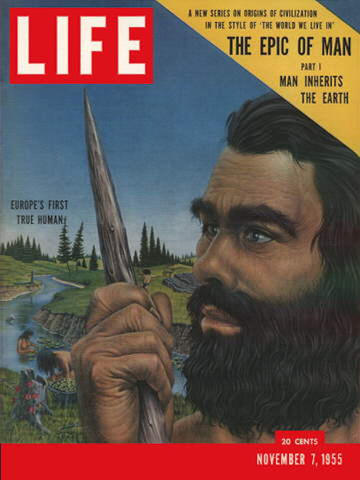
Read as a "between book" (see first post). I have a large stack of old magazines sitting in my home closet which, over the past several years, I've been gradually reading one article at a time. Generally, when I finish them they go on the recycle stack, unless I find them of significant enough interest to hold on to them. This edition of Life will not make that cut. The issue is of historic interest to me because it came out four months and three days after my birthday. Americans of a certain age may recall Life as a weekly publication that was largely full of short snippets of human interest or historical note, accompanied by one or more photographs. And then each issue would have three or four longer articles. The two lengthy pieces in this edition included:
* The cover article, clearly the first of a series, called "The Epic of Man, Part 1: Man Inherits the Earth," by Lincoln Barnett. This piece provided a pretty interesting account of the appearance and development of modern humans, at least to the extent that research on the topic had developed in 1955. It was well written, but I don't know how much of it would be considered accurate 70 years later.
* The most interesting item in this edition of Life by far for me was "The 'Doomed Daredevils' of the I.R.A. Warm Up Their 40 Years' War" by Irish writer Sean O'Faolain, who we learn was "in his early twenties . . . the director of propaganda for the I.R.A. during the civil war in Ireland." O'Faolain provides a fairly in-depth history of the I.R.A. and an examination of the state of the organization and their activities at the time of the writing. By 1955, he basically finds them to be a tragic anachronism whose tactics have long since lost any possibility of securing their goals.
I'll go closet diving this afternoon to find out what the next magazine off the stack will be.
Read as a "between book" (see first post). I have a large stack of old magazines sitting in my home closet which, over the past several years, I've been gradually reading one article at a time. Generally, when I finish them they go on the recycle stack, unless I find them of significant enough interest to hold on to them. This edition of Life will not make that cut. The issue is of historic interest to me because it came out four months and three days after my birthday. Americans of a certain age may recall Life as a weekly publication that was largely full of short snippets of human interest or historical note, accompanied by one or more photographs. And then each issue would have three or four longer articles. The two lengthy pieces in this edition included:
* The cover article, clearly the first of a series, called "The Epic of Man, Part 1: Man Inherits the Earth," by Lincoln Barnett. This piece provided a pretty interesting account of the appearance and development of modern humans, at least to the extent that research on the topic had developed in 1955. It was well written, but I don't know how much of it would be considered accurate 70 years later.
* The most interesting item in this edition of Life by far for me was "The 'Doomed Daredevils' of the I.R.A. Warm Up Their 40 Years' War" by Irish writer Sean O'Faolain, who we learn was "in his early twenties . . . the director of propaganda for the I.R.A. during the civil war in Ireland." O'Faolain provides a fairly in-depth history of the I.R.A. and an examination of the state of the organization and their activities at the time of the writing. By 1955, he basically finds them to be a tragic anachronism whose tactics have long since lost any possibility of securing their goals.
I'll go closet diving this afternoon to find out what the next magazine off the stack will be.
52dchaikin
>47 rocketjk: hmm. I love your Singer project, but I don’t think this will be my next Singer.
53kjuliff
>49 rocketjk: I like reading author’s end-notes. I recently read Colm Tóibín ’s A Long Winter and the end note was almost as interesting as the whole book.
54rocketjk
The Emperor of Gladness by Ocean Vuong

Just so no one is even momentarily mislead by what I'm going to write next, I found The Emperor of Gladness to be an absolutely marvelous novel.
You know that sort of novel full of quirky, misfit characters who band together somehow, in a music group, say, or at a workplace, or in a bar. They are poor, probably, and/or otherwise outsiders. Their lives are hard, and they probably have some stronger outside force arrayed against them: an evil landlord or building developer, or a relative with power of attorney who just doesn't understand, or maybe the medical industry, but none of that matters in the end, because they have each other and their quirky humor and positive outlooks on life. There might be some good writing, but overall the novel provides a feel good cartoon of a story, even if the ending's not all that happy. Over the years, my patience for such novels has been worn down to a stubble.
The Emperor of Gladness could have been that, because what I've just described is the basic framework. But Ocean Vuong is such a good writer, his ability to infuse this archetype with depth and breadth so acute, that this novel instead becomes a moving and memorable testimony of friendship and continued struggle against the headwinds of poverty, diminished expectations and disappointment with one's own choices. In the first few pages, 19-year-old Hai, the son of Vietnamese immigrants, addicted to pharmaceuticals, stands on a bridge over a freezing river and prepares to jump. He has already dropped out of college in New York City and returned in abject embarrassment to his mother in East Gladness, Connecticut, a gray, shrinking industrial town several miles outside of Hartford. Now his mother thinks he is in Boston studying in a medical program, though in truth he has never left East Gladness, so although he misses her, he can only speak with her on the phone, pretending to be in another city. But while he is looking down at the water, he is hailed from the window of a house on the far shore by an old woman who somehow convinces not to jump but instead to finish crossing the bridge so that she can warm him up with a blanket and give him a meal. She is Drazina, an immigrant from Lithuania who ran from Stalin's army at the end of World War 2 with her husband, now dead, and who now lives alone in the family house at the end of what is now mostly an abandoned and crumbling block of houses that dead ends at the riverbank. She offers him a room and he essentially becomes her caretaker. Soon, he prevails upon his cousin, Sony, to help him get a job at a nearby HomeMarket, a chain restaurant that specializes in rotisserie chicken and mac and cheese. The staff of this restaurant, a band of misfits in one way or another, will become his surrogate family. Again, this is all within the first several pages, so no real spoilers.
Well, you can see, perhaps, the potential for preciousness here. But Vuong's extreme talent in accurately depicting the claustrophobic humiliations of poverty and restrictions of class, and the strength of human aspiration and hope in the face of these factors, renders his character portrayals intensely human and their setting entirely recognizable. Also, since we feel we're in the real world rather than a feel good comedy, we are never sure of happy or longterm outcomes. Here's an overlong (sorry 'bout that!) quote to give you an idea of Vuong's writing:
This is a novel built much more strongly on character and setting than on plot. And yet, as we're pulled along by the writing, we relatively quickly come to care about these people, and to want to know what will become of them. And, to be clear, it is definitely not all as bleak as the excerpt I've provided above might suggest. There is, in fact, quite a bit of humor. This novel gets a rare five stars from me.
Book note: I read The Emperor of Gladness due to a tradition my wife and I share. At the beginning of each calendar year, we give each other to read whatever book from our previous year's reading that we enjoyed the most and which think the other would enjoy as well. My wife gave me this book to read. Not coincidentally, a couple of years back she also gave me Vuong's first novel, On Earth We're Briefly Gorgeous, which I similarly admired. (For the curious, the book I gave her this year was The Little World of Don Camillo by Italian author and journalist Giovannino Guareschi. Written in the 1950s, the book is a collection of stories about the village priest Don Camillo and his enemy/friend Peppone, the town's Communist mayor. Happily, she quite enjoyed it.)

Just so no one is even momentarily mislead by what I'm going to write next, I found The Emperor of Gladness to be an absolutely marvelous novel.
You know that sort of novel full of quirky, misfit characters who band together somehow, in a music group, say, or at a workplace, or in a bar. They are poor, probably, and/or otherwise outsiders. Their lives are hard, and they probably have some stronger outside force arrayed against them: an evil landlord or building developer, or a relative with power of attorney who just doesn't understand, or maybe the medical industry, but none of that matters in the end, because they have each other and their quirky humor and positive outlooks on life. There might be some good writing, but overall the novel provides a feel good cartoon of a story, even if the ending's not all that happy. Over the years, my patience for such novels has been worn down to a stubble.
The Emperor of Gladness could have been that, because what I've just described is the basic framework. But Ocean Vuong is such a good writer, his ability to infuse this archetype with depth and breadth so acute, that this novel instead becomes a moving and memorable testimony of friendship and continued struggle against the headwinds of poverty, diminished expectations and disappointment with one's own choices. In the first few pages, 19-year-old Hai, the son of Vietnamese immigrants, addicted to pharmaceuticals, stands on a bridge over a freezing river and prepares to jump. He has already dropped out of college in New York City and returned in abject embarrassment to his mother in East Gladness, Connecticut, a gray, shrinking industrial town several miles outside of Hartford. Now his mother thinks he is in Boston studying in a medical program, though in truth he has never left East Gladness, so although he misses her, he can only speak with her on the phone, pretending to be in another city. But while he is looking down at the water, he is hailed from the window of a house on the far shore by an old woman who somehow convinces not to jump but instead to finish crossing the bridge so that she can warm him up with a blanket and give him a meal. She is Drazina, an immigrant from Lithuania who ran from Stalin's army at the end of World War 2 with her husband, now dead, and who now lives alone in the family house at the end of what is now mostly an abandoned and crumbling block of houses that dead ends at the riverbank. She offers him a room and he essentially becomes her caretaker. Soon, he prevails upon his cousin, Sony, to help him get a job at a nearby HomeMarket, a chain restaurant that specializes in rotisserie chicken and mac and cheese. The staff of this restaurant, a band of misfits in one way or another, will become his surrogate family. Again, this is all within the first several pages, so no real spoilers.
Well, you can see, perhaps, the potential for preciousness here. But Vuong's extreme talent in accurately depicting the claustrophobic humiliations of poverty and restrictions of class, and the strength of human aspiration and hope in the face of these factors, renders his character portrayals intensely human and their setting entirely recognizable. Also, since we feel we're in the real world rather than a feel good comedy, we are never sure of happy or longterm outcomes. Here's an overlong (sorry 'bout that!) quote to give you an idea of Vuong's writing:
There's a way an old Connecticut town feels when you pass through it at night. Hollowed out, blasted yet styled into a potent aftermath, all of it touched by an inexplicable beauty, like the outside has suddenly become one huge living room. And you feel you can sit down underneath the sincere light of a streetlamp and no one would bother you, no one would tell you to leave, because they know you're staying for a reason. That you're bound by your debts, by blood or sweat and the cars sprayed silver with hoarfrost along streets named after white millionaires no one remembers. How boring, he thought, to be yet another boy wanting to rid himself of the hometown dust clinging to his clothes, setting out like a spark flung from his mother's cigarette. He floated through the empty streets, eyes watering from the icy wind. He passed houses filled with warm light and imagined the people inside, his head growing blurry with the thought of them huddled in their tiny parlors full of furniture and voices breaking through the raiment light of TV commercials, the news, its endless reel of abjection, their bodies kept, for now, from the intolerance of daylight and its procession of work and misgivings. He imagined all the boys he wanted to know lying sleepless in their cramped and cluttered rooms, the curling posters and chipped trophies, the endless cords to defunct video game consoles, all of it once the feeble altar of teenage triumphs, now the detritus of adolescence.
This is a novel built much more strongly on character and setting than on plot. And yet, as we're pulled along by the writing, we relatively quickly come to care about these people, and to want to know what will become of them. And, to be clear, it is definitely not all as bleak as the excerpt I've provided above might suggest. There is, in fact, quite a bit of humor. This novel gets a rare five stars from me.
Book note: I read The Emperor of Gladness due to a tradition my wife and I share. At the beginning of each calendar year, we give each other to read whatever book from our previous year's reading that we enjoyed the most and which think the other would enjoy as well. My wife gave me this book to read. Not coincidentally, a couple of years back she also gave me Vuong's first novel, On Earth We're Briefly Gorgeous, which I similarly admired. (For the curious, the book I gave her this year was The Little World of Don Camillo by Italian author and journalist Giovannino Guareschi. Written in the 1950s, the book is a collection of stories about the village priest Don Camillo and his enemy/friend Peppone, the town's Communist mayor. Happily, she quite enjoyed it.)
55FlorenceArt
>54 rocketjk: Wow, great review! You made me smile, just the enthusiasm is your post made me happy. And of course now I want to read the book too!
56rocketjk
>55 FlorenceArt: Thanks! I don't get that rhapsodic very often so I'm glad it didn't seem overmuch to you. I hope you do read The Emperor of Gladness soon. I'd love to read what you think of it.
57kidzdoc
>54 rocketjk: Great review, Jerry!
58labfs39
>54 rocketjk: I have yet to read anything by Vuong, but your review makes me want to rectify that asap. Fortunately I already own On Earth We're Briefly Gorgeous. Moving it up Mount TBR.
59rocketjk
>58 labfs39: Good! I think you will like it a lot.
60wandering_star
That's a really lovely gifting tradition!
61rocketjk
>60 wandering_star: Thanks, and yes, I agree. My wife came up with the idea. We haven't absolutely loved every book we've given each other in this tradition, but mostly the results have been happy ones. And it's a great way to ensure that we get at least one book a year that we really enjoy in front of the eyes of the other.
62AlisonY
Adding The Emperor of Gladness to the heaving wish list. I've not read anything by Vuong - which of the two you've read would you recommend starting with?
Sad to hear the last Singer novel turned into more of a lecture than a novel.
Sad to hear the last Singer novel turned into more of a lecture than a novel.
63RidgewayGirl
>47 rocketjk: I've only read his short stories, but if I do decide to dive into his novels, I'll skip this one, thanks.
>51 rocketjk: My stack of magazines is limited to a few book review magazines, but you do regularly remind me they are sitting there. And I found a wonderful old magazine from the early 1940s called the Household Magazine, which published short stories in between advertising. The stories are all dreadful in different ways and I remain bitter that one could support oneself by writing stories for publications like this one back then.
>54 rocketjk: I adored On Earth We're Briefly Gorgeous, but it gutted me in ways I'm still recovering from. You've made me less reluctant to read his new book, a lovely review.
>51 rocketjk: My stack of magazines is limited to a few book review magazines, but you do regularly remind me they are sitting there. And I found a wonderful old magazine from the early 1940s called the Household Magazine, which published short stories in between advertising. The stories are all dreadful in different ways and I remain bitter that one could support oneself by writing stories for publications like this one back then.
>54 rocketjk: I adored On Earth We're Briefly Gorgeous, but it gutted me in ways I'm still recovering from. You've made me less reluctant to read his new book, a lovely review.
64rocketjk
>62 AlisonY: I think On Earth We're Briefly Gorgeous, Vuong's first novel, would be the better place to start than The Emperor of Gladness. The former gives a good introduction to Vuong, his style, and the life issues he has so far been most concerned with. It's also the shorter of the two, if I'm remembering right.
65rocketjk
I enjoyed my post The Emperor of Gladness "Between Book" reading. I sojourned through Stack 2:
* “The Hunter, the Hunted” by Ray Haywood (The Oakland Tribune) from Best Sports Stories 1965 edited by Irving T. Marsh and Edward Ehre
* “Early Rising—Fruits and Other Products—Cod Fishing—Fish House—Seth Peterson—How to Make Chowder” from The Public and Private Life of Daniel Webster by General S. P. Lyman
* “Bill Stafford” from Sweet Seasons: Recollections of the 1955-64 New York Yankees by Dom Forker
* “Fictions on the Ground” from When the Facts Change: Essays 1995-2010 by Tony Judt
* “The Two Drovers” from Chronicles of the Canongate by Sir Walter Scott
* “The Story Continued: Prologue” by J. Anthony Lukas from The New York Times Magazine, January 13, 1974 edited by Edward K. Thompson - Newly added
I've now started the 1955 Nobel Prize in Literature winner, Independent People by Halldór Laxness.
* “The Hunter, the Hunted” by Ray Haywood (The Oakland Tribune) from Best Sports Stories 1965 edited by Irving T. Marsh and Edward Ehre
* “Early Rising—Fruits and Other Products—Cod Fishing—Fish House—Seth Peterson—How to Make Chowder” from The Public and Private Life of Daniel Webster by General S. P. Lyman
* “Bill Stafford” from Sweet Seasons: Recollections of the 1955-64 New York Yankees by Dom Forker
* “Fictions on the Ground” from When the Facts Change: Essays 1995-2010 by Tony Judt
* “The Two Drovers” from Chronicles of the Canongate by Sir Walter Scott
* “The Story Continued: Prologue” by J. Anthony Lukas from The New York Times Magazine, January 13, 1974 edited by Edward K. Thompson - Newly added
I've now started the 1955 Nobel Prize in Literature winner, Independent People by Halldór Laxness.
66baswood
If my wife gave me a book to read there is no way I would give it less than five stars.
Enjoyed your excellent review
Enjoyed your excellent review
67rocketjk
>66 baswood: Ha! Luckily for me, at least in this regard, my wife is not on LT, so I am free to be honest with y'all. To be clear, though, we're also honest with each other when it comes to this. I thought If I Survive You by Jonathan Escoffery was good but not great, and I wasn't that nuts about The Vaster Wilds by Lauren Groff, for example. She thought both The Zelmenyaners: a Family Saga by Moshe Kulbak and The Sellout by Paul Beatty were only OK, or at least that both took too long before they got interesting. But most of the time we enjoy each other's choices.
68rocketjk
Last night I finished Independent People, the modern-ish Icelandic classic by Halldor Laxness. It took me quite a while, as it is a long novel and not one to rush through. Overall it was excellent, the prose (and translation) superb, although the protagonist is an extremely flawed character, set in his ways and stubborn about it to the extent that he often brings harm to those around him. At any rate, a full review will have to wait for about 10 days or so because . . .
My wife and I head out in just a few hours for 8 days in New Orleans. I've been wanted to get back there to experience at least one more Mardi Gras, and my wife, who has been to New Orleans several times, has never been to Carnival, so about 8 months ago we decided that this was the year and started making reservations. I spent most of my 20s and into my early 30s in New Orleans, but my last Mardi Gras was around 25 years ago, so I'm due. I've already hooked up with a few old friends that we'll be seeing, and we have both restaurant reservations and tickets to several classic music clubs. Laissez les bon temps rouler!!
The books I'm bringing along are Orbital by Samantha Harvey, which I have to read for the book club meeting that will be convening very soon after our return home, and The Three Mothers: How the Mothers of Martin Luther King, Jr., Malcolm X, and James Baldwin Shaped a Nation by Anna Malaika Tubbs. I bought the latter book as an impulse purchase at a lovely cafe/bookshop at the very end of the 2 subway line in the northern-most section of the Bronx.
Cheers all!
My wife and I head out in just a few hours for 8 days in New Orleans. I've been wanted to get back there to experience at least one more Mardi Gras, and my wife, who has been to New Orleans several times, has never been to Carnival, so about 8 months ago we decided that this was the year and started making reservations. I spent most of my 20s and into my early 30s in New Orleans, but my last Mardi Gras was around 25 years ago, so I'm due. I've already hooked up with a few old friends that we'll be seeing, and we have both restaurant reservations and tickets to several classic music clubs. Laissez les bon temps rouler!!
The books I'm bringing along are Orbital by Samantha Harvey, which I have to read for the book club meeting that will be convening very soon after our return home, and The Three Mothers: How the Mothers of Martin Luther King, Jr., Malcolm X, and James Baldwin Shaped a Nation by Anna Malaika Tubbs. I bought the latter book as an impulse purchase at a lovely cafe/bookshop at the very end of the 2 subway line in the northern-most section of the Bronx.
Cheers all!
69kidzdoc
I'll be eager to find out which restaurant you, Steph and your friends go to. I have a modest list of favorites, led by Restaurant R'evolution on the ground floor of the Royal Sonesta Hotel in the French Quarter. Their Death by Gumbo is literally to die for!
70rocketjk
>69 kidzdoc: I will keep that restaurant in mind. We have lunch reservations for Dooky Chase in Treme and dinner reservations for Pascale Manale's uptown, Pesche near the Warehouse District, and we are hoping to get reservations for Brigsten's near the Riverbend. I also want to have lunch at Mandina's on Canal Street in Mid City and get some oysters in Casimento's on Magazine Street, the latter two spots favorites of mine from my time living in New Orleans.
The music we have tickets for includes
* a band called The Rumble at Tipitina's
* a pianist named Ross Hoppe who will perform at part of the Thursday night James Booker Night tradition at the Maple Leaf
* a Dirty Dozen-like ensemble called the Hot 8 Brass Band at Howlin' Wolf down by the Warehouse District
* Charmaine Neville at Snug Harbor jazz club on Frenchman Street.
On the Saturday night before Fat Tuesday we will be attending the MOMs Ball. MOMs stands for Mystic Orphans and Misfits and is an event started by friends of mine who all lived in Gentilly and put together what was originally an anti-ball ball, meant to be devoid of all the hoopla of the establishment balls. It was held in the Disabled American Veterans Hall in Araby. Over the years, it has become a major deal, as the hipsters discovered it years ago. At any rate, a few of my friends from the old says still attend every year, so I have a source for tickets. We will go, with my full knowledge that it's not going to be anything like "the old days" but have fun with whatever we find. For a while the event was moved to a huge warehouse on the West Bank that housed floats and such, but now it's been moved back into town to a movie studio in the Garden District. Steph and I spent some happy afternoons, despite the cold here in New York, assembling costumes for this event.
Mardi Gras day itself we will avoid the French Quarter and instead head uptown, where the more locals-friend parades roll up Magazine Street.
The music we have tickets for includes
* a band called The Rumble at Tipitina's
* a pianist named Ross Hoppe who will perform at part of the Thursday night James Booker Night tradition at the Maple Leaf
* a Dirty Dozen-like ensemble called the Hot 8 Brass Band at Howlin' Wolf down by the Warehouse District
* Charmaine Neville at Snug Harbor jazz club on Frenchman Street.
On the Saturday night before Fat Tuesday we will be attending the MOMs Ball. MOMs stands for Mystic Orphans and Misfits and is an event started by friends of mine who all lived in Gentilly and put together what was originally an anti-ball ball, meant to be devoid of all the hoopla of the establishment balls. It was held in the Disabled American Veterans Hall in Araby. Over the years, it has become a major deal, as the hipsters discovered it years ago. At any rate, a few of my friends from the old says still attend every year, so I have a source for tickets. We will go, with my full knowledge that it's not going to be anything like "the old days" but have fun with whatever we find. For a while the event was moved to a huge warehouse on the West Bank that housed floats and such, but now it's been moved back into town to a movie studio in the Garden District. Steph and I spent some happy afternoons, despite the cold here in New York, assembling costumes for this event.
Mardi Gras day itself we will avoid the French Quarter and instead head uptown, where the more locals-friend parades roll up Magazine Street.
71arubabookwoman
>70 rocketjk: Pascal Manales! Barbecue shrimp! In my husband's (then BF) second year at Tulane, he lived directly across the street (4407 Daneel St., I thinK) from Manales (at the corner of Napoleon and Daneel). Many fond memories.
72kidzdoc
>70 rocketjk: Two thumbs up for Dooky Chase's and Pascal's Manale! I just read that another one of my favorite Italian Creole restaurants, Tommy's Cuisine on Tchoupitoulas in the Industrial District, closed last year. I also love Cochon, also on Tchoupitoulas, and, of course, the Camellia Grill on Carrolton near St Charles (mmm, pecan pancakes...).
We never went to the French Quarter on Mardi Gras. One of my great aunts lived close to Napoleon and Freret, so we watched the floats pass nearby, and ate in her house.
We never went to the French Quarter on Mardi Gras. One of my great aunts lived close to Napoleon and Freret, so we watched the floats pass nearby, and ate in her house.
73rocketjk
>71 arubabookwoman: According to my buddy who has lived in New Orleans his whole life, Pascal Manale's was bought a few years back by Mr. Brennan (don't recall his first name but in any case the current head of the Brennan's restaurant family). My friend says Brennan bought the place because he loved it, not because he wanted to change it, and so he's left everything just as it always has been.
74rocketjk
>72 kidzdoc: Ah . . . The Camellia Grill!!! Back in the day (i.e. my 20s), I would be at the Maple Leaf on Oak Street until very late and then hit the Camellia Grill for an early morning Chili Omelette. Can you imagine having a chili omelette at 3:00 am now?
When I left New Orleans in 1986 to go to San Francisco for grad school, I drove the journey in my beat-up old Toyota. I packed up my car so I was all set for the road, then called up my longtime buddy who'd been my roommate for several years and told him to meet me at Dooky Chase for lunch and my final meal of my 7-year, extremely eventful, sojourn in New Orleans. It's a very, very special place. Steph and I ate at Pascal Manale's the last time we were in New Orleans, several years ago, and they even gave her their bread pudding recipe!
There are a million great restaurants, of course, but what I'm also looking forward to is randomly falling into some neighborhood places, especially for lunch, as we wander the town during the days. The Faubourg Marigny and Uptown along Magazine Street in particular.
When I left New Orleans in 1986 to go to San Francisco for grad school, I drove the journey in my beat-up old Toyota. I packed up my car so I was all set for the road, then called up my longtime buddy who'd been my roommate for several years and told him to meet me at Dooky Chase for lunch and my final meal of my 7-year, extremely eventful, sojourn in New Orleans. It's a very, very special place. Steph and I ate at Pascal Manale's the last time we were in New Orleans, several years ago, and they even gave her their bread pudding recipe!
There are a million great restaurants, of course, but what I'm also looking forward to is randomly falling into some neighborhood places, especially for lunch, as we wander the town during the days. The Faubourg Marigny and Uptown along Magazine Street in particular.
75kidzdoc
>74 rocketjk: Nice memory! I can't come close to matching that.
76rocketjk
Greetings, all! We're currently at New Orleans' airport awaiting our flight home. We've been here--and at Mardi Gras--for the last 9 days, so there's been very little reading time. I must sadly report, however, that I had to DNF Orbital despite the fact that it's the selection of my monthly reading group. I even voted for it, based on its big award and its brevity. However, I couldn't get past page 11. The writing style made me impatient, even resentful. I know lots of people loved it, obviously, and I'm glad they all had rewarding reading experiences. But I couldn't enjoy it.
Also, sadly and surprisingly, I couldn't get engaged in The Three Mothers: How the Mothers of Martin Luther King, Jr., Malcolm X, and James Baldwin Shaped a Nation by Anna Malaika Tubbs. The subject matter seemed fascinating, but again, the writing was such that I just never wanted to return to the book. The sentence-level writing was fine, but the opening chapter was unfocused and rambling. Perhaps the succeeding chapters honed in on the subject matter more sharply. I'd be very interested to read other folks' impressions of the book. I really did have high hopes. Possibly I was too impatient.
At any rate, on the flight home I am planning on starting How Far to the Promised Land: One Black Family's Story of Hope and Survival in the American South, a memoir by Esau McCaulley. I purchased this book at Baldwin & Co., a relatively small but very mighty bookstore (and coffee shop!) in New Orleans' Treme neighborhood.
We had a blast at Mardi Gras. I will provide some details and some photos over the next few days. Cheers!
Also, sadly and surprisingly, I couldn't get engaged in The Three Mothers: How the Mothers of Martin Luther King, Jr., Malcolm X, and James Baldwin Shaped a Nation by Anna Malaika Tubbs. The subject matter seemed fascinating, but again, the writing was such that I just never wanted to return to the book. The sentence-level writing was fine, but the opening chapter was unfocused and rambling. Perhaps the succeeding chapters honed in on the subject matter more sharply. I'd be very interested to read other folks' impressions of the book. I really did have high hopes. Possibly I was too impatient.
At any rate, on the flight home I am planning on starting How Far to the Promised Land: One Black Family's Story of Hope and Survival in the American South, a memoir by Esau McCaulley. I purchased this book at Baldwin & Co., a relatively small but very mighty bookstore (and coffee shop!) in New Orleans' Treme neighborhood.
We had a blast at Mardi Gras. I will provide some details and some photos over the next few days. Cheers!
77rocketjk
Independent People by Halldór Laxness

Independent People is, I think it's fair to say, considered a modern classic of Icelandic literature. It won the Nobel Prize in Literature. Originally published in 1946, the novel describes the life of rural farmers at the early part of the 20th century and takes its characters through the WW1 years and beyond. The title refers to the state of being that the book's protagonist, Bjartur of Summerhouses, aspires to. To be "independent" means to be totally debt free, to survive only on one's own labor, with no sacrifice being too extreme to reach and retain this independence. The needs and desires of this wife and children are entirely beside the point when "independence" is at stake. The large landowners and merchants are, of course, eager to extend credit of one sort or another to such farmers, in order to put them and keep them in debt. Thoughout the book, Bjartur will go to extreme and sometimes wholly regrettable (to the reader) lengths to avoid this snare. No level of poverty is too oppressive to stand in service of his goal. He shrugs off and sometimes even causes personal losses that others, and most readers, would consider tragic. Bjartur, instead, is entirely focused on his sheep, as he sees increasing his flock as the road to remaining independent. This frequently enough makes Bjartur a rather unsympathetic figure to spend time with. And yet Bjartur is also a poet, enamored of the ancient Icelandic sagas, and acutely aware of the beauty of the natural world around him. Laxness simply presents him to us with relatively little editorializing. Sometimes we see the world through Bjartur's eyes, and sometimes through the eyes of one or the other of his several children or his elderly mother-in-law. Particularly effective is the perspective of Bjartur's youngest son, Nonni, who dreams of visiting other lands. There is a lot of spectacular natural description, and we get a visceral feeling of what life in the family's falling apart house is like. Here is a too-long to quote passage I really love, seen through Nonni's eyes, as his grandmother awakens and gets the fire going:
While Bjartur in many crucial ways is an unsympathetic character, Laxness manages to allow us to feel a significant level of compassion for him, even in his extremities, and makes his world and his struggles interesting enough so that the reading experience one attains through Independent People is memorable and rewarding, or at least it was for me.
Book note: I read Independent People because it was a gift from our next door neighbors for my 70th birthday, which was in July. So I'm a bit tardy in the reading, but I'm quite happy to have finally gotten to the book.

Independent People is, I think it's fair to say, considered a modern classic of Icelandic literature. It won the Nobel Prize in Literature. Originally published in 1946, the novel describes the life of rural farmers at the early part of the 20th century and takes its characters through the WW1 years and beyond. The title refers to the state of being that the book's protagonist, Bjartur of Summerhouses, aspires to. To be "independent" means to be totally debt free, to survive only on one's own labor, with no sacrifice being too extreme to reach and retain this independence. The needs and desires of this wife and children are entirely beside the point when "independence" is at stake. The large landowners and merchants are, of course, eager to extend credit of one sort or another to such farmers, in order to put them and keep them in debt. Thoughout the book, Bjartur will go to extreme and sometimes wholly regrettable (to the reader) lengths to avoid this snare. No level of poverty is too oppressive to stand in service of his goal. He shrugs off and sometimes even causes personal losses that others, and most readers, would consider tragic. Bjartur, instead, is entirely focused on his sheep, as he sees increasing his flock as the road to remaining independent. This frequently enough makes Bjartur a rather unsympathetic figure to spend time with. And yet Bjartur is also a poet, enamored of the ancient Icelandic sagas, and acutely aware of the beauty of the natural world around him. Laxness simply presents him to us with relatively little editorializing. Sometimes we see the world through Bjartur's eyes, and sometimes through the eyes of one or the other of his several children or his elderly mother-in-law. Particularly effective is the perspective of Bjartur's youngest son, Nonni, who dreams of visiting other lands. There is a lot of spectacular natural description, and we get a visceral feeling of what life in the family's falling apart house is like. Here is a too-long to quote passage I really love, seen through Nonni's eyes, as his grandmother awakens and gets the fire going:
Mumbling away to herself, the old woman gathered her strength and, after one or two fruitless efforts to rise, managed finally to scramble out of bed with all the gasps and groans which always accompanied that task. She put on her sackcloth skirt and her short coat. Then the search for the matches began. It always ended with the matches being found. In the uncertain light of the wall-lamp he saw her bending bareheaded over the range, saw her mahogany rune-carved skin and her protruding cheek-bones, her sunken mouth and scraggy neck, her thin wisps of grey hear -- and was afraid of her, and felt that morning would not come until she had tied her woolen shawl round her head. Presently she tied her woolen shawl round her head. In these tottering movements and twitching eyes he greeted each new day, greeted afresh the return of concrete reality in this age-old, closed-up face which peeped mumbling and grumbling from its hood as, toiling, struggling, and wrestling, she once more set about her endless task of lighting the fire. Then, without warning, his father started scratching himself, clearing his throat, spitting, and taking snuff. He put on his trousers. It was time to think of feeding the sheep.
That part of morning which belonged to reality had at last come round. It was comforting to reflect that one thing at least never varied from day to day: his grandmother's desperate wrestling with the fire. The brushwood was always equally damp; and although she broke the peat up into little pieces and laid the bits with the most wood in them nearest the kindling, the only result for long enough would be a dreary crackling and a damp, offensive reek that filled every cranny and stung one's nose and eyes with a smarting pain. And even if the boy put his head under the clothes, the smoke would have got there too. The flame in the wall-lamp would gutter low on the wick. But his grandmother's ritual grumbling was never so protracted that it did not carry with it the promise of coffee. Never was the smoke so thick or so blue, never did it penetrate the eyes, the nose, the throat, the lungs so deeply that it could be forgotten as the precursor of that fragrance which fills the soul with optimism and faith, the fragrance of the crushed beans beneath the jet of boiling water serving from the kettle, the smell of coffee.
While Bjartur in many crucial ways is an unsympathetic character, Laxness manages to allow us to feel a significant level of compassion for him, even in his extremities, and makes his world and his struggles interesting enough so that the reading experience one attains through Independent People is memorable and rewarding, or at least it was for me.
Book note: I read Independent People because it was a gift from our next door neighbors for my 70th birthday, which was in July. So I'm a bit tardy in the reading, but I'm quite happy to have finally gotten to the book.
78FlorenceArt
>77 rocketjk: Love the quote! And now you’ve made me want to read this too.
79SassyLassy
>77 rocketjk: It definitely is a memorable book, and got me reading more by Laxness. Will you be reading any more?
80rocketjk
>79 SassyLassy: I have no specific plans to do so, but who knows?? I'd certainly be interested if I ran across one of his other books.
81kidzdoc
>77 rocketjk: Great review, Jerry! After reading Laxness's novella A Parish Chronicle this month I'm inspired to look for my copy of Independent People and read it soonish.
82rocketjk
>81 kidzdoc: Yes, Darryl, I noticed you were reading a Laxness work and was wondering how you were liking it. I will be very interested to learn how you like Independent People. Cheers!
83kidzdoc
>82 rocketjk: I enjoyed A Parish Chronicle, Jerry, which is based in the region where Laxness grew up. He also mentions the importance of sheep to the farmers and townsfolk, and there is a strong thread of resentment towards priests, government officials snd others who wish to consolidate several of the region's parishes and close theirs, even though none of them are devout Christians.
84japaul22
>80 rocketjk:, >81 kidzdoc: I loved Independent People and it led me to read Iceland's Bell and Salka Valka, both of which I recommend. Darryl, Salka Valka is published by Archipelago Press.
85kidzdoc
>84 japaul22: Thanks, Jennifer. I just read your excellent review of Salka Valka, which I don't own even though it was published by Archipelago Books.
86rocketjk
How Far to the Promised Land: One Black Family's Story of Hope and Survival in the American South by Esau McCaulley
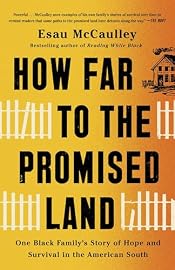
Neither of the two books I'd brought along to read on our just completed trip to New Orleans were enjoyable for me, and I DNFed both of them in short order. So when Steph and I passed by the Baldwin & Co. Books in New Orleans' Treme neighborhood, we went in, with me on the lookout for a book to replace those I'd jettisoned. I came out with How Far to the Promised Land, a memoir by Esau McCaulley about being raised, along with his brother and two sisters, in a tough neighborhood in Huntsville, Alabama, in the 1980s and 90s by a single mother, with his sometimes abusive, always troubled father gone most of the time. McCaulley is an author, columnist, theologian and pastor. His memoir begins, basically, with the news of his father's death and the realization that it will be up to him to deliver a eulogy. He begins interviewing family members and friends to learn as much about his father's life, and who he really was, as he can. In the memoir, goes back to provide his own life story and that of his family and community. The narrative also includes much about McCaulley's Christianity, and the ways in which his faith has shaped his life and sustained him.
I suppose one might think, well, how many versions of this familiar narrative--the lucky individual/family who survives early hardship and prejudice, raised successfully by a determined, religious single mother despite an absent/abusive father, etc., does on need to read? And yet, I am a Jew who, at 70 years old, still loves to sit down at a Passover seder each year and retell still again the story of the Exodus from Egypt, so I feel a recognition of the beauty of the powerfully, and regularly, retold tale. In this case, the beauty of the story shines through McCaulley's clear and acute insights into the meanings of his experiences growing up Black in the American south, and of having a mother who he knows to be a hero and yet in Regan's America would be scorned as a single mother of four, and therefore probably a "Welfare Queen," and thereby in the eyes of white racist America, a part of the problem.
An early example is McCaulley's relaying of the first incident in his life that exposed him to the corrosive power of racist hate. As a young boy in elementary school, he had come down with a stomach ache. Realizing something was amiss, his teacher had sent him to the nurse's office so that he could contact his mother to come get him. But when the nurse dials his mother's emergency contact number at the factory where she works on the assembly line, the man who answers merely curses at him and hangs up. Thinking the nurse might have dialed wrong, they try again. This time the man calls him the N-word and slams the phone down again. At that, he give up and goes back to class to wait out the school day. There follows this description:
It is the insight in the first sentence of that third paragraph that I found so revealing, something I wouldn't have considered. I marked several passages for quoting as I read, but I will spare you most of the others. As a person who considers himself an agnostic at best, I very much appreciated McCaulley's method of describing the power of his faith: straightforward and never preaching. One description of different methods of prayer, and their effectiveness, struck me. As a young boy, he had prayed for the removal of his problems, but that hadn't occurred. His mother, as she told him later, had instead prayed for the strength to see her problems through, and felt that prayer had worked. At one point she tells him, "I prayed for strength and God spoke to me. I knew it was God because He pronounced my name correctly."
There is a lot like that in McCaulley's storytelling that I found powerful in its plain-spokeness and directness. In one of the blurbs on the book's back cover, author Tish Harrison Warren says, "This book is prophetic without being preachy, and heartwarming without being cloying." That's a decent summation, I think.
A quick note that the copy editor in me wanted to know where the question mark was at the end of How Far to the Promised Land. But by the end of the book, and especially McCaulley's relating of his errant father's late attempts for atonement and renewal of his family ties, I began to think that maybe I'd misread the title after all. Instead of "How Far is it to the Promised Land?" maybe the intent is "How Far it is to the Promised Land." Or maybe it's both.
Also, I'd like to add that Baldwin & Co. Books turned out to be a wonderful bookstore and coffeeshop, too. They've got a lot going on there, including regular podcasts from their on-site studio. More info on all of it here: https://www.baldwinandcobooks.com/about
Neither of the two books I'd brought along to read on our just completed trip to New Orleans were enjoyable for me, and I DNFed both of them in short order. So when Steph and I passed by the Baldwin & Co. Books in New Orleans' Treme neighborhood, we went in, with me on the lookout for a book to replace those I'd jettisoned. I came out with How Far to the Promised Land, a memoir by Esau McCaulley about being raised, along with his brother and two sisters, in a tough neighborhood in Huntsville, Alabama, in the 1980s and 90s by a single mother, with his sometimes abusive, always troubled father gone most of the time. McCaulley is an author, columnist, theologian and pastor. His memoir begins, basically, with the news of his father's death and the realization that it will be up to him to deliver a eulogy. He begins interviewing family members and friends to learn as much about his father's life, and who he really was, as he can. In the memoir, goes back to provide his own life story and that of his family and community. The narrative also includes much about McCaulley's Christianity, and the ways in which his faith has shaped his life and sustained him.
I suppose one might think, well, how many versions of this familiar narrative--the lucky individual/family who survives early hardship and prejudice, raised successfully by a determined, religious single mother despite an absent/abusive father, etc., does on need to read? And yet, I am a Jew who, at 70 years old, still loves to sit down at a Passover seder each year and retell still again the story of the Exodus from Egypt, so I feel a recognition of the beauty of the powerfully, and regularly, retold tale. In this case, the beauty of the story shines through McCaulley's clear and acute insights into the meanings of his experiences growing up Black in the American south, and of having a mother who he knows to be a hero and yet in Regan's America would be scorned as a single mother of four, and therefore probably a "Welfare Queen," and thereby in the eyes of white racist America, a part of the problem.
An early example is McCaulley's relaying of the first incident in his life that exposed him to the corrosive power of racist hate. As a young boy in elementary school, he had come down with a stomach ache. Realizing something was amiss, his teacher had sent him to the nurse's office so that he could contact his mother to come get him. But when the nurse dials his mother's emergency contact number at the factory where she works on the assembly line, the man who answers merely curses at him and hangs up. Thinking the nurse might have dialed wrong, they try again. This time the man calls him the N-word and slams the phone down again. At that, he give up and goes back to class to wait out the school day. There follows this description:
That call would divide my Blackness in two. There was the Blackness of my community . . . Then came the other Black: the way the outside world saw us. Black as danger or trouble. Black as an odd intrusion in a world that would be better off without us. . . .
On television, a boy who experienced something that frightened him would come home and tell his dad. But I had no father to talk to about my newfound Blackness. I could not ask my father to tell me when he'd discovered that the world saw him that way. Nor did I confide in my mom. Children of single parents learn to dole out their traumas in small doses. When I saw her the evening and she asked how my day had been, I said, "It was fine." I knew she carried a heavy load, and I wanted her to believe that her sacrifice was working.
My father, then, hadn't just closed himself off from us; he had in part closed me off from my mother. My mom never knew that her seven-year-old son found out that he was Black as the world defines it while he was sick and calling for her help. That lie of omission was the first of many lies created out of love for her.
It is the insight in the first sentence of that third paragraph that I found so revealing, something I wouldn't have considered. I marked several passages for quoting as I read, but I will spare you most of the others. As a person who considers himself an agnostic at best, I very much appreciated McCaulley's method of describing the power of his faith: straightforward and never preaching. One description of different methods of prayer, and their effectiveness, struck me. As a young boy, he had prayed for the removal of his problems, but that hadn't occurred. His mother, as she told him later, had instead prayed for the strength to see her problems through, and felt that prayer had worked. At one point she tells him, "I prayed for strength and God spoke to me. I knew it was God because He pronounced my name correctly."
There is a lot like that in McCaulley's storytelling that I found powerful in its plain-spokeness and directness. In one of the blurbs on the book's back cover, author Tish Harrison Warren says, "This book is prophetic without being preachy, and heartwarming without being cloying." That's a decent summation, I think.
A quick note that the copy editor in me wanted to know where the question mark was at the end of How Far to the Promised Land. But by the end of the book, and especially McCaulley's relating of his errant father's late attempts for atonement and renewal of his family ties, I began to think that maybe I'd misread the title after all. Instead of "How Far is it to the Promised Land?" maybe the intent is "How Far it is to the Promised Land." Or maybe it's both.
Also, I'd like to add that Baldwin & Co. Books turned out to be a wonderful bookstore and coffeeshop, too. They've got a lot going on there, including regular podcasts from their on-site studio. More info on all of it here: https://www.baldwinandcobooks.com/about
87FlorenceArt
>86 rocketjk: Wonderful review. I wouldn’t have thought that a book like this would appeal to me, and yet…
88baswood
>77 rocketjk: Enjoyed your excellent review of Independent People. I have recently read (although LibraryThing tells me it was 8 years ago) World Light which blew me away. The descriptions of Icelandic scenery and the minutia of everyday life in the farming communities was brilliant. When writing is this good then story development can take as long as it needs to. Independent People goes on my wish list.
89AlisonY
Glad you enjoyed your New Orleans trip, Jerry. It sucks that you both got sick - did you pick it up on the plane ride home do you think?
Definitely with you on Orbital - I did finish it (on audiobook), but I found it to be really dull.
Your last couple of reviews have given me book bullets - you sell them well.
Definitely with you on Orbital - I did finish it (on audiobook), but I found it to be really dull.
Your last couple of reviews have given me book bullets - you sell them well.
90rocketjk
>89 AlisonY: "It sucks that you both got sick - did you pick it up on the plane ride home do you think?"
Probably, although I had the cough starting about three days before we even left NYC! I tried to ignore it while in New Orleans, although, come to think of it, as I've said elsewhere today on LT, I medicated with old fashions and sazeracs. But the head colds came on when we got back home, so possibly, yeah, on the trip back, although we were in crowds pretty much every day for our final three or four days of Mardi Gras. I'm finally feeling a bit human today, although Steph, who probably got her cold from me, is a couple of days behind me, sad to say.
Both Independent People and How Far to the Promised Land were the sorts of books that I enjoyed while reading and then appreciated even more while thinking them over afterwards. The former is a time commitment, but the latter is a fairly quick read.
Probably, although I had the cough starting about three days before we even left NYC! I tried to ignore it while in New Orleans, although, come to think of it, as I've said elsewhere today on LT, I medicated with old fashions and sazeracs. But the head colds came on when we got back home, so possibly, yeah, on the trip back, although we were in crowds pretty much every day for our final three or four days of Mardi Gras. I'm finally feeling a bit human today, although Steph, who probably got her cold from me, is a couple of days behind me, sad to say.
Both Independent People and How Far to the Promised Land were the sorts of books that I enjoyed while reading and then appreciated even more while thinking them over afterwards. The former is a time commitment, but the latter is a fairly quick read.
91rocketjk
Now that we're back from vacation, I'm back to my "Between Book" routine. My post-How Far to the Promised Land "Between Book" journey took a while, because one of the entries, Sir Walter Scott's The Surgeon's Daughter from Chronicles of the Cannongate was fairly lengthy. Anyway, here's this most recent journey:
* “Call to the Colors” by Jack Mann (The New York Herald Tribune) from Best Sports Stories 1965 edited by Irving T. Marsh and Edward Ehre
* “Another Day at Mansfield—The Farm—The Winslows—Forests—Cattle—Sheep—Crops” from The Public and Private Life of Daniel Webster by General S. P. Lyman
* “Eddie Robinson” from Sweet Seasons: Recollections of the 1955-64 New York Yankees by Dom Forker
* “Israel Must Unpick Its Ethnic Myth” from When the Facts Change: Essays 1995-2010 by Tony Judt
* The Surgeon’s Daughter from Chronicles of the Canongate by Sir Walter Scott - Finished!
* “Higgins” from Stay Out of New Orleans by P. Curran - Newly added
* “Gassed” by Russell Baker from The New York Times Magazine, January 13, 1974 edited by Edward K. Thompson
My next book will be The Heike Story by Eiji Yoshikawa. This is a (relatively) modern (first U.S. translation published in 1956) retelling of the Japanese epic known in English as (according to Wikipedia) "The Tale of the Heike (平家物語, Heike Monogatari), an epic account compiled prior to 1330 of the struggle between the Taira clan and Minamoto clan for control of Japan at the end of the 12th century in the Genpei War (1180–1185)." Eiji Yoshakawa published several retellings of Japanese classics of this sort. My copy, a first edition hardcover, checks in at 626 pages, so I will be a while with it.
* “Call to the Colors” by Jack Mann (The New York Herald Tribune) from Best Sports Stories 1965 edited by Irving T. Marsh and Edward Ehre
* “Another Day at Mansfield—The Farm—The Winslows—Forests—Cattle—Sheep—Crops” from The Public and Private Life of Daniel Webster by General S. P. Lyman
* “Eddie Robinson” from Sweet Seasons: Recollections of the 1955-64 New York Yankees by Dom Forker
* “Israel Must Unpick Its Ethnic Myth” from When the Facts Change: Essays 1995-2010 by Tony Judt
* The Surgeon’s Daughter from Chronicles of the Canongate by Sir Walter Scott - Finished!
* “Higgins” from Stay Out of New Orleans by P. Curran - Newly added
* “Gassed” by Russell Baker from The New York Times Magazine, January 13, 1974 edited by Edward K. Thompson
My next book will be The Heike Story by Eiji Yoshikawa. This is a (relatively) modern (first U.S. translation published in 1956) retelling of the Japanese epic known in English as (according to Wikipedia) "The Tale of the Heike (平家物語, Heike Monogatari), an epic account compiled prior to 1330 of the struggle between the Taira clan and Minamoto clan for control of Japan at the end of the 12th century in the Genpei War (1180–1185)." Eiji Yoshakawa published several retellings of Japanese classics of this sort. My copy, a first edition hardcover, checks in at 626 pages, so I will be a while with it.
92FlorenceArt
>91 rocketjk: I read Yoshikawa’s Musashi books as a teen, and loved them. I wasn’t aware he had written more. I’ll be interested to know what you think.
93rocketjk
Chronicles of the Canongate by Sir Walter Scott

Read as a "between book" (see first post). Chronicles of the Canongate is a collection of three long short stories, or perhaps two long stories and one novella, published by Scott in 1827 (200 years ago!). The volume also includes a long introductory narrative by Scott's fictional author Chrystal Croftangry, explaining a humorous "how and why" of the writing of the tales, plus shorter introductions before the second and third tales. The stories are all historic tales (taking place around 75 years before Scott wrote them) recounting legends of the Scottish Highlands. I found the three tales to be of varying enjoyment.
"The Highland Widow" relays the history of a reclusive old women, the widow of a notorious outlaw who, who resides alone in the Scottish Highlands and is by now the subject of much superstition and suspicion. Here, she tells her story to the woman who, years later, relayed it to Croftangry. She is mourning, not the death of her husband, but of her son, and the part she herself played in his downfall. The writing is certainly entertaining, but I couldn't work up a sympathy for this tragic heroine.
"The Two Drovers" tells the story of the falling out of two friends over a minor disagreement, and the tragic consequences. Pride and a faulty sense of honor are the villains, here. I only found this story moderately enjoyable, I'm afraid.
"The Surgeon's Daughter" is the longest story, the one I referred to as a novella, and it is, thankfully, the best of the three. The titular character is not the main one of the tale, though she plays a prominent role in the action. It is the two young men who both serve as apprentices to the kindly country surgeon of the title whose differing degrees of character strength and capacity for folly moves the narrative, as the scene moves from a small Scottish village to India in the days of the Raj and the heyday of the British East India Company. Who will prevail, and how will the heroine, buffeted by events mostly out of her control, fare in these stormy events. This one, as I said, was the most fun.
This is not the best of the Scott "Waverly" tales I have read, but there was enjoyment to be derived all in all from the set.
Read as a "between book" (see first post). Chronicles of the Canongate is a collection of three long short stories, or perhaps two long stories and one novella, published by Scott in 1827 (200 years ago!). The volume also includes a long introductory narrative by Scott's fictional author Chrystal Croftangry, explaining a humorous "how and why" of the writing of the tales, plus shorter introductions before the second and third tales. The stories are all historic tales (taking place around 75 years before Scott wrote them) recounting legends of the Scottish Highlands. I found the three tales to be of varying enjoyment.
"The Highland Widow" relays the history of a reclusive old women, the widow of a notorious outlaw who, who resides alone in the Scottish Highlands and is by now the subject of much superstition and suspicion. Here, she tells her story to the woman who, years later, relayed it to Croftangry. She is mourning, not the death of her husband, but of her son, and the part she herself played in his downfall. The writing is certainly entertaining, but I couldn't work up a sympathy for this tragic heroine.
"The Two Drovers" tells the story of the falling out of two friends over a minor disagreement, and the tragic consequences. Pride and a faulty sense of honor are the villains, here. I only found this story moderately enjoyable, I'm afraid.
"The Surgeon's Daughter" is the longest story, the one I referred to as a novella, and it is, thankfully, the best of the three. The titular character is not the main one of the tale, though she plays a prominent role in the action. It is the two young men who both serve as apprentices to the kindly country surgeon of the title whose differing degrees of character strength and capacity for folly moves the narrative, as the scene moves from a small Scottish village to India in the days of the Raj and the heyday of the British East India Company. Who will prevail, and how will the heroine, buffeted by events mostly out of her control, fare in these stormy events. This one, as I said, was the most fun.
This is not the best of the Scott "Waverly" tales I have read, but there was enjoyment to be derived all in all from the set.
94rocketjk
I've been meaning to post a few photos from our February trip to New Orleans for Mardi Gras. I'd been to many, as I lived in New Orleans for much of my 20s and into my early 30s, back in the 1980s (and returned for a couple more Carnivals in the years after moved to San Francisco), but Stephanie (my wife), though she had been to New Orleans a few times (twice before with me) had never been to Mardi Gras. I have just enough friends still around in town from my time there who remember me (fondly, it seems!) that I was able to show Steph a bit of locals' Mardi Gras in addition to the exploring we did together. Here are a few pictures:
 ***
*** 
On our first day in town (we were there for eight days all told), we headed for the justly famous Dooky Chase's Restaurant in the Treme neighborhood, not only a thoroughly amazing restaurant but an essential element in New Orleans history. Dooky Chases's was an important community gathering and planning spot during the Civil Rights Movement in New Orleans. A joyous spot, all in all.
 ***
***  ***
*** 
***

Some parade photos. The first three are from the first parade we caught, the Krewe of Thoth. We were stationed uptown on St. Charles Avenue. The last photo is of the Krewe of Bacchus, one of the oldest and most famous parades. We were on our way to a nightclub for this one but ran into the end of the parade in the Central Business District (CBD) and hung around to watch. I wish I had taken some photos of the folks lining both sides of the parade routes. People come early in groups and set up chairs and coolers and such. Down in the CBD there were a lot of tourists, up on St. Charles Avenue it was mostly local families with some Tulane students mixed in.
OK, I mentioned above that I was able to hook up with a few old friends, a very tight community of crazies back in the day (did I say I was in my 20s?) and so was able to bring Steph into some of the traditions from those days that are still ongoing, and more or less typical of locals' Mardi Gras festivities. I had a bunch of friends centered in Gentilly, the neighborhood I lived in for most of my time in NOLA, who even before I got there had organized for themselves an informal but spirited group called the Mystic Orphans and Misfits (MOMs) that threw an annual ball on the Saturday night before Fat Tuesday itself, the MOMs Ball. That party is still being thrown, although it's grown in size and prestige and is now being run by, I think I was told, the third group of organizers. I called up my longtime friend, Mary, and asked if there were tickets available, and she was happy to hook us up. I knew it would be different from my memories--I went prepared for that--and in fact the new iteration of MOMs is glorious. Also, that same group of people, with some mixing and matching, used to hang out, among other places at a club on Frenchmen Street in the Fauborg Marigny neighborhood called the Dream Palace, where we saw bands like the Radiators, the Neville Brothers, and many others. There, a group assembled called the Krewe of Kosmic Debris that would get together occasionally with instruments (or not) and march through the French Quarter playing songs like Down by the Riverside and Didn't He Ramble to the delight of the tourists and the bartenders (we stopped often for refreshment and tipped well). The Dream Palace was sold long ago, but the club that replaced it, called the Blue Nile, is an excellent spot in its own right, and the Kosmic Debris still gather there. So, at the MOMs ball, I ran into another old friend, Paul, who invited us to his house party the next afternoon where we would eat gumbo and watch the parade that came right by his house. So, another way for Steph to experience locals' Mardi Gras. At Paul's house we ran into Alan, who used to own the Dream Palace and who still leads the Krewe of Kosmic Debris. Alan invited us to come march in what would be the Krewe's 51st consecutive Mardi Gras march. Here are just a few images:
 ***
***  ***
*** 
Left: At the MOMs Ball. That's me in the middle with Steph to the right and Mary, my friend for 40 years, on the left. Middle: Marching on Mardi Gras Day with the Krewe of Kosmic Debris. That's the Old French Market in front of us, down by the Mississippi River. Right: When the march got back to the Blue Nile, the musicians gathered on the street (closed off to traffic for the day) in front of the Blue Nile, while Steph and I headed up to the club's second floor balcony to refresh our Old Fashions and take in the sights and sounds.
Laissez le bon temps rouler!
 ***
*** 
On our first day in town (we were there for eight days all told), we headed for the justly famous Dooky Chase's Restaurant in the Treme neighborhood, not only a thoroughly amazing restaurant but an essential element in New Orleans history. Dooky Chases's was an important community gathering and planning spot during the Civil Rights Movement in New Orleans. A joyous spot, all in all.
 ***
***  ***
*** 
***

Some parade photos. The first three are from the first parade we caught, the Krewe of Thoth. We were stationed uptown on St. Charles Avenue. The last photo is of the Krewe of Bacchus, one of the oldest and most famous parades. We were on our way to a nightclub for this one but ran into the end of the parade in the Central Business District (CBD) and hung around to watch. I wish I had taken some photos of the folks lining both sides of the parade routes. People come early in groups and set up chairs and coolers and such. Down in the CBD there were a lot of tourists, up on St. Charles Avenue it was mostly local families with some Tulane students mixed in.
OK, I mentioned above that I was able to hook up with a few old friends, a very tight community of crazies back in the day (did I say I was in my 20s?) and so was able to bring Steph into some of the traditions from those days that are still ongoing, and more or less typical of locals' Mardi Gras festivities. I had a bunch of friends centered in Gentilly, the neighborhood I lived in for most of my time in NOLA, who even before I got there had organized for themselves an informal but spirited group called the Mystic Orphans and Misfits (MOMs) that threw an annual ball on the Saturday night before Fat Tuesday itself, the MOMs Ball. That party is still being thrown, although it's grown in size and prestige and is now being run by, I think I was told, the third group of organizers. I called up my longtime friend, Mary, and asked if there were tickets available, and she was happy to hook us up. I knew it would be different from my memories--I went prepared for that--and in fact the new iteration of MOMs is glorious. Also, that same group of people, with some mixing and matching, used to hang out, among other places at a club on Frenchmen Street in the Fauborg Marigny neighborhood called the Dream Palace, where we saw bands like the Radiators, the Neville Brothers, and many others. There, a group assembled called the Krewe of Kosmic Debris that would get together occasionally with instruments (or not) and march through the French Quarter playing songs like Down by the Riverside and Didn't He Ramble to the delight of the tourists and the bartenders (we stopped often for refreshment and tipped well). The Dream Palace was sold long ago, but the club that replaced it, called the Blue Nile, is an excellent spot in its own right, and the Kosmic Debris still gather there. So, at the MOMs ball, I ran into another old friend, Paul, who invited us to his house party the next afternoon where we would eat gumbo and watch the parade that came right by his house. So, another way for Steph to experience locals' Mardi Gras. At Paul's house we ran into Alan, who used to own the Dream Palace and who still leads the Krewe of Kosmic Debris. Alan invited us to come march in what would be the Krewe's 51st consecutive Mardi Gras march. Here are just a few images:
 ***
***  ***
*** 
Left: At the MOMs Ball. That's me in the middle with Steph to the right and Mary, my friend for 40 years, on the left. Middle: Marching on Mardi Gras Day with the Krewe of Kosmic Debris. That's the Old French Market in front of us, down by the Mississippi River. Right: When the march got back to the Blue Nile, the musicians gathered on the street (closed off to traffic for the day) in front of the Blue Nile, while Steph and I headed up to the club's second floor balcony to refresh our Old Fashions and take in the sights and sounds.
Laissez le bon temps rouler!
95RidgewayGirl
What a wonderful trip. I'm sure reconnecting with old friends was the real highlight. Thanks for sharing the pictures! Are you fully recovered?
96rocketjk
>95 RidgewayGirl: You're right that reconnecting with old friends was an important highlight of the trip, but the best highlight was being at Mardi Gras with my wife for her first Carnival, and getting to show her some of the longtime traditions I was part of in my younger days and having her meet those old friends and to see how special we all are to each other. Now, instead of Mardi Gras being something I did in my younger days . . . a precious memory for me but not for her . . . it's something we've experienced together. To now have memories of Mardi Gras, and the spirit of the city during those days (you're walking down the street and you pass people going in the opposite direction, absolute strangers, and they say to you "Happy Mardi Gras!" as you go by and so of course you say it back) in common with my wife that we can revisit together. . . . that's the real pearl in the oyster!
97kjuliff
>96 rocketjk: >95 RidgewayGirl: I’m thinking of what one of the characters says in Julian Barnes’ Departure(s),
“You can’t make new Old friends.”
“You can’t make new Old friends.”
98rocketjk
I've been reading and enjoying The Heike Story by Eiji Yoshikawa and I'm about a third of the way through it's 617 pages, but I'm setting it aside for now because I'm about to leave for a week in Mexico City. The Heike Story is a big, heavy hardcover, so I don't want to haul it around, and also it's a beautiful old book (published in 1956, so just one year young than I am) and I don't want to risk doing it damage. So I'll be bringing a couple of paperbacks. First is The Rare Coin Score, the 9th book it Richard Stark's (a.k.a. Donald Westlake) Parker crime series. It's been a while since I read a book from this series, though I always do enjoy them. That's a short book, so I'm also bringing along The Yellow House, Sarah M. Broom's memoir about her family's house (and her family, I assume) in the New Orleans East neighborhood. I've heard very good comments about this memoir, especially from Daryll (kidzdoc). Cheers!
99kidzdoc
Great photos and descriptions of your trip to New Orleans, Jerry. What did y'all have at Dooky Chase's? (I miss that restaurant!)
100AlisonY
Just caught up on your trip overview. Wow - sounds like a fantastic mix of the old and the new, and a really fun vacation.
101rocketjk
>99 kidzdoc: Thanks, Darryl. As for Dooky Chase's, Steph had a dish that was a combination of chicken breast, shrimp and rice with a delicious (of course) etouffe sauce. I kept it simple with a shrimp po' boy and a side of red beans. Also, it's entirely inspirational to be there, knowing what the establishment has meant to New Orleans over the past 75 years. We went to an excellent photography exhibition about Civil Rights Movement in New Orleans which included a very readable timeline, on which the opening of Dooky Chase's Restaurant in 1941 was featured.
>100 AlisonY: Thanks, Alison. That's a good description of the trip.
And now we're just back from our week in Mexico City, which was also glorious, though not as deeply personal an experience for me. I had never been there before, though Steph had visited the city many years ago. Our next apartment neighbors are both Mexico City natives, so we had a lot of good tips. The single cultural highlight was the Center for Public Education, a huge, beautiful building with an extremely spacious courtyard whose walls are covered in giant murals by Diego Rivera. Just entirely astounding.
>100 AlisonY: Thanks, Alison. That's a good description of the trip.
And now we're just back from our week in Mexico City, which was also glorious, though not as deeply personal an experience for me. I had never been there before, though Steph had visited the city many years ago. Our next apartment neighbors are both Mexico City natives, so we had a lot of good tips. The single cultural highlight was the Center for Public Education, a huge, beautiful building with an extremely spacious courtyard whose walls are covered in giant murals by Diego Rivera. Just entirely astounding.
102kidzdoc
>101 rocketjk: Thanks, Jerry!
103dchaikin
Two great trips Jerry. Welcome home. Loved the New Orleans/Mardi Gras pictures.
My neighbor is in New Orleans this week and I started to praise the Irish bar Parasol and their frozen Irish Coffee, when she stopped me and explained she had given up coffee for lent.
My neighbor is in New Orleans this week and I started to praise the Irish bar Parasol and their frozen Irish Coffee, when she stopped me and explained she had given up coffee for lent.
104rocketjk
The Rare Coin Score by Richard Stark (a.k.a. Donald Westlake)
This is the ninth book in Richard Stark's (a.k.a. Donald Westlake) guiltily entertaining Parker series. Parker is a psychopathic thief and all-round criminal who doesn't have any particular desire to kill you but will without compunction if you represent the slightest bit of trouble for him, the job he's in the midst of, or the security of his alias. This time Parker is brought into a scheme to knock over a rare coin convention. As usual, the development of the plan for the heist, and the interaction between the plotters, devious characters all of course, is one of the most entertaining sections of the story. Also as usual, though Parker is not the originator of the plan, he quickly assumes command of the proceedings as the most experienced, and most ruthless, of the crew. The planning is meticulous, as it is for every job that Parker agrees to take part in. But, also as always, the unforeseen will throw monkey wrenches left and right. The writing in this series is very sharp and the plotting swift and enjoyable, though Parker puts the "ugh" in anti-hero. I had found the series' previous entry, The Handle, to be the weakest of the series to that point, but I'm happy to say that The Rare Coin Score provided the bounce back I'd been hoping for.
Book note: As noted above, I decided to set aside the relatively large hardcover copy of The Heike Story I'd been in the middle of when I left for my week's visit to Mexico City. I brought along The Rare Coin Score (which I knew I'd race through) as well as The Yellow House on the trip. Now I'm home, and although I'm loving The Yellow House, I was only able to read the first 40 pages of its 300+ pages, so now I'm going back to The Heike Story, of which I've read 253 of the book's 626 pages, and then settle into The Yellow House. I knew you were anxious to have all that info! :)
This is the ninth book in Richard Stark's (a.k.a. Donald Westlake) guiltily entertaining Parker series. Parker is a psychopathic thief and all-round criminal who doesn't have any particular desire to kill you but will without compunction if you represent the slightest bit of trouble for him, the job he's in the midst of, or the security of his alias. This time Parker is brought into a scheme to knock over a rare coin convention. As usual, the development of the plan for the heist, and the interaction between the plotters, devious characters all of course, is one of the most entertaining sections of the story. Also as usual, though Parker is not the originator of the plan, he quickly assumes command of the proceedings as the most experienced, and most ruthless, of the crew. The planning is meticulous, as it is for every job that Parker agrees to take part in. But, also as always, the unforeseen will throw monkey wrenches left and right. The writing in this series is very sharp and the plotting swift and enjoyable, though Parker puts the "ugh" in anti-hero. I had found the series' previous entry, The Handle, to be the weakest of the series to that point, but I'm happy to say that The Rare Coin Score provided the bounce back I'd been hoping for.
Book note: As noted above, I decided to set aside the relatively large hardcover copy of The Heike Story I'd been in the middle of when I left for my week's visit to Mexico City. I brought along The Rare Coin Score (which I knew I'd race through) as well as The Yellow House on the trip. Now I'm home, and although I'm loving The Yellow House, I was only able to read the first 40 pages of its 300+ pages, so now I'm going back to The Heike Story, of which I've read 253 of the book's 626 pages, and then settle into The Yellow House. I knew you were anxious to have all that info! :)
105cindydavid4
>68 rocketjk: have wonderful time!
106cindydavid4
>76 rocketjk: i appriciated the writing but kept falling asleep
107rocketjk
The Heiké Story by Eiji Yoshikawa (1892-1962)

The Heiké Story is a modern (1956) retelling of the The Heiké Monogatari, a Japanese epic from the thirteenth century that related the feudal wars that had raged throughout Japan during the previous centuries between the powerful, Heiké, Fujiwara and Genji clans. The action of Yoshikawa's modernization takes place during the 12th century, and centers around the maturation, education, rise to power and reign of Heita Kiyomori of the Heiké. (Reminiscent somewhat of watching Prince Hal grow to become Henry V.) The original epic, as we're told in the helpful translator's afterward, is essentially a chronicle of "the deeds of warriors and princes." Yoshikawa brings the story to a personal level, following the lives of several characters in both the dueling Heiké and Genji clans, also portraying the subservient lives that the culture's women were forced to endure. There are some battle scenes, to be sure, and these are pretty well done, without much graphic gore. But the dominant themes of Yoshikawa's narrative are clearly the burdens of power, the tragedy and futility of war, and the folly of human (particularly male) pride, as personified by the warrior class, whose members refuse to foreswear vengeance and bloodshed even when they know that the resulting wars will lead to suffering, starvation, disease and death for thousands of innocent people. Still, we spend time with characters working to mute these cultural imperatives, and the power of both family and romantic love is a theme that runs through the narrative, as well. According to the historical translator's afterward, the influence of the clans and the warrior culture in Japan endured right through the events of World War II, and those events clearly influenced Yoshikawa's work.
It was a little frustrating to read in the afterward that the translation (by Fuki Wooyenaka Uramatsu) was more than a straight Japanese to English translation: "It would be more accurate to call it an English version, since with the author's generous consent, The Heiké Story has been modified considerably for Western readers. Much tat is significant and of great interest to a Japanese audience familiar with the historical setting has been omitted in Translation; entire chapters have been condense and a large number of sub-plots and subsidiary characters entirely left out. This translation is therefore only a partial one and fails to do justice to the complexity and diversity of the original. None the less, it is the translator's fervent with that The Heiké Story will give Western readers an opportunity to share some of the delight that it gives readers here and also provide a diverting introduction to Japan and the Japanese." We are also told that at the time of the publishing, Yoshikawa had only completed about 2/3 of his rewriting of The Heiké Monogatari. All this is kind of frustrating to read after the event, but on the other hand, I guess I'd say that the 621 pages that are presented here were actually quite enough for me. So all in all I'd say that the author and translator had accomplished their stated mission with this publication, as I found The Heiké Story in the version I read to be engaging enough to be enjoyable in the reading and interesting in its historical context as well. Whether Yoshikawa ever finished his retelling of the epic I don't know. I assume it would be easy enough to find out, but I'll leave that research to others.
A note that the volume contains many lovely illustrations by Kenkichi Sugimoto
(https://www.tokyoartbeat.com/en/events/-/Collection-Exhibition-20-Years-Following-His-Passing-Kenkichi-Sugimoto/80569861/2024-07-26)


The Heiké Story is a modern (1956) retelling of the The Heiké Monogatari, a Japanese epic from the thirteenth century that related the feudal wars that had raged throughout Japan during the previous centuries between the powerful, Heiké, Fujiwara and Genji clans. The action of Yoshikawa's modernization takes place during the 12th century, and centers around the maturation, education, rise to power and reign of Heita Kiyomori of the Heiké. (Reminiscent somewhat of watching Prince Hal grow to become Henry V.) The original epic, as we're told in the helpful translator's afterward, is essentially a chronicle of "the deeds of warriors and princes." Yoshikawa brings the story to a personal level, following the lives of several characters in both the dueling Heiké and Genji clans, also portraying the subservient lives that the culture's women were forced to endure. There are some battle scenes, to be sure, and these are pretty well done, without much graphic gore. But the dominant themes of Yoshikawa's narrative are clearly the burdens of power, the tragedy and futility of war, and the folly of human (particularly male) pride, as personified by the warrior class, whose members refuse to foreswear vengeance and bloodshed even when they know that the resulting wars will lead to suffering, starvation, disease and death for thousands of innocent people. Still, we spend time with characters working to mute these cultural imperatives, and the power of both family and romantic love is a theme that runs through the narrative, as well. According to the historical translator's afterward, the influence of the clans and the warrior culture in Japan endured right through the events of World War II, and those events clearly influenced Yoshikawa's work.
It was a little frustrating to read in the afterward that the translation (by Fuki Wooyenaka Uramatsu) was more than a straight Japanese to English translation: "It would be more accurate to call it an English version, since with the author's generous consent, The Heiké Story has been modified considerably for Western readers. Much tat is significant and of great interest to a Japanese audience familiar with the historical setting has been omitted in Translation; entire chapters have been condense and a large number of sub-plots and subsidiary characters entirely left out. This translation is therefore only a partial one and fails to do justice to the complexity and diversity of the original. None the less, it is the translator's fervent with that The Heiké Story will give Western readers an opportunity to share some of the delight that it gives readers here and also provide a diverting introduction to Japan and the Japanese." We are also told that at the time of the publishing, Yoshikawa had only completed about 2/3 of his rewriting of The Heiké Monogatari. All this is kind of frustrating to read after the event, but on the other hand, I guess I'd say that the 621 pages that are presented here were actually quite enough for me. So all in all I'd say that the author and translator had accomplished their stated mission with this publication, as I found The Heiké Story in the version I read to be engaging enough to be enjoyable in the reading and interesting in its historical context as well. Whether Yoshikawa ever finished his retelling of the epic I don't know. I assume it would be easy enough to find out, but I'll leave that research to others.
A note that the volume contains many lovely illustrations by Kenkichi Sugimoto
(https://www.tokyoartbeat.com/en/events/-/Collection-Exhibition-20-Years-Following-His-Passing-Kenkichi-Sugimoto/80569861/2024-07-26)

108dchaikin
>107 rocketjk: very interesting reading!
109rocketjk
>108 dchaikin: Yes, it was fun once I got into it, which took a while but was worth the effort. I'm pretty sure I bought the book at Powell's in Portland during my only visit there. We were on a layover on our way to Europe for vacation, and we (mostly me) bought enough books that we ended up having the store ship them home for us. Anyway, I bought the book because it was old, in very good condition, and had an interesting looking cover and subject matter. I've got books I've purchased for that reason scattered across our fiction collection, and once in a while I actually take one down and read it!
110rocketjk
Now that I'm back from my various travels for a while, I'm back to my "between book" routine. My post-The Heike Story reading was a ramble through Stack 1:
* “Off California” excerpted from Two Years Before the Mast by Richard Henry Dana in Literature - Book Two edited by Thomas H. Briggs
* “The Plane Reservation” by Massud Farzan from New Writing from the Middle East edited by Leo Hamalian and John D. Yohannan
* “Garton Spoils A-Rod’s Final At Bat” from Baseball in Pinellas County by Dan Hirshberg
* “Some Bum Might Mistook Me for a Wrestler” from My Ears Are Bent by Joseph Mitchell
* “The Cut-Off Point: Longing for a Prosthetic Leg” from Replaceable You: Adventures in Human Anatomy by Mary Roach
* “Rodney King, 1965-2012” from Three or More Is a Riot: How We Got Here: 2012-2025 by Jelani Cobb
* “Toughing It: The Tougher it Gets, the Cooler I Get” by J. Anthony Lukas from The New York Times Magazine, January 13, 1974 edited by Edward K. Thompson
I've now returned to reading The Yellow House: A Memoir by Sarah M. Broom.
* “Off California” excerpted from Two Years Before the Mast by Richard Henry Dana in Literature - Book Two edited by Thomas H. Briggs
* “The Plane Reservation” by Massud Farzan from New Writing from the Middle East edited by Leo Hamalian and John D. Yohannan
* “Garton Spoils A-Rod’s Final At Bat” from Baseball in Pinellas County by Dan Hirshberg
* “Some Bum Might Mistook Me for a Wrestler” from My Ears Are Bent by Joseph Mitchell
* “The Cut-Off Point: Longing for a Prosthetic Leg” from Replaceable You: Adventures in Human Anatomy by Mary Roach
* “Rodney King, 1965-2012” from Three or More Is a Riot: How We Got Here: 2012-2025 by Jelani Cobb
* “Toughing It: The Tougher it Gets, the Cooler I Get” by J. Anthony Lukas from The New York Times Magazine, January 13, 1974 edited by Edward K. Thompson
I've now returned to reading The Yellow House: A Memoir by Sarah M. Broom.
111RidgewayGirl
>109 rocketjk: I was so thrilled when the Powell's employee saw me in the shelves debating how many books I could fit in my suitcase, and told me about the shipping option. And equally thrilled when a sizable box showed up at my door soon after I got back.
112rocketjk
>111 RidgewayGirl: My story is similar. As I said above, we were on a 1-day layover in Portland and had time for a trip to Powell's. Once inside the store, my wife and I drifted in different directions. By the time I had three or four books in my hand, I knew I was in an untenable situation, stuffing books in suitcases during a holiday in Europe-wise. I asked a passing employee whether the store would ship books, and found that they would. I immediately texted my wife a 2-word message: "They ship!" Her reply was even shorter: "Uh oh." And, yes, coming home to that great box of books was sweet, indeed.
113RidgewayGirl
I hope your protest went well today. I'm in a small city of 150k (if you include both Bloomington and Normal, which are essentially one city) and the protest was bigger today, despite a chilly wind, and that Normal decided to have their own protest instead of sharing Bloomington's, for the first time.
115rocketjk
>113 RidgewayGirl: We marched down Broadway with thousands of others. It was successful despite the cold. And, yes, there were smaller protests all around the area. There were two that I know off in Westchester County, just to our north. One, in White Plains, was billed, I was told, as a Seniors' Protest, which I thought was a little puzzling. But anyway, the Manhattan protest was very well attended.
116ELiz_M
>115 rocketjk: well no wonder I didn't see you. I matched down 7th ave to 34th. ;)
117rocketjk
>116 ELiz_M: I waved to you a couple of times across the side streets. You looked cold.
118cindydavid4
>115 rocketjk: i had a senior protest, couldnt handle the walk or crowds so i took my sign to the local park wiith a walker. had a big sign and balloon talked to a lot of people there. surprised that i didnt get trumpers but thats just as well
119rocketjk
>118 cindydavid4: OK. That makes sense. Thanks. Glad you were able to find an event that served you so well.
120RidgewayGirl
>118 cindydavid4: Good for you, Cindy!
121markon
>118 cindydavid4: Way to go Cindy!
122cindydavid4
thanks, I been thinking for a while what i could do to show my support. think ill do it again, maybe find someone who would walk or roll with me
123AlisonY
>115 rocketjk: Interesting. Tell me more about your protest?
124cindydavid4
hey jerry in this weeks NYer ( the one with the pigeon on the cover) there is a book review about the 1969 mets team. I remember the eighth graders in my class watching till the final I was esp excited because it made us miss math. thought youd enjoy
125rocketjk
>124 cindydavid4: Thanks, Cindy. We get the print version of the NYer, though I'm several issues behind, as usual. I will take a look.
126rocketjk
>115 rocketjk: Hi Alison, I'm not sure what I can tell you about the Manhattan protest that you haven't seen on the news, but anyway . . . the march began at around 2:00 pm at Columbus Circle, which is at the south end of Central Park. In order to try to minimize that bottleneck that had plagued the earlier large-scale protest marches in the city that caused many people to have to mill around at the march's start, the planners got permits to have two simultaneous marches, one going down Broadway and the other down 7th Avenue, just one block to Broadway's left. I can't find any crowd size estimate that any more precise than "tens of thousands," which is what most of the news story offer. The planners (and I think this goes for the many protests all around the U.S.) did not try to specify a particular issue, such as ICE/deportations or Iran or the Epstein Files, or the many other grievous misdeeds of Trump and his minions. Instead, each protestor was encouraged to bring signs, if such was their desire, enumerating whichever of the issues was uppermost on his/her/their mind. In that way, the full range of horrors and crimes were represented. Steph and I did not bring signs this time, but rather simply showed up to represent with our bodies and voices. (There was lots of chanting.) The whole event was quite orderly, and in fact we noticed a much lighter police presence than during previous marches. My guess would be that this is based on the NYPD's experience that the previous large-scale protests had also been orderly, and a realization that the costs associated with a big police presence were just not not necessary. But that's just conjecture. I only read about one counter-protest (we didn't see it) of Maga types that ended up in some pushing and shoving followed by police intervention. I don't really know how much good these large protests do. Some good, I hope. But I do know that staying home instead of showing up certainly doesn't help.
I hope that was the sort of answer you were interested in. I know there are several other CR members who live in NYC and attended the march as well. But I'm happy to answer any further questions you might have, to the best of my ability. In the meantime, this article from a local online publication called AM NY gives a good overview, with plenty of photos.
https://www.amny.com/politics/no-kings-rally-manhattan-trump-03282026/
On a separate subject, we had 13 at our house for the Passover Seder last night, and it was a joyous occasion. Happy Passover week to all who celebrate.
I hope that was the sort of answer you were interested in. I know there are several other CR members who live in NYC and attended the march as well. But I'm happy to answer any further questions you might have, to the best of my ability. In the meantime, this article from a local online publication called AM NY gives a good overview, with plenty of photos.
https://www.amny.com/politics/no-kings-rally-manhattan-trump-03282026/
On a separate subject, we had 13 at our house for the Passover Seder last night, and it was a joyous occasion. Happy Passover week to all who celebrate.
127cindydavid4
is there a thread for rating first quarters books?if so could you give a link?
128SassyLassy
>127 cindydavid4: Thanks so much for the reminder. Everything is so grey here on the Atlantic, and unusually cold, that the start of April and a new quarter passed me by.
Thread is up.
Thread is up.
129cindydavid4
where?
131cindydavid4
not a stellar quarter for me too distracted by world events and by health Issues. but what i did read was very good
Not in any particular order
American daughters 4* by Hughley
Solito5*
men at arms4 *
Bellweather5*
unaccustomed Earth 5 *
Lamb in his bosom4*
Tiger Moon5*
Shadow Queen5*
5001 nights Penelope Livesey5*
authors to read more of
Sarah Cockerill
Penelope Livesley
connie willis Not new to but just a reminder
heres hoping for a better 2 quarter and Less distractions
Not in any particular order
American daughters 4* by Hughley
Solito5*
men at arms4 *
Bellweather5*
unaccustomed Earth 5 *
Lamb in his bosom4*
Tiger Moon5*
Shadow Queen5*
5001 nights Penelope Livesey5*
authors to read more of
Sarah Cockerill
Penelope Livesley
connie willis Not new to but just a reminder
heres hoping for a better 2 quarter and Less distractions
132cindydavid4
>130 FlorenceArt: thanks!
133BLBera
Great Mardi Gras photos! Also Rosie is adorable. My daughter has a German Shepherd mix and he is a sweetie.
134rocketjk
>133 BLBera: Thanks! And Rosie thanks you, too. :)
135BLBera
I highly recommend Good Dog Rosie although the Rosie here is not a German Shepherd.
136AlisonY
>126 rocketjk: Thanks Jerry. There was nothing if it shown on the BBC, hence I was interested in the lowdown. Good for you and others who attended.
137rocketjk
The Yellow House by Sarah M. Moore
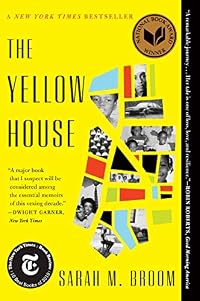
As others have said before me, The Yellow House is a stunning, multi-layered family history and memoir. Sarah Broom grew up, for lack of a better term, living a dual existence. As the youngest of a large family whose oldest siblings are decades older than her, she is both the cherished youngest sister and youngest daughter, but also the one who does not directly share many family experiences with the oldest of her eleven siblings, often being told about events that occurred "before," meaning before she was born or of age to take part or remember. Only six months old when her father dies, she is the only of the twelve siblings to grow up fatherless. Named Monique at birth, Moore, at her mother's prompting, begin going by Sarah when she enters school, her mother believing this more neutral name will make teachers and even classmates take her more seriously. As time goes by, only her family members continue to call her Monique, or, more commonly, Mo. In an important way, the whole family is one of outsiders, for they live in the New Orleans East neighborhood, a failed urban project, built on paved over meadows and swampland, at onetime promised to create a working-class neighborhood of dreams, but abandoned 20 years later as hopeless, morphing from middle-class white to hard scrapple black, with houses replaced by junkyards and tire factories, a place where bodies are dumped and where policeman park at night to get oral sex in their cars from hookers. Most maps of the town do not even include New Orleans East at all. {A note that I lived in New Orleans for seven years, and in a relatively nearby neighborhood, Gentilly, but I don't think I once set foot in New Orleans East.} The area is a toxic outlier, outside the margins of what New Orleanians, and all tourists, think of the parameters of their city. And finally there is Hurricane Katrina, which turns the whole of New Orleans into a city of outsiders, with huge swaths of the the population forced to emigrate, their neighborhoods and houses gone, many never to return. Some may remember the time right after the storm when there was a serious conversation throughout the country as to whether New Orleans was worth rebuilding at all. Sarah, a college graduate, a writer, leaves for New York to live in Harlem. But the city, and especially her family's stories continually pull her back.
The book's heroine is Broom's mother, Ivory Mae, high of personal standards and a steady and loving presence for her children. The centerpiece of Broom's story is the yellow house of the title, Ivory Mae's dream of independence and well-being, shoddily built at the outset and continually undermined by half-finished repair and renovation projects undertaken by never completed by various family members and friends that leave floors incomplete and unsteady, doors and windows sitting improperly in their frames, and plumbing jury-rigged. Yet it is the family's home and center, and the place where Broom lives the entirety of her childhood and adolescence.
For the purposes of this memoir, Moore conducted many interviews with family members, and delved into newspaper and government records to recreate not only the lives of her parents and siblings, but also the lives of the generations before them. Many of these stories are, of course, in the nature of oral history, their details at the mercy of the tellers' memories, and Broom presents them as such, though sometimes augmented from fragments she's been able to find through city records. Then there is the anguish of Katrina, referred to almost exclusively in The Yellow House simply as Water, is described in deeply affecting yet matter of fact terms: The danger of the storm itself, as her brother and a friend sit on their roofs, with the floods almost up to where they perch, for a week, waiting for rescue. The ruination of their delapitated yet beloved family home and its callous demolition by the city, with nary a warning sent, some time afterward. The family's scattering, with some siblings ending up as far away as California and Arizona. Ivory Mae's years-long wait for promised government grant money so the family house can be rebuilt.
And through all this we experience Sarah's search for herself, for her own place within the family, for a deeper understanding of her place as a New Orleanian, if indeed such a place exists for her. This is a compelling, multi-layered, extremely well written memoir full of compassion and love and frustration and tragedy, all seamlessly held together by Broom's sense of narrative and talents of description. Here's just one example of Brooms writing:
As others have said before me, The Yellow House is a stunning, multi-layered family history and memoir. Sarah Broom grew up, for lack of a better term, living a dual existence. As the youngest of a large family whose oldest siblings are decades older than her, she is both the cherished youngest sister and youngest daughter, but also the one who does not directly share many family experiences with the oldest of her eleven siblings, often being told about events that occurred "before," meaning before she was born or of age to take part or remember. Only six months old when her father dies, she is the only of the twelve siblings to grow up fatherless. Named Monique at birth, Moore, at her mother's prompting, begin going by Sarah when she enters school, her mother believing this more neutral name will make teachers and even classmates take her more seriously. As time goes by, only her family members continue to call her Monique, or, more commonly, Mo. In an important way, the whole family is one of outsiders, for they live in the New Orleans East neighborhood, a failed urban project, built on paved over meadows and swampland, at onetime promised to create a working-class neighborhood of dreams, but abandoned 20 years later as hopeless, morphing from middle-class white to hard scrapple black, with houses replaced by junkyards and tire factories, a place where bodies are dumped and where policeman park at night to get oral sex in their cars from hookers. Most maps of the town do not even include New Orleans East at all. {A note that I lived in New Orleans for seven years, and in a relatively nearby neighborhood, Gentilly, but I don't think I once set foot in New Orleans East.} The area is a toxic outlier, outside the margins of what New Orleanians, and all tourists, think of the parameters of their city. And finally there is Hurricane Katrina, which turns the whole of New Orleans into a city of outsiders, with huge swaths of the the population forced to emigrate, their neighborhoods and houses gone, many never to return. Some may remember the time right after the storm when there was a serious conversation throughout the country as to whether New Orleans was worth rebuilding at all. Sarah, a college graduate, a writer, leaves for New York to live in Harlem. But the city, and especially her family's stories continually pull her back.
The book's heroine is Broom's mother, Ivory Mae, high of personal standards and a steady and loving presence for her children. The centerpiece of Broom's story is the yellow house of the title, Ivory Mae's dream of independence and well-being, shoddily built at the outset and continually undermined by half-finished repair and renovation projects undertaken by never completed by various family members and friends that leave floors incomplete and unsteady, doors and windows sitting improperly in their frames, and plumbing jury-rigged. Yet it is the family's home and center, and the place where Broom lives the entirety of her childhood and adolescence.
For the purposes of this memoir, Moore conducted many interviews with family members, and delved into newspaper and government records to recreate not only the lives of her parents and siblings, but also the lives of the generations before them. Many of these stories are, of course, in the nature of oral history, their details at the mercy of the tellers' memories, and Broom presents them as such, though sometimes augmented from fragments she's been able to find through city records. Then there is the anguish of Katrina, referred to almost exclusively in The Yellow House simply as Water, is described in deeply affecting yet matter of fact terms: The danger of the storm itself, as her brother and a friend sit on their roofs, with the floods almost up to where they perch, for a week, waiting for rescue. The ruination of their delapitated yet beloved family home and its callous demolition by the city, with nary a warning sent, some time afterward. The family's scattering, with some siblings ending up as far away as California and Arizona. Ivory Mae's years-long wait for promised government grant money so the family house can be rebuilt.
And through all this we experience Sarah's search for herself, for her own place within the family, for a deeper understanding of her place as a New Orleanian, if indeed such a place exists for her. This is a compelling, multi-layered, extremely well written memoir full of compassion and love and frustration and tragedy, all seamlessly held together by Broom's sense of narrative and talents of description. Here's just one example of Brooms writing:
Grandmother was the kind of woman Eddie admired, hardworking and concerned with having nice things. She had two cars parked in the garage of her house on Mockingbird Lane even though she could not drive (cars for people to drive her around in). She was contained but occasionally mercurial. She could go off on you in a spilt second. When the presentation of the body stands in for all the qualities the world claims you cannot possess, some people call you elegant. Grandmother was that, yes, but sometimes elegance is just willpower and grace, a way to keep the flailing parts of the self together.
138cindydavid4
sounds lik a BB to me
139rocketjk
>138 cindydavid4: I highly recommend it. I know Darryl loved it as well.
140kidzdoc
>137 rocketjk: Great review of The Yellow House, Jerry. I agree with you, it was one of the best memoirs I've ever read, and it was a deserving winner of the National Book Award in 2019. New Orleans East was practically a city unto itself in the late 1970s and early 1980s when I was a student there, and I only went there once or twice to have dinner at a friend's house. I do wonder if it has recovered to the same degree that the city proper has, although I highly doubt it.
141rocketjk
Spy Catcher: the Candid Autobiography of a Senior Intelligence Officer by Peter Wright

I would really call this much more of a memoir than an autobiography, despite the subtitle, as Wright here deals almost entirely with his professional life as a member, and eventually assistant director, of MI5, the British counterespionage agency, from World War 2 through the late 1970s. For the non-British citizens (like me) in the room, Wright explains MI5 as being roughly the British equivalent of the FBI and MI6 as being the equivalent of the CIA. Wright was a true believer that the struggle against the significant espionage efforts of the Soviet Union was a crucial mission. And he is also adamant in this memoir that MI5 in many very important ways were doing this job very badly. For one thing, both MI5 and MI6 were run as clubby old boys' clubs, with upper class "gentlemen" bringing their chums on board without any proper vetting at all, despite the fact it was well known that there had been a significant disenchantment with the British class system and capitalism in general among these very upperclass clubmen in the 1930s. The result was a series of postwar defections and also a cadre of British spies working for the Soviet Union within the British intelligence agencies. The subsequent refusal of those in charge to, in many cases, prosecute their old club pals and/or risk further public scandal causes Wright no end of teeth gnashing. Wright speaks with scorn of what he calls the continued British "delusions of Empire" within government and intelligence circles that caused them to refuse to accept the fact that postwar Britain was no longer a first level world power and and had in fact become a junior partner to the United States. Wright came to his intelligence work through his scientific background, hired to help develop new technologies in spying microphones and radio interception techniques for counterintelligence. He spent his career in trying to root out Soviet spies within the British government, both the traitorous British moles and the Russian spies in place within and without the Russian diplomatic corps. He describes effectively and in great detail his frustrations over his inability to convince his colleagues that a mole remained inside MI5 even into the 70s. In fact, Wright thought he could prove that it was his boss, Sir Roger Hollis, the director of MI5, who had been passing information to the Soviets for decades, allowing the Soviets to thwart all sorts of British espionage efforts over the years. Wright reports that the British dug what they thought was a secret tunnel under the Berlin Wall, only to find upon the tunnel's completion that the Soviets had been tipped off from within the British government about the project from its inception.
Wright's writing is clear and easy to read, though the book may suffer from an overabundance of details. I found it interesting to read about all the spies and counterspies, the inter- and intra-agency jealousies and feuds that created additional impediments and disfunction, the casual willingness to spy on everyone and everything, including allies (MI5 had every embassy in England bugged, and many on the continent as well, and Wright is both matter of fact and unapologetic about it all), but also the technological successes and brainpower that occasionally allowed them to crack Soviet and Eastern Bloc encrypted communications to their operatives in England and sometimes even catch spies. Looked at from the perspective of hindsight, however (Spy Catcher was published in 1987 when memories of the era were still fresh), one has to wonder what it was all for, and whether anything of substance, on either side, was really accomplished. I recall reading a comment several years ago made by a former CIA official (I have no memory of the name of this person) that the whole Cold War espionage campaign was simply, in the end, a colossal waste of time for both camps. Who knows?
Reading Spy Catcher was fun, though, as I mentioned above, you do have to wade through a lot of detail. I've had this book on my shelves since before my LT Big Bang in 2008. When I lived in San Francisco, I had a neighbor (I never found out who it was) who would occasionally put out stacks of a dozen or so books on the sidewalk across the street from my apartment and I would sometimes help myself to a book or two. Given that there's just a slight touch of water damage throughout my copy of Spy Catcher, I have a conjecture that this was the source of my ownership of the book.

I would really call this much more of a memoir than an autobiography, despite the subtitle, as Wright here deals almost entirely with his professional life as a member, and eventually assistant director, of MI5, the British counterespionage agency, from World War 2 through the late 1970s. For the non-British citizens (like me) in the room, Wright explains MI5 as being roughly the British equivalent of the FBI and MI6 as being the equivalent of the CIA. Wright was a true believer that the struggle against the significant espionage efforts of the Soviet Union was a crucial mission. And he is also adamant in this memoir that MI5 in many very important ways were doing this job very badly. For one thing, both MI5 and MI6 were run as clubby old boys' clubs, with upper class "gentlemen" bringing their chums on board without any proper vetting at all, despite the fact it was well known that there had been a significant disenchantment with the British class system and capitalism in general among these very upperclass clubmen in the 1930s. The result was a series of postwar defections and also a cadre of British spies working for the Soviet Union within the British intelligence agencies. The subsequent refusal of those in charge to, in many cases, prosecute their old club pals and/or risk further public scandal causes Wright no end of teeth gnashing. Wright speaks with scorn of what he calls the continued British "delusions of Empire" within government and intelligence circles that caused them to refuse to accept the fact that postwar Britain was no longer a first level world power and and had in fact become a junior partner to the United States. Wright came to his intelligence work through his scientific background, hired to help develop new technologies in spying microphones and radio interception techniques for counterintelligence. He spent his career in trying to root out Soviet spies within the British government, both the traitorous British moles and the Russian spies in place within and without the Russian diplomatic corps. He describes effectively and in great detail his frustrations over his inability to convince his colleagues that a mole remained inside MI5 even into the 70s. In fact, Wright thought he could prove that it was his boss, Sir Roger Hollis, the director of MI5, who had been passing information to the Soviets for decades, allowing the Soviets to thwart all sorts of British espionage efforts over the years. Wright reports that the British dug what they thought was a secret tunnel under the Berlin Wall, only to find upon the tunnel's completion that the Soviets had been tipped off from within the British government about the project from its inception.
Wright's writing is clear and easy to read, though the book may suffer from an overabundance of details. I found it interesting to read about all the spies and counterspies, the inter- and intra-agency jealousies and feuds that created additional impediments and disfunction, the casual willingness to spy on everyone and everything, including allies (MI5 had every embassy in England bugged, and many on the continent as well, and Wright is both matter of fact and unapologetic about it all), but also the technological successes and brainpower that occasionally allowed them to crack Soviet and Eastern Bloc encrypted communications to their operatives in England and sometimes even catch spies. Looked at from the perspective of hindsight, however (Spy Catcher was published in 1987 when memories of the era were still fresh), one has to wonder what it was all for, and whether anything of substance, on either side, was really accomplished. I recall reading a comment several years ago made by a former CIA official (I have no memory of the name of this person) that the whole Cold War espionage campaign was simply, in the end, a colossal waste of time for both camps. Who knows?
Reading Spy Catcher was fun, though, as I mentioned above, you do have to wade through a lot of detail. I've had this book on my shelves since before my LT Big Bang in 2008. When I lived in San Francisco, I had a neighbor (I never found out who it was) who would occasionally put out stacks of a dozen or so books on the sidewalk across the street from my apartment and I would sometimes help myself to a book or two. Given that there's just a slight touch of water damage throughout my copy of Spy Catcher, I have a conjecture that this was the source of my ownership of the book.
142rocketjk
As I'm a bit behind in my reporting, I've already read through Stack 2 of my "Between Books:"
* “A Special Youngster” by Bob Addie* (The Washington Post) from Best Sports Stories 1965 edited by Irving T. Marsh and Edward Ehre
* “Visit of General Bertrand to Mrs. Webster—Mr. Webster’s Conversation on Agriculture” from The Public and Private Life of Daniel Webster by General S. P. Lyman
* “Rollie Sheldon” from Sweet Seasons: Recollections of the 1955-64 New York Yankees by Dom Forker
* “What is to be Done?” from When the Facts Change: Essays 1995-2010 by Tony Judt
* “Fever” from Stay Out of New Orleans by P. Curran
* “Has Zionism Exhausted Itself?” from The Necessity of Exile: Essays from a Distance by Shaul Magid
* “The Agnew Connection” by J. Anthony Lukas from The New York Times Magazine, January 13, 1974 edited by Edward K. Thompson
I'm now already 2/3 of the way through a baseball memoir, Roy White: From Compton to the Bronx, written by one of my favorite Yankee ballplayers.
* Interesting (to me, anyway) note: Bob Addie was the father of poet Kim Addonizio.
* “A Special Youngster” by Bob Addie* (The Washington Post) from Best Sports Stories 1965 edited by Irving T. Marsh and Edward Ehre
* “Visit of General Bertrand to Mrs. Webster—Mr. Webster’s Conversation on Agriculture” from The Public and Private Life of Daniel Webster by General S. P. Lyman
* “Rollie Sheldon” from Sweet Seasons: Recollections of the 1955-64 New York Yankees by Dom Forker
* “What is to be Done?” from When the Facts Change: Essays 1995-2010 by Tony Judt
* “Fever” from Stay Out of New Orleans by P. Curran
* “Has Zionism Exhausted Itself?” from The Necessity of Exile: Essays from a Distance by Shaul Magid
* “The Agnew Connection” by J. Anthony Lukas from The New York Times Magazine, January 13, 1974 edited by Edward K. Thompson
I'm now already 2/3 of the way through a baseball memoir, Roy White: From Compton to the Bronx, written by one of my favorite Yankee ballplayers.
* Interesting (to me, anyway) note: Bob Addie was the father of poet Kim Addonizio.
143wandering_star
>141 rocketjk: fascinating to read this review. The book was originally banned in the UK and I remember my dad got a friend of his, I think based in Australia, to buy and post him a copy. It's probably still on the shelves in my mother's house. Perhaps I'll pick it up next time I go home.
144rocketjk
>143 wandering_star: "The book was originally banned in the UK"
I'm not surprised, given Wright's contention, which he backs up rather convincingly, that the director of MI5 was in fact the "highly placed mole" that they'd been trying to root out for decades. In the end, the attitude of Wright's colleagues seemed to be that, as Hollis had retired by that point, Wright was probably correct, but even so nobody needed one more scandal, and so the decision was to let it lie, much to Wright's frustration. The book is certainly worth the read if you have an interest in the subject matter.
I'm not surprised, given Wright's contention, which he backs up rather convincingly, that the director of MI5 was in fact the "highly placed mole" that they'd been trying to root out for decades. In the end, the attitude of Wright's colleagues seemed to be that, as Hollis had retired by that point, Wright was probably correct, but even so nobody needed one more scandal, and so the decision was to let it lie, much to Wright's frustration. The book is certainly worth the read if you have an interest in the subject matter.
145rocketjk
Roy White: From Compton to the Bronx by Roy White with Paul Semendinger
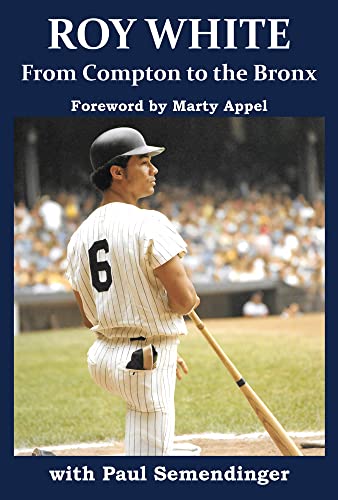
For baseball fans and, probably, for Yankee fans only. Roy White was a crucial member of the New York Yankees during the time when I was at the height of my baseball fandom, from junior high and high school through my college days and just after. He made it to the Major Leagues in 1966, just after the Yankee dynasty of the late 50s and early 60s had collapsed to to age and inattention to the farm system, and played on the team through the stormy Reggie Jackson/Billy Martin glory years of the late 70s. He was a fine fielder and a steady hitter, though he was quiet and steady, and largely played in the shadow of the team's flashier players. I was looking forward to reading White's memoir, but was somewhat disappointed in it. What White provides is, more or less, a summary of his life and career. He does talk about the struggles and hard work he went through to be able to play baseball at the highest level, and he offers a few insights into Jackson and Martin and their relationship to each other. But otherwise what we get is more or less a surface look at White's baseball life. Interesting anecdotes and real details about what it is like to be part of a major league team, on the field and in the locker room, are very thin on the ground. The short essays from White's contemporaries that are added in every so often are mostly filler, recapitulations of the same theme: White was a very nice guy who worked very hard and never blew his own horn, was nice to everybody, and served as a wonderful role model for players and fans alike. I did mostly enjoy reading this book because it was nice to stroll down memory lane with White about an era of baseball I have great fondness for, but I wouldn't particularly recommend this book to anyone, even baseball fans, not especially interested in White's career and the teams he played on.
I just noticed that this is the third straight memoir I've read!
For baseball fans and, probably, for Yankee fans only. Roy White was a crucial member of the New York Yankees during the time when I was at the height of my baseball fandom, from junior high and high school through my college days and just after. He made it to the Major Leagues in 1966, just after the Yankee dynasty of the late 50s and early 60s had collapsed to to age and inattention to the farm system, and played on the team through the stormy Reggie Jackson/Billy Martin glory years of the late 70s. He was a fine fielder and a steady hitter, though he was quiet and steady, and largely played in the shadow of the team's flashier players. I was looking forward to reading White's memoir, but was somewhat disappointed in it. What White provides is, more or less, a summary of his life and career. He does talk about the struggles and hard work he went through to be able to play baseball at the highest level, and he offers a few insights into Jackson and Martin and their relationship to each other. But otherwise what we get is more or less a surface look at White's baseball life. Interesting anecdotes and real details about what it is like to be part of a major league team, on the field and in the locker room, are very thin on the ground. The short essays from White's contemporaries that are added in every so often are mostly filler, recapitulations of the same theme: White was a very nice guy who worked very hard and never blew his own horn, was nice to everybody, and served as a wonderful role model for players and fans alike. I did mostly enjoy reading this book because it was nice to stroll down memory lane with White about an era of baseball I have great fondness for, but I wouldn't particularly recommend this book to anyone, even baseball fans, not especially interested in White's career and the teams he played on.
I just noticed that this is the third straight memoir I've read!
146rocketjk
Post Roy White: From Compton to the Bronx, I floated down "Between Book" River, following the meandering channel known as Stack 1:
* “How We Reason” excerpted from Lectures to Workingmen by Thomas H. Huxley in Literature - Book Two edited by Thomas H. Briggs
* “My China Doll” by Hūshang Gulshīrī from New Writing from the Middle East edited by Leo Hamalian and John D. Yohannan
* “Not All About Wins and Losses” from Baseball in Pinellas County by Dan Hirshberg
* “Female Pug” from My Ears Are Bent by Joseph Mitchell
* “Joint Ventures: Woodworking without Wood” from Replaceable You: Adventures in Human Anatomy by Mary Roach
* “Barack X” from Three or More Is a Riot: How We Got Here: 2012-2025 by Jelani Cobb
* “Cox and His Army” by J. Anthony Lukas from The New York Times Magazine, January 13, 1974 edited by Edward K. Thompson
I've now started the Introduction to Montaillou: The Promised Land of Error by Emmanuel Le Roy Ladurie, a fascinating look at a medieval village in the French Pyrenees during the Catholic Church's Inquisition aimed at eliminating the heretical (their words, not mine) Cathar sect of Christianity. The inquisitioners, it seems, took careful notes of all the interviews and interrogations they held with the villages, and these surviving transcripts were used as source material for this work.
* “How We Reason” excerpted from Lectures to Workingmen by Thomas H. Huxley in Literature - Book Two edited by Thomas H. Briggs
* “My China Doll” by Hūshang Gulshīrī from New Writing from the Middle East edited by Leo Hamalian and John D. Yohannan
* “Not All About Wins and Losses” from Baseball in Pinellas County by Dan Hirshberg
* “Female Pug” from My Ears Are Bent by Joseph Mitchell
* “Joint Ventures: Woodworking without Wood” from Replaceable You: Adventures in Human Anatomy by Mary Roach
* “Barack X” from Three or More Is a Riot: How We Got Here: 2012-2025 by Jelani Cobb
* “Cox and His Army” by J. Anthony Lukas from The New York Times Magazine, January 13, 1974 edited by Edward K. Thompson
I've now started the Introduction to Montaillou: The Promised Land of Error by Emmanuel Le Roy Ladurie, a fascinating look at a medieval village in the French Pyrenees during the Catholic Church's Inquisition aimed at eliminating the heretical (their words, not mine) Cathar sect of Christianity. The inquisitioners, it seems, took careful notes of all the interviews and interrogations they held with the villages, and these surviving transcripts were used as source material for this work.
147rocketjk
Greetings! I haven't finished anything, but decided just to check in. I'm still reading Montaillou: The Promised Land of Error by Emmanuel Le Roy Ladurie, and enjoying it, though it is slow, as you might expect an anthropological look at a remote early 14-century village in the French Pyrenees to be, even with an Inquisition to spice things up. I'm at just about the halfway point.
In other news, I'm just back from my annual "baseball trip" with my three longtime buddies. Last year's trip to LA completed our circuit of seeing at least one ballgame in every major league city, a project we began in 2000 and have continued every year since save for the two Covid years. So we are now going back to favorite towns or towns one or the other of us missed the first time around. The original trip to Pittsburgh took place only a couple of weeks after 9/11, so my friend Dan who was the only one at that time residing in the NY/NJ area, skipped the trip. So although he'd since been to PNC, he wanted an official "baseball trip" experience in Pittsburgh. 2001 was the first year of PNC Park, so my buddy Dallas and I attended a game during the last weekend of the inaugural season of the ballpark (and we have the t-shirts to prove it). This year was the 25th anniversary of the stadium which stands, by the way, as everybody's favorite of the new round of ballyards, just a bit, for me, above Oracle Park and the Baltimore stadium. Anyway, we had a blast, although it was an unseasonably cold weekend. C'est la vie. Pittsburgh seems to be unfortunately live music-deficient these days (as attested to by several of the locals we quizzed) but otherwise is an absolutely charming, low key, city. A highlight was the excellent Roberto Clemente Museum. So much for the travelogue.
I'll be back with you all when I've finished Montaillou.
In other news, I'm just back from my annual "baseball trip" with my three longtime buddies. Last year's trip to LA completed our circuit of seeing at least one ballgame in every major league city, a project we began in 2000 and have continued every year since save for the two Covid years. So we are now going back to favorite towns or towns one or the other of us missed the first time around. The original trip to Pittsburgh took place only a couple of weeks after 9/11, so my friend Dan who was the only one at that time residing in the NY/NJ area, skipped the trip. So although he'd since been to PNC, he wanted an official "baseball trip" experience in Pittsburgh. 2001 was the first year of PNC Park, so my buddy Dallas and I attended a game during the last weekend of the inaugural season of the ballpark (and we have the t-shirts to prove it). This year was the 25th anniversary of the stadium which stands, by the way, as everybody's favorite of the new round of ballyards, just a bit, for me, above Oracle Park and the Baltimore stadium. Anyway, we had a blast, although it was an unseasonably cold weekend. C'est la vie. Pittsburgh seems to be unfortunately live music-deficient these days (as attested to by several of the locals we quizzed) but otherwise is an absolutely charming, low key, city. A highlight was the excellent Roberto Clemente Museum. So much for the travelogue.
I'll be back with you all when I've finished Montaillou.
148markon
Glad you had a good trip Jerry. Keeping up with long term friends is fun. Did you get 25th anniversary T-shirts? Too bad about the live music scene.
149rocketjk
>148 markon: We did get a giveaway t-shirt at the first game we attended, but it doesn't commemorate the 25th anniversary. It is a nice shirt, though; it's a faux rock band tour t-shirt, complete with all the team's "tour" stops (i.e., every road series this year) on the back.
To be clear about the live music scene, there were quite a few venues (although the locals did persist in telling us the scene was lousy). But the music on offer while we were in town was either not our preferred style (hip hop or metal, for example) or was the sort of music that we might like but that was designed for sitting quietly and listening to. We want blues or R&B or rock that we could shuck and jive to or just hang out at the bar and enjoy without feeling we were in a quiet concert hall. Plus, I did find at least one good jazz club, but one of our number doesn't enjoy jazz, so that was off the list. Three of us are 70 and the fourth is 64, so the music is no longer a "must" for us. Just hanging out together at a lively tavern (and Pittsburgh definitely has a sufficiency of those) does the trick for us. Friendly people in the taverns is a great trip enhancer, and there are definitely lots and lots of such folks in Pittsburgh. We often visit art museums, those this trip we settled on the Roberto Clemente Museum instead of an art venue. Though we did stumble into one late-night art gallery with plenty of off-key art by local artists. Not all of it was particularly good, but the vibe was lovely, and the proprietor was a hoot. This guy keeps his art gallery open at least until the bars close. Gotta love that spirit!
To be clear about the live music scene, there were quite a few venues (although the locals did persist in telling us the scene was lousy). But the music on offer while we were in town was either not our preferred style (hip hop or metal, for example) or was the sort of music that we might like but that was designed for sitting quietly and listening to. We want blues or R&B or rock that we could shuck and jive to or just hang out at the bar and enjoy without feeling we were in a quiet concert hall. Plus, I did find at least one good jazz club, but one of our number doesn't enjoy jazz, so that was off the list. Three of us are 70 and the fourth is 64, so the music is no longer a "must" for us. Just hanging out together at a lively tavern (and Pittsburgh definitely has a sufficiency of those) does the trick for us. Friendly people in the taverns is a great trip enhancer, and there are definitely lots and lots of such folks in Pittsburgh. We often visit art museums, those this trip we settled on the Roberto Clemente Museum instead of an art venue. Though we did stumble into one late-night art gallery with plenty of off-key art by local artists. Not all of it was particularly good, but the vibe was lovely, and the proprietor was a hoot. This guy keeps his art gallery open at least until the bars close. Gotta love that spirit!
150lisapeet
Hi Jerry—sloooowly catching up here after being AWOL for awhile. Your New Orleans trip sounds like so much fun! I'm hoping to get back there sooner than later, though since my travel is usually tied to conference schedules I don't know that it'll overlap with Mardi Gras.
I forgot about The Yellow House—I've had that for a while. One of those books I was really stoked for and then didn't get to and it fell by the wayside. I should (virtually) dust that one off again.
Anyway, glad you're all well. Maybe this will be the year we end up getting together again...
I forgot about The Yellow House—I've had that for a while. One of those books I was really stoked for and then didn't get to and it fell by the wayside. I should (virtually) dust that one off again.
Anyway, glad you're all well. Maybe this will be the year we end up getting together again...
151rocketjk
Montaillou: The Promised Land of Error by Emmanuel Le Roy Ladurie

An anthropological study of a mountain village would normally not be up my alley, but there were several elements of this one that piqued my interest when I came upon the book in a Napa County small town thrift store four years ago. The village of Montaillou was (in fact, the village still exists, although a short distance from its medieval location) located in the French Pyrenees. In inhabitants at the dawn of the 14th century was largely part of the Christian sect called Catharism. Catharism, which included some pretty serious divergences from orthodox Catholic dogma (including but not limited to the virgin birth and the nature of souls and heaven and the Resurrection) had a century earlier been fairly robust in Lanquedoc, in the south of France, but between 1209 and 1229, the Church had launched what is now known as the Albigensian Crusade (the movement first bloomed in the French city of Albi). Around 200,000 Cathars were slaughtered and the remnants scattered. Almost 100 years later, the 250 people of Montaillou represented one of the last centers of Catharism. Technically, Montaillou was not even in the Kingdom of France, but instead within the Comte de Foix, though under heavy political pressure from the French king.
A cleric named Jacques Fournier became the Bishop of Pamiers in the Ariege region of Comte de Foix that included Montaillu in 1318. Fournier instituted at an Inquisition to find and punish the remaining Cathar "heretics." Many went to prison, and still others were burned at the stake. What Fournier gave to historians, however, was his methodology. He not only insisted in conducting long and exhaustive interviews with just about all of the inhabitants of the village, and many from the surrounding areas as well, but he also employed scribed to take notes on the spot, writing down the interviews pretty much word for word in the original Occitan (the native language of Languedoc) and later translating them into Latin. Fournier's skills as an interviewers were evidently prolific. He would get people talking about their lives and listen at length, eventually in this manner getting them to betray themselves or their neighbors as heretics. Often both. These written testimonies have come down to scholars, and because of the detail they contains, historians have been able to painstakingly piece together a fairly comprehensive picture of the home lives, religious and folk beliefs, how they made their livings, and how they treated each other: their friendships, loves and feuds, their affairs and sex lives, their faith and their fears. In relatively straightforward writing, mostly devoid of academic jargon, Le Roy Ladurie created a fascinating picture of a tiny microcosm of medieval life, unique in that we know that what we're seeing, and even the people whose voices we're hearing (we become familiar with several individuals along the way), are doomed to be victims of the inquisitors' repressive zeal. I found it all compelling, although some parts are admittedly drier than others in the telling. The fact that I already knew about the Cathars (I would imagine a much more common historical knowledge in Europe than amongst us benighted Americans), having traveled through the south of France with my wife and visited the ruins of at least two Cathar castles. Other than that, reading Mountaillou was for me like peering into a worm hole into the past--somewhere around 700 years ago!--and gazing on a picture of amazing detail and clarity.
As I said, this history was first published in the 1980s. It is far from a modern "literary history" emphasizing narrative skill and readability. This is an academic work, though a comparatively exceptionably accessible one. I suppose that all depends on one's interest in the subject matter, though. Le Roy Ladurie does write well and is able to humanize his subject matter, even injecting some wry humor along the way. The book was evidently a best seller in France upon its original publication. According to the description on the back of my paperback copy, Montaillou was a bestseller in France when it was published there in its original 600-page version. For the English speaking audience, the decision was made--for which I am most grateful--to edit the book down significantly. My edition is 356 pages. I very much enjoyed the reading experience, but 356 pages was plenty.

An anthropological study of a mountain village would normally not be up my alley, but there were several elements of this one that piqued my interest when I came upon the book in a Napa County small town thrift store four years ago. The village of Montaillou was (in fact, the village still exists, although a short distance from its medieval location) located in the French Pyrenees. In inhabitants at the dawn of the 14th century was largely part of the Christian sect called Catharism. Catharism, which included some pretty serious divergences from orthodox Catholic dogma (including but not limited to the virgin birth and the nature of souls and heaven and the Resurrection) had a century earlier been fairly robust in Lanquedoc, in the south of France, but between 1209 and 1229, the Church had launched what is now known as the Albigensian Crusade (the movement first bloomed in the French city of Albi). Around 200,000 Cathars were slaughtered and the remnants scattered. Almost 100 years later, the 250 people of Montaillou represented one of the last centers of Catharism. Technically, Montaillou was not even in the Kingdom of France, but instead within the Comte de Foix, though under heavy political pressure from the French king.
A cleric named Jacques Fournier became the Bishop of Pamiers in the Ariege region of Comte de Foix that included Montaillu in 1318. Fournier instituted at an Inquisition to find and punish the remaining Cathar "heretics." Many went to prison, and still others were burned at the stake. What Fournier gave to historians, however, was his methodology. He not only insisted in conducting long and exhaustive interviews with just about all of the inhabitants of the village, and many from the surrounding areas as well, but he also employed scribed to take notes on the spot, writing down the interviews pretty much word for word in the original Occitan (the native language of Languedoc) and later translating them into Latin. Fournier's skills as an interviewers were evidently prolific. He would get people talking about their lives and listen at length, eventually in this manner getting them to betray themselves or their neighbors as heretics. Often both. These written testimonies have come down to scholars, and because of the detail they contains, historians have been able to painstakingly piece together a fairly comprehensive picture of the home lives, religious and folk beliefs, how they made their livings, and how they treated each other: their friendships, loves and feuds, their affairs and sex lives, their faith and their fears. In relatively straightforward writing, mostly devoid of academic jargon, Le Roy Ladurie created a fascinating picture of a tiny microcosm of medieval life, unique in that we know that what we're seeing, and even the people whose voices we're hearing (we become familiar with several individuals along the way), are doomed to be victims of the inquisitors' repressive zeal. I found it all compelling, although some parts are admittedly drier than others in the telling. The fact that I already knew about the Cathars (I would imagine a much more common historical knowledge in Europe than amongst us benighted Americans), having traveled through the south of France with my wife and visited the ruins of at least two Cathar castles. Other than that, reading Mountaillou was for me like peering into a worm hole into the past--somewhere around 700 years ago!--and gazing on a picture of amazing detail and clarity.
As I said, this history was first published in the 1980s. It is far from a modern "literary history" emphasizing narrative skill and readability. This is an academic work, though a comparatively exceptionably accessible one. I suppose that all depends on one's interest in the subject matter, though. Le Roy Ladurie does write well and is able to humanize his subject matter, even injecting some wry humor along the way. The book was evidently a best seller in France upon its original publication. According to the description on the back of my paperback copy, Montaillou was a bestseller in France when it was published there in its original 600-page version. For the English speaking audience, the decision was made--for which I am most grateful--to edit the book down significantly. My edition is 356 pages. I very much enjoyed the reading experience, but 356 pages was plenty.
152labfs39
>151 rocketjk: A very informative review, Jerry, thank you. I don't know if I'll ever get to this, but it sounds quite interesting.
153rocketjk
>152 labfs39: I found it quite interesting, though I should point out that I was sort of primed for the subject matter in particular due to having passed through Cathar country with Steph and been intrigued by the history already. However, if the idea of learning about a 13th and 14th century "heretic" Christian sect in France appeals to you, I do think you would enjoy the book. Also, I don't think I emphasized strongly enough the fact that Le Roy Ladurie quoted from those interviews extensively, so via those astonishing transcriptions you feel like you are actually hearing voices of real people coming to you from 700 years ago. That was a quite remarkable aspect of the reading experience for me. Kind of like hearing voices through a wormhole in the space-time continuum.
154labfs39
>153 rocketjk: True. I'm curious because of a passing interest in the psychology of inquisitors and the source material sounds so unique. But as I say, I doubt I'll ever get to it. Your review is enticing though.
155FlorenceArt
>151 rocketjk: I knew about Montaillou, village occitan as a book that revolutionized the way history is done, but I had no idea it had been a popular success, and I didn't know about the source of information. Maybe I should try to see if it's available as an ebook.
I read some time ago in a magazine that there was some doubt now as to the Cathars, that they may have been "invented" as a convenient enemy for political reasons. And of course today they are a major tourist attraction. Not sure how much of this was real historical controversy and how much journalistic exaggeration.
I read some time ago in a magazine that there was some doubt now as to the Cathars, that they may have been "invented" as a convenient enemy for political reasons. And of course today they are a major tourist attraction. Not sure how much of this was real historical controversy and how much journalistic exaggeration.
156rocketjk
>155 FlorenceArt: "I read some time ago in a magazine that there was some doubt now as to the Cathars, that they may have been "invented" as a convenient enemy for political reasons."
I looked it up. The theory goes that the Catholic Church invented or at least greatly exaggerated the presence of a "heretical" sect to give themselves an excuse to persecute political rivals to the Church's power. That's a lot of political enemies, given that during the Albigensian Crusade something like 200,000 people were slaughtered, many being burned at the stake. Doing some lazy (i.e. Wikipedia) research, I find the following explanation relatively likely:
>155 FlorenceArt: "Not sure how much of this was real historical controversy and how much journalistic exaggeration."
It seems that it is indeed journalistic exaggeration of a minority theory that hasn't gained much traction. To be clear, I do very much thank you for mentioning it, since I had no idea of the issue at all. Cheers!
I looked it up. The theory goes that the Catholic Church invented or at least greatly exaggerated the presence of a "heretical" sect to give themselves an excuse to persecute political rivals to the Church's power. That's a lot of political enemies, given that during the Albigensian Crusade something like 200,000 people were slaughtered, many being burned at the stake. Doing some lazy (i.e. Wikipedia) research, I find the following explanation relatively likely:
Though the term Cathar (/ˈkæθɑːr/) has been used for centuries to identify the movement; whether it identified itself with the name is debated. In Cathar texts, the terms Good Men (Bons Hommes), Good Women (Bonnes Femmes), or Good Christians (Bons Chrétiens) are the common terms of self-identification.
In the testimony of suspects who were put to the question by the Inquisition, the term Cathar was not used amongst the group of accused heretics themselves. The word Cathar (aka. Gazarri etc.) was coined by Catholic theologians and used exclusively by the inquisition or by authors otherwise identified with the Orthodox church—for example in the anonymous pamphlet of 1430, Errores Gazariorum (Re: Errors of the Cathars). The full title of this treatise in English is, The errors of the Gazarri, or of those who travel riding a broom or a stick.
However, the presence of a variety of beliefs and spiritual practices in the French countryside of the 12th and 13th centuries that came to be seen as heterodox relative to the Church in Rome is not actually in question, as the primary documents of the period exhaustively demonstrate.
Several of these groups under other names, such as the Waldensians or Valdeis, bear a close similarity to the "creed" or matrix of beliefs and folk-traditions pieced together under the umbrella of the term Catharism. The fact that there was clearly a spiritual and communal movement of some sort can scarcely be denied, since legions of people were willing to part with their lives to defend it. Whether they acted in defense of the doctrine or in defense of the human community who held these beliefs, the fact that many gave themselves up willingly to the flames when the option to recant was given to them in many or most cases is significant.
As the scholar Claire Taylor puts it, in arguing against Pegg and Moore, two scholars questioning whether or not the Cathars exist, this issue
"matters at an ethical level, because by being cleverly iconoclastic and populist in suggesting that those using "Cathar" have made 2+2=5, Pegg and Moore make 2+2=3 by denying the existence of the persecuted group. The missing element is a dissident religious doctrine, for which historians using a fuller range of sources believe thousands of people were prepared to suffer extreme persecution and an agonising death." {Emphasis mine in all cases. Also, please note that this text on Wikipedia contains many footnotes which I deleted because they're framed by brackets which were producing false touchstones. -- rjk}
>155 FlorenceArt: "Not sure how much of this was real historical controversy and how much journalistic exaggeration."
It seems that it is indeed journalistic exaggeration of a minority theory that hasn't gained much traction. To be clear, I do very much thank you for mentioning it, since I had no idea of the issue at all. Cheers!
157rocketjk
Last night I wrapped up my post-Montaillou "between book" reading. I read through Stack 2, which is a fine stack, only equaled by Stack 1 (there are only two stacks). I really do amuse myself! Anyway, the reading went thusly:
* “The Hustler” by Arthur Daley (The New York Times) from Best Sports Stories 1965 edited by Irving T. Marsh and Edward Ehre
* “Second Visit to Mansfield—Mr. Webster Talks of Agriculture” from The Public and Private Life of Daniel Webster by General S. P. Lyman
* “Mickey Mantle” from Sweet Seasons: Recollections of the 1955-64 New York Yankees by Dom Forker
* “On The Plague” from When the Facts Change: Essays 1995-2010 by Tony Judt
* “Tim from Texas” from Stay Out of New Orleans by P. Curran
* “My Tragic Love Affair with Zionism” from The Necessity of Exile: Essays from a Distance by Shaul Magid ++
* “Again, the Judge” by J. Anthony Lukas from The New York Times Magazine, January 13, 1974 edited by Edward K. Thompson
I've now started A Fool's Errand by One of the Fools (a.k.a. Albion W. Tourgee). This is a novel set during the post-Civil War Reconstruction era in the American South. As I understand it, the book is a fictionalized version of the author's own experiences. Tourgee was an abolitionist northerner who moved to the South after the war to try to help formerly enslaved blacks become part of mainstream American society. The book was written soon after Tourgee returned north. I'll have more to say about all this after I've read the book. I'll just say now that my copy of the book is a very early edition, printed in 1876.
++ I was reading this essay in the nearby-to-me Velma's Coffee Shop yesterday. After a few minutes, the woman at the next table leaned over and asked, "Can I take your picture reading that book?" I said, "Sure, but can I ask why?" She said, "Shaul is a friend of mine. We've worked together often. He'll get a kick out of seeing someone reading his book in Velma's." This is one reason why I love being in New York City. Anyway, she was doing her own work on her laptop, and she quickly went back to it, so I didn't get to learn much about who she was, though when I asked whether I'd find any books in the bookstore with her name on them, she said, "Not yet," and then pointed to the document on her computer. She quickly reinserted her ear buds, so I never even got her name.
* “The Hustler” by Arthur Daley (The New York Times) from Best Sports Stories 1965 edited by Irving T. Marsh and Edward Ehre
* “Second Visit to Mansfield—Mr. Webster Talks of Agriculture” from The Public and Private Life of Daniel Webster by General S. P. Lyman
* “Mickey Mantle” from Sweet Seasons: Recollections of the 1955-64 New York Yankees by Dom Forker
* “On The Plague” from When the Facts Change: Essays 1995-2010 by Tony Judt
* “Tim from Texas” from Stay Out of New Orleans by P. Curran
* “My Tragic Love Affair with Zionism” from The Necessity of Exile: Essays from a Distance by Shaul Magid ++
* “Again, the Judge” by J. Anthony Lukas from The New York Times Magazine, January 13, 1974 edited by Edward K. Thompson
I've now started A Fool's Errand by One of the Fools (a.k.a. Albion W. Tourgee). This is a novel set during the post-Civil War Reconstruction era in the American South. As I understand it, the book is a fictionalized version of the author's own experiences. Tourgee was an abolitionist northerner who moved to the South after the war to try to help formerly enslaved blacks become part of mainstream American society. The book was written soon after Tourgee returned north. I'll have more to say about all this after I've read the book. I'll just say now that my copy of the book is a very early edition, printed in 1876.
++ I was reading this essay in the nearby-to-me Velma's Coffee Shop yesterday. After a few minutes, the woman at the next table leaned over and asked, "Can I take your picture reading that book?" I said, "Sure, but can I ask why?" She said, "Shaul is a friend of mine. We've worked together often. He'll get a kick out of seeing someone reading his book in Velma's." This is one reason why I love being in New York City. Anyway, she was doing her own work on her laptop, and she quickly went back to it, so I didn't get to learn much about who she was, though when I asked whether I'd find any books in the bookstore with her name on them, she said, "Not yet," and then pointed to the document on her computer. She quickly reinserted her ear buds, so I never even got her name.
158FlorenceArt
>156 rocketjk: Thanks for doing the search for me! Yes I think Wikipedia’s explanation seems plausible.
>157 rocketjk: Cool anecdote!
>157 rocketjk: Cool anecdote!
159baswood
>151 rocketjk: I have read the English translation and so can't claim the 'Full Monty". It is a fascinating read especially as the village was so isolated from everywhere else and so there was no escape for most of them and they all seemed to know what everyone else was doing. There were some very interesting characters and one suspects that some of them were double agents as the village was fairly equally divided between orthodox catholics and heretical Cathars. The nomadic shepherds were an interesting group as well.
160rocketjk
>159 baswood: Agree on all points. Also the fact that those trying to convert their neighbors to the "heresy" knew very well that they were in danger of punishment by the Inquisition but carried on anyway.
161RidgewayGirl
>157 rocketjk: I'm looking forward to hearing your thoughts on A Fool's Errand, especially on a day when the SC legislature voted to gerrymander the one Black Congressman out and on the same day hold a ceremony praising Robert Smalls as the best of SC (Robert Smalls was likewise removed from office by racist antics).
162rocketjk
A Fool's Errand by One of the Fools (a.k.a. Albion W. Tourgee)

A fascinating timepiece, A Fool's Errand is a novel about the Reconstruction era in the post-Civil War American South written and first published very soon after the events portrayed, in 1879. As hinted at by the humorous author designation, the book was originally published anonymously, though evidently Tourgee's authorship was soon discovered or revealed. At any rate, Tourgee had an interesting and important life. Born in Ohio, he served in the Union Army during the Civil War and soon thereafter moved with his family to North Carolina in order to help with the fraught work of Reconstruction, and in particular aid with the education of the recently freed ex-slave population, and in general with ensuring that the freedmen and women population received the new rights that Emancipation and the new constitutional amendments had promised them. He got involved in politics and served as a Superior Court judge from 1868 to 1874. During this time, he ran into the venomous headwinds of a southern population, and especially a southern leadership class, determined to keep African Americans subjugated and increasingly willing to commit violence to ensure these aims are met.
I've spent all this time with biographical material of the author because A Fool's Errand is really an only lightly disguised fictionalized accounting of these years of his life. Our fictional hero is Comfort Servosse, a former Union Army Colonel who had fought and been wounded during the war and then put in charge of administering a section of a never named southern state (but which I assume was meant to be North Carolina, since that was where Tourgee actually lived). Upon leaving the military, Servosse, referred to by Tourgee most frequently as the Fool, brings his wife and child back to that same area, buys a large former plantation and begins breaking much of it up into parcels to sell to ex-slaves to build homesteads on, and befriends the young northern women who have come south to teach in the new freedmen schools. This, unsurprisingly, soon puts him into conflict with his neighbors. Eventually, for this and other transgressions, threats against the Fool's life become depressingly common. He is, of course, labeled a carpetbagger and a Radical.
The narrative is extremely uneven in the telling. Much of the book is written as, more or less, a romance or adventure yarn, with nefarious plots and feats of derring-do. But Tourgee frequently leaves off this mode of storytelling to serve up long digressions regarding the political and social state of affairs as he experienced them, as a citizen, a politician and a judge. These sections are slower reading, but they are extremely interesting in their own right. Tourgee had nothing but scorn for the northern politicians, dubbed in his telling the Wise Men, who in order to maintain political power within the Federal government, withdrew northern administrative forces from the south after only a few short years, passed the constitutional amendments that gave blacks for voting and citizenship rights on paper, and left the administration of these changes to the southern state governments. I found it interesting in the extreme to read Tourgee's clearly written accounts of these developments, his clear-eyed denouncement of them, and his extremely accurate predictions on how poorly, and bloodily, events were going to devolve into a reign of terror. His view was that southern whites had spent generations rationalizing slavery via pronouncements from both state houses and pulpits that blacks made up a subordinate race, certainly not fit to run their own affairs, let alone civic affairs in general. Therefore, a willingness to extend full rights, or any rights, for blacks was not going to be attained in the south simply by fiat by a hostile government of invaders whose only goal, as the southerners saw it, was to humiliate and subjugate the people they'd so recently conquered. He thought that the Federal government should have seen to supporting these major social changes much more directly, even if it meant keeping federal forces in the southern states for 20 years or more.
Tourgee, here in the guise of the Fool, was in the south during the rise of the Klan, a development written of forcefully in A Fool's Errand. While much of the information contained in the novel lines up with historical reading I've already done, especially via historian Leon Litwak's two important books, Been in the Storm So Long: The Aftermath of Slavery and Trouble in Mind: Black Southerners in the Age of Jim Crow, I found it extremely interesting, as I've said here several times already I guess, to read these accounts of someone who was there. His expository digressions do get long and sometimes repetitive, but I realized halfway through that Tourgee wasn't talking to me, although I'm sure he would liked to have known that his accounts were being read 147 years after he'd written them. He was talking to, and desperately trying to convince, the people of his own time in describing how poorly things were going, and why they'd taken such a violent and depressing turn. At any rate, while those expository sections are fascinating (I know, that word again), the fictional narrative sections are intriguing and fun, told with rewarding amount of sly humor.
Tourgee had a fascinating and admirable life, as outlined, I'll hopefully assume reasonably accurately, on the Wikipedia page dedicated to him:
https://en.wikipedia.org/wiki/Albion_W._Tourgée
Perhaps more reliable is this entry on the North Carolina State online encyclopedia about A Fool's Errand, which includes this quote:
"He served as a delegate to the state constitutional convention in 1868, and a year later he was elected a superior court judge. In both capacities, Tourgée personified what most white North Carolinians found to be the worst in carpetbaggery. Former governor Jonathan Worth once called him "the meanest Yankee who ever settled among us." His bold attempts to prosecute members of the Ku Klux Klan (KKK) made him a frequent target of their harassment.
https://www.ncpedia.org/fools-errand
Also, during my search, I found the quote in the November 21, 1891 Cleveland Gazette, and African American newspaper: "The most popular white man in the country to-day with Afro-Americans is that staunch friend of the race, Judge Albion W. Tourgee." (emphasis in the original quote)
https://www.loc.gov/resource/sn83035386/1891-11-21/ed-1/?sp=2&st=image&r...
Book notes: So this is really quite an historical artifact. I love the fact that my copy of the book is a very early edition. Not a first, since Tourgee's name appears, but still one with an 1867 copyright date. As frequent readers of this space may recall, I am also very interested in learning as much as I can about the previous owners of the books in my library when such information presents itself. My copy of A Fool's Errand has two identifiers. First, we have a small embossing on the title page:
John S. Bugbee
Attorney At Law
502 Montgomery St. Rooms 12 & 13
SAN FRANCISCO, CAL.
To the right of this, we find handwritten in pencil:
John S Bugbee
San Diego Feb 25/81
I could not find anything online directly pertaining to San Francisco attorney John S. Bugbee. But I did find mention of him on a page about his brother, Samuel Charles Bugbee, an architect in early San Francisco. Evidently, John and Samuel lived together at 641 Harrison Street in 1869.
https://pcad.lib.washington.edu/person/6908/
Also, I found a page about John's son, Maxwell Bigbee, who also became an architect and designed an intriguing house full of Alaskan art and design in San Anselmo, CA. On a page about that house, we read this:
"Maxwell Bugbee may have shared the Breck's interest in Native Alaskan art. His father, John S. Bugbee, a San Fransisco attorney, was appointed Judge of the U.S. District Court for Alaska in Sitka in 1889 and later opened a law practice in Juneau."
https://sananselmohistory.org/articles/the-igloo/
So there you have it. I could not find anything pertaining to John S. Bugbee in San Diego. I was assuming that this was probably a grandson named after his grandfather, but then I was also assuming that the "81" meant 1981. Given the dates above, it is, I guess, possible that it meant 1881 and is the same John S. Bugbee, and that upon moving to San Diego he rewrote his name in pencil so it would be clear to anyone finding the book, which he had at that point decided to read or maybe reread, that he was a local rather than a visitor from up north. Who knows?
Anyway, I think it's kind of cool that my copy of A Fool's Errand was owned by a person who at one point was Judge of the U.S. District Court for Alaska in Sitka.

A fascinating timepiece, A Fool's Errand is a novel about the Reconstruction era in the post-Civil War American South written and first published very soon after the events portrayed, in 1879. As hinted at by the humorous author designation, the book was originally published anonymously, though evidently Tourgee's authorship was soon discovered or revealed. At any rate, Tourgee had an interesting and important life. Born in Ohio, he served in the Union Army during the Civil War and soon thereafter moved with his family to North Carolina in order to help with the fraught work of Reconstruction, and in particular aid with the education of the recently freed ex-slave population, and in general with ensuring that the freedmen and women population received the new rights that Emancipation and the new constitutional amendments had promised them. He got involved in politics and served as a Superior Court judge from 1868 to 1874. During this time, he ran into the venomous headwinds of a southern population, and especially a southern leadership class, determined to keep African Americans subjugated and increasingly willing to commit violence to ensure these aims are met.
I've spent all this time with biographical material of the author because A Fool's Errand is really an only lightly disguised fictionalized accounting of these years of his life. Our fictional hero is Comfort Servosse, a former Union Army Colonel who had fought and been wounded during the war and then put in charge of administering a section of a never named southern state (but which I assume was meant to be North Carolina, since that was where Tourgee actually lived). Upon leaving the military, Servosse, referred to by Tourgee most frequently as the Fool, brings his wife and child back to that same area, buys a large former plantation and begins breaking much of it up into parcels to sell to ex-slaves to build homesteads on, and befriends the young northern women who have come south to teach in the new freedmen schools. This, unsurprisingly, soon puts him into conflict with his neighbors. Eventually, for this and other transgressions, threats against the Fool's life become depressingly common. He is, of course, labeled a carpetbagger and a Radical.
The narrative is extremely uneven in the telling. Much of the book is written as, more or less, a romance or adventure yarn, with nefarious plots and feats of derring-do. But Tourgee frequently leaves off this mode of storytelling to serve up long digressions regarding the political and social state of affairs as he experienced them, as a citizen, a politician and a judge. These sections are slower reading, but they are extremely interesting in their own right. Tourgee had nothing but scorn for the northern politicians, dubbed in his telling the Wise Men, who in order to maintain political power within the Federal government, withdrew northern administrative forces from the south after only a few short years, passed the constitutional amendments that gave blacks for voting and citizenship rights on paper, and left the administration of these changes to the southern state governments. I found it interesting in the extreme to read Tourgee's clearly written accounts of these developments, his clear-eyed denouncement of them, and his extremely accurate predictions on how poorly, and bloodily, events were going to devolve into a reign of terror. His view was that southern whites had spent generations rationalizing slavery via pronouncements from both state houses and pulpits that blacks made up a subordinate race, certainly not fit to run their own affairs, let alone civic affairs in general. Therefore, a willingness to extend full rights, or any rights, for blacks was not going to be attained in the south simply by fiat by a hostile government of invaders whose only goal, as the southerners saw it, was to humiliate and subjugate the people they'd so recently conquered. He thought that the Federal government should have seen to supporting these major social changes much more directly, even if it meant keeping federal forces in the southern states for 20 years or more.
Tourgee, here in the guise of the Fool, was in the south during the rise of the Klan, a development written of forcefully in A Fool's Errand. While much of the information contained in the novel lines up with historical reading I've already done, especially via historian Leon Litwak's two important books, Been in the Storm So Long: The Aftermath of Slavery and Trouble in Mind: Black Southerners in the Age of Jim Crow, I found it extremely interesting, as I've said here several times already I guess, to read these accounts of someone who was there. His expository digressions do get long and sometimes repetitive, but I realized halfway through that Tourgee wasn't talking to me, although I'm sure he would liked to have known that his accounts were being read 147 years after he'd written them. He was talking to, and desperately trying to convince, the people of his own time in describing how poorly things were going, and why they'd taken such a violent and depressing turn. At any rate, while those expository sections are fascinating (I know, that word again), the fictional narrative sections are intriguing and fun, told with rewarding amount of sly humor.
Tourgee had a fascinating and admirable life, as outlined, I'll hopefully assume reasonably accurately, on the Wikipedia page dedicated to him:
https://en.wikipedia.org/wiki/Albion_W._Tourgée
Perhaps more reliable is this entry on the North Carolina State online encyclopedia about A Fool's Errand, which includes this quote:
"He served as a delegate to the state constitutional convention in 1868, and a year later he was elected a superior court judge. In both capacities, Tourgée personified what most white North Carolinians found to be the worst in carpetbaggery. Former governor Jonathan Worth once called him "the meanest Yankee who ever settled among us." His bold attempts to prosecute members of the Ku Klux Klan (KKK) made him a frequent target of their harassment.
https://www.ncpedia.org/fools-errand
Also, during my search, I found the quote in the November 21, 1891 Cleveland Gazette, and African American newspaper: "The most popular white man in the country to-day with Afro-Americans is that staunch friend of the race, Judge Albion W. Tourgee." (emphasis in the original quote)
https://www.loc.gov/resource/sn83035386/1891-11-21/ed-1/?sp=2&st=image&r...
Book notes: So this is really quite an historical artifact. I love the fact that my copy of the book is a very early edition. Not a first, since Tourgee's name appears, but still one with an 1867 copyright date. As frequent readers of this space may recall, I am also very interested in learning as much as I can about the previous owners of the books in my library when such information presents itself. My copy of A Fool's Errand has two identifiers. First, we have a small embossing on the title page:
John S. Bugbee
Attorney At Law
502 Montgomery St. Rooms 12 & 13
SAN FRANCISCO, CAL.
To the right of this, we find handwritten in pencil:
John S Bugbee
San Diego Feb 25/81
I could not find anything online directly pertaining to San Francisco attorney John S. Bugbee. But I did find mention of him on a page about his brother, Samuel Charles Bugbee, an architect in early San Francisco. Evidently, John and Samuel lived together at 641 Harrison Street in 1869.
https://pcad.lib.washington.edu/person/6908/
Also, I found a page about John's son, Maxwell Bigbee, who also became an architect and designed an intriguing house full of Alaskan art and design in San Anselmo, CA. On a page about that house, we read this:
"Maxwell Bugbee may have shared the Breck's interest in Native Alaskan art. His father, John S. Bugbee, a San Fransisco attorney, was appointed Judge of the U.S. District Court for Alaska in Sitka in 1889 and later opened a law practice in Juneau."
https://sananselmohistory.org/articles/the-igloo/
So there you have it. I could not find anything pertaining to John S. Bugbee in San Diego. I was assuming that this was probably a grandson named after his grandfather, but then I was also assuming that the "81" meant 1981. Given the dates above, it is, I guess, possible that it meant 1881 and is the same John S. Bugbee, and that upon moving to San Diego he rewrote his name in pencil so it would be clear to anyone finding the book, which he had at that point decided to read or maybe reread, that he was a local rather than a visitor from up north. Who knows?
Anyway, I think it's kind of cool that my copy of A Fool's Errand was owned by a person who at one point was Judge of the U.S. District Court for Alaska in Sitka.
163labfs39
>162 rocketjk: I love this. Thank you for sharing your thoughts and the results of your research. To borrow your word, fascinating.
164FlorenceArt
>162 rocketjk: What Lisa said. Very interesting review, thank you!
165RidgewayGirl
>162 rocketjk: That was fascinating, thanks.
166rocketjk
Thanks for all the kind words. Other than that, I've just come on here to say that I've now added the link to that Cleveland Gazette article about Tourgee, which I meant to post from the first but simply forgot to include.
167rocketjk
My post-A Fool's Errand "between book" reading was a comfortable slide down the Stack 1 fire pole:
* “Are Cats People?” by Oliver Herford in Literature - Book Two edited by Thomas H. Briggs
* “The Stray Dog” by Sadeq Hedayat from New Writing from the Middle East edited by Leo Hamalian and John D. Yohannan
* “A Life Cut Way Too Short” from Baseball in Pinellas County by Dan Hirshberg
* “Old Ballplayer in Winter Underwear” from My Ears Are Bent by Joseph Mitchell
* “Intubation for Dummies: The Brief Terrors of Mechanical Breathing” from Replaceable You: Adventures in Human Anatomy by Mary Roach
* “Tarantino Unchained” from Three or More Is a Riot: How We Got Here: 2012-2025 by Jelani Cobb
* “Firestorm” by J. Anthony Lukas from The New York Times Magazine, January 13, 1974 edited by Edward K. Thompson
I next moved on to one of the few Joseph Conrad works I hadn't read yet, the short novel, The End of the Tether, which I'll be reviewing soon, though it won't be a long review.
* “Are Cats People?” by Oliver Herford in Literature - Book Two edited by Thomas H. Briggs
* “The Stray Dog” by Sadeq Hedayat from New Writing from the Middle East edited by Leo Hamalian and John D. Yohannan
* “A Life Cut Way Too Short” from Baseball in Pinellas County by Dan Hirshberg
* “Old Ballplayer in Winter Underwear” from My Ears Are Bent by Joseph Mitchell
* “Intubation for Dummies: The Brief Terrors of Mechanical Breathing” from Replaceable You: Adventures in Human Anatomy by Mary Roach
* “Tarantino Unchained” from Three or More Is a Riot: How We Got Here: 2012-2025 by Jelani Cobb
* “Firestorm” by J. Anthony Lukas from The New York Times Magazine, January 13, 1974 edited by Edward K. Thompson
I next moved on to one of the few Joseph Conrad works I hadn't read yet, the short novel, The End of the Tether, which I'll be reviewing soon, though it won't be a long review.
168rocketjk
The End of the Tether by Joseph Conrad

The End of the Tether is one of the few Conrad works that I hadn't read yet. Originally published in 1902, this short novel was republished during Conrad's lifetime in a single-volume collection also including Youth and Heart of Darkness. It's one of Conrad's lesser known and lesser read works, and I'd concur that it doesn't match up to his best works. Still, it's Conrad, which for me has almost always meant, at the very least, enjoyable reading. Captain Whalley has been at sea for decades. He's seen, with regret, the closing of the age of the sailing ship and the onset of the steamship era. Places in the Eastern seas that Whalley was among the first Europeans to enter, and passages he was among the first Europeans to chart, have now become commonplace shipping lanes and established colonial ports. Yet he is still a man of vigor and strength. He is a widower who still sharply mourns his wife, who had shared his enthusiasm for exploration and for the sea. And he has one grown daughter living in Europe who has made an unfortunate marriage to a man of ill luck in business, and now of health too poor for working. So she is entirely dependent on her father financially. So he must keep working, though at his age commands are harder and harder to come by. He buys into a partnership in, and a command of, a that steamship that plies a boring and barely remunerative trade among the islands. But his partner, who is also the ship's chief engineer, is a vane and grasping man, and the first mate is a conniver, endlessly scheming for a way to get ahead. Whalley is enduring it all for the sake of his daughter until fate pulls one more fast one on him.
At 174 pages, this is a relatively quick read. For me it was a pleasure, as I love having Conrad's voice in my head. And indeed I do find as I read him that I feel like he's talking to me and telling me a story one-on-one. I've always enjoyed his insights into human nature, his sometimes slightly off-kilter way with words, and his descriptions of nature. Here's The End of the Tether's opening paragraph:
And here's a short passage that struck me particularly, especially the short second paragraph. During a flashback describing Whalley's life and career, we come to the death of his wife at sea, their young daughter on board with them as well.
So I enjoyed The End of the Tether and would recommend it to anyone without a previously minted antipathy for Conrad and/or his writing style. He's not for everyone. This short novel won't get you too deeply into the Conrad weeds: it's relatively straightforwardly written and it includes some of Conrad's frequent themes, including the ability or inability, as the case may be from story to story, of an upright, moral person to endure in the face of scoundrels and the cruel turns that life itself can dish out. But a reader wishing to discover why Conrad devotees consider him to be such a great writer should start elsewhere, as this is not one of Conrad's classics.

The End of the Tether is one of the few Conrad works that I hadn't read yet. Originally published in 1902, this short novel was republished during Conrad's lifetime in a single-volume collection also including Youth and Heart of Darkness. It's one of Conrad's lesser known and lesser read works, and I'd concur that it doesn't match up to his best works. Still, it's Conrad, which for me has almost always meant, at the very least, enjoyable reading. Captain Whalley has been at sea for decades. He's seen, with regret, the closing of the age of the sailing ship and the onset of the steamship era. Places in the Eastern seas that Whalley was among the first Europeans to enter, and passages he was among the first Europeans to chart, have now become commonplace shipping lanes and established colonial ports. Yet he is still a man of vigor and strength. He is a widower who still sharply mourns his wife, who had shared his enthusiasm for exploration and for the sea. And he has one grown daughter living in Europe who has made an unfortunate marriage to a man of ill luck in business, and now of health too poor for working. So she is entirely dependent on her father financially. So he must keep working, though at his age commands are harder and harder to come by. He buys into a partnership in, and a command of, a that steamship that plies a boring and barely remunerative trade among the islands. But his partner, who is also the ship's chief engineer, is a vane and grasping man, and the first mate is a conniver, endlessly scheming for a way to get ahead. Whalley is enduring it all for the sake of his daughter until fate pulls one more fast one on him.
At 174 pages, this is a relatively quick read. For me it was a pleasure, as I love having Conrad's voice in my head. And indeed I do find as I read him that I feel like he's talking to me and telling me a story one-on-one. I've always enjoyed his insights into human nature, his sometimes slightly off-kilter way with words, and his descriptions of nature. Here's The End of the Tether's opening paragraph:
For a long time after the course of the steamer Sofala had been altered for the land, the low swampy coast had retained its appearance of a mere smudge of darkness beyond a belt of glitter. The sun rays fell violently upon the palm see--semed to shatter themselves upon an adamantine surface into sparkling dust, into a dazzling vapor of light that blinded the eye and wearied the brain with its unsteady brightness.
And here's a short passage that struck me particularly, especially the short second paragraph. During a flashback describing Whalley's life and career, we come to the death of his wife at sea, their young daughter on board with them as well.
But Captain Whalley could in a half-hour of solitude live again all his life, with its romance, its idyl, and its sorrow. He had to close her eyes himself. She went away from under the ensign like a sailor's wife, a sailor herself at heart. He had read the service over her, out of her own prayer-book, without a break in his voice. When he raised his eyes he could see old Swinburne facing him with his cap pressed to his breast, and his rugged, weather-beaten, impassive face streaming with drops of water like a lump of chipped red granite in a shower. It was all very well for that old sea-dog to cry. He had to read on to the end; but after the splash he did not remember much of what happened for the next few days. An elderly sailor of the crew, deft at needlework, put together a mourning frock for the child out of one of her black skirts.
He was not likely to forget; but you cannot dam up life like a sluggish stream. It will break out and flow over a man's troubles, it will close upon a sorrow like the sea upon a dead body, no matter how much love has gone to the bottom.
So I enjoyed The End of the Tether and would recommend it to anyone without a previously minted antipathy for Conrad and/or his writing style. He's not for everyone. This short novel won't get you too deeply into the Conrad weeds: it's relatively straightforwardly written and it includes some of Conrad's frequent themes, including the ability or inability, as the case may be from story to story, of an upright, moral person to endure in the face of scoundrels and the cruel turns that life itself can dish out. But a reader wishing to discover why Conrad devotees consider him to be such a great writer should start elsewhere, as this is not one of Conrad's classics.
169rocketjk
The Story Continued: The New York Times Magazine, January 13, 1974 by J. Anthony Lukas

Read as a "Between Book" (see first post). As I've mentioned often before, I have a stack of old magazines in my hallway closet that I've been going through gradually, an article at a time, with an aim towards recycling them as I finish them. I always have one going in my "Between Book" stacks. At least a quarter of the time, though, I end up finding these historical artifacts too interesting to toss. C'est la vie!
"The Story Continued" was the second Special Edition of the NY Times Sunday Magazine dedicated solely to the ongoing story of Watergate. The first such edition, titled "The Story So Far," had come out in July 22, 1973. At that point, reporters were still piecing together who had done what when, at whose orders, and with money that had come from where, exactly. As this edition's brief introduction puts it, "No longer merely Watergate, the story has become to tale of a Presidency." All of the articles were written by journalist J. Anthony Lukas, winner of the Pulitzer Prize in 1968.
The story here begins with the revelation by Alexander Butterfield, former Deputy Assistant to the President, while being questioned in front of the Ervin Committee (The Senate Watergate Committee, known officially as the Select Committee on Presidential Campaign Activities, chaired by Sam Ervin), in response to a question from committee investigator Scott Armstrong, answered truthfully that, yes, the president was in the habit of recording all of his phone calls and meetings, and that these tapes were still on hand. The existence of the Watergate Tapes, as they came to be known, for the first time made people think that the famous question that got turned into a slogan, "What did he know, and when did he know it?" might get answered. Additional articles in the magazine include
* a description of Nixon's mindset and determination to last out the storm in any way he could; a story about some of Nixon's questionable financial deals, or at least deals that seemed questionable on their surface;
* a piece about Spiro Agnew's crimes (evidently, he'd spent his career as a strong-arming thug, more or less);
* a profile of Special Prosecutor Archibald Cox and his battles to get information out of the Nixon Administration and get his hands on those tapes, which the White House was trying to avoid turning over;
* a second article on the tapes issue and the growing public frustration with the Administration's stonewalling, and
* a final article titled "I Am Not a Crook" describing the increasingly embattled president and the growing clamor for impeachment or resignation.
The issue came out in January, 1974, and Nixon resigned later that year, in August. Lukas, who'd been covering these events all along, was an excellent writer of clear, uncluttered prose who provides here extremely valuable detail and insight into the proceedings. I was 19 in 1974, and I remember, in a very general way, these events. The names are all still familiar to me, but the chronology and the individual roles of all the participants had begun quite hazy over the years. It was very interesting indeed to get this refresher on what at the time seemed like quite momentous events. And of course they were momentous, although now it all seems quite tame in comparison to the rackateers and thugs we have running the country these days. Still, reading this "on the spot" report, a look through the time portal of what things looked like to the people living through it all, made for compelling reading for me.

Read as a "Between Book" (see first post). As I've mentioned often before, I have a stack of old magazines in my hallway closet that I've been going through gradually, an article at a time, with an aim towards recycling them as I finish them. I always have one going in my "Between Book" stacks. At least a quarter of the time, though, I end up finding these historical artifacts too interesting to toss. C'est la vie!
"The Story Continued" was the second Special Edition of the NY Times Sunday Magazine dedicated solely to the ongoing story of Watergate. The first such edition, titled "The Story So Far," had come out in July 22, 1973. At that point, reporters were still piecing together who had done what when, at whose orders, and with money that had come from where, exactly. As this edition's brief introduction puts it, "No longer merely Watergate, the story has become to tale of a Presidency." All of the articles were written by journalist J. Anthony Lukas, winner of the Pulitzer Prize in 1968.
The story here begins with the revelation by Alexander Butterfield, former Deputy Assistant to the President, while being questioned in front of the Ervin Committee (The Senate Watergate Committee, known officially as the Select Committee on Presidential Campaign Activities, chaired by Sam Ervin), in response to a question from committee investigator Scott Armstrong, answered truthfully that, yes, the president was in the habit of recording all of his phone calls and meetings, and that these tapes were still on hand. The existence of the Watergate Tapes, as they came to be known, for the first time made people think that the famous question that got turned into a slogan, "What did he know, and when did he know it?" might get answered. Additional articles in the magazine include
* a description of Nixon's mindset and determination to last out the storm in any way he could; a story about some of Nixon's questionable financial deals, or at least deals that seemed questionable on their surface;
* a piece about Spiro Agnew's crimes (evidently, he'd spent his career as a strong-arming thug, more or less);
* a profile of Special Prosecutor Archibald Cox and his battles to get information out of the Nixon Administration and get his hands on those tapes, which the White House was trying to avoid turning over;
* a second article on the tapes issue and the growing public frustration with the Administration's stonewalling, and
* a final article titled "I Am Not a Crook" describing the increasingly embattled president and the growing clamor for impeachment or resignation.
The issue came out in January, 1974, and Nixon resigned later that year, in August. Lukas, who'd been covering these events all along, was an excellent writer of clear, uncluttered prose who provides here extremely valuable detail and insight into the proceedings. I was 19 in 1974, and I remember, in a very general way, these events. The names are all still familiar to me, but the chronology and the individual roles of all the participants had begun quite hazy over the years. It was very interesting indeed to get this refresher on what at the time seemed like quite momentous events. And of course they were momentous, although now it all seems quite tame in comparison to the rackateers and thugs we have running the country these days. Still, reading this "on the spot" report, a look through the time portal of what things looked like to the people living through it all, made for compelling reading for me.
170rocketjk
What You Are Going Through by Sigrid Nunez
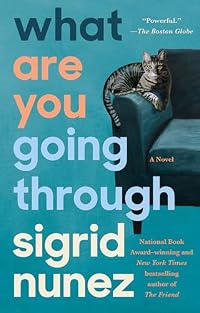
I found What You Are Going Through to be a moving and oddly comforting revery of a novel about life and its travails, longing, loneliness, and dignity in the face of death. Nunez writes from what I found to be a place of empathy and wonder about the things life throws at people and the ways in which we cope with those things, or don't, as the case may be. For the first half or so of the book, Nunez takes us through a several encounters she has (to quote the description on the back of my paperback edition) during the course of a day, or sometimes retrieves from her memory, and provides brief windows into their lives. For example, we have an older woman growing more and more reclusive, and her adult son, who is trying his best to care for her and keep her interested in life. The narrator knows them only because she's been neighbors with the woman for years, though they have barely spoken, and because she begins to have conversations with the son. The way that Nunez makes all of these encounters come to life is through realistic and believable detail. No one in the novel has a name. They are "the woman," "the man," "my friend," "my ex-." It would seem that this tactic would make the people and their circumstances distant and be somewhat off-putting in the reading. I found instead that it helped make their situations universal at the same time Nunez's specificity otherwise brought her people alive on the page, even when they make but the briefest appearances.
Even the title's lack of a concluding question mark is, somehow, a leveler, though Nunez includes the mark when explaining the phrase's origin:
In the book's second half, Nunez expands her theme by focusing in, for the most part, on her narrator's experiences with a friend from college who asks for her help. Our narrator agrees, and the two women, now late in life, explore all of these elements of life, but very close up, and with daily discoveries, both depressing and uplifting.
At any rate, I haven't done the novel justice but I highly recommend the book to anyone who enjoys fiction that doesn't necessarily rely on plot. There are also some brief, terrific side roads taken. Or, anyway, what at first seem like side roads but in fact fold seamlessly into the themes of the novel as a whole. In talking about sexism in publishing and in reading, for example, the narrator describes Ingeborg Bachmann, who wrote a wonderful collection of five longish short stories called (in English) Three Paths to the Lake. (Coincidentally, I read this collection many years ago.)
I'll just end with one more quote:
Nunez, of course, has written many novels, including The Friend, which won the National Book Award. This is the first of her novels I've read, but I'll certainly be catching up on her works soon. Also, What Are You Going Through was made into the movie The Room Next Door, Pedro Almodovar's first English language film, in 2024.
I found What You Are Going Through to be a moving and oddly comforting revery of a novel about life and its travails, longing, loneliness, and dignity in the face of death. Nunez writes from what I found to be a place of empathy and wonder about the things life throws at people and the ways in which we cope with those things, or don't, as the case may be. For the first half or so of the book, Nunez takes us through a several encounters she has (to quote the description on the back of my paperback edition) during the course of a day, or sometimes retrieves from her memory, and provides brief windows into their lives. For example, we have an older woman growing more and more reclusive, and her adult son, who is trying his best to care for her and keep her interested in life. The narrator knows them only because she's been neighbors with the woman for years, though they have barely spoken, and because she begins to have conversations with the son. The way that Nunez makes all of these encounters come to life is through realistic and believable detail. No one in the novel has a name. They are "the woman," "the man," "my friend," "my ex-." It would seem that this tactic would make the people and their circumstances distant and be somewhat off-putting in the reading. I found instead that it helped make their situations universal at the same time Nunez's specificity otherwise brought her people alive on the page, even when they make but the briefest appearances.
Even the title's lack of a concluding question mark is, somehow, a leveler, though Nunez includes the mark when explaining the phrase's origin:
What are you going through? When Simone Weil said that being able to ask this question was what love of one's neighbor truly meant, she was writing in her native French. And in French the great question sounds quite different: Quel set ton torment?
In the book's second half, Nunez expands her theme by focusing in, for the most part, on her narrator's experiences with a friend from college who asks for her help. Our narrator agrees, and the two women, now late in life, explore all of these elements of life, but very close up, and with daily discoveries, both depressing and uplifting.
At any rate, I haven't done the novel justice but I highly recommend the book to anyone who enjoys fiction that doesn't necessarily rely on plot. There are also some brief, terrific side roads taken. Or, anyway, what at first seem like side roads but in fact fold seamlessly into the themes of the novel as a whole. In talking about sexism in publishing and in reading, for example, the narrator describes Ingeborg Bachmann, who wrote a wonderful collection of five longish short stories called (in English) Three Paths to the Lake. (Coincidentally, I read this collection many years ago.)
You write ladies' novels, correct? said the novelist to his female colleague.
Oh what dark neck of the woods have we entered here.
The Bachmann story, "Three Paths to the Lake," appears in her collection Three Paths to the Lake, which was published in 1972, a year before she died of burns suffered in a fire. Five stories. Five women, each one suffering from some form of emotional turmoil, each one feeling trapped, isolated, anxious, and confused about her place in patriarchal society, and struggling for a language to express what she's going through.
George Balanchine said, If you put a group of men on the stage, you have a group of men, but if you put a group of women on the stage you have the whole world.
If you put a group of women in a book, you have "women's fiction." To be shunned by almost all male readers and no few female ones as well.
I'll just end with one more quote:
Jesus, you know, it wasn't supposed to happen like this. Even if it strikes me now has having been inevitable. But doesn't love always feel just so: destined, no matter how unexpected, no matter how improbable.
Nunez, of course, has written many novels, including The Friend, which won the National Book Award. This is the first of her novels I've read, but I'll certainly be catching up on her works soon. Also, What Are You Going Through was made into the movie The Room Next Door, Pedro Almodovar's first English language film, in 2024.
171cindydavid4
I know ive read her before but dont know what or when. this feels like a good stsrt thx for the BB
172rocketjk
My post-What You Are Going Through "between book" reading was another wander through Stack 2:
* “CBS Calls the Signals” by Arnold Hano (TV Guide) from Best Sports Stories 1965 edited by Irving T. Marsh and Edward Ehre
* “Planting Trees” from The Public and Private Life of Daniel Webster by General S. P. Lyman
* “Yogi Berra” from Sweet Seasons: Recollections of the 1955-64 New York Yankees by Dom Forker
* “Its Own Worst Enemy” from When the Facts Change: Essays 1995-2010 by Tony Judt
* “’They Don’t Do This in Topeka’ or Felicity, the Tenth Muse” from Stay Out of New Orleans by P. Curran
* “How to Separate Jewishness from Zionism or Israel after Zionism” from The Necessity of Exile: Essays from a Distance by Shaul Magid
* “The Californian May Fold Up” by Burton H. Wolfe from The Californian, July, 1961, edited by Burton H. Wolfe - Newly added!
I've now started what is already shaping up to be a fun noir thriller, No-One Loves a Policeman by Argentinian writer Guillermo Orsi.
* “CBS Calls the Signals” by Arnold Hano (TV Guide) from Best Sports Stories 1965 edited by Irving T. Marsh and Edward Ehre
* “Planting Trees” from The Public and Private Life of Daniel Webster by General S. P. Lyman
* “Yogi Berra” from Sweet Seasons: Recollections of the 1955-64 New York Yankees by Dom Forker
* “Its Own Worst Enemy” from When the Facts Change: Essays 1995-2010 by Tony Judt
* “’They Don’t Do This in Topeka’ or Felicity, the Tenth Muse” from Stay Out of New Orleans by P. Curran
* “How to Separate Jewishness from Zionism or Israel after Zionism” from The Necessity of Exile: Essays from a Distance by Shaul Magid
* “The Californian May Fold Up” by Burton H. Wolfe from The Californian, July, 1961, edited by Burton H. Wolfe - Newly added!
I've now started what is already shaping up to be a fun noir thriller, No-One Loves a Policeman by Argentinian writer Guillermo Orsi.
173kidzdoc
>170 rocketjk: Great review of What You Are Going Through, Jerry. It sounds particularly interesting, given my mother's slow decline as a result of vascular dementia and how being her primary caregiver has affected my own life, so I'll add it to my library wish list.
174rocketjk
>173 kidzdoc: Thanks, Darryl. I think you would very much enjoy the book, for the reason you mentioned but also for many other reasons. Also, the writing flows smoothly and the novel as a whole provides a relatively quick reading experience, for all its depth. It seems like you've been reading a few more lengthy volumes, lately, and I know it's nice to have something both enjoyable and quick to read amongst the doorstops. Cheers!
175kidzdoc
>174 rocketjk: Thanks, Jerry. I look forward to reading it.
176rocketjk
Steph and I got back early this morning from five days in our former town of in Mendocino County CA. We were visiting friends, but in particular we went to see our former next door neighbor who, in her late 80s, is now on hospice in her home. We got to see her twice, including bringing dinner over and eating with her one evening. She is luckily not in pain and in amazing spirits. Definitely an inspiration. As soon as we got word she was on hospice we made plans to go see her. She told us that our local MD had told her she had about three months. When we asked how long ago that had been she said “Oh about a month ago” and started laughing. “I’m just living my life,” she said and then proceeded to tell us about the book her book group was reading. Enjoy your days, my friends.
177kjuliff
>170 rocketjk: Great review Jerry. I’ve put this book on hold at NYPL.. I don’t usually read books about dying. Not that I’m afraid of dying but as Mr Allen said, I'm not afraid of death; I just don't want to be there when it happens.” That exactly sums up my feelings about death. But reading your review make me interested in this book and I hope to read it soon.
178rocketjk
No-one Loves a Policeman by Guillermo Orsi
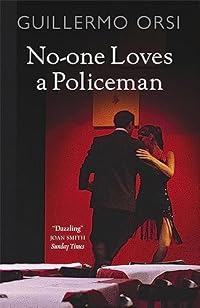
No-one Loves a Policeman is a Argentinian noir thriller. The novel was first published in 2007 in Spanish and published in English translation in 2010. The action begins in December 2001, at a time when Argentina, having relatively recently thrown off its dictatorship, is going through a dizzying parade of short-lived governments, obstensibly democratic but subject to toppling by the army, or by monied interests of all sorts, and/or by elements of organized crime, at least according to the testimony of our narrator. That would be Pablo Martelli, also known as Notan a bathroom appliance salesman who many years ago had been ejected from the federal police force known to Argentinians simply as the National Disgrace. As the book opens, Martelli is awakened in the dead of night by a call from an old friend pleading with Martelli to drive hundreds of miles to come to his assistance for reasons he can't go into over the phone. When Martelli finally arrives, his friend has been shot in the head. And so begins our tale. Soon, of course, the assassins, whomever they might be, are also after our hero. Martelli doesn't even know who they are or why they killed his friend. Over the course of the story, alliances come and go, information is gradually accumulated, a lost love is achingly mourned, and details about Martelli's past are gradually doled out. There's no small amount of violence, though the nice atmosphere of suspense Orsi establishes is really the dominant paradigm in this tale. Things do get a little chaotic, and I'm not sure it all really holds up, plot-wise, as we race to our finale, but I didn't think that factor really mattered in the end. Orsi's real theme, I felt, was the lawlessness and violence with which governments were being toppled and the degree to which the average Argentinian was being dealt out of any decision-making roles in a society that was being advertised as a democracy.
As an U.S. native with only a passing knowledge of Argentinian history, I was frequently in the dark regarding incidents in the country's recent past that Orsi clearly assumed his readership would be fully knowledgeable about. That was all fine with me, of course, and in fact I found it all quite interesting. It was instructive to read a novel in which the action begins in December 2001 and in which 9/11 is never mentioned, even in passing, though the battles for the Malvina Islands are frequently referred to.
So I enjoyed No-one Loves a Policeman all in all, and though I would guess that there would be many alternative interpretations of the history Orsi relates, I would also not be surprised to learn that, even given more knowledge of these events, his take would turn out to be relatively accurate. The characterization of Martelli, I thought, was nicely done, and with enough depth to keep him an interesting voice to have in my head for a while.
Just a note that that lower-case "o" in the midst of "No-one" in the title bugs me every time I write it, but maybe that most closely approximates how the word would be written in Spanish. The copy editor in me continually want to change it to "No One."
No-one Loves a Policeman is a Argentinian noir thriller. The novel was first published in 2007 in Spanish and published in English translation in 2010. The action begins in December 2001, at a time when Argentina, having relatively recently thrown off its dictatorship, is going through a dizzying parade of short-lived governments, obstensibly democratic but subject to toppling by the army, or by monied interests of all sorts, and/or by elements of organized crime, at least according to the testimony of our narrator. That would be Pablo Martelli, also known as Notan a bathroom appliance salesman who many years ago had been ejected from the federal police force known to Argentinians simply as the National Disgrace. As the book opens, Martelli is awakened in the dead of night by a call from an old friend pleading with Martelli to drive hundreds of miles to come to his assistance for reasons he can't go into over the phone. When Martelli finally arrives, his friend has been shot in the head. And so begins our tale. Soon, of course, the assassins, whomever they might be, are also after our hero. Martelli doesn't even know who they are or why they killed his friend. Over the course of the story, alliances come and go, information is gradually accumulated, a lost love is achingly mourned, and details about Martelli's past are gradually doled out. There's no small amount of violence, though the nice atmosphere of suspense Orsi establishes is really the dominant paradigm in this tale. Things do get a little chaotic, and I'm not sure it all really holds up, plot-wise, as we race to our finale, but I didn't think that factor really mattered in the end. Orsi's real theme, I felt, was the lawlessness and violence with which governments were being toppled and the degree to which the average Argentinian was being dealt out of any decision-making roles in a society that was being advertised as a democracy.
As an U.S. native with only a passing knowledge of Argentinian history, I was frequently in the dark regarding incidents in the country's recent past that Orsi clearly assumed his readership would be fully knowledgeable about. That was all fine with me, of course, and in fact I found it all quite interesting. It was instructive to read a novel in which the action begins in December 2001 and in which 9/11 is never mentioned, even in passing, though the battles for the Malvina Islands are frequently referred to.
So I enjoyed No-one Loves a Policeman all in all, and though I would guess that there would be many alternative interpretations of the history Orsi relates, I would also not be surprised to learn that, even given more knowledge of these events, his take would turn out to be relatively accurate. The characterization of Martelli, I thought, was nicely done, and with enough depth to keep him an interesting voice to have in my head for a while.
Just a note that that lower-case "o" in the midst of "No-one" in the title bugs me every time I write it, but maybe that most closely approximates how the word would be written in Spanish. The copy editor in me continually want to change it to "No One."
179kjuliff
>178 rocketjk: In Spanish the name of the book is Nadie Ama A Un Policia. You are quite right in being bugged.
180rocketjk
Theodore Herzl: The Charismatic Leader by Derek Penslar

Growing up Jewish in America in the 1960s and 70s, I've frequently heard Theodore Herzl mentioned, mostly reverently, in Jewish settings of all kinds. Herzl, an assimilated German Jew who was active in the latter part of the 19th century, was one of the most important figures in the early days of the Zionist movement in Europe during that time. I've always heard contradictory things about him and been interested in learning about the actual person, what he really did or didn't stand for, and how his views may have evolved over his relatively short (44 years) life. I have a good friend here in New York who is a professor of Middle Eastern Studies at Colgate University. I asked him how accurate he thought I would find the information in this bio, and he told me that Penslar is "as good as it gets" as far as being an authority on the history of the Zionist movement, so I felt like was in good hands. Also, this book was published by Yale University Press as part of their rather extensive "Jewish Lives" series of biographies, so I assume it got some thorough vetting. Finally, the bio checks in at a slim 210 pages, just long enough to provide the necessary details with some depth but without getting bogged down in "here's everything I learned in my research" exposition. Herzl was a copious diary keeper, and Penslar makes excellent use of those diary entries to help us understand who Herzl was, how his beliefs changed, and how he experienced life.
As is made clear in the book's title, the Herzl Penslar shows us is a charismatic speaker, and extremely impressive in build and appearance. As I mentioned above, Herzl was a fully assimilated German Jew who had made a name for himself as an excellent journalist and essay writer. Even a successful and assimilated Jew would have been aware of the growing antisemitism in Europe, particularly in Eastern Europe, during the late 1800s, and Herzl certainly was. The standard story goes that Herzl became seriously concerned, and convinced of the need to provide someplace for Russian and Polish Jews to emigrate to, while covering the Dreyfus trial. Penslar isn't so sure that this event was the major catalyst for Herzl, as his reporting on the trial doesn't lean into the antisemitism issue in a major way. It was more likely a combination of Dreyfus and many other similar incidents that set Herzl on his path. Although Herzl always retained his role as a journalist and editor, once he was aroused to the cause of what became known as Zionism, that cause became his consuming passion. He became the movement's main leader and spokesman, organizing several Zionist Congress meetings (the first in 1897), though there were many factions and plenty of disagreement about how the movement should proceed and what its goals should be. Some of the major points in Penslar's biography include:
* Herzl was prone to depression his entire adult life. His marriage was very unhappy, although it did produce three children, and he poured his passions into his work.
* Herzl died in 1904 (again, at the young age of 44) from heart disease. His career took place, then, before World War I, when Palestine was still a part of the Ottoman Empire. So Herzl foresaw Jewish Palestine not as an independent nation state, but as a semi-autonomous protectorate within (and loyal to) the Ottomans. Therefore, Herzl was against Jews moving to Palestine en mass until they had the buy in of the Ottoman sultan, Abdul Hamid II. Herzl spent years trying to obtain an audience with the Sultan, certain that he could convince the Ottoman leader that the Jews could bring much expertise and much needed funding that would create a net plus for the empire. According to Penslar, there was never a chance that Abdul Hamid was going to acquiesce to a mass immigration of Jews to Palestine, Herzl's perceived advantages of such a policy notwithstanding. (Small cooperative farming communities--what became known as kibbutzim--had already been established in Palestine by a Zionist group that had been in operation before Herzl came on the scene and only reluctantly folded themselves into the greater Zionist movement.)
* Because Herzl became ever more convinced of the urgency of getting Jews out of both Tsarist Russia and Poland in particular, he began to explore the possibility of more or less stopgap solutions. South America and Africa were considered, and Herzl actually succeeded in receiving an offer from England for a land grant more or less the size of current-day Israel, minus the Negev desert, in British colonial East Africa, despite the fact that there would have been vociferous objection from the British colonists already on the ground there. Even more significantly, there was never a chance that the other leaders of the Zionist movement, or the rank and file, would go along with such a scheme. (Herzl considered their refusals to be a betrayal of his judgment and leadership.) Not to mention the difficulties in convincing the Polish and Russian Jews to move to Africa. (Though of course many were already beginning to move to the U.S., which without getting my ruler out I'd guess to be equally as far from St. Petersburg.)
* Herzl always maintained that emigration to Palestine would be voluntary. Jews who wanted to stay put were welcome to do so.
* The Jewish Bund, the Jewish socialist workers' party that had been active since the advent of socialism and remained active long enough to become leaders of the Warsaw Ghetto uprising during WW2 (when a great many were killed) were from the outset firmly anti-Zionist. They believed in staying put and defending themselves as Jews in their native countries, and thought that antisemitism would die away after the workers' revolution. Penslar spends very little time talking about the Bund, so the degree to which their stance was also a matter of seeing the displacement of the Palestinian population as an injustice is not made clear in this book.**
* As to Herzl's own views about the Palestinians, he doesn't seem to have given very much thought to the question. In an early diary entry he speaks vaguely of the indigenous population being "spirited out of the country" with zero elaboration about how this might work. But in a novel Herzl wrote illustrating his by then utopian ideas about how things would work, he writes of Palestine as a country of justice and brotherhood where all nationalities would live together in peace (although there is only one Palestinian character in the novel).
* But Herzl's ideas about what Jewish Palestine would entail were constantly shifting. At one point he talks about Palestine having an army to defend the territory from its enemies and to show that Jews would henceforth be able to defend themselves. Later he says the Jewish army of Palestine would only be formed to be at the service of the Sultan to help defend the Empire. Or Jewish Palestine wouldn't have an army. They would be too busy building and farming and would put themselves wholly under the protection of the Ottomans. The driving, and urgent to Herzl, idea was to facilitate to entrance of Jews to Palestine, and out of harm's way in Europe, and see what the best system would be at that point.
For anyone interested in learning who Theodore Herzl was and what he was all about, as well as learning what the early Zionist movement actually looked like, this book is very valuable indeed.
** I'd be very interested to read a more in-depth history of the Bund. Last week I bought the recently published history, Here Where We Live Is Our Country: The Story of the Jewish Bund by Molly Crabapple. Upon actually looking the book over and reading three reviews (you'd think I might have done that before buying the book, but impulse control is not my very best attribute), it seems to be more of an anti-Zionist polemic than a real history of the organization. The reviews I saw (Kirkus Reviews, The New York Times, and the Jewish Forward) were all quite adoring and proclaimed its front-and-centering of the anti-Zionist issue to be a strength. My conjecture is that this would be an indication of the positions of the reviewers themselves on the issue. Although I'm well aware that the Bundists were indeed firmly anti-Zionist, I'm not sure that in the grand scheme of things they didn't find themselves with bigger fish to fry, as it were. At any rate, I'll eventually give the book a chance, now that I've lugged the thing home from the small but very interesting Quimby's Bookstore NYC in Brooklyn, in hopes that it gives a more in-depth look at the Bund than only its anti-Zionist stance. There are certainly compelling reasons to be anti-Zionist these days, and I can say that I put myself in that camp for the most part, but if I read a history of the Bund, I want to learn all about the Bund.

Growing up Jewish in America in the 1960s and 70s, I've frequently heard Theodore Herzl mentioned, mostly reverently, in Jewish settings of all kinds. Herzl, an assimilated German Jew who was active in the latter part of the 19th century, was one of the most important figures in the early days of the Zionist movement in Europe during that time. I've always heard contradictory things about him and been interested in learning about the actual person, what he really did or didn't stand for, and how his views may have evolved over his relatively short (44 years) life. I have a good friend here in New York who is a professor of Middle Eastern Studies at Colgate University. I asked him how accurate he thought I would find the information in this bio, and he told me that Penslar is "as good as it gets" as far as being an authority on the history of the Zionist movement, so I felt like was in good hands. Also, this book was published by Yale University Press as part of their rather extensive "Jewish Lives" series of biographies, so I assume it got some thorough vetting. Finally, the bio checks in at a slim 210 pages, just long enough to provide the necessary details with some depth but without getting bogged down in "here's everything I learned in my research" exposition. Herzl was a copious diary keeper, and Penslar makes excellent use of those diary entries to help us understand who Herzl was, how his beliefs changed, and how he experienced life.
As is made clear in the book's title, the Herzl Penslar shows us is a charismatic speaker, and extremely impressive in build and appearance. As I mentioned above, Herzl was a fully assimilated German Jew who had made a name for himself as an excellent journalist and essay writer. Even a successful and assimilated Jew would have been aware of the growing antisemitism in Europe, particularly in Eastern Europe, during the late 1800s, and Herzl certainly was. The standard story goes that Herzl became seriously concerned, and convinced of the need to provide someplace for Russian and Polish Jews to emigrate to, while covering the Dreyfus trial. Penslar isn't so sure that this event was the major catalyst for Herzl, as his reporting on the trial doesn't lean into the antisemitism issue in a major way. It was more likely a combination of Dreyfus and many other similar incidents that set Herzl on his path. Although Herzl always retained his role as a journalist and editor, once he was aroused to the cause of what became known as Zionism, that cause became his consuming passion. He became the movement's main leader and spokesman, organizing several Zionist Congress meetings (the first in 1897), though there were many factions and plenty of disagreement about how the movement should proceed and what its goals should be. Some of the major points in Penslar's biography include:
* Herzl was prone to depression his entire adult life. His marriage was very unhappy, although it did produce three children, and he poured his passions into his work.
* Herzl died in 1904 (again, at the young age of 44) from heart disease. His career took place, then, before World War I, when Palestine was still a part of the Ottoman Empire. So Herzl foresaw Jewish Palestine not as an independent nation state, but as a semi-autonomous protectorate within (and loyal to) the Ottomans. Therefore, Herzl was against Jews moving to Palestine en mass until they had the buy in of the Ottoman sultan, Abdul Hamid II. Herzl spent years trying to obtain an audience with the Sultan, certain that he could convince the Ottoman leader that the Jews could bring much expertise and much needed funding that would create a net plus for the empire. According to Penslar, there was never a chance that Abdul Hamid was going to acquiesce to a mass immigration of Jews to Palestine, Herzl's perceived advantages of such a policy notwithstanding. (Small cooperative farming communities--what became known as kibbutzim--had already been established in Palestine by a Zionist group that had been in operation before Herzl came on the scene and only reluctantly folded themselves into the greater Zionist movement.)
* Because Herzl became ever more convinced of the urgency of getting Jews out of both Tsarist Russia and Poland in particular, he began to explore the possibility of more or less stopgap solutions. South America and Africa were considered, and Herzl actually succeeded in receiving an offer from England for a land grant more or less the size of current-day Israel, minus the Negev desert, in British colonial East Africa, despite the fact that there would have been vociferous objection from the British colonists already on the ground there. Even more significantly, there was never a chance that the other leaders of the Zionist movement, or the rank and file, would go along with such a scheme. (Herzl considered their refusals to be a betrayal of his judgment and leadership.) Not to mention the difficulties in convincing the Polish and Russian Jews to move to Africa. (Though of course many were already beginning to move to the U.S., which without getting my ruler out I'd guess to be equally as far from St. Petersburg.)
* Herzl always maintained that emigration to Palestine would be voluntary. Jews who wanted to stay put were welcome to do so.
* The Jewish Bund, the Jewish socialist workers' party that had been active since the advent of socialism and remained active long enough to become leaders of the Warsaw Ghetto uprising during WW2 (when a great many were killed) were from the outset firmly anti-Zionist. They believed in staying put and defending themselves as Jews in their native countries, and thought that antisemitism would die away after the workers' revolution. Penslar spends very little time talking about the Bund, so the degree to which their stance was also a matter of seeing the displacement of the Palestinian population as an injustice is not made clear in this book.**
* As to Herzl's own views about the Palestinians, he doesn't seem to have given very much thought to the question. In an early diary entry he speaks vaguely of the indigenous population being "spirited out of the country" with zero elaboration about how this might work. But in a novel Herzl wrote illustrating his by then utopian ideas about how things would work, he writes of Palestine as a country of justice and brotherhood where all nationalities would live together in peace (although there is only one Palestinian character in the novel).
* But Herzl's ideas about what Jewish Palestine would entail were constantly shifting. At one point he talks about Palestine having an army to defend the territory from its enemies and to show that Jews would henceforth be able to defend themselves. Later he says the Jewish army of Palestine would only be formed to be at the service of the Sultan to help defend the Empire. Or Jewish Palestine wouldn't have an army. They would be too busy building and farming and would put themselves wholly under the protection of the Ottomans. The driving, and urgent to Herzl, idea was to facilitate to entrance of Jews to Palestine, and out of harm's way in Europe, and see what the best system would be at that point.
For anyone interested in learning who Theodore Herzl was and what he was all about, as well as learning what the early Zionist movement actually looked like, this book is very valuable indeed.
** I'd be very interested to read a more in-depth history of the Bund. Last week I bought the recently published history, Here Where We Live Is Our Country: The Story of the Jewish Bund by Molly Crabapple. Upon actually looking the book over and reading three reviews (you'd think I might have done that before buying the book, but impulse control is not my very best attribute), it seems to be more of an anti-Zionist polemic than a real history of the organization. The reviews I saw (Kirkus Reviews, The New York Times, and the Jewish Forward) were all quite adoring and proclaimed its front-and-centering of the anti-Zionist issue to be a strength. My conjecture is that this would be an indication of the positions of the reviewers themselves on the issue. Although I'm well aware that the Bundists were indeed firmly anti-Zionist, I'm not sure that in the grand scheme of things they didn't find themselves with bigger fish to fry, as it were. At any rate, I'll eventually give the book a chance, now that I've lugged the thing home from the small but very interesting Quimby's Bookstore NYC in Brooklyn, in hopes that it gives a more in-depth look at the Bund than only its anti-Zionist stance. There are certainly compelling reasons to be anti-Zionist these days, and I can say that I put myself in that camp for the most part, but if I read a history of the Bund, I want to learn all about the Bund.
181rocketjk
As I actually finished the Herzl biography a couple of days ago, I've also had a chance to do some happy Stack 2 "between book" reading:
* “DLR Do Not Fone” by Al Del Greco (The Bergen Evening Record) from Best Sports Stories 1965 edited by Irving T. Marsh and Edward Ehre
* “Habit of Early Rising—Mr. Webster Still Talks of Agriculture” from The Public and Private Life of Daniel Webster by General S. P. Lyman
* “Elston Howard” from Sweet Seasons: Recollections of the 1955-64 New York Yankees by Dom Forker
* “The Way We Live Now” from When the Facts Change: Essays 1995-2010 by Tony Judt
* “The Lost Girls” from Stay Out of New Orleans by P. Curran
* “On Jews, Un-Jews, and Anti-Jews: Setting an Old Table” from The Necessity of Exile: Essays from a Distance by Shaul Magid
* “California Real Estate Association Puts Out Propaganda Termed ‘Racist’” from The Californian, July, 1961 edited by Burton H. Wolfe
I've now begun Flood, a crime thriller and the first in Andrew Vachss' 18-book private eye series, Burke, because what I really needed was still another series to be in the midst of. :) Anyway, I'm about a third of the way in and enjoying the reading very much.
* “DLR Do Not Fone” by Al Del Greco (The Bergen Evening Record) from Best Sports Stories 1965 edited by Irving T. Marsh and Edward Ehre
* “Habit of Early Rising—Mr. Webster Still Talks of Agriculture” from The Public and Private Life of Daniel Webster by General S. P. Lyman
* “Elston Howard” from Sweet Seasons: Recollections of the 1955-64 New York Yankees by Dom Forker
* “The Way We Live Now” from When the Facts Change: Essays 1995-2010 by Tony Judt
* “The Lost Girls” from Stay Out of New Orleans by P. Curran
* “On Jews, Un-Jews, and Anti-Jews: Setting an Old Table” from The Necessity of Exile: Essays from a Distance by Shaul Magid
* “California Real Estate Association Puts Out Propaganda Termed ‘Racist’” from The Californian, July, 1961 edited by Burton H. Wolfe
I've now begun Flood, a crime thriller and the first in Andrew Vachss' 18-book private eye series, Burke, because what I really needed was still another series to be in the midst of. :) Anyway, I'm about a third of the way in and enjoying the reading very much.
182kidzdoc
>180 rocketjk: Interesting review of Theodore Herzl: The Charismatic Leader, Jerry.
183rocketjk
>182 kidzdoc: Thanks, Darryl. I found Penslar's book to be very enlightening and helpful.
184rocketjk
Flood by Andrew H. Vachss

Flood is the first book in Andrew H. Vachss' 18-book Burke private-eye noir series. Because what I really need is another series to be in the midst of. This was an entertaining reading experience for me. On the one hand, there's quite a bit here that strains credibility. Burke is an anti-hero with a raft of emotional scars. Brought up in an orphanage, soon abiding in juvenile detention, and then a couple of stretches in jail. But a heart of tarnished gold of course. (Does gold tarnish?) He's a private investigator who doesn't mind running some scams on the side, like his magazine ads promising to hook soldier of fortune wannabes up with opportunities in Africa for a mere $25 (in 1980s dollars) with the respondents receiving some brochures from a real mercenary company. But the part that you really need a willing suspension of disbelief for, though, is the fact that Burke is entirely hooked into both the underworld and law enforcement of 1980s New York City. (The book was published in 1985.) His office is entirely set up with one electronic or mechanical device after another to ensure his security. His large, fierce dog is perfectly trained. He's friends with a restaurant owner in Chinatown who receives his mail for him. His best friend is a silent Tibetan martial arts expert who perpetually has his back. And so on. For every emergency, there is a friend with the expertise and willingness to help him out of it with very little regard for the niceties of the law. On the other hand, the story flows nicely and anti-heroes are, after all, still heroes. Plus, Vachss puts a supercharge into the griminess and dangers of 1980s New York City, particularly the den of iniquity that was Times Square in those years. I turned 25 in 1980, so I remember the New York City of those days, though I was a visitor from New Jersey during my forays, rather than a denizen myself. It seems crazy to think of that era of high crime, misery and danger as "the good old days," but couldn't we have had something instead other than the current nightmare of chain stores and tourist restaurants? In Times Square you can now find the self-proclaimed "World's Largest Applebee's!" as if that something to trumpet. Surely we could have landed somewhere between these two extremes! Sorry, Digressions R Us, as anyone who frequents this thread (for which, thank you) will already know.
Anyway, in standard noir P.I. fashion, into Burke's office walks the title character, a beautiful though furious young blond who also happens to me a martial arts expert herself. She is looking for revenge from the Cobra, a pedophile who trades in kidnapping, abusing young children, and sometimes selling them afterwards, and sometimes killing them. The Cobra has been responsible for the death of her goddaughter, and Flood wants Burke, who is better equipped and informed to search the NYC underworld, to help her find him, at which point Burke is to step aside and leave her to fulfill her plans. And off we go.
The short bio of Vachss on the back flyleaf of my hardcover edition describes him as "an acknowledged expert on juvenile delinquency and child abuse," and "an attorney specializing in the problems of abused children." So evidently he knew the world he was writing about. (Vachss died in 2021 at the age of 80.) This was a first novel, and it could have used some editing, I think. I have a few of the later entries on my shelves, and I notice that they get shorter deeper into the series, so that's a hopeful sign. I enjoyed Flood, and I will sooner or later read on in the series.

Flood is the first book in Andrew H. Vachss' 18-book Burke private-eye noir series. Because what I really need is another series to be in the midst of. This was an entertaining reading experience for me. On the one hand, there's quite a bit here that strains credibility. Burke is an anti-hero with a raft of emotional scars. Brought up in an orphanage, soon abiding in juvenile detention, and then a couple of stretches in jail. But a heart of tarnished gold of course. (Does gold tarnish?) He's a private investigator who doesn't mind running some scams on the side, like his magazine ads promising to hook soldier of fortune wannabes up with opportunities in Africa for a mere $25 (in 1980s dollars) with the respondents receiving some brochures from a real mercenary company. But the part that you really need a willing suspension of disbelief for, though, is the fact that Burke is entirely hooked into both the underworld and law enforcement of 1980s New York City. (The book was published in 1985.) His office is entirely set up with one electronic or mechanical device after another to ensure his security. His large, fierce dog is perfectly trained. He's friends with a restaurant owner in Chinatown who receives his mail for him. His best friend is a silent Tibetan martial arts expert who perpetually has his back. And so on. For every emergency, there is a friend with the expertise and willingness to help him out of it with very little regard for the niceties of the law. On the other hand, the story flows nicely and anti-heroes are, after all, still heroes. Plus, Vachss puts a supercharge into the griminess and dangers of 1980s New York City, particularly the den of iniquity that was Times Square in those years. I turned 25 in 1980, so I remember the New York City of those days, though I was a visitor from New Jersey during my forays, rather than a denizen myself. It seems crazy to think of that era of high crime, misery and danger as "the good old days," but couldn't we have had something instead other than the current nightmare of chain stores and tourist restaurants? In Times Square you can now find the self-proclaimed "World's Largest Applebee's!" as if that something to trumpet. Surely we could have landed somewhere between these two extremes! Sorry, Digressions R Us, as anyone who frequents this thread (for which, thank you) will already know.
Anyway, in standard noir P.I. fashion, into Burke's office walks the title character, a beautiful though furious young blond who also happens to me a martial arts expert herself. She is looking for revenge from the Cobra, a pedophile who trades in kidnapping, abusing young children, and sometimes selling them afterwards, and sometimes killing them. The Cobra has been responsible for the death of her goddaughter, and Flood wants Burke, who is better equipped and informed to search the NYC underworld, to help her find him, at which point Burke is to step aside and leave her to fulfill her plans. And off we go.
The short bio of Vachss on the back flyleaf of my hardcover edition describes him as "an acknowledged expert on juvenile delinquency and child abuse," and "an attorney specializing in the problems of abused children." So evidently he knew the world he was writing about. (Vachss died in 2021 at the age of 80.) This was a first novel, and it could have used some editing, I think. I have a few of the later entries on my shelves, and I notice that they get shorter deeper into the series, so that's a hopeful sign. I enjoyed Flood, and I will sooner or later read on in the series.
185rocketjk
It's been a couple of days since I finished Flood so I've already had time to read through Stack 1 of my "Between Books" collection:
Stack 1:
* “The Soloist of Center Pond” by Irving Bacheller in Literature - Book Two edited by Thomas H. Briggs
* Six poems by Forugh Farrokhzad from New Writing from the Middle East edited by Leo Hamalian and John D. Yohannan
* “A Catch as a Pitcher” from Baseball in Pinellas County by Dan Hirshberg
* “Joe Runs True to Form, but He Was Right on Louis” from My Ears Are Bent by Joseph Mitchell
* “The Mongolian Eyeball: With Cataract Surgery, Sometimes Simpler is Better” from Replaceable You: Adventures in Human Anatomy by Mary Roach
* “The Segregationist’s Daughter” from Three or More Is a Riot: How We Got Here: 2012-2025 by Jelani Cobb
* Three short articles: “Greyhound, Harrah’s Combine to Keep Negroes Away,” “Assistant Attorney General Says Monopolies Lead to Facism,” and “Food & Drug Still Denies Coca-Cola Injures Teeth” from The Californian, July, 1961 edited by Burton H. Wolfe
I've now started Heart of Asia, a brief Himalayas travelogue/philosophy offering by artist/philosopher/peace activist Nicolas Roerich (1874-1947).
Stack 1:
* “The Soloist of Center Pond” by Irving Bacheller in Literature - Book Two edited by Thomas H. Briggs
* Six poems by Forugh Farrokhzad from New Writing from the Middle East edited by Leo Hamalian and John D. Yohannan
* “A Catch as a Pitcher” from Baseball in Pinellas County by Dan Hirshberg
* “Joe Runs True to Form, but He Was Right on Louis” from My Ears Are Bent by Joseph Mitchell
* “The Mongolian Eyeball: With Cataract Surgery, Sometimes Simpler is Better” from Replaceable You: Adventures in Human Anatomy by Mary Roach
* “The Segregationist’s Daughter” from Three or More Is a Riot: How We Got Here: 2012-2025 by Jelani Cobb
* Three short articles: “Greyhound, Harrah’s Combine to Keep Negroes Away,” “Assistant Attorney General Says Monopolies Lead to Facism,” and “Food & Drug Still Denies Coca-Cola Injures Teeth” from The Californian, July, 1961 edited by Burton H. Wolfe
I've now started Heart of Asia, a brief Himalayas travelogue/philosophy offering by artist/philosopher/peace activist Nicolas Roerich (1874-1947).
186labfs39
>180 rocketjk: Thank you for your comprehensive summary of the Herzl biography. I find it interesting that he spent so little time thinking about the Palestinians already living there. That seems to be a flaw from the beginning of time.
187rocketjk
>186 labfs39: I know what you mean, though it's hard to really know how much time he did or didn't spend thinking about the Palestinians. All we know is what he wrote about in his diary. But from the fact that he wrote, evidently, very little about them and didn't address the question in his speeches either, the evidence is that, yes, things were as you say. Perhaps if he had spent more time considering the question--or caring about it--he would have stood a better chance of convincing the Ottoman sultan that allowing a large number of European Jews into Palestine was a workable proposition, and of having a much better and more just outcome in the long run.
" . . . flaw from the beginning of time."
Yes, people have been moving into territory and moving the indigenous people out of it, or just killing them, since there have been tribes. Which doesn't make it OK. It's a flaw in our species, absolutely.
" . . . flaw from the beginning of time."
Yes, people have been moving into territory and moving the indigenous people out of it, or just killing them, since there have been tribes. Which doesn't make it OK. It's a flaw in our species, absolutely.
188raton-liseur
>186 labfs39: and >187 rocketjk: I am far less versed on this page of history than you both are, but I think it was complicated for a lot of Europeans to consider the ownership of land in a pastoral community, which was largely the case in Palestinia at that time. Europeans did the same in many areas, including with Native Nations in the US. There were lands for common use in Europe, but not the same proportions as in those areas.
I have just watch a series about WWII in France, a series which has a reputation of being accurate historically. At the end of the war, two Jews consider their options for the future. Palestine is then described as "a land with no people for people without a land".
So was it that Herzl and others did not think enough about Palestinians, or that they did not see it was something they should think about?
I remember reading a graphic work about Les Origines du conflit israélo-arabe (1870-1950), the origins of the israelo-palestinian conflict, last year, and having the feeling that there was a misunderstanding from the beginning (the beginning being 1870 here, which includes Herzl's time and influence), a misunderstanding that kept growing, making finding a solution to end this conflict a big question mark. I remember being fairly depressed at the end of this reading...
Sorry for this long message, I do not participate much, so maybe I write too much at once...
I have just watch a series about WWII in France, a series which has a reputation of being accurate historically. At the end of the war, two Jews consider their options for the future. Palestine is then described as "a land with no people for people without a land".
So was it that Herzl and others did not think enough about Palestinians, or that they did not see it was something they should think about?
I remember reading a graphic work about Les Origines du conflit israélo-arabe (1870-1950), the origins of the israelo-palestinian conflict, last year, and having the feeling that there was a misunderstanding from the beginning (the beginning being 1870 here, which includes Herzl's time and influence), a misunderstanding that kept growing, making finding a solution to end this conflict a big question mark. I remember being fairly depressed at the end of this reading...
Sorry for this long message, I do not participate much, so maybe I write too much at once...
189rocketjk
>188 raton-liseur: First of all, your post is not too long at all. Always interested in folks' comments of any length on my thread
"Palestine is then described as 'a land with no people for people without a land'."
Yes, this was a common phrase, I think, but the idea that Palestine was ever "a land without a people" was a reprehensible canard. I think there may have been a fair amount of people who believed, or allowed themselves to believe, that this was the case, but there were plenty of people who knew better among European Zionists. But the misunderstanding you refer was, indeed, an ever-growing one, and a multi-faceted one as well.
I need to read more about the history of the Jewish Bund, which I alluded to at the end of my review of the Herzl bio, a Jewish socialist workers' organization that was formed in Russia, forced out, as I understand it, by the Bolsheviks, reformed in Poland, eventually to be destroyed by the Nazis. Their leaders were, apparently, warning from the very beginning of the Zionist movement, which they firmly opposed, that taking Palestine from the Palestinians would constitute a moral injustice that went against everything Judaism was supposed to stand for.
"So was it that Herzl and others did not think enough about Palestinians, or that they did not see it was something they should think about?"
I think that the latter factor led to the former. My impression in the limited amount of reading on the topic I've done so far is that the Zionists thought that the need of the Jewish people for a place they could call their own was so acute that their job was to do what needed to be done to make that happen and let the chips fall where they might otherwise.
"Palestine is then described as 'a land with no people for people without a land'."
Yes, this was a common phrase, I think, but the idea that Palestine was ever "a land without a people" was a reprehensible canard. I think there may have been a fair amount of people who believed, or allowed themselves to believe, that this was the case, but there were plenty of people who knew better among European Zionists. But the misunderstanding you refer was, indeed, an ever-growing one, and a multi-faceted one as well.
I need to read more about the history of the Jewish Bund, which I alluded to at the end of my review of the Herzl bio, a Jewish socialist workers' organization that was formed in Russia, forced out, as I understand it, by the Bolsheviks, reformed in Poland, eventually to be destroyed by the Nazis. Their leaders were, apparently, warning from the very beginning of the Zionist movement, which they firmly opposed, that taking Palestine from the Palestinians would constitute a moral injustice that went against everything Judaism was supposed to stand for.
"So was it that Herzl and others did not think enough about Palestinians, or that they did not see it was something they should think about?"
I think that the latter factor led to the former. My impression in the limited amount of reading on the topic I've done so far is that the Zionists thought that the need of the Jewish people for a place they could call their own was so acute that their job was to do what needed to be done to make that happen and let the chips fall where they might otherwise.
190cindydavid4
>189 rocketjk: write as long as you need to and we'll be here to read it
ive always wondered what people were thinking, how did they get to a point that forcing them from there home was a good ideaeven if is for an abused minority i think there are people that hadsome explaining to do
ive always wondered what people were thinking, how did they get to a point that forcing them from there home was a good ideaeven if is for an abused minority i think there are people that hadsome explaining to do
191rasdhar
>94 rocketjk: Looks like a wonderful trip. I spent several years in the US and visiting New Orleans was definitely a high point. I will be picking up The Yellow House - especially liked the point you made about whether New Orleans is a place to her in the same sense as it might be to others.
Enjoyed your notes on the Heike Story, and the illustrations are beautiful. As with the notes on Montaillou - it doesn't surprise me that this became a best seller. I think the appetite for accessible scholarship has always been present. I'm bookmarking No-one Loves a Policeman too. Your thread is full of such interesting reading.
Enjoyed your notes on the Heike Story, and the illustrations are beautiful. As with the notes on Montaillou - it doesn't surprise me that this became a best seller. I think the appetite for accessible scholarship has always been present. I'm bookmarking No-one Loves a Policeman too. Your thread is full of such interesting reading.
192rocketjk
>191 rasdhar: Thanks for your kind words about my thread. I enjoy hopping around in my reading and from time to time reading some relatively obscure books. Keeps me on my toes, I guess. Cheers!
193raton-liseur
>189 rocketjk: This is really a complex question. I like the balanced way you express it. I'll follow your readings on this subject with interest.
194rocketjk
Heart of Asia by Nicholas Roerich
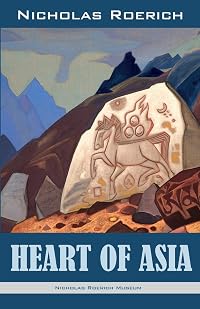
On W 107th Street near Riverside Drive, less than a block from my New York City apartment, one can find a beautiful brownstone that now houses the Nicolas Roerich Museum. I had no idea who Nicholas Roerich was, but who can resist a free museum just a block from one's house, especially a museum that you walk past every day as you bring your dog to the park? Finally one day my wife and I made time for this museum. Inside, we were shocked to find several floors full of astonishingly beautiful paintings, mostly of the Himalaya Mountains, in striking colors, and the life story of a fascinating person who spent years traveling that part of the world, getting to know the people and culture, and, obviously, painting it all. In addition, Nicholas Roerich (1874-1947), to quote the museum's website, "promoted peace and the protection of the world's cultural heritage, the unity of religions, and the notion that the creative people of the world bear the responsibility to save the world. During the nineteen-twenties, he composed a treaty for protection of the historic monuments, museums, scientific, artistic, educational and cultural institutions in time of peace as well as in war." To that purpose, he created the "Roerich Pact," which "was first agreed to by twenty-one nations of the Americas and signed as a treaty in the White House, in the presence of President Franklin Delano Roosevelt, on April 15, 1935, by all the members of the Pan-American Union."
So, an extremely interesting fellow all in all. He also, evidently wrote copiously. The museum's gift shop has on offer 14 different small volumes (5" X 8.5" and about 140 pages each) of Roerich's writings. I decided to buy one, and have just gotten around to reading it. "Heart of Asia" contains two long essays. The first is the title essay, consisting of a very interesting account of the exploratory expedition that Roerich, along with his wife and grown son, undertook over several years mid-1920s, traveling the highest mountain reaches, passes and valleys of Himalayan India, China, Tibet and Sikkim. Roerich spent time painting, talking to the people he met and learning about the cultures and histories of these groups as he could. He spends much time in the essay describing the very many tribes and cultures he came across, fascinated by the differences, sometimes significant, between peoples living in relatively close proximity to each other but also separated sometimes by severe mountainous topography. But also, Roerich often finds impressive similarities as well. This is a short essay, however, only 68 pages in length, so much detail is glossed over, though we do get a picture of religious beliefs, the perils of terrain, weather and outlaw bands the caravan encounters, the frustrating obstinacy off government officials, and the many people that welcome this odd traveling party, and come to their aid.
The second essay, "Shambhala," I found much less enjoyable. This is Roerich's expression of his wonder and delight at the Himalayan belief, which Roerich tells us is shared in varying guises by most Himalayan cultures, even as far away as Siberia, of a coming Age of Enlightenment. The writing here, unfortunately, is repetitive and rambling as Roerich enumerates the many manifestations of this belief. Supposedly, there is a hidden and very remote temporal Shambhala as well as a spiritual one. According to Roerich, the belief was strong that all signs pointed to the coming enlightenment, to be brought about by the conquering general Rigden Jyepo, being near at hand. It's kind of hard to tell exactly, but in this essay Roerich seems to have been won over to the belief and to take the stories at face value. Unfortunately, as I said above, much of the writing rambles.
At any rate, that less than satisfactory second essay notwithstanding, I found this small volume to be very interesting, and overall find Roerich to be an extremely interesting individual to learn about. Here are a couple of images of his art. The reduction in size drains more than a little of their power. Below I'm including a link to the museum's website, which includes links to many more of Roerich's works, and at a much larger composition. The site also includes lots of details about Roerich himself, and his many endeavors.
The museum website:
https://www.roerich.org/index.php
If you're ever in New York City, this free museum is worth a visit.
On W 107th Street near Riverside Drive, less than a block from my New York City apartment, one can find a beautiful brownstone that now houses the Nicolas Roerich Museum. I had no idea who Nicholas Roerich was, but who can resist a free museum just a block from one's house, especially a museum that you walk past every day as you bring your dog to the park? Finally one day my wife and I made time for this museum. Inside, we were shocked to find several floors full of astonishingly beautiful paintings, mostly of the Himalaya Mountains, in striking colors, and the life story of a fascinating person who spent years traveling that part of the world, getting to know the people and culture, and, obviously, painting it all. In addition, Nicholas Roerich (1874-1947), to quote the museum's website, "promoted peace and the protection of the world's cultural heritage, the unity of religions, and the notion that the creative people of the world bear the responsibility to save the world. During the nineteen-twenties, he composed a treaty for protection of the historic monuments, museums, scientific, artistic, educational and cultural institutions in time of peace as well as in war." To that purpose, he created the "Roerich Pact," which "was first agreed to by twenty-one nations of the Americas and signed as a treaty in the White House, in the presence of President Franklin Delano Roosevelt, on April 15, 1935, by all the members of the Pan-American Union."
So, an extremely interesting fellow all in all. He also, evidently wrote copiously. The museum's gift shop has on offer 14 different small volumes (5" X 8.5" and about 140 pages each) of Roerich's writings. I decided to buy one, and have just gotten around to reading it. "Heart of Asia" contains two long essays. The first is the title essay, consisting of a very interesting account of the exploratory expedition that Roerich, along with his wife and grown son, undertook over several years mid-1920s, traveling the highest mountain reaches, passes and valleys of Himalayan India, China, Tibet and Sikkim. Roerich spent time painting, talking to the people he met and learning about the cultures and histories of these groups as he could. He spends much time in the essay describing the very many tribes and cultures he came across, fascinated by the differences, sometimes significant, between peoples living in relatively close proximity to each other but also separated sometimes by severe mountainous topography. But also, Roerich often finds impressive similarities as well. This is a short essay, however, only 68 pages in length, so much detail is glossed over, though we do get a picture of religious beliefs, the perils of terrain, weather and outlaw bands the caravan encounters, the frustrating obstinacy off government officials, and the many people that welcome this odd traveling party, and come to their aid.
The second essay, "Shambhala," I found much less enjoyable. This is Roerich's expression of his wonder and delight at the Himalayan belief, which Roerich tells us is shared in varying guises by most Himalayan cultures, even as far away as Siberia, of a coming Age of Enlightenment. The writing here, unfortunately, is repetitive and rambling as Roerich enumerates the many manifestations of this belief. Supposedly, there is a hidden and very remote temporal Shambhala as well as a spiritual one. According to Roerich, the belief was strong that all signs pointed to the coming enlightenment, to be brought about by the conquering general Rigden Jyepo, being near at hand. It's kind of hard to tell exactly, but in this essay Roerich seems to have been won over to the belief and to take the stories at face value. Unfortunately, as I said above, much of the writing rambles.
At any rate, that less than satisfactory second essay notwithstanding, I found this small volume to be very interesting, and overall find Roerich to be an extremely interesting individual to learn about. Here are a couple of images of his art. The reduction in size drains more than a little of their power. Below I'm including a link to the museum's website, which includes links to many more of Roerich's works, and at a much larger composition. The site also includes lots of details about Roerich himself, and his many endeavors.
The museum website:
https://www.roerich.org/index.php
If you're ever in New York City, this free museum is worth a visit.
196cindydavid4
oh how wonderful it is to learn something new about the world very much would like to read the heart of asia..
197rocketjk
I went back to Stack 1 for my post-Heart of Asia "between book" reading:
* “Mending the Clock” by J. M. Barrie in Literature - Book Two edited by Thomas H. Briggs
* Excerpt from “The Sound of Water’s Footsteps” by Sohrab Sepehri from New Writing from the Middle East edited by Leo Hamalian and John D. Yohannan
* “In Gratitude to Ted Williams” from Baseball in Pinellas County by Dan Hirshberg
* “Harlem is Packed for the Fight” from My Ears Are Bent by Joseph Mitchell
* “The Last Six Inches: Battling the Stigma of Ostomy” from Replaceable You: Adventures in Human Anatomy by Mary Roach
* “Boston and the Problem with Collective Guilt” from Three or More Is a Riot: How We Got Here: 2012-2025 by Jelani Cobb
* “Censorship Spreads across U.S. from Florida to California” from The Californian, July, 1961 edited by Burton H. Wolfe
I've now started The Financier by Theodore Dreiser. Back in grad school days (the late 1980s) I took a literature class that required me to read three Dreiser novels: Sister Carrie, Jennie Gerhardt and An American Tragedy. I moderately enjoyed them all, and decided it would be interesting to read something else by Dreiser to see how I would enjoy his writing now. As I remember what I learned in that class, Dreiser was of the "Determinist" school of American writing in the early 20th century. That is, he believed that people's environments go a long way toward determining how their lives will go and how they will behave: city or country, poverty or wealth, etc., and that their choices are greatly circumscribed, and their fates more or less determined, by these elements. So far I've enjoyed the first 10 pages of the novel, which is good, because I still have 495 pages to go! Well, according to the front notes in my Penguin Classics edition, Dreiser originally published The Financier at around 800 pages, and it wasn't until a decade later that he went back and pared it down greatly for republishing. Happily, it's the shorter version that I'm taking on. This is in fact the first book of Dreiser's Trilogy of Desire. We'll see whether I'm inspired to add books two and three to my TBR.
* “Mending the Clock” by J. M. Barrie in Literature - Book Two edited by Thomas H. Briggs
* Excerpt from “The Sound of Water’s Footsteps” by Sohrab Sepehri from New Writing from the Middle East edited by Leo Hamalian and John D. Yohannan
* “In Gratitude to Ted Williams” from Baseball in Pinellas County by Dan Hirshberg
* “Harlem is Packed for the Fight” from My Ears Are Bent by Joseph Mitchell
* “The Last Six Inches: Battling the Stigma of Ostomy” from Replaceable You: Adventures in Human Anatomy by Mary Roach
* “Boston and the Problem with Collective Guilt” from Three or More Is a Riot: How We Got Here: 2012-2025 by Jelani Cobb
* “Censorship Spreads across U.S. from Florida to California” from The Californian, July, 1961 edited by Burton H. Wolfe
I've now started The Financier by Theodore Dreiser. Back in grad school days (the late 1980s) I took a literature class that required me to read three Dreiser novels: Sister Carrie, Jennie Gerhardt and An American Tragedy. I moderately enjoyed them all, and decided it would be interesting to read something else by Dreiser to see how I would enjoy his writing now. As I remember what I learned in that class, Dreiser was of the "Determinist" school of American writing in the early 20th century. That is, he believed that people's environments go a long way toward determining how their lives will go and how they will behave: city or country, poverty or wealth, etc., and that their choices are greatly circumscribed, and their fates more or less determined, by these elements. So far I've enjoyed the first 10 pages of the novel, which is good, because I still have 495 pages to go! Well, according to the front notes in my Penguin Classics edition, Dreiser originally published The Financier at around 800 pages, and it wasn't until a decade later that he went back and pared it down greatly for republishing. Happily, it's the shorter version that I'm taking on. This is in fact the first book of Dreiser's Trilogy of Desire. We'll see whether I'm inspired to add books two and three to my TBR.
198labfs39
>197 rocketjk: "The Last Six Inches" has a memorable funny scene, when they are scouring the park for the giant inflatable anus.
199kidzdoc
>194 rocketjk: Great review of Heart of Asia, Jerry. That museum sounds interesting!
200raton-liseur
>194 rocketjk: Such nice pictures! What a great find, this musuem so close to your home!
201rocketjk
>198 labfs39: Yes, that's a great scene.
>199 kidzdoc: Thanks, Darryl, though the title essay is only about 80 small pages long. Would love to read a more in-depth memoir from Roerich's travels across those countries, though I'm not sure anything more comprehensive exists.
>200 raton-liseur: Yes, Roerich's art is stunning and you're right that the museum is a treasure. We love to bring visiting friends there.
>199 kidzdoc: Thanks, Darryl, though the title essay is only about 80 small pages long. Would love to read a more in-depth memoir from Roerich's travels across those countries, though I'm not sure anything more comprehensive exists.
>200 raton-liseur: Yes, Roerich's art is stunning and you're right that the museum is a treasure. We love to bring visiting friends there.
202lisapeet
>194 rocketjk: 45 years I've lived in NYC and I didn't know about that museum. Just goes to show ya, there's always something new in this city. Thanks!
>180 rocketjk: I have a galley of the Crabapple Bundist book and am eager to see how she handles that angle. She did an interesting episode of the Between the Covers podcast, though I think she was very much preaching to the choir there.
>180 rocketjk: I have a galley of the Crabapple Bundist book and am eager to see how she handles that angle. She did an interesting episode of the Between the Covers podcast, though I think she was very much preaching to the choir there.
203cindydavid4
jerry you sent me a message on my home addy now unable to respond. could you send it to my profile THANKS
204cindydavid4
or i can just answer yes and thanks so much
btw to the right of the search librarything box are three horizonal lines with a number. i thought i knew what ir was for but i must not. explain, pls
btw to the right of the search librarything box are three horizonal lines with a number. i thought i knew what ir was for but i must not. explain, pls
205rocketjk
>203 cindydavid4: & 204 I sent you the message via the Message link on your profile. I don't know how it could have popped up anyplace else. Also, I don't see three horizontal lines next to my Search LibraryThing box, so I'm not sure what you're referring to, I'm afraid. At any rate, I'm happy to send you my copy of Heart of Asia, but I will need you to send me a message containing your mailing address. Cheers!
This topic was continued by rocketjk presents - Now Waddaya Reading? (The sequel!).

