This topic is currently marked as "dormant"—the last message is more than 90 days old. You can revive it by posting a reply.
1readeron
I'll try for 50 again (between 01/08/2009 and 01/08/2010), and see how it goes. My 1st challenge can be found here:
http://www.librarything.com/topic/42186
The first book I finished in August was a re-read:
1. Franny and Zooey by J. D. Salinger
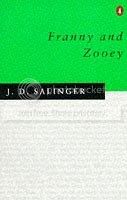
208 pages
4 stars
A fast read, for example I read the entire novel yesterday afternoon. A thought-provoking novel, though probably I enjoyed it more when I was younger.
"This book consists of two interrelated stories about members of the Glass family. These kids (seven of them if I remember well) are the children of a showbusiness family from New York and they used to be genius-kids who appeared on a radio show answering quizzes and philosophizing. Apparently the Glass kids had a special education in an ecumenical religiosity and philosophy, and their situation as whiz kids has led to emotional distress, much a-la Holden Caulfield but more illustrated. By the way, in terms of its central themes, this book could be said to be the closing of the full circle of Caulfield's story. The Glasses, just like Caulfield, are intelligent people, very frustrated with the inadequacies of life in general and the people who surround them. They are very neurotic in a New York way. They are angry because people aren't as intelligent as they should be, and because the ways of the world are not what reason and humanism tell us they should be. How to cope with it?
In the first story, Franny, a young college girl, arrives in New Haven (Yale) to be with her preppy and also intellectualizing boyfriend for a football weekend. They go to a cafe to have some food (and drinks and cigarettes). The story is simply the account of their talk. Salinger is one of the greatest masters of frenzied and fast dialogue, and it shows here. Franny is telling his boyfriend about all the phoniness of campus life, about the lunacy and presumptuosness of teachers and classmates. She tells him how she has read a book about a Russian monk who discovers a special Jesus prayer. If you repeat this prayer incessantly, it will become a part of you and repeat itself automatically, bringing you closer to grace and peace. The conversation starts getting out of hand as Franny gets carried away and as the boyfriend becomes rather estranged, until Franny collapses on her way to the restroom. When she wakes up, she is constantly whispering the Jesus prayer.
In the second story, Franny is at her parents' home in NY, recovering from her nervous breakdown. In a long talk with her brother Zooey (both of them being the youngest Glass children), they confront each other's traumas, weaknesses, genius and problems with the world. Zooey is also extremely talented and aware of the inadequacies of the world, but he seems to be in a (slightly) better emotional phase than Franny. The dialogue is moving, neurotic and masterful. After they argue rather violently, Zooey goes to another room and calls Franny pretending to be an older brother living away. In a further conversation Zooey forces Franny to understand that following a simple but futile recipe will not do the trick. The Jesus prayer is not enough: we have to accept the world as it is as well as the people around us. We can not be "catchers in the rhye". But we should live an ethical life, just because (which made me think of Kant's "categorical imperative"). As Seymour Glass, the eldest brother, once said to Zooey, sometimes you have to do things "for the Fat Lady", that is, just because it is the right thing to do, even if no one will notice.
"Frany and Zooey" is written in a lower key. It is unprententious, unlike its characters, but deep down it is about profound questions. How to cope with this mad world filled with people who are not bright nor good? Can you save the world? How to live? Yes, sometimes we have to do things we wouldn't like to do, but we have to do it, if only for the Fat Lady. " /Guillermo Maynez, Amazon/
I'm currently reading Coming Up for Air and Coraline.
http://www.librarything.com/topic/42186
The first book I finished in August was a re-read:
1. Franny and Zooey by J. D. Salinger
208 pages
4 stars
A fast read, for example I read the entire novel yesterday afternoon. A thought-provoking novel, though probably I enjoyed it more when I was younger.
"This book consists of two interrelated stories about members of the Glass family. These kids (seven of them if I remember well) are the children of a showbusiness family from New York and they used to be genius-kids who appeared on a radio show answering quizzes and philosophizing. Apparently the Glass kids had a special education in an ecumenical religiosity and philosophy, and their situation as whiz kids has led to emotional distress, much a-la Holden Caulfield but more illustrated. By the way, in terms of its central themes, this book could be said to be the closing of the full circle of Caulfield's story. The Glasses, just like Caulfield, are intelligent people, very frustrated with the inadequacies of life in general and the people who surround them. They are very neurotic in a New York way. They are angry because people aren't as intelligent as they should be, and because the ways of the world are not what reason and humanism tell us they should be. How to cope with it?
In the first story, Franny, a young college girl, arrives in New Haven (Yale) to be with her preppy and also intellectualizing boyfriend for a football weekend. They go to a cafe to have some food (and drinks and cigarettes). The story is simply the account of their talk. Salinger is one of the greatest masters of frenzied and fast dialogue, and it shows here. Franny is telling his boyfriend about all the phoniness of campus life, about the lunacy and presumptuosness of teachers and classmates. She tells him how she has read a book about a Russian monk who discovers a special Jesus prayer. If you repeat this prayer incessantly, it will become a part of you and repeat itself automatically, bringing you closer to grace and peace. The conversation starts getting out of hand as Franny gets carried away and as the boyfriend becomes rather estranged, until Franny collapses on her way to the restroom. When she wakes up, she is constantly whispering the Jesus prayer.
In the second story, Franny is at her parents' home in NY, recovering from her nervous breakdown. In a long talk with her brother Zooey (both of them being the youngest Glass children), they confront each other's traumas, weaknesses, genius and problems with the world. Zooey is also extremely talented and aware of the inadequacies of the world, but he seems to be in a (slightly) better emotional phase than Franny. The dialogue is moving, neurotic and masterful. After they argue rather violently, Zooey goes to another room and calls Franny pretending to be an older brother living away. In a further conversation Zooey forces Franny to understand that following a simple but futile recipe will not do the trick. The Jesus prayer is not enough: we have to accept the world as it is as well as the people around us. We can not be "catchers in the rhye". But we should live an ethical life, just because (which made me think of Kant's "categorical imperative"). As Seymour Glass, the eldest brother, once said to Zooey, sometimes you have to do things "for the Fat Lady", that is, just because it is the right thing to do, even if no one will notice.
"Frany and Zooey" is written in a lower key. It is unprententious, unlike its characters, but deep down it is about profound questions. How to cope with this mad world filled with people who are not bright nor good? Can you save the world? How to live? Yes, sometimes we have to do things we wouldn't like to do, but we have to do it, if only for the Fat Lady. " /Guillermo Maynez, Amazon/
I'm currently reading Coming Up for Air and Coraline.
2billiejean
Thanks for the link to your new thread! :) Franny and Zooey sounds like a great book. I can't wait to see what you think of Coraline. I have been meaning to read that one myself. Have a great day!
--BJ
--BJ
3readeron
Welcome on the new thread, billiejean!:) Franny and Zooey is a great book, Coraline ditto so far, though it's not so creepy yet as I expected.
Have a great day! Happy reading!:)
Update: Coraline is getting definitely creepy and it's only the 7th chapter (out of 13 total).
Have a great day! Happy reading!:)
Update: Coraline is getting definitely creepy and it's only the 7th chapter (out of 13 total).
4readeron
#2.Kramer vs Kramer by Avery Corman
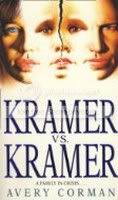
233 pages
4 stars
Another fast read. (I can't remember if I've seen the movie or not, but the cast is pretty impressive.)
I like this review the best (especially the last sentence):
"The story of a boy living with his father, after the relationship between his parents breaks down. After some period of time, his mother decides she now wants the kid.
Man-Woman tug of war, with a young boy in the middle. This one is actually not as deadly dull as it sounds like it could be." (LibraryThing)
I'm currently ALSO reading Aranyhalacska (Poisson d'or) by Le Clézio (Yes, I'm reading it in Hungarian ( I just couldn't find even the English title anywhere, let alone an English translation...), plus, in the morning I finished rereading the first volume of Nászjelentés by Vavyan Fable, the second one is waiting on the shelf, as well.:)
233 pages
4 stars
Another fast read. (I can't remember if I've seen the movie or not, but the cast is pretty impressive.)
I like this review the best (especially the last sentence):
"The story of a boy living with his father, after the relationship between his parents breaks down. After some period of time, his mother decides she now wants the kid.
Man-Woman tug of war, with a young boy in the middle. This one is actually not as deadly dull as it sounds like it could be." (LibraryThing)
I'm currently ALSO reading Aranyhalacska (Poisson d'or) by Le Clézio (Yes, I'm reading it in Hungarian ( I just couldn't find even the English title anywhere, let alone an English translation...), plus, in the morning I finished rereading the first volume of Nászjelentés by Vavyan Fable, the second one is waiting on the shelf, as well.:)
5readeron
#3. Coraline by Neil Gaiman
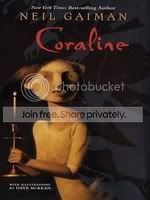
181 pages
4 stars
I had too high expectations, so I almost missed the fun. It's not really scary, which disappointed me a bit first, for instance. But by the time I was a couple chapters in, I was hooked on the story and didn't want to put it down.(Especially loved the last two chapters.) At some point it felt like I was reading about some flashgame I want to play myself, but I resisted this sort of diversion this time (and didn't start to play "treasure hunting" or something like that).
I don't recommend the book to people who have claustrophobia.
"The story is full of twists and nightmare images, dark surprises and moments of stunning beauty, and through it all there is never a misstep, nor a moment when it seems that Gaiman is unsure of what he's doing or what happens next, despite the fact that it took him ten years to write the book, and that he did so piecemeal, averaging about 2,000 words a year. It is a masterly achievement, a delight for children and adults alike -- and I strongly encourage reading it aloud to someone you love, young or old or in between. You'll both be the better for it." /Tim Pratt/
181 pages
4 stars
I had too high expectations, so I almost missed the fun. It's not really scary, which disappointed me a bit first, for instance. But by the time I was a couple chapters in, I was hooked on the story and didn't want to put it down.(Especially loved the last two chapters.) At some point it felt like I was reading about some flashgame I want to play myself, but I resisted this sort of diversion this time (and didn't start to play "treasure hunting" or something like that).
I don't recommend the book to people who have claustrophobia.
"The story is full of twists and nightmare images, dark surprises and moments of stunning beauty, and through it all there is never a misstep, nor a moment when it seems that Gaiman is unsure of what he's doing or what happens next, despite the fact that it took him ten years to write the book, and that he did so piecemeal, averaging about 2,000 words a year. It is a masterly achievement, a delight for children and adults alike -- and I strongly encourage reading it aloud to someone you love, young or old or in between. You'll both be the better for it." /Tim Pratt/
6billiejean
Thanks for the review of Coraline. I think that I might read it if I can find our copy of it. I have been having problems lately locating books around the house! I remember the movie of Kramer v. Kramer. It was a tear-jerker for me. Have a great day!
--BJ
--BJ
7readeron
You're welcome :) I hope you can find your copy of Coraline, because it's really an entertaining little book with its spooky atmosphere and illustrations! I'm glad you liked Kramer v Kramer, as well.:) Have a nice day!
8readeron
Notes about the books I'm currently reading:
- I got stuck with Coming Up for Air. So many books, so little time. Plus, I don't really like reading online. If only I could get it as a real paper book.
- Aranyhalacska by Le Clézio: It's a story about a strong woman. I think, Clézio is a master story-teller.
- Nászjelentés: Pure fun and fluff. Irony and stupid puns one loves or hates. I usually read it at meals. (Bad habit, I guess.)
- The Girl Who Loved Tom Gordon: I can't imagine how I could struggle through a year without reading anything by Stephen King. I'm about 2 or 3 chapters (Innings...) into it and I'm losing my momentum already.. It's about a little girl lost in the wood: she got stung by wasps, fell down near a stream on the wet ground, and so on. Her walkman didn't get damaged. Good idea: I need some music to make it more exciting, I wish I had some sinister classical music (I have no classical music at all, just my luck). And where's the monster???? In a King novel I expect some supernatural element sooner really.
Update:
- Abandoned The Girl Who Loved Tom Gordon.
- Started Diary by Palahniuk. (Can't resist his quirky stories. )
- I'll restart The Cat Who Could Read Backwards (absolutely forgot who is who and why happened what)
- Can go on with Coming Up for Air
- starting a new library book, possibly something by Le Clézio (not sure)
- I'm halfway the second volume of Nászjelentés and soon comes lunchtime, when I usually read it. :)
Update 08/15/09
- Decided to struggle on with this Stephen King book (can't really abandon anything by him, I'm too curious). I only wish I knew the rules of baseball at least, or anything else about it. Now I would like to skip the billion paragraphs describing the game or match or whatever, but I just can't. I still have to watch out, so I don't miss any important, new details about the story itself. Aaaaargh!
(I haven't restarted the one about the cat yet.)
Update: 18/08/09
I also started The Curious Incident of the Dog in the Night-Time by Mark Haddon.
Update: 20/08/09
The situation bookwise keeps changing. TTFN! (So what book am I reading? :) (It's a bit like Adrian Mole's diary, though it's not so "double cool with knobs". )
Update: 22/08/09
I've finished Rennison, now I'm deeply absorbed in Brooklyn Follies, Auster keeps spinning my mind:)
I'm also reading Say Cheese and Die,- what a disappointment! Now I see why is Coraline so popular, - it's a lot creepier than the Goosebumps series. But I think I'll struggle through some more to be sure. Even Enid Blyton (The Magic Faraway Tree) is a lot more exciting.
Ooops, almost forgot: I'm rereading A Long Way Down by Nick Hornby. Hilarious, hysterical dark humor and still it has depths. Hornby at his best.
- I got stuck with Coming Up for Air. So many books, so little time. Plus, I don't really like reading online. If only I could get it as a real paper book.
- Aranyhalacska by Le Clézio: It's a story about a strong woman. I think, Clézio is a master story-teller.
- Nászjelentés: Pure fun and fluff. Irony and stupid puns one loves or hates. I usually read it at meals. (Bad habit, I guess.)
- The Girl Who Loved Tom Gordon: I can't imagine how I could struggle through a year without reading anything by Stephen King. I'm about 2 or 3 chapters (Innings...) into it and I'm losing my momentum already.. It's about a little girl lost in the wood: she got stung by wasps, fell down near a stream on the wet ground, and so on. Her walkman didn't get damaged. Good idea: I need some music to make it more exciting, I wish I had some sinister classical music (I have no classical music at all, just my luck). And where's the monster???? In a King novel I expect some supernatural element sooner really.
Update:
- Abandoned The Girl Who Loved Tom Gordon.
- Started Diary by Palahniuk. (Can't resist his quirky stories. )
- I'll restart The Cat Who Could Read Backwards (absolutely forgot who is who and why happened what)
- Can go on with Coming Up for Air
- starting a new library book, possibly something by Le Clézio (not sure)
- I'm halfway the second volume of Nászjelentés and soon comes lunchtime, when I usually read it. :)
Update 08/15/09
- Decided to struggle on with this Stephen King book (can't really abandon anything by him, I'm too curious). I only wish I knew the rules of baseball at least, or anything else about it. Now I would like to skip the billion paragraphs describing the game or match or whatever, but I just can't. I still have to watch out, so I don't miss any important, new details about the story itself. Aaaaargh!
(I haven't restarted the one about the cat yet.)
Update: 18/08/09
I also started The Curious Incident of the Dog in the Night-Time by Mark Haddon.
Update: 20/08/09
The situation bookwise keeps changing. TTFN! (So what book am I reading? :) (It's a bit like Adrian Mole's diary, though it's not so "double cool with knobs". )
Update: 22/08/09
I've finished Rennison, now I'm deeply absorbed in Brooklyn Follies, Auster keeps spinning my mind:)
I'm also reading Say Cheese and Die,- what a disappointment! Now I see why is Coraline so popular, - it's a lot creepier than the Goosebumps series. But I think I'll struggle through some more to be sure. Even Enid Blyton (The Magic Faraway Tree) is a lot more exciting.
Ooops, almost forgot: I'm rereading A Long Way Down by Nick Hornby. Hilarious, hysterical dark humor and still it has depths. Hornby at his best.
9readeron
#4 Poisson d'or by J.M.G. Le Clézio (in Hungarian).
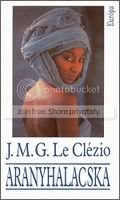
297 pages
4 stars (I know I keep giving 4 stars, but it's not my fault. Blame the books.:)
Ok, the Hungarain title is a bit different: i'ts 'little goldfish'. (Never trust a Hungarian translator when it comes to titles...but yes, it could've been way worse :)
Laila is a real survivor. She gets kidnapped as a young girl, and she starts drifting on from North Africa to the USA and back. I Couldn't really relate to her, but the author rendered her thoughts and motives so convincingly that I could sympathise with her and wish for a happy ending.
A review about the book that I found and liked:
"Poisson d'or is the first-person account of a young North African woman, Laila, who is kidnapped and sold as a young child and who encounters in her journeys (through Africa, Europe, and America) a vast range of humanity, rich and poor, kind and cruel. Some mistreat and exploit her; others suffer and struggle like her. Midway through the text, Laila - the "golden fish" of the title - realizes that the many people with whom she comes in contact each have their own personal agendas to follow, and that she cannot depend on others to assist her as she confronts the harsh realities of life (...). With no family and no known origins or identity (for she does not in fact know her real name), Laila must endure the cruelties of life on her own.
Although sold into virtual slavery early in life, Laila leads an existence with Lalla Asma - her "mistress" and "grandmother" - that is far from desolate. The death of the latter, however, leads Laila to embark on a potentially endless journey whose destination and purpose she never comes to understand. Eventually she will arrive in France as an illegal immigrant and there will meet many like her - Gypsies, North and West Africans, Haitians - who seek their place in a world hostile to those who do not or cannot conform and adjust to its norms. (...) As this need to find a welcome home is unrealized in France, her adventure will lead her to the United States - Boston, Chicago, and California - and to an improbable new life first as a singer and later as a jazz pianist. Yet she will also again encounter those who find themselves marginalized in society: African Americans, Mexican Americans, drug dealers. Laila's adventure in America will be brief, resulting, ironically, in her return to France in order to play in a jazz festival and in her decision to return to Africa to complete her voyage.
The reader already familiar with the novels of J. M. G. Le Clezio (...) will find in Poisson d'or many of those themes present in his previous works: the fate of the oppressed, the tension between so-called First and Third World societies, the both physical and spiritual journey of self-discovery. In particular, readers will detect many affinities between this work and Desert (1980), which also focuses on the life of a young North African woman who, like Laila, leaves Africa only to return in the end, abandoning an unsatisfying Western world in order to rediscover her true origins and identity." /William Thompson/
- Humor * (I basically can't recall any form of humor occurring in the novel right now)
- Style ***** (simple style, easy to follow, vivid imagery, great descriptions, colorful characters)
- Narrator/protagonist: *** (a real survivor)
- Romance: *
- Plot: ****
Overall, this was a pretty good book. Not my new favorite thing, but worth the read.
297 pages
4 stars (I know I keep giving 4 stars, but it's not my fault. Blame the books.:)
Ok, the Hungarain title is a bit different: i'ts 'little goldfish'. (Never trust a Hungarian translator when it comes to titles...but yes, it could've been way worse :)
Laila is a real survivor. She gets kidnapped as a young girl, and she starts drifting on from North Africa to the USA and back. I Couldn't really relate to her, but the author rendered her thoughts and motives so convincingly that I could sympathise with her and wish for a happy ending.
A review about the book that I found and liked:
"Poisson d'or is the first-person account of a young North African woman, Laila, who is kidnapped and sold as a young child and who encounters in her journeys (through Africa, Europe, and America) a vast range of humanity, rich and poor, kind and cruel. Some mistreat and exploit her; others suffer and struggle like her. Midway through the text, Laila - the "golden fish" of the title - realizes that the many people with whom she comes in contact each have their own personal agendas to follow, and that she cannot depend on others to assist her as she confronts the harsh realities of life (...). With no family and no known origins or identity (for she does not in fact know her real name), Laila must endure the cruelties of life on her own.
Although sold into virtual slavery early in life, Laila leads an existence with Lalla Asma - her "mistress" and "grandmother" - that is far from desolate. The death of the latter, however, leads Laila to embark on a potentially endless journey whose destination and purpose she never comes to understand. Eventually she will arrive in France as an illegal immigrant and there will meet many like her - Gypsies, North and West Africans, Haitians - who seek their place in a world hostile to those who do not or cannot conform and adjust to its norms. (...) As this need to find a welcome home is unrealized in France, her adventure will lead her to the United States - Boston, Chicago, and California - and to an improbable new life first as a singer and later as a jazz pianist. Yet she will also again encounter those who find themselves marginalized in society: African Americans, Mexican Americans, drug dealers. Laila's adventure in America will be brief, resulting, ironically, in her return to France in order to play in a jazz festival and in her decision to return to Africa to complete her voyage.
The reader already familiar with the novels of J. M. G. Le Clezio (...) will find in Poisson d'or many of those themes present in his previous works: the fate of the oppressed, the tension between so-called First and Third World societies, the both physical and spiritual journey of self-discovery. In particular, readers will detect many affinities between this work and Desert (1980), which also focuses on the life of a young North African woman who, like Laila, leaves Africa only to return in the end, abandoning an unsatisfying Western world in order to rediscover her true origins and identity." /William Thompson/
- Humor * (I basically can't recall any form of humor occurring in the novel right now)
- Style ***** (simple style, easy to follow, vivid imagery, great descriptions, colorful characters)
- Narrator/protagonist: *** (a real survivor)
- Romance: *
- Plot: ****
Overall, this was a pretty good book. Not my new favorite thing, but worth the read.
10readeron
#5 Nászjelentés by Vavyan Fable (Éva Molnár) in Hungarian

443+457 pages
3 stars
I would call it a romantic comedy. Funny, fluffy, witty, but certainly not a fast read. Jandra, our heroine marries the wrong man: Selwyn Icon, the charming actor, who can always make her laugh. Meanwhile, she mets Mr Perfect alias Jamal, the even more charming cop, who is a great friend.
Friends and relatives all in a bunch, plus one by one, try to open up Jandra's eyes, in vain: she seems to be hopelessly devoted to care for the wrong man, who has serious drog and several other issues. All this and more are rendered in Fable's hilarious style, - never try to learn Hungarian reading this book!:) Just read it and enjoy.
(Can't fix the touchstones.)
443+457 pages
3 stars
I would call it a romantic comedy. Funny, fluffy, witty, but certainly not a fast read. Jandra, our heroine marries the wrong man: Selwyn Icon, the charming actor, who can always make her laugh. Meanwhile, she mets Mr Perfect alias Jamal, the even more charming cop, who is a great friend.
Friends and relatives all in a bunch, plus one by one, try to open up Jandra's eyes, in vain: she seems to be hopelessly devoted to care for the wrong man, who has serious drog and several other issues. All this and more are rendered in Fable's hilarious style, - never try to learn Hungarian reading this book!:) Just read it and enjoy.
(Can't fix the touchstones.)
11readeron
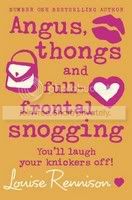
#6 Angus, Thongs and FullFrontal Snogging: Confessions of Georgia Nicolson by Louise Rennison
256 pages
3 stars
A fast and easy read, just what I needed these days. Recommended for those who like YA literature.
"The funny little insights of the main character were hilarious precisely because they seemed like snippets from the mind of a 13 or 14 year old. /.../ The roller-coaster world of teenagers is reflected in all its hilarity and irony here. So I liked the book. "/Tessa from Goodreads/
"noon
La Marche avec Mystery. We walked up and down the High Street, only speaking French. I asked passersby for directions, “Ou est Ia gare, s’il vous plait?” and “Au secours, j’oublie ma tête, aidez-moi, s’ilvous plait.”
Then . . . this really dishy bloke came along. Julia and Ellen wouldn’t go up to him, but I did. I don’t know why, but I developed a limp as well as being French. He had really nice eyes . . . he must have been about nineteen. Anyway I hobbled up to him and said,
“Excusez-moi. Je suis francaise. Je ne parle pas l’anglais. Parlezvous français?”
Fortunately he looked puzzled—it was quite dreamy. I pouted my mouth a bit. Cindy Crawford said that if you put your tongue behind your back teeth when you smile, it makes your smile really sexy. Impossible to talk, of course, unless you like sounding like a loony.
Anyway, dreamboat said, “Are you lost? I don’t speak French.”
I looked puzzled (and pouty). “Au secours, monsieur,” I breathed.
He took my arm. “Look, don’t be frightened. Come with me.”
Ellen and Jools looked amazed: He was bloody gorgeous and he was taking me somewhere. I hobbled along attractively by his side. Not for very long, though, just into a French pâtisserie where the lady behind the counter was French.
8:00 p.m.
In bed. The Frenchwoman talked French at me for about forty years. I nodded for as long as humanly possible, then just ran out of the shop and into the street. The gorgeous boy looked surprised that my limp had cured itself so quickly."
I definitely liked this funny diary whenever it described anecdotes like these. Made me feel quite nostalgic sometimes.
Update:
Shortly, my favorite sentences from the anecdote:
"I hobbled along attractively by his side."
"I nodded for as long as humanly possible"
I definitely must read some more sequels. Or I'll reread Adrian Mole.
256 pages
3 stars
A fast and easy read, just what I needed these days. Recommended for those who like YA literature.
"The funny little insights of the main character were hilarious precisely because they seemed like snippets from the mind of a 13 or 14 year old. /.../ The roller-coaster world of teenagers is reflected in all its hilarity and irony here. So I liked the book. "/Tessa from Goodreads/
"noon
La Marche avec Mystery. We walked up and down the High Street, only speaking French. I asked passersby for directions, “Ou est Ia gare, s’il vous plait?” and “Au secours, j’oublie ma tête, aidez-moi, s’ilvous plait.”
Then . . . this really dishy bloke came along. Julia and Ellen wouldn’t go up to him, but I did. I don’t know why, but I developed a limp as well as being French. He had really nice eyes . . . he must have been about nineteen. Anyway I hobbled up to him and said,
“Excusez-moi. Je suis francaise. Je ne parle pas l’anglais. Parlezvous français?”
Fortunately he looked puzzled—it was quite dreamy. I pouted my mouth a bit. Cindy Crawford said that if you put your tongue behind your back teeth when you smile, it makes your smile really sexy. Impossible to talk, of course, unless you like sounding like a loony.
Anyway, dreamboat said, “Are you lost? I don’t speak French.”
I looked puzzled (and pouty). “Au secours, monsieur,” I breathed.
He took my arm. “Look, don’t be frightened. Come with me.”
Ellen and Jools looked amazed: He was bloody gorgeous and he was taking me somewhere. I hobbled along attractively by his side. Not for very long, though, just into a French pâtisserie where the lady behind the counter was French.
8:00 p.m.
In bed. The Frenchwoman talked French at me for about forty years. I nodded for as long as humanly possible, then just ran out of the shop and into the street. The gorgeous boy looked surprised that my limp had cured itself so quickly."
I definitely liked this funny diary whenever it described anecdotes like these. Made me feel quite nostalgic sometimes.
Update:
Shortly, my favorite sentences from the anecdote:
"I hobbled along attractively by his side."
"I nodded for as long as humanly possible"
I definitely must read some more sequels. Or I'll reread Adrian Mole.
12readeron
Last night I finished rereading
#7. A Long Way Down by Nick Hornby
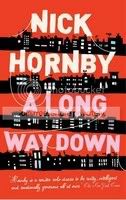
5 stars
352 pages
A Whitbread Prize nominee in 2005.
'It's a thrill to watch a writer as talented as Hornby take on the grimmest of subjects without flinching, and somehow make it funny and surprising at the same time'/Tom Perotta, Publishers Weekly/
Deep (even if slightly preachy):
"There was something else in the article I read: an interview with a man who'd survived after jumping off the Golden Gate Bridge in San Francisco. He said that two seconds after jumping, he realized that there was nothing in his life he couldn't deal with, no problem he couldn't solve - apart from the problem he'd just given himself by jumping off the bridge. I don't know why I didn't tell the others about that; you'd think it might be relevant information. I wanted to keep it to myself for the time being, though. It seemed like something that might be more appropriate later, when the story was over. If it ever was."
Hysterically funny:
“To be fair to JJ, he'd taken his guests with him when he went - he hadn't left them behind in the coffee bar, the way Jess and Martin had done. But later on I found out that he'd taken them all outside to have a fight with them, so it was difficult to decide whether he was being rude or not. On the one hand, he was with them, but on the other hand, he was with them because he wanted to beat them up. I think that's probably still rude, but not as rude as the others.”
Summary:
"New Years Eve at Toppers House, North London's most popular suicide spot. And four strangers are about to discover that doing away with yourself isn't quite the private act they'd each expected.
Perma-tanned Martin Sharp's a disgraced breakfast TV presenter who had it all - the kids, the wife, the pad, the great career - but he 'pissed it all away'. Killing himself is Martin's 'reasonable and appropriate response' to an unliveable life.
Maureen has to do it tonight, because of Matty being in the home. He was never able to do any of the normal things kids do - like walk or talk - and loving-mum Maureen can't cope any more. Dutiful Catholic that she is, she's about to commit the 'biggest sin of all'.
Half-crazed with heartbreak, loneliness, adolescent angst, seven Bacardi Breezers and two Special Brews, Jess's ready to jump, to fly off the roof. Lastly, there's JJ - tall, cool, American, looks like a rock-star (was, in fact, a rock-star before his band split) - who's weighed down with a heap of problems and pizza.
Four strangers, who moments before were all convinced that they were alone and going to end it all that way, sit down together, share out the pizza and begin to talk.
Funny, sad, and wonderfully humane, Nick Hornby's A LONG WAY DOWN is a novel that asks some of the big questions: about life and death, strangers and friendship, love and pain, and whether a slice of pizza can really see you through a long, dark night of the soul."
'Extremely funny … cunning and wise. Hornby remains one of our most gifted comic writers'
Sunday Times
'Hornby's best novel to date, impossible to put down … how can an examination of four people's anguish be so enthralling?'
Ruth Rendell, Guardian
'A page-turning plot and rich, funny characters with several big laughs on every page … Hornby's best yet'
Literary Review
'Hornby pins down the age in which we live with precision and comic brilliance'
Guardian
'Hugely enjoyable'
Irish Times
'Masterful … some of the finest writing, and some of the most outstanding characters I've ever had the pleasure of reading'
Johnny Depp
'The finest novel Hornby has written to date'
Evening Standard
'Enjoyably readable, genuinely moving'
Guardian
'A writer of great feeling and warmth … high on charm and frequently hilarious'
Washington Post
'Highly moving and lively storytelling: Honey's gifts become more apparent with each outing'
Kirkus Reviews
'Immensely impressive and loveable'
Heat
'There are plenty of wry laughs to be had here'
Glamour
'A pleasure'
Helen Dunmore, The Times
'Stays with you. Hornby's writing is so popular because he goes straight to the moral struggle: to find the good in life. About that, he couldn't be more serious. Or engaging'
Evening Standard
'A fine book'
Sunday Express
'Hornby excels in the delineation of individual voice … the warmest and most committed of moralists'
Spectator
'Many pleasures'
Marie Claire
'Laughs on every page. A premier league effort: this is Hornby's best novel since High Fidelity … this is one treat that leave you with a satisfied smile'
Independent on Sunday
'The jolliest novel Hornby has written'
Guardian
'Perhaps the funniest and most exhilarating novel ever written about group suicide. A long way up from much modern fiction, which seems to have been written to supply us with reasons to jump'
Village Voice
'A Hornby fan's dream'
Esquire
'Hornby's most original and accomplished novel to date … there are numerous moments of old, knowing Hornbyesque humour, zeitgeisty references'
Mirror
'Hilarious yet heartbreaking'
In Style
'Generous and wise. Right from the open pages, a smile played continually across my face'
GQ
'Darkly comic'
San Francisco Chronicle
'Brilliant, smart and funny … a cello suite about how to go on living. It's hard to imagine a novel more darkly and sublimely devoted to life'
Boston Globe
You can read all these, some links to other reviews about the book plus brilliant excerpts here:
http://www.penguin.co.uk/static/cs/uk/0/minisites/nickhornby/books/alwd_synopsis...
#7. A Long Way Down by Nick Hornby
5 stars
352 pages
A Whitbread Prize nominee in 2005.
'It's a thrill to watch a writer as talented as Hornby take on the grimmest of subjects without flinching, and somehow make it funny and surprising at the same time'/Tom Perotta, Publishers Weekly/
Deep (even if slightly preachy):
"There was something else in the article I read: an interview with a man who'd survived after jumping off the Golden Gate Bridge in San Francisco. He said that two seconds after jumping, he realized that there was nothing in his life he couldn't deal with, no problem he couldn't solve - apart from the problem he'd just given himself by jumping off the bridge. I don't know why I didn't tell the others about that; you'd think it might be relevant information. I wanted to keep it to myself for the time being, though. It seemed like something that might be more appropriate later, when the story was over. If it ever was."
Hysterically funny:
“To be fair to JJ, he'd taken his guests with him when he went - he hadn't left them behind in the coffee bar, the way Jess and Martin had done. But later on I found out that he'd taken them all outside to have a fight with them, so it was difficult to decide whether he was being rude or not. On the one hand, he was with them, but on the other hand, he was with them because he wanted to beat them up. I think that's probably still rude, but not as rude as the others.”
Summary:
"New Years Eve at Toppers House, North London's most popular suicide spot. And four strangers are about to discover that doing away with yourself isn't quite the private act they'd each expected.
Perma-tanned Martin Sharp's a disgraced breakfast TV presenter who had it all - the kids, the wife, the pad, the great career - but he 'pissed it all away'. Killing himself is Martin's 'reasonable and appropriate response' to an unliveable life.
Maureen has to do it tonight, because of Matty being in the home. He was never able to do any of the normal things kids do - like walk or talk - and loving-mum Maureen can't cope any more. Dutiful Catholic that she is, she's about to commit the 'biggest sin of all'.
Half-crazed with heartbreak, loneliness, adolescent angst, seven Bacardi Breezers and two Special Brews, Jess's ready to jump, to fly off the roof. Lastly, there's JJ - tall, cool, American, looks like a rock-star (was, in fact, a rock-star before his band split) - who's weighed down with a heap of problems and pizza.
Four strangers, who moments before were all convinced that they were alone and going to end it all that way, sit down together, share out the pizza and begin to talk.
Funny, sad, and wonderfully humane, Nick Hornby's A LONG WAY DOWN is a novel that asks some of the big questions: about life and death, strangers and friendship, love and pain, and whether a slice of pizza can really see you through a long, dark night of the soul."
'Extremely funny … cunning and wise. Hornby remains one of our most gifted comic writers'
Sunday Times
'Hornby's best novel to date, impossible to put down … how can an examination of four people's anguish be so enthralling?'
Ruth Rendell, Guardian
'A page-turning plot and rich, funny characters with several big laughs on every page … Hornby's best yet'
Literary Review
'Hornby pins down the age in which we live with precision and comic brilliance'
Guardian
'Hugely enjoyable'
Irish Times
'Masterful … some of the finest writing, and some of the most outstanding characters I've ever had the pleasure of reading'
Johnny Depp
'The finest novel Hornby has written to date'
Evening Standard
'Enjoyably readable, genuinely moving'
Guardian
'A writer of great feeling and warmth … high on charm and frequently hilarious'
Washington Post
'Highly moving and lively storytelling: Honey's gifts become more apparent with each outing'
Kirkus Reviews
'Immensely impressive and loveable'
Heat
'There are plenty of wry laughs to be had here'
Glamour
'A pleasure'
Helen Dunmore, The Times
'Stays with you. Hornby's writing is so popular because he goes straight to the moral struggle: to find the good in life. About that, he couldn't be more serious. Or engaging'
Evening Standard
'A fine book'
Sunday Express
'Hornby excels in the delineation of individual voice … the warmest and most committed of moralists'
Spectator
'Many pleasures'
Marie Claire
'Laughs on every page. A premier league effort: this is Hornby's best novel since High Fidelity … this is one treat that leave you with a satisfied smile'
Independent on Sunday
'The jolliest novel Hornby has written'
Guardian
'Perhaps the funniest and most exhilarating novel ever written about group suicide. A long way up from much modern fiction, which seems to have been written to supply us with reasons to jump'
Village Voice
'A Hornby fan's dream'
Esquire
'Hornby's most original and accomplished novel to date … there are numerous moments of old, knowing Hornbyesque humour, zeitgeisty references'
Mirror
'Hilarious yet heartbreaking'
In Style
'Generous and wise. Right from the open pages, a smile played continually across my face'
GQ
'Darkly comic'
San Francisco Chronicle
'Brilliant, smart and funny … a cello suite about how to go on living. It's hard to imagine a novel more darkly and sublimely devoted to life'
Boston Globe
You can read all these, some links to other reviews about the book plus brilliant excerpts here:
http://www.penguin.co.uk/static/cs/uk/0/minisites/nickhornby/books/alwd_synopsis...
13billiejean
You are really zooming along! I have never read anything by Nick Hornby, but I must admit that I am curious to read one. Have a great day!
--BJ
--BJ
14readeron
Thanks!:) I don't feel the zooming part, because I keep picking up new and new books, looking for the real thing.:) Now I discovered a 'new to me' children's books series, for instance, and I'm definitely charmed by it. As to Hornby, this book was really great, I quite forgot how much I enjoyed it last time. Hope you will enjoy his books as well, when you give them a go! Happy Reading!
15readeron
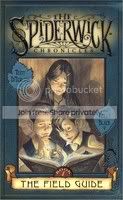
#8. The Field Guide by Holly Black and Tony DiTerlizzi
(The first book in the Spiderwick Chronicles series)
114 pages
5 stars
I really loved this one. A cute and spooky story with great illustrations (I loved every nook and niche of the mysterious, old house:), a wonderful children's book!
(The first book in the Spiderwick Chronicles series)
114 pages
5 stars
I really loved this one. A cute and spooky story with great illustrations (I loved every nook and niche of the mysterious, old house:), a wonderful children's book!
16readeron
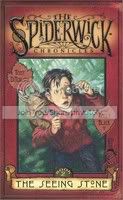
# 9. The Seeing Stone by Holly Black and Tony DiTerlizzi
(The second book in the Spiderwick Chronicles series)
4 stars
128 pages
The three siblings are attacked by some goblins who kidnap Simon. Jared and Mallory decide to rescue him. They meet a troll and a hobgoblin during their adventures in the forest. Simon, a griffin and a kitten all get saved in the end.
A well written, moderately creepy and funny sequel to The Field Guide. A very short, very fast read again, - especially recommended after a tiresome, busy day. :)
(I'm currently also rereading the New York Trilogy by Auster.)
(The second book in the Spiderwick Chronicles series)
4 stars
128 pages
The three siblings are attacked by some goblins who kidnap Simon. Jared and Mallory decide to rescue him. They meet a troll and a hobgoblin during their adventures in the forest. Simon, a griffin and a kitten all get saved in the end.
A well written, moderately creepy and funny sequel to The Field Guide. A very short, very fast read again, - especially recommended after a tiresome, busy day. :)
(I'm currently also rereading the New York Trilogy by Auster.)
17readeron
#10 City of Glass by Paul Auster
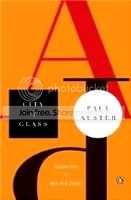
4 stars
208 pages
The first novel in the New York Trilogy. It was a reread. (1985)
"the stories of The New York Trilogy have been described as "meta-detective-fiction", "anti-detective fiction", "mysteries about mysteries", a "strangely humorous working of the detective novel", "very soft-boiled", a "metamystery" and a "mixture between the detective story and the nouveau roman". This may classify Auster as a postmodern writer whose works are influenced by the "classical literary movement" of American postmodernism through the 1960s and 70s. There is, however, "a certain coherence in the narrative discourse, a neo-realistic approach and a show of responsibility for social and moral aspects going beyond mere metafictional and subversive elements", which distinguish him from a "traditional" postmodern writer. The New York Trilogy is a particular form of postmodern detective fiction which still uses well-known elements of the detective novel (the classical and hardboiled varieties, for example) but also creates a new form that links "the traditional features of the genre with the experimental, metafictional and ironic features of postmodernism." /wikipedia/
Summary:
"City of Glass features a detective-fiction writer become private investigator who descends into madness as he becomes embroiled in a case. It explores layers of identity and reality, from Paul Auster the writer of the novel to the unnamed "author" who reports the events as reality to "Paul Auster the writer", a character in the story, to "Paul Auster the detective", who may or may not exist in the novel, to Peter Stillman the younger to Peter Stillman the elder and, finally, to Daniel Quinn, the protagonist." /wikipedia/
"As Alison Russell notes, rather than locating a missing person or solving a murder, Auster's detective "becomes a pilgrim searching for correspondence between signifiers and signifieds" while also undertaking "a quest for his own identity". In City of Glass, however, the questor can never arrive at his desired destination, for in this world signifiers are not attached to signifieds, while the distinction between self and other no longer holds."/Richard Swope/
"Regardless of the obvious splintering of Quinn's identity, he continues to believe that "he could return to being Quinn whenever he wished", assuming that a "true" self remains unchanged and accessible beneath his various facades. Unfortunately, unlike the cases Quinn writes and reads, the case he "lives" not only fails to produce a tidy conclusion, but in failing indicates the instability of the world as well as the indeterminacy of language and the self." /Richard Swope/
An amazing book. (Ok, I still think almost everyone is just going mad sooner or later in this book, but it surely can be looked on from a different angle.)
"I place this item on a none-too-tiny list of literary Rorschach tests"/jburlinson, Library Thing/
4 stars
208 pages
The first novel in the New York Trilogy. It was a reread. (1985)
"the stories of The New York Trilogy have been described as "meta-detective-fiction", "anti-detective fiction", "mysteries about mysteries", a "strangely humorous working of the detective novel", "very soft-boiled", a "metamystery" and a "mixture between the detective story and the nouveau roman". This may classify Auster as a postmodern writer whose works are influenced by the "classical literary movement" of American postmodernism through the 1960s and 70s. There is, however, "a certain coherence in the narrative discourse, a neo-realistic approach and a show of responsibility for social and moral aspects going beyond mere metafictional and subversive elements", which distinguish him from a "traditional" postmodern writer. The New York Trilogy is a particular form of postmodern detective fiction which still uses well-known elements of the detective novel (the classical and hardboiled varieties, for example) but also creates a new form that links "the traditional features of the genre with the experimental, metafictional and ironic features of postmodernism." /wikipedia/
Summary:
"City of Glass features a detective-fiction writer become private investigator who descends into madness as he becomes embroiled in a case. It explores layers of identity and reality, from Paul Auster the writer of the novel to the unnamed "author" who reports the events as reality to "Paul Auster the writer", a character in the story, to "Paul Auster the detective", who may or may not exist in the novel, to Peter Stillman the younger to Peter Stillman the elder and, finally, to Daniel Quinn, the protagonist." /wikipedia/
"As Alison Russell notes, rather than locating a missing person or solving a murder, Auster's detective "becomes a pilgrim searching for correspondence between signifiers and signifieds" while also undertaking "a quest for his own identity". In City of Glass, however, the questor can never arrive at his desired destination, for in this world signifiers are not attached to signifieds, while the distinction between self and other no longer holds."/Richard Swope/
"Regardless of the obvious splintering of Quinn's identity, he continues to believe that "he could return to being Quinn whenever he wished", assuming that a "true" self remains unchanged and accessible beneath his various facades. Unfortunately, unlike the cases Quinn writes and reads, the case he "lives" not only fails to produce a tidy conclusion, but in failing indicates the instability of the world as well as the indeterminacy of language and the self." /Richard Swope/
An amazing book. (Ok, I still think almost everyone is just going mad sooner or later in this book, but it surely can be looked on from a different angle.)
"I place this item on a none-too-tiny list of literary Rorschach tests"/jburlinson, Library Thing/
18readeron
# 11. Lucinda's Secret by Holly Black and Tony DiTerlizzi
(The third book in the Spiderwick Chronicles series)
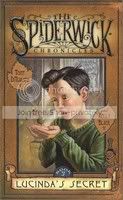
128 pages
5 stars
The three siblings meet a phooka and some elves this time. A truly enjoyable kids' series!
(The third book in the Spiderwick Chronicles series)
128 pages
5 stars
The three siblings meet a phooka and some elves this time. A truly enjoyable kids' series!
19billiejean
I still haven't read The New York Trilogy yet; but I am hoping to read it sometime next year.
How is the weather there? We are having nice, early fall type weather here. Quite suprising for August. My sweet dog loves it and is willing to leave the ac and explore the great outdoors. Have a great day!
--BJ
How is the weather there? We are having nice, early fall type weather here. Quite suprising for August. My sweet dog loves it and is willing to leave the ac and explore the great outdoors. Have a great day!
--BJ
20readeron
Hi Billiejean!:)
We have nice sunny weather here, no signs of autumn yet. :) I think you would enjoy New York Trilogy, even Don Quixote is discussed in the City of Glass,- Auster's characters can create the craziest theories about practically anything or anyone.:) I'm also reading the Brooklyn Follies and I've just started Ghosts, the second book in the trilogy. Blue, the protagonist has already started to lose his identity and his connection with reality, but I hope he takes a grip on them in time and don't let them go like Quinn did in the first book.:) Btw, what are you reading these days?
I'm also reading A Girl's Best Friend which/who is actually a sweet doggie, too:)
Have a great weekend and lots of sunshine!
We have nice sunny weather here, no signs of autumn yet. :) I think you would enjoy New York Trilogy, even Don Quixote is discussed in the City of Glass,- Auster's characters can create the craziest theories about practically anything or anyone.:) I'm also reading the Brooklyn Follies and I've just started Ghosts, the second book in the trilogy. Blue, the protagonist has already started to lose his identity and his connection with reality, but I hope he takes a grip on them in time and don't let them go like Quinn did in the first book.:) Btw, what are you reading these days?
I'm also reading A Girl's Best Friend which/who is actually a sweet doggie, too:)
Have a great weekend and lots of sunshine!
21billiejean
Hi, readeron!
I have to agree on the doggie being a girl's best friend! I am almost finished with Naked in Death for the romantic suspense category. Soon I will start Remains of the Day and Greenwitch (which I still can't find). There is just too much out there available to read. I will never be caught up!
--BJ
I have to agree on the doggie being a girl's best friend! I am almost finished with Naked in Death for the romantic suspense category. Soon I will start Remains of the Day and Greenwitch (which I still can't find). There is just too much out there available to read. I will never be caught up!
--BJ
22readeron
I feel exactly the same way!:) This series (Dark is Rising) sounds great and I do have it in my TBR piles, too, but somehow too many books make it harder to choose one. Afraid I quite neglected the genre challenge recently, - couldn't tell when I became such a literary fiction freak (I have always been a Children's books freak, so it's not such a great surprise). Probably I should just read on Naked in Death too (I've read one or 2 pages but wasn't in the mood to read on and finish it), but really there are so many wonderful books out there (on my shelves, too) that for instance some weeks ago I just gave up reading for a day and decided to treat my books like I was in a bookstore at home: taking books in the hand, reading the blurbs, reading some lines to savour the style, skipping to the next book, let myself relax and honestly: memorize what books I do have, I even printed my TBRs in a file (110 pages), and now I still had no idea I have this series (Dark is Rising), which is another great kids' series I guess and I definitely plan to read it one day, but... (*drowning in TBR piles so can't babble on*:)
I hope you are enjoying all your readings!:)
Have a great weekend!:)
I hope you are enjoying all your readings!:)
Have a great weekend!:)
23readeron
#12. Ghosts by Paul Auster
(2nd book in the New York Trilogy)
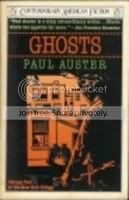
102 pages
4 stars
"This is the second, and perhaps most peculiar, volume of the New York Trilogy. The issues of control and power over a story between the author, the characters, and the readers are brought up even more explicitly in this work. Again the detective plays a prominent role in exploring these ideas, but the focus is even more explicitly focused on words, language, and the experience of reading or writing a book.
The story begins with a detective who has been hired to watch another man and write down everything that this other man does. The problem is that all that this other man does is sit at his desk and write all day, which is, therefore, all that the detective ends up doing. Eventually he learns that the man across the street who he has been hired to observe is also the man who has hired him. Once he has gained this knowledge, the detective begins to wonder what the point of his assignment is, and eventually decides to confront the man who has been toying with him. This confrontation between character (the detective) and author (the man across the street) is the tension that lies at the heart of all three books of the Trilogy.
Auster told me that a friend of his told him that it was a parable about reading a book, which is as good a description as I've heard. It also follows up on the theme of the character/reader escaping the control of the author and writing their own stories instead of passively submitting to the author's control, an idea that is the focus of the final installment of the Trilogy." /bluecricket.com/
Whoever wrote this, I couldn't agree more.
(Hope the touchstone will work.)
(2nd book in the New York Trilogy)
102 pages
4 stars
"This is the second, and perhaps most peculiar, volume of the New York Trilogy. The issues of control and power over a story between the author, the characters, and the readers are brought up even more explicitly in this work. Again the detective plays a prominent role in exploring these ideas, but the focus is even more explicitly focused on words, language, and the experience of reading or writing a book.
The story begins with a detective who has been hired to watch another man and write down everything that this other man does. The problem is that all that this other man does is sit at his desk and write all day, which is, therefore, all that the detective ends up doing. Eventually he learns that the man across the street who he has been hired to observe is also the man who has hired him. Once he has gained this knowledge, the detective begins to wonder what the point of his assignment is, and eventually decides to confront the man who has been toying with him. This confrontation between character (the detective) and author (the man across the street) is the tension that lies at the heart of all three books of the Trilogy.
Auster told me that a friend of his told him that it was a parable about reading a book, which is as good a description as I've heard. It also follows up on the theme of the character/reader escaping the control of the author and writing their own stories instead of passively submitting to the author's control, an idea that is the focus of the final installment of the Trilogy." /bluecricket.com/
Whoever wrote this, I couldn't agree more.
(Hope the touchstone will work.)
24billiejean
That was so interesting! I have got to read those books!
--BJ
--BJ
25readeron
I think you would enjoy them! But as I'm a sort of Auster fan, I think everyone would and should enjoy his books.:) And definitely everyone should read them :)
I've read The New York Trilogy three times and it gets better each time.(Still Oracle Night is my favourite Auster yet, though.:)
Have a great day!
I've read The New York Trilogy three times and it gets better each time.(Still Oracle Night is my favourite Auster yet, though.:)
Have a great day!
26readeron
# 13 The Locked Room by Paul AUster
(The third book in the New York Trilogy series)
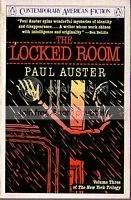
179 pages
4 stars
The Locked Room is the story of the unnamed narrator who we only know as FANSHAWE'S FRIEND. When Fanshawe, a famous author, vanishes, leaving behind a wife, a son, and a horde of novels, plays and poems, his friend slowly takes over Fanshawe's life, publishing his work, marrying his wife, adopting his son, even as he becomes obsessed with his investigation into his friend's disappearance.
Questions of identity are raised, dropped, and rendered moot as the plots twist, turn, and fall back on themselves "like literary Mobius strips--by turns curious and surprising and always fascinating." (Fredic Scott, San Francisco Examiner). These books have more layers than a truck full of onions, but, like noted literary critic Eddie Cochran once said, "when it all comes true, man, that's something else!" /thrillingdetective.com/
"The Locked Room takes it title from the popular detective fiction mystery of a dead body found in locked room with no other entrances, but, in keeping with the ideas presented in the first two books of The New York Trilogy, it is transformed into a metaphor about a character/reader's relationship to a text—a book becomes a locked room because of the character/reader's inability to escape the control of the author. This story also features a detective as its protagonist, although he is a detective in a much looser sense of the word. It is also the only book in the Trilogy where the protagonist is not given a name and where the story is told from a first person point of view, which emphasizes the greater control over the text that the character achieves by the end of the book."/bluecricket.com/
I really enjoyed this one, too. So original and entertaining. I did not want it to end, although it was a reread.
(The third book in the New York Trilogy series)
179 pages
4 stars
The Locked Room is the story of the unnamed narrator who we only know as FANSHAWE'S FRIEND. When Fanshawe, a famous author, vanishes, leaving behind a wife, a son, and a horde of novels, plays and poems, his friend slowly takes over Fanshawe's life, publishing his work, marrying his wife, adopting his son, even as he becomes obsessed with his investigation into his friend's disappearance.
Questions of identity are raised, dropped, and rendered moot as the plots twist, turn, and fall back on themselves "like literary Mobius strips--by turns curious and surprising and always fascinating." (Fredic Scott, San Francisco Examiner). These books have more layers than a truck full of onions, but, like noted literary critic Eddie Cochran once said, "when it all comes true, man, that's something else!" /thrillingdetective.com/
"The Locked Room takes it title from the popular detective fiction mystery of a dead body found in locked room with no other entrances, but, in keeping with the ideas presented in the first two books of The New York Trilogy, it is transformed into a metaphor about a character/reader's relationship to a text—a book becomes a locked room because of the character/reader's inability to escape the control of the author. This story also features a detective as its protagonist, although he is a detective in a much looser sense of the word. It is also the only book in the Trilogy where the protagonist is not given a name and where the story is told from a first person point of view, which emphasizes the greater control over the text that the character achieves by the end of the book."/bluecricket.com/
I really enjoyed this one, too. So original and entertaining. I did not want it to end, although it was a reread.
27readeron
# 14. The Brooklyn Follies by Paul Auster
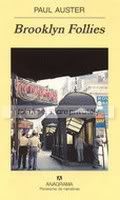
5 stars
304 pages
"Nathan convinced his cancer will return, returns to Brooklyn to die alone. Instead he finds a long lost nephew, great niece, her mother, neighborhood characters and life returns all by a series of chances. Is life all by chance? Auster shows it this way. Easy read, very light and humorous." /rayski, LT/
"From the bestselling author of Oracle Night and The Book of Illusions, an exhilarating, whirlwind tale of one man's accidental redemption.
Nathan Glass has come to Brooklyn to die. Divorced, estranged from his only daughter, the retired life insurance salesman seeks only solitude and anonymity. Then Nathan finds his long-lost nephew, Tom Wood, working in a local bookstore—a far cry from the brilliant academic career he'd begun when Nathan saw him last. Tom's boss is the charismatic Harry Brightman, whom fate has also brought to the "ancient kingdom of Brooklyn, New York." Through Tom and Harry, Nathan's world gradually broadens to include a new set of acquaintances—not to mention a stray relative or two—and leads him to a reckoning with his past.
Among the many twists in the delicious plot are a scam involving a forgery of the first page of The Scarlet Letter, a disturbing revelation that takes place in a sperm bank, and an impossible, utopian dream of a rural refuge. Meanwhile, the wry and acerbic Nathan has undertaken something he calls The Book of Human Folly, in which he proposes "to set down in the simplest, clearest language possible an account of every blunder, every pratfall, every embarrassment, every idiocy, every foible, and every inane act I had committed during my long and checkered career as a man." But life takes over instead, and Nathan's despair is swept away as he finds himself more and more implicated in the joys and sorrows of others.
The Brooklyn Follies is Paul Auster's warmest, most exuberant novel, a moving and unforgettable hymn to the glories and mysteries of ordinary human life." /FantasticFiction.co.uk/
5 stars
304 pages
"Nathan convinced his cancer will return, returns to Brooklyn to die alone. Instead he finds a long lost nephew, great niece, her mother, neighborhood characters and life returns all by a series of chances. Is life all by chance? Auster shows it this way. Easy read, very light and humorous." /rayski, LT/
"From the bestselling author of Oracle Night and The Book of Illusions, an exhilarating, whirlwind tale of one man's accidental redemption.
Nathan Glass has come to Brooklyn to die. Divorced, estranged from his only daughter, the retired life insurance salesman seeks only solitude and anonymity. Then Nathan finds his long-lost nephew, Tom Wood, working in a local bookstore—a far cry from the brilliant academic career he'd begun when Nathan saw him last. Tom's boss is the charismatic Harry Brightman, whom fate has also brought to the "ancient kingdom of Brooklyn, New York." Through Tom and Harry, Nathan's world gradually broadens to include a new set of acquaintances—not to mention a stray relative or two—and leads him to a reckoning with his past.
Among the many twists in the delicious plot are a scam involving a forgery of the first page of The Scarlet Letter, a disturbing revelation that takes place in a sperm bank, and an impossible, utopian dream of a rural refuge. Meanwhile, the wry and acerbic Nathan has undertaken something he calls The Book of Human Folly, in which he proposes "to set down in the simplest, clearest language possible an account of every blunder, every pratfall, every embarrassment, every idiocy, every foible, and every inane act I had committed during my long and checkered career as a man." But life takes over instead, and Nathan's despair is swept away as he finds himself more and more implicated in the joys and sorrows of others.
The Brooklyn Follies is Paul Auster's warmest, most exuberant novel, a moving and unforgettable hymn to the glories and mysteries of ordinary human life." /FantasticFiction.co.uk/
28readeron
#15. A Handful of Dust by Evelyn Waugh

320 pages
5 stars
"His 1934 novel, A Handful of Dust, is a sublime example of his bleak satirical style: a mordantly funny exposé of aristocratic decadence and ennui in England between the wars.
Tony Last is an aristocrat whose attachment to an ideal feudal past is so profound that he is blind to his wife Brenda's boredom with the stately rhythms of country life. While he earnestly plays the lord of the manor in his ghastly Victorian Gothic pile, she sets herself up in a London flat and pursues an affair with the social-climbing idler John Beaver. In the first half of the novel Waugh fearlessly anatomizes the lifestyles of the rich and shameless. Everyone moves through an endless cycle of parties and country-house weekends, being scrupulously polite in public and utterly horrid in private. Sex is something one does to relieve the boredom, and Brenda's affair provides a welcome subject for conversation:
It had been an autumn of very sparse and meagre romance; only the most obvious people had parted or come together, and Brenda was filling a want long felt by those whose simple, vicarious pleasure it was to discuss the subject in bed over the telephone.
Tony's indifference and Brenda's selfishness give their relationship a sort of equilibrium until tragedy forces them to face facts. The collapse of their relationship accelerates, and in the famous final section of the book Tony seeks solace in a foolhardy search for El Dorado, throwing himself on the mercy of a jungle only slightly more savage than the one he leaves behind in England. For all its biting wit, A Handful of Dust paints a bleak picture of the English upper classes, reaching beyond satire toward a very modern sense of despair. In Waugh's world, culture, breeding, and the trappings of civilization only provide more subtle means of destruction." /Simon Leake/
A great satire, funny and witty. Mr Todd cracked me up.:) So did the style, too:
In the evening, if they had halted early enough, he employed the last hours of daylight in elaborating a chart. ‘Dry water course, three deserted huts, stony ground …’
“We are now in the Amazon system of rivers,” he announced with satisfaction one day. “You see, the water is running South.” But almost immediately they crossed a stream flowing in the opposite direction. “Very curious,” said Dr. Messinger. “A discovery of genuine scientific value.”
Next day they waded through four streams at intervals of two miles, running alternately North and South. The chart began to have a mythical appearance.
320 pages
5 stars
"His 1934 novel, A Handful of Dust, is a sublime example of his bleak satirical style: a mordantly funny exposé of aristocratic decadence and ennui in England between the wars.
Tony Last is an aristocrat whose attachment to an ideal feudal past is so profound that he is blind to his wife Brenda's boredom with the stately rhythms of country life. While he earnestly plays the lord of the manor in his ghastly Victorian Gothic pile, she sets herself up in a London flat and pursues an affair with the social-climbing idler John Beaver. In the first half of the novel Waugh fearlessly anatomizes the lifestyles of the rich and shameless. Everyone moves through an endless cycle of parties and country-house weekends, being scrupulously polite in public and utterly horrid in private. Sex is something one does to relieve the boredom, and Brenda's affair provides a welcome subject for conversation:
It had been an autumn of very sparse and meagre romance; only the most obvious people had parted or come together, and Brenda was filling a want long felt by those whose simple, vicarious pleasure it was to discuss the subject in bed over the telephone.
Tony's indifference and Brenda's selfishness give their relationship a sort of equilibrium until tragedy forces them to face facts. The collapse of their relationship accelerates, and in the famous final section of the book Tony seeks solace in a foolhardy search for El Dorado, throwing himself on the mercy of a jungle only slightly more savage than the one he leaves behind in England. For all its biting wit, A Handful of Dust paints a bleak picture of the English upper classes, reaching beyond satire toward a very modern sense of despair. In Waugh's world, culture, breeding, and the trappings of civilization only provide more subtle means of destruction." /Simon Leake/
A great satire, funny and witty. Mr Todd cracked me up.:) So did the style, too:
In the evening, if they had halted early enough, he employed the last hours of daylight in elaborating a chart. ‘Dry water course, three deserted huts, stony ground …’
“We are now in the Amazon system of rivers,” he announced with satisfaction one day. “You see, the water is running South.” But almost immediately they crossed a stream flowing in the opposite direction. “Very curious,” said Dr. Messinger. “A discovery of genuine scientific value.”
Next day they waded through four streams at intervals of two miles, running alternately North and South. The chart began to have a mythical appearance.
29billiejean
Interesting review of the Waugh book. I have several of Waugh's books and need to read them. Have a great day!
--BJ
--BJ
30readeron
Oops, yes, I forgot to use italics inside the review that I copied here. Corrected it now.
I wish I had more books by Waugh, as well, because I really enjoyed this one. Plain mockery of a class most of the time, and still, I couldn't help liking a bit Tony and feeling a bit sorry for both him and Brenda by the end of the story.
Happy Reading!
I wish I had more books by Waugh, as well, because I really enjoyed this one. Plain mockery of a class most of the time, and still, I couldn't help liking a bit Tony and feeling a bit sorry for both him and Brenda by the end of the story.
Happy Reading!
31readeron
Started some Pynchon, got intimidated and got back in a hurry to Jack Reacher, my hero:)
He is lucky:
Seven thirty-nine, more than three hundred miles to the north and east, Jack Reacher climbed out of his motel room window. One minute earlier, he had been in the bathroom, brushing his teeth. One minute before that, he had opened the door of his room to check the morning temperature. He had left it open, and the closet just inside the entrance passageway was faced with mirrored glass, and there was a shaving mirror in the bathroom on a cantilevered arm, and by a freak of optical chance he caught sight of four men getting out of a car and walking toward the motel office. Pure luck, but a guy as vigilant as Jack Reacher gets lucky more times than the average.
peaceful and modest, but never insecure:
Reacher turned his head and looked at him. Not really to antagonize the guy. Just to size him up. Life is endlessly capable of surprises, so he knew one day he would come face to face with his physical equal. With somebody who might worry him. But he looked and saw this wasn't the day. So he just smiled and looked away again.
and pretty agressive if someone gets too annoying (like this guy who kept jabbing him with his greasy finger):
"Touch me again and you'll find out," Reacher said. "I warned you four times."
The guy paused a second. Then, of course, he went for it again. Reacher caught the finger on the way in and snapped it at the first knuckle. Just folded it upward like he was turning a door handle. Then because he was irritated he leaned forward and headbutted the guy full in the face. It was a smooth move, well delivered, but it was backed off to maybe a half of what it might have been. No need to put a guy in a coma, over four grease marks on a shirt.
As you can see, he isn't vain.
So that's another book I've started to read: Echo Burning by Lee Child.
He is lucky:
Seven thirty-nine, more than three hundred miles to the north and east, Jack Reacher climbed out of his motel room window. One minute earlier, he had been in the bathroom, brushing his teeth. One minute before that, he had opened the door of his room to check the morning temperature. He had left it open, and the closet just inside the entrance passageway was faced with mirrored glass, and there was a shaving mirror in the bathroom on a cantilevered arm, and by a freak of optical chance he caught sight of four men getting out of a car and walking toward the motel office. Pure luck, but a guy as vigilant as Jack Reacher gets lucky more times than the average.
peaceful and modest, but never insecure:
Reacher turned his head and looked at him. Not really to antagonize the guy. Just to size him up. Life is endlessly capable of surprises, so he knew one day he would come face to face with his physical equal. With somebody who might worry him. But he looked and saw this wasn't the day. So he just smiled and looked away again.
and pretty agressive if someone gets too annoying (like this guy who kept jabbing him with his greasy finger):
"Touch me again and you'll find out," Reacher said. "I warned you four times."
The guy paused a second. Then, of course, he went for it again. Reacher caught the finger on the way in and snapped it at the first knuckle. Just folded it upward like he was turning a door handle. Then because he was irritated he leaned forward and headbutted the guy full in the face. It was a smooth move, well delivered, but it was backed off to maybe a half of what it might have been. No need to put a guy in a coma, over four grease marks on a shirt.
As you can see, he isn't vain.
So that's another book I've started to read: Echo Burning by Lee Child.
32readeron
#16 The Ironwood Tree by Holly Black and Tony DiTerlizzi
(The fourth book in the Spiderwick Chronicles series)
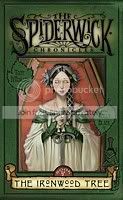
4 stars
160 pages
"At school, someone is running around pretending to be Jared, and it's not Simon. To make matters even worse, now Mallory has disappeared and something foul in the water is killing off all the plants and animals for miles around. Clues point to the old abandoned quarry, just outside of town. Dwarves have taken over an abandoned mine there. And the faerie world's abuzz with the news that a creature with plans to rule the world has offered them a gift to join with him-- he's given them a queen..." /fantasticfiction/
(The fourth book in the Spiderwick Chronicles series)
4 stars
160 pages
"At school, someone is running around pretending to be Jared, and it's not Simon. To make matters even worse, now Mallory has disappeared and something foul in the water is killing off all the plants and animals for miles around. Clues point to the old abandoned quarry, just outside of town. Dwarves have taken over an abandoned mine there. And the faerie world's abuzz with the news that a creature with plans to rule the world has offered them a gift to join with him-- he's given them a queen..." /fantasticfiction/
33billiejean
I added Echo Burning to my wishlist! I am so glad that I have finally figured out how to do that!
--BJ
--BJ
34readeron
I'm glad that you liked the excerpts.:) As to the collections, my computer simply refuses to use them (plus it refuses to drag and drop anything, too, no idea why, so I can't customize the home page etc.), but tags are quite ok for me to put books on the wishlist.
A good news (or a memo to myself, in case everyone else knew about it already:): in the future I may read less contemporary books (ok, it's not exactly the good part of the news, not even the news yet), because I found a site (librivox.org - now that's the news:) where most of the books available in the public domain are made into free mp3 files. So I missed a night's sleep indulging alternately in The Circular Staircase and the Book of Dragons.
Btw, Echo Burning is a good choice both for the genre challenge (the mystery category) and for Texas in the Fifty States Challenge. I actually tried Pynchon for the 50 states challenge, - it's not so bad (it's definitely funny sometimes) ,but I had to keep my head in the dictionary half of the time while I was reading, so just gave it up:)
Have a great weekend! Happy reading!
Update: Oops, that was another book, Pynchon was killing me with the length and structure of his sentences.
A good news (or a memo to myself, in case everyone else knew about it already:): in the future I may read less contemporary books (ok, it's not exactly the good part of the news, not even the news yet), because I found a site (librivox.org - now that's the news:) where most of the books available in the public domain are made into free mp3 files. So I missed a night's sleep indulging alternately in The Circular Staircase and the Book of Dragons.
Btw, Echo Burning is a good choice both for the genre challenge (the mystery category) and for Texas in the Fifty States Challenge. I actually tried Pynchon for the 50 states challenge, - it's not so bad (it's definitely funny sometimes) ,but I had to keep my head in the dictionary half of the time while I was reading, so just gave it up:)
Have a great weekend! Happy reading!
Update: Oops, that was another book, Pynchon was killing me with the length and structure of his sentences.
35readeron
# 17 Say Cheese and Die! (Goosebumps, #4) by R L Stine
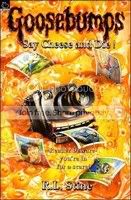
144 pages
3 stars
Finally, I decided to finish this one, my first Stine. The ending, and all the twists and turns of the road were far too predictable. I'm sure there are more exciting and original books in the series (or at least I hope so, because I have some more...).
144 pages
3 stars
Finally, I decided to finish this one, my first Stine. The ending, and all the twists and turns of the road were far too predictable. I'm sure there are more exciting and original books in the series (or at least I hope so, because I have some more...).
36readeron
Borrowed from Nanybebette's thread:
Please complete using only books you've read this year... Try to use titles only once!
Describe Yourself: Homebody
How do you feel: Can You Keep A Secret?
Describe where you currently live: Lullaby Town
If you could go anywhere, where would you go:
Manhunting, haha, nooo, ok, let's take it seriously: The City of Glass by Paul Auster
And I had to use the last year's titles, too, but otherwise ,it was fun. :)
Please complete using only books you've read this year... Try to use titles only once!
Describe Yourself: Homebody
How do you feel: Can You Keep A Secret?
Describe where you currently live: Lullaby Town
If you could go anywhere, where would you go:
Manhunting, haha, nooo, ok, let's take it seriously: The City of Glass by Paul Auster
And I had to use the last year's titles, too, but otherwise ,it was fun. :)
37billiejean
You continue to zoom along, readeron! I haven't started on the 50 state challenge yet as I am trying to get that 999 done. The only way that I have found to add to my wishlist is to click on the book in a thread. Then when the book pops up, it has a place that says Add to Wishlist. I only have 2 books on the wishlist so far. I tried to add them manually to the wishlist but utterly failed. I haven't read any Pynchon myself. Right now I am reading Greenwitch from the Susan Cooper Dark is Rising series. I am about halfway through (it's pretty short). For the September genre challenge, I am reading one of the John Sandford Prey books. I am thinking that it might be pretty scary. I hope not too scary. I will try to stick to reading in the daytime when I get to it. :)
That's a pretty good quiz there. I wonder if any of my titles will work. I will check it out.
--BJ
That's a pretty good quiz there. I wonder if any of my titles will work. I will check it out.
--BJ
38readeron
Thanks billiejean! I wish Reacher would zoom a bit more too in this book, but must admit he doesn't excel in the latest chapters. He smashed a clock and some crockery right now but the main plot is just dragging on. I hope it picks up later though. This is my 4th book in the series (I read them pretty randomly) and so far my favorite is the first one, Killing Floor. I've read only one Sandford yet, Rules of Prey, it was a real page-turner, hope you will like it as much as I did! :)
Have a great day!
Have a great day!
39readeron
# 18 The Book of Dragons by Edith Nesbit
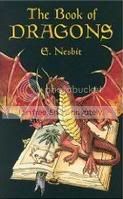
176 pages
4 stars
Eight funny and charming stories about dragons.
1.The Book of Beasts (Lionel finds a wonderful magical book.)
2. Uncle James, or The Purple Stranger (It's about an island where everybody is nice, except for Uncle James)
3.The Deliverers of Their Country (Hilarious, imaginative, original and charming story. My favorite one in the book.)
4. The Ice Dragon (Sealskin dwarves are pretty dangerous, but if you have friends, even they can be defeated.)
5.The Island of the Nine Whirlpools (Probably the cutest story in the book.) It starts like this:
The dark arch that led to the witch's cave was hung with a black-and-yellow fringe of live snakes. As the Queen went in, keeping
carefully in the middle of the arch, all the snakes lifted their wicked, flat heads and stared at her with their wicked, yellow eyes. You know it is not good manners to stare, even at Royalty, except of course for
cats. And the snakes had been so badly brought up that they even put their tongues out at the poor lady. Nasty, thin, sharp tongues they were too.
6. The Dragon Tamers (The poor beast gets tricked by almost everyone.:)
7. The Fiery Dragon, or The Heart of Stone and the Heart of Gold (Nesbit at her best again, I loved the piggies.)
8. Kind Little Edmund, or The Caves and the Cockatrice (Not bad, either.)
176 pages
4 stars
Eight funny and charming stories about dragons.
1.The Book of Beasts (Lionel finds a wonderful magical book.)
2. Uncle James, or The Purple Stranger (It's about an island where everybody is nice, except for Uncle James)
3.The Deliverers of Their Country (Hilarious, imaginative, original and charming story. My favorite one in the book.)
4. The Ice Dragon (Sealskin dwarves are pretty dangerous, but if you have friends, even they can be defeated.)
5.The Island of the Nine Whirlpools (Probably the cutest story in the book.) It starts like this:
The dark arch that led to the witch's cave was hung with a black-and-yellow fringe of live snakes. As the Queen went in, keeping
carefully in the middle of the arch, all the snakes lifted their wicked, flat heads and stared at her with their wicked, yellow eyes. You know it is not good manners to stare, even at Royalty, except of course for
cats. And the snakes had been so badly brought up that they even put their tongues out at the poor lady. Nasty, thin, sharp tongues they were too.
6. The Dragon Tamers (The poor beast gets tricked by almost everyone.:)
7. The Fiery Dragon, or The Heart of Stone and the Heart of Gold (Nesbit at her best again, I loved the piggies.)
8. Kind Little Edmund, or The Caves and the Cockatrice (Not bad, either.)
40readeron
# 19 Echo Burning by Lee Child
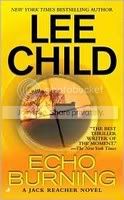
432 pages
4 stars
A great beginning, a so-so middle and a great ending. Though the story slows down at about the 2/3, this change of pace is absolutely necessary: it prepares us for a perfectly unpredictable ending. Reacher is already sitting on the bus to leave the whole situation behind unsolved, when he suddenly gets scent and swings into action. In the last few chapters he really whizzes through the case with no particular effort.
Summary:
"Hitching rides is an unreliable mode of transport. In temperatures of over a hundred degrees, you're lucky if a driver will open the door of his air-conditioned car long enough to let you slide in. That's Jack Reacher's conclusion. He's adrift in the fearsome heat of a Texas summer, and he needs to keep moving through the wide open vastness, like a shark in the water. The last thing he's worried about is exactly who picks him up.
He never expected it to be somebody like Carmen. She's alone, driving a Cadillac. She's beautiful, young and rich. She has a little girl who is being watched by unseen observers. And a husband who is in jail. Who will beat her senseless when he comes out. If he doesn't kill her first.
Reacher is no stranger to trouble. And at Carmen's remote ranch in Echo County there is plenty of it: lies and prejudice, hatred and murder. Reacher can never resist a lady in distress. Her family is hostile. The cops can't be trusted. The lawyers won't help. If Reacher can't set things straight, who can? " /goodreads/
432 pages
4 stars
A great beginning, a so-so middle and a great ending. Though the story slows down at about the 2/3, this change of pace is absolutely necessary: it prepares us for a perfectly unpredictable ending. Reacher is already sitting on the bus to leave the whole situation behind unsolved, when he suddenly gets scent and swings into action. In the last few chapters he really whizzes through the case with no particular effort.
Summary:
"Hitching rides is an unreliable mode of transport. In temperatures of over a hundred degrees, you're lucky if a driver will open the door of his air-conditioned car long enough to let you slide in. That's Jack Reacher's conclusion. He's adrift in the fearsome heat of a Texas summer, and he needs to keep moving through the wide open vastness, like a shark in the water. The last thing he's worried about is exactly who picks him up.
He never expected it to be somebody like Carmen. She's alone, driving a Cadillac. She's beautiful, young and rich. She has a little girl who is being watched by unseen observers. And a husband who is in jail. Who will beat her senseless when he comes out. If he doesn't kill her first.
Reacher is no stranger to trouble. And at Carmen's remote ranch in Echo County there is plenty of it: lies and prejudice, hatred and murder. Reacher can never resist a lady in distress. Her family is hostile. The cops can't be trusted. The lawyers won't help. If Reacher can't set things straight, who can? " /goodreads/
41readeron
# 20 When We Were Orphans by Kazuo Ishiguro
4 stars
313 pages
"The novel's first half, though nominally set in London, moves back and forth between Banks's present and his past in China with a dexterity that recalls Ford Madox Ford's classic novel ''The Good Soldier.'' One scene, one moment, slips effortlessly into its antecedent; an aside or an afterthought buds into revelation. And Ishiguro's handling of time isn't his only echo of Ford; this too is a novel about its narrator's self-deception. Banks has always believed that his mother's outspoken criticism of the opium trade was responsible for his parents' disappearance. Somebody must have wanted them out of the way. Yet the plot has never been cracked open, and Banks sees his early career as merely a preparation for his own attempt to take up the trail in crime-ridden and polyglot Shanghai. It is a trail that, in the novel's second half, involves him in the eruption of the Sino-Japanese War in 1937.
On his arrival, Banks is taken by Shanghai's business community to be a kind of diplomatic fixer, as though the looming conflict were as easy to solve as a case of ''stolen jewels.'' This is a world in which people depend on the well-spoken consulting detective, in which Banks seems to be taken at his own valuation. Ishiguro has, however, suggested from the start that his narrator is rather an ''odd bird,'' and at this point begins to orchestrate an ever-growing dissonance between the detective's own judgments and those the book presents as ''normal.'' For Banks sees an equation between his parents' mysterious disappearance and the onset of the war, believing that his mother and father have remained trapped in Shanghai all these years, that their situation is the cause of the struggle. (...) Banks's quest is at once ludicrous and terrible, a journey in a landscape that seems to change along with his psychological state, but one that can nevertheless be plotted on a map of the actual battle." /Michael Gorra/
4 stars
313 pages
"The novel's first half, though nominally set in London, moves back and forth between Banks's present and his past in China with a dexterity that recalls Ford Madox Ford's classic novel ''The Good Soldier.'' One scene, one moment, slips effortlessly into its antecedent; an aside or an afterthought buds into revelation. And Ishiguro's handling of time isn't his only echo of Ford; this too is a novel about its narrator's self-deception. Banks has always believed that his mother's outspoken criticism of the opium trade was responsible for his parents' disappearance. Somebody must have wanted them out of the way. Yet the plot has never been cracked open, and Banks sees his early career as merely a preparation for his own attempt to take up the trail in crime-ridden and polyglot Shanghai. It is a trail that, in the novel's second half, involves him in the eruption of the Sino-Japanese War in 1937.
On his arrival, Banks is taken by Shanghai's business community to be a kind of diplomatic fixer, as though the looming conflict were as easy to solve as a case of ''stolen jewels.'' This is a world in which people depend on the well-spoken consulting detective, in which Banks seems to be taken at his own valuation. Ishiguro has, however, suggested from the start that his narrator is rather an ''odd bird,'' and at this point begins to orchestrate an ever-growing dissonance between the detective's own judgments and those the book presents as ''normal.'' For Banks sees an equation between his parents' mysterious disappearance and the onset of the war, believing that his mother and father have remained trapped in Shanghai all these years, that their situation is the cause of the struggle. (...) Banks's quest is at once ludicrous and terrible, a journey in a landscape that seems to change along with his psychological state, but one that can nevertheless be plotted on a map of the actual battle." /Michael Gorra/
42billiejean
Hey, readeron!
I was not familiar with this book. I just read The Remains of the Day, which I absolutely loved. So I think that I will look into this one as well.
--BJ
I was not familiar with this book. I just read The Remains of the Day, which I absolutely loved. So I think that I will look into this one as well.
--BJ
43readeron
It's not that I couldn't put it down, I actually read it in two days. But I didn't (couldn't?) read anything else till finishing this novel. An intriguing and suspenseful story. Hope you will like it, too!
44readeron
#21. The Curious Incident of the Dog in the Night-Time by Mark Haddon
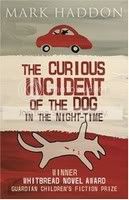
226 pages
5 stars
A deeply moving story told from a 15-year-old autistic boy's point of view. Well-written, unique.
226 pages
5 stars
A deeply moving story told from a 15-year-old autistic boy's point of view. Well-written, unique.
45readeron
Yesterday finished rereading
#22 Nine Stories by J D Salinger
320 pages
3 stars
Amazon.com Review:
"In the J.D. Salinger benchmark "A Perfect Day for Bananafish," Seymour Glass floats his beach mate Sybil on a raft and tells her about these creatures' tragic flaw. Though they seem normal, if one swims into a hole filled with bananas, it will overeat until it's too fat to escape. Meanwhile, Seymour's wife, Muriel, is back at their Florida hotel, assuring her mother not to worry--Seymour hasn't lost control. Mention of a book he sent her from Germany and several references to his psychiatrist lead the reader to believe that World War II has undone him.
The war hangs over these wry stories of loss and occasionally unsuppressed rage. Salinger's children are fragile, odd, hypersmart, whereas his grownups (even the materially content) seem beaten down by circumstances--some neurasthenic, others (often female) deeply unsympathetic. The greatest piece in this disturbing book may be "The Laughing Man," which starts out as a man's recollection of the pleasures of storytelling and ends with the intersection between adult need and childish innocence. The narrator remembers how, at nine, he and his fellow Comanches would be picked up each afternoon by the Chief--a Staten Island law student paid to keep them busy. At the end of each day, the Chief winds them down with the saga of a hideously deformed, gentle, world-class criminal. With his stalwart companions, which include "a glib timber wolf" and "a lovable dwarf," the Laughing Man regularly crosses the Paris-China border in order to avoid capture by "the internationally famous detective" Marcel Dufarge and his daughter, "an exquisite girl, though something of a transvestite." The masked hero's luck comes to an end on the same day that things go awry between the Chief and his girlfriend, hardly a coincidence. "A few minutes later, when I stepped out of the Chief's bus, the first thing I chanced to see was a piece of red tissue paper flapping in the wind against the base of a lamppost. It looked like someone's poppy-petal mask. I arrived home with my teeth chattering uncontrollably and was told to go straight to bed."
And some customer reviews:
"Nine Stories is a famous collection. "A Perfect Day for Bananafish" has lost none of its power to shock. To experience the vitality and humor of Seymour's conversation with the little girl on the beach - the ending is sad and inexplicable, and of course the Glass family is terribly wounded as a result. This story is a must-read, but so is "For Esmé with Love and Squalor" (a moving story about traumatic stress and the healing power of love,) and "Teddy," a unique and funny story about a 10-year old genius who has a very old soul. "
"This is a collection of short stories and vignettes which act as snapshots of the lives of the characters within them. Some are rather short and feel a bit incomplete or idle, but I think this was intended by Salinger so as to not bog down the reader with overt themes or ideology and simply to show moments in peoples' lives. I'm thinking particularly of 'Uncle Wiggily in Connecticut', 'Just Before the War with the Eskimos', 'Down at the Dingy' and 'Pretty Mouth and Green Eyes' when I say that some of the stories feel a little light on purpose. Still, they are well-written and worth reading."
"Published after The Catcher in the Rye (1951), Nine Stories is quintessential Salinger. Having first read Salinger's collection of Nine Stories as a college student, these short stories have remained in my thoughts for years.
"A Perfect Day for Bananafish" (first published in the The New Yorker, January 31, 1948) tells the story of war veteran Seymour Glass, who commits suicide while on his honeymoon with his wife, Muriel, in Florida. While Muriel discusses fashion with her mother at the hotel bar, suicidal Seymour sits on the beach with an innocent young girl, Sybil, who becomes fascinated with him. Rating: A perfect 5/5.
"Uncle Wiggily in Connecticut" (first published in the The New Yorker, March 20, 1948) tells the story of suburban housewife, Eloise, still haunted by the death of Walt Glass, who was killed in an explosion during the war. As suggested by the subtle sideways glance of a drunken friend, Eloise has never recovered from Walt's death. This is a story as relevant today as when it was first published sixty years ago. Rating: 5/5.
"Just Before the War with the Eskimos" (first published in The New Yorker, June 5, 1948) tells the story of two high school classmates, Ginnie Mannox and Selena Graff, in a dispute over money. Ginnie and Selena play tennis together every Saturday, but Selena never offers to pay for their cab. When Ginnie confronts her, Selena explains, "It may interest you to know . . . that my mother is very ill." After meeting Selena's brother Franklin (who offers Ginnie half of his chicken sandwich) and his friend Eric at Selena's apartment, Ginnie has a sudden change of heart about the cab fare. Rating: 5/5.
"The Laughing Man" (first published in The New Yorker, March 19, 1949) tells a story within a story about a nine-year-old, who (along with his fellow "Comanches") would spend afternoons with "the Chief" (a Staten Island law student). At the end of each day, the Chief would tell them a new chapter in his on-going serial about a deformed criminal, which ultimately becomes the story of his doomed relationship with his summer girlfriend. Rating: 5/5.
"Down at the Dinghy" tells the story of Boo Boo Glass's peculiar young son, Lionel, who overhears a house servant, Sandra, refer to his father as a "big sloppy kike." Rating: 5/5.
"For Esmé - with Love and Squalor" (first published in The New Yorker, April 8, 1950) tells the story of Army Sergeant X (Buddy Glass?), who reminisces over a young girl, Esmé, who helped him to endure the squalor of WWII. He promises to correspond with Esmé and to write a story in her honor, but then suffers an emotional breakdown. This story becomes Sergeant X's recovery. Rating: 5/5.
"Pretty Mouth and Green My Eyes" tells the story of two lawyers, in which one is distracted from a romantic evening with his love interest by his friend's midnight phone call about his missing wife. His troublesome wife, we learn, has failed to return home from a party. Rating: 5/5.
"De Daumier-Smith's Blue Period" tells the humorous story of a newly- hired art teacher at a correspondence "art academy," who falls hopelessly in love with a religious painting, the work of his sole pupil (a nun). Rating: 4/5.
"Teddy" (first published in The New Yorker, January 31, 1953) tells the story of a ten-year-old genius, Teddy McArdle. Revealing that he is wise beyond his years, Teddy discusses the very nature of existence with a graduate student, Nicholson, on board an oceanliner. Teddy recalls a previous life in which he was a man in India who was "making very nice spiritual advancement," but stopped praying upon meeting a woman. Teddy envisions his own death by being pushed into the empty pool by his sister. The haunting story ends with "an all-piercing, sustained scream--clearly coming from a small, female child." Rating: 5/5."/G. Merritt/
I really wanted to like this book more, too. Probably at the next reread I will... Presently I'm still struggling with A Girl's Best Friend. (Why is it 500 pages or so, why?)
#22 Nine Stories by J D Salinger
320 pages
3 stars
Amazon.com Review:
"In the J.D. Salinger benchmark "A Perfect Day for Bananafish," Seymour Glass floats his beach mate Sybil on a raft and tells her about these creatures' tragic flaw. Though they seem normal, if one swims into a hole filled with bananas, it will overeat until it's too fat to escape. Meanwhile, Seymour's wife, Muriel, is back at their Florida hotel, assuring her mother not to worry--Seymour hasn't lost control. Mention of a book he sent her from Germany and several references to his psychiatrist lead the reader to believe that World War II has undone him.
The war hangs over these wry stories of loss and occasionally unsuppressed rage. Salinger's children are fragile, odd, hypersmart, whereas his grownups (even the materially content) seem beaten down by circumstances--some neurasthenic, others (often female) deeply unsympathetic. The greatest piece in this disturbing book may be "The Laughing Man," which starts out as a man's recollection of the pleasures of storytelling and ends with the intersection between adult need and childish innocence. The narrator remembers how, at nine, he and his fellow Comanches would be picked up each afternoon by the Chief--a Staten Island law student paid to keep them busy. At the end of each day, the Chief winds them down with the saga of a hideously deformed, gentle, world-class criminal. With his stalwart companions, which include "a glib timber wolf" and "a lovable dwarf," the Laughing Man regularly crosses the Paris-China border in order to avoid capture by "the internationally famous detective" Marcel Dufarge and his daughter, "an exquisite girl, though something of a transvestite." The masked hero's luck comes to an end on the same day that things go awry between the Chief and his girlfriend, hardly a coincidence. "A few minutes later, when I stepped out of the Chief's bus, the first thing I chanced to see was a piece of red tissue paper flapping in the wind against the base of a lamppost. It looked like someone's poppy-petal mask. I arrived home with my teeth chattering uncontrollably and was told to go straight to bed."
And some customer reviews:
"Nine Stories is a famous collection. "A Perfect Day for Bananafish" has lost none of its power to shock. To experience the vitality and humor of Seymour's conversation with the little girl on the beach - the ending is sad and inexplicable, and of course the Glass family is terribly wounded as a result. This story is a must-read, but so is "For Esmé with Love and Squalor" (a moving story about traumatic stress and the healing power of love,) and "Teddy," a unique and funny story about a 10-year old genius who has a very old soul. "
"This is a collection of short stories and vignettes which act as snapshots of the lives of the characters within them. Some are rather short and feel a bit incomplete or idle, but I think this was intended by Salinger so as to not bog down the reader with overt themes or ideology and simply to show moments in peoples' lives. I'm thinking particularly of 'Uncle Wiggily in Connecticut', 'Just Before the War with the Eskimos', 'Down at the Dingy' and 'Pretty Mouth and Green Eyes' when I say that some of the stories feel a little light on purpose. Still, they are well-written and worth reading."
"Published after The Catcher in the Rye (1951), Nine Stories is quintessential Salinger. Having first read Salinger's collection of Nine Stories as a college student, these short stories have remained in my thoughts for years.
"A Perfect Day for Bananafish" (first published in the The New Yorker, January 31, 1948) tells the story of war veteran Seymour Glass, who commits suicide while on his honeymoon with his wife, Muriel, in Florida. While Muriel discusses fashion with her mother at the hotel bar, suicidal Seymour sits on the beach with an innocent young girl, Sybil, who becomes fascinated with him. Rating: A perfect 5/5.
"Uncle Wiggily in Connecticut" (first published in the The New Yorker, March 20, 1948) tells the story of suburban housewife, Eloise, still haunted by the death of Walt Glass, who was killed in an explosion during the war. As suggested by the subtle sideways glance of a drunken friend, Eloise has never recovered from Walt's death. This is a story as relevant today as when it was first published sixty years ago. Rating: 5/5.
"Just Before the War with the Eskimos" (first published in The New Yorker, June 5, 1948) tells the story of two high school classmates, Ginnie Mannox and Selena Graff, in a dispute over money. Ginnie and Selena play tennis together every Saturday, but Selena never offers to pay for their cab. When Ginnie confronts her, Selena explains, "It may interest you to know . . . that my mother is very ill." After meeting Selena's brother Franklin (who offers Ginnie half of his chicken sandwich) and his friend Eric at Selena's apartment, Ginnie has a sudden change of heart about the cab fare. Rating: 5/5.
"The Laughing Man" (first published in The New Yorker, March 19, 1949) tells a story within a story about a nine-year-old, who (along with his fellow "Comanches") would spend afternoons with "the Chief" (a Staten Island law student). At the end of each day, the Chief would tell them a new chapter in his on-going serial about a deformed criminal, which ultimately becomes the story of his doomed relationship with his summer girlfriend. Rating: 5/5.
"Down at the Dinghy" tells the story of Boo Boo Glass's peculiar young son, Lionel, who overhears a house servant, Sandra, refer to his father as a "big sloppy kike." Rating: 5/5.
"For Esmé - with Love and Squalor" (first published in The New Yorker, April 8, 1950) tells the story of Army Sergeant X (Buddy Glass?), who reminisces over a young girl, Esmé, who helped him to endure the squalor of WWII. He promises to correspond with Esmé and to write a story in her honor, but then suffers an emotional breakdown. This story becomes Sergeant X's recovery. Rating: 5/5.
"Pretty Mouth and Green My Eyes" tells the story of two lawyers, in which one is distracted from a romantic evening with his love interest by his friend's midnight phone call about his missing wife. His troublesome wife, we learn, has failed to return home from a party. Rating: 5/5.
"De Daumier-Smith's Blue Period" tells the humorous story of a newly- hired art teacher at a correspondence "art academy," who falls hopelessly in love with a religious painting, the work of his sole pupil (a nun). Rating: 4/5.
"Teddy" (first published in The New Yorker, January 31, 1953) tells the story of a ten-year-old genius, Teddy McArdle. Revealing that he is wise beyond his years, Teddy discusses the very nature of existence with a graduate student, Nicholson, on board an oceanliner. Teddy recalls a previous life in which he was a man in India who was "making very nice spiritual advancement," but stopped praying upon meeting a woman. Teddy envisions his own death by being pushed into the empty pool by his sister. The haunting story ends with "an all-piercing, sustained scream--clearly coming from a small, female child." Rating: 5/5."/G. Merritt/
I really wanted to like this book more, too. Probably at the next reread I will... Presently I'm still struggling with A Girl's Best Friend. (Why is it 500 pages or so, why?)
46readeron
My ratings:
"A Perfect Day for Bananafish" 4 stars
"Uncle Wiggily in Connecticut" 2 stars
"Just Before the War with the Eskimos" 2 stars
"The Laughing Man" 3 stars
"Down at the Dinghy" 2 stars
"For Esmé - with Love and Squalor" 3 stars
"Pretty Mouth and Green My Eyes" 3 stars
"De Daumier-Smith's Blue Period" 4 stars
"Teddy" 3 stars
"A Perfect Day for Bananafish" 4 stars
"Uncle Wiggily in Connecticut" 2 stars
"Just Before the War with the Eskimos" 2 stars
"The Laughing Man" 3 stars
"Down at the Dinghy" 2 stars
"For Esmé - with Love and Squalor" 3 stars
"Pretty Mouth and Green My Eyes" 3 stars
"De Daumier-Smith's Blue Period" 4 stars
"Teddy" 3 stars
47readeron
#23. A Girl's Best Friend by Liz Young
512 pages
3 stars
Average chick lit. An entertaining story about love, friends and doggies.
512 pages
3 stars
Average chick lit. An entertaining story about love, friends and doggies.
48readeron
#24. Eleven by Patricia Highsmith
5 stars
176 pages
A collection of 11 great short stories.
"Her stories range from the macabre to the suspenseful. What makes them particularly chilling is that many of them take place in otherwise mundane everyday settings with people who may be either quite ordinary or slightly bizarre, but to whom something extraordinary happens. These are stories that will capture the imagination of the reader. Some even reminded me a little bit of the stories of H. P. Lovecraft, as some of them contain a strong element of horror, crafted, however, in a most delicate, sublime fashion.
These eleven compelling short stories will keep the reader turning the pages of this marvelous little book. It is a book well worth having in one's personal collection. Bravo!" /Lawyeraau, Amazon/
"Patricia Highsmith is a wonderful story teller, and with Eleven she masters the short story genre. Her tales are not easy; its a world of strange and obssesive people who always push their obsessions to the limit, and you as a reader will feel involved in this claustrophobic world. So beware when you're reading it, you may feel someone strangely breathing on your neck." /Adriana Villanueva, Amazon/
I loved all the stories. Some reminded me of short stories of Roald Dahl, some were a bit like stories by Stephen King. Weird, odd, bizarre, creepy tales.
Contents:
1 The Snail Watcher
2 The Birds Poised to Fly
3 The Terrapin
4 When the Fleet Was in at Mobile
5 The Quest for Blank Claveringi
6 The Cries of Love
7 Mrs Afton among thy Green Braes
8 The Heroine
9 Another Bridge to Cross
10 The Barbarians
11 The Empty Birdhouse
5 stars
176 pages
A collection of 11 great short stories.
"Her stories range from the macabre to the suspenseful. What makes them particularly chilling is that many of them take place in otherwise mundane everyday settings with people who may be either quite ordinary or slightly bizarre, but to whom something extraordinary happens. These are stories that will capture the imagination of the reader. Some even reminded me a little bit of the stories of H. P. Lovecraft, as some of them contain a strong element of horror, crafted, however, in a most delicate, sublime fashion.
These eleven compelling short stories will keep the reader turning the pages of this marvelous little book. It is a book well worth having in one's personal collection. Bravo!" /Lawyeraau, Amazon/
"Patricia Highsmith is a wonderful story teller, and with Eleven she masters the short story genre. Her tales are not easy; its a world of strange and obssesive people who always push their obsessions to the limit, and you as a reader will feel involved in this claustrophobic world. So beware when you're reading it, you may feel someone strangely breathing on your neck." /Adriana Villanueva, Amazon/
I loved all the stories. Some reminded me of short stories of Roald Dahl, some were a bit like stories by Stephen King. Weird, odd, bizarre, creepy tales.
Contents:
1 The Snail Watcher
2 The Birds Poised to Fly
3 The Terrapin
4 When the Fleet Was in at Mobile
5 The Quest for Blank Claveringi
6 The Cries of Love
7 Mrs Afton among thy Green Braes
8 The Heroine
9 Another Bridge to Cross
10 The Barbarians
11 The Empty Birdhouse
49readeron
#25 Girl, Interrupted by Susanna Kaysen
192 pages
4 stars
I haven't seen the movie. Kaysen's memoir is a fast read. Very moving, ocasionally quite creepy and/or depressing though.
"Kaysen writes a affecting account of her stay at McLean. No melodrama, just her observations are recorded. She has humanized a place that few people know about.
Kaysen also gives the reader insight into the ravages of mental illness and the diagnosis and treatments in use at the time (1967).
A moving account of a horrifying experience, elogquently told by a participant."/kepitcher, LT/
192 pages
4 stars
I haven't seen the movie. Kaysen's memoir is a fast read. Very moving, ocasionally quite creepy and/or depressing though.
"Kaysen writes a affecting account of her stay at McLean. No melodrama, just her observations are recorded. She has humanized a place that few people know about.
Kaysen also gives the reader insight into the ravages of mental illness and the diagnosis and treatments in use at the time (1967).
A moving account of a horrifying experience, elogquently told by a participant."/kepitcher, LT/
50billiejean
Hi, readeron!
I loved your reviews of the books of short stories. They both sound really interesting. I am still reading Dracula and I like it so far. I was looking ahead on the genre challenge and saw that the last category is women. Do you think that means chick lit? Or romance? Or literature by women? I have already picked out a book for western -- Dances with Wolves. Haven't even looked at the thriller one yet. I am hoping that I can borrow a book for that one. I am feeling the need to finish the 999 but I still have 15 books to go. I am off to see my girls at their respective colleges later this week and through the weekend. I am really excited! Hope you have a great day!
--BJ
I loved your reviews of the books of short stories. They both sound really interesting. I am still reading Dracula and I like it so far. I was looking ahead on the genre challenge and saw that the last category is women. Do you think that means chick lit? Or romance? Or literature by women? I have already picked out a book for western -- Dances with Wolves. Haven't even looked at the thriller one yet. I am hoping that I can borrow a book for that one. I am feeling the need to finish the 999 but I still have 15 books to go. I am off to see my girls at their respective colleges later this week and through the weekend. I am really excited! Hope you have a great day!
--BJ
51readeron
Hi billiejean!:)
I didn't join in the Halloween challenge (probably next year, if it becomes a tradition:), because I just brought home some zillion books from the library (with deadlines, yes:), so I really didn't feel like rereading Dracula again in a rush (though I truly love the book:), I plan to reread it at a leisurely pace one day. The December category is actually something like Novels of Women's lives and Relationships (at least the Reader's Advisory Guide to Genre Fiction says so:) and I think they must be written by women. I guess this category is broader than romance (which has in the book a separate chapter), but may include chick lit which usually includes more facets of the heroine's life than a simple romance.
Here I found a possible list of authors for all genres mentioned in the book:
http://www.cmrls.lib.ms.us/ra_lists.htm
Thrillers are easy, there are legal thrillers and medical thrillers, sure you have around on your shelves a Grisham or something by Robin Cook (my favourite Cook is Terminal:)
My 999 challenge is a disaster!:) I'm working on it, but the progress is really hard to notice :)
Dances with wolves is a great choice, I've read it in Hungarian some years ago, but now I plan to read some old 'classic' like something by Zane Grey. The only other "western" I've read so far I guess is "The Ransom of Red Chief" by O'Henry.:) So this genre will really take me way out of my comfort zone:)
Thanks a lot for dropping by and hope you're having a great day! Happy Reading!
I didn't join in the Halloween challenge (probably next year, if it becomes a tradition:), because I just brought home some zillion books from the library (with deadlines, yes:), so I really didn't feel like rereading Dracula again in a rush (though I truly love the book:), I plan to reread it at a leisurely pace one day. The December category is actually something like Novels of Women's lives and Relationships (at least the Reader's Advisory Guide to Genre Fiction says so:) and I think they must be written by women. I guess this category is broader than romance (which has in the book a separate chapter), but may include chick lit which usually includes more facets of the heroine's life than a simple romance.
Here I found a possible list of authors for all genres mentioned in the book:
http://www.cmrls.lib.ms.us/ra_lists.htm
Thrillers are easy, there are legal thrillers and medical thrillers, sure you have around on your shelves a Grisham or something by Robin Cook (my favourite Cook is Terminal:)
My 999 challenge is a disaster!:) I'm working on it, but the progress is really hard to notice :)
Dances with wolves is a great choice, I've read it in Hungarian some years ago, but now I plan to read some old 'classic' like something by Zane Grey. The only other "western" I've read so far I guess is "The Ransom of Red Chief" by O'Henry.:) So this genre will really take me way out of my comfort zone:)
Thanks a lot for dropping by and hope you're having a great day! Happy Reading!
52readeron
#26. Flowers in the Rain And Other Stories
by Rosamunde Pilcher
304 pages
4 stars
"Her stories explore universal themes like love and marriage, friendship, birth, death, and dreams coming true. All of her characters, children, young women, bachelors, newlyweds, older gentlemen and mothers and fathers, are so engaging and lifelike, you feel as if you want to befriend each and every resident of her Scottish and Cornish villages." /Mrs. Walkins, goodreads/
The author depicts the everyday joys of village life. 16 comforting, contemporary stories about relationships, love and hope. As to the genre: the book is a typical gentle read, I guess. Occasionally a bit too sentimental for my taste. Still, I quite liked it.
by Rosamunde Pilcher
304 pages
4 stars
"Her stories explore universal themes like love and marriage, friendship, birth, death, and dreams coming true. All of her characters, children, young women, bachelors, newlyweds, older gentlemen and mothers and fathers, are so engaging and lifelike, you feel as if you want to befriend each and every resident of her Scottish and Cornish villages." /Mrs. Walkins, goodreads/
The author depicts the everyday joys of village life. 16 comforting, contemporary stories about relationships, love and hope. As to the genre: the book is a typical gentle read, I guess. Occasionally a bit too sentimental for my taste. Still, I quite liked it.
54readeron
#27. Watermelon by Marian Keyes
4 stars
608 pages
Chick lit at its best. Funny, witty, cute.
"At twenty-nine, fun-loving, good-natured Claire has everything she ever wanted: a husband she adores, a great apartment, a good job. Then, on the day she gives birth to her first baby, James visits her in the recovery room to tell her that he’s leaving her. Claire is left with a beautiful newborn daughter, a broken heart, and a body that she can hardly bear to look at in the mirror. So, in the absence of any better offers, Claire decides to go home to her family in Dublin. To her gorgeous man-eating sister Helen, her soap-watching mother, her bewildered father. And there, sheltered by the love of her (albeit quirky) family, she gets better. A lot better. In fact, so much better that when James slithers back into her life, he’s in for a bit of a surprise." /goodreads/
4 stars
608 pages
Chick lit at its best. Funny, witty, cute.
"At twenty-nine, fun-loving, good-natured Claire has everything she ever wanted: a husband she adores, a great apartment, a good job. Then, on the day she gives birth to her first baby, James visits her in the recovery room to tell her that he’s leaving her. Claire is left with a beautiful newborn daughter, a broken heart, and a body that she can hardly bear to look at in the mirror. So, in the absence of any better offers, Claire decides to go home to her family in Dublin. To her gorgeous man-eating sister Helen, her soap-watching mother, her bewildered father. And there, sheltered by the love of her (albeit quirky) family, she gets better. A lot better. In fact, so much better that when James slithers back into her life, he’s in for a bit of a surprise." /goodreads/
55readeron
#28 The Blind Assassin by Margaret Atwood
4 stars
648 pages
It’s loss and regret and misery and yearning that drive the story forward, along its twisted road.
A forgettable page turner. I'll probably reread it someday.
"This is chiefly the story of the Chase sisters, Iris and Laura, granddaughters of the benevolent founder of a button factory in the Canadian town of Port Ticonderoga. The girls grow up in the 1920's in a large 19th-century house named Avilion after the ''island-valley'' in ''Idylls of the King.'' After their war-wounded father exchanges his religious faith for disreputable rambles in Toronto and their mother dies of a miscarriage, the girls are more or less raised by Iris's old nursemaid, Reenie, a starchy font of home truths and old saws.
Iris is the older and more sensible of the two sisters; Laura the more alluring and ungraspable. ''Laura touches people,'' Iris explains. ''I do not.'' With her capacity for sudden, passionate attachments to people and beliefs, the younger sister is a bafflingly nervy girl who gets away with things: ''Laura had such a direct gaze, such blankly open eyes, such a pure, rounded forehead, that few ever suspected her of duplicity.'' Iris is obliged to watch out for her, and on one occasion even stops Laura from drowning herself. This stagy moment, as Iris recalls it, allows for the stark juxtaposition of one girl's self-destructiveness with the other's suppressed resentment:
''I couldn't get out of my mind the image of Laura, in the icy black water of the Louveteau -- how her hair had spread out like smoke in a swirling wind, how her wet face had gleamed silvery, how she had glared at me when I'd grabbed her by the coat. How hard it had been to hold on to her. How close I had come to letting go.''
(...)
When the Depression lays siege to the economy, even Mr. Chase's paternalistic ways can't save the button factory from labor unrest. The building is damaged by a fire apparently set by Alex Thomas, an orphan and ex-divinity student of shadowy origins, a prematurely hard-bitten figure whom the teenage Chase girls proceed to hide in the cellar and the attic. Here the novel most strongly exhibits its peculiar blend of the low and high, like a Nancy Drew story written by one of the Brontës. ''I didn't see him at first; he was behind the apple barrel. Then I could make him out. A knee, a foot. 'It's all right,' I whispered. 'It's only me.' ''
Economic rescue is extended to the Chases by the heavy hand of Richard Griffen, a competing industrialist and rising right-wing politician who scorns the mollycoddling employment practices of the girls' father. Eighteen-year-old Iris is presented to this cardboard villain like a fee and readied for the wedding by Richard's brittle, ambitious sister, Winifred, the novel's most appealingly awful creation, a sort of Miss Murdstone with plucked eyebrows. In the event, the groom seems more interested in the willful 15-year-old Laura, who goes to live with the Griffens after her father's death but is soon running away or getting into trouble at school or being dispatched to an asylum.
Laura dies -- we learn this on page 1 -- in 1945, at the age of 25, when her car plunges off a Toronto bridge. She leaves behind a science-fiction novel, ''The Blind Assassin,'' which becomes a great posthumous success. Atwood's enveloping novel of the same name alternates between the aged Iris's narration of all the aforementioned events and extracts from this book, whose interplanetary matter is presented as a story being told by a hard-bitten fellow on the run to a young woman who steals hours with him in his various hideouts: Alex Thomas and Laura Chase, we presume.
The less said about Planet Zycron the better; Atwood, alas, says plenty. (...)
We are assured by the aging Iris that Laura's ''Blind Assassin'' has given her sister's memory a certain cult status: fans leave offerings at Laura's grave and make graffiti from her novel's sayings; academics take a serious interest in the text. Iris tends her sister's flame with traces of the ambivalence she once showed in rescuing Laura from the Louveteau River and comments on the difficulties of her own aging with an endless, rote sourness that seems more adolescent than geriatric. (...)
Atwood has said that ''Writing is like life in that you don't know where you are until you look back.'' Unlike life, however, writing provides the opportunity to revise or abandon a journey even after it's been taken. Which might have been the best course here." /Wheels Within Wheels by THOMAS MALLON/
4 stars
648 pages
It’s loss and regret and misery and yearning that drive the story forward, along its twisted road.
A forgettable page turner. I'll probably reread it someday.
"This is chiefly the story of the Chase sisters, Iris and Laura, granddaughters of the benevolent founder of a button factory in the Canadian town of Port Ticonderoga. The girls grow up in the 1920's in a large 19th-century house named Avilion after the ''island-valley'' in ''Idylls of the King.'' After their war-wounded father exchanges his religious faith for disreputable rambles in Toronto and their mother dies of a miscarriage, the girls are more or less raised by Iris's old nursemaid, Reenie, a starchy font of home truths and old saws.
Iris is the older and more sensible of the two sisters; Laura the more alluring and ungraspable. ''Laura touches people,'' Iris explains. ''I do not.'' With her capacity for sudden, passionate attachments to people and beliefs, the younger sister is a bafflingly nervy girl who gets away with things: ''Laura had such a direct gaze, such blankly open eyes, such a pure, rounded forehead, that few ever suspected her of duplicity.'' Iris is obliged to watch out for her, and on one occasion even stops Laura from drowning herself. This stagy moment, as Iris recalls it, allows for the stark juxtaposition of one girl's self-destructiveness with the other's suppressed resentment:
''I couldn't get out of my mind the image of Laura, in the icy black water of the Louveteau -- how her hair had spread out like smoke in a swirling wind, how her wet face had gleamed silvery, how she had glared at me when I'd grabbed her by the coat. How hard it had been to hold on to her. How close I had come to letting go.''
(...)
When the Depression lays siege to the economy, even Mr. Chase's paternalistic ways can't save the button factory from labor unrest. The building is damaged by a fire apparently set by Alex Thomas, an orphan and ex-divinity student of shadowy origins, a prematurely hard-bitten figure whom the teenage Chase girls proceed to hide in the cellar and the attic. Here the novel most strongly exhibits its peculiar blend of the low and high, like a Nancy Drew story written by one of the Brontës. ''I didn't see him at first; he was behind the apple barrel. Then I could make him out. A knee, a foot. 'It's all right,' I whispered. 'It's only me.' ''
Economic rescue is extended to the Chases by the heavy hand of Richard Griffen, a competing industrialist and rising right-wing politician who scorns the mollycoddling employment practices of the girls' father. Eighteen-year-old Iris is presented to this cardboard villain like a fee and readied for the wedding by Richard's brittle, ambitious sister, Winifred, the novel's most appealingly awful creation, a sort of Miss Murdstone with plucked eyebrows. In the event, the groom seems more interested in the willful 15-year-old Laura, who goes to live with the Griffens after her father's death but is soon running away or getting into trouble at school or being dispatched to an asylum.
Laura dies -- we learn this on page 1 -- in 1945, at the age of 25, when her car plunges off a Toronto bridge. She leaves behind a science-fiction novel, ''The Blind Assassin,'' which becomes a great posthumous success. Atwood's enveloping novel of the same name alternates between the aged Iris's narration of all the aforementioned events and extracts from this book, whose interplanetary matter is presented as a story being told by a hard-bitten fellow on the run to a young woman who steals hours with him in his various hideouts: Alex Thomas and Laura Chase, we presume.
The less said about Planet Zycron the better; Atwood, alas, says plenty. (...)
We are assured by the aging Iris that Laura's ''Blind Assassin'' has given her sister's memory a certain cult status: fans leave offerings at Laura's grave and make graffiti from her novel's sayings; academics take a serious interest in the text. Iris tends her sister's flame with traces of the ambivalence she once showed in rescuing Laura from the Louveteau River and comments on the difficulties of her own aging with an endless, rote sourness that seems more adolescent than geriatric. (...)
Atwood has said that ''Writing is like life in that you don't know where you are until you look back.'' Unlike life, however, writing provides the opportunity to revise or abandon a journey even after it's been taken. Which might have been the best course here." /Wheels Within Wheels by THOMAS MALLON/
56readeron
I'm also reading The Shell Seekers. To my surprise, it turned out to be a reread.
57readeron
#29 Our Elizabeth by Florence A. Kilpatrick
(Illustrated by Ernest Forbes)
148 pages
4 stars
I loved this little gem of a book. A really fun read, and very short.
(Illustrated by Ernest Forbes)
148 pages
4 stars
I loved this little gem of a book. A really fun read, and very short.
58readeron
#30 On Chesil Beach by Ian McEwan
224 pages
3 stars
"The year is 1962. Florence, the daughter of a successful businessman and an aloof Oxford academic, is a talented musician. She dreams of a career on the concert stage and of the perfect life she will create with Edward, the earnest young history student she met by chance and who unexpectedly wooed and won her heart. Edward grew up in the country on the outskirts of Oxford, where his father, the headmaster of the local school, struggled to keep the household together and his mother, brain-damaged in an accident, drifted in a world of her own. Edward's native intelligence, coupled with a longing to experience the excitement and intellectual fervor of the city, had taken him to University College in London. Falling in love with the accomplished, shy, and sensitive Florence - and having his affections returned with equal intensity - has utterly changed his life. Their marriage, they believe, will bring them happiness and the confidence to fulfill their true destinies. The glowing promise of the future, however, cannot totally mask their worries about the wedding night. Edward, who has had little experience with women, frets about his sexual prowess. Florence's anxieties run deeper: she is overcome by conflicting emotions and a fear of the moment she will surrender herself to her husband in their honeymoon suite.
From the precise and intimate depiction of two young lovers eager to rise above the hurts and confusion of the past, to the touching story of how their unexpressed misunderstandings and resentments shape the rest of their lives, ON CHESIL BEACH is an extraordinary exploration of how the entire course of a life can be changed—by a gesture not made or a word not spoken." /fantasticfiction/
224 pages
3 stars
"The year is 1962. Florence, the daughter of a successful businessman and an aloof Oxford academic, is a talented musician. She dreams of a career on the concert stage and of the perfect life she will create with Edward, the earnest young history student she met by chance and who unexpectedly wooed and won her heart. Edward grew up in the country on the outskirts of Oxford, where his father, the headmaster of the local school, struggled to keep the household together and his mother, brain-damaged in an accident, drifted in a world of her own. Edward's native intelligence, coupled with a longing to experience the excitement and intellectual fervor of the city, had taken him to University College in London. Falling in love with the accomplished, shy, and sensitive Florence - and having his affections returned with equal intensity - has utterly changed his life. Their marriage, they believe, will bring them happiness and the confidence to fulfill their true destinies. The glowing promise of the future, however, cannot totally mask their worries about the wedding night. Edward, who has had little experience with women, frets about his sexual prowess. Florence's anxieties run deeper: she is overcome by conflicting emotions and a fear of the moment she will surrender herself to her husband in their honeymoon suite.
From the precise and intimate depiction of two young lovers eager to rise above the hurts and confusion of the past, to the touching story of how their unexpressed misunderstandings and resentments shape the rest of their lives, ON CHESIL BEACH is an extraordinary exploration of how the entire course of a life can be changed—by a gesture not made or a word not spoken." /fantasticfiction/
59billiejean
Hi, readeron!
You have read so many books!! I read The Blind Assassin. I thought that it was well-written but just so sad. So many unlikeable characters. It is the only Atwood that I have read. I have Alias Grace on my tbr and hope that it is happier. There was just a touch of hope at the end of TBA but such a small one.
I read The Shell Seekers long ago and liked it and it is the only book by her that I have read. I will have to look for this other one sometime.
My dog is loving the cooler weather. And so am I! Have a great day!
--BJ
You have read so many books!! I read The Blind Assassin. I thought that it was well-written but just so sad. So many unlikeable characters. It is the only Atwood that I have read. I have Alias Grace on my tbr and hope that it is happier. There was just a touch of hope at the end of TBA but such a small one.
I read The Shell Seekers long ago and liked it and it is the only book by her that I have read. I will have to look for this other one sometime.
My dog is loving the cooler weather. And so am I! Have a great day!
--BJ
60readeron
Hi billiejean!
I think that The Blind Assassin is pretty overrated and it was quite difficult to find a review I can agree with. (Sometimes it's fun to communicate with quotations.) I just couldn't see the function of the stories within the story here. When I started to read the whole book as some mystery about the two sisters it suddenly became quite a page-turner though.:)
I have The Robber Bride, The Handmaid's Tale and Oryx and Crake by Atwood on my TBR, and I could reread Surfacing someday, because I think I was maybe too young to fully appreciate this novel when I first read it. Before reading more Atwood, however, I think I'll need loads of light and fluffy reads!:)
Thanks for dropping by! Have a wonderful day!
I think that The Blind Assassin is pretty overrated and it was quite difficult to find a review I can agree with. (Sometimes it's fun to communicate with quotations.) I just couldn't see the function of the stories within the story here. When I started to read the whole book as some mystery about the two sisters it suddenly became quite a page-turner though.:)
I have The Robber Bride, The Handmaid's Tale and Oryx and Crake by Atwood on my TBR, and I could reread Surfacing someday, because I think I was maybe too young to fully appreciate this novel when I first read it. Before reading more Atwood, however, I think I'll need loads of light and fluffy reads!:)
Thanks for dropping by! Have a wonderful day!
61billiejean
I agree that it was also a page-turner for me towards the end, but I didn't love it like so many do. I finally finished Dracula. Trying to decide what thriller to read this month. It should be a fun read for the genre challenge. :)
--BJ
--BJ
62sjmccreary
readeron, I enjoyed your review of The Blind Assassin - I've never read anything by Atwood, but am having trouble deciding what to start with, or if I'd really enjoy anything she's written. With your comments about approaching it as a mystery between the sisters, it sounds pretty appealing, so maybe I will start here.
ETA - did you post the review? I wanted to go give it a thumbs-up, but couldn't find it listed. I'm adding the book to my wish list.
ETA - did you post the review? I wanted to go give it a thumbs-up, but couldn't find it listed. I'm adding the book to my wish list.
63readeron
Hi billiejean and sjmccreary!
> 61. I think I planned to read some Kellerman or reread a medical thriller by Robin Cook this month for the genre challenge. Not sure yet, I'm still waiting for ideas to decide. I loved Dracula, probably in October I'll read some scary too from the Halloween list:)
> 62. Sorry, but there's a misunderstanding here. I just wish I could write reviews like that! I actually quoted (copied) a review from the internet about The Blind Assassin, but I did so because I liked the review too.:) I hope you will like the book, I found it hard to get into the stories first, but sure it is worth a read!
Thanks for visiting my thread! Happy reading for you all!:)
> 61. I think I planned to read some Kellerman or reread a medical thriller by Robin Cook this month for the genre challenge. Not sure yet, I'm still waiting for ideas to decide. I loved Dracula, probably in October I'll read some scary too from the Halloween list:)
> 62. Sorry, but there's a misunderstanding here. I just wish I could write reviews like that! I actually quoted (copied) a review from the internet about The Blind Assassin, but I did so because I liked the review too.:) I hope you will like the book, I found it hard to get into the stories first, but sure it is worth a read!
Thanks for visiting my thread! Happy reading for you all!:)
64sjmccreary
#62 Oh, I see now that you were quoting someone else - you even listed the source and author. Sorry about that. I'm not sure when I'll get to it, but I've added the book to the wishlist so at least I won't forget about it. I think there is going to be an "Atwood in April" group read over in the 1010 Challenge group next spring, so I might plan to pick it up then.
66sjmccreary
Great! I'll look for you! What do you think you'll be reading?
67readeron
I think The Handmaid's Tale is a must read, with its several nominations and the Arthur C. Clarke Award. I'm also intrigued by the reviews about The Robber Bride. I think I will choose as my mood dictates then!
68readeron
#31. The Shell Seekers by Rosemunde Pilcher
554 pages
3 stars
So many people love this book, I feel quite embarassed finding myself disappointed with it. I agree with this reviewer:
"Why do I feel so bad about being critical of this book? Mostly, I think it's because many friends and readers I know love this book. But, I also think my stupor of thought is a result of a former self once being able to love this book. My tastes have changed.
It's frustrating, because I think the themes Pilcher wrote about are serious enough to do well. Inheritance, greed, sentimentality, playing favorites with children, staying in a loveless marriage, putting a relationship that never fully developed on a pedestal because it escaped the inevitable boredom, irritation, and complacency that all relationships eventually go through. These are things you don't usually find underneath a flowery cover.
(...) the characters, written as people who you should like (Penelope, Olivia, Richard), or who you should not like (Nancy, Neil, horrible grandmother and husband) didn't have motives - or at least any that I understood. (...) Why in the world would Penelope stay in her never-should-have-happened-marriage when the author has done her best to describe her as a free-spirit? (...) Why were Neil and Nancy so shallow and greedy? Because they were genetically like their father and grandmother (who were also inexplicably bad)? Why did Olivia get such a free pass from her mother? (...) So many more questions that have no satisfying answers." /Lucy, goodreads/
To be honest, I've found even Penelope and Olivia annoyingly cold, selfish and headstrong, though I understand that the reader is clearly supposed to adore them. Odd.
554 pages
3 stars
So many people love this book, I feel quite embarassed finding myself disappointed with it. I agree with this reviewer:
"Why do I feel so bad about being critical of this book? Mostly, I think it's because many friends and readers I know love this book. But, I also think my stupor of thought is a result of a former self once being able to love this book. My tastes have changed.
It's frustrating, because I think the themes Pilcher wrote about are serious enough to do well. Inheritance, greed, sentimentality, playing favorites with children, staying in a loveless marriage, putting a relationship that never fully developed on a pedestal because it escaped the inevitable boredom, irritation, and complacency that all relationships eventually go through. These are things you don't usually find underneath a flowery cover.
(...) the characters, written as people who you should like (Penelope, Olivia, Richard), or who you should not like (Nancy, Neil, horrible grandmother and husband) didn't have motives - or at least any that I understood. (...) Why in the world would Penelope stay in her never-should-have-happened-marriage when the author has done her best to describe her as a free-spirit? (...) Why were Neil and Nancy so shallow and greedy? Because they were genetically like their father and grandmother (who were also inexplicably bad)? Why did Olivia get such a free pass from her mother? (...) So many more questions that have no satisfying answers." /Lucy, goodreads/
To be honest, I've found even Penelope and Olivia annoyingly cold, selfish and headstrong, though I understand that the reader is clearly supposed to adore them. Odd.
69readeron
#32 Hell House by Richard Matheson
288 pages
4 stars
"An aging millionaire seeking proof of life after death employs an unusual team of investigators to probe the mysteries of the supposedly haunted and evil Belasco House." /FantasticFiction/
Well-written, creepy enough. I would like to read more by this author.
288 pages
4 stars
"An aging millionaire seeking proof of life after death employs an unusual team of investigators to probe the mysteries of the supposedly haunted and evil Belasco House." /FantasticFiction/
Well-written, creepy enough. I would like to read more by this author.
70readeron
#33 Poirot's Early Cases by Agatha Christie
256 pages
4 stars
"Still in the formative years of his career, Hercule Poirot faces a most taxing case: who killed Lord Cronshaw? Was Coco Courtenay's death on the same night a mere coincidence? And did she deliberately take an overdose of cocaine? No sooner has Poirot revealed his astonishing powers of deduction than he is faced with seventeen other mysteries to test his soon-to-be-famous 'little grey cells'. As a matter of courtesy to a group of young people, he endeavours to solve the gruesome murder of a woman whose body they have stumbled upon whilst locked out of their flat, and with his usual precision and elan he discovers exactly how 'Mary, Mary quite contrary' makes her garden grow..." /fantasticfiction/
256 pages
4 stars
"Still in the formative years of his career, Hercule Poirot faces a most taxing case: who killed Lord Cronshaw? Was Coco Courtenay's death on the same night a mere coincidence? And did she deliberately take an overdose of cocaine? No sooner has Poirot revealed his astonishing powers of deduction than he is faced with seventeen other mysteries to test his soon-to-be-famous 'little grey cells'. As a matter of courtesy to a group of young people, he endeavours to solve the gruesome murder of a woman whose body they have stumbled upon whilst locked out of their flat, and with his usual precision and elan he discovers exactly how 'Mary, Mary quite contrary' makes her garden grow..." /fantasticfiction/
71readeron
#34 Practical Demonkeeping by Christopher Moore
256 pages
5 stars
Enjoyable and undemanding, just what I needed.
"The premise is fairly simple... A young man, Travis, conjurs a demon on accident while cleaning the accolyte candles at a Catholic church. He is stuck with the demon, who does not have to tell him how he can be sent back to Hell. He tries various methods of returning his demon friend to the underworld such as reading cantations from spell books and running him over with his car. The young man wanders the United States in search of a way to be rid of his scaled friend, while the demon Catch proceeds to eat various victims in every place they stop. They finally come to the unsuspecting town of Pine Cove California.
The story takes off from there, jumping back and forth from different perspectives as the town tries to deal with this demon menace.
Moore has an easy to read, yet very witty and sarcastic writing style" /josh, goodreads/
256 pages
5 stars
Enjoyable and undemanding, just what I needed.
"The premise is fairly simple... A young man, Travis, conjurs a demon on accident while cleaning the accolyte candles at a Catholic church. He is stuck with the demon, who does not have to tell him how he can be sent back to Hell. He tries various methods of returning his demon friend to the underworld such as reading cantations from spell books and running him over with his car. The young man wanders the United States in search of a way to be rid of his scaled friend, while the demon Catch proceeds to eat various victims in every place they stop. They finally come to the unsuspecting town of Pine Cove California.
The story takes off from there, jumping back and forth from different perspectives as the town tries to deal with this demon menace.
Moore has an easy to read, yet very witty and sarcastic writing style" /josh, goodreads/
72readeron
#35. Seventh Heaven by Alice Hoffman

256 pages
3 stars
"Seventh Heaven by Alice Hoffman is a most unusual coming-of-age tale. Here, it is not just one youth who matures into self-discovery and understanding, but a whole community of neighbors—children, adolescents, and adults. The catalyst comes in the form of Nora Silk, a vibrant, independent, freethinking divorcee who moves into the neighborhood with her two young sons. Twenty months later, everything and everybody has changed." /msbaba, LibraryThing/
"During the steamy summer of 1959, a sleepy Long Island suburban community is transformed by the arrival of Nora Silk, an attractive young divorcee, and her two young sons."/fantasticfiction/
256 pages
3 stars
"Seventh Heaven by Alice Hoffman is a most unusual coming-of-age tale. Here, it is not just one youth who matures into self-discovery and understanding, but a whole community of neighbors—children, adolescents, and adults. The catalyst comes in the form of Nora Silk, a vibrant, independent, freethinking divorcee who moves into the neighborhood with her two young sons. Twenty months later, everything and everybody has changed." /msbaba, LibraryThing/
"During the steamy summer of 1959, a sleepy Long Island suburban community is transformed by the arrival of Nora Silk, an attractive young divorcee, and her two young sons."/fantasticfiction/
73billiejean
Hi, readeron!
I keep going out of town and falling behind on LT. You are really reading lots of books. And they all look like good ones, too. I have never read a book by Christopher Moore, but I see that lots of people on LT really like them. I am going to order some books on amazon for birthday presents, I so decided to order a book for me, too. :) I am going to order Patriot Games to read for the thriller category, because I like the movie. I hope I get it in time. Have a great day!
--BJ
I keep going out of town and falling behind on LT. You are really reading lots of books. And they all look like good ones, too. I have never read a book by Christopher Moore, but I see that lots of people on LT really like them. I am going to order some books on amazon for birthday presents, I so decided to order a book for me, too. :) I am going to order Patriot Games to read for the thriller category, because I like the movie. I hope I get it in time. Have a great day!
--BJ
74readeron
Hi, billiejean!
I think I'll read more books by Christopher Moore, his style is really enjoyable and he can create so quirky characters! For the genre challenge I chose Prey by Michael Crichton, it was quite an intriguing page turner.
Happy reading!
I think I'll read more books by Christopher Moore, his style is really enjoyable and he can create so quirky characters! For the genre challenge I chose Prey by Michael Crichton, it was quite an intriguing page turner.
Happy reading!
75readeron
#36 Prey by Michael Crichton
4 stars
320 pages
An entertaining and intriguing page turner.
"In the Nevada desert, an experiment has gone horribly wrong. A cloud of nanoparticles -- micro-robots -- has escaped from the laboratory. This cloud is self-sustaining and self-reproducing. It is intelligent and learns from experience. For all practical purposes, it is alive. It has been programmed as a predator. It is evolving swiftly, becoming more deadly with each passing hour. Every attempt to destroy it has failed. And we are the prey." /FantasticFiction/
I read this thriller for the 2009 Genre Challenge.
4 stars
320 pages
An entertaining and intriguing page turner.
"In the Nevada desert, an experiment has gone horribly wrong. A cloud of nanoparticles -- micro-robots -- has escaped from the laboratory. This cloud is self-sustaining and self-reproducing. It is intelligent and learns from experience. For all practical purposes, it is alive. It has been programmed as a predator. It is evolving swiftly, becoming more deadly with each passing hour. Every attempt to destroy it has failed. And we are the prey." /FantasticFiction/
I read this thriller for the 2009 Genre Challenge.
76readeron
#37 Brideshead Revisited by Evelyn Waugh
336 pages
3 stars
"The most nostalgic and reflective of Evelyn Waugh's novels, Brideshead Revisited looks back to the golden age before the Second World War. It tells the story of Charles Ryder's infatuation with the Marchmain family and the rapidly disappearing world of privilege they inhabit. Enchanted first by Sebastian at Oxford then by his doomed Catholic family, in particular his remote sister, Julia, Charles comes finally to recgonize his spiritual and social distance from them." /fantasticfiction/
336 pages
3 stars
"The most nostalgic and reflective of Evelyn Waugh's novels, Brideshead Revisited looks back to the golden age before the Second World War. It tells the story of Charles Ryder's infatuation with the Marchmain family and the rapidly disappearing world of privilege they inhabit. Enchanted first by Sebastian at Oxford then by his doomed Catholic family, in particular his remote sister, Julia, Charles comes finally to recgonize his spiritual and social distance from them." /fantasticfiction/
77billiejean
I am planning to read this book in November! Thanks for the review.
--BJ
--BJ
78readeron
#38 Portnoy's Complaint by Philip Roth
288 pages
4 stars
Hilarious.
"Along with Saul Bellow's Herzog, Philip Roth's Portnoy's Complaint defined Jewish American literature in the 1960s. Roth's masterpiece takes place on the couch of a psychoanalyst, an appropriate jumping-off place for an insanely comical novel about the Jewish American experience." /goodreads/
288 pages
4 stars
Hilarious.
"Along with Saul Bellow's Herzog, Philip Roth's Portnoy's Complaint defined Jewish American literature in the 1960s. Roth's masterpiece takes place on the couch of a psychoanalyst, an appropriate jumping-off place for an insanely comical novel about the Jewish American experience." /goodreads/
79readeron
#39 It by Stephen King
1104 pages
4 stars
"They were teenagers when they first stumbled upon the horror. Now it is calling them back to Derry, Maine--a force they cannot withstand, an evil without a name..." /fantasticfiction/
"The intricacies of the characters, the town and their relationship to each other is fascinating. In this novel, the horror and monsters are secondary to the subplot about small town evil."/lalaland, LibraryThing/
I just finished re-reading It. I still find it a great story.
The novel won The British Fantasy Society Award in 1987. (The movie was a huge disappointment, as usual.)
1104 pages
4 stars
"They were teenagers when they first stumbled upon the horror. Now it is calling them back to Derry, Maine--a force they cannot withstand, an evil without a name..." /fantasticfiction/
"The intricacies of the characters, the town and their relationship to each other is fascinating. In this novel, the horror and monsters are secondary to the subplot about small town evil."/lalaland, LibraryThing/
I just finished re-reading It. I still find it a great story.
The novel won The British Fantasy Society Award in 1987. (The movie was a huge disappointment, as usual.)
80readeron
#40 Villette by Charlotte Bronte
656 pages
4 stars
"It's a masterpiece of atmosphere and characterization with acute psychological observations. A fascinating, and in some places completely surreal, book." /Audrey, Goodreads/
"Another semi-autobiographical tale from Charlotte Bronte, based upon her time spent teaching in Belgium. This is not a novel of page turning excitement, but a lovely tale of one woman's battle to maintain her independence.
It's very interesting how the author brings characters in and out of her tale, and ties them all together in the end." /Misfit, Goodreads/
656 pages
4 stars
"It's a masterpiece of atmosphere and characterization with acute psychological observations. A fascinating, and in some places completely surreal, book." /Audrey, Goodreads/
"Another semi-autobiographical tale from Charlotte Bronte, based upon her time spent teaching in Belgium. This is not a novel of page turning excitement, but a lovely tale of one woman's battle to maintain her independence.
It's very interesting how the author brings characters in and out of her tale, and ties them all together in the end." /Misfit, Goodreads/
81readeron
#41 Bittersweet by Danielle Steel

3 stars
384 pages
"India Taylor, with four wonderful children, believed in commitment and sacrifice, just as she believed in Doug, the man she had married 17 years before. She had chosen his life instead of the career as a photojournalist she once had, and it was a choice she had never regretted - until now." /fantasticfiction/
"Like the rest of her novels, Steel's 46th testifies to the insatiable appetite for unrequited love and the success of TV's Lifestyles of the Rich and Famous. Meet India Taylor, the coulda-woulda-shoulda been a Pulitzer Prize-winning photojournalist if it wasn't for her meddling husband. Although they met in the Peace Corps 20 years prior, Doug insisted she put down the camera, pick up a broom, and raise four kids in the comfy Connecticut burbs. However, after 17 years of carpooling, Little League, and Doug's revelation that he's happy with a platonic marriage, India moves on to greener pastures. She finds her cash cow in the form of Paul Ward, a.k.a. "Lion of Wall Street," who has a yacht called the Sea Star and likes to coo such things as "I think I'm a little crazy, but I love you." Although he may be senile and she is still married, the duo seem destined for each other as Paul slowly helps India reclaim her past and follow her passion. What's not to love about Danielle Steel? She starts so many sentences with the word and that you start to do it yourself. And there's a run-on quality to the narrator's consciousness. But she drips glamour, drops famous names better than Robin Leach, and makes those pages fly so fast they cool your face on the hottest beach." /goodreads/
Personally, I think the review by goodreads is a bit harsh.:) It was quite an average romance.
3 stars
384 pages
"India Taylor, with four wonderful children, believed in commitment and sacrifice, just as she believed in Doug, the man she had married 17 years before. She had chosen his life instead of the career as a photojournalist she once had, and it was a choice she had never regretted - until now." /fantasticfiction/
"Like the rest of her novels, Steel's 46th testifies to the insatiable appetite for unrequited love and the success of TV's Lifestyles of the Rich and Famous. Meet India Taylor, the coulda-woulda-shoulda been a Pulitzer Prize-winning photojournalist if it wasn't for her meddling husband. Although they met in the Peace Corps 20 years prior, Doug insisted she put down the camera, pick up a broom, and raise four kids in the comfy Connecticut burbs. However, after 17 years of carpooling, Little League, and Doug's revelation that he's happy with a platonic marriage, India moves on to greener pastures. She finds her cash cow in the form of Paul Ward, a.k.a. "Lion of Wall Street," who has a yacht called the Sea Star and likes to coo such things as "I think I'm a little crazy, but I love you." Although he may be senile and she is still married, the duo seem destined for each other as Paul slowly helps India reclaim her past and follow her passion. What's not to love about Danielle Steel? She starts so many sentences with the word and that you start to do it yourself. And there's a run-on quality to the narrator's consciousness. But she drips glamour, drops famous names better than Robin Leach, and makes those pages fly so fast they cool your face on the hottest beach." /goodreads/
Personally, I think the review by goodreads is a bit harsh.:) It was quite an average romance.
82billiejean
Could you tell me where on the internet I could find the genre of women? I was thinking that you knew a particular source. I am reading a Western now (still haven't read the thriller yet), but I am trying to figure out December. Was it some kind of Readers Guide? Thanks!
--BJ
--BJ
83readeron
Hi billiejean!
The chapter can be found in The Readers' Advisory Guide to Genre Fiction by Joyce G. Saricks. You can find the book by google book search (typing in google 'google book search' first and typing the book's title only after you've got in google book search - hope the explanation makes sense.). Here you can read parts of the chapter (and almost the whole book) moving inside the text using the little icons that appear on the top of the page (ok, it's more complicated to explain than to do:).
Another possible source is this link:
http://www.cmrls.lib.ms.us/ra_lists.htm
Here you can find only a list of authors for each category.
Have a great day and happy reading!:)
The chapter can be found in The Readers' Advisory Guide to Genre Fiction by Joyce G. Saricks. You can find the book by google book search (typing in google 'google book search' first and typing the book's title only after you've got in google book search - hope the explanation makes sense.). Here you can read parts of the chapter (and almost the whole book) moving inside the text using the little icons that appear on the top of the page (ok, it's more complicated to explain than to do:).
Another possible source is this link:
http://www.cmrls.lib.ms.us/ra_lists.htm
Here you can find only a list of authors for each category.
Have a great day and happy reading!:)
84billiejean
Thanks! I am at the exciting conclusion of my Western, so I will try to check out the Women category in the next couple of days.
--BJ
--BJ
85readeron
I think, I'll try to read some western soon, as well. This year simply doesn't seem to be long enough to me for all the categories. And I just keep neglecting my reading plans...But as we know "the wand chooses the wizard", so who knows, maybe the book chooses the reader, too:)
86readeron
#42 Harry Potter and the Deathly Hallows by J. K. Rowling
4 stars
608 pages
"Harry is waiting in Privet Drive. The Order of the Phoenix is coming to escort him safely away without Voldemort and his supporters knowing if they can. But what will Harry do then? How can he fulfil the momentous and seemingly impossible task that Professor Dumbledore has left him with.
In this final, seventh installment of the Harry Potter series, J.K. Rowling unveils in spectactular fashion the answers to the many questions that have been so eagerly awaited." /fantasticfiction/
4 stars
608 pages
"Harry is waiting in Privet Drive. The Order of the Phoenix is coming to escort him safely away without Voldemort and his supporters knowing if they can. But what will Harry do then? How can he fulfil the momentous and seemingly impossible task that Professor Dumbledore has left him with.
In this final, seventh installment of the Harry Potter series, J.K. Rowling unveils in spectactular fashion the answers to the many questions that have been so eagerly awaited." /fantasticfiction/
87readeron
#43 Answered Prayers by Danielle Steel
3 stars
416 pages
I'm suffering from a serious case of 'Danielle Steel overdose'. To cure myself I restarted The Alexandria Quartet.
From Publishers Weekly:
"One thing remains unchanged in an ever-changing world, as evinced by Steel's 56th novel: the author's middle-aged principals never look their age or run to fat. After a childhood marred by unspeakable abuse, New Yorker Faith Madison has everything a woman could want: marriage to an investment banker, two nice daughters, a lovely home. Now that her daughters are grown, however, Faith is faced with empty-nest syndrome. Her answer? Go back to law school. Her boorish husband, Alex, tells her she can't; when she runs into childhood friend Brad Patterson at a funeral, he reassures her that she can. Brad is in a similarly stifling marriage on the West Coast, and the two begin firing off e-mails of friendly support. Neither is aware of the growing depth of romantic feeling between them. Both being churchgoers, once they do become aware, how will they reconcile what they want with the fact that they are each being married to someone else? Alex and Faith's retro attitudes about her return to school are a little too pre-1960s for 40-somethings living in the current year, and the e-mails exchanged between Faith and Brad are vapid in their painful mundanity ("...Otherwise, nothing new here... Send me another email when you have time"). Steel seems to assiduously court the currently lucrative CBA market. Brad gives Faith rosary beads rather than the usual diamonds and some readers may find her protagonists' relationship maddeningly chaste, but the smooth plotting and practiced heartstring tugging achieve the desired effect."
3 stars
416 pages
I'm suffering from a serious case of 'Danielle Steel overdose'. To cure myself I restarted The Alexandria Quartet.
From Publishers Weekly:
"One thing remains unchanged in an ever-changing world, as evinced by Steel's 56th novel: the author's middle-aged principals never look their age or run to fat. After a childhood marred by unspeakable abuse, New Yorker Faith Madison has everything a woman could want: marriage to an investment banker, two nice daughters, a lovely home. Now that her daughters are grown, however, Faith is faced with empty-nest syndrome. Her answer? Go back to law school. Her boorish husband, Alex, tells her she can't; when she runs into childhood friend Brad Patterson at a funeral, he reassures her that she can. Brad is in a similarly stifling marriage on the West Coast, and the two begin firing off e-mails of friendly support. Neither is aware of the growing depth of romantic feeling between them. Both being churchgoers, once they do become aware, how will they reconcile what they want with the fact that they are each being married to someone else? Alex and Faith's retro attitudes about her return to school are a little too pre-1960s for 40-somethings living in the current year, and the e-mails exchanged between Faith and Brad are vapid in their painful mundanity ("...Otherwise, nothing new here... Send me another email when you have time"). Steel seems to assiduously court the currently lucrative CBA market. Brad gives Faith rosary beads rather than the usual diamonds and some readers may find her protagonists' relationship maddeningly chaste, but the smooth plotting and practiced heartstring tugging achieve the desired effect."
88readeron
#44 Justine by Lawrence Durrell
(The first book in the Alexandria Quartet series)
256 pages
4 stars
***spoiler alert***
"A young Anglo-Irish writer, L. G. Darley, was reflecting on his life in Alexandria, Egypt, around the time of World War II, and on his three great loves: Melissa, Justine, and Clea. Darley resided on a Greek island and was writing and gaining perspective on his love affairs.
He first recalled Melissa, a poor cabaret dancer who sometimes engaged in prostitution. They had begun their love affair as "fellow bankrupts": He was a writer who could not write and she, a dancer with no talent. They had nothing in common, except that they had both been through Alexandria’s "winepress of love."
While living with Melissa, Darley met his second great love, Justine, who attended one of his lectures on Alexandria’s famous poet, Constantine Cavafy. Justine, "solitary student of the passions and the arts," was a modern incarnation of Cleopatra. She captivated men with her esoteric searchings into the nature of knowledge and with her magnificent body. After the lecture, Justine invited Darley to her home, so that he could meet her husband, Nessim, a fabulously wealthy Coptic banker, who also shared in her metaphysical speculations.
Although Darley respected Nessim, he could not refrain from falling into an affair with Justine. She ruled his mind to such an extent that Darley sought insight into her nature from the novel Moeurs, written by Justine’s ex-husband, Arnauti. In Moeurs, Arnauti had created an emotionally complex character like Justine, who had been sexually abused by an uncle. Arnauti failed to unravel Justine’s secrets and Darley, too, was tormented by the decline in Justine’s affections and by his belief that Nessim had learned of the affair.
Tensions reached a climax at a duck shoot that Nessim arranged at Lake Mareotis. Darley feared that he would be murdered by the jealous husband. Instead, another body was found floating in the lake. The corpse turned out to be Capodistria, the relative who had abused Justine. When the hunters returned to shore, they discovered that Justine had fled. Darley felt as if the whole city had crashed around about his ears. Later, Darley heard through Clea that Justine was working on a Jewish kibbutz in Palestine and that Capodistria was still alive.
Darley took a job teaching English at a school in Upper Egypt for two years and kept in only limited contact with Melissa, who was in a clinic trying to cure her tuberculosis. Melissa died before Darley could see her for a last time. He agreed to adopt her child, who was the outcome of Melissa’s brief liaison with Nessim after Justine’s departure.
By the end of the novel, Darley had drawn closer to Clea, a lovely artist who was recovering from a lesbian affair with Justine. Together Clea and Darley analyzed the events that had transpired, recalling the wisdom of their enigmatic literary friend, Percy Pursewarden, who had recently committed suicide." /Alexandre Meirelles/
"The city of Alexandria, Egypt, in the years between the First and Second World Wars is hauntingly evoked in Justine, the first novel in Lawrence Durrell's Alexandria Quartet. In fact, it might be more accurate to describe Alexandria as a central character in Justine rather than as a setting. The emphasis on place pervades the novel's formal qualities. Durrell, like a number of his fellow modernists, does not rely on a conventional linear narrative—within Justine or within the quartet—but shifts continuously between past and present. One result is that the story seems to have substantial physical, but not temporal, boundaries. The novel achieves many of its effects with images, so that it often reads more like poetry than narrative. The foregrounding of place in the novel encourages us to consider the extent to which our actions, and even our natures, are determined by our surroundings. Insofar as these features of Justine represent the patterns of memory, the book is an exploration of how we understand and recall experience. Also central to the novel is Durrell's notion of love. Justine, whose title alludes to the Marquis de Sade's novel by the same name, attempts to redefine love, or to define it in modern terms. But in many ways, the relationships the narrator describes—in which sexual desire as well as knowledge and narcissism play a large part—raise more questions than they answer about the nature of love.
Durrell's purpose in giving the city of Alexandria such an important role seems to be twofold—to evoke the city with as much poetry and precision as possible and to suggest that human identity is largely shaped by place. Using rich and lyrical language, Durrell presents Alexandria as both beautiful and squalid. Light filtering "through the essence of lemons" (p. 14) and the "sad velvet broth of the canal" (p. 91) are juxtaposed with "huddled slums" (p. 43) and houses of child prostitution. Alexandria seems to exert a psychological or spiritual grip over its inhabitants. Where one is born or chooses to live, the novel implies, is not just a trivial biographical fact but a determining factor. The city's inhabitants are subjected to its quest for "a responsive subject through which to express the collective desires, the collective wishes, which informed its culture" (p. 175). Characters' actions and thoughts become manifestations of, and can even be explained or justified by, the city's own temperament. Justine is characterized repeatedly as a "true child of Alexandria" (p. 27), implying that this fact dictates her behavior. For Durrell, Alexandria represents, among other things, sexual freedom, as well as skepticism, intellectualism, and exhaustion. Yet it remains unclear whether we are meant to totally absolve the characters of individual responsibility. While their actions frequently appear to be prescribed by the "collective desires" of Alexandria, it is difficult not to hold the characters accountable for the harm their actions sometimes do to others.
Place, as opposed to chronology, is also the organizing principle of the novel's structure. Like such modernists as Virginia Woolf and Marcel Proust, Durrell's experiments reflect the idea that chronological time does not necessarily correspond with lived experience or our memory of it. In Justine, there are no references to specific dates, although a rough chronology may be constructed in retrospect, and the narrative moves back and forth in time, often without explicit transitions. The narrator, who is never named, explains that it is important for him to record events not "in the order in which they took place—for that is history—but in the order in which they first became significant for me" (p. 115). The novel follows an internal logic, juxtaposing images and ideas in the same way that poetry does, rather than setting out events in a chronological order as history does.(...)" /Penguin Reading Guides/
(The first book in the Alexandria Quartet series)
256 pages
4 stars
***spoiler alert***
"A young Anglo-Irish writer, L. G. Darley, was reflecting on his life in Alexandria, Egypt, around the time of World War II, and on his three great loves: Melissa, Justine, and Clea. Darley resided on a Greek island and was writing and gaining perspective on his love affairs.
He first recalled Melissa, a poor cabaret dancer who sometimes engaged in prostitution. They had begun their love affair as "fellow bankrupts": He was a writer who could not write and she, a dancer with no talent. They had nothing in common, except that they had both been through Alexandria’s "winepress of love."
While living with Melissa, Darley met his second great love, Justine, who attended one of his lectures on Alexandria’s famous poet, Constantine Cavafy. Justine, "solitary student of the passions and the arts," was a modern incarnation of Cleopatra. She captivated men with her esoteric searchings into the nature of knowledge and with her magnificent body. After the lecture, Justine invited Darley to her home, so that he could meet her husband, Nessim, a fabulously wealthy Coptic banker, who also shared in her metaphysical speculations.
Although Darley respected Nessim, he could not refrain from falling into an affair with Justine. She ruled his mind to such an extent that Darley sought insight into her nature from the novel Moeurs, written by Justine’s ex-husband, Arnauti. In Moeurs, Arnauti had created an emotionally complex character like Justine, who had been sexually abused by an uncle. Arnauti failed to unravel Justine’s secrets and Darley, too, was tormented by the decline in Justine’s affections and by his belief that Nessim had learned of the affair.
Tensions reached a climax at a duck shoot that Nessim arranged at Lake Mareotis. Darley feared that he would be murdered by the jealous husband. Instead, another body was found floating in the lake. The corpse turned out to be Capodistria, the relative who had abused Justine. When the hunters returned to shore, they discovered that Justine had fled. Darley felt as if the whole city had crashed around about his ears. Later, Darley heard through Clea that Justine was working on a Jewish kibbutz in Palestine and that Capodistria was still alive.
Darley took a job teaching English at a school in Upper Egypt for two years and kept in only limited contact with Melissa, who was in a clinic trying to cure her tuberculosis. Melissa died before Darley could see her for a last time. He agreed to adopt her child, who was the outcome of Melissa’s brief liaison with Nessim after Justine’s departure.
By the end of the novel, Darley had drawn closer to Clea, a lovely artist who was recovering from a lesbian affair with Justine. Together Clea and Darley analyzed the events that had transpired, recalling the wisdom of their enigmatic literary friend, Percy Pursewarden, who had recently committed suicide." /Alexandre Meirelles/
"The city of Alexandria, Egypt, in the years between the First and Second World Wars is hauntingly evoked in Justine, the first novel in Lawrence Durrell's Alexandria Quartet. In fact, it might be more accurate to describe Alexandria as a central character in Justine rather than as a setting. The emphasis on place pervades the novel's formal qualities. Durrell, like a number of his fellow modernists, does not rely on a conventional linear narrative—within Justine or within the quartet—but shifts continuously between past and present. One result is that the story seems to have substantial physical, but not temporal, boundaries. The novel achieves many of its effects with images, so that it often reads more like poetry than narrative. The foregrounding of place in the novel encourages us to consider the extent to which our actions, and even our natures, are determined by our surroundings. Insofar as these features of Justine represent the patterns of memory, the book is an exploration of how we understand and recall experience. Also central to the novel is Durrell's notion of love. Justine, whose title alludes to the Marquis de Sade's novel by the same name, attempts to redefine love, or to define it in modern terms. But in many ways, the relationships the narrator describes—in which sexual desire as well as knowledge and narcissism play a large part—raise more questions than they answer about the nature of love.
Durrell's purpose in giving the city of Alexandria such an important role seems to be twofold—to evoke the city with as much poetry and precision as possible and to suggest that human identity is largely shaped by place. Using rich and lyrical language, Durrell presents Alexandria as both beautiful and squalid. Light filtering "through the essence of lemons" (p. 14) and the "sad velvet broth of the canal" (p. 91) are juxtaposed with "huddled slums" (p. 43) and houses of child prostitution. Alexandria seems to exert a psychological or spiritual grip over its inhabitants. Where one is born or chooses to live, the novel implies, is not just a trivial biographical fact but a determining factor. The city's inhabitants are subjected to its quest for "a responsive subject through which to express the collective desires, the collective wishes, which informed its culture" (p. 175). Characters' actions and thoughts become manifestations of, and can even be explained or justified by, the city's own temperament. Justine is characterized repeatedly as a "true child of Alexandria" (p. 27), implying that this fact dictates her behavior. For Durrell, Alexandria represents, among other things, sexual freedom, as well as skepticism, intellectualism, and exhaustion. Yet it remains unclear whether we are meant to totally absolve the characters of individual responsibility. While their actions frequently appear to be prescribed by the "collective desires" of Alexandria, it is difficult not to hold the characters accountable for the harm their actions sometimes do to others.
Place, as opposed to chronology, is also the organizing principle of the novel's structure. Like such modernists as Virginia Woolf and Marcel Proust, Durrell's experiments reflect the idea that chronological time does not necessarily correspond with lived experience or our memory of it. In Justine, there are no references to specific dates, although a rough chronology may be constructed in retrospect, and the narrative moves back and forth in time, often without explicit transitions. The narrator, who is never named, explains that it is important for him to record events not "in the order in which they took place—for that is history—but in the order in which they first became significant for me" (p. 115). The novel follows an internal logic, juxtaposing images and ideas in the same way that poetry does, rather than setting out events in a chronological order as history does.(...)" /Penguin Reading Guides/
89readeron
#44 Balthazar by Lawrence Durrell
(The second book in the Alexandria Quartet series)

256 pages
4 stars
"On the Greek island, Darley completed his manuscript, presumably Justine, and mailed it to his friend, Balthazar. Balthazar knew the secrets of his fellow Alexandrians. After reading Darley’s book, Balthazar traveled to the island to set Darley straight and present him with his own commentary — the Interlinear — penned between the lines of Darley’s manuscript. The Interlinear provided Darley with new information regarding the characters about whom he had written. One revelation was that Justine’s true love was Pursewarden. Darley was stunned. He was forced to take a new perspective on his reality, an essential task for one who aspired to be a writer. After Balthazar departed, Darley picked up an old photograph and stared at the images of his friends. He was ready to begin the torturous process of reassessment by examining the many facets of his friends’ personalities." /Alexandre Meirelles/
"Balthazar sees the events described in "Justine" from his own point of view, and, having often more information or just different sources than Darley, his versions of events add to or change the descriptions from the first volume. New characters are introduced, and those, who were merely mentioned or hinted upon (Pursewarden, Mountolive, Leila, Narouz), become central, and their preoccupations and emotions are at the first plane. These shifts, instead of clarifying things that were blurred and mysterious in "Justine" make the narrative even more slippery and allusive. New avenues open for each event, tales within tales are discovered, which need their own explanation, and the atmosphere is even more dreamy... The motivations of ome characters, especially Nessim, seem to change completely from what Darley perceived, as new events are revealed. The search for the truth obviously cannot end here, so the reader needs to proceed to "Mountolive".
Alexandria becomes even more of a main character in this novel, and definitely the one with the strongest and versatile personality. Most of the other characters, struck by destructive love (again the analysis of love is one of the main themes, although the secret service intrigue gets more momentum), are impressionable, prone to spontaneous, sudden behaviors, and transient. The climactic event, as the hunting party was in Justine, is this time the carnival ball, where the reader roams the streets together with the characters in disguise... and is a witness to another death." /Aleksandra Nita-Lazar, Amazon/
(The second book in the Alexandria Quartet series)
256 pages
4 stars
"On the Greek island, Darley completed his manuscript, presumably Justine, and mailed it to his friend, Balthazar. Balthazar knew the secrets of his fellow Alexandrians. After reading Darley’s book, Balthazar traveled to the island to set Darley straight and present him with his own commentary — the Interlinear — penned between the lines of Darley’s manuscript. The Interlinear provided Darley with new information regarding the characters about whom he had written. One revelation was that Justine’s true love was Pursewarden. Darley was stunned. He was forced to take a new perspective on his reality, an essential task for one who aspired to be a writer. After Balthazar departed, Darley picked up an old photograph and stared at the images of his friends. He was ready to begin the torturous process of reassessment by examining the many facets of his friends’ personalities." /Alexandre Meirelles/
"Balthazar sees the events described in "Justine" from his own point of view, and, having often more information or just different sources than Darley, his versions of events add to or change the descriptions from the first volume. New characters are introduced, and those, who were merely mentioned or hinted upon (Pursewarden, Mountolive, Leila, Narouz), become central, and their preoccupations and emotions are at the first plane. These shifts, instead of clarifying things that were blurred and mysterious in "Justine" make the narrative even more slippery and allusive. New avenues open for each event, tales within tales are discovered, which need their own explanation, and the atmosphere is even more dreamy... The motivations of ome characters, especially Nessim, seem to change completely from what Darley perceived, as new events are revealed. The search for the truth obviously cannot end here, so the reader needs to proceed to "Mountolive".
Alexandria becomes even more of a main character in this novel, and definitely the one with the strongest and versatile personality. Most of the other characters, struck by destructive love (again the analysis of love is one of the main themes, although the secret service intrigue gets more momentum), are impressionable, prone to spontaneous, sudden behaviors, and transient. The climactic event, as the hunting party was in Justine, is this time the carnival ball, where the reader roams the streets together with the characters in disguise... and is a witness to another death." /Aleksandra Nita-Lazar, Amazon/
90readeron
#45 Mountolive by Lawrence Durrell
(The third book in the Alexandria Quartet series)
320 pages
4 stars
"This novel is told from the perspective of a British diplomat who is assigned to Egypt. Here again we have the same events and character viewed from another angle - this one looks hard at the political and larger social influences on the events from the other novels. Also of note is the fact that there are still new discoveries as the novels progress - not just discoveries about the events that have happened, but actual new events that advance the plot. This whole series of novels is surprisingly complex in scope and organization. Still a very enjoyable read - not what you would expect from seeing basically the same story over and over again." /Claysim, goodreads/
"Mountolive is a welcome new point of view on the events, after Justine and Balthazar. It helped me put things together before I read Clea. I can even say that I found it 'refreshing'." /A Customer, Amazon/
(The third book in the Alexandria Quartet series)
320 pages
4 stars
"This novel is told from the perspective of a British diplomat who is assigned to Egypt. Here again we have the same events and character viewed from another angle - this one looks hard at the political and larger social influences on the events from the other novels. Also of note is the fact that there are still new discoveries as the novels progress - not just discoveries about the events that have happened, but actual new events that advance the plot. This whole series of novels is surprisingly complex in scope and organization. Still a very enjoyable read - not what you would expect from seeing basically the same story over and over again." /Claysim, goodreads/
"Mountolive is a welcome new point of view on the events, after Justine and Balthazar. It helped me put things together before I read Clea. I can even say that I found it 'refreshing'." /A Customer, Amazon/
91readeron
#46 Clea by Lawrence Durrell
(The fourth book in the Alexandria Quartet series)
288 pages
4 stars
"Darley left his island retreat to return to Alexandria and was nervous about seeing Justine again. She was much changed. The collapse of the conspiracy had made her a recluse, and a slight stroke had diminished her beauty. Darley realized he had grown beyond her narcissistic type of loving. He was more in tune with the gentle Clea, who, like him, was struggling to become an artist. Clea and Darley began a love affair amid the shelling of World War II.
Inexplicably, Clea and Darley drifted apart. They decided to separate, but, before doing so, they went on one last excursion. Accompanied by Balthazar, they traveled by boat to a nearby island. As Clea was swimming underwater, Balthazar accidentally released a harpoon which went through Clea’s hand and pinned her underwater. Darley sprang to save Clea’s life by hacking off her hand.
Although the two separated, they seemed likely to reunite. Both resolved their artistic problems: Darley was able to start writing and Clea was painting extraordinary paintings with her artificial hand. She wrote to Darley that she was "serene and happy, a real human being, an artist at last." Darley too felt as if "the whole universe" had given him "a nudge." /Alexandre Meirelles, shvoong/
(The fourth book in the Alexandria Quartet series)
288 pages
4 stars
"Darley left his island retreat to return to Alexandria and was nervous about seeing Justine again. She was much changed. The collapse of the conspiracy had made her a recluse, and a slight stroke had diminished her beauty. Darley realized he had grown beyond her narcissistic type of loving. He was more in tune with the gentle Clea, who, like him, was struggling to become an artist. Clea and Darley began a love affair amid the shelling of World War II.
Inexplicably, Clea and Darley drifted apart. They decided to separate, but, before doing so, they went on one last excursion. Accompanied by Balthazar, they traveled by boat to a nearby island. As Clea was swimming underwater, Balthazar accidentally released a harpoon which went through Clea’s hand and pinned her underwater. Darley sprang to save Clea’s life by hacking off her hand.
Although the two separated, they seemed likely to reunite. Both resolved their artistic problems: Darley was able to start writing and Clea was painting extraordinary paintings with her artificial hand. She wrote to Darley that she was "serene and happy, a real human being, an artist at last." Darley too felt as if "the whole universe" had given him "a nudge." /Alexandre Meirelles, shvoong/
92readeron
#47 Ukridge by P G Wodehouse
4 stars
256 pages
"The ten stories in Ukridge revolve around Stanley Featherstonehaugh Ukridge's none-too-successful schemes to make some money." /goodreads/
4 stars
256 pages
"The ten stories in Ukridge revolve around Stanley Featherstonehaugh Ukridge's none-too-successful schemes to make some money." /goodreads/
93readeron
#48 Számok (Numbers) by Viktor Pelevin

301 pages
4 stars
"Pelevin's macabre sarcasm reaches its peak in Numbers"
"Stepa, the young protagonist and a member of the country's nouveaux riches, owes his luck and business power to the number 34. It determines all his moves and decisions but, the greater hopes he pins on it, the worse he gets entangled in a sinister plot of the number's enemies, the diabolical servants of the number 43." /english pravda/
I found myself laughing out loud a lot while re-reading this book!
301 pages
4 stars
"Pelevin's macabre sarcasm reaches its peak in Numbers"
"Stepa, the young protagonist and a member of the country's nouveaux riches, owes his luck and business power to the number 34. It determines all his moves and decisions but, the greater hopes he pins on it, the worse he gets entangled in a sinister plot of the number's enemies, the diabolical servants of the number 43." /english pravda/
I found myself laughing out loud a lot while re-reading this book!
94readeron
#49 Heart-Shaped Box by Joe Hill
400 pages
4 stars
"Heart Shaped Box is a ghost story. It's born from a fresh and cutting-edge angle and never stops from the first page to the finale. Hill creates a great sense of foreboding terror and the ghost in question is both memorable and deeply malevolent. Tension arises from well fleshed out and realistic characterisation, which also allows Hill to pull some emotional kidney punches. Original horror is a treat, and Heart Shaped Box is certainly original and is also well crafted too. A story which will remain in your thoughts for some time after you put it down. Recommended." /SonicQuack, LibraryThing/
"Judas Coyne is a collector of the macabre: a cookbook for cannibals . . . a used hangman's noose . . . a snuff film. An aging death-metal rock god, his taste for the unnatural is as widely known to his legions of fans as the notorious excesses of his youth. But nothing he possesses is as unlikely or as dreadful as his latest discovery, an item for sale on the Internet, a thing so terribly strange, Jude can't help but reach for his wallet.
I will "sell" my stepfather's ghost to the highest bidder. . . .
For a thousand dollars, Jude will become the proud owner of a dead man's suit, said to be haunted by a restless spirit. He isn't afraid. He has spent a lifetime coping with ghosts—of an abusive father, of the lovers he callously abandoned, of the bandmates he betrayed. What's one more?
But what UPS delivers to his door in a black heart-shaped box is no imaginary or metaphorical ghost, no benign conversation piece. It's the real thing.
And suddenly the suit's previous owner is everywhere: behind the bedroom door . . . seated in Jude's restored vintage Mustang . . . standing outside his window . . . staring out from his widescreen TV. Waiting—with a gleaming razor blade on a chain dangling from one bony hand. . . ." /fantasticfiction/
400 pages
4 stars
"Heart Shaped Box is a ghost story. It's born from a fresh and cutting-edge angle and never stops from the first page to the finale. Hill creates a great sense of foreboding terror and the ghost in question is both memorable and deeply malevolent. Tension arises from well fleshed out and realistic characterisation, which also allows Hill to pull some emotional kidney punches. Original horror is a treat, and Heart Shaped Box is certainly original and is also well crafted too. A story which will remain in your thoughts for some time after you put it down. Recommended." /SonicQuack, LibraryThing/
"Judas Coyne is a collector of the macabre: a cookbook for cannibals . . . a used hangman's noose . . . a snuff film. An aging death-metal rock god, his taste for the unnatural is as widely known to his legions of fans as the notorious excesses of his youth. But nothing he possesses is as unlikely or as dreadful as his latest discovery, an item for sale on the Internet, a thing so terribly strange, Jude can't help but reach for his wallet.
I will "sell" my stepfather's ghost to the highest bidder. . . .
For a thousand dollars, Jude will become the proud owner of a dead man's suit, said to be haunted by a restless spirit. He isn't afraid. He has spent a lifetime coping with ghosts—of an abusive father, of the lovers he callously abandoned, of the bandmates he betrayed. What's one more?
But what UPS delivers to his door in a black heart-shaped box is no imaginary or metaphorical ghost, no benign conversation piece. It's the real thing.
And suddenly the suit's previous owner is everywhere: behind the bedroom door . . . seated in Jude's restored vintage Mustang . . . standing outside his window . . . staring out from his widescreen TV. Waiting—with a gleaming razor blade on a chain dangling from one bony hand. . . ." /fantasticfiction/
95readeron
#50 I Am Legend by Richard Matheson
317 pages
4 stars
"Robert Neville is the last living man on earth ... but he is not alone. Every other man, woman and child on the planet has become a vampire, and they are all hungry for Neville's blood. By day he is the hunter, stalking the sleeping undead through the abandoned ruins of civilization. By night, he barricades himself in his home and prays for the dawn. How long can one man survive like this?" /fantasticfiction/
"Without losing the horror, it presents vampirism as a disease whose secrets can be unlocked by scientific tools. The hero Robert Neville, perhaps the last uninfected man on Earth, finds himself in a paranoid nightmare. By night, the bloodthirsty undead of small-town America besiege his barricaded house: their repeated cry "Come out, Neville!" is a famous SF catchphrase. By day, when they hide in shadow and become comatose, Neville gets out his wooden stakes for an orgy of slaughter. He also discovers pseudoscientific explanations, some rather strained, for vampires' fear of light, vulnerability to stakes though not bullets, loathing of garlic, and so on. What gives the story its uneasy power is the gradual perspective shift which shows that by fighting monsters Neville is himself becoming monstrous--not a vampire but something to terrify vampires and haunt their dreams as a dreadful legend from the bad old days."
/David Langford/
317 pages
4 stars
"Robert Neville is the last living man on earth ... but he is not alone. Every other man, woman and child on the planet has become a vampire, and they are all hungry for Neville's blood. By day he is the hunter, stalking the sleeping undead through the abandoned ruins of civilization. By night, he barricades himself in his home and prays for the dawn. How long can one man survive like this?" /fantasticfiction/
"Without losing the horror, it presents vampirism as a disease whose secrets can be unlocked by scientific tools. The hero Robert Neville, perhaps the last uninfected man on Earth, finds himself in a paranoid nightmare. By night, the bloodthirsty undead of small-town America besiege his barricaded house: their repeated cry "Come out, Neville!" is a famous SF catchphrase. By day, when they hide in shadow and become comatose, Neville gets out his wooden stakes for an orgy of slaughter. He also discovers pseudoscientific explanations, some rather strained, for vampires' fear of light, vulnerability to stakes though not bullets, loathing of garlic, and so on. What gives the story its uneasy power is the gradual perspective shift which shows that by fighting monsters Neville is himself becoming monstrous--not a vampire but something to terrify vampires and haunt their dreams as a dreadful legend from the bad old days."
/David Langford/
96tjblue
Did you see the movie I am Legend? I hate to say it, but I liked the movie better than the book. That almost never happens for me.
97readeron
I haven't seen the movie yet, but am definitely looking forward to it. Thanks for the recommendations!
98readeron
#51 Adrian Mole: The Cappuccino Years by Sue Townsend
416 pages
4 stars
"At the age of 30 1/4, Adrian is an offal chef on the verge of breaking into television, his wife has left him and their three-year-old son and returned to Nigeria, and a rough-looking boy appears to be stalking him. Pandora is a rising star of New Labour, known by the tabloids as "the people's Pan". Adrian's sister Rosie is now an obnoxious teenager, and the older generation of Moles and Braithwaites are still behaving badly." /isabelx, LibraryThing/
"It rather annoyed me that adulthood and fatherhood hadn't changed one iota of Adrian's naivete and idealism. Otherwise, it's a fun romp, as usual. I'm especially taken by William Mole and Archie Tait." /Illyria, goodreads/
416 pages
4 stars
"At the age of 30 1/4, Adrian is an offal chef on the verge of breaking into television, his wife has left him and their three-year-old son and returned to Nigeria, and a rough-looking boy appears to be stalking him. Pandora is a rising star of New Labour, known by the tabloids as "the people's Pan". Adrian's sister Rosie is now an obnoxious teenager, and the older generation of Moles and Braithwaites are still behaving badly." /isabelx, LibraryThing/
"It rather annoyed me that adulthood and fatherhood hadn't changed one iota of Adrian's naivete and idealism. Otherwise, it's a fun romp, as usual. I'm especially taken by William Mole and Archie Tait." /Illyria, goodreads/
99readeron
#52 The Gun Seller by Hugh Laurie

368 pages
4 stars
"British actor and comedian Hugh Laurie's first book is a spot-on spy spoof about hapless ex-soldier Thomas Lang, who is drawn unwittingly and unwillingly into the center of a dangerous James Bond-like plot of international terrorists, arms dealing, high-tech weapons, and CIA spooks. /.../ Laurie played Bertie Wooster, the clutzy hero of the P.G. Wodehouse comic novels /..../. The lineage from Wodehouse's Wooster to Laurie's Lang is clear, and, if you like Wodehouse, you'll probably love The Gun Seller."/Amazon/
"Cold-blooded murder just isn't Thomas Lang's cup of tea. Offered a tidy sum to assassinate an American industrialist, he opts to warn the intended victim instead - a good deed that soon takes a bad turn. Quicker than he can down a shot of his favourite whiskey, Lang is bashing heads with a Buddha statue, matching wits with evil billionaires, and putting his life (among other things) in the hands of a bevy of femmes fatales. Up against rogue CIA agents, wanna-be terrorists, and an arms dealer looking to make a high-tech killing, Lang's out to save the leggy lady he has come to love...and prevent an international bloodbath to boot." /fantasticfiction/
368 pages
4 stars
"British actor and comedian Hugh Laurie's first book is a spot-on spy spoof about hapless ex-soldier Thomas Lang, who is drawn unwittingly and unwillingly into the center of a dangerous James Bond-like plot of international terrorists, arms dealing, high-tech weapons, and CIA spooks. /.../ Laurie played Bertie Wooster, the clutzy hero of the P.G. Wodehouse comic novels /..../. The lineage from Wodehouse's Wooster to Laurie's Lang is clear, and, if you like Wodehouse, you'll probably love The Gun Seller."/Amazon/
"Cold-blooded murder just isn't Thomas Lang's cup of tea. Offered a tidy sum to assassinate an American industrialist, he opts to warn the intended victim instead - a good deed that soon takes a bad turn. Quicker than he can down a shot of his favourite whiskey, Lang is bashing heads with a Buddha statue, matching wits with evil billionaires, and putting his life (among other things) in the hands of a bevy of femmes fatales. Up against rogue CIA agents, wanna-be terrorists, and an arms dealer looking to make a high-tech killing, Lang's out to save the leggy lady he has come to love...and prevent an international bloodbath to boot." /fantasticfiction/
100readeron
#53 The Princess Bride by William Goldman
336 pages
4 stars
"It's a tongue-in-cheek fairytale of love, life, action, death and life again. Featuring the obligatory handsome Prince and supremely beautiful princess, it also boasts a Spanish sword wizard, the Zoo of Death, a chocolate-coated resurrection pill and lots of villains, who span the spectrum from evil, through even more evil to (gasp) most evil. And then there's Fezzik, the gentle giant addicted to rhyming.
William Goldman--who's won two Oscars for his screenwriting (Butch Cassidy and the Sundance Kid and All the President's Men), and has endeared himself to dentists and their patients planetwide through his novel Marathon Man--has always claimed he merely abridged this text, extracting the "good parts" from an inventive yet wordy classic by Florinese literary superstar, S Morgenstern.
It has, however, been whispered in certain circles that Morgenstern himself is a figment of Goldman's ultra-fertile imagination./.../
Completely delightful, suitable for cynics and romantics alike. Suspension of disbelief optional." -- /Lisa Gee, fantasticfiction/
"The Princess Bride is a true fantasy classic. William Goldman describes it as a "good parts version" of "S. Morgenstern's Classic Tale of True Love and High Adventure." Morgenstern's original was filled with details of Florinese history, court etiquette, and Mrs. Morgenstern's mostly complimentary views of the text. Much admired by academics, the "Classic Tale" nonetheless obscured what Mr. Goldman feels is a story that has everything: "Fencing. Fighting. Torture. Poison. True love. Hate. Revenge. Giants. Hunters. Bad men. Good men. Beautifulest ladies. Snakes. Spiders. Beasts of all natures and descriptions. Pain. Death. Brave men. Coward men. Strongest men. Chases. Escapes. Lies. Truths. Passion. Miracles."
Goldman frames the fairy tale with an "autobiographical" story: his father, who came from Florin, abridged the book as he read it to his son. Now, Goldman is publishing an abridged version, interspersed with comments on the parts he cut out.
Is The Princess Bride a critique of classics like Ivanhoe and The Three Musketeers, that smother a ripping yarn under elaborate prose? A wry look at the differences between fairy tales and real life? Simply a funny, frenetic adventure? No matter how you read it, you'll put it on your "keeper" shelf. -- /Nona Vero, goodreads/
336 pages
4 stars
"It's a tongue-in-cheek fairytale of love, life, action, death and life again. Featuring the obligatory handsome Prince and supremely beautiful princess, it also boasts a Spanish sword wizard, the Zoo of Death, a chocolate-coated resurrection pill and lots of villains, who span the spectrum from evil, through even more evil to (gasp) most evil. And then there's Fezzik, the gentle giant addicted to rhyming.
William Goldman--who's won two Oscars for his screenwriting (Butch Cassidy and the Sundance Kid and All the President's Men), and has endeared himself to dentists and their patients planetwide through his novel Marathon Man--has always claimed he merely abridged this text, extracting the "good parts" from an inventive yet wordy classic by Florinese literary superstar, S Morgenstern.
It has, however, been whispered in certain circles that Morgenstern himself is a figment of Goldman's ultra-fertile imagination./.../
Completely delightful, suitable for cynics and romantics alike. Suspension of disbelief optional." -- /Lisa Gee, fantasticfiction/
"The Princess Bride is a true fantasy classic. William Goldman describes it as a "good parts version" of "S. Morgenstern's Classic Tale of True Love and High Adventure." Morgenstern's original was filled with details of Florinese history, court etiquette, and Mrs. Morgenstern's mostly complimentary views of the text. Much admired by academics, the "Classic Tale" nonetheless obscured what Mr. Goldman feels is a story that has everything: "Fencing. Fighting. Torture. Poison. True love. Hate. Revenge. Giants. Hunters. Bad men. Good men. Beautifulest ladies. Snakes. Spiders. Beasts of all natures and descriptions. Pain. Death. Brave men. Coward men. Strongest men. Chases. Escapes. Lies. Truths. Passion. Miracles."
Goldman frames the fairy tale with an "autobiographical" story: his father, who came from Florin, abridged the book as he read it to his son. Now, Goldman is publishing an abridged version, interspersed with comments on the parts he cut out.
Is The Princess Bride a critique of classics like Ivanhoe and The Three Musketeers, that smother a ripping yarn under elaborate prose? A wry look at the differences between fairy tales and real life? Simply a funny, frenetic adventure? No matter how you read it, you'll put it on your "keeper" shelf. -- /Nona Vero, goodreads/
101readeron
#54 The Reader by Bernhard Schlink
216 pages
3 stars
The Reader is a brief tale about sex, love, reading and shame in post-war Germany. Michael Berg is 15 when he begins a long, obsessive affair with Hanna, an enigmatic older woman. He never learns very much about her and when she disappears one day, he expects never to see her again. But, to his horror, he does. Hanna is a defendant in a trial related to Germany's Nazi past and it soon becomes clear that she is guilty of an unspeakable crime. As Michael follows the trial, he struggles with an overwhelming question: what should his generation do with its knowledge of the Holocaust? "We should not believe we can comprehend the incomprehensible, we may not compare the incomparable... Should we only fall silent in revulsion, shame, and guilt? To what purpose?"
/.../ Schlink's prose is clean and pared down, stripped of unnecessary imagery, dialogue and excess in any form. What remains is an austerely beautiful narrative of the attempt to breach the gap between Germany's pre and post-war generations, between the guilty and the innocent and between words and silence. /R Ellis, Amazon.com/
"Bernhard Schlink’s style is one which tells the story instead of showing it. The courtroom scenes could have been dramatic, emotional, and revealing had Schlink used dialogue to show us what was happening. Instead he simply tells the reader what is going on - a dry recitation of facts which left me oddly detached." /writestuff, Librarything/
"I expected something really complicated and dense considering the seriousness of subject matter, but found I'd read half of it in only an hour." /CC, goodreads/
"First, the big mystery of the story is obvious within a few pages but the story teller doesn't figure it out for 15 years." /sheila, goodreads/
"It felt too much like it was written to be studied at G.C.S.E or for a book group to discuss." /dayends, LibraryThing/
OK, I admit that it was a disappointment for me, as well.
216 pages
3 stars
The Reader is a brief tale about sex, love, reading and shame in post-war Germany. Michael Berg is 15 when he begins a long, obsessive affair with Hanna, an enigmatic older woman. He never learns very much about her and when she disappears one day, he expects never to see her again. But, to his horror, he does. Hanna is a defendant in a trial related to Germany's Nazi past and it soon becomes clear that she is guilty of an unspeakable crime. As Michael follows the trial, he struggles with an overwhelming question: what should his generation do with its knowledge of the Holocaust? "We should not believe we can comprehend the incomprehensible, we may not compare the incomparable... Should we only fall silent in revulsion, shame, and guilt? To what purpose?"
/.../ Schlink's prose is clean and pared down, stripped of unnecessary imagery, dialogue and excess in any form. What remains is an austerely beautiful narrative of the attempt to breach the gap between Germany's pre and post-war generations, between the guilty and the innocent and between words and silence. /R Ellis, Amazon.com/
"Bernhard Schlink’s style is one which tells the story instead of showing it. The courtroom scenes could have been dramatic, emotional, and revealing had Schlink used dialogue to show us what was happening. Instead he simply tells the reader what is going on - a dry recitation of facts which left me oddly detached." /writestuff, Librarything/
"I expected something really complicated and dense considering the seriousness of subject matter, but found I'd read half of it in only an hour." /CC, goodreads/
"First, the big mystery of the story is obvious within a few pages but the story teller doesn't figure it out for 15 years." /sheila, goodreads/
"It felt too much like it was written to be studied at G.C.S.E or for a book group to discuss." /dayends, LibraryThing/
OK, I admit that it was a disappointment for me, as well.
102readeron
#55 Earthly Possessions by Anne Tyler
197 pages
5 stars
"You don't read Tyler for nail biting suspense or for complex plot twists, you read Tyler because she draws you in with her unforgettable characters. As their thoughts and memories spin around in your head, you stop looking for the obvious action, and concentrate on what is going on just beneath the surface." /Dana Schwartz, Bookreporter/
"Charlotte - who narrates this story - is planning to leave her husband. As the book opens, she goes to the bank to get some money and becomes involved in a hold-up. The armed robber, whose name is Jake, takes Charlotte as a hostage and escapes.
A dramatic start to a novel which then proceeds to a fairly typical Anne Tyler story. In other words it's very much a character-based plot in which reality is slightly suspended... and yet because she writes so well, it all seems believable at the time. Jake manages to steal a car and he and Charlotte set off for Florida. Charlotte gradually gets to know Jake as they travel, and as readers we get to know Charlotte, since alternate chapters take us back to her past. She reflects on her life from her childhood up to her marriage, and then gives some glimpses into her married life, eventually revealing the reasons why she was going to leave her husband at the start of the book.
As is usual with this author, most of the characters are somewhat eccentric and also slightly caricatured. But slowly, cleverly, their motivations are revealed and appear to be entirely reasonable. I found myself developing sympathy for them all, even including Jake. It's easy to judge a bank-robber and hostage-taker as being a terrible criminal, but Jake is obviously quite human, and - in his own way - a moral person who does what he thinks is right. What justification could there possibly be for robbing a bank? This does actually become clear towards the end of the novel.
But the book is really about Charlotte. Her life has been fairly traumatic, although she's quite a cheerful person who copes remarkably well with her enforced captivity by Jake. /.../
I find Anne Tyler at her best in this kind of novel, basically just two people in a car talking and remembering. The plot - such as it is - is a vehicle (so to speak!) for character-development. The stories and flashbacks are interspersed with stops for food and petrol, coping with car problems, wondering if the police are going to catch up with them. Just the right amount to hold our interest and remind us of the unlikely scenario in which the book is set." /Ciao!/
197 pages
5 stars
"You don't read Tyler for nail biting suspense or for complex plot twists, you read Tyler because she draws you in with her unforgettable characters. As their thoughts and memories spin around in your head, you stop looking for the obvious action, and concentrate on what is going on just beneath the surface." /Dana Schwartz, Bookreporter/
"Charlotte - who narrates this story - is planning to leave her husband. As the book opens, she goes to the bank to get some money and becomes involved in a hold-up. The armed robber, whose name is Jake, takes Charlotte as a hostage and escapes.
A dramatic start to a novel which then proceeds to a fairly typical Anne Tyler story. In other words it's very much a character-based plot in which reality is slightly suspended... and yet because she writes so well, it all seems believable at the time. Jake manages to steal a car and he and Charlotte set off for Florida. Charlotte gradually gets to know Jake as they travel, and as readers we get to know Charlotte, since alternate chapters take us back to her past. She reflects on her life from her childhood up to her marriage, and then gives some glimpses into her married life, eventually revealing the reasons why she was going to leave her husband at the start of the book.
As is usual with this author, most of the characters are somewhat eccentric and also slightly caricatured. But slowly, cleverly, their motivations are revealed and appear to be entirely reasonable. I found myself developing sympathy for them all, even including Jake. It's easy to judge a bank-robber and hostage-taker as being a terrible criminal, but Jake is obviously quite human, and - in his own way - a moral person who does what he thinks is right. What justification could there possibly be for robbing a bank? This does actually become clear towards the end of the novel.
But the book is really about Charlotte. Her life has been fairly traumatic, although she's quite a cheerful person who copes remarkably well with her enforced captivity by Jake. /.../
I find Anne Tyler at her best in this kind of novel, basically just two people in a car talking and remembering. The plot - such as it is - is a vehicle (so to speak!) for character-development. The stories and flashbacks are interspersed with stops for food and petrol, coping with car problems, wondering if the police are going to catch up with them. Just the right amount to hold our interest and remind us of the unlikely scenario in which the book is set." /Ciao!/
103readeron
#56 Duma Key by Stephen King
800 pages
4 stars
"A terrible construction site accident takes Edgar Freemantle's right arm and scrambles his memory and his mind, leaving him with little but rage as he begins the ordeal of rehabilitation. A marriage that produced two lovely daughters suddenly ends, and Edgar begins to wish he hadn't survived the injuries that could have killed him. He wants out. His psychologist, Dr. Kamen, suggests a "geographic cure," a new life distant from the Twin Cities and the building business Edgar grew from scratch. And Kamen suggests something else.
"Edgar, does anything make you happy?"
"I used to sketch."
"Take it up again. You need hedges...hedges against the night."
Edgar leaves Minnesota for a rented house on Duma Key, a stunningly beautiful, eerily undeveloped splinter of the Florida coast. The sun setting into the Gulf of Mexico and the tidal rattling of shells on the beach call out to him, and Edgar draws. A visit from Ilse, the daughter he dotes on, starts his movement out of solitude. He meets a kindred spirit in Wireman, a man reluctant to reveal his own wounds, and then Elizabeth Eastlake, a sick old woman whose roots are tangled deep in Duma Key. Now Edgar paints, sometimes feverishly, his exploding talent both a wonder and a weapon. Many of his paintings have a power that cannot be controlled. When Elizabeth's past unfolds and the ghosts of her childhood begin to appear, the damage of which they are capable is truly devastating. The tenacity of love, the perils of creativity, the mysteries of memory and the nature of the supernatural -- Stephen King gives us a novel as fascinating as it is gripping and terrifying." /goodreads/
800 pages
4 stars
"A terrible construction site accident takes Edgar Freemantle's right arm and scrambles his memory and his mind, leaving him with little but rage as he begins the ordeal of rehabilitation. A marriage that produced two lovely daughters suddenly ends, and Edgar begins to wish he hadn't survived the injuries that could have killed him. He wants out. His psychologist, Dr. Kamen, suggests a "geographic cure," a new life distant from the Twin Cities and the building business Edgar grew from scratch. And Kamen suggests something else.
"Edgar, does anything make you happy?"
"I used to sketch."
"Take it up again. You need hedges...hedges against the night."
Edgar leaves Minnesota for a rented house on Duma Key, a stunningly beautiful, eerily undeveloped splinter of the Florida coast. The sun setting into the Gulf of Mexico and the tidal rattling of shells on the beach call out to him, and Edgar draws. A visit from Ilse, the daughter he dotes on, starts his movement out of solitude. He meets a kindred spirit in Wireman, a man reluctant to reveal his own wounds, and then Elizabeth Eastlake, a sick old woman whose roots are tangled deep in Duma Key. Now Edgar paints, sometimes feverishly, his exploding talent both a wonder and a weapon. Many of his paintings have a power that cannot be controlled. When Elizabeth's past unfolds and the ghosts of her childhood begin to appear, the damage of which they are capable is truly devastating. The tenacity of love, the perils of creativity, the mysteries of memory and the nature of the supernatural -- Stephen King gives us a novel as fascinating as it is gripping and terrifying." /goodreads/
104readeron
#57 The Camelot Caper by Elizabeth Peters
320 pages
3 stars
"This is a nice, light, easy read with some humor. Not Arthurian, but some of the characters are very interested in King Arthur and the archaeology of 5th century artifacts. The characters visit quite a few "Arthurian" sites like Cadbury, Glastonbury, and Cornwall." /Laurel Bradshaw, goodreads/
"I enjoyed the clever dialogue and the unusual 'being chased by bad guys' scenes. I didn't guess the ending and thought it was fun." /Catherine, goodreads/
"Elizabeth Peters pays tribute to the Gothic novel in this light read. Upon her arrival in England, American tourist Jessica Tregarth is pursued by villains for an unknown reason. Tall, dark, and handsome David Randall comes to her aid and together they flit across the south of England, trying to escape Jessica's pursuers while figuring out the reason for her pursuit." /cbl_tn, librarything/
320 pages
3 stars
"This is a nice, light, easy read with some humor. Not Arthurian, but some of the characters are very interested in King Arthur and the archaeology of 5th century artifacts. The characters visit quite a few "Arthurian" sites like Cadbury, Glastonbury, and Cornwall." /Laurel Bradshaw, goodreads/
"I enjoyed the clever dialogue and the unusual 'being chased by bad guys' scenes. I didn't guess the ending and thought it was fun." /Catherine, goodreads/
"Elizabeth Peters pays tribute to the Gothic novel in this light read. Upon her arrival in England, American tourist Jessica Tregarth is pursued by villains for an unknown reason. Tall, dark, and handsome David Randall comes to her aid and together they flit across the south of England, trying to escape Jessica's pursuers while figuring out the reason for her pursuit." /cbl_tn, librarything/
105readeron
#58 Bangkok, tranzit by Fejős Éva
301 pages
1 star
An annoyingly predictable plot, a badly written collection of stereotypes and cliches. The book also lacks any sense of humor. That's just my opinion, of course.
301 pages
1 star
An annoyingly predictable plot, a badly written collection of stereotypes and cliches. The book also lacks any sense of humor. That's just my opinion, of course.
106readeron
#59 Egy év (Un an/One Year) by Jean Echenoz
107 pages
2 stars
"In One Year, Victoire packs her bags and leaves her dead boyfriend’s corpse. One year later, the coast is clear for her return." /barnesandnoble/
"The heroine of Un An is “Victoire,” a young woman who, fearing that she may be accused of the murder of her lover, flees Paris for the southwest of France. She’ll spend a year there, wandering from place to place, and her material circumstances will gradually and ineluctably worsen, until she is reduced to living on the brutal edge of French society as a homeless person. When finally she returns to Paris, she’ll discover that things were not quite what they seemed when she left. As Victoire stumbles progressively downward in the social hierarchy, Echenoz indicts the society that allows its members to become so utterly disenfranchised; and if a crime is at the focal point of this novel, it is clearly a political and social one.
/.../
As Victoire herself becomes more and more impoverished, so too does her story, which Echenoz progressively strips of description, interpretation, and commentary, in order to focus ever more closely on bare event. This is a text marked by narrative diffidence, indeterminacy, and, in certain key moments, a refusal to elaborate. Evocation of time and space is approximate here, and the question of causality is, for the moment at least, suspended in the domain of the unnarrated. The indeterminacy of Victoire’s peregrinations stands in a symmetrical relation to the narrative indeterminacy of Un An; simply put, the reader finds it difficult to find direction in this story, or any sense of where ultimately it will lead.
Gradually, it becomes clear that if Victoire’s intention is to lose herself in the geography of southwestern France, it is clearly Echenoz’s intention to make his reader feel lost, too." /Warren Motte/
A very quick read, perfectly depressing though.
107 pages
2 stars
"In One Year, Victoire packs her bags and leaves her dead boyfriend’s corpse. One year later, the coast is clear for her return." /barnesandnoble/
"The heroine of Un An is “Victoire,” a young woman who, fearing that she may be accused of the murder of her lover, flees Paris for the southwest of France. She’ll spend a year there, wandering from place to place, and her material circumstances will gradually and ineluctably worsen, until she is reduced to living on the brutal edge of French society as a homeless person. When finally she returns to Paris, she’ll discover that things were not quite what they seemed when she left. As Victoire stumbles progressively downward in the social hierarchy, Echenoz indicts the society that allows its members to become so utterly disenfranchised; and if a crime is at the focal point of this novel, it is clearly a political and social one.
/.../
As Victoire herself becomes more and more impoverished, so too does her story, which Echenoz progressively strips of description, interpretation, and commentary, in order to focus ever more closely on bare event. This is a text marked by narrative diffidence, indeterminacy, and, in certain key moments, a refusal to elaborate. Evocation of time and space is approximate here, and the question of causality is, for the moment at least, suspended in the domain of the unnarrated. The indeterminacy of Victoire’s peregrinations stands in a symmetrical relation to the narrative indeterminacy of Un An; simply put, the reader finds it difficult to find direction in this story, or any sense of where ultimately it will lead.
Gradually, it becomes clear that if Victoire’s intention is to lose herself in the geography of southwestern France, it is clearly Echenoz’s intention to make his reader feel lost, too." /Warren Motte/
A very quick read, perfectly depressing though.
107billiejean
Hey, readeron!
I finally got caught up on your thread. You have read lots of interesting books! I haven't finished a book in forever. I came up two books short on the 2009 Genre Challenge, but I hope to go ahead and read them fairly soon. I also ended up one book short on my TBR Challenge. And I haven't finished a book yet this year. Yikes! I hope that I do better soon. :)
Anyway, I enjoyed reading your reviews. Tomorrow morning my girls return to college (university), so I will have lots of reading time then. But I will miss them terribly.
Hope all is going well with you. Happy New Year!
--BJ
I finally got caught up on your thread. You have read lots of interesting books! I haven't finished a book in forever. I came up two books short on the 2009 Genre Challenge, but I hope to go ahead and read them fairly soon. I also ended up one book short on my TBR Challenge. And I haven't finished a book yet this year. Yikes! I hope that I do better soon. :)
Anyway, I enjoyed reading your reviews. Tomorrow morning my girls return to college (university), so I will have lots of reading time then. But I will miss them terribly.
Hope all is going well with you. Happy New Year!
--BJ
108readeron
Hi billiejean!:)
I think the genre challenge was a bit of a failure for me, - I gave it up temporarily at some point, as I still seem to be perfectly unable to enjoy reading according to any plans. (I didn't read anything in 5 categories and quite forgot to mention my readings in the December category. Still, I hope I can finish that challenge sooner or later, too.:)
This year started off with some rather disappointing reads for me, but yesterday I finished The Crying of Lot 49, and this book truly amazed me. I started reading it all over again right away and I'm still enjoying it immensely. (Actually it still makes me google a lot, and I also enjoy reading about it on SparkNotes, GradeSaver and some other sites for hours just for the fun of it - I decided not to count it as "read" until I finish rereading it:).
Good luck with your challenges this year, too! Happy Reading and Happy New Year!
I think the genre challenge was a bit of a failure for me, - I gave it up temporarily at some point, as I still seem to be perfectly unable to enjoy reading according to any plans. (I didn't read anything in 5 categories and quite forgot to mention my readings in the December category. Still, I hope I can finish that challenge sooner or later, too.:)
This year started off with some rather disappointing reads for me, but yesterday I finished The Crying of Lot 49, and this book truly amazed me. I started reading it all over again right away and I'm still enjoying it immensely. (Actually it still makes me google a lot, and I also enjoy reading about it on SparkNotes, GradeSaver and some other sites for hours just for the fun of it - I decided not to count it as "read" until I finish rereading it:).
Good luck with your challenges this year, too! Happy Reading and Happy New Year!
109readeron
#60 The Crying of Lot 49 by Thomas Pynchon
4 stars
192 pages
"The novel is often classified as a notable example of postmodern fiction." /Wikipedia/
"The Crying of Lot 49 is a satirical novel, as well as a mock detective story. Pynchon shows a keen interest in the marginal figures in society and enjoys poking light fun at them." /sparknotes/
"The plot is rather simple. Oedipa Maas, a practical but restless woman married to a disc jockey, finds out that she has been made the executor of the estate of Pierce Invararity, a rich industrialist and the subject of a past fling. Confused but curious, she travels to San Narcisco (A mythologized city in Southern California) in order to carry out her duties. But almost at once she discovers that things are not what they seem.
Soon she begins to suspect that she has stumbled upon a conspiracy -- a vast, perhaps global conspiracy that involves Inverarity, his lawyers, the employees of Yoyodyne . . . and maybe even her husband and analyst. Driven by a will she hardly knew she possessed, and haunted by an impending sense of revelation, Oedipa decides to penetrate to the heart of the enigma.
Eventually she merges into an underworld of broken, lonely souls, cynical playwrights and mysterious booksellers; a shadowy "alternate America" where coincidences accumulate suspiciously and the postal system takes on sinister overtones. Is it coincidence or conspiracy - or a cruel joke? And as the mystery deepens, she edges perilously close to a downward spiral of self-doubt and paranoia." /flooby/
The book slightly reminds me of some novels by Paul Auster. I also love its silly wordplays and black humor, "while the novel as a whole has a serious subject and a complex structure" (wikipedia).
"As ever with Pynchon's writing, the labyrinthine plots offer myriad interconnecting cultural references. Understanding these references allows for a much richer reading of the work." /wikipedia/
(Some of the references, I googled up while reading: Lamont Cranston, Remedios Varo, Charlie Kane, Watusi, etc., etc.)
"Thomas Pynchon includes in his novels elements from detective fiction, science fiction, and war fiction; songs; pop culture references; well-known, obscure, and fictional history mixed together; real contemporary and historical figures ; a wide variety of well-known, obscure and fictional cultures and concepts." /wikipedia/
"The majority of recent critics, such as Tanner, seem to believe that Pynchon's many allusions are partially red herrings. They are an attempt by Pynchon to lead the reader into drawing the easy references and falling into the traps readers so often do when they reach for allusions in order to find significance. /.../ We are taken on her journey because the search for self and meaning and connection is insatiable, even when it is being parodied as is often the case with Pynchon." /gradesaver/
"Now, having finished it and looking back at the whole thing, I'm not sure what was so very neat about an ancient postal conspiracy. Why, for instance, it seemed so much more interesting than The Da Vinci Code, which is also about ancient conspiracies and clues hidden in plain sight. With playfulness, humor, and absurdity, Pynchon was somehow able to craft this utterly fascinating conceit.
And then, by the end, it all fell apart. Oedipa, and the reader, are left wondering whether there really is a conspiracy, or if she is just going mad. And then, upon pondering it further, I wondered why it even mattered. Who cares if there's an underground postal system? So what? We're not talking about controlling the world here, or creating a religion, or duping the masses. IT'S JUST MAIL.
Maybe, in the end, that's why it's so awesome. It's just mail. And yet, it's still so unutterably fascinating, and such a good read." /Aerin, goodreads/
"It just screams “written in the sixties". The fun lies in digging through his wealth of allusions and references (Jacobean drama, psychology, The Beatles, science, Lolita) and in whether or not you believe the central conspiracy is all in Oedipa Mass’s head." /Adam, goodreads/
"This question of reality is one of the most pressing concerns in the novel, particularly later on when Oedipa begins to suspect that the whole Tristero plot may be nothing more than a figment of her own overactive imagination." /sparknotes/
"When Oedipa goes about trying to solve the mystery of the Tristero, she will quickly find that no matter how many insights she discovers or twists she uncovers, she will never fully expose the conspiracy. There are always more layers to the complex plot, and Oedipa will find that each time she strips away a mysterious layer, it only opens up more possibilities and more sub-mysteries to be solved." /sparknotes/
"Related to the theme of the problem of communication is the novel's representation of the way in which people impose interpretation on the meaningless. It is very telling that Oedipa wants to turn the mystery of the Tristero into a "constellation," which is not really an example of true order. Solar systems are simply mankind's way of imposing an artificial but pleasing order on the randomness of outer space. It is, furthermore, an imposition of a two-dimensional structure onto a three-dimensional reality. Oedipa's quest to construct a constellation seems to indicate that she is only looking for a superficial system. Indeed, she never succeeds in figuring out the meaning behind the Tristero, and, further, the novel ends with the very strong likelihood that the mystery may hold no mystery at all. And just as she is unable to piece together the puzzle of the Tristero, she is similarly unable to refashion her life after it begins to fall apart." /sparknotes/
"More than anything else, The Crying of Lot 49 appears to be about cultural chaos and communication as seen through the eyes of a young woman who finds herself in a hallucinogenic world disintegrating around her." /sparknotes/
"For the postmodernist, no ordering system exists, so a search for order is fruitless and absurd. The Crying of Lot 49 by Thomas Pynchon has many possible interpretations. If one reads the book with a particular bias, then he or she is going to be frustrated." /wikipedia/
"The Crying of Lot 49 displays a fragmented world in which there are always more alternatives, in which information leads to more information rather than to answers. In the face of such an onslaught of information communication breakdowns, people feel compelled to impose interpretations that might not fit for the simple reason that they want some "constellation" that they can recognize and hold on to. The Crying of Lot 49 is a detective story, but the puzzle it tries to solve, like culture, which constantly emerges out of itself, is infinite. And there is no answer to infinity, there is only voyage. In trying to create order, Oedipa alienates herself from the very world she is trying to organize. As the novel demonstrates in the Tristero conspiracy Oedipa vainly tries to solve, in the ending that is no standard ending at all, and within the larger structures of its own self-abnegating language and style, there can be no final answer, no true ending, ever." /sparknotes/
"A puzzle, an intrigue, a literary and historical tour de force with a strongly European flavor." -- San Francisco Examiner
"The comedy crackles, the puns pop the satire explodes." -- New York Times
"Describing Pynchon's writing is better left to a professional, so I will not attempt it, but just say that the story lines bounce, information is thrown, and you better hold it all and KEEP UP with this brilliant man's ramble." /cloudhidden, goodreads/
Overall, I think it's a great story. Lots of fun and more than clever.
4 stars
192 pages
"The novel is often classified as a notable example of postmodern fiction." /Wikipedia/
"The Crying of Lot 49 is a satirical novel, as well as a mock detective story. Pynchon shows a keen interest in the marginal figures in society and enjoys poking light fun at them." /sparknotes/
"The plot is rather simple. Oedipa Maas, a practical but restless woman married to a disc jockey, finds out that she has been made the executor of the estate of Pierce Invararity, a rich industrialist and the subject of a past fling. Confused but curious, she travels to San Narcisco (A mythologized city in Southern California) in order to carry out her duties. But almost at once she discovers that things are not what they seem.
Soon she begins to suspect that she has stumbled upon a conspiracy -- a vast, perhaps global conspiracy that involves Inverarity, his lawyers, the employees of Yoyodyne . . . and maybe even her husband and analyst. Driven by a will she hardly knew she possessed, and haunted by an impending sense of revelation, Oedipa decides to penetrate to the heart of the enigma.
Eventually she merges into an underworld of broken, lonely souls, cynical playwrights and mysterious booksellers; a shadowy "alternate America" where coincidences accumulate suspiciously and the postal system takes on sinister overtones. Is it coincidence or conspiracy - or a cruel joke? And as the mystery deepens, she edges perilously close to a downward spiral of self-doubt and paranoia." /flooby/
The book slightly reminds me of some novels by Paul Auster. I also love its silly wordplays and black humor, "while the novel as a whole has a serious subject and a complex structure" (wikipedia).
"As ever with Pynchon's writing, the labyrinthine plots offer myriad interconnecting cultural references. Understanding these references allows for a much richer reading of the work." /wikipedia/
(Some of the references, I googled up while reading: Lamont Cranston, Remedios Varo, Charlie Kane, Watusi, etc., etc.)
"Thomas Pynchon includes in his novels elements from detective fiction, science fiction, and war fiction; songs; pop culture references; well-known, obscure, and fictional history mixed together; real contemporary and historical figures ; a wide variety of well-known, obscure and fictional cultures and concepts." /wikipedia/
"The majority of recent critics, such as Tanner, seem to believe that Pynchon's many allusions are partially red herrings. They are an attempt by Pynchon to lead the reader into drawing the easy references and falling into the traps readers so often do when they reach for allusions in order to find significance. /.../ We are taken on her journey because the search for self and meaning and connection is insatiable, even when it is being parodied as is often the case with Pynchon." /gradesaver/
"Now, having finished it and looking back at the whole thing, I'm not sure what was so very neat about an ancient postal conspiracy. Why, for instance, it seemed so much more interesting than The Da Vinci Code, which is also about ancient conspiracies and clues hidden in plain sight. With playfulness, humor, and absurdity, Pynchon was somehow able to craft this utterly fascinating conceit.
And then, by the end, it all fell apart. Oedipa, and the reader, are left wondering whether there really is a conspiracy, or if she is just going mad. And then, upon pondering it further, I wondered why it even mattered. Who cares if there's an underground postal system? So what? We're not talking about controlling the world here, or creating a religion, or duping the masses. IT'S JUST MAIL.
Maybe, in the end, that's why it's so awesome. It's just mail. And yet, it's still so unutterably fascinating, and such a good read." /Aerin, goodreads/
"It just screams “written in the sixties". The fun lies in digging through his wealth of allusions and references (Jacobean drama, psychology, The Beatles, science, Lolita) and in whether or not you believe the central conspiracy is all in Oedipa Mass’s head." /Adam, goodreads/
"This question of reality is one of the most pressing concerns in the novel, particularly later on when Oedipa begins to suspect that the whole Tristero plot may be nothing more than a figment of her own overactive imagination." /sparknotes/
"When Oedipa goes about trying to solve the mystery of the Tristero, she will quickly find that no matter how many insights she discovers or twists she uncovers, she will never fully expose the conspiracy. There are always more layers to the complex plot, and Oedipa will find that each time she strips away a mysterious layer, it only opens up more possibilities and more sub-mysteries to be solved." /sparknotes/
"Related to the theme of the problem of communication is the novel's representation of the way in which people impose interpretation on the meaningless. It is very telling that Oedipa wants to turn the mystery of the Tristero into a "constellation," which is not really an example of true order. Solar systems are simply mankind's way of imposing an artificial but pleasing order on the randomness of outer space. It is, furthermore, an imposition of a two-dimensional structure onto a three-dimensional reality. Oedipa's quest to construct a constellation seems to indicate that she is only looking for a superficial system. Indeed, she never succeeds in figuring out the meaning behind the Tristero, and, further, the novel ends with the very strong likelihood that the mystery may hold no mystery at all. And just as she is unable to piece together the puzzle of the Tristero, she is similarly unable to refashion her life after it begins to fall apart." /sparknotes/
"More than anything else, The Crying of Lot 49 appears to be about cultural chaos and communication as seen through the eyes of a young woman who finds herself in a hallucinogenic world disintegrating around her." /sparknotes/
"For the postmodernist, no ordering system exists, so a search for order is fruitless and absurd. The Crying of Lot 49 by Thomas Pynchon has many possible interpretations. If one reads the book with a particular bias, then he or she is going to be frustrated." /wikipedia/
"The Crying of Lot 49 displays a fragmented world in which there are always more alternatives, in which information leads to more information rather than to answers. In the face of such an onslaught of information communication breakdowns, people feel compelled to impose interpretations that might not fit for the simple reason that they want some "constellation" that they can recognize and hold on to. The Crying of Lot 49 is a detective story, but the puzzle it tries to solve, like culture, which constantly emerges out of itself, is infinite. And there is no answer to infinity, there is only voyage. In trying to create order, Oedipa alienates herself from the very world she is trying to organize. As the novel demonstrates in the Tristero conspiracy Oedipa vainly tries to solve, in the ending that is no standard ending at all, and within the larger structures of its own self-abnegating language and style, there can be no final answer, no true ending, ever." /sparknotes/
"A puzzle, an intrigue, a literary and historical tour de force with a strongly European flavor." -- San Francisco Examiner
"The comedy crackles, the puns pop the satire explodes." -- New York Times
"Describing Pynchon's writing is better left to a professional, so I will not attempt it, but just say that the story lines bounce, information is thrown, and you better hold it all and KEEP UP with this brilliant man's ramble." /cloudhidden, goodreads/
Overall, I think it's a great story. Lots of fun and more than clever.
110billiejean
Interesting! I have always wondered what exactly that book is about. I guess I will have to hunt up a copy and check it out.
--BJ
--BJ
111readeron
I definitely think it's worth a try. And when you decide to read it, I'd love to hear your thoughts about it. I loved the playfulness and the black humor of the book (which often reminded me of Palahniuk) but, must admit, sometimes felt quite underwhelmed by the abundance of historical details (both the fictional and the real ones:).
Happy reading and have a great day!
Happy reading and have a great day!
112readeron
#61 The Jury Master by Robert Dugoni
448 pages
4stars
"David Sloane is at the top of his game professionally. He's a wrongful death attorney in San Francisco who can take a no-win case and turn it into a winner.
But David Sloane's personal life is not as successful. He's single, doesn't have a family and is a workaholic who has begun having a reoccurring dream about his childhood that terrifies him.
Sloane receives a package from a personal friend and advisor of the President of the United States who has apparently committed suicide. The package and its contents set into motion a series of events over which people die and Sloane's history will be revealed--if only he can stay alive long enough to figure it out." /amazon/
"Sloane must depend on two men he's never met: Charles Jenkins, a former CIA agent turned recluse who suffers the same nightmare; and Tom Molia, a police detective willing to take on just about anyone - including the U.S. Department of Justice. Together, these men must expose a 30-year conspiracy so insidious that it may reach as far as the Oval Office and topple a presidency - if they can stay alive." /Amazon/
The title is a bit misleading, the cover art is horrible. Otherwise, I quite liked this fast-paced thriller with its short chapters, life-like characters (especially Tom Molia) and plenty of cliffhangers.
448 pages
4stars
"David Sloane is at the top of his game professionally. He's a wrongful death attorney in San Francisco who can take a no-win case and turn it into a winner.
But David Sloane's personal life is not as successful. He's single, doesn't have a family and is a workaholic who has begun having a reoccurring dream about his childhood that terrifies him.
Sloane receives a package from a personal friend and advisor of the President of the United States who has apparently committed suicide. The package and its contents set into motion a series of events over which people die and Sloane's history will be revealed--if only he can stay alive long enough to figure it out." /amazon/
"Sloane must depend on two men he's never met: Charles Jenkins, a former CIA agent turned recluse who suffers the same nightmare; and Tom Molia, a police detective willing to take on just about anyone - including the U.S. Department of Justice. Together, these men must expose a 30-year conspiracy so insidious that it may reach as far as the Oval Office and topple a presidency - if they can stay alive." /Amazon/
The title is a bit misleading, the cover art is horrible. Otherwise, I quite liked this fast-paced thriller with its short chapters, life-like characters (especially Tom Molia) and plenty of cliffhangers.
113billiejean
Wow, a combination of legal suspense and spy thriller. My kind of book. I am adding it to my wishlist. :)
--BJ
--BJ
114readeron
I hope you will like it, billiejean! (I found it a real page-turner:) Thanks for stopping by!
115readeron
Yesterday I finished:
#62 Libra by Don DeLillo
456 pages
4 stars
"Libra is, in fact, another conspiracy theory, although considerably more literate and entertaining than most..." Paul Gray, Time
"The book unfolds with alternating chapters between two narratives of the past, and one in the present (1988). One of the pasts is Oswald's life starting as an adolescent boy in the Bronx, which eventually collides with the other, beginning in April 1963 as a group of disenfranchised former CIA men decide to create a plot to make an attempt on the President. They do not intend to kill him. Shoot and miss is the plan. But as Delillo famously says, "Plots carry their own logic. There is a tendency of plots to move toward death." So here we have a postmodern explanation for the mystique of conspiracy theory. There isn't an ordered lattice of events and characters, conducted by a deliberate intelligence. There is chaos, only ordered by a downward tendency toward death and destruction. It's Chaos Theory applied to human and political systems." /Amazon/
"In the very first chapter of this profoundly provocative novel, we take a ride in a speeding New York City subway with a truant Lee Harvey Oswald. As the young Oswald stares out the front window, little does he realize how much the rest of his life would be just like this: being carried away by a powerful machine and only catching flickering glances of the things and people along the way. Released very close to the 25th anniversary of JFK's assassination, LIBRA does not attempt to seriously propose a conspiracy theory. What he does do is take some of the facts, some of the tempting coincidences, and several of the possible scenarios, and create a labyrinth of intrigue and a world filled with shadows within shadows. This is a creepy book that haunts you, to use a tired cliche but I can't think of how else to put it. (Apparently the assassination is a favorite topic for DeLillo, as the Zapruder film and discussions about JFK conspiracies reappear in DeLillo's later book, UNDERWORLD.) Underneath it all is a dark struggle between what is planned and what occurs: strategy versus chance, conspiracy versus spontaneity, the best laid plans... etc. In LIBRA, the scales tip one way then the other and, yet, the result is the inevitable tragedy of November 22, 1963. This is what historical fiction should be." /Amazon/
I think I spent twice as much time (or more) googling for reviews, characters, events and other details as actually reading the book. Probably that's why I'm not really a historical fiction fan. Still, I think, reading Libra was a truly rewarding experience. It's a really compelling book. I plan to read more by the author.
#62 Libra by Don DeLillo
456 pages
4 stars
"Libra is, in fact, another conspiracy theory, although considerably more literate and entertaining than most..." Paul Gray, Time
"The book unfolds with alternating chapters between two narratives of the past, and one in the present (1988). One of the pasts is Oswald's life starting as an adolescent boy in the Bronx, which eventually collides with the other, beginning in April 1963 as a group of disenfranchised former CIA men decide to create a plot to make an attempt on the President. They do not intend to kill him. Shoot and miss is the plan. But as Delillo famously says, "Plots carry their own logic. There is a tendency of plots to move toward death." So here we have a postmodern explanation for the mystique of conspiracy theory. There isn't an ordered lattice of events and characters, conducted by a deliberate intelligence. There is chaos, only ordered by a downward tendency toward death and destruction. It's Chaos Theory applied to human and political systems." /Amazon/
"In the very first chapter of this profoundly provocative novel, we take a ride in a speeding New York City subway with a truant Lee Harvey Oswald. As the young Oswald stares out the front window, little does he realize how much the rest of his life would be just like this: being carried away by a powerful machine and only catching flickering glances of the things and people along the way. Released very close to the 25th anniversary of JFK's assassination, LIBRA does not attempt to seriously propose a conspiracy theory. What he does do is take some of the facts, some of the tempting coincidences, and several of the possible scenarios, and create a labyrinth of intrigue and a world filled with shadows within shadows. This is a creepy book that haunts you, to use a tired cliche but I can't think of how else to put it. (Apparently the assassination is a favorite topic for DeLillo, as the Zapruder film and discussions about JFK conspiracies reappear in DeLillo's later book, UNDERWORLD.) Underneath it all is a dark struggle between what is planned and what occurs: strategy versus chance, conspiracy versus spontaneity, the best laid plans... etc. In LIBRA, the scales tip one way then the other and, yet, the result is the inevitable tragedy of November 22, 1963. This is what historical fiction should be." /Amazon/
I think I spent twice as much time (or more) googling for reviews, characters, events and other details as actually reading the book. Probably that's why I'm not really a historical fiction fan. Still, I think, reading Libra was a truly rewarding experience. It's a really compelling book. I plan to read more by the author.
116readeron
#63 The Shadow of the Wind by Carlos Ruiz Zafón

4 stars
464 pages
"A stunning literary thriller (...). The discovery of a forgotten book leads to a hunt for an elusive author who may or may not still be alive...
Hidden in the heart of the old city of Barcelona is the 'cemetery of lost books', a labyrinthine library of obscure and forgotten titles that have long gone out of print. To this library, a man brings his 10-year-old son Daniel one cold morning in 1945.
Daniel is allowed to choose one book from the shelves and pulls out 'La Sombra del Viento' by Julian Carax. But as he grows up, several people seem inordinately interested in his find. (...)
What begins as a case of literary curiosity turns into a race to find out the truth behind the life and death of Julian Carax and to save those he left behind. A page-turning exploration of obsession in literature and love, and the places that obsession can lead." /fantasticfiction/
"García Márquez meets Umberto Eco meets Jorge Luis Borges" - I never read any of these authors, but I did enjoy The Shadow of the Wind.
"The idea was a good one, the storyline was good, the writing was good, and I'm not sorry I read the book. I liked the atmosphere. I could just about "see" all the locations in my mind's eye. I didn't mind the improbable parts because it is clear this was a "detective" story and not great literature. Some of the improbable parts gave some comic relief and that was also good. I think that the author has a good sense of humour and there were some lines that drew a guffaw from me. /.../
If I happen to run across another Ruiz Zafon book I will probably pick it up, but he's not someone I'm going to particularly look for. As some reviewers wrote - it's good escapism. And today, in a world of lots of pretty lousy writing, that not bad at all." /Amazon/
If you love Paul Auster's New York Trilogy and Victor Hugo's Hunchback of Notre Dame, then you will love The Shadow of the Wind.
"While I could guess parts of the story, the style of writing still made me feel the full impact of the scene. The best part of the book, however, is the overall positive feeling you are left with." /Amazon/
4 stars
464 pages
"A stunning literary thriller (...). The discovery of a forgotten book leads to a hunt for an elusive author who may or may not still be alive...
Hidden in the heart of the old city of Barcelona is the 'cemetery of lost books', a labyrinthine library of obscure and forgotten titles that have long gone out of print. To this library, a man brings his 10-year-old son Daniel one cold morning in 1945.
Daniel is allowed to choose one book from the shelves and pulls out 'La Sombra del Viento' by Julian Carax. But as he grows up, several people seem inordinately interested in his find. (...)
What begins as a case of literary curiosity turns into a race to find out the truth behind the life and death of Julian Carax and to save those he left behind. A page-turning exploration of obsession in literature and love, and the places that obsession can lead." /fantasticfiction/
"García Márquez meets Umberto Eco meets Jorge Luis Borges" - I never read any of these authors, but I did enjoy The Shadow of the Wind.
"The idea was a good one, the storyline was good, the writing was good, and I'm not sorry I read the book. I liked the atmosphere. I could just about "see" all the locations in my mind's eye. I didn't mind the improbable parts because it is clear this was a "detective" story and not great literature. Some of the improbable parts gave some comic relief and that was also good. I think that the author has a good sense of humour and there were some lines that drew a guffaw from me. /.../
If I happen to run across another Ruiz Zafon book I will probably pick it up, but he's not someone I'm going to particularly look for. As some reviewers wrote - it's good escapism. And today, in a world of lots of pretty lousy writing, that not bad at all." /Amazon/
If you love Paul Auster's New York Trilogy and Victor Hugo's Hunchback of Notre Dame, then you will love The Shadow of the Wind.
"While I could guess parts of the story, the style of writing still made me feel the full impact of the scene. The best part of the book, however, is the overall positive feeling you are left with." /Amazon/
117billiejean
I have seen lots of good reviews of this one. I need to add this to my wishlist, too.
--BJ
--BJ
118readeron
#64 In a German Pension by Katherine Mansfield
128 pages
4 stars
"In a German Pension is a remarkable collection of short stories, displaying all Katherine Mansfield’s skill in the genre. Written shortly after the author visited Germany as a young woman, these short stories form a series of satirical sketches of German characters. From a young wife’s preoccupation with her husband’s stomach, to a society lady’s inability to see beyond the latest fashion, Katherine Mansfield depicts, in exquisite detail, the minute changes of human behavior." /barnesandnoble/
"At the age of 20, Katherine Mansfield left England for the Bavarian spa town of Bad Worishofen. Alone and detached, she coolly observed the absurd posturings and affectations of the German bourgeoisie at leisure. There she began to write the stories that appeared in this, her first collection." /fantasticfiction/
There are thirteen stories in the book: Germans at Meal, The Baron, The Sister of the Baroness, Frau Fischer, Frau Brechnmacher Attends a Wedding, The Modern Soul, At Lehmann’s, The Luft Bad, A Birthday, The Child-who-was-tired, Tha Advanced Lady, A swing of the Pendulum and A Blaze.
"As a very young woman, Mansfield found herself scandalously pregnant and was packed off to a Bavarian spa by her mother for a ‘rest cure’ (i.e. childbirth on the hush-hush). In that light, the book reads like a clever girl’s literary revenge on her circumstances. (...)
Most of the pieces here are not really stories; they’re more like tart little sketches that capture a moment or a character while avoiding easy drama and cheap epiphanies. Some readers will be frustrated by the studied uneventfulness, but I’m okay with it. (...)
If the book lacks finish — Mansfield later dismissed it as “immature” — you have to remember this is the work of a twenty-two year old woman writing in 1910. The date is startling because there’s hardly a line here that couldn’t have been written yesterday. Somehow this rebellious, messed-up Kiwi chick turned herself into a modernist before there was any modernism to write home about." /goodreads/
"In a German Pension makes an intriguing comparison to Mansfield’s later work. The stories display characteristics of the later, “mature” fiction yet they offer nothing to the reader hoping to find in them the inscription of an emergent New Zealand identity. The characters and contexts of the stories are in fact entirely European, set firmly in the cultural and political environment of pre-World War I Europe." /nzetc, Philip Steer/
"In a German Pension, Katherine Mansfield's first published collection of short stories, is based on her experiences in a Bavarian spa after the collapse of a one day marriage in 1909, a pregnancy out of wedlock by another man and various 'close' relationships with women. She was sent there by her family for a bout of 'hydrotherapy' (a regular hosing down in icy water) to bring her to her senses but instead produced this collection of snapshot stories on various themes of the day. Snobbery, class, nationalism, feminism, pregnancy, marriage: you name it, it's here. The stories laugh at the pension: the idea that such a place should exist is treated with humorous contempt. (...)
But these are not only stories poking fun at those Mansfield finds herself amongst. Her continual onlooker's status, the lack of activeness in her engagement with those around her, the assumptions made about her opinions and status by almost all the people she meets point to a woman at odds with the society in which she lives but whose voice and personality are either ignored or more frequently not given space to exist. The strength of the stories is their lack of self-pity. We aren't asked to feel sorry for the narrator – she can deal with whatever the world throws at her. Rather in a quiet, understated manner she lets us know that she is quite different to that which she is expected to be and that in her opinion what she is expected to be is quite ridiculous." /book tip by catherine carter, readme/
It was a reread for the zillionth time (more exactly, probably for the 4th or 5th time). I still like the stories a lot. I still find some of them darkly funny, witty and well-written, while others are simply dark and well-written. Immature or not, the collection still stands the test of time for me. I must reread her more mature works soon, as well.
128 pages
4 stars
"In a German Pension is a remarkable collection of short stories, displaying all Katherine Mansfield’s skill in the genre. Written shortly after the author visited Germany as a young woman, these short stories form a series of satirical sketches of German characters. From a young wife’s preoccupation with her husband’s stomach, to a society lady’s inability to see beyond the latest fashion, Katherine Mansfield depicts, in exquisite detail, the minute changes of human behavior." /barnesandnoble/
"At the age of 20, Katherine Mansfield left England for the Bavarian spa town of Bad Worishofen. Alone and detached, she coolly observed the absurd posturings and affectations of the German bourgeoisie at leisure. There she began to write the stories that appeared in this, her first collection." /fantasticfiction/
There are thirteen stories in the book: Germans at Meal, The Baron, The Sister of the Baroness, Frau Fischer, Frau Brechnmacher Attends a Wedding, The Modern Soul, At Lehmann’s, The Luft Bad, A Birthday, The Child-who-was-tired, Tha Advanced Lady, A swing of the Pendulum and A Blaze.
"As a very young woman, Mansfield found herself scandalously pregnant and was packed off to a Bavarian spa by her mother for a ‘rest cure’ (i.e. childbirth on the hush-hush). In that light, the book reads like a clever girl’s literary revenge on her circumstances. (...)
Most of the pieces here are not really stories; they’re more like tart little sketches that capture a moment or a character while avoiding easy drama and cheap epiphanies. Some readers will be frustrated by the studied uneventfulness, but I’m okay with it. (...)
If the book lacks finish — Mansfield later dismissed it as “immature” — you have to remember this is the work of a twenty-two year old woman writing in 1910. The date is startling because there’s hardly a line here that couldn’t have been written yesterday. Somehow this rebellious, messed-up Kiwi chick turned herself into a modernist before there was any modernism to write home about." /goodreads/
"In a German Pension makes an intriguing comparison to Mansfield’s later work. The stories display characteristics of the later, “mature” fiction yet they offer nothing to the reader hoping to find in them the inscription of an emergent New Zealand identity. The characters and contexts of the stories are in fact entirely European, set firmly in the cultural and political environment of pre-World War I Europe." /nzetc, Philip Steer/
"In a German Pension, Katherine Mansfield's first published collection of short stories, is based on her experiences in a Bavarian spa after the collapse of a one day marriage in 1909, a pregnancy out of wedlock by another man and various 'close' relationships with women. She was sent there by her family for a bout of 'hydrotherapy' (a regular hosing down in icy water) to bring her to her senses but instead produced this collection of snapshot stories on various themes of the day. Snobbery, class, nationalism, feminism, pregnancy, marriage: you name it, it's here. The stories laugh at the pension: the idea that such a place should exist is treated with humorous contempt. (...)
But these are not only stories poking fun at those Mansfield finds herself amongst. Her continual onlooker's status, the lack of activeness in her engagement with those around her, the assumptions made about her opinions and status by almost all the people she meets point to a woman at odds with the society in which she lives but whose voice and personality are either ignored or more frequently not given space to exist. The strength of the stories is their lack of self-pity. We aren't asked to feel sorry for the narrator – she can deal with whatever the world throws at her. Rather in a quiet, understated manner she lets us know that she is quite different to that which she is expected to be and that in her opinion what she is expected to be is quite ridiculous." /book tip by catherine carter, readme/
It was a reread for the zillionth time (more exactly, probably for the 4th or 5th time). I still like the stories a lot. I still find some of them darkly funny, witty and well-written, while others are simply dark and well-written. Immature or not, the collection still stands the test of time for me. I must reread her more mature works soon, as well.
119readeron
#65 The Kite Runner by Khaled Hosseini
4 stars
400 pages
"This powerful first novel, by an Afghan physician now living in California, tells a story of fierce cruelty and fierce yet redeeming love. Both transform the life of Amir, Khaled Hosseini's privileged young narrator, who comes of age during the last peaceful days of the monarchy, just before his country's revolution and its invasion by Russian forces.
But political events, even as dramatic as the ones that are presented in ''The Kite Runner,'' are only a part of this story. A more personal plot, arising from Amir's close friendship with Hassan, the son of his father's servant, turns out to be the thread that ties the book together. The fragility of this relationship, symbolized by the kites the boys fly together, is tested as they watch their old way of life disappear.
Amir is served breakfast every morning by Hassan; then he is driven to school in the gleaming family Mustang while his friend stays home to clean the house. Yet Hassan bears Amir no resentment and is, in fact, a loyal companion to the lonely boy, whose mother is dead and whose father, a rich businessman, is often preoccupied. Hassan protects the sensitive Amir from sadistic neighborhood bullies; in turn, Amir fascinates Hassan by reading him heroic Afghan folk tales. Then, during a kite-flying tournament that should be the triumph of Amir's young life, Hassan is brutalized by some upper-class teenagers. Amir's failure to defend his friend will haunt him for the rest of his life.
Hosseini's depiction of pre-revolutionary Afghanistan is rich in warmth and humor but also tense with the friction between the nation's different ethnic groups. Amir's father, or Baba, personifies all that is reckless, courageous and arrogant in his dominant Pashtun tribe. He loves nothing better than watching the Afghan national pastime, buzkashi, in which galloping horsemen bloody one another as they compete to spear the carcass of a goat. Yet he is generous and tolerant enough to respect his son's artistic yearnings and to treat the lowly Hassan with great kindness, even arranging for an operation to mend the child's harelip.
As civil war begins to ravage the country, the teenage Amir and his father must flee for their lives. In California, Baba works at a gas station to put his son through school; on weekends he sells secondhand goods at swap meets. Here too Hosseini provides lively descriptions, showing former professors and doctors socializing as they haggle with their customers over black velvet portraits of Elvis.
Despite their poverty, these exiled Afghans manage to keep alive their ancient standards of honor and pride. And even as Amir grows to manhood, settling comfortably into America and a happy marriage, his past shame continues to haunt him. He worries about Hassan and wonders what has happened to him back in Afghanistan.
The novel's canvas turns dark when Hosseini describes the suffering of his country under the tyranny of the Taliban, whom Amir encounters when he finally returns home, hoping to help Hassan and his family. The final third of the book is full of haunting images: a man, desperate to feed his children, trying to sell his artificial leg in the market; an adulterous couple stoned to death in a stadium during the halftime of a football match; a rouged young boy forced into prostitution, dancing the sort of steps once performed by an organ grinder's monkey.
When Amir meets his old nemesis, now a powerful Taliban official, the book descends into some plot twists better suited to a folk tale than a modern novel. But in the end we're won over by Amir's compassion and his determination to atone for his youthful cowardice.
In ''The Kite Runner,'' Khaled Hosseini gives us a vivid and engaging story that reminds us how long his people have been struggling to triumph over the forces of violence -- forces that continue to threaten them even today. " /Edward Hower, The New York Times/
I haven't seen the movie.
"This book has left some very disturbing images seared into my memory, and I hope they fade quickly. I knew I would be reading about how modern-day Afghanistan has come to be, and I didn't expect it to all be roses, but I had no idea the book would be so depressing." /Missy, Goodreads/
4 stars
400 pages
"This powerful first novel, by an Afghan physician now living in California, tells a story of fierce cruelty and fierce yet redeeming love. Both transform the life of Amir, Khaled Hosseini's privileged young narrator, who comes of age during the last peaceful days of the monarchy, just before his country's revolution and its invasion by Russian forces.
But political events, even as dramatic as the ones that are presented in ''The Kite Runner,'' are only a part of this story. A more personal plot, arising from Amir's close friendship with Hassan, the son of his father's servant, turns out to be the thread that ties the book together. The fragility of this relationship, symbolized by the kites the boys fly together, is tested as they watch their old way of life disappear.
Amir is served breakfast every morning by Hassan; then he is driven to school in the gleaming family Mustang while his friend stays home to clean the house. Yet Hassan bears Amir no resentment and is, in fact, a loyal companion to the lonely boy, whose mother is dead and whose father, a rich businessman, is often preoccupied. Hassan protects the sensitive Amir from sadistic neighborhood bullies; in turn, Amir fascinates Hassan by reading him heroic Afghan folk tales. Then, during a kite-flying tournament that should be the triumph of Amir's young life, Hassan is brutalized by some upper-class teenagers. Amir's failure to defend his friend will haunt him for the rest of his life.
Hosseini's depiction of pre-revolutionary Afghanistan is rich in warmth and humor but also tense with the friction between the nation's different ethnic groups. Amir's father, or Baba, personifies all that is reckless, courageous and arrogant in his dominant Pashtun tribe. He loves nothing better than watching the Afghan national pastime, buzkashi, in which galloping horsemen bloody one another as they compete to spear the carcass of a goat. Yet he is generous and tolerant enough to respect his son's artistic yearnings and to treat the lowly Hassan with great kindness, even arranging for an operation to mend the child's harelip.
As civil war begins to ravage the country, the teenage Amir and his father must flee for their lives. In California, Baba works at a gas station to put his son through school; on weekends he sells secondhand goods at swap meets. Here too Hosseini provides lively descriptions, showing former professors and doctors socializing as they haggle with their customers over black velvet portraits of Elvis.
Despite their poverty, these exiled Afghans manage to keep alive their ancient standards of honor and pride. And even as Amir grows to manhood, settling comfortably into America and a happy marriage, his past shame continues to haunt him. He worries about Hassan and wonders what has happened to him back in Afghanistan.
The novel's canvas turns dark when Hosseini describes the suffering of his country under the tyranny of the Taliban, whom Amir encounters when he finally returns home, hoping to help Hassan and his family. The final third of the book is full of haunting images: a man, desperate to feed his children, trying to sell his artificial leg in the market; an adulterous couple stoned to death in a stadium during the halftime of a football match; a rouged young boy forced into prostitution, dancing the sort of steps once performed by an organ grinder's monkey.
When Amir meets his old nemesis, now a powerful Taliban official, the book descends into some plot twists better suited to a folk tale than a modern novel. But in the end we're won over by Amir's compassion and his determination to atone for his youthful cowardice.
In ''The Kite Runner,'' Khaled Hosseini gives us a vivid and engaging story that reminds us how long his people have been struggling to triumph over the forces of violence -- forces that continue to threaten them even today. " /Edward Hower, The New York Times/
I haven't seen the movie.
"This book has left some very disturbing images seared into my memory, and I hope they fade quickly. I knew I would be reading about how modern-day Afghanistan has come to be, and I didn't expect it to all be roses, but I had no idea the book would be so depressing." /Missy, Goodreads/
120readeron
#66 Jailbird by Kurt Vonnegut
5 stars
320 pages
"In Jailbird, as in all of his finest fiction, Vonnegut is charming and witty. His tone is conversational without sounding banal. He is doing what he does best, spinning modern fairy tales of human frailty." /Kurt, Goodreads/
"Jailbird takes readers on a long ride, beginning in WWII and ending somewhere in amoral corporate America, a land where friends come eaiser if you're the head of the "Downhome Records" division of the awesome RAMJAC Corporation.
Vonnegut tells a compelling tale, rich with ironic twists and tiny coincedences, all of which roll nicely into the growing snowball that Jailbird becomes.
Jailbird is a fabulous for Vonnegut first-timers, largely because it does not draw on past works the way many of his other classics do.
(...)
This is a book you will reread countless times." /Tom, Amazon/
"Overshadowed by "Slaughterhouse-Five" and others, this book doesn't get nearly as much respect or attention as it deserves. It's amusing and engaging throughout, and deeply moving at many points, especially the end. While I was a Vonnegut fan before reading it, "Jailbird" helped me understand that the true genius of Kurt Vonnegut lies not with his incisive wit--which is considerable--but with his compassionate humanity. This book is recommended for everyone." /Amazon/
"Jailbird concerns itself with the history of the American labor movement, while also pointing out flaws in corporate America, the American political system, the American red scare of the late 1950's, and both capitalist and communist theory." /wikipedia/
"He provides a unique perspective into the most important political events of the past century, while also examining the role of the common individual in society. Jailbird is an unusual novel and definitely worth a read." /Amazon/
Still breathtakingly brilliant. (I've reread it for about the 4th or 5th time.)
Update (just because):
"New York, with catacombs under Grand Central Terminal and harps on top of the Chrysler Building, is wonderfully evoked." /New York Times/
"Walter F. Starbuck, the lovably pathetic hero of Kurt Vonnegut's "Jailbird," makes a potentially fascinating subject for a novel: son of immigrant servants of an eccentric wealthy man, Harvard graduate, ex-communist, well-meaning bureaucrat, squealer to the House Un-American Activities Committee, President Nixon's special advisor on youth affairs, and most recently a record company executive. Oh, and for two years following his service with Nixon he was a distinguished guest of the federal prison system for his circumstantial involvement in the Watergate scandal.
(...)
Starbuck is a compassionate but unemotional observer of the consequences of war on both sides of the Atlantic. His wife Ruth was a Holocaust survivor whom he had saved from poverty when he met her in Nuremberg just after World War II, and his job in Nixon's administration as a youth culture watchdog was a response to the notorious gunning down of four student protesters at Kent State. Corporate encroachment on private enterprise is another theme, as Starbuck finds that the mysterious RAMJAC Corporation is acquiring everything from McDonald's to the New York Times.
"Jailbird" is not at all, as some might expect, a lampoon of Nixon's presidency, but a very general satire of the effects of governmental failure and mass corporatization on American society by the end of the transitional 1970s. This is a comical portrait of a well-educated but wishy-washy man who wanted to be a civil servant because he "believed that there could be no higher calling in a democracy than to a lifetime in government," became a communist pitying the downtrodden workers symbolized by the martyred Sacco and Vanzetti, joined a Republican administration, and eventually moved up to big business. Only in America, as they say." /Amazon/
"Though I have no sympathy for socialism, the anti-capitalist commentary was very interesting." /goodreads/
And some quotes from the book:
"And even now, at the rueful age of sixty-six, I find my knees still turn to water when I encounter anyone who still considers it a possibility that there will one day be one big happy and peaceful family on Earth — the Family of Man. If I were this very day to meet myself as I was in Nineteen-hundred and Thirty-three, I would swoon with pity and respectfulness."
"And this Harvard man, knowing full well that everything he wrote would be shredded and baled with all the rest of the White House wastepaper, unread, still turned out some two hundred or more weekly reports on the sayings and doings of youth, with footnotes, bibliographies, and appendices and all. But the conclusions implied by my materials changed so little over the years that I might as well have simply sent the same telegram each week to limbo. It would have said this:
YOUNG PEOPLE STILL REFUSE TO SEE THE OBVIOUS IMPOSSIBILITY OF WORLD DISARMAMENT AND ECONOMIC EQUALITY. COULD BE FAULT OF NEW TESTAMENT (QUOD VIDE).
WALTER F. STARBUCK
PRESIDENT'S SPECIAL ADVISOR
ON YOUTH AFFAIRS"
"Al Capone, the famous Chicago gangster, thought Sacco and Vanzetti should have been executed. He, too, believed that they were enemies of the American way of thinking about America. He was offended by how ungrateful to America these fellow Italian immigrants were."
"The businesses of RAMJAC, by their very nature, were as unaffected by the joys and tragedies of human beings as the rain that fell on the night that Madeiros and Sacco and Vanzetti died in an electric chair. It would have rained anyway.
The economy is a thoughtless weather system — and nothing more. Some joke on the people, to give them such a thing."
"To me the underlying theme of Vonnegut's work is the importance of fundamental kindness. Even when Vonnegut is at his most negative about a situation, his conviction that compassion and generosity would be enough to fix whatever problem he's dwelling on shines through. His disappointment that this approach is all too seldom used is the root of his cynicism but it is never disheartening to read because of that glimpse of childlike hope that we really could learn to be kind to one another." /goodreads/
"And I was suddenly offended and depressed by how silly we were. The news, after all, could hardly have been worse. Foreigners and criminals and other endlessly greedy conglomerates were gobbling up RAMJAC. Mary Kathleen's legacy to the people was being converted to mountains of rapidly deteriorating currency, which were being squandered in turn on a huge new bureaucracy and on legal fees and consultants' fees, and on and on. What was left, it was said by the politicians, would help to pay the interest on the people's national debt, and would buy them more of the highways and public buildings and advanced weaponry they so richly deserved.
Also: I was about to go to jail again.
So I elected to complain about our levity. "You know what is finally going to kill this planet?" I said.
"Cholesterol!" said Frank Ubriaco.
"A total lack of seriousness," I said. "Nobody gives a damn anymore about what's really going on, what's going to happen next, or how we ever got into such a mess in the first place."
Israel Edel, with his doctor's degree in history, took this to be a suggestion that we become even sillier, if possible. So he began to make booping and beeping sounds. Others chimed in with their own beeps and boops. They were all imitating supposedly intelligent signals from outer space, which had been received by radio telescopes only the week before. They were the latest news sensation, and had in fact driven the RAMJAC story off the front pages. People were beeping and booping and laughing, not just at my party, but everywhere.
Nobody was prepared to guess what the signals meant. Scientists did say, though, that if the signals were coming from whence they appeared to come, they had to be a million years old or more. If Earth were to make a reply, it would be the start of a very slow conversation, indeed.
******
So I gave up on saying anything serious. I told another joke, and I sat down."
5 stars
320 pages
"In Jailbird, as in all of his finest fiction, Vonnegut is charming and witty. His tone is conversational without sounding banal. He is doing what he does best, spinning modern fairy tales of human frailty." /Kurt, Goodreads/
"Jailbird takes readers on a long ride, beginning in WWII and ending somewhere in amoral corporate America, a land where friends come eaiser if you're the head of the "Downhome Records" division of the awesome RAMJAC Corporation.
Vonnegut tells a compelling tale, rich with ironic twists and tiny coincedences, all of which roll nicely into the growing snowball that Jailbird becomes.
Jailbird is a fabulous for Vonnegut first-timers, largely because it does not draw on past works the way many of his other classics do.
(...)
This is a book you will reread countless times." /Tom, Amazon/
"Overshadowed by "Slaughterhouse-Five" and others, this book doesn't get nearly as much respect or attention as it deserves. It's amusing and engaging throughout, and deeply moving at many points, especially the end. While I was a Vonnegut fan before reading it, "Jailbird" helped me understand that the true genius of Kurt Vonnegut lies not with his incisive wit--which is considerable--but with his compassionate humanity. This book is recommended for everyone." /Amazon/
"Jailbird concerns itself with the history of the American labor movement, while also pointing out flaws in corporate America, the American political system, the American red scare of the late 1950's, and both capitalist and communist theory." /wikipedia/
"He provides a unique perspective into the most important political events of the past century, while also examining the role of the common individual in society. Jailbird is an unusual novel and definitely worth a read." /Amazon/
Still breathtakingly brilliant. (I've reread it for about the 4th or 5th time.)
Update (just because):
"New York, with catacombs under Grand Central Terminal and harps on top of the Chrysler Building, is wonderfully evoked." /New York Times/
"Walter F. Starbuck, the lovably pathetic hero of Kurt Vonnegut's "Jailbird," makes a potentially fascinating subject for a novel: son of immigrant servants of an eccentric wealthy man, Harvard graduate, ex-communist, well-meaning bureaucrat, squealer to the House Un-American Activities Committee, President Nixon's special advisor on youth affairs, and most recently a record company executive. Oh, and for two years following his service with Nixon he was a distinguished guest of the federal prison system for his circumstantial involvement in the Watergate scandal.
(...)
Starbuck is a compassionate but unemotional observer of the consequences of war on both sides of the Atlantic. His wife Ruth was a Holocaust survivor whom he had saved from poverty when he met her in Nuremberg just after World War II, and his job in Nixon's administration as a youth culture watchdog was a response to the notorious gunning down of four student protesters at Kent State. Corporate encroachment on private enterprise is another theme, as Starbuck finds that the mysterious RAMJAC Corporation is acquiring everything from McDonald's to the New York Times.
"Jailbird" is not at all, as some might expect, a lampoon of Nixon's presidency, but a very general satire of the effects of governmental failure and mass corporatization on American society by the end of the transitional 1970s. This is a comical portrait of a well-educated but wishy-washy man who wanted to be a civil servant because he "believed that there could be no higher calling in a democracy than to a lifetime in government," became a communist pitying the downtrodden workers symbolized by the martyred Sacco and Vanzetti, joined a Republican administration, and eventually moved up to big business. Only in America, as they say." /Amazon/
"Though I have no sympathy for socialism, the anti-capitalist commentary was very interesting." /goodreads/
And some quotes from the book:
"And even now, at the rueful age of sixty-six, I find my knees still turn to water when I encounter anyone who still considers it a possibility that there will one day be one big happy and peaceful family on Earth — the Family of Man. If I were this very day to meet myself as I was in Nineteen-hundred and Thirty-three, I would swoon with pity and respectfulness."
"And this Harvard man, knowing full well that everything he wrote would be shredded and baled with all the rest of the White House wastepaper, unread, still turned out some two hundred or more weekly reports on the sayings and doings of youth, with footnotes, bibliographies, and appendices and all. But the conclusions implied by my materials changed so little over the years that I might as well have simply sent the same telegram each week to limbo. It would have said this:
YOUNG PEOPLE STILL REFUSE TO SEE THE OBVIOUS IMPOSSIBILITY OF WORLD DISARMAMENT AND ECONOMIC EQUALITY. COULD BE FAULT OF NEW TESTAMENT (QUOD VIDE).
WALTER F. STARBUCK
PRESIDENT'S SPECIAL ADVISOR
ON YOUTH AFFAIRS"
"Al Capone, the famous Chicago gangster, thought Sacco and Vanzetti should have been executed. He, too, believed that they were enemies of the American way of thinking about America. He was offended by how ungrateful to America these fellow Italian immigrants were."
"The businesses of RAMJAC, by their very nature, were as unaffected by the joys and tragedies of human beings as the rain that fell on the night that Madeiros and Sacco and Vanzetti died in an electric chair. It would have rained anyway.
The economy is a thoughtless weather system — and nothing more. Some joke on the people, to give them such a thing."
"To me the underlying theme of Vonnegut's work is the importance of fundamental kindness. Even when Vonnegut is at his most negative about a situation, his conviction that compassion and generosity would be enough to fix whatever problem he's dwelling on shines through. His disappointment that this approach is all too seldom used is the root of his cynicism but it is never disheartening to read because of that glimpse of childlike hope that we really could learn to be kind to one another." /goodreads/
"And I was suddenly offended and depressed by how silly we were. The news, after all, could hardly have been worse. Foreigners and criminals and other endlessly greedy conglomerates were gobbling up RAMJAC. Mary Kathleen's legacy to the people was being converted to mountains of rapidly deteriorating currency, which were being squandered in turn on a huge new bureaucracy and on legal fees and consultants' fees, and on and on. What was left, it was said by the politicians, would help to pay the interest on the people's national debt, and would buy them more of the highways and public buildings and advanced weaponry they so richly deserved.
Also: I was about to go to jail again.
So I elected to complain about our levity. "You know what is finally going to kill this planet?" I said.
"Cholesterol!" said Frank Ubriaco.
"A total lack of seriousness," I said. "Nobody gives a damn anymore about what's really going on, what's going to happen next, or how we ever got into such a mess in the first place."
Israel Edel, with his doctor's degree in history, took this to be a suggestion that we become even sillier, if possible. So he began to make booping and beeping sounds. Others chimed in with their own beeps and boops. They were all imitating supposedly intelligent signals from outer space, which had been received by radio telescopes only the week before. They were the latest news sensation, and had in fact driven the RAMJAC story off the front pages. People were beeping and booping and laughing, not just at my party, but everywhere.
Nobody was prepared to guess what the signals meant. Scientists did say, though, that if the signals were coming from whence they appeared to come, they had to be a million years old or more. If Earth were to make a reply, it would be the start of a very slow conversation, indeed.
******
So I gave up on saying anything serious. I told another joke, and I sat down."
121readeron
67# God Bless You, Mr. Rosewater by Kurt Vonnegut
192 pages
4 stars
"A sum of money is a leading character in this tale about people, just as a sum of honey might properly be a leading character in a tale about bees."
"A really fun satire about the role of the wealthy in America, particularly of the "old money" variety. Packed with dynamic, interesting characters, this was a quick read that left me wanting more of Eliot Rosewater." /goodreads/
"Probably the most straightforward of Vonnegut's political books, GBY,MR details the life of the rich but "crazy" Eliot. Vonnegut exposes the hypocrisy of greed and wealth, perhaps heavy-handedly, while equally illucidating the fact that money won't necessarily improve the lot of the poor. Vonnegut does not propose any solutions, of course, and in general is happy to point out how silly the whole ordeal is. Still an enjoyable, quick read, though, and quite humorous in many scenes." /EggyToast, goodreads/
"It explained to me the concept of the river of money though I have never found a way to get my bucket in it. " /goodreads/
"The story of a man who is "crazy" because he decides that society's nobodies actually deserve to be treated as worthy human beings. Pretty amazing social commentary, and entertaining along the way. Not completely satisfied with the ending, although I'm not sure what else I could have expected." /goodreads/
"A lawyer sets out to gather evidence that a rich heir is really insane because he chooses to live his life modestly while helping the "unloveable" ones of society. A different read. It is definately a satirical look on our society." /goodreads/
"Eliot Rosewater was the scion of an extremely wealthy family- his grandfather had even married a Rockefeller. Eliot stood to inherit control of the vast family fortune through the Rosewater Foundation (a legal entity constructed to shield that fortune from taxation.) But then Eliot went off to WW2 to become a highly decorated Captain of combat infantry. He served with men from all walks of life. Oh yes, he also accidentally bayoneted a 14-year old non-combatant, and afterwards tried to throw himself under a truck. After this he was never the same, much to his rich and powerful family's distress. While he did come back to graduate from Harvard Law and assume control of the foundation, he started behaving...irrationally. He started to actually use the money to HELP people! He also started drinking, wandering, and visiting volunteer firehouses- among other eccentricities.
Eventually, he ended up in Rosewater, Indiana- a depressed backwater that his family had long ago used up and abandoned to found the beginnings of their fortune. He found the people there to be without pride, without hope, without work. So he opened up an office over the liquor store in order to help anyone who needed his help. The sign on the door said simply, "Rosewater Foundation: How Can We Help You?" So Eliot Rosewater, philanthropist, poet, volunteer fireman, Harvard graduate, and drunk proceeded to help any and all that came to him for help.
Needless to say his family could not allow such insanity to continue. Why even Eliot's psychoanalyst came to the conclusion that Eliot was a pervert. The nature of his perversion being the fact that he had channeled all his psychic energy into bringing Utopia to earth for all those in need. What could be more abnormal in modern, capitalist society?" /Amazon/
192 pages
4 stars
"A sum of money is a leading character in this tale about people, just as a sum of honey might properly be a leading character in a tale about bees."
"A really fun satire about the role of the wealthy in America, particularly of the "old money" variety. Packed with dynamic, interesting characters, this was a quick read that left me wanting more of Eliot Rosewater." /goodreads/
"Probably the most straightforward of Vonnegut's political books, GBY,MR details the life of the rich but "crazy" Eliot. Vonnegut exposes the hypocrisy of greed and wealth, perhaps heavy-handedly, while equally illucidating the fact that money won't necessarily improve the lot of the poor. Vonnegut does not propose any solutions, of course, and in general is happy to point out how silly the whole ordeal is. Still an enjoyable, quick read, though, and quite humorous in many scenes." /EggyToast, goodreads/
"It explained to me the concept of the river of money though I have never found a way to get my bucket in it. " /goodreads/
"The story of a man who is "crazy" because he decides that society's nobodies actually deserve to be treated as worthy human beings. Pretty amazing social commentary, and entertaining along the way. Not completely satisfied with the ending, although I'm not sure what else I could have expected." /goodreads/
"A lawyer sets out to gather evidence that a rich heir is really insane because he chooses to live his life modestly while helping the "unloveable" ones of society. A different read. It is definately a satirical look on our society." /goodreads/
"Eliot Rosewater was the scion of an extremely wealthy family- his grandfather had even married a Rockefeller. Eliot stood to inherit control of the vast family fortune through the Rosewater Foundation (a legal entity constructed to shield that fortune from taxation.) But then Eliot went off to WW2 to become a highly decorated Captain of combat infantry. He served with men from all walks of life. Oh yes, he also accidentally bayoneted a 14-year old non-combatant, and afterwards tried to throw himself under a truck. After this he was never the same, much to his rich and powerful family's distress. While he did come back to graduate from Harvard Law and assume control of the foundation, he started behaving...irrationally. He started to actually use the money to HELP people! He also started drinking, wandering, and visiting volunteer firehouses- among other eccentricities.
Eventually, he ended up in Rosewater, Indiana- a depressed backwater that his family had long ago used up and abandoned to found the beginnings of their fortune. He found the people there to be without pride, without hope, without work. So he opened up an office over the liquor store in order to help anyone who needed his help. The sign on the door said simply, "Rosewater Foundation: How Can We Help You?" So Eliot Rosewater, philanthropist, poet, volunteer fireman, Harvard graduate, and drunk proceeded to help any and all that came to him for help.
Needless to say his family could not allow such insanity to continue. Why even Eliot's psychoanalyst came to the conclusion that Eliot was a pervert. The nature of his perversion being the fact that he had channeled all his psychic energy into bringing Utopia to earth for all those in need. What could be more abnormal in modern, capitalist society?" /Amazon/
122readeron
#68 If on a Winter's Night a Traveler by Italo Calvino
4 stars
272 pages
"One definition of metafiction is "Fiction that deals, often playfully and self-referentially, with the writing of fiction or its conventions." That could pretty much describe Italo Calvino's "If On A Winter's Night A Traveler," a gloriously surreal story about the hunt for a mysterious book.
A reader opens Italo Calvino's latest novel, "If On A Winter's Night A Traveller," only to have the story cut short. Turns out it was a defective copy, with another book's pages inside. But as the reader tries to find out what book the defective pages belong to, he keeps running into even more books and more difficulties -- as well as the beautiful Ludmilla, a fellow reader who also received a defective book.
With Ludmilla assisting him (and, he hopes, going to date him), the reader then explores obscure dead languages, publishers' shops, bizarre translators and various other obstacles. All he wants is to read an intriguing book. But he keeps stumbling into tales of murder and sorrow, annoying professors, and the occasional radical feminist -- and a strange literary conspiracy. Will he ever finish the book?
In its own way, "If On A Winter's Night A Traveler" is a mystery story, a satire, a romance, and a treasure hunt. Any book whose first chapter explains how you're supposed to read it has got to be a winner -- "You are about to begin reading Italo Calvino's new novel, "If On A Winter's Night a Traveler." Relax. Concentrate." And so on, with Calvino gently joking and chiding the reader before actually beginning his strange little tale.
As cute as that first chapter is, it also sets the tone for this strange, funny metafictional tale, which not only inserts Calvino but the reader. That's right -- this book is written in the second person, with the reader as the main character. "You did this" and "you did that," and so on. Only a few authors are brave enough to insert the reader... especially in a novel about a novel that contains other novels. It seems like a subtle undermining of reality itself.
It's a bit disorienting when Calvino inserts chapters from the various books that "you" unearth -- including ghosts, hidden identities, Mexican duels, Japanese erotica, and others written in the required styles. Including some cultures that he made up. Upon further reading, those isolated chapters reveal themselves to be almost as intriguing as the literary hunt. Especially since each one cuts off at the most suspenseful moment -- what happens next? Nobody knows!
It all sounds hideously confusing, but Calvino's deft touch and sense of humor keep it from getting too weird. There are moments of wink-nudge comedy, as well as the occasional poke at the publishing industry. But Calvino also provides chilling moments, mildly sexy ones, and a tone of mystery hangs over the whole novel.
At times it feels like Calvino is in charge of "If On A Winter's Night A Traveler"... and at other times, it feels like "you" are the one at the wheel. Just don't put this in the stack of Books You Mean To Read But There Are Others You Must Read First. Pure literary genius." /Amazon/
Fast and easy read. Fabulous. (I read the ten "first chapters" as if they were short stories thus I could avoid any sort of disappointment or frustration so many reviewers keep complaining about.)
"A bizarre reading experience. But an interesting one because of it. I don't know how to describe it - it's one of those metafiction things." /goodreads/
4 stars
272 pages
"One definition of metafiction is "Fiction that deals, often playfully and self-referentially, with the writing of fiction or its conventions." That could pretty much describe Italo Calvino's "If On A Winter's Night A Traveler," a gloriously surreal story about the hunt for a mysterious book.
A reader opens Italo Calvino's latest novel, "If On A Winter's Night A Traveller," only to have the story cut short. Turns out it was a defective copy, with another book's pages inside. But as the reader tries to find out what book the defective pages belong to, he keeps running into even more books and more difficulties -- as well as the beautiful Ludmilla, a fellow reader who also received a defective book.
With Ludmilla assisting him (and, he hopes, going to date him), the reader then explores obscure dead languages, publishers' shops, bizarre translators and various other obstacles. All he wants is to read an intriguing book. But he keeps stumbling into tales of murder and sorrow, annoying professors, and the occasional radical feminist -- and a strange literary conspiracy. Will he ever finish the book?
In its own way, "If On A Winter's Night A Traveler" is a mystery story, a satire, a romance, and a treasure hunt. Any book whose first chapter explains how you're supposed to read it has got to be a winner -- "You are about to begin reading Italo Calvino's new novel, "If On A Winter's Night a Traveler." Relax. Concentrate." And so on, with Calvino gently joking and chiding the reader before actually beginning his strange little tale.
As cute as that first chapter is, it also sets the tone for this strange, funny metafictional tale, which not only inserts Calvino but the reader. That's right -- this book is written in the second person, with the reader as the main character. "You did this" and "you did that," and so on. Only a few authors are brave enough to insert the reader... especially in a novel about a novel that contains other novels. It seems like a subtle undermining of reality itself.
It's a bit disorienting when Calvino inserts chapters from the various books that "you" unearth -- including ghosts, hidden identities, Mexican duels, Japanese erotica, and others written in the required styles. Including some cultures that he made up. Upon further reading, those isolated chapters reveal themselves to be almost as intriguing as the literary hunt. Especially since each one cuts off at the most suspenseful moment -- what happens next? Nobody knows!
It all sounds hideously confusing, but Calvino's deft touch and sense of humor keep it from getting too weird. There are moments of wink-nudge comedy, as well as the occasional poke at the publishing industry. But Calvino also provides chilling moments, mildly sexy ones, and a tone of mystery hangs over the whole novel.
At times it feels like Calvino is in charge of "If On A Winter's Night A Traveler"... and at other times, it feels like "you" are the one at the wheel. Just don't put this in the stack of Books You Mean To Read But There Are Others You Must Read First. Pure literary genius." /Amazon/
Fast and easy read. Fabulous. (I read the ten "first chapters" as if they were short stories thus I could avoid any sort of disappointment or frustration so many reviewers keep complaining about.)
"A bizarre reading experience. But an interesting one because of it. I don't know how to describe it - it's one of those metafiction things." /goodreads/
123billiejean
Still keeping up with your reviews. All the books you read sound like good ones. Have a great day!
--BJ
--BJ
124readeron
Hi billiejean!
I'm glad that you are still reading my thread in spite of the several spoilers sprinkled throughout it!:) I really enjoyed the books I read or reread lately. Mansfield and Vonnegut made me laugh (Vonnegut also helped me face the current financial crisis more boldly), Hosseini taught me about the history, language, and geography of Afghanistan (which knowledge has faded fast, but still:), and finally Calvino made me rethink my reading habits and awakened my interest in conspiracy theories in general. (As a result, I plan to read some David Ike books for fun, as soon as I can get my hands on any.:)
Have a great weekend! Happy reading!
I'm glad that you are still reading my thread in spite of the several spoilers sprinkled throughout it!:) I really enjoyed the books I read or reread lately. Mansfield and Vonnegut made me laugh (Vonnegut also helped me face the current financial crisis more boldly), Hosseini taught me about the history, language, and geography of Afghanistan (which knowledge has faded fast, but still:), and finally Calvino made me rethink my reading habits and awakened my interest in conspiracy theories in general. (As a result, I plan to read some David Ike books for fun, as soon as I can get my hands on any.:)
Have a great weekend! Happy reading!
125readeron
#69. The Hundred Secret Senses by Amy Tan
358 pages
4 stars
"The Hundred Secret Senses refers to Olivia's (the narrator's) Chinese half sister Kwan and her ability to see yin people, people who have died. Kwan came to live with Olivia's mother and siblings when Olivia was 6 and Kwan almost 18. Kwan became her caretaker, which Olivia resented, but through Kwan she learned the Chinese language and much about the Chinese culture. It's only as an adult that Olivia can truly come to appreciate Kwan, when she steps in to help Olivia piece together her failing marriage. And only then does Olivia finally see what a loyal friend Kwan is and has always been.
The ending is a surprising tear jerker that I wasn't suspecting. Very good, very worth reading. Highly recommended." /Amazon/
"The Hundred Secret Senses starts off very simply, the story of sisters reuniting from extremely different cultures. The sisters are Olivia and Kwan, born of the same father, neither knew each other until Kwan arrives in America as the last dying wish of their father. So the tale begins...
The reader will journey with Kwan through many past lives and her communications to 'yin people'. The yin people are those that have died and communicate to her ~ ghosts. The ever reserved and practical Olivia, finds Kwan's behaviour and beliefs odd and unbelievable.
The Hundred Secret Senses follows the lives of Olivia and Kwan as they create and define their relationship. It is the story of coming to terms with ones self, as well as accepting those around you for who they are. The reader will participate in the great struggle that Olivia has with this challenge. " /Amazon/
Why not five stars?
"Maybe I'm tired of the literary device of the modern western skeptic being taught by the seemingly naive/old-fashioned easterner." /goodreads/
I actually avoid the above mentioned literary device whenever I can. Now I didn't foresee it.
358 pages
4 stars
"The Hundred Secret Senses refers to Olivia's (the narrator's) Chinese half sister Kwan and her ability to see yin people, people who have died. Kwan came to live with Olivia's mother and siblings when Olivia was 6 and Kwan almost 18. Kwan became her caretaker, which Olivia resented, but through Kwan she learned the Chinese language and much about the Chinese culture. It's only as an adult that Olivia can truly come to appreciate Kwan, when she steps in to help Olivia piece together her failing marriage. And only then does Olivia finally see what a loyal friend Kwan is and has always been.
The ending is a surprising tear jerker that I wasn't suspecting. Very good, very worth reading. Highly recommended." /Amazon/
"The Hundred Secret Senses starts off very simply, the story of sisters reuniting from extremely different cultures. The sisters are Olivia and Kwan, born of the same father, neither knew each other until Kwan arrives in America as the last dying wish of their father. So the tale begins...
The reader will journey with Kwan through many past lives and her communications to 'yin people'. The yin people are those that have died and communicate to her ~ ghosts. The ever reserved and practical Olivia, finds Kwan's behaviour and beliefs odd and unbelievable.
The Hundred Secret Senses follows the lives of Olivia and Kwan as they create and define their relationship. It is the story of coming to terms with ones self, as well as accepting those around you for who they are. The reader will participate in the great struggle that Olivia has with this challenge. " /Amazon/
Why not five stars?
"Maybe I'm tired of the literary device of the modern western skeptic being taught by the seemingly naive/old-fashioned easterner." /goodreads/
I actually avoid the above mentioned literary device whenever I can. Now I didn't foresee it.
126billiejean
Hi, readeron!
I have never read an Amy Tan book, but I am hoping to read one this year finally. I have never heard of David Ike. Does he write thrillers? Have you ever seen the movie Conspiracy Theory? Kind of creepy, but I liked it.
--BJ
I have never read an Amy Tan book, but I am hoping to read one this year finally. I have never heard of David Ike. Does he write thrillers? Have you ever seen the movie Conspiracy Theory? Kind of creepy, but I liked it.
--BJ
127readeron
I plan to read some more books by Amy Tan, too, though they say she's quite a one trick pony, repeating the same themes all over in her books. Still, I liked this book, so probably I'll like her other works too. This David Icke (I misspelled his name above) is a bit like Daniken or the similar pseudoscience authors. For a skeptic like me they can sound awfully funny, in my teens I just gobbled up any non-fiction books on pseudosciences. Mr Icke is a conspiracy theorist, and for example he claims that the Earth is ruled by the Secret Reptilian Brotherhood from Alpha Draconis and people like the members of the Royal Family or members of the governments are reptilian shape shifters. Amazingly hilarious stuff. I love thrillers about conspiracy theories, but now I need the source and the essence of it all.:) Meanwhile, I also plan to read more fiction about the same stuff (like The Illuminatus Trilogy by Robert Shea and Robert Anton Wilson), and some more serious non-fiction books like Carl Sagan's Demon_Haunted World or Why People Believe Weird Things? by Michael Shermer. I have no idea yet when I can read all these books, but I'm in no hurry.:) Unfortunately, I haven't seen the Conspiracy Theory yet, but it sounds fun and the cast is great too.
128readeron
#70 One Hand Clapping by Anthony Burgess
4 stars
170 pages
Up front I should say that I'm biased because I was looking for this book in the last ten years. I forgot the title, I forgot the author's name, I only remembered that I was reading it in a park, while waiting, and as I got completely absorbed in it, the hours were flying real fast. I loved it.
Now, reading it for the second time, I still think it's terrific.
"Very Burgess, things seem normal on the surface, but there is always that darker underside." /Goodreads/
"From the very beginning this book has wit, well defined characterizations and a fine sense of place and atmosphere.
As the story moves along you are taken into the world of the character's loves, hates and desires which ultimately underscores the old saying, "Be careful what you wish for" in a wonderfully delicious black comedy the British seem to do better than most. One is tempted to read it through in one sitting because it is hard to wait to find out what will happen next. "/Amazon/
"Master novelist Burgess entertains in his inimitable style with this nicely drawn character study of a well-meaning genius who makes a load of money on a quiz show. The plot gets rolling when he and his wife invite a starving poet to move in with them.
In the end, I was reminded of Bob Dylan's lyric from his great acerbic song 'Idiot Wind';
"I can't help it if I'm lucky." /Amazon/
It reminds me of a different lyric, this one: "if I only could, I surely would":)
"Great plot, interesting characters, and as always subtle social commentary." /goodreads/
"The novel was intended as an indictment of what Burgess saw as the degradation of contemporary Western education and culture." /Wikipedia/
"The line, "Two hands clap and there is a sound; what is the sound of one hand?" is a traditional Zen koan, and the novel takes its title from this. Burgess justified the title as follows: "The clasped hands of marriage have been reduced (by the novel's end) to a single hand. Yet it claps." /Wikipedia/
Why not five stars?
The chapter with the horseraces was a bit of a drag to read. Ok, let me be honest, now it was a tad harder not to get annoyed occasionally by the story than ten years ago. Now I felt like shouting at Howard: go and get a life, man, stop acting like a fool!:) But I think exactly this makes him such a tragicomical character. He's wasting all his opportunities for a better life just because he thinks he can teach the whole society a lesson. Amazingly well-built pathetic character, still... Probably I just don't like to feel sorry for characters in a book.:) It's certainly a thought-provoking story, which is a good point.
(Probably I should just give it 5 stars and that's all.)
Memo to self and a HUGE SPOILER (the Wikipedia gives away the whole plot, and so do I now):
"Howard has an unusual talent: he has a photographic memory. He uses his talent to enter, and win, a mega-money TV quiz show.
He then discloses another gift: he is clairvoyant and can predict racing results. He gambles his winnings on race horses and the couple become extremely wealthy and travel the world, staying in luxury hotels.
On their return, however, Howard, disgusted by the corruption of the world they have seen - and troubled by prophetic glimpses of a coming decline in civilisation - declares that they must commit suicide together by barbiturates.
Janet resists, killing Howard with a coal hammer. His corpse is placed in a field and becomes a scarecrow to be devoured by birds. Janet flees with the remainder of their money, to begin a new life abroad."
4 stars
170 pages
Up front I should say that I'm biased because I was looking for this book in the last ten years. I forgot the title, I forgot the author's name, I only remembered that I was reading it in a park, while waiting, and as I got completely absorbed in it, the hours were flying real fast. I loved it.
Now, reading it for the second time, I still think it's terrific.
"Very Burgess, things seem normal on the surface, but there is always that darker underside." /Goodreads/
"From the very beginning this book has wit, well defined characterizations and a fine sense of place and atmosphere.
As the story moves along you are taken into the world of the character's loves, hates and desires which ultimately underscores the old saying, "Be careful what you wish for" in a wonderfully delicious black comedy the British seem to do better than most. One is tempted to read it through in one sitting because it is hard to wait to find out what will happen next. "/Amazon/
"Master novelist Burgess entertains in his inimitable style with this nicely drawn character study of a well-meaning genius who makes a load of money on a quiz show. The plot gets rolling when he and his wife invite a starving poet to move in with them.
In the end, I was reminded of Bob Dylan's lyric from his great acerbic song 'Idiot Wind';
"I can't help it if I'm lucky." /Amazon/
It reminds me of a different lyric, this one: "if I only could, I surely would":)
"Great plot, interesting characters, and as always subtle social commentary." /goodreads/
"The novel was intended as an indictment of what Burgess saw as the degradation of contemporary Western education and culture." /Wikipedia/
"The line, "Two hands clap and there is a sound; what is the sound of one hand?" is a traditional Zen koan, and the novel takes its title from this. Burgess justified the title as follows: "The clasped hands of marriage have been reduced (by the novel's end) to a single hand. Yet it claps." /Wikipedia/
Why not five stars?
The chapter with the horseraces was a bit of a drag to read. Ok, let me be honest, now it was a tad harder not to get annoyed occasionally by the story than ten years ago. Now I felt like shouting at Howard: go and get a life, man, stop acting like a fool!:) But I think exactly this makes him such a tragicomical character. He's wasting all his opportunities for a better life just because he thinks he can teach the whole society a lesson. Amazingly well-built pathetic character, still... Probably I just don't like to feel sorry for characters in a book.:) It's certainly a thought-provoking story, which is a good point.
(Probably I should just give it 5 stars and that's all.)
Memo to self and a HUGE SPOILER (the Wikipedia gives away the whole plot, and so do I now):
"Howard has an unusual talent: he has a photographic memory. He uses his talent to enter, and win, a mega-money TV quiz show.
He then discloses another gift: he is clairvoyant and can predict racing results. He gambles his winnings on race horses and the couple become extremely wealthy and travel the world, staying in luxury hotels.
On their return, however, Howard, disgusted by the corruption of the world they have seen - and troubled by prophetic glimpses of a coming decline in civilisation - declares that they must commit suicide together by barbiturates.
Janet resists, killing Howard with a coal hammer. His corpse is placed in a field and becomes a scarecrow to be devoured by birds. Janet flees with the remainder of their money, to begin a new life abroad."
129readeron
#71 Love, Etc. by Julian Barnes
5 stars
240 pages
"This witty and intelligent novel about a complex love triangle manages to be both humorous and heartbreaking.....secrets are revealed, treacheries are avenged, and the often-mysterious workings of the human heart are once again courageously explored." /Library Journal/
"In some ways, this is the lightest of novels, a little social comedy that you can read in a long afternoon. But within it, and partly because of the format which leaves the reader without authorial compass and unsure where truths lie, there is a much darker book." /Tim Adams, The Guardian (U.K.)/
"It's awfully flattering to be at the center of this group's attention. As a whole, they are intelligent, witty, wise and deeply entertaining. And if they all seem a little too familiar, perhaps that's because Barnes is awfully good at constructing lifelike characters." /Amy Benfer, Salon.com/
"Indeed, Love, Etc is the gothic version of Talking It Over, in which romantic comedy has turned into madness and horror. Because of the scandal, Gill and Oliver have had to leave their idyllic French village and return to the remote higher postal codes of north London, where he has a breakdown after being disinherited by his father and she supports their family with her picture-restoring business. Meanwhile, Stuart makes a lot of money as an entrepreneur in the States. He remarries and redivorces, and finally returns to London; ostensibly on business, but really to carry out his long-fantasised revenge on Oliver.
/.../ Stuart is still literal-minded and businesslike; Oliver is still a fey dilettante, doing the odd stint as a tutor while he writes unmarketable screenplays. Gillian is still the queen of denial, while her French mother still plays at being the wise older woman. New voices have entered the conversation, including Stuart's American second wife Terri, and Oliver's psychiatrist and troubled teenage daughter. Once again, Barnes's mastery of the dramatic form, his ear for the way people talk and his sardonic wit make the book an entertaining read.
/.../all three are unreliable narrators who lie to themselves as much as they lie to the reader. Oliver, who has plenty of real reasons to be depressed - not least because he is a total loser and fraud - falls into a deep depression over what are hinted to be the failings of others.
/.../Kindly, clueless Stuart has turned into a sadist and stalker who meditates pleasurably on newspaper accounts of vicious revenge: "It was a terrible thing to do, wasn't it? I'm not saying it wasn't. But in a way, what was most terrible about it was that it was also, in a way, quite reasonable. In a terrible way, of course." The enigmatic Gillian has become a tedious "professional victim" who gets her satisfaction from manipulating men into hurting her. /Guardian/
"All three protagonists are still defence counsels for their own versions of the events that forced them together and apart, slick-talking, misty-eyed lifestyle attorneys appealing to our emotions and plea-bargaining for sympathy and special dispensations: 'Isn't there a statute of limitations for wife-stealing?' Oliver demands at one point, asking Stuart, Gillian - but more important we the jury - to deal with him a little more leniently./.../ Stuart, who has had his love replaced by betrayal and revenge, and who now carries in his wallet a photograph of his ex-wife, her face bleeding having been hit by Oliver, turns on the reader at one point with a sneer: 'You look surprised. Think about it. Examine your own life. Love leads to happiness? Come off it.'/.../ But despite the intellectual bravado of this voice, there is no triumph here for 'Oliver-speak'; Oliver earns his living pushing junk mail through letter boxes while writing screenplays in his head that will never get written. Gillian, touchingly, marks up the newspaper for him every morning to try to interest him in the world beyond his head: 'But news delights me not, nor features neither.'
All he resolves eventually is that: 'Stuart bores me. Gillian bores me. I bore me.' His sad, comical, little life hinges on the impossibility of one person ever knowing another person's reality. That, it also seems, is the message of Barnes's sparkling little novel, which ends with the question it dramatises, the question we are all stuck with: 'What do you think?'" /The Observer/
"Julian Barnes is one of the very few contemporary writers who can pull off the postmodern trick with no appearance of strain." /Sven Birkerts, The New York Times/
"In the middle of Love, Etc., the new novel by the English writer Julian Barnes, a stern old Frenchwoman who declares herself captive to exclusively "soft feelings" addresses her own question, "What do I desire?" She craves few material things, she explains, mentioning only "a well-cut suit and a sole off the bone." Courtesy, friendship, a safer world for her daughter and granddaughters, she continues. And "I want a book," she insists, "written with a good style that does not have an unhappy ending."
Love, Etc. is a stern story about soft feelings, written in a good style indeed. A sequel to Barnes's 1991 Talking It Over, it further chronicles the domestic comings and goings of Stuart, Oliver, and Gillian, all of whom are now in their early forties. As in the earlier novel, characters alternate speaking directly to the reader, without benefit of authorial comment or interference. One hears from Oliver, a jobless literary swell who contemplates writing screenplays, and his wife Gillian, a fine, although moderately compensated, art restorer. And one hears from Stuart, a sensible accountant who is Oliver's longtime friend and Gillian's former husband. Rounding out this trio is Mme Wyatt, Gillian's French mother (she of the well-cut suits and well-written books); Terri, Stuart's American ex-wife, an emotionally shell-shocked woman obsessed by a friend's theory that "all men are genetically related to stone crabs"; and Ellie, Gillian's 23-year-old assistant and Stuart's reluctant girlfriend, who initially felt that "middle-aged divorcees weren't exactly (her) scene."
/.../ The contrasts among the three principals—between what Oliver himself once refers to as his own Oliverness and Stuart's relentless Stuartness, with Gillian the serene calm in the middle of the storm—is sharper than ever in Barnes's unfailingly crafty design. Here is Oliver-speak, the talk of a man observed by others at different times to "flap," to "rattle," to live "on his nerves," in the view of Mme Wyatt, because he "is not happy in his skin":
The flat looked as if the lares et penates had done some heavy partying, and my artistic yen to reduce chaos to order being what it is, I'd stacked a few things in the sink, and was just trying to decide whether to give the Unpublished Shorter Fiction of Saltykov-Shchedrin another go or have a three-hour wank (don't be envious, only teasing), when the shrill borborygmus of the telephone alerted me to what philosophers preposterously maintain is the outside world.
Stuart is altogether different, especially now that he has followed up on his profitable American residency and returned to London as a trendy vendor of organic foods. Motivated always by his continuing love for Gillian, Stuart remains deceptively factual and presentational. Ellie, for him, remains "one of those million girls in black who seem to have sprung up in England while I was away," whereas the mere sight of Gillian's shoes ("They were scarlet, old-fashioned, with a thin strap and buckle . . . rather sweet") drives him wild, and he can go on about her like Ovid in a new turtleneck: "(Some people) love once and, whatever happens, it doesn't go away. Some people can only do it once. I've come to realize that I'm one of these." /Villagevoice/
Etc, etc.
5 stars
240 pages
"This witty and intelligent novel about a complex love triangle manages to be both humorous and heartbreaking.....secrets are revealed, treacheries are avenged, and the often-mysterious workings of the human heart are once again courageously explored." /Library Journal/
"In some ways, this is the lightest of novels, a little social comedy that you can read in a long afternoon. But within it, and partly because of the format which leaves the reader without authorial compass and unsure where truths lie, there is a much darker book." /Tim Adams, The Guardian (U.K.)/
"It's awfully flattering to be at the center of this group's attention. As a whole, they are intelligent, witty, wise and deeply entertaining. And if they all seem a little too familiar, perhaps that's because Barnes is awfully good at constructing lifelike characters." /Amy Benfer, Salon.com/
"Indeed, Love, Etc is the gothic version of Talking It Over, in which romantic comedy has turned into madness and horror. Because of the scandal, Gill and Oliver have had to leave their idyllic French village and return to the remote higher postal codes of north London, where he has a breakdown after being disinherited by his father and she supports their family with her picture-restoring business. Meanwhile, Stuart makes a lot of money as an entrepreneur in the States. He remarries and redivorces, and finally returns to London; ostensibly on business, but really to carry out his long-fantasised revenge on Oliver.
/.../ Stuart is still literal-minded and businesslike; Oliver is still a fey dilettante, doing the odd stint as a tutor while he writes unmarketable screenplays. Gillian is still the queen of denial, while her French mother still plays at being the wise older woman. New voices have entered the conversation, including Stuart's American second wife Terri, and Oliver's psychiatrist and troubled teenage daughter. Once again, Barnes's mastery of the dramatic form, his ear for the way people talk and his sardonic wit make the book an entertaining read.
/.../all three are unreliable narrators who lie to themselves as much as they lie to the reader. Oliver, who has plenty of real reasons to be depressed - not least because he is a total loser and fraud - falls into a deep depression over what are hinted to be the failings of others.
/.../Kindly, clueless Stuart has turned into a sadist and stalker who meditates pleasurably on newspaper accounts of vicious revenge: "It was a terrible thing to do, wasn't it? I'm not saying it wasn't. But in a way, what was most terrible about it was that it was also, in a way, quite reasonable. In a terrible way, of course." The enigmatic Gillian has become a tedious "professional victim" who gets her satisfaction from manipulating men into hurting her. /Guardian/
"All three protagonists are still defence counsels for their own versions of the events that forced them together and apart, slick-talking, misty-eyed lifestyle attorneys appealing to our emotions and plea-bargaining for sympathy and special dispensations: 'Isn't there a statute of limitations for wife-stealing?' Oliver demands at one point, asking Stuart, Gillian - but more important we the jury - to deal with him a little more leniently./.../ Stuart, who has had his love replaced by betrayal and revenge, and who now carries in his wallet a photograph of his ex-wife, her face bleeding having been hit by Oliver, turns on the reader at one point with a sneer: 'You look surprised. Think about it. Examine your own life. Love leads to happiness? Come off it.'/.../ But despite the intellectual bravado of this voice, there is no triumph here for 'Oliver-speak'; Oliver earns his living pushing junk mail through letter boxes while writing screenplays in his head that will never get written. Gillian, touchingly, marks up the newspaper for him every morning to try to interest him in the world beyond his head: 'But news delights me not, nor features neither.'
All he resolves eventually is that: 'Stuart bores me. Gillian bores me. I bore me.' His sad, comical, little life hinges on the impossibility of one person ever knowing another person's reality. That, it also seems, is the message of Barnes's sparkling little novel, which ends with the question it dramatises, the question we are all stuck with: 'What do you think?'" /The Observer/
"Julian Barnes is one of the very few contemporary writers who can pull off the postmodern trick with no appearance of strain." /Sven Birkerts, The New York Times/
"In the middle of Love, Etc., the new novel by the English writer Julian Barnes, a stern old Frenchwoman who declares herself captive to exclusively "soft feelings" addresses her own question, "What do I desire?" She craves few material things, she explains, mentioning only "a well-cut suit and a sole off the bone." Courtesy, friendship, a safer world for her daughter and granddaughters, she continues. And "I want a book," she insists, "written with a good style that does not have an unhappy ending."
Love, Etc. is a stern story about soft feelings, written in a good style indeed. A sequel to Barnes's 1991 Talking It Over, it further chronicles the domestic comings and goings of Stuart, Oliver, and Gillian, all of whom are now in their early forties. As in the earlier novel, characters alternate speaking directly to the reader, without benefit of authorial comment or interference. One hears from Oliver, a jobless literary swell who contemplates writing screenplays, and his wife Gillian, a fine, although moderately compensated, art restorer. And one hears from Stuart, a sensible accountant who is Oliver's longtime friend and Gillian's former husband. Rounding out this trio is Mme Wyatt, Gillian's French mother (she of the well-cut suits and well-written books); Terri, Stuart's American ex-wife, an emotionally shell-shocked woman obsessed by a friend's theory that "all men are genetically related to stone crabs"; and Ellie, Gillian's 23-year-old assistant and Stuart's reluctant girlfriend, who initially felt that "middle-aged divorcees weren't exactly (her) scene."
/.../ The contrasts among the three principals—between what Oliver himself once refers to as his own Oliverness and Stuart's relentless Stuartness, with Gillian the serene calm in the middle of the storm—is sharper than ever in Barnes's unfailingly crafty design. Here is Oliver-speak, the talk of a man observed by others at different times to "flap," to "rattle," to live "on his nerves," in the view of Mme Wyatt, because he "is not happy in his skin":
The flat looked as if the lares et penates had done some heavy partying, and my artistic yen to reduce chaos to order being what it is, I'd stacked a few things in the sink, and was just trying to decide whether to give the Unpublished Shorter Fiction of Saltykov-Shchedrin another go or have a three-hour wank (don't be envious, only teasing), when the shrill borborygmus of the telephone alerted me to what philosophers preposterously maintain is the outside world.
Stuart is altogether different, especially now that he has followed up on his profitable American residency and returned to London as a trendy vendor of organic foods. Motivated always by his continuing love for Gillian, Stuart remains deceptively factual and presentational. Ellie, for him, remains "one of those million girls in black who seem to have sprung up in England while I was away," whereas the mere sight of Gillian's shoes ("They were scarlet, old-fashioned, with a thin strap and buckle . . . rather sweet") drives him wild, and he can go on about her like Ovid in a new turtleneck: "(Some people) love once and, whatever happens, it doesn't go away. Some people can only do it once. I've come to realize that I'm one of these." /Villagevoice/
Etc, etc.
130readeron
#72 Under the Net by Iris Murdoch
304 pages
4 stars
"Published in 1954, Under the Net is an entertaining novel about one season in Jake Donaghue's life. Jake is a 30-ish writer in London whose specialty is translating French novels to English to earn money, which he hasn't much of, and he hasn't written anything original for sometime. Despite being semi-dependent on friends for survival (and a strong aversion for actual work), he seems very likeable, generous, loyal, and would not compromise his ideals for easy money. He is living everyone's romantic version of poverty, where everything works out and he's never actually desperate, in fact it's a bit too fantastic how he gets out of trouble sometimes, chasing one urgency (a long lost love or friendship he has to repair) after the next." /Amazon/
"Murdoch almost always manages to insert a few scenes of high or should I say low comedy or often downright farce in when you least expect them." /goodreads/
"Like a Shakespearian drama, unrequited love weaves through Murdoch's first novel." /novelguide/
"We want to know why we exist, we want to understand the world and its secrets, and we want to know our place in the world. Concepts like religion and philosophy are concerned with those questions and try to provide answers to them. Nevertheless, there are still no satisfying explanations. This is due to the fact that “our actual lived experience has no form or unity in itself, but is full of contingent rubble, accident, and unsystematized detail which may resist our attempts at unity” . As our world is contingent, it cannot be completely understood. Consequently, we should accept its contingency instead of denying it by trying to find an explanation to everything. (...) Throughout the novel, the protagonist Jake Donaghue searches for his own identity and for a master theory which is able to explain the world . In the end, he realizes that he has to change his attitude towards contingency." /GRIN/
"In his early period (specifically, in "Tractatus"), the Austrian-British philosopher Ludwig Wittgenstein argued that the "net" of language both separates us from and connects us to the world: it simultaneously impedes and determines our understanding of life. He furthermore concluded that anyone who finally comprehended the meaning behind the language of "Tractatus" would realize that its arguments were senseless; to quote the Cambridge Dictionary of Philosophy, the reader can "throw away the ladder after climbing up on it" and experience the world directly through contemplation rather than through philosophical discussion. "Under the net" of language, then, lie the truths of the world.
Yet it's not essential to have an understanding of Wittgenstein to enjoy the zany farce of Murdoch's novel" /Amazon/
"The main theme is the relationship between language and silence, and what it means to search for truth as an artist whose medium is language, a necessarily slippery and allusive medium which in the space between speaker and hearer allows so much to go wrong. The protagonist's first novel, called "The Silencer", was born after a series of conversations between him and his friend Hugo, the theme of which is the impossibility of language to adequately express truth without corrupting it:
"The whole language is a machine for making falsehoods." /LibraryThing/
"The story of Jake Donaghue is one of a twentieth-century man suffering from, in the words of Joyce Carol Oates, “an unrealistic conception of the powers of the will.” Through a series of adventures and misadventures, Jake finds that his world is not what he imagined, and in many ways beyond his control. The “net” refers to “Wittgenstein’s idea that we each build our own ‘net’ or system for structuring our lives … language under which we may seek for what is real” (Contemporary authors). A good story, and an interesting commentary on freedom, courage, and existentialism." /LibraryThing/
"the novel is filled with wonderful moments, both comic and romantic. Check out the scene when Jake is eavesdropping outside of Sadie's door, or Jake and Finn's escapade with Mars, the movie star dog. Another great moment is when, during a fireworks show, Jake sees Anna across the river in Paris, and his pursuit of her afterwards. Under the Net is a wonderful book filled with humor, romance and great characters." /Amazon/
" Murdoch does write well, though. Some of the scenes are hilarious -- and the brief philosophical excursions are also very good." /complete-review/
304 pages
4 stars
"Published in 1954, Under the Net is an entertaining novel about one season in Jake Donaghue's life. Jake is a 30-ish writer in London whose specialty is translating French novels to English to earn money, which he hasn't much of, and he hasn't written anything original for sometime. Despite being semi-dependent on friends for survival (and a strong aversion for actual work), he seems very likeable, generous, loyal, and would not compromise his ideals for easy money. He is living everyone's romantic version of poverty, where everything works out and he's never actually desperate, in fact it's a bit too fantastic how he gets out of trouble sometimes, chasing one urgency (a long lost love or friendship he has to repair) after the next." /Amazon/
"Murdoch almost always manages to insert a few scenes of high or should I say low comedy or often downright farce in when you least expect them." /goodreads/
"Like a Shakespearian drama, unrequited love weaves through Murdoch's first novel." /novelguide/
"We want to know why we exist, we want to understand the world and its secrets, and we want to know our place in the world. Concepts like religion and philosophy are concerned with those questions and try to provide answers to them. Nevertheless, there are still no satisfying explanations. This is due to the fact that “our actual lived experience has no form or unity in itself, but is full of contingent rubble, accident, and unsystematized detail which may resist our attempts at unity” . As our world is contingent, it cannot be completely understood. Consequently, we should accept its contingency instead of denying it by trying to find an explanation to everything. (...) Throughout the novel, the protagonist Jake Donaghue searches for his own identity and for a master theory which is able to explain the world . In the end, he realizes that he has to change his attitude towards contingency." /GRIN/
"In his early period (specifically, in "Tractatus"), the Austrian-British philosopher Ludwig Wittgenstein argued that the "net" of language both separates us from and connects us to the world: it simultaneously impedes and determines our understanding of life. He furthermore concluded that anyone who finally comprehended the meaning behind the language of "Tractatus" would realize that its arguments were senseless; to quote the Cambridge Dictionary of Philosophy, the reader can "throw away the ladder after climbing up on it" and experience the world directly through contemplation rather than through philosophical discussion. "Under the net" of language, then, lie the truths of the world.
Yet it's not essential to have an understanding of Wittgenstein to enjoy the zany farce of Murdoch's novel" /Amazon/
"The main theme is the relationship between language and silence, and what it means to search for truth as an artist whose medium is language, a necessarily slippery and allusive medium which in the space between speaker and hearer allows so much to go wrong. The protagonist's first novel, called "The Silencer", was born after a series of conversations between him and his friend Hugo, the theme of which is the impossibility of language to adequately express truth without corrupting it:
"The whole language is a machine for making falsehoods." /LibraryThing/
"The story of Jake Donaghue is one of a twentieth-century man suffering from, in the words of Joyce Carol Oates, “an unrealistic conception of the powers of the will.” Through a series of adventures and misadventures, Jake finds that his world is not what he imagined, and in many ways beyond his control. The “net” refers to “Wittgenstein’s idea that we each build our own ‘net’ or system for structuring our lives … language under which we may seek for what is real” (Contemporary authors). A good story, and an interesting commentary on freedom, courage, and existentialism." /LibraryThing/
"the novel is filled with wonderful moments, both comic and romantic. Check out the scene when Jake is eavesdropping outside of Sadie's door, or Jake and Finn's escapade with Mars, the movie star dog. Another great moment is when, during a fireworks show, Jake sees Anna across the river in Paris, and his pursuit of her afterwards. Under the Net is a wonderful book filled with humor, romance and great characters." /Amazon/
" Murdoch does write well, though. Some of the scenes are hilarious -- and the brief philosophical excursions are also very good." /complete-review/
131readeron
#73 Staring at the Sun by Julian Barnes
208 pages
4 stars
Published in 1986
reread
"Julian Barnes examines the ordinary life of Jean Serjeant from her childhood in the 1920s through her adulthood to the year 2021. Throughout her life, Jean learns to question the world's idea of truth while she explores the beauty and miracles of everyday life." /Wikipedia/
"What is real? Is reality a notion that can be conceived by thinking? Or is it a judgment that is formed in mind, and is enhanced, intensified by five senses? How can one talk about a basic definition of reality? Is it likely to think that there may be multiple perceptions of reality, each of them dissimilar and variable? Can a language, which is defined by specific rules and relations, express this multiplicity which is devoid of any boundary or limitation?
Well, the answer has always been a big YES with Barnes. Through an "ordinary" miracle or an unfinished, "half" chapter of a "world history" comes out the maze of inter-connectedness, the zenith of imagination, maybe sometimes as far-fetched as a "Swedish God who destroyed himself at the beginning of time", or minks which are "excessively tenacious of life", but always true to heart, deeply moving. His way of constructing the storyline is nothing short of perfect. He brings the life-long path of Jean along with dreams, hopes and oceans, "dustbin" husbands, quiet sons, and, well, some lesbian spice. He does not, however, answer the question of life (his super computer does not either). But as in Prosser's recollections, he gives you the "gradual invasion of contentment, then of joy" through his words.
Barnes creates his own kaleidoscope. Nothing more. We only look into it, through its mirrors and colourful glass. What we see is ever-changing patterns, combinations of words, feelings and worlds of unmatched beauty. Through every new reading, the words unfold. They unveil new realities, new meanings, they ring new bells. They produce a prism of life which you can "stare at the sun" through it. And what you see is imaginary facts or true illusions.
Are they real? Who knows.."/Amazon/
"Jean is extremely inquisitive; she also is unconventional to the point that some may find her a bit eccentric. In the course of the book she has a son that shares all of her disinterest in what normal society defines as normal.
The issues at hand and the answers to the questions they have generated for millennia having nothing to do with conventional wisdom, nor do they shed their answers when confronted by a high I.Q. or the most technologically advanced man-made machine. This is not so much a story about answers, but of differentiating between knowledge and understanding, and acceptance or the rejection of an idea due to lack of definitive information." /Amazon/
"The last third went a bit weird though, forseeing a slightly dystopian near-future, where euthanasia is legal and even encouraged, with a sort of 1980s vision of the internet/wikipedia dispensing knowledge, but as authorised by the government.
Interesting ideas on death and religion are what kept me engaged to the end despite the slightly dated feel of the envisioned future." /librarything/
"A fighter pilot, high above the English Channel in 1941, watches the sun rise; he descends 10,000 feet and then, to his amazement, finds the sun beginning to rise again. With this haunting image Julian Barnes' novel begins. It charts the life of Jean Serjeant, from her beginnings as a naive, carefree country girl before the war through to her wry and trenchant old age in the year 2020. We follow her bruising experience in marriage, her questioning of male truths, her adventures in motherhood and in China; we learnt the questions she asks of life and the often unsatisfactory answers it provides" /Powell's Books/
It's NOT an inspirational novel, it's fine literary fiction.
208 pages
4 stars
Published in 1986
reread
"Julian Barnes examines the ordinary life of Jean Serjeant from her childhood in the 1920s through her adulthood to the year 2021. Throughout her life, Jean learns to question the world's idea of truth while she explores the beauty and miracles of everyday life." /Wikipedia/
"What is real? Is reality a notion that can be conceived by thinking? Or is it a judgment that is formed in mind, and is enhanced, intensified by five senses? How can one talk about a basic definition of reality? Is it likely to think that there may be multiple perceptions of reality, each of them dissimilar and variable? Can a language, which is defined by specific rules and relations, express this multiplicity which is devoid of any boundary or limitation?
Well, the answer has always been a big YES with Barnes. Through an "ordinary" miracle or an unfinished, "half" chapter of a "world history" comes out the maze of inter-connectedness, the zenith of imagination, maybe sometimes as far-fetched as a "Swedish God who destroyed himself at the beginning of time", or minks which are "excessively tenacious of life", but always true to heart, deeply moving. His way of constructing the storyline is nothing short of perfect. He brings the life-long path of Jean along with dreams, hopes and oceans, "dustbin" husbands, quiet sons, and, well, some lesbian spice. He does not, however, answer the question of life (his super computer does not either). But as in Prosser's recollections, he gives you the "gradual invasion of contentment, then of joy" through his words.
Barnes creates his own kaleidoscope. Nothing more. We only look into it, through its mirrors and colourful glass. What we see is ever-changing patterns, combinations of words, feelings and worlds of unmatched beauty. Through every new reading, the words unfold. They unveil new realities, new meanings, they ring new bells. They produce a prism of life which you can "stare at the sun" through it. And what you see is imaginary facts or true illusions.
Are they real? Who knows.."/Amazon/
"Jean is extremely inquisitive; she also is unconventional to the point that some may find her a bit eccentric. In the course of the book she has a son that shares all of her disinterest in what normal society defines as normal.
The issues at hand and the answers to the questions they have generated for millennia having nothing to do with conventional wisdom, nor do they shed their answers when confronted by a high I.Q. or the most technologically advanced man-made machine. This is not so much a story about answers, but of differentiating between knowledge and understanding, and acceptance or the rejection of an idea due to lack of definitive information." /Amazon/
"The last third went a bit weird though, forseeing a slightly dystopian near-future, where euthanasia is legal and even encouraged, with a sort of 1980s vision of the internet/wikipedia dispensing knowledge, but as authorised by the government.
Interesting ideas on death and religion are what kept me engaged to the end despite the slightly dated feel of the envisioned future." /librarything/
"A fighter pilot, high above the English Channel in 1941, watches the sun rise; he descends 10,000 feet and then, to his amazement, finds the sun beginning to rise again. With this haunting image Julian Barnes' novel begins. It charts the life of Jean Serjeant, from her beginnings as a naive, carefree country girl before the war through to her wry and trenchant old age in the year 2020. We follow her bruising experience in marriage, her questioning of male truths, her adventures in motherhood and in China; we learnt the questions she asks of life and the often unsatisfactory answers it provides" /Powell's Books/
It's NOT an inspirational novel, it's fine literary fiction.
132billiejean
Hi, readeron!
Just got back in town and wanted to check out what you are reading these days. I still haven't finished a book, but looks like you have read lots of interesting books.
Is it still cold there? Spring is finally turning up around here. Yea!
--BJ
Just got back in town and wanted to check out what you are reading these days. I still haven't finished a book, but looks like you have read lots of interesting books.
Is it still cold there? Spring is finally turning up around here. Yea!
--BJ
133readeron
Unfortunately, the weather is still quite miserable here (cold and snowy), and I really can't wait the arrival of the spring too! But, as these freezing cold days encourage reading more, I don't complain.:)
Thanks for dropping by! Have a great day!
Thanks for dropping by! Have a great day!
134readeron
#74 Reliquary by Lincoln Child and Douglas Preston
375 pages
5 stars
The perfect thriller.
"Although it is a sequel, Reliquary works very well as a stand-alone novel. (...)
The action starts quickly with the discovery of two headless skeletons; one of which is quite horribly disfigured. From there suspense and terror begins to build as the novel threads its way deeper and deeper into the dark maze of abandoned subway tunnels and sewers that lie beneath the streets of New York. The suspense heightens as the authors drop tantalizing hints and clues to the origin of the nightmare that lurks in the dark.
Reliquary was a gripping read and difficult to put down." /SF Site/
"In the first book, a beast hides in the subterranean galleries of NYC’s Natural Museum, killing and devouring dozens of museum staff and guests. This time the Big Apple itself is under attack from below.
Grotesquely deformed skeletons minus their head are fished out from Manhattan’s shoreline. There are reports of marauding groups of cannibals, dubbed the Wrinklers, preying on the homeless living in the tunnels and sewers underneath the city. When a member of the city’s elite is also murdered, the city’s police is mobilized into frantic action.
Detective D’Agosta calls upon the expertise of Margo Green and Dr. Frock to aid in the investigation. Pendergast shows up, suave but as enigmatic as ever. Journalist Smithback also joins the fray, bumbling his way into mishaps but succeeding to uncover vital clues.
Apparently, the Museum Beast’s story isn’t over yet. Its legacy has spread beyond the museum to the city’s desperate and addicted.
There’s plenty of firepower, claustrophobic thrills, gore, revelations, even mob chaos . The suspense is the edge-of-your-seat type, it doesn’t let go." /ArtSeblis Reads/
I haven't read Relic, but I plan to do so. I actually plan to read all the books in the series.
375 pages
5 stars
The perfect thriller.
"Although it is a sequel, Reliquary works very well as a stand-alone novel. (...)
The action starts quickly with the discovery of two headless skeletons; one of which is quite horribly disfigured. From there suspense and terror begins to build as the novel threads its way deeper and deeper into the dark maze of abandoned subway tunnels and sewers that lie beneath the streets of New York. The suspense heightens as the authors drop tantalizing hints and clues to the origin of the nightmare that lurks in the dark.
Reliquary was a gripping read and difficult to put down." /SF Site/
"In the first book, a beast hides in the subterranean galleries of NYC’s Natural Museum, killing and devouring dozens of museum staff and guests. This time the Big Apple itself is under attack from below.
Grotesquely deformed skeletons minus their head are fished out from Manhattan’s shoreline. There are reports of marauding groups of cannibals, dubbed the Wrinklers, preying on the homeless living in the tunnels and sewers underneath the city. When a member of the city’s elite is also murdered, the city’s police is mobilized into frantic action.
Detective D’Agosta calls upon the expertise of Margo Green and Dr. Frock to aid in the investigation. Pendergast shows up, suave but as enigmatic as ever. Journalist Smithback also joins the fray, bumbling his way into mishaps but succeeding to uncover vital clues.
Apparently, the Museum Beast’s story isn’t over yet. Its legacy has spread beyond the museum to the city’s desperate and addicted.
There’s plenty of firepower, claustrophobic thrills, gore, revelations, even mob chaos . The suspense is the edge-of-your-seat type, it doesn’t let go." /ArtSeblis Reads/
I haven't read Relic, but I plan to do so. I actually plan to read all the books in the series.
135readeron
#75 Hotel World by Ali Smith

2 stars
236 pages
"Sara Wilby, a hotel chambermaid, falls to her death in the dumbwaiter yet lingers in the world to remember things she never knew. Lise, the disgruntled receptionist, invites the homeless Else into the hotel, and together with Penny, a distracted journalist, they help Clare, the dead girl’s distraught sister, complete an errand she doesn’t fully understand." /goodreads/
"This book is distilled insanity. It's told from the more or less stream-of-consciousness points of view of five women whose lives intersect in a certain hotel: a dead teenager trying to remember her past, her sister working through her grief, a self-absorbed journalist, a bed-ridden invalid, and a barely coherent homeless woman. I wish I could explain the plot, but there really isn't one - just snapshots of life that happen to overlap a bit." /goodreads, librarything/
"Following the confused soul Sara was bewildering, reading about the invalid Lise made me feel quite lethargic and unwell, homeless Else is inscrutable, foolish Penny has her own slight charms, and poor bereft Clare is an adrenalin rush." /goodreads/
"I'd like to have found out more about some of the characters though, as to why they behaved as they did." /goodreads/
"A long stream of internal babble. It took almost until the end of the book to connect at all. " /goodreads/
"I know that i am going against the grain here, but i do NOT think this is a good book. Or even an average book. Hotel World was shortlisted for the Booker Prize and the Orange Prize for Fiction in 2001. I find that very scary. " /librarything, Amazon/ (I wish the ghost had been scary instead...)
" The concept of this book is interesting enough. We meet 5 main characters. Sara Wilby, the 19-year-old chambermaid. She was a very talented swimmer, and could easily have been testing for the national team. On one of her first days working at the Global Hotel, she bets with Duncan if she can fit into the dumbwaiter. She could, but she also plummeted to her death while doing so. Lise, she is the kind but slightly depressed reseptionist at Global's frontdesk. Else, or Elspeth, the homeless girl that Lise let stay one night for free. Else is usually begging outside of the Global Hotel. When she's not, she is wandering the streets, watching TV through the windows of other people's houses. Penny, a newspaper reviewer surveying the hotel, and Clare, Sara Wilby's grieving sister. Clare visits the hotel, determined to find out exactly what happened the day her sister died.
Each chapter is written in a different style, some works better than others. (...) But after a while, I got tried with the whole idea, and must admit that I was glad when I finished reading it.
How this novel got shortlisted to the Booker Prize I cannot understand." /Amazon/
"Woo----hoooooooooooo, if I had a dumbwaiter, I'd chuck this book down it." /Amazon/ (Basically, yes.:)
2 stars
236 pages
"Sara Wilby, a hotel chambermaid, falls to her death in the dumbwaiter yet lingers in the world to remember things she never knew. Lise, the disgruntled receptionist, invites the homeless Else into the hotel, and together with Penny, a distracted journalist, they help Clare, the dead girl’s distraught sister, complete an errand she doesn’t fully understand." /goodreads/
"This book is distilled insanity. It's told from the more or less stream-of-consciousness points of view of five women whose lives intersect in a certain hotel: a dead teenager trying to remember her past, her sister working through her grief, a self-absorbed journalist, a bed-ridden invalid, and a barely coherent homeless woman. I wish I could explain the plot, but there really isn't one - just snapshots of life that happen to overlap a bit." /goodreads, librarything/
"Following the confused soul Sara was bewildering, reading about the invalid Lise made me feel quite lethargic and unwell, homeless Else is inscrutable, foolish Penny has her own slight charms, and poor bereft Clare is an adrenalin rush." /goodreads/
"I'd like to have found out more about some of the characters though, as to why they behaved as they did." /goodreads/
"A long stream of internal babble. It took almost until the end of the book to connect at all. " /goodreads/
"I know that i am going against the grain here, but i do NOT think this is a good book. Or even an average book. Hotel World was shortlisted for the Booker Prize and the Orange Prize for Fiction in 2001. I find that very scary. " /librarything, Amazon/ (I wish the ghost had been scary instead...)
" The concept of this book is interesting enough. We meet 5 main characters. Sara Wilby, the 19-year-old chambermaid. She was a very talented swimmer, and could easily have been testing for the national team. On one of her first days working at the Global Hotel, she bets with Duncan if she can fit into the dumbwaiter. She could, but she also plummeted to her death while doing so. Lise, she is the kind but slightly depressed reseptionist at Global's frontdesk. Else, or Elspeth, the homeless girl that Lise let stay one night for free. Else is usually begging outside of the Global Hotel. When she's not, she is wandering the streets, watching TV through the windows of other people's houses. Penny, a newspaper reviewer surveying the hotel, and Clare, Sara Wilby's grieving sister. Clare visits the hotel, determined to find out exactly what happened the day her sister died.
Each chapter is written in a different style, some works better than others. (...) But after a while, I got tried with the whole idea, and must admit that I was glad when I finished reading it.
How this novel got shortlisted to the Booker Prize I cannot understand." /Amazon/
"Woo----hoooooooooooo, if I had a dumbwaiter, I'd chuck this book down it." /Amazon/ (Basically, yes.:)
136readeron
#76 A dolgok (Things) (Les choses: a story of the sixties) by Georges Perec
138 pages
3 stars
"Jérôme and Sylvie are a middle class couple living in Paris. They are both psychosociologists, which is to say that they are responsible for conducting public surveys concerning various products . They are not interested in their profession and dream of a grandiose life, full of riches and beautiful things. But their salaries do not permit them to indulge their whims, and as soon as they have any money at all, they use it to purchase very expensive English clothes...
"It received the Prix Renaudot in 1965. (...)
The characters in the novel do not hold as much textual importance as the things (les choses) meticulously described throughout. Perec's use of the conditional tense plunges the reader into the dreams of the characters in the novel. (...)
This novel also explores "happiness" in a consumer society.. /Wikipedia/
"Jerome and Sylvie, the young, upwardly mobile couple in Things, lust for the good life. "They wanted life's enjoyment, but all around them enjoyment was equated with ownership."
Surrounded by Paris's tantalizingly exclusive boutiques, they exist in a paralyzing vacuum of frustration, caught between the fantasy of "the film they would have liked to live" and the reality of life's daily mundanities." /goodreads/
"Paris, December 1965
Question: Things? It's a puzzling title, easily misunderstood. Haven't you really written a book not about things, but about happiness?
Georges Perec: That's because there's a necessary connection, to my mind, between modern things and happiness. The prosperity of our society makes one kind of happiness possible--you could call it Orly-joy, the joy of deep-pile fitted carpets; there is a current form of happiness that means, I think, that you have to be absolutely modern to achieve happiness. People who think I have denounced consumer society have understood absolutely nothing about my book. But that happiness is only potential--in our capitalist society, what's promised isn't delivered. Everything is promised; well, advertising entices us towards everything, to having everything, to possessing everything; and we have nothing, or we have just tiny little things, tiny little bits of happiness.
Q: Sure, but aren't your characters wrong to accept having those tiny little bits?
GP: What keeps them from being despicable is that they have at least one positive feature--they have a gift for happiness, they possess as it were an appetite for happiness, they're waiting for it, watching out to grab it. They take it wherever they can find it.
Q: But that's a pretty empirical kind of happiness....
GP: Modern happiness is not an inner value. At any rate, I didn't want to see it as an inner value. It's more like an almost technical relationship to your environment, to the world.... "
138 pages
3 stars
"Jérôme and Sylvie are a middle class couple living in Paris. They are both psychosociologists, which is to say that they are responsible for conducting public surveys concerning various products . They are not interested in their profession and dream of a grandiose life, full of riches and beautiful things. But their salaries do not permit them to indulge their whims, and as soon as they have any money at all, they use it to purchase very expensive English clothes...
"It received the Prix Renaudot in 1965. (...)
The characters in the novel do not hold as much textual importance as the things (les choses) meticulously described throughout. Perec's use of the conditional tense plunges the reader into the dreams of the characters in the novel. (...)
This novel also explores "happiness" in a consumer society.. /Wikipedia/
"Jerome and Sylvie, the young, upwardly mobile couple in Things, lust for the good life. "They wanted life's enjoyment, but all around them enjoyment was equated with ownership."
Surrounded by Paris's tantalizingly exclusive boutiques, they exist in a paralyzing vacuum of frustration, caught between the fantasy of "the film they would have liked to live" and the reality of life's daily mundanities." /goodreads/
"Paris, December 1965
Question: Things? It's a puzzling title, easily misunderstood. Haven't you really written a book not about things, but about happiness?
Georges Perec: That's because there's a necessary connection, to my mind, between modern things and happiness. The prosperity of our society makes one kind of happiness possible--you could call it Orly-joy, the joy of deep-pile fitted carpets; there is a current form of happiness that means, I think, that you have to be absolutely modern to achieve happiness. People who think I have denounced consumer society have understood absolutely nothing about my book. But that happiness is only potential--in our capitalist society, what's promised isn't delivered. Everything is promised; well, advertising entices us towards everything, to having everything, to possessing everything; and we have nothing, or we have just tiny little things, tiny little bits of happiness.
Q: Sure, but aren't your characters wrong to accept having those tiny little bits?
GP: What keeps them from being despicable is that they have at least one positive feature--they have a gift for happiness, they possess as it were an appetite for happiness, they're waiting for it, watching out to grab it. They take it wherever they can find it.
Q: But that's a pretty empirical kind of happiness....
GP: Modern happiness is not an inner value. At any rate, I didn't want to see it as an inner value. It's more like an almost technical relationship to your environment, to the world.... "
137readeron
#77 The Va Dinci Cod by A R R R Roberts
4 stars
192 pages
reread
"Very funny, suspense mystery, clever parody, a must read for both, "Da Vinci Code" lovers and opponents." /librarything/
"It was silly, stupid, and just badly written, badly written in a really enjoyable way. The author made sure he made every stupid thing writers do, over and over and over, in a very stupid way. He especially made fun of Dan Brown’s know-it-all let’s over analyze the history style very well.
I do recommend this for anybody willing to read a crazy book, who has previously read The Da Vinci Code. It’s small and extremely funny; give it a try! " /goodreads/
"This short and sweet book is a parody of the Dan Brown mess ''The Da Vinci Code'', and will certainly appeal to those with a bit of a silly sense of humour" /Amazon/
A fast read, hilarious and refreshing.
4 stars
192 pages
reread
"Very funny, suspense mystery, clever parody, a must read for both, "Da Vinci Code" lovers and opponents." /librarything/
"It was silly, stupid, and just badly written, badly written in a really enjoyable way. The author made sure he made every stupid thing writers do, over and over and over, in a very stupid way. He especially made fun of Dan Brown’s know-it-all let’s over analyze the history style very well.
I do recommend this for anybody willing to read a crazy book, who has previously read The Da Vinci Code. It’s small and extremely funny; give it a try! " /goodreads/
"This short and sweet book is a parody of the Dan Brown mess ''The Da Vinci Code'', and will certainly appeal to those with a bit of a silly sense of humour" /Amazon/
A fast read, hilarious and refreshing.
138readeron
#78 Oracle Night by Paul Auster
256 pages
5 stars
reread (for the 3rd time)
"SOMETIMES I think of Paul Auster as a D.J. Not the caterwauling morning-commute kind. I mean the late-night, freewheeling FM kind who are pretty rare now -- the ones who could talk all night between cuts, who never lacked for a story, an observation, a joke, a digression or a crackpot theory. That transmitted sound of the human voice in the middle of the night -- just talking, not haranguing or advising -- is the sound, to me, of the dirty world continuing to spin, raw proof that we're never really that alone. Somebody's always up, yakking about something." /Stacey D'Erasmo/
"Paul Auster's 11th novel Oracle Night is as intelligent and compellingly written as any he has produced. Sydney Orr is a writer recovering from an illness that almost killed him. Out on his daily constitutional he happens upon a curious stationery shop, the Paper Palace, and purchases a blue Portuguese notebook. The notebook casts a curious hold over Orr and seems to enable him to write, something he hasn't done since coming out of hospital. He writes a story about a books' editor who, on serendipitously avoiding some falling masonry, decides to read the near-accident as a reason to change his life. He takes an unread, recently discovered, manuscript of an important writer from the 1930s, Sylvia Maxwell, and disappears off to Kansas City. Reinvention and the associated idea that identity is fluid, re-imaginable, are linked, as is often the case with Auster, to the idea of chance.
So, Auster's usual themes are here: writing about writers and writing he discusses themes such as identity, disappearance, creativity, chance. But, despite what initially looks like a tricky structure (with footnotes and stories within stories) this is really a novel about love and forgiveness. Notwithstanding the dubious reputation of being a "writer's writer" the philosophical Auster has written a comparatively simple, very moving, quite brilliant novel. If the novel's ending is a little too neat, and the drama, as the narrative moves to a close, a little too soap opera, this hardly matters." --Mark Thwaite
Why rereading?
"Good books are good friends: Choose books like you choose your friends. Talk to many, stick with the best. A good book can make you happy, get you through hard times, teach you amazing stuff. It can do that every time you read it." /informationarchitects/
"Repetition is sweet: Imagine a guy that eats his favorite meal just one time, because he is “afraid to get bored” or he “doesn’t have the time to eat the same thing twice”." /informationarchitects/
"The world is governed by chance. Randomness stalks us every day of our lives, and those lives can be taken from us at any moment -- for no reason at all."
I'll finish reading two other books soon. Didn't plan to read this one right now, but life is so Austerian,- full of surprises...
(The touchstone isn't willing to work.)
256 pages
5 stars
reread (for the 3rd time)
"SOMETIMES I think of Paul Auster as a D.J. Not the caterwauling morning-commute kind. I mean the late-night, freewheeling FM kind who are pretty rare now -- the ones who could talk all night between cuts, who never lacked for a story, an observation, a joke, a digression or a crackpot theory. That transmitted sound of the human voice in the middle of the night -- just talking, not haranguing or advising -- is the sound, to me, of the dirty world continuing to spin, raw proof that we're never really that alone. Somebody's always up, yakking about something." /Stacey D'Erasmo/
"Paul Auster's 11th novel Oracle Night is as intelligent and compellingly written as any he has produced. Sydney Orr is a writer recovering from an illness that almost killed him. Out on his daily constitutional he happens upon a curious stationery shop, the Paper Palace, and purchases a blue Portuguese notebook. The notebook casts a curious hold over Orr and seems to enable him to write, something he hasn't done since coming out of hospital. He writes a story about a books' editor who, on serendipitously avoiding some falling masonry, decides to read the near-accident as a reason to change his life. He takes an unread, recently discovered, manuscript of an important writer from the 1930s, Sylvia Maxwell, and disappears off to Kansas City. Reinvention and the associated idea that identity is fluid, re-imaginable, are linked, as is often the case with Auster, to the idea of chance.
So, Auster's usual themes are here: writing about writers and writing he discusses themes such as identity, disappearance, creativity, chance. But, despite what initially looks like a tricky structure (with footnotes and stories within stories) this is really a novel about love and forgiveness. Notwithstanding the dubious reputation of being a "writer's writer" the philosophical Auster has written a comparatively simple, very moving, quite brilliant novel. If the novel's ending is a little too neat, and the drama, as the narrative moves to a close, a little too soap opera, this hardly matters." --Mark Thwaite
Why rereading?
"Good books are good friends: Choose books like you choose your friends. Talk to many, stick with the best. A good book can make you happy, get you through hard times, teach you amazing stuff. It can do that every time you read it." /informationarchitects/
"Repetition is sweet: Imagine a guy that eats his favorite meal just one time, because he is “afraid to get bored” or he “doesn’t have the time to eat the same thing twice”." /informationarchitects/
"The world is governed by chance. Randomness stalks us every day of our lives, and those lives can be taken from us at any moment -- for no reason at all."
I'll finish reading two other books soon. Didn't plan to read this one right now, but life is so Austerian,- full of surprises...
(The touchstone isn't willing to work.)
139billiejean
Hi, readeron!
I just have to read some Auster soon. I have The New York Trilogy on my tbr. I just read Mrs. Dalloway. Have you read it? What did you think of it? Your books above Things and Hotel World both kind of reminded me of it. The characters in it just all seemed so sad. It takes place right after WW1, I think. Maybe that is why. I am pretty sure that I did not get all out of it what I was supposed to get out of it. But it was a pretty quick, interesting read. Hope your next two books are good ones! I am reading a scifi mystery, and I like it quite a bit, so far.
--BJ
I just have to read some Auster soon. I have The New York Trilogy on my tbr. I just read Mrs. Dalloway. Have you read it? What did you think of it? Your books above Things and Hotel World both kind of reminded me of it. The characters in it just all seemed so sad. It takes place right after WW1, I think. Maybe that is why. I am pretty sure that I did not get all out of it what I was supposed to get out of it. But it was a pretty quick, interesting read. Hope your next two books are good ones! I am reading a scifi mystery, and I like it quite a bit, so far.
--BJ
140readeron
Hi billiejean!
I read Mrs Dalloway in 2008 and I was quite depressed by it at the time. Still, parts of the story stayed with me, for instance I still can remember how Peter and Clarissa (and all the other characters) kept misunderstanding each other. And I still feel sorry for Septimus, too. I think I basically liked the book a lot more than I admitted it to myself at the time I was reading it. Hotel World just belongs to another category for me with all the women acting and thinking in it weirder and weirder with no comprehensible reason, and with its insane monologues like this one:
A mouthful of dust would be something. You could gather it any time, couldn't you, any time you like, from the corners of rooms, the underneaths of beds, the tops of doors. The rolled-up hairs and dried stuff and specks of what-once-was skin, all the glamorous leavings of breathing creatures ground down to essence and glued together with the used-up leftover webs and the flakes of a moth, the see-through flakes of a bluebottle's dismantled wing. You could easily (for you can do such a thing whenever you choose, if you want to) smear your hand with dust, roll dust's precious little between a finger and a thumb and watch it stencil into your fingerprint, yours, unique, nobody else's. And then you could lick it off; I could lick it off with my tongue, if I had a tongue again, if my tongue was wet, and I could taste it for what it is. Beautiful dirt, grey and vintage, the grime left by life, sticking to the bony roof of a mouth and tasting of next to nothing, which is always better than nothing.
This book with its strange, occasionally almost lyrical prose is maybe not for everyone, and clearly not for me. The Things, on the other hand, has its moments, sometimes (especially the parts set in Tunisia) it almost could be compared to Camus's The Stranger (which is not a book I'd enjoy when I need some relaxing comfort read - though I'm the kind of person that can relax happily reading Vonnegut or Heller reveling in social criticism and suchlike things). I mean I'm not against sad books in general, but I think some irony or sarcasm can make them less depressing for me (softening the edges of criticism?). And they must be especially well-written, like Mrs. Dalloway (I can't deny that it’s a masterpiece).
Hope you'll enjoy Auster's books when you give them a try! I'm a fan of his works but this time I had to reread Oracle Night for a sort of book club which had managed to break up before we could've actually discussed a single book. (I know I have no control when it comes to reading, and this case shows that I'm clearly not alone with this problem. Can't stop hoping though that one day I can find a "real life" book group that actually works, even for me:). I've just finished a crime story by Ruth Rendell (my first one!), and I’m about halfway through a new (to me) Vonnegut now. I love his style!
Happy Easter! And thanks so much for stopping by!
I read Mrs Dalloway in 2008 and I was quite depressed by it at the time. Still, parts of the story stayed with me, for instance I still can remember how Peter and Clarissa (and all the other characters) kept misunderstanding each other. And I still feel sorry for Septimus, too. I think I basically liked the book a lot more than I admitted it to myself at the time I was reading it. Hotel World just belongs to another category for me with all the women acting and thinking in it weirder and weirder with no comprehensible reason, and with its insane monologues like this one:
A mouthful of dust would be something. You could gather it any time, couldn't you, any time you like, from the corners of rooms, the underneaths of beds, the tops of doors. The rolled-up hairs and dried stuff and specks of what-once-was skin, all the glamorous leavings of breathing creatures ground down to essence and glued together with the used-up leftover webs and the flakes of a moth, the see-through flakes of a bluebottle's dismantled wing. You could easily (for you can do such a thing whenever you choose, if you want to) smear your hand with dust, roll dust's precious little between a finger and a thumb and watch it stencil into your fingerprint, yours, unique, nobody else's. And then you could lick it off; I could lick it off with my tongue, if I had a tongue again, if my tongue was wet, and I could taste it for what it is. Beautiful dirt, grey and vintage, the grime left by life, sticking to the bony roof of a mouth and tasting of next to nothing, which is always better than nothing.
This book with its strange, occasionally almost lyrical prose is maybe not for everyone, and clearly not for me. The Things, on the other hand, has its moments, sometimes (especially the parts set in Tunisia) it almost could be compared to Camus's The Stranger (which is not a book I'd enjoy when I need some relaxing comfort read - though I'm the kind of person that can relax happily reading Vonnegut or Heller reveling in social criticism and suchlike things). I mean I'm not against sad books in general, but I think some irony or sarcasm can make them less depressing for me (softening the edges of criticism?). And they must be especially well-written, like Mrs. Dalloway (I can't deny that it’s a masterpiece).
Hope you'll enjoy Auster's books when you give them a try! I'm a fan of his works but this time I had to reread Oracle Night for a sort of book club which had managed to break up before we could've actually discussed a single book. (I know I have no control when it comes to reading, and this case shows that I'm clearly not alone with this problem. Can't stop hoping though that one day I can find a "real life" book group that actually works, even for me:). I've just finished a crime story by Ruth Rendell (my first one!), and I’m about halfway through a new (to me) Vonnegut now. I love his style!
Happy Easter! And thanks so much for stopping by!
141readeron
#79 An Unkindness of Ravens by Ruth Rendell
(Book 13 in the Chief Inspector Wexford series)
Edgar Awards (nominee)
352 pages
3 stars
"Rodney Williams's disappearance seems typical to Chief Inspector Wexford -- a simple case of a man running off with a woman other than his wife. But when another woman reports that her husband is missing, the case turns unpleasantly complex." /fantasticfiction/
"I enjoy the rather comic depiction of the teen/college feminist group... their zeal, their exaggerated language, their degrees of sincerity, their sexual hypocrisies... comic because they're mostly described through Wexford's skeptical yet humane and generous perspective. Also thought it was interesting that feminism, the "prime suspect" for almost the whole book, turned out to be kind of a red herring." /goodreads, Heather Hadlock/
"Set during the mid-1980s right about the time when the fear of lesbian separatism and feminism had coalesced to produce hysteria, this book features a crazy separatist/feminist man-hating group; a woman who is despairing because she's found out the baby she's going to have is a girl and not a boy; and a bigamist guy who--well I won't say more." /goodreads, Beth666ann/
"I liked reading about 1980's England--certainly has increased the depths of my understanding re: the same kind of Agatha Christie country characters in her 1930's fiction." /goodreads, Ray/
(Book 13 in the Chief Inspector Wexford series)
Edgar Awards (nominee)
352 pages
3 stars
"Rodney Williams's disappearance seems typical to Chief Inspector Wexford -- a simple case of a man running off with a woman other than his wife. But when another woman reports that her husband is missing, the case turns unpleasantly complex." /fantasticfiction/
"I enjoy the rather comic depiction of the teen/college feminist group... their zeal, their exaggerated language, their degrees of sincerity, their sexual hypocrisies... comic because they're mostly described through Wexford's skeptical yet humane and generous perspective. Also thought it was interesting that feminism, the "prime suspect" for almost the whole book, turned out to be kind of a red herring." /goodreads, Heather Hadlock/
"Set during the mid-1980s right about the time when the fear of lesbian separatism and feminism had coalesced to produce hysteria, this book features a crazy separatist/feminist man-hating group; a woman who is despairing because she's found out the baby she's going to have is a girl and not a boy; and a bigamist guy who--well I won't say more." /goodreads, Beth666ann/
"I liked reading about 1980's England--certainly has increased the depths of my understanding re: the same kind of Agatha Christie country characters in her 1930's fiction." /goodreads, Ray/
142readeron
#80 Galapagos by Kurt Vonnegut
240 pages
4 stars
"Galapagos is set one million years after 1986, when the world as we know it ended and, through a series of fluke events, one man and several women are stranded on the island of Santa Rosalia in the Galapagos. The end of civilization was brought about by mankind's "big brains" (although not necessarily by man himself, as man is fundamentally good--just led astray by his inability to control his thoughts and his imagination), along with the help of a bacteria that leaves all the women of the world sterile. However, on the secluded island of Santa Rosalia, the female castaways still young enough to produce are spared and, with an unwilling sire and a little help from a high school biology teacher, they are all impregnated. Thus, life continues to flourish on Santa Rosalia. Not only that, but after millions of years, mankind has evolved so that they have smaller brains, flippers for hands, and a lifespan of 30 years (at which point we're easy prey for sharks and killer whales). Welcome to utopia! With our Darwinian advancements, we no longer have the ability to lie, cheat, steal, etc. We also lack the capacity for simple thought or creativity of any kind. (Admittedly, it's a shit utopia, as far as utopias go, and I would gladly swim out to meet the sharks myself.)
If you think I've just divulged several plot spoilers, I haven't. You learn all this at the beginning of the novel and the rest of the novel circles itself like a dog chasing its tail as these events are told over and over again, but with additional details added with each retelling. This structure could become somewhat repetitive for some readers, but didn't really bother me. As with most Vonnegut novels, fragmented and nonlinear narrative is to be expected, as is the theme of "people are dumbasses." However, there is hope in the novel as it serves as a cautionary tale--if we learn to rein in our big brains, then maybe we'll be spared the evolutionary chain of events that leads to the utopian existence of lounging around on a beach somewhere, clapping our flippers together while chewing seaweed cud and hoping for some seal-like lovin' before the sharks come for us. And I think that's a lesson we can all learn from, don't you?" /snat, LibraryThing/
240 pages
4 stars
"Galapagos is set one million years after 1986, when the world as we know it ended and, through a series of fluke events, one man and several women are stranded on the island of Santa Rosalia in the Galapagos. The end of civilization was brought about by mankind's "big brains" (although not necessarily by man himself, as man is fundamentally good--just led astray by his inability to control his thoughts and his imagination), along with the help of a bacteria that leaves all the women of the world sterile. However, on the secluded island of Santa Rosalia, the female castaways still young enough to produce are spared and, with an unwilling sire and a little help from a high school biology teacher, they are all impregnated. Thus, life continues to flourish on Santa Rosalia. Not only that, but after millions of years, mankind has evolved so that they have smaller brains, flippers for hands, and a lifespan of 30 years (at which point we're easy prey for sharks and killer whales). Welcome to utopia! With our Darwinian advancements, we no longer have the ability to lie, cheat, steal, etc. We also lack the capacity for simple thought or creativity of any kind. (Admittedly, it's a shit utopia, as far as utopias go, and I would gladly swim out to meet the sharks myself.)
If you think I've just divulged several plot spoilers, I haven't. You learn all this at the beginning of the novel and the rest of the novel circles itself like a dog chasing its tail as these events are told over and over again, but with additional details added with each retelling. This structure could become somewhat repetitive for some readers, but didn't really bother me. As with most Vonnegut novels, fragmented and nonlinear narrative is to be expected, as is the theme of "people are dumbasses." However, there is hope in the novel as it serves as a cautionary tale--if we learn to rein in our big brains, then maybe we'll be spared the evolutionary chain of events that leads to the utopian existence of lounging around on a beach somewhere, clapping our flippers together while chewing seaweed cud and hoping for some seal-like lovin' before the sharks come for us. And I think that's a lesson we can all learn from, don't you?" /snat, LibraryThing/
143readeron
#81 Deep Water by Patricia Highsmith
304 pages
4 stars
"In the small town of Little Wesley, intellectual publisher Victor Van Allen decides to discourage his wife Melinda’s many lovers by hinting to them that he may have killed her previous beau, Malcolm McRae. However, the game turns sour when strangers begin to grow wary of him, thus denting his social esteem and also blurring the line between fiction and reality; after a while, Vic wonders if he may really have blood on his hands." /wikipedia/
"Victor Van Allen, husband and father finds himself in the unenviable position of being the neighborhood cuckold. But despite social pressures from friends maintains a calm and dispassionate face in the midst of what most would think would be a humiliating situation and calmly structures his life around maintaining his existence for his child and his own self-interests. After being humiliated by his wife repeatedly he reacts with such a calm and stealthy manner that not many actually suspect that he could be capable of such cold-blooded responses to his wife's misbehaviour." /goodreads/
"Cuckoldry, cocktails, murder, cocktails. A fun read about a smalltown sociopath and his annoying wife. Cold, stylish." /goodreads/
"This is a story about the complicated and very obscure structures of social life in the suburbia of New York. It's the story of the quite nice guy who becomes a murderer. The most remarkable thing in my opinion is the fact that you, as the reader, identify yourself with Vic Van Allen, the evil one, the murderer. You can understand him and his acting, you get the feeling that he is the betrayed one, the victim, but in fact he is the bad one, he is a murderer! That's very special." /Amazon/
"Highsmith's characters unhurriedly attend to the minutiae of their lives. They entertain friends and admire artwork and do the gardening, they take drives and prepare supper. Very often it seems that nothing is happening in one of her books, and yet as the pages turn the reader becomes more and more tense, wondering when precisely the axe will fall--for it certainly will fall. By the end of Deep Water the pages turn very fast indeed. " /Amazon/
304 pages
4 stars
"In the small town of Little Wesley, intellectual publisher Victor Van Allen decides to discourage his wife Melinda’s many lovers by hinting to them that he may have killed her previous beau, Malcolm McRae. However, the game turns sour when strangers begin to grow wary of him, thus denting his social esteem and also blurring the line between fiction and reality; after a while, Vic wonders if he may really have blood on his hands." /wikipedia/
"Victor Van Allen, husband and father finds himself in the unenviable position of being the neighborhood cuckold. But despite social pressures from friends maintains a calm and dispassionate face in the midst of what most would think would be a humiliating situation and calmly structures his life around maintaining his existence for his child and his own self-interests. After being humiliated by his wife repeatedly he reacts with such a calm and stealthy manner that not many actually suspect that he could be capable of such cold-blooded responses to his wife's misbehaviour." /goodreads/
"Cuckoldry, cocktails, murder, cocktails. A fun read about a smalltown sociopath and his annoying wife. Cold, stylish." /goodreads/
"This is a story about the complicated and very obscure structures of social life in the suburbia of New York. It's the story of the quite nice guy who becomes a murderer. The most remarkable thing in my opinion is the fact that you, as the reader, identify yourself with Vic Van Allen, the evil one, the murderer. You can understand him and his acting, you get the feeling that he is the betrayed one, the victim, but in fact he is the bad one, he is a murderer! That's very special." /Amazon/
"Highsmith's characters unhurriedly attend to the minutiae of their lives. They entertain friends and admire artwork and do the gardening, they take drives and prepare supper. Very often it seems that nothing is happening in one of her books, and yet as the pages turn the reader becomes more and more tense, wondering when precisely the axe will fall--for it certainly will fall. By the end of Deep Water the pages turn very fast indeed. " /Amazon/
144whitewavedarling
I just wanted to let you know that I'm lurking and enjoying your reviews, even if they are making my tbr pile even more unmanagable than ever :) Good reading!
145billiejean
I added Deep Water to my wishlist. It sounds great! You do read a terrific selection of books. Have a great day!
--BJ
--BJ
146readeron
Hi whitewavedarling and billiejean!
Thanks for stopping by, I'm so glad to see you all here! I'm lurking quietly around a lot of threads too, but unfortunately I seem to have less and less time to leave comments nowadays. Still, I'll try to speak up more often, too!:)
Happy reading and have a great day!
Thanks for stopping by, I'm so glad to see you all here! I'm lurking quietly around a lot of threads too, but unfortunately I seem to have less and less time to leave comments nowadays. Still, I'll try to speak up more often, too!:)
Happy reading and have a great day!
147readeron
# 82 Frenchman's Creek by Daphne du Maurier
238 pages
5 stars
"The Restoration Court knows Lady Dona St Columb to be ripe for any folly, any outrage that will alter the tedium of her days. But there is another, secret Dona who longs for a life of honest love -- and sweetness, even if it is spiced with danger.
It is this Dona who flees the stews of London for remote Navron, looking for peace of mind in its solitary woods and hidden creeks. She finds there the passion her spirit craves -- in the love of a daring pirate hunted by all Cornwall, a Frenchman who, like Dona, would gamble his life for a moment's joy." /fantasticfiction/
"Lady Dona St Columb is beautiful, headstrong - and bored. Desperate to escape the pomp and ritual of the Restoration Court, she retreats to the hidden creeks and secret woods of the family estate at Navron, in Cornwall. Though renowned for her passionate engagement with life, privately she yearns for freedom, integrity and love - whatever the cost.
The peace Lady Dona craves, however, eludes her from the moment she stumbles across the mooring place of a white-sailed ship that plunders the Cornish coast. And as she becomes embroiled in a plot to steal another ship from under the nose of the English authorities, she realises that her heart is under seige from the French philosopher-pirate Jean Aubrey..." /LibraryThing/
"Young Lady Dona, fleeing with her two children a debauched lifestyle in 17th century London which has left her ashamed of her behaviour and disenchanted with her life, returns to a relatively small estate in Cornwall, and settles in to rethink her life, only to discover pirates (arrrr) are in the vicinity. She stumbles across said pirates, and they give her back her sense of adventure and spirit, and a love of life again." /wookiebender, LibraryThing/
"The novel is set in Cornwall in the 1700's -- a bored, lonely Lady St. Columb flees city life with her two children and nanny to the country house where she and her husband honeymooned 7 years before. She stumbles upon the hideout of a French pirate who has been plundering her neighbors. She disguises herself as a cabin boy and joins in the fun, outwitting her stuffy neighbors and husband, falling in love with the scoundrel, and saving his life before he is hanged for his bad deeds." /Amazon/
"Lady Dona has grown weary of her high society life. She is fed up with the endless parties filled of people with too much money and too less to do. It's an inane and nonsensical existence - sleeping until noon and staying up all night in the card houses. Playing silly jokes just to pass time. Boredom of the rich is nothing to scoff at.
Finally, she can't take it anymore, the urge to flee is too overwhelming. Telling her husband that she would like some time alone, she grabs her two kids and a nurse and sets off at break-neck speed to their house at Navron in Cornwall. Upon arrival, she finds there is only one servant, William with the strange accent that she can't quite place. He and Lady Dona seem to almost click at once, then develop a relationship throughout. They have some great repartee!
Dona settles nicely into life at Navron. Playing with the children, getting dirty and enjoying the country suit her just fine and you can feel the real Dona emerging. And the woman here is much more likeable than the woman in the beginning. She is mischievous and funny, laid back and a realist. It's solely to her precariousness that she stumbles across the Frenchman in his hidden creek - she figures quickly that this must be the pirate the locals have told her about. The French pirate that's been stealing from them, the one they have been unable to catch. She also links him to her servant, William, thus securing him as a partner in crime to her meetings with the Frenchman. Adventure awaits her upon La Mouette and she is not going to let this opportunity go by.
DaMaurier writes a smartly crafted novel about one woman's need to escape, the need to feel something real, something tangible. At the same time Dona is a realist and appreciates that she can't escape forever - above anything, she is a mother and knows her place is with them. But, she'll always have that memory, that moment, that is truly hers alone - and she can escape there anytime...with her mind." /Amazon/
"So when I received Frenchman's Creek and read a synopsis of the plot, my heart sank a bit. 17th century England (not a huge fan of historical novels) passions being aroused (not a fan of romance novels) and pirates! For heavens sake....French pirates. I foresaw having to write another less than thrilled review.
Well, my dear readers, I was wrong! In fact, Frenchman's Creek turned out to be a quite enjoyable book that I would offer to you with a strong recommendation, even if it might not be your usual cup of tea. Even more so if it is your usual fare.
Our heroine, Lady Dona St. Columb, is bored and just a bit disgusted with life as a member of the aristocracy in London during the reign of Charles II. Her own participation in what starts as a prank, with one of her husband's friends, a prank that takes a bit of a nasty turn, convinces her to leave her husband and his friends to their partying ways in the capital. Taking her two young children and a small staff, she leaves for a summer's stay at her husband's remote and rarely used estate on the wild coast of Cornwall. Well, at least not used by it's owners, because she arrives to find that in their absence, a famous pirate, who has been attacking estates along the coast, has been using the house as his temporary base of operation. But the Frenchman is no ordinary pirate, as he himself will admit.
“There are no dark problems about it. I have no grudge against society, no bitter hatred of my fellow-men. It just happens that the problems of piracy interest me, suit my particular bent of thought.”
He is intelligent, and charming and as fast as you can say swashbuckling, Dona is finding herself falling under his spell and finding an outlet for the adventure and escape and fulfillment she so craves.
(...)
She finds an escape and an adventure in her brief role, acting as his cabin boy..which I admit sound like the straight line for a smutty joke. But while this book is sometimes considered a precursor of the modern day bodice rippers, you will find no smut here and only vague references to the physical side of their relationship. No, this is more about soul mates, like-minded in their adventure. But it is an adventure that seems destined to have an unhappy outcome, as her husband arrives from London to assist his neighbors in their attempts to capture the Frenchman, once and for all, and she will have to choose between her previous life, including her children, and a life that seems like a fantasy. Happily ever after seems unlikely....
(...) The setting, on the wild Cornish coast, is appealing, and most of all, for whatever their faults, and they do have some faults, especially our heroine, the characters are very appealing. I was especially taken with the Frenchman's right hand man, William, whom he left at the estate, acting as the butler in his absences, while the pirate is off doing what pirates do... pirating. He is a very amusing and wise sidekick and gets some of the best dialogue in the book. Surprising, there is a good bit of humor in the book, and a lot of it comes from the mouth of my man William.
Overall, there is a very modern feel to the novel, for a book set in the late 1600's and published in 1942." /caitesdayatthebeach/
238 pages
5 stars
"The Restoration Court knows Lady Dona St Columb to be ripe for any folly, any outrage that will alter the tedium of her days. But there is another, secret Dona who longs for a life of honest love -- and sweetness, even if it is spiced with danger.
It is this Dona who flees the stews of London for remote Navron, looking for peace of mind in its solitary woods and hidden creeks. She finds there the passion her spirit craves -- in the love of a daring pirate hunted by all Cornwall, a Frenchman who, like Dona, would gamble his life for a moment's joy." /fantasticfiction/
"Lady Dona St Columb is beautiful, headstrong - and bored. Desperate to escape the pomp and ritual of the Restoration Court, she retreats to the hidden creeks and secret woods of the family estate at Navron, in Cornwall. Though renowned for her passionate engagement with life, privately she yearns for freedom, integrity and love - whatever the cost.
The peace Lady Dona craves, however, eludes her from the moment she stumbles across the mooring place of a white-sailed ship that plunders the Cornish coast. And as she becomes embroiled in a plot to steal another ship from under the nose of the English authorities, she realises that her heart is under seige from the French philosopher-pirate Jean Aubrey..." /LibraryThing/
"Young Lady Dona, fleeing with her two children a debauched lifestyle in 17th century London which has left her ashamed of her behaviour and disenchanted with her life, returns to a relatively small estate in Cornwall, and settles in to rethink her life, only to discover pirates (arrrr) are in the vicinity. She stumbles across said pirates, and they give her back her sense of adventure and spirit, and a love of life again." /wookiebender, LibraryThing/
"The novel is set in Cornwall in the 1700's -- a bored, lonely Lady St. Columb flees city life with her two children and nanny to the country house where she and her husband honeymooned 7 years before. She stumbles upon the hideout of a French pirate who has been plundering her neighbors. She disguises herself as a cabin boy and joins in the fun, outwitting her stuffy neighbors and husband, falling in love with the scoundrel, and saving his life before he is hanged for his bad deeds." /Amazon/
"Lady Dona has grown weary of her high society life. She is fed up with the endless parties filled of people with too much money and too less to do. It's an inane and nonsensical existence - sleeping until noon and staying up all night in the card houses. Playing silly jokes just to pass time. Boredom of the rich is nothing to scoff at.
Finally, she can't take it anymore, the urge to flee is too overwhelming. Telling her husband that she would like some time alone, she grabs her two kids and a nurse and sets off at break-neck speed to their house at Navron in Cornwall. Upon arrival, she finds there is only one servant, William with the strange accent that she can't quite place. He and Lady Dona seem to almost click at once, then develop a relationship throughout. They have some great repartee!
Dona settles nicely into life at Navron. Playing with the children, getting dirty and enjoying the country suit her just fine and you can feel the real Dona emerging. And the woman here is much more likeable than the woman in the beginning. She is mischievous and funny, laid back and a realist. It's solely to her precariousness that she stumbles across the Frenchman in his hidden creek - she figures quickly that this must be the pirate the locals have told her about. The French pirate that's been stealing from them, the one they have been unable to catch. She also links him to her servant, William, thus securing him as a partner in crime to her meetings with the Frenchman. Adventure awaits her upon La Mouette and she is not going to let this opportunity go by.
DaMaurier writes a smartly crafted novel about one woman's need to escape, the need to feel something real, something tangible. At the same time Dona is a realist and appreciates that she can't escape forever - above anything, she is a mother and knows her place is with them. But, she'll always have that memory, that moment, that is truly hers alone - and she can escape there anytime...with her mind." /Amazon/
"So when I received Frenchman's Creek and read a synopsis of the plot, my heart sank a bit. 17th century England (not a huge fan of historical novels) passions being aroused (not a fan of romance novels) and pirates! For heavens sake....French pirates. I foresaw having to write another less than thrilled review.
Well, my dear readers, I was wrong! In fact, Frenchman's Creek turned out to be a quite enjoyable book that I would offer to you with a strong recommendation, even if it might not be your usual cup of tea. Even more so if it is your usual fare.
Our heroine, Lady Dona St. Columb, is bored and just a bit disgusted with life as a member of the aristocracy in London during the reign of Charles II. Her own participation in what starts as a prank, with one of her husband's friends, a prank that takes a bit of a nasty turn, convinces her to leave her husband and his friends to their partying ways in the capital. Taking her two young children and a small staff, she leaves for a summer's stay at her husband's remote and rarely used estate on the wild coast of Cornwall. Well, at least not used by it's owners, because she arrives to find that in their absence, a famous pirate, who has been attacking estates along the coast, has been using the house as his temporary base of operation. But the Frenchman is no ordinary pirate, as he himself will admit.
“There are no dark problems about it. I have no grudge against society, no bitter hatred of my fellow-men. It just happens that the problems of piracy interest me, suit my particular bent of thought.”
He is intelligent, and charming and as fast as you can say swashbuckling, Dona is finding herself falling under his spell and finding an outlet for the adventure and escape and fulfillment she so craves.
(...)
She finds an escape and an adventure in her brief role, acting as his cabin boy..which I admit sound like the straight line for a smutty joke. But while this book is sometimes considered a precursor of the modern day bodice rippers, you will find no smut here and only vague references to the physical side of their relationship. No, this is more about soul mates, like-minded in their adventure. But it is an adventure that seems destined to have an unhappy outcome, as her husband arrives from London to assist his neighbors in their attempts to capture the Frenchman, once and for all, and she will have to choose between her previous life, including her children, and a life that seems like a fantasy. Happily ever after seems unlikely....
(...) The setting, on the wild Cornish coast, is appealing, and most of all, for whatever their faults, and they do have some faults, especially our heroine, the characters are very appealing. I was especially taken with the Frenchman's right hand man, William, whom he left at the estate, acting as the butler in his absences, while the pirate is off doing what pirates do... pirating. He is a very amusing and wise sidekick and gets some of the best dialogue in the book. Surprising, there is a good bit of humor in the book, and a lot of it comes from the mouth of my man William.
Overall, there is a very modern feel to the novel, for a book set in the late 1600's and published in 1942." /caitesdayatthebeach/
148billiejean
5 stars! Yea! I have this one in my tbr already, so I need to move it up.
--BJ
--BJ
149readeron
:)) I loved Frenchman's Creek despite all those ships, it's really a great read!:)
150readeron
#83 Mortal Fear by Greg Iles
564 pages
4 stars
"Harper Cole trades commodities over the Internet from his isolated Mississippi farmhouse. He is also an accomplished guitarist, singer-composer, and married to a successful doctor. Nights he spends on his computer, as a systems operator for an internet sex site that guarantees its affluent clients total anonymity. Harper stumbles across some facts that indicate a stranger has infiltrated the security system and is killing off women subscribers to the site. When he reports this to the authorities, Harper and his long-time friend and associate, Miles Turner are the prime suspects.
In order to prove their innocence they come up with an ingenious plan to lure the killer out into the open, but not without great personal risk to Harper and his loved ones. He has sexual secrets of his own and this puts Harper in a situation of inner conflict that reels the reader in. All the characters in this story line are great and believable.
The novel builds to a fast pace, but will appeal more to a computer literate reader, as the trap to catch the killer is "tech" oriented. The computer dialogue is intense and the killer absolutely scary in his intelligence, strength and manipulative abilities.
It has a little bit of everything - mystery, sex, humor, romance and suspense, but also goriness. The squeamish reader may cringe at the descriptive crime scenes, but it is definitely well written and may very well give a reader second thoughts about entering a chat room. An intense, good book. " /Amazon/
"This is what one of my friends would call a slasher novel. It is a fictional story of a serial killer. It is not for the faint at heart. The killer has invaded an adult Internet forum to search for his victims. He is obsessed and wants to be a God. It becomes a deadly game of wits between the killer, the company's sysops, and the police. Victims are mutilated and it becomes clear that the killer is harvesting a body part.
The sysops' personal lives are dragged into the investigation, and their own dark secrets come to the surface as they attempt to trap the killer. In some respects they are not overly bright (looking through a glass window when you expect something inside to explode? Isn't that a little numb-brained?)
The novel is a little long because of long conversations between characters. The white hats win, more or less, but there is a lot of collateral damage. It has strong sexual content and violence. I would give it an R rating." /Amazon/
"The killer in this case is not a "stranger beside you" but a true stranger whose own life contains enough material for a room of psychiatric couches. He is a gifted, driven pathetic creature who shows that genius does not lead to logical thinking or moral actions. Everyone in the story makes moral choices and all pay the consequences. Another good offering by Iles." /Amazon/
" With his third novel, Mortal Fear, published in 1997, Iles shifts from historical thrillers to a much more modern device, the Internet. In the novel, Harper Cole is by day a successful commodities trader living quietly in the Mississippi Delta; by night, however, he is the the sys-op of an erotic online service catering to rich and powerful figures who cherish their privacy. When female clients begin to drop off the service, Cole suspects something is wrong, but when one of those clients, a world famous writer, is murdered in New Orleans, he asks the police to check on those women. All of the women, it turns out, had been murdered, and Cole is named as the principal suspect.
As the killer, a brilliant psychopath who alters his modus operandi for each killing, successfully sidesteps every effort by the FBI to catch him, Harper Cole realizes he must draw the killer into the open to prevent his own arrest for the murders. Drawing inspiration from a real-life lover from his past and from a dark, terrible secret he harbors, he goes online to impersonate a potential victim, and in the process endangers everyone he cares about.
In prose that is both articulate and literate, Iles is beguiling and suspenseful in this twisting, turning plot. Of particular interest in the novel is Iles’ surehanded depiction of the online world of “chat” rooms — it affords a tantalizing glimpse into a means of communication, if not a lifestyle, that can be sordid, scintillating, and sinister all at once. While it may be that his villain, Byronic almost to a fault, is somewhat unrealistic and over-the-top, Iles invests a great deal of depth and complexity in the central character of Harper Cole, who, it turns out, bears some resemblance to Iles. Both live in the Mississippi Delta, both are savvy Internet users, and both (as Iles says at his web site) are ex-musicians." /The Mississippi Writers Page/
"The book begins with a bang, that is to say, there are lots of thrills and chills from the start - which is good. However, the pace slows significantly about halfway through. Mr. Iles seems to have forgotten the concept that less is more. He builds suspense to a fever pitch, the tension peaks, begins to fall-off, and we're back to where we started - the psychopathic killer is not captured, the mystery is not solved. The local FBI, their experts at Quantico, and homicide detectives from 5-6 major cities have been made to look totally incompetent, (I have truly never read of such a diverse group of experienced professionals who continually make so many stupid blunders). Meanwhile, the reader has gone through almost 600 pages of the same cyclical storyline - and no one has learned enough to come close to stopping the madman - and his identity is known!!
The repetitiveness really does distract from the horror and suspense. Loose threads dangle at the conclusion. Characters, like "Eleanor Rigby" are introduced, built up, and then disappear - the author loses them - they are not murdered. And Harper Cole acts totally out of character at times. There are frequent tangential philosophical and religious conversations, which at first are interesting, then just provide obvious filler. (...) There is suspense also, but as I wrote, it gets watered down at times. If you're an Iles' fan, and/or the plot sounds interesting, give it a try."/Amazon/
"It was a long book as mysteries go, but it had enough of a plot and subplot to keep me interested." /Amazon/
"Just listen to Harper Cole. He has quite a story to tell." /Amazon/
"I will agree with those that feel the story meanders a bit for maybe half of the book, but the buildup to the conclusion is do- not-put-down-unless-you-have-to eat, sleep or go to bed type writing." /Amazon/
"This was pretty good. Lots of characters in Harper’s life and on the various police forces involved in the investigation. Good infighting between those departments, too. Everybody hates the FBI because they get to be in charge and overrule everyone else. They all did agree on something to begin with though; the assumption that Harper was the killer or somehow involved.
The 2 plots – Harper’s secret child with his wife’s sister, and the murder investigation weave together in the end. (...)
In the end, the killer is captured but, Harper’s friend Miles is forgotten back in New York. Also, the FBI criminal psychologist is never heard from again. I would have liked to see how they reacted to the killer’s death since they both suffered at his hands. The killer seduced Miles to get to the customer files of E.R.O.S. clients. The Shrink tried to pose as a woman on-line and got his wife killed instead.
The plot was fairly plausible; killer is the son of an incestuous relationship between brother & sister and has hemophilia. He succeeds in curing his hemophilia by illegally transplanting a liver into himself. This leads him to believe that if he can transplant a (gland in the brain I can’t remember- not the pituitary) into himself, he can increase his life expectancy. Then he focuses on the sister-in-law finally because he wants to have children with her so he will be ‘immortal’. He and his concubine Kali are extremely brutal. It was pretty cool. Pineal gland…that’s it!" /Bookmarque, LibraryThing/
LOL, yes! I definitely enjoy all these reviews, but I guess I should stop quoting more about this book for now.:)
The book made me google Tuesday Weld.:) I've never heard of her, shame on me.
564 pages
4 stars
"Harper Cole trades commodities over the Internet from his isolated Mississippi farmhouse. He is also an accomplished guitarist, singer-composer, and married to a successful doctor. Nights he spends on his computer, as a systems operator for an internet sex site that guarantees its affluent clients total anonymity. Harper stumbles across some facts that indicate a stranger has infiltrated the security system and is killing off women subscribers to the site. When he reports this to the authorities, Harper and his long-time friend and associate, Miles Turner are the prime suspects.
In order to prove their innocence they come up with an ingenious plan to lure the killer out into the open, but not without great personal risk to Harper and his loved ones. He has sexual secrets of his own and this puts Harper in a situation of inner conflict that reels the reader in. All the characters in this story line are great and believable.
The novel builds to a fast pace, but will appeal more to a computer literate reader, as the trap to catch the killer is "tech" oriented. The computer dialogue is intense and the killer absolutely scary in his intelligence, strength and manipulative abilities.
It has a little bit of everything - mystery, sex, humor, romance and suspense, but also goriness. The squeamish reader may cringe at the descriptive crime scenes, but it is definitely well written and may very well give a reader second thoughts about entering a chat room. An intense, good book. " /Amazon/
"This is what one of my friends would call a slasher novel. It is a fictional story of a serial killer. It is not for the faint at heart. The killer has invaded an adult Internet forum to search for his victims. He is obsessed and wants to be a God. It becomes a deadly game of wits between the killer, the company's sysops, and the police. Victims are mutilated and it becomes clear that the killer is harvesting a body part.
The sysops' personal lives are dragged into the investigation, and their own dark secrets come to the surface as they attempt to trap the killer. In some respects they are not overly bright (looking through a glass window when you expect something inside to explode? Isn't that a little numb-brained?)
The novel is a little long because of long conversations between characters. The white hats win, more or less, but there is a lot of collateral damage. It has strong sexual content and violence. I would give it an R rating." /Amazon/
"The killer in this case is not a "stranger beside you" but a true stranger whose own life contains enough material for a room of psychiatric couches. He is a gifted, driven pathetic creature who shows that genius does not lead to logical thinking or moral actions. Everyone in the story makes moral choices and all pay the consequences. Another good offering by Iles." /Amazon/
" With his third novel, Mortal Fear, published in 1997, Iles shifts from historical thrillers to a much more modern device, the Internet. In the novel, Harper Cole is by day a successful commodities trader living quietly in the Mississippi Delta; by night, however, he is the the sys-op of an erotic online service catering to rich and powerful figures who cherish their privacy. When female clients begin to drop off the service, Cole suspects something is wrong, but when one of those clients, a world famous writer, is murdered in New Orleans, he asks the police to check on those women. All of the women, it turns out, had been murdered, and Cole is named as the principal suspect.
As the killer, a brilliant psychopath who alters his modus operandi for each killing, successfully sidesteps every effort by the FBI to catch him, Harper Cole realizes he must draw the killer into the open to prevent his own arrest for the murders. Drawing inspiration from a real-life lover from his past and from a dark, terrible secret he harbors, he goes online to impersonate a potential victim, and in the process endangers everyone he cares about.
In prose that is both articulate and literate, Iles is beguiling and suspenseful in this twisting, turning plot. Of particular interest in the novel is Iles’ surehanded depiction of the online world of “chat” rooms — it affords a tantalizing glimpse into a means of communication, if not a lifestyle, that can be sordid, scintillating, and sinister all at once. While it may be that his villain, Byronic almost to a fault, is somewhat unrealistic and over-the-top, Iles invests a great deal of depth and complexity in the central character of Harper Cole, who, it turns out, bears some resemblance to Iles. Both live in the Mississippi Delta, both are savvy Internet users, and both (as Iles says at his web site) are ex-musicians." /The Mississippi Writers Page/
"The book begins with a bang, that is to say, there are lots of thrills and chills from the start - which is good. However, the pace slows significantly about halfway through. Mr. Iles seems to have forgotten the concept that less is more. He builds suspense to a fever pitch, the tension peaks, begins to fall-off, and we're back to where we started - the psychopathic killer is not captured, the mystery is not solved. The local FBI, their experts at Quantico, and homicide detectives from 5-6 major cities have been made to look totally incompetent, (I have truly never read of such a diverse group of experienced professionals who continually make so many stupid blunders). Meanwhile, the reader has gone through almost 600 pages of the same cyclical storyline - and no one has learned enough to come close to stopping the madman - and his identity is known!!
The repetitiveness really does distract from the horror and suspense. Loose threads dangle at the conclusion. Characters, like "Eleanor Rigby" are introduced, built up, and then disappear - the author loses them - they are not murdered. And Harper Cole acts totally out of character at times. There are frequent tangential philosophical and religious conversations, which at first are interesting, then just provide obvious filler. (...) There is suspense also, but as I wrote, it gets watered down at times. If you're an Iles' fan, and/or the plot sounds interesting, give it a try."/Amazon/
"It was a long book as mysteries go, but it had enough of a plot and subplot to keep me interested." /Amazon/
"Just listen to Harper Cole. He has quite a story to tell." /Amazon/
"I will agree with those that feel the story meanders a bit for maybe half of the book, but the buildup to the conclusion is do- not-put-down-unless-you-have-to eat, sleep or go to bed type writing." /Amazon/
"This was pretty good. Lots of characters in Harper’s life and on the various police forces involved in the investigation. Good infighting between those departments, too. Everybody hates the FBI because they get to be in charge and overrule everyone else. They all did agree on something to begin with though; the assumption that Harper was the killer or somehow involved.
The 2 plots – Harper’s secret child with his wife’s sister, and the murder investigation weave together in the end. (...)
In the end, the killer is captured but, Harper’s friend Miles is forgotten back in New York. Also, the FBI criminal psychologist is never heard from again. I would have liked to see how they reacted to the killer’s death since they both suffered at his hands. The killer seduced Miles to get to the customer files of E.R.O.S. clients. The Shrink tried to pose as a woman on-line and got his wife killed instead.
The plot was fairly plausible; killer is the son of an incestuous relationship between brother & sister and has hemophilia. He succeeds in curing his hemophilia by illegally transplanting a liver into himself. This leads him to believe that if he can transplant a (gland in the brain I can’t remember- not the pituitary) into himself, he can increase his life expectancy. Then he focuses on the sister-in-law finally because he wants to have children with her so he will be ‘immortal’. He and his concubine Kali are extremely brutal. It was pretty cool. Pineal gland…that’s it!" /Bookmarque, LibraryThing/
LOL, yes! I definitely enjoy all these reviews, but I guess I should stop quoting more about this book for now.:)
The book made me google Tuesday Weld.:) I've never heard of her, shame on me.
152readeron
#84 Uninvited Guests by Jane Gillespie
3 stars
171 pages
"I found this book to be not bad, though it was no way as good as the original. I was disappointed that the main characters like Catherine didn't appear in it. But as Northhanger Abbey is my favourite Jane Austen story I am disappointed that of all the sequels written, only one has been written about it.
I found the book interesting, though lacking a serious plot, though I did find the ending fitting." /Amazon/
I'm glad that I actually didn't give money for it, I checked it out from the library. It's fun and worth a try, but there was nothing that really grabbed me about it. A super-fast mediocre read.
3 stars
171 pages
"I found this book to be not bad, though it was no way as good as the original. I was disappointed that the main characters like Catherine didn't appear in it. But as Northhanger Abbey is my favourite Jane Austen story I am disappointed that of all the sequels written, only one has been written about it.
I found the book interesting, though lacking a serious plot, though I did find the ending fitting." /Amazon/
I'm glad that I actually didn't give money for it, I checked it out from the library. It's fun and worth a try, but there was nothing that really grabbed me about it. A super-fast mediocre read.
153readeron
#85 The Watsons by Jane Austen (and Merryn Williams)

4 stars
148 pages
Once I wrote that if they decided to publish Austen's shopping list, I may read it happily as well. It was meant to be a joke. Now I can easily imagine the time when exactly this will happen. The first 5 chapters of this book were written by Austen, the next 17 ones by Merryn Williams. I haven't read any other completions (they say there are at least two other versions), but I quite enjoyed this one.
"This is yet another attempt to complete Jane Austen's fragment, "The Watsons", written about 5 chapters in 1804 and then abandoned. The story is about a young girl, Emma Watsons, who returns to her impoverished family after years of living with a wealthy uncle and aunt. Her uncle dies, her aunt remarries, and she finds herself in the unhappy situation of being a burden on her ill father, 3 sisters and 2 brothers. However, she immediately attracts the attention of some eligible suitors, Lord Osborne and his tutor, Mr. Howard.
The prose of this story is quite good, and Williams uses Austen's outline for the plot to complete the story. Williams also stays true to Austen's characterization, or what hint we have of them, and does not alter anyone significantly. I was also pleased to find that Emma and Mr. Howard's relationship is nicely enough developed." /Amazon/
I really think that publishers should let the authors decide what they wish to publish and what not. If they start to publish shopping lists, they can make first-rate classic authors sound pretty mediocre on the whole.
If you don't have high expectations (for instance, you won't find here any of Austen's usual witty remarks or subtle irony), it's a relaxing, fast read.
4 stars
148 pages
Once I wrote that if they decided to publish Austen's shopping list, I may read it happily as well. It was meant to be a joke. Now I can easily imagine the time when exactly this will happen. The first 5 chapters of this book were written by Austen, the next 17 ones by Merryn Williams. I haven't read any other completions (they say there are at least two other versions), but I quite enjoyed this one.
"This is yet another attempt to complete Jane Austen's fragment, "The Watsons", written about 5 chapters in 1804 and then abandoned. The story is about a young girl, Emma Watsons, who returns to her impoverished family after years of living with a wealthy uncle and aunt. Her uncle dies, her aunt remarries, and she finds herself in the unhappy situation of being a burden on her ill father, 3 sisters and 2 brothers. However, she immediately attracts the attention of some eligible suitors, Lord Osborne and his tutor, Mr. Howard.
The prose of this story is quite good, and Williams uses Austen's outline for the plot to complete the story. Williams also stays true to Austen's characterization, or what hint we have of them, and does not alter anyone significantly. I was also pleased to find that Emma and Mr. Howard's relationship is nicely enough developed." /Amazon/
I really think that publishers should let the authors decide what they wish to publish and what not. If they start to publish shopping lists, they can make first-rate classic authors sound pretty mediocre on the whole.
If you don't have high expectations (for instance, you won't find here any of Austen's usual witty remarks or subtle irony), it's a relaxing, fast read.
154billiejean
I had never heard of this before -- completing other authors unfinished work (except for the sequel to Gone With the Wind, which I think was only an outline). I want to check it out.
Hope all is going well with you these days!
--BJ
Hope all is going well with you these days!
--BJ
155readeron
Hi billiejean!
I like sequels, retellings and all. I just have ambiguous feelings about completions. I think great authors' personal decisions about their own work should be respected a lot more, but such is life. I shouldn't complain if I chose to read a completion despite my ambiguous feelings.:)
Have a great day and happy reading!
(I was lurking on your thread and found the biographies you've read so interesting! I should try to read more biographies, too!)
I like sequels, retellings and all. I just have ambiguous feelings about completions. I think great authors' personal decisions about their own work should be respected a lot more, but such is life. I shouldn't complain if I chose to read a completion despite my ambiguous feelings.:)
Have a great day and happy reading!
(I was lurking on your thread and found the biographies you've read so interesting! I should try to read more biographies, too!)
156readeron
Rereading what I wrote (and quoted), I think it may sound strange that I found a book with such a theme (women's more or less helpless situation in the 19 century) relaxing. But the atmosphere of the book is so fairy-tale-like, hard situations improve so super-fast on every single page, - the reader is perfectly sure that whatever happens, in the end "everything's gonna be alright" (as the song says:). It's not that the reader doesn't care what will happen to the characters, the problem is that we know it all the time. Which can be relaxing compared to the insecurity of life. This book basically reads like Anne of Green Gables now, minus the laugh out loud episodes... Or, it's rather like a rough plot outline, though beautifully worded. Well, I admit, it's still quite telling that I called such a plot relaxing... Touché.
:)
:)
157readeron
#86 Mansfield Revisited by Joan Aiken
192 pages
3 stars
"A fast and entertaining read that finds Fanny's sister Susan in her place at Mansfield Park while Fanny and Edmund are away taking care of his deceased father's business in the Caribbean. The Crawfords return and Tom grows up. Mrs. Bertram is unchanged, and her daughter Julia is worse. Only serves to show how good the original Mansfield Park is." /Beverly Nash, goodreads/
"Mansfield Park Revisited picks up four years after Mansfield Park ends. The plot primarily revolves around Fanny Price's younger sister, Susan, who comes to Mansfield at the end of Austen's book. As you'd imagine for an Austenesque sequel, there is love and an eventual happy ending. I won't say anything more, plotwise, than that.
This book was okay. /.../ The story itself was light, fun, and easy to read, as long as I divorced it from the original Mansfield Park. Many of the same characters are around, and Aiken changes personalities and storylines, making good guys bad and bad guys good. I didn't like that. I felt like Austen did a better job making everyone a well-rounded character in MP than in any other book of hers that I've read, and Aiken took those characters and flattened them. The plot felt contrived and manipulated in places, rather than easygoing the way it is in original Austen.
Bottom line - if you read this to compare to Austen, it's no comparison. If you read it on its own, without expecting anything deep, without expecting the social commentary or statements on gender and class, then this is a fun book. A girly book, yes. Not really a romance so much. There was far less romance than I expected. But very girly anyway." /Amanda Gignac, goodreads/
"I have just discovered the Joan Aiken offerings to the Jane Austen collection. Mansfield Revisited is a quick read, with more description of the odious characters and even some redemption of unsatisfactory characters in the Jane Austen original. However, I wonder why the reader is not made privy to the contents of Fanny's letter to Mary Crawford. And though the lady in velvet at Mary's grave site is not a mystery, there is so little information as to her purpose. Her meeting with Henry later seemed to me to cause more stir than the circumstance warranted. /.../ Capt. Sarton is introduced and exits so quickly, he seems no more than a throw away character. William Price falling so quickly for the insipid charms of Miss Harley is inexplicable; still she will have 30,000 -- a not inconsiderable sum that brings its own charms. Naturally, Susan Price and Mrs. Osborne must be worthy of our admiration and I enjoyed being with them." /Joyes Burris, Amazon/
"Authors don't generally seem able to recapture the grace and charm that Austen did, to view her world with a critical and yet often forgiving eye. Revisionist attitude, if not history, and an overriding bitter/ nasty tone make it as throughly NOT charming as Austen is charming." /Crystal, goodreads/
"Any interest readers may have in the characters derive entirely from Austen, since Aiken doesn't bother to give us any character development or insight of her own (we're told repeatedly how fascinating Mary Crawford is, for example, but we never see it). Aiken rewrites history to suggest that Henry Crawford is not a vile seducer, because her plot requires it, but it's difficult to care. It's also difficult to work up any enthusiasm for the heroine, Fanny Price's younger sister Susan, because Aiken never lets us into her interior life. Her romances with both Henry and Tom Bertram are barely credible. If you're going to write bad Regencies, authors, create your own situations and leave poor Austen alone." /Meredith Galman, Goodreads/
I wish I could spend more time on LT again. Hopefully soon.
192 pages
3 stars
"A fast and entertaining read that finds Fanny's sister Susan in her place at Mansfield Park while Fanny and Edmund are away taking care of his deceased father's business in the Caribbean. The Crawfords return and Tom grows up. Mrs. Bertram is unchanged, and her daughter Julia is worse. Only serves to show how good the original Mansfield Park is." /Beverly Nash, goodreads/
"Mansfield Park Revisited picks up four years after Mansfield Park ends. The plot primarily revolves around Fanny Price's younger sister, Susan, who comes to Mansfield at the end of Austen's book. As you'd imagine for an Austenesque sequel, there is love and an eventual happy ending. I won't say anything more, plotwise, than that.
This book was okay. /.../ The story itself was light, fun, and easy to read, as long as I divorced it from the original Mansfield Park. Many of the same characters are around, and Aiken changes personalities and storylines, making good guys bad and bad guys good. I didn't like that. I felt like Austen did a better job making everyone a well-rounded character in MP than in any other book of hers that I've read, and Aiken took those characters and flattened them. The plot felt contrived and manipulated in places, rather than easygoing the way it is in original Austen.
Bottom line - if you read this to compare to Austen, it's no comparison. If you read it on its own, without expecting anything deep, without expecting the social commentary or statements on gender and class, then this is a fun book. A girly book, yes. Not really a romance so much. There was far less romance than I expected. But very girly anyway." /Amanda Gignac, goodreads/
"I have just discovered the Joan Aiken offerings to the Jane Austen collection. Mansfield Revisited is a quick read, with more description of the odious characters and even some redemption of unsatisfactory characters in the Jane Austen original. However, I wonder why the reader is not made privy to the contents of Fanny's letter to Mary Crawford. And though the lady in velvet at Mary's grave site is not a mystery, there is so little information as to her purpose. Her meeting with Henry later seemed to me to cause more stir than the circumstance warranted. /.../ Capt. Sarton is introduced and exits so quickly, he seems no more than a throw away character. William Price falling so quickly for the insipid charms of Miss Harley is inexplicable; still she will have 30,000 -- a not inconsiderable sum that brings its own charms. Naturally, Susan Price and Mrs. Osborne must be worthy of our admiration and I enjoyed being with them." /Joyes Burris, Amazon/
"Authors don't generally seem able to recapture the grace and charm that Austen did, to view her world with a critical and yet often forgiving eye. Revisionist attitude, if not history, and an overriding bitter/ nasty tone make it as throughly NOT charming as Austen is charming." /Crystal, goodreads/
"Any interest readers may have in the characters derive entirely from Austen, since Aiken doesn't bother to give us any character development or insight of her own (we're told repeatedly how fascinating Mary Crawford is, for example, but we never see it). Aiken rewrites history to suggest that Henry Crawford is not a vile seducer, because her plot requires it, but it's difficult to care. It's also difficult to work up any enthusiasm for the heroine, Fanny Price's younger sister Susan, because Aiken never lets us into her interior life. Her romances with both Henry and Tom Bertram are barely credible. If you're going to write bad Regencies, authors, create your own situations and leave poor Austen alone." /Meredith Galman, Goodreads/
I wish I could spend more time on LT again. Hopefully soon.
158readeron
#87 Deadly Company by Jodie Larsen
416 pages
4 stars
reread
"JoAnn Rayburn is a brilliant research scientist for a major pharmaceutical company. Stacey Fordman is a passionately commited first-grade teacher. Jess Lawrence is a single father who will do anything to nurture and protect his little boy. Soon all three are compelled to discover why the children in Stacey's class have suddenly become perfect - too perfect.
Joining forces to unravel the mystery, they find themselves pitted against a ruthless company bent on bringing a dangerous new drug to market. Together they must shatter a web of conspiracy spun in corporate boardrooms where profits are reaped at any price... and where people will use everything from sex to murder to protect a secret that is worse than death..." /hightide/
"Classed as a real type-A employee, JoAnn Rayburn had spent much of her time at TechLab buried in research on a drug that would help in her personal vendetta against brain tumors. But when her colleague is brutally murdered, she finds herself heir to her predecessor's job, company car, and secrets. Meanwhile, children at a local elementary school have become quietly angelic, worrying the teacher and at least one parent. Once again, the villain is a profit-mad, amoral medical research company. " /Amazon, Reed Business Information, Inc./
Enjoyable medical thriller with an unbelievably ugly book cover. (After some pages I realized that I had already read it a few years before.)
416 pages
4 stars
reread
"JoAnn Rayburn is a brilliant research scientist for a major pharmaceutical company. Stacey Fordman is a passionately commited first-grade teacher. Jess Lawrence is a single father who will do anything to nurture and protect his little boy. Soon all three are compelled to discover why the children in Stacey's class have suddenly become perfect - too perfect.
Joining forces to unravel the mystery, they find themselves pitted against a ruthless company bent on bringing a dangerous new drug to market. Together they must shatter a web of conspiracy spun in corporate boardrooms where profits are reaped at any price... and where people will use everything from sex to murder to protect a secret that is worse than death..." /hightide/
"Classed as a real type-A employee, JoAnn Rayburn had spent much of her time at TechLab buried in research on a drug that would help in her personal vendetta against brain tumors. But when her colleague is brutally murdered, she finds herself heir to her predecessor's job, company car, and secrets. Meanwhile, children at a local elementary school have become quietly angelic, worrying the teacher and at least one parent. Once again, the villain is a profit-mad, amoral medical research company. " /Amazon, Reed Business Information, Inc./
Enjoyable medical thriller with an unbelievably ugly book cover. (After some pages I realized that I had already read it a few years before.)
159readeron
#88 The Tesseract by Alex Garland
240 pages
4 stars
"As night falls in Manila, Sean waits for gangster Don Pepe in a deserted, roach-infested hotel. He could die tonight, and anyone who strays into his path could end up dead too: a Filipino family in the suburbs, a gang of street kids. In a few hours their destinies will violently collide." /fantasticfiction/
"In The Tesseract, set in muggy, scary Manila, Alex Garland again proves himself the past master of the youth paranoia novel. His first novel, The Beach--a tale of Western tourists on a druggy Thai isle--was dubbed a Gen-X Lord of the Flies. It made him Britain's richest 28-year-old writer even before Leonardo DiCaprio starred in the movie version. Now Garland ups the literary ante with an intricate three-part crime-story structure that several critics have compared to Pulp Fiction (only without the jokes). It's hard-boiled yet lyrical, subtle yet simple. Garland has three sets of characters collide, as if in a devilishly devised model-train wreck involving real trains, and his Manila is more grittily realistic than his Thailand. The first protagonist is Sean, an English seafaring lad who's about to meet the gangster Don Pepe, who's upset because Sean's boss recently missed a protection payment. It's not just the tarmac-melting heat that accounts for Sean's sweaty state of mind. As Don Pepe's posse's footsteps get louder outside his room, Sean glimpses his face in the mirror "in a state of flux. Unable to resolve itself, like a cheap hologram or a bucket of snakes, the lips curled while the jaw relaxed.... Fear, Sean thought distantly. Rare that one got to see what it actually looked like." Garland's great gift is conveying such mental states with the economy and grace of a Muhammad Ali punch. One feels that Don Pepe is about to reach up from the book and do violence to the reader.
Next comes the entire, tensely compressed life story of Rosa, a rural beach beauty turned big-city physician. Rosa is tormented by memories of her first love at 16, a man who comes crashing back into her life. In the last section, Sean and Don Pepe's thugs literally crash into her life, along with the book's third star duo, tough street kids Cente and Totoy. The Tesseract's vivid images and breakneck chases make it unsurprising to learn that Garland started out as a comic-book author (...)" --Tim Appelo /goodreads/
"This book/puzzle comes together into a fascinating story with genius writing. If you appreciate an intricate story or memorable writing, this is a good choice. You're just as well off, also, going in without any knowledge of what you're getting yourself into. If you can manage this, the story will strike you as you read as if the characters are in front of you, telling them their actions and feelings in person. The book comes across as frighteningly real, and is unforgettable as a result." /whitewavedarling, Librarything/
"Action-packed and full of interesting characters, but lacking any satisfying "aha" or even "so what" moment. The novel follows three or four main characters through Manila in disjoint parts which more or less connect in the titular moment of the "tesseract," and while each part is interesting and worthwhile in itself, none of them feel complete, and the closure the final section presumably should provide is absent." /Zach, goodreads/
Presently I'm rereading Decline and Fall and My Family and Other Animals.
240 pages
4 stars
"As night falls in Manila, Sean waits for gangster Don Pepe in a deserted, roach-infested hotel. He could die tonight, and anyone who strays into his path could end up dead too: a Filipino family in the suburbs, a gang of street kids. In a few hours their destinies will violently collide." /fantasticfiction/
"In The Tesseract, set in muggy, scary Manila, Alex Garland again proves himself the past master of the youth paranoia novel. His first novel, The Beach--a tale of Western tourists on a druggy Thai isle--was dubbed a Gen-X Lord of the Flies. It made him Britain's richest 28-year-old writer even before Leonardo DiCaprio starred in the movie version. Now Garland ups the literary ante with an intricate three-part crime-story structure that several critics have compared to Pulp Fiction (only without the jokes). It's hard-boiled yet lyrical, subtle yet simple. Garland has three sets of characters collide, as if in a devilishly devised model-train wreck involving real trains, and his Manila is more grittily realistic than his Thailand. The first protagonist is Sean, an English seafaring lad who's about to meet the gangster Don Pepe, who's upset because Sean's boss recently missed a protection payment. It's not just the tarmac-melting heat that accounts for Sean's sweaty state of mind. As Don Pepe's posse's footsteps get louder outside his room, Sean glimpses his face in the mirror "in a state of flux. Unable to resolve itself, like a cheap hologram or a bucket of snakes, the lips curled while the jaw relaxed.... Fear, Sean thought distantly. Rare that one got to see what it actually looked like." Garland's great gift is conveying such mental states with the economy and grace of a Muhammad Ali punch. One feels that Don Pepe is about to reach up from the book and do violence to the reader.
Next comes the entire, tensely compressed life story of Rosa, a rural beach beauty turned big-city physician. Rosa is tormented by memories of her first love at 16, a man who comes crashing back into her life. In the last section, Sean and Don Pepe's thugs literally crash into her life, along with the book's third star duo, tough street kids Cente and Totoy. The Tesseract's vivid images and breakneck chases make it unsurprising to learn that Garland started out as a comic-book author (...)" --Tim Appelo /goodreads/
"This book/puzzle comes together into a fascinating story with genius writing. If you appreciate an intricate story or memorable writing, this is a good choice. You're just as well off, also, going in without any knowledge of what you're getting yourself into. If you can manage this, the story will strike you as you read as if the characters are in front of you, telling them their actions and feelings in person. The book comes across as frighteningly real, and is unforgettable as a result." /whitewavedarling, Librarything/
"Action-packed and full of interesting characters, but lacking any satisfying "aha" or even "so what" moment. The novel follows three or four main characters through Manila in disjoint parts which more or less connect in the titular moment of the "tesseract," and while each part is interesting and worthwhile in itself, none of them feel complete, and the closure the final section presumably should provide is absent." /Zach, goodreads/
Presently I'm rereading Decline and Fall and My Family and Other Animals.
160billiejean
I added The Tesseract to my wishlist. I was telling my daughter who is home from college what interesting books you read. :) I have heard great things about My Family and Other Animals. Can't wait to see what you think of it. Happy reading!
--BJ
--BJ
161whitewavedarling
I'm glad you liked The Tesseract--and that someone looked at my review :) I think it's still my favorite from Garland, and I plan to go back to it sooner than later. I reach it twice, and the second time around, I saw so much more even than the first time! Good reading!
162readeron
Hi billiejean!
The Tesseract was really a great novel. I've already seen The Beach (haven't read it yet though), and loved it, so I was sure Garland won't disappoint me.:) Now I'm under the spell of Waugh's satire, Decline and Fall, which is quite an old edition, and hard to read because it makes my eyes water, - it must be some allergy to old paper or dust.
My Family and other Animals is one of my old favourites! It's sweet and funny, the absolute comfort read for me.:) I've read many, many books by G. Durrell, all of them were fun and they always get me hooked from the first sentence. He's an amazing author!:) (Not high literature, but what fun!) I'm sure you would enjoy his books immensely too!
Btw, I got halfway through A Canticle for Leibowitz in my teens, but unfortunately somehow I lost my copy - I had no idea at the time how popular in the US (and basically all over the world) it is. It's on my TBR again, and I was so glad to see on your thread that the whole book is really as great as I remembered.:) I must restart it soon!
Thanks for dropping by and have a great day! Happy reading!
The Tesseract was really a great novel. I've already seen The Beach (haven't read it yet though), and loved it, so I was sure Garland won't disappoint me.:) Now I'm under the spell of Waugh's satire, Decline and Fall, which is quite an old edition, and hard to read because it makes my eyes water, - it must be some allergy to old paper or dust.
My Family and other Animals is one of my old favourites! It's sweet and funny, the absolute comfort read for me.:) I've read many, many books by G. Durrell, all of them were fun and they always get me hooked from the first sentence. He's an amazing author!:) (Not high literature, but what fun!) I'm sure you would enjoy his books immensely too!
Btw, I got halfway through A Canticle for Leibowitz in my teens, but unfortunately somehow I lost my copy - I had no idea at the time how popular in the US (and basically all over the world) it is. It's on my TBR again, and I was so glad to see on your thread that the whole book is really as great as I remembered.:) I must restart it soon!
Thanks for dropping by and have a great day! Happy reading!
163readeron
Hi whitewavedarling!:)
I love your reviews, and I'm really glad you don't mind that I quoted you here. (I'm never sure how people would react to being quoted.) I love the book too partly because it says absolutely the same thing that Auster (one of my absolute favourite authors:) keeps telling to us: "It is about the chaotic nature of how lives come together for absolutely no reason and how we come to explain the tragedies that occur in our lives. Some of the characters use religion(corazon) while others subscribe to sciense (alfredo), but what I think Garland was trying to do was show how senseless life can seem at times and how we deal with that." /amazon/ But Garland says it in a totally different way than Auster. And I also love The Tesseract's style. I wish it wasn't a library book, but I think I'll add it to my "library-books-to-reread whenever-I-run-out-of-new-book-ideas" list.:)
Thanks for dropping by and have a great day! Happy reading!
I love your reviews, and I'm really glad you don't mind that I quoted you here. (I'm never sure how people would react to being quoted.) I love the book too partly because it says absolutely the same thing that Auster (one of my absolute favourite authors:) keeps telling to us: "It is about the chaotic nature of how lives come together for absolutely no reason and how we come to explain the tragedies that occur in our lives. Some of the characters use religion(corazon) while others subscribe to sciense (alfredo), but what I think Garland was trying to do was show how senseless life can seem at times and how we deal with that." /amazon/ But Garland says it in a totally different way than Auster. And I also love The Tesseract's style. I wish it wasn't a library book, but I think I'll add it to my "library-books-to-reread whenever-I-run-out-of-new-book-ideas" list.:)
Thanks for dropping by and have a great day! Happy reading!
164whitewavedarling
I think anyone on here would be flattered when someone else quotes them--it's nice to know we write reviews that are helpful :)
166readeron
#89 Decline and Fall by Evelyn Waugh
304 pages
5 stars
"Black humor set in 1920s England, Waugh doesn't leave any institution or social class unscathed by his hilariously acid pen.
Paul Pennyfeather is an unassuming young divinity student at Oxford who is expelled due to a practical joke that was played on him by a wealthy student. Having lost his reputation, income, and social standing, he finds work at a "public" school (American concept would be private school) in Wales, and hijinks never quite stop.
Whatever else you might say for Waugh, by god, he has tone!" /Caerulius, Librarything/
"Decline and Fall is a short satiric novel, compassing the tragic life of the main character, beginning with his being sent down from Oxford, his becoming a school teacher, and his further misfortunes. It is quite a different book to Waugh's Brideshead, as it is not serious. This book is deliberately written to be a farce, and to make the reader sympathise with the main character in his suffering of the hardships which he doesn't deserve, and consequently, to enjoy the few happy turns of fate which he survives to see through his optimistic persistence in life. (...) I would recommend it to anyone who needs cheering up, it really made me laugh." /P_S_Patrick, Librarything/
"It is laugh-out-loud funny, the kind of book I like to read with another person around so I can say "here, listen to this!" and then read my unsuspecting victim an entire chapter. Since I'm not in 1920s Britain, I think some of the satire went over my head - is Waugh making fun of the Welsh, or is he making fun of an English prejudice against the Welsh? Were the English even prejudiced against the Welsh? I don't know, but he does it so well that it still made me laugh." /jfetting, Librarything/
"Decline and Fall' is a lightning fast read — flashy and crackling with energy. Waugh takes aim at so many targets so indiscriminately (British class systems, educational institutions, prison life, brutalist German architecture, conspicuous consumption, and loose society women for starters) that one can’t blame him if a few are only glancing blows. Sketchy, scattershot scenes tumble one after the other in a mad cinematic rush, and Waugh is on to the next target before you can stop to assess the damage to the last one." /John, Goodreads/
Spoiler alert!
"Evelyn Waugh drives the plot of the novel with the concept of the Wheel of Fortune, critically applied in the context of various modern English social institutions with generous doses of black humour. We follow the misadventures of Paul Pennyfeather, an unobtrusive young man whose ambitions to become a clergyman become thwarted when he is mistakenly taken to be a moral degenerate when privileged decadent drunkards in the college rip off his pants. From then on, Paul is shifted from one decrepit situation to another (i.e. a school which displays no sense of real functioning order, falling in love with a beautiful socialite who lands him in prison), meets a cast of strange and somewhat comically tragic characters (a compulsive liar who spouts different identities, drunkard extraordinaire Grimes who fakes his own death to get out of "the soup" a few times and survives, a clergyman with religious doubts) and emerges in the end, where he had originally started. Through these episodes, we are given a glimpse of a morally decadent world in which incompetent and careless individuals administrate and hold court to disastrously hilarious effect. /Mayee, goodreads/
"Evelyn Waugh's first novel "Decline and Fall" pops like a cork from a bottle of champagne. While many authors take years and volumes to find just the right tone, the 25-year-old Waugh, who had just published a biography of Dante Rossetti, seems to have had his literary concept perfectly in mind from the start and hit the ground running with this raucously funny yet astonishingly mature debut.
The hero (although Waugh would disagree with the term) is Paul Pennyfeather, a divinity student at Scone College, Oxford, who as the book begins is expelled for "indecent behavior" of which he is actually innocent, and is promptly disowned by his guardian over the shame educed by this incident. Now, in need of money, he searches for a job, and the only one he can get is a teaching position at a small boys' school located in a Welsh castle called Llanabba.
Llanabba, while not quite rivaling Dotheboys Hall of "Nicholas Nickleby," is a woefully undignified educational facility, an institution of incompetence. The headmaster is a crafty curmudgeon named Dr. Fagan, the butler Philbrick is a criminal who prospers by constantly falsifying his identity, and the boys are an undisciplined and ungifted lot. The other instructors seem to have been deposited there for having failed elsewhere: Mr. Prendergast, a clergyman who has left the Church because of "Doubts," and Captain Grimes, a maimed ex-soldier ("Think I lost it in the war," he tells Pennyfeather about his missing leg) who is continually "in the soup" but always manages to extricate himself.
Romance, or rather that badinage between the sexes that passes for romance in Waugh's world, turns out to be Pennyfeather's bane, initiating his misadventures in the second half of the novel. His engagement to marry the voluptuous Mrs. Beste-Chetwynde, the widowed mother of one of the Llanabba boys, is interrupted by his incarceration for unwittingly assisting her business of procuring prostitutes, one of whom is Grimes's wife; in prison he unsurprisingly encounters some old friends who can help him break free, and by the author's grace everything comes full circle in the end." /A.J., Amazon/
Loved this book!:)
304 pages
5 stars
"Black humor set in 1920s England, Waugh doesn't leave any institution or social class unscathed by his hilariously acid pen.
Paul Pennyfeather is an unassuming young divinity student at Oxford who is expelled due to a practical joke that was played on him by a wealthy student. Having lost his reputation, income, and social standing, he finds work at a "public" school (American concept would be private school) in Wales, and hijinks never quite stop.
Whatever else you might say for Waugh, by god, he has tone!" /Caerulius, Librarything/
"Decline and Fall is a short satiric novel, compassing the tragic life of the main character, beginning with his being sent down from Oxford, his becoming a school teacher, and his further misfortunes. It is quite a different book to Waugh's Brideshead, as it is not serious. This book is deliberately written to be a farce, and to make the reader sympathise with the main character in his suffering of the hardships which he doesn't deserve, and consequently, to enjoy the few happy turns of fate which he survives to see through his optimistic persistence in life. (...) I would recommend it to anyone who needs cheering up, it really made me laugh." /P_S_Patrick, Librarything/
"It is laugh-out-loud funny, the kind of book I like to read with another person around so I can say "here, listen to this!" and then read my unsuspecting victim an entire chapter. Since I'm not in 1920s Britain, I think some of the satire went over my head - is Waugh making fun of the Welsh, or is he making fun of an English prejudice against the Welsh? Were the English even prejudiced against the Welsh? I don't know, but he does it so well that it still made me laugh." /jfetting, Librarything/
"Decline and Fall' is a lightning fast read — flashy and crackling with energy. Waugh takes aim at so many targets so indiscriminately (British class systems, educational institutions, prison life, brutalist German architecture, conspicuous consumption, and loose society women for starters) that one can’t blame him if a few are only glancing blows. Sketchy, scattershot scenes tumble one after the other in a mad cinematic rush, and Waugh is on to the next target before you can stop to assess the damage to the last one." /John, Goodreads/
Spoiler alert!
"Evelyn Waugh drives the plot of the novel with the concept of the Wheel of Fortune, critically applied in the context of various modern English social institutions with generous doses of black humour. We follow the misadventures of Paul Pennyfeather, an unobtrusive young man whose ambitions to become a clergyman become thwarted when he is mistakenly taken to be a moral degenerate when privileged decadent drunkards in the college rip off his pants. From then on, Paul is shifted from one decrepit situation to another (i.e. a school which displays no sense of real functioning order, falling in love with a beautiful socialite who lands him in prison), meets a cast of strange and somewhat comically tragic characters (a compulsive liar who spouts different identities, drunkard extraordinaire Grimes who fakes his own death to get out of "the soup" a few times and survives, a clergyman with religious doubts) and emerges in the end, where he had originally started. Through these episodes, we are given a glimpse of a morally decadent world in which incompetent and careless individuals administrate and hold court to disastrously hilarious effect. /Mayee, goodreads/
"Evelyn Waugh's first novel "Decline and Fall" pops like a cork from a bottle of champagne. While many authors take years and volumes to find just the right tone, the 25-year-old Waugh, who had just published a biography of Dante Rossetti, seems to have had his literary concept perfectly in mind from the start and hit the ground running with this raucously funny yet astonishingly mature debut.
The hero (although Waugh would disagree with the term) is Paul Pennyfeather, a divinity student at Scone College, Oxford, who as the book begins is expelled for "indecent behavior" of which he is actually innocent, and is promptly disowned by his guardian over the shame educed by this incident. Now, in need of money, he searches for a job, and the only one he can get is a teaching position at a small boys' school located in a Welsh castle called Llanabba.
Llanabba, while not quite rivaling Dotheboys Hall of "Nicholas Nickleby," is a woefully undignified educational facility, an institution of incompetence. The headmaster is a crafty curmudgeon named Dr. Fagan, the butler Philbrick is a criminal who prospers by constantly falsifying his identity, and the boys are an undisciplined and ungifted lot. The other instructors seem to have been deposited there for having failed elsewhere: Mr. Prendergast, a clergyman who has left the Church because of "Doubts," and Captain Grimes, a maimed ex-soldier ("Think I lost it in the war," he tells Pennyfeather about his missing leg) who is continually "in the soup" but always manages to extricate himself.
Romance, or rather that badinage between the sexes that passes for romance in Waugh's world, turns out to be Pennyfeather's bane, initiating his misadventures in the second half of the novel. His engagement to marry the voluptuous Mrs. Beste-Chetwynde, the widowed mother of one of the Llanabba boys, is interrupted by his incarceration for unwittingly assisting her business of procuring prostitutes, one of whom is Grimes's wife; in prison he unsurprisingly encounters some old friends who can help him break free, and by the author's grace everything comes full circle in the end." /A.J., Amazon/
Loved this book!:)
167readeron
#90 My Family and Other Animals by Gerald Durrell
288 pages
5 stars
reread
"When the unconventional Durrell family can no longer endure the damp, gray English climate, they do what any sensible family would do: sell their house and relocate to the sunny Greek isle of Corfu. My Family and Other Animals was intended to embrace the natural history of the island but ended up as a delightful account of Durrell’s family’s experiences, from the many eccentric hangers-on to the ceaseless procession of puppies, toads, scorpions, geckoes, ladybugs, glowworms, octopuses, bats, and butterflies into their home." /Amazon/
"Gerald Durrell had a childhood many children can only dream of. This wonderful and brilliantly funny book takes us to the island of Corfu where his family moved to in 1935 in order to escape the damp, gray English climate. To the entire family, life in the island was a dream come true, and to 10-year old Gerald, it was the beginning of a lifelong affair with wildlife and nature. To the young intrepid explorer, the small island being a sanctuary of many small and interesting creatures, and with its marvelous array of flora and fauna, was a veritable museum of natural history.
Between his explorations of the natural offerings of Corfu, we are introduced to his wacky family and their misadventures concerning the various animals Gerald kept bringing home to collect and observe. Scorpions in matchboxes, snakes in the bathtub are just a few of what the family had to put up with. An animal's antics or escape invariably leads to a riotous atmosphere, and with Durrell's striking prose, we find ourselves right in the middle of it. Gerald not only discovers nature in the island, but has found friends among the locals, including some memorable characters.
This book is vibrant, full of life and not just literally. It's colourful, heartwarming, enchanting, and laugh-out-loud funny. By a wonderful turn of words, Durrell has turned the habits of our little animal friends into a subject which would otherwise hold no fascination for me. It also evokes a world that was still untouched by the impending clouds of war in Europe, a tiny world apart." /deebee 1, Librarything/
"Why on earth are Gerald Durrell's books not better known? Or perhaps they are and I just didn't know much about them? I've never heard another reader mention this as a must read delight and yet that is exactly what it is. The book is based on his family's five years living on Corfu. It's hilarious, entertaining and even educational.
It's 1935 and England is in the midst of a grey and dreary season. How does any good British family escape such? Why by picking up and moving to the sunny Greek isle of Corfu on the recommendation of the eldest son's friend, of course. And what a good British family it is. Mother is a widow, eccentric and a bit flighty in a charming way. Larry, the eldest, is a writer and a bit of a stuffed shirt know-it-all; yes, Larry is famed author Lawrence Durrell. Leslie is a stereotypical gun-mad hunter, frequently striding out of the copses and fields with dinner. Margot is the flirty sister, interested in the local and ex-pat men around. And our author Gerry? Well, he's significantly younger than his siblings (he's only ten at the start while they are all young adults) and he's obsessed with animals, adopting them and wreaking havoc in the house and grounds. He's also a gifted writer with the impeccable timing of a truly funny comic.
Originally intended to be an account of the flora and fauna of Corfu, this is that and so much more. The antics of the Durrells and their good-natured bickering and tolerance of each others' foibles make this literally a laugh out loud book. Imagine Leslie coming downstairs in a towel immediately prior to a huge party, shivering and stammering because young Gerald has put a harmless snake in the tub with cool water to revive it from its heat stroke. There are Larry's elaborate machinations to keep Gerry's wild magpies, raised by him from babyhood, from going into Larry's room and capering about. The different colored birdie footprints in ink all across his manuscript is an image I'll be chuckling about for quite some time. There's the turtle that begs like a dog. A shallow-bottomed, oddly round boat made by Leslie named the Bootle-Bumtrinket. Two dogs named Widdle and Puke. I could go on and on.
But not all of the animal observations come via mishaps in the family. Durrell recounts his delight at finding things in their natural habitat and the care he took in examining them there. His childish curiousity was fervent and infectious. He is completely enchanted by nature in all its forms and that enchantment oozes from the very pages of the book. When the reader isn't laughing, she is reading steadily and delighting in the atmosphere and the place that is Corfu between the wars. Gorgeously written, there is a bit of nostalgia in these pages, especially as the reader knows, from the outset, that at the end, the Durrells pack up their belongings and head back to the grey skies and drizzle of England. I can't recommend this book highly enough, especially for people who like animals but also for those who appreciate well written, pastoral sorts of books or those who cherish eccentric characters and the kind of childhood that seems to be long extinct." /whitreidtan, Librarything/
Well, I think in Hungary most readers do consider this charming little book a must read. I certainly do.:)
288 pages
5 stars
reread
"When the unconventional Durrell family can no longer endure the damp, gray English climate, they do what any sensible family would do: sell their house and relocate to the sunny Greek isle of Corfu. My Family and Other Animals was intended to embrace the natural history of the island but ended up as a delightful account of Durrell’s family’s experiences, from the many eccentric hangers-on to the ceaseless procession of puppies, toads, scorpions, geckoes, ladybugs, glowworms, octopuses, bats, and butterflies into their home." /Amazon/
"Gerald Durrell had a childhood many children can only dream of. This wonderful and brilliantly funny book takes us to the island of Corfu where his family moved to in 1935 in order to escape the damp, gray English climate. To the entire family, life in the island was a dream come true, and to 10-year old Gerald, it was the beginning of a lifelong affair with wildlife and nature. To the young intrepid explorer, the small island being a sanctuary of many small and interesting creatures, and with its marvelous array of flora and fauna, was a veritable museum of natural history.
Between his explorations of the natural offerings of Corfu, we are introduced to his wacky family and their misadventures concerning the various animals Gerald kept bringing home to collect and observe. Scorpions in matchboxes, snakes in the bathtub are just a few of what the family had to put up with. An animal's antics or escape invariably leads to a riotous atmosphere, and with Durrell's striking prose, we find ourselves right in the middle of it. Gerald not only discovers nature in the island, but has found friends among the locals, including some memorable characters.
This book is vibrant, full of life and not just literally. It's colourful, heartwarming, enchanting, and laugh-out-loud funny. By a wonderful turn of words, Durrell has turned the habits of our little animal friends into a subject which would otherwise hold no fascination for me. It also evokes a world that was still untouched by the impending clouds of war in Europe, a tiny world apart." /deebee 1, Librarything/
"Why on earth are Gerald Durrell's books not better known? Or perhaps they are and I just didn't know much about them? I've never heard another reader mention this as a must read delight and yet that is exactly what it is. The book is based on his family's five years living on Corfu. It's hilarious, entertaining and even educational.
It's 1935 and England is in the midst of a grey and dreary season. How does any good British family escape such? Why by picking up and moving to the sunny Greek isle of Corfu on the recommendation of the eldest son's friend, of course. And what a good British family it is. Mother is a widow, eccentric and a bit flighty in a charming way. Larry, the eldest, is a writer and a bit of a stuffed shirt know-it-all; yes, Larry is famed author Lawrence Durrell. Leslie is a stereotypical gun-mad hunter, frequently striding out of the copses and fields with dinner. Margot is the flirty sister, interested in the local and ex-pat men around. And our author Gerry? Well, he's significantly younger than his siblings (he's only ten at the start while they are all young adults) and he's obsessed with animals, adopting them and wreaking havoc in the house and grounds. He's also a gifted writer with the impeccable timing of a truly funny comic.
Originally intended to be an account of the flora and fauna of Corfu, this is that and so much more. The antics of the Durrells and their good-natured bickering and tolerance of each others' foibles make this literally a laugh out loud book. Imagine Leslie coming downstairs in a towel immediately prior to a huge party, shivering and stammering because young Gerald has put a harmless snake in the tub with cool water to revive it from its heat stroke. There are Larry's elaborate machinations to keep Gerry's wild magpies, raised by him from babyhood, from going into Larry's room and capering about. The different colored birdie footprints in ink all across his manuscript is an image I'll be chuckling about for quite some time. There's the turtle that begs like a dog. A shallow-bottomed, oddly round boat made by Leslie named the Bootle-Bumtrinket. Two dogs named Widdle and Puke. I could go on and on.
But not all of the animal observations come via mishaps in the family. Durrell recounts his delight at finding things in their natural habitat and the care he took in examining them there. His childish curiousity was fervent and infectious. He is completely enchanted by nature in all its forms and that enchantment oozes from the very pages of the book. When the reader isn't laughing, she is reading steadily and delighting in the atmosphere and the place that is Corfu between the wars. Gorgeously written, there is a bit of nostalgia in these pages, especially as the reader knows, from the outset, that at the end, the Durrells pack up their belongings and head back to the grey skies and drizzle of England. I can't recommend this book highly enough, especially for people who like animals but also for those who appreciate well written, pastoral sorts of books or those who cherish eccentric characters and the kind of childhood that seems to be long extinct." /whitreidtan, Librarything/
Well, I think in Hungary most readers do consider this charming little book a must read. I certainly do.:)
168readeron
#91 The Master and Margarita by Mikhail Bulgakov

448 pages
5 stars
"Written during the darkest period of Stalin's repressive reign and a satire of Soviet life, this book combines two parts: one set in contemporary Moscow and the other in ancient Jerusalem, each full of incident, and with historical, imaginary, frightful and wonderful characters." /fantasticfiction/
"Surely no stranger work exists in the annals of protest literature than The Master and Margarita. Written during the Soviet crackdown of the 1930s, when Mikhail Bulgakov's works were effectively banned, it wraps its anti-Stalinist message in a complex allegory of good and evil. Or would that be the other way around? The book's chief character is Satan, who appears in the guise of a foreigner and self-proclaimed black magician named Woland. Accompanied by a talking black tomcat and a "translator" wearing a jockey's cap and cracked pince-nez, Woland wreaks havoc throughout literary Moscow. First he predicts that the head of noted editor Berlioz will be cut off; when it is, he appropriates Berlioz's apartment. (A puzzled relative receives the following telegram: "Have just been run over by streetcar at Patriarch's Ponds funeral Friday three afternoon come Berlioz.") Woland and his minions transport one bureaucrat to Yalta, make another one disappear entirely except for his suit, and frighten several others so badly that they end up in a psychiatric hospital. In fact, it seems half of Moscow shows up in the bin, demanding to be placed in a locked cell for protection.
Meanwhile, a few doors down in the hospital lives the true object of Woland's visit: the author of an unpublished novel about Pontius Pilate. This Master--as he calls himself--has been driven mad by rejection, broken not only by editors' harsh criticism of his novel but, Bulgakov suggests, by political persecution as well. Yet Pilate's story becomes a kind of parallel narrative, appearing in different forms throughout Bulgakov's novel: as a manuscript read by the Master's indefatigable love, Margarita, as a scene dreamed by the poet--and fellow lunatic--Ivan Homeless, and even as a story told by Woland himself. Since we see this narrative from so many different points of view, who is truly its author? Given that the Master's novel and this one end the same way, are they in fact the same book? These are only a few of the many questions Bulgakov provokes, in a novel that reads like a set of infinitely nested Russian dolls: inside one narrative there is another, and then another, and yet another. His devil is not only entertaining, he is necessary: "What would your good be doing if there were no evil, and what would the earth look like if shadows disappeared from it?"
Unsurprisingly--in view of its frequent, scarcely disguised references to interrogation and terror--Bulgakov's masterwork was not published until 1967, almost three decades after his death. Yet one wonders if the world was really ready for this book in the late 1930s, if, indeed, we are ready for it now. Shocking, touching, and scathingly funny, it is a novel like no other. Woland may reattach heads or produce 10-ruble notes from the air, but Bulgakov proves the true magician here." /Amazon/
What else could I say?:) Absolutely brilliant.
448 pages
5 stars
"Written during the darkest period of Stalin's repressive reign and a satire of Soviet life, this book combines two parts: one set in contemporary Moscow and the other in ancient Jerusalem, each full of incident, and with historical, imaginary, frightful and wonderful characters." /fantasticfiction/
"Surely no stranger work exists in the annals of protest literature than The Master and Margarita. Written during the Soviet crackdown of the 1930s, when Mikhail Bulgakov's works were effectively banned, it wraps its anti-Stalinist message in a complex allegory of good and evil. Or would that be the other way around? The book's chief character is Satan, who appears in the guise of a foreigner and self-proclaimed black magician named Woland. Accompanied by a talking black tomcat and a "translator" wearing a jockey's cap and cracked pince-nez, Woland wreaks havoc throughout literary Moscow. First he predicts that the head of noted editor Berlioz will be cut off; when it is, he appropriates Berlioz's apartment. (A puzzled relative receives the following telegram: "Have just been run over by streetcar at Patriarch's Ponds funeral Friday three afternoon come Berlioz.") Woland and his minions transport one bureaucrat to Yalta, make another one disappear entirely except for his suit, and frighten several others so badly that they end up in a psychiatric hospital. In fact, it seems half of Moscow shows up in the bin, demanding to be placed in a locked cell for protection.
Meanwhile, a few doors down in the hospital lives the true object of Woland's visit: the author of an unpublished novel about Pontius Pilate. This Master--as he calls himself--has been driven mad by rejection, broken not only by editors' harsh criticism of his novel but, Bulgakov suggests, by political persecution as well. Yet Pilate's story becomes a kind of parallel narrative, appearing in different forms throughout Bulgakov's novel: as a manuscript read by the Master's indefatigable love, Margarita, as a scene dreamed by the poet--and fellow lunatic--Ivan Homeless, and even as a story told by Woland himself. Since we see this narrative from so many different points of view, who is truly its author? Given that the Master's novel and this one end the same way, are they in fact the same book? These are only a few of the many questions Bulgakov provokes, in a novel that reads like a set of infinitely nested Russian dolls: inside one narrative there is another, and then another, and yet another. His devil is not only entertaining, he is necessary: "What would your good be doing if there were no evil, and what would the earth look like if shadows disappeared from it?"
Unsurprisingly--in view of its frequent, scarcely disguised references to interrogation and terror--Bulgakov's masterwork was not published until 1967, almost three decades after his death. Yet one wonders if the world was really ready for this book in the late 1930s, if, indeed, we are ready for it now. Shocking, touching, and scathingly funny, it is a novel like no other. Woland may reattach heads or produce 10-ruble notes from the air, but Bulgakov proves the true magician here." /Amazon/
What else could I say?:) Absolutely brilliant.
169readeron
#92 Seize the Day by Saul Bellow

144 pages
5 stars
"Tommy Wilhelm is in a bit of a mess to say the least. He lives in the same hotel as his successful 80 year old doctor father but has been an unmitigated disappointment to the old man and is permanently at odds with him. He is separated from his wife and children and struggles to provide alimony. He's quit his salesman's job because an in-law of the firm got promoted above him, he is failed in his acting career and has just given his last $700 to a philosophising con man to speculate on lard on margin." /dylanwolf, Librarything/
"Tommy Wilhelm, the protagonist of SEIZE THE DAY, has many problems. He is a mid-career salesman who is out of a job and desperate for money. The demands of his estranged and icy wife, in combination with his own guilt, are close to crushing him. And, the people he can turn to in his time of need have their own agendas. These are Dr. Adler, his aloof and elderly father who wants no part of his son's confusion; and Dr. Tamkin, a money-short beguiler whose crazy presence and conversation occasionally pops with insight.
In most of SEIZE THE DAY, Bellow illuminates Tommy's difficult situation with playful philosophical humor ("Maybe the making of mistakes expressed the very purpose of his life and the essence of his being.") and great characters. Here, for example, is Tommy considering Dr. Tamkin, who presents himself as a psychologist, deep-thinker, and commodities expert: "So many questions impossible to answer could not be asked about an honest man. Nor perhaps about a sane man. Was Tamkin a lunatic, then? That sick Mr. Perls at breakfast had said that there was no easy way to tell the sane from the mad..."
Then, in the final few pages, Tommy's impression of Tamkin clarifies and he has confrontations with his father and wife. And, the pain held at bay with the humor ("You can spend the entire second half of you life recovering from the mistakes of the first half.") emerges. The novella ends with a great scene, profound and affecting, that exposes the needy Tommy.
Bellow has amazing touch in SEIZE THE DAY and is able to examine serious issues and real characters with humor and warmth. At the same time, Bellow has a wonderful break-all-the-rules style. Many paragraphs, for example, begin with omniscient narration, jump to first-person, and then back to third, whatever suits him. And, Bellow writes to capture energy, insight, and humor, which sometimes exist only because he writes in fragments or his sentences don't parse perfectly. His style demonstrates that grammar, and a fear of mistakes, can be the enemies of expression.
Highly recommended." /Ethan Cooper, Amazon/
"While this book is technically a "novella", it packs a lot of punch for its 114 pages. If you're looking for a light, fun read, I'd suggest looking elsewhere.
The plot is almost incidental to the internal dialogue. After all, nothing much really happens. We're introduced to "Tommy Wilhelm" as he buys his morning newspaper. Then he goes to breakfast with his father. Then he meets an aquaintance and and they go to the stock market. Then he helps an old man find a cigar store. Exciting stuff, right?
Well, yes it is actually--because of what's going on underneath. Our man, Wilhelm, is facing financail ruin and a crushing, emotional crisis, and nobody can really help. Moreover, he can't even pinpoint what the crisis is about. Somehow, things just didn't turn out right. So he's adrift, without an anchor. His father holds him in contempt, and won't help financially or paternally. His wife, likewise, is equally unsympathetic. She's also unrelenting in her demands, and patently unable to understand Wilhelm's despair. Thing is, Wilhelm is mired to his predicament. Despite his long, illustrious career of mistakes, he is not an impulsive mistake-maker. He'd be well aware of the risks. He'd know every reason by heart why he shouldn't do it. But then...every time, torpedoes be dam--d, full steam ahead!
An occasional source of comfort (and constant unease) to Wilhelm's worried mind is Dr. Tamkin, a "psychologist" of dubious credentials, and questionable intentions, who offers occasional nuggets of insight, along with truckloads of bullsh--. He's got a get-rich-quick scheme that of course Wilhelm falls for. Do they make a killing on the market? You'll have to read to find out! Tamkin, for all his sliminess, almost has a redeeming quality. I think that he really wanted to help Wilhelm, even as he wantonly took advantage of Wilhelm's financial gullibility. You get the sense that Tamkin has had more than one crisis of his own.
To Bellow, human compassion is much more important than slavish money-grubbing. The rich folk in this novel are portrayed as fundamentally lacking that most important quality. Wilhelm observes the futility of riches. His father is well off, but consumed by thoughts of death and the inevitable fragmentation of his wealth. Old Mr. Rappoport, the wealthy chicken merchant, is pathetic, shrunken, greedy, and utterly oblivious to other peoples feelings. Hooray for wealth! Maybe one day you'll turn into Rappoport. But still, one must make a living in this world, so Wilhelm limps along, playing the game because he has to.
Bellow's writing has a winningness to it that is hard to describe. There is certain energy, an exuberance bubbling just below the surface, that occasionally bursts unapologetically out. This may throw some people off. They want something more sardonic, detached and ironic. But Bellow's style won me over. Sure, there's lots of depressing stuff here, but there's also a lot of humor. The constant doubts and insecurities swirling through Wilhelm's head had me chuckling in self-recognition. The scene where Wilhelm tries to rip the phone box from the wall had me laughing out loud.
Some of his descriptions are down right odd-- sounding like they were hatched by free association. But hey--it works. Bellow has the perfect amount of control.
Bellow's world is complex and shrouded from complete understanding, just like the real world. It is a world of alienation and silent despair. All Wilhelm needs from others is compassion, but somehow that's so hard to come by! In this real world, there are no easy answers. An angel from heaven doesn't beam down and miraculously blaze the way for Wilhelm. No, he'll have to slug it out, just like the rest of us... " /David G Brown, Amazon/
An unputdownable, briliant read, I finished it in one night, which is pretty rare. Breathtakingly human.
144 pages
5 stars
"Tommy Wilhelm is in a bit of a mess to say the least. He lives in the same hotel as his successful 80 year old doctor father but has been an unmitigated disappointment to the old man and is permanently at odds with him. He is separated from his wife and children and struggles to provide alimony. He's quit his salesman's job because an in-law of the firm got promoted above him, he is failed in his acting career and has just given his last $700 to a philosophising con man to speculate on lard on margin." /dylanwolf, Librarything/
"Tommy Wilhelm, the protagonist of SEIZE THE DAY, has many problems. He is a mid-career salesman who is out of a job and desperate for money. The demands of his estranged and icy wife, in combination with his own guilt, are close to crushing him. And, the people he can turn to in his time of need have their own agendas. These are Dr. Adler, his aloof and elderly father who wants no part of his son's confusion; and Dr. Tamkin, a money-short beguiler whose crazy presence and conversation occasionally pops with insight.
In most of SEIZE THE DAY, Bellow illuminates Tommy's difficult situation with playful philosophical humor ("Maybe the making of mistakes expressed the very purpose of his life and the essence of his being.") and great characters. Here, for example, is Tommy considering Dr. Tamkin, who presents himself as a psychologist, deep-thinker, and commodities expert: "So many questions impossible to answer could not be asked about an honest man. Nor perhaps about a sane man. Was Tamkin a lunatic, then? That sick Mr. Perls at breakfast had said that there was no easy way to tell the sane from the mad..."
Then, in the final few pages, Tommy's impression of Tamkin clarifies and he has confrontations with his father and wife. And, the pain held at bay with the humor ("You can spend the entire second half of you life recovering from the mistakes of the first half.") emerges. The novella ends with a great scene, profound and affecting, that exposes the needy Tommy.
Bellow has amazing touch in SEIZE THE DAY and is able to examine serious issues and real characters with humor and warmth. At the same time, Bellow has a wonderful break-all-the-rules style. Many paragraphs, for example, begin with omniscient narration, jump to first-person, and then back to third, whatever suits him. And, Bellow writes to capture energy, insight, and humor, which sometimes exist only because he writes in fragments or his sentences don't parse perfectly. His style demonstrates that grammar, and a fear of mistakes, can be the enemies of expression.
Highly recommended." /Ethan Cooper, Amazon/
"While this book is technically a "novella", it packs a lot of punch for its 114 pages. If you're looking for a light, fun read, I'd suggest looking elsewhere.
The plot is almost incidental to the internal dialogue. After all, nothing much really happens. We're introduced to "Tommy Wilhelm" as he buys his morning newspaper. Then he goes to breakfast with his father. Then he meets an aquaintance and and they go to the stock market. Then he helps an old man find a cigar store. Exciting stuff, right?
Well, yes it is actually--because of what's going on underneath. Our man, Wilhelm, is facing financail ruin and a crushing, emotional crisis, and nobody can really help. Moreover, he can't even pinpoint what the crisis is about. Somehow, things just didn't turn out right. So he's adrift, without an anchor. His father holds him in contempt, and won't help financially or paternally. His wife, likewise, is equally unsympathetic. She's also unrelenting in her demands, and patently unable to understand Wilhelm's despair. Thing is, Wilhelm is mired to his predicament. Despite his long, illustrious career of mistakes, he is not an impulsive mistake-maker. He'd be well aware of the risks. He'd know every reason by heart why he shouldn't do it. But then...every time, torpedoes be dam--d, full steam ahead!
An occasional source of comfort (and constant unease) to Wilhelm's worried mind is Dr. Tamkin, a "psychologist" of dubious credentials, and questionable intentions, who offers occasional nuggets of insight, along with truckloads of bullsh--. He's got a get-rich-quick scheme that of course Wilhelm falls for. Do they make a killing on the market? You'll have to read to find out! Tamkin, for all his sliminess, almost has a redeeming quality. I think that he really wanted to help Wilhelm, even as he wantonly took advantage of Wilhelm's financial gullibility. You get the sense that Tamkin has had more than one crisis of his own.
To Bellow, human compassion is much more important than slavish money-grubbing. The rich folk in this novel are portrayed as fundamentally lacking that most important quality. Wilhelm observes the futility of riches. His father is well off, but consumed by thoughts of death and the inevitable fragmentation of his wealth. Old Mr. Rappoport, the wealthy chicken merchant, is pathetic, shrunken, greedy, and utterly oblivious to other peoples feelings. Hooray for wealth! Maybe one day you'll turn into Rappoport. But still, one must make a living in this world, so Wilhelm limps along, playing the game because he has to.
Bellow's writing has a winningness to it that is hard to describe. There is certain energy, an exuberance bubbling just below the surface, that occasionally bursts unapologetically out. This may throw some people off. They want something more sardonic, detached and ironic. But Bellow's style won me over. Sure, there's lots of depressing stuff here, but there's also a lot of humor. The constant doubts and insecurities swirling through Wilhelm's head had me chuckling in self-recognition. The scene where Wilhelm tries to rip the phone box from the wall had me laughing out loud.
Some of his descriptions are down right odd-- sounding like they were hatched by free association. But hey--it works. Bellow has the perfect amount of control.
Bellow's world is complex and shrouded from complete understanding, just like the real world. It is a world of alienation and silent despair. All Wilhelm needs from others is compassion, but somehow that's so hard to come by! In this real world, there are no easy answers. An angel from heaven doesn't beam down and miraculously blaze the way for Wilhelm. No, he'll have to slug it out, just like the rest of us... " /David G Brown, Amazon/
An unputdownable, briliant read, I finished it in one night, which is pretty rare. Breathtakingly human.
170readeron
#93 Henderson the Rain King by Saul Bellow
341 pages
4 stars
"I might have added, as it entered my mind to do, that some people found satisfaction in being (Walt Whitman: "Enough to merely be! Enough to breathe! Joy! Joy! All over joy!"). Being. Others were taken up with becoming. Being people have all the breaks. Becoming people are very unlucky, always in a tizzy. The Becoming people are always having to make explanations or other justifications to the Being people. While the Being people provoke these explanations."
"...in an age of madness, to expect to be untouched by madness is a form of madness. But the pursuit of sanity can be a form of madness too."
"A wonderful, unique book. What a character. So far all of his main characters are very appealing men to me, very flawed, but very self-aware. And Henderson, especially, under all that craziness and bluster, very sweet. A tender spot for animals and children. Wonderful descriptions. Wonderful appreciation for beauty and just for stuff in general. Crazy plot. I'm just so surprised this existed all these years and I didn't know about it." /marysargent, Librarything/
"This is a picaresque, with a seemingly incoherent, but monumental protagonist, Henderson. Think a combination of Don Quixote, Candide, and Castaneda, all set in a fabulously imagined Africa. Unless you're more clever than I, you won't understand all of Henderson's rants, but you won't fail to be impressed by his earnest struggles to come to grips with his own larger than life person and persona, and his search for awareness as he deals with and tries to understand his African mentors. And Bellow's riotous, colorful Africa is the perfect complement to Henderson's fevered mind; wild, primitive, mystical. I think this is a book to be reread at some point, with more to be learned in the process." /Al, Goodreads/
"Henderson is a pretty unlikeable character at first as he is is selfish and uncaring. He has a lot of faults as Bellow lets us into his personal thoughts. He becomes more and more likable as the book progresses. He has a real desire to help people; the problem is he is like a bull in a china shop and is in such a rush to help he tends to make things worse." /Ralph, Goodreads/
"The fast paced 'frog/ cistern' scene is perhaps one of the funniest ever written. I saw it coming, yet it was tragic/ comedy of the highest order, yet underneath this comedy is a very serious book, with very serious questions." /Michael, Goodreads/
"i loved this book. Bellow is an amazing storyteller. he makes this millionaire, a drunk, a clown, a champion sufferer, his narrator and hero of the novel- which i think was brilliant because like you can never know joy without sorrow- this negative character teaches so much more powerfully the lessons of trust, friendship, loyalty and truth.
"I seem to be a very vain and foolish rash person. How did i get so lost? And never mind whose fault it is, how do i get back?"
(...)
On hunting- "Myself, I used to have a certain interest in hunting, but as i grew older it seemed a strange way to relate to nature. what i mean is, a man goes into the external world and all he can do with it is to shoot it? It doesn't make sense."
"But maybe time was invented so that misery might have an end. So that it shouldn't last forever? There may be something in this. And bliss, just the opposite, is eternal? There is no time in bliss. All the clocks were thrown out of heaven." /Kt, goodreads/
I loved these reading journal-like blog posts by Susan Gibb:
http://www.susangibb.net/tag/henderson-the-rain-king/
I also found a truly wonderful essay about the book here:
http://ejournals.library.ualberta.ca/index.php/crcl/article/viewFile/2343/1738
It's a 9 page pdf document, titled "Henderson the Rain King: A 20th-century Don Quixote?" I just loved every line of it.:) Honestly, I did lost my patience about halfway through the book and almost abandoned it. When I found these two links I could go on reading again. (They reassured me that I shouldn't worry, the book won't become something spiritual or uplifting nonsense out of the blue. It just stays hilarious and touching at the same time.) And I'm glad that I did read on. I should trust my favourite authors a lot more.
"One might fall into the temptation of reading this book as a generic critique of the dangers of "civilization" within a sort of Rousseauian framework, although the "savages" in Bellow's book are something less than entirely "noble." Nevertheless, I decline to read it this way, for I think the book speaks to psychology, to the inner man, to the aspirations and "life-force" in a discontented soul, rather than to politics or history or the delimitating ways in which cultural norms interact with those on other continents. Or, one could just sit back and have a grand old time laughing at Henderson, and the fact that he laughs at himself, even in his gargantuan seriousness, makes us love him all the more. He's like that grouchy, eccentric grandfather we can't help but love, even in his most obnoxious cantankerousness." /Amazon/
"Eugene Henderson, a great (often) drunken oaf of a man--rich, somewhat crass, a man who does not suffer fools gladly and makes life for his wives and children difficult--chafes at the restraints of a sophisticated, civilized existence in New York and makes his way into Africa. Once there, all his innate qualities--sheer strength, his instincts, rashness,while drawbacks in an artifical social world--serve him well in the natural world. He encounters princes, kings and hired guides, who he treats with equal respect. Africa gives him an arena to test himself, quench his thirst for an answer to the internal (and for him, eternal) question that eludes him throughout his life: I want, I want, I want. Through his journey, he finds out what he really wants to do with the rest of his life and comes out of this adventure with a greater sense of who he really is. Saul Bellow makes Henderson and his experiences so real, the reader feels as though he or she is there, seeing it all through Henderson's eyes. I think this book is a gem, a completely entertaining read. " /Amazon/
"Through parody and satire, Henderson the Rain King (1959) offers Bellow's most trenchant and comic analysis of literary modernism.
The title character is a direct parody of literary giant Ernest Hemingway, a narcissistic stoic who is introspective, solipsistic, bumbling and egocentric. Despite wealth, physical prowess and social standing, Henderson feels restless and unfulfilled. He is Bellow's answer to a generation of modern writers who reacted with exaggerated disappointment to the failures of Romantic phenomenology.
After alienating his wife, children and friends, and literally shouting his housekeeper to death, Henderson uses his wealth to finance a spiritual pilgrimage through remote Africa. His guide, Romilayu, leads him to the village of the Arnewi, where he befriends the leaders of the village. When he learns that the cistern from which the Arnewi draw their drinking water is plagued by frogs, he attempts to save their precious water supply. But his enthusiastic scheme ends in disaster.
Henderson and Romilayu then travel to the village of the Wariri, where an impulsive feat of strength unwittingly deifies Henderson as the Rain King. His troubles, however, are far from over, and even his new friend, the Wariri chief, King Dahfu, may not be able to protect him from the tribal elders who are convinced that a lion is the reincarnation of the late king, Dahfu's father." /Amazon/
"So before pigs ever came on my horizon, I received a deep impression from a bear. So if corporeal things are an image of the spiritual and visible objects are renderings of invisible ones, and if Smolak and I were outcasts together, two humorists before the crowd, but brothers in our souls--I enbeared by him, and he probably humanized by me--I didn't come to the pigs as a tabula rasa. It only stands to reason. Something deep already was inscribed on me. In the end, I wonder if Dahfu would have found this out for himself.
Once more. Whatever gains I ever made were always due to love and nothing else. And as Smolak (mossy like a forest elm) and I rode together, and as he cried out at the top, beginning the bottomless rush over those skimpy yellow supports, and up once mute against eternity's blue (oh, the stuff that has been done within this envelope of color, this subtle bag of life-giving gases!) while the Canadian hicks were rejoicing underneath with red faces, all the nubble-fingered rubes, we hugged each other, the bear and I, with something greater than terror and flew in those gilded cars. I shut my eyes in his wretched, time-abused fur. He held me in his arms and gave me comfort. And the great thing is that he didn't blame me. He had seen too much of life, and somewhere in his huge head he had worked it out that for creatures there is nothing that ever runs unmingled."
"The wealthy Eugene Henderson carries immense emotional pain, which makes him a difficult and childish man. To cope with this pain, Henderson flees his life in Connecticut and travels to Africa, where he hopes to experience a new emotional dynamic, liberating him from his craziness and torment. In Africa, Henderson associates with two remote tribes, each headed by a chief who Henderson finds wise and charismatic. From each, Henderson receives fatherly validation; each views him as a person with pain but also remarkable vitality. Meanwhile, Henderson finds in their tribal rituals and ceremonies a turbulent energy and purpose that resonates with his own emotional world. By inhabiting this tribal world and coping with its challenges, Henderson gradually addresses his own problems and gets better. Surely, HENDERSON THE RAIN KING is among the strangest novels about emotional growth that I have ever read. " /Amazon/
Why not 5 stars? Probably when I'll reread it, I can give it 5 stars. Now I just can't forgive Bellow and forget that at one point (Chapter 16) I almost abandoned the whole book. I know, I know, I should trust good authors a lot more.
341 pages
4 stars
"I might have added, as it entered my mind to do, that some people found satisfaction in being (Walt Whitman: "Enough to merely be! Enough to breathe! Joy! Joy! All over joy!"). Being. Others were taken up with becoming. Being people have all the breaks. Becoming people are very unlucky, always in a tizzy. The Becoming people are always having to make explanations or other justifications to the Being people. While the Being people provoke these explanations."
"...in an age of madness, to expect to be untouched by madness is a form of madness. But the pursuit of sanity can be a form of madness too."
"A wonderful, unique book. What a character. So far all of his main characters are very appealing men to me, very flawed, but very self-aware. And Henderson, especially, under all that craziness and bluster, very sweet. A tender spot for animals and children. Wonderful descriptions. Wonderful appreciation for beauty and just for stuff in general. Crazy plot. I'm just so surprised this existed all these years and I didn't know about it." /marysargent, Librarything/
"This is a picaresque, with a seemingly incoherent, but monumental protagonist, Henderson. Think a combination of Don Quixote, Candide, and Castaneda, all set in a fabulously imagined Africa. Unless you're more clever than I, you won't understand all of Henderson's rants, but you won't fail to be impressed by his earnest struggles to come to grips with his own larger than life person and persona, and his search for awareness as he deals with and tries to understand his African mentors. And Bellow's riotous, colorful Africa is the perfect complement to Henderson's fevered mind; wild, primitive, mystical. I think this is a book to be reread at some point, with more to be learned in the process." /Al, Goodreads/
"Henderson is a pretty unlikeable character at first as he is is selfish and uncaring. He has a lot of faults as Bellow lets us into his personal thoughts. He becomes more and more likable as the book progresses. He has a real desire to help people; the problem is he is like a bull in a china shop and is in such a rush to help he tends to make things worse." /Ralph, Goodreads/
"The fast paced 'frog/ cistern' scene is perhaps one of the funniest ever written. I saw it coming, yet it was tragic/ comedy of the highest order, yet underneath this comedy is a very serious book, with very serious questions." /Michael, Goodreads/
"i loved this book. Bellow is an amazing storyteller. he makes this millionaire, a drunk, a clown, a champion sufferer, his narrator and hero of the novel- which i think was brilliant because like you can never know joy without sorrow- this negative character teaches so much more powerfully the lessons of trust, friendship, loyalty and truth.
"I seem to be a very vain and foolish rash person. How did i get so lost? And never mind whose fault it is, how do i get back?"
(...)
On hunting- "Myself, I used to have a certain interest in hunting, but as i grew older it seemed a strange way to relate to nature. what i mean is, a man goes into the external world and all he can do with it is to shoot it? It doesn't make sense."
"But maybe time was invented so that misery might have an end. So that it shouldn't last forever? There may be something in this. And bliss, just the opposite, is eternal? There is no time in bliss. All the clocks were thrown out of heaven." /Kt, goodreads/
I loved these reading journal-like blog posts by Susan Gibb:
http://www.susangibb.net/tag/henderson-the-rain-king/
I also found a truly wonderful essay about the book here:
http://ejournals.library.ualberta.ca/index.php/crcl/article/viewFile/2343/1738
It's a 9 page pdf document, titled "Henderson the Rain King: A 20th-century Don Quixote?" I just loved every line of it.:) Honestly, I did lost my patience about halfway through the book and almost abandoned it. When I found these two links I could go on reading again. (They reassured me that I shouldn't worry, the book won't become something spiritual or uplifting nonsense out of the blue. It just stays hilarious and touching at the same time.) And I'm glad that I did read on. I should trust my favourite authors a lot more.
"One might fall into the temptation of reading this book as a generic critique of the dangers of "civilization" within a sort of Rousseauian framework, although the "savages" in Bellow's book are something less than entirely "noble." Nevertheless, I decline to read it this way, for I think the book speaks to psychology, to the inner man, to the aspirations and "life-force" in a discontented soul, rather than to politics or history or the delimitating ways in which cultural norms interact with those on other continents. Or, one could just sit back and have a grand old time laughing at Henderson, and the fact that he laughs at himself, even in his gargantuan seriousness, makes us love him all the more. He's like that grouchy, eccentric grandfather we can't help but love, even in his most obnoxious cantankerousness." /Amazon/
"Eugene Henderson, a great (often) drunken oaf of a man--rich, somewhat crass, a man who does not suffer fools gladly and makes life for his wives and children difficult--chafes at the restraints of a sophisticated, civilized existence in New York and makes his way into Africa. Once there, all his innate qualities--sheer strength, his instincts, rashness,while drawbacks in an artifical social world--serve him well in the natural world. He encounters princes, kings and hired guides, who he treats with equal respect. Africa gives him an arena to test himself, quench his thirst for an answer to the internal (and for him, eternal) question that eludes him throughout his life: I want, I want, I want. Through his journey, he finds out what he really wants to do with the rest of his life and comes out of this adventure with a greater sense of who he really is. Saul Bellow makes Henderson and his experiences so real, the reader feels as though he or she is there, seeing it all through Henderson's eyes. I think this book is a gem, a completely entertaining read. " /Amazon/
"Through parody and satire, Henderson the Rain King (1959) offers Bellow's most trenchant and comic analysis of literary modernism.
The title character is a direct parody of literary giant Ernest Hemingway, a narcissistic stoic who is introspective, solipsistic, bumbling and egocentric. Despite wealth, physical prowess and social standing, Henderson feels restless and unfulfilled. He is Bellow's answer to a generation of modern writers who reacted with exaggerated disappointment to the failures of Romantic phenomenology.
After alienating his wife, children and friends, and literally shouting his housekeeper to death, Henderson uses his wealth to finance a spiritual pilgrimage through remote Africa. His guide, Romilayu, leads him to the village of the Arnewi, where he befriends the leaders of the village. When he learns that the cistern from which the Arnewi draw their drinking water is plagued by frogs, he attempts to save their precious water supply. But his enthusiastic scheme ends in disaster.
Henderson and Romilayu then travel to the village of the Wariri, where an impulsive feat of strength unwittingly deifies Henderson as the Rain King. His troubles, however, are far from over, and even his new friend, the Wariri chief, King Dahfu, may not be able to protect him from the tribal elders who are convinced that a lion is the reincarnation of the late king, Dahfu's father." /Amazon/
"So before pigs ever came on my horizon, I received a deep impression from a bear. So if corporeal things are an image of the spiritual and visible objects are renderings of invisible ones, and if Smolak and I were outcasts together, two humorists before the crowd, but brothers in our souls--I enbeared by him, and he probably humanized by me--I didn't come to the pigs as a tabula rasa. It only stands to reason. Something deep already was inscribed on me. In the end, I wonder if Dahfu would have found this out for himself.
Once more. Whatever gains I ever made were always due to love and nothing else. And as Smolak (mossy like a forest elm) and I rode together, and as he cried out at the top, beginning the bottomless rush over those skimpy yellow supports, and up once mute against eternity's blue (oh, the stuff that has been done within this envelope of color, this subtle bag of life-giving gases!) while the Canadian hicks were rejoicing underneath with red faces, all the nubble-fingered rubes, we hugged each other, the bear and I, with something greater than terror and flew in those gilded cars. I shut my eyes in his wretched, time-abused fur. He held me in his arms and gave me comfort. And the great thing is that he didn't blame me. He had seen too much of life, and somewhere in his huge head he had worked it out that for creatures there is nothing that ever runs unmingled."
"The wealthy Eugene Henderson carries immense emotional pain, which makes him a difficult and childish man. To cope with this pain, Henderson flees his life in Connecticut and travels to Africa, where he hopes to experience a new emotional dynamic, liberating him from his craziness and torment. In Africa, Henderson associates with two remote tribes, each headed by a chief who Henderson finds wise and charismatic. From each, Henderson receives fatherly validation; each views him as a person with pain but also remarkable vitality. Meanwhile, Henderson finds in their tribal rituals and ceremonies a turbulent energy and purpose that resonates with his own emotional world. By inhabiting this tribal world and coping with its challenges, Henderson gradually addresses his own problems and gets better. Surely, HENDERSON THE RAIN KING is among the strangest novels about emotional growth that I have ever read. " /Amazon/
Why not 5 stars? Probably when I'll reread it, I can give it 5 stars. Now I just can't forgive Bellow and forget that at one point (Chapter 16) I almost abandoned the whole book. I know, I know, I should trust good authors a lot more.
171readeron
#94 Lost in the Funhouse by John Barth
4 stars
224 pages
"Barth's lively, highly original collection of short pieces is a major landmark of experimental fiction. Though many of the stories gathered here were published separately, there are several themes common to them all, giving them new meaning in the context of this collection." /goodreads/
"Emphasis on "fun." Occasionally irritatingly self-indulgent, but only occasionally. /Geoffrey, goodreads/
"One of Barth's most widely-read books and first attempts in the short story genre, the metafictional Lost in the Funhouse is often construed as a demonstration of Barth's claim that postmodern writers need to regenerate fiction by productively acknowledging its thematic and formal "used-upness." A carefully-ordered, interrelated sequence of stories, the collection reflects Barth's interest in using new technologies to present and rejuvenate fiction (...)" /enotes/
"Taken both separately and as an arranged series, these 14 stories explore the relationships between narrative, life, knowledge, creation, self and being. Like much of Barth's work, these texts wrestle with the profound implication that insight into the way we narrativize experience, into the way we make and tell stories, can actually help us understand how we perceive and live life. Deeply existential, yet also inventive and playful, Lost in the Funhouse twists and turns the established folds of form and meaning, trying to tease out something new. Where the stories succeed, they shimmer brilliantly. " /nonlinearize, Amazon/
"This book is a series of essays, meditations, short stories and jokes that examine the creative process as ontogeny. Barth is funny and melancholy at the same time. He is skeptical, but also to some degree hopeful, about the possibility of writing anything that could be useful to someone else.
His enthusiastic and hilarious references made me want to read or re-read many classic pieces of literature (...). And he made me believe that I could get a lot more out of them, if I would just question a few more of my presumptions." /Amazon/
"Barth is truly a genius. He takes the reader through a labrynith of sorts and keeps you on your toes. If you like a challenge this book provides one. It is original, humorous and fascinating, a journey you don't want to miss." /Amazon/
"Lost in the Funhouse is a collection of loosely connected short stories that was originally published by John Barth in 1968. These postmodern stories examine the art of fiction writing, among other things, and seem to undermine the conventional and predictable nature of fiction. In the fourteen stories, Barth presents a literary "funhouse," a dense maze that weaves in and out of plot, narration, and a self-conscious attention to the process of writing itself." /Wikipedia/
How I liked the stories:
- "Frame-tale" - 'The first "story", called Frame-tale, is actually a Mobius strip! It is a single page with the words "ONCE UPON A TIME THERE" written at one edge and "WAS A STORY THAT BEGAN" on the opposite side, with instructions for joining the ends to make a mobius strip.' /Alex Kasman/
How could I give stars for a moebius strip? Good idea, though.:)
- "Night-sea Journey" 4 stars
- "Ambrose His Mark" 5 stars
- "Autobiography" 1 star
- "Water-message" 4 stars
- "Petition" 3 stars
- "Lost in the Funhouse" 4 stars
- "Echo" 3 stars
- "Two Meditations" 2 stars
- "Title" 3 stars
- "Glossolalia" 2 stars
- "Life-story" 4 stars
- "Menelaiad" 4 stars
- "Anonymiad" 5 stars
I just hated John Barth's End of the Road. This collection of short stories was a nice suprise, I enjoyed these stories about stories and storytelling. I'm really glad I gave Barth another try, even if he made me brush up on my Greek mythology, which actually took a bit more time than reading the whole collection. Still, I think, it was fun.
4 stars
224 pages
"Barth's lively, highly original collection of short pieces is a major landmark of experimental fiction. Though many of the stories gathered here were published separately, there are several themes common to them all, giving them new meaning in the context of this collection." /goodreads/
"Emphasis on "fun." Occasionally irritatingly self-indulgent, but only occasionally. /Geoffrey, goodreads/
"One of Barth's most widely-read books and first attempts in the short story genre, the metafictional Lost in the Funhouse is often construed as a demonstration of Barth's claim that postmodern writers need to regenerate fiction by productively acknowledging its thematic and formal "used-upness." A carefully-ordered, interrelated sequence of stories, the collection reflects Barth's interest in using new technologies to present and rejuvenate fiction (...)" /enotes/
"Taken both separately and as an arranged series, these 14 stories explore the relationships between narrative, life, knowledge, creation, self and being. Like much of Barth's work, these texts wrestle with the profound implication that insight into the way we narrativize experience, into the way we make and tell stories, can actually help us understand how we perceive and live life. Deeply existential, yet also inventive and playful, Lost in the Funhouse twists and turns the established folds of form and meaning, trying to tease out something new. Where the stories succeed, they shimmer brilliantly. " /nonlinearize, Amazon/
"This book is a series of essays, meditations, short stories and jokes that examine the creative process as ontogeny. Barth is funny and melancholy at the same time. He is skeptical, but also to some degree hopeful, about the possibility of writing anything that could be useful to someone else.
His enthusiastic and hilarious references made me want to read or re-read many classic pieces of literature (...). And he made me believe that I could get a lot more out of them, if I would just question a few more of my presumptions." /Amazon/
"Barth is truly a genius. He takes the reader through a labrynith of sorts and keeps you on your toes. If you like a challenge this book provides one. It is original, humorous and fascinating, a journey you don't want to miss." /Amazon/
"Lost in the Funhouse is a collection of loosely connected short stories that was originally published by John Barth in 1968. These postmodern stories examine the art of fiction writing, among other things, and seem to undermine the conventional and predictable nature of fiction. In the fourteen stories, Barth presents a literary "funhouse," a dense maze that weaves in and out of plot, narration, and a self-conscious attention to the process of writing itself." /Wikipedia/
How I liked the stories:
- "Frame-tale" - 'The first "story", called Frame-tale, is actually a Mobius strip! It is a single page with the words "ONCE UPON A TIME THERE" written at one edge and "WAS A STORY THAT BEGAN" on the opposite side, with instructions for joining the ends to make a mobius strip.' /Alex Kasman/
How could I give stars for a moebius strip? Good idea, though.:)
- "Night-sea Journey" 4 stars
- "Ambrose His Mark" 5 stars
- "Autobiography" 1 star
- "Water-message" 4 stars
- "Petition" 3 stars
- "Lost in the Funhouse" 4 stars
- "Echo" 3 stars
- "Two Meditations" 2 stars
- "Title" 3 stars
- "Glossolalia" 2 stars
- "Life-story" 4 stars
- "Menelaiad" 4 stars
- "Anonymiad" 5 stars
I just hated John Barth's End of the Road. This collection of short stories was a nice suprise, I enjoyed these stories about stories and storytelling. I'm really glad I gave Barth another try, even if he made me brush up on my Greek mythology, which actually took a bit more time than reading the whole collection. Still, I think, it was fun.
172billiejean
Hi, readeron!
You are still reading great books! I have had The Master and Margarita on my tbr for a year now. Sounds like it was terrific. And I am pretty sure that I have some Saul Bellow around here somewhere.
I am finally finishing up Moby Dick. I hope to finish it tomorrow. Hope all is well with you. It has rained here the entire day and night so far, which is unusual in June. I guess the plants will really grow. Happy Reading!
--BJ
You are still reading great books! I have had The Master and Margarita on my tbr for a year now. Sounds like it was terrific. And I am pretty sure that I have some Saul Bellow around here somewhere.
I am finally finishing up Moby Dick. I hope to finish it tomorrow. Hope all is well with you. It has rained here the entire day and night so far, which is unusual in June. I guess the plants will really grow. Happy Reading!
--BJ
173readeron
Hi, billiejean!
I used to be so intimidated by names like Bulgakov and Bellow (somehow these names got overmystified by critics for me), I was really mad at myself after starting to read their books. I should've/could've read them a lot earlier, they are so easy to get in and yes, they are so terrific! Bulgakov is assigned reading here in Hungary to high school students, and I didn't even consider reading it at the time. Noone ever mentioned to me then what a wild ride it is!:) I must quote another review, just to show, how my teachers should've recommended it, in my opinion: "The juxtaposition of slapstick hilarity and political/theological satire is...like nothing I've ever read. Vampires, teleportation, multiple beheadings, witchcraft, arson, an assault with a roast chicken, and a shootout between the Russian Police and a talking cat named Behemoth." or "also, there's a flying car at one point a la H. Potter)."/goodreads/ Well, HP didnt exist yet, but still. All those pointless, serious speeches we had to listen to at school about gems like this, they give me the shivers, even now. I don't mind over-analyzing good books after reading them (I even tend to do so:), but when I must decide what to read next I usually choose purely on the basis of their entertainment value.
As to Bellow, I also have Augie March on my shelf, checked it out from the library some weeks ago, but I didn't want to rush through Bellow's oeuvre in a month or so.:) I like his style because it reminds me of Heller and Vonnegut (I bet this comparison would make some critics cringe, but that's how I feel, and cannot help it.:) Presently I'm reading Jane Fairfax, another novel by Aiken, a sort of sequel to Emma by Austen. I'm not sure yet if I really like it, the only thing it made me sure about is that I definitely should reread Emma. I have only vague memories about the novel, so it's really time for a reread.:)
Hope you will enjoy the novels of both Bulgakov and Bellow when you read them! I really couldn't recommend them more highly for everyone! (Absolute must reads!)
The weather is quite nice here again, though there were some serious floods in some other parts of the country, but luckily we don't live near any rivers. Hope, you're having a nice, sunny June already there too!
Have a great day! Happy reading!
Update:
Me and my optimism! Now here we have a bad storm again with thunders and all. I hope, it stops soon though.:)
I used to be so intimidated by names like Bulgakov and Bellow (somehow these names got overmystified by critics for me), I was really mad at myself after starting to read their books. I should've/could've read them a lot earlier, they are so easy to get in and yes, they are so terrific! Bulgakov is assigned reading here in Hungary to high school students, and I didn't even consider reading it at the time. Noone ever mentioned to me then what a wild ride it is!:) I must quote another review, just to show, how my teachers should've recommended it, in my opinion: "The juxtaposition of slapstick hilarity and political/theological satire is...like nothing I've ever read. Vampires, teleportation, multiple beheadings, witchcraft, arson, an assault with a roast chicken, and a shootout between the Russian Police and a talking cat named Behemoth." or "also, there's a flying car at one point a la H. Potter)."/goodreads/ Well, HP didnt exist yet, but still. All those pointless, serious speeches we had to listen to at school about gems like this, they give me the shivers, even now. I don't mind over-analyzing good books after reading them (I even tend to do so:), but when I must decide what to read next I usually choose purely on the basis of their entertainment value.
As to Bellow, I also have Augie March on my shelf, checked it out from the library some weeks ago, but I didn't want to rush through Bellow's oeuvre in a month or so.:) I like his style because it reminds me of Heller and Vonnegut (I bet this comparison would make some critics cringe, but that's how I feel, and cannot help it.:) Presently I'm reading Jane Fairfax, another novel by Aiken, a sort of sequel to Emma by Austen. I'm not sure yet if I really like it, the only thing it made me sure about is that I definitely should reread Emma. I have only vague memories about the novel, so it's really time for a reread.:)
Hope you will enjoy the novels of both Bulgakov and Bellow when you read them! I really couldn't recommend them more highly for everyone! (Absolute must reads!)
The weather is quite nice here again, though there were some serious floods in some other parts of the country, but luckily we don't live near any rivers. Hope, you're having a nice, sunny June already there too!
Have a great day! Happy reading!
Update:
Me and my optimism! Now here we have a bad storm again with thunders and all. I hope, it stops soon though.:)
174readeron
#95 Jane Fairfax by Joan Aiken
3 stars
256 pages
"If anything this novel does a nice job of portraying how bleak life was for women who didn't have money for a dowry, regardless of their beauty or intelligence." /Anna, goodreads/
"Aiken's prose does fall rather short of the mark, and she occasionally uses phrases that ring false or forsakes Austen's dry irony and understatement for the blatant forthrightness of the modern era. That said, only a reader with a fairly intimate knowledge of Austen's style will likely notice these gaffes, and the book remains an entertaining and engaging story of nineteenth century love and coming of age." /Amazon/
"While I certainly agree that Aiken is a better writer than many of the Austen "sequelers" out there, her skills are simply not sufficient to convince me that these are Austen's characters. And given that they are not, why not just write this novel as an independent venture?" /Abigail A., Goodreads/
Hopefully, I can make some time for rereading Emma after finishing the library books.
3 stars
256 pages
"If anything this novel does a nice job of portraying how bleak life was for women who didn't have money for a dowry, regardless of their beauty or intelligence." /Anna, goodreads/
"Aiken's prose does fall rather short of the mark, and she occasionally uses phrases that ring false or forsakes Austen's dry irony and understatement for the blatant forthrightness of the modern era. That said, only a reader with a fairly intimate knowledge of Austen's style will likely notice these gaffes, and the book remains an entertaining and engaging story of nineteenth century love and coming of age." /Amazon/
"While I certainly agree that Aiken is a better writer than many of the Austen "sequelers" out there, her skills are simply not sufficient to convince me that these are Austen's characters. And given that they are not, why not just write this novel as an independent venture?" /Abigail A., Goodreads/
Hopefully, I can make some time for rereading Emma after finishing the library books.
175readeron
#96 The Last Picture Show by Larry McMurtry
5 stars
288 pages
"Coming of age in a dying town. Gatsby type symbolism. I'll remember the images of the town for a long time. Really outstanding." /Tom, goodreads/
"the sense of desolation and repressed sadness of a dying small town comes across strongly, especially in the last 50 pages or so, and this is what really makes the book linger in the mind. /Tyler McGaughey, goodreads/
"In The Last Picture Show Larry McMurtry introduced characters who would show up again in later novels, Texasville and Duane's Depressed. This first volume of the trilogy drops the reader into the one-stoplight town of Thalia, Texas, where Duane Moore, his buddy Sonny, and his girlfriend Jacy are all stumbling along the rocky road to adulthood. Duane wants nothing more than to marry Jacy; Sonny wants what Duane has; and Jacy wants to get the hell out of Thalia any way she can. This is not a novel of big ideas or defining moments; over the course of a year Duane and Jacy make up and break up, Sonny begins an affair with his high-school football coach's wife, and the only movie house in town closes its doors forever. Yet it is out of these small-town experiences--a nude swimming party in Wichita, a failed sexual encounter during a senior trip, a botched elopement, an enlistment--that McMurtry builds his tale and reveals his characters' hearts. No epiphanies here, just a lot of hard-won experience that leaves none of his protagonists particularly wiser, though they're all a little sadder by the end. --Alix Wilber
The Last Picture Show is one of Larry McMurtry's most powerful, memorable novels -- the basis for the enormously popular movie of the same name. Set in a small, dusty, Texas town, The Last Picture Show introduced the characters of Jacy, Duane, and Sonny: teenagers stumbling toward adulthood, discovering the beguiling mysteries of sex and the even more baffling mysteries of love. Populated by a wonderful cast of eccentrics and animated by McMurtry's wry and raucous humor, The Last Picture Show is wild, heartbreaking, and poignant -- a coming-of-age novel that resonates with the magical passion of youth." /fantasticfiction/
"“The Last Picture Show” chronicles the developments of Thalia, a fictional, small Texas town, over the course of a year in the early 1950s, with a few of the local teens at its focus: naive Sonny, roughneck Duane and beauty Jacy. The story opens in the late fall, using the cold chill of November to set an icy, empty mood that can’t be shaken throughout the book. It’s a coming of age novel, but it also addresses how unavoidable human nature is, the evils of oppression and the devastation of change.
The ambiguous adult figures are slowly revealed by brief, but continuous insights into each individual’s thoughts. The heart of the town and the book is the elderly character Sam the Lion, who takes care of the abandoned, special needs boy, Billy—the result of a rape of a mentally challenged girl.
Like any small town, especially in Texas, the centerpiece is high school football; so, there’s an especially heightened obsession with youth. (...) The timeless feeling that McMurtry captures in his rather period piece is the pang of desertion when you realize youth has just passed you by.
Obsolescence is the modern tragedy. Sam felt it later in his life, but the Sonny felt it just three months after leaving high school. This world doesn’t love you anymore because you’re only worshipped for about 15 months. Feeling old at the ripe age of 18 has to be some sort of socioeconomic result of modern industry, but McMurtry shows the personal effect: the hopelessness is almost crippling.
Throughout the book, characters wander in and out, each demonstrating a struggle to get through their lives. (...) Probably the most embattled character is the put-upon housewife Ruth, who is married to the possibly-in-the-closet-homosexual, but-definitely-misogynist football coach.
Ruth, a product of oppression, was led to believe that if she just followed the cultural rules, she would be rewarded. But she was, in fact, tricked into a life of submission and only realized it after years of miserable treatment. After a scene of despicable callousness where her husband ignores her plea for a drink of water while recovering from her breast cancer surgery, you’re right there with Ruth, telling her to do something, anything, to revolt.
For me, Ruth is the book’s most interesting character and the most symbolic. She’s the reason why I marvel at “Greatest Generation” women…how could they ever survive a culture that was designed to beat them down? Ruth is the ‘60s waiting to erupt. All that restriction and silence and intolerance, how could anything else but the counterculture happen? Ruth sees she’s been duped and can’t allow it to go on, so she rebels by taking Sonny as her lover.
Her breakdown at the end—chucking a full coffee pot at the wall and being satisfied with the way the liquid drips down the wallpaper and onto the linoleum (how perfect is McMurtry’s ‘50s detail)—shows just how destroyed and messy everything is, but what a relief that it’s finally out in the open for everybody to see.
Ruth nor the town is going back to the way things were; they can’t, as evidenced by the shuttered movie house. Television is taking over the entertainment market and times are changing. Unfortunately for some, there will be casualties." /Debbie Reschke, goodreads/
If it goes like this, I'll need to reread some Enid Blyton. Why can good books be so depressing sometimes? (I haven't seen the movie.)
5 stars
288 pages
"Coming of age in a dying town. Gatsby type symbolism. I'll remember the images of the town for a long time. Really outstanding." /Tom, goodreads/
"the sense of desolation and repressed sadness of a dying small town comes across strongly, especially in the last 50 pages or so, and this is what really makes the book linger in the mind. /Tyler McGaughey, goodreads/
"In The Last Picture Show Larry McMurtry introduced characters who would show up again in later novels, Texasville and Duane's Depressed. This first volume of the trilogy drops the reader into the one-stoplight town of Thalia, Texas, where Duane Moore, his buddy Sonny, and his girlfriend Jacy are all stumbling along the rocky road to adulthood. Duane wants nothing more than to marry Jacy; Sonny wants what Duane has; and Jacy wants to get the hell out of Thalia any way she can. This is not a novel of big ideas or defining moments; over the course of a year Duane and Jacy make up and break up, Sonny begins an affair with his high-school football coach's wife, and the only movie house in town closes its doors forever. Yet it is out of these small-town experiences--a nude swimming party in Wichita, a failed sexual encounter during a senior trip, a botched elopement, an enlistment--that McMurtry builds his tale and reveals his characters' hearts. No epiphanies here, just a lot of hard-won experience that leaves none of his protagonists particularly wiser, though they're all a little sadder by the end. --Alix Wilber
The Last Picture Show is one of Larry McMurtry's most powerful, memorable novels -- the basis for the enormously popular movie of the same name. Set in a small, dusty, Texas town, The Last Picture Show introduced the characters of Jacy, Duane, and Sonny: teenagers stumbling toward adulthood, discovering the beguiling mysteries of sex and the even more baffling mysteries of love. Populated by a wonderful cast of eccentrics and animated by McMurtry's wry and raucous humor, The Last Picture Show is wild, heartbreaking, and poignant -- a coming-of-age novel that resonates with the magical passion of youth." /fantasticfiction/
"“The Last Picture Show” chronicles the developments of Thalia, a fictional, small Texas town, over the course of a year in the early 1950s, with a few of the local teens at its focus: naive Sonny, roughneck Duane and beauty Jacy. The story opens in the late fall, using the cold chill of November to set an icy, empty mood that can’t be shaken throughout the book. It’s a coming of age novel, but it also addresses how unavoidable human nature is, the evils of oppression and the devastation of change.
The ambiguous adult figures are slowly revealed by brief, but continuous insights into each individual’s thoughts. The heart of the town and the book is the elderly character Sam the Lion, who takes care of the abandoned, special needs boy, Billy—the result of a rape of a mentally challenged girl.
Like any small town, especially in Texas, the centerpiece is high school football; so, there’s an especially heightened obsession with youth. (...) The timeless feeling that McMurtry captures in his rather period piece is the pang of desertion when you realize youth has just passed you by.
Obsolescence is the modern tragedy. Sam felt it later in his life, but the Sonny felt it just three months after leaving high school. This world doesn’t love you anymore because you’re only worshipped for about 15 months. Feeling old at the ripe age of 18 has to be some sort of socioeconomic result of modern industry, but McMurtry shows the personal effect: the hopelessness is almost crippling.
Throughout the book, characters wander in and out, each demonstrating a struggle to get through their lives. (...) Probably the most embattled character is the put-upon housewife Ruth, who is married to the possibly-in-the-closet-homosexual, but-definitely-misogynist football coach.
Ruth, a product of oppression, was led to believe that if she just followed the cultural rules, she would be rewarded. But she was, in fact, tricked into a life of submission and only realized it after years of miserable treatment. After a scene of despicable callousness where her husband ignores her plea for a drink of water while recovering from her breast cancer surgery, you’re right there with Ruth, telling her to do something, anything, to revolt.
For me, Ruth is the book’s most interesting character and the most symbolic. She’s the reason why I marvel at “Greatest Generation” women…how could they ever survive a culture that was designed to beat them down? Ruth is the ‘60s waiting to erupt. All that restriction and silence and intolerance, how could anything else but the counterculture happen? Ruth sees she’s been duped and can’t allow it to go on, so she rebels by taking Sonny as her lover.
Her breakdown at the end—chucking a full coffee pot at the wall and being satisfied with the way the liquid drips down the wallpaper and onto the linoleum (how perfect is McMurtry’s ‘50s detail)—shows just how destroyed and messy everything is, but what a relief that it’s finally out in the open for everybody to see.
Ruth nor the town is going back to the way things were; they can’t, as evidenced by the shuttered movie house. Television is taking over the entertainment market and times are changing. Unfortunately for some, there will be casualties." /Debbie Reschke, goodreads/
If it goes like this, I'll need to reread some Enid Blyton. Why can good books be so depressing sometimes? (I haven't seen the movie.)
176readeron
#97 Chocolat by Joanne Harris
320 pages
3 stars
"Vianne Rocher, a single mother, arrived in a small French village with her 6 year-old daughter, Anouk and opened a store selling chocolates. Vianne had always been moving constantly, first with her mother, a witch, then with her daughter. Settling down in a place was a new concept for Vianne and she wanted some stability in her life. Unfortunately, the village priest, Father Reynaud saw Vianne as somewhat of a bad influence to the villagers and considered something like chocolates as temptations, which the villagers should avoid. Despite the hostility of the priest, Vianne was determined to settle in that village.
This book deals with temptation, love, friendship and also hate. I like the secondary characters of this book as the author is able to describe their characters vividly. I feel that this is an okay read as sometimes, there are things which I feel is a bit hard to believe; such as the threat that Father Reynaud felt of Vianne. (...) However, it is still an interesting read as the author writes very eloquently and smoothly." /Janice, Amazon/
"Vianne has been running all her life. It was how she was brought up and how she's been bringing up her daughter. She has a secret desire to stop running and settle down in one place. She has a passion for cooking and specifically chocolate making, so it seems only fitting that she setup a chocolate shop. Many of the local townspeople and especially the local priest find this to be an act of defiance as the shop opens as Lent begins.
Through much of the book Vianne struggles with her own demons. Memories left by her mother still haunt her. It doesn't help matters that the priest despises her.
The story started out strong, but lost something along the way. The most climactic moments of the book happen halfway through and then the story just fizzles out, tying up loose ends. I was very unhappy with the ending, although all-in-all, it was a good book." /Amazon/
"When Vianne -- unmarried mother and chocolatier -- arrives in the tiny French town of Lansquenet, she brings with her a secret longing, a desire to be still, a hope that she and her daughter, Anouk, have finally found a place they will not have to leave when the wind calls to her again. Soon enough, however, it is the secret desires and stories of the villagers around her that take over both the tale and Vianne's thoughts and energy, as her little chocolate shop causes a ripple effect throughout the village. From the battered wife to the town crone, the parish priest to the gypsies passing through, it seems as if a great many emotions and passions come together during that Lent, the year that Vianne comes, building in a frenzy up to the chocolate festival she has planned for Easter Sunday.
In this story of magical realism, several themes weave and waft their way around each other, first and most obvious being the debate between Church and Free Thinking, between dogmatism and independence. Père Reynaud, the local priest, is first troubled and then enraged by Vianne and her shop, but he is obsessed with her too, unable to escape entirely the hold she unwittingly has on Lansequet, resist her though he does. And for her part, Vianne, also, sees something in the priest she cannot run away from, something she feels she must stand and fight.
There is a powerful sense of community in Chocolat's Lansquenet, a net of family, friends -- and enemies. Harris gives us both the bad and the good of a tightly-knit community, the close bonds of both love and hatred. Lansquenet is show in all its sweetness and charm, but we also see its less-palatable underbelly of interference, prejudice and crime -- and as a result her setting is all the more real.
And there is also, in the end, a great deal about love in Harris's book, though not as a rule love of the romantic sort you would expect from a book about chocolate. There is the love Vianne has for her daughter, and the love that old Armande has for her grandson. The love Guillaume has for his dogs, and the love Josephine learns to have for herself. And threaded through each of these loves there is a certain defiance, and because of that, a certain strength, as well." /daisy32, Librarything/
"Chocolat was thoroughly enjoyable and a delight to read until the entire premise was undermined by Ms. Harris creating "a need" for the lifestyle of V's mother--fleeing capture for the crime of kidnapping. Until the kidnapping revelation, both V and her mother were individuals (...) having the ability to enjoy life and to recreate life and its enjoyment for others. I wish I had fallen asleep reading and accidently skipped the page!!!" /Amazon/ - I can't agree here. I just needed some explanation for the behaviour of V's mother and these pharagraps gave it.
My 'suspension of disbelief' was blown when the priest basically went nutso in the shopwindow of the chocolaterie. It could've been a hilarious scene in itself and in another story, but it was a perfectly unbelievable twist here.
Plus: in Chapter 36 "Vienne, the protagonist of "Chocolat," did something that seemed so completely out of character, something that seemed to show she wasn't the friend we'd been led to believe she was, that I began to actively dislike her. Her betrayal of Josephine's trust was quite disappointing." /Amazon/
"A real disappointment, Harris should leave the weaving of magical and sensual tales to the real masters of the art such as Allende." /Amazon/
Why not less stars then?
Beacuse I did like the first 35 chapters or so.
"The author did a good job of setting everything up and her writing throughout was fluid and fun to read. The ending, however, left a lot to be desired. Instead of the big showdown the author led us to expect, the story just fizzled." /Amazon/
I haven't seen the movie.
320 pages
3 stars
"Vianne Rocher, a single mother, arrived in a small French village with her 6 year-old daughter, Anouk and opened a store selling chocolates. Vianne had always been moving constantly, first with her mother, a witch, then with her daughter. Settling down in a place was a new concept for Vianne and she wanted some stability in her life. Unfortunately, the village priest, Father Reynaud saw Vianne as somewhat of a bad influence to the villagers and considered something like chocolates as temptations, which the villagers should avoid. Despite the hostility of the priest, Vianne was determined to settle in that village.
This book deals with temptation, love, friendship and also hate. I like the secondary characters of this book as the author is able to describe their characters vividly. I feel that this is an okay read as sometimes, there are things which I feel is a bit hard to believe; such as the threat that Father Reynaud felt of Vianne. (...) However, it is still an interesting read as the author writes very eloquently and smoothly." /Janice, Amazon/
"Vianne has been running all her life. It was how she was brought up and how she's been bringing up her daughter. She has a secret desire to stop running and settle down in one place. She has a passion for cooking and specifically chocolate making, so it seems only fitting that she setup a chocolate shop. Many of the local townspeople and especially the local priest find this to be an act of defiance as the shop opens as Lent begins.
Through much of the book Vianne struggles with her own demons. Memories left by her mother still haunt her. It doesn't help matters that the priest despises her.
The story started out strong, but lost something along the way. The most climactic moments of the book happen halfway through and then the story just fizzles out, tying up loose ends. I was very unhappy with the ending, although all-in-all, it was a good book." /Amazon/
"When Vianne -- unmarried mother and chocolatier -- arrives in the tiny French town of Lansquenet, she brings with her a secret longing, a desire to be still, a hope that she and her daughter, Anouk, have finally found a place they will not have to leave when the wind calls to her again. Soon enough, however, it is the secret desires and stories of the villagers around her that take over both the tale and Vianne's thoughts and energy, as her little chocolate shop causes a ripple effect throughout the village. From the battered wife to the town crone, the parish priest to the gypsies passing through, it seems as if a great many emotions and passions come together during that Lent, the year that Vianne comes, building in a frenzy up to the chocolate festival she has planned for Easter Sunday.
In this story of magical realism, several themes weave and waft their way around each other, first and most obvious being the debate between Church and Free Thinking, between dogmatism and independence. Père Reynaud, the local priest, is first troubled and then enraged by Vianne and her shop, but he is obsessed with her too, unable to escape entirely the hold she unwittingly has on Lansequet, resist her though he does. And for her part, Vianne, also, sees something in the priest she cannot run away from, something she feels she must stand and fight.
There is a powerful sense of community in Chocolat's Lansquenet, a net of family, friends -- and enemies. Harris gives us both the bad and the good of a tightly-knit community, the close bonds of both love and hatred. Lansquenet is show in all its sweetness and charm, but we also see its less-palatable underbelly of interference, prejudice and crime -- and as a result her setting is all the more real.
And there is also, in the end, a great deal about love in Harris's book, though not as a rule love of the romantic sort you would expect from a book about chocolate. There is the love Vianne has for her daughter, and the love that old Armande has for her grandson. The love Guillaume has for his dogs, and the love Josephine learns to have for herself. And threaded through each of these loves there is a certain defiance, and because of that, a certain strength, as well." /daisy32, Librarything/
"Chocolat was thoroughly enjoyable and a delight to read until the entire premise was undermined by Ms. Harris creating "a need" for the lifestyle of V's mother--fleeing capture for the crime of kidnapping. Until the kidnapping revelation, both V and her mother were individuals (...) having the ability to enjoy life and to recreate life and its enjoyment for others. I wish I had fallen asleep reading and accidently skipped the page!!!" /Amazon/ - I can't agree here. I just needed some explanation for the behaviour of V's mother and these pharagraps gave it.
My 'suspension of disbelief' was blown when the priest basically went nutso in the shopwindow of the chocolaterie. It could've been a hilarious scene in itself and in another story, but it was a perfectly unbelievable twist here.
Plus: in Chapter 36 "Vienne, the protagonist of "Chocolat," did something that seemed so completely out of character, something that seemed to show she wasn't the friend we'd been led to believe she was, that I began to actively dislike her. Her betrayal of Josephine's trust was quite disappointing." /Amazon/
"A real disappointment, Harris should leave the weaving of magical and sensual tales to the real masters of the art such as Allende." /Amazon/
Why not less stars then?
Beacuse I did like the first 35 chapters or so.
"The author did a good job of setting everything up and her writing throughout was fluid and fun to read. The ending, however, left a lot to be desired. Instead of the big showdown the author led us to expect, the story just fizzled." /Amazon/
I haven't seen the movie.
177readeron
#98 Dancing in a Distant Place by Isla Dewar
4 stars
352 pages
"A warm and intelligent novel about a young teacher who throws herself into the lives of her students in the hopes of forgetting the past, only to find it returning more vividly than ever. When Iris Chisholm arrives in the tiny Scottish Highland community of Green Cairns, she's still in a state of shock--not so much from her husband's untimely death as from the discovery that he'd gambled away all their money and even their home. In addressing the problems of the children at the school where she works, Iris finds distractions from worries. Further distractions come in the shape of a honey-tongued lawyer and a gentle handyman. This is a novel with wit and heart from an author who is quickly rising in the ranks of international women's fiction authors." /goodreads/
"A novel about a woman in Ireland in the 1960’s who loses her husband and has to build her life anew. She moves to a very remote town and has to deal with small-town life in a community where everybody knows everybody. It wasn’t the most riveting thing I’ve ever read, but it was good; the author really does a great job creating characters who feel real and she also excels in transporting you to the place she describes. The protagonist was a confident lady; I liked reading how she dealt with situations she encountered. One thing I didn’t like about this book is that it employs a technique I’ve encountered in a lot of novels. The first chapter takes place decades after the rest of the novel. So as I read the rest of the book, I knew exactly how things would turn out for the main characters. Perhaps in this novel it wasn’t such a big deal since this book was never designed to be a suspenseful page-turner, but I still felt it detracted from the impact of the story." /Stormkpr, goodreads/
"When Iris moves into the country after her husband's unexpected death in the late 1960's, she has no idea that her new position as the local school's 'Missie' will reshape her life. The decision is one she makes out of desperation after she loses her home due to her husband's secret gambling habits. Unwillingly, she wakes each morning in a beautiful place, longing for her city home, and for human touch.
Dewar's warm, full characters make 'Dancing in the Distant Place' a rich novel, one that induces laughter, watery eyes and statements such as 'No! Don't do that!' She writes with graceful, strong prose, and possesses an uncommon ability to paint her characters as well as she does the country scenery in Scotland. Her world and the lives in it are convincing - those rare kind of characters one could recognise walking down the street.
There's little Colin - a self-imposed mute whose love for the little things, and quiet fight against the world, is precious to read. There's Emily, whose surge into free love has met with the bitter truth that she is just homesick and wants to eat more than potatoes and lentils. Michael likes to drive with his eyes closed along the country roads, because he knows and loves them so well. And Sophy, Iris's teenage daughter, thinks death is a very romantic thing indeed.
This is definitely one of those kind of books that will stay with me for a long time, and I'm very pleased to discover she has six more books out there for me to get my greedy little hands on." /severn, Librarything/
I really enjoyed the author's style and will definitely be looking for more books by her! (I've also read Women Talking Dirty by Dewar, which was a good story and an easy read, too.)
4 stars
352 pages
"A warm and intelligent novel about a young teacher who throws herself into the lives of her students in the hopes of forgetting the past, only to find it returning more vividly than ever. When Iris Chisholm arrives in the tiny Scottish Highland community of Green Cairns, she's still in a state of shock--not so much from her husband's untimely death as from the discovery that he'd gambled away all their money and even their home. In addressing the problems of the children at the school where she works, Iris finds distractions from worries. Further distractions come in the shape of a honey-tongued lawyer and a gentle handyman. This is a novel with wit and heart from an author who is quickly rising in the ranks of international women's fiction authors." /goodreads/
"A novel about a woman in Ireland in the 1960’s who loses her husband and has to build her life anew. She moves to a very remote town and has to deal with small-town life in a community where everybody knows everybody. It wasn’t the most riveting thing I’ve ever read, but it was good; the author really does a great job creating characters who feel real and she also excels in transporting you to the place she describes. The protagonist was a confident lady; I liked reading how she dealt with situations she encountered. One thing I didn’t like about this book is that it employs a technique I’ve encountered in a lot of novels. The first chapter takes place decades after the rest of the novel. So as I read the rest of the book, I knew exactly how things would turn out for the main characters. Perhaps in this novel it wasn’t such a big deal since this book was never designed to be a suspenseful page-turner, but I still felt it detracted from the impact of the story." /Stormkpr, goodreads/
"When Iris moves into the country after her husband's unexpected death in the late 1960's, she has no idea that her new position as the local school's 'Missie' will reshape her life. The decision is one she makes out of desperation after she loses her home due to her husband's secret gambling habits. Unwillingly, she wakes each morning in a beautiful place, longing for her city home, and for human touch.
Dewar's warm, full characters make 'Dancing in the Distant Place' a rich novel, one that induces laughter, watery eyes and statements such as 'No! Don't do that!' She writes with graceful, strong prose, and possesses an uncommon ability to paint her characters as well as she does the country scenery in Scotland. Her world and the lives in it are convincing - those rare kind of characters one could recognise walking down the street.
There's little Colin - a self-imposed mute whose love for the little things, and quiet fight against the world, is precious to read. There's Emily, whose surge into free love has met with the bitter truth that she is just homesick and wants to eat more than potatoes and lentils. Michael likes to drive with his eyes closed along the country roads, because he knows and loves them so well. And Sophy, Iris's teenage daughter, thinks death is a very romantic thing indeed.
This is definitely one of those kind of books that will stay with me for a long time, and I'm very pleased to discover she has six more books out there for me to get my greedy little hands on." /severn, Librarything/
I really enjoyed the author's style and will definitely be looking for more books by her! (I've also read Women Talking Dirty by Dewar, which was a good story and an easy read, too.)
178readeron
#99 Emma by Jane Austen
480 pages
5 stars
reread
"As daughter of the richest, most important man in the small provincial village of Highbury, Emma Woodhouse is firmly convinced that it is her right--perhaps even her "duty"--to arrange the lives of others. Considered by most critics to be Austen's most technically brilliant achievement, "Emma" sparkles with ironic insights into self-deception, self-discovery, and the interplay of love and power." /Amazon/
"Many literary critics have proclaimed Emma to be the most accomplished of Jane Austen's novels. That may well be, but I don't personally number it among my favorites. That said, it easily deserves its five-star rating; I haven't read an Austen novel yet that doesn't.
Emma is, of course, the story of beautiful, young, wealthy and accomplished Emma Woodhouse. Of her, too many kindnesses can not be said. At least, that is the attitude displayed by everyone around Emma. She's heard nothing but praise and exaltations her entire life, and has come to quite believe her own billing. And while she generally means well, Emma has grown into an unforgivable busybody and snob.
Emma lavishes most of her attentions on her dear friend Harriet Smith. While Harriet is of a lower status and desirability than Emma herself, Emma feels confident she can improve upon Harriet, introduce her to all the right society, in short, make her a most advantageous match. Never mind the perfectly nice farmer who is already in love with her.
And so, Emma insinuates herself into the affairs of Harriet and several others around her. She is certainly not the most sympathetic of Austen's heroines and my feelings about her tended to fluctuate from chapter to chapter. Nevertheless, no conflicted feelings got in the way of the joy brought about by a patented Austen ending. Additionally, Austen proves yet again that humor based on an intimate knowledge of human nature is timeless. I defy you not to laugh over the antics of Emma's possessive and gruel-loving father. Austen's social satire is as sharp as it ever was. /suetu, LibraryThing/
"Of all Jane Austen's heroines, Emma Woodhouse is the most flawed, the most infuriating, and, in the end, the most endearing. Pride and Prejudice's Lizzie Bennet has more wit and sparkle; Catherine Morland in Northanger Abbey more imagination; and Sense and Sensibility's Elinor Dashwood certainly more sense--but Emma is lovable precisely because she is so imperfect. Austen only completed six novels in her lifetime, of which five feature young women whose chances for making a good marriage depend greatly on financial issues, and whose prospects if they fail are rather grim. Emma is the exception: "Emma Woodhouse, handsome, clever, and rich, with a comfortable home and happy disposition seemed to unite some of the best blessings of existence; and had lived nearly twenty-one years in the world with very little to distress or vex her." One may be tempted to wonder what Austen could possibly find to say about so fortunate a character. The answer is, quite a lot.
For Emma, raised to think well of herself, has such a high opinion of her own worth that it blinds her to the opinions of others. The story revolves around a comedy of errors: Emma befriends Harriet Smith, a young woman of unknown parentage, and attempts to remake her in her own image. Ignoring the gaping difference in their respective fortunes and stations in life, Emma convinces herself and her friend that Harriet should look as high as Emma herself might for a husband--and she zeroes in on an ambitious vicar as the perfect match. At the same time, she reads too much into a flirtation with Frank Churchill, the newly arrived son of family friends, and thoughtlessly starts a rumor about poor but beautiful Jane Fairfax, the beloved niece of two genteelly impoverished elderly ladies in the village. As Emma's fantastically misguided schemes threaten to surge out of control, the voice of reason is provided by Mr. Knightly, the Woodhouse's longtime friend and neighbor. Though Austen herself described Emma as "a heroine whom no one but myself will much like," she endowed her creation with enough charm to see her through her most egregious behavior, and the saving grace of being able to learn from her mistakes. By the end of the novel Harriet, Frank, and Jane are all properly accounted for, Emma is wiser (though certainly not sadder), and the reader has had the satisfaction of enjoying Jane Austen at the height of her powers." --Alix Wilber
480 pages
5 stars
reread
"As daughter of the richest, most important man in the small provincial village of Highbury, Emma Woodhouse is firmly convinced that it is her right--perhaps even her "duty"--to arrange the lives of others. Considered by most critics to be Austen's most technically brilliant achievement, "Emma" sparkles with ironic insights into self-deception, self-discovery, and the interplay of love and power." /Amazon/
"Many literary critics have proclaimed Emma to be the most accomplished of Jane Austen's novels. That may well be, but I don't personally number it among my favorites. That said, it easily deserves its five-star rating; I haven't read an Austen novel yet that doesn't.
Emma is, of course, the story of beautiful, young, wealthy and accomplished Emma Woodhouse. Of her, too many kindnesses can not be said. At least, that is the attitude displayed by everyone around Emma. She's heard nothing but praise and exaltations her entire life, and has come to quite believe her own billing. And while she generally means well, Emma has grown into an unforgivable busybody and snob.
Emma lavishes most of her attentions on her dear friend Harriet Smith. While Harriet is of a lower status and desirability than Emma herself, Emma feels confident she can improve upon Harriet, introduce her to all the right society, in short, make her a most advantageous match. Never mind the perfectly nice farmer who is already in love with her.
And so, Emma insinuates herself into the affairs of Harriet and several others around her. She is certainly not the most sympathetic of Austen's heroines and my feelings about her tended to fluctuate from chapter to chapter. Nevertheless, no conflicted feelings got in the way of the joy brought about by a patented Austen ending. Additionally, Austen proves yet again that humor based on an intimate knowledge of human nature is timeless. I defy you not to laugh over the antics of Emma's possessive and gruel-loving father. Austen's social satire is as sharp as it ever was. /suetu, LibraryThing/
"Of all Jane Austen's heroines, Emma Woodhouse is the most flawed, the most infuriating, and, in the end, the most endearing. Pride and Prejudice's Lizzie Bennet has more wit and sparkle; Catherine Morland in Northanger Abbey more imagination; and Sense and Sensibility's Elinor Dashwood certainly more sense--but Emma is lovable precisely because she is so imperfect. Austen only completed six novels in her lifetime, of which five feature young women whose chances for making a good marriage depend greatly on financial issues, and whose prospects if they fail are rather grim. Emma is the exception: "Emma Woodhouse, handsome, clever, and rich, with a comfortable home and happy disposition seemed to unite some of the best blessings of existence; and had lived nearly twenty-one years in the world with very little to distress or vex her." One may be tempted to wonder what Austen could possibly find to say about so fortunate a character. The answer is, quite a lot.
For Emma, raised to think well of herself, has such a high opinion of her own worth that it blinds her to the opinions of others. The story revolves around a comedy of errors: Emma befriends Harriet Smith, a young woman of unknown parentage, and attempts to remake her in her own image. Ignoring the gaping difference in their respective fortunes and stations in life, Emma convinces herself and her friend that Harriet should look as high as Emma herself might for a husband--and she zeroes in on an ambitious vicar as the perfect match. At the same time, she reads too much into a flirtation with Frank Churchill, the newly arrived son of family friends, and thoughtlessly starts a rumor about poor but beautiful Jane Fairfax, the beloved niece of two genteelly impoverished elderly ladies in the village. As Emma's fantastically misguided schemes threaten to surge out of control, the voice of reason is provided by Mr. Knightly, the Woodhouse's longtime friend and neighbor. Though Austen herself described Emma as "a heroine whom no one but myself will much like," she endowed her creation with enough charm to see her through her most egregious behavior, and the saving grace of being able to learn from her mistakes. By the end of the novel Harriet, Frank, and Jane are all properly accounted for, Emma is wiser (though certainly not sadder), and the reader has had the satisfaction of enjoying Jane Austen at the height of her powers." --Alix Wilber
179readeron
#100 Sense and Sensibility by Jane Austen
5 stars
480 pages
reread
"This book is incredible! It was written more than 200 years ago, yet the relationships between people are still relevant today." /fatcatmeow, Librarything/
""Sense and Sensibility" from 1811 is Jane Austen's first published book and has all the characteristics of her entire authorship: A lively delineation of character and a plot that zooms in on relations between people - and luckily often the most mysterious, satisfying, dramatic and confusing - love in its most exciting phase: falling in love. Language and style are elegant and intelligent and imbued with a deep ironic humour, which comes from a keen eye for tensions between opposites." /Kirstine Aaen "litt-lover", Amazon/
"Marianne Dashwood wears her heart on her sleeve, and when she falls in love with the dashing but unsuitable John Willoughby she ignores her sister Elinor's warning that her impulsive behaviour leaves her open to gossip and innuendo. Meanwhile Elinor, always sensitive to social convention, is struggling to conceal her own romantic disappointment, even from those closest to her. Through their parallel experience of love—and its threatened loss—the sisters learn that sense must mix with sensibility if they are to find personal happiness in a society where status and money govern the rules of love." /goodreads/
"Sense and Sensibility is one of the best loved of Jane Austen's novels, populated by great comic creations like Mrs. Jennings, the unscrupulous cad Willoughby, and guileless and artful women. As ever, Austen suffuses her work with great ironic observation and tremendous wit, producing a masterpiece of romantic entanglement that time and a very different set of mores cannot diminish." /goodreads/
"Like so much of Austen, this book examines a profoundly modern struggle for mature ethical life relative to social structures. Marianne's confusions--of dramatic intensity with emotional integrity, of blind conformity with principled compromise--are still with us, and too often we view others and ourselves as aestheticized or politicized specimens rather than surprising creatures demanding both remonstration and humble love. Elinor’s impulses towards the world are, like Austen’s, reformist, not conservative, and she resists the temptation to reduce people to the conventional roles they inhabit, often blindly. Sense and Sensibility is a novel of insistent humanization--a generous vision of face-to-face morality that criticizes both hollow social conventions and self-dramatizing rebellion against them.
“But I thought it was right, Elinor,” said Marianne, “to be guided wholly by the opinion of other people. I thought our judgments were given us merely to be subservient to those of our neighbors. This has always been your doctrine, I am sure.”
“No, Marianne, never. My doctrine has never aimed at the subjection of the understanding. All I have ever attempted to influence has been the behaviour. You must not confound my meaning. I am guilty, I confess, of having often wished you to treat our acquaintance in general with greater attention; but when have I advised you to adopt their sentiments or conform to their judgment in serious matters?”
“You have not been able then to bring your sister over to your plan of general civility,” said Edward to Elinor. Chapter XVII" /Ian, goodreads/
"This dichotomy between "sense" and "sensibility" has cultural and historical resonances as well. Austen wrote this novel around the turn of the eighteenth century, on the cusp between two cultural movements: Classicism and Romanticism. Elinor represents the characteristics associated with eighteenth-century neo-classicism, including rationality, insight, judgment, moderation, and balance. She never loses sight of propriety, economic practicalities, and perspective, as when she reminds Marianne that their mother would not be able to afford a pet horse or that it is indecorous for her to go alone with Willoughby to Allenham. It was during the Classical period and its accompanying cultural Enlightenment that the novel first developed as a literary genre: thus, with the character of Elinor, Austen gestures toward her predecessors and acknowledges the influence of their legacy on her generation. In contrast, Marianne represents the qualities associated with the emerging "cult of sensibility," embracing romance, imagination, idealism, excess, and a dedication to the beauty of nature: Marianne weeps dramatically when her family must depart from "dear, dear Norland" and willingly offers a lock of her hair to her lover. Austen's characterization of Marianne reminds us that she was the contemporary of Wordsworth, Coleridge, and Walter Scott, the luminaries of the English Romantic literary scene. Austen's depiction of Elinor and Marianne thus reflects the changing literary landscape that served as a backdrop for her life as a writer.
However, this novel cannot simply be understood as a straightforward study in contrast. Elinor, though representing sense, does not lack passion, and Marianne, though representing sensibility, is not always foolish and headstrong. Austen's antitheses do not represent epigrammatic conclusions but a starting- point for dialogue. Although Austen is famous for satirizing the "cult of sensibility," in this novel she seems to argue not for the dismissal of sensibility but for the creation of a balance between reason and passion. Fanny Dashwood's violent outbreak of feeling towards the end of the novel reveals that too little feeling is as dangerous as too much. Both Elinor and Marianne achieve happiness at the end of the novel, but they do so only by learning from one another: together they discover how to feel and express their sentiments fully while also retaining their dignity and self-control. The novel's success is not a result of the triumph of sense over sensibility or of their division; rather, we remember Sense and Sensibility as a conjunction of terms that serve together as the compound subject of Austen's novel." /Sparknotes/
"As far as I can tell, most, if not all, of the situations encountered by the Dashwood sisters are with us even to this day and are merely cloaked in different clothing. Emotions are emotions are timeless and what was true then, is true now, the truth just manifests itself a bit differently now than it did then. We all want love, security, understanding and companionship; have since time began and I suspect we will until time ends. Not all that much has changed. I also strongly feel that if you feel that there is not a definite class system in existence today, as there was at the time this novel was written, then you well may be missing something. It may no be a blatant now as then, but it certainly is alive and well even to this day.
Now all that being said, the bottom line is that this one fine bit of writing; a timeless bit of writing and the reader will certainly be much richer for having read it, and as a matter of fact, it does not hurt to give this one, along with Austen's other works, multiple readings over the years. There is much we can learn here." /D. Blankenship, Amazon/
"Plot and Theme in Sense and Sensibility
The main theme in this novel is the danger of excessive sensibility. Austen is concerned with the prevalence of the "sensitive" attitude in the romantic novel which, after the 1760s, turned to emphasizing the emotional and sentimental nature of people rather than, as before, their rational endowments. The influences which worked this change were many. The philosophy of Lord Shaftesbury was popular at the time, stressing man's natural beneficence. Rousseau wrote about the "noble savage," and Samuel Richardson's intense portrayals of the emotional life of women were also popular. The gothic revival was developing at the time, with its stress on the exotic and its accompanying disgust with the trivialities of everyday life. And there was a prevalence of female novelists, writing for a large female audience. The book that brought this genre into the fore was a work by Henry MacKenzie called The Man of Feeling. Tears and sighs were streaming from every chapter. To be able to show one's emotions was thus desirable, and restraint, in fact everything relating to rational control, was deemed artificial. Austen tries to discredit this trend towards sentimentality by pointing out its dangers in the example of Marianne and showing the superiority of sense, in the example of Elinor.
There is a dual plot and dual heroines. Elinor and Marianne each pursues her romance according to her temperament and beliefs. Each has an unhappy love affair at the start. The parallel plots, illustrating the dual theme, are one of the weaknesses of the novel, for they occur too "conveniently" and are therefore not convincing.
The theme of sensibility is illustrated in the love affair between Marianne and Willoughby. The theme of sense begins with the relationship of Elinor and Edward. The two plots are carefully interwoven. Marianne's romance is ideal until Willoughby deserts her. Elinor's is threatened from the start. Marianne's reactions are always impassioned and uncontrolled; Elinor is always sensible and restrained.
Sense is finally justified and sensibility shown to be a weakness. Ironically, Marianne marries a prosaic older man, and for both it is a second love, something Marianne vowed she could never tolerate. Elinor's fate is more romantic; she marries her first and only love and is quite happy to settle down as the wife of a country parson.
Austen, in expostulating this theme, is setting up in the process what she believes to be a fitting standard of behavior. But the issues are not so clear cut. The proponents of sensibility actually emerge as much more favorable characters than do those that stress the tenets of sense. The moral qualities of goodness and loyalty to one's family are an integral part of what Austen means by good sense. In fact, they are the most important parts of it. Thus Marianne and her mother, while immature and overly romantic, are, on the whole, good people. Sir John is much more pleasing than his wife, and Mrs. Palmer is preferable to Mr. Palmer for just those qualities of feeling that he abhors. Willoughby, John and Fanny Dashwood, and Mrs. Ferrars, the villains of this novel, all lack the necessary human sentiments. Only Elinor and Colonel Brandon remain unscathed, and both have ample portions of both sense and sensibility.
Austen is mirroring the basic tension of her times in this work. Reason, the eighteenth-century symbol of all that is good, and the accompanying moral order of the times, which is exemplified in the standards of the community at large, are being challenged by the nineteenth-century romantic strain, where morality is interpreted by the individual. What was to result is literary history. /cliffsnotes/
"Though Austen's style was highly individual, it is based on her close study of the eighteenth-century writers, whose simplicity, accuracy, and precision she admired and imitated. Austen picked up the technique, popularized by Fielding, of the omniscient narrator. But her particular style is more objective. While she definitely has an ironic point of view, she allows her characters freedom within this, for her implications are subtle, and in many cases reserved. A good example of this is shown in the development of the character of Mrs. Jennings. When we first meet her, we are told what to think of her: "Mrs. Jennings was a widow, with an ample jointure. She had only two daughters, both of whom she had lived to see respectably married, and she had now therefore nothing to do but to marry all the rest of the world." But for the rest of the novel the author leaves us alone, and we discover by viewing Mrs. Jennings' actions that despite her obvious faults, she is really quite an amiable character. This lack of intrusion adds a sense of reality to the characters, for they are allowed to develop before our eyes. Character is vividly conveyed through direct speech. Charlotte Palmer's foolishness, Robert Ferrars' complacence and vanity, Mrs. Jennings' blunt good humor and common sense, and Anne Steele's vulgarity and lack of education are revealed in the way they express themselves.
Despite the constant satire, there is a sense of psychological immediacy which increases the verisimilitude. Austen uses the consciousness of Elinor as the means through which to narrate her story. As Elinor is rarely treated ironically, her feelings and observations have a seriousness which transcends the ironic. Colonel Brandon, too, is hardly treated comically, and even Marianne, although often seen ironically, is finally taken seriously.
Contrast is used with line effect. Elinor's sense is contrasted with her sister's sensibility. Edward's loyalty to Lucy contrasts with Willoughby's betrayal of Marianne. Mrs. Jennings' good humor is in strong contrast to Mrs. Ferrars' sourness.
Every page of the novel reflects Austen's own quiet temperament, her good sense, and her humor. Though she can be satirical or ironic on either a small or a grand scale, she is never malicious, and her humor never exceeds the bounds of good taste and credibility.
It has been said that in Austen's novels "nothing ever happens." That is because she recognized her own limitations and kept within them. "What should I do with your strong, vigorous sketches, full of variety and glow?" she asked her nephew, a writer. "How could I possibly join them on to the little bits (two inches wide) of ivory on which I work with so fine a brush as produces little effect after much labor?"
In her own style, she is superb. The events of her story may not be startling, but she makes ordinary happenings as interesting, and sometimes as dramatic, as the most exciting adventure story or romance. Much of the perfection of her style comes from the infinite care and patience with which she polishes her work." /Cliffsnotes/
"Irony in Sense and Sensibility
Austen uses irony as a means of moral and social satire. Her sentences, while usually simple and direct, contain within them the basic contradictions which reveal profound insights into character and theme. This is most obvious in her blunt character sketches. John Dashwood "was not an ill-disposed young man, unless to be rather coldhearted, and rather selfish, is to be ill-disposed." Note that in the first half of the sentence, she seems to be viewing his character amiably. Suddenly she changes direction, and the general impression we receive about John is far more bitingly negative than a mere statement of disapproval. Thus she contains in her statement all the elements of disapproval without directly stating that he was ill-disposed.
Her irony ranges from the gentle to the severe. When she speaks about Marianne, she says, "She was generous, amiable, interesting: she was everything but prudent." Austen weights the first half with pleasing commentary and gently undercuts it in the second. Compare this with her biting description of Mrs. Ferrars: "She was not a woman of many words; for, unlike people in general, she proportioned them to the number of her ideas." Austen begins innocently enough, but the conclusion of that sentence bitterly reveals to us the impression she wishes us to have. Reflection is necessary, for we must see the sentence as a whole. She seems to be contradicting herself, but this is not so. We had just taken it for granted that she would finish the sentence the way we expected it to be finished. Our expectations built in the first part of the sentence are disappointed. But the change in tone, though seemingly sudden, is a natural conclusion to the author's own train of thought. She knew that Mrs. Ferrars had nothing to say, but in the order, meticulously constructed, in which she reveals this information, lies her genius. The necessary reflection, subsequent surprise, and devastating insight create an effect which is much more persuasive than direct statement could be." /cliffsnotes/
And finally, some of the billion lines I loved in the novel:
"You must not enquire too far, Marianne — remember I have no knowledge in the picturesque, and I shall offend you by my ignorance and want of taste if we come to particulars. I shall call hills steep, which ought to be bold; surfaces strange and uncouth, which ought to be irregular and rugged; and distant objects out of sight, which ought only to be indistinct through the soft medium of a hazy atmosphere. You must be satisfied with such admiration as I can honestly give. I call it a very fine country—the hills are steep, the woods seem full of fine timber, and the valley looks comfortable and snug—with rich meadows and several neat farm houses scattered here and there. It exactly answers my idea of a fine country, because it unites beauty with utility—and I dare say it is a picturesque one too, because you admire it; I can easily believe it to be full of rocks and promontories, grey moss and brush wood, but these are all lost on me. I know nothing of the picturesque."
"I am afraid it is but too true," said Marianne; "but why should you boast of it?"
"I suspect," said Elinor, "that to avoid one kind of affectation, Edward here falls into another. Because he believes many people pretend to more admiration of the beauties of nature than they really feel, and is disgusted with such pretensions, he affects greater indifference and less discrimination in viewing them himself than he possesses. He is fastidious and will have an affectation of his own."
"It is very true," said Marianne, "that admiration of landscape scenery is become a mere jargon. Every body pretends to feel and tries to describe with the taste and elegance of him who first defined what picturesque beauty was. I detest jargon of every kind, and sometimes I have kept my feelings to myself, because I could find no language to describe them in but what was worn and hackneyed out of all sense and meaning."
"I am convinced," said Edward, "that you really feel all the delight in a fine prospect which you profess to feel. But, in return, your sister must allow me to feel no more than I profess. I like a fine prospect, but not on picturesque principles. I do not like crooked, twisted, blasted trees. I admire them much more if they are tall, straight, and flourishing. I do not like ruined, tattered cottages. I am not fond of nettles or thistles, or heath blossoms. I have more pleasure in a snug farm-house than a watch-tower—and a troop of tidy, happy villages please me better than the finest banditti in the world."
Marianne looked with amazement at Edward, with compassion at her sister. Elinor only laughed.
I haven't seen the movie, but loved the book. Much more entertaining than I remembered.(BTW, it's soon time for a new thread, as August is approaching fast.)
5 stars
480 pages
reread
"This book is incredible! It was written more than 200 years ago, yet the relationships between people are still relevant today." /fatcatmeow, Librarything/
""Sense and Sensibility" from 1811 is Jane Austen's first published book and has all the characteristics of her entire authorship: A lively delineation of character and a plot that zooms in on relations between people - and luckily often the most mysterious, satisfying, dramatic and confusing - love in its most exciting phase: falling in love. Language and style are elegant and intelligent and imbued with a deep ironic humour, which comes from a keen eye for tensions between opposites." /Kirstine Aaen "litt-lover", Amazon/
"Marianne Dashwood wears her heart on her sleeve, and when she falls in love with the dashing but unsuitable John Willoughby she ignores her sister Elinor's warning that her impulsive behaviour leaves her open to gossip and innuendo. Meanwhile Elinor, always sensitive to social convention, is struggling to conceal her own romantic disappointment, even from those closest to her. Through their parallel experience of love—and its threatened loss—the sisters learn that sense must mix with sensibility if they are to find personal happiness in a society where status and money govern the rules of love." /goodreads/
"Sense and Sensibility is one of the best loved of Jane Austen's novels, populated by great comic creations like Mrs. Jennings, the unscrupulous cad Willoughby, and guileless and artful women. As ever, Austen suffuses her work with great ironic observation and tremendous wit, producing a masterpiece of romantic entanglement that time and a very different set of mores cannot diminish." /goodreads/
"Like so much of Austen, this book examines a profoundly modern struggle for mature ethical life relative to social structures. Marianne's confusions--of dramatic intensity with emotional integrity, of blind conformity with principled compromise--are still with us, and too often we view others and ourselves as aestheticized or politicized specimens rather than surprising creatures demanding both remonstration and humble love. Elinor’s impulses towards the world are, like Austen’s, reformist, not conservative, and she resists the temptation to reduce people to the conventional roles they inhabit, often blindly. Sense and Sensibility is a novel of insistent humanization--a generous vision of face-to-face morality that criticizes both hollow social conventions and self-dramatizing rebellion against them.
“But I thought it was right, Elinor,” said Marianne, “to be guided wholly by the opinion of other people. I thought our judgments were given us merely to be subservient to those of our neighbors. This has always been your doctrine, I am sure.”
“No, Marianne, never. My doctrine has never aimed at the subjection of the understanding. All I have ever attempted to influence has been the behaviour. You must not confound my meaning. I am guilty, I confess, of having often wished you to treat our acquaintance in general with greater attention; but when have I advised you to adopt their sentiments or conform to their judgment in serious matters?”
“You have not been able then to bring your sister over to your plan of general civility,” said Edward to Elinor. Chapter XVII" /Ian, goodreads/
"This dichotomy between "sense" and "sensibility" has cultural and historical resonances as well. Austen wrote this novel around the turn of the eighteenth century, on the cusp between two cultural movements: Classicism and Romanticism. Elinor represents the characteristics associated with eighteenth-century neo-classicism, including rationality, insight, judgment, moderation, and balance. She never loses sight of propriety, economic practicalities, and perspective, as when she reminds Marianne that their mother would not be able to afford a pet horse or that it is indecorous for her to go alone with Willoughby to Allenham. It was during the Classical period and its accompanying cultural Enlightenment that the novel first developed as a literary genre: thus, with the character of Elinor, Austen gestures toward her predecessors and acknowledges the influence of their legacy on her generation. In contrast, Marianne represents the qualities associated with the emerging "cult of sensibility," embracing romance, imagination, idealism, excess, and a dedication to the beauty of nature: Marianne weeps dramatically when her family must depart from "dear, dear Norland" and willingly offers a lock of her hair to her lover. Austen's characterization of Marianne reminds us that she was the contemporary of Wordsworth, Coleridge, and Walter Scott, the luminaries of the English Romantic literary scene. Austen's depiction of Elinor and Marianne thus reflects the changing literary landscape that served as a backdrop for her life as a writer.
However, this novel cannot simply be understood as a straightforward study in contrast. Elinor, though representing sense, does not lack passion, and Marianne, though representing sensibility, is not always foolish and headstrong. Austen's antitheses do not represent epigrammatic conclusions but a starting- point for dialogue. Although Austen is famous for satirizing the "cult of sensibility," in this novel she seems to argue not for the dismissal of sensibility but for the creation of a balance between reason and passion. Fanny Dashwood's violent outbreak of feeling towards the end of the novel reveals that too little feeling is as dangerous as too much. Both Elinor and Marianne achieve happiness at the end of the novel, but they do so only by learning from one another: together they discover how to feel and express their sentiments fully while also retaining their dignity and self-control. The novel's success is not a result of the triumph of sense over sensibility or of their division; rather, we remember Sense and Sensibility as a conjunction of terms that serve together as the compound subject of Austen's novel." /Sparknotes/
"As far as I can tell, most, if not all, of the situations encountered by the Dashwood sisters are with us even to this day and are merely cloaked in different clothing. Emotions are emotions are timeless and what was true then, is true now, the truth just manifests itself a bit differently now than it did then. We all want love, security, understanding and companionship; have since time began and I suspect we will until time ends. Not all that much has changed. I also strongly feel that if you feel that there is not a definite class system in existence today, as there was at the time this novel was written, then you well may be missing something. It may no be a blatant now as then, but it certainly is alive and well even to this day.
Now all that being said, the bottom line is that this one fine bit of writing; a timeless bit of writing and the reader will certainly be much richer for having read it, and as a matter of fact, it does not hurt to give this one, along with Austen's other works, multiple readings over the years. There is much we can learn here." /D. Blankenship, Amazon/
"Plot and Theme in Sense and Sensibility
The main theme in this novel is the danger of excessive sensibility. Austen is concerned with the prevalence of the "sensitive" attitude in the romantic novel which, after the 1760s, turned to emphasizing the emotional and sentimental nature of people rather than, as before, their rational endowments. The influences which worked this change were many. The philosophy of Lord Shaftesbury was popular at the time, stressing man's natural beneficence. Rousseau wrote about the "noble savage," and Samuel Richardson's intense portrayals of the emotional life of women were also popular. The gothic revival was developing at the time, with its stress on the exotic and its accompanying disgust with the trivialities of everyday life. And there was a prevalence of female novelists, writing for a large female audience. The book that brought this genre into the fore was a work by Henry MacKenzie called The Man of Feeling. Tears and sighs were streaming from every chapter. To be able to show one's emotions was thus desirable, and restraint, in fact everything relating to rational control, was deemed artificial. Austen tries to discredit this trend towards sentimentality by pointing out its dangers in the example of Marianne and showing the superiority of sense, in the example of Elinor.
There is a dual plot and dual heroines. Elinor and Marianne each pursues her romance according to her temperament and beliefs. Each has an unhappy love affair at the start. The parallel plots, illustrating the dual theme, are one of the weaknesses of the novel, for they occur too "conveniently" and are therefore not convincing.
The theme of sensibility is illustrated in the love affair between Marianne and Willoughby. The theme of sense begins with the relationship of Elinor and Edward. The two plots are carefully interwoven. Marianne's romance is ideal until Willoughby deserts her. Elinor's is threatened from the start. Marianne's reactions are always impassioned and uncontrolled; Elinor is always sensible and restrained.
Sense is finally justified and sensibility shown to be a weakness. Ironically, Marianne marries a prosaic older man, and for both it is a second love, something Marianne vowed she could never tolerate. Elinor's fate is more romantic; she marries her first and only love and is quite happy to settle down as the wife of a country parson.
Austen, in expostulating this theme, is setting up in the process what she believes to be a fitting standard of behavior. But the issues are not so clear cut. The proponents of sensibility actually emerge as much more favorable characters than do those that stress the tenets of sense. The moral qualities of goodness and loyalty to one's family are an integral part of what Austen means by good sense. In fact, they are the most important parts of it. Thus Marianne and her mother, while immature and overly romantic, are, on the whole, good people. Sir John is much more pleasing than his wife, and Mrs. Palmer is preferable to Mr. Palmer for just those qualities of feeling that he abhors. Willoughby, John and Fanny Dashwood, and Mrs. Ferrars, the villains of this novel, all lack the necessary human sentiments. Only Elinor and Colonel Brandon remain unscathed, and both have ample portions of both sense and sensibility.
Austen is mirroring the basic tension of her times in this work. Reason, the eighteenth-century symbol of all that is good, and the accompanying moral order of the times, which is exemplified in the standards of the community at large, are being challenged by the nineteenth-century romantic strain, where morality is interpreted by the individual. What was to result is literary history. /cliffsnotes/
"Though Austen's style was highly individual, it is based on her close study of the eighteenth-century writers, whose simplicity, accuracy, and precision she admired and imitated. Austen picked up the technique, popularized by Fielding, of the omniscient narrator. But her particular style is more objective. While she definitely has an ironic point of view, she allows her characters freedom within this, for her implications are subtle, and in many cases reserved. A good example of this is shown in the development of the character of Mrs. Jennings. When we first meet her, we are told what to think of her: "Mrs. Jennings was a widow, with an ample jointure. She had only two daughters, both of whom she had lived to see respectably married, and she had now therefore nothing to do but to marry all the rest of the world." But for the rest of the novel the author leaves us alone, and we discover by viewing Mrs. Jennings' actions that despite her obvious faults, she is really quite an amiable character. This lack of intrusion adds a sense of reality to the characters, for they are allowed to develop before our eyes. Character is vividly conveyed through direct speech. Charlotte Palmer's foolishness, Robert Ferrars' complacence and vanity, Mrs. Jennings' blunt good humor and common sense, and Anne Steele's vulgarity and lack of education are revealed in the way they express themselves.
Despite the constant satire, there is a sense of psychological immediacy which increases the verisimilitude. Austen uses the consciousness of Elinor as the means through which to narrate her story. As Elinor is rarely treated ironically, her feelings and observations have a seriousness which transcends the ironic. Colonel Brandon, too, is hardly treated comically, and even Marianne, although often seen ironically, is finally taken seriously.
Contrast is used with line effect. Elinor's sense is contrasted with her sister's sensibility. Edward's loyalty to Lucy contrasts with Willoughby's betrayal of Marianne. Mrs. Jennings' good humor is in strong contrast to Mrs. Ferrars' sourness.
Every page of the novel reflects Austen's own quiet temperament, her good sense, and her humor. Though she can be satirical or ironic on either a small or a grand scale, she is never malicious, and her humor never exceeds the bounds of good taste and credibility.
It has been said that in Austen's novels "nothing ever happens." That is because she recognized her own limitations and kept within them. "What should I do with your strong, vigorous sketches, full of variety and glow?" she asked her nephew, a writer. "How could I possibly join them on to the little bits (two inches wide) of ivory on which I work with so fine a brush as produces little effect after much labor?"
In her own style, she is superb. The events of her story may not be startling, but she makes ordinary happenings as interesting, and sometimes as dramatic, as the most exciting adventure story or romance. Much of the perfection of her style comes from the infinite care and patience with which she polishes her work." /Cliffsnotes/
"Irony in Sense and Sensibility
Austen uses irony as a means of moral and social satire. Her sentences, while usually simple and direct, contain within them the basic contradictions which reveal profound insights into character and theme. This is most obvious in her blunt character sketches. John Dashwood "was not an ill-disposed young man, unless to be rather coldhearted, and rather selfish, is to be ill-disposed." Note that in the first half of the sentence, she seems to be viewing his character amiably. Suddenly she changes direction, and the general impression we receive about John is far more bitingly negative than a mere statement of disapproval. Thus she contains in her statement all the elements of disapproval without directly stating that he was ill-disposed.
Her irony ranges from the gentle to the severe. When she speaks about Marianne, she says, "She was generous, amiable, interesting: she was everything but prudent." Austen weights the first half with pleasing commentary and gently undercuts it in the second. Compare this with her biting description of Mrs. Ferrars: "She was not a woman of many words; for, unlike people in general, she proportioned them to the number of her ideas." Austen begins innocently enough, but the conclusion of that sentence bitterly reveals to us the impression she wishes us to have. Reflection is necessary, for we must see the sentence as a whole. She seems to be contradicting herself, but this is not so. We had just taken it for granted that she would finish the sentence the way we expected it to be finished. Our expectations built in the first part of the sentence are disappointed. But the change in tone, though seemingly sudden, is a natural conclusion to the author's own train of thought. She knew that Mrs. Ferrars had nothing to say, but in the order, meticulously constructed, in which she reveals this information, lies her genius. The necessary reflection, subsequent surprise, and devastating insight create an effect which is much more persuasive than direct statement could be." /cliffsnotes/
And finally, some of the billion lines I loved in the novel:
"You must not enquire too far, Marianne — remember I have no knowledge in the picturesque, and I shall offend you by my ignorance and want of taste if we come to particulars. I shall call hills steep, which ought to be bold; surfaces strange and uncouth, which ought to be irregular and rugged; and distant objects out of sight, which ought only to be indistinct through the soft medium of a hazy atmosphere. You must be satisfied with such admiration as I can honestly give. I call it a very fine country—the hills are steep, the woods seem full of fine timber, and the valley looks comfortable and snug—with rich meadows and several neat farm houses scattered here and there. It exactly answers my idea of a fine country, because it unites beauty with utility—and I dare say it is a picturesque one too, because you admire it; I can easily believe it to be full of rocks and promontories, grey moss and brush wood, but these are all lost on me. I know nothing of the picturesque."
"I am afraid it is but too true," said Marianne; "but why should you boast of it?"
"I suspect," said Elinor, "that to avoid one kind of affectation, Edward here falls into another. Because he believes many people pretend to more admiration of the beauties of nature than they really feel, and is disgusted with such pretensions, he affects greater indifference and less discrimination in viewing them himself than he possesses. He is fastidious and will have an affectation of his own."
"It is very true," said Marianne, "that admiration of landscape scenery is become a mere jargon. Every body pretends to feel and tries to describe with the taste and elegance of him who first defined what picturesque beauty was. I detest jargon of every kind, and sometimes I have kept my feelings to myself, because I could find no language to describe them in but what was worn and hackneyed out of all sense and meaning."
"I am convinced," said Edward, "that you really feel all the delight in a fine prospect which you profess to feel. But, in return, your sister must allow me to feel no more than I profess. I like a fine prospect, but not on picturesque principles. I do not like crooked, twisted, blasted trees. I admire them much more if they are tall, straight, and flourishing. I do not like ruined, tattered cottages. I am not fond of nettles or thistles, or heath blossoms. I have more pleasure in a snug farm-house than a watch-tower—and a troop of tidy, happy villages please me better than the finest banditti in the world."
Marianne looked with amazement at Edward, with compassion at her sister. Elinor only laughed.
I haven't seen the movie, but loved the book. Much more entertaining than I remembered.(BTW, it's soon time for a new thread, as August is approaching fast.)
180readeron
#101 Eper reggelire by Fejős Éva
350 pages
2 stars
It was hard to care about the characters who weren't much more than cliches. The plot was rather unconvincing, and failed to captivate me at all. The whole book is way too syrupy for my taste. It's long-winded, goes on forever repeating the same themes and ideas over and over again like a Hungarian Danielle Steele. I like the cover art though, I gave a whole star for that.
350 pages
2 stars
It was hard to care about the characters who weren't much more than cliches. The plot was rather unconvincing, and failed to captivate me at all. The whole book is way too syrupy for my taste. It's long-winded, goes on forever repeating the same themes and ideas over and over again like a Hungarian Danielle Steele. I like the cover art though, I gave a whole star for that.
181readeron
#102 Creature by John Saul

5 stars
329 pages
"A powerful high-tech company. A postcard-pretty company town. Families. Children. Sunshine. Happiness. A high school football team that never-ever loses. And something else. Something horrible ... Now, there is a new family in town. A shy, nature-loving teenager. A new hometown. A new set of bullies. Maybe the team's sports clinic can help him. Rebuild him. They won't hurt him again. They won't dare." /fantasticfiction/
"The Tanner's were a pretty perfect family from by the San Francisco Bay. After Blake Tanner recieved the news that he was being transfered for more money in what seemed to be a perfect little town in Silverdale, Colorado,he was ecstatic. His wife Sharon was not very pleased with the news, but had to be there to support her husband. Mark Tanner the main character was their son. He was a very scrawny sixteen year old that was only alittle over five foot, due to rheumatic fever he never grew to be as big as his father hoped. His father in high school was the quarterback that won alot of trophies, and expected the same from Mark. Mark pretty much stuck to himself and loved animals and taking pictures. He was always bullied and thought maybe moving would help. After moving to the small town, Sharon noticed that everything was too perfect. The sports team's never lost, the town did not have junk food of any kind. The high tech company of Tarrentech ran the entire town. While still getting picked on yet again Mark decided to go to the local sports clinic to see if they could help him. When Mark started to become bigger, stronger all within a short period of time his mother begain to worry. Marks father tried to tell her that it was just hormones and not to worry so much. After Mark became violent and ran away from home, Sharon made it her mission to find out what was making her son into a monster. In this story you find out what extreme measures a mother will go through to save her son." /Amazon/
"The overall plot of the book is the best; it will scare you, amaze you, make you wonder, sadden you, and terrify you as the plot suddenly unfolds in the most interesting ending that will keep you begging for more!!!" /Amazon/
"This book had me on the edge of my seat, right up to the end. Though the ending is somewhat sad, it is more realistic than how Saul could have ended it. A great supernatural thriller, I think CREATURE would make an excellent movie!" /Amazon/
5 stars
329 pages
"A powerful high-tech company. A postcard-pretty company town. Families. Children. Sunshine. Happiness. A high school football team that never-ever loses. And something else. Something horrible ... Now, there is a new family in town. A shy, nature-loving teenager. A new hometown. A new set of bullies. Maybe the team's sports clinic can help him. Rebuild him. They won't hurt him again. They won't dare." /fantasticfiction/
"The Tanner's were a pretty perfect family from by the San Francisco Bay. After Blake Tanner recieved the news that he was being transfered for more money in what seemed to be a perfect little town in Silverdale, Colorado,he was ecstatic. His wife Sharon was not very pleased with the news, but had to be there to support her husband. Mark Tanner the main character was their son. He was a very scrawny sixteen year old that was only alittle over five foot, due to rheumatic fever he never grew to be as big as his father hoped. His father in high school was the quarterback that won alot of trophies, and expected the same from Mark. Mark pretty much stuck to himself and loved animals and taking pictures. He was always bullied and thought maybe moving would help. After moving to the small town, Sharon noticed that everything was too perfect. The sports team's never lost, the town did not have junk food of any kind. The high tech company of Tarrentech ran the entire town. While still getting picked on yet again Mark decided to go to the local sports clinic to see if they could help him. When Mark started to become bigger, stronger all within a short period of time his mother begain to worry. Marks father tried to tell her that it was just hormones and not to worry so much. After Mark became violent and ran away from home, Sharon made it her mission to find out what was making her son into a monster. In this story you find out what extreme measures a mother will go through to save her son." /Amazon/
"The overall plot of the book is the best; it will scare you, amaze you, make you wonder, sadden you, and terrify you as the plot suddenly unfolds in the most interesting ending that will keep you begging for more!!!" /Amazon/
"This book had me on the edge of my seat, right up to the end. Though the ending is somewhat sad, it is more realistic than how Saul could have ended it. A great supernatural thriller, I think CREATURE would make an excellent movie!" /Amazon/
182billiejean
You are still reading lots of great books this summer! I added Creature to my wishlist. I really need to read Emma!!! I just love the movie Clueless, which my girls tell me is based on Emma. Have a great day!
--BJ
--BJ
183readeron
Hi billiejean!
I hope you'll enjoy Emma as much as I did. I've never heard of Clueless, it sounds a great movie (I looked it up on IMDB now), thanks for the recommendation. Be careful reading Creature, it's actually horror, even though it's YA, it has some really sad scenes. On the other hand, it's really well written and worth a try. I loved it, and I think Saul has a wonderful gift of building suspense. This is the only one of John Saul's books I've ever read, but will read more now after this. (I already have 6 other Saul novels sitting on my shelves.:) Thanks for dropping by!
Happy reading!
I hope you'll enjoy Emma as much as I did. I've never heard of Clueless, it sounds a great movie (I looked it up on IMDB now), thanks for the recommendation. Be careful reading Creature, it's actually horror, even though it's YA, it has some really sad scenes. On the other hand, it's really well written and worth a try. I loved it, and I think Saul has a wonderful gift of building suspense. This is the only one of John Saul's books I've ever read, but will read more now after this. (I already have 6 other Saul novels sitting on my shelves.:) Thanks for dropping by!
Happy reading!
184readeron
#103 God Knows by Joseph Heller

368 pages
5 stars
"A wickedly cynical take on the story of biblical David. Told from his perspective, the book is irreverent and at times vulgar, and always hilarious. Just fantastic typical Heller." /Robert Lintot, goodreads/
"Highly recommended for the curious, and those who can see humor through the most absurd of situations. This is not a book for the more sensitive readers as the humor may seem to come at the cost of a few character's dignity." /Ravi, goodreads/
"Joseph Heller's powerful, wonderfully funny, deeply moving novel is the story of David--yes, King David, but as you've never seen him before. We already know David as the warrior king of Israel, husband of Bathsheba, and father of Solomon; now meet David, the cocky Jewish kid, the plagiarized poet, the Jewish father. Hear David tell his own story, a story both ancient yet modern, about growing up and growing old, about men and women, and about man and God. It is quintessential Heller." /fantasticfiction/
"Sort of a madcap version of King David's story, told in the first person, of course including more vivid descriptions of some of the bawdier details than the Bible does. Heller doesn't sacrifice the real account at the expense of entertainment though, so I came away really being amazed by David's story told again, and reminded of many details I had forgotten. I was impressed by his steadfastness in the face of serious hardship and adversity and his faithfulness to God, even though there is plenty of his anger, lust, and general beleaguered longing here than in the Bible (For example, the Bible never goes into detail about the practical logistics and headaches of maintaining a harem in a warm climate). Included are funnier and more modernly humanized interactions with Abner- cast as an insensitive dolt, or Nathan- whom David considers an enigmatic killjoy and is continually harassed that he answers everything in a Socratic way, and Jonathan- with whom he tries to dispel rumors of homosexuality, explains weeping together ("We did a lot of weeping back then."), and blames his difficulty of understanding him on the King James translators. Since this is a Joseph Heller novel, it is very funny, but can switch rapidly to sadness, anger, and violence. I enjoyed it a lot, even if some may find that making David into a cantankerous modern Jew is an affront to the mythical and/or Biblical casting. I say, just read the real Bible in that case, which clearly is the holier account." /Nathan Andes, goodreads/
"Joseph Heller re-tells the infamous passionate pursuits, exploits, betrayal, family dysfunctionality, and wisdom of King David, as told through eyes of King David.
Wickedly funny." /Rosa, goodreads/
"Heller was at his best with this snarky re-telling of the story of King David and his Biblical peers. If only he had written a book for other Bible stories - so much fun!" /Shari, goodreads/
"In what can only be called the shear GENIUS of Joseph Heller, God Knows crosses the line between biblical irony and just plain FUN!! As a member of the clergy I found this book a refreshing and oftentimes TOO POIGNANT look at one of the greatest biblical heroes! Heller breathes life and REALITY into a character of mythical proportions. . . just in time to remind us that we are all HUMANS and a part of God's work. I am sorry for those Catch-22 fans that cannot let go of their IDOL WORSHIP for Joseph Heller. They are missing out on good writing and some downhome chuckles. . . GO FIGURE!!" /David, Amazon/
I plan to reread it right now.:)
368 pages
5 stars
"A wickedly cynical take on the story of biblical David. Told from his perspective, the book is irreverent and at times vulgar, and always hilarious. Just fantastic typical Heller." /Robert Lintot, goodreads/
"Highly recommended for the curious, and those who can see humor through the most absurd of situations. This is not a book for the more sensitive readers as the humor may seem to come at the cost of a few character's dignity." /Ravi, goodreads/
"Joseph Heller's powerful, wonderfully funny, deeply moving novel is the story of David--yes, King David, but as you've never seen him before. We already know David as the warrior king of Israel, husband of Bathsheba, and father of Solomon; now meet David, the cocky Jewish kid, the plagiarized poet, the Jewish father. Hear David tell his own story, a story both ancient yet modern, about growing up and growing old, about men and women, and about man and God. It is quintessential Heller." /fantasticfiction/
"Sort of a madcap version of King David's story, told in the first person, of course including more vivid descriptions of some of the bawdier details than the Bible does. Heller doesn't sacrifice the real account at the expense of entertainment though, so I came away really being amazed by David's story told again, and reminded of many details I had forgotten. I was impressed by his steadfastness in the face of serious hardship and adversity and his faithfulness to God, even though there is plenty of his anger, lust, and general beleaguered longing here than in the Bible (For example, the Bible never goes into detail about the practical logistics and headaches of maintaining a harem in a warm climate). Included are funnier and more modernly humanized interactions with Abner- cast as an insensitive dolt, or Nathan- whom David considers an enigmatic killjoy and is continually harassed that he answers everything in a Socratic way, and Jonathan- with whom he tries to dispel rumors of homosexuality, explains weeping together ("We did a lot of weeping back then."), and blames his difficulty of understanding him on the King James translators. Since this is a Joseph Heller novel, it is very funny, but can switch rapidly to sadness, anger, and violence. I enjoyed it a lot, even if some may find that making David into a cantankerous modern Jew is an affront to the mythical and/or Biblical casting. I say, just read the real Bible in that case, which clearly is the holier account." /Nathan Andes, goodreads/
"Joseph Heller re-tells the infamous passionate pursuits, exploits, betrayal, family dysfunctionality, and wisdom of King David, as told through eyes of King David.
Wickedly funny." /Rosa, goodreads/
"Heller was at his best with this snarky re-telling of the story of King David and his Biblical peers. If only he had written a book for other Bible stories - so much fun!" /Shari, goodreads/
"In what can only be called the shear GENIUS of Joseph Heller, God Knows crosses the line between biblical irony and just plain FUN!! As a member of the clergy I found this book a refreshing and oftentimes TOO POIGNANT look at one of the greatest biblical heroes! Heller breathes life and REALITY into a character of mythical proportions. . . just in time to remind us that we are all HUMANS and a part of God's work. I am sorry for those Catch-22 fans that cannot let go of their IDOL WORSHIP for Joseph Heller. They are missing out on good writing and some downhome chuckles. . . GO FIGURE!!" /David, Amazon/
I plan to reread it right now.:)

