This topic is currently marked as "dormant"—the last message is more than 90 days old. You can revive it by posting a reply.
1readeron
We have only 5 months left in 2008 yet, but I hope, I can read 50 books by the end of the year.
My reading plan for August:
1. Jinx by Meg Cabot
2. Absolute Fear by Lisa Jackson
3. Dating Without Novocaine by Lisa Cach
4.Can You Keep a Secret? by Sophie Kinsella (Okt 14)
5. Remember me? by Sophie Kinsella
6.Killing Floor by Lee Child (Aug 11)
7.Summer of Fear by Lois Duncan (Nov 4)
8.The Twits by Roald Dahl (Aug 5)
9. Tell Me Lies by Jennifer Crusie
10.Undead and Unwed by MaryJanice Davidson (Sept 30)
My reading plan for August:
1. Jinx by Meg Cabot
2. Absolute Fear by Lisa Jackson
3. Dating Without Novocaine by Lisa Cach
4.
5. Remember me? by Sophie Kinsella
6.
7.
8.
9. Tell Me Lies by Jennifer Crusie
10.
2lindasbooks
What a nice selection. I have a couple of these in my soon-to-be-read pile. :}
Especially interested in what you think about Killing Floor. Happy reading!
Especially interested in what you think about Killing Floor. Happy reading!
3readeron
Thank you! I’m really looking forward to reading Killing Floor, because I’ve already read The Visitor aka Running Blind (another book from the Jack Reacher series) by Lee Child, and I must admit, Jack Reacher is still one of my favorite characters since then. Sure, he can’t disappoint me.:)
Checked out your library too, because I got interested, and I saw there Blood Memory by Greg Iles, tagged TBR. I really liked that thriller. Though I read it years ago, I still can remember its atmosphere (full of suspense and surprises), plus the beautiful scenes depicting the southern countryside. I also liked the heroine’s complex character: while she is trying to do her job (she is a forensic Odontologist) as effectively as possible, it forces her to struggle with her personal demons again and again, and finally, to solve a mystery in her own past. Though, after a time, the end becomes quite predictable, it is still a five-star book and an all time favorite thriller for me.
Hope you’ll enjoy it, too!
Checked out your library too, because I got interested, and I saw there Blood Memory by Greg Iles, tagged TBR. I really liked that thriller. Though I read it years ago, I still can remember its atmosphere (full of suspense and surprises), plus the beautiful scenes depicting the southern countryside. I also liked the heroine’s complex character: while she is trying to do her job (she is a forensic Odontologist) as effectively as possible, it forces her to struggle with her personal demons again and again, and finally, to solve a mystery in her own past. Though, after a time, the end becomes quite predictable, it is still a five-star book and an all time favorite thriller for me.
Hope you’ll enjoy it, too!
4lindasbooks
ooooh, that makes me want to hurry up and get to it! (Blood Memory). Thanks!
5readeron
Finally, I finished The Undomestic Goddess by Sophie Kinsella today. It was an entertaining and funny story. Totally unrealistic, but I didn’t mind. I just enjoyed it.
Today I can start reading the books listed in my August Reading Plan at last. I shall begin by reading Killing Floor by Lee Child (432 pages)
Today I can start reading the books listed in my August Reading Plan at last. I shall begin by reading Killing Floor by Lee Child (432 pages)
6readeron
Guess I was greedy.:) Finishing 50 books in a year looks a lot more realistic goal now than rushing through them in 5 months. My plans changed accordingly: I would like to have read 50 books by August next year.
Plus, Killing Floor deserves to be read at a leisurely pace. It’s brilliant. The main character, Reacher, is awesome, too, as I expected. (I've finished only 2 chapters yet.)
Plus, Killing Floor deserves to be read at a leisurely pace. It’s brilliant. The main character, Reacher, is awesome, too, as I expected. (I've finished only 2 chapters yet.)
8readeron
#1. The Twits by Roald Dahl

Haha! It was wicked, - sorry, Reacher, I needed some change.
Spent a nice hour smiling at The Twits, their monkeys and the birds this morning.

Haha! It was wicked, - sorry, Reacher, I needed some change.
Spent a nice hour smiling at The Twits, their monkeys and the birds this morning.
10readeron
At last! I'm finished.
#2. Killing Floor by Lee Child
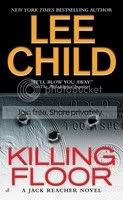
A great thriller. Jack Reacher makes half of his detective work in his head using 'elementary deduction', analyzing nonstop the possible outcomes of his (or anybody else's) actions, and relying on his military experience. The other half of his detective work includes whatever else needed: breaking bones, shooting criminals from ambush, making the bad guys talk, or/and killing them with any possible weapon. He investigates blending brainwork and violence in a highly effective way, but he never hurts people, unless it’s absolutely impossible to avoid it. (Most of the time, it is impossible, though.)
#2. Killing Floor by Lee Child
A great thriller. Jack Reacher makes half of his detective work in his head using 'elementary deduction', analyzing nonstop the possible outcomes of his (or anybody else's) actions, and relying on his military experience. The other half of his detective work includes whatever else needed: breaking bones, shooting criminals from ambush, making the bad guys talk, or/and killing them with any possible weapon. He investigates blending brainwork and violence in a highly effective way, but he never hurts people, unless it’s absolutely impossible to avoid it. (Most of the time, it is impossible, though.)
11readeron
I decided to take a break from my plans, and reread the Harry Potter series. So far i reread the first 6 books:
#3 Harry Potter and the Sorcerer's Stone by J.K. Rowling
#4 Harry Potter and the Chamber of Secrets by J.K. Rowling
#5 Harry Potter and the Prisoner of Azkaban by J.K. Rowling
#6 Harry Potter and the Goblet of Fire by J.K. Rowling
#7 Harry Potter and the Order of the Phoenix by J.K. Rowling
#8 Harry Potter and the Half-Blood Prince by J.K. Rowling
Now moving on to the last book in the series. I guess the Harry Potter books are sort of addictive, because I reread them at least once a year. :)
#3 Harry Potter and the Sorcerer's Stone by J.K. Rowling
#4 Harry Potter and the Chamber of Secrets by J.K. Rowling
#5 Harry Potter and the Prisoner of Azkaban by J.K. Rowling
#6 Harry Potter and the Goblet of Fire by J.K. Rowling
#7 Harry Potter and the Order of the Phoenix by J.K. Rowling
#8 Harry Potter and the Half-Blood Prince by J.K. Rowling
Now moving on to the last book in the series. I guess the Harry Potter books are sort of addictive, because I reread them at least once a year. :)
12billiejean
I think I must be the only person on the planet who hasn't read Harry Potter. I am going to have to read them soon! You are really doing great with your challenge!
--BJ
--BJ
13readeron
Thanks, billiejean! I really got faster with comfort reading, at last, and hopefully later I can go on with the books that are new for me at a similar speed.
If you do try Harry Potter, I hope, you will enjoy Rowling's style, like I always do. I'm almost sure that her humor is at the root of my addiction (though I don't know if anyone else has ever read Rowling laughing out loud:). I love the way she mixes dark and funny elements, making the mixture darker and darker with each book. I haven't read the seventh book yet, so can't wait seeing how the series ends!They say almost everyone dies by the end, but I can't help expecting a lot of fun and suspense before they do. I really think this series is worth a try! Happy reading!
If you do try Harry Potter, I hope, you will enjoy Rowling's style, like I always do. I'm almost sure that her humor is at the root of my addiction (though I don't know if anyone else has ever read Rowling laughing out loud:). I love the way she mixes dark and funny elements, making the mixture darker and darker with each book. I haven't read the seventh book yet, so can't wait seeing how the series ends!They say almost everyone dies by the end, but I can't help expecting a lot of fun and suspense before they do. I really think this series is worth a try! Happy reading!
14readeron
Still didn't start reading Harry Potter and the Deathly Hallows. I really should.
Finished
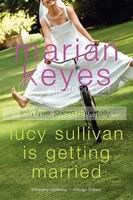
#9 Lucy Sullivan Is Getting Married by Marian Keyes, instead.
Though the end was pretty obvious since the fifth chapter, I read it on, as it's a quite well written and interesting story about friends, depression, a dysfunctional family, (mostly bad) relationships, hopes, fears, financial difficulties, and a lot more, with a whole bunch of humor thrown in. I liked Lucy's occasional dark moods, as well. Maybe the book was a bit too long for the genre, but I didn't really mind it.
Finished
#9 Lucy Sullivan Is Getting Married by Marian Keyes, instead.
Though the end was pretty obvious since the fifth chapter, I read it on, as it's a quite well written and interesting story about friends, depression, a dysfunctional family, (mostly bad) relationships, hopes, fears, financial difficulties, and a lot more, with a whole bunch of humor thrown in. I liked Lucy's occasional dark moods, as well. Maybe the book was a bit too long for the genre, but I didn't really mind it.
15readeron
I feel ready to start Harry Potter and the Deathly Hallows at last, after reading a nice, detailed spoiler about it. (I need spoilers, and I love them, whenever they help me to decide whether to read or not to read some books. Reading spoilers is one of my guilty pleasures, I guess...:)
(Spoiler alert!)
I must admit I just couldn’t start it, partly because I felt almost shell-shocked after Rowling had killed off Dumbledore by the hand of Snape. I couldn't imagine how the show can go on without him and I was a bit confused too, as people whose opinion I trust (and it was NOT only Dumbledore, LOL) kept telling that Snape is perfectly OK. I couldn't understand how he can be considered loyal to Dumbledore after the 6th book. Now, after reading this detailed spoiler, I feel a lot better about the last book. (I've certainly never been a person crying above losses in a book, but I wanted to be sure that it would stay so after reading this last book. Well, now I'm sure at last, as I got to know that the most important characters do survive.:)
It also annoyed me that I couldn't really explain why I think that Harry Potter is more than just a series of kids' book to me, or why the humor in it is more than something making me laugh out loud (or at least giggle) at certain parts. So I was digging into this 'problem' a bit, and found the solution quite fast.
Actually, first I found the solution in a comment to some article. I still perfectly agree with this comment, so I simply quote it here, as a reminder for myself, and as a more clear explanation for my 'addiction' to the Harry Potter series:
"Harry's "specialness" is not innate, or related to magic or the wizarding world at all. Harry's specialness comes in his dedication to friends of all types, to his belief in fairness, and his willingness to break rules when necessary to support the first two.
/../ Rawling has a clear streak of satire encompassing class, government, bureaucracy, activism, criminal law, race, and gender (etc, etc)."
Later I found out more about 'the politics of Harry Potter' for example in Wikipedia, but I think the comment I quoted above basically summarizes the main points for me.
Actually when I was reading the series again and again, I wasn't thinking about my reasons for loving it, and I couldn’t really put it in words what makes them so great, when I was asked about it. I only had this vague feeling of being entertained, but couldn’t point out clearly the many different layers of humor in the books, like puns, funny anecdotes about the Weasley twins etc etc, the irony or the satire. Finally, I guess I must quote part of a post I saved from a blog, because I liked it, and because I couldn't agree with it more:
"The books can be read at different levels, which makes them quite fun. I thought they were children's literature which is one of the reasons I didn't read them for a long time. But it turns out that yes - they can be read that way, but there are layers and layers (which includes satire and humor) which are really aimed more at adult readers. The characterizations are fantastic. The plot is fascinating, full of twists and turns. I work in DC and the description of the Ministry of Magic - the central government for the magical community in Britain - is a maze of bureaucracy and is quite amusing satire!
I encourage you to read them - each book is written in the style of how old Harry is. So the first book is written in third person but from the perspective of an eleven year old. The last book will be from the perspective of a seventeen year old (who's been through a lot). It is a mystery and so there are things that Harry will see as an eleven year old that he won't necessarily understand but you will as you put the pieces together. This is why people - like me - read them over and over. The entire series is a Big Mystery (…) and we are given hints and clues all through the series to solve the mysteries."
Well, that's about Harry Potter for today!:) It's high time for me to start reading the last book now, after convincing myself this time really successfully that it's really what I want and need to do:)
(I’m afraid I started to use this thread or whatever as a private notebook, well, I hope that it’s ok.:) (Though comments are always welcome, of course!)
I also started reading Jinx by Meg Cabot and One Shot by Lee Child (I’m afraid, I’m perfectly unable to keep to any plans, so next year I won’t make any plans for my challenge, I guess. :)
(Spoiler alert!)
I must admit I just couldn’t start it, partly because I felt almost shell-shocked after Rowling had killed off Dumbledore by the hand of Snape. I couldn't imagine how the show can go on without him and I was a bit confused too, as people whose opinion I trust (and it was NOT only Dumbledore, LOL) kept telling that Snape is perfectly OK. I couldn't understand how he can be considered loyal to Dumbledore after the 6th book. Now, after reading this detailed spoiler, I feel a lot better about the last book. (I've certainly never been a person crying above losses in a book, but I wanted to be sure that it would stay so after reading this last book. Well, now I'm sure at last, as I got to know that the most important characters do survive.:)
It also annoyed me that I couldn't really explain why I think that Harry Potter is more than just a series of kids' book to me, or why the humor in it is more than something making me laugh out loud (or at least giggle) at certain parts. So I was digging into this 'problem' a bit, and found the solution quite fast.
Actually, first I found the solution in a comment to some article. I still perfectly agree with this comment, so I simply quote it here, as a reminder for myself, and as a more clear explanation for my 'addiction' to the Harry Potter series:
"Harry's "specialness" is not innate, or related to magic or the wizarding world at all. Harry's specialness comes in his dedication to friends of all types, to his belief in fairness, and his willingness to break rules when necessary to support the first two.
/../ Rawling has a clear streak of satire encompassing class, government, bureaucracy, activism, criminal law, race, and gender (etc, etc)."
Later I found out more about 'the politics of Harry Potter' for example in Wikipedia, but I think the comment I quoted above basically summarizes the main points for me.
Actually when I was reading the series again and again, I wasn't thinking about my reasons for loving it, and I couldn’t really put it in words what makes them so great, when I was asked about it. I only had this vague feeling of being entertained, but couldn’t point out clearly the many different layers of humor in the books, like puns, funny anecdotes about the Weasley twins etc etc, the irony or the satire. Finally, I guess I must quote part of a post I saved from a blog, because I liked it, and because I couldn't agree with it more:
"The books can be read at different levels, which makes them quite fun. I thought they were children's literature which is one of the reasons I didn't read them for a long time. But it turns out that yes - they can be read that way, but there are layers and layers (which includes satire and humor) which are really aimed more at adult readers. The characterizations are fantastic. The plot is fascinating, full of twists and turns. I work in DC and the description of the Ministry of Magic - the central government for the magical community in Britain - is a maze of bureaucracy and is quite amusing satire!
I encourage you to read them - each book is written in the style of how old Harry is. So the first book is written in third person but from the perspective of an eleven year old. The last book will be from the perspective of a seventeen year old (who's been through a lot). It is a mystery and so there are things that Harry will see as an eleven year old that he won't necessarily understand but you will as you put the pieces together. This is why people - like me - read them over and over. The entire series is a Big Mystery (…) and we are given hints and clues all through the series to solve the mysteries."
Well, that's about Harry Potter for today!:) It's high time for me to start reading the last book now, after convincing myself this time really successfully that it's really what I want and need to do:)
(I’m afraid I started to use this thread or whatever as a private notebook, well, I hope that it’s ok.:) (Though comments are always welcome, of course!)
I also started reading Jinx by Meg Cabot and One Shot by Lee Child (I’m afraid, I’m perfectly unable to keep to any plans, so next year I won’t make any plans for my challenge, I guess. :)
16billiejean
Hi, readeron!
I loved reading your comments on HP! Both my girls, my brother and sister-in-law, and all three of my neices love those books. I was also worried somewhat about how it all would end based on many remarks I heard on tv or read, but I do think that it turns out ok. I am a sucker for happy endings. I also like to kind of read whatever is next that catches my fancy, but I joined the 888 challenge and my categories have somewhat restricted my choices. I have so many books that I want to read that don't fit my categories, and I hope that I finish early so that I can go on to them. One of the things I want to read is Harry Potter. What did you think about the movie being delayed until summer (at least here in the US) because it would make more money then? I did not really like that. First of all, I don't really believe that it would make more money later. Everyone would go to see it either time. (Yes, I have seen all the movies!) Plus, after releasing all those trailers for a December movie, it seems like they should stick with what they promised. I will try to read some of the books before the next movie. Have a great day!
--BJ
I loved reading your comments on HP! Both my girls, my brother and sister-in-law, and all three of my neices love those books. I was also worried somewhat about how it all would end based on many remarks I heard on tv or read, but I do think that it turns out ok. I am a sucker for happy endings. I also like to kind of read whatever is next that catches my fancy, but I joined the 888 challenge and my categories have somewhat restricted my choices. I have so many books that I want to read that don't fit my categories, and I hope that I finish early so that I can go on to them. One of the things I want to read is Harry Potter. What did you think about the movie being delayed until summer (at least here in the US) because it would make more money then? I did not really like that. First of all, I don't really believe that it would make more money later. Everyone would go to see it either time. (Yes, I have seen all the movies!) Plus, after releasing all those trailers for a December movie, it seems like they should stick with what they promised. I will try to read some of the books before the next movie. Have a great day!
--BJ
17readeron
Hi billiejean!
If you enjoyed the movies, I am sure you will enjoy the books, too! Plus, I think you're so lucky with so many of your family members loving the series! I just couldn't convince anyone in my family to give it a try and read any of the Harry Potter books yet.
I totally agree with you that no HP movie should ever be delayed because of financial reasons. No need for that, in my opinion. HP has so many fans all over the world, they surely would watch or even buy the movies any time, because they actually can't wait for the release.
Now I must admit, I had to look up with Google which movie we're actually talking about, and I'm still gasping of surprise: I really had no idea that even the 6th movie isn't yet out - I'm so naive sometimes!:)
It means I have seen on TV each HP movies released so far, too.
I hope you can squeeze in your schedule some HP books soon, and good luck with your 888 challenge as well!! Happy reading!
If you enjoyed the movies, I am sure you will enjoy the books, too! Plus, I think you're so lucky with so many of your family members loving the series! I just couldn't convince anyone in my family to give it a try and read any of the Harry Potter books yet.
I totally agree with you that no HP movie should ever be delayed because of financial reasons. No need for that, in my opinion. HP has so many fans all over the world, they surely would watch or even buy the movies any time, because they actually can't wait for the release.
Now I must admit, I had to look up with Google which movie we're actually talking about, and I'm still gasping of surprise: I really had no idea that even the 6th movie isn't yet out - I'm so naive sometimes!:)
It means I have seen on TV each HP movies released so far, too.
I hope you can squeeze in your schedule some HP books soon, and good luck with your 888 challenge as well!! Happy reading!
18readeron
- I've just finished:
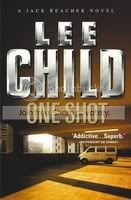
# 10. One Shot by Lee Child.
The story was a cliche, the end was perfectly predictable after the first 5 pages or so, but still when I started I couldn't stop reading. Several red herrings were thrown in, I let them mislead me most of the time. So soon I wasn’t sure, I knew what the end would be .: ) Perfect style, more than perfectly built up suspense, well-rounded characters. (I guess Reacher can make friends anywhere and any time, is able to become a suspect sooner or later in every single crime happening wherever he stays, and he meets old buddies or potential lovers wherever he goes - so typical of the series, it makes me smile. But he is always fair, his logic is precise like clockwork, his courage has no limits, and his military past makes him the most cold-blooded Rambo ever, whenever some action is needed – a really amazing character!:)
I’m still reading Jinx by Meg Cabot and Harry Potter and the Deathly Hallows by J K Rowling (I’m also listening to it as an audio book, which is some 21 hours total…).
I also started The Chamber by John Grisham yesterday.
# 10. One Shot by Lee Child.
The story was a cliche, the end was perfectly predictable after the first 5 pages or so, but still when I started I couldn't stop reading. Several red herrings were thrown in, I let them mislead me most of the time. So soon I wasn’t sure, I knew what the end would be .: ) Perfect style, more than perfectly built up suspense, well-rounded characters. (I guess Reacher can make friends anywhere and any time, is able to become a suspect sooner or later in every single crime happening wherever he stays, and he meets old buddies or potential lovers wherever he goes - so typical of the series, it makes me smile. But he is always fair, his logic is precise like clockwork, his courage has no limits, and his military past makes him the most cold-blooded Rambo ever, whenever some action is needed – a really amazing character!:)
I’m still reading Jinx by Meg Cabot and Harry Potter and the Deathly Hallows by J K Rowling (I’m also listening to it as an audio book, which is some 21 hours total…).
I also started The Chamber by John Grisham yesterday.
20readeron
Yesterday I finished
# 11 The Chamber by John Grisham.
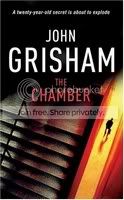
The Chamber is a legal thriller focusing on the issues of death penalty and racism through the story of the Cayhall family.
Suspense: 2/5 (Not enough.)
Humor/irony: 2/5 (Ok, after all, it's not a comedy, so maybe this part is all right.)
Sentimentality: 4/5 (Too much, too much.)
Legal shilly-shallying: 4/5 (I know it’s a legal thriller, but it was still much too tedious sometimes. I kept falling asleep on it, literally, which was actually good, because normally I can't fall asleep easily. :)
I don't think that I'll reread this book in the near future. It's not a bad read, but it is simply too long and too preachy for my taste.
# 11 The Chamber by John Grisham.
The Chamber is a legal thriller focusing on the issues of death penalty and racism through the story of the Cayhall family.
Suspense: 2/5 (Not enough.)
Humor/irony: 2/5 (Ok, after all, it's not a comedy, so maybe this part is all right.)
Sentimentality: 4/5 (Too much, too much.)
Legal shilly-shallying: 4/5 (I know it’s a legal thriller, but it was still much too tedious sometimes. I kept falling asleep on it, literally, which was actually good, because normally I can't fall asleep easily. :)
I don't think that I'll reread this book in the near future. It's not a bad read, but it is simply too long and too preachy for my taste.
21readeron
I've just finished
# 12 Lullaby Town by Robert Crais. It was an enjoyable and undemanding crime story, just what I needed these days.
Now going back to read more of the books I've already started.
# 12 Lullaby Town by Robert Crais. It was an enjoyable and undemanding crime story, just what I needed these days.
Now going back to read more of the books I've already started.
22readeron
- I've just finished
#13 The Light Fantastic by Terry Pratchett
I love this book! I plan to reread it at least once a year. Plus, I plan to read the whole series. Brilliantly written, laugh-out-loud story!
I'm also reading The Runaway Jury by John Grisham. It's a slightly better read than The Chamber was. Its end isn't so predictable (actually, I have no idea how it will end yet:), and the author preaches (lawyers are not always really nice, smoking is unhealthy and so on - pretty obvious things, as usually:) in a more entertaining way this time. I must admit that Grisham's humor and the suspense involved have made the novel quite a page-turner for me.:)
About the other books I'm reading:
- I'm afraid, I've ruined the fun of reading the last volume of the Harry Potter series for myself for a while. Unfortunately, I've read a short parody of it, which takes some time to forget:). Can't blame nobody but myself. I'll never read parodies before reading the actual book itself next time...
- I was really struggling hard to develop some excitement about Jinx by Meg Cabot, but it simply couldn't grab me. Finally, I decided to set it aside for a bit and move on to something else. Maybe it's time to give it another try again soon. Not sure yet, though.
#13 The Light Fantastic by Terry Pratchett
I love this book! I plan to reread it at least once a year. Plus, I plan to read the whole series. Brilliantly written, laugh-out-loud story!
I'm also reading The Runaway Jury by John Grisham. It's a slightly better read than The Chamber was. Its end isn't so predictable (actually, I have no idea how it will end yet:), and the author preaches (lawyers are not always really nice, smoking is unhealthy and so on - pretty obvious things, as usually:) in a more entertaining way this time. I must admit that Grisham's humor and the suspense involved have made the novel quite a page-turner for me.:)
About the other books I'm reading:
- I'm afraid, I've ruined the fun of reading the last volume of the Harry Potter series for myself for a while. Unfortunately, I've read a short parody of it, which takes some time to forget:). Can't blame nobody but myself. I'll never read parodies before reading the actual book itself next time...
- I was really struggling hard to develop some excitement about Jinx by Meg Cabot, but it simply couldn't grab me. Finally, I decided to set it aside for a bit and move on to something else. Maybe it's time to give it another try again soon. Not sure yet, though.
23readeron
Update and SPOILER ALERT:
Haha! Still couldn’t finish The Runaway Jury yet, but I must take some notes at this point, in case I would forget why I found this book so entertaining and funny.
Not a single honest character can be found in it, plus both sides spend millions to win the trial by choosing the best possible jury from their point of view and trying to manipulate them later. But a mistake slips in: they choose a juror (Nicholas Easter) whose only purpose is to influence the whole jury because he wants to sell the verdict to the side offering him and his girlfriend more money at the end. And he is good at influencing people. :)
Soon the whole jury is manipulated by him like a bunch of puppets without noticing it, - some of the jurors behave like lunatics all the time anyway - , so even the judge is unable to handle the situation, and decides to do anything to keep them quiet and satisfied. And the jurors start to enjoy their 'power'.
The thriller is wickedly funny so far. I guess the tobacco company will win in the end, but who knows, maybe some twists and turns are awaiting yet. It’s just the kind of thriller I usually expect from an author like Grisham.:).
An entertaning and thought-provoking read.
Haha! Still couldn’t finish The Runaway Jury yet, but I must take some notes at this point, in case I would forget why I found this book so entertaining and funny.
Not a single honest character can be found in it, plus both sides spend millions to win the trial by choosing the best possible jury from their point of view and trying to manipulate them later. But a mistake slips in: they choose a juror (Nicholas Easter) whose only purpose is to influence the whole jury because he wants to sell the verdict to the side offering him and his girlfriend more money at the end. And he is good at influencing people. :)
Soon the whole jury is manipulated by him like a bunch of puppets without noticing it, - some of the jurors behave like lunatics all the time anyway - , so even the judge is unable to handle the situation, and decides to do anything to keep them quiet and satisfied. And the jurors start to enjoy their 'power'.
The thriller is wickedly funny so far. I guess the tobacco company will win in the end, but who knows, maybe some twists and turns are awaiting yet. It’s just the kind of thriller I usually expect from an author like Grisham.:).
An entertaning and thought-provoking read.
24readeron
- I've just finished
#14 The Runaway Jury by John Grisham.
The twists and turns mentioned above were really in the store for me yet, and I liked the ending of the book, too:)
Though the book had some boring parts, in the last 100 pages or so the events got faster, and the jury made a good job, I must admit.:)
#14 The Runaway Jury by John Grisham.
The twists and turns mentioned above were really in the store for me yet, and I liked the ending of the book, too:)
Though the book had some boring parts, in the last 100 pages or so the events got faster, and the jury made a good job, I must admit.:)
26readeron
Yesterday I finished
#15 Undead and Unwed by Mary Janice Davidson. It's a very very light and fluffy read. It made me laugh out loud quite often, so I'm still quite interested in the other parts of the series, as well.
I quote here 2 reviews I agree with:
- The subjective one:
"It's funny and, at times, witty for a romance (i.e. as close to porn as an author can get without it actually being porn) novel. Well worth the read if you just generally like vampires or romance novels or comedies." (by pcharmed86)
- The more detailed one:
"Betsy is the most unlikely vampire you will ever read about. She is tall, blonde, and has a passion for footware! But Betsy does not become a vampire in a usual way- or react to her new status in a conventional way. However, once she accepts her undead role, more surprises are in store for her - including a delicious alpha-male that she tries to resist again and again!" (by aapike)
(I know, I know: quoting is for the lazy. Well, I find it useful anyway. Plus, I never questioned the fact that I may be lazy.:)
#15 Undead and Unwed by Mary Janice Davidson. It's a very very light and fluffy read. It made me laugh out loud quite often, so I'm still quite interested in the other parts of the series, as well.
I quote here 2 reviews I agree with:
- The subjective one:
"It's funny and, at times, witty for a romance (i.e. as close to porn as an author can get without it actually being porn) novel. Well worth the read if you just generally like vampires or romance novels or comedies." (by pcharmed86)
- The more detailed one:
"Betsy is the most unlikely vampire you will ever read about. She is tall, blonde, and has a passion for footware! But Betsy does not become a vampire in a usual way- or react to her new status in a conventional way. However, once she accepts her undead role, more surprises are in store for her - including a delicious alpha-male that she tries to resist again and again!" (by aapike)
(I know, I know: quoting is for the lazy. Well, I find it useful anyway. Plus, I never questioned the fact that I may be lazy.:)
27readeron
- I've just finished
#16 The Dante Club by Matthew Pearl

Although normally I don't like historical fiction, I still enjoyed this thriller. I guess, its easier to quote my reasons from a review again:
"While the premise of engaging famous historical figures in a mystery is intriguing, Pearl never allows this element to drive the narrative. His characterizations of Longfellow, Holmes and Lowell are so brilliant, the reader forgets that they are icons of literary history, and views them as intense and vivacious fictional characters.
This is not beach-reading, but instead an intellectual journey through Boston of the 1860s. Pearl is subtle but firm when he integrates statements about racial tension, academic politics, and even the neglect of soldiers suffering from the horrors of war.
While built on an intellectual premise, one needs not be familiar with Dante to enjoy this book." /rebcamuse/
I would give the book 4 stars out of 5.
At the weekend I also reread
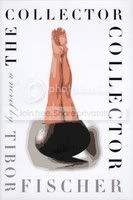
#17 The Collector Collector by Tibor Fischer. I simply love this book!:)
#16 The Dante Club by Matthew Pearl

Although normally I don't like historical fiction, I still enjoyed this thriller. I guess, its easier to quote my reasons from a review again:
"While the premise of engaging famous historical figures in a mystery is intriguing, Pearl never allows this element to drive the narrative. His characterizations of Longfellow, Holmes and Lowell are so brilliant, the reader forgets that they are icons of literary history, and views them as intense and vivacious fictional characters.
This is not beach-reading, but instead an intellectual journey through Boston of the 1860s. Pearl is subtle but firm when he integrates statements about racial tension, academic politics, and even the neglect of soldiers suffering from the horrors of war.
While built on an intellectual premise, one needs not be familiar with Dante to enjoy this book." /rebcamuse/
I would give the book 4 stars out of 5.
At the weekend I also reread
#17 The Collector Collector by Tibor Fischer. I simply love this book!:)
28readeron
I finished a novella today:
#18. Dead Girls Don't Dance by Mary Janice Davidson
This novella can be found in the anthology (Cravings) edited by Laurell K. Hamilton. Andrea Mercer, the vampiress, is found on the beach by an old college crush, Daniel. She must visit the new vampire queen, Betsy and pay homage to her. Daniel volunteers to "play the driver guy" on the journey. - A nice, fast, fluffy read touched with just the right amount of humor. I liked it.
#18. Dead Girls Don't Dance by Mary Janice Davidson
This novella can be found in the anthology (Cravings) edited by Laurell K. Hamilton. Andrea Mercer, the vampiress, is found on the beach by an old college crush, Daniel. She must visit the new vampire queen, Betsy and pay homage to her. Daniel volunteers to "play the driver guy" on the journey. - A nice, fast, fluffy read touched with just the right amount of humor. I liked it.
29readeron
I'm also reading (actually rereading) The Ringmaster's Daughter by Jostein Gaarder.

Finished up the book yesterday.
#19 The Ringmaster's Daughter by Jostein Gaarder.
As I already mentioned, it was a reread. First time I read it right after reading The Perfume. It had me hooked from the first pages, because The Perfume was so disapponting for me.
Now I was reading it simultaneously with Can You Keep a Secret by Sophie Kinsella, and this time I couldnt enjoy Gaarder so much,- actually I felt it a bit creepy because of Metre Man and some other details.
I still think it is an interesting and thought-provoking novel, though. I especially liked some of the stories Petter sold to the other writers (like the synopsis about the LSD babies ( = lack of soul disease) or the post-apocalyptic one).
I found it also interesting how books being read at the same time can alter my feelings about them. But maybe they would've changed anyway. Who can tell?
Plus, I prefer the book's original title (which is 'story seller', or something like that).

Finished up the book yesterday.
#19 The Ringmaster's Daughter by Jostein Gaarder.
As I already mentioned, it was a reread. First time I read it right after reading The Perfume. It had me hooked from the first pages, because The Perfume was so disapponting for me.
Now I was reading it simultaneously with Can You Keep a Secret by Sophie Kinsella, and this time I couldnt enjoy Gaarder so much,- actually I felt it a bit creepy because of Metre Man and some other details.
I still think it is an interesting and thought-provoking novel, though. I especially liked some of the stories Petter sold to the other writers (like the synopsis about the LSD babies ( = lack of soul disease) or the post-apocalyptic one).
I found it also interesting how books being read at the same time can alter my feelings about them. But maybe they would've changed anyway. Who can tell?
Plus, I prefer the book's original title (which is 'story seller', or something like that).
30readeron
I've just finished
# 20 Can You Keep a Secret? by Sophie Kinsella.
A hilarious romantic read. I absolutely loved it.
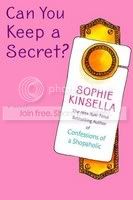
Plus, it woke the Language-Learner-In-Me up, and I made a word list as a result.
Some new (never-heard-of or half-forgotten) words for me from the book:
- bugger up
/Slang/ to spoil or ruin (something)
- swig /Informal/
A deep draft, especially of liquor; a gulp.
- winsome
Charming, often in a childlike or naive way.
-skive (off)
/Brit informal/ to avoid work or responsibility
- tail off
(of someone's voice) to become gradually quieter and then silent
- zapper
/Slang/ A remote-control
- scuttle
to run with short quick steps; to move about or proceed hurriedly
- cocoon
To retreat as if into a cocoon, as for security from a harsh or unfriendly environment.
- take the piss
/Chiefly British/ To tease or mock (someone).
- throw (someone):
/Informal/ to confuse or disconcert (disconcert - cause to lose one's composure)
- halterneck
a woman's top or dress which fastens behind the neck, leaving the back and arms bare
- tacky - tastelessly showy;
- coaster
a small mat placed under a bottle or glass to protect a table
- embossed
ornamented with a raised design
- demure
quiet, reserved, and rather shy
- accost
To approach and speak to boldly or aggressively, as with a demand or request.
- livid
Extremely angry; furious
- squiggle
a wavy line
- peter out
to come gradually to an end
- wrong-foot
to gain an advantage over (someone) by doing something unexpected
- grovel
show submission or fear;to behave excessively humbly towards someone, esp. a superior, in an attempt to win his or her favour
- jolt
a. A sudden, strong feeling of surprise or disappointment; a shock.
b. The cause of such a feeling
- glug
make a gurgling sound as of liquid issuing from a bottle
- smug
Exhibiting or feeling great or offensive satisfaction with oneself or with one's situation
- jumble
1. A confused or disordered mass
2. A disordered state
- faze
To disrupt the composure of; disconcert.
- fazed
caused to show discomposure;
- banter
Good-humored, playful conversation.
- venue
The scene or setting in which something takes place; a locale
- surreptitious
done in secret or without permission
- fluster
To make or become nervous or upset
- stilted
(of speech, writing, or behaviour) formal or pompous; not flowing continuously or naturally
- defiant - boldly resisting authority or an opposing force;
- chivvy - annoy continually or chronically; To vex or harass with petty attacks
- grotty
/Chiefly British Slang /
Very unpleasant; miserable; nasty or unattractive; in bad condition (from grotesque)
- clandestine
Kept or done in secret, often in order to conceal an illicit or improper purpose.
- saunter
To walk at a leisurely pace; stroll.
- stint
A fixed amount or share of work allotted; an individual's prescribed share of work;
An unbroken period of time during which you do something;
- linchpin
A central cohesive element
- nip (with along, up, out,)
/Brit informal/ go, run, rush, dash
- beseech - ask for or request earnestly;
- puce
A deep red to dark grayish purple.
- waft
To float easily and gently, as on the air; drift
- inexorable
Not capable of being persuaded by entreaty; relentless
- fob off
to pretend to satisfy (a person) with lies or excuses
- manky - inferior and worthless
- appraise
1. To evaluate, especially in an official capacity.
2. To estimate the quality, amount, size, and other features of; judge
- impale
a. To pierce with a sharp object.
b. To torture or kill by impaling.
- flounder
to behave or speak in an awkward, confused way
- reconnoitring
exploring in order to gain information; scouting
- put out
To offend or irritate
- qualm
1. A sudden feeling of sickness, faintness, or nausea.
2. A sudden disturbing feeling
3. An uneasy feeling about the propriety or rightness of a course of action.
- codger
/Informal/ A somewhat eccentric man, especially an old one.
- retch
To try to vomit.
- two-time /Slang/
To be unfaithful to (a spouse or lover).
- rueful
Causing, feeling, or expressing sorrow or regret
- wimp /Slang/
A person who is regarded as weak or ineffectual; a feeble ineffective person
- petulant
Unreasonably irritable or ill-tempered;
- prang
To damage by colliding with (a car, for example).
- warp
To turn or twist (wood, for example) out of shape
- containment
the prevention of the spread of something harmful
- tap
a style of dancing in which the performer wears shoes with metal plates at the heels and toes that make a rhythmic sound
on the stage as he or she dances
- stage fright - fear that affects a person about to face an audience
- hedge
To avoid making a clear, direct response or statement.
- consternation
A state of paralyzing dismay
- make (oneself) scarce
/Informal/ To depart, especially quickly
- lucrative
Producing wealth; profitable
# 20 Can You Keep a Secret? by Sophie Kinsella.
A hilarious romantic read. I absolutely loved it.
Plus, it woke the Language-Learner-In-Me up, and I made a word list as a result.
Some new (never-heard-of or half-forgotten) words for me from the book:
- bugger up
/Slang/ to spoil or ruin (something)
- swig /Informal/
A deep draft, especially of liquor; a gulp.
- winsome
Charming, often in a childlike or naive way.
-skive (off)
/Brit informal/ to avoid work or responsibility
- tail off
(of someone's voice) to become gradually quieter and then silent
- zapper
/Slang/ A remote-control
- scuttle
to run with short quick steps; to move about or proceed hurriedly
- cocoon
To retreat as if into a cocoon, as for security from a harsh or unfriendly environment.
- take the piss
/Chiefly British/ To tease or mock (someone).
- throw (someone):
/Informal/ to confuse or disconcert (disconcert - cause to lose one's composure)
- halterneck
a woman's top or dress which fastens behind the neck, leaving the back and arms bare
- tacky - tastelessly showy;
- coaster
a small mat placed under a bottle or glass to protect a table
- embossed
ornamented with a raised design
- demure
quiet, reserved, and rather shy
- accost
To approach and speak to boldly or aggressively, as with a demand or request.
- livid
Extremely angry; furious
- squiggle
a wavy line
- peter out
to come gradually to an end
- wrong-foot
to gain an advantage over (someone) by doing something unexpected
- grovel
show submission or fear;to behave excessively humbly towards someone, esp. a superior, in an attempt to win his or her favour
- jolt
a. A sudden, strong feeling of surprise or disappointment; a shock.
b. The cause of such a feeling
- glug
make a gurgling sound as of liquid issuing from a bottle
- smug
Exhibiting or feeling great or offensive satisfaction with oneself or with one's situation
- jumble
1. A confused or disordered mass
2. A disordered state
- faze
To disrupt the composure of; disconcert.
- fazed
caused to show discomposure;
- banter
Good-humored, playful conversation.
- venue
The scene or setting in which something takes place; a locale
- surreptitious
done in secret or without permission
- fluster
To make or become nervous or upset
- stilted
(of speech, writing, or behaviour) formal or pompous; not flowing continuously or naturally
- defiant - boldly resisting authority or an opposing force;
- chivvy - annoy continually or chronically; To vex or harass with petty attacks
- grotty
/Chiefly British Slang /
Very unpleasant; miserable; nasty or unattractive; in bad condition (from grotesque)
- clandestine
Kept or done in secret, often in order to conceal an illicit or improper purpose.
- saunter
To walk at a leisurely pace; stroll.
- stint
A fixed amount or share of work allotted; an individual's prescribed share of work;
An unbroken period of time during which you do something;
- linchpin
A central cohesive element
- nip (with along, up, out,)
/Brit informal/ go, run, rush, dash
- beseech - ask for or request earnestly;
- puce
A deep red to dark grayish purple.
- waft
To float easily and gently, as on the air; drift
- inexorable
Not capable of being persuaded by entreaty; relentless
- fob off
to pretend to satisfy (a person) with lies or excuses
- manky - inferior and worthless
- appraise
1. To evaluate, especially in an official capacity.
2. To estimate the quality, amount, size, and other features of; judge
- impale
a. To pierce with a sharp object.
b. To torture or kill by impaling.
- flounder
to behave or speak in an awkward, confused way
- reconnoitring
exploring in order to gain information; scouting
- put out
To offend or irritate
- qualm
1. A sudden feeling of sickness, faintness, or nausea.
2. A sudden disturbing feeling
3. An uneasy feeling about the propriety or rightness of a course of action.
- codger
/Informal/ A somewhat eccentric man, especially an old one.
- retch
To try to vomit.
- two-time /Slang/
To be unfaithful to (a spouse or lover).
- rueful
Causing, feeling, or expressing sorrow or regret
- wimp /Slang/
A person who is regarded as weak or ineffectual; a feeble ineffective person
- petulant
Unreasonably irritable or ill-tempered;
- prang
To damage by colliding with (a car, for example).
- warp
To turn or twist (wood, for example) out of shape
- containment
the prevention of the spread of something harmful
- tap
a style of dancing in which the performer wears shoes with metal plates at the heels and toes that make a rhythmic sound
on the stage as he or she dances
- stage fright - fear that affects a person about to face an audience
- hedge
To avoid making a clear, direct response or statement.
- consternation
A state of paralyzing dismay
- make (oneself) scarce
/Informal/ To depart, especially quickly
- lucrative
Producing wealth; profitable
31billiejean
I enjoyed seeing all the British slang.
--BJ
--BJ
32readeron
> I'm glad that you liked them too!
I usually try not to make word lists to learn them inside out, because I know that one can pick up many words faster simply while reading. But actually, as I learnt English in school, whenever I read contemporary books, especially chick lit, the temptation is very strong, and - a bad habit or not, - sometimes I can't resist it. I love learning new words.:)
Yesterday I finished:
#21 Conscience Place by Joyce Thompson
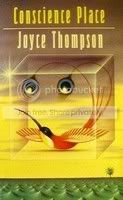
It's a beautifully written, deeply moving dystopia. Very humane, and very cruel, at the same time. I haven't read a more upsetting science fiction novel for ages. It's a brutally honest, thought-provoking pageturner with powerful images and well-rounded characters. I simply couldn't put it down till I finished it.
If you look for adventure, sizzling romance or only a good laugh, choose something else. If you need escapist literature or simply some goosebumps, choose something else.
This novel offers a haunting vision about one of the deepest fears of the 80's, namely the possible effects of using nuclear energy (or a possible nuclear holocaust). Altough the book may be quite dated in this respect, it has plenty of other ethical problems to reflect on in general, which are not dated in the least.
Although I quite liked the novel, I plan to move on to something fluffy and cheerful now.
About the plot: "Bartholomew, the limbless one, who records the life of his brethren . . . Lucas, the bodiless, who gives his brethren names . . . Brother Alice, who delivers the words of the Fathers to the children of Conscience Place. To the outside world they are monsters. To themselves they are simply the People. America has cast them out of sight, out of mind."
I usually try not to make word lists to learn them inside out, because I know that one can pick up many words faster simply while reading. But actually, as I learnt English in school, whenever I read contemporary books, especially chick lit, the temptation is very strong, and - a bad habit or not, - sometimes I can't resist it. I love learning new words.:)
Yesterday I finished:
#21 Conscience Place by Joyce Thompson
It's a beautifully written, deeply moving dystopia. Very humane, and very cruel, at the same time. I haven't read a more upsetting science fiction novel for ages. It's a brutally honest, thought-provoking pageturner with powerful images and well-rounded characters. I simply couldn't put it down till I finished it.
If you look for adventure, sizzling romance or only a good laugh, choose something else. If you need escapist literature or simply some goosebumps, choose something else.
This novel offers a haunting vision about one of the deepest fears of the 80's, namely the possible effects of using nuclear energy (or a possible nuclear holocaust). Altough the book may be quite dated in this respect, it has plenty of other ethical problems to reflect on in general, which are not dated in the least.
Although I quite liked the novel, I plan to move on to something fluffy and cheerful now.
About the plot: "Bartholomew, the limbless one, who records the life of his brethren . . . Lucas, the bodiless, who gives his brethren names . . . Brother Alice, who delivers the words of the Fathers to the children of Conscience Place. To the outside world they are monsters. To themselves they are simply the People. America has cast them out of sight, out of mind."
33readeron
Finished up
#22 Fugitive Pieces by Anne Michaels yesterday.
Historical novel about a young boy rescued from Word War II.

About the plot: "A Jewish child escapes, by chance, from the holocaust and is adopted by a Greek archaeologist, moves to Canada, marries twice, becomes a noted poet and translator, goes back to Greece. He tells his story and reflects on his life and escape. He has massive survivor's guilt especially about his older sister. He is killed in a car crash and the story is taken over by an admirer./.../ A story of loss and renewal, although I found the the grief and guilt a bit much at times." /wendyrey/
Actually, it was not really my cup of tea: generally it was too depressive and too poetic for me. I couldn't always relate to the characters, either. Anyway, I struggled through it somehow and enjoyed some parts.
Currently reading Remember Me? by Sophie Kinsella and rereading The Secret Diary of Adrian Mole, Aged 13 3/4 by Sue Townsend (another series I reread it at least once a year:).
#22 Fugitive Pieces by Anne Michaels yesterday.
Historical novel about a young boy rescued from Word War II.

About the plot: "A Jewish child escapes, by chance, from the holocaust and is adopted by a Greek archaeologist, moves to Canada, marries twice, becomes a noted poet and translator, goes back to Greece. He tells his story and reflects on his life and escape. He has massive survivor's guilt especially about his older sister. He is killed in a car crash and the story is taken over by an admirer./.../ A story of loss and renewal, although I found the the grief and guilt a bit much at times." /wendyrey/
Actually, it was not really my cup of tea: generally it was too depressive and too poetic for me. I couldn't always relate to the characters, either. Anyway, I struggled through it somehow and enjoyed some parts.
Currently reading Remember Me? by Sophie Kinsella and rereading The Secret Diary of Adrian Mole, Aged 13 3/4 by Sue Townsend (another series I reread it at least once a year:).
34readeron
- I've just finished rereading
#23 The Secret Diary of Adrian Mole, Aged 13 3/4 by Sue Townsend
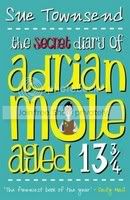
I've read it so many times that I can't laugh out loud at it anymore but it's still hilarious. Brilliant.
#23 The Secret Diary of Adrian Mole, Aged 13 3/4 by Sue Townsend
I've read it so many times that I can't laugh out loud at it anymore but it's still hilarious. Brilliant.
36readeron
- I've just finished:
#24 The Growing Pains of Adrian Mole by Sue Towsend.
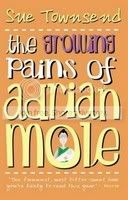
The second diary is also hilarious. Adrian is still a funny teenager, and a self-styled intellectual. He is still slightly hypochondriac. He is still helpful and kind to the elderly, the poor, little kids and the dog. He's still in love. His family's life is still completely chaotic.
Plus: LT made me realise that I'm quite a rereader type of person. It's not exactly a shocking revelation to me, I simply had no idea so far that I like to reread so much.:)
Rereads: 11 books
New reads: 13 books
:) Update:
"Sue Townsend inflicted every indignity of the times on our poor contemporary chronicler: an adolescence informed by Margaret Thatcher and Ronald Reagan, baby boomer parents growing old disgracefully and a family tree so complicated you need maps to explain it.(...)
Helen Fielding was quite open about her debt to the Sue Townsend masterplan when she started writing the newspaper columns that turned into Bridget Jones's Diary.(...)
Of course, Adrian's was not the first fictional diary. Townsend has acknowledged her own debt to Charles Pooter, the snobbish English office clerk who recorded his pensees in the 1892 Victorian novel The Diary of a Nobody, by George and Weedon Grossmith. "I fail to see - because I do not happen to be a 'Somebody' - why my diary should not be interesting," writes Pooter. Like Townsend, the Grossmiths used domestic details to highlight crazes. Back then, aestheticism, spiritualism and bicycling." (Actually I have no idea who wrote this article, but I was happy to see some of my favourite authors bunched together like that.:)
And another review, I must quote here:
"The diary format works well, inviting you as a reader to step in the shoes of a British teenager in the 1980’s.(...)
Relevant social themes are woven into the text, including struggles with poverty and living in mixed families, dealing with the aged and their unpredictable temperaments, as well as touching on larger fields of politics and economics, in a humanised way.
A captivating book, entertaining and uplifting, and hard to put down."
Altogether, I think the Mole diaries can be considered as literary time capsules: they are full of cultural references (mass culture. popular culture), they keep track of the political and social events of the 80's, etc, etc. And, if the Harry Potter series have several layers of humor (e.g. the satire of our times:), the same can be told about the Mole diaries, too, in my opinion. A review goes further claiming that "Townsend's approach in the Mole books is not really satire, but straightforward mockery".
Well, I can't really tell if it is satire or mockery, but now I'm almost perfectly sure that sooner or later I must buy the last 3 diaries, as well. I got interested how the story continues.
#24 The Growing Pains of Adrian Mole by Sue Towsend.
The second diary is also hilarious. Adrian is still a funny teenager, and a self-styled intellectual. He is still slightly hypochondriac. He is still helpful and kind to the elderly, the poor, little kids and the dog. He's still in love. His family's life is still completely chaotic.
Plus: LT made me realise that I'm quite a rereader type of person. It's not exactly a shocking revelation to me, I simply had no idea so far that I like to reread so much.:)
Rereads: 11 books
New reads: 13 books
:) Update:
"Sue Townsend inflicted every indignity of the times on our poor contemporary chronicler: an adolescence informed by Margaret Thatcher and Ronald Reagan, baby boomer parents growing old disgracefully and a family tree so complicated you need maps to explain it.(...)
Helen Fielding was quite open about her debt to the Sue Townsend masterplan when she started writing the newspaper columns that turned into Bridget Jones's Diary.(...)
Of course, Adrian's was not the first fictional diary. Townsend has acknowledged her own debt to Charles Pooter, the snobbish English office clerk who recorded his pensees in the 1892 Victorian novel The Diary of a Nobody, by George and Weedon Grossmith. "I fail to see - because I do not happen to be a 'Somebody' - why my diary should not be interesting," writes Pooter. Like Townsend, the Grossmiths used domestic details to highlight crazes. Back then, aestheticism, spiritualism and bicycling." (Actually I have no idea who wrote this article, but I was happy to see some of my favourite authors bunched together like that.:)
And another review, I must quote here:
"The diary format works well, inviting you as a reader to step in the shoes of a British teenager in the 1980’s.(...)
Relevant social themes are woven into the text, including struggles with poverty and living in mixed families, dealing with the aged and their unpredictable temperaments, as well as touching on larger fields of politics and economics, in a humanised way.
A captivating book, entertaining and uplifting, and hard to put down."
Altogether, I think the Mole diaries can be considered as literary time capsules: they are full of cultural references (mass culture. popular culture), they keep track of the political and social events of the 80's, etc, etc. And, if the Harry Potter series have several layers of humor (e.g. the satire of our times:), the same can be told about the Mole diaries, too, in my opinion. A review goes further claiming that "Townsend's approach in the Mole books is not really satire, but straightforward mockery".
Well, I can't really tell if it is satire or mockery, but now I'm almost perfectly sure that sooner or later I must buy the last 3 diaries, as well. I got interested how the story continues.
37readeron
And yes, I'm halfway there!
I've just finished:
#25 True Confessions of Adrian Albert Mole by Sue Townsend.
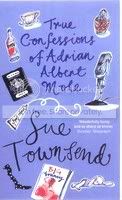
The third book of the Adrian Mole series is another nice fast read. Adrian doesn't change too much as the years go by, so if you're a fan of him, can't fail to stay his fan. (It's not the best book of the series though.)
Currently reading Remember Me? by Sophie Kinsella and Summer of Fear by Lois Duncan. After finishing these I plan to go back to read more of (or possibly finish) Harry Potter and the Deathly Hallows and Jinx.
I've just finished:
#25 True Confessions of Adrian Albert Mole by Sue Townsend.
The third book of the Adrian Mole series is another nice fast read. Adrian doesn't change too much as the years go by, so if you're a fan of him, can't fail to stay his fan. (It's not the best book of the series though.)
Currently reading Remember Me? by Sophie Kinsella and Summer of Fear by Lois Duncan. After finishing these I plan to go back to read more of (or possibly finish) Harry Potter and the Deathly Hallows and Jinx.
39readeron
On Tuesday I finished
#26 Summer of Fear by Lois Duncan.
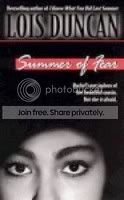
A good story and a fast read. I liked the characters, the sometimes peaceful, sometimes emotion-packed, sometimes spooky atmosphere, and even the very simple plot. Though every single important clue needed to solve the mystery appears already in the first chapter, it's a really exciting book from the beginning to the end. A well-written paranormal thriller for young readers.
#26 Summer of Fear by Lois Duncan.
A good story and a fast read. I liked the characters, the sometimes peaceful, sometimes emotion-packed, sometimes spooky atmosphere, and even the very simple plot. Though every single important clue needed to solve the mystery appears already in the first chapter, it's a really exciting book from the beginning to the end. A well-written paranormal thriller for young readers.
40readeron
I've just finished
#27 The Girl on the Boat by P G Wodehouse.
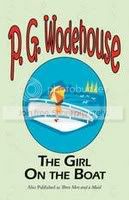
Wodehouse can make me laugh out loud any time. He never disappoints me. :)
#27 The Girl on the Boat by P G Wodehouse.
Wodehouse can make me laugh out loud any time. He never disappoints me. :)
41readeron
I've just finished rereading
#28 Running In Heels by Anna Maxted.
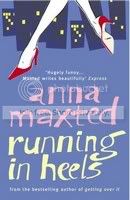
A witty, funny, cynical and very entertaining contemporary romantic comedy about friendship, family, relationships and eating disorders. The book has an extremely enjoyable style, several great characters and a satisfying end. It's chick lit at its best.
#28 Running In Heels by Anna Maxted.
A witty, funny, cynical and very entertaining contemporary romantic comedy about friendship, family, relationships and eating disorders. The book has an extremely enjoyable style, several great characters and a satisfying end. It's chick lit at its best.
42readeron
I've just finished
# 29 The Naked Face by Sidney Sheldon
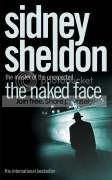
The book kept me on the edge of my seat till the 20th chapter. In the 20th chapter all the pieces of the puzzle fall into place and the story turns into a perfect cliche. The mystery is solved, the reader is practically forced to stop guessing (I love guessing), and the last three chapters could be easily condensed in one.
It's a well written, fast paced, easy read - I only wish that the end would be a bit more original.
I would give it three stars out of five, though.
Update: ***spoiler alert***
"Hanson died quickly - with a knife in his back. Carol was next - she was covered with acid and tortured to death. Now it was Judd's turn, as a New York psychoanalyst he had known both Hanson and Carol."
So the target was the doctor all the time, it's quite easy to guess so far. Who is/are the suspect/s? The doc's coat explains the death of Hanson, but Carol's dark past gives a chance for a good guessing game already.
The pressure weighing Dr Stevens down is built up in a brilliant way. He gets driven to a point when he almost cracks up and plans to turn for professional help, which would ruin his professional career forever. This thread is so brilliantly well written that - even though I was certain all the time that it could have no basis - it made me crave for an eerie horror story in the style of good old Psycho or a second Dr. Jekyll and Mr. Hyde.:)
I also loved the character of Moody, the private eye, who has worked out if Dr Stevens was in real danger. Killing him (Moody, and not the main character, of course) off already in the 13th chapter was a major disappoinment to me. He was such a witty and entertaining character (especially compared to the others), it was a real shame to waste him like that.
After these highly suspenseful chapters the story gradually lost steam and nothing could save it any more from getting more and more predictable. Otherwise I'd say it's a pretty good traditional mystery.
# 29 The Naked Face by Sidney Sheldon
The book kept me on the edge of my seat till the 20th chapter. In the 20th chapter all the pieces of the puzzle fall into place and the story turns into a perfect cliche. The mystery is solved, the reader is practically forced to stop guessing (I love guessing), and the last three chapters could be easily condensed in one.
It's a well written, fast paced, easy read - I only wish that the end would be a bit more original.
I would give it three stars out of five, though.
Update: ***spoiler alert***
"Hanson died quickly - with a knife in his back. Carol was next - she was covered with acid and tortured to death. Now it was Judd's turn, as a New York psychoanalyst he had known both Hanson and Carol."
So the target was the doctor all the time, it's quite easy to guess so far. Who is/are the suspect/s? The doc's coat explains the death of Hanson, but Carol's dark past gives a chance for a good guessing game already.
The pressure weighing Dr Stevens down is built up in a brilliant way. He gets driven to a point when he almost cracks up and plans to turn for professional help, which would ruin his professional career forever. This thread is so brilliantly well written that - even though I was certain all the time that it could have no basis - it made me crave for an eerie horror story in the style of good old Psycho or a second Dr. Jekyll and Mr. Hyde.:)
I also loved the character of Moody, the private eye, who has worked out if Dr Stevens was in real danger. Killing him (Moody, and not the main character, of course) off already in the 13th chapter was a major disappoinment to me. He was such a witty and entertaining character (especially compared to the others), it was a real shame to waste him like that.
After these highly suspenseful chapters the story gradually lost steam and nothing could save it any more from getting more and more predictable. Otherwise I'd say it's a pretty good traditional mystery.
43readeron
I've just finished:
#30 Undead and Unemployed by Mary Janice Davidson.
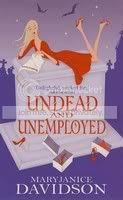
Another funny vampire story. I really do love this series despite its flaws.
#30 Undead and Unemployed by Mary Janice Davidson.
Another funny vampire story. I really do love this series despite its flaws.
45readeron
I've just finished
#31 Black Ice by Michael Connelly
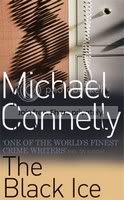
More than a page-turner. The detective, Harry Bosch is a typical loner with a harrowing past (just like Jack Reacher, one of my all-time favourite characters) - it's no wonder I really liked him. I also enjoyed the well crafted story. I guess I will consider reading more novels by Connelly.
"The corpse in the hotel room appears to be that of a missing LAPD narcotics officer. Rumours abound that he had crossed selling a new drug called Black Ice from Mexico and the LAPD brass are quick to declare his death aside. But Harry Bosch isn't so sure; prompted by odd, inexplicable details from the crime scene, and attraction to the widow, he begins his own investigation. An investigation that takes him over the border to Mexico and into a dangerous labyrinth of shifting identities and deadly corruption."
#31 Black Ice by Michael Connelly
More than a page-turner. The detective, Harry Bosch is a typical loner with a harrowing past (just like Jack Reacher, one of my all-time favourite characters) - it's no wonder I really liked him. I also enjoyed the well crafted story. I guess I will consider reading more novels by Connelly.
"The corpse in the hotel room appears to be that of a missing LAPD narcotics officer. Rumours abound that he had crossed selling a new drug called Black Ice from Mexico and the LAPD brass are quick to declare his death aside. But Harry Bosch isn't so sure; prompted by odd, inexplicable details from the crime scene, and attraction to the widow, he begins his own investigation. An investigation that takes him over the border to Mexico and into a dangerous labyrinth of shifting identities and deadly corruption."
46readeron
# 32 Mrs Dalloway by Virginia Woolf

I struggled through my first Virgina Woolf novel at last. I think the first one will be the last one for me. It was simply too depressive. Still, I couldn't abandon it because ... well, because I was wondering where else it can take me. It was a short but certainly not an easy ride drifting through the thoughts of several characters of various ages and social classes.
Book Description:
"Clarissa Dalloway, elegant and vivacious, is preparing for a party and remembering those she once loved. In another part of London, Septimus Warren Smith is shell-shocked and on the brink of madness. Smith's day interweaves with that of Clarissa and her friends, their lives converging as the party reaches its glittering climax.
Past, present and future are brought together one momentous June day in 1923."
And some interesting ideas from the book reviews I liked:
"Clarissa and Septimus threaten the utilitarian order merely by being passive, half-unconscious alternatives to it. But the differences between Septimus and Clarissa's experience of their own deviation also present a profound analysis of society's expectations about gender." (Jacob Littleton)
"In a sense, the character of Clarissa Dalloway is a representation of extreme, problematic individualism, in that she recognizes her absolute isolation.(...)
The novel seems to ask if people can truly communicate and connect if each is enclosed within his or her own consciousness." /Answers.com/
"In the inner life, chronological time is irrelevant; however, we are beings living in a society driven by the ticking of a clock's hands." /RooneyGirl/
And so on.

I struggled through my first Virgina Woolf novel at last. I think the first one will be the last one for me. It was simply too depressive. Still, I couldn't abandon it because ... well, because I was wondering where else it can take me. It was a short but certainly not an easy ride drifting through the thoughts of several characters of various ages and social classes.
Book Description:
"Clarissa Dalloway, elegant and vivacious, is preparing for a party and remembering those she once loved. In another part of London, Septimus Warren Smith is shell-shocked and on the brink of madness. Smith's day interweaves with that of Clarissa and her friends, their lives converging as the party reaches its glittering climax.
Past, present and future are brought together one momentous June day in 1923."
And some interesting ideas from the book reviews I liked:
"Clarissa and Septimus threaten the utilitarian order merely by being passive, half-unconscious alternatives to it. But the differences between Septimus and Clarissa's experience of their own deviation also present a profound analysis of society's expectations about gender." (Jacob Littleton)
"In a sense, the character of Clarissa Dalloway is a representation of extreme, problematic individualism, in that she recognizes her absolute isolation.(...)
The novel seems to ask if people can truly communicate and connect if each is enclosed within his or her own consciousness." /Answers.com/
"In the inner life, chronological time is irrelevant; however, we are beings living in a society driven by the ticking of a clock's hands." /RooneyGirl/
And so on.
47readeron
#33. Sammy's Hill by Kristin Gore
Well, rereading this novel at one sitting gave me red eye. Just my luck. Otherwise, I still love it.
Plus, I just can't read 50 books by the end of the year. As I started the challenge in August, I guess it's OK, though.
Abandoned this year (so far): Jinx, Harry Potter and the Deathly Hallows (memo to myself: never read parodies BEFORE reading the book itself), Remember Me (soon, soon, yes), Undead and Unappreciated (got tired of vampires for a while, couldn't tell why).
I guess I didn't exactly abandon these books after all: they are still on my tbr list, but I must admit that they simply couldn't suck me in, while other stories did.
------------
Some statistics to encourage myself (not so bad, not so bad):
The Twits - 96 pages
Killing Floor - 432 pages
Harry Potter and the Philosopher's Stone - 224 pages
Harry Potter and the Chamber of Secrets - 256 pages
Harry Potter and the Prisoner of Azkaban - 320 pages
Harry Potter and the Goblet of Fire - 796 pages
Harry Potter and the Order of the Phoenix - 766 pages
Harry Potter and the Half-Blood Prince - 768 pages
Lucy Sullivan Is Getting Married - 640 pages
One Shot - 496 pages
The Chamber - 496 pages
Lullaby Town - 352 pages
The Light of Fantastic - 241 pages
The Runaway Jury - 464 pages
Undead and Unwed - 288 pages
The Dante Club - 464 pages
The Collector Collector - 208 pages
The Ringmaster's Daughter - 224 pages
Can You Keep a Secret? - 384 pages
Conscience Place - 225 pages
Fugitive Pieces - 304 pages
The Secret Diary of Adrian Mole, Aged 13 3/4 - 272 pages
The Growing Pains of Adrian Mole - 288 pages
True Confessions of Adrian Albert Mole - 112 pages
Summer of Fear - 208 pages
The Girl on the Boat - 256 pages
Running In Heels - 432 pages
The Naked Face - 320 pages
Undead and Unemployed 304 pages
Black Ice - 448 pages
Mrs Dalloway - 208 pages
Sammy's Hill - 592 pages
(Decided to ignore the short story/novella by Davidson, as I have no idea how many pages it was.)
TOTAL PAGES (so far) = 11884 pages (since August or rather the end of July)
Well, rereading this novel at one sitting gave me red eye. Just my luck. Otherwise, I still love it.
Plus, I just can't read 50 books by the end of the year. As I started the challenge in August, I guess it's OK, though.
Abandoned this year (so far): Jinx, Harry Potter and the Deathly Hallows (memo to myself: never read parodies BEFORE reading the book itself), Remember Me (soon, soon, yes), Undead and Unappreciated (got tired of vampires for a while, couldn't tell why).
I guess I didn't exactly abandon these books after all: they are still on my tbr list, but I must admit that they simply couldn't suck me in, while other stories did.
------------
Some statistics to encourage myself (not so bad, not so bad):
The Twits - 96 pages
Killing Floor - 432 pages
Harry Potter and the Philosopher's Stone - 224 pages
Harry Potter and the Chamber of Secrets - 256 pages
Harry Potter and the Prisoner of Azkaban - 320 pages
Harry Potter and the Goblet of Fire - 796 pages
Harry Potter and the Order of the Phoenix - 766 pages
Harry Potter and the Half-Blood Prince - 768 pages
Lucy Sullivan Is Getting Married - 640 pages
One Shot - 496 pages
The Chamber - 496 pages
Lullaby Town - 352 pages
The Light of Fantastic - 241 pages
The Runaway Jury - 464 pages
Undead and Unwed - 288 pages
The Dante Club - 464 pages
The Collector Collector - 208 pages
The Ringmaster's Daughter - 224 pages
Can You Keep a Secret? - 384 pages
Conscience Place - 225 pages
Fugitive Pieces - 304 pages
The Secret Diary of Adrian Mole, Aged 13 3/4 - 272 pages
The Growing Pains of Adrian Mole - 288 pages
True Confessions of Adrian Albert Mole - 112 pages
Summer of Fear - 208 pages
The Girl on the Boat - 256 pages
Running In Heels - 432 pages
The Naked Face - 320 pages
Undead and Unemployed 304 pages
Black Ice - 448 pages
Mrs Dalloway - 208 pages
Sammy's Hill - 592 pages
(Decided to ignore the short story/novella by Davidson, as I have no idea how many pages it was.)
TOTAL PAGES (so far) = 11884 pages (since August or rather the end of July)
48billiejean
Congratulations on reading so many books in such a short amount of time! :)
--BJ
--BJ
49readeron
Hi billiejean!
Thank you for your kind words!:)
Plus, happy reading in 2009 (and before, too:) !
Thank you for your kind words!:)
Plus, happy reading in 2009 (and before, too:) !
50theeclecticreview
readeron,
This was also my first and last Virginia Woolf novel. I, like you, thought it was depressive, but I guess we can say we have read Virginia Woolf. :)
Kudos for such an impressive read-a-thon in a short amount of time.
Happy holidays!
sherton
This was also my first and last Virginia Woolf novel. I, like you, thought it was depressive, but I guess we can say we have read Virginia Woolf. :)
Kudos for such an impressive read-a-thon in a short amount of time.
Happy holidays!
sherton
52readeron
#34 Women Talking Dirty by Isla Dewar
256 pages
"Ellen Quinn kept her sanity in the suffocating Edinburgh suburb where she grew up by imagining it was a hotbed of intrigue. A neglected child, she's still looking for love as an adult; and so she finds herself married to Daniel. How could she know that he would misbehave? Cora O'Brien is the total opposite; outrageous and outspoken, she inspires the children she teaches with her enthusiasm. The city can't soften her Highland lilt but her lifestyle would raise a few eyebrows back home. But her vividness is a facade; most of her secrets she's still keeping to herself. Fast friends from the start, Ellen and Cora may have plenty to learn about life, but they always have vodka and each other to talk to when the unexpected happens!"
I didn't see the movie, but I quite liked the book. It's a partly realistic, partly poetic chick lit novel with loveable characters, - well written, entertaining, but nothing wonderful.
(I decided to continue keeping track of my reading here, it would make no sense to start a new thread just because a new year started. I plan to start a new challenge either after finishing my goal (50 books) or in August 2009 (I'm still interested how many books I can read in a whole year:) .
256 pages
"Ellen Quinn kept her sanity in the suffocating Edinburgh suburb where she grew up by imagining it was a hotbed of intrigue. A neglected child, she's still looking for love as an adult; and so she finds herself married to Daniel. How could she know that he would misbehave? Cora O'Brien is the total opposite; outrageous and outspoken, she inspires the children she teaches with her enthusiasm. The city can't soften her Highland lilt but her lifestyle would raise a few eyebrows back home. But her vividness is a facade; most of her secrets she's still keeping to herself. Fast friends from the start, Ellen and Cora may have plenty to learn about life, but they always have vodka and each other to talk to when the unexpected happens!"
I didn't see the movie, but I quite liked the book. It's a partly realistic, partly poetic chick lit novel with loveable characters, - well written, entertaining, but nothing wonderful.
(I decided to continue keeping track of my reading here, it would make no sense to start a new thread just because a new year started. I plan to start a new challenge either after finishing my goal (50 books) or in August 2009 (I'm still interested how many books I can read in a whole year:) .
53readeron
Finished re-reading
#35 Talk Language by Allan Pease.
192 pages
Description:
'Sometimes people are so busy communicating they don't listen to each other. TALK LANGUAGE tells you how to understand what people are really saying, and why. Words represent only a small part of the information transmitted in conversation; just as important are circumstances and body language. TALK LANGUAGE shows how to decode a wide range of everyday signals, so you can get the message or intentions a speaker is really conveying - whether intentionally or not. It gives many examples of every day conversational phrases and what they really mean. TALK LANGUAGE will help you to express yourself clearly and concisely - and to interpret others' intentions if they do not reveal them. Its message can be applied to almost every facet of daily life.' /Amazon/
This book is simple, clear and easy to follow. Still, while I was reading the first chapter, I kept wondering: if (as the author suggests) communication is so complicated, I can't imagine why people keep trying to understand each other at all. (The same thoughts occured to me while I was reading Mrs Dalloway, which maybe tells about me more than about the books.) After reading some more chapters I started to feel less pessimistic about the whole topic (and about the book, of course), and after skimming it the second time, I really started to feel better about myself again too (not so hopeless not so hopeless, after all.:). (Memo to myself: they say that the book has something to do with NLP (whatever NLP exactly is) - I must check it out (and read some books about it?) sooner or later, because it seems to be something interesting.)
The book (since the second chapter:) is very practical and provides simple strategies to communicate better in certain basic social situations (e.g. how to start up a conversation, how to ask better questions to promote a conversation, how to handle criticism constructively and so on). These strategies are explained in detail and are illustrated by several examples. (Luckily, I quite like the author's humor.)
My only problem with these strategies (or with self-help books in general?) is that, in my oppinion, it's not enough to just read a book about them once or twice. If I tried to use them without a little practice in some 'safe areas' (family circle? friends?), I'm afraid the outcome would be something totally artificial, which is exactly the opposite of the effect one would like to achieve after reading a self-help book. (I can't force myself to call these strategies skills, as how could I tell that I acquired a skill without any practice, simply reading about them? Plus, I've already read the book some years ago and I must admit I had perfectly forgot about these strategies well before I could've put them into practice. I guess, it can happen this time quite easily again.)
Still, the book itself was an entertaining (re-)read (except for the the first chaper, which I still find totally annoying and really funny, at the same time). It gave me some useful ideas (or only some food for thought, not sure yet), too.
#35 Talk Language by Allan Pease.
192 pages
Description:
'Sometimes people are so busy communicating they don't listen to each other. TALK LANGUAGE tells you how to understand what people are really saying, and why. Words represent only a small part of the information transmitted in conversation; just as important are circumstances and body language. TALK LANGUAGE shows how to decode a wide range of everyday signals, so you can get the message or intentions a speaker is really conveying - whether intentionally or not. It gives many examples of every day conversational phrases and what they really mean. TALK LANGUAGE will help you to express yourself clearly and concisely - and to interpret others' intentions if they do not reveal them. Its message can be applied to almost every facet of daily life.' /Amazon/
This book is simple, clear and easy to follow. Still, while I was reading the first chapter, I kept wondering: if (as the author suggests) communication is so complicated, I can't imagine why people keep trying to understand each other at all. (The same thoughts occured to me while I was reading Mrs Dalloway, which maybe tells about me more than about the books.) After reading some more chapters I started to feel less pessimistic about the whole topic (and about the book, of course), and after skimming it the second time, I really started to feel better about myself again too (not so hopeless not so hopeless, after all.:). (Memo to myself: they say that the book has something to do with NLP (whatever NLP exactly is) - I must check it out (and read some books about it?) sooner or later, because it seems to be something interesting.)
The book (since the second chapter:) is very practical and provides simple strategies to communicate better in certain basic social situations (e.g. how to start up a conversation, how to ask better questions to promote a conversation, how to handle criticism constructively and so on). These strategies are explained in detail and are illustrated by several examples. (Luckily, I quite like the author's humor.)
My only problem with these strategies (or with self-help books in general?) is that, in my oppinion, it's not enough to just read a book about them once or twice. If I tried to use them without a little practice in some 'safe areas' (family circle? friends?), I'm afraid the outcome would be something totally artificial, which is exactly the opposite of the effect one would like to achieve after reading a self-help book. (I can't force myself to call these strategies skills, as how could I tell that I acquired a skill without any practice, simply reading about them? Plus, I've already read the book some years ago and I must admit I had perfectly forgot about these strategies well before I could've put them into practice. I guess, it can happen this time quite easily again.)
Still, the book itself was an entertaining (re-)read (except for the the first chaper, which I still find totally annoying and really funny, at the same time). It gave me some useful ideas (or only some food for thought, not sure yet), too.
54readeron
Currently reading Introducing NLP by Joseph O'Connor and John Seymour, The Shipping News by E. Annie Proulx and Brimstone by Lincoln Child and Douglas Preston.
(NLP sounds interesting, but I don't like the 'Influencing' part of it. The 'Understanding' part makes me curious. :)
(NLP sounds interesting, but I don't like the 'Influencing' part of it. The 'Understanding' part makes me curious. :)
55readeron
- I've just finished rereading
#36 Brimstone by Lincoln Child and Douglas Preston.
752 pages
A very interesting suspense thriller. It's actually a bit creepy, plus it has a lot to do with history and antiquities. Definitely a good read.
#36 Brimstone by Lincoln Child and Douglas Preston.
752 pages
A very interesting suspense thriller. It's actually a bit creepy, plus it has a lot to do with history and antiquities. Definitely a good read.
56readeron
I also started The Winner by Baldacci (my first Baldacci!), and I love it so far. But. It's 656 pages (I guess I just can't resist long books). Which would be alright, only no idea how I can ever reach my goal (50 books by July or so) this way. Considering to read some short children's books or Harlequin romances to speed up my progress. (Hesitating yet.)
57lindasbooks
Hi readeron!
Happy New Year! Thanks for commenting. I have only read Connelly's The Black Echo but I enjoyed it very much. I have the rest of the series and look forward to reading them. I just like mixing books in between a series....kinda breaks it up a bit.
Let me know how the Baldacci turns out. I haven't read him either.
btw....love your reviews.
Happy New Year! Thanks for commenting. I have only read Connelly's The Black Echo but I enjoyed it very much. I have the rest of the series and look forward to reading them. I just like mixing books in between a series....kinda breaks it up a bit.
Let me know how the Baldacci turns out. I haven't read him either.
btw....love your reviews.
58readeron
Thanks the heartening words, lindasbooks!:)
And, sure, I'll write about The Winner, but I'm afraid it will take ages yet to finish it (read only 15 chapters out of 59 so far, but enjoyed every page:).
And, sure, I'll write about The Winner, but I'm afraid it will take ages yet to finish it (read only 15 chapters out of 59 so far, but enjoyed every page:).
59girlunderglass
hey readeron - you've been postponing that last Harry Potter book for ages, when is it gonna be? :) I cannot believe that you read the spoilers first, I could NEVER do that!! I guess in a way you're lucky you won't have to go through all that agony in wondering who will die, and crying when it happens...
60readeron
You're perfectly right, girlunderglass!:)
I usually read decent spoilers (giving only some general ideas about the story), but this parody just went too far: first, it summed up the events almost page by page and though it was funny at first, later it became slightly disgusting. I decided to put aside the real Harry Potter book for a long time then. I want to see my favourite characters the same way again. Then I'll feel that I can curl up in an armchair laughing and worrying together with them like I always did before:) . Unfortunately, it takes time to forget the parody, but i bet, it will be worth it.:)
The audio book was my other mistake - 21 hours sounds intimidating, and I'm sure it can be read a lot faster. Plus, some voices simply stressed me out, I imagine Voldemort's voice far more creepy, for instance:)
But I won't forget about the book, I've promised myself not to forget about it, now promising here again!:)
BTW, thanks for dropping by and commenting on my thread! Happy reading!
I usually read decent spoilers (giving only some general ideas about the story), but this parody just went too far: first, it summed up the events almost page by page and though it was funny at first, later it became slightly disgusting. I decided to put aside the real Harry Potter book for a long time then. I want to see my favourite characters the same way again. Then I'll feel that I can curl up in an armchair laughing and worrying together with them like I always did before:) . Unfortunately, it takes time to forget the parody, but i bet, it will be worth it.:)
The audio book was my other mistake - 21 hours sounds intimidating, and I'm sure it can be read a lot faster. Plus, some voices simply stressed me out, I imagine Voldemort's voice far more creepy, for instance:)
But I won't forget about the book, I've promised myself not to forget about it, now promising here again!:)
BTW, thanks for dropping by and commenting on my thread! Happy reading!
61readeron
I've just read
#37 The Tale of the Flopsy Bunnies by Beatrix Potter without any previous intention to do so. It just happened.:) (Actually, I just wanted to start Kidnapped for the genre challenge, but I guess it can wait a bit after all.)
It's sweet and cute and funny. Afraid more similar "news" will follow.:) (And, yes, I've already heard of Beatrix Potter, but I've never had the chance of reading by her anything before. Gutenberg is simply a brilliant site! And I'm still enthralled (and shocked in the positive sense of the word:) by the book.:)
Plus, the Language-Learner-In-Me would like to memorize that cabbages are "soporific". :)
soporific: /adjective/ sleep-inducing, hypnotic, sedative, sleepy, somnolent, tranquillizing.
#37 The Tale of the Flopsy Bunnies by Beatrix Potter without any previous intention to do so. It just happened.:) (Actually, I just wanted to start Kidnapped for the genre challenge, but I guess it can wait a bit after all.)
It's sweet and cute and funny. Afraid more similar "news" will follow.:) (And, yes, I've already heard of Beatrix Potter, but I've never had the chance of reading by her anything before. Gutenberg is simply a brilliant site! And I'm still enthralled (and shocked in the positive sense of the word:) by the book.:)
Plus, the Language-Learner-In-Me would like to memorize that cabbages are "soporific". :)
soporific: /adjective/ sleep-inducing, hypnotic, sedative, sleepy, somnolent, tranquillizing.
62billiejean
I just love Beatrix Potter. I seem to recall some other books that were either by her or similar that I was going to read. Now I must go see if I can figure it out, because I surely did want to get those books.
--BJ
--BJ
63readeron
Books by Arthur Scott Bailey also look cute (I've browsed through only the titles, but I plan to read some soon.)
Good to know I'm not alone with my love of old children's books.:) What other authors do you like in the genre?
Happy Reading!
Good to know I'm not alone with my love of old children's books.:) What other authors do you like in the genre?
Happy Reading!
64readeron
My progress so far in my unfinished books (in the 'abandoned' ones, too) :
The Winner (Jan 29)
The Shipping News - 7/39 chapters
Harry Potter and the Deathly Hallows - 5/37 chapters
Undead and Unappreciated - 5/35 chapters
Remember Me - 9/21 chapters
Jinx - 3/22 chapters
Introducing NLP - 1/9 chapters
Kidnapped (I plan to start it soon, hopefully today)
The Shipping News - 7/39 chapters
Harry Potter and the Deathly Hallows - 5/37 chapters
Undead and Unappreciated - 5/35 chapters
Remember Me - 9/21 chapters
Jinx - 3/22 chapters
Introducing NLP - 1/9 chapters
Kidnapped (I plan to start it soon, hopefully today)
65theaelizabet
Hi readeron,
Just curious. Who read in the audio version of Harry Potter that you listened to?
Just curious. Who read in the audio version of Harry Potter that you listened to?
66billiejean
I found the title of the book that is supposed to great for those who love Beatrix Potter. The book is called The Tale of Hawthorn House by Susan Wittig Albert. I think that there are several books by that author. I need to find one before I forget the name again. :) My all-time favorite children's books are Winnie-the-Pooh by A. A. Milne. And A Wrinkle in Time by Madeleine L'Engle for older kids.
By the way, I am almost finished with Kidnapped. It is a pretty fast read. I was a little undecided about it at first, but then I realized that I wasn't feeling well. After some ibuprofen and a nap, I felt better and I was enjoying the book quite a bit more. I hope you like it.
Today will be a reading day for me as the ice storm has knocked out the satellite dish.
--BJ
By the way, I am almost finished with Kidnapped. It is a pretty fast read. I was a little undecided about it at first, but then I realized that I wasn't feeling well. After some ibuprofen and a nap, I felt better and I was enjoying the book quite a bit more. I hope you like it.
Today will be a reading day for me as the ice storm has knocked out the satellite dish.
--BJ
67readeron
Hi theaelizabet!
Sorry to admit, but I have no idea. Actually had no idea there are more versions. A friend of a friend lent it to me and I returned it soon after being so disappointed:) I also must admit it was the first audiobook I've ever heard, so I expected some kind of audio theatre with a narrator and some other artists reading out the different characters' lines instead of one person struggling with the whole book. I feel (and know) I'm totally behind the times again, but getting used to it and trying to catch up.:) (NLP would call it the phase of conscious incompetence, while I'd rather call it the phase of my conscious ignorance,- but I'm already working on it.:)
Happy Reading!
Sorry to admit, but I have no idea. Actually had no idea there are more versions. A friend of a friend lent it to me and I returned it soon after being so disappointed:) I also must admit it was the first audiobook I've ever heard, so I expected some kind of audio theatre with a narrator and some other artists reading out the different characters' lines instead of one person struggling with the whole book. I feel (and know) I'm totally behind the times again, but getting used to it and trying to catch up.:) (NLP would call it the phase of conscious incompetence, while I'd rather call it the phase of my conscious ignorance,- but I'm already working on it.:)
Happy Reading!
68readeron
Hi billiejean!
I also love Winnie-the-Pooh, I reread it about every other year either in English or in Hungarian (or both:). Checked out Susan Wittig Albert and Madeleine L'Engle on Fantastic Fiction (another really informative site:) and they sound great! I've added them to my ever growing wish list. Now I hurry to start Kidnapped too. It's good to hear you liked it, I trust your taste in books!:)
Happy Reading!
(Plus, I hope your satelite dish gets fixed soon. It's better to choose reading than having no choice. Having a quiet and peaceful reading day sounds pretty good, though.:)
I also love Winnie-the-Pooh, I reread it about every other year either in English or in Hungarian (or both:). Checked out Susan Wittig Albert and Madeleine L'Engle on Fantastic Fiction (another really informative site:) and they sound great! I've added them to my ever growing wish list. Now I hurry to start Kidnapped too. It's good to hear you liked it, I trust your taste in books!:)
Happy Reading!
(Plus, I hope your satelite dish gets fixed soon. It's better to choose reading than having no choice. Having a quiet and peaceful reading day sounds pretty good, though.:)
69billiejean
I don't know if you should trust my taste in books. I don't think that I am very discriminating. :D (This is one of the new faces that my daughter taught me to make and it looks pretty happy.) I am hoping to order some books next week, so I will get one of the Wittig Albert books and let you know what I think.
--BJ
--BJ
70theaelizabet
#67--Just though I'd ask because my daughter and I (though we read all of the books together) listened to the audio version (we have a hour-and-a-half round trip together on Fridays). We listened Jim Dale read the first book and were pretty underwhelmed. He does a lot of vocal characterizations and is the reader for the American audiences. Then we listened to Stephen Frye (reader for the British audiences) and much preferred him. He reads it the way a good storyteller would tell the story. We finished the rest of the books with him. So if you decide to give it another try you might take a look. This is probably more than you ever wanted to know! Anyway, my best!
71billiejean
I haven't listened to any books on CD yet, but I am planning to sometime soon to get me back to that elliptical machine! I bet that the person reading the book makes all the difference.
--BJ
--BJ
72readeron
After some busy days, I finally have some free time for LT again.
The day before yesterday I finished:
#38 The Winner by David Baldacci
656 pages
Found a perfect review about it today.:) I don't think the book is mediocre or formulaic, though. Predictable? After some chapters, yes. But it's also enjoyable and suspenseful from start to finish.
I liked the characters, they were well-developed and their motivations were always clear. LuAnn could be considered the typical strong female character, but it's easy to like her: a good mother, a hard worker, a loyal friend, and a great survivor. She deserves winning the lottery like anyone else. I also liked Charlie, a great character, a loyal friend, the perfect 'uncle'.
Jackson, the psychopath, is like Norman Bates could be if born into a family with good connections and high social status, he is feeling at home in the world. A true-born actor, a perfect strategist, a walking nightmare. But. Baldacci isn't afraid of exaggerating, which gave me some unexpected and funny moments. It usually happens, when I'm a bit disappointed with the twists and turns or the style or I’m not in the right mood for exaggerations. For instance, this Jackson made me wonder once or twice: what would happen if the book wasn't a simple thriller?:) Jackson probably would turn out to be a shape-shifter by the end of some chapter in the second part of the book, and we could see him running in the woods in the shape of a wolf or a snake (oops, sorry, snakes don't run). Luckily, he made some mistakes later, which made him a more believable character again.
There is a romantic subplot in the second part of the book, as well. The man is reliable, but mysterious enough to let you make guesses about his past instead of feeling annoyed about being diverted for no reason on every other page (suspense romances can be especially annoying sometimes, but - luckily - it is NOT a suspense romance:). As I could read this book only for about 20 minutes per day, my mood also determined how I accepted what I've just read. For example, there was this sentence I can never forget, when LuAnn's touch "burned invisible holes through his thick flannel shirt". Instant diversion. It made me picture a scene from some typical Leslie Nielsen or Steve Martin movie, where these holes probably wouldn't be invisible, they just would smoke and the shirt would give a funny smell and noise while the actors were looking at each other with dreamy eyes. Luckily, it was somewhere on the last page of the chapter, so I wasn't forced to read things like that for too long. (I'm sure I wasn't in the right mood for a sizzling romance.)
All in all, I liked the book. I liked it despite its 'flaws' (probably these details are flaws only in my eyes, though, and I can easily imagine that others may not get diverted by them in the least). I liked the style, the characters, and i found the ending perfectly satisfactory.:) I definitely recommend this novel to every lovers of the genre. (Ok, there are some crazy scenes again in the last chapters, where the heated chase slightly reminded me of the ending of The Terminator, but as I liked The Terminator, I'm not against the solution (namely the idea that people may behave like unstoppable creatures under certain circumstances). I let myself diverted again, I guess.:)
But I really liked this book. 5 out of 5 stars.
The day before yesterday I finished:
#38 The Winner by David Baldacci
656 pages
Found a perfect review about it today.:) I don't think the book is mediocre or formulaic, though. Predictable? After some chapters, yes. But it's also enjoyable and suspenseful from start to finish.
I liked the characters, they were well-developed and their motivations were always clear. LuAnn could be considered the typical strong female character, but it's easy to like her: a good mother, a hard worker, a loyal friend, and a great survivor. She deserves winning the lottery like anyone else. I also liked Charlie, a great character, a loyal friend, the perfect 'uncle'.
Jackson, the psychopath, is like Norman Bates could be if born into a family with good connections and high social status, he is feeling at home in the world. A true-born actor, a perfect strategist, a walking nightmare. But. Baldacci isn't afraid of exaggerating, which gave me some unexpected and funny moments. It usually happens, when I'm a bit disappointed with the twists and turns or the style or I’m not in the right mood for exaggerations. For instance, this Jackson made me wonder once or twice: what would happen if the book wasn't a simple thriller?:) Jackson probably would turn out to be a shape-shifter by the end of some chapter in the second part of the book, and we could see him running in the woods in the shape of a wolf or a snake (oops, sorry, snakes don't run). Luckily, he made some mistakes later, which made him a more believable character again.
There is a romantic subplot in the second part of the book, as well. The man is reliable, but mysterious enough to let you make guesses about his past instead of feeling annoyed about being diverted for no reason on every other page (suspense romances can be especially annoying sometimes, but - luckily - it is NOT a suspense romance:). As I could read this book only for about 20 minutes per day, my mood also determined how I accepted what I've just read. For example, there was this sentence I can never forget, when LuAnn's touch "burned invisible holes through his thick flannel shirt". Instant diversion. It made me picture a scene from some typical Leslie Nielsen or Steve Martin movie, where these holes probably wouldn't be invisible, they just would smoke and the shirt would give a funny smell and noise while the actors were looking at each other with dreamy eyes. Luckily, it was somewhere on the last page of the chapter, so I wasn't forced to read things like that for too long. (I'm sure I wasn't in the right mood for a sizzling romance.)
All in all, I liked the book. I liked it despite its 'flaws' (probably these details are flaws only in my eyes, though, and I can easily imagine that others may not get diverted by them in the least). I liked the style, the characters, and i found the ending perfectly satisfactory.:) I definitely recommend this novel to every lovers of the genre. (Ok, there are some crazy scenes again in the last chapters, where the heated chase slightly reminded me of the ending of The Terminator, but as I liked The Terminator, I'm not against the solution (namely the idea that people may behave like unstoppable creatures under certain circumstances). I let myself diverted again, I guess.:)
But I really liked this book. 5 out of 5 stars.
73readeron
Hi theaelizabet!:)
Thanks for the information. I'm almost 100% sure now that I was listening to the American version. If I can put my hands on the British one, I'll give it a try. It surely will sound more natural to me, if the reader doesn't try to imitate every character's voice. Probably it takes less time, as well.:) So, thanks again!
Happy Reading!
Thanks for the information. I'm almost 100% sure now that I was listening to the American version. If I can put my hands on the British one, I'll give it a try. It surely will sound more natural to me, if the reader doesn't try to imitate every character's voice. Probably it takes less time, as well.:) So, thanks again!
Happy Reading!
74readeron
Hi billiejean!:)
I hope you enjoy your new Wittig Albert books, and can't wait seeing what you think of them!
Now I'm reading Kidnapped, and I'm thoroughly enjoying it. Unfortunately, I won't be able to finish it this month.
Happy Reading!
(Good luck with audiobooks, if you decide to try some.:)
I hope you enjoy your new Wittig Albert books, and can't wait seeing what you think of them!
Now I'm reading Kidnapped, and I'm thoroughly enjoying it. Unfortunately, I won't be able to finish it this month.
Happy Reading!
(Good luck with audiobooks, if you decide to try some.:)
75readeron
#39 Coffee And Kung Fu by Karen Brichoux
256 pages
I can't imagine why this book has a pink cover. There's nothing pink about it. It was a re-read, so this time the cover couldn't fool me. First time I couldn't really get into the story, but now I see that it was my fault. It's a fast read, but a bumpy ride. Not the average chick lit, in my opinion. Plus, I wouldn't imagine reading it on the beach.
Nicci comes to a point in her life when she must decide about her future. Which is not easy for a girl like Nicci. (I quite liked her.) She realizes that she can't go on drifting with the events as they come any more. I liked her choices. (Good character development, I think.) I liked the ending of the book.
I quote here a review I perfectly agree with:
"I have to say that FINALLY there is some smart, interesting chick lit out there.
I am a big fan of the genre, Bridget Jones being a personal favorite. However, in the last little while, I feel as though too much "junk" has been printed in the name of "chick lit".
Finally, Coffee and Kung Fu is a wonderfully written, SMART book. This book will actually make you think about feelings, expectations and loss.
The main character, Nicci, is not adorable, cutesy or perfect. She is actually quite ordinary - which is, of course, part of the charm of this story. What a nice switch of pace - a main character who is actually very ordinary. She doesn't come out with terrifically witty comebacks, doesn't seem to have any money at all, and most surprisingly, very little interest in men, marriage and 2.5 kids.
Although the story tended to lull a little bit (too much Rob) and the Ethan character could have been a little more fleshed out (although this may be intentional on the part of the writer), I would recommend this book to anyone who is tired of reading generic chick lit stuff."
A good read, but don't read it when you only need some fun or something fluffy. Read it when you are in the right mood to think about 'feelings, expectations and loss'. 4 and a half out of 5 stars.
256 pages
I can't imagine why this book has a pink cover. There's nothing pink about it. It was a re-read, so this time the cover couldn't fool me. First time I couldn't really get into the story, but now I see that it was my fault. It's a fast read, but a bumpy ride. Not the average chick lit, in my opinion. Plus, I wouldn't imagine reading it on the beach.
Nicci comes to a point in her life when she must decide about her future. Which is not easy for a girl like Nicci. (I quite liked her.) She realizes that she can't go on drifting with the events as they come any more. I liked her choices. (Good character development, I think.) I liked the ending of the book.
I quote here a review I perfectly agree with:
"I have to say that FINALLY there is some smart, interesting chick lit out there.
I am a big fan of the genre, Bridget Jones being a personal favorite. However, in the last little while, I feel as though too much "junk" has been printed in the name of "chick lit".
Finally, Coffee and Kung Fu is a wonderfully written, SMART book. This book will actually make you think about feelings, expectations and loss.
The main character, Nicci, is not adorable, cutesy or perfect. She is actually quite ordinary - which is, of course, part of the charm of this story. What a nice switch of pace - a main character who is actually very ordinary. She doesn't come out with terrifically witty comebacks, doesn't seem to have any money at all, and most surprisingly, very little interest in men, marriage and 2.5 kids.
Although the story tended to lull a little bit (too much Rob) and the Ethan character could have been a little more fleshed out (although this may be intentional on the part of the writer), I would recommend this book to anyone who is tired of reading generic chick lit stuff."
A good read, but don't read it when you only need some fun or something fluffy. Read it when you are in the right mood to think about 'feelings, expectations and loss'. 4 and a half out of 5 stars.
76readeron
I started to re-read or rather re-start Something Happened. First time I had to return it to the library after finishing the first two or three hundred pages. Now I started reading it checking out the ending. I just wanted to be sure that I reach it this time.:)
As a "warm-up", I decided to read some reviews about this brilliant satire. I found several and chose to quote some again (as a reminder to myself) :
"It consists almost entirely of the main character's thoughts, on his past, his work and his family.
(...) Something Happened is undoubtedly a work of Genius. Heller shatters the American Dream. It is a larger than life portrayal of the same world Holden Caulfield (of The Catcher in the Rye) is so dissillusioned with." /Jon/
"I was dismayed to read one reviewer write that nothing happens in "Something Happens." If one's criteria are shoot-outs and car chases, I suppose that this is true. What happens is internal, very personal, and unique to each of us. The protagonist confronts not only his own mortality, but that of an entire system. In contrast to the characters in Catch-22, who wear their absurdity on their sleeves, the characters in this book were harder to portray accurately. That Heller does this without missing a single note is a tribute to his craft." /A Customer/
And so on... I liked the book last time and felt sorry when I had no time to finish it. (I think I should live seven hundred years or more to read all the books I would like to finish one day. This novel is only one of them.)
Update:
I've read some 122 pages out of 576 pages so far, but I would like to jot down some of my thoughts, before I forget them (again), and I must quote some more reviews, too. (Heller's style and black humor always makes me wonder how he achieves this effect which makes me read his books on and on (not many other books have this effect on me), and what on earth makes me wish to learn his books inside out (which I never could do, but usually there is this crazy temptation to try, whenever I'm reading them.)
So the reviews first:
"The book has a fair amount of humor: Slocum's character studies of those around him are conducted with sadistic glee, his self-analysis is wry and rueful, and his absurdist juxtapositions at times approach those of the narrator of Catch-22"
"The book is not entirely without a plot, as a major event does occur by the book's end; however the book's title refers more to the loss of optimism and hope."
"For Heller, the change to basic black was not made basically for laughs. "I am not using humor as a goal, but as a means to a goal," he says. "The ultimate effect is not frivolity but bitter pessimism."
And some thoughts:
I like the style, I like the black humor in the book. I like the brackets, too. (Some people don't like them.) (Usually Slocum is more honest to himself in the brackets than in the main text, which produces a funny effect.) I like the repetitions, too. (Usually Slocum repeats his sentences slightly modifying parts of them, which usually/often completely changes their meaning, which also produces a funny effect.) All in all, the style is brilliant. And, yes, the short, snappy, highly repetitive dialogues are also brilliant. For the same reasons.
It may sound strange, but as I'm reading it after Coffee and Kung Fu, I can't resist comparing the two books. Both Nicci and Slocum are perfectly honest to themselves. They see what they should change in their lives. They both have a huge amount of self-irony. But they make different choices. Nicci, by end of the book, decides to quit her futile job, the relationship and the lifestyle she doesn't like. Slocum chooses to compromise, to fit in, and he stays. (He never really thinks/believes that he has a choice, though.) He has no illusions, but he chooses to enjoy the benefits of fitting in. (I guess, he doesn't enjoy the benefits so much, but I think he can't see any other choice.)
And from another review:
"It is easy to only judge this book against Catch-22, but can any book worthily be judged against Catch-22? Something Happened is quite simply a moving novel which delves deeper into the culture of twentieth century despair than any other. (...) Someone on this page has commented that 'nothing happens' in the novel. Well, that's the joy of the book. (...) This book simply must be read, and savoured." /A Customer/
So now I go and savour it again.:)
Update:
278 /576 pages
(A never-ending story. But I don't give up!:)
As a "warm-up", I decided to read some reviews about this brilliant satire. I found several and chose to quote some again (as a reminder to myself) :
"It consists almost entirely of the main character's thoughts, on his past, his work and his family.
(...) Something Happened is undoubtedly a work of Genius. Heller shatters the American Dream. It is a larger than life portrayal of the same world Holden Caulfield (of The Catcher in the Rye) is so dissillusioned with." /Jon/
"I was dismayed to read one reviewer write that nothing happens in "Something Happens." If one's criteria are shoot-outs and car chases, I suppose that this is true. What happens is internal, very personal, and unique to each of us. The protagonist confronts not only his own mortality, but that of an entire system. In contrast to the characters in Catch-22, who wear their absurdity on their sleeves, the characters in this book were harder to portray accurately. That Heller does this without missing a single note is a tribute to his craft." /A Customer/
And so on... I liked the book last time and felt sorry when I had no time to finish it. (I think I should live seven hundred years or more to read all the books I would like to finish one day. This novel is only one of them.)
Update:
I've read some 122 pages out of 576 pages so far, but I would like to jot down some of my thoughts, before I forget them (again), and I must quote some more reviews, too. (Heller's style and black humor always makes me wonder how he achieves this effect which makes me read his books on and on (not many other books have this effect on me), and what on earth makes me wish to learn his books inside out (which I never could do, but usually there is this crazy temptation to try, whenever I'm reading them.)
So the reviews first:
"The book has a fair amount of humor: Slocum's character studies of those around him are conducted with sadistic glee, his self-analysis is wry and rueful, and his absurdist juxtapositions at times approach those of the narrator of Catch-22"
"The book is not entirely without a plot, as a major event does occur by the book's end; however the book's title refers more to the loss of optimism and hope."
"For Heller, the change to basic black was not made basically for laughs. "I am not using humor as a goal, but as a means to a goal," he says. "The ultimate effect is not frivolity but bitter pessimism."
And some thoughts:
I like the style, I like the black humor in the book. I like the brackets, too. (Some people don't like them.) (Usually Slocum is more honest to himself in the brackets than in the main text, which produces a funny effect.) I like the repetitions, too. (Usually Slocum repeats his sentences slightly modifying parts of them, which usually/often completely changes their meaning, which also produces a funny effect.) All in all, the style is brilliant. And, yes, the short, snappy, highly repetitive dialogues are also brilliant. For the same reasons.
It may sound strange, but as I'm reading it after Coffee and Kung Fu, I can't resist comparing the two books. Both Nicci and Slocum are perfectly honest to themselves. They see what they should change in their lives. They both have a huge amount of self-irony. But they make different choices. Nicci, by end of the book, decides to quit her futile job, the relationship and the lifestyle she doesn't like. Slocum chooses to compromise, to fit in, and he stays. (He never really thinks/believes that he has a choice, though.) He has no illusions, but he chooses to enjoy the benefits of fitting in. (I guess, he doesn't enjoy the benefits so much, but I think he can't see any other choice.)
And from another review:
"It is easy to only judge this book against Catch-22, but can any book worthily be judged against Catch-22? Something Happened is quite simply a moving novel which delves deeper into the culture of twentieth century despair than any other. (...) Someone on this page has commented that 'nothing happens' in the novel. Well, that's the joy of the book. (...) This book simply must be read, and savoured." /A Customer/
So now I go and savour it again.:)
Update:
278 /576 pages
(A never-ending story. But I don't give up!:)
77readeron
#40 The Great Big Treasury of Beatrix Potter by Beatrix Potter
256 pages
CONTENTS:
01. THE TALE OF PETER RABBIT
02. THE TAILOR OF GLOUCESTER
03. THE TALE OF SQUIRREL NUTKIN
04. THE TALE OF BENJAMIN BUNNY
05. THE TALE OF TWO BAD MICE
06. THE TALE OF MRS. TIGGY-WINKLE
07. THE PIE AND THE PATTY-PAN
08. THE TALE OF MR. JEREMY FISHER
09. THE STORY OF A FIERCE BAD RABBIT
10. THE STORY OF MISS MOPPET
11. THE TALE OF TOM KITTEN
12. THE TALE OF JEMIMA PUDDLE-DUCK
13. THE ROLY-POLY PUDDING
14. THE TALE OF THE FLOPSY BUNNIES
15. THE TALE OF MRS. TITTLEMOUSE
16. THE TALE OF TIMMY TIPTOES
17. THE TALE OF MR. TOD
18. THE TALE OF PIGLING BLAND
19. GINGER AND PICKLES
"Nineteen stories of Peter Rabbit and his friends with orginal Potter illustrations."
#41 The Tale of Johnny Town-Mouse by Beatrix Potter
Timeless classics. Cute and funny stories with captivating illustrations. It was a real treat to read them all at the weekend.:)
(Soon finishing Something Happened, as well, then going back to read for the genre challenge.)
256 pages
CONTENTS:
01. THE TALE OF PETER RABBIT
02. THE TAILOR OF GLOUCESTER
03. THE TALE OF SQUIRREL NUTKIN
04. THE TALE OF BENJAMIN BUNNY
05. THE TALE OF TWO BAD MICE
06. THE TALE OF MRS. TIGGY-WINKLE
07. THE PIE AND THE PATTY-PAN
08. THE TALE OF MR. JEREMY FISHER
09. THE STORY OF A FIERCE BAD RABBIT
10. THE STORY OF MISS MOPPET
11. THE TALE OF TOM KITTEN
12. THE TALE OF JEMIMA PUDDLE-DUCK
13. THE ROLY-POLY PUDDING
14. THE TALE OF THE FLOPSY BUNNIES
15. THE TALE OF MRS. TITTLEMOUSE
16. THE TALE OF TIMMY TIPTOES
17. THE TALE OF MR. TOD
18. THE TALE OF PIGLING BLAND
19. GINGER AND PICKLES
"Nineteen stories of Peter Rabbit and his friends with orginal Potter illustrations."
#41 The Tale of Johnny Town-Mouse by Beatrix Potter
Timeless classics. Cute and funny stories with captivating illustrations. It was a real treat to read them all at the weekend.:)
(Soon finishing Something Happened, as well, then going back to read for the genre challenge.)
78readeron
#42 Something Happened by Joseph Heller
576 pages
Well, I wasn't prepared for this turn. Im definitely shocked/impressed by it. Now I can quote (from one of the reviews above) the sentence I couldn't make sense of earlier: here you can read "one of the most tragically depressing climaxes ever written, a climax which can only be fully appreciated against the background which Heller creates".
It's not a nice book, it's not a happy book, not even a 'must' read. (It's a psychological horror, if you ask me, and it gave me the willies several times, well before reaching its climax.) I'm not even sure if I would recommend it to a friend or not. But I still consider it the work of a genius, definitely worth reading at least once in a lifetime.
And another quotation from another review:
'As Heller explained in an interview with George Plimpton, Something Happened is about Slocum's "interior, psychological survival," in counterpart to Yossarian's exterior, physical survival in Catch-22.'
4 stars out of 5.
February 2. message 76: Now I started reading it checking out the ending. I just wanted to be sure that I reach it this time.:)
/My present surprise shows clearly that reading the end of the book didn't reveal the turning point. I just didn't go back in the story far enough. How foolish one can get? Or how impatient?/
576 pages
Well, I wasn't prepared for this turn. Im definitely shocked/impressed by it. Now I can quote (from one of the reviews above) the sentence I couldn't make sense of earlier: here you can read "one of the most tragically depressing climaxes ever written, a climax which can only be fully appreciated against the background which Heller creates".
It's not a nice book, it's not a happy book, not even a 'must' read. (It's a psychological horror, if you ask me, and it gave me the willies several times, well before reaching its climax.) I'm not even sure if I would recommend it to a friend or not. But I still consider it the work of a genius, definitely worth reading at least once in a lifetime.
And another quotation from another review:
'As Heller explained in an interview with George Plimpton, Something Happened is about Slocum's "interior, psychological survival," in counterpart to Yossarian's exterior, physical survival in Catch-22.'
4 stars out of 5.
February 2. message 76: Now I started reading it checking out the ending. I just wanted to be sure that I reach it this time.:)
/My present surprise shows clearly that reading the end of the book didn't reveal the turning point. I just didn't go back in the story far enough. How foolish one can get? Or how impatient?/
79readeron
#43 Radio Romance by Garrison Keillor
416 pages
Book description:
"In 1926, the Soderbjerg brothers, Ray and Roy, plunge into radio and found station WLT (With Lettuce and Tomato) in order to rescue their failing restaurant and become the sandwich kings of South Minneapolis. For the next 25 years the station produces an array of shows and stars." /FantasticFiction/
I read some chapters of the novel about a year ago. Now I decided to struggle through it. It took me ages, I know. (I found somewhere here on LT a brilliant sentence about finishing a book: "it's not your religious duty to finish every book you start", or something like that and the answer was really brilliant too - I couldn't help thinking of it whenever I wasn't sure if I can ever finish this book - and it made me smile and it made me read on. I'm sure I would feel pretty frustrated if I could never finish a book like that. Or any other books. I really must work on it. Life is too short to get frustrated about things like my reading habits.) And now: back to the book!
Quoting from some reviews and adding my afterthoughts:
"it is amusing but also dark and tries to bring the romance of early radio to the page. If you are looking for a gentle comedy (which a lot of his writing is) you may be disappointed" (Well, yes, it isn't a gentle read.)
"The tone is folksy and nostalgic, which may put a some people off (particularly in the UK), but if you can accept that, you're in for an enjoyable, easy read with a lot of big laughs." (Probably this nostalgic tone doesn't quite work for me. And yes, it had its funny moments. Not laugh out loud ones and not so many, though. I found depressing even the black humor in this book, which was quite a surprise to me, as I usually enjoy satires and black humor.)
"Garrison Keillor is normally very funny, gentle, subtle, a joy to read. However I found this book crude and sad, and (like Queen Victoria) I was not amused. Buy one of his other books instead. " (Basically, yes. I couln't agree more. Plus, it was my first Keillor and the local library has only this book by Keillor - no second choice. It actually made me get some more Virgina Woolf novels. Don't ask me why, I wish I knew it myself. It just did.)
All in all, it's a moderately interesting story, with some entertaining anecdotes, but nothing wonderful. Pretty forgettable. (Ok, the last pages ARE funny, and the ending IS amusing, but it doesn't make up for the several tedious parts scattered all over the whole book.)
3 stars out of 5.
416 pages
Book description:
"In 1926, the Soderbjerg brothers, Ray and Roy, plunge into radio and found station WLT (With Lettuce and Tomato) in order to rescue their failing restaurant and become the sandwich kings of South Minneapolis. For the next 25 years the station produces an array of shows and stars." /FantasticFiction/
I read some chapters of the novel about a year ago. Now I decided to struggle through it. It took me ages, I know. (I found somewhere here on LT a brilliant sentence about finishing a book: "it's not your religious duty to finish every book you start", or something like that and the answer was really brilliant too - I couldn't help thinking of it whenever I wasn't sure if I can ever finish this book - and it made me smile and it made me read on. I'm sure I would feel pretty frustrated if I could never finish a book like that. Or any other books. I really must work on it. Life is too short to get frustrated about things like my reading habits.) And now: back to the book!
Quoting from some reviews and adding my afterthoughts:
"it is amusing but also dark and tries to bring the romance of early radio to the page. If you are looking for a gentle comedy (which a lot of his writing is) you may be disappointed" (Well, yes, it isn't a gentle read.)
"The tone is folksy and nostalgic, which may put a some people off (particularly in the UK), but if you can accept that, you're in for an enjoyable, easy read with a lot of big laughs." (Probably this nostalgic tone doesn't quite work for me. And yes, it had its funny moments. Not laugh out loud ones and not so many, though. I found depressing even the black humor in this book, which was quite a surprise to me, as I usually enjoy satires and black humor.)
"Garrison Keillor is normally very funny, gentle, subtle, a joy to read. However I found this book crude and sad, and (like Queen Victoria) I was not amused. Buy one of his other books instead. " (Basically, yes. I couln't agree more. Plus, it was my first Keillor and the local library has only this book by Keillor - no second choice. It actually made me get some more Virgina Woolf novels. Don't ask me why, I wish I knew it myself. It just did.)
All in all, it's a moderately interesting story, with some entertaining anecdotes, but nothing wonderful. Pretty forgettable. (Ok, the last pages ARE funny, and the ending IS amusing, but it doesn't make up for the several tedious parts scattered all over the whole book.)
3 stars out of 5.
80readeron
Currently reading Kidnapped for the January genre challenge. I finished 8 chapters out of 30. I liked the house of Shaws and Uncle Ebeneezer (who is evil to the core) the best so far. Mr. Campbell, the minister of Essendean was a funny, nice, old man, I loved him too. (Presently, the story is set on a ship, and I just can't stand ships since I saw several billion parts of the Onedin family on the telly as a little kid back in the Stone Age every single Tuesday. So I hope if David leaves the ship behind, I will really enjoy the story again and have some progress, as well.)
"LibraryThing thinks you probably won't like Kidnapped (certainty: very high)" It isn't true! I really did enjoy the first 4 and a half chapters! (Ok, historical fiction isn't my cup of tea, plus, the last time I was reading adventure stories on a regular basis I was about 9-11 years old, so I guess, no wonder if my taste has changed a lot.)
"LibraryThing thinks you probably won't like Kidnapped (certainty: very high)" It isn't true! I really did enjoy the first 4 and a half chapters! (Ok, historical fiction isn't my cup of tea, plus, the last time I was reading adventure stories on a regular basis I was about 9-11 years old, so I guess, no wonder if my taste has changed a lot.)
81billiejean
Don't you love that "Will you like it?" meter -- even though it isn't always right! :D Never fear, they do get off the ship. I am glad that you like it so far. I started The Princess Bride for February, but I only just barely started. It is pretty funny. Have a great day!
--BJ
--BJ
82readeron
Hi billiejean!
The "will you like it?" meter is a very good idea, but I guessed that it just Wouldn't work for me, as my LT library doesn't really reflect my taste: it's only a random selection of the books I planned to read or re-read at the time of adding them. I wish we could add some 10 000 books or more for free.:)
I also checked out The Princess Bride, and it sounds great! Another book to put on my wish list.:)
I think, I'll postpone the February genre to March - LT made me realize that I'm perfectly unable to keep to any plans when it comes to reading.:) But I have gathered a nice bunch of gentle reads in case I can make some more reading time in February. First, I plan to read Christmas Train, then I could read The Notebook,A Tree Grows in Brooklyn, Lady of Quality, A Walk to Remember, The Remains of the Day or The Hobbit, or I could (and happily would) re-read Anne of Green Gables, My Antonia,How To Be Good, or any novels by Jane Austen. This genre is so varied and colorful, I think it will be real fun to read it when I get there! I'm quite excited about it!:)
And, yes, I've checked the table of contents to be sure that they soon do get off that ship, (already in the 14th chapter, which is fast enough, as the chapters are quite short:). I think, Kidnapped is a real nice and fast-paced story, I only wish I could have read it earlier, when I was a child, together with the novels of Dumas and Verne, - somehow I could just swallow tons of these timeless classics during those long summer holidays.:)
Happy Reading!
The "will you like it?" meter is a very good idea, but I guessed that it just Wouldn't work for me, as my LT library doesn't really reflect my taste: it's only a random selection of the books I planned to read or re-read at the time of adding them. I wish we could add some 10 000 books or more for free.:)
I also checked out The Princess Bride, and it sounds great! Another book to put on my wish list.:)
I think, I'll postpone the February genre to March - LT made me realize that I'm perfectly unable to keep to any plans when it comes to reading.:) But I have gathered a nice bunch of gentle reads in case I can make some more reading time in February. First, I plan to read Christmas Train, then I could read The Notebook,A Tree Grows in Brooklyn, Lady of Quality, A Walk to Remember, The Remains of the Day or The Hobbit, or I could (and happily would) re-read Anne of Green Gables, My Antonia,How To Be Good, or any novels by Jane Austen. This genre is so varied and colorful, I think it will be real fun to read it when I get there! I'm quite excited about it!:)
And, yes, I've checked the table of contents to be sure that they soon do get off that ship, (already in the 14th chapter, which is fast enough, as the chapters are quite short:). I think, Kidnapped is a real nice and fast-paced story, I only wish I could have read it earlier, when I was a child, together with the novels of Dumas and Verne, - somehow I could just swallow tons of these timeless classics during those long summer holidays.:)
Happy Reading!
83billiejean
Yeah, I have been wanting to read Dumas and Verne, too. How to read everything? There is so much out there! :) I was surprised by all the good titles in this genre, so there was almost too much choice. I can't wait to hear what you think of the books you read. I love Anne of Green Gables and last year read Emily of New Moon which was also terrific.
--BJ
ET correct my grammar!
--BJ
ET correct my grammar!
84readeron
#44 Oracle Night by Paul Auster
256 pages
One of my favorite authors, one of my favorite books. After finishing Radio Romance, I definitely needed some 'comfort read', something that surely won't disappoint me. I've read some reviews complaining about 'never explained, never resolved' mysteries, hints or events in the book. What could I say to that? I love it this way. Life is like that. A complicated network of events, - coincidences, happenstances or logical effects of some causes, sometimes one just can't tell which of these is a certain event. Plus, why should an author tell you everything? You can work it out from the clues or the hints, or you can accept that there is no answer for everything, there's no solution for every problem, life can be tough and coincidences happen, life can be absurd, people can act in an unexpected way, - things like that. It's a book again which can be read on several levels. I highly recommend it. (I saw even Auster enthusiasts dissing this book - I tried to understand their reasons, but it was hopeless first. Later some good reviews helped to understand it, but Oracle Night is just perfect for me as it is, whatever they say.)
As a reminder to myself, I quote here parts from one of the reviews I liked the best about the book (don't let yourself be fooled, the Oracle Night by Sylvia Maxwell is a fictional book in the book:):
"The novel Oracle Night, by Syliva Maxwell, chronicles the strange life of Lemuel Flagg, a man blinded in the First World War and discovered by two French orphans. Back in Britain, Flagg begins to suffer from painful fits – episodes that give him visions of the future. This oracular gift brings him fame and fortune, but on the night before his wedding, he foresees that his fiancée will soon betray him. Overcome with his tragic foreknowledge, he commits suicide.
Maxwell’s book has resonances for the man reading it, New York editor Nick Bowen, who has fled from his life (and his wife) after a near-death experience. Escaping to Kansas City, Bowen eventually finds himself in an underground archive preserving the names of millions of people around the world in the form of telephone directories. He leaves declarations of love for a woman he barely knows, Rosa Leightman, the granddaughter of Sylvia Maxwell. At one point, Bowen lets slip details of his previous life to his new friend and employer, revealing that he knows the prominent novelist John Trause.
As it happens, Sidney Orr, who is furiously scribbling out the story of Nick Bowen and Rosa Leightman in a blue notebook he purchased from a somewhat mysterious Brooklyn stationer, is a good friend of John Trause, who is a longstanding friend of Sidney’s wife, Grace. Sidney even bases his description of Rosa Leightman’s apartment on the actual apartment belonging to Trause, and he gives the physical attributes of Grace to Bowen’s wife Eva, drawing on his real-life experience to populate his fiction. He eventually starts to worry about this novel Oracle Night, though – wondering if he has read it before, if there really was a Sylvia Maxwell, and if he has dredged its plot from subconscious remembrances.(...)
In a peculiarly postmodern way, Auster is a realist, his twisted tales mirroring the randomness and illogicality of everyday life – a life in which arbitrary things happen with frightening immediacy, seemingly “normal” people do unexpected things, and stories started get left unfinished. Although Auster’s stories can be maddening to read at times, and certainly frustrating in their lack of resolution, they are never less than faithful to our experience of the world, and are as “believable” as our struggle to bring meaning to our surroundings.
(...) Auster’s vision has always been apocalyptic (as evident with In the Country of Last Things among other of his works), and his narrators are often subject to, as Lemony Snicket would put it, “a series of unfortunate events.” Now, however, the world has caught up with him, and there is a widespread awareness that absurd acts of destruction can enter our lives without warning. Paul Auster is a novelist of our time, providing a murky window onto the perplexing world that we inhabit." /Blair Mahoney/
And though the ending (which I don’t reveal here) may seem cruel and after a time quite predictable, it's also a perfectly logical, realistic ending. (And, yes, realistic, violent and predictable things also tend to happen both in real life and fiction. You can never foretell.)
I guess, some other reviews I can't agree with drove me crazy again. Now, as a refreshment, I quote another review that I agree with:
"Stylistically somewhere between The New York Trilogy and The Brooklyn Follies, Oracle Night encompasses what I loved about both.
Auster gives us a bit of a plot, but there is also much experimentation in this rich novel as well. And, like with The New York Trilogy, if you are a fan of linear storytelling with a concrete introduction, body, and conclusion, Oracle Night may not be for you, though there are elements of all three.
That being said, Oracle Night was a captivating read with deeply charismatic characters who were not difficult to emotionally connect with at all. However, there are many (literal) footnotes and several asides, all of which I enjoyed immensely. Unfortunately, I'm not certain a casual reader would feel the same.
So, all in all, if you're an Auster enthusiast, this is more greatness from a wonderful writer. If you're unfamiliar with Auster but are open-minded and interested in trying out a mixture of traditional and experimental storytelling, I think you'd like Oracle Night. However, if you're into more conventional storytelling, I recommend Auster's Mr. Vertigo or The Brooklyn Follies." /Scott William Foley/
I was impressed and spellbounded for the second time by the whole novel.
5 out of 5 stars.
I’m afraid LT made me addicted to reading reviews. Every kind of reviews. They are so informative, enjoyable, funny and/or interesting, I can’t resist them. The only disadvantage of reading reviews is that my actual reading time is drastically reduced by it.
--------------------
Update:
"And he did not really tell that who Chang really was or what was about the Portuguese notebook, and the influence of words was also very mysterious."
Yes, it's true. I think many things in this novel are a bit up to the reader's imagination (decision? choice?), and that's what I was thinking of when I wrote it can be read on several levels. For instance, I decided to read the novel as a perfectly realistic story full of strange coincidences. But, during the whole reading process I was aware that I could choose to read it as an example of magic realism. In this case, with tearing up the notebook Sid probably killed Trause, and words (or the Portuguese notebooks) could conjure up events. Auster (in my opinion) lets the reader fill in certain gaps in the story as you wish,and he lets you chose to read his prose at the level you wish or feel more comfortable. He leaves space for the reader to think, which is fun.
Another thing to consider:
"Metafiction asks us to get over the idea of coherent story and look at a text’s fictionality. For Oracle Night this brought me to re-examine Orr, our first-person narrator, and to doubt him. I know that a first-person unreliable narrator is common in traditional fiction, but in that situation most often the reader learns early on that their narrator is not to be trusted, which then informs their unfolding understanding of the rest of the novel. In Auster’s world, the smooth surface of Orr’s narrative authority is never punctured. Instead, it was only at the end, looking back at Orr’s uncanny ability to create and maintain multiple stories coupled with his need to fictionalize his own reality that eventually had me wondering – it was like being handed an extreme version of the writer as puppet master. And suddenly I was looking at a whole other book."
Wow, brilliant thoughts! I wanted to tell the same, only couldn't have put it so well! Unfortunately, the person writing this review later isn't sure if there really was an unreliable narrator or not. Well, I think it's also up to the reader. But there is the possibility: the narrator's health is so fragile, you can question almost everything he says - it's another possible level on which you can read the novel.
And I must tell the same thing again: it's brilliant when an author can make the reader rethink a story so often.:) This book really stays with you and keeps lingering in your mind for a long time after you've finished it.
-----------------------
The 2nd UPDATE:
"But then Sidney gets stuck. He's got Bowen set in this bunker with nowhere to go, and he's running out of pages in the notebook. Not to mention that his wife, Grace, has pulled a Flitcraft of her own disappearing and leaving no trace of where she's got off to. Could it be that Sidney subconsciously predicted this whole chain of events, and entered them into his own fictionalized story? Auster takes this on as the central question in Oracle Night.
Auster plays this out in a number of ways as several characters in Sidney's novel mirror those in his real life and Auster drops hints connecting Sid's reality and his fiction throughout Oracle Night. (...) Trause, whom Sidney consults throughout the novel offers this advice: "Everything human is real, and sometimes we know things before they happen even if we aren't aware of it. We live in the present, but the future is inside us at every moment. Maybe that's what writing is all about, Sid. Not recording events from the past, but making things happen in the future." While this is true - in parts - the relationship Sid has with his writing seems more malleable. While he may have predicted the future (in his wife) he has also played out the past by rehashing an already created character in Flitcraft/Bowen, and placing characters familiar to people he knows in his life within the story." /From Michael O'Connor/
Well, this 'writing is a kind of time travel' aspect is definitely in the book, which could place the whole book in the fantasy genre for me. Probably that is where we are the nearest to the author's intention? I guess so, but couldn't tell for sure.
------------------
And a last update to this post:
You can choose to find or notice in the story several symbols, psychological and philosophical depths, the theme of an obsessive writer as central character who tries to keep his life/identity/marriage together by redefining his situation/identity/relationships compulsively again and again by writing stories after stories, you can choose to look for semi-autobiographical data, but I won't do any of these.
I still think that it can be read as a realistic novel. I still believe that the reader has a choice, the author leaves several doors open, you can enter as many as you wish. Or you can choose one. And I like the realistic one the best, feeling slightly amused by having so many other choices. If I read it as a realistic story, the ending is not disappointing. There are signs and hints all over the story foreshadowing that something sinister and violent will happen, clues like Grace's unexplainable behavior or her torn up photo.
Finally, I quote the two LT reviews I liked the best:
"Auster’s novels are bizarre and yet they suck you in. This one is no exception. It catches a feeling about life that is profound: something about its insecurity and the way we stumble about, in a trial-and-error way. The novel provides all kinds of clues to muse about these themes and to connect the loose ends in the story (without really solving the puzzle). I found it very easy to slip into Sidney Orr's life: get to know his job, marriage, friends, his feelings, his suspicions and calculations. Apart from Sidney's inner life, the novel presents several strange (and dark) events, surprising yet convincing. " /pingdjip/
"Typical Auster : nothing is what it seems; regular people get lost in a mystery of coincidences" /Cecilturtle/
Basically, yes.:)
256 pages
One of my favorite authors, one of my favorite books. After finishing Radio Romance, I definitely needed some 'comfort read', something that surely won't disappoint me. I've read some reviews complaining about 'never explained, never resolved' mysteries, hints or events in the book. What could I say to that? I love it this way. Life is like that. A complicated network of events, - coincidences, happenstances or logical effects of some causes, sometimes one just can't tell which of these is a certain event. Plus, why should an author tell you everything? You can work it out from the clues or the hints, or you can accept that there is no answer for everything, there's no solution for every problem, life can be tough and coincidences happen, life can be absurd, people can act in an unexpected way, - things like that. It's a book again which can be read on several levels. I highly recommend it. (I saw even Auster enthusiasts dissing this book - I tried to understand their reasons, but it was hopeless first. Later some good reviews helped to understand it, but Oracle Night is just perfect for me as it is, whatever they say.)
As a reminder to myself, I quote here parts from one of the reviews I liked the best about the book (don't let yourself be fooled, the Oracle Night by Sylvia Maxwell is a fictional book in the book:):
"The novel Oracle Night, by Syliva Maxwell, chronicles the strange life of Lemuel Flagg, a man blinded in the First World War and discovered by two French orphans. Back in Britain, Flagg begins to suffer from painful fits – episodes that give him visions of the future. This oracular gift brings him fame and fortune, but on the night before his wedding, he foresees that his fiancée will soon betray him. Overcome with his tragic foreknowledge, he commits suicide.
Maxwell’s book has resonances for the man reading it, New York editor Nick Bowen, who has fled from his life (and his wife) after a near-death experience. Escaping to Kansas City, Bowen eventually finds himself in an underground archive preserving the names of millions of people around the world in the form of telephone directories. He leaves declarations of love for a woman he barely knows, Rosa Leightman, the granddaughter of Sylvia Maxwell. At one point, Bowen lets slip details of his previous life to his new friend and employer, revealing that he knows the prominent novelist John Trause.
As it happens, Sidney Orr, who is furiously scribbling out the story of Nick Bowen and Rosa Leightman in a blue notebook he purchased from a somewhat mysterious Brooklyn stationer, is a good friend of John Trause, who is a longstanding friend of Sidney’s wife, Grace. Sidney even bases his description of Rosa Leightman’s apartment on the actual apartment belonging to Trause, and he gives the physical attributes of Grace to Bowen’s wife Eva, drawing on his real-life experience to populate his fiction. He eventually starts to worry about this novel Oracle Night, though – wondering if he has read it before, if there really was a Sylvia Maxwell, and if he has dredged its plot from subconscious remembrances.(...)
In a peculiarly postmodern way, Auster is a realist, his twisted tales mirroring the randomness and illogicality of everyday life – a life in which arbitrary things happen with frightening immediacy, seemingly “normal” people do unexpected things, and stories started get left unfinished. Although Auster’s stories can be maddening to read at times, and certainly frustrating in their lack of resolution, they are never less than faithful to our experience of the world, and are as “believable” as our struggle to bring meaning to our surroundings.
(...) Auster’s vision has always been apocalyptic (as evident with In the Country of Last Things among other of his works), and his narrators are often subject to, as Lemony Snicket would put it, “a series of unfortunate events.” Now, however, the world has caught up with him, and there is a widespread awareness that absurd acts of destruction can enter our lives without warning. Paul Auster is a novelist of our time, providing a murky window onto the perplexing world that we inhabit." /Blair Mahoney/
And though the ending (which I don’t reveal here) may seem cruel and after a time quite predictable, it's also a perfectly logical, realistic ending. (And, yes, realistic, violent and predictable things also tend to happen both in real life and fiction. You can never foretell.)
I guess, some other reviews I can't agree with drove me crazy again. Now, as a refreshment, I quote another review that I agree with:
"Stylistically somewhere between The New York Trilogy and The Brooklyn Follies, Oracle Night encompasses what I loved about both.
Auster gives us a bit of a plot, but there is also much experimentation in this rich novel as well. And, like with The New York Trilogy, if you are a fan of linear storytelling with a concrete introduction, body, and conclusion, Oracle Night may not be for you, though there are elements of all three.
That being said, Oracle Night was a captivating read with deeply charismatic characters who were not difficult to emotionally connect with at all. However, there are many (literal) footnotes and several asides, all of which I enjoyed immensely. Unfortunately, I'm not certain a casual reader would feel the same.
So, all in all, if you're an Auster enthusiast, this is more greatness from a wonderful writer. If you're unfamiliar with Auster but are open-minded and interested in trying out a mixture of traditional and experimental storytelling, I think you'd like Oracle Night. However, if you're into more conventional storytelling, I recommend Auster's Mr. Vertigo or The Brooklyn Follies." /Scott William Foley/
I was impressed and spellbounded for the second time by the whole novel.
5 out of 5 stars.
I’m afraid LT made me addicted to reading reviews. Every kind of reviews. They are so informative, enjoyable, funny and/or interesting, I can’t resist them. The only disadvantage of reading reviews is that my actual reading time is drastically reduced by it.
--------------------
Update:
"And he did not really tell that who Chang really was or what was about the Portuguese notebook, and the influence of words was also very mysterious."
Yes, it's true. I think many things in this novel are a bit up to the reader's imagination (decision? choice?), and that's what I was thinking of when I wrote it can be read on several levels. For instance, I decided to read the novel as a perfectly realistic story full of strange coincidences. But, during the whole reading process I was aware that I could choose to read it as an example of magic realism. In this case, with tearing up the notebook Sid probably killed Trause, and words (or the Portuguese notebooks) could conjure up events. Auster (in my opinion) lets the reader fill in certain gaps in the story as you wish,and he lets you chose to read his prose at the level you wish or feel more comfortable. He leaves space for the reader to think, which is fun.
Another thing to consider:
"Metafiction asks us to get over the idea of coherent story and look at a text’s fictionality. For Oracle Night this brought me to re-examine Orr, our first-person narrator, and to doubt him. I know that a first-person unreliable narrator is common in traditional fiction, but in that situation most often the reader learns early on that their narrator is not to be trusted, which then informs their unfolding understanding of the rest of the novel. In Auster’s world, the smooth surface of Orr’s narrative authority is never punctured. Instead, it was only at the end, looking back at Orr’s uncanny ability to create and maintain multiple stories coupled with his need to fictionalize his own reality that eventually had me wondering – it was like being handed an extreme version of the writer as puppet master. And suddenly I was looking at a whole other book."
Wow, brilliant thoughts! I wanted to tell the same, only couldn't have put it so well! Unfortunately, the person writing this review later isn't sure if there really was an unreliable narrator or not. Well, I think it's also up to the reader. But there is the possibility: the narrator's health is so fragile, you can question almost everything he says - it's another possible level on which you can read the novel.
And I must tell the same thing again: it's brilliant when an author can make the reader rethink a story so often.:) This book really stays with you and keeps lingering in your mind for a long time after you've finished it.
-----------------------
The 2nd UPDATE:
"But then Sidney gets stuck. He's got Bowen set in this bunker with nowhere to go, and he's running out of pages in the notebook. Not to mention that his wife, Grace, has pulled a Flitcraft of her own disappearing and leaving no trace of where she's got off to. Could it be that Sidney subconsciously predicted this whole chain of events, and entered them into his own fictionalized story? Auster takes this on as the central question in Oracle Night.
Auster plays this out in a number of ways as several characters in Sidney's novel mirror those in his real life and Auster drops hints connecting Sid's reality and his fiction throughout Oracle Night. (...) Trause, whom Sidney consults throughout the novel offers this advice: "Everything human is real, and sometimes we know things before they happen even if we aren't aware of it. We live in the present, but the future is inside us at every moment. Maybe that's what writing is all about, Sid. Not recording events from the past, but making things happen in the future." While this is true - in parts - the relationship Sid has with his writing seems more malleable. While he may have predicted the future (in his wife) he has also played out the past by rehashing an already created character in Flitcraft/Bowen, and placing characters familiar to people he knows in his life within the story." /From Michael O'Connor/
Well, this 'writing is a kind of time travel' aspect is definitely in the book, which could place the whole book in the fantasy genre for me. Probably that is where we are the nearest to the author's intention? I guess so, but couldn't tell for sure.
------------------
And a last update to this post:
You can choose to find or notice in the story several symbols, psychological and philosophical depths, the theme of an obsessive writer as central character who tries to keep his life/identity/marriage together by redefining his situation/identity/relationships compulsively again and again by writing stories after stories, you can choose to look for semi-autobiographical data, but I won't do any of these.
I still think that it can be read as a realistic novel. I still believe that the reader has a choice, the author leaves several doors open, you can enter as many as you wish. Or you can choose one. And I like the realistic one the best, feeling slightly amused by having so many other choices. If I read it as a realistic story, the ending is not disappointing. There are signs and hints all over the story foreshadowing that something sinister and violent will happen, clues like Grace's unexplainable behavior or her torn up photo.
Finally, I quote the two LT reviews I liked the best:
"Auster’s novels are bizarre and yet they suck you in. This one is no exception. It catches a feeling about life that is profound: something about its insecurity and the way we stumble about, in a trial-and-error way. The novel provides all kinds of clues to muse about these themes and to connect the loose ends in the story (without really solving the puzzle). I found it very easy to slip into Sidney Orr's life: get to know his job, marriage, friends, his feelings, his suspicions and calculations. Apart from Sidney's inner life, the novel presents several strange (and dark) events, surprising yet convincing. " /pingdjip/
"Typical Auster : nothing is what it seems; regular people get lost in a mystery of coincidences" /Cecilturtle/
Basically, yes.:)
85readeron
#45 How To Be Good by Nick Hornby

320 pages
I had no access to my computer for some time at the weekend, so I had to reread again. I like rereading, so no problem. I also like Nick Hornby and How To Be Good is quite a funny book, just what I needed after Auster. Feeling too lazy again to come up with anything more than gut reactions, I'd like to quote 2 reviews from Amazon again. (I perfectly agree with every single word in these.)
"How to Be Good, by Nick Hornby, was a great read, hard to put down, sail right through kind of book. An excellent, serious book, but with plenty of humor. Funny, yes, but he doesn't shy away from the difficult ending.
The characters are well formed, and brought to life with all their faults on display. Each character, in their own way, faces the question of "How to be Good." David was once proudly known as "The Angriest Man in Holloway." Now he's trying to convince his neighbors to take homeless kids into their spare bedrooms. His wife, Katie (the narrator of the book), is a doctor, which has got to be good, right? Except she's having an affair and wants out of her marriage. The children must take sides, all while being good, of course. And then there's GoodNews, an energy healer and David's spiritual guide, who seems rather guideless himself. Who's good? Who isn't failed in some way or another? Goodness may be something to find in the little, small moments, not in the grand gestures. Sometimes the moments are so small, they're easy to miss. Hornby, however, brings all these moments to light.
Nick Hornby (High Fidelity, About a Boy, ...) is rapidly becoming one of my favorites. I'm going to have to read more of him. Two thumbs up." /K.R.Goldstein/
"I thoroughly enjoyed How to Be Good. Another great read from Nick Hornby, I thought, full of admiration for such a wonderful talent. Then I looked at the reviews on Amazon.com. I couldn't believe how mixed they were.
Then a pattern emerged. The ones that hated it usually started out with how much they loved his earlier work. Then they would criticize the two-dimensional characters and the unbelievable plot. Finally, for the more pretentious, there's an invitation to read "real" literature, like Dostoyevsky.
To sum up, how dare Hornby write a book about something other than "How to Grow Up"? And how dare he introduce characters that aren't "realistic"? (these people would criticize ET because it was unrealistic).
In answer to all those one- and two-star reviews on this page: I'm shocked, SHOCKED, that Nick Hornby wrote a breezy novel about contemporary adults and their everyday problems - you know, little things like trying to find satisfaction as we get older and our lives have settled into well-worn grooves - and not about the aging, but still immature, male.
And instead of a really cool protagonist, we get a weary and confused narrator. So unrealistic to be so flawed. And who can believe in a trippy faith healer and a suddenly transformed house husband? Yet all of the characters spoke and acted in ways that seemed utterly real - in the context of the novel.
I will admit that the novel seemed more like a first draft than a fully realized work, but that doesn't mean it's not worthwhile. The ending felt rushed, while also containing some lovely writing about the importance of reading, as well as a moving final image (perhaps a hint of the greatness Hornby may yet achieve). But that's Hornby - even his lesser efforts contain gold. Last I checked, Van Gogh's sketches were pretty highly regarded. Not that comparing Hornby to a past master is fair. But what a pleasure to read he is. And how artfully he examines the everyday issues so many of us are concerned with (...)" /georgepartington/
4 out of 5 stars.
I also started rereading Northanger Abbey by Jane Austen. (I didn't abandon Kidnapped, and all the other books I've started since these challenges started, but at least I read the gentle read genre in the same month as the others.:) I decided not to consider rereading as 'cheating' any more, especially if I read a book more than 5 years ago. (I think I read Jane Austen in the late 90's. It's hard to tell the year because I never kept track of my readings before starting this challenge.)
---------------
Update:
A day went by since I finished it. On second thought, and on a certain level, it's a rather frustrating book. First I was grabbed by Hornby's usual style and it sucked me in, but now I think that the bleakest dystopia couln't be more sad than the society this novel depicts, namely the world around us. Hornby left me no choice, he clearly shows (not preaches or tells!) in the book that we can't do too much to make things better, and he sounds quite convincing. (Probably because this time he made me face the obvious: be happy, take care of your family, read good books and you already achieved more than many people can ever dream of - you can't afford to be good. Which is basically true. Only I don't find it funny. Plus, by watching the news probably I can get the same amount of frustration every day, why should I need more from some comedy?
The story itself is really funny, the main characters are witty, though not really loveble (actually some characters are preachy, not the book, but honestly: what would you expect from someone calling himself DJ GoodNews or from his temporarily brainwashed client? - they are preachy and funny, though surely not for the people who have to live with them). My problem is the ending. From such a funny situation getting to such a realistic and depressing conclusion, it was like a punch in my stomach. It's usually all right to me, I just didn't expect it from Hornby. I hoped that they at least would invite Brian once or twice for dinner again at the end or something like that (even Adrain Mole's perfectly self-centered parents are able to take home Bert Baxter for some days from the Alderman Cooper Sunshine Home!) Ok, it wouldn't be realistic, but who cares, DJ GoodNews isn't too realistic either, right?
I agree with a reviewer who says: "No solutions are given, the characters just give up and settle down. Whereas in High Fidelity, this seemed a note of much-needed realism brought in the romantic comedy genre, in How To Be Good, it feels like Hornby himself has given up." I don't blame him for giving up. How else could've he finished the novel, if he wanted to stay honest after bringing up so many painful social issues? Though, if he wanted to write about social issues, this DJ GoodNews probably wasn't the best starting point. Freaks like Elmer Gantry or 'the Hindu religious leader known as the Arhat' in S by Updike usually have to admit that they are fakes or failures at the end of the book, but it doesn't lead to making generalizations about ordinary people. The story is usually about the preacher/healer/cult and about the people influenced by them. So, I think, the social issues could be simply left out, in which case the question in the title would be a bit longer and more precise as well: 'how to be good after your husband suddenly gets brainwashed by a healer and starts to behave accordingly?' (It is a good question, but not the best title, so the book would need a different title, as well).
When a writer wants to blend social issues in some genre fiction (other than science fiction or fantasy), it's always very risky. For example, Grisham really preaches in many of his novels, and that can be painfully boring. Kristin Gore, on the other hand, introduced to us a bunch of wonderfully funny idealists and some real 'bad guys' in her romantic comedy, - and that's what I would rather expect from the genre. And Hornby wrote a hilarious comedy, which is depressive in the long run.
Overall, if you want to relax with a good book or just need some fun read, don't go near this book. Don't choose it as your first book by Hornby. Read High Fidelity or About a Boy instead. I'm sure I'll think twice before reading it again in the future.
I know, I know. I have perfectly mixed feelings again about this book. Yes.

320 pages
I had no access to my computer for some time at the weekend, so I had to reread again. I like rereading, so no problem. I also like Nick Hornby and How To Be Good is quite a funny book, just what I needed after Auster. Feeling too lazy again to come up with anything more than gut reactions, I'd like to quote 2 reviews from Amazon again. (I perfectly agree with every single word in these.)
"How to Be Good, by Nick Hornby, was a great read, hard to put down, sail right through kind of book. An excellent, serious book, but with plenty of humor. Funny, yes, but he doesn't shy away from the difficult ending.
The characters are well formed, and brought to life with all their faults on display. Each character, in their own way, faces the question of "How to be Good." David was once proudly known as "The Angriest Man in Holloway." Now he's trying to convince his neighbors to take homeless kids into their spare bedrooms. His wife, Katie (the narrator of the book), is a doctor, which has got to be good, right? Except she's having an affair and wants out of her marriage. The children must take sides, all while being good, of course. And then there's GoodNews, an energy healer and David's spiritual guide, who seems rather guideless himself. Who's good? Who isn't failed in some way or another? Goodness may be something to find in the little, small moments, not in the grand gestures. Sometimes the moments are so small, they're easy to miss. Hornby, however, brings all these moments to light.
Nick Hornby (High Fidelity, About a Boy, ...) is rapidly becoming one of my favorites. I'm going to have to read more of him. Two thumbs up." /K.R.Goldstein/
"I thoroughly enjoyed How to Be Good. Another great read from Nick Hornby, I thought, full of admiration for such a wonderful talent. Then I looked at the reviews on Amazon.com. I couldn't believe how mixed they were.
Then a pattern emerged. The ones that hated it usually started out with how much they loved his earlier work. Then they would criticize the two-dimensional characters and the unbelievable plot. Finally, for the more pretentious, there's an invitation to read "real" literature, like Dostoyevsky.
To sum up, how dare Hornby write a book about something other than "How to Grow Up"? And how dare he introduce characters that aren't "realistic"? (these people would criticize ET because it was unrealistic).
In answer to all those one- and two-star reviews on this page: I'm shocked, SHOCKED, that Nick Hornby wrote a breezy novel about contemporary adults and their everyday problems - you know, little things like trying to find satisfaction as we get older and our lives have settled into well-worn grooves - and not about the aging, but still immature, male.
And instead of a really cool protagonist, we get a weary and confused narrator. So unrealistic to be so flawed. And who can believe in a trippy faith healer and a suddenly transformed house husband? Yet all of the characters spoke and acted in ways that seemed utterly real - in the context of the novel.
I will admit that the novel seemed more like a first draft than a fully realized work, but that doesn't mean it's not worthwhile. The ending felt rushed, while also containing some lovely writing about the importance of reading, as well as a moving final image (perhaps a hint of the greatness Hornby may yet achieve). But that's Hornby - even his lesser efforts contain gold. Last I checked, Van Gogh's sketches were pretty highly regarded. Not that comparing Hornby to a past master is fair. But what a pleasure to read he is. And how artfully he examines the everyday issues so many of us are concerned with (...)" /georgepartington/
4 out of 5 stars.
I also started rereading Northanger Abbey by Jane Austen. (I didn't abandon Kidnapped, and all the other books I've started since these challenges started, but at least I read the gentle read genre in the same month as the others.:) I decided not to consider rereading as 'cheating' any more, especially if I read a book more than 5 years ago. (I think I read Jane Austen in the late 90's. It's hard to tell the year because I never kept track of my readings before starting this challenge.)
---------------
Update:
A day went by since I finished it. On second thought, and on a certain level, it's a rather frustrating book. First I was grabbed by Hornby's usual style and it sucked me in, but now I think that the bleakest dystopia couln't be more sad than the society this novel depicts, namely the world around us. Hornby left me no choice, he clearly shows (not preaches or tells!) in the book that we can't do too much to make things better, and he sounds quite convincing. (Probably because this time he made me face the obvious: be happy, take care of your family, read good books and you already achieved more than many people can ever dream of - you can't afford to be good. Which is basically true. Only I don't find it funny. Plus, by watching the news probably I can get the same amount of frustration every day, why should I need more from some comedy?
The story itself is really funny, the main characters are witty, though not really loveble (actually some characters are preachy, not the book, but honestly: what would you expect from someone calling himself DJ GoodNews or from his temporarily brainwashed client? - they are preachy and funny, though surely not for the people who have to live with them). My problem is the ending. From such a funny situation getting to such a realistic and depressing conclusion, it was like a punch in my stomach. It's usually all right to me, I just didn't expect it from Hornby. I hoped that they at least would invite Brian once or twice for dinner again at the end or something like that (even Adrain Mole's perfectly self-centered parents are able to take home Bert Baxter for some days from the Alderman Cooper Sunshine Home!) Ok, it wouldn't be realistic, but who cares, DJ GoodNews isn't too realistic either, right?
I agree with a reviewer who says: "No solutions are given, the characters just give up and settle down. Whereas in High Fidelity, this seemed a note of much-needed realism brought in the romantic comedy genre, in How To Be Good, it feels like Hornby himself has given up." I don't blame him for giving up. How else could've he finished the novel, if he wanted to stay honest after bringing up so many painful social issues? Though, if he wanted to write about social issues, this DJ GoodNews probably wasn't the best starting point. Freaks like Elmer Gantry or 'the Hindu religious leader known as the Arhat' in S by Updike usually have to admit that they are fakes or failures at the end of the book, but it doesn't lead to making generalizations about ordinary people. The story is usually about the preacher/healer/cult and about the people influenced by them. So, I think, the social issues could be simply left out, in which case the question in the title would be a bit longer and more precise as well: 'how to be good after your husband suddenly gets brainwashed by a healer and starts to behave accordingly?' (It is a good question, but not the best title, so the book would need a different title, as well).
When a writer wants to blend social issues in some genre fiction (other than science fiction or fantasy), it's always very risky. For example, Grisham really preaches in many of his novels, and that can be painfully boring. Kristin Gore, on the other hand, introduced to us a bunch of wonderfully funny idealists and some real 'bad guys' in her romantic comedy, - and that's what I would rather expect from the genre. And Hornby wrote a hilarious comedy, which is depressive in the long run.
Overall, if you want to relax with a good book or just need some fun read, don't go near this book. Don't choose it as your first book by Hornby. Read High Fidelity or About a Boy instead. I'm sure I'll think twice before reading it again in the future.
I know, I know. I have perfectly mixed feelings again about this book. Yes.
86girlunderglass
Lovely reviews! I feel the same way you do about reviews, only lately I've been unbelievably busy so my reading/review-posting is a little behind :(
Keep up the good work!
Keep up the good work!
87billiejean
Hi, readeron!
You are the second person in a row that has just written a review of Nick Hornby, so I guess I will have to look into to him. Sounds like the gentle read did not have a gentle ending. Sorry about that.
By the way, I don't consider rereading off-limits, either. I usually get something more from a book the second time through.
Have a great day!
--BJ
You are the second person in a row that has just written a review of Nick Hornby, so I guess I will have to look into to him. Sounds like the gentle read did not have a gentle ending. Sorry about that.
By the way, I don't consider rereading off-limits, either. I usually get something more from a book the second time through.
Have a great day!
--BJ
88readeron
Hi, girlunderglass!
Thanks for your nice words!
I've been reading your thread here as well (it is actually starred, because it's great:) and I always look forward to seeing what you read. I enjoy your reviews thoroughly! For instance, you convinced me not even to think of reading the Twilight series before finishing the last Harry Potter book. (Plus, there are great conversations on your thread, I really love reading them!)
Have a nice day and good luck with your exams!
Thanks for your nice words!
I've been reading your thread here as well (it is actually starred, because it's great:) and I always look forward to seeing what you read. I enjoy your reviews thoroughly! For instance, you convinced me not even to think of reading the Twilight series before finishing the last Harry Potter book. (Plus, there are great conversations on your thread, I really love reading them!)
Have a nice day and good luck with your exams!
89readeron
Hi billiejean!
Thanks for the kind words! I just can't find the site which included How To Be Good in a list of gentle reads, and now I'm really not sure if they made a mistake about this book or not. It's really hard to define this genre. Some sites simply say: "Gentle reads are books containing little violence or explicit sex". On this basis we could call gentle read even Kafka's Metamorphosis, which would be real crazy, but this simple definition surely would fit it.:)
Northanger Abbey seems to be a far better choice for that challenge than How To be Good. (Rereading for me feels like reading a completely different, brand new book nowadays, which could be a bit creepy, but luckily I noticed how it happens: whenever I remember the plot, the characters and/or the ending 'too clearly', I just put it aside. (This happened to Pride and Prejudice the other day. I picked it up, started to read and finally just sighed: it feels like I read it yesterday, it needs more time to fade in my memory.:)
About How To Be Good: I still have no idea how this book could frustrate me so badly this time. I loved it when it came out. (It was my 3rd Hornby and I was a real Hornby enthusiast by then.) Probably the fact that someone labelled it as gentle read made me expect something different. Or my taste in books have changed a lot since 2001 (it's continually changing somehow). I just thought I would curl up in my armchair and have some good laughs. And it worked for a while, the frustration actually came only a day after finishing the book even this time. Interesting. Anyway, at least it made me think.:)
As a first Hornby, I'd rather recommend High Fidelity. It is witty, hilarious. Plus, though it's usually categorized as "lad lit", I could perfectly easily relate to Rob's feelings about his CD's and compilation tapes, and thus the conclusion there proved both useful and funny for me (namely, I don't judge people according to their taste in music any more or at least not so harshly since reading it:). At the moment I can't remember a lot more, as I read it about 10 years ago, but then it made me a fan instantly. Probably it's time for a reread here as well.:)
I hope you will enjoy Hornby if you decide to give him a try. He is a great writer!
Happy reading and have a nice day!
Thanks for the kind words! I just can't find the site which included How To Be Good in a list of gentle reads, and now I'm really not sure if they made a mistake about this book or not. It's really hard to define this genre. Some sites simply say: "Gentle reads are books containing little violence or explicit sex". On this basis we could call gentle read even Kafka's Metamorphosis, which would be real crazy, but this simple definition surely would fit it.:)
Northanger Abbey seems to be a far better choice for that challenge than How To be Good. (Rereading for me feels like reading a completely different, brand new book nowadays, which could be a bit creepy, but luckily I noticed how it happens: whenever I remember the plot, the characters and/or the ending 'too clearly', I just put it aside. (This happened to Pride and Prejudice the other day. I picked it up, started to read and finally just sighed: it feels like I read it yesterday, it needs more time to fade in my memory.:)
About How To Be Good: I still have no idea how this book could frustrate me so badly this time. I loved it when it came out. (It was my 3rd Hornby and I was a real Hornby enthusiast by then.) Probably the fact that someone labelled it as gentle read made me expect something different. Or my taste in books have changed a lot since 2001 (it's continually changing somehow). I just thought I would curl up in my armchair and have some good laughs. And it worked for a while, the frustration actually came only a day after finishing the book even this time. Interesting. Anyway, at least it made me think.:)
As a first Hornby, I'd rather recommend High Fidelity. It is witty, hilarious. Plus, though it's usually categorized as "lad lit", I could perfectly easily relate to Rob's feelings about his CD's and compilation tapes, and thus the conclusion there proved both useful and funny for me (namely, I don't judge people according to their taste in music any more or at least not so harshly since reading it:). At the moment I can't remember a lot more, as I read it about 10 years ago, but then it made me a fan instantly. Probably it's time for a reread here as well.:)
I hope you will enjoy Hornby if you decide to give him a try. He is a great writer!
Happy reading and have a nice day!
90theaelizabet
Hi Readeron. I stopped after I read the first two lines of your Auster review. I have Oracle Night and am planning on reading it (and though I was tempted, I was afraid I'd leran more than I wanted to know!). The only other Auster I've read is The Book of Illusions, which I enjoyed. Do you recommend any others? Love your reviews! Alas, I'm behind on mine.
91readeron
Thanks theaelizabet!
I highly recommend Oracle Night, especially if you liked The Book of Illusions! Personally, I would give 5 (or six:) out of 5 stars to both. I hope (and suspect) that you'll enjoy the book. I also loved Moon Palace and The New York Trilogy when I read them a few years ago.
I really liked Timbuktu and In the Country of Last Things as well, but wouldn't give them more than 4 stars. I've read only these novels by Auster so far, but I plan to read more some day, because he is a wonderful author. Looking forward to seeing your thoughts on the ones you finally choose.:)
And what are you talking about? You're doing great on your challenge! Your thread has also been starred here for months, I only wish I could also write such informative and neat reviews!
Have a nice day and happy reading!
I highly recommend Oracle Night, especially if you liked The Book of Illusions! Personally, I would give 5 (or six:) out of 5 stars to both. I hope (and suspect) that you'll enjoy the book. I also loved Moon Palace and The New York Trilogy when I read them a few years ago.
I really liked Timbuktu and In the Country of Last Things as well, but wouldn't give them more than 4 stars. I've read only these novels by Auster so far, but I plan to read more some day, because he is a wonderful author. Looking forward to seeing your thoughts on the ones you finally choose.:)
And what are you talking about? You're doing great on your challenge! Your thread has also been starred here for months, I only wish I could also write such informative and neat reviews!
Have a nice day and happy reading!
92readeron
#46 Moments of Being by Virginia Woolf
240 pages
Non-fiction. "A collection of five autobiographical pieces written by Woolf but not published in her lifetime." Interesting. Brave. Honest. From a review: these essays help the reader to "to gain an understanding of the inner life of an extraoprdinary artist and human being."
Well, I don't think I understand her now, but the book explains a lot. She had a real hard life.
4 out of 5 stars.
240 pages
Non-fiction. "A collection of five autobiographical pieces written by Woolf but not published in her lifetime." Interesting. Brave. Honest. From a review: these essays help the reader to "to gain an understanding of the inner life of an extraoprdinary artist and human being."
Well, I don't think I understand her now, but the book explains a lot. She had a real hard life.
4 out of 5 stars.
93readeron
I think it's a good place to take notes about the 2009 genre challenge. I don't really want to make plans, as I obviously feel better if I can choose what to read according to my mood and, yes, impulse. On the other hand, I'm curious if I can use that challenge to reduce my TBR piles. (I can't even promise to read the genres in the assigned months any more, I just seem to need this spontaneity to enjoy reading.) (And, I'm sure that this list will change a lot.)
Let's see the genres:
January -- Adventure
February -- Gentle Reads
March -- Historical Fiction
April -- Horror
May -- Literary Fiction
June -- Mystery
July -- Psychological Suspense
August -- Romantic Suspense
September -- Suspense
October -- Thriller
November -- Western
December -- Women
Let's see my (possible) choices:
1. January: (Adventure)
- Kidnapped
- A Journey to the Center of the Earth
- Swiss Family Robinson
- The Adventures of Huckleberry Finn (reread)
- The Adventures of Tom Sawyer (reread)
- The Count of Monte Cristo
2. February: (Gentle Reads)
- Christmas Train
- Hobbit
-How To Be Good (reread)
- The Princess Bride
- Lady of Quality
- Jeeves in the Offing
-Northanger Abbey (reread)
- Right Ho, Jeeves
- Something Fresh
3. March: (Historical Fiction)
- The Book Thief
- The Historian
- The Club Dumas
- The Other Boleyn Girl
- The Queen's Fool
- Atonement
4. April: (Horror)
-Homebody
- Watchers
- Odd Thomas
- Heart-Shaped Box
- The Thief of Always
-Coraline
- World War Z
- Monster Planet
- Monster Island
- Hell House
- David Morrell: Creepers
-Chuck Palahniuk: Lullaby
5. May: (Literary Fiction)
- The Brooklyn Follies
- Generation X
- The Crying of Lot 49
- The Shipping News
- The God of Small Things
- Joanne Harris: Chocolat
- Alice Hoffman: Practical Magic
- Philip Roth: Everyman
- Don DeLillo: White Noise
- Haruki Murakami: The Wind-up Bird Chronicle
- Tracy Chevalier: Girl With A Pearl Earring
- Aravind Adiga: The White Tiger
6. June: (Mystery)
-Lee Child: Echo Burning
- Jonathan Kellerman: Monster
- Janet Evanovich: One for the Money
- Sue Grafton: A Is For Alibi
- Charlaine Harris: Real Murders
- Donna Andrews: Murder With Peacocks
- Agatha Christie: The Murder at the Vicarage
- Rex Stout: A Red Box
- Dorothy Sayers: Whose Body?
- Lilian Jackon Braun: The Cat Who Could Read Backwards
- Wilkie Collins: The Woman in White
7. July: (Psychological Suspense)
- Ruth Rendell: Sight for Sore Eyes
- Dean Koontz: Intensity
- John Fowles: The Collector
- Patricia Highsmith: The Talented Mr. Ripley
- Ruth Rendell: A Demon in My View
- Ruth Rendell: A Judgement in Stone
8. August: (Romantic Suspense)
- Linda Howard: Mr Perfect
- Linda Howard: Open Season
- Karen Robards: Superstititon
- Jayne Ann Krentz: Deep Waters
- Karen Robards: Walking After Midnight
- Nora Roberts: Carnal Innocence
9. September: (Suspense)
- Mary Higgins Clark: Nighttime Is My Time
- Lisa Gardner: Alone
- Jeffery Deaver: Bone Collector
- John Sandford: Shadow Prey
- Mary Higgins Clark: Let Me Call You Sweetheart
- Jeffery Deaver: Coffin Dancer
- Lisa Gardner: Hide
- John Sandford: Eyes of Prey
- Jeffery Deaver: Empty Chair
- John Sandford: Silent Prey
10. October: (Thriller)
- Jonathan Kellerman: Monster
- Robin Cook: Contagion (reread)
- Jonathan Kellerman: Over the Edge
- John Grisham: The Firm
- Robin Cook: Terminal (reread)
- Jonathan Kellerman: When The Bough Breaks
- Michael Crichton: Next
11. November: (Western)
- Louis L'Amour: The Ferguson Rifle
- Zane Grey: Heritage of the Desert
12. December: (Women)
- Cathy Kelly: Best of Friends
- Amy Tan: The Kitchen God's Wife
- Toni Morrison: Beloved
- Marian Keyes: The Other Side of the Story
- Melina Marchetta: Looking for Alibrandi
- Melissa Bank:The Girl's Guide to Hunting and Fishing
- Anna Maxted: Being Comitted
- Karen Joy Fowler: The Jane Austen Book Club
- Jane Green: Swapping Lives
- Marian Keyes: Sushi for Beginners
- Emilly Giffin: Baby Proof
- Jennifer Weiner: In Her Shoes
- Marian Keyes: Last Chance Saloon
- Alice Hoffman: Second Nature
- Melissa Senate: The Breakup Club
- Marian Keyes: Anybody Out There?
- Amy Tan: The Joy Luck Club
- Margaret Atwood: The Handmaid's Tale
- Alice Hoffman: Turtle Moon
- Amy Tan: The Bonesetter's Daughter
- Anna Maxted: Getting Over It
- Jude Deveraux: The Summerhouse
- Erin McCarthy: The Pregnancy Test
- Sarah Mlynowski: Milkrun
- Sarah Mason: Society Girls
- Lisa Cach: Dating Without Novocaine
- Michelle Cunnah: 32AA
- Melissa Senate: See Jane Date
- Beth Harbison: Shoe Addicts Anonymous
- Lynda Curnyn: Engaging Men
- Janet Fitch: White Oleander
- Alexandra Potter: Calling Romeo
- Virginia Woolf: Night And Day
- Isabel Wolff: The Trials of Tiffany Trott
- Alice Walker: Color Purple
- Wendy Wax: Single in Suburbia
- Kyra Davis: So Much for My Happy Ending
- Cecelia Ahern: A Silver Lining
- Valerie Frankel: The Not-So-Perfect Man
- Kate Jacobs: Comfort Food
I hope it's a mixed bag with one or two books for all my possible moods. The whole name of this last genre is something like 'Women's lives and relationships'. I think chick lit is definitely part of this category, though only a slice of the whole cake, so I decided to attack my massive chick lit TBR pile and, I'm afraid, it shows. I hope I can actually read some of these books already before December.:)
I know all these plans are getting funny but I really want to read all these books one day:)
Let's see the genres:
January -- Adventure
February -- Gentle Reads
March -- Historical Fiction
April -- Horror
May -- Literary Fiction
June -- Mystery
July -- Psychological Suspense
August -- Romantic Suspense
September -- Suspense
October -- Thriller
November -- Western
December -- Women
Let's see my (possible) choices:
1. January: (Adventure)
- Kidnapped
- A Journey to the Center of the Earth
- Swiss Family Robinson
- The Adventures of Huckleberry Finn (reread)
- The Adventures of Tom Sawyer (reread)
- The Count of Monte Cristo
2. February: (Gentle Reads)
- Christmas Train
- Hobbit
-
- The Princess Bride
- Lady of Quality
- Jeeves in the Offing
-
- Right Ho, Jeeves
- Something Fresh
3. March: (Historical Fiction)
- The Book Thief
- The Historian
- The Club Dumas
- The Other Boleyn Girl
- The Queen's Fool
- Atonement
4. April: (Horror)
-
- Watchers
- Odd Thomas
- Heart-Shaped Box
- The Thief of Always
-
- World War Z
- Monster Planet
- Monster Island
- Hell House
- David Morrell: Creepers
-
5. May: (Literary Fiction)
- The Brooklyn Follies
- Generation X
- The Crying of Lot 49
- The Shipping News
- The God of Small Things
- Joanne Harris: Chocolat
- Alice Hoffman: Practical Magic
- Philip Roth: Everyman
- Don DeLillo: White Noise
- Haruki Murakami: The Wind-up Bird Chronicle
- Tracy Chevalier: Girl With A Pearl Earring
- Aravind Adiga: The White Tiger
6. June: (Mystery)
-
- Jonathan Kellerman: Monster
- Janet Evanovich: One for the Money
- Sue Grafton: A Is For Alibi
- Charlaine Harris: Real Murders
- Donna Andrews: Murder With Peacocks
- Agatha Christie: The Murder at the Vicarage
- Rex Stout: A Red Box
- Dorothy Sayers: Whose Body?
- Lilian Jackon Braun: The Cat Who Could Read Backwards
- Wilkie Collins: The Woman in White
7. July: (Psychological Suspense)
- Ruth Rendell: Sight for Sore Eyes
- Dean Koontz: Intensity
- John Fowles: The Collector
- Patricia Highsmith: The Talented Mr. Ripley
- Ruth Rendell: A Demon in My View
- Ruth Rendell: A Judgement in Stone
8. August: (Romantic Suspense)
- Linda Howard: Mr Perfect
- Linda Howard: Open Season
- Karen Robards: Superstititon
- Jayne Ann Krentz: Deep Waters
- Karen Robards: Walking After Midnight
- Nora Roberts: Carnal Innocence
9. September: (Suspense)
- Mary Higgins Clark: Nighttime Is My Time
- Lisa Gardner: Alone
- Jeffery Deaver: Bone Collector
- John Sandford: Shadow Prey
- Mary Higgins Clark: Let Me Call You Sweetheart
- Jeffery Deaver: Coffin Dancer
- Lisa Gardner: Hide
- John Sandford: Eyes of Prey
- Jeffery Deaver: Empty Chair
- John Sandford: Silent Prey
10. October: (Thriller)
- Jonathan Kellerman: Monster
- Robin Cook: Contagion (reread)
- Jonathan Kellerman: Over the Edge
- John Grisham: The Firm
- Robin Cook: Terminal (reread)
- Jonathan Kellerman: When The Bough Breaks
- Michael Crichton: Next
11. November: (Western)
- Louis L'Amour: The Ferguson Rifle
- Zane Grey: Heritage of the Desert
12. December: (Women)
- Cathy Kelly: Best of Friends
- Amy Tan: The Kitchen God's Wife
- Toni Morrison: Beloved
- Marian Keyes: The Other Side of the Story
- Melina Marchetta: Looking for Alibrandi
- Melissa Bank:The Girl's Guide to Hunting and Fishing
- Anna Maxted: Being Comitted
- Karen Joy Fowler: The Jane Austen Book Club
- Jane Green: Swapping Lives
- Marian Keyes: Sushi for Beginners
- Emilly Giffin: Baby Proof
- Jennifer Weiner: In Her Shoes
- Marian Keyes: Last Chance Saloon
- Alice Hoffman: Second Nature
- Melissa Senate: The Breakup Club
- Marian Keyes: Anybody Out There?
- Amy Tan: The Joy Luck Club
- Margaret Atwood: The Handmaid's Tale
- Alice Hoffman: Turtle Moon
- Amy Tan: The Bonesetter's Daughter
- Anna Maxted: Getting Over It
- Jude Deveraux: The Summerhouse
- Erin McCarthy: The Pregnancy Test
- Sarah Mlynowski: Milkrun
- Sarah Mason: Society Girls
- Lisa Cach: Dating Without Novocaine
- Michelle Cunnah: 32AA
- Melissa Senate: See Jane Date
- Beth Harbison: Shoe Addicts Anonymous
- Lynda Curnyn: Engaging Men
- Janet Fitch: White Oleander
- Alexandra Potter: Calling Romeo
- Virginia Woolf: Night And Day
- Isabel Wolff: The Trials of Tiffany Trott
- Alice Walker: Color Purple
- Wendy Wax: Single in Suburbia
- Kyra Davis: So Much for My Happy Ending
- Cecelia Ahern: A Silver Lining
- Valerie Frankel: The Not-So-Perfect Man
- Kate Jacobs: Comfort Food
I hope it's a mixed bag with one or two books for all my possible moods. The whole name of this last genre is something like 'Women's lives and relationships'. I think chick lit is definitely part of this category, though only a slice of the whole cake, so I decided to attack my massive chick lit TBR pile and, I'm afraid, it shows. I hope I can actually read some of these books already before December.:)
I know all these plans are getting funny but I really want to read all these books one day:)
94billiejean
I like your list for the genre challenge. How did you decide? Did you just look through your tbr? I was planning to read Pillars of the Earth for March, because my daughter has the book and liked it. However, it seems to be AWOL. We cannot find it! Plus it is rather lengthy and I am hoping to finish two long books this month. I am glad to see your differentiation of the three suspense categories. Maybe you can help me figure those out. :) Have a great day!
--BJ
--BJ
95readeron
Hi billiejean!
I wish I could help about these 3 genres, but I have no idea what's the difference between them. I just browsed through Reader's Advisory Guide to Genre Fiction (with google book search you can read almost the whole book online). This book has a list of books at the end of each chapter (each chapter discussing one of these genres), and I picked out the ones I have on my TBR list, too.
I had no books from the western and historical fiction lists so there I chose from my TBR piles, cheating a bit at western (namely not reducing my TBR pile but adding to it:), which is perfectly outside my normal fiction genres so I had to ask friends if they have any books by these authors. The names here came from Coffee and Kung Fu in which Nicci's granpa is a western fan and these are his favorite authors.:) Historical fiction was a lot easier choice because All Quiet on the Western Front has been very high on my wish list for ages. No more guilty feelings about it, if I can find time and read it finally.:) I think I probably will like it (certainty: very high:D).
Personally, I usually define suspense romance as a mixture of romance and some mystery or crime, but I'm not sure it's the official definition.:) Plus, I've never thought of suspense as a genre. There's always something new to learn around here which I really like about LT.
Have a great day and happy reading!
(I hope you can find your copy of Pillars of Earth, I've heard only good things about that book.:)
I wish I could help about these 3 genres, but I have no idea what's the difference between them. I just browsed through Reader's Advisory Guide to Genre Fiction (with google book search you can read almost the whole book online). This book has a list of books at the end of each chapter (each chapter discussing one of these genres), and I picked out the ones I have on my TBR list, too.
I had no books from the western and historical fiction lists so there I chose from my TBR piles, cheating a bit at western (namely not reducing my TBR pile but adding to it:), which is perfectly outside my normal fiction genres so I had to ask friends if they have any books by these authors. The names here came from Coffee and Kung Fu in which Nicci's granpa is a western fan and these are his favorite authors.:) Historical fiction was a lot easier choice because All Quiet on the Western Front has been very high on my wish list for ages. No more guilty feelings about it, if I can find time and read it finally.:) I think I probably will like it (certainty: very high:D).
Personally, I usually define suspense romance as a mixture of romance and some mystery or crime, but I'm not sure it's the official definition.:) Plus, I've never thought of suspense as a genre. There's always something new to learn around here which I really like about LT.
Have a great day and happy reading!
(I hope you can find your copy of Pillars of Earth, I've heard only good things about that book.:)
96billiejean
I asked my daughter to search her room for any and all historical fiction. She has a really busy weekend, but maybe next week she can. I read a great book of historical fiction last year, but it was 1150 pages! No way could I read that in one month!
--BJ
--BJ
97readeron
Yes, historical novels tend to be lengthy.:) Personally, I quite gave up reading all the genres in the right months. I think I'll be happy if I can finish at least 1 book in each genre by the end of the year. (Life keeps interfering with my plans and my reading time, so I'd better not make any definite plans for a while. But I hope I will be able to catch up with the group sooner or later, because I still like the idea of a genre challenge.:)
98readeron
Just finished
# 47 Northanger Abbey by Jane Austen.

288 pages
It was a reread, and it didn't disappoint me. Original, funny and witty. Forget the movie (it's definitely disappointing compared to my imagination:), read the book!
From some LT reviews I liked the best:
"Delightful, one of Austen's best. Catherine Morland is adorable and Tilney is irresistible! One of my favorite Austen gentlemen!" /ktleyed/
"What a fun read. Catherine was a lovely teen with none of the angst and all of the fun of a young soul finding her way. Henry is an ideal elder brother, but a tease and a nudge as a boyfriend (just what Catherine needs). Robert and Isabella are great villans and the Allens are comic relief. I found many parallels between this book and Emma and loved it just as much. Recommended." /whymaggiemay/
"We hear much more of the narrator's voice in this book than any of the others. Austen's sarcasm and wit are rather delicious. I also enjoyed Catherine's development from a complete innocent, easily led by those with more worldly experience and selfish designs, to a somewhat more discerning person occasionally capable of forming her own opinions. The happy ending was satisfying." /KamTonnes/
And a quotation from the book (just for fun):
"Charming as were all Mrs. Radcliffe's works, and charming even as were the works of all her imitators, it was not in them perhaps that human nature, at least in the Midland counties of England, was to be looked for. Of the Alps and Pyrenees, with their pine forests and their vices, they might give a faithful delineation; and Italy, Switzerland, and the south of France might be as fruitful in horrors as they were there represented.Catherine dared not doubt beyond her own country, and even of that, if hard pressed, would have yielded the northern and western extremities. (...) Among the Alps and Pyrenees, perhaps, there were no mixed characters. There, such as were not as spotless as an angel might have the dispositions of a fiend. But in England it was not so; among the English, she believed, in their hearts and habits, there was a general though unequal mixture of good and bad. Upon this conviction, she would not be surprised if even in Henry and Eleanor Tilney, some slight imperfection might hereafter appear..."
Who could resist this style?:) I love it.
5 out of 5 stars.
# 47 Northanger Abbey by Jane Austen.

288 pages
It was a reread, and it didn't disappoint me. Original, funny and witty. Forget the movie (it's definitely disappointing compared to my imagination:), read the book!
From some LT reviews I liked the best:
"Delightful, one of Austen's best. Catherine Morland is adorable and Tilney is irresistible! One of my favorite Austen gentlemen!" /ktleyed/
"What a fun read. Catherine was a lovely teen with none of the angst and all of the fun of a young soul finding her way. Henry is an ideal elder brother, but a tease and a nudge as a boyfriend (just what Catherine needs). Robert and Isabella are great villans and the Allens are comic relief. I found many parallels between this book and Emma and loved it just as much. Recommended." /whymaggiemay/
"We hear much more of the narrator's voice in this book than any of the others. Austen's sarcasm and wit are rather delicious. I also enjoyed Catherine's development from a complete innocent, easily led by those with more worldly experience and selfish designs, to a somewhat more discerning person occasionally capable of forming her own opinions. The happy ending was satisfying." /KamTonnes/
And a quotation from the book (just for fun):
"Charming as were all Mrs. Radcliffe's works, and charming even as were the works of all her imitators, it was not in them perhaps that human nature, at least in the Midland counties of England, was to be looked for. Of the Alps and Pyrenees, with their pine forests and their vices, they might give a faithful delineation; and Italy, Switzerland, and the south of France might be as fruitful in horrors as they were there represented.Catherine dared not doubt beyond her own country, and even of that, if hard pressed, would have yielded the northern and western extremities. (...) Among the Alps and Pyrenees, perhaps, there were no mixed characters. There, such as were not as spotless as an angel might have the dispositions of a fiend. But in England it was not so; among the English, she believed, in their hearts and habits, there was a general though unequal mixture of good and bad. Upon this conviction, she would not be surprised if even in Henry and Eleanor Tilney, some slight imperfection might hereafter appear..."
Who could resist this style?:) I love it.
5 out of 5 stars.
99billiejean
I want to read that book now! :)
I had been planning to read The Pillars of the Earth for my March book, but my daughter could not find her copy of it. Finally, I gave up and started Cold Mountain, which I knew how to find. It is only about 450 pages compared to 1000 for Pillars of the Earth. Anyway, after reading about 20% of Cold Mountain, my daughter found Pillars of the Earth. I still want to read it, but I don't think that I will read it this month.
I don't think that you actually have to read the books in the month indicated. That just gives a good method for brainstorming.
Have a great day!
--BJ
I had been planning to read The Pillars of the Earth for my March book, but my daughter could not find her copy of it. Finally, I gave up and started Cold Mountain, which I knew how to find. It is only about 450 pages compared to 1000 for Pillars of the Earth. Anyway, after reading about 20% of Cold Mountain, my daughter found Pillars of the Earth. I still want to read it, but I don't think that I will read it this month.
I don't think that you actually have to read the books in the month indicated. That just gives a good method for brainstorming.
Have a great day!
--BJ
100girlunderglass
I'm gonna read my first Austen this month, but it's going to be Emma. Many people have told me to be...rather careful in approaching Northanger Abbey, I sort of got the impression that it's not one of her best. I'm glad every book is different for every person :)
101readeron
Hi, billiejean!
I'm glad if the post made you wanna read Northanger Abbey!:) Many people think it secondary to Austen's other works, but I just love her fresh and cheeky style here just as much as her more sophisticated irony in her later, more mature novels. I hope you'll enjoy it if you decide to give it a go one day (it could make a nice quick read between all those voluminous books.:)
By the way, I took a sneak peek into your thread now: Stand is a wonderful book (definitely one of my favorite King novels), a perfect page-turner, you are in for a great ride with that!:) Cold Mountain also sounds great! And, wow, SparkNote is just what I needed! I checked out what it says about All Quiet On The Western Front (which I should start soon, possibly tomorrow:). What a brilliantly helpful site! I wish I had more time for LT, it's really wonderful! (Your thread just made my day again, thanks for that !:)
Have a great day and happy reading!
I'm glad if the post made you wanna read Northanger Abbey!:) Many people think it secondary to Austen's other works, but I just love her fresh and cheeky style here just as much as her more sophisticated irony in her later, more mature novels. I hope you'll enjoy it if you decide to give it a go one day (it could make a nice quick read between all those voluminous books.:)
By the way, I took a sneak peek into your thread now: Stand is a wonderful book (definitely one of my favorite King novels), a perfect page-turner, you are in for a great ride with that!:) Cold Mountain also sounds great! And, wow, SparkNote is just what I needed! I checked out what it says about All Quiet On The Western Front (which I should start soon, possibly tomorrow:). What a brilliantly helpful site! I wish I had more time for LT, it's really wonderful! (Your thread just made my day again, thanks for that !:)
Have a great day and happy reading!
102readeron
Hi girlunderglass!
Austen is always fun. :) I loved Emma, but can't recall much of the story by now, I definitely should reread it some time or other. Northanger Abbey is really tricky, if one expects the satire of a gothic story, it will disappoint (some 10% (or 30%? ok, not sure about that:) of the book includes this element), if one expects a sizzling romance, it will definitely disappoint (nothing like that is in the book, I like to think of it rather as a cute coming of age novel) , I can't spot what makes me love it so much, probably if Austen would've written essays mocking social and other aspects of her time (and being timeless, it is mocking a bit our time as well, I guess) it would've made me happy in itself, and as I wasn't expecting a storyline at all, whatever actually happened in the book, it came as some extra for me. Being considered an extra it's quite a nice plot, though. Overall, I think it counts a lot what expectations we have before starting this book.:)
Wikipedia also says: "Austen's Juvenilia are often, according to scholar Richard Jenkyns, "boisterous" and "anarchic"; he compares them to the work of eighteenth-century novelist Laurence Sterne and the twentieth-century comedy group Monty Python". Exactly that is how I felt about Northanger Abbey too, but while I never could get in Tristram Shandy (abandoned it probably forever) because I just couldn’t find its storyline, this book grabbed me perfectly since the beginning (it’s easier to relate to Catherine). The similarity with Monthy Python didn't exactly strike me while reading, but now it makes me smirk a bit and I think it is certainly a good comparison (thinking of the movies I've seen by them: Monty Python and the Holy Grail, Monty Python's Life of Brian - a very similar sort of humor, about a perfectly different topic:). Ok, it looks like I'm not the usual kind of reader with the usual expectations, but probably there's no such a thing as an 'average reader' and we all react to different books in a different way, which is fun, I couldn't agree more.:)
Have a great day and happy reading!
Austen is always fun. :) I loved Emma, but can't recall much of the story by now, I definitely should reread it some time or other. Northanger Abbey is really tricky, if one expects the satire of a gothic story, it will disappoint (some 10% (or 30%? ok, not sure about that:) of the book includes this element), if one expects a sizzling romance, it will definitely disappoint (nothing like that is in the book, I like to think of it rather as a cute coming of age novel) , I can't spot what makes me love it so much, probably if Austen would've written essays mocking social and other aspects of her time (and being timeless, it is mocking a bit our time as well, I guess) it would've made me happy in itself, and as I wasn't expecting a storyline at all, whatever actually happened in the book, it came as some extra for me. Being considered an extra it's quite a nice plot, though. Overall, I think it counts a lot what expectations we have before starting this book.:)
Wikipedia also says: "Austen's Juvenilia are often, according to scholar Richard Jenkyns, "boisterous" and "anarchic"; he compares them to the work of eighteenth-century novelist Laurence Sterne and the twentieth-century comedy group Monty Python". Exactly that is how I felt about Northanger Abbey too, but while I never could get in Tristram Shandy (abandoned it probably forever) because I just couldn’t find its storyline, this book grabbed me perfectly since the beginning (it’s easier to relate to Catherine). The similarity with Monthy Python didn't exactly strike me while reading, but now it makes me smirk a bit and I think it is certainly a good comparison (thinking of the movies I've seen by them: Monty Python and the Holy Grail, Monty Python's Life of Brian - a very similar sort of humor, about a perfectly different topic:). Ok, it looks like I'm not the usual kind of reader with the usual expectations, but probably there's no such a thing as an 'average reader' and we all react to different books in a different way, which is fun, I couldn't agree more.:)
Have a great day and happy reading!
103readeron
Currently reading All Quiet On The Western Front. A classic novel about WWI from the point of view of a young soldier. Classic or not, I don't like it because it makes me feel helpless and depressed. My animal instinct says: stay away from this book now, no more reading about PTSD in the next 10 years, please (which was an important theme in The Dante Club, Mrs. Dalloway(!) and now here we are again). It's not that I don't sympathize, I maybe sympathize too much. And so what? No one needs my sympathy, plus it doesn't help anyone. Plus, after having read Svejk and Catch 22, I'm perfectly aware of the absurdity of war as such (I think I always was ‘anti-war’ anyways), and I didn’t need any further reading to get it. (Some reviewers call the book 'thrilling', - ok, probably my passive vocabulary is getting poor as well or something like that because I just can't comprehend what on earth could make a book like this 'thrilling' or 'light reading' for anyone. Some happy people simply describe it as 'boring'. (How lucky one can be to get simply bored by such a depressive novel?) But I'd better keep quiet, don't want to hurt anyone's feelings. I just don't like the book, and I don't think my opinion will change reading further.
104readeron
#48 Vengeance In Death by J.D. Robb
384 pages
A pretty good romantic suspense, fast-paced and a bit gory. Not my new favorite thing, but entertaining.
3 out of 5 stars.
384 pages
A pretty good romantic suspense, fast-paced and a bit gory. Not my new favorite thing, but entertaining.
3 out of 5 stars.
105billiejean
Hi, readeron!
I am still reading Cold Mountain -- kind of off and on inbetween The Brothers Karamazov. I think that it is perfectly alright not to like All Quiet on the Western Front. Althought TBK has improved recently, I did venture the opinion that I like Tolstoy better than Dostoevsky. I think that most people think otherwise. But we like what we like, right? Have a great day!
--BJ
I am still reading Cold Mountain -- kind of off and on inbetween The Brothers Karamazov. I think that it is perfectly alright not to like All Quiet on the Western Front. Althought TBK has improved recently, I did venture the opinion that I like Tolstoy better than Dostoevsky. I think that most people think otherwise. But we like what we like, right? Have a great day!
--BJ
106readeron
Yes, billiejean, I agree. Hopefully I'll have more luck with the other genres.:) Have a great weekend!
#49 Lair by James Herbert
272 pages
A well-written horror novel about some mutant rats trying to invade a forest. Beautiful scenery, bad guys (the rats) and good guys (Lucas Pender, plus mankind in general), total escapism for me. A world where your only problem is to fight some hundreds of ugly mutant rats - no ambiguous feelings involved. That's what I needed to let off steam.:)
4 stars
#50 Travels in the Scriptorium by Paul Auster
160 pages
I really like some parts of this review:
"Travels in the Scriptorium is a slender book, written in beautiful but simple prose. I wasn’t sure what to expect, after all a scriptorium is a writing room in a monastery but having read it I think the clue to its contents is in the title.
(...) If you like a novel to have everything explained and a complete ending with all the strands of the story neatly tied up then don’t read it either. (...) It turns out that all the characters in Travels are characters from his other books.
(,,,) So, this book is about writing, about words and characters and the nature of authorship. As the narrator says of the characters.
“the paradox is that we, the figments of another mind, will outlive the mind that made us, for once we are thrown into the world, we continue to exist for ever, and our stories go on being told, even after we are dead.”
I think that it is not just the characters that continue to exist but also the authors – we can still read their words and explore what was in their minds through their books. Our interpretation may not be what the author intended (I read somewhere that the reader writes the text), but still I am fascinated by reading what (for example) Jane Austen wrote two centuries ago and what Paul Auster wrote two years ago. " /BooksPlease/
Being a fan of Auster, I read it in one sitting, what's more I was reading it actually even after I came online, sitting in front of the screen with the book in my hand until I finished it.:) But I wouldn't recommend the book to anyone who is not familiar with his other works yet. It would make sense, I guess, but you would miss a great part of the fun.
4 stars
Yay, it's actually 50 books before July (when I started this thread)!
I think I'll just go on counting the books here, I still can't see any reason for starting a new thread before the year is over. But one goal is achieved, at least.:)
Update:
Well, Auster grabbed me again (I'm currently rereading The Book of Illusions, which I read such a long time ago that I actually mixed it up with Coincidence by David Ambrose...). I think I must write some more words about Travels because it was fun for me and I noticed that it wasn't fun for so many other readers. And it kept me wondering about why I liked it. I guess, the point when I couldn't stop liking it any more was when Mr Blank saw the ceiling as a piece of paper, plus he decided to finish the manuscript alone. He forgot his name, he can't tell where he is or why he is there, he even keeps forgetting to check if the door of his room is locked or not, but give him an unfinished story and you soon can tell he is an author to the core. He thinks like an author, he works like an author shaping the story gradually and skillfully, working on the characters and adding the necessary twists and turns. He is born to be an author and he can't stop acting like an author, his aim is not to entertain, not to sell, he just finishes the story because it relaxes him, and because he enjoys doing so. I just can't help liking a person like that.
And I also liked the story in the story. And I also liked the little riddles, the hints and clues scattered all over the story to entertain fans, but I guess what stayed with me from this short book is easily understandable for anyone new to Auster's works as well. The mystery can be solved easily by anyone. (In the Book of Illusions we can also read about the same theme among many others: Hector makes movies for no audience in the middle of nowhere, just to entertain himself, just because he was born to be an artist. Just because he enjoys making movies.) A reviewer says "the entire setup -- the scriptorium -- seems to be an in-patient facility for writer’s block" - and I just can't read the story like that (or don't want to). For me it is a fantasy, an alternative reality in which some of the characters created by the writer (or who knows, maybe all characters anyone ever created) try to decide about his future offstage, torture him with unnecessary medication and silly tricks with labels on the objects, probably trying to 'cure' Mr Blank out of being an author. But who knows, probably I misunderstood something. Or there are simply more solutions.:)
#49 Lair by James Herbert
272 pages
A well-written horror novel about some mutant rats trying to invade a forest. Beautiful scenery, bad guys (the rats) and good guys (Lucas Pender, plus mankind in general), total escapism for me. A world where your only problem is to fight some hundreds of ugly mutant rats - no ambiguous feelings involved. That's what I needed to let off steam.:)
4 stars
#50 Travels in the Scriptorium by Paul Auster
160 pages
I really like some parts of this review:
"Travels in the Scriptorium is a slender book, written in beautiful but simple prose. I wasn’t sure what to expect, after all a scriptorium is a writing room in a monastery but having read it I think the clue to its contents is in the title.
(...) If you like a novel to have everything explained and a complete ending with all the strands of the story neatly tied up then don’t read it either. (...) It turns out that all the characters in Travels are characters from his other books.
(,,,) So, this book is about writing, about words and characters and the nature of authorship. As the narrator says of the characters.
“the paradox is that we, the figments of another mind, will outlive the mind that made us, for once we are thrown into the world, we continue to exist for ever, and our stories go on being told, even after we are dead.”
I think that it is not just the characters that continue to exist but also the authors – we can still read their words and explore what was in their minds through their books. Our interpretation may not be what the author intended (I read somewhere that the reader writes the text), but still I am fascinated by reading what (for example) Jane Austen wrote two centuries ago and what Paul Auster wrote two years ago. " /BooksPlease/
Being a fan of Auster, I read it in one sitting, what's more I was reading it actually even after I came online, sitting in front of the screen with the book in my hand until I finished it.:) But I wouldn't recommend the book to anyone who is not familiar with his other works yet. It would make sense, I guess, but you would miss a great part of the fun.
4 stars
Yay, it's actually 50 books before July (when I started this thread)!
I think I'll just go on counting the books here, I still can't see any reason for starting a new thread before the year is over. But one goal is achieved, at least.:)
Update:
Well, Auster grabbed me again (I'm currently rereading The Book of Illusions, which I read such a long time ago that I actually mixed it up with Coincidence by David Ambrose...). I think I must write some more words about Travels because it was fun for me and I noticed that it wasn't fun for so many other readers. And it kept me wondering about why I liked it. I guess, the point when I couldn't stop liking it any more was when Mr Blank saw the ceiling as a piece of paper, plus he decided to finish the manuscript alone. He forgot his name, he can't tell where he is or why he is there, he even keeps forgetting to check if the door of his room is locked or not, but give him an unfinished story and you soon can tell he is an author to the core. He thinks like an author, he works like an author shaping the story gradually and skillfully, working on the characters and adding the necessary twists and turns. He is born to be an author and he can't stop acting like an author, his aim is not to entertain, not to sell, he just finishes the story because it relaxes him, and because he enjoys doing so. I just can't help liking a person like that.
And I also liked the story in the story. And I also liked the little riddles, the hints and clues scattered all over the story to entertain fans, but I guess what stayed with me from this short book is easily understandable for anyone new to Auster's works as well. The mystery can be solved easily by anyone. (In the Book of Illusions we can also read about the same theme among many others: Hector makes movies for no audience in the middle of nowhere, just to entertain himself, just because he was born to be an artist. Just because he enjoys making movies.) A reviewer says "the entire setup -- the scriptorium -- seems to be an in-patient facility for writer’s block" - and I just can't read the story like that (or don't want to). For me it is a fantasy, an alternative reality in which some of the characters created by the writer (or who knows, maybe all characters anyone ever created) try to decide about his future offstage, torture him with unnecessary medication and silly tricks with labels on the objects, probably trying to 'cure' Mr Blank out of being an author. But who knows, probably I misunderstood something. Or there are simply more solutions.:)
107billiejean
Congratulations on hitting 50 so quickly! :) I liked your review of Lair. Sometimes no ambiguous feelings between good and evil are just the ticket to an enjoyable read. I am still no where near the end of Cold Mountain. I have had company and then went out of town, so not much reading for me. I hope that April will be a better month.
--BJ
--BJ
108readeron
Thanks, billiejean!:) I wish I would be a bit more stubborn and could stick to the books I've started until finishing all of them too. But there are really so many books out there, I just seem to keep diving into new ones before I could think twice nowadays. Currently I'm reading two books: Book of Illusions is almost finished, and I started Adrian Mole and the Weapons of Mass Destruction yesterday (it needs lots of googling to look up cultural references, but I enjoy this part of the ride, too).
By the way, good company and travelling are among the best excuses I can imagine for a bit less reading, never worry about that, books can wait!:)
Happy reading and have a nice day!
By the way, good company and travelling are among the best excuses I can imagine for a bit less reading, never worry about that, books can wait!:)
Happy reading and have a nice day!
109readeron
#51 The Book of Illusions by Paul Auster
256 pages
Book Summary:
'A man's obsession with a silent-film star sends him on a journey into a shadow world of lies, illusions, and unexpected love Six months after losing his wife and two young sons in an airplane crash, Vermont professor David Zimmer spends his waking hours mired in a blur of alcoholic grief and self-pity. Then, watching television one night, he stumbles upon a clip from a lost silent film by comedian Hector Mann. Zimmer's interest is piqued, and he soon finds himself embarking on a journey around the world to research a book on this mysterious figure, who vanished from sight in 1929 and has been presumed dead for sixty years. When the book is published the following year, a letter turns up in Zimmer's mailbox bearing a return address from a small town in New Mexico-supposedly written by Hector's wife. "Hector has read your book and would like to meet you. Are you interested in paying us a visit?" Is the letter a hoax, or is Hector Mann still alive? Torn between doubt and belief, Zimmer hesitates, until one night a strange woman appears on his doorstep and makes the decision for him, changing his life forever.
This stunning novel plunges the reader into a universe in which the comic and the tragic, the real and the imagined, the violent and the tender dissolve into one another. With The Book of Illusions, one of America's most powerful and original writers has written his richest, most emotionally charged work yet.'/Fantastic Fiction/
My thoughts:
So I finished another Auster this year (it was a reread, but I've quite forgotten the story before starting to read it again). I like these Austerian characters struggling for survival in hard situations. I especially like that they usually can cope with the difficulties somehow by the end of the story. I love all the metafiction stuff (detailed descriptions of movies and books that have never existed, etc), the coincidences and everything, but I think the main point is survival for me. I don't always need happy ending, I just need the protagonists keeping some of their hopes and I need to see the protagonists overcome their own weaknesses or just learn to live with them. Zimmer is a character like that. Hector Mann ditto.
Needless to say: 5 stars
(Needless to say, too: I would need more time for LT, but no idea yet how to solve this problem.)
256 pages
Book Summary:
'A man's obsession with a silent-film star sends him on a journey into a shadow world of lies, illusions, and unexpected love Six months after losing his wife and two young sons in an airplane crash, Vermont professor David Zimmer spends his waking hours mired in a blur of alcoholic grief and self-pity. Then, watching television one night, he stumbles upon a clip from a lost silent film by comedian Hector Mann. Zimmer's interest is piqued, and he soon finds himself embarking on a journey around the world to research a book on this mysterious figure, who vanished from sight in 1929 and has been presumed dead for sixty years. When the book is published the following year, a letter turns up in Zimmer's mailbox bearing a return address from a small town in New Mexico-supposedly written by Hector's wife. "Hector has read your book and would like to meet you. Are you interested in paying us a visit?" Is the letter a hoax, or is Hector Mann still alive? Torn between doubt and belief, Zimmer hesitates, until one night a strange woman appears on his doorstep and makes the decision for him, changing his life forever.
This stunning novel plunges the reader into a universe in which the comic and the tragic, the real and the imagined, the violent and the tender dissolve into one another. With The Book of Illusions, one of America's most powerful and original writers has written his richest, most emotionally charged work yet.'/Fantastic Fiction/
My thoughts:
So I finished another Auster this year (it was a reread, but I've quite forgotten the story before starting to read it again). I like these Austerian characters struggling for survival in hard situations. I especially like that they usually can cope with the difficulties somehow by the end of the story. I love all the metafiction stuff (detailed descriptions of movies and books that have never existed, etc), the coincidences and everything, but I think the main point is survival for me. I don't always need happy ending, I just need the protagonists keeping some of their hopes and I need to see the protagonists overcome their own weaknesses or just learn to live with them. Zimmer is a character like that. Hector Mann ditto.
Needless to say: 5 stars
(Needless to say, too: I would need more time for LT, but no idea yet how to solve this problem.)
110readeron
Also rereading The Pendragon Legend (in Hungarian, of course). Brilliant for the second time, too. Hilarious, fluffy and witty.:)
111girlunderglass
>109 readeron: the book sounds truly intriguing - I've never read anything by Auster, would you recommend starting with that?
112readeron
Hi, girlunderglass!
It's hard to be objective about Auster, as a fan, but I'll try not to drivel too much.:) My first Auster was New York Trilogy, which proved to be a succesful start, as I became a fan at once. I'd highly recommend it to anyone interested in reading Auster for the first time. My personal favourite is Oracle Night, Auster at his best - noone could wish for a better start. I think The Book of Illusions can be an ecxellent starting point as well!
The other books I've read by Auster may not be the best place to start. Never can be sure though. Expectations and preferences can be so different.
In The Country of the Last Things is basically a post-apocalyptic fiction,- a grim but gripping story. Timbuktu is the story of a homeless man's dog and as such it isn't a happy book, still, I liked it (I think, it's time for a rearead for me, as I can't really recall the story itself). Moon Palace is a story of a young man on the quest for his identity, spiced up with the usual Austerian themes, plus the usual bizarre twists and turns. Travels in the Scriptorium can be interpreted several different ways, but one thing is sure: it's more fun if it isn't your first Auster because the characters have leapt from his previous novels. On the other hand, I've read reviews of people who love it though they've never heard of the author earlier (and I saw established Auster fans dissing the same book, god knows why).
And these are only the books I've read so far. I'm not sure I could stay objective being a huge fan of Auster.:) I highly recommend all of his books! (And the answer to your question, of course, is YES:)
Have a nice day and happy reading!
It's hard to be objective about Auster, as a fan, but I'll try not to drivel too much.:) My first Auster was New York Trilogy, which proved to be a succesful start, as I became a fan at once. I'd highly recommend it to anyone interested in reading Auster for the first time. My personal favourite is Oracle Night, Auster at his best - noone could wish for a better start. I think The Book of Illusions can be an ecxellent starting point as well!
The other books I've read by Auster may not be the best place to start. Never can be sure though. Expectations and preferences can be so different.
In The Country of the Last Things is basically a post-apocalyptic fiction,- a grim but gripping story. Timbuktu is the story of a homeless man's dog and as such it isn't a happy book, still, I liked it (I think, it's time for a rearead for me, as I can't really recall the story itself). Moon Palace is a story of a young man on the quest for his identity, spiced up with the usual Austerian themes, plus the usual bizarre twists and turns. Travels in the Scriptorium can be interpreted several different ways, but one thing is sure: it's more fun if it isn't your first Auster because the characters have leapt from his previous novels. On the other hand, I've read reviews of people who love it though they've never heard of the author earlier (and I saw established Auster fans dissing the same book, god knows why).
And these are only the books I've read so far. I'm not sure I could stay objective being a huge fan of Auster.:) I highly recommend all of his books! (And the answer to your question, of course, is YES:)
Have a nice day and happy reading!
113readeron
#52 The Pendragon Legend by Antal Szerb
240 pages
Brilliant, witty, laugh out loud funny. A real fast read. I think tiffin wrote a wonderful review about the book recently, so I don't need to go into details:). Higly recommended.
4 out of 5 stars
240 pages
Brilliant, witty, laugh out loud funny. A real fast read. I think tiffin wrote a wonderful review about the book recently, so I don't need to go into details:). Higly recommended.
4 out of 5 stars
114theaelizabet
Readeron! You are having such a terrific reading year. I've posted about Auster elsewhere. It seems as though the onset of spring has brought the Auster readers out in the open! I enjoyed Book of Illusions and will soon read Oracle Night at the suggestion of another LT reader. Great thread here. I'm behind on mine, but sometimes you have to choose to post or to read!
115theaelizabet
Oh and by the way, I love Northanger Abbey. I think it is a too often overlooked Austen. There is a youthfulness to it that is lovely.
116readeron
Thanks, theaelizabet!:)
And I couldn't agree more! When there's no time enough for both posting and reading, reading has the priority here too.:) Just to show off how feverishly I'm reading along again (it's almost 3.00 a.m. in Hungary) I decided to quote some lines from the book I'm currently reading:).
"Wednesday December 25th
Christmas Day
Woke with the usual adult disappointment that there was not a sack of toys at the end of my bed.(...) The atmosphere in my parents’ living room was more Pinter than Dickens." And about the presents: "She opened the cardboard lid and a strange-looking puppy peered out. It was the most peculiar dog I have ever seen. It looked like Rod Hull’s Emu with a Kevin Keegan perm."
After some googling I can picture both the atmosphere and the puppy mentioned above:) Can't resist reading on, though I really should go to sleep. My guilty pleasure at the moment is Adrian Mole's latest diary.:) (He is 33¾ years old and still cracking me up - the book is worth every second of googling.)
I'm really glad you like so many books that I also love.:)
Have a great day and happy reading!
And I couldn't agree more! When there's no time enough for both posting and reading, reading has the priority here too.:) Just to show off how feverishly I'm reading along again (it's almost 3.00 a.m. in Hungary) I decided to quote some lines from the book I'm currently reading:).
"Wednesday December 25th
Christmas Day
Woke with the usual adult disappointment that there was not a sack of toys at the end of my bed.(...) The atmosphere in my parents’ living room was more Pinter than Dickens." And about the presents: "She opened the cardboard lid and a strange-looking puppy peered out. It was the most peculiar dog I have ever seen. It looked like Rod Hull’s Emu with a Kevin Keegan perm."
After some googling I can picture both the atmosphere and the puppy mentioned above:) Can't resist reading on, though I really should go to sleep. My guilty pleasure at the moment is Adrian Mole's latest diary.:) (He is 33¾ years old and still cracking me up - the book is worth every second of googling.)
I'm really glad you like so many books that I also love.:)
Have a great day and happy reading!
117billiejean
Hi, readeron!
I just wanted to let you know that I posted the April thread for the 2009 genre challenge if you want to help brainstorm. Have a great weekend! :)
--BJ
I just wanted to let you know that I posted the April thread for the 2009 genre challenge if you want to help brainstorm. Have a great weekend! :)
--BJ
118readeron
Thanks, billiejean!:) Checking it out soon! Life started to interfer with my reading time again, plus I did let myself perfectly diverted by exploring scribd (a very interesting site, too) whenever I got online. So I still haven't finished the Sue Townsend book yet, though so far I think it's pretty easily the best book I've read in the last couple of years, and I'm definitely going to finish it (for a change:) before starting anything new. And its a bit like good wine, I don't want to spoil the fun gulping it down all at once.:)
Btw, I saw you was reading Atwood, - alas, I've read only Surfacing by her so far. I read it some 10 years ago, when she wasn't so popular yet around here (Surfacing was the only Atwood our library had then). It was a horrible book, then and there I decided not to touch it again, but maybe I must give Atwood another go. Hopefully her other novels are a lot more enjoyable.:)
Thanks again for the info about the challenge!
Have a wonderful day and happy reading! :)
Btw, I saw you was reading Atwood, - alas, I've read only Surfacing by her so far. I read it some 10 years ago, when she wasn't so popular yet around here (Surfacing was the only Atwood our library had then). It was a horrible book, then and there I decided not to touch it again, but maybe I must give Atwood another go. Hopefully her other novels are a lot more enjoyable.:)
Thanks again for the info about the challenge!
Have a wonderful day and happy reading! :)
119billiejean
Yeah, I just finished The Blind Assassin. I had mixed feelings about it. It was so sad. But definitely well-written. I am taking a break before reading another one. I do have Alias Grace on my tbr, but maybe I'll read it later.
I am so glad that you are enjoying the book that you are reading now. Sounds like a really great one. :)
--BJ
I am so glad that you are enjoying the book that you are reading now. Sounds like a really great one. :)
--BJ
120readeron
Thanks, it's really a great book. The lines I quoted above don't really reflect it, I'm afraid, they only reflect why I can't stop googling while reading it:).
In Adrian Mole and The Weapons of Mass Destruction Townsend makes fun of everything that at the moment seems so attractive (and unattainable) to me: writers' groups, readers' club, working at a quiet, little bookshop. And she also ridicules everything that scares me: health problems, debts, constant worrying, etc. It's like chicken soup for my soul. And it's really hilarious at the same time. Adrian grew up, but he is still the same good-hearted fellow he was in the first three diaries: he keeps in touch with almost all his schoolmates, keeps worrying about his children and his aging parents - reading about all these people feels like revisiting a bunch of half-forgotten buddies. They aren't black and white characters. Adrian has his flaws as well, which makes him a more likeable character (I wouldn't say that he is a realistic character though:). The novel is set in 2002/3, and as such it also feels like a nostalgic time travel to me.
I think this review summarizes the best my feelings about the book: "I can't remember when I laughed so much and so often when reading a book. On the other hand, through hilarity Townsend points out to serious problems the world and we, as individuals face, so I would argue that there is not only comedy but also a certain degree of social and political criticism in the book. I am also amazed by the author's astonishing talent to use the language." /bartek/
Or this:
"(...) Sue Townsend of course encourages to laugh at Adrian's escapades, she also manages to make us sympathise with him and to identify with some of the problems he experiences. A wonderfully warm and human book, very easy to read, and well worth catching up with." /a common reader/
All in all, yes, I love this book. (Hurrying back already to read some more pages, as it's getting late here:)
About Atwood: I also have already Oryx and Crake, The Handmaid's Tale, The Blind Assassin and The Robber Bride on my TBR list, because the recent hype around her made me curious again. I just need some courage and some more time to start them:)
In Adrian Mole and The Weapons of Mass Destruction Townsend makes fun of everything that at the moment seems so attractive (and unattainable) to me: writers' groups, readers' club, working at a quiet, little bookshop. And she also ridicules everything that scares me: health problems, debts, constant worrying, etc. It's like chicken soup for my soul. And it's really hilarious at the same time. Adrian grew up, but he is still the same good-hearted fellow he was in the first three diaries: he keeps in touch with almost all his schoolmates, keeps worrying about his children and his aging parents - reading about all these people feels like revisiting a bunch of half-forgotten buddies. They aren't black and white characters. Adrian has his flaws as well, which makes him a more likeable character (I wouldn't say that he is a realistic character though:). The novel is set in 2002/3, and as such it also feels like a nostalgic time travel to me.
I think this review summarizes the best my feelings about the book: "I can't remember when I laughed so much and so often when reading a book. On the other hand, through hilarity Townsend points out to serious problems the world and we, as individuals face, so I would argue that there is not only comedy but also a certain degree of social and political criticism in the book. I am also amazed by the author's astonishing talent to use the language." /bartek/
Or this:
"(...) Sue Townsend of course encourages to laugh at Adrian's escapades, she also manages to make us sympathise with him and to identify with some of the problems he experiences. A wonderfully warm and human book, very easy to read, and well worth catching up with." /a common reader/
All in all, yes, I love this book. (Hurrying back already to read some more pages, as it's getting late here:)
About Atwood: I also have already Oryx and Crake, The Handmaid's Tale, The Blind Assassin and The Robber Bride on my TBR list, because the recent hype around her made me curious again. I just need some courage and some more time to start them:)
121readeron
#53 Adrian Mole and the Weapons of Mass Destruction by Sue Townsend

480 pages
The best book I read in the last couple of years. The ending was so moving, plus, Adrian really got a wiser and happier man by then.
5 stars

480 pages
The best book I read in the last couple of years. The ending was so moving, plus, Adrian really got a wiser and happier man by then.
5 stars
122readeron
#54 The Dain Curse by Dashiell Hammett
240 pages
I normally really enjoy mysteries, but this one I just couldn't get into. New characters kept popping up almost on every tenth page just to get killed before I could've been able to memorize at least their names (just for fun Hammett seems to call people two different names on the same page - a perfectly confusing habit). Perhaps would have enjoyed it more if I had known more about it before I started it. At some point I felt it would be wiser to make a character sheet for every single person in the story, but later discarded the idea - there were too many, plus I decided that if Hammett didn't care to introduce them properly probably they couldn't be that important after all.
Some people who have got killed in the story (more than in an average Shakespeare tragedy) usually left behind letters in which they were explaining their several previous crimes (everyone seemed to have a dark past in this book, and noone hesitated a lot to kill others if someone else suggested that they should), but before the reader could've leaned back happily the detective shortly explained that not a single word of these letters could be true, triggering with his wise/foolish words several other basket cases just to commit more crimes. These basket cases then usually got killed too, not to bother the reader any more on this meandering tour throughout this perfectly unorganized criminal world. It's really a tiresome romp, and not sure if it's worth the time spent on it or not. Ok, the last chapters explained everything, but I would've loved to understand a bit more before the end. Btw, this was my first Hammett.
2 stars
Also reading Homebody for the genre challenge. After reading the 4th chapter I can tell that not a single foreshadowing element I came across yet, but the blurb says, there will be ghosts later, so I keep hoping that sooner or later they turn up (the fifth chapter's title is Doors, so maybe I must wait a bit more, the roof and the walls have already been described in detail). And it reads a bit like chick lit, because I already have the same amount of information about the estate agent's preferences in men as about the house itself. It's not hard to notice that the book was written by a man though. It says: "Angry at herself, she realized he could probably take his shoes off right now and she'd probably get all excited by the smell of his socks." Yuck and LOL. And yes, it really is in the book. (Probably I'm a bit too critical today. Trying to topple all these idols.)
240 pages
I normally really enjoy mysteries, but this one I just couldn't get into. New characters kept popping up almost on every tenth page just to get killed before I could've been able to memorize at least their names (just for fun Hammett seems to call people two different names on the same page - a perfectly confusing habit). Perhaps would have enjoyed it more if I had known more about it before I started it. At some point I felt it would be wiser to make a character sheet for every single person in the story, but later discarded the idea - there were too many, plus I decided that if Hammett didn't care to introduce them properly probably they couldn't be that important after all.
Some people who have got killed in the story (more than in an average Shakespeare tragedy) usually left behind letters in which they were explaining their several previous crimes (everyone seemed to have a dark past in this book, and noone hesitated a lot to kill others if someone else suggested that they should), but before the reader could've leaned back happily the detective shortly explained that not a single word of these letters could be true, triggering with his wise/foolish words several other basket cases just to commit more crimes. These basket cases then usually got killed too, not to bother the reader any more on this meandering tour throughout this perfectly unorganized criminal world. It's really a tiresome romp, and not sure if it's worth the time spent on it or not. Ok, the last chapters explained everything, but I would've loved to understand a bit more before the end. Btw, this was my first Hammett.
2 stars
Also reading Homebody for the genre challenge. After reading the 4th chapter I can tell that not a single foreshadowing element I came across yet, but the blurb says, there will be ghosts later, so I keep hoping that sooner or later they turn up (the fifth chapter's title is Doors, so maybe I must wait a bit more, the roof and the walls have already been described in detail). And it reads a bit like chick lit, because I already have the same amount of information about the estate agent's preferences in men as about the house itself. It's not hard to notice that the book was written by a man though. It says: "Angry at herself, she realized he could probably take his shoes off right now and she'd probably get all excited by the smell of his socks." Yuck and LOL. And yes, it really is in the book. (Probably I'm a bit too critical today. Trying to topple all these idols.)
123readeron
Yay! A list. Must borrow it.:)
"The ones in bold are the ones I've read. The BBC estimates that most (British?) people will have only read 6 of the 100 books here:"
1 Pride and Prejudice - Jane Austen
2 The Lord of the Rings - JRR Tolkien
3 Jane Eyre - Charlotte Bronte
TBR 4 Harry Potter series - JK Rowling (haven't finished the last book)
TBR 5 To Kill a Mockingbird - Harper Lee
6 The Bible (It took two years, but yes, I liked it.)
7 Wuthering Heights - Emily Bronte
8 Nineteen Eighty Four - George Orwell
TBR 9 His Dark Materials - Philip Pullman
10 Great Expectations - Charles Dickens
TBR 11 Little Women - Louisa M Alcott
12 Tess of the D’Urbervilles - Thomas Hardy
13 Catch 22 - Joseph Heller
*14 Complete Works of Shakespeare (Complete? No way.)
15 Rebecca - Daphne Du Maurier
TBR 16 The Hobbit - JRR Tolkien
17 Birdsong - Sebastian Faulk
18 Catcher in the Rye - JD Salinger
19 The Time Traveller’s Wife - Audrey Niffenegger
20 Middlemarch - George Eliot
21 Gone With The Wind - Margaret Mitchell
22 The Great Gatsby - F Scott Fitzgerald
TBR 23 Bleak House - Charles Dickens
*24 War and Peace - Leo Tolstoy
25 The Hitch Hiker’s Guide to the Galaxy - Douglas Adams
WL 26 Brideshead Revisited - Evelyn Waugh
TBR 27 Crime and Punishment - Fyodor Dostoyevsky
*28 Grapes of Wrath - John Steinbeck (kinda depressive)
29 Alice in Wonderland - Lewis Carroll
TBR 30 The Wind in the Willows - Kenneth Grahame (I guess a graded reader doesn't count:)
TBR 31 Anna Karenina - Leo Tolstoy
32 David Copperfield - Charles Dickens
TBR 33 Chronicles of Narnia - CS Lewis
34 Emma - Jane Austen
35 Persuasion - Jane Austen
TBR 36 The Lion, The Witch and The Wardrobe
TBR 37 The Kite Runner - Khaled Hosseini
TBR 38 Captain Corelli’s Mandolin - Louis De Bernieres
*39 Memoirs of a Geisha - Arthur Golden
40 Winnie the Pooh - AA Milne
41 Animal Farm - George Orwell
42 The Da Vinci Code - Dan Brown
TBR 43 One Hundred Years of Solitude - Gabriel Garcia Marquez
TBR 44 A Prayer for Owen Meaney - John Irving
TBR 45 The Woman in White - Wilkie Collins (It was a graded reader again...or not?)
46 Anne of Green Gables - LM Montgomery
47 Far From The Madding Crowd - Thomas Hardy
TBR 48 The Handmaid’s Tale - Margaret Atwood
49 Lord of the Flies - William Golding
TBR 50 Atonement - Ian McEwan
TBR 51 Life of Pi - Yann Martel
TBR 52 Dune - Frank Herbert
53 Cold Comfort Farm - Stella Gibbons
54 Sense and Sensibility - Jane Austen
55 A Suitable Boy - Vikram Seth
TBR 56 The Shadow of the Wind - Carlos Ruiz Zafon
TBR 57 A Tale Of Two Cities - Charles Dickens
58 Brave New World - Aldous Huxley
TBR 59 The Curious Incident of the Dog in the Night-time - Mark Haddon
TBR 60 Love In The Time Of Cholera - Gabriel Garcia Marquez
TBR 61 Of Mice and Men - John Steinbeck
62 Lolita - Vladimir Nabokov
63 The Secret History - Donna Tartt
TBR 64 The Lovely Bones - Alice Sebold
TBR 65 Count of Monte Cristo - Alexandre Dumas
66 On The Road - Jack Kerouac
67 Jude the Obscure - Thomas Hardy
68 Bridget Jones’s Diary - Helen Fielding
TBR 69 Midnight’s Children - Salman Rushdie
*70 Moby Dick - Herman Melville
71 Oliver Twist - Charles Dickens
72 Dracula - Bram Stoker
73 The Secret Garden - Frances Hodgson Burnett
TBR 74 Notes From A Small Island - Bill Bryson
TBR 75 Ulysses - James Joyce
76 The Bell Jar - Sylvia Plath
77 Swallows and Amazons - Arthur Ransome
*78 Germinal - Emile Zola
79 Vanity Fair - William Makepeace Thackeray
80 Possession - AS Byatt.
81 A Christmas Carol - Charles Dickens
WL 82 Cloud Atlas - David Mitchell
TBR 83 The Color Purple - Alice Walker
TBR 84 The Remains of the Day - Kazuo Ishiguro
85 Madame Bovary - Gustave Flaubert
86 A Fine Balance - Rohinton Mistry
TBR 87 Charlotte’s Web - EB White
TBR 88 The Five People You Meet In Heaven - Mitch Albom
89 Adventures of Sherlock Holmes - Sir Arthur Conan Doyle
WL 90 The Faraway Tree Collection - Enid Blyton (All? I read one, probably two. Loved it/them.)
91 Heart of Darkness - Joseph Conrad
92 The Little Prince - Antoine De Saint-Exupery
WL 93 The Wasp Factory - Iain Banks
TBR 94 Watership Down - Richard Adams
95 A Confederacy of Dunces - John Kennedy Toole
*96 A Town Like Alice - Nevil Shute
97 The Three Musketeers - Alexandre Dumas
98 Hamlet - William Shakespeare
TBR 99 Charlie and the Chocolate Factory - Roald Dahl
*100 Les Miserables - Victor Hugo
Just as I expected, I need to read more modern books.
I've read 44 total. Interesting.
Update: I italicized the books I didn't finish for some reason. Finally, I decided not to count them as read because I didn't read them to the end (hope it makes some sense:). Now I have no idea what new it says about my reading habits.:) Afraid, nothing.
Update 2: Another nice idea, wow. I'll write tbr in front of the books I own and plan to read in the near future ( = in some years), WL in front of the books I don't own but plan to read. I'll star those I don't plan to read.
Update 3: It's more interesting. Now I can see how many books of these books I've never heard of.:) (It's exactly 8. Now I go and look them up. Who knows, probably I'll like them.:)
Update 4: And the result:
*17 Birdsong - Sebastian Faulk (war)
WL 53 Cold Comfort Farm - Stella Gibbons (satire)
WL 55 A Suitable Boy - Vikram Seth (postcolonial)
WL 63 The Secret History - Donna Tartt (crime)
WL 80 Possession - AS Byatt (romance)(postmodern!)
WL 77 Swallows and Amazons - Arthur Ransome (children's)
WL 86 A Fine Balance - Rohinton Mistry (postcolonial)
WL 95 A Confederacy of Dunces - John Kennedy Toole (satire)
WOW! 7 new books on my wishlist:)
"The ones in bold are the ones I've read. The BBC estimates that most (British?) people will have only read 6 of the 100 books here:"
1 Pride and Prejudice - Jane Austen
2 The Lord of the Rings - JRR Tolkien
3 Jane Eyre - Charlotte Bronte
TBR 4 Harry Potter series - JK Rowling (haven't finished the last book)
TBR 5 To Kill a Mockingbird - Harper Lee
6 The Bible (It took two years, but yes, I liked it.)
7 Wuthering Heights - Emily Bronte
8 Nineteen Eighty Four - George Orwell
TBR 9 His Dark Materials - Philip Pullman
10 Great Expectations - Charles Dickens
TBR 11 Little Women - Louisa M Alcott
12 Tess of the D’Urbervilles - Thomas Hardy
13 Catch 22 - Joseph Heller
*14 Complete Works of Shakespeare (Complete? No way.)
15 Rebecca - Daphne Du Maurier
TBR 16 The Hobbit - JRR Tolkien
17 Birdsong - Sebastian Faulk
18 Catcher in the Rye - JD Salinger
19 The Time Traveller’s Wife - Audrey Niffenegger
20 Middlemarch - George Eliot
21 Gone With The Wind - Margaret Mitchell
22 The Great Gatsby - F Scott Fitzgerald
TBR 23 Bleak House - Charles Dickens
*24 War and Peace - Leo Tolstoy
25 The Hitch Hiker’s Guide to the Galaxy - Douglas Adams
WL 26 Brideshead Revisited - Evelyn Waugh
TBR 27 Crime and Punishment - Fyodor Dostoyevsky
*28 Grapes of Wrath - John Steinbeck (kinda depressive)
29 Alice in Wonderland - Lewis Carroll
TBR 30 The Wind in the Willows - Kenneth Grahame (I guess a graded reader doesn't count:)
TBR 31 Anna Karenina - Leo Tolstoy
32 David Copperfield - Charles Dickens
TBR 33 Chronicles of Narnia - CS Lewis
34 Emma - Jane Austen
35 Persuasion - Jane Austen
TBR 36 The Lion, The Witch and The Wardrobe
TBR 37 The Kite Runner - Khaled Hosseini
TBR 38 Captain Corelli’s Mandolin - Louis De Bernieres
*39 Memoirs of a Geisha - Arthur Golden
40 Winnie the Pooh - AA Milne
41 Animal Farm - George Orwell
42 The Da Vinci Code - Dan Brown
TBR 43 One Hundred Years of Solitude - Gabriel Garcia Marquez
TBR 44 A Prayer for Owen Meaney - John Irving
TBR 45 The Woman in White - Wilkie Collins (It was a graded reader again...or not?)
46 Anne of Green Gables - LM Montgomery
47 Far From The Madding Crowd - Thomas Hardy
TBR 48 The Handmaid’s Tale - Margaret Atwood
49 Lord of the Flies - William Golding
TBR 50 Atonement - Ian McEwan
TBR 51 Life of Pi - Yann Martel
TBR 52 Dune - Frank Herbert
53 Cold Comfort Farm - Stella Gibbons
54 Sense and Sensibility - Jane Austen
55 A Suitable Boy - Vikram Seth
TBR 56 The Shadow of the Wind - Carlos Ruiz Zafon
TBR 57 A Tale Of Two Cities - Charles Dickens
58 Brave New World - Aldous Huxley
TBR 59 The Curious Incident of the Dog in the Night-time - Mark Haddon
TBR 60 Love In The Time Of Cholera - Gabriel Garcia Marquez
TBR 61 Of Mice and Men - John Steinbeck
62 Lolita - Vladimir Nabokov
63 The Secret History - Donna Tartt
TBR 64 The Lovely Bones - Alice Sebold
TBR 65 Count of Monte Cristo - Alexandre Dumas
66 On The Road - Jack Kerouac
67 Jude the Obscure - Thomas Hardy
68 Bridget Jones’s Diary - Helen Fielding
TBR 69 Midnight’s Children - Salman Rushdie
*70 Moby Dick - Herman Melville
71 Oliver Twist - Charles Dickens
72 Dracula - Bram Stoker
73 The Secret Garden - Frances Hodgson Burnett
TBR 74 Notes From A Small Island - Bill Bryson
TBR 75 Ulysses - James Joyce
76 The Bell Jar - Sylvia Plath
77 Swallows and Amazons - Arthur Ransome
*78 Germinal - Emile Zola
79 Vanity Fair - William Makepeace Thackeray
80 Possession - AS Byatt.
81 A Christmas Carol - Charles Dickens
WL 82 Cloud Atlas - David Mitchell
TBR 83 The Color Purple - Alice Walker
TBR 84 The Remains of the Day - Kazuo Ishiguro
85 Madame Bovary - Gustave Flaubert
86 A Fine Balance - Rohinton Mistry
TBR 87 Charlotte’s Web - EB White
TBR 88 The Five People You Meet In Heaven - Mitch Albom
89 Adventures of Sherlock Holmes - Sir Arthur Conan Doyle
WL 90 The Faraway Tree Collection - Enid Blyton (All? I read one, probably two. Loved it/them.)
91 Heart of Darkness - Joseph Conrad
92 The Little Prince - Antoine De Saint-Exupery
WL 93 The Wasp Factory - Iain Banks
TBR 94 Watership Down - Richard Adams
95 A Confederacy of Dunces - John Kennedy Toole
*96 A Town Like Alice - Nevil Shute
97 The Three Musketeers - Alexandre Dumas
98 Hamlet - William Shakespeare
TBR 99 Charlie and the Chocolate Factory - Roald Dahl
*100 Les Miserables - Victor Hugo
Just as I expected, I need to read more modern books.
I've read 44 total. Interesting.
Update: I italicized the books I didn't finish for some reason. Finally, I decided not to count them as read because I didn't read them to the end (hope it makes some sense:). Now I have no idea what new it says about my reading habits.:) Afraid, nothing.
Update 2: Another nice idea, wow. I'll write tbr in front of the books I own and plan to read in the near future ( = in some years), WL in front of the books I don't own but plan to read. I'll star those I don't plan to read.
Update 3: It's more interesting. Now I can see how many books of these books I've never heard of.:) (It's exactly 8. Now I go and look them up. Who knows, probably I'll like them.:)
Update 4: And the result:
*17 Birdsong - Sebastian Faulk (war)
WL 53 Cold Comfort Farm - Stella Gibbons (satire)
WL 55 A Suitable Boy - Vikram Seth (postcolonial)
WL 63 The Secret History - Donna Tartt (crime)
WL 80 Possession - AS Byatt (romance)(postmodern!)
WL 77 Swallows and Amazons - Arthur Ransome (children's)
WL 86 A Fine Balance - Rohinton Mistry (postcolonial)
WL 95 A Confederacy of Dunces - John Kennedy Toole (satire)
WOW! 7 new books on my wishlist:)
124billiejean
Loved your reviews! I had to laugh at the socks comment. :D Haven't started my genre challenge book yet. Still catching up on Don Quixote and Anna Karenina. I cannot believe that Wednesday is tax day. How did the month get half over already? And I heard on the news that today is tax freedom day. All wages prior to today count toward taxes and now forward they count for us. Yea!!
Have a great day! (I counted 37 on the list that I have read.)
--BJ
Have a great day! (I counted 37 on the list that I have read.)
--BJ
125readeron
Thanks, billiejean!:) It looks like I really can't write a nice, proper, objective, informative review, gave it up long time ago. I'm glad if my whining made you smile too. Can't help it, that's how I felt reading those lines.:) Time is flying too fast, yes, I don't even like to think of it, so I'd rather not.:) I wish it would stop while we are reading, but somehow it just seems to fly even faster instead. (Ok, no more complaining today.:)
I think, you're reading really wonderful books again! (37 is a very nice number, especially considering what a mixed and confusing list it is. It's fun anyway.:)
I think, you're reading really wonderful books again! (37 is a very nice number, especially considering what a mixed and confusing list it is. It's fun anyway.:)
126readeron
Well, probably I have too much time.:) Let's see another meme this time ('borrowed' from the "75 Books Challenge" thread.):
Copy the questions into your own post and answer the questions.
1) What author do you own the most books by?
Stephen King (Ok, I admit it: Nora Roberts, - but I've read only 4 books by her so far, so it doesn't count, right?:)
2) What book do you own the most copies of?
Huh? One copy is perfectly enough for me.
3) Did it bother you that both those questions ended with prepositions?
Not a bit.
4) What fictional character are you secretly in love with?
Jack Reacher, who else.
5) What book have you read the most times in your life (excluding picture books read to children; i.e., Goodnight Moon does not count)?
Probably Winnie-the-Pooh.
6) What was your favorite book when you were ten years old?
Exactly 10? No idea. Winnie-the-Pooh?
7) What is the worst book you've read in the past year?
Hard to tell. I ususally don't finish books I don't like. The worst book I started to read was The Rules of Attraction by Bret Easton Ellis.
8) What is the best book you've read in the past year?
It's too easy. Adrian Mole and the Weapons of Mass Destruction.
9) If you could force everyone you tagged to read one book, what would it be?
Catch 22. I should reread it again, now in English, for a change:).
10) Who deserves to win the next Nobel Prize for Literature?
No idea.
11) What book would you most like to see made into a movie?
No idea.
12) What book would you least like to see made into a movie?
Adrian Mole and the Weapons of Mass Destruction. They'd just ruin it.
13) Describe your weirdest dream involving a writer, book, or literary character.
I've never been able to dream about any literary characters or events in books. I often wish I could, but it seems hopeless.
14) What is the most lowbrow book you've read as an adult?
Ok, I read some discussion about these brows, but I still couldn't tell what on earth makes a book lowbrow. Lowbrow is who says.:)
15) What is the most difficult book you've ever read?
And finished, I guess? I never finish difficult books.
16) What is the most obscure Shakespeare play you've seen?
What makes a play obscure?
17) Do you prefer the French or the Russians?
Russians. Especially Chekhov. And Pelevin, of course.
18) Roth or Updike?
None of them or both. Short stories by Updike (plus 1 novel, namely S) and a novel by Roth, namely When She Was Good.
19) David Sedaris or Dave Eggers?
I have some Sedaris on my TBR list. And who is this Eggers guy?.
20) Shakespeare, Milton, or Chaucer?
Shakespeare.
21) Austen or Eliot?
Both. oK, probably Austen, because of her good sense of humor.
22) What is the biggest or most embarrassing gap in your reading?
Milton and Chaucer? Poetry as such? Historical fiction? Non-fiction? Far too many gaps, afraid. And it will stay so.
23) What is your favorite novel?
Changing quite often. At the moment it's Adrian Mole and the Weapons of Mass Destruction.
24) Play?
Death of a Salesman. And Pygmalion. The usual stuff, I think.
25) Poem?
Anything by Robert Frost.
26) Essay?
Huh?
27) Short story?
Far too many. Let's see some horror stories because the genre challenge just reminded me.
H P Lovecraft: The Colour Out of Space
David Morrell: Orange Is for Anguish, Blue Is for Insanity
Wendy Eyton: Miss Flewitt, Miss Webb and Miss Bone (this one is really funny:)
28) Work of nonfiction?
Class: A Guide Through the American Status System by Paul Fussell. Dated, yes, but what fun!
29) Who is your favorite writer?
I have far too many.
30) Who is the most overrated writer alive today?
Dan Brown? (Deception Point was quite enjoyable though. Still, he is definitely overrated.)
31) What is your desert island book?
Only one? Haven't found it yet.
32) And... what are you reading right now?
Homebody by Orson Scott Card, Watchers by Koontz and The Sins of the Fathers by Lawrence Block, and Good Omens by Neil Gaiman and Terry Pratchett.
Just as I expected. No big revelations, afraid.
Copy the questions into your own post and answer the questions.
1) What author do you own the most books by?
Stephen King (Ok, I admit it: Nora Roberts, - but I've read only 4 books by her so far, so it doesn't count, right?:)
2) What book do you own the most copies of?
Huh? One copy is perfectly enough for me.
3) Did it bother you that both those questions ended with prepositions?
Not a bit.
4) What fictional character are you secretly in love with?
Jack Reacher, who else.
5) What book have you read the most times in your life (excluding picture books read to children; i.e., Goodnight Moon does not count)?
Probably Winnie-the-Pooh.
6) What was your favorite book when you were ten years old?
Exactly 10? No idea. Winnie-the-Pooh?
7) What is the worst book you've read in the past year?
Hard to tell. I ususally don't finish books I don't like. The worst book I started to read was The Rules of Attraction by Bret Easton Ellis.
8) What is the best book you've read in the past year?
It's too easy. Adrian Mole and the Weapons of Mass Destruction.
9) If you could force everyone you tagged to read one book, what would it be?
Catch 22. I should reread it again, now in English, for a change:).
10) Who deserves to win the next Nobel Prize for Literature?
No idea.
11) What book would you most like to see made into a movie?
No idea.
12) What book would you least like to see made into a movie?
Adrian Mole and the Weapons of Mass Destruction. They'd just ruin it.
13) Describe your weirdest dream involving a writer, book, or literary character.
I've never been able to dream about any literary characters or events in books. I often wish I could, but it seems hopeless.
14) What is the most lowbrow book you've read as an adult?
Ok, I read some discussion about these brows, but I still couldn't tell what on earth makes a book lowbrow. Lowbrow is who says.:)
15) What is the most difficult book you've ever read?
And finished, I guess? I never finish difficult books.
16) What is the most obscure Shakespeare play you've seen?
What makes a play obscure?
17) Do you prefer the French or the Russians?
Russians. Especially Chekhov. And Pelevin, of course.
18) Roth or Updike?
None of them or both. Short stories by Updike (plus 1 novel, namely S) and a novel by Roth, namely When She Was Good.
19) David Sedaris or Dave Eggers?
I have some Sedaris on my TBR list. And who is this Eggers guy?.
20) Shakespeare, Milton, or Chaucer?
Shakespeare.
21) Austen or Eliot?
Both. oK, probably Austen, because of her good sense of humor.
22) What is the biggest or most embarrassing gap in your reading?
Milton and Chaucer? Poetry as such? Historical fiction? Non-fiction? Far too many gaps, afraid. And it will stay so.
23) What is your favorite novel?
Changing quite often. At the moment it's Adrian Mole and the Weapons of Mass Destruction.
24) Play?
Death of a Salesman. And Pygmalion. The usual stuff, I think.
25) Poem?
Anything by Robert Frost.
26) Essay?
Huh?
27) Short story?
Far too many. Let's see some horror stories because the genre challenge just reminded me.
H P Lovecraft: The Colour Out of Space
David Morrell: Orange Is for Anguish, Blue Is for Insanity
Wendy Eyton: Miss Flewitt, Miss Webb and Miss Bone (this one is really funny:)
28) Work of nonfiction?
Class: A Guide Through the American Status System by Paul Fussell. Dated, yes, but what fun!
29) Who is your favorite writer?
I have far too many.
30) Who is the most overrated writer alive today?
Dan Brown? (Deception Point was quite enjoyable though. Still, he is definitely overrated.)
31) What is your desert island book?
Only one? Haven't found it yet.
32) And... what are you reading right now?
Homebody by Orson Scott Card, Watchers by Koontz and The Sins of the Fathers by Lawrence Block, and Good Omens by Neil Gaiman and Terry Pratchett.
Just as I expected. No big revelations, afraid.
127whitewavedarling
Well, I enjoyed reading your post, probably because I have too much time myself; I'd been watching this survey make the rounds on facebook, and was wondering if or when it would reach LT! From what I've seen, Dan Brown was a pretty popular answer for 30, and it seems most are pretty ambivilent towards a preference for Updike or Roth (as I am). Good reading!
128readeron
Thanks for your kind words, whitewavedarling! I didn't know about this meme because I'm not on facebook, but just noticed that the same questionnaire has a whole thread in the 'What Are You Reading Now?' group, as well. (Its title is: Another Meme - please forgive me!) Thanks for stopping by and sharing your thoughts. Have a great day!
Update: Ooops, just noticed: the list is there too, - it says I can italicize the ones I didn't complete and count them too! Now I can start italicizing.:)
Update: Ooops, just noticed: the list is there too, - it says I can italicize the ones I didn't complete and count them too! Now I can start italicizing.:)
129readeron
Still reading Homebody. It's getting creepier at last!:)
The greatest horror writers like Lovecraft or M R James never bothered with any romantic subplots. Some authors just can't write romance, some of these don't even try - probably they are the wiser. Card sometimes seems to use the romantic subplot as a comic element. His latest gem: "Maybe she wasn't looking for the alpha baboon after all". As a reviewer wrote: "It would be a good story if Card didn't have such backwards ideas of gender roles and relationships." I make a wild guess at this point: will the squatter turn out to be the ghost? (Don't answer, I'll see it soon.:)
Hope everyone is having a nice day! (I'm having a nice reading night here.:)
Update: Completed the first 9 chapters out of 22 total. The relationship with the realtor is over before it could've started properly. And! The doors started to heal themselves. Oh my, I should go to sleep, but I'm so curious what comes next.:)
The greatest horror writers like Lovecraft or M R James never bothered with any romantic subplots. Some authors just can't write romance, some of these don't even try - probably they are the wiser. Card sometimes seems to use the romantic subplot as a comic element. His latest gem: "Maybe she wasn't looking for the alpha baboon after all". As a reviewer wrote: "It would be a good story if Card didn't have such backwards ideas of gender roles and relationships." I make a wild guess at this point: will the squatter turn out to be the ghost? (Don't answer, I'll see it soon.:)
Hope everyone is having a nice day! (I'm having a nice reading night here.:)
Update: Completed the first 9 chapters out of 22 total. The relationship with the realtor is over before it could've started properly. And! The doors started to heal themselves. Oh my, I should go to sleep, but I'm so curious what comes next.:)
130billiejean
I'm getting curious, too. :)
--BJ
--BJ
131readeron
Here comes some more spoiler then:)
So, after Don has dumped the realtor, he suddenly becomes sentimental for a change, which makes the story a lot more depressive than scary. (I wish it was scary instead.) He also decides to treat Sylvie, the poor squatter (who is probably not a ghost after all) as if she was his daughter (though she turns out to be 34 years old). He perfectly ignores the fact that he is the main character in a horror story, and whenever the house occasionaly moves around some furniture or hides some of his tools, he keeps blaming Sylvie. Now he's just found the wrecking bar at last, so I go back to see what happens next.:)
Update: In the 15th chapter Don admits he noticed that the house is quite strange, and he starts acting like a usual main character in a proper ghost story: he starts to explore the secrets of the haunted house. I was afraid he would fix the house up and leave it behind in perfect ignorance, just to annoy me.
So, after Don has dumped the realtor, he suddenly becomes sentimental for a change, which makes the story a lot more depressive than scary. (I wish it was scary instead.) He also decides to treat Sylvie, the poor squatter (who is probably not a ghost after all) as if she was his daughter (though she turns out to be 34 years old). He perfectly ignores the fact that he is the main character in a horror story, and whenever the house occasionaly moves around some furniture or hides some of his tools, he keeps blaming Sylvie. Now he's just found the wrecking bar at last, so I go back to see what happens next.:)
Update: In the 15th chapter Don admits he noticed that the house is quite strange, and he starts acting like a usual main character in a proper ghost story: he starts to explore the secrets of the haunted house. I was afraid he would fix the house up and leave it behind in perfect ignorance, just to annoy me.
132readeron
#55 Homebody by Orson Scott Card
448 pages
A blend of Carpentry and building construction, paranormal romance and gentle read. It could've been condensed in a short story easily. A tedious beginning, an annoyingly melodramatic middle, and a fast-paced, happy ending. Not as good as I hoped, but I enjoyed it nevertheless. Wish it was a bit more scary.
3 stars.
448 pages
A blend of Carpentry and building construction, paranormal romance and gentle read. It could've been condensed in a short story easily. A tedious beginning, an annoyingly melodramatic middle, and a fast-paced, happy ending. Not as good as I hoped, but I enjoyed it nevertheless. Wish it was a bit more scary.
3 stars.
133billiejean
I do like a happy ending and they seem so hard to find sometimes. :)
I still haven't started Frankenstein, yet. But it is looking at me, all lonely. Maybe I will start it soon. Have a great weekend!
--BJ
I still haven't started Frankenstein, yet. But it is looking at me, all lonely. Maybe I will start it soon. Have a great weekend!
--BJ
134readeron
Yes, it has a perfect happy ending - I bet they could make this book into a great movie! (Not only because of the ending: the previous 2 or 3 chapters sounded like descriptions of some computer-animated scenes. There were faces forming on the wall, hands growing from the doors and the plaster, nails were flying like bullets through the air, etc. - I could easily imagine watching it all. It was quite fun. And then came the happy ending, which almost felt realistic after this fight with the house and ..well, with someone else. I think I shouldn't reveal every twists and turns, as who knows, maybe someone decides to read it one day.:)
Hope you'll enjoy Frankenstein! (I thought I'd read it as a graded reader, but checking out the cover now I'm sure it was the real version.)
Happy reading and have a great day!
Hope you'll enjoy Frankenstein! (I thought I'd read it as a graded reader, but checking out the cover now I'm sure it was the real version.)
Happy reading and have a great day!
135readeron
#56. The Sins of the Fathers by Lawrence Block
304 pages
It's my first Block, plus the first book in the Matthew Scudder series. Scudder is another loner, another private investigator (in the long line of my favorites) with a broken marriage, drinking problems and a troubled past. I liked Scudder right from the start. Overall, it's a gripping page-turner with a perfectly original ending (I didn't expect it, that's for sure:). Recommended for those who love hardboiled crime fiction.
"This tale, which introduced the then-hard-drinking ex-cop, is spare and lean and full of dark insights into lonesomeness and anguish. The father of murdered Wendy Hanniford comes to Scudder to try to find out more about his errant daughter - not to find her killer, who was apparently her living partner, a brittle young man who was found in the street raving and covered with her blood and who killed himself shortly after he was arrested. In his dour, methodical, oddly empathetic way, Scudder finds out a great deal" /From Publishers Weekly/
"Block is really quite a discovery for those who appreciate a well crafted tale and read mysteries to steep themselves in a world where justice is always the ultimate outcome - regardless of the form it sometimes takes" /Johnny Lee/
Block is definitely a great, new discovery for me. I also plan to read the other parts of the series, of course.
4 stars
304 pages
It's my first Block, plus the first book in the Matthew Scudder series. Scudder is another loner, another private investigator (in the long line of my favorites) with a broken marriage, drinking problems and a troubled past. I liked Scudder right from the start. Overall, it's a gripping page-turner with a perfectly original ending (I didn't expect it, that's for sure:). Recommended for those who love hardboiled crime fiction.
"This tale, which introduced the then-hard-drinking ex-cop, is spare and lean and full of dark insights into lonesomeness and anguish. The father of murdered Wendy Hanniford comes to Scudder to try to find out more about his errant daughter - not to find her killer, who was apparently her living partner, a brittle young man who was found in the street raving and covered with her blood and who killed himself shortly after he was arrested. In his dour, methodical, oddly empathetic way, Scudder finds out a great deal" /From Publishers Weekly/
"Block is really quite a discovery for those who appreciate a well crafted tale and read mysteries to steep themselves in a world where justice is always the ultimate outcome - regardless of the form it sometimes takes" /Johnny Lee/
Block is definitely a great, new discovery for me. I also plan to read the other parts of the series, of course.
4 stars
136billiejean
This one sounds good, too! :) How will I ever read all the books that I want to read?
--BJ
--BJ
137readeron
> Good question! I wish we could. Probably time should stop while we are reading. Or we need some gadget like the one Hermione had in the Harry Potter series, when her schedule included 2 or 3 lessons at the same time.:) And here's a quote again that made me less desperate about my own TBR list: "My TBR stack is so big (or was, before I lost the main spreadsheet-- I'm trying to regroup, but that was about 25,500 titles lost...)" They really should hurry and invent some Time-Turner especially developed for avid readers.
Have a great day and thanks for stopping by!:)
#57 Flush by Virginia Woolf
204 pages
I must admit that Flush was a nice surprise. It's an enjoyable, short and quite funny book.
As kiwidoc writes: "Elizabeth Barrett and her romance with Browning is observed by a pampered Cocker Spaniel called Flush. Woolf conjures up a perfect picture of mid 19th Century London; the class-ridden world explored through the nose, eyes and ears of Flush the dog." We also follow the young couple and the dog to Italy.
It was my third Woolf , and I recommend it to anyone who likes dogs and subtle irony. (I know I had this resolution not to read any Woolf again, but this book is really not so experimental as her usual stuff, and I found it far more entertaining as well.)
4 stars
Have a great day and thanks for stopping by!:)
#57 Flush by Virginia Woolf
204 pages
I must admit that Flush was a nice surprise. It's an enjoyable, short and quite funny book.
As kiwidoc writes: "Elizabeth Barrett and her romance with Browning is observed by a pampered Cocker Spaniel called Flush. Woolf conjures up a perfect picture of mid 19th Century London; the class-ridden world explored through the nose, eyes and ears of Flush the dog." We also follow the young couple and the dog to Italy.
It was my third Woolf , and I recommend it to anyone who likes dogs and subtle irony. (I know I had this resolution not to read any Woolf again, but this book is really not so experimental as her usual stuff, and I found it far more entertaining as well.)
4 stars
138readeron
#58 Eliza by Barry Pain
100 pages
A collection of 23 hilarious short stories about the everyday life of Eliza and his husband written in the style of the Grossmith brothers and Jerome K Jerome. A real fun read, I loved it. (My favorite stories: Eliza's Husband, The Cards, Shakespeare and The Day Off.)
4 stars
100 pages
A collection of 23 hilarious short stories about the everyday life of Eliza and his husband written in the style of the Grossmith brothers and Jerome K Jerome. A real fun read, I loved it. (My favorite stories: Eliza's Husband, The Cards, Shakespeare and The Day Off.)
4 stars
139rainpebble
This sounds to be an excellent "tween" book. I often have a book that I read bits of while reading my "main" read of the day. Especially if I am reading something of substance (which I don't really often do.) Short stories work excellently for that and this one sounds really fun and light. Thanx for the recommendation.
140readeron
You're welcome:) I just found it on the Gutenberg somehow, and for some days it was my 'bedtime reading'. I hope you'll enjoy it as much as I did. It is quite a funny book!
141readeron
Very little progress this month because of some temporary ADHD (only self-diagnosed though, haha, let's call it my hypochondria - which is, well, not so funny as actually I've been pretty stressed out for months and can't see the end of it yet. But decided to force myself to start reading again, as it can't go on like this any more.)
I've completed 8 chapters of Witness in Death by Nora Roberts (sorry, by J.D Robb) and plan to start Lullaby today (now). Palahniuk is categorized as horror, so now I have an excuse to read all his stuff at last. (Ooops, April - and thus the horror month for the genre challenge group as well - just ended, but still, I guess I need some bloodcurdling horror to ease my depression or whatever - probably it doesn't seem too logical, but still, it usually works for me - because I'm perfectly fed up with all these moods. Need some stability. Yes, I start reading and stop whining now. I promise myself.)
I've completed 8 chapters of Witness in Death by Nora Roberts (sorry, by J.D Robb) and plan to start Lullaby today (now). Palahniuk is categorized as horror, so now I have an excuse to read all his stuff at last. (Ooops, April - and thus the horror month for the genre challenge group as well - just ended, but still, I guess I need some bloodcurdling horror to ease my depression or whatever - probably it doesn't seem too logical, but still, it usually works for me - because I'm perfectly fed up with all these moods. Need some stability. Yes, I start reading and stop whining now. I promise myself.)
142billiejean
I had never heard of Lullaby before, and I thought my daughter had all of his books. Looks like it has gotten some good reviews. I hope that your stress improves. I have been quite moody myself these last few weeks with my baby about to graduate. I finished Frankenstein the day before yesterday, but I am not sure that I will get the next one read in time. Literary fiction takes longer to read, I think. I was only able to find a few titles, but I do have one of them. I have been wanting to get back to The Stand, but I have to read some other books first. And there is no time right now. I did enjoy Frankenstein. I was somewhat surprised by the ending. It is different than all the movies that I have seen. And I have seen lots of them. :)
I am hoping to see the new Star Trek movie when it comes out, but it is coming out in the middle of all the testing at school. I can't go without my daughter. My older daughter is planning to go to the premier, because she has off from school to study for finals. Luckily, she does not have many finals. Lots of papers, so she can go to the movie. My younger daughter is not so lucky with lots of tests to study for. Maybe we will go after graduation.
Have a great day! I hope you are enjoying your books! (I have been wanting to read one by Nora Roberts/J. D. Robb for a while!)
--BJ
I am hoping to see the new Star Trek movie when it comes out, but it is coming out in the middle of all the testing at school. I can't go without my daughter. My older daughter is planning to go to the premier, because she has off from school to study for finals. Luckily, she does not have many finals. Lots of papers, so she can go to the movie. My younger daughter is not so lucky with lots of tests to study for. Maybe we will go after graduation.
Have a great day! I hope you are enjoying your books! (I have been wanting to read one by Nora Roberts/J. D. Robb for a while!)
--BJ
143readeron
Thanks for your kind words, billiejean!
And I wish good luck for your daughters with all those exams! I've also read Frankenstein and must admit I prefer Dracula only because the poor monster in Frankenstein gets treated so badly, it just broke my heart when finally even the blind man sent him away from the house. Well, he shouldn't start killing off the doc's family in return (I'm not sure already if it was the last straw or not, but that's how I remember), of course, but it was after all just an uneducated monster, even wiser people tend to solve problems with revenge. Honestly, I forgot how it ends, though.:)
Regarding Lullaby, I just logged in to post some lines, because 'I wish I'd written that':
"These distraction-oholics. These focus-ophobics.
Old George Orwell got it backward.
Big Brother isn't watching. He's singing and dancing. He's pulling rabbits out of a hat. Big Brother's busy holding your attention every moment you're awake. He's making sure
you're always distracted. He's making sure you're fully absorbed. He's making sure your imagination withers. Until it's as useful as your appendix.
He's making sure your attention is always filled."
Must admit, Big Brother isn't too entertaining nowadays, he should make some extra efforts, but if I can read good books like this, I'm feeling already a lot better.
I wouldn't recommend the book to people who love to get drawn in the plot, though. I think being a detached observer is quite enough in case of a horror story. Re 'distraction': I've already googled some beautiful houses, all the styles mentioned in the first chapter. I even have saved some pictures.:) Reading never will be the same as in the pre-internet times, I guess.
Have a great day! (The J D Robb series is quite entertaining and fluffy, give it a try some day!:) Thanks for dropping by, it was so nice to find a new comment here, you made my day!
And I wish good luck for your daughters with all those exams! I've also read Frankenstein and must admit I prefer Dracula only because the poor monster in Frankenstein gets treated so badly, it just broke my heart when finally even the blind man sent him away from the house. Well, he shouldn't start killing off the doc's family in return (I'm not sure already if it was the last straw or not, but that's how I remember), of course, but it was after all just an uneducated monster, even wiser people tend to solve problems with revenge. Honestly, I forgot how it ends, though.:)
Regarding Lullaby, I just logged in to post some lines, because 'I wish I'd written that':
"These distraction-oholics. These focus-ophobics.
Old George Orwell got it backward.
Big Brother isn't watching. He's singing and dancing. He's pulling rabbits out of a hat. Big Brother's busy holding your attention every moment you're awake. He's making sure
you're always distracted. He's making sure you're fully absorbed. He's making sure your imagination withers. Until it's as useful as your appendix.
He's making sure your attention is always filled."
Must admit, Big Brother isn't too entertaining nowadays, he should make some extra efforts, but if I can read good books like this, I'm feeling already a lot better.
I wouldn't recommend the book to people who love to get drawn in the plot, though. I think being a detached observer is quite enough in case of a horror story. Re 'distraction': I've already googled some beautiful houses, all the styles mentioned in the first chapter. I even have saved some pictures.:) Reading never will be the same as in the pre-internet times, I guess.
Have a great day! (The J D Robb series is quite entertaining and fluffy, give it a try some day!:) Thanks for dropping by, it was so nice to find a new comment here, you made my day!
144billiejean
I did have a lot of symphathy for the monster, who just did not want to be all alone. My girls both preferred Dracula, so I look forward to that one, but I did like this one, too. The book Lullaby looks pretty interesting. I am going to mention it to my Palahniuk fan. (I really cannot spell that!) Since it is Friday, I think I might take her by the book store for a book. Plus, I want to get her a dress for graduation. I better get the dog to go out for a while. She does not like the rain, even though she is a water dog. Thanks for the good wishes on the exams. Take care.
--BJ
--BJ
145readeron
Dracula is great, too, and yes Lullaby is getting more and more exciting as well, - it's really not Palahniuk's fault that I keep getting distracted. Now it is Seth Grahame-Smith's fault.:)
Have a great day!
Have a great day!
146readeron
Also started Pride and Prejudice and Zombies by Jane Austen and Seth Grahame-Smith . I just couldn't resist the title.
I think I only quote here some of my favourite sentences (so far), to show how it feels to read the novel:
"We will go as far as Meryton with you," said Catherine and Lydia. Elizabeth accepted their company, and they set off together, armed only with their ankle daggers. Muskets and Katana swords were a more effective means of protecting one's self, but they were considered unladylike; and, having no saddle in which to conceal them, the three sisters yielded to modesty."
And on the way:
"She retrieved her dagger and beheaded the last of her opponents, lifting its head by the hair and letting her battle cry be known for a mile in every direction.
Elizabeth found herself at last within view of the house, with weary ankles, dirty stockings, and a face glowing with the warmth of exercise."
So it's basically the same story, spiced up with some zombies.
I hope one day I can finish all the books I have started...
I think I only quote here some of my favourite sentences (so far), to show how it feels to read the novel:
"We will go as far as Meryton with you," said Catherine and Lydia. Elizabeth accepted their company, and they set off together, armed only with their ankle daggers. Muskets and Katana swords were a more effective means of protecting one's self, but they were considered unladylike; and, having no saddle in which to conceal them, the three sisters yielded to modesty."
And on the way:
"She retrieved her dagger and beheaded the last of her opponents, lifting its head by the hair and letting her battle cry be known for a mile in every direction.
Elizabeth found herself at last within view of the house, with weary ankles, dirty stockings, and a face glowing with the warmth of exercise."
So it's basically the same story, spiced up with some zombies.
I hope one day I can finish all the books I have started...
147billiejean
Yeah, me, too! So many books, so little time!
--BJ
--BJ
148readeron
> 147.
Sure, and I still don't know how many books exactly I can read in a year. Can't wait the end of July to see the result.:)
#59 Lullaby by Chuck Palahniuk
272 pages

So I read my first Palahniuk. I guess it will be a reread.
I just like it. Dont ask me why. Probably I like everything about Lullaby that some people hate: the repetitions (Heller uses the same technique quite often, Vonnegut ditto), the minimalist style (not a new technique either), the black twisted humor (as hilarious as Catch 22 at some points), the satirical, honest and original voice, and well, must admit, not only the premise but the ending too. (A perfectly unpredictable ending for me after some wonderfully executed breathtaking twists and turns.)
Part of some interview with the author:
"JS: Even prior to these three horror novels, Lullaby, Diary, and Haunted, none of your books end in what would be considered a cheery fashion, or have any sort of lasting consolation at the end. In terms of Haunted being a horror novel, what draws you to the bad ending?
CP: The bittersweet. Ira Levin, I always thought, was terrific at doing those dark, bittersweet endings. You know, where I think it really mimics real life. It's never happily ever after, and a moment after the curtain comes down on even a happy ending, everything's gonna go to shit. At least with a Rosemary's Baby ending, or a Stepford Wives ending, you have that acknowledgement that if you wait long enough, something bad will happen again."
I'm sold.
From a review about the book: "i admit it.. chuck palahniuk is not for everyone, but for those who can stomach him .. he is brilliant.. " (Amazon)
I can stomach him, it seems. Can't compare the book to the author's other works yet, but I guess, soon I can.
4 stars out of 5.
Sure, and I still don't know how many books exactly I can read in a year. Can't wait the end of July to see the result.:)
#59 Lullaby by Chuck Palahniuk
272 pages

So I read my first Palahniuk. I guess it will be a reread.
I just like it. Dont ask me why. Probably I like everything about Lullaby that some people hate: the repetitions (Heller uses the same technique quite often, Vonnegut ditto), the minimalist style (not a new technique either), the black twisted humor (as hilarious as Catch 22 at some points), the satirical, honest and original voice, and well, must admit, not only the premise but the ending too. (A perfectly unpredictable ending for me after some wonderfully executed breathtaking twists and turns.)
Part of some interview with the author:
"JS: Even prior to these three horror novels, Lullaby, Diary, and Haunted, none of your books end in what would be considered a cheery fashion, or have any sort of lasting consolation at the end. In terms of Haunted being a horror novel, what draws you to the bad ending?
CP: The bittersweet. Ira Levin, I always thought, was terrific at doing those dark, bittersweet endings. You know, where I think it really mimics real life. It's never happily ever after, and a moment after the curtain comes down on even a happy ending, everything's gonna go to shit. At least with a Rosemary's Baby ending, or a Stepford Wives ending, you have that acknowledgement that if you wait long enough, something bad will happen again."
I'm sold.
From a review about the book: "i admit it.. chuck palahniuk is not for everyone, but for those who can stomach him .. he is brilliant.. " (Amazon)
I can stomach him, it seems. Can't compare the book to the author's other works yet, but I guess, soon I can.
4 stars out of 5.
149billiejean
I mentioned this book to my daughter on Friday and she has heard of it, but she hasn't read it yet. She has read 5 of CP's books and really likes them. She does think that Fight Club is the best. I bet she reads this one really soon. See ya later!
--BJ
--BJ
150readeron
I hope she will enjoy it as much as I did. It is quite an amazing book. I've never read by Palahniuk nothing, so wasn't sure what to expect. If his other books are like Lullaby, I surely will become a solid Palahniuk fan too, who knows.:) I have eight other books by him, so it will take some time to decide though!
Happy reading and have a great day!
Happy reading and have a great day!
151kmbooklover
Hi readeron!!!
Glad you're liking Palahniuk - have read them all except the last 3 (Rant,Snuff and Pygmy - my favorite was Survivor... just love his "voice" - I've had plenty of weird looks on public transportation because I was in the midst of a particularly rich passage and I'm grinning like a loon!!!
Glad you're liking Palahniuk - have read them all except the last 3 (Rant,Snuff and Pygmy - my favorite was Survivor... just love his "voice" - I've had plenty of weird looks on public transportation because I was in the midst of a particularly rich passage and I'm grinning like a loon!!!
152readeron
Hi, kmbooklover!
Good to hear that so many people like Palahniuk! I have all his novels too, except Pygmy.
I was often smiling and laughing out loud, too, while reading Lullaby, but luckily my family is perfectly used to hear me laughing out loud when I'm alone in my room - on public transportation it is probably wiser to read something relatively boring.:) Though it can be tricky, as well. For example, once I tried to read Plato on a train (don't ask me why, I think I felt a bit gloomy), which made a fellow passenger conclude that he should discuss his amateur movie on the life of bees with me on the basis that I'm reading 'that serious book'. Needless to say that I never got further than the 2nd page in Plato (he didn't let me get into the book!:), and I still don't know more about the life of bees than when I was 10 or so, but I just couldn't stop him talking. I felt totally petrified. Since I was staring with eyes like saucers, probably he thought that I'm a good listener. Overall, it was a perfectly surrealistic situation.:)
But back to Palahniuk: I plan to read all his novels, though at the moment can't imagine when, because I have so many other reading plans already. Plus, next week the library books must be returned too, and I know myself: I'll bring home a big stack of randomly chosen novels which will mess up all my reading plans again. So many books, so little time!
Happy reading and thanks for visiting my thread!
Good to hear that so many people like Palahniuk! I have all his novels too, except Pygmy.
I was often smiling and laughing out loud, too, while reading Lullaby, but luckily my family is perfectly used to hear me laughing out loud when I'm alone in my room - on public transportation it is probably wiser to read something relatively boring.:) Though it can be tricky, as well. For example, once I tried to read Plato on a train (don't ask me why, I think I felt a bit gloomy), which made a fellow passenger conclude that he should discuss his amateur movie on the life of bees with me on the basis that I'm reading 'that serious book'. Needless to say that I never got further than the 2nd page in Plato (he didn't let me get into the book!:), and I still don't know more about the life of bees than when I was 10 or so, but I just couldn't stop him talking. I felt totally petrified. Since I was staring with eyes like saucers, probably he thought that I'm a good listener. Overall, it was a perfectly surrealistic situation.:)
But back to Palahniuk: I plan to read all his novels, though at the moment can't imagine when, because I have so many other reading plans already. Plus, next week the library books must be returned too, and I know myself: I'll bring home a big stack of randomly chosen novels which will mess up all my reading plans again. So many books, so little time!
Happy reading and thanks for visiting my thread!
153billiejean
Loved your story about reading Plato on the train!!
--BJ
--BJ
154readeron
Thanks!:) And it went on like that for 3 hours! I was quite exhausted by the time I could get off the train.:)
155readeron
Added some pictures to the posts about the books I've completed since July. (I guess everyone knows the covers of the Harry Potter series, it just wouldn't make sense to paste those too.:)
Happy Reading, Everyone!
Happy Reading, Everyone!
156billiejean
I enjoyed seeing all the book covers. :) You are really good with a computer. I saw that you read a book by Sidney Sheldon. My husband used to work for his brother or some relative years ago before we got married. I thought that was pretty neat. See ya, later!
--BJ
--BJ
157readeron
Thanks, billiejean!:) I'm not so good, because I really can't upload my own pictures on the computer (plus I have no camera which can be plugged into the computer), I just take them from the internet.
After that it's easy: you upload your pictures on Photobucket or Flicker and there you get a code for each picture that you must paste with the usual Ctrl+c, Ctrl+V combos in your post. You can also edit the picture there, too, though personally I resize my pictures with PhotoFiltre (a free program I downloaded ages ago) which is quite easy to use.
I saw your question on your thread only wasn't sure which part you need help with (uploading your own pictures on the computer or posting them). Have a great Weekend! See ya, later!:)
After that it's easy: you upload your pictures on Photobucket or Flicker and there you get a code for each picture that you must paste with the usual Ctrl+c, Ctrl+V combos in your post. You can also edit the picture there, too, though personally I resize my pictures with PhotoFiltre (a free program I downloaded ages ago) which is quite easy to use.
I saw your question on your thread only wasn't sure which part you need help with (uploading your own pictures on the computer or posting them). Have a great Weekend! See ya, later!:)
158billiejean
Honestly, it took a step by step instruction for me to copy the address at the top of one page onto a post on another. I always need more than the usual amount of help. I am going to give it a try later today or tomorrow and we will see what happens! Thanks so much!
--BJ
--BJ
159readeron
> You're welcome, billiejean!:) Afraid I tried to help a bit too aggressively, trying to show more patience next time! Have a great day!:)
Back to my books: I haven't completed anything this weekend, because we had guests:) Still, I found some time and also started Manhunting by Jennifer Crusie. It's my first Crusie and my unfinished 888 challenge also included 8 romantic comedies by her - it was really high time to start reading one of her books.
Well, I wouldn't say that it's a laugh out loud funny book - which is OK, because I just didn't have to bottle up my feelings while the guests were sleeping in the other room. (If I had decided to go on with Good Omens, I should've been forced to stifle my endless giggles not to wake up the whole house, I guess.:) It is quite funny though.
The story is a bit predictable, but I didn't expect more, considering that it's her first novel, and a Harlequin romance. But just to pamper myself with some pure brain candy on a lazy Sunday morning it was the perfect choice.
The blurb doesn't really do justice to the book (it makes the book sound sooo boring). It's not really about the big dating race. There's no endless seduction or typical wallflower either in this book. Kate actually even pushes the most annoying young man, who she doesn't fancy, in the swimming pool, when she can't get rid of him in a more polite manner. She also flees from the organized activities just to join the future Mr Right (of course, she doesn't even suspect he is Mr Right, at this point). They just chill out under the willows, falling asleep in a boat instead of fishing. Well, probably later the events will speed up, but I just had to leave them there sleeping, because the family and the guests finally woke up here.:)
Besides reading Manhunting, I'm 17 chapters into Witness in Death, have completed 9 chapters of Pride and Prejudice and Zombies and, as far as I can remember, in Good Omens Crowley and Aziraphale just decided to sober up when I left them, after, in a drunken stupor, they had discussed what to do about the end of the world.
Overall, now I'm juggling four really enjoyable (though quite short) books, and I just love them all! (Soon should finish some of them really!:)
Back to my books: I haven't completed anything this weekend, because we had guests:) Still, I found some time and also started Manhunting by Jennifer Crusie. It's my first Crusie and my unfinished 888 challenge also included 8 romantic comedies by her - it was really high time to start reading one of her books.
Well, I wouldn't say that it's a laugh out loud funny book - which is OK, because I just didn't have to bottle up my feelings while the guests were sleeping in the other room. (If I had decided to go on with Good Omens, I should've been forced to stifle my endless giggles not to wake up the whole house, I guess.:) It is quite funny though.
The story is a bit predictable, but I didn't expect more, considering that it's her first novel, and a Harlequin romance. But just to pamper myself with some pure brain candy on a lazy Sunday morning it was the perfect choice.
The blurb doesn't really do justice to the book (it makes the book sound sooo boring). It's not really about the big dating race. There's no endless seduction or typical wallflower either in this book. Kate actually even pushes the most annoying young man, who she doesn't fancy, in the swimming pool, when she can't get rid of him in a more polite manner. She also flees from the organized activities just to join the future Mr Right (of course, she doesn't even suspect he is Mr Right, at this point). They just chill out under the willows, falling asleep in a boat instead of fishing. Well, probably later the events will speed up, but I just had to leave them there sleeping, because the family and the guests finally woke up here.:)
Besides reading Manhunting, I'm 17 chapters into Witness in Death, have completed 9 chapters of Pride and Prejudice and Zombies and, as far as I can remember, in Good Omens Crowley and Aziraphale just decided to sober up when I left them, after, in a drunken stupor, they had discussed what to do about the end of the world.
Overall, now I'm juggling four really enjoyable (though quite short) books, and I just love them all! (Soon should finish some of them really!:)
160billiejean
Your new book sounds like a lot of fun. I added it to my wishlist! Still waiting for help from my husband with the photo thing. But I will keep on trying. Have a great day!
--BJ
--BJ
161readeron
> I'm really sorry about all the troubles you had with your computer while trying to resize the picture. Hope everything gets fixed soon!
LT was temporarily down, so I just went and finished
# 60. Witness in Death by J.D. Robb.
432 pages
It was a fine book, and not entirely predictable.
3 stars
LT was temporarily down, so I just went and finished
# 60. Witness in Death by J.D. Robb.
432 pages
It was a fine book, and not entirely predictable.
3 stars
162billiejean
Hi, readeron,
Just wanted to let you know that I did not have trouble with the computer during sizing of the photo. I had trouble with something else before I even tried to size it. Things seem to be going better now. You know how computers are -- cranky! I think that I should be able to size it now, after my daughter is finished studying tonight. Thanks so much for all of your help. I really, really appreciate it!! :)
--BJ
Just wanted to let you know that I did not have trouble with the computer during sizing of the photo. I had trouble with something else before I even tried to size it. Things seem to be going better now. You know how computers are -- cranky! I think that I should be able to size it now, after my daughter is finished studying tonight. Thanks so much for all of your help. I really, really appreciate it!! :)
--BJ
163readeron
Thanks for your nice words, billiejean. I really started to feel kinda guilty, but then it was only a misunderstanding. Wish I was less impulsive and wouldn't overreact everything that I misunderstand!:) Sorry for that!
Have a nice day and happy reading!:)
Have a nice day and happy reading!:)
164billiejean
By the way, I have been wanting to read a J. D. Robb book. Does it matter what order her books are read in? (I hope that I haven't asked this before; sometimes I repeat myself!) Happy Reading to you, too! :)
--BJ
--BJ
165readeron
I don't read them in the right order, and it seems alright so far. There are some hints to the previous books occasionally, but the murder mysteries are always independent from the previous books. I gathered that New York police lieutenant Eve Dallas meets her husband in the first book (Naked In Death), and they say that there is some character development throughout the series,as well, so it surely makes sense to read them in the right order. (I usually look up the right order on fantastic fiction, though it usually turns out to be only the chronological order of the books being first published.) Made a link to this series/author, because there are so many sequels already.:) (Hope it works!) I think I'll start reading them in the right order next time too!
Happy reading and have a great day! :)
Happy reading and have a great day! :)
166billiejean
What a fabulous link! Thanks so much!! I am planning to take my daughter to the bookstore Friday to celebrate the end of the AP tests, so I think I will just get one of these for me, too! Happy Reading!!
--BJ
--BJ
167readeron
> Glad the link worked:) I had problems opening fantasticfiction for some days here, but I guess they have fixed it already. Hope you will like the series if you give it a go (no great literature, but really entertaining sometimes:). Have a wonderful day!
I just started to read Generation X by Douglas Coupland yesterday. It's amazing and I was glad to read in a review that it's not about a certain generation one do or doesn't belong to. But I think I'd rather hurry back to the book now instead of going into details:) So far it was speaking to me like a friend, who knows me inside out, amazing a little book it is, really. Like a dream, afraid it can't be this great till the end, though who knows? (Trying to finish it tonight.)
2 reviews I liked from Amazon:
"It is a fairy tale type book with a set of post-modern lessons, taught by twentysomething, burned-out friends. It is just right for anyone who's grown up next to a nuclear power plant and freaked out when they test the meltdown sirens, or for anyone who has been stuck in an awful temp gig and fantasized about dropping out to work at a McDonalds and drink gin at noon. There is just something so appealing about the journey of the protagonists that you can read it and feel like you've escaped from life too.
Always funny, very ironic, and filled with droll slang ripe for appropriation, this book is a fantastic vacation on paper."
"Coupland claims that he never intended to speak for his own, or any, generation in this book. He took the "X" in the title from Paul Fussell's hilarious and intentionally inflammatory book "Class". In its final chapter, called "The X Way Out", Fussell discusses people who attempt to evade the rigid American class system. These people attempt to work outside this system and avoid, in Fussell's words, "...some of the envy and ambition that pervert so many." Arguably, Coupland's "Generation X" presents portraits of three "X people": Andy, Dag, and Claire (Coupland uses this phrase only twice in the book in tandem with the Japanese phrase "shin jin rui" or "X generation" which represents a generation "purposefully hiding itself"). They have escaped (though not completely) by moving to Palm Springs and working less ambitious jobs than their school mates. (...) Plot isn't really the point here. The novel represents more of a character study of the "X people" more than any exercise in roller coaster narrative adventurousness. The book's major highlights come from the stories told by the characters. (...)
"Generation X" had an impact (regardless of its literary status, which remains controversial). It represents a great first novel, and it's very fun to read. Some may find it cynical, or loaded with youthful idealism or unproductive dropout-ism. And maybe they're right. Or not. Either way, the reader has to ultimately decide on the value of the content and message of the text. But in the end, the book "Generation X" represents more than a mere media catch-phrase."
I'm perfectly under the spell of this book now, must admit.:)
Update: well, here are some of my thoughts this novel has triggered so far:
Nowadays I never read a novel like a self-help book. In my very early youth I used to make this mistake. Looking at protagonists like my idols, role models or antiheroes. Trying to learn something about life, its nature and its meaning. I was amazed how many choices life offers. When it doesn't. And nowadays I'm reading a perfectly different way. Now the miracle of a novel for me is this vacation from my own life. This whole challenge seem to reflect this dream, which is not an aim, not a path I plan to step on. Let's call it one of my wildest, secret fantasies: just walking out of my life for some hours and let the characters in the novel pay the price. Funny. It's so easily available when we read a book or watch a movie. How many more people may be reading this way, and for this reason? The funniest of all is that I realized it while I was reading this very book. Not some science fiction, not some fantasy, not even a romance or a historical novel. This book. And how I never realized it earlier, when now it seems so obvious? (I also love the style of the novel, needless to say, but that would be another story.) Plus, at the moment I see the 20th century as the most exciting period of time in human history. This book has just swept me off my feet.:)
I just started to read Generation X by Douglas Coupland yesterday. It's amazing and I was glad to read in a review that it's not about a certain generation one do or doesn't belong to. But I think I'd rather hurry back to the book now instead of going into details:) So far it was speaking to me like a friend, who knows me inside out, amazing a little book it is, really. Like a dream, afraid it can't be this great till the end, though who knows? (Trying to finish it tonight.)
2 reviews I liked from Amazon:
"It is a fairy tale type book with a set of post-modern lessons, taught by twentysomething, burned-out friends. It is just right for anyone who's grown up next to a nuclear power plant and freaked out when they test the meltdown sirens, or for anyone who has been stuck in an awful temp gig and fantasized about dropping out to work at a McDonalds and drink gin at noon. There is just something so appealing about the journey of the protagonists that you can read it and feel like you've escaped from life too.
Always funny, very ironic, and filled with droll slang ripe for appropriation, this book is a fantastic vacation on paper."
"Coupland claims that he never intended to speak for his own, or any, generation in this book. He took the "X" in the title from Paul Fussell's hilarious and intentionally inflammatory book "Class". In its final chapter, called "The X Way Out", Fussell discusses people who attempt to evade the rigid American class system. These people attempt to work outside this system and avoid, in Fussell's words, "...some of the envy and ambition that pervert so many." Arguably, Coupland's "Generation X" presents portraits of three "X people": Andy, Dag, and Claire (Coupland uses this phrase only twice in the book in tandem with the Japanese phrase "shin jin rui" or "X generation" which represents a generation "purposefully hiding itself"). They have escaped (though not completely) by moving to Palm Springs and working less ambitious jobs than their school mates. (...) Plot isn't really the point here. The novel represents more of a character study of the "X people" more than any exercise in roller coaster narrative adventurousness. The book's major highlights come from the stories told by the characters. (...)
"Generation X" had an impact (regardless of its literary status, which remains controversial). It represents a great first novel, and it's very fun to read. Some may find it cynical, or loaded with youthful idealism or unproductive dropout-ism. And maybe they're right. Or not. Either way, the reader has to ultimately decide on the value of the content and message of the text. But in the end, the book "Generation X" represents more than a mere media catch-phrase."
I'm perfectly under the spell of this book now, must admit.:)
Update: well, here are some of my thoughts this novel has triggered so far:
Nowadays I never read a novel like a self-help book. In my very early youth I used to make this mistake. Looking at protagonists like my idols, role models or antiheroes. Trying to learn something about life, its nature and its meaning. I was amazed how many choices life offers. When it doesn't. And nowadays I'm reading a perfectly different way. Now the miracle of a novel for me is this vacation from my own life. This whole challenge seem to reflect this dream, which is not an aim, not a path I plan to step on. Let's call it one of my wildest, secret fantasies: just walking out of my life for some hours and let the characters in the novel pay the price. Funny. It's so easily available when we read a book or watch a movie. How many more people may be reading this way, and for this reason? The funniest of all is that I realized it while I was reading this very book. Not some science fiction, not some fantasy, not even a romance or a historical novel. This book. And how I never realized it earlier, when now it seems so obvious? (I also love the style of the novel, needless to say, but that would be another story.) Plus, at the moment I see the 20th century as the most exciting period of time in human history. This book has just swept me off my feet.:)
168billiejean
What a great review! :)
--BJ
--BJ
169readeron
> Thanks!:)
# 61 Generation X by Douglas Coupland

192 pages
5 stars
It will be a regular reread until I get bored of it or something. Now don't read on if you want to read the book in the near future, there will be spoilers (well, quotes).
**SPOILER ALERT**
Some phrases printed on the margin (I love them all, brilliant idea, sometimes hilarious, sometimes only food for thought, often both):
"EXPATRIATE SOLIPSISM: When arriving in
a foreign travel destination one
had hoped was undiscovered, only
to find many people just like
oneself; the peeved refusal to talk
to said people because they have
ruined one's elitist travel fantasy."
"OBSCURISM: The practice
of peppering daily life with
obscure references forgotten
films, dead TV stars, unpopular
books, defunct countries, etc.
as a subliminal means of
showcasing both one's
education and one's wish to
disassociate from the world of
mass culture."
"NUTRITIONAL SLUMMING:
Food whose enjoyment stems
not from flavor but from a
complex mixture of class
connotations, nostalgia signals,
and packaging semiotics: Katie
and I bought this tub of Multi-
Whip instead of real whip cream
because we thought petroleum
distillate whip topping seemed
like the sort of food that air force
wives stationed in Pensacola
back in the early sixties would
feed their husbands to celebrate
a career promotion."
"CONVERSATIONAL
SLUMMING: The selfconscious
enjoyment of a given
conversation precisely for its lack
of intellectual rigor. A major spinoff
activity of Recreational
Slumming."
"ULTRA SHORT TERM
NOSTALGIA: Homesickness
for the extremely recent past:
"God, things seemed so much
better in the world last week.""
"MUSICAL HAIRSPLITTING:
The act of
classifying music and musicians
into pathologically picayune
categories: "The Vienna Franks
are a good example of urban white
acid folk revivalism crossed with
ska."
Needless to say, I googled through some evenings to be able to imagine and fully appreciate paragraphs like this:
"The Hollander estate was built in the era of the first moon launches and resembles the fantasy lair of an extremely vain and terribly wicked international jewel thief of that era. Platforms and mirrors abound. There are Noguchi sculptures and Calder mobiles; the wrought iron work is
all of an atomic orbital motif."
And another quote just for fun:
""Excuse me," he says, "Looks like I'm interrupting something here." Claire and I roll our eyes at the whole notion that Tobias sees life as a not-very-funny French-restoration comedy aimed solely at him. Claire reaches up and kisses him anyway. (He's tall, of course.)
"Dag spilled plutonium all over my bungalow last night. He and Andy are going to clean it up today, and till then, I'm camped out here on the couch. Soon as Dag detoxes, that is. He's passed out on my couch. He was in New Mexico last week."
"I should have guessed he'd do something stupid like that. Was he building a bomb with it?"
"It wasn't plutonium," I add, "It was Trinitite, and it's harmless."
I'm also reading (actually rereading) Ragtime by Doctorow.
# 61 Generation X by Douglas Coupland

192 pages
5 stars
It will be a regular reread until I get bored of it or something. Now don't read on if you want to read the book in the near future, there will be spoilers (well, quotes).
**SPOILER ALERT**
Some phrases printed on the margin (I love them all, brilliant idea, sometimes hilarious, sometimes only food for thought, often both):
"EXPATRIATE SOLIPSISM: When arriving in
a foreign travel destination one
had hoped was undiscovered, only
to find many people just like
oneself; the peeved refusal to talk
to said people because they have
ruined one's elitist travel fantasy."
"OBSCURISM: The practice
of peppering daily life with
obscure references forgotten
films, dead TV stars, unpopular
books, defunct countries, etc.
as a subliminal means of
showcasing both one's
education and one's wish to
disassociate from the world of
mass culture."
"NUTRITIONAL SLUMMING:
Food whose enjoyment stems
not from flavor but from a
complex mixture of class
connotations, nostalgia signals,
and packaging semiotics: Katie
and I bought this tub of Multi-
Whip instead of real whip cream
because we thought petroleum
distillate whip topping seemed
like the sort of food that air force
wives stationed in Pensacola
back in the early sixties would
feed their husbands to celebrate
a career promotion."
"CONVERSATIONAL
SLUMMING: The selfconscious
enjoyment of a given
conversation precisely for its lack
of intellectual rigor. A major spinoff
activity of Recreational
Slumming."
"ULTRA SHORT TERM
NOSTALGIA: Homesickness
for the extremely recent past:
"God, things seemed so much
better in the world last week.""
"MUSICAL HAIRSPLITTING:
The act of
classifying music and musicians
into pathologically picayune
categories: "The Vienna Franks
are a good example of urban white
acid folk revivalism crossed with
ska."
Needless to say, I googled through some evenings to be able to imagine and fully appreciate paragraphs like this:
"The Hollander estate was built in the era of the first moon launches and resembles the fantasy lair of an extremely vain and terribly wicked international jewel thief of that era. Platforms and mirrors abound. There are Noguchi sculptures and Calder mobiles; the wrought iron work is
all of an atomic orbital motif."
And another quote just for fun:
""Excuse me," he says, "Looks like I'm interrupting something here." Claire and I roll our eyes at the whole notion that Tobias sees life as a not-very-funny French-restoration comedy aimed solely at him. Claire reaches up and kisses him anyway. (He's tall, of course.)
"Dag spilled plutonium all over my bungalow last night. He and Andy are going to clean it up today, and till then, I'm camped out here on the couch. Soon as Dag detoxes, that is. He's passed out on my couch. He was in New Mexico last week."
"I should have guessed he'd do something stupid like that. Was he building a bomb with it?"
"It wasn't plutonium," I add, "It was Trinitite, and it's harmless."
I'm also reading (actually rereading) Ragtime by Doctorow.
170billiejean
OK. I have to get this one. And I just got the J. D. Robb book today! :)
--BJ
--BJ
171readeron
Hi, billiejean!
I wasn't around Lt too often or too long this weekend (was actually discovering and exploring manybooks.net, a wonderful site, I guess my TBR almost doubled why I was exploring only three categories of it, namely 'mystery/detective', 'humor' and 'young readers'), and I think I missed something, too. I wrote 'cheer up' on your thread because I usually quit things or move on when I'm sad, but hope I was mistaken and you had a real great weekend with the family!
Hope you'll enjoy the J D Robb book when you get there, and glad I made you curious about Generation X: I bet it's a fast read for Americans, I just couldn't resist all the cultural and historical references, had to google up so many!:) The definitions on the margin are hilarious, and I think noone remembers them after the first reading, that's why I picked some and quoted them here. (Nutritional Slumming - I never could do that, but must cure myself from Musical Hairsplitting yet, for instance:)
Almost finished Ragtime (I wrote one of these days that library will mess up my reading plans, well, it did, Ragtime is part of this mess:).
I have been lurking on your other thread for a while, reading it from time to time, it has been starred already, no problem to find you.:)
Have a great day!
I wasn't around Lt too often or too long this weekend (was actually discovering and exploring manybooks.net, a wonderful site, I guess my TBR almost doubled why I was exploring only three categories of it, namely 'mystery/detective', 'humor' and 'young readers'), and I think I missed something, too. I wrote 'cheer up' on your thread because I usually quit things or move on when I'm sad, but hope I was mistaken and you had a real great weekend with the family!
Hope you'll enjoy the J D Robb book when you get there, and glad I made you curious about Generation X: I bet it's a fast read for Americans, I just couldn't resist all the cultural and historical references, had to google up so many!:) The definitions on the margin are hilarious, and I think noone remembers them after the first reading, that's why I picked some and quoted them here. (Nutritional Slumming - I never could do that, but must cure myself from Musical Hairsplitting yet, for instance:)
Almost finished Ragtime (I wrote one of these days that library will mess up my reading plans, well, it did, Ragtime is part of this mess:).
I have been lurking on your other thread for a while, reading it from time to time, it has been starred already, no problem to find you.:)
Have a great day!
172readeron
You're The Hitchhiker's Guide to the Galaxy!
by Douglas Adams
Considered by many to be one of the funniest people around, you are
quite an entertainer. You've also traveled to the far reaches of what you deem possible,
often confused and unsure of yourself. Life continues to jostle you around like a marble,
but it's shown you so much of the world that you don't care. Wacky adventures continue to
lie ahead. Your favorite number is 42.
Take the Book Quiz
at the Blue Pyramid.
It would explain a lot:)
173billiejean
What a wonderful book to be!
Everything is ok. I just need to move to the other group. I will still see you here. My older daughter and her boyfriend have arrived, so we are all happy. See you after the graduation. :)
--BJ
Everything is ok. I just need to move to the other group. I will still see you here. My older daughter and her boyfriend have arrived, so we are all happy. See you after the graduation. :)
--BJ
174readeron
Glad to hear everything is ok, and congratulations to the graduation!:) Great days for the whole family, I bet!:) Have a terrific day!
175readeron
Fun! I just borrowed the idea from the 75-ers:)
So let's see some of my favorites:
BOOKS
The Helmet of Horror by Viktor Pelevin
Flowers for Algernon by Daniel Keyes
A Streetcar Named Desire by Tennessee Williams
Guys and Dolls by Damon Runyon
Bombardiers by Po Bronson
The Great Gatsby by F Scott Fitzgerald
(way too many, some can be found in my LT library)
AUTHOR
Stephen King
Douglas Adams
Joseph Heller
Kurt Vonnegut
Sue Townsend
Paul Auster
Viktor Pelevin
Lee Child
JK Rowling
(etc., etc.)
ACTIVITIES
Reading
Surfing the net
Time with friends
Listening to music
Watching telly (seldom)
MOVIES
The Big Lebowski
Monty Python and the Holy Grail
Life of Brian
The Beautiful Mind
Thelma & Louise
Vertigo
In Cold Blood
Wag the Dog
Bridget Jones's Diary
Hamlet (1990)
Jungle Fever
Do The Right Thing
Tais-toi!
Dennis the Menace
Forrest Gump
One Flew Over the Cuckoo's Nest
12 Monkeys
Fatal Instinct
Red Heat
First Blood
The Shawshank Redemption (1994)
The Fresh Prince of Bel-Air
Summer of Sam (1999)
Mississippi Burning
The Chase (1966)
Coldblooded
Fear (1996)
Romy and Michele's High School Reunion (1997)
U Turn
Short Cuts (1993)
Skagerrak (2003)
Magnolia
Waking Up in Reno
Bandits
Open Your Eyes (Abre los oyos)
Sphere
The Big Kahuna
Barton Fink
Amateur (1994)
The Real Blonde
Room to Rent (2000)
Way of the Gun
Raiders of the Lost Ark
Gremlins
(and a lot more, I decided not to shorten the list though:)
WEBSITES
LibraryThing
IMDb
The Free Dictionary
Urban Dictionary
Fantastic Fiction
Project Gutenberg
Manybooks
Amazon
Goodreads
YouTube
Wikipedia
(Well, that's me, part of me.:)
So let's see some of my favorites:
BOOKS
The Helmet of Horror by Viktor Pelevin
Flowers for Algernon by Daniel Keyes
A Streetcar Named Desire by Tennessee Williams
Guys and Dolls by Damon Runyon
Bombardiers by Po Bronson
The Great Gatsby by F Scott Fitzgerald
(way too many, some can be found in my LT library)
AUTHOR
Stephen King
Douglas Adams
Joseph Heller
Kurt Vonnegut
Sue Townsend
Paul Auster
Viktor Pelevin
Lee Child
JK Rowling
(etc., etc.)
ACTIVITIES
Reading
Surfing the net
Time with friends
Listening to music
Watching telly (seldom)
MOVIES
The Big Lebowski
Monty Python and the Holy Grail
Life of Brian
The Beautiful Mind
Thelma & Louise
Vertigo
In Cold Blood
Wag the Dog
Bridget Jones's Diary
Hamlet (1990)
Jungle Fever
Do The Right Thing
Tais-toi!
Dennis the Menace
Forrest Gump
One Flew Over the Cuckoo's Nest
12 Monkeys
Fatal Instinct
Red Heat
First Blood
The Shawshank Redemption (1994)
The Fresh Prince of Bel-Air
Summer of Sam (1999)
Mississippi Burning
The Chase (1966)
Coldblooded
Fear (1996)
Romy and Michele's High School Reunion (1997)
U Turn
Short Cuts (1993)
Skagerrak (2003)
Magnolia
Waking Up in Reno
Bandits
Open Your Eyes (Abre los oyos)
Sphere
The Big Kahuna
Barton Fink
Amateur (1994)
The Real Blonde
Room to Rent (2000)
Way of the Gun
Raiders of the Lost Ark
Gremlins
(and a lot more, I decided not to shorten the list though:)
WEBSITES
LibraryThing
IMDb
The Free Dictionary
Urban Dictionary
Fantastic Fiction
Project Gutenberg
Manybooks
Amazon
Goodreads
YouTube
Wikipedia
(Well, that's me, part of me.:)
176billiejean
I also put Bridget Jones' Diary on the list. That is my new favorite movie. And how could I have left off Raiders of the Lost Ark? When that movie came out, I was in high school. I thought it was a biblical documentary. I couldn't understand why everyone was raving about it. Finally, I decided to go to see it and my brother went, too. Well, you know how it is exciting right from the beginning? During that opening rock and chase scene, I jumped so high, that I dumped my entire extra-large Dr. Pepper all over my brother!! I soaked him, but also the seat. We had to change seats, but he decided to stay and watch the movie with me. I will never forget that as long as I live. And neither will he! :D Graduation was terrific. We were all smiles!! Hope you have a wonderful day!
--BJ
--BJ
177readeron
Nice memories!:) Raiders of the Lost Arks is a great childhood memory for me, too.:) I saw it for the first time when I was about 10 or so, and the memory is still with me. I loved the tricky traps in the tunnel too, with the big rock rolling behind them and all.:) I wanted to become an archeologist for weeks after watching it:) Bridget Jones is one of my new big favorites, too, both the book and the movie! Have you read the sequel to it (Bridget Jones: The Edge of Reason)? It's the same funny as the first part!
Have a great day! :)
Have a great day! :)
178readeron
Yesterday finished
#62 Ragtime by E L Doctorow
336 pages
After reading some pages it turned out that it's a reread. I read it approximately 10 years ago.
I completely forgot it, though remembered the movie. Now I see the book from a completely different angle.
"Ragtime captures the spirit of America in the era between the turn of the century and the First World War.
The story opens in 1906 in New Rochelle, New York, at the home of an affluent American family. One lazy Sunday afternoon, the famous escape artist Harry Houdini swerves his car into a telephone pole outside their house. And almost magically, the line between fantasy and historical fact, between real and imaginary characters, disappears. Henry Ford, Emma Goldman, J. P. Morgan, Evelyn Nesbit, Sigmund Freud, and Emiliano Zapata slip in and out of the tale, crossing paths with Doctorow's imagined family and other fictional characters, including an immigrant peddler and a ragtime musician from Harlem whose insistence on a point of justice drives him to revolutionary violence." /Amazon.com/
"The more things change, the more they stay the same.
Doctorow has written here what seems like an autobiographical novel, him being "the boy" in this story, which all takes place in the first two decades of the 20th century.
Important actors on the U.S. stage at that time will come to life for you here, including Emma Goldman, Harry Houdini, J.P. Morgan, Henry Ford, and others. Doctorow has made it easy to take this historical medicine, by deftly threading their stories with the plot of the book.
That plot has to do essentially with "the boy" and his family, including his future stepfather and his daughter. The action of the plot, and its stirring climax, however, are due almost entirely to the life and death of one Coalhouse Walker II, a one-time musician turned "terrorist," because he couldn't stomach the racism around New Rochelle, New York.
Coalhouse, whose fancy car is trashed by some racist thugs operating as quasi-public servants, gathers a few young blacks to travel with him, along with "the boy's" uncle ("Younger Brother"), and together they blow up some of New Rochelle's fire stations, kill some of the inhabitants, and then take J.P. Morgan's luxurious library hostage (by accident).
Younger Brother is a munitions and dynamite expert, having learned in his older brother's factory, and when it is all over and Coalhouse turns himself in to be murdered himself, Younger Brother supposedly heads off to Mexico to fight in the Revolution there, until he blows himself up. Interesting fellow. Among many you will find in this book.
The flavor of how it must have been back then comes through loud and clear, but you know what? Things really aren't all that different today, socially. The technology has changed, but that's about all. " /Kris/
"Does it work to mix characters who really lived (whose motivations and thoughts a writer can only guess at) with fictional ones (here called for instance Mother, Father, and Mother’s Younger Brother)? Well, it does here. You come away with a real feeling that you understand what it felt like to live at this time – very rich and very poor Americans separately and together, violence, sex and the inexplicable supernatural lurking not far beneath the surface. And you learn about the radical socialism or anarchism preached by Emma Goldman, about Houdini uncovering spiritualist fakes in his attempt to make contact with his deceased mother, about J.P. Morgan’s eccentricity. The lives of the fictional and historically real characters intertwine, and though highly improbable it works in the novel’s context." /Nancy Chapple/
Ok, some of my thoughts, too. I liked Tateh and felt sorry for Houdini, he was worrying too much. I would've liked to tell Coalhouse to go on with his life in time (though I fully understood how he felt) and accept the fact that some people never change. Would've been better than what later happened. Mother's Younger Brother was quite restless and confused, plus sometimes he was utterly annoying to read about. (Just sit down and go mad quietly, no need to play the Hemingway really - I wanted to tell him, but of course nobody would've listened, in this book most people were exceptionally stubborn.) Emma Goldman was tiresome, as well. (She was right, but still, all those social issues she kept bringing up were so exhausting. I usually don't mind them but she was a walking overdose of social issues.) The family, Morgan and Ford were quite interesting, well-rounded characters. The three children could handle the difficulties wonderfully, they made me wish to be a little kid again. Finally, some people just gave up and died quietly and/or got forgotten, some struggled hard but still died and/or got forgotten, for some people there was a happy ending. Just like in life. Overall, it's quite a good book, I don't mind that I've read it again.
4 stars
I'm still diverted by the library books, now I'm halfway through Success by Martin Amis. I'm perfectly surprised to see that I've read it 8 years ago. I can't remember a word of it, I think I just returned it without taking a look inside. It's interesting so far. Two totally unreliable narrators telling the same story from different point of views. (Ok, not exactly the same story, but there are several events and memories they share and totally distort while narrating them - which is almost more interesting than the story itself.)
#62 Ragtime by E L Doctorow
336 pages
After reading some pages it turned out that it's a reread. I read it approximately 10 years ago.
I completely forgot it, though remembered the movie. Now I see the book from a completely different angle.
"Ragtime captures the spirit of America in the era between the turn of the century and the First World War.
The story opens in 1906 in New Rochelle, New York, at the home of an affluent American family. One lazy Sunday afternoon, the famous escape artist Harry Houdini swerves his car into a telephone pole outside their house. And almost magically, the line between fantasy and historical fact, between real and imaginary characters, disappears. Henry Ford, Emma Goldman, J. P. Morgan, Evelyn Nesbit, Sigmund Freud, and Emiliano Zapata slip in and out of the tale, crossing paths with Doctorow's imagined family and other fictional characters, including an immigrant peddler and a ragtime musician from Harlem whose insistence on a point of justice drives him to revolutionary violence." /Amazon.com/
"The more things change, the more they stay the same.
Doctorow has written here what seems like an autobiographical novel, him being "the boy" in this story, which all takes place in the first two decades of the 20th century.
Important actors on the U.S. stage at that time will come to life for you here, including Emma Goldman, Harry Houdini, J.P. Morgan, Henry Ford, and others. Doctorow has made it easy to take this historical medicine, by deftly threading their stories with the plot of the book.
That plot has to do essentially with "the boy" and his family, including his future stepfather and his daughter. The action of the plot, and its stirring climax, however, are due almost entirely to the life and death of one Coalhouse Walker II, a one-time musician turned "terrorist," because he couldn't stomach the racism around New Rochelle, New York.
Coalhouse, whose fancy car is trashed by some racist thugs operating as quasi-public servants, gathers a few young blacks to travel with him, along with "the boy's" uncle ("Younger Brother"), and together they blow up some of New Rochelle's fire stations, kill some of the inhabitants, and then take J.P. Morgan's luxurious library hostage (by accident).
Younger Brother is a munitions and dynamite expert, having learned in his older brother's factory, and when it is all over and Coalhouse turns himself in to be murdered himself, Younger Brother supposedly heads off to Mexico to fight in the Revolution there, until he blows himself up. Interesting fellow. Among many you will find in this book.
The flavor of how it must have been back then comes through loud and clear, but you know what? Things really aren't all that different today, socially. The technology has changed, but that's about all. " /Kris/
"Does it work to mix characters who really lived (whose motivations and thoughts a writer can only guess at) with fictional ones (here called for instance Mother, Father, and Mother’s Younger Brother)? Well, it does here. You come away with a real feeling that you understand what it felt like to live at this time – very rich and very poor Americans separately and together, violence, sex and the inexplicable supernatural lurking not far beneath the surface. And you learn about the radical socialism or anarchism preached by Emma Goldman, about Houdini uncovering spiritualist fakes in his attempt to make contact with his deceased mother, about J.P. Morgan’s eccentricity. The lives of the fictional and historically real characters intertwine, and though highly improbable it works in the novel’s context." /Nancy Chapple/
Ok, some of my thoughts, too. I liked Tateh and felt sorry for Houdini, he was worrying too much. I would've liked to tell Coalhouse to go on with his life in time (though I fully understood how he felt) and accept the fact that some people never change. Would've been better than what later happened. Mother's Younger Brother was quite restless and confused, plus sometimes he was utterly annoying to read about. (Just sit down and go mad quietly, no need to play the Hemingway really - I wanted to tell him, but of course nobody would've listened, in this book most people were exceptionally stubborn.) Emma Goldman was tiresome, as well. (She was right, but still, all those social issues she kept bringing up were so exhausting. I usually don't mind them but she was a walking overdose of social issues.) The family, Morgan and Ford were quite interesting, well-rounded characters. The three children could handle the difficulties wonderfully, they made me wish to be a little kid again. Finally, some people just gave up and died quietly and/or got forgotten, some struggled hard but still died and/or got forgotten, for some people there was a happy ending. Just like in life. Overall, it's quite a good book, I don't mind that I've read it again.
4 stars
I'm still diverted by the library books, now I'm halfway through Success by Martin Amis. I'm perfectly surprised to see that I've read it 8 years ago. I can't remember a word of it, I think I just returned it without taking a look inside. It's interesting so far. Two totally unreliable narrators telling the same story from different point of views. (Ok, not exactly the same story, but there are several events and memories they share and totally distort while narrating them - which is almost more interesting than the story itself.)
179billiejean
Hi, readeron!
Ragtime looks like a pretty good book. I am adding it to my wishlist. :) I haven't seen the second Bridget Jones movie although it has been showing on tv. Just haven't seen the movie come on when I could see the beginning. I haven't read any of the books either. I was wondering if they were good and it sounds like they are. I need to add those to my wishlist, too! There is no end of wishing on this end.
Hope you have a great day!
--BJ
Ragtime looks like a pretty good book. I am adding it to my wishlist. :) I haven't seen the second Bridget Jones movie although it has been showing on tv. Just haven't seen the movie come on when I could see the beginning. I haven't read any of the books either. I was wondering if they were good and it sounds like they are. I need to add those to my wishlist, too! There is no end of wishing on this end.
Hope you have a great day!
--BJ
180readeron
Hi billiejean!:)
I'm sure you would enjoy the Bridget Jones books! And I feel totally the same way about my wishlists!:) I just can't handle them already: I have 4 ecercise books full of titles, though I stopped adding new titles some months ago, but somehow it doesn't seem a good solution either. I want to add new titles whenever I read an interesting review or hear about a great author who is new for me (which seems to happen way too often:), and even if I can force myself not to add new titles, somehow I just can't forget them till I finally give in!:) Ragtime is really worth to be read at least once, I think. It just sucked me in this time with its loosely interwoven plots, subplots, and storylines.
Have a great day!
I'm sure you would enjoy the Bridget Jones books! And I feel totally the same way about my wishlists!:) I just can't handle them already: I have 4 ecercise books full of titles, though I stopped adding new titles some months ago, but somehow it doesn't seem a good solution either. I want to add new titles whenever I read an interesting review or hear about a great author who is new for me (which seems to happen way too often:), and even if I can force myself not to add new titles, somehow I just can't forget them till I finally give in!:) Ragtime is really worth to be read at least once, I think. It just sucked me in this time with its loosely interwoven plots, subplots, and storylines.
Have a great day!
181readeron
Well, I haven't finished Success by Martin Amis yet, but just decided to look up some reviews and some info about the author/book, because I started to develop totally mixed feelings. I almost felt guilty enjoying the writing technique and the dark humor of the book. Somehow these days I feel being pushed to read books only about exceptionally good people, some sort of idols. So I got curious how others see this book which is certainly not a gentle read again. (Can't call me an anarchist really with all these worries.:) Now, after some diligent googling I think I can lean back and enjoy the rest of the story: the literary merits of the books seem to be unquestionable. (I kinda grew up on transgressional fiction, so it would kill me if suddenly it was dissed as pure trash.)
Memo to myself on the subject from Wiki: "Transgressional fiction shares similarities with splatterpunk, noir and erotic fiction in its willingness to portray forbidden behaviors and shock readers. But it differs in that protagonists often pursue means to better themselves and their surroundings—albeit unusual and extreme ones. Much transgressional fiction deals with searches for self-identity, inner peace and/or personal freedom. Unbound by usual restrictions of taste and literary convention, its proponents claim that transgressional fiction is capable of pungent social commentary.
There is also some overlap with Literary minimalism, as many Transgressional writers use short sentences and simplistic style." Well said!
Now back to the book:
To make it clear: you're not expected to identify with any of the characters in this book. I think some reviewers (on amazon, for instance) take literature a bit too seriously (no offence, I hope). Like someone trying to find guidelines for life in a novel. It's certainly not about "how they lived happily ever after, so let's try and copy them till we succeed". As they say: "Don't Try This at Home". And please don't try to look for the moral of the story, if it has any it's certainly not on the surface level of the story or in the characters' behaviour, - it's not Aesop. Someone else found the right words for my thoughts again, so I just quote the review: "Sure it has themes of incest-- and page after page of graphic depraved behavior...but Amis writes with such a witty prose, that it's a pleasure to read. It's a quick read too. And a damn funny one."
So why is it an interesting/funny/well-written book? (It is.) I liked this review so much, I don't think that my own words could make my opinion more clear:
"Let me just say that Martin Amis is probably not for everyone. His ecceedingly dark meditations on British Middle Class issues (think of it as the dark side to Jane Austen) may be either too disturbing or totally irrelevant to some readers. But for those who go in for dark irony in thick layers, and carefully constructed narratives, Amis is probably for you. *Success* chronicles a pivotal year in the life of foster brothers. Terry Service, a "yob", as well as a compelling, gittering pile of neuroses, self-hatred and self-pity who hasn't had sex in months is the adopted brother of Gregory Riding, rich, self-assured, attractive and completely heartless. Terry was adopted after watching his father kill his sister. Add to the antagonistic brew of the two "brothers", unreliable first-person accounts of the year, a decidedly insane sister and some rather biting role reversal, and the book turns out to be a real treat."
Or this:
"'Success' contains all the familiar elements of an Amis novel: insightful and witty social observation, lashings of frequently explicit sex, impeccable structure and countless sublime and delightful examples of his sparse and anarchic prose. The novel concerns two foster brothers, one the prodigal son of an established upper class family, the other an orphan with a nightmare past, adopted by the same family in an act of misguided charity. The novel works as a paradigm for the changing of social structure in England: the boundaries between classes becoming blured, along with the occupations and pursuits normal to the members of these classes becoming more permeable.
Despite the fact that the book is structured in a peculiar fashion, with each brother taking a turn at narrating the same events (along with all the contradictions and inconsistencies this would suggest), Amis injects a remarkable amount of comedy into the narrative, with much of the humour in fact springing from the books peculiar format. The descrpitions of the activities of Gregory Riding, all of his foppish aspects and our nagging intuition that he refrains from telling us the truth about his life are handled skillfully, while Terence Services character evokes sympathy and pity, but gradually disgust as the novel progresses and the roles are reversed, the effectiveness of the change reminding us of Amise's talent.
Although not for the squeamish, this is an intelligent and enjoyable comic novel, with hints of very dark humour, which just about leaves us in thought about societys structure and how we should live our lives, which all good novels should."
It's my first Martin Amis, but I have some more on my TBR. Read about 2/3 of Success in two days, so I can say that it's a fast read. Dark humor with witty social observations - it's a mixture I never could resist. The unreliable narrators (it's so funny to find out all their lies and see through all their pretensions, two unreliable narrators are like pieces of a puzzle - my favourite book with several unreliable narrators so far is Egyptologist), the clear style and the simple language made the novel a real page-turner for me. Now I just go and finish the book without my previous mixed feelings.:) (I'm just starting chapter "September".)
Memo to myself on the subject from Wiki: "Transgressional fiction shares similarities with splatterpunk, noir and erotic fiction in its willingness to portray forbidden behaviors and shock readers. But it differs in that protagonists often pursue means to better themselves and their surroundings—albeit unusual and extreme ones. Much transgressional fiction deals with searches for self-identity, inner peace and/or personal freedom. Unbound by usual restrictions of taste and literary convention, its proponents claim that transgressional fiction is capable of pungent social commentary.
There is also some overlap with Literary minimalism, as many Transgressional writers use short sentences and simplistic style." Well said!
Now back to the book:
To make it clear: you're not expected to identify with any of the characters in this book. I think some reviewers (on amazon, for instance) take literature a bit too seriously (no offence, I hope). Like someone trying to find guidelines for life in a novel. It's certainly not about "how they lived happily ever after, so let's try and copy them till we succeed". As they say: "Don't Try This at Home". And please don't try to look for the moral of the story, if it has any it's certainly not on the surface level of the story or in the characters' behaviour, - it's not Aesop. Someone else found the right words for my thoughts again, so I just quote the review: "Sure it has themes of incest-- and page after page of graphic depraved behavior...but Amis writes with such a witty prose, that it's a pleasure to read. It's a quick read too. And a damn funny one."
So why is it an interesting/funny/well-written book? (It is.) I liked this review so much, I don't think that my own words could make my opinion more clear:
"Let me just say that Martin Amis is probably not for everyone. His ecceedingly dark meditations on British Middle Class issues (think of it as the dark side to Jane Austen) may be either too disturbing or totally irrelevant to some readers. But for those who go in for dark irony in thick layers, and carefully constructed narratives, Amis is probably for you. *Success* chronicles a pivotal year in the life of foster brothers. Terry Service, a "yob", as well as a compelling, gittering pile of neuroses, self-hatred and self-pity who hasn't had sex in months is the adopted brother of Gregory Riding, rich, self-assured, attractive and completely heartless. Terry was adopted after watching his father kill his sister. Add to the antagonistic brew of the two "brothers", unreliable first-person accounts of the year, a decidedly insane sister and some rather biting role reversal, and the book turns out to be a real treat."
Or this:
"'Success' contains all the familiar elements of an Amis novel: insightful and witty social observation, lashings of frequently explicit sex, impeccable structure and countless sublime and delightful examples of his sparse and anarchic prose. The novel concerns two foster brothers, one the prodigal son of an established upper class family, the other an orphan with a nightmare past, adopted by the same family in an act of misguided charity. The novel works as a paradigm for the changing of social structure in England: the boundaries between classes becoming blured, along with the occupations and pursuits normal to the members of these classes becoming more permeable.
Despite the fact that the book is structured in a peculiar fashion, with each brother taking a turn at narrating the same events (along with all the contradictions and inconsistencies this would suggest), Amis injects a remarkable amount of comedy into the narrative, with much of the humour in fact springing from the books peculiar format. The descrpitions of the activities of Gregory Riding, all of his foppish aspects and our nagging intuition that he refrains from telling us the truth about his life are handled skillfully, while Terence Services character evokes sympathy and pity, but gradually disgust as the novel progresses and the roles are reversed, the effectiveness of the change reminding us of Amise's talent.
Although not for the squeamish, this is an intelligent and enjoyable comic novel, with hints of very dark humour, which just about leaves us in thought about societys structure and how we should live our lives, which all good novels should."
It's my first Martin Amis, but I have some more on my TBR. Read about 2/3 of Success in two days, so I can say that it's a fast read. Dark humor with witty social observations - it's a mixture I never could resist. The unreliable narrators (it's so funny to find out all their lies and see through all their pretensions, two unreliable narrators are like pieces of a puzzle - my favourite book with several unreliable narrators so far is Egyptologist), the clear style and the simple language made the novel a real page-turner for me. Now I just go and finish the book without my previous mixed feelings.:) (I'm just starting chapter "September".)
182billiejean
You are really reading along a top speed!! I need to get back to reading; somehow with the company here, I just can't get too much read. This book looks quite interesting. Have a great day and see you next time!
--BJ
--BJ
183readeron
Thanks, billiejean!
I think I'm reading faster now because the book is really interesting (and short). Plus, whenever things start to get worse I feel the urge to get away from real life and get lost in a story. (Not the wisest things to do, some may say, but for bookworms like me it really helps more than watching telly or any other usual hobbies. Hobbies help to relax, regenerate, whatever, and my No. 1 hobby happens to be reading. Not many people living around me are willing to understand or accept it, so maybe that's why I always feel I must apologize whenever I start reading like a machine.:) (I just love this site because here I never have to apologize for my hobbies.:) But at least I don't have ADHD, which possibility I started to consider seriously one of these days.
And I really think that in happy times and when we have company, or a great family event, it's perfectly understandable to read less or slower. Your daughters don't graduate every year, it's just great and of course you fully enjoy that!:) Books can wait, but it's good that they are always there when we need them (just like our pets:).
See ya later and hope you have a great day!
I think I'm reading faster now because the book is really interesting (and short). Plus, whenever things start to get worse I feel the urge to get away from real life and get lost in a story. (Not the wisest things to do, some may say, but for bookworms like me it really helps more than watching telly or any other usual hobbies. Hobbies help to relax, regenerate, whatever, and my No. 1 hobby happens to be reading. Not many people living around me are willing to understand or accept it, so maybe that's why I always feel I must apologize whenever I start reading like a machine.:) (I just love this site because here I never have to apologize for my hobbies.:) But at least I don't have ADHD, which possibility I started to consider seriously one of these days.
And I really think that in happy times and when we have company, or a great family event, it's perfectly understandable to read less or slower. Your daughters don't graduate every year, it's just great and of course you fully enjoy that!:) Books can wait, but it's good that they are always there when we need them (just like our pets:).
See ya later and hope you have a great day!
184readeron
#63. Success by Martin Amis
224 pages
4 stars
Well, by the end the story almost turned into some Aesopian tale. Terence just grew up, while he became as heartless as his brother used to be. Gregory's life fell apart.
Some short reviews that I also liked:
"a twist of fate in a positive direction for someone who doesn't really deserve it, but who is marginally more likeable than the other brother." /Ericka/
"Extremely clever and elegant novel about the subjective nature of success and failure." /Manny/
224 pages
4 stars
Well, by the end the story almost turned into some Aesopian tale. Terence just grew up, while he became as heartless as his brother used to be. Gregory's life fell apart.
Some short reviews that I also liked:
"a twist of fate in a positive direction for someone who doesn't really deserve it, but who is marginally more likeable than the other brother." /Ericka/
"Extremely clever and elegant novel about the subjective nature of success and failure." /Manny/
185readeron
Also started Absalom! Absalom! by Faulkner. I've read only two short stories (Barn Burning and Rose for Emily) by him so far, plus couldn't finish The Sound and the Fury more then 10 years ago. This one looks more interesting (actually I'm really enjoying it so far). Or as time goes by I just understand more, who knows. Now back to Chapter 3.
186readeron
So first of all, there is a chronology of events, a geneology of characters and a map at the end of the book. The map is nice , made me feel sure of myself: yes I know it, books with maps are like LOTR or Winnie the Pooh maybe .I didn't think all these, of course, it was just a feeling, but feelings are luckily not always logical, and so this funny feeling helped me to start the book without being intimidated by the author's name. After starting the book I just forgot about the map. But I'm still using the descriptions of the certain characters, trying to sort out what happened when from the dates of the several births and deaths, relations and connections, like from a puzzle. The chronology of events is my last resource: whenever I'm totally lost, I read it through. (It's a rather long book, and I just couldn't gobble it up in one evening or night (not even in two), however hard I tried. Without these 'tools' I'm sure I wouldn't even try to undertand it all.
The book itself has a very intricate, nonlinear structure, and the narrators keep retelling their stories with such vehemence that I can't help whirling with them, without stumbling over any linguistic difficulties somehow, though almost suffocated by their emotions. Amazing storytellers. Amazing author.
Finally, I'd like to quote from a review here:
"When an author remains breathless for almost 400 pages, he should by rights expect his readers to reach that state of fatigue of which breathlessness is a symptom. Yet such is the magic of William Faulkner's style and method that the reader becomes only a fellow-panter, eagerly turning chaotic pages to learn the next terrifying tragedy that will overwhelm a group of forbidding and inhuman neurotics.
(...)
Essentially this is the familiar tale of the rise and fall of a Southern planter. Yet Mr. Faulkner has invested it with a freshness and new beauty by his heady style, his impatient flow of words and thoughts and figures, his unique narrative technique, no less than by his keen insight into human motives and his intense preoccupation with abnormal psychology. He writes like a man who is drunk, but he thinks like a coldly sober analyst. Racial and sexual relations dominate the world of his brain; and he penetrates them and exposes them as no other American writer does." /A. B. Bernd/ (The review itself is from 1936, too!:)
I'm halfway through Chapter 6.
Also reading Herzog by Saul Bellow.
The book itself has a very intricate, nonlinear structure, and the narrators keep retelling their stories with such vehemence that I can't help whirling with them, without stumbling over any linguistic difficulties somehow, though almost suffocated by their emotions. Amazing storytellers. Amazing author.
Finally, I'd like to quote from a review here:
"When an author remains breathless for almost 400 pages, he should by rights expect his readers to reach that state of fatigue of which breathlessness is a symptom. Yet such is the magic of William Faulkner's style and method that the reader becomes only a fellow-panter, eagerly turning chaotic pages to learn the next terrifying tragedy that will overwhelm a group of forbidding and inhuman neurotics.
(...)
Essentially this is the familiar tale of the rise and fall of a Southern planter. Yet Mr. Faulkner has invested it with a freshness and new beauty by his heady style, his impatient flow of words and thoughts and figures, his unique narrative technique, no less than by his keen insight into human motives and his intense preoccupation with abnormal psychology. He writes like a man who is drunk, but he thinks like a coldly sober analyst. Racial and sexual relations dominate the world of his brain; and he penetrates them and exposes them as no other American writer does." /A. B. Bernd/ (The review itself is from 1936, too!:)
I'm halfway through Chapter 6.
Also reading Herzog by Saul Bellow.
187readeron
Still reading Absalom! Absalom! I'm in Chapter 7. A great chapter. Afraid my whole thread is an endless spoiler by now, so I'm not sure it makes sense writing here 'spoiler alert' any more.
So in chapter 7 the reader learns a thing or two about Sutpen's (main character) past. One of the best parts of the book, though I'm sure the suspense built throughout the whole book helps a lot to make it such a great chapter. It reads a bit like Great Gatsby, sorry for the clumsy comparison, but for me it does. Sutpen comes from nowhere, he builds a new life, a new social network, still the town, Jefferson, doesn't or can't accept him without fully revealing his past. Which he doesn't intend to do. Never. He believes that one person's efforts must be enough to satisfy any human community if these efforts succeed. But he is mistaken here. He doesn't know the rules. He doesn't play by the rules. He never can learn the rules fully. And even if he would learn the rules and accept them, he wouldn't achieve more than ruining his dreams and admitting that he has no old money, no endless line of thrustworthy relatives, so he would be excluded anyway. He is condemned to be excluded whatever he does and so are his offsprings. A hard lesson. It reads a bit like fantasy for me, as all these racial and other issues are almost unbelievably complicated. You had to learn more rules those times, probably that's the attraction of historical literature for so many people, I could never understood. Still, its basic message is so universal, it can be classified as literary fiction I think, just like The Great Gatsby and many other stories written about the man from nowhere trying to be appreciated, accepted, assimilated in a certain human community and failing in all his efforts. (Or like some punk songs, sorry to say, but certain lyrics have already come to my mind, I try to restraint myself from quoting them here:). Ending up in isolation, mistrust, despair, losing everything, dying or just learning to live with his failure. (I just don't know yet how this book will end, but I'm curious.)
I quote the book itself this time, just to let you savour how this chapter reads (well, maybe this part seems too didactic, but I just needed passages clear like these, to be sure that I don't misunderstand or misinterpret the whole):
"Because he had not only not lost the innocence yet, he had not yet discovered that he possessed it. He no more envied the man than he would have envied a mountain man who happened to own a fine rifle. He would have coveted the rifle, but he would himself have supported and confirmed the owner's pride and pleasure in its ownership because he could not have conceived of the owner taking such crass
advantage of the luck which gave the rifle to him rather than to another as to say to other men: Because I own his rifle, my arms and legs and blood and bones are superior to yours"
The book has many other messages I'm sure and many other themes, this chapter just highlighted this one for me. The plan, the origin of Sutpen's plan and the causes of his failure. The consequences were described in all the previous chapters.
Sometimes I need to read fluff, but I keep wondering other times if there are so many great books out there I've never read, can i afford to read fluff, waste my time on fluff? And the answer of course is definitely YES, but there are times when you need substance. Like now.
So in chapter 7 the reader learns a thing or two about Sutpen's (main character) past. One of the best parts of the book, though I'm sure the suspense built throughout the whole book helps a lot to make it such a great chapter. It reads a bit like Great Gatsby, sorry for the clumsy comparison, but for me it does. Sutpen comes from nowhere, he builds a new life, a new social network, still the town, Jefferson, doesn't or can't accept him without fully revealing his past. Which he doesn't intend to do. Never. He believes that one person's efforts must be enough to satisfy any human community if these efforts succeed. But he is mistaken here. He doesn't know the rules. He doesn't play by the rules. He never can learn the rules fully. And even if he would learn the rules and accept them, he wouldn't achieve more than ruining his dreams and admitting that he has no old money, no endless line of thrustworthy relatives, so he would be excluded anyway. He is condemned to be excluded whatever he does and so are his offsprings. A hard lesson. It reads a bit like fantasy for me, as all these racial and other issues are almost unbelievably complicated. You had to learn more rules those times, probably that's the attraction of historical literature for so many people, I could never understood. Still, its basic message is so universal, it can be classified as literary fiction I think, just like The Great Gatsby and many other stories written about the man from nowhere trying to be appreciated, accepted, assimilated in a certain human community and failing in all his efforts. (Or like some punk songs, sorry to say, but certain lyrics have already come to my mind, I try to restraint myself from quoting them here:). Ending up in isolation, mistrust, despair, losing everything, dying or just learning to live with his failure. (I just don't know yet how this book will end, but I'm curious.)
I quote the book itself this time, just to let you savour how this chapter reads (well, maybe this part seems too didactic, but I just needed passages clear like these, to be sure that I don't misunderstand or misinterpret the whole):
"Because he had not only not lost the innocence yet, he had not yet discovered that he possessed it. He no more envied the man than he would have envied a mountain man who happened to own a fine rifle. He would have coveted the rifle, but he would himself have supported and confirmed the owner's pride and pleasure in its ownership because he could not have conceived of the owner taking such crass
advantage of the luck which gave the rifle to him rather than to another as to say to other men: Because I own his rifle, my arms and legs and blood and bones are superior to yours"
The book has many other messages I'm sure and many other themes, this chapter just highlighted this one for me. The plan, the origin of Sutpen's plan and the causes of his failure. The consequences were described in all the previous chapters.
Sometimes I need to read fluff, but I keep wondering other times if there are so many great books out there I've never read, can i afford to read fluff, waste my time on fluff? And the answer of course is definitely YES, but there are times when you need substance. Like now.
188billiejean
Hi, readeron!
I have been enjoying your review of Absalom! Absalom! as you read it. I read it in high school and did a project on it. It is a difficult book but worth the effort. I have been trying to get myself to read some more Faulkner, but I haven't done it yet. I agree that alternating between fluff and substance is a good idea. I need both! :) By the way, you are reading lots of literary fiction this month. I just started mine. I am reading Atonement. So far, so good. But I think that things are going to start to get serious pretty quick. Hope you are having a great day!
--BJ
I have been enjoying your review of Absalom! Absalom! as you read it. I read it in high school and did a project on it. It is a difficult book but worth the effort. I have been trying to get myself to read some more Faulkner, but I haven't done it yet. I agree that alternating between fluff and substance is a good idea. I need both! :) By the way, you are reading lots of literary fiction this month. I just started mine. I am reading Atonement. So far, so good. But I think that things are going to start to get serious pretty quick. Hope you are having a great day!
--BJ
189readeron
Hi billiejean!
Thanks for your kind words about my thoughts, I was looking for some study guides for the book but after finding some absolutely ridiculous ones, just gave up.(If I make mistakes they are at least my mistakes, as for example in some "novel guide" the thoughts on 'the dangers of social mobility' was already a subtitle that made my hair stand on end.:) I wish we would've read more American authors in high school!
Btw, Atonement is on my TBR, too:) Hope your are enjoying it! Plus, I just got a copy of Till We Have Faces, so I could delete it from my mental wishlist (it wasn't even recorded in the exercise books yet:) and added to my endless TBR.:) It was so good to read how much you enjoyed it!
Happy Reading and have a great day!:)
Thanks for your kind words about my thoughts, I was looking for some study guides for the book but after finding some absolutely ridiculous ones, just gave up.(If I make mistakes they are at least my mistakes, as for example in some "novel guide" the thoughts on 'the dangers of social mobility' was already a subtitle that made my hair stand on end.:) I wish we would've read more American authors in high school!
Btw, Atonement is on my TBR, too:) Hope your are enjoying it! Plus, I just got a copy of Till We Have Faces, so I could delete it from my mental wishlist (it wasn't even recorded in the exercise books yet:) and added to my endless TBR.:) It was so good to read how much you enjoyed it!
Happy Reading and have a great day!:)
190billiejean
Hi, readeron!
I got sidetracked while reading Atonement. I borrowed the book Persepolis: The Story of a Childhood by Marjane Satrapi from my younger daughter. This is about a girl growing up during the Islamic Revolution in Iran. It is a graphic memoir and the first graphic book that I have read (other than comic books). I am thinking that Atonement is also going to be a sad book, so now I am wondering if I should try to read something lighter in here. So far, Atonement is pretty interesting. My daughter read this book in her high school English class. I am also borrowing this book from her.
We had a holiday weekend called Memorial Day. So, we had a cookout and went swimming. The water was so cold. But I still managed to swim 25 (short) laps. Boy was I tired after that. This was the first Monday of Memorial Day that I can remember my husband getting to stay home from work in a long time, so it was extra-special.
I guess we can compare notes on Atonement soon. Take care and happy reading!
--BJ
I got sidetracked while reading Atonement. I borrowed the book Persepolis: The Story of a Childhood by Marjane Satrapi from my younger daughter. This is about a girl growing up during the Islamic Revolution in Iran. It is a graphic memoir and the first graphic book that I have read (other than comic books). I am thinking that Atonement is also going to be a sad book, so now I am wondering if I should try to read something lighter in here. So far, Atonement is pretty interesting. My daughter read this book in her high school English class. I am also borrowing this book from her.
We had a holiday weekend called Memorial Day. So, we had a cookout and went swimming. The water was so cold. But I still managed to swim 25 (short) laps. Boy was I tired after that. This was the first Monday of Memorial Day that I can remember my husband getting to stay home from work in a long time, so it was extra-special.
I guess we can compare notes on Atonement soon. Take care and happy reading!
--BJ
191readeron
Hi billiejean!
Memorial Day sounds great! Your new book also sounds great (I haven't read too many graphic novels yet, either), and hope you enjoy all your books you're juggling now! I think I will read something fluffy again after Absalom! Absalom! (I'm still struggling with chapter 8, but I hope I can complete the book today.:) I think this whole genre was new to me, and I wish that I would've read Wikipedia first, can't imagine how I forgot to look up info about the book first there.:)
Hope you have a nice day! Happy reading!
Memorial Day sounds great! Your new book also sounds great (I haven't read too many graphic novels yet, either), and hope you enjoy all your books you're juggling now! I think I will read something fluffy again after Absalom! Absalom! (I'm still struggling with chapter 8, but I hope I can complete the book today.:) I think this whole genre was new to me, and I wish that I would've read Wikipedia first, can't imagine how I forgot to look up info about the book first there.:)
Hope you have a nice day! Happy reading!
192readeron
Still struggling with Absalom! Absalom! :) Some notes about my thoughts while doing so:
I think I won't become a Faulkner fan, after all. I could accept that he uses the ancient stereotype of the mad and bitter spinster (not easily, but surely there are several bitter spinsters around in the world somewhere, luckily I've never seen any though). I also accepted that some poor guy has a dream and while he is trying to make this dream come true (like in any usual 'from rags to riches' sort of fairytale), he just turns out to be some inhuman monster without any feelings towards others. People like that do exist (poor or rich doesn't matter, they just can turn up in any social status, it's quite believable, after his motives were made clear I thought that according to his self-made rules, his behavior is logical). But I totally lost my patience in the 8th chapter. Charles Bon, Sutpen's son keeps hesitating if he should marry her own sister or not. And his sister is hesitating, his brother is hesitating, even Sutpen himself is hesitating, Bon's mother is actually happy about the embarrassing situation, her lawyer was the person who has made up the whole master plan. When it finally dawns on Henry that he is definitely against this plan (and he is hesitating for years before!), he just kills Bon, to be sure that they won't marry against his will (nothing else seems to be enough to stop them). (Bon's motives: he wants to punish his father by marrying his own sister. Because he doesn't try to stop him or something like that.) But this murder will happen only later, they are just hesitating yet.
I truly prefer zombies sometimes. They know what they want and they don't try to marry their own sisters. They are not even hesitating about it. They just know it is wrong. That's the result of reading high literature: appreciating zombies and other traditional monsters a lot more. (Which means I plan to finish Pride and Prejudice and Zombies soon:)
Things that I liked about the novel, quoted from Wikipedia:
"Absalom, Absalom! juxtaposes ostensible fact, informed guesswork, and outright speculation, with the implication that any and all narratives--any and all reconstructions of the past--remain irretrievable and therefore imaginative.
By using various storytellers/narrators expressing their interpretations of the facts, it alludes to the historical cultural zeitgeist of Faulkner's South, where the past is always present and constantly in states of revision by the people who tell and retell the story over time, which give the story a strong magical-realist element, as well as an underlying exploration of the process of myth-making and the problematization of truth." Sounds like the description of postmodern literature!:)
Still haven't finished the novel yet, so probably some more twists and turns can be expected before the end. I also learnt from Wikipedia that it's a Southern Gothic novel. (Plus after reading through the definition, I can't help noticing that I didn’t say anything new about the novel all the time again. Should've guessed, really, but it’s alright.)
Memo to myself about Southern Gothic in general:
“The Southern Gothic author usually avoids perpetuating antebellum stereotypes like the contented slave, the demure Southern belle, the chivalrous gentleman, or the righteous Christian preacher. Instead, the writer takes classic Gothic archetypes, such as the damsel in distress or the heroic knight, and portrays them in a more modern and realistic manner — transforming them into, for example, a spiteful and reclusive spinster, or a white-suited, fan-brandishing lawyer with ulterior motives.
One of the most notable features of the Southern Gothic is "the grotesque" — this includes situations, places, or stock characters that often possess some cringe-inducing qualities, typically racial bigotry and egotistical self-righteousness — but enough good traits that readers find themselves interested nevertheless. While often disturbing, Southern Gothic authors commonly use deeply flawed, grotesque characters for greater narrative range and more opportunities to highlight unpleasant aspects of Southern culture, without being too literal or appearing to be overly moralistic.
This genre of writing is seen in the work of such famous Southern writers as William Faulkner, Erskine Caldwell, Flannery O'Connor, Carson McCullers, Eudora Welty, Tennessee Williams, Truman Capote, Harper Lee, Harry Crews, Lee Smith, John Kennedy Toole, Cormac McCarthy, Davis Grubb, Barry Hannah, Katherine Ann Porter, Lewis Nordan, and William Gay among others. Tennessee Williams described Southern Gothic as a style that captured "an intuition, of an underlying dreadfulness in modern experience." However, the genre was itself open to criticism, even by its alleged practitioners. As Flannery O'Connor remarked, "anything that comes out of the South is going to be called grotesque by the northern reader, unless it is grotesque, in which case it is going to be called realistic." /Wikipedia/
I think I won't become a Faulkner fan, after all. I could accept that he uses the ancient stereotype of the mad and bitter spinster (not easily, but surely there are several bitter spinsters around in the world somewhere, luckily I've never seen any though). I also accepted that some poor guy has a dream and while he is trying to make this dream come true (like in any usual 'from rags to riches' sort of fairytale), he just turns out to be some inhuman monster without any feelings towards others. People like that do exist (poor or rich doesn't matter, they just can turn up in any social status, it's quite believable, after his motives were made clear I thought that according to his self-made rules, his behavior is logical). But I totally lost my patience in the 8th chapter. Charles Bon, Sutpen's son keeps hesitating if he should marry her own sister or not. And his sister is hesitating, his brother is hesitating, even Sutpen himself is hesitating, Bon's mother is actually happy about the embarrassing situation, her lawyer was the person who has made up the whole master plan. When it finally dawns on Henry that he is definitely against this plan (and he is hesitating for years before!), he just kills Bon, to be sure that they won't marry against his will (nothing else seems to be enough to stop them). (Bon's motives: he wants to punish his father by marrying his own sister. Because he doesn't try to stop him or something like that.) But this murder will happen only later, they are just hesitating yet.
I truly prefer zombies sometimes. They know what they want and they don't try to marry their own sisters. They are not even hesitating about it. They just know it is wrong. That's the result of reading high literature: appreciating zombies and other traditional monsters a lot more. (Which means I plan to finish Pride and Prejudice and Zombies soon:)
Things that I liked about the novel, quoted from Wikipedia:
"Absalom, Absalom! juxtaposes ostensible fact, informed guesswork, and outright speculation, with the implication that any and all narratives--any and all reconstructions of the past--remain irretrievable and therefore imaginative.
By using various storytellers/narrators expressing their interpretations of the facts, it alludes to the historical cultural zeitgeist of Faulkner's South, where the past is always present and constantly in states of revision by the people who tell and retell the story over time, which give the story a strong magical-realist element, as well as an underlying exploration of the process of myth-making and the problematization of truth." Sounds like the description of postmodern literature!:)
Still haven't finished the novel yet, so probably some more twists and turns can be expected before the end. I also learnt from Wikipedia that it's a Southern Gothic novel. (Plus after reading through the definition, I can't help noticing that I didn’t say anything new about the novel all the time again. Should've guessed, really, but it’s alright.)
Memo to myself about Southern Gothic in general:
“The Southern Gothic author usually avoids perpetuating antebellum stereotypes like the contented slave, the demure Southern belle, the chivalrous gentleman, or the righteous Christian preacher. Instead, the writer takes classic Gothic archetypes, such as the damsel in distress or the heroic knight, and portrays them in a more modern and realistic manner — transforming them into, for example, a spiteful and reclusive spinster, or a white-suited, fan-brandishing lawyer with ulterior motives.
One of the most notable features of the Southern Gothic is "the grotesque" — this includes situations, places, or stock characters that often possess some cringe-inducing qualities, typically racial bigotry and egotistical self-righteousness — but enough good traits that readers find themselves interested nevertheless. While often disturbing, Southern Gothic authors commonly use deeply flawed, grotesque characters for greater narrative range and more opportunities to highlight unpleasant aspects of Southern culture, without being too literal or appearing to be overly moralistic.
This genre of writing is seen in the work of such famous Southern writers as William Faulkner, Erskine Caldwell, Flannery O'Connor, Carson McCullers, Eudora Welty, Tennessee Williams, Truman Capote, Harper Lee, Harry Crews, Lee Smith, John Kennedy Toole, Cormac McCarthy, Davis Grubb, Barry Hannah, Katherine Ann Porter, Lewis Nordan, and William Gay among others. Tennessee Williams described Southern Gothic as a style that captured "an intuition, of an underlying dreadfulness in modern experience." However, the genre was itself open to criticism, even by its alleged practitioners. As Flannery O'Connor remarked, "anything that comes out of the South is going to be called grotesque by the northern reader, unless it is grotesque, in which case it is going to be called realistic." /Wikipedia/
193readeron
Finally finished
#64 Absalom! Absalom! by William Faulkner
393 pages
4 stars
This book is truly interesting. The final twist just came of course: Henry was hesitating to let Bon marry their sister, but he decided to kill him when their father told him that Bon is part black. Should've guessed that Faulkner wouldn't make such a mistake and make Henry act without a motiv,- he acted according to his own ethical code, the ethical code of his own era and the old South which was obviously racist to the core, and which made it ripe to fall.
The last chapter was pretty enjoyable again after my misunderstanding has bean cleared up by Quentin (namely that I misjudged Henry, misjudged Faulkner while I was struggling with Chapter 8). (SparkNotes also could've cleared it up for me, but I don't mind that it was the book itself where I found the solution.)Guess I should trust the great authors again instead of jumping to conclusions too fast and judge their books too early. I think, now that I know the whole story, I will be able to enjoy it thoroughly when I decide to reread the book. I had no idea what to expect, so I often misjudged several characters or situations, but I think Faulkner somehow wanted to achieve exactly this effect. Misleading the reader, then revealing more information, forcing the reader to rethink the whole story again and again, reevaluate all the causes and effects. I must admit it was a fun ride. The ending is absolutely believable and as such perfectly satisfying, though not happy a bit.
Never write a review before finishing the book they say, and it is true enough. But I find it also funny to jot down what I think at certain phases of the reading, and to see later how I was mislead, how I misjudged certain situations or characters. So I can't promise that I'll break the habit once and for all.
One thing is sure: Absolom! Absolom! is the sort of book that I'll reread at some point in the future because I'm sure that I missed several layers, details and subtleties while I was rushing through it for the first time!
And now some more excerpts from reviews and study notes that I liked:
"His deconstruction of time and other standard elements makes for a heartbreakingly beautiful look at a doomed family's ugly secrets." /SpyGirl116/
"As the novel progresses, Quentin's and the other characters' interpretations of the Sutpen story become increasingly a struggle with the larger questions (family, race, honor, violence, morality, power, innocence) that define the history of the South." /SparkNotes/
"The cherry on the top of this novel sundae is that Faulkner takes a meta-moment by having a character complain about how another character tells stories with no logic and with a confusing nonlinear chronology. Faulkner is a master for so many reasons. Absalom! Absalom! is one of the best pieces of evidence of his genius" /Jeffrey/
"As the novel closes, Shreve asks Quentin a perceptive final question, "Why do you hate the South?" (Meaning: when asked to explain the South you offer this violent, sordid and tragic history, a story that makes you miserable and which you cannot completely forget about or escape; how can this loathsome story represent the South to you?) He shocks Quentin into a moment of defensive recoil. Quentin never thought or realized that perhaps he did hate the South before, because hating the South would mean hating his home, his family and, to an extent, himself." /SparkNotes/
#64 Absalom! Absalom! by William Faulkner
393 pages
4 stars
This book is truly interesting. The final twist just came of course: Henry was hesitating to let Bon marry their sister, but he decided to kill him when their father told him that Bon is part black. Should've guessed that Faulkner wouldn't make such a mistake and make Henry act without a motiv,- he acted according to his own ethical code, the ethical code of his own era and the old South which was obviously racist to the core, and which made it ripe to fall.
The last chapter was pretty enjoyable again after my misunderstanding has bean cleared up by Quentin (namely that I misjudged Henry, misjudged Faulkner while I was struggling with Chapter 8). (SparkNotes also could've cleared it up for me, but I don't mind that it was the book itself where I found the solution.)Guess I should trust the great authors again instead of jumping to conclusions too fast and judge their books too early. I think, now that I know the whole story, I will be able to enjoy it thoroughly when I decide to reread the book. I had no idea what to expect, so I often misjudged several characters or situations, but I think Faulkner somehow wanted to achieve exactly this effect. Misleading the reader, then revealing more information, forcing the reader to rethink the whole story again and again, reevaluate all the causes and effects. I must admit it was a fun ride. The ending is absolutely believable and as such perfectly satisfying, though not happy a bit.
Never write a review before finishing the book they say, and it is true enough. But I find it also funny to jot down what I think at certain phases of the reading, and to see later how I was mislead, how I misjudged certain situations or characters. So I can't promise that I'll break the habit once and for all.
One thing is sure: Absolom! Absolom! is the sort of book that I'll reread at some point in the future because I'm sure that I missed several layers, details and subtleties while I was rushing through it for the first time!
And now some more excerpts from reviews and study notes that I liked:
"His deconstruction of time and other standard elements makes for a heartbreakingly beautiful look at a doomed family's ugly secrets." /SpyGirl116/
"As the novel progresses, Quentin's and the other characters' interpretations of the Sutpen story become increasingly a struggle with the larger questions (family, race, honor, violence, morality, power, innocence) that define the history of the South." /SparkNotes/
"The cherry on the top of this novel sundae is that Faulkner takes a meta-moment by having a character complain about how another character tells stories with no logic and with a confusing nonlinear chronology. Faulkner is a master for so many reasons. Absalom! Absalom! is one of the best pieces of evidence of his genius" /Jeffrey/
"As the novel closes, Shreve asks Quentin a perceptive final question, "Why do you hate the South?" (Meaning: when asked to explain the South you offer this violent, sordid and tragic history, a story that makes you miserable and which you cannot completely forget about or escape; how can this loathsome story represent the South to you?) He shocks Quentin into a moment of defensive recoil. Quentin never thought or realized that perhaps he did hate the South before, because hating the South would mean hating his home, his family and, to an extent, himself." /SparkNotes/
194readeron
Also reading A THIN GHOST AND OTHERS by MONTAGUE RHODES JAMES (one of my all time favorite horror authors). The book is a collection of 5 short stories. So far I've read the first one (THE RESIDENCE AT WHITMINSTER), which is also included in his Collected Ghost Stories. At the moment I have no time for more (I wish I had though). It turned out to be a reread, but I didn't mind. Almost forgot how relaxing James' style can be. I just love all his stories.
Update: I checked it out, actually each short story can be found in the other volume. So this book is just a reread under a different title.
The stories:
- THE RESIDENCE AT WHITMINSTER
- THE DIARY OF MR. POYNTER
- AN EPISODE OF CATHEDRAL HISTORY
- THE STORY OF A DISAPPEARANCE AND AN APPEARANCE
- TWO DOCTORS
Update: I checked it out, actually each short story can be found in the other volume. So this book is just a reread under a different title.
The stories:
- THE RESIDENCE AT WHITMINSTER
- THE DIARY OF MR. POYNTER
- AN EPISODE OF CATHEDRAL HISTORY
- THE STORY OF A DISAPPEARANCE AND AN APPEARANCE
- TWO DOCTORS
195readeron
Found a long review of the short stories written by M R James while I was looking for ideas why on earth I feel his style so relaxing. I copy here the whole review, since things tend to be deleted on any sites so often, I don't think a simple link would be enough to secure the whole text. And it basically captures the essence of James, so I'd like to preserve it all. (I think my thread became a 'book journal' or whatever, but never mind, good to know that things like book journal do exist, I was wondering what the hell I'm doing, but I can lean back now that I know it's nothing special ( = I didn't just go nuts:).
"The four books of short stories written by Montague Rhodes James, Provost of Eton College, have been collected in a single but not overly bulky volume under the imprint of Longmans, Green & Co. One can heartily recommend the acquisition of this volume to all lovers of the weird and supernatural who are not already familiar with its contents.
James is perhaps unsurpassed in originality by any living writer: and he has made a salient contribution to the technique of the genre as well as to the enriching of its treasury of permanent masterpieces. His work is marked by rare intellectual skill and ingenuity, by power rising at times above the reaches of pure intellection, and by a sheer finesse of writing that will bear almost endless study. It has a peculiar savour, wholly different from the diabolic grimness of Bierce, or the accumulative atmospheric terror and rounded classicism of Machen. Here there is nothing of the feverish but logical hallucinations, the macabre and exotic beauty achieved by Poe; nor is there any kinship to the fine poetic weavings and character nuances of Walter de la Mare, or the far-searching, penetrative psychism of Blackwood, or the frightful antiquities and ultra-terrene menaces of Lovecraft.
The style of these stories is rather casual and succinct. The rhythms of the prose are brisk and pedestrian, and the phrasing is notable for clearness and incisiveness rather than for those vague, reverberative overtones which beguile one's inner ear in the prose of fiction-writers who are also poets. Usually there is a more or less homely setting, often with a background of folklore and long—past happenings whose dim archaism provides a depth of shadow from which, as from a recessed cavern, the central horror emerges into the noontide of the present. Things and occurrences, sometimes with obvious off-hand relationship, are grouped cunningly, forcing the reader unaware to some frightful deduction; or there is an artful linkage of events seemingly harmless in themselves, that leave him confronted at a sudden turn with some ghoulish specter or night-demon.
The minutæ of modern life, humor, character—drawing, scenic and archaeological description, are used as a foil to heighten the abnormal, but are never allowed to usurp a disproportionate interest. Always there is an element of supernatural menace, whose value is never impaired by scientific or spiritualistic explanation. Sometimes it is brought forth at the climax into full light; and sometimes, even then, it is merely half-revealed, is left undefined but perhaps all the more alarming. In any case, the presence of some unnatural but objective reality is assumed and established.
The goblins and phantoms devised by James are truly creative and are presented through images often so keen and vivid as to evoke an actual physical shock. Sight, smell, hearing, taction, all are played upon with well-nigh surgical sureness, by impressions calculated to touch the shuddering quick of horror.
Some of the images or similes employed are most extraordinary, and spring surely from the daemonic inspiration of the highest genius. For instance, take the unnamable thing in The Uncommon Prayer Book, which resembles "a great roll of old, shabby, white flannel," with a kind of face in the upper end, and which falls forward on a man's shoulder and hides this face in his neck like a ferret attacking a rabbit. Then, in Mr. Humphreys and his Inheritance (one of subtler and more inferential tales) there is the form "with a burnt human face" and "black arms," that emerges from an inexplicable hole in the paper plan of a garden maze "with the odious writhings of a wasp creeping out of' a rotten apple." In The Tractate Middoth one meets an apparition with thick cobwebs over its eyes—the lich or specter of a man who, obedient to his own rather eccentric instructions, had been buried sitting at a table in an underground room. And who, upon reading The Diary of Mr. Poynter, can fail to share Denton's revulsion when he reaches out, thinking that a dog is beside his chair, and touches a crawling figure covered with long, wavy, Absolom-like tresses? Who, too, can shake off the horror of Dennistoun, in Canon Alberic's Scrap Book, when a demon's hand appears from beneath on the table, suggesting momentarily a pen-wiper, a rat, and a large spider?
Reading and re-reading these tales, one notes a predilection for certain milieus and motifs. Backgrounds of scholastic or ecclesiastic life are frequent and some of the best tales are laid in cathedral towns. In many of the supernatural entities, there recurs insistently the character of extreme and repulsive hairiness. Often the apparition is connected with, or evoked by, some material object, such as the bronze whistle from the ruins of a Templars' preceptory in Oh, Whistle and I'll Come to You, My Lad; the old drawing of King Solomon and the night-demon in Canon Alberic's Scrap Book; the silver Anglo-Saxon crown from an immemorial barrow in A Warning to the Curious; and the strange curtain-pattern in The Diary of Mr. Poynter which had "a subtlety in its drawing."
In several stories there are hints of bygone Satanism and wizardry whose malign wraiths or conjured spirits linger obscurely in modern time; and in at least one tale, Casting the Runes, the warlock is a living figure. In other tales, the forgetful and vanishing phantasms of old crimes cry out their mindless pain, or peer for an instant from familiar pools and shrubberies. The personnel of James' Pandemonium is far from monotonous; one finds a satyr dwelling in a cathedral tomb; a carven cat-like monster that comes to life when touched by a murderer's hand; a mouldy smelling sack-like object in an unlit well, which suddenly puts its arms around the neck of a treasure-seeker; a cloaked and hooded shape with a tentacle in lieu of arms; a lean, hideously taloned terror, with a jaw "shallow as that of a beast"; dolls that repeat crime and tragedy; creatures that are dog-like but are not dogs; a saw fly tall as a man, met in a dim room full of rustling insects; and even a weak, ancient thing, which being wholly bodiless and insubstantial, makes for itself a body out of crumpled bed-linen.
The peculiar genius of M. R. James, and his greatest power, lies in the convincing evocation of weird, malignant and preternatural phenomena such as I have instanced. It is safe to say that few writers, dead or living, have equaled him in this formidable necromancy and perhaps no one has excelled him." /The Weird Works of M.R. James by Clark Ashton Smith/
"The four books of short stories written by Montague Rhodes James, Provost of Eton College, have been collected in a single but not overly bulky volume under the imprint of Longmans, Green & Co. One can heartily recommend the acquisition of this volume to all lovers of the weird and supernatural who are not already familiar with its contents.
James is perhaps unsurpassed in originality by any living writer: and he has made a salient contribution to the technique of the genre as well as to the enriching of its treasury of permanent masterpieces. His work is marked by rare intellectual skill and ingenuity, by power rising at times above the reaches of pure intellection, and by a sheer finesse of writing that will bear almost endless study. It has a peculiar savour, wholly different from the diabolic grimness of Bierce, or the accumulative atmospheric terror and rounded classicism of Machen. Here there is nothing of the feverish but logical hallucinations, the macabre and exotic beauty achieved by Poe; nor is there any kinship to the fine poetic weavings and character nuances of Walter de la Mare, or the far-searching, penetrative psychism of Blackwood, or the frightful antiquities and ultra-terrene menaces of Lovecraft.
The style of these stories is rather casual and succinct. The rhythms of the prose are brisk and pedestrian, and the phrasing is notable for clearness and incisiveness rather than for those vague, reverberative overtones which beguile one's inner ear in the prose of fiction-writers who are also poets. Usually there is a more or less homely setting, often with a background of folklore and long—past happenings whose dim archaism provides a depth of shadow from which, as from a recessed cavern, the central horror emerges into the noontide of the present. Things and occurrences, sometimes with obvious off-hand relationship, are grouped cunningly, forcing the reader unaware to some frightful deduction; or there is an artful linkage of events seemingly harmless in themselves, that leave him confronted at a sudden turn with some ghoulish specter or night-demon.
The minutæ of modern life, humor, character—drawing, scenic and archaeological description, are used as a foil to heighten the abnormal, but are never allowed to usurp a disproportionate interest. Always there is an element of supernatural menace, whose value is never impaired by scientific or spiritualistic explanation. Sometimes it is brought forth at the climax into full light; and sometimes, even then, it is merely half-revealed, is left undefined but perhaps all the more alarming. In any case, the presence of some unnatural but objective reality is assumed and established.
The goblins and phantoms devised by James are truly creative and are presented through images often so keen and vivid as to evoke an actual physical shock. Sight, smell, hearing, taction, all are played upon with well-nigh surgical sureness, by impressions calculated to touch the shuddering quick of horror.
Some of the images or similes employed are most extraordinary, and spring surely from the daemonic inspiration of the highest genius. For instance, take the unnamable thing in The Uncommon Prayer Book, which resembles "a great roll of old, shabby, white flannel," with a kind of face in the upper end, and which falls forward on a man's shoulder and hides this face in his neck like a ferret attacking a rabbit. Then, in Mr. Humphreys and his Inheritance (one of subtler and more inferential tales) there is the form "with a burnt human face" and "black arms," that emerges from an inexplicable hole in the paper plan of a garden maze "with the odious writhings of a wasp creeping out of' a rotten apple." In The Tractate Middoth one meets an apparition with thick cobwebs over its eyes—the lich or specter of a man who, obedient to his own rather eccentric instructions, had been buried sitting at a table in an underground room. And who, upon reading The Diary of Mr. Poynter, can fail to share Denton's revulsion when he reaches out, thinking that a dog is beside his chair, and touches a crawling figure covered with long, wavy, Absolom-like tresses? Who, too, can shake off the horror of Dennistoun, in Canon Alberic's Scrap Book, when a demon's hand appears from beneath on the table, suggesting momentarily a pen-wiper, a rat, and a large spider?
Reading and re-reading these tales, one notes a predilection for certain milieus and motifs. Backgrounds of scholastic or ecclesiastic life are frequent and some of the best tales are laid in cathedral towns. In many of the supernatural entities, there recurs insistently the character of extreme and repulsive hairiness. Often the apparition is connected with, or evoked by, some material object, such as the bronze whistle from the ruins of a Templars' preceptory in Oh, Whistle and I'll Come to You, My Lad; the old drawing of King Solomon and the night-demon in Canon Alberic's Scrap Book; the silver Anglo-Saxon crown from an immemorial barrow in A Warning to the Curious; and the strange curtain-pattern in The Diary of Mr. Poynter which had "a subtlety in its drawing."
In several stories there are hints of bygone Satanism and wizardry whose malign wraiths or conjured spirits linger obscurely in modern time; and in at least one tale, Casting the Runes, the warlock is a living figure. In other tales, the forgetful and vanishing phantasms of old crimes cry out their mindless pain, or peer for an instant from familiar pools and shrubberies. The personnel of James' Pandemonium is far from monotonous; one finds a satyr dwelling in a cathedral tomb; a carven cat-like monster that comes to life when touched by a murderer's hand; a mouldy smelling sack-like object in an unlit well, which suddenly puts its arms around the neck of a treasure-seeker; a cloaked and hooded shape with a tentacle in lieu of arms; a lean, hideously taloned terror, with a jaw "shallow as that of a beast"; dolls that repeat crime and tragedy; creatures that are dog-like but are not dogs; a saw fly tall as a man, met in a dim room full of rustling insects; and even a weak, ancient thing, which being wholly bodiless and insubstantial, makes for itself a body out of crumpled bed-linen.
The peculiar genius of M. R. James, and his greatest power, lies in the convincing evocation of weird, malignant and preternatural phenomena such as I have instanced. It is safe to say that few writers, dead or living, have equaled him in this formidable necromancy and perhaps no one has excelled him." /The Weird Works of M.R. James by Clark Ashton Smith/
196readeron
So, the elements producing a soothing effect on me in the stories by M R James:
- the more or less homely setting
- the clear and casual style
- his sense of humor (almost forgot about it, can't imagine how: brilliant sense of humor, I just love it)
- the need for deduction (for some reason it is also relaxing me, can't imagine why but it is.)
- "the presence of some unnatural but objective reality" (supernatural is neither taken for granted nor explained away scientifically)
- backgrounds of scholastic or ecclesiastic life (His descriptions make me wish to be there, the lifestyle he pictures in these stories seems so peaceful and so relaxed.)
Dr. Ashton--Thomas Ashton, Doctor of Divinity--sat in his study, habited in a dressing-gown, and with a silk cap on his shaven head--his wig being for the time taken off and placed on its block on a side table. He was a man of some fifty-five years, strongly made, of a sanguine complexion, an angry eye, and a long upper lip. Face and eye were lighted up at the moment when I picture him by the level ray of an afternoon sun that shone in upon him through a tall sash window, giving on the west. The room into which it shone was also tall, lined with book-cases, and, where the wall showed between them, panelled. On the table near the doctor's elbow was a green cloth, and upon it what he would have called a silver standish--a tray with inkstands--quill pens, a calf-bound book or two, some papers, a churchwarden pipe and brass tobacco-box, a flask cased in plaited straw, and a liqueur glass. The year was 1730, the month December, the hour somewhat past three in the afternoon.
I have described in these lines pretty much all that a superficial observer would have noted when he looked into the room. What met Dr. Ashton's eye when he looked out of it, sitting in his leather arm-chair? Little more than the tops of the shrubs and fruit-trees of his garden could be seen from that point, but the red brick wall of it was visible in almost all the length of its western side. In the middle of that was a gate--a double gate of rather elaborate iron scroll-work, which allowed something of a view beyond. Through it he could see that the ground sloped away almost at once to a bottom, along which a stream must run, and rose steeply from it on the other side, up to a field that was park-like in character, and thickly studded with oaks, now, of course, leafless. They did not stand so thick together but that some glimpse of sky and horizon could be seen between their stems. The sky was now golden and the horizon, a horizon of distant woods, it seemed, was purple. (the first two paragraph of THE RESIDENCE AT WHITMINSTER)
That's what I mean. Peaceful and relaxing atmosphere, when weird things start to happen you feel they may disturb only the surface here (later you see it's not exactly so). (Ok, for instance'angry eye' already foreshadows the later events and shows that something has already disturbed this calm atmosphere, but still... He can write just pages and pages like this, and he never lets it become boring. Something always happens before you could get bored.)
- the more or less homely setting
- the clear and casual style
- his sense of humor (almost forgot about it, can't imagine how: brilliant sense of humor, I just love it)
- the need for deduction (for some reason it is also relaxing me, can't imagine why but it is.)
- "the presence of some unnatural but objective reality" (supernatural is neither taken for granted nor explained away scientifically)
- backgrounds of scholastic or ecclesiastic life (His descriptions make me wish to be there, the lifestyle he pictures in these stories seems so peaceful and so relaxed.)
Dr. Ashton--Thomas Ashton, Doctor of Divinity--sat in his study, habited in a dressing-gown, and with a silk cap on his shaven head--his wig being for the time taken off and placed on its block on a side table. He was a man of some fifty-five years, strongly made, of a sanguine complexion, an angry eye, and a long upper lip. Face and eye were lighted up at the moment when I picture him by the level ray of an afternoon sun that shone in upon him through a tall sash window, giving on the west. The room into which it shone was also tall, lined with book-cases, and, where the wall showed between them, panelled. On the table near the doctor's elbow was a green cloth, and upon it what he would have called a silver standish--a tray with inkstands--quill pens, a calf-bound book or two, some papers, a churchwarden pipe and brass tobacco-box, a flask cased in plaited straw, and a liqueur glass. The year was 1730, the month December, the hour somewhat past three in the afternoon.
I have described in these lines pretty much all that a superficial observer would have noted when he looked into the room. What met Dr. Ashton's eye when he looked out of it, sitting in his leather arm-chair? Little more than the tops of the shrubs and fruit-trees of his garden could be seen from that point, but the red brick wall of it was visible in almost all the length of its western side. In the middle of that was a gate--a double gate of rather elaborate iron scroll-work, which allowed something of a view beyond. Through it he could see that the ground sloped away almost at once to a bottom, along which a stream must run, and rose steeply from it on the other side, up to a field that was park-like in character, and thickly studded with oaks, now, of course, leafless. They did not stand so thick together but that some glimpse of sky and horizon could be seen between their stems. The sky was now golden and the horizon, a horizon of distant woods, it seemed, was purple. (the first two paragraph of THE RESIDENCE AT WHITMINSTER)
That's what I mean. Peaceful and relaxing atmosphere, when weird things start to happen you feel they may disturb only the surface here (later you see it's not exactly so). (Ok, for instance'angry eye' already foreshadows the later events and shows that something has already disturbed this calm atmosphere, but still... He can write just pages and pages like this, and he never lets it become boring. Something always happens before you could get bored.)
197readeron
Excerpt from the 2nd short story to illustrate M R James' sense of humor (the setting is "the sale-room of an old and famous firm of book auctioneers in London"):
"His interrupter was one of those intelligent men with a pointed beard and a flannel shirt, of whom the last quarter of the nineteenth century was, it seems to me, very prolific.
It is no part of my plan to repeat the whole conversation which ensued between the two. I must content myself with stating that it largely referred to common acquaintances, e.g., to the nephew of Mr. Denton's friend who had recently married and settled in Chelsea, to the sister-in-law of Mr. Denton's friend who had been seriously indisposed, but was now better, and to a piece of china which Mr. Denton's friend had purchased some months before at a price much below its true value. From which you will rightly infer that the conversation was rather in the nature of a monologue. In due time, however, the friend bethought himself that Mr. Denton was there for a purpose, and said he, "What are you looking out for in particular?"
I'm still smiling.
"His interrupter was one of those intelligent men with a pointed beard and a flannel shirt, of whom the last quarter of the nineteenth century was, it seems to me, very prolific.
It is no part of my plan to repeat the whole conversation which ensued between the two. I must content myself with stating that it largely referred to common acquaintances, e.g., to the nephew of Mr. Denton's friend who had recently married and settled in Chelsea, to the sister-in-law of Mr. Denton's friend who had been seriously indisposed, but was now better, and to a piece of china which Mr. Denton's friend had purchased some months before at a price much below its true value. From which you will rightly infer that the conversation was rather in the nature of a monologue. In due time, however, the friend bethought himself that Mr. Denton was there for a purpose, and said he, "What are you looking out for in particular?"
I'm still smiling.
198readeron
#65 A Thin Ghost and Others by M R James
104 pages
5 stars
As I've already mentioned it was a reread. This slender book is the collection of the following five short stories:
1. The Residence at Whitminster:
Insects occupy one of the rooms of an old house. The new tenant, Dr Oldys also finds a mysterious object, a smooth glass tablet that is showing events of past if someone is curious enough. Of course, his niece is. What she sees? And what happens to the sawflies, what kills them all during one frightful night? And what makes a ghost thin?
2. The Diary of Mr Poynter:
This is my favorite story in this volume. Mr Denton, a rather scholarly and absent-minded gentleman goes to London on some errands for his aunt. He also buys there an old diary in which he finds a sample of fabric with some strange pattern printed on. He decides to get curtains with the same design and decorate his bedroom with these. But the curious pattern seems to materialize an unwelcome visitor from beyond the grave.
3. An Episode of Cathedral History
The second best story in the collection. An elderly verger tells the story of a rather plain altar-tomb to his lodger. His childhood memories also include a cute little doggie and an unearthly creature with red eyes . The story made me get a copy of The Mystery of Edwin Drood by Dickens and google up carpenter’s gothic. I was glad to save some truly pretty pictures as a result (got diverted by details again, yes.:)
4. The Story of a Disappearance and an Appearance
A young man can’t visit his brother’s family at Christmas, because his uncle has just disappeared. He is asked to help searching for the lost Rector. In his letters written to his brother, the young man describes strange experiences and weird events that are upsetting him more and more.
5.Two Doctors:
Why Dr Abell keeps wondering about the supernatural? What dreams keep disturbing Dr. Quinn’s sleep every night? You can find it out for yourself reading this finely crafted story of murder and mystery.
I loved the book! Highly recommended for every fan of the genre!:)
104 pages
5 stars
As I've already mentioned it was a reread. This slender book is the collection of the following five short stories:
1. The Residence at Whitminster:
Insects occupy one of the rooms of an old house. The new tenant, Dr Oldys also finds a mysterious object, a smooth glass tablet that is showing events of past if someone is curious enough. Of course, his niece is. What she sees? And what happens to the sawflies, what kills them all during one frightful night? And what makes a ghost thin?
2. The Diary of Mr Poynter:
This is my favorite story in this volume. Mr Denton, a rather scholarly and absent-minded gentleman goes to London on some errands for his aunt. He also buys there an old diary in which he finds a sample of fabric with some strange pattern printed on. He decides to get curtains with the same design and decorate his bedroom with these. But the curious pattern seems to materialize an unwelcome visitor from beyond the grave.
3. An Episode of Cathedral History
The second best story in the collection. An elderly verger tells the story of a rather plain altar-tomb to his lodger. His childhood memories also include a cute little doggie and an unearthly creature with red eyes . The story made me get a copy of The Mystery of Edwin Drood by Dickens and google up carpenter’s gothic. I was glad to save some truly pretty pictures as a result (got diverted by details again, yes.:)
4. The Story of a Disappearance and an Appearance
A young man can’t visit his brother’s family at Christmas, because his uncle has just disappeared. He is asked to help searching for the lost Rector. In his letters written to his brother, the young man describes strange experiences and weird events that are upsetting him more and more.
5.Two Doctors:
Why Dr Abell keeps wondering about the supernatural? What dreams keep disturbing Dr. Quinn’s sleep every night? You can find it out for yourself reading this finely crafted story of murder and mystery.
I loved the book! Highly recommended for every fan of the genre!:)
199billiejean
Hi, readeron!
You have been so busy while I have been away. Funny that I did not remember the exact plot details of Absalom! Absalom! (Possible Spoiler) I remembered the part at the end "I don't hate the South, I don't!" I did a project on it and you would think that I would remember a plot like that! I did remember that it was Southern gothic. Loved the review of M. R. James and have a book of his ghost stories ready for October!! I am still enjoying Ender's Game. I have kind of abandoned Atonement for now. I wanted to finish it by the end of the month, but I don't think I can. (And I needed it for two different challenges, too!!) I guess I will return to it after finishing Ender's Game. What are you going to read next? Hope you are having a great day!
--BJ
You have been so busy while I have been away. Funny that I did not remember the exact plot details of Absalom! Absalom! (Possible Spoiler) I remembered the part at the end "I don't hate the South, I don't!" I did a project on it and you would think that I would remember a plot like that! I did remember that it was Southern gothic. Loved the review of M. R. James and have a book of his ghost stories ready for October!! I am still enjoying Ender's Game. I have kind of abandoned Atonement for now. I wanted to finish it by the end of the month, but I don't think I can. (And I needed it for two different challenges, too!!) I guess I will return to it after finishing Ender's Game. What are you going to read next? Hope you are having a great day!
--BJ
200readeron
Hi billiejean!
I loved Absalom! Absalom! on the whole, too. I wasn't sure about it while reading Chapter 8, but after some 'research' I got into the right mood for it again. I think I must've read some Southern Gothic earlier (like The Streetcar Named Desire), I just never heard this term before. (Possible Spoiler: SparkNotes suggests that Quentin's suicide in some other sequel of the series proves that he is not honest here (in the final words of the book, which you just mentioned), he is rather terrified by facing her deepest feelings about the question for the first time. But I'm not sure about this, and without SparkNotes I surely would've believed that he is just shocked even by the possibility of these feelings suggested by his roommate. What do you think of it? (I think my thread is so full of spoilers by now that we (or anyone who feels like to join in) can freely discuss any parts of any books here.:) Probably that's what I meant by calling my thread quite a book journal (posting about a book before it is finished, changing my opinions as I’m reading on (or if I read a new idea either here on LT or anywhere else), gathering every kind of information I find interesting and jotting down any thoughts - in connection with the books I'm just reading - I think it's also fun and hope it doesn't spoil the books for anyone. (Now I feel a bit of nostalgia about those days when I haven't even heard the word 'spoiler' and some friends just told the whole plot of almost every single Douglas Adams books while we were eating ice cream, sitting around in the garden, and I just wanted to hear more and more, and everyone felt so excited.:) How times are changing!:)
Btw, I restarted Pride and Prejudice and Zombies, it's funny and I think as it's only the second book I've read about zombies (the first was Pet sematary by King), zombies are still quite a novelty to me, so I think in its own quirky way it is a really enjoyable book, a sort of tribute to Jane Austen:) I'm also rereading The House of the Spirits by Isabel Allende, I think it was mentioned in the Genre Challenge once and now when I saw it in the library, I just couldn't resist it.:) The first scenes are really hilarious, and its magic realism is so realistic that I keep smiling and thinking to myself: wow, I actually know people who do believe things like that if they read it in a magazine. But a magazine never could make it sound this funny. I wish I could read more books by her! On the other hand I'm afraid I neglected Herzog (it's also from the library but it's in such a good condition yet that I hardly dare to touch it, let alone put it on the table and risk having supper reading it.:), and I also should finish this romantic comedy (Manhunting) one of these days. It's so hard to choose which book I should stick to (I think I dive in new books too easily nowadays, I just should resist the temptation, but I'm so curious. As a result hardly anything is finished. I think I started to post while reading a book just to convince myself that I should complete them, even if I have no idea what to expect next:)
Hope you are enjoying Ender's Game, and I'm perfectly sure you will enjoy the short stories by M R James! Can't wait to read your opinion about them! And of course I'm curious about your notes on Atonement (I just need some more information to decide if to read it in the near future or not, because so many other books are tempting me really hard: I’ve never read any Ishiguro or Murakami, must give a try to Cory Doctorow and I pine to read some more Palahniuk and Pratchett, let alone all my chick lit novels!:) But these are really nice problems, whish noone ever ever had bigger ones!:)
Thanks for dropping by! Hope you have a great day!
I loved Absalom! Absalom! on the whole, too. I wasn't sure about it while reading Chapter 8, but after some 'research' I got into the right mood for it again. I think I must've read some Southern Gothic earlier (like The Streetcar Named Desire), I just never heard this term before. (Possible Spoiler: SparkNotes suggests that Quentin's suicide in some other sequel of the series proves that he is not honest here (in the final words of the book, which you just mentioned), he is rather terrified by facing her deepest feelings about the question for the first time. But I'm not sure about this, and without SparkNotes I surely would've believed that he is just shocked even by the possibility of these feelings suggested by his roommate. What do you think of it? (I think my thread is so full of spoilers by now that we (or anyone who feels like to join in) can freely discuss any parts of any books here.:) Probably that's what I meant by calling my thread quite a book journal (posting about a book before it is finished, changing my opinions as I’m reading on (or if I read a new idea either here on LT or anywhere else), gathering every kind of information I find interesting and jotting down any thoughts - in connection with the books I'm just reading - I think it's also fun and hope it doesn't spoil the books for anyone. (Now I feel a bit of nostalgia about those days when I haven't even heard the word 'spoiler' and some friends just told the whole plot of almost every single Douglas Adams books while we were eating ice cream, sitting around in the garden, and I just wanted to hear more and more, and everyone felt so excited.:) How times are changing!:)
Btw, I restarted Pride and Prejudice and Zombies, it's funny and I think as it's only the second book I've read about zombies (the first was Pet sematary by King), zombies are still quite a novelty to me, so I think in its own quirky way it is a really enjoyable book, a sort of tribute to Jane Austen:) I'm also rereading The House of the Spirits by Isabel Allende, I think it was mentioned in the Genre Challenge once and now when I saw it in the library, I just couldn't resist it.:) The first scenes are really hilarious, and its magic realism is so realistic that I keep smiling and thinking to myself: wow, I actually know people who do believe things like that if they read it in a magazine. But a magazine never could make it sound this funny. I wish I could read more books by her! On the other hand I'm afraid I neglected Herzog (it's also from the library but it's in such a good condition yet that I hardly dare to touch it, let alone put it on the table and risk having supper reading it.:), and I also should finish this romantic comedy (Manhunting) one of these days. It's so hard to choose which book I should stick to (I think I dive in new books too easily nowadays, I just should resist the temptation, but I'm so curious. As a result hardly anything is finished. I think I started to post while reading a book just to convince myself that I should complete them, even if I have no idea what to expect next:)
Hope you are enjoying Ender's Game, and I'm perfectly sure you will enjoy the short stories by M R James! Can't wait to read your opinion about them! And of course I'm curious about your notes on Atonement (I just need some more information to decide if to read it in the near future or not, because so many other books are tempting me really hard: I’ve never read any Ishiguro or Murakami, must give a try to Cory Doctorow and I pine to read some more Palahniuk and Pratchett, let alone all my chick lit novels!:) But these are really nice problems, whish noone ever ever had bigger ones!:)
Thanks for dropping by! Hope you have a great day!
201billiejean
I love reading your journaling on the books, and I never worry about spoilers at all. I just mentioned the spoiler alert since it was pretty much the end of the book. I had not remembered all the plot points of the book. I guess I might have to reread it some day. I thought it was an interesting way to write a book and I felt good when I finished it, like I had read something really unique.
My daughter really likes zombies and zombie books. I am going to have to get that book for her, because she like P&P, too. She (my younger daughter, not Marian the Librarian) also told me about Atonement. She read it for school. She said that it is really well-written. I just don't think it is going to be a happy book. OK, Ender's Game is not all sunshine, but I am really enjoying it. I will try to read Atonement next. I know exactly what you mean about starting too many books. I am right there now. So I really should not have picked up Ender's Game, but I really wanted to read it so I decided to go ahead. :)
Well, I am off to order pizza for dinner. See you tomorrow!
--BJ
My daughter really likes zombies and zombie books. I am going to have to get that book for her, because she like P&P, too. She (my younger daughter, not Marian the Librarian) also told me about Atonement. She read it for school. She said that it is really well-written. I just don't think it is going to be a happy book. OK, Ender's Game is not all sunshine, but I am really enjoying it. I will try to read Atonement next. I know exactly what you mean about starting too many books. I am right there now. So I really should not have picked up Ender's Game, but I really wanted to read it so I decided to go ahead. :)
Well, I am off to order pizza for dinner. See you tomorrow!
--BJ
202readeron
I'm not against sad books, in general. And Absalom! Absalom! was definitely unique, I just happened to pick it up after Success, both book dealing with the theme of incest, and I definitely felt it an annoying coincidence. Then I calmed down, and admitted that both author uses the theme in a different way and it works well with their plots and characters. I just had different expectations, and would've needed to read about everyday people, struggling with everyday problems in any era. Even Steinbeck would've been better for me at the time. And I had no idea what to expect from Faulkner (shame on me). (Well, A Rose for Emily should've given me a clue, but some people never learn.:)
Thanks for the info on Atonement! I'll surely give it a go sooner or later!
See you! Happy reading!:)
Thanks for the info on Atonement! I'll surely give it a go sooner or later!
See you! Happy reading!:)
203readeron
Restarted Pride and Prejudice and Zombies, I've read about one third of it so far. (It's getting a bit boring right now.)
Long passages are simply copied from the original Austen text without any changes, so I could hardly call it a retelling. The zombies are thrown in very cleverly though, they exactly fit in the story to my greatest amazement. Overall, it is funny. Plus quirky, gory and fluffy. To be honest, I don't know yet how I will rate it when/if I finish.
In the Allende book Esteban just arrived to this hacienda, and if he stays too long (or if I'm forced to read about this hacienda too long), I must abandon this book as well, afraid. The del Valle family is a lot more interesting, (Well, checked it out: 20 more pages and we are back to Clara del Valle. I can relax.)
Update: I was mistaken, this part of the novel is as well-writen as all the others before. No need to count the pages.:)
Long passages are simply copied from the original Austen text without any changes, so I could hardly call it a retelling. The zombies are thrown in very cleverly though, they exactly fit in the story to my greatest amazement. Overall, it is funny. Plus quirky, gory and fluffy. To be honest, I don't know yet how I will rate it when/if I finish.
In the Allende book Esteban just arrived to this hacienda, and if he stays too long (or if I'm forced to read about this hacienda too long), I must abandon this book as well, afraid. The del Valle family is a lot more interesting, (Well, checked it out: 20 more pages and we are back to Clara del Valle. I can relax.)
Update: I was mistaken, this part of the novel is as well-writen as all the others before. No need to count the pages.:)
204readeron
#66 The Drama of the Gifted Child by Alice Miller
144 pages
4 stars
I liked this review the best:
"This book provides a terrific framework for those interested in understanding themselves and possibly undoing some of their learned responses to the world around them. The book aims to get at the real self which has often been repressed as means of coping with frightening feelings. It is sometimes difficult get through the material because it evokes in the reader very strong responses. But it is accessible and compelling. It is also a compassionate book that does NOT lay blame, so much as it seeks to heal by helping one confront the past and his/her relationship with his parents very early in life.
It is NOT a book about gifted children! It is book about children (all of us) as Gifts. And it can help you begin to figure out what some of those gifts might be if you have the courage and the faith to face yourself. It is launching point and not a solution in itself. " /Snapdragon from Amazon/
Product description /also from Amazon/, because it's more detailed:
"The “drama” of the gifted—i.e., sensitive, alert—child consists of his recognition at a very early age of his parents’ needs and of his adaptation to those needs. In the process, he learns to repress rather than to acknowledge his own intense feelings because they are unacceptable to his parents. Although it will not always be possible to avoid these “ugly” feelings (anger, indignation, despair, jealousy, fear) in the future, they will split off, and the most vital part of the “true self” (a key phrase in Alice Miller’s works) will not be integrated into the personality. This leads to emotional insecurity and loss of self, which are revealed in depression or concealed behind a facade of grandiosity.Alice Miller defines the ideal state of genuine vitality, of free access to the true self and to authentic individual feelings that have their roots in childhood, as “healthy narcissism.” Narcissistic disturbances, on the other hand, represent for her solitary confinement of the true self within the prison of the false self. This is regarded less as an illness than as a tragedy.The examples Alice Miller presents make us aware of the child’s unarticulated suffering and of the tragedy of parents who are unavailable to their children—the same parents who, when they were children, were available to fill their parents’ needs. In her psychoanalytical work, Dr. Miller found that her patients’ ability to experience authentic feelings, especially feelings of sadness, had been for the most part destroyed; it was her task to help her patients try to regain that long-lost capacity for genuine feelings that is the source of natural vitality. Many people who have read her books have discovered within themselves for the first time in their lives the little child they once were. This may explain the unusually strong and deep reactions Alice Miller’s books have evoked in so many readers from different countries. The Drama of the Gifted Child and the Search for the True Self is the original title of the book, which was published in Germany."
A fast read for laymen like me, really thought-provoking.
And now back to good old fiction.
144 pages
4 stars
I liked this review the best:
"This book provides a terrific framework for those interested in understanding themselves and possibly undoing some of their learned responses to the world around them. The book aims to get at the real self which has often been repressed as means of coping with frightening feelings. It is sometimes difficult get through the material because it evokes in the reader very strong responses. But it is accessible and compelling. It is also a compassionate book that does NOT lay blame, so much as it seeks to heal by helping one confront the past and his/her relationship with his parents very early in life.
It is NOT a book about gifted children! It is book about children (all of us) as Gifts. And it can help you begin to figure out what some of those gifts might be if you have the courage and the faith to face yourself. It is launching point and not a solution in itself. " /Snapdragon from Amazon/
Product description /also from Amazon/, because it's more detailed:
"The “drama” of the gifted—i.e., sensitive, alert—child consists of his recognition at a very early age of his parents’ needs and of his adaptation to those needs. In the process, he learns to repress rather than to acknowledge his own intense feelings because they are unacceptable to his parents. Although it will not always be possible to avoid these “ugly” feelings (anger, indignation, despair, jealousy, fear) in the future, they will split off, and the most vital part of the “true self” (a key phrase in Alice Miller’s works) will not be integrated into the personality. This leads to emotional insecurity and loss of self, which are revealed in depression or concealed behind a facade of grandiosity.Alice Miller defines the ideal state of genuine vitality, of free access to the true self and to authentic individual feelings that have their roots in childhood, as “healthy narcissism.” Narcissistic disturbances, on the other hand, represent for her solitary confinement of the true self within the prison of the false self. This is regarded less as an illness than as a tragedy.The examples Alice Miller presents make us aware of the child’s unarticulated suffering and of the tragedy of parents who are unavailable to their children—the same parents who, when they were children, were available to fill their parents’ needs. In her psychoanalytical work, Dr. Miller found that her patients’ ability to experience authentic feelings, especially feelings of sadness, had been for the most part destroyed; it was her task to help her patients try to regain that long-lost capacity for genuine feelings that is the source of natural vitality. Many people who have read her books have discovered within themselves for the first time in their lives the little child they once were. This may explain the unusually strong and deep reactions Alice Miller’s books have evoked in so many readers from different countries. The Drama of the Gifted Child and the Search for the True Self is the original title of the book, which was published in Germany."
A fast read for laymen like me, really thought-provoking.
And now back to good old fiction.
205billiejean
Interesting book, readeron. I know that labels have their place, but I always say that all children are a gift from God. Maybe all puppies, too.
By the way, I finished Atonement last night and I have to say that I am glad that I read that book. It really was a good book. As reluctant as I was, I found myself totally drawn into the story. I guess my daughter was right! (As usual.) :D
By the way, are you thinking about a mystery book for June? I haven't done the brainstorming yet, but I have a couple of books that I think might work. Oh, I seem to recall that you might have already picked it out, but glancing up the thread, I don't see it. I have this one book translated from Spanish recommended to me by another LTer that states on the cover that it is a mystery (Death Rites) and I have The Woman in White, which my daughter read and says is a mystery. Plus my copy has an intro by Ruth Rendell and I think she writes mysteries. So, do you think I could read one of those even if they do not pop up in my brainstorming?
--BJ
By the way, I finished Atonement last night and I have to say that I am glad that I read that book. It really was a good book. As reluctant as I was, I found myself totally drawn into the story. I guess my daughter was right! (As usual.) :D
By the way, are you thinking about a mystery book for June? I haven't done the brainstorming yet, but I have a couple of books that I think might work. Oh, I seem to recall that you might have already picked it out, but glancing up the thread, I don't see it. I have this one book translated from Spanish recommended to me by another LTer that states on the cover that it is a mystery (Death Rites) and I have The Woman in White, which my daughter read and says is a mystery. Plus my copy has an intro by Ruth Rendell and I think she writes mysteries. So, do you think I could read one of those even if they do not pop up in my brainstorming?
--BJ
206readeron
Hi billiejean!:)
Ooops, yes, my thread got a bit messy, but I know which post you mean, it's message 93 here:) I've added to each category some more titles lately to have some choice (and still to stay within the boundaries of my TBR territory:D) But I still can't tell which one I'll start with. (Still haven't finished the Allende book and the one with the zombies:)
I think these genres coming up in the next few months will be rather tricky, as there are several overlaps between them. Even the The Readers’ Advisory Guide to Genre Fiction, can't or don't try to deny it. Personally, I seem to always end up reading books on the Genre Challenge that we have never mentioned. (Plus, hey, basically we all contribute to making the lists, so if you read a book for the challenge, it counts already as being mentioned! And this Spanish mystery writer sounds really great, absolutely inside the genre, plus definitely a terrific addition to the list!:) (Checked her out on fantasticfiction:) The Woman in White is also a great choice! wikipedia says: "It is considered to be among the first mystery novels". Thanks for the recommendation, I MUST read this one really this month, too!
Copying the definition from the book (memo to myself mainly, but can be helpful if we want to pick more books in the genre): "Mysteries consist of a puzzle; the author provides clues to the solution but attempts to obscure some information so that the puzzle cannot be solved too easily. We, along with the detective, are drawn into the puzzle to solve it. The puzzle involves a crime, usually murder, and the resulting body. There is an investigator (or a team of investigators), amateur or professional, who solves the question of "who-dun-it". The Mystery tracks the investigation, with its concomitant exploration of victim's, murderer's and detective's lives."/The Readers’ Advisory Guide to Genre Fiction/
Key authors in the genre are : Janet Evanovich, Sue Grafton, Michael Connelly, Dick Francis, Dorothy Sayers, Elizabeth Peters, Lilian Jackson Braun, etc. (Btw, mystery writers have a tendcendy to write series (or they are simply exceptionally prolific), so any whislist including mysteries may easily take up 2 or more notebooks, as an author usually needs 1 or 2 pages at least, if you list all the titles.:)
If we decide to choose our books on the basis of 'The Readers’ Advisory Guide to Genre Fiction'(I decided so, simply because it's easier to choose a book this way), it mentions Ruth Rendell as "psychological suspense", but I think from June to October we are in for some mess regarding the different genres: there are basically not so many clear-cut differences between mystery, suspense, psychological suspense and thriller after all. (Ok, maybe it's easier to define romantic suspense, so it will be less hard to choose the right books in August:.)
Afraid, I can rant endlessly, hope it makes some sense though.:)
Have a great day! Happy reading!
Ooops, yes, my thread got a bit messy, but I know which post you mean, it's message 93 here:) I've added to each category some more titles lately to have some choice (and still to stay within the boundaries of my TBR territory:D) But I still can't tell which one I'll start with. (Still haven't finished the Allende book and the one with the zombies:)
I think these genres coming up in the next few months will be rather tricky, as there are several overlaps between them. Even the The Readers’ Advisory Guide to Genre Fiction, can't or don't try to deny it. Personally, I seem to always end up reading books on the Genre Challenge that we have never mentioned. (Plus, hey, basically we all contribute to making the lists, so if you read a book for the challenge, it counts already as being mentioned! And this Spanish mystery writer sounds really great, absolutely inside the genre, plus definitely a terrific addition to the list!:) (Checked her out on fantasticfiction:) The Woman in White is also a great choice! wikipedia says: "It is considered to be among the first mystery novels". Thanks for the recommendation, I MUST read this one really this month, too!
Copying the definition from the book (memo to myself mainly, but can be helpful if we want to pick more books in the genre): "Mysteries consist of a puzzle; the author provides clues to the solution but attempts to obscure some information so that the puzzle cannot be solved too easily. We, along with the detective, are drawn into the puzzle to solve it. The puzzle involves a crime, usually murder, and the resulting body. There is an investigator (or a team of investigators), amateur or professional, who solves the question of "who-dun-it". The Mystery tracks the investigation, with its concomitant exploration of victim's, murderer's and detective's lives."/The Readers’ Advisory Guide to Genre Fiction/
Key authors in the genre are : Janet Evanovich, Sue Grafton, Michael Connelly, Dick Francis, Dorothy Sayers, Elizabeth Peters, Lilian Jackson Braun, etc. (Btw, mystery writers have a tendcendy to write series (or they are simply exceptionally prolific), so any whislist including mysteries may easily take up 2 or more notebooks, as an author usually needs 1 or 2 pages at least, if you list all the titles.:)
If we decide to choose our books on the basis of 'The Readers’ Advisory Guide to Genre Fiction'(I decided so, simply because it's easier to choose a book this way), it mentions Ruth Rendell as "psychological suspense", but I think from June to October we are in for some mess regarding the different genres: there are basically not so many clear-cut differences between mystery, suspense, psychological suspense and thriller after all. (Ok, maybe it's easier to define romantic suspense, so it will be less hard to choose the right books in August:.)
Afraid, I can rant endlessly, hope it makes some sense though.:)
Have a great day! Happy reading!
207billiejean
I am going to have to google this Reader's Advisory Guide to Genre Fiction. I am so glad that you found out that The Woman in White is one of the first mystery books, because I was beginning to think that I should exclude it. I know what you mean about the overlapping genre's. I ended up getting the first J. D. Robb book recently, but I was thinking that I saw somewhere that it was Romantic Suspense, so I was going to save it for that category (if we have that one, I will have to check!). Do you think that is right? Because now I can't remember where I saw that. I was thinking that I read that on the book, but now I can't find it. Anyway, I am excited about the Gimenez-Bartlett book, and it says on the cover that it is a mystery, so I guess that one is definitely ok. I guess the good thing about the overlap in the genres is that there will be more flexibility in where we place books. :) I like flexibility!
The Woman in White is the next book for the Group Reads -- Literature group, so I thought I could do both groups at once. However, I am not sure that we will finish before the end of the month, so I thought maybe the other one. I am going out of town for two weeks at the end of June beginning of July, so I need to get reading now.
Have a wonderful day and thanks for all your insight.
--BJ
The Woman in White is the next book for the Group Reads -- Literature group, so I thought I could do both groups at once. However, I am not sure that we will finish before the end of the month, so I thought maybe the other one. I am going out of town for two weeks at the end of June beginning of July, so I need to get reading now.
Have a wonderful day and thanks for all your insight.
--BJ
208readeron
Hi billiejean!:)
I like flexibility too, sometimes I'm afraid I'm just too flexible (especially when it comes to sticking to any kind of plans), but you are right: reading plans must be flexible so we can have fun instead of feeling it all some sort of chore!:)
I also think that the JD Robb books can be categorized as romantic suspense, I didn't add them to any of my lists only because I know I would read them anyway (so no need to push myself to do so:). But who knows yet what August really brings?
I've started The Cat Who Could Read Backwards by Lilian Jackson Braun in the evening, and I'm really glad that I chose it. It's hilarious so far.
"Jim Qwilleran is attempting to get his life back on track, starting with a new job /.../. Qwilleran became known as a journalist for covering crime, but his new job at the Flux is hardly so glamorous: he's working on the art beat. The paper's resident art critic is the reclusive and decidedly unpopular one-handed man named George Bonifield Mountclemens III." /wikipedia/
Ok, I was lazy to cover what has happened so far, but I haven't got to the point in the story when this crime-solving cat appears "on stage". Qwilleran has just left a fancy-dress ball for artists, where the reader was introduced to several funny characters, for instance the wife of the "boy wonder" millionaire, Cal Halapay. (Qwill already made a hilarious interview with Cal earlier in the story.) Not a single crime has happened yet, but I've already learnt several new words and laughed out loud quite often. I think I'll enjoy this series, I really had to force myself to put the book down only because it was getting too late. I can already recommend it as a fun ride between more serious books,- fluffy or not I just love it.:)
Hope you have a great day! Happy reading!
I like flexibility too, sometimes I'm afraid I'm just too flexible (especially when it comes to sticking to any kind of plans), but you are right: reading plans must be flexible so we can have fun instead of feeling it all some sort of chore!:)
I also think that the JD Robb books can be categorized as romantic suspense, I didn't add them to any of my lists only because I know I would read them anyway (so no need to push myself to do so:). But who knows yet what August really brings?
I've started The Cat Who Could Read Backwards by Lilian Jackson Braun in the evening, and I'm really glad that I chose it. It's hilarious so far.
"Jim Qwilleran is attempting to get his life back on track, starting with a new job /.../. Qwilleran became known as a journalist for covering crime, but his new job at the Flux is hardly so glamorous: he's working on the art beat. The paper's resident art critic is the reclusive and decidedly unpopular one-handed man named George Bonifield Mountclemens III." /wikipedia/
Ok, I was lazy to cover what has happened so far, but I haven't got to the point in the story when this crime-solving cat appears "on stage". Qwilleran has just left a fancy-dress ball for artists, where the reader was introduced to several funny characters, for instance the wife of the "boy wonder" millionaire, Cal Halapay. (Qwill already made a hilarious interview with Cal earlier in the story.) Not a single crime has happened yet, but I've already learnt several new words and laughed out loud quite often. I think I'll enjoy this series, I really had to force myself to put the book down only because it was getting too late. I can already recommend it as a fun ride between more serious books,- fluffy or not I just love it.:)
Hope you have a great day! Happy reading!
209readeron
#67. The House of the Spirits by Isabel Allende

490 pages
4 stars
"Spanning four generations, Isabel Allende's magnificent family saga is populated by a memorable, often eccentric cast of characters. Together, men and women, spirits, the forces of nature, and of history, converge in an unforgettable, wholly absorbing and brilliantly realised novel that is as richly entertaining as it is a masterpiece of modern literature." /fantastic fiction/
It was a reread, actually I think I read it for the third time now. I quite liked it again, - sometimes more, sometimes less. A bit of history, a bit of magic, a little dark humor, a little idealism, a bit of cruelty, a bit of sentimentality, a bit of everything. Captivating story, enchanting style. Not five star though.
(I haven't seen the movie, but the book is surely better.)

490 pages
4 stars
"Spanning four generations, Isabel Allende's magnificent family saga is populated by a memorable, often eccentric cast of characters. Together, men and women, spirits, the forces of nature, and of history, converge in an unforgettable, wholly absorbing and brilliantly realised novel that is as richly entertaining as it is a masterpiece of modern literature." /fantastic fiction/
It was a reread, actually I think I read it for the third time now. I quite liked it again, - sometimes more, sometimes less. A bit of history, a bit of magic, a little dark humor, a little idealism, a bit of cruelty, a bit of sentimentality, a bit of everything. Captivating story, enchanting style. Not five star though.
(I haven't seen the movie, but the book is surely better.)
210readeron
#68. Ida regénye (Ida's Novel) by Géza Gárdonyi
324 pages
4 stars
Just picked it off the shelf. The novel was first published in 1924. It's a romantic, believable and gripping story. I couldn't put it down (I actually could, my real problem was I kept picking it up instead of other books that I had planned to finish earlier, but such is life). Sometimes it reads like a Harlequin romance (with loads of suspense and several misunderstandings, though the ending is absolutely predictable), but it certainly has its moments. I especially loved the way the author shows an artist's daily life: the creative process, the several difficulties, the doubts and hopes he must face while working, and the supportive influence of the artist's friends. Also loved the very simple, realistic, still truly colorful style.
(The touchstones don't work, I must fix them later if I can.)
324 pages
4 stars
Just picked it off the shelf. The novel was first published in 1924. It's a romantic, believable and gripping story. I couldn't put it down (I actually could, my real problem was I kept picking it up instead of other books that I had planned to finish earlier, but such is life). Sometimes it reads like a Harlequin romance (with loads of suspense and several misunderstandings, though the ending is absolutely predictable), but it certainly has its moments. I especially loved the way the author shows an artist's daily life: the creative process, the several difficulties, the doubts and hopes he must face while working, and the supportive influence of the artist's friends. Also loved the very simple, realistic, still truly colorful style.
(The touchstones don't work, I must fix them later if I can.)
211billiejean
Hey, readeron!
I was glad to see that The Woman in White made your mystery list. I have started it and really like it, although I have not read that much of it. I am also reading this book called Mistress of the Art of Death for The Highly Rated Book Group, and it is a medieval mystery. I am enjoying it quite a bit. I haven't started the Spanish book yet, but I hope to get to that one, too.
Ida's Novel and House of Spirits both look like good ones. I have a coupon for 25% off at a bookstore this weekend and can't wait to go. How will I limit myself? Hope you are having a wonderful weekend. :)
--BJ
I was glad to see that The Woman in White made your mystery list. I have started it and really like it, although I have not read that much of it. I am also reading this book called Mistress of the Art of Death for The Highly Rated Book Group, and it is a medieval mystery. I am enjoying it quite a bit. I haven't started the Spanish book yet, but I hope to get to that one, too.
Ida's Novel and House of Spirits both look like good ones. I have a coupon for 25% off at a bookstore this weekend and can't wait to go. How will I limit myself? Hope you are having a wonderful weekend. :)
--BJ
212readeron
Hi billiejean!:)
Yes, I loved them both, and I hope someday I can get my hands on all the other novels by Allende because her style is just amazing. Her characters are so lovable and still perfectly eccentric. Ida's Novel was a nice diversion, too, though its old-fashioned language creeped me out when I imagined that some innocent, unsuspecting language learner may try to learn Hungarian reading this book. Plus it made me wonder how often I may make a fool of myself borrowing totally obsolete words from Austen or Dickens.:)
Last evening I dived back into Manhunting by Jennifer Crusie, and it was quite refreshing to read something so fluffy, I guess I'll love her books after all.:) Mysteries must wait a bit here too till I get into the right mood. Plus, I really should complete Herzog before I must return it to the library, but of course when I would curl up to read it, the neighbours start tearing down the walls or it sounds like that, so I must turn on the computer and wait for the night to be able to read on. Btw, I looked up Mistress of the Art of Death: it sounds great, I've added it to my wishlist!:)
Thanks for dropping by!
Happy reading! Have a great weekend!
Yes, I loved them both, and I hope someday I can get my hands on all the other novels by Allende because her style is just amazing. Her characters are so lovable and still perfectly eccentric. Ida's Novel was a nice diversion, too, though its old-fashioned language creeped me out when I imagined that some innocent, unsuspecting language learner may try to learn Hungarian reading this book. Plus it made me wonder how often I may make a fool of myself borrowing totally obsolete words from Austen or Dickens.:)
Last evening I dived back into Manhunting by Jennifer Crusie, and it was quite refreshing to read something so fluffy, I guess I'll love her books after all.:) Mysteries must wait a bit here too till I get into the right mood. Plus, I really should complete Herzog before I must return it to the library, but of course when I would curl up to read it, the neighbours start tearing down the walls or it sounds like that, so I must turn on the computer and wait for the night to be able to read on. Btw, I looked up Mistress of the Art of Death: it sounds great, I've added it to my wishlist!:)
Thanks for dropping by!
Happy reading! Have a great weekend!
213billiejean
Hi, readeron!
You only sound smart to me! I started the Spanish mystery tonight. I don't know why I can't just stick with one book. I am at the very beginning, but I really like it so far. I am halfway through Mistress of the Art of Death, and it is a great read. I think you will like it. My daughter (Marian_the_Librarian) just loves Allende. She reads quite a few books in Spanish, kind of like you read so much in English although she does not read as much as you in the other language. Does that even make any sense? Right now she is reading a book in Spanish with a Cuban dialect. She says that makes it so much harder. I can only read picture books in Spanish. Happy reading!
--BJ
You only sound smart to me! I started the Spanish mystery tonight. I don't know why I can't just stick with one book. I am at the very beginning, but I really like it so far. I am halfway through Mistress of the Art of Death, and it is a great read. I think you will like it. My daughter (Marian_the_Librarian) just loves Allende. She reads quite a few books in Spanish, kind of like you read so much in English although she does not read as much as you in the other language. Does that even make any sense? Right now she is reading a book in Spanish with a Cuban dialect. She says that makes it so much harder. I can only read picture books in Spanish. Happy reading!
--BJ
214readeron
Thanks for your kind words, billiejean!:) To make my ego shrink back to the normal size, I had to go back and detect some of my most conspicuous grammar mistakes in my previous posts.:) Still, it means a lot to me when a real American says my English is quite OK.:) And I think it's great that your daughter reads the Spanish authors in Spanish for fun! It shows that she really loves and enjoys what she is studying!
I also keep wondering sometimes why I can't stick to my reading plans. But finally I always think that it's not so important after all: if I'm curious about the next book, I just dive in. I quite accepted the fact that I complete only every third or fourth book I start. When we read for fun (not for school or profession) why couldn't we just enjoy a little more freedom? No deadlines we have, no grades are given for our interpretations. Since it's all done for pure fun or out of curiosity, I just can't take it all so seriously. And why should we?:) I feel the same about reading in English for fun: I don't mind if I learn something from it, but I really consider it a hobby: one loves playing cards, others love mounteneering, I love reading in a foreign language. Sometimes a hobby like gardening would be a lot more useful, but such is life.:)
I'm still reading Herzog and Manhunting, no idea when I can finish them, but at the moment I wish they would never end, because I'm enjoying every sentence of both. Hope someday I'll finish them, though!:)
Happy Reading!:)
I also keep wondering sometimes why I can't stick to my reading plans. But finally I always think that it's not so important after all: if I'm curious about the next book, I just dive in. I quite accepted the fact that I complete only every third or fourth book I start. When we read for fun (not for school or profession) why couldn't we just enjoy a little more freedom? No deadlines we have, no grades are given for our interpretations. Since it's all done for pure fun or out of curiosity, I just can't take it all so seriously. And why should we?:) I feel the same about reading in English for fun: I don't mind if I learn something from it, but I really consider it a hobby: one loves playing cards, others love mounteneering, I love reading in a foreign language. Sometimes a hobby like gardening would be a lot more useful, but such is life.:)
I'm still reading Herzog and Manhunting, no idea when I can finish them, but at the moment I wish they would never end, because I'm enjoying every sentence of both. Hope someday I'll finish them, though!:)
Happy Reading!:)
215billiejean
You are so right! :)
--BJ
--BJ
216readeron
#69 Manhunting by Jennifer Crusie
288 pages
4 stars
"This is an unashamedly romantic and sexy book that is great summer reading. The plot is somewhat predictable but the characters are very lovable and you just have to read on to make sure that everything turns out just fine all around at the end."
A light and fluffy Harlequin Romance, I quite liked it.
288 pages
4 stars
"This is an unashamedly romantic and sexy book that is great summer reading. The plot is somewhat predictable but the characters are very lovable and you just have to read on to make sure that everything turns out just fine all around at the end."
A light and fluffy Harlequin Romance, I quite liked it.
217readeron
#70 Herzog by Saul Bellow
5 stars
400 pages
I want to own this book. The best novel I've read in 2009, or possibly this decade. I loved its humor. I loved Herzog's struggle for his sanity, his efforts to get over his memories and get some balance between his inner world and the reality outside. To be able to face all the ambiguities of life again. I also loved the style, and the novel's structure. The whirlpool of thoughts and emotions, and the little snapshots of the 20th century USA I could glimpse through Herzog's eyes. (I'm still in love with the 20th century.) Finally, I loved the ending. Herzog is a loveable character. Bellow is a wonderful author. It was my first Bellow, by the way.
And yes, the humor in the book could make me smile quite often, which I highly appreciated and was truly grateful for. And yes, it even has some unexpected laugh out loud moments. Overall, I never suspected that this book is such a gem. It's one of those books that deserves every bit of praise it has ever received.
5 stars
400 pages
I want to own this book. The best novel I've read in 2009, or possibly this decade. I loved its humor. I loved Herzog's struggle for his sanity, his efforts to get over his memories and get some balance between his inner world and the reality outside. To be able to face all the ambiguities of life again. I also loved the style, and the novel's structure. The whirlpool of thoughts and emotions, and the little snapshots of the 20th century USA I could glimpse through Herzog's eyes. (I'm still in love with the 20th century.) Finally, I loved the ending. Herzog is a loveable character. Bellow is a wonderful author. It was my first Bellow, by the way.
And yes, the humor in the book could make me smile quite often, which I highly appreciated and was truly grateful for. And yes, it even has some unexpected laugh out loud moments. Overall, I never suspected that this book is such a gem. It's one of those books that deserves every bit of praise it has ever received.
218billiejean
Wonderful review! I have never read a book by Bellow, but I will be looking for one now. Thanks!
--BJ
--BJ
219readeron
Thanks, billiejean! I hope all the books of Bellow are great like this one! In Herzog he describes even the smells and sounds of both the city and the countryside so well that I felt like I was there in person. And I wasn't reading Herzog's letters as pure whining: some reviewers must have missed the point there. He sounds very sarcastic so many times. The author gives many clues showing that the main character knows that his letters are sometimes plain funny and quite often rude, that's why he actually doesn't send any letters, he just keeps on composing them obsessively, sometimes he doesn't even write them down. (I also loved that he is writing the letters and is reflecting on them at the same time.) The very thin plot is almost lost in the whole book, but I don't think that this sort of storytelling needs more action: the real fun here is in the firework of impressions and thoughts.
I loved your review about Beggars in Spain! The whole series is already on its way to my home!:) Happy reading and have a nice day!
I loved your review about Beggars in Spain! The whole series is already on its way to my home!:) Happy reading and have a nice day!
220readeron
#71 Sanctuary by William Faulkner

336 pages
4 stars
"First published in 1931, this classic psychological melodrama has been viewed as more of a social document in his tragic legend of the South than mere story. From Popeye, a moonshining racketeer with no conscience and Temple Drake, beautiful, bored and vulnerable, to Harace Benbow, a lawyer of honor and decency wishing for more in his life, and Gowan Stevens, college student with a weakness for drink, Faulkner writes of changing social values and order. A sinister cast peppered with social outcasts and perverts perform abduction, murder, and mayhem in this harsh and brutal story of sensational and motiveless evil." /FantasticFiction/
After the first ten chapters or so I decided to read what the Wikipedia says about the novel, as I couldn't really get into it. I read through the plot, watched The Story of Temple Drake (which is quite a simplified version of the story with a happy ending), and then I simply restarted the whole book. This time I found it more entertainig and easier to read. I liked the memorable characters (especially Benbow, Miss Jenny, Ruby and even Minnie, Miss Reba and her friends: Miss Lorraine and Miss Myrtle), the structure of the book (it was a bit like a puzzle, even after reading the "spoiler") and the vivid descriptions of the settings.
"In Popeye, Faulkner has created one of the more sinister characters in literature, and in Temple Drake has hyperbolized flirty, privileged, young women to a level not far beyond reality." /Goodreads/
"The two goobers who don't realize they're living in a whorehouse are pretty funny, and Red's funeral with the wax plug is a hoot." /Goodreads/

336 pages
4 stars
"First published in 1931, this classic psychological melodrama has been viewed as more of a social document in his tragic legend of the South than mere story. From Popeye, a moonshining racketeer with no conscience and Temple Drake, beautiful, bored and vulnerable, to Harace Benbow, a lawyer of honor and decency wishing for more in his life, and Gowan Stevens, college student with a weakness for drink, Faulkner writes of changing social values and order. A sinister cast peppered with social outcasts and perverts perform abduction, murder, and mayhem in this harsh and brutal story of sensational and motiveless evil." /FantasticFiction/
After the first ten chapters or so I decided to read what the Wikipedia says about the novel, as I couldn't really get into it. I read through the plot, watched The Story of Temple Drake (which is quite a simplified version of the story with a happy ending), and then I simply restarted the whole book. This time I found it more entertainig and easier to read. I liked the memorable characters (especially Benbow, Miss Jenny, Ruby and even Minnie, Miss Reba and her friends: Miss Lorraine and Miss Myrtle), the structure of the book (it was a bit like a puzzle, even after reading the "spoiler") and the vivid descriptions of the settings.
"In Popeye, Faulkner has created one of the more sinister characters in literature, and in Temple Drake has hyperbolized flirty, privileged, young women to a level not far beyond reality." /Goodreads/
"The two goobers who don't realize they're living in a whorehouse are pretty funny, and Red's funeral with the wax plug is a hoot." /Goodreads/
221billiejean
You are really doing great with the Faulkner. I keep saying that I am going to pick one of them up, but I still haven't. I think I am chicken. :) I hope you like Beggars in Spain. I have been reading lots of Tolstoy lately. I just love his books. Have a super day!
--BJ
--BJ
222readeron
Thanks for your kind words, billiejean! I try my best, plus this Faulkner was from the library again, which is always a major and massive motivation for me:). Now I should read in a week the Alexandria Quartet (I think I'll count them as 4 separate volumes, and just read as many as I can in a week) and The French Lieutenant's Woman, but I'm sure I want be able to finish them all in time.
I'm also taking a sneak peak now and then into The Cat Who Could Read Backwards: the cat hasn't started to solve the mystery yet, and I really hope that it will behave like an average cat till the end of the book:). I'm also reading The Haunting of Hill House by Shirley Jackson. I'm about halfway through it and struggling hard not to remember the movie, because unfortunately I've seen it. The book is far more exciting and enjoyable, actually I find it quite poetical sometimes. But I can't wait starting Beggars in Spain as well! So many plans, so little time, I know!:)
Happy reading and have a wonderful day!
P.S. I'm absolutely intimidated by Tolstoy, I think it's great you enjoy reading his books!
I'm also taking a sneak peak now and then into The Cat Who Could Read Backwards: the cat hasn't started to solve the mystery yet, and I really hope that it will behave like an average cat till the end of the book:). I'm also reading The Haunting of Hill House by Shirley Jackson. I'm about halfway through it and struggling hard not to remember the movie, because unfortunately I've seen it. The book is far more exciting and enjoyable, actually I find it quite poetical sometimes. But I can't wait starting Beggars in Spain as well! So many plans, so little time, I know!:)
Happy reading and have a wonderful day!
P.S. I'm absolutely intimidated by Tolstoy, I think it's great you enjoy reading his books!
223billiejean
I am excited about your upcoming books. I have book one of the Alexandria Quartet, Justine, so I can't wait to see what you think. Also, I have been wanting to read The French Lieutenant's Woman and The Haunting of Hill House. I did not know about the cat book, but it looks interesting as well.
You would have no trouble with Tolstoy. His books are long and sometimes have a lot of characters, but the writing is enjoyable, without the difficulty of Faulkner or Rushdie. My fav is Anna Karenina, so if you ever find the need to choose a book, give this one a try. :) War and Peace is also enjoyable, but it is longer and has a large number of characters. So I recommend reading AK first. I haven't progressed very far with The Woman in White, but I am enjoying it and hope to read some of it tomorrow.
Next month I am going to finally start Pillars of the Earth, sometime around the 15th. I have heard so many terrific things about it. I also hope that I finish The Woman in White when I get back from my trip.
Have a wonderful weekend! :)
--BJ
You would have no trouble with Tolstoy. His books are long and sometimes have a lot of characters, but the writing is enjoyable, without the difficulty of Faulkner or Rushdie. My fav is Anna Karenina, so if you ever find the need to choose a book, give this one a try. :) War and Peace is also enjoyable, but it is longer and has a large number of characters. So I recommend reading AK first. I haven't progressed very far with The Woman in White, but I am enjoying it and hope to read some of it tomorrow.
Next month I am going to finally start Pillars of the Earth, sometime around the 15th. I have heard so many terrific things about it. I also hope that I finish The Woman in White when I get back from my trip.
Have a wonderful weekend! :)
--BJ
224readeron
Thanks billiejean! My weekend was a bit busy, but I still found time to finish The Haunting of Hill House. It's such an easy read and so beautifully written. I'm about three chapters into Justine (the 4th, final chapter will be quite short) and I'm really enjoying it so far. I'm just drifting along with the narrator's voice, picturing the several scenes and characters he describes, wondering about his memories and his readings without caring too much about the actual plot. It's a great experience. I also plan to read its sequels, but I'm not sure yet when.
Have a great day and I hope you love all the books you are reading!
Have a great day and I hope you love all the books you are reading!
225readeron
#72. The Haunting of Hill House by Shirley Jackson (1959)
208 pages
5 stars
"The story concerns several people brought together by a professor who wishes to investigate supposed paranormal phenomena in a country house. The dark energies of the house seem to somehow focus on Eleanor Vance -- an odd, lonely, somewhat mysterious 32-year-old woman. Despite the terrifying events that begin to occur, Eleanor feels -- for the first time in her life -- a sense of belonging and happiness in the house. The supernatural occurrences may or may not be directly connected to Eleanor. In fact, neither the characters nor readers are quite sure of what they experience in Hill House -- but all are profoundly effected by it.
(...)
Jackson's two opening sentences, rich with suggestion, convey not only a historical context -- always necessary for any haunted house -- but also immediately imbue the house itself with a sinister personality. Hill House not only fulfills its role as a Bad Place (the horrific archetype of any location with a powerful sense of wrongness), but it is also a character -- in fact, the antagonist -- in the story.
There is also the implication that Hill House appears to be quite ordinary. This is no rundown mansion or decrepit ruin, it's as normal looking, as, well...your typical psychokiller. Although a few of her short stories and this single novel contain suggestions of the supernatural, the genius of Jackson's fiction is primarily rooted in this discovery of the quiet evil that pervades ordinary life. Her fictional darkness stems from the seemingly mundane -- the house, the person, the action that is never quite what they seem to be.
The author decided to write "a ghost story" after reading about a group of nineteenth century "psychic researchers" who studied a house and somberly reported their supposedly scientific findings to the Society for Psychic Research. What Jackson discovered in their "dry reports was not the story of a haunted house, it was the story of several earnest, I believe misguided, certainly determined people, with their differing motivations and background." Excited by the prospect of creating her own haunted house and the characters to explore it, she launched into research.
(...)
Jackson wrote The Haunting of Hill House in the late 1950s. Already the author of three earlier novels, she was most noted for her short fiction -- especially the now-classic "The Lottery," the most controversial story ever published by The New Yorker magazine. The mother of four, she was married to teacher and critic Stanley Edgar Hyman who was supportive of his wife's literary talents -- but did little to assist in raising the children or keeping house around them. A dedicated mother, she was also interested in magic and witchcraft, was a delightful hostess and witty conversationalist -- and a very troubled woman. An eccentric iconoclast she smoked too much, ate too much, and was addicted to alcohol and prescription drugs.
The 1959 publication and subsequent reception of The Haunting of Hill House was everything the author could have wished for: critical praise, popular success and sales, and a movie deal that eventually resulted in a film with which she was pleased. But the triumph of Hill House was followed, as Jackson's biographer Judy Oppenheimer writes in Private Demons, "by a long undertow. Over the next few years a series of shifts occurred in Shirley's life...each tore another hole in her safety net." " /Paula Guran/
It reads a bit like The Yellow Wallpaper and the storyline about Septimus, the veteran in Mrs Dalloway. Wonderfully lyric prose, great imagery. (Luckily, the 1999 movie has almost nothing to do with the whole story. Strange.)
208 pages
5 stars
"The story concerns several people brought together by a professor who wishes to investigate supposed paranormal phenomena in a country house. The dark energies of the house seem to somehow focus on Eleanor Vance -- an odd, lonely, somewhat mysterious 32-year-old woman. Despite the terrifying events that begin to occur, Eleanor feels -- for the first time in her life -- a sense of belonging and happiness in the house. The supernatural occurrences may or may not be directly connected to Eleanor. In fact, neither the characters nor readers are quite sure of what they experience in Hill House -- but all are profoundly effected by it.
(...)
Jackson's two opening sentences, rich with suggestion, convey not only a historical context -- always necessary for any haunted house -- but also immediately imbue the house itself with a sinister personality. Hill House not only fulfills its role as a Bad Place (the horrific archetype of any location with a powerful sense of wrongness), but it is also a character -- in fact, the antagonist -- in the story.
There is also the implication that Hill House appears to be quite ordinary. This is no rundown mansion or decrepit ruin, it's as normal looking, as, well...your typical psychokiller. Although a few of her short stories and this single novel contain suggestions of the supernatural, the genius of Jackson's fiction is primarily rooted in this discovery of the quiet evil that pervades ordinary life. Her fictional darkness stems from the seemingly mundane -- the house, the person, the action that is never quite what they seem to be.
The author decided to write "a ghost story" after reading about a group of nineteenth century "psychic researchers" who studied a house and somberly reported their supposedly scientific findings to the Society for Psychic Research. What Jackson discovered in their "dry reports was not the story of a haunted house, it was the story of several earnest, I believe misguided, certainly determined people, with their differing motivations and background." Excited by the prospect of creating her own haunted house and the characters to explore it, she launched into research.
(...)
Jackson wrote The Haunting of Hill House in the late 1950s. Already the author of three earlier novels, she was most noted for her short fiction -- especially the now-classic "The Lottery," the most controversial story ever published by The New Yorker magazine. The mother of four, she was married to teacher and critic Stanley Edgar Hyman who was supportive of his wife's literary talents -- but did little to assist in raising the children or keeping house around them. A dedicated mother, she was also interested in magic and witchcraft, was a delightful hostess and witty conversationalist -- and a very troubled woman. An eccentric iconoclast she smoked too much, ate too much, and was addicted to alcohol and prescription drugs.
The 1959 publication and subsequent reception of The Haunting of Hill House was everything the author could have wished for: critical praise, popular success and sales, and a movie deal that eventually resulted in a film with which she was pleased. But the triumph of Hill House was followed, as Jackson's biographer Judy Oppenheimer writes in Private Demons, "by a long undertow. Over the next few years a series of shifts occurred in Shirley's life...each tore another hole in her safety net." " /Paula Guran/
It reads a bit like The Yellow Wallpaper and the storyline about Septimus, the veteran in Mrs Dalloway. Wonderfully lyric prose, great imagery. (Luckily, the 1999 movie has almost nothing to do with the whole story. Strange.)
226billiejean
Wonderful review! Now I really want to read that book. I am enjoying The Woman in White quite a bit. I will be leaving town tomorrow morning to go to Spain. I am so excited! I will be gone for two weeks, but I will check in to see what you have read when I get back. Have a great day!
--BJ
--BJ
227readeron
Thanks for your kind words and have a fantastic time in Spain, billiejean! I'm quite envious of such a lovely holiday!:) See you in two weeks!
228billiejean
Hey, readeron!
Just checking in with you. I finally got back in town and got the ac working again. 103F is too hot for no ac, although we did make it two days. I was saying that if it didn't get fixed soon, we would have to buy a window unit. We don't have a break in the heat until Thursday. But all is well, so we did not have to buy one.
I started Odd Thomas today for the psychological suspense category, and I am enjoying it quite a bit. I am starting The Pillars of the Earth tonight for the group read. I have heard so many good things about it.
Hope that all is well with you. Take care and happy reading!
--BJ
Just checking in with you. I finally got back in town and got the ac working again. 103F is too hot for no ac, although we did make it two days. I was saying that if it didn't get fixed soon, we would have to buy a window unit. We don't have a break in the heat until Thursday. But all is well, so we did not have to buy one.
I started Odd Thomas today for the psychological suspense category, and I am enjoying it quite a bit. I am starting The Pillars of the Earth tonight for the group read. I have heard so many good things about it.
Hope that all is well with you. Take care and happy reading!
--BJ
229readeron
Hi billiejean, I'm still under the weather, but I also hope I'll get back to normal soonest.- See ya!
230billiejean
I'm sorry that you are not feeling well, and I hope that you feel better soon. Take care.
--BJ
--BJ
231readeron
Thanks for your kind words, billiejean! It was bit of a hard time for me but now I'm already getting better. Happy Reading!
232readeron
George Orwell: Coming Up For Air
From Wikipedia:
"This conventional novel deals with George Bowling, an insurance-company employee, fat and 45, who lives in one of London's depressing suburbs with his nagging wife and irritating children. He dreams of his past in the English countryside before World War I. A windfall gives him the opportunity to return to Lower Binfield and he is thoroughly disillusioned. The countryside has given way to housing estates, and his favorite secret fishing pond has been drained and is a dump for tin cans. The novel received respectable reviews."
A pretty average novel so far. I just can't spot why I like it.
From Wikipedia:
"Bowling expresses a nostalgic melancholy of some tenderness. The novel presents an absorbingly realistic evocation of what is now called 'a mid-life crisis'.
What is most notable is not so much that Orwell predicted the start of World War II, which was becoming expected, but that he foresaw the transformation of society which would succeed it. Indeed, just a few years after the publication of this book, pre-war England was almost as different as George Bowling's Edwardian childhood."
From somewhere else:
"Readers of 1984 will recognize Orwell's desperate insistence on the importance of the individual, of memory, of history, and of language; and they will find in Fatty Bowling one of Orwell's most engaging creations--a warm, witty, thinking, remembering Everyman in a world that is fast learning not to think and not to remember, and thus swiftly losing its mind."/Daniel Hintzsche/
I started the book this afternoon. (Hopefully I'll finish this one unlike many others.)
From Wikipedia:
"This conventional novel deals with George Bowling, an insurance-company employee, fat and 45, who lives in one of London's depressing suburbs with his nagging wife and irritating children. He dreams of his past in the English countryside before World War I. A windfall gives him the opportunity to return to Lower Binfield and he is thoroughly disillusioned. The countryside has given way to housing estates, and his favorite secret fishing pond has been drained and is a dump for tin cans. The novel received respectable reviews."
A pretty average novel so far. I just can't spot why I like it.
From Wikipedia:
"Bowling expresses a nostalgic melancholy of some tenderness. The novel presents an absorbingly realistic evocation of what is now called 'a mid-life crisis'.
What is most notable is not so much that Orwell predicted the start of World War II, which was becoming expected, but that he foresaw the transformation of society which would succeed it. Indeed, just a few years after the publication of this book, pre-war England was almost as different as George Bowling's Edwardian childhood."
From somewhere else:
"Readers of 1984 will recognize Orwell's desperate insistence on the importance of the individual, of memory, of history, and of language; and they will find in Fatty Bowling one of Orwell's most engaging creations--a warm, witty, thinking, remembering Everyman in a world that is fast learning not to think and not to remember, and thus swiftly losing its mind."/Daniel Hintzsche/
I started the book this afternoon. (Hopefully I'll finish this one unlike many others.)
233billiejean
Hey, readeron!
This book looks really interesting, and I had never heard of it before. I look forward to your final thoughts on it.
--BJ
This book looks really interesting, and I had never heard of it before. I look forward to your final thoughts on it.
--BJ
234readeron
I started it online, it can be found here: http://www.george-orwell.org/Coming_up_for_Air/index.html
I was kind of lazy to make a link (shame on me), but I thought maybe you (or anyone who likes Orwell) would like to take a look at the novel so copied the address above.
At the moment I'm in Part 1, Chapter 4 and still not disappointed with the book. I'm enjoying the detailed description of an English milk bar from the 30s.:) Can you feel nostalgia for a time and place you've never seen?:) The novel foreshadows a terrible time (WW2) and ,still, Orwell can make me wish to be there in this milk bar. Plus, Bowling has this sort of morbid humor, and keeps wondering for ages about every single thing that comes to his mind, it's just the style what I like - I still hope I can stick to the novel, too.:)
If so, I'll write about it in a new thread (with a link taking you there from here), because this thread covers now about a year.:)
I was kind of lazy to make a link (shame on me), but I thought maybe you (or anyone who likes Orwell) would like to take a look at the novel so copied the address above.
At the moment I'm in Part 1, Chapter 4 and still not disappointed with the book. I'm enjoying the detailed description of an English milk bar from the 30s.:) Can you feel nostalgia for a time and place you've never seen?:) The novel foreshadows a terrible time (WW2) and ,still, Orwell can make me wish to be there in this milk bar. Plus, Bowling has this sort of morbid humor, and keeps wondering for ages about every single thing that comes to his mind, it's just the style what I like - I still hope I can stick to the novel, too.:)
If so, I'll write about it in a new thread (with a link taking you there from here), because this thread covers now about a year.:)

