Early Modern Prose Fiction
Talk Le Salon Littéraire du Peuple pour le Peuple
Join LibraryThing to post.
This topic is currently marked as "dormant"—the last message is more than 90 days old. You can revive it by posting a reply.
1A_musing
Let's say about 15th to 18th century, with a little leeway based on local developments. Early modern book length prose works: the birth of the novel as a form.
1. Don Quixote
2. Journey to the West
3. Dream of the Red Chamber
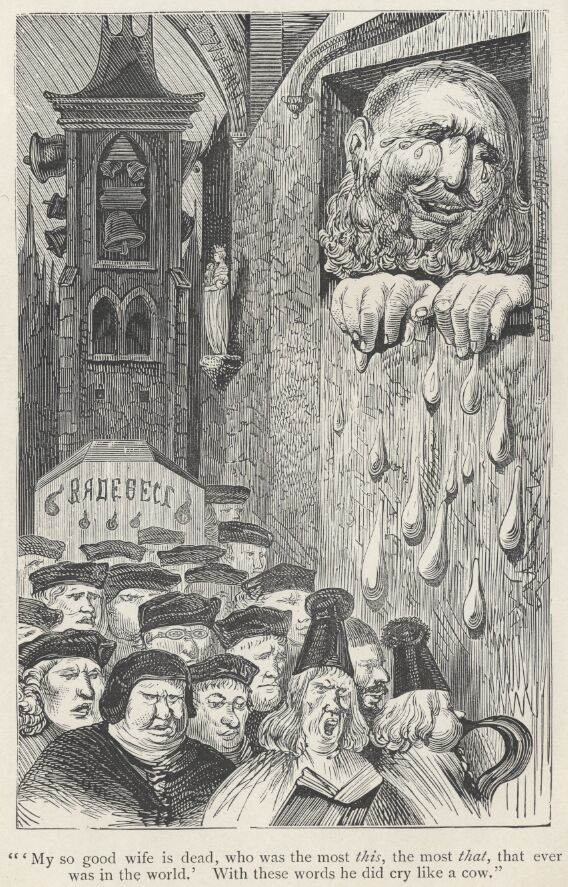
4. Gargantua and Pantagruel
5. Fables of Fontaine
6. Narrow Road to the Interior
7. Simplicius Simplicissimus
8. Theologus Autodidactus (early, but in the novel mode)
9. The Scheherazade components of the 1001 Nights
10. L'Morte d'Arthur
1. Don Quixote
2. Journey to the West
3. Dream of the Red Chamber
4. Gargantua and Pantagruel
5. Fables of Fontaine
6. Narrow Road to the Interior
7. Simplicius Simplicissimus
8. Theologus Autodidactus (early, but in the novel mode)
9. The Scheherazade components of the 1001 Nights
10. L'Morte d'Arthur
2geneg
How about Lazarillo de Tormes? One of my favorite early novel/novellas.
3urania1
Oh, without a doubt Thomas Urquhart's The Jewel. Hilarious. His translation of Rabelais is the best I've ever read.
Thomas Nashe - particularly The Unfortunate Traveller and Pierce Penniless
and one shouldn't forget
Sidney's The Old Arcadia
I would also include Lady Mary Wroth's The Countess of Montgomery's Urania
Thomas Nashe - particularly The Unfortunate Traveller and Pierce Penniless
and one shouldn't forget
Sidney's The Old Arcadia
I would also include Lady Mary Wroth's The Countess of Montgomery's Urania
4Porius
Thomas Amory's - THE LIFE OF JOHN BUNCLE, ESQ. (1756)
James Hogg's- CONFESSIONS OF A JUSTIFIED SINNER (1824)
Fanny Burney's - EVELINA: Or A Young Ladies Entrance into the World (1778)
James Hogg's- CONFESSIONS OF A JUSTIFIED SINNER (1824)
Fanny Burney's - EVELINA: Or A Young Ladies Entrance into the World (1778)
6A_musing
I don't know, I doubt there's more than room for one, maybe (maybe) 2 English language works on the list (and one of those probably belongs to Ireland or Scotland, no?). As it is, we have no Hindustani or Persian on the list, though those were more poetic than prosaic traditions anyways. Nothing from Italy, nothing from Eastern Europe or the Balkans, nothing from Portugul and only one from Spain.
9MeditationesMartini
GARGANTUA AND PANTAGRUEL
10urania1
>8 A_musing: too 18th century. We're really moving out of the early modern period by that time.
11A_musing
OK, so we'll drop Fables of Fontaine (I love 'em, but, let's face it, Aesop already did them; besides, there's too much poetry in them for this exercise, isn't there?) and L'Morte d'Arthur (because who really reads Mallory, anyways, when Disney did it so well) for Nashe and Urquhart (whom I've not read), and we'll make anything with Urania in the title an honorary mention.
12Third_cheek
11> That does not sound entirely unreasonable.
13unlucky
What about the The Divine Comedy, Faerie Queen and Utopia? Are looking for literature that is more novely or do poem-y things count?
14A_musing
Prose, but Utopia counts, doesn't it? Or do we not think it's early modern because it's still in Latin?
So who gets kicked off for Utopia?
So who gets kicked off for Utopia?
15unlucky
I know a lot of people love him but I really hate Rabelais, I also can't spell his name so I think that he should go.
17janeajones
You can't leave Malory out -- he's the first modern English prose writer -- and Disney did NOT do him well.
The Princess of Cleves by Madame de Lafayette -- perhaps the first historical novel
Oroonoko by Aphra Behn -- the first prose work to look at slavery from a sympathetic, if not exactly abolitionist, point of view (17th c).
The Princess of Cleves by Madame de Lafayette -- perhaps the first historical novel
Oroonoko by Aphra Behn -- the first prose work to look at slavery from a sympathetic, if not exactly abolitionist, point of view (17th c).
19A_musing
But is modern English prose really so exciting in the history of early modern literature, anyways? Besides, I can never remember whether Malory is one "l" or two.
(Jane, Disney was a joke, puzzling over why early modern English prose really matters, though, isn't - good plays, but not really earth shattering prose).
(Jane, Disney was a joke, puzzling over why early modern English prose really matters, though, isn't - good plays, but not really earth shattering prose).
20unlucky
You mean you didn't like the Sword and the Stone?
But it had the coolest animal side-kick out of any Disney movie ever!
(I only got 1/4 of the way the Morte, I hope I'll read it all some day. What I read was good but I don't know if I'll ever have a schedule or book bag free enough to finish it)
But it had the coolest animal side-kick out of any Disney movie ever!
(I only got 1/4 of the way the Morte, I hope I'll read it all some day. What I read was good but I don't know if I'll ever have a schedule or book bag free enough to finish it)
21Third_cheek
(Early?) Modern English prose may not be earthshattering, but it's every bit as brilliant as its contemporaries.
The best of English during the couple of centuries post-renaissance is among the essayists and diarists rather than writers of fiiction.
Johnson and John Aubrey were brilliant prose stylists for their time, and this is uncontroversially prose rather than poetic phrasing within the context of prose.
If anything, one could argue that these two are far more modern in their prose than many of their continental contemporaries working in fiction. Prose is, after all, a style of writing that is primarily 'everyday' and these guys used the everyday conversational tone to brilliant effect without the need to effect poetic imagery - very modern indeed.
Not having Brief Lives to hand I cast about and pulled these little Aubrey fishies out of the net, they are among his more celebrated passages,but generally representative of his style:
On Sir Walter Raleigh:
"Sir Walter, being strangely surprised and put out of his countenance at so great a table, gives his son a damned blow over the face. His son, as rude as he was, would not strike his father, but strikes over the face the gentleman that sat next to him and said ''Box about: twill come to my father anon." "
On the young Shakespeare when he was apprenticed to his father as a butcher:
"When he killed a calf he would do it in a high style, and make a speech."
I think this stands up with the best prose of the 17th century (if you accept my conception of *prose*) if it's true of Aubrey then so much the more of Samuel Johnson in the 18th.
While I'm on with English essayists (producing multiple 'booklength' collections) I ought to mention William Hazlitt, but I won't because I think he's fully 'modern' - he certainly isn't 'early'.
The best of English during the couple of centuries post-renaissance is among the essayists and diarists rather than writers of fiiction.
Johnson and John Aubrey were brilliant prose stylists for their time, and this is uncontroversially prose rather than poetic phrasing within the context of prose.
If anything, one could argue that these two are far more modern in their prose than many of their continental contemporaries working in fiction. Prose is, after all, a style of writing that is primarily 'everyday' and these guys used the everyday conversational tone to brilliant effect without the need to effect poetic imagery - very modern indeed.
Not having Brief Lives to hand I cast about and pulled these little Aubrey fishies out of the net, they are among his more celebrated passages,but generally representative of his style:
On Sir Walter Raleigh:
"Sir Walter, being strangely surprised and put out of his countenance at so great a table, gives his son a damned blow over the face. His son, as rude as he was, would not strike his father, but strikes over the face the gentleman that sat next to him and said ''Box about: twill come to my father anon." "
On the young Shakespeare when he was apprenticed to his father as a butcher:
"When he killed a calf he would do it in a high style, and make a speech."
I think this stands up with the best prose of the 17th century (if you accept my conception of *prose*) if it's true of Aubrey then so much the more of Samuel Johnson in the 18th.
While I'm on with English essayists (producing multiple 'booklength' collections) I ought to mention William Hazlitt, but I won't because I think he's fully 'modern' - he certainly isn't 'early'.
22urania1
>21 Third_cheek: Ah yes!!!!! If we can include more than "fiction" in examples of prose, Early Modern prose is brilliant and gorgeous. Let's put Anatomy of Melancholy on the list. John Donne's sermons are beautiful as well.
23Third_cheek
22> Donne's sermons, yes! Brilliant stuff, and Burton too.
> Good prose is good prose, and I hardly read fiction any differently from essays - if it's well written and doing something interesting with the material it hardly matters whether it has narrative or is an imaginative construction of fictional events or reconstruction of the real.
Which reminds me, a very good essay which touches on a related issue (Zadie Smith in last weekend's Guardian):
http://www.guardian.co.uk/books/2009/nov/21/zadie-smith-essay-guardian-review
Fans of David Foster Wallace will appreciate this one (I've yet to be converted but it's not impossible).
> Good prose is good prose, and I hardly read fiction any differently from essays - if it's well written and doing something interesting with the material it hardly matters whether it has narrative or is an imaginative construction of fictional events or reconstruction of the real.
Which reminds me, a very good essay which touches on a related issue (Zadie Smith in last weekend's Guardian):
http://www.guardian.co.uk/books/2009/nov/21/zadie-smith-essay-guardian-review
Fans of David Foster Wallace will appreciate this one (I've yet to be converted but it's not impossible).
24aethercowboy
Would The King of Elfland's Daughter count?
25A_musing
Well, the original list was "fiction", but I'm always happy to fight the hypo.
So if non-fiction is open, how about all the non-English language non-fiction from the period? Malaqat? Machiavelli? Others? And who do we kick off to make room?
So if non-fiction is open, how about all the non-English language non-fiction from the period? Malaqat? Machiavelli? Others? And who do we kick off to make room?
27A_musing
I like the Guardian article; I do think that there are many great works of so-called fiction that include vast amounts of non-fiction, and vice versa.
28urania1
>25 A_musing:,
Can't we just say there's room at the table for all "the greats" (little people wait in the back) and compile a master list?
You can keep adding to the master list. We can argue about who is great and should not be invited to the party. But we will assume there are enough tables, chairs, place settings, food, and wine for all who get to sit at the table.
We can also compose a "little people waiting in the back" list on a new thread if you like.
Can't we just say there's room at the table for all "the greats" (little people wait in the back) and compile a master list?
You can keep adding to the master list. We can argue about who is great and should not be invited to the party. But we will assume there are enough tables, chairs, place settings, food, and wine for all who get to sit at the table.
We can also compose a "little people waiting in the back" list on a new thread if you like.
29A_musing
Aw, c'mon, what fun is a hit list without a few hits?
I mean, even if we do have enough chairs, isn't it fun to pull one out from under that Fielding turkey?
I would give the little people in back plenty of wine, too. And let them try to steal Rabelais's main course.
I mean, even if we do have enough chairs, isn't it fun to pull one out from under that Fielding turkey?
I would give the little people in back plenty of wine, too. And let them try to steal Rabelais's main course.
31Third_cheek
I'm with urania on this one. I wouldn't want any parsnipping at my table. Those that can't sit can stand, and those that can't stand can sit on the knees of those that can sit, and so on until we have a bawdy room full of writers all getting very familiar with one another.
32A_musing
I like parsnips. One of the most underutilized vegetables.
So we're letting in all the early moderns we really like, we're feeding them all, giving them wine, letting them use the porta-potties out front - who are they? Mulla Sadra (Whom I've only gotten to read in excerpts)? Je Tsongkhapa? Erasmus?
So we're letting in all the early moderns we really like, we're feeding them all, giving them wine, letting them use the porta-potties out front - who are they? Mulla Sadra (Whom I've only gotten to read in excerpts)? Je Tsongkhapa? Erasmus?
33Third_cheek
32> Anyone whose inclusion is merited by the provision of an interesting and plausible justification, I reckon.
34urania1
>32 A_musing: A_musing,
Please no porta-potties. Don't even mention the word. Just thinking about those 'orrid objects sends me to my Soviet issue fainting couch in desperate dejection. No, we have toilets of the finest marble and enough for all. This banquet takes place in an amazing castle in which the toilets are at once near and far. Near for those having a severe attack of bawdiness or a sudden urge to let fly. Far, so that the smell does not seep into the banqueting hall.
Please no porta-potties. Don't even mention the word. Just thinking about those 'orrid objects sends me to my Soviet issue fainting couch in desperate dejection. No, we have toilets of the finest marble and enough for all. This banquet takes place in an amazing castle in which the toilets are at once near and far. Near for those having a severe attack of bawdiness or a sudden urge to let fly. Far, so that the smell does not seep into the banqueting hall.
35MeditationesMartini
If we're getting into nonfiction, I may I present Sir George Browne and sponsor him for inclusion, so hard that he ain't never getting unsponsored. Bacon waits in the wings, but Browne comes first.
36urania1
>35 MeditationesMartini:,
I must beg to differ. Bacon before Browne both in the encyclopedia and in quality.
P.S. Don't argue with a woman who has read the complete works of Francis B. and knows whereof she speaks. Those women who bring home the Bacon tend to get feisty with iron skillets and other people's heads ;-)
I must beg to differ. Bacon before Browne both in the encyclopedia and in quality.
P.S. Don't argue with a woman who has read the complete works of Francis B. and knows whereof she speaks. Those women who bring home the Bacon tend to get feisty with iron skillets and other people's heads ;-)
38urania1
urania thwacks geneg on the head with an iron skillet to express her appreciation of his wittie conversation
40Mr.Durick
I had thought that nobody read Bacon, that they read about him and what he said. I gave him a try once and gave up after, perhaps, a sentence.
Robert
Robert
42MeditationesMartini
urania, you're not wrong. But Browne is just so, I don't know, urbane. Like, Bacon is off doing his important work on, let's say, lichens, while I waste away the salad days of my youth, but Browne is there, telling me about lichens in his deep dark voice and I am just happy as a clam.
Also, George Browne? I meant Thomas, of course.
Also, George Browne? I meant Thomas, of course.
43A_musing
How about the King James Bible and Luther's Bible for early modern (mostly) prose?
Luther in general is a most colorful writer. Or does someone want to contend he's not early modern?
Luther in general is a most colorful writer. Or does someone want to contend he's not early modern?
44urania1
We'll allow Luther; his impact on early modern thought is too important to ignore. However, I prefer his essay on farts. I absolutely forbid John Calvin's work. I read his complete works with a student of mine. I thought I might perhaps die on my Soviet-issue fainting couch before the ordeal ended. Fortunately, the aforementioned student has lapsed to the church of his nativity - Roman Catholic.
45A_musing
Did anyone even suggest Calvin? NO. We don't suggest Calvin. We don't even think about suggesting Calvin. If Calvin comes, he stays in the porta-potty we're not using out back. No Calvin.
All of Luther? Wow. Ever tried all of Aquinas? Just to make Clarel look like reading the Sunday funnies?
All of Luther? Wow. Ever tried all of Aquinas? Just to make Clarel look like reading the Sunday funnies?
46absurdeist
I know hardly anything of what you all speaketh, but since I'm off work today, getting ready for my KISS concert tonight in full Gene Simmons makeup and partial GS garb, does St. Augustine count as early modern? Please don't laugh or mock if I'm way, way off. I do know he was early way back when at some point. City of God, what I've read, is pretty interesting, as are his Confessions.
47A_musing
I view St. Augustine as either timeless or post-modern, but others put him among the ancients, some among the medievals. Still others among the cut rate vacation spots of sunny Florida.
He's easy to date if you read city of God, because he's writing contemporaneously with God smiting Rome with the Barbarians. By the early Modern Days, the Barbarians are in charge and busy smiting others.
He's easy to date if you read city of God, because he's writing contemporaneously with God smiting Rome with the Barbarians. By the early Modern Days, the Barbarians are in charge and busy smiting others.
49A_musing
Oh, what a smite!
Late Augustus back in 4 and 10.
That the very end of time portends,
'Cause I remember what a night.
Oh, I got a funny feeling when Alaric walked
Into Rome and I,
As I recall, it ended much too soon.
Oh what a smite!
Late Augustus back in 4 and 10.
That the very end of time portends,
'Cause I remember what a night.
Oh, I got a funny feeling when Alaric walked
Into Rome and I,
As I recall, it ended much too soon.
Oh what a smite!
50urania1
>49 A_musing:
A_musing how amusing:-)
But . . . postmodern? evidence please.
P.S. What do you do for a living? I thought I was one of few people who had inadvertently read a number of these works. Calvin, Luther - they crept up while I wasn't on guard. Bacon - in me sainted dissertation.
A_musing how amusing:-)
But . . . postmodern? evidence please.
P.S. What do you do for a living? I thought I was one of few people who had inadvertently read a number of these works. Calvin, Luther - they crept up while I wasn't on guard. Bacon - in me sainted dissertation.
51A_musing
Hey, come on, he argued Free Will and Determinism were compatible - isn't that pretty post-modern? And he loved nothing more than a good half-baked left-hanging allegory. Positively Pynchonesque (well, except no surfboards) if you ask me.
I'm a lawyer. Who hasn't read a little Luther along the way, though? I think I read Bacon in college, but have no recollection of it and can't say anything intelligent about him.
I'm a lawyer. Who hasn't read a little Luther along the way, though? I think I read Bacon in college, but have no recollection of it and can't say anything intelligent about him.
53Third_cheek
The inclusion of Bacon is grossly unfair. The inclusion of even some of the later writers in this list looks anachronistic next to his overall contribution to modernity.
There, I've read Bacon too (Novum Organum but not right through), and the same goes for the Luther-Erasmus debate... it's difficult to imagine the 'modern' having devloped quite as early as it did without at least Luther and Bacon in the mix. On the other hand, this is about modern prose and Bacon was writing in Latin, which surely excludes him as a modern prose writer; whereas Luther didn't only (allegedly) nail his theses to a church door, he had a few nails spare to ensure that Latin remained firmly in its coffin too. However, his discourse with Erasmus was written in Latin, and his jokes were all pretty lame.
I had a hunch Andrew Marvell's prose must have been pretty hot, (he was MP for Hull as well as a poet) so I've just been trawling for an example. Well, I failed - I've only managed to find citations comfirming that he was better known for his prose than his poetry in his day.
Anyone know of an online resource for Marvell's prose?
There, I've read Bacon too (Novum Organum but not right through), and the same goes for the Luther-Erasmus debate... it's difficult to imagine the 'modern' having devloped quite as early as it did without at least Luther and Bacon in the mix. On the other hand, this is about modern prose and Bacon was writing in Latin, which surely excludes him as a modern prose writer; whereas Luther didn't only (allegedly) nail his theses to a church door, he had a few nails spare to ensure that Latin remained firmly in its coffin too. However, his discourse with Erasmus was written in Latin, and his jokes were all pretty lame.
I had a hunch Andrew Marvell's prose must have been pretty hot, (he was MP for Hull as well as a poet) so I've just been trawling for an example. Well, I failed - I've only managed to find citations comfirming that he was better known for his prose than his poetry in his day.
Anyone know of an online resource for Marvell's prose?
54A_musing
See if this gets you there: http://books.google.com/books?id=yVw4AAAAIAAJ&printsec=frontcover&dq=and...
55Third_cheek
54>
I was hoping for a Gutenberg-style freebie. However, as you thought, Google books did point to at least one decent preview of a book including the whole of a comic speech written by Marvell as a parody of Charles II "His Majesty's Most Gracious Speech...".
It's quite funny, aluding to the Kings fondness for prostitutes among other things...
http://books.google.com/books?id=VSivpsONZJQC&printsec=frontcover&dq=mar...
I was hoping for a Gutenberg-style freebie. However, as you thought, Google books did point to at least one decent preview of a book including the whole of a comic speech written by Marvell as a parody of Charles II "His Majesty's Most Gracious Speech...".
It's quite funny, aluding to the Kings fondness for prostitutes among other things...
http://books.google.com/books?id=VSivpsONZJQC&printsec=frontcover&dq=mar...
56urania1
>51 A_musing:,
Oh :-( I thought you meant complete works. I've read so many - some quite good. Others? I found Calvin's complete works a particularly bitter pill to swallow.
Oh :-( I thought you meant complete works. I've read so many - some quite good. Others? I found Calvin's complete works a particularly bitter pill to swallow.
57A_musing
No, not complete, but I haven't kept track of just how much. Certainly a lot of Luther over the years. I haven't enjoyed reading Calvin, or even found him that interesting, and I haven't done it.
As part of my teenage rebellion, I refused to go to church. This was a particular issue since I was the son of a Preacher man, and my absence in the front pew was fairly visible. The deal that was eventually cut was that I had to read while others were in church (originally the idea was theology, to which I agreed in a know-your-enemy moment, but I somehow started squeezing all sorts of other things in there, including Shakespeare).
At the time, Dad and I both thought we'd won. Years later, while discussing Augustine, I realized that was true, but not in the way I'd originally thought. Dad had a pretty sizable theology library, and I think I made it through much of it.
But the complete works of Luther were not on the shelf.
As part of my teenage rebellion, I refused to go to church. This was a particular issue since I was the son of a Preacher man, and my absence in the front pew was fairly visible. The deal that was eventually cut was that I had to read while others were in church (originally the idea was theology, to which I agreed in a know-your-enemy moment, but I somehow started squeezing all sorts of other things in there, including Shakespeare).
At the time, Dad and I both thought we'd won. Years later, while discussing Augustine, I realized that was true, but not in the way I'd originally thought. Dad had a pretty sizable theology library, and I think I made it through much of it.
But the complete works of Luther were not on the shelf.

