The Life of Rebecca Jones
by Angharad Price
On This Page
Description
"The most fascinating and wonderful book" JAN MORRIS "A restrained, lyrical tour de force" OWEN SHEERS In the early years of the last century, Rebecca is born into a rural community in the Maesglasau valley in Wales; her family have been working the land for a thousand years, but the changes brought about by modernity threaten the survival of her language, and her family's way of life. Rebecca's reflections on the century are delivered with haunting dignity and a simple intimacy, while her show more evocation of the changing seasons and a life that is so in tune with its surroundings is rich and poignant. The Life of Rebecca Jones has all the makings of a classic, fixing on a vanishing period of rural history, and the novel's final, unexpected revelation remains unforgettable and utterly moving. show lessTags
Recommendations






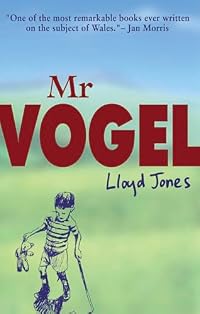










Member Recommendations
Member Reviews
After what may have been an excess of non-fiction, I found the 90 minutes spent reading this novella pleasantly soothing. It is a simple tale of a woman born in rural Wales a the start of the 20th century. Positive as the experience was, however, I did not find it particularly exceptional, despite the blurb proclaiming it ‘an instant classic when first published’. This made me consider what makes a novel ‘classic’ and what virtues a classic novel is usually expected to embody. ‘The Life of Rebecca Jones’ is a very simple tale of an impoverished family, briefly told in unadorned language. It reminded me very much of [b:A Whole Life|28598101|A Whole Life|Robert show more Seethaler|https://images.gr-assets.com/books/1453145479s/28598101.jpg|42007512], another short novel of just the same structure, also feted as a classic. In both cases, although I found the tragic moments of family life in the narrative moving, the whole did not have much impact on me. This is clearly a matter of taste and not a problem, nor should it put anyone off either novella. Use of the term ‘classic’ to describe them interests me, though. Both make a virtue of simplicity in style and content, to the point of extreme spareness. I wonder to what extent their ‘classic’ status represents a yearning for prelapsarian rural idylls, for a time when poverty could apparently be considered noble and when an individual in the West could plausibly be totally isolated from technology and the wider world. In a sense, both works are so brutally realist as to circle back into the fantastical. Or am I being unduly cynical?
An alternate theory: neither novella was originally written in English, so I may have missed some elusive quality by reading them in translation. The introduction to ‘The Life of Rebecca Jones’ (which I read last and spoils the ending, as always) does comment on the difficulty of doing justice to the original Welsh. Perhaps the beauty of Wales can only be properly conveyed in its mother tongue? For fiction so seemingly grounded in its environment, I found it frustratingly functional and unwilling to embroider details of the hills, valleys, and waterfalls mentioned. On the other hand, I liked the inclusion of black and white photos very much. Perhaps novellas don't give me though time to quiet the more analytical part of my brain, allowing immersion in the narrative world? It's unlikely to be a coincidence that the novels I've found most involving and compelling have all been more than 500 pages long. show less
An alternate theory: neither novella was originally written in English, so I may have missed some elusive quality by reading them in translation. The introduction to ‘The Life of Rebecca Jones’ (which I read last and spoils the ending, as always) does comment on the difficulty of doing justice to the original Welsh. Perhaps the beauty of Wales can only be properly conveyed in its mother tongue? For fiction so seemingly grounded in its environment, I found it frustratingly functional and unwilling to embroider details of the hills, valleys, and waterfalls mentioned. On the other hand, I liked the inclusion of black and white photos very much. Perhaps novellas don't give me though time to quiet the more analytical part of my brain, allowing immersion in the narrative world? It's unlikely to be a coincidence that the novels I've found most involving and compelling have all been more than 500 pages long. show less
10/10
Without preamble, this goes immediately on the Read Again (And Again) shelf.
What treasures we find when we go rooting through goodreads' friends old reviews! I found this one hidden in Fionnuala's archives, sitting on a 2012 shelf, a silent and prim little Welsh girl ... the book, I mean, not Fionnuala!
Old souls there are among us, but rarely do they make themselves known. They are too wise by half to announce themselves; or boast vaingloriously of their travels through time. Once in a long while, if we are lucky, one comes along and sits beside us, and tells us a story. A story that runs like an electric current up and down the spine; that makes all the senses glad, and awake; that makes one ponder the meaning of the universe in show more not a glib, new-agey way, but in a deep, let-us-call-it Tintern Abbey sort of way.
I heard Wordsworth's echoes from the first,
and again I hear
These waters, rolling from their mountain-springs
With a soft inland murmur.—Once again
Do I behold these steep and lofty cliffs,
That on a wild secluded scene impress
Thoughts of more deep seclusion; and connect
The landscape with the quiet of the sky.
As I read from Rebecca Jones's life,
I have raised a temple to tranquillity amid the ruined homesteads of Cwm Maesglasau. I have idolized it in the valley's stream as it whispers past, and as the flow disappears into the bend in the big field. ... I too have lived in this valley's quietness all my life: the first half in its mouth, the second half in its tail; the first half with my family, the second half without them. Cwm Maesglasau is my world. Its boundaries are my boundaries. To leave it will be unbearably painful. But this I know: when I move on, and when my remains are scattered on the land at Maesglasau, I will have given my life to the fulfilment of this valley's tranquillity.
I listened to this Old Soul continue her whisperings in my ear, and I grew a heavy heart, and then a happy one. I pondered all the sadness she had lived, which she spun into joy, and I lived that too. I cried her tears. I laughed the children's laughter. I carried a stone in my heart for all those who were lain in the earth -- some under cover of darkness, for it was the way they came into the world, and so must leave it the same way.
And in those words that the Old Soul spoke, I heard the wise old poet again,
While here I stand, not only with the sense
Of present pleasure, but with pleasing thoughts
That in this moment there is life and food
For future years.
... and again ...
And I have felt
A presence that disturbs me with the joy
Of elevated thoughts; a sense sublime
Of something far more deeply interfused,
Whose dwelling is the light of setting suns,
And the round ocean and the living air,
And the blue sky, and in the mind of man:
A motion and a spirit, that impels
All thinking things, all objects of all thought,
And rolls through all things.
I heard it all in the Old Soul's voice, for she travelled from Tintern Abbey, I am sure of it, down the long stream of time and told me again what I had forgotten. I had always heard those echoes, 'though sometimes but faintly. Now, they are embedded within my skin.
I've known Old Souls to take you by surprise, but I never (in two hundred years!) would have expected the surprise that awaited me at the end of her story. And I laughed out loud with sheer joy. Of course it would, and should, end this way. Of course. The story would be meaningless otherwise. For it is the story, just like the poet says, of the "presence that rolls through all things".
I can't imagine not having read this now, for I've always known this story. It only needed someone to remind me.
[The translator must be an Old Soul too, who travels along with the Storyteller, for I cannot imagine this book being any better in the original Welsh, so perfect is its essence in English.] show less
Without preamble, this goes immediately on the Read Again (And Again) shelf.
What treasures we find when we go rooting through goodreads' friends old reviews! I found this one hidden in Fionnuala's archives, sitting on a 2012 shelf, a silent and prim little Welsh girl ... the book, I mean, not Fionnuala!
Old souls there are among us, but rarely do they make themselves known. They are too wise by half to announce themselves; or boast vaingloriously of their travels through time. Once in a long while, if we are lucky, one comes along and sits beside us, and tells us a story. A story that runs like an electric current up and down the spine; that makes all the senses glad, and awake; that makes one ponder the meaning of the universe in show more not a glib, new-agey way, but in a deep, let-us-call-it Tintern Abbey sort of way.
I heard Wordsworth's echoes from the first,
and again I hear
These waters, rolling from their mountain-springs
With a soft inland murmur.—Once again
Do I behold these steep and lofty cliffs,
That on a wild secluded scene impress
Thoughts of more deep seclusion; and connect
The landscape with the quiet of the sky.
As I read from Rebecca Jones's life,
I have raised a temple to tranquillity amid the ruined homesteads of Cwm Maesglasau. I have idolized it in the valley's stream as it whispers past, and as the flow disappears into the bend in the big field. ... I too have lived in this valley's quietness all my life: the first half in its mouth, the second half in its tail; the first half with my family, the second half without them. Cwm Maesglasau is my world. Its boundaries are my boundaries. To leave it will be unbearably painful. But this I know: when I move on, and when my remains are scattered on the land at Maesglasau, I will have given my life to the fulfilment of this valley's tranquillity.
I listened to this Old Soul continue her whisperings in my ear, and I grew a heavy heart, and then a happy one. I pondered all the sadness she had lived, which she spun into joy, and I lived that too. I cried her tears. I laughed the children's laughter. I carried a stone in my heart for all those who were lain in the earth -- some under cover of darkness, for it was the way they came into the world, and so must leave it the same way.
And in those words that the Old Soul spoke, I heard the wise old poet again,
While here I stand, not only with the sense
Of present pleasure, but with pleasing thoughts
That in this moment there is life and food
For future years.
... and again ...
And I have felt
A presence that disturbs me with the joy
Of elevated thoughts; a sense sublime
Of something far more deeply interfused,
Whose dwelling is the light of setting suns,
And the round ocean and the living air,
And the blue sky, and in the mind of man:
A motion and a spirit, that impels
All thinking things, all objects of all thought,
And rolls through all things.
I heard it all in the Old Soul's voice, for she travelled from Tintern Abbey, I am sure of it, down the long stream of time and told me again what I had forgotten. I had always heard those echoes, 'though sometimes but faintly. Now, they are embedded within my skin.
I've known Old Souls to take you by surprise, but I never (in two hundred years!) would have expected the surprise that awaited me at the end of her story. And I laughed out loud with sheer joy. Of course it would, and should, end this way. Of course. The story would be meaningless otherwise. For it is the story, just like the poet says, of the "presence that rolls through all things".
I can't imagine not having read this now, for I've always known this story. It only needed someone to remind me.
[The translator must be an Old Soul too, who travels along with the Storyteller, for I cannot imagine this book being any better in the original Welsh, so perfect is its essence in English.] show less
Another book that left to my own devises I probably wouldn't have read, let alone bought. Sometimes you need a good friend's recommendation to get you started. Part truth part fiction, full of tragedy and love, twists and revelations, and some of the most beautifully descriptive writing I've read in a long time! With such powerful narration in the English translation, I have no doubt that in her native Welsh language the beautiful prose would have been breathtaking! A story that will stay with me for a very long time.....like all good stories do.
This is a book with consistently wonderful reviews. Nine out of the ten reviews on Amazon give it five stars (the other one gives in four): marvellous, wonderful, incredible are only some of the superlatives used. The Independent says it 'stands tall ... as a peak of modern British writing'; the Literary Review calls it 'marvellous'; World Literature Today says that 'Price's lyrical prose breathes an almost magical life into the narrative'. I honestly can't find a single bad review, not even one that's luke-warm. And I have looked because ... I don't like it that much.
I feel that I have missed something magical which everyone else can see, as I really don't understand why this short novella (154 pages) should have gained quite so much show more acclamation.
This is a fictionalised account of the Jones family of the Maesglasau valley in mid-Wales, from 1903 when Evan Jones brought his new wife Rebecca back to the farm of Tynybraich, until the early years of the twenty-first century. Told through the eyes of their eldest daughter, also named Rebecca, the novella traces the life of the valley and its inhabitants throughout the twentieth century. And as well as the changes that necessarily come into the valley as time progresses, the lives of three of the Jones children are forced by a cruel circumstance far from their Welsh speaking non-conformist roots. For after the birth of their eldest son, the next two sons were born blind and a third lost his sight at a very young age. That meant a boarding school education from a very young age for all three boys, an education that was necessarily in English, and took the sons far from the lives of their parents in their outlook and values. And meant too that there was no money left for the education of the other children, so that the eldest son, who wanted more than anything to be a doctor, had no choice but to farm as his father has done before him.
The problem for me is that the book is so short and covers such a long period of time, that it often seems a mere listing of events, rather than investing those events with any emotional attachment. And although the descriptions are of the valley are beautiful, that isn't enough to make up for the lack of emotional attachment that I felt with the whole.
This is a novel, although its characters are all real people, and indeed the book is interspersed with photographs of the people and places mentioned.The nature of its fictional character is not revealed until right at the end in an unexpected twist. The author Angharad Price is the great granddaughter of Evan and Rebecca Jones, and is introduced briefly towards the end of the book. This was translated from the original Welsh, and it's another Welsh book where I feel something is lost in translation. But whereas the last one Feet in Chains was well worth the read despite that, I didn't feel the same for this. But as I say, this is clearly a minority view. show less
I feel that I have missed something magical which everyone else can see, as I really don't understand why this short novella (154 pages) should have gained quite so much show more acclamation.
This is a fictionalised account of the Jones family of the Maesglasau valley in mid-Wales, from 1903 when Evan Jones brought his new wife Rebecca back to the farm of Tynybraich, until the early years of the twenty-first century. Told through the eyes of their eldest daughter, also named Rebecca, the novella traces the life of the valley and its inhabitants throughout the twentieth century. And as well as the changes that necessarily come into the valley as time progresses, the lives of three of the Jones children are forced by a cruel circumstance far from their Welsh speaking non-conformist roots. For after the birth of their eldest son, the next two sons were born blind and a third lost his sight at a very young age. That meant a boarding school education from a very young age for all three boys, an education that was necessarily in English, and took the sons far from the lives of their parents in their outlook and values. And meant too that there was no money left for the education of the other children, so that the eldest son, who wanted more than anything to be a doctor, had no choice but to farm as his father has done before him.
The problem for me is that the book is so short and covers such a long period of time, that it often seems a mere listing of events, rather than investing those events with any emotional attachment. And although the descriptions are of the valley are beautiful, that isn't enough to make up for the lack of emotional attachment that I felt with the whole.
This is a novel, although its characters are all real people, and indeed the book is interspersed with photographs of the people and places mentioned.The nature of its fictional character is not revealed until right at the end in an unexpected twist. The author Angharad Price is the great granddaughter of Evan and Rebecca Jones, and is introduced briefly towards the end of the book. This was translated from the original Welsh, and it's another Welsh book where I feel something is lost in translation. But whereas the last one Feet in Chains was well worth the read despite that, I didn't feel the same for this. But as I say, this is clearly a minority view. show less
Price has a gentle voice and is generous enough to let the reader do the filling in work; this is a whisper of a book. Originally in Cymraeg this now exists in parallel text thanks to a sensitive translation from Lloyd Jones (himself winner of the Welsh Book of the Year for Mr Cassini).
Price's family have farmed the same valley in mid Wales for a thousand years, this is a fictionalised account of life there over the last hundred years or so, but is much more than the sum those parts would seem to suggest.
An important book.
Price's family have farmed the same valley in mid Wales for a thousand years, this is a fictionalised account of life there over the last hundred years or so, but is much more than the sum those parts would seem to suggest.
An important book.
Ratings
Members
- Recently Added By
Author Information

13+ Works 103 Members
Some Editions
Awards and Honors
Common Knowledge
- Canonical title
- The Life of Rebecca Jones
- Original title
- O! Tyn y Gorchudd
- Original publication date
- 2002 (Welsh original) (Welsh original); 2010 (English translation) (English translation)
- Original language*
- Cymraeg
- Disambiguation notice*
- Ar ben y pum cyfieithiad uchod, mae cyfieithiadau Bengaleg, রেবেকা জোনসের কথা (Rebeka Jones er katha) (2014), hefyd ar gael.
*Some information comes from Common Knowledge in other languages. Click "Edit" for more information.
Classifications
- Genres
- General Fiction, Fiction and Literature
- DDC/MDS
- 891.66328 — Literature & rhetoric Literatures of other languages East Indo-European and Celtic literatures Celtic languages Welsh Welsh fiction 1600–2000
- LCC
- PB2298 .P65 .O16 — Language and Literature Modern languages. Celtic languages and literature Modern languages. Celtic languages Celtic languages and literature Brittanic group Welsh. Cymric
- BISAC
Statistics
- Members
- 85
- Popularity
- 373,742
- Reviews
- 5
- Rating
- (4.18)
- Languages
- 6 — Catalan, English, German, Romanian, Spanish, Welsh
- Media
- Paper, Audiobook, Ebook
- ISBNs
- 11
- ASINs
- 4