On This Page
Description
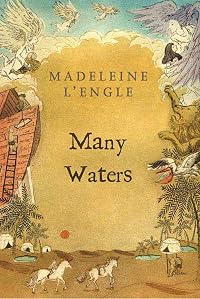
The fifteen-year-old Murry twins, Sandy and Dennys, are accidentally sent back to a strange Biblical time period, in which mythical beasts roam the desert and a man named Noah is building a boat in preparation for a great flood.Tags
Recommendations
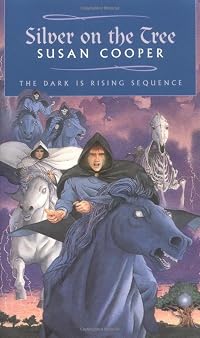
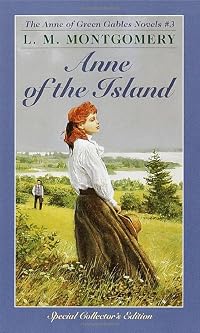
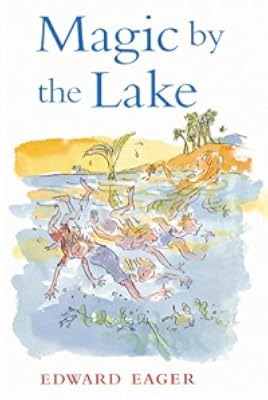
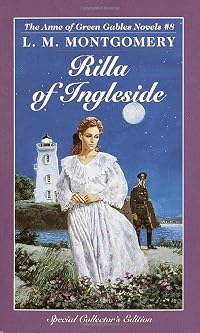


Member Recommendations
Member Reviews
This is an excellent book. The twins make for significantly more interesting characters than Meg and CW, who always felt like Mary Sues, and as such, were hard to care about. The ideas and storytelling here are fantastic, though L'Engle's writing falls ferociously flat whenever the twins talk to each other. She uses it to present exposition to the reader, but it comes off forced and unnatural; they're identical twins for fuck's sake, these are guys who share a lot of knowledge. Writing them as fish out of water works in the context of the story, but not in the context of their relationship. Anyway, great book, go read it.
Sandy and Dennys have always been the normal, run-of-the-mill ones in the extraodinary Murry family. They garden, make an occasional A in school, and play baseball. Nothing especially interesting has happened to the twins until they accidentally interrupt their father's experiment.
Then the two boys are thrown across time and space. They find themselves alone in the desert, where, if they believe in unicorns, they can find unicorns, and whether they believe or not, mammoths and manticores will find them.
The twins are rescued by Japheth, a man from the nearby oasis, but before he can bring them to safety, Dennys gets lost. Each boy is quickly embroiled in the conflicts of this time and place, whose populations includes winged seraphim, a show more few stray mythic beasts, perilous and beautiful nephilim, and small, long lived humans who consider Sandy and Dennys giants. The boys find they have more to do in the oasis than simply getting themselves home--they have to reunite an estranged father and son, but it won't be easy, especially when the son is named Noah and he's about to start building a boat in the desert. show less
Then the two boys are thrown across time and space. They find themselves alone in the desert, where, if they believe in unicorns, they can find unicorns, and whether they believe or not, mammoths and manticores will find them.
The twins are rescued by Japheth, a man from the nearby oasis, but before he can bring them to safety, Dennys gets lost. Each boy is quickly embroiled in the conflicts of this time and place, whose populations includes winged seraphim, a show more few stray mythic beasts, perilous and beautiful nephilim, and small, long lived humans who consider Sandy and Dennys giants. The boys find they have more to do in the oasis than simply getting themselves home--they have to reunite an estranged father and son, but it won't be easy, especially when the son is named Noah and he's about to start building a boat in the desert. show less
5/10
A weirdly-imagined retelling of the time leading up to the building of Noah’s ark, with quantum leaps, unicorns, seraphim, nephilim, and a god named El. On one hand, it’s not a bad story, with kidnappings, young love, reconciliations, a birth, and a death. And it is speculative fiction. But it seemed a bit like a stew made with leftovers—throw in a little of this and a little of that, stir, and hope it turns out all right. And it does.
A weirdly-imagined retelling of the time leading up to the building of Noah’s ark, with quantum leaps, unicorns, seraphim, nephilim, and a god named El. On one hand, it’s not a bad story, with kidnappings, young love, reconciliations, a birth, and a death. And it is speculative fiction. But it seemed a bit like a stew made with leftovers—throw in a little of this and a little of that, stir, and hope it turns out all right. And it does.
In an off-the-charts brilliant family with the ability to travel back and forth in time and space, Murry twins Sandy and Dennys are usually portrayed as cheerfully pragmatic, conventional boys. They go to school, play sports, try to teach their misfit savant siblings how to fit in with their peers, and they have “the twins’ vegetable garden.”
In Many Waters we meet the brothers on their own terms when, after messing with their parents’ computer, they are transported back to a time just before the Flood. To survive, they have to get back home before the rains start.
This is the most overtly biblical story of the Quintet; characters include Noah, Lamech, some good angels (seraphim), some bad angels (nephilim -anyone remember that show more X-Files episode?), and a scattering of unicorns and other supernatural beings. It’s interesting to read how L’Engle has chosen to portray the young men in terms of their reaction to hardship and their relationships with each other and with the desert beings they meet.
I view Many Waters as an outlier. I’m reasonably sure it’s the only book L’Engle wrote with male protagonists, and a hot desert here on Earth is quite the contrast to the settings of the other books. The only reason the boys are in this predicament is that they played with the computer; they were not overtly called to serve.
Unlike my experience with the first three titles, I am never compelled to revisit this story. I still believe it deserves four stars; I do recognize the beauty of the prose. show less
In Many Waters we meet the brothers on their own terms when, after messing with their parents’ computer, they are transported back to a time just before the Flood. To survive, they have to get back home before the rains start.
This is the most overtly biblical story of the Quintet; characters include Noah, Lamech, some good angels (seraphim), some bad angels (nephilim -anyone remember that show more X-Files episode?), and a scattering of unicorns and other supernatural beings. It’s interesting to read how L’Engle has chosen to portray the young men in terms of their reaction to hardship and their relationships with each other and with the desert beings they meet.
I view Many Waters as an outlier. I’m reasonably sure it’s the only book L’Engle wrote with male protagonists, and a hot desert here on Earth is quite the contrast to the settings of the other books. The only reason the boys are in this predicament is that they played with the computer; they were not overtly called to serve.
Unlike my experience with the first three titles, I am never compelled to revisit this story. I still believe it deserves four stars; I do recognize the beauty of the prose. show less
The final book of the "Time" quartet, of which I really only loved the first two. Still, this one was entertaining and with a new approach that is, in its way, just as mind-bendingly fantastic as the others.
Twin brothers Sandy and Dennys, who have so far avoided most of the strange adventures that have ensnared their sister and little brother, are finally in for one. Poking around in their mother and father's lab, they decide to inspect one of the ongoing experiments, despite its warning sign. And without further ado, they find themselves in the middle of a desert wasteland.
So begins the proudly "normal", skeptical pair's trip through space-time, into a world that bears a startling resemblence to biblical stories. They will meet none show more other than the family of Noah himself, a tribe of desert dwellers unaware that a flood may soon be upon them. But the humans are not alone; walking this fantastic world are unicorns that can teleport and be ridden only by virgins, miniature mammoths that unerringly find water, vicious manticores that attack without warning, and shapeshifting beings straight from biblical legend: the wise and compassionate seraphim and their crafty cousins the nephilim.
The ties to religion are obviously stronger in this book than in L'Engle's other works, but somehow I didn't mind as I usually do. The characters were interesting, though not all of them were very well fleshed out, and the world itself was masterfully built. Above all, Sandy and Dennys are very different main characters than the open-minded Meg and Charles Wallace, and they're great to get to know; somehow it's even more interesting to watch 15-year-old skeptics deal with the fantastic. show less
Twin brothers Sandy and Dennys, who have so far avoided most of the strange adventures that have ensnared their sister and little brother, are finally in for one. Poking around in their mother and father's lab, they decide to inspect one of the ongoing experiments, despite its warning sign. And without further ado, they find themselves in the middle of a desert wasteland.
So begins the proudly "normal", skeptical pair's trip through space-time, into a world that bears a startling resemblence to biblical stories. They will meet none show more other than the family of Noah himself, a tribe of desert dwellers unaware that a flood may soon be upon them. But the humans are not alone; walking this fantastic world are unicorns that can teleport and be ridden only by virgins, miniature mammoths that unerringly find water, vicious manticores that attack without warning, and shapeshifting beings straight from biblical legend: the wise and compassionate seraphim and their crafty cousins the nephilim.
The ties to religion are obviously stronger in this book than in L'Engle's other works, but somehow I didn't mind as I usually do. The characters were interesting, though not all of them were very well fleshed out, and the world itself was masterfully built. Above all, Sandy and Dennys are very different main characters than the open-minded Meg and Charles Wallace, and they're great to get to know; somehow it's even more interesting to watch 15-year-old skeptics deal with the fantastic. show less
When I had read this a few years ago, I wasn't quite sure what to expect. I really didn't expect to get a bit of a horrible icky feeling. Not because the book was bad, more of the opposite. Madeleine L'Engle did such a great job at portraying the wrongness of the nephilim and their wives that it just got under my skin a bit more so than it might for another person.
Other than the nephilim, I actually enjoyed reading this book in the series. I liked the seraphim and seeing L'Engle's interpretation of this point in time, as well as reading a bit of Biblical Fiction. This was a genre of literature I hadn't ever read before and this book actually got me curious about Biblical Fiction though I've yet to read another in the genre yet.
Other than the nephilim, I actually enjoyed reading this book in the series. I liked the seraphim and seeing L'Engle's interpretation of this point in time, as well as reading a bit of Biblical Fiction. This was a genre of literature I hadn't ever read before and this book actually got me curious about Biblical Fiction though I've yet to read another in the genre yet.
I found myself tossed out of the story from time to time. "Seriously?" I'd think to myself, "She wouldn't... this could go so very badly." Ms. L'Engle drew me back into the story each time; the risks paid off lovingly, with aching beauty.
Members
- Recently Added By
Lists

Favorite Childhood Books
1,651 works; 519 members

Best Time Travel Novels
165 works; 125 members
NPRs Ultimate Backseat Bookshelf: 100 Must-Reads for kids 9-14
222 works; 30 members

1980s
356 works; 23 members

Speculative Fiction to Read
706 works; 32 members

Books with Twins
175 works; 12 members

Books Read in 2020
4,379 works; 124 members

Books We Loved As Children
603 works; 254 members

Best Science Fiction Novels
816 works; 426 members

Time Travel Stories
64 works; 6 members

Time travel, historical fiction -- children's/young adult fiction
94 works; 8 members

Books With Water Words in the Title
186 works; 12 members

Books Read in 2019
4,052 works; 110 members

Twins, fantasy -- children's/young adult fiction
62 works; 6 members

Twins, science fiction -- children's/young adult fiction
29 works; 3 members

GCS 6th grade summer reading list
171 works; 4 members

Books That Defined My Childhood & Early Adulthood
42 works; 5 members

Genesis in literature
47 works; 7 members
Time travel -- children's/young adult fiction
231 works; 11 members

Unread books
1,063 works; 87 members

Favorite Kids Books (chapter, middle grade)
170 works; 4 members
Author Information

122+ Works 129,028 Members
Author Madeleine L'Engle was born in New York City on November 29, 1918. She graduated from Smith College. She is best known for A Wrinkle in Time (1962), which won the 1963 Newbery Medal for best American children's book. While many of her novels blend science fiction and fantasy, she has also written a series of autobiographical books, including show more Two Part Invention: The Story of a Marriage, which deals with the illness and death of her husband, soap opera actor Hugh Franklin. In 2004, she received a National Humanities Medal from President George W. Bush. She died on September 6, 2007 of natural causes. Since 1976, Wheaton College in Illinois has maintained a special collection of L'Engle's papers, and a variety of other materials, dating back to 1919. (Bowker Author Biography) show less
Some Editions
Awards and Honors
Distinctions
Series


Work Relationships
Common Knowledge
- Canonical title
- Many Waters
- Original title
- Many Waters
- Original publication date
- 1986
- People/Characters
- Dennys Murry; Alexander "Sandy" Murry Jr.; Noah; Japheth; Yalith; Lamech (show all 11); Tiglah; Matred; Aariel; Ugiel; Oholibamah
- Important places
- New England, USA
- Important events
- The Flood
- Dedication
- For Stephen Roxburgh
- First words
- A sudden snow shower put an end to hockey practice.
- Quotations
- Many waters cannot quench love, nor can the floods drown it.
- Last words
- (Click to show. Warning: May contain spoilers.)"Now let's make that cocoa."
- Original language
- English
Classifications
- Genres
- Fiction and Literature, Kids, Fantasy, Young Adult
- DDC/MDS
- 813.54 — Literature & rhetoric American literature in English American fiction in English 1900-1999 1945-1999
- LCC
- PZ7 .L5385 .M — Language and Literature Fiction and juvenile belles lettres Fiction and juvenile belles lettres Juvenile belles lettres
- BISAC
Statistics
- Members
- 9,078
- Popularity
- 1,182
- Reviews
- 73
- Rating
- (3.87)
- Languages
- 7 — English, German, Hungarian, Spanish, Swedish, Portuguese (Portugal), Portuguese (Brazil)
- Media
- Paper, Audiobook, Ebook
- ISBNs
- 40
- UPCs
- 1
- ASINs
- 22