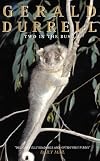
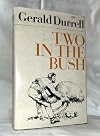
Two in the Bush
by Gerald Durrell
On This Page
Description
"Two in the Bush" is a record of the six-month journey which took Gerald Durrell, his wife Jacquie, and two cameramen through New Zealand, Australia and Malaya. The object was, first, to see what was being done about the conservation of wild life in these countries, and, secondly, to make a series of television films for the BBC. They were introduced to many rare and remarkable animals - Royal Albatrosses, Tuataras, Duck-Billed Platypuses, Flying Lizards and Long-Nosed Bandicoots, as well as show more to some equally unusual humans. Anyone who has read "The Overloaded Ark," "The Bafut Beagles" or "The Whispering Land" will have enjoyed Gerald Durrell's enthusiastic adventuring and his delight in the absurdity of the situations in which he finds himself. His observation of animal - and human - behaviour is always informative and often hilarious. 'Delightfully readable and often very funny.' "Daily Mail" 'An account of Gerald Durrell's tour of New Zealand, Australia and Malaya in search of rarities . . . Easy to read, difficult to put down, with many vivid sidelights on the human side of the expedition. This absorbing narrative reveals the ardours, ironies and disappointments, the organizational miracles and the hilarious human mishaps . . .' Maurice Wiggin, "Sunday Times" 'Mr Durrell has the knack of writing about animals and their antics with tremendous affection and enthusiasm, but without sentimentality.' "Sunday Telegraph" 'Will delight his fans and armchair naturalists everywhere.' "Evening Standard" show lessTags
Recommendations














Member Recommendations
Member Reviews
More of Durrell's zany adventures, this time in the Antipodes, where he is filming a documentary. The aim of the documentary, (and book), is to educate the public about conserving the unique wildlife of the region and its fragile ecosystem. It's all pretty much standard knowledge today, but was probably somewhat groundbreaking when the book was written in the 1960's.
This book is as much fun as it is educational. He never hits you over the head with a hammer to get his views across.
This book is as much fun as it is educational. He never hits you over the head with a hammer to get his views across.
From earlier in his career, when Durrell was part of making a wildlife program for television. With a small film crew and his wife, he spent six months travelling through New Zealand, Australia and Malaysia to look at conservation efforts in those countries. Of course, having a short time frame in which to find elusive, often very rare animals and get good footage of them, often made for hectic schedules and amusing situations, such as when they captured "flying lizards" (gliding lizards in the Draco genus) and released them over and over from the top of a stepladder while the cameraman lay on his back below, to get it on film. Banter among the camera crew and his wife constantly interjecting caution (the cameraman in particular would show more take alarming risks to get the footage needed) interesting observations on culture and local people in the places they went, make for a lively read. I was most intrigued to read first-hand descriptions of animals in their native habitat (for the most part- a few they saw in captive breeding programs). Some of these included the royal albatross, king shag, takahe, malee (two rare birds), platypus, mudskippers (not rare, but very interesting) and leatherback sea turtle. They witnessed a kangaroo birth and apparently were the second to ever get it on film. (The first footage made, by scientists at a place that studied kangaroos, was deemed unfit for television use). Durrell was apparently quite fond of wombats, but considered koalas to be dim-witted and dull. I wasn't aware that black swans were (at the time) considered an invasive species in New Zealand. Durrell makes a continual point how mankind has changed natural landscapes and many species are in danger of extinction. His final chapter is a plea (repeated in most of his books) for people to pay more attention to the needs of wildlife and support conservation efforts.
from the Dogear Diary show less
from the Dogear Diary show less
In the mid-1960s, Gerald Durrell, his wife, and two BBC cameramen (one was also a producer) traveled through New Zealand, Australia, and what was then Malaya to film a television documentary. This book is an account of their travels. The documentary's focus was the conservation of endangered species in each of these countries. Most of the conservation programs were just getting started.
I didn't Google every species, but I did Google several of them. Most of the projects I checked seem to have been successful except for the leathery turtle in Malaysia, which seems to be nearly extinct there now, although it may still be found in other parts of the world.
New Zealand's royal albatross is one success story. It was first spotted at Taiaroa show more Head in Dunedin in 1914. The first royal albatross egg was found there in 1919. The first chick hatched there in 1938. When Durrell's party was there in the mid-1960s, a sanctuary had been established, but it was going to be years before the albatross population reached a stage to allow public access. Thanks to Google, I discovered the Royal Albatross Centre in Dunedin. The website history says that an albatross observatory opened in 1983, nearly 20 years after Durrell's visit, and Princess Anne opened the Royal Albatross Centre in 1989.
The last chapter of the book is an appeal for readers to donate to Durrell's Jersey Wildlife Preservation Trust. It exists today as the Durrell Wildlife Conservation Trust, with the Princess Royal as a patron. show less
I didn't Google every species, but I did Google several of them. Most of the projects I checked seem to have been successful except for the leathery turtle in Malaysia, which seems to be nearly extinct there now, although it may still be found in other parts of the world.
New Zealand's royal albatross is one success story. It was first spotted at Taiaroa show more Head in Dunedin in 1914. The first royal albatross egg was found there in 1919. The first chick hatched there in 1938. When Durrell's party was there in the mid-1960s, a sanctuary had been established, but it was going to be years before the albatross population reached a stage to allow public access. Thanks to Google, I discovered the Royal Albatross Centre in Dunedin. The website history says that an albatross observatory opened in 1983, nearly 20 years after Durrell's visit, and Princess Anne opened the Royal Albatross Centre in 1989.
The last chapter of the book is an appeal for readers to donate to Durrell's Jersey Wildlife Preservation Trust. It exists today as the Durrell Wildlife Conservation Trust, with the Princess Royal as a patron. show less
This is the best book I have ever read. I roll on the floor laughing when I read it. Literally.
Ratings
Members
- Recently Added By
Lists

Best Travel Writing - Non-Fiction
110 works; 6 members

Books about Animals
86 works; 4 members

Books I Own But Haven't Read
144 works; 2 members

Books With Numbers in the Title
308 works; 13 members

Alphabetical Books
211 works; 3 members
Author Information

109+ Works 21,804 Members
Gerald Durrell was born on January 7, 1925 in Jamshedpur, India to British parents. After the death of his father in 1928, the family lived in England and Europe before settling in Corfu, where he spent much of his childhood. Educated by private tutors, he became interested in natural history and amassed a private collection of dozens of creatures show more from scorpions to owls. He went on numerous wildlife expeditions and founded the Jersey Zoological Park and the Jersey Wildlife Preservation Trust with the purpose of breeding endangered species. His first book, The Overloaded Ark, was published in 1953. He wrote 37 books during his lifetime including My Family and Other Animals, The Bafut Beagles, A Zoo in My Luggage, Rosy Is My Relative, and The Mockery Bird. He received the Order of the British Empire in 1982 and was featured in the United Nations' Roll of Honor for Environmental Achievement in 1988. He died from complications related to a liver transplant on January 30, 1995 at the age of 70. (Bowker Author Biography) show less
Some Editions
Awards and Honors
Distinctions
Series
Belongs to Publisher Series
Work Relationships
Common Knowledge
- Canonical title*
- Takahe
- Original title
- Two in the bush
- Original publication date
- 1966
- People/Characters
- Gerald "Gerry" Durrell; Jacquie Durrell; Chris Parsons; Jim Saunders; Brian Bell; George Fox (show all 13); Stan Clark; Alan Wright; Bob Wanerke; David Fleay; Bevan Bowan; Harry Frith; Geoff Sharman
- Important places
- Auckland, New Zealand; Lake Whangape, New Zealand; Kapiti Island, Wellington, New Zealand; Taiaroa Head, Otago Peninsula, South Island, New Zealand; The Brothers, New Zealand; Lake Te Anau, South Island, New Zealand (show all 14); Mount Bruce, New Zealand; Mount Cook, Canterbury, New Zealand; Sherwood Forest, New South Wales, Australia; Barren Pines Fauna Reserve, Queensland, Australia; Griffith, New South Wales, Australia; Stoney Pines, Victoria, Australia; Canberra, Australia; Taman Negara, Malaya
- Dedication
- For Chris and Jim. In memory of Leeches, Lyrebirds and the Bicycle in the Chimney (not to mention the Glow-worms).
- First words
- This is the Chronicle of a six-month journey which took us through New Zealand, Australia and Malaya. (A Word in Advance)
We had meant to creep unobtrusively into New Zealand, film and see what we wanted to, and then creep unobtrusively out again. - Last words
- (Click to show. Warning: May contain spoilers.)With your help dozens of species may be saved.
- Blurbers
- Wiggin, Maurice
- Original language
- English
*Some information comes from Common Knowledge in other languages. Click "Edit" for more information.
Classifications
- Genres
- Nonfiction, Travel, Biography & Memoir, Science & Nature, General Nonfiction
- DDC/MDS
- 639.9092 — Applied science & technology Agriculture Hunting, fishing, conservation, related technologies Conservation of biological resources Biography; History By Place Biography
- LCC
- QL338 .D8 — Science Zoology Zoology General
- BISAC
Statistics
- Members
- 556
- Popularity
- 53,343
- Reviews
- 4
- Rating
- (3.79)
- Languages
- 10 — Czech, Dutch, English, Estonian, Finnish, Hungarian, Italian, Japanese, Russian, Spanish
- Media
- Paper, Ebook
- ISBNs
- 27
- ASINs
- 16