On This Page
Description
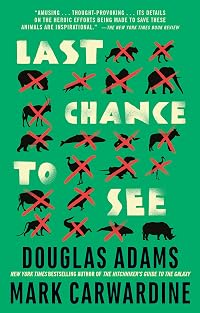
New York Times bestselling author Douglas Adams and zoologist Mark Carwardine take off around the world in search of exotic, endangered creatures. Join them as they encounter the animal kingdom in its stunning beauty, astonishing variety, and imminent peril: the giant Komodo dragon of Indonesia, the helpless but loveable Kakapo of New Zealand, the blind river dolphins of China, the white rhinos of Zaire, the rare birds of Mauritius island in the Indian Ocean. Hilarious and poignant--as only show more Douglas Adams can be--Last Chance to See is an entertaining and arresting odyssey through the Earth's magnificent wildlife galaxy. Praise for Last Chance to See "Lively, sharply satirical, brilliantly written . . . shows how human care can undo what human carelessness has wrought."--The Atlantic "These authors don't hesitate to present the alarming facts: More than 1,000 species of animals (and plants) become extinct every year. . . . Perhaps Adams and Carwardine, with their witty science, will help prevent such misadventures in the future."--Boston Sunday Herald "Very funny and moving . . . The glimpses of rare fauna seem to have enlarged [Adams's] thinking, enlivened his world; and so might the animals do for us all, if we were to help them live."--The Washington Post Book World "[Adams] invites us to enter into a conspiracy of laughter and caring."--Los Angeles Times "Amusing . . . thought-provoking . . . Its details on the heroic efforts being made to save these animals are inspirational."--The New York Times Book Review show lessTags
Recommendations
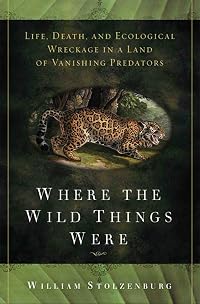
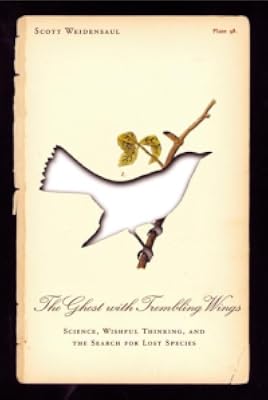
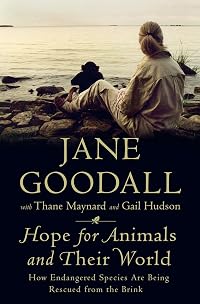

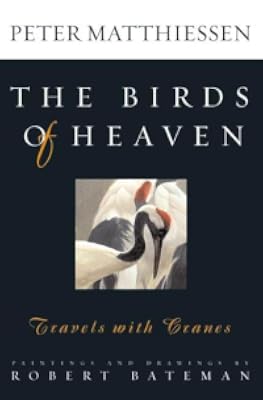






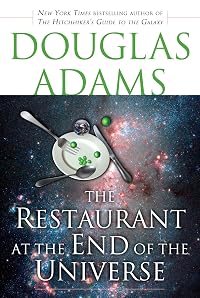
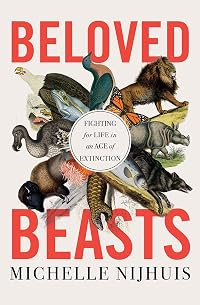
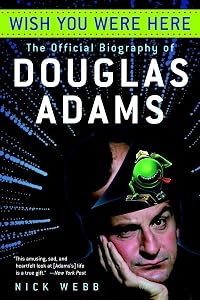
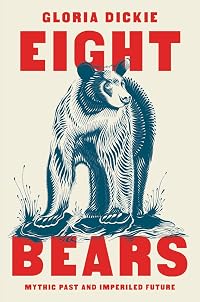

Member Recommendations

Member Reviews
How can a book be so grim and sad but still be laugh-out-loud funny? Such was the genius of Douglas Adams. With zoologist Mark Carwardine, Adams travels the world to spot endangered animals for a BBC radio program. Amidst the hilarious travel stories and sly jabs at human behavior runs the tragic thread of how stupidly short-sighted people are when they don’t know what they’ve got till it’s gone.
Douglas Adams was, of course, the famous humorous science fiction writer. Last Chance to See is one of his lesser known works though really deserves much more recognition. Adams teams up with biologist Mark Carwardine to travel to different parts of the planet in search of endangered species - see find them before they go extinct.
This book was remarkably bittersweet. It is slyly funny, with Adams' characteristic ability to wring humor from circumstance, whether it was about snake anti-venom, trying to find condoms to create a makeshift underwater microphone, or the author's nervousness about China. I smiled and laughed reading his and Carwardine (and the revolving BBC audio tech who ended up on their trips)'s adventures. At the same show more time, the book was incredibly sad because I was keenly aware that since its publications, we have lost at least one of species that Adams and Carwardine looked for, the Baiji aka the Yangtze River Dolphin which, if not actually extinct, is at least functionally extinct. I fear that other species mentioned in the book may soon follow.
Still, Adams doesn't preach or lecture. He instead entertains and through that entertainment creates teachable moments. I am incredibly impressed that throughout the book, he never lapsed into soapboxing about the need to protect any of the species, but instead lays out the uphill battle that those working on those species face and that these handful of species mentioned are just the tip of the iceberg.
A very short but powerful book that made me think Adams was wasted on science fiction, and that he should have really done more science writing or travelogues. Here is where he really shines. show less
This book was remarkably bittersweet. It is slyly funny, with Adams' characteristic ability to wring humor from circumstance, whether it was about snake anti-venom, trying to find condoms to create a makeshift underwater microphone, or the author's nervousness about China. I smiled and laughed reading his and Carwardine (and the revolving BBC audio tech who ended up on their trips)'s adventures. At the same show more time, the book was incredibly sad because I was keenly aware that since its publications, we have lost at least one of species that Adams and Carwardine looked for, the Baiji aka the Yangtze River Dolphin which, if not actually extinct, is at least functionally extinct. I fear that other species mentioned in the book may soon follow.
Still, Adams doesn't preach or lecture. He instead entertains and through that entertainment creates teachable moments. I am incredibly impressed that throughout the book, he never lapsed into soapboxing about the need to protect any of the species, but instead lays out the uphill battle that those working on those species face and that these handful of species mentioned are just the tip of the iceberg.
A very short but powerful book that made me think Adams was wasted on science fiction, and that he should have really done more science writing or travelogues. Here is where he really shines. show less
A fun and insightful read, and I suspect for all that not a book to win new readers. Either you pick it up as a Douglas Adams fan, or as someone interested in getting a boots-on-the-ground peek into specific efforts involving endangered species. Possibly both. For either sort, Adams provides not merely a journeyman's account but an enjoyable tutorial. It reads as though he wrote it that way, too: Don't let the book get in the way of the task, as it were, focus on getting the story right more than publishing his next bestseller.
Adams's tone and narrative voice are key to this achievement. His first couple chapters suggest something recognisably conversational as if from Hitchhiker, though with fewer tangents and less bizarre flights of show more fancy. A sound decision as there is plenty of the bizarre embedded in the environmental stories he tells. Adams avoids veering into the overly comic, something I'd expect of Dave Barry. Adams, on the contrary, modulates his tone to capture the pathos of his story, a dimension only tangentially evident in Hitchhikers'.
The stories here aren't terribly complex, their challenge is becoming better known. Adams helps address this simply by agreeing to make the trip and write it up: his celebrity, presumably, will help spread the word. show less
Adams's tone and narrative voice are key to this achievement. His first couple chapters suggest something recognisably conversational as if from Hitchhiker, though with fewer tangents and less bizarre flights of show more fancy. A sound decision as there is plenty of the bizarre embedded in the environmental stories he tells. Adams avoids veering into the overly comic, something I'd expect of Dave Barry. Adams, on the contrary, modulates his tone to capture the pathos of his story, a dimension only tangentially evident in Hitchhikers'.
The stories here aren't terribly complex, their challenge is becoming better known. Adams helps address this simply by agreeing to make the trip and write it up: his celebrity, presumably, will help spread the word. show less
Mark Carwardine was a zoologist working for the World Wildlife Fund when he was hired by a magazine to take Douglas Adams to see the world’s rarest nocturnal lemur, the Madagascar aye-aye. The trip was enough of a success that they decided having Adams write funny things about his attempt to visit endangered species was a good way to raise awareness about animal conservation, so they reunited a few years later to track down some other animals whose numbers have fallen into the double digits. The resulting collection of ecology/travel essays is hands down one of my all time favorite books.
During the course of their travels, Carwardine and Adams go to Indonesia to visit the Komodo dragon, Zaire to see the Northern White rhinoceros, New show more Zealand to see the Kakapo parrot, China to see the Yangtzee River dolphin and Mauritius to see the Rodrigues fruit bat. Adams’ style of absurdist humor is particularly well-suited to detailing the problems involved in merely getting to the places where these animals are supposed to be, since they are frequently located rather inconveniently in remote areas of third world countries. His front line reports set the stage by being laugh out loud funny, keeping us so entertained and open that by the time we finally do get to meet these precarious creatures, we have no choice but to care about them and their fates as much as our intrepid reporters do. show less
During the course of their travels, Carwardine and Adams go to Indonesia to visit the Komodo dragon, Zaire to see the Northern White rhinoceros, New show more Zealand to see the Kakapo parrot, China to see the Yangtzee River dolphin and Mauritius to see the Rodrigues fruit bat. Adams’ style of absurdist humor is particularly well-suited to detailing the problems involved in merely getting to the places where these animals are supposed to be, since they are frequently located rather inconveniently in remote areas of third world countries. His front line reports set the stage by being laugh out loud funny, keeping us so entertained and open that by the time we finally do get to meet these precarious creatures, we have no choice but to care about them and their fates as much as our intrepid reporters do. show less
Nobody writes like Douglas Adams writes. He's one of the few guys that can have me laughing uproariously while also pondering something deep and important. Or pondering the sad legacy of humans while laughing. Or shaking my head at the sheer stupidity of humans.
That being said, while there are many funny moments in this book, overall, it's heartbreaking book to read. In anyone else's hands, I believe it would have been pleadingly maudlin.
With Adams, instead, it's hopeful.
Nobody writes like Douglas Adams writes. I miss him.
That being said, while there are many funny moments in this book, overall, it's heartbreaking book to read. In anyone else's hands, I believe it would have been pleadingly maudlin.
With Adams, instead, it's hopeful.
Nobody writes like Douglas Adams writes. I miss him.
I read "Last Chance to See" back when it was first published and found myself depressed over the state of the world and how all these wonderful animals the book covers were facing extinction. Now, even more so am I depressed, for not only in the intervening quarter century have we seen some of the species covered in "Last Chance ..." become extinct, such as the Yangtze Dolphin, but the author Douglas Adams faced his own extinction event.
"Last Chance to see" covers Adams and Cawardine travelling the world searching for endangered animals and providing sobering statistics about the decline of species as well as some laughs.
"Last Chance to see" covers Adams and Cawardine travelling the world searching for endangered animals and providing sobering statistics about the decline of species as well as some laughs.
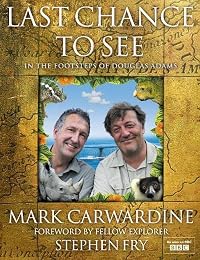
Thirty‑plus years ago Douglas Adams of The Hitchhiker’s Guide to the Galaxy fame and Mark Carwardine, a wildlife zoologist and photographer, set out to find some of the rarest creatures on earth before it was too late and document their encounters with them. This book is a result of that expedition. There are touches of the absurd humor and satire in it that Adams was well known for but what stands out is his insightful commentary about the reasons the creatures became endangered in the first place. I had planned to follow this up with Stephen Fry’s 2009 book, Last Chance to See: In the Footsteps of Douglas Adams but now I’m going to wait because I know it will suffer in comparison.
Members
- Recently Added By
Lists

Recommended Nature Writing
346 works; 180 members

Best Laugh Out Loud Books
143 works; 49 members

Best Books About Animals
143 works; 48 members

Best Environmental Books
32 works; 2 members

Great Books Favorites
71 works; 6 members

Books Read in 2015
3,299 works; 129 members
Books Read in 2016
4,666 works; 199 members

Five star books
1,767 works; 110 members
Books With Our Favorite First Lines
168 works; 104 members

Favorite Animal Non-Fiction
293 works; 144 members
Books We Want To Read Again For The First Time
384 works; 160 members

unread and uncatalogued
48 works; 1 member

Authors' Favourites
18 works; 5 members
Author Information

91+ Works 190,662 Members
Douglas Noel Adams (sometimes referred to Bop Ad because of his distinctive signature) was born in Cambridge, England, on March 11, 1952 and educated at St. John's College at Cambridge University. He graduated with honors in English Literature in 1974. In addition to being a writer/editor for radio, television, and stage, Adams has worked as a show more hospital reporter, barn builder, and radio producer. The Hitchhiker's Guide to the Galaxy, 1979, one of his bestselling humor and science fiction novels, was originally a radio series. It was the first in a four-book series that includes The Restaurant at the End of the Universe; Life, the Universe, and Everything, and So Long, and Thanks for All the Fish. He once stated that the idea for his first novel came while he was "lying drunk in a field in Innsbruck and gazing at the stars." He pokes fun at humanity by mixing science fiction with humor. Adams's additional books include The Meaning of Liff; The Deeper Meaning of Liff; Dirk Gently's Holistic Detective Agency; The Long Dark Tea-time of the Soul; and Mostly Harmless. He has also co-authored the book Last Chance to See, about endangered species. Douglas Adams died May 11, 2001 of a heart attack in Santa Barbara, California at the age of 49. (Bowker Author Biography) show less

75+ Works 5,932 Members
Mark Carwardine is a zoologist, writer, radio and TV presenter, wildlife photographer, whale-watch Operator and an active and outspoken conservationist. His TV series include BBC's Last Chance to See with Stephen Fry, and for many years he presented the weekly half-hour programme Nature on BBC Radio 4. Mark writes a monthly column in BBC Wildlife show more magazine, and has written more than 50 books on wildlife and conservation, including the Handbook of Whales, Dolphins and Porpoises, Mark Carwardine's Guide to Whale Watching in Britain and Europe and Mark Carwardine's Guide to Whale Watching in North America. show less
Some Editions
Awards and Honors
Distinctions
Notable Lists
Series

Belongs to Publisher Series
Heyne Allgemeine Reihe (8613)
Work Relationships
Has the (non-series) sequel
Has the adaptation
Is abridged in
Common Knowledge
- Canonical title*
- Die Letzten ihrer Art
- Original title
- Last Chance to See
- Original publication date
- 1990
- People/Characters
- Douglas Noël Adams; Conrad Aveling; Mark Carwardine (zoologist); Alain le Garsmeur (photographer); Kes Hillman-Smith; Carl Jones (ornithologist) (show all 12); Richard Lewis - ornithologist; Don Merton; Serundori; Gaynor Shutte; Wendy Strahm (botanist); Struan Sutherland
- Important places
- Atananarivo, Madagascar; Nosy Mangabé, Madagascar; Australia; Melbourne, Victoria, Australia; Victoria, Australia; Bali, Indonesia (show all 27); Indonesia; Komodo Island, Indonesia; Kinchasa, Zaire; Virunga volcanoes (border of Zaire, Rwanda, and Uganda); Garamba National Park, Zaire; Codfish Island, New Zealand; Fiordland National Park, South Island, New Zealand; Little Barrier Island, New Zealand; New Zealand; Beijing, China; China; Shanghai, China; Yangtze River, China; Mauritius; Tongling, Anhui, China; Nanjing, Jiangsu, China; Bukavu, Democratic Republic of the Congo; Murara, Democratic Republic of the Congo; Labuan, Malaysia; Round Island, Mauritius; Stewart Island, New Zealand
- Dedication
- For Alain le Garsmeur
- First words
- This isn't at all what I expected. In 1985, by some sort of journalistic accident, I was sent to Madagascar with Mark Carwardine to look for an almost extinct form of lemur called the aye-aye. None of the three of us had ever... (show all) met before. I had never met Mark, Mark had never met me, and no one, apparently, had seen an aye-aye in years.
- Last words
- (Click to show. Warning: May contain spoilers.)There is one last reason for caring, and I believe that no other is necessary. It is certainly the reason why so many people have devoted their lives to protecting the likes of rhinos, parakeets, kakapos and dolphins. And it is simply this: the world would be a poorer, darker, lonelier place without them.
- Original language
- English
*Some information comes from Common Knowledge in other languages. Click "Edit" for more information.
Classifications
Statistics
- Members
- 4,415
- Popularity
- 3,378
- Reviews
- 87
- Rating
- (4.25)
- Languages
- 12 — Czech, Dutch, English, German, Greek, Hebrew, Hungarian, Italian, Japanese, Serbian, Spanish, Swedish
- Media
- Paper, Audiobook, Ebook
- ISBNs
- 37
- UPCs
- 1
- ASINs
- 17