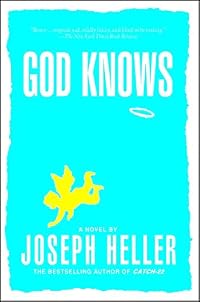
God Knows
by Joseph Heller
On This Page
Description
As the Biblical David lies on his death-bed he looks back on his own, crowded life and tells all.Tags
Recommendations





























Member Reviews
Catch-22 by Joseph Heller is my favorite novel. Not my favorite novel of Heller's, not my favorite American novel, but my favorite novel I've read as of this writing. I've written multiple papers about it and, more than likely, will write about it again in times to come. It said and did things I didn't think were possible in the form of a novel, in the form of anything, really.
So it was with significant misgivings I went into God Knows. I feared it would be a decidedly minor work, a bloated and wheezing gas bag of a formerly great novelist resting on his laurels and not so much creating a work as scratching a wandering itch. But I was wrong. I was very wrong.
As I've just finished the novel I am not now able to say whether God Knows is show more worse than the earlier Catch, I won't say it's better, but it might, in its own way, be just as good. And why is this? Because Heller through his delineation of the life and times of King David, a parody told at times in a pseudo-Biblical English and at times a Borscht Belt patois, bull rushes between a particularly Jewish self-deprecatory slyness and maudlin introspection touching on all the themes Heller knows so intimately. These themes: life, death, youth, age, love, lust, regret, are all woven with the mastery that comes only with an authorial skill hard earned and little regarded.
A more Conservative Jewish mindset might write this work off as simply "self-hating" and others might deride the tonal shifts being so at odds. But, if you'll indulge me, I feel Heller, intentionally or not, has constructed a work in the mold of its own protagonist. This novel, like the titular David, is brilliant but also ignorant, strong but also weak, a lover but also a philanderer, fit but also decrepit. In short: this novel concatenates together the various prisms of Diasporic Jewish identity through the lens of the Biblical that few other writers inside or outside of Israel would dare to even attempt, let alone complete.
But Heller does it. Flawed as the work is, he did it. In reading this we see the ultimate tragedy of life and aging, of the glorious pleasures of love and victory, and degradation and shame, all under the auspices of God's near to complete silence. This is the journal of a Jewish soul. Beautiful, flawed, singular in its generality to that one people, mine, that has suffered so much for so little, and been made so ugly, and somehow so fucking beautiful because of this suffering.
Read this book. Withstand it and endure it; once you have you will see just how maddening, how funny, how ignorant, and how unutterably genius the Judaic soul can be. show less
So it was with significant misgivings I went into God Knows. I feared it would be a decidedly minor work, a bloated and wheezing gas bag of a formerly great novelist resting on his laurels and not so much creating a work as scratching a wandering itch. But I was wrong. I was very wrong.
As I've just finished the novel I am not now able to say whether God Knows is show more worse than the earlier Catch, I won't say it's better, but it might, in its own way, be just as good. And why is this? Because Heller through his delineation of the life and times of King David, a parody told at times in a pseudo-Biblical English and at times a Borscht Belt patois, bull rushes between a particularly Jewish self-deprecatory slyness and maudlin introspection touching on all the themes Heller knows so intimately. These themes: life, death, youth, age, love, lust, regret, are all woven with the mastery that comes only with an authorial skill hard earned and little regarded.
A more Conservative Jewish mindset might write this work off as simply "self-hating" and others might deride the tonal shifts being so at odds. But, if you'll indulge me, I feel Heller, intentionally or not, has constructed a work in the mold of its own protagonist. This novel, like the titular David, is brilliant but also ignorant, strong but also weak, a lover but also a philanderer, fit but also decrepit. In short: this novel concatenates together the various prisms of Diasporic Jewish identity through the lens of the Biblical that few other writers inside or outside of Israel would dare to even attempt, let alone complete.
But Heller does it. Flawed as the work is, he did it. In reading this we see the ultimate tragedy of life and aging, of the glorious pleasures of love and victory, and degradation and shame, all under the auspices of God's near to complete silence. This is the journal of a Jewish soul. Beautiful, flawed, singular in its generality to that one people, mine, that has suffered so much for so little, and been made so ugly, and somehow so fucking beautiful because of this suffering.
Read this book. Withstand it and endure it; once you have you will see just how maddening, how funny, how ignorant, and how unutterably genius the Judaic soul can be. show less
57. God Knows by Joseph Heller (1984, 356 pages, read Sep 12 – Nov 7)
I'm not going to give Heller his due in these comments. This book was brutal for me get through, although in the end it came around and left some kind of positive impression.
A very elderly King David, cold and unable to get warm, lies on his bed and reflects on his life in an all knowing sort of way - past and future. He constantly argues with his future reputation, comments on such things as the famous Renaissance statues of David and so on. He's a cantankerous selfish bastard who curses left and right and has little to nothing we might convey moral or compassionate, and lacks any type of contrition. He's still bitter that God stopped speaking him after David had show more Uriah killed so he could marry Uriah's wife, Bathsheba. The novel follows the biblical story to the finest detail, including pronouncing both exaggerations and many things only subtly implied as factual.
All this is apparent in the first ten pages or so, and that is where the book lost me. I don't find the idea of a cantankerous David all that unique or interesting. Any intended shock effect fell flat on me. And, having just read the biblical version (I actually started while in the middle of Samuel) I had all the biblical details pretty clearly in my mind. I didn't need the lengthy refresher. It was only when the book embellished that it was able to maintain my attention - but there really wasn't that much of that. So I struggled.
So, what is going on here. David's narrative is obsessed with Bathsheba. He reads her in depth, sees that she has emotionally turned away from him and fully knows that her only interest in David now is to get him to place her son as next in line in succession, even though the actual next in line is Solomon's older brother, Adonijah. It's through Bathsheba that David reveals his human side, where real emotions come to surface. He has a complicated kind of love of for her, and an intense longing for her in ways that are past. But he can't reach her. In David's thinking about her the book becomes an exploration of the things we desire that are out of reach, simply impossible, and how we might consider compromising our lives just to maybe try to lean closer to them. We know what David is going to do, but we have to wonder exactly why.
There are many cute details in here offering different implications, such as when David is served tacos for dinner...yes tacos. It's a playful mixing of what is normal at present into the past where it's outrageous. This seems to hint that Heller is using this to explore something more modern, likely writing about himself and his life through David. It's so interesting a idea that I spent a lot of energy trying to see that in the book...but mostly I failed. Should I read it again?
What won me over in the end was when I finally began to see and appreciate what Bathsheba really meant to David and began to tangle with his inability to get her back...or to stop wanting her. In the end I was moved.
2012
http://www.librarything.com/topic/138560#3746471 show less
I'm not going to give Heller his due in these comments. This book was brutal for me get through, although in the end it came around and left some kind of positive impression.
A very elderly King David, cold and unable to get warm, lies on his bed and reflects on his life in an all knowing sort of way - past and future. He constantly argues with his future reputation, comments on such things as the famous Renaissance statues of David and so on. He's a cantankerous selfish bastard who curses left and right and has little to nothing we might convey moral or compassionate, and lacks any type of contrition. He's still bitter that God stopped speaking him after David had show more Uriah killed so he could marry Uriah's wife, Bathsheba. The novel follows the biblical story to the finest detail, including pronouncing both exaggerations and many things only subtly implied as factual.
All this is apparent in the first ten pages or so, and that is where the book lost me. I don't find the idea of a cantankerous David all that unique or interesting. Any intended shock effect fell flat on me. And, having just read the biblical version (I actually started while in the middle of Samuel) I had all the biblical details pretty clearly in my mind. I didn't need the lengthy refresher. It was only when the book embellished that it was able to maintain my attention - but there really wasn't that much of that. So I struggled.
So, what is going on here. David's narrative is obsessed with Bathsheba. He reads her in depth, sees that she has emotionally turned away from him and fully knows that her only interest in David now is to get him to place her son as next in line in succession, even though the actual next in line is Solomon's older brother, Adonijah. It's through Bathsheba that David reveals his human side, where real emotions come to surface. He has a complicated kind of love of for her, and an intense longing for her in ways that are past. But he can't reach her. In David's thinking about her the book becomes an exploration of the things we desire that are out of reach, simply impossible, and how we might consider compromising our lives just to maybe try to lean closer to them. We know what David is going to do, but we have to wonder exactly why.
There are many cute details in here offering different implications, such as when David is served tacos for dinner...yes tacos. It's a playful mixing of what is normal at present into the past where it's outrageous. This seems to hint that Heller is using this to explore something more modern, likely writing about himself and his life through David. It's so interesting a idea that I spent a lot of energy trying to see that in the book...but mostly I failed. Should I read it again?
What won me over in the end was when I finally began to see and appreciate what Bathsheba really meant to David and began to tangle with his inability to get her back...or to stop wanting her. In the end I was moved.
2012
http://www.librarything.com/topic/138560#3746471 show less
I thought it was brilliant writing. Joseph Heller writes from the POV of King David of Israel, but in the tone of a 20th century American Jewish man.
A word of warning: If you are not familiar with I and II Samuel (Old Testament books), you will be hopelessly lost while reading this.
A word of warning: If you are not familiar with I and II Samuel (Old Testament books), you will be hopelessly lost while reading this.
The author of Catch-22 takes on the story of David, focusing solely on the Biblical king's dying days, when he is kept warm by a young virgin, and battles are going on for who will succeed him. Bathsheba is engaged in palace intrigue on behalf of her son, Solomon, while David just lusts, in an impotent way, over the old queen. Witty, but misses the mark at times.
I laughed at the humor, but suffered through the tedious parts. It has the type of tedious descriptions that serve only to cause suffering, without adding any actual enhancement to the work.
The story is of King David, from the Old Testament, who is old and laying in his deathbed. There is a lot of poking fun at religion, and the humor is quite unique. But there are other moments when the story just drags on and gets extremely boring (not unlike the Bible).
If you like Heller, then you probably should read it. But I wouldn't make it a priority on the list of things to read.
The story is of King David, from the Old Testament, who is old and laying in his deathbed. There is a lot of poking fun at religion, and the humor is quite unique. But there are other moments when the story just drags on and gets extremely boring (not unlike the Bible).
If you like Heller, then you probably should read it. But I wouldn't make it a priority on the list of things to read.
I think Joseph Heller's humor suits me as much as any writer. I love P G. Wodehouse, but Heller makes me laugh where it hurts. Wodehouse is damned funny, though I laugh as an American, and this makes a difference, I think. I don't find Wodehouse's Americans funny for the most part. The American dog biscuit tycoon in FULL MOON was merely ridiculous, ie. I didn't find him that funny.
I can't say it's badly written, but 200 pages in I still hadn't encountered more than 2 lines that made me smile, nor found the plot or the main character the least bit interesting, so I decided this one wasn't for me and put it away.
Members
- Recently Added By
Lists

20th Century Literature
1,161 works; 54 members
Author Information

19+ Works 54,406 Members
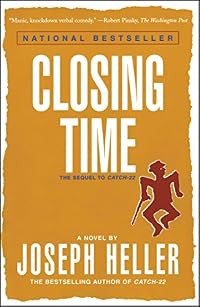
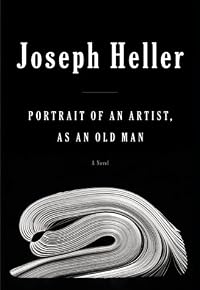
American novelist and dramatist Joseph Heller was born in Brooklyn, N.Y. on May 1, 1923. Heller started off his writing career by publishing a series of short stories, but he is most famous for his satirical novel Catch-22. Set in the closing months of World War II, Catch-22 tells the story of a bombardier named Yossarian who discovers the horrors show more of war and its aftereffects. This novel brought the phrase "catch-22," defined in Webster's Dictionary as "a situation presenting two equally undesirable alternatives," into everyday use. Heller wrote Closing Time, the sequel to Catch-22, in 1994. Other novels include As Good As Gold and God Knows. He also wrote No Laughing Matter, an account of his struggles with Guillain-Barr Syndrome, a neurological disorder, in 1986. Thirty-five years after writing his first book, Heller wrote his autobiography, entitled Now and Then: From Coney Island to Here. In his memoirs, Heller reminisces about what it was like growing up in Coney Island in the 1930s and 1940s. On December 13, 1999, Heller died of a heart attack in his home on Long Island. His last novel, Portrait of the Artist as an Old Man, was published shortly after his death. (Bowker Author Biography) show less
Some Editions
Awards and Honors
Awards
Distinctions
Notable Lists
Series
Belongs to Publisher Series
Иллюминатор (52)
Goldmann (8837)
Common Knowledge
- Canonical title
- God Knows
- Original title
- God Knows
- Alternate titles*
- Видит Бог
- Original publication date
- 1984
- People/Characters
- Bathsheba; King David; Solomon; Goliath, the giant Philistine; Adonijah, son of David and Haggith; Saul, King of Israel (show all 7); Absolom
- Important places
- Israel
- Epigraph
- But how can one be warm alone?
- First words
- Abishag the Shunammite washes her hands, powders her arms, removes her robe, and approaches my bed to lie down on top of me.
- Quotations
- There is no new thing under the sun, is there, certainly no new plots. Show me anything whereof it may be said "See, this is new," and I will show you it hath been. There are only four basic plots in life anyway, and nine i... (show all)n literature, and everything else is but variation, vanity, and vexation of spirit.
- Last words
- (Click to show. Warning: May contain spoilers.)"Thank you, Samuel. That's the loveliest story I've ever been told."
- Original language
- English
*Some information comes from Common Knowledge in other languages. Click "Edit" for more information.
Classifications
Statistics
- Members
- 1,505
- Popularity
- 15,272
- Reviews
- 13
- Rating
- (3.58)
- Languages
- 15 — Czech, Danish, Dutch, English, Finnish, French, German, Hebrew, Hungarian, Italian, Norwegian (Bokmål), Polish, Russian, Spanish, Swedish
- Media
- Paper
- ISBNs
- 32
- ASINs
- 17