Chance and Chaos
by David Ruelle
On This Page
Description
How do scientists look at chance, or randomness, and chaos in physical systems? In answering this question for a general audience, Ruelle writes in the best French tradition: he has produced an authoritative and elegant book--a model of clarity, succinctness, and a humor bordering at times on the sardonic.Tags
Recommendations








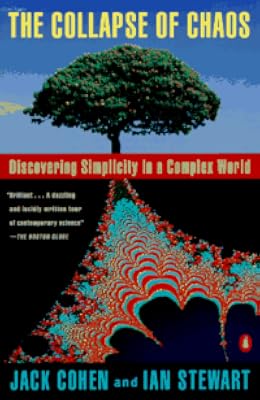




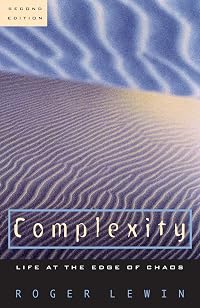

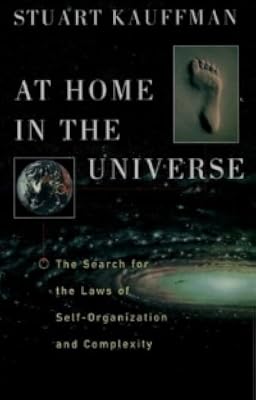

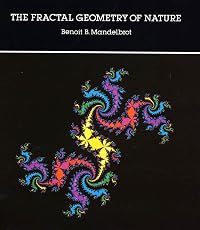

















Member Recommendations

by Oct326
Member Reviews
This is a curious book. Curious because some of the topics are hard to grasp. Curious because Ruelle tells some rather colourful stories about some of the characters in it ...such as Godel and Theophile de Donder. And curious because of the sheer breadth of subjects/topics that are covered. These range from mathematics and physics, to the probabilities of coin tosses, sensitive dependence, turbulence...and Ruelle's role in developing the ideas of chaos; economics, quanta, entropy and irreversibility, information theory and Godel's theorem. Each of these sections is written more or less like a stand-alone essay...though there is some dependence on previous sections. Anyway, It's hard to summarise and do it justice. But I'll pluck out a show more few gems. Because of sensitive dependence slightly different initial conditions can lead to vey different outcomes ....illustrated really well with a billiard ball analogy. But scaled-up this means that with meteorology, it takes about a week for errors to become unacceptable and Ruelle claims that we already know that we shall not be able to predict the weather for more than one or two weeks in advance. I notice that, in 1968, Ruelle was trying to teach himself hydrodynamics by reading the book "Fluid Mechanics" by Landau and Lifshitz. I was trying to do the same thing at more or less the same time ....maybe a bit earlier .....but certainly with less success. (A difficult book).
A great story about Godel. Somebody had briefly occupied his office while he was away and had left a polite note saying "I hope to have the chance to get to know you more intimately on a later occasion"....he received a response from Godel which consisted of the note with that sentence underlined bye Godel and, added, in pencil, the question "Exactly what do you mean?" Ruelle describes him as "a small man yellowish, and emaciated and he wore cotton plugs in his ears". Another story about the French mathematician Jean Leray who told Ruelle that his inspiration for his great 1934 paper on hydrodynamics was watching the vortices of the River Seine as it flows past the piles of the Pont Neuf in Paris. And I've often pondered over the idea that all the molecules in a box....if you wait long enough will randomly arrange themselves all into one corner. Ruelle, does much the same with a layer of hot water poured over a layer of cold....they begin to mix into luke warm water but in principle could return to the two layers of hot and cold. How long would we have to wait....Ruelle just says too long ...and that seems to be much longer than the current age of the universe.
I like the reconciliation between chance and determinism cited by Poincare: "A very small cause, which escapes us, determines a considerable effect which we cannot ignore, and we then say that this effect is due to chance". (Though there was no quantum uncertainty in Poincare's day). And Ruelle has some harsh advice for Economists: "Legislators and government officials are thus faced with the possibility that their decisions, intended to produce a better equilibrium, will, in fact, lead to wild fluctuations, with possibly quite disastrous effects". (I think our Reserve Bank and the Federal Reserve should take notice...and I recall a friend of mine, then working in the Treasury Department in about 1990 saying that there were room-fulls of economists there who had run out of ideas about what action could be taken to fix the high inflation and high unemployment ).
As I said at the start....a curious book. But interesting and as I've been re-reading it to write this review, I've come to appreciate it more...even if it is difficult to summarise. I give it 5 stars. show less
A great story about Godel. Somebody had briefly occupied his office while he was away and had left a polite note saying "I hope to have the chance to get to know you more intimately on a later occasion"....he received a response from Godel which consisted of the note with that sentence underlined bye Godel and, added, in pencil, the question "Exactly what do you mean?" Ruelle describes him as "a small man yellowish, and emaciated and he wore cotton plugs in his ears". Another story about the French mathematician Jean Leray who told Ruelle that his inspiration for his great 1934 paper on hydrodynamics was watching the vortices of the River Seine as it flows past the piles of the Pont Neuf in Paris. And I've often pondered over the idea that all the molecules in a box....if you wait long enough will randomly arrange themselves all into one corner. Ruelle, does much the same with a layer of hot water poured over a layer of cold....they begin to mix into luke warm water but in principle could return to the two layers of hot and cold. How long would we have to wait....Ruelle just says too long ...and that seems to be much longer than the current age of the universe.
I like the reconciliation between chance and determinism cited by Poincare: "A very small cause, which escapes us, determines a considerable effect which we cannot ignore, and we then say that this effect is due to chance". (Though there was no quantum uncertainty in Poincare's day). And Ruelle has some harsh advice for Economists: "Legislators and government officials are thus faced with the possibility that their decisions, intended to produce a better equilibrium, will, in fact, lead to wild fluctuations, with possibly quite disastrous effects". (I think our Reserve Bank and the Federal Reserve should take notice...and I recall a friend of mine, then working in the Treasury Department in about 1990 saying that there were room-fulls of economists there who had run out of ideas about what action could be taken to fix the high inflation and high unemployment ).
As I said at the start....a curious book. But interesting and as I've been re-reading it to write this review, I've come to appreciate it more...even if it is difficult to summarise. I give it 5 stars. show less
Ratings
Members
- Recently Added By
Author Information

10 Works 505 Members
David Ruelle, a French physicist, is one of the founders of Chaos Theory. In his book, Chance and Chaos, Ruelle explains this theory and how randomness, chance, and chaos play a role in physical systems. This work, one of his better known, is accessible for the common reader, not just the scientist. Other works by Reulle are Chaotic Evolution and show more Strange Attractors: The Statistical Analysis of Time Series for Deterministic Nonlinear Systems; Meteorological Fluid Dynamics: Asymptotic Modelling, Stability and Chaotic Atmospheric Motion; (for which Reulle was one of the editors); and Dynamical Zeta Functions for Piecewise Monotone Maps of the Interval. The latter is a more technical work of a mathematical nature. (Bowker Author Biography) show less
Some Editions
Series
Belongs to Publisher Series
Common Knowledge
- Original title
- Hasard et chaos
- Original publication date
- 1991
- Epigraph*
- Suam habet fortuna rationem
- Quotations*
- Vorrei mettermi gli occhiali filosofici di un honnête homme del Seicento o del Settecento, e fare una passeggiata fra i risultati scientifici del secolo XX. Una passeggiata con la guida del «caso»: alla lettera, poi... (show all)ché il caso sarà il mio filo di Arianna.
*Some information comes from Common Knowledge in other languages. Click "Edit" for more information.
Classifications
Statistics
- Members
- 320
- Popularity
- 99,367
- Reviews
- 1
- Rating
- (3.52)
- Languages
- 10 — Dutch, English, Finnish, French, German, Italian, Portuguese, Russian, Spanish, Turkish
- Media
- Paper, Audiobook, Ebook
- ISBNs
- 23
- ASINs
- 3