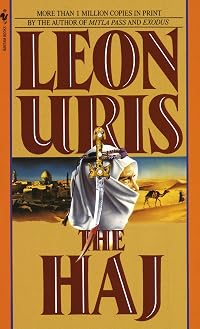
The Haj
by Leon Uris
On This Page
Description
"Leon Uris returns to the land of his acclaimed best-seller Exodus for an epic story of hate and love, vengeance and forgiveness and forgiveness. The Middle East is the powerful setting for this sweeping tale of a land where revenge is sacred and hatred noble. Where an Arab ruler tries to save his people from destruction but cannot save them from themselves. When violence spreads like a plague across the lands of Palestine--this is the time of The Haj."--Publisher.Tags
Recommendations
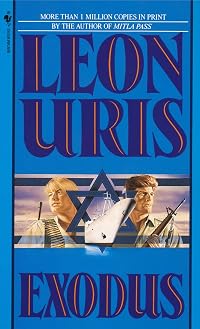
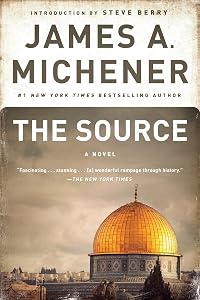


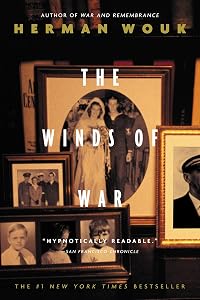


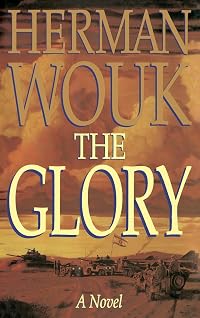


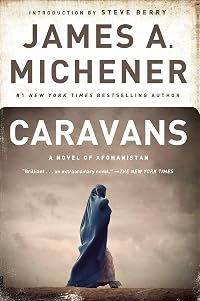
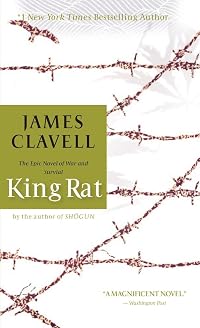
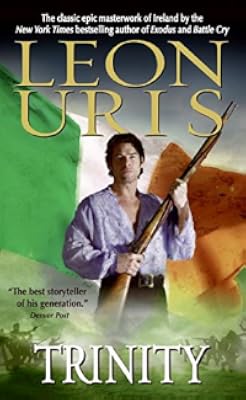













Member Recommendations
Member Reviews
This is a beautifully written novel about the history of Palestine under the British mandate that ultimately became the separate countries of Israel and Jordan and the fights over the West Bank by the surrounding Arab countries. Although I have read a number of books on the establishment of Israel, I have no personal knowledge of the accuracy of this novel, but Uris was famous for his research. He beautifully described the conservative Muslim Palestinian lifestyle of the 1940s under Haj Ibrahim, who ruled a village area in what became Israel. The book is written mostly from the perspective of Ibrahim's young son, Ishmael, who learns to read and therefore becomes the key to his family's survival in these murderous times. The tragic show more creation of hundreds of thousands of refugees, the inability of well-meaning Arabs and Israelis to find a way around the tragedy we all know is coming. The hypocrisy of the surrounding Arab countries and the Western "allies" is so infuriating. The book is so sad but so so beautifully written. I took off one star because I really, really hated the ending. Ishmael should have survived, gone to England to study, then come back to help his people. I so wanted that to be true. There were so many missed opportunities to do the right thing!! Alas, we now have the situation today where both Palestinians and Israelis have suffered for so long. For someone who wants to learn about and actually feel the agony of the Arab Palestinians and the dilemmas facing the Jews of Palestine trapped in their tragic situation by so many factors — history, culture, the competing agendas of so many countries and factions etc — I highly recommend this novel. show less
A solid story of the background behind the creation of Israel in a region full of turmoil. Told largely as the story of an Arab young man and his family.
The author is clearly pro-Israel, and it shows through in a few places. But he also gets a lot of things right about the mess that the whole region was, the dysfunction of certain aspects of arab culture, and how that all worked together to drive a slow motion catastrophe. And then big pieces of why the aftermath has continued to fester to this day.
The author is clearly pro-Israel, and it shows through in a few places. But he also gets a lot of things right about the mess that the whole region was, the dysfunction of certain aspects of arab culture, and how that all worked together to drive a slow motion catastrophe. And then big pieces of why the aftermath has continued to fester to this day.
One of the best books I've read - despite the devastating feeling it leaves you with that peace in the Middle East is not possible....
It took me a long time to finish reading this book. Not because I disliked it or because it was difficult to read, but just because I wanted to take in the story and learn something.
Having said that, I must add immediately, that it has veen ages since I learnt something about the Palestinian history or the founding of Israel. I'm not qualified to agree or disagree with the historical facts as presented. Wgat is written, sounds plausible, and I keep it at that.
Being not only a book on historical facts but also on one family's survival in the turmoil, the book is mostly about human emotions and the powers tgat drive them: ambition, pride, ingenuity, friendship, betrayal, love, but foremost there is hatred.
Having read this book, I am show more once again robbed of an illusion (the hope that some day the conflict about colonization, now the wall, who's to blame for everything, the one that has always been there as long as I live) could possibly be solved one day.
But... nevertheless I'm one great story richer. show less
Having said that, I must add immediately, that it has veen ages since I learnt something about the Palestinian history or the founding of Israel. I'm not qualified to agree or disagree with the historical facts as presented. Wgat is written, sounds plausible, and I keep it at that.
Being not only a book on historical facts but also on one family's survival in the turmoil, the book is mostly about human emotions and the powers tgat drive them: ambition, pride, ingenuity, friendship, betrayal, love, but foremost there is hatred.
Having read this book, I am show more once again robbed of an illusion (the hope that some day the conflict about colonization, now the wall, who's to blame for everything, the one that has always been there as long as I live) could possibly be solved one day.
But... nevertheless I'm one great story richer. show less
On a purely aesthetic level, I enjoyed this book. Judging it purely as a novel, I'd rate it higher; I like Uris's writing style and the plot drew me in. But as a work of historical fiction, it scores lower for me. Without knowing enough about the Arab-Israeli conflict to be able to specifically dispute any of the historical analysis implied by the story, I came away feeling that the it couldn't be anything other than biased. As I recall it, the Jews come off as nobler people, entirely wronged and victimized whereas the Arabs are depicted as having a fundamental racial or social flaw which is the root of all conflict in the region. Even though the major characters are all presented sympathetically, they can't overcome the fundamental show more problem that all Arabs are craven (at best) or evil. I was frustrated with the treatment and came away with a bad feeling about the book. show less
Once again Bookbub steps into my life and makes it just a little bit better. I have read several Leon Uris books over the years: QBVII, Trinity, Exodus. What I most enjoy about his novels is the depth of research he undertook. These are historical fiction but the history is so well researched that it really enhances the story.
The Haj is no exception. It is an examination of end of the British Empire’s days in Palestine, the establishment of an Israeli state and the role of the Muslim world in trying to ensure that many nations secured space or a piece of the pie in the Holy Land.
If you ever wondered about the more modern day roots of the Palestinian conflict, this book is an excellent fictional primer. It delivers the background and show more explains all the conflicting interests at work.
Each country in the Middle East has strong tribal affiliations that transcend geopolitical interests, Islamism , nationality or ethnicity. Many countries look down upon the Palestinians even as they claim to make war in the Palestinian interest. The real interest is always the same – money.
It also shows in fictional form that personal relationships so often, are more important and deep than national conflicts or ethnic conflicts. In the end, we have far more in common than we don’t but we cannot overcome our base nature.
The story revolves around Ishmael, a Palestinian boy who views the conflict and informs his father’s decision making process as he (the father) is the Haj of a large village in Palestine. As such, he is responsible for all the people there and when trouble strikes, he must take his whole village and resettle them as refugees in Jordan.
It shows the complications of friendships between Palestinians and Israeli’s. It undertakes the discussion of women’s roles in a complex Bedouin society as well as under a fundamental Muslim household. It attempts to explain the treatment of refugees during that period as they attempt to resettle in Beirut, Jordan, The West Bank and Egypt.
It also attempts to explain the role of the freedom fighters and young people who become terrorists and martyrs because there is virtually no other hope for them. Their life choices are limited by birth order, by education, by skill, by village position. It definitely helped me understand where the world is today while having the benefit of reading a well written story.
If a book club is looking for a combination of fiction and history, I suggest they look into any of Leon Uris’ historical fiction books. They are lengthy but engrossing and there is enough discussion for two book club sessions. Five stars. show less
The Haj is no exception. It is an examination of end of the British Empire’s days in Palestine, the establishment of an Israeli state and the role of the Muslim world in trying to ensure that many nations secured space or a piece of the pie in the Holy Land.
If you ever wondered about the more modern day roots of the Palestinian conflict, this book is an excellent fictional primer. It delivers the background and show more explains all the conflicting interests at work.
Each country in the Middle East has strong tribal affiliations that transcend geopolitical interests, Islamism , nationality or ethnicity. Many countries look down upon the Palestinians even as they claim to make war in the Palestinian interest. The real interest is always the same – money.
It also shows in fictional form that personal relationships so often, are more important and deep than national conflicts or ethnic conflicts. In the end, we have far more in common than we don’t but we cannot overcome our base nature.
The story revolves around Ishmael, a Palestinian boy who views the conflict and informs his father’s decision making process as he (the father) is the Haj of a large village in Palestine. As such, he is responsible for all the people there and when trouble strikes, he must take his whole village and resettle them as refugees in Jordan.
It shows the complications of friendships between Palestinians and Israeli’s. It undertakes the discussion of women’s roles in a complex Bedouin society as well as under a fundamental Muslim household. It attempts to explain the treatment of refugees during that period as they attempt to resettle in Beirut, Jordan, The West Bank and Egypt.
It also attempts to explain the role of the freedom fighters and young people who become terrorists and martyrs because there is virtually no other hope for them. Their life choices are limited by birth order, by education, by skill, by village position. It definitely helped me understand where the world is today while having the benefit of reading a well written story.
If a book club is looking for a combination of fiction and history, I suggest they look into any of Leon Uris’ historical fiction books. They are lengthy but engrossing and there is enough discussion for two book club sessions. Five stars. show less
The Haj is an absorbing saga of the Palestine in the first half of the twentieth century, told through the life of a Palestinian Muslim village chief. Without knowing the history of the time intimately, it is not possible to comment on the veracity of the author's representation of historical facts and personages. However, I feel that there is at least some amount of bias in this novel towards the Jews.
As a fictional work, The Haj kept me glued to it throughout its length of 500-plus pages. The characters are very well developed, each with its own personality, and the description of persons, places and actions is vivid. I am inspired, after reading The Haj, to read more about the centuries-old conflict in the Middle East that seems show more never-ending... show less
As a fictional work, The Haj kept me glued to it throughout its length of 500-plus pages. The characters are very well developed, each with its own personality, and the description of persons, places and actions is vivid. I am inspired, after reading The Haj, to read more about the centuries-old conflict in the Middle East that seems show more never-ending... show less
Members
- Recently Added By
Lists

Favourite Books
1,819 works; 316 members

Top Five Books of 2016
795 works; 228 members

Stories set in the Middle East
14 works; 2 members

Arab and Arab Diaspora Literature We Recommend
112 works; 53 members
Author Information

45+ Works 21,164 Members
Writer Leon Uris was born in Baltimore on August 3, 1924. He dropped out of school to join the Marines during World War II, but later returned to attend Baltimore City College. His first novel, Battle Cry (1953), was based on his time as a marine. He followed it with a series of New York Times bestsellers, including The Angry Hills, Exodus, Topaz, show more and Trinity. QB VII was adapted into a TV mini-series starring Ben Gazzara and Anthony Hopkins. Uris has also written non-fiction (including Ireland: A Terrible Beauty and Jerusalem: Song of Songs) and screenplays (Battle Cry and Gunfight at the O. K. Corral). He has won the John F. Kennedy Memorial Award from the Irish-American Society and the Scopus Award from the Hebrew University in Jerusalem. (Bowker Author Biography) show less
Awards and Honors
Distinctions
Series
Belongs to Publisher Series
Work Relationships
Is contained in
Contains
Common Knowledge
- Canonical title*
- De Hadji
- Original title
- The Haj
- Original publication date
- 1984
- People/Characters
- Ibrahim; Gideon Asch; Ishmael
- Important places
- Palestine
- First words
- Young Ibrahim quietly took his place at his father's bedside, watching the old man wheeze out his final scene.
- Last words
- (Click to show. Warning: May contain spoilers.)I am so tired. . . . . so very tired. . . .
*Some information comes from Common Knowledge in other languages. Click "Edit" for more information.
Classifications
Statistics
- Members
- 1,802
- Popularity
- 12,138
- Reviews
- 32
- Rating
- (3.60)
- Languages
- 14 — Danish, Dutch, English, Finnish, French, German, Hungarian, Italian, Norwegian (Bokmål), Portuguese, Russian, Spanish, Swedish, Turkish
- Media
- Paper, Audiobook, Ebook
- ISBNs
- 52
- ASINs
- 30