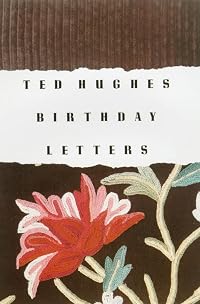
Birthday Letters
by Ted Hughes
On This Page
Description
Love poems from a husband to a wife who committed suicide. The writer is poet laureate to Queen Elizabeth II. His wife, Sylvie Plath, who was also a poet, gassed herself in 1963 after writing, "Dying is an art, like everything else." The couple are still the subject of controversy in England, some claiming he drove her to it, others that she was an impossible wife.Tags
Recommendations







Member Reviews
Honestly, I could write thousands of words of why this is a horrible horrible collection, but I haven't the time to waste on a review that no-one is going to read, so here's the short version. This work presents itself as a commentary on Plath and Hughes' relationship with the implication that the poems were written in real time. I don't believe this. I think this is a reputation washing exercise and therefore a different type of dishonesty than is usual in poetry. We learn nothing significant about either person, Plath or Hughes, that we couldn't have already guessed, but the arrogance and cruelty shown by Hughes in this collection regularly took my breath away. He never shows any sign of attempting to understand her mental health show more issues, or reflect on his own feelings about those issues. She is reduced a madwoman, a raving creature obsessed for reasons unclear with her own father, a compulsive unreflective beast dedicated to being difficult and getting in the way of him writing Important Poetry. Her behaviours are not rational or based on any set of values, they're just childish tantrums that hurt random people around here, like the imagined English countryman setting traps to catch rabbits for his pot that she starves by tearing up the snares - he gaslights her from beyond the grave, her moral values are fake whilst his are unimpeachable. Their chidren are often mentioned, but only once are either of them refered to as 'his' or 'my', otherwise only 'her', but the children's feelings or lives are not touched on, only their existence refered to obliquely to draw attention to her failings are a parent. He shows no interest in the lives of their chilren or their inner worlds, just uses them as a stick to beat her with. There are so many mocking references to Daddy and Ariel, but no engagement with the works. This is a world in which a woman's trauma is treated as a personality flaw, her bpd is treated as difficulties and troublemaking. I have seen so many people like him in my professional life, they are everything we seek to change about the world and their refusal to understand trauma and psychiatry or do any self-reflection is a major problem in the interpersonal lives of so many people. There is oh so much more, my copy has dozens of corners turned over, stickies put in to show things to raise, notes made in anger. I am a fan of Ted Hughes' work, but this is cruelty pretending to be neutrality, insults pretending to be artistic neutrality, and worst of all, there are very few poems in here that are Hughes at his best. Perhaps the best poem in the book is Wuthering Heights, or maybe The Minotaur, but mostly they are cold, like adverts, like PR bumpf, showing only excerpted versions of the human experience. Poems should make you see things in a new way, good poems should reveal the truths of the world in ways you never imagined. Not a single poem in this collection made my blood pump harder, made me exited, made me read the work out loud to my partner excitedly. There were some good poems, certainly. Hughes skill is undeniable, but there were so few moments in this where his descriptions, his rhythm, his vision grabbed me and surprised me, only depressed me with his art, a great painter leaving a portrait to posterity that is a grotesquery, handing on hatred as truth to posterity. I feel so sorry for Sylvia Plath, being handpicked as a trophy wife by a selfish man who didn't understand her and didn't want to, who felt attacked by the existence of an emotional life that was inconvenient to him, and then having her pain and art turned into mocking and dismissive poems. There is nothing in this book that tells you anything about why he loved her, what he liked about her, the good times they had together, the work they created during their relationship, how he felt and why, what she said about her subjects, their courtship, why they got married, why they had children, a whole relationship reduced to 60 or so bitter vignettes of him having the arse with her. It's the poetry equivalent of a man explaining that his ex is a nutter and you shouldn't believe anything she says. Horrible stuff, sometimes very good in a technical kind of way but mostly the only thing I felt was annoyance. show less
As background Ted Hughes was probably the finest English poet first published post 1945. He married Sylvia Plath in 1956 and was estranged from her upon her death by suicide in 1963.
This is visceral, confessional poetry of an immense power and feeling. It is the final work of a man who, knowing he is soon to die, cares nothing about displaying the soiled linen of their relationship; her weaknesses, fears, obsessions, his failings as he looks through the demonic power of his words to their inevitable conclusion. One is cut to shreds as he sifts the spikes and shards of their failings and failed relationship. There is bitterness too, Plath's father is certainly not spared, nor is Hughes himself but there are goblins and bees aplenty in show more that superlative, supernatural and ill-fated place they inhabited together. I wanted it to cease, I longed for it to be over, I never wanted it to end.
Hughes spared nothing. He was blunt and his verse often less than flattering but always the images conjured are powerful:
From 18, Rugby Street
, "And I became aware of the mystery
Of your lips, like nothing before in my life,
Their aboriginal thickness. And your nose,
Broad and Apache, nearly a boxer's nose,
Scorpio's obverse to the Semitic eagle
That made every camera your enemy,"
His word in "Visit" are stark and doom-ladenly prophetic
"Inside that numbness of the earth
Our future trying to happen.
I look up - as if to meet your voice
With all its urgent future
That has burst in on me. Then look back
At the book of the printed words.
You are ten years dead. It is only a story.
Your story. My story."
Looking back on that time and facing his own curtailed future (he died of cancer shortly after publication) Hughes left possibly his best work for the very last to be savoured after his passing. Given the subject matter that was just right. show less
This is visceral, confessional poetry of an immense power and feeling. It is the final work of a man who, knowing he is soon to die, cares nothing about displaying the soiled linen of their relationship; her weaknesses, fears, obsessions, his failings as he looks through the demonic power of his words to their inevitable conclusion. One is cut to shreds as he sifts the spikes and shards of their failings and failed relationship. There is bitterness too, Plath's father is certainly not spared, nor is Hughes himself but there are goblins and bees aplenty in show more that superlative, supernatural and ill-fated place they inhabited together. I wanted it to cease, I longed for it to be over, I never wanted it to end.
Hughes spared nothing. He was blunt and his verse often less than flattering but always the images conjured are powerful:
From 18, Rugby Street
, "And I became aware of the mystery
Of your lips, like nothing before in my life,
Their aboriginal thickness. And your nose,
Broad and Apache, nearly a boxer's nose,
Scorpio's obverse to the Semitic eagle
That made every camera your enemy,"
His word in "Visit" are stark and doom-ladenly prophetic
"Inside that numbness of the earth
Our future trying to happen.
I look up - as if to meet your voice
With all its urgent future
That has burst in on me. Then look back
At the book of the printed words.
You are ten years dead. It is only a story.
Your story. My story."
Looking back on that time and facing his own curtailed future (he died of cancer shortly after publication) Hughes left possibly his best work for the very last to be savoured after his passing. Given the subject matter that was just right. show less
With this collection of poems Hughes takes his readers on an exploration of his relationship with the poet Sylvia Plath. The highs and lows are easily apparent, and the tumultuous tone of the collection is exactly what one would expect from the union of two highly creative minds. What is most surprising is the honesty of voice that Hughes speaks/writes with; not a jot of his disappointment and anger - and in some cases accusation - are left out, so the briefly sweet moments are made even more poignant. As much as it is impossible to truely know the relationship of two people we get at least a brief understanding from this collection.
A collection of poems that Hughes published shortly before his death. All of the poems, except two, are addressed to his late wife, the poet Sylvia Plath. Most people reading this volume would probably be familiar, at least slightly, with the marriage of Hughes and Plath and her depression and death by suicide. I've read a number of reviews of this book and many reviewers have been vicious towards Hughes over their perception of his role in her depression and suicide and his selective publishing or destroying of her poems and journals.
This is the first time that I've read anything by Ted Hughes. I was struck by the intensity of feeling in these poems. Particularly in the poems reflecting the beginning of their relationship as students show more at Cambridge. It's not my place to question his motives in writing a collection about his late wife, I took these poems at face value and even though many of them were about depression and suicide I found the collection lovely and powerful over all. I look forward to reading more poetry by Ted Hughes. show less
This is the first time that I've read anything by Ted Hughes. I was struck by the intensity of feeling in these poems. Particularly in the poems reflecting the beginning of their relationship as students show more at Cambridge. It's not my place to question his motives in writing a collection about his late wife, I took these poems at face value and even though many of them were about depression and suicide I found the collection lovely and powerful over all. I look forward to reading more poetry by Ted Hughes. show less
Shortly before Ted Hughes' overdue death, aged 68, on 28th October, 1998, just one day after what would have been Sylvia Plath's sixty-sixth birthday, he published two books, Birthday Letters and Howls and Whispers. While the former, an autobiographical matrimonial apologia in verse, achieved wide recognition, the latter has remained largely unknown and unreviewed.
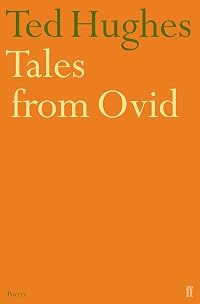
In fact, the two works of Hughes that received acclaim, Birthday Letters and Tales from Ovid, are not part of the main body of Hughes' achievement, since, splendid as they are of their kind, neither allowed Hughes the total imaginative freedom his greatest work needed, each being Hughes' treatment of already existing material, whether Ovid's tales or the already show more well-documented factual record of his relationship with Sylvia Plath. In both works the plot was predetermined.
And by identifying the characters in Birthday Letters specifically as Hughes and Plath, the poems inevitably cast the reader in the role of voyeur, however deeply our sympathies might be engaged. Birthday Letters sold ten times more copies than any other Hughes book in its first year, not because it is ten times better as poetry but because there are ten times as many voyeurs as poetry-lovers among book-buyers, and a hundred times as many among newspaper editors. show less
In fact, the two works of Hughes that received acclaim, Birthday Letters and Tales from Ovid, are not part of the main body of Hughes' achievement, since, splendid as they are of their kind, neither allowed Hughes the total imaginative freedom his greatest work needed, each being Hughes' treatment of already existing material, whether Ovid's tales or the already show more well-documented factual record of his relationship with Sylvia Plath. In both works the plot was predetermined.
And by identifying the characters in Birthday Letters specifically as Hughes and Plath, the poems inevitably cast the reader in the role of voyeur, however deeply our sympathies might be engaged. Birthday Letters sold ten times more copies than any other Hughes book in its first year, not because it is ten times better as poetry but because there are ten times as many voyeurs as poetry-lovers among book-buyers, and a hundred times as many among newspaper editors. show less
As much as I want to hate everything about Ted Hughes, this is a wonderful poetry collection, mostly about his relationship with Sylvia Plath. It's a creepy read.
These are good poems, professional and well-written. But they are not great. There are some petty and even malevolent reviews here but let's keep to facts. Sylvia Plath was a minor poet and never approached the power or authenticity of Hughes. Which is perhaps one of the reasons she killed herself. But she got her revenge - finally because of her and for her he produced this introspective domestic collection like Betjeman or even Eliot on a bad day instead of the soaring haunting beauty of his earlier poems. But I do love Fulbright Scholars.
Members
- Recently Added By
Lists

Top Five Books of 2013
1,562 works; 721 members

Bibliography for How to be a Heroine
148 works; 12 members

Poetry Corner
187 works; 15 members

Favorite Recent Poetry: 1980-2022
178 works; 70 members
Author Information

150+ Works 13,907 Members
Ted Hughes was born on August 17, 1930 in England and attended Cambridge University, where he became interested in anthropology and folklore. These interests would have a profound effect on his poetry. In 1956, Hughes married famed poet Sylvia Plath. He taught at the University of Massachusetts at Amherst from 1957 until 1959, and he stopped show more writing altogether for several years after Plath's suicide in 1963. Hughes's poetry is highly marked by harsh and savage language and depictions, emphasizing the animal quality of life. He soon developed a creature called Crow who appeared in several volumes of poetry including A Crow Hymn and Crow Wakes. A creature of mythic proportions, Crow symbolizes the victim, the outcast, and a witness to life and destruction. Hughes's other works also created controversy because of their style, manner, and matter, but he has won numerous honors, including the Somerset Maugham Award in 1960, and the Queen's Medal for Poetry in 1974. His greatest honor came in 1984, when he was named Poet Laureate of England. Ted Hughes died in 1998. (Bowker Author Biography) show less
Some Editions
Awards and Honors
Awards
Distinctions
Work Relationships
Is contained in
Common Knowledge
- Canonical title
- Birthday Letters
- Original publication date
- 1998
- Publisher's editor
- Reid, Christopher
Classifications
Statistics
- Members
- 2,533
- Popularity
- 7,574
- Reviews
- 26
- Rating
- (3.84)
- Languages
- 13 — Catalan, Dutch, English, Finnish, French, German, Italian, Norwegian (Bokmål), Norwegian, Portuguese, Spanish, Swedish, Turkish
- Media
- Paper, Ebook
- ISBNs
- 33
- ASINs
- 11