On This Page
Description
Intrigued by the ruined splendor of the Wideacre estate, Julia Lacey proceeds with her plans for its restoration and a romance with her cousin Richard, a course threatened by dark family legends.Tags
Recommendations



Member Reviews
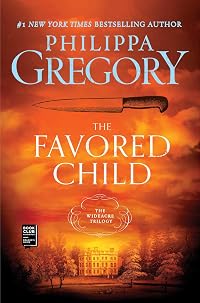
For the faint of heart who complained about Wideacre, the first novel in Philippa Gregory's trilogy, there will be no need to warn that The Favoured Child continues in the same ever-decreasing circles. Julia Lacey and Richard McAndrew are Beatrice's children, joint heirs to the land who have also inherited the best and worst traits of their mother. (I must confess that I had forgotten exactly how warped the parentage in Wideacre was, and the Wiki synopsis of the book shocked me again!) But to fellow fans of this series, who love the twisted characters and the high drama of the novels, then this sequel is a worthy successor to the Wideacre controversy. Not exactly high literature, but very entertaining and easy to read! To misquote show more Victor Kiam, I love it so much I bought the set!
Julia and Richard are Beatrice's children, but also the polar opposites of her personality embodied in two individual characters, which is perhaps why neither work as well as Beatrice Lacey in Wideacre. Beatrice held the entire story with the strength of her own character, but Julia as narrator is a passive witness to her own life, and Richard quickly turns into a pantomime villain, all cackling laughter and evil deeds. For the most part, I did find Julia to be sympathetic and historically accurate, full of good intentions but without the confidence to act on her own, yet she can also be extremely infuriating. She represents the powerless state of eighteenth century women, controlled by society's expectations and owned by their husbands, and the point is regularly drummed home. But she is also the favoured child, sharing Beatrice's link with the land and her second sight - so much is made of this vital, mystical connection in the first half of the novel, only for Julia to throw it all away in the second. Maddening! Richard, in comparison, has all of Beatrice's greed and ambition and jealousy but without any of her depth or motivation - he's just a mad bully, with the dangerous capacity to charm and terrorise with equal impact.
The Favoured Child is a sensational, supernatural epic, which must be read as a sequel to Wideacre, but also a well-crafted historical novel, with an imposing message about the balance of power in late eighteenth century England. The Quality and the parish poor, landlords and labourers, men and women - while the French are fighting a revolution across the Channel, the struggle for independence is seething away beneath the pastoral beauty of the countryside, and amongst the Laceys of Wideacre, a corrupt family slowly turning in on themselves. I appreciated the historical social commentary, from the revival of Wideacre to the Austen-esque chapters in Bath, and enjoyed reading about another self-destructive generation of Beatrice's family. The ending is slightly rushed, with shocking deaths tacked on merely to accelerate the plot, but well worth waiting for - and I am glad I have Meridon, the last novel in the trilogy, already to hand! show less
Julia and Richard are Beatrice's children, but also the polar opposites of her personality embodied in two individual characters, which is perhaps why neither work as well as Beatrice Lacey in Wideacre. Beatrice held the entire story with the strength of her own character, but Julia as narrator is a passive witness to her own life, and Richard quickly turns into a pantomime villain, all cackling laughter and evil deeds. For the most part, I did find Julia to be sympathetic and historically accurate, full of good intentions but without the confidence to act on her own, yet she can also be extremely infuriating. She represents the powerless state of eighteenth century women, controlled by society's expectations and owned by their husbands, and the point is regularly drummed home. But she is also the favoured child, sharing Beatrice's link with the land and her second sight - so much is made of this vital, mystical connection in the first half of the novel, only for Julia to throw it all away in the second. Maddening! Richard, in comparison, has all of Beatrice's greed and ambition and jealousy but without any of her depth or motivation - he's just a mad bully, with the dangerous capacity to charm and terrorise with equal impact.
The Favoured Child is a sensational, supernatural epic, which must be read as a sequel to Wideacre, but also a well-crafted historical novel, with an imposing message about the balance of power in late eighteenth century England. The Quality and the parish poor, landlords and labourers, men and women - while the French are fighting a revolution across the Channel, the struggle for independence is seething away beneath the pastoral beauty of the countryside, and amongst the Laceys of Wideacre, a corrupt family slowly turning in on themselves. I appreciated the historical social commentary, from the revival of Wideacre to the Austen-esque chapters in Bath, and enjoyed reading about another self-destructive generation of Beatrice's family. The ending is slightly rushed, with shocking deaths tacked on merely to accelerate the plot, but well worth waiting for - and I am glad I have Meridon, the last novel in the trilogy, already to hand! show less
I didn't like Wideacre, but for some reason I still put this book, its sequel, on my reading list, and it's spent over ten years on my shelves as I wasn't keen to pick it up. But the past six months, I've been trying to pick up books from my shelves, it was time to pick this one up too. And I didn't dislike it as much as I disliked Wideacre, but I was frustrated with the powerlessness of a woman it depicts, next to a co-heir who's clearly unhinged. There was a lot to like about Julia, but any time anything good happens to her, you just know it's going to be downhill and despair from there onwards.
Julia Lacey is why incest is wrong. This poor, dim creature is just too stupid to live. Frankly, it's amazing she made it to seventeen. This book's entire tedious plot can be guessed from the first chapter. God alone knows why it's 600 pages long. It's almost as if Ms. Gregory gets off on watching her mentally deficient main character struggle to grasp the obvious.
Julia is bland as toast and inhumanely slow. It is impossible to care about her as she lurches about like a puppet - dancing to the whim of whatever man is closest. When she's around Richard she does whatever he wants, when around Ralph - the same. She's around James for about ten seconds and falls in love - a romantic development that is rendered meaningless after we've seen show more her do the same to everyone else. No one is surprised when she returns home and immediately goes back to Richard. No one is surprised when Richard violently rapes her. No one is surprised when Julia says nothing and destroys evidence to protect him. No one is surprised when Julia gets pregnant. No one that is - except Julia who seems to have the recall of a goldfish and the wit of some other, stupider fish.
The last hundred pages just DRAG... as the author sees fit to "reveal" any number of "secrets" that have been glaringly obvious to EVERYONE for ages. Take a lesson kiddies - incest kills. show less
Julia is bland as toast and inhumanely slow. It is impossible to care about her as she lurches about like a puppet - dancing to the whim of whatever man is closest. When she's around Richard she does whatever he wants, when around Ralph - the same. She's around James for about ten seconds and falls in love - a romantic development that is rendered meaningless after we've seen show more her do the same to everyone else. No one is surprised when she returns home and immediately goes back to Richard. No one is surprised when Richard violently rapes her. No one is surprised when Julia says nothing and destroys evidence to protect him. No one is surprised when Julia gets pregnant. No one that is - except Julia who seems to have the recall of a goldfish and the wit of some other, stupider fish.
The last hundred pages just DRAG... as the author sees fit to "reveal" any number of "secrets" that have been glaringly obvious to EVERYONE for ages. Take a lesson kiddies - incest kills. show less
[This is a review I wrote in 2009}
**Page-turning historical fiction transports you to a turbulent landed estate in 1790s England**
Mysticism, romance, turbulence, rivalry, passion - a gripping historical novel.
The Favoured Child is a sequel to Wideacre, but can equally as well be read on its own. I was over halfway through the book before I realised that I was reading the second book in a series. The story is set in late-eighteenth-century England, on a run-down landed estate on the South Downs, called Wideacre. The estate suffers from a legacy left by the previous Lacey landowner, Beatrice, who perished along with her beloved Wideacre Hall in a suspicious fire a few years previously. The estate is now bankrupt, the village poverty show more stricken, resentments are felt throughout the estate and this is the inheritance of the next two Lacey heirs, cousins Julia and Richard. The cousins have been growing up together under the protection of Julia's mother and family, in the shadow of the blackened ruins of the Hall, and with little money and just each other for company - friends, rivals and secretly betrothed since childhood, their relationship is a tempestuous one. Although they are to inherit jointly, there is an old saying in the village that only one can be the favoured child, only one of them can have the mystical relationship with the land traditionally passed down to each generation, a connection with the land that can bring fertility and prosperity back to the Wideacre estate; in truth only one of them can be the true Lacey heir.
I picked up this novel on a whim and am so glad I did. I used to read quite a lot of historical fiction and then gave them up when I found the plots were becoming quite thin and reedy, or too similar to each other but I shall definitely be reading some more Philippa Gregory. There is nothing predictable about The Favoured Child. The historical background is superb (without being overly detailed) - the history does not intrude on the novel, it just adds to its richness and sense of drama. I'm looking forward to reading the final book of the trilogy, Meridon. show less
**Page-turning historical fiction transports you to a turbulent landed estate in 1790s England**
Mysticism, romance, turbulence, rivalry, passion - a gripping historical novel.
The Favoured Child is a sequel to Wideacre, but can equally as well be read on its own. I was over halfway through the book before I realised that I was reading the second book in a series. The story is set in late-eighteenth-century England, on a run-down landed estate on the South Downs, called Wideacre. The estate suffers from a legacy left by the previous Lacey landowner, Beatrice, who perished along with her beloved Wideacre Hall in a suspicious fire a few years previously. The estate is now bankrupt, the village poverty show more stricken, resentments are felt throughout the estate and this is the inheritance of the next two Lacey heirs, cousins Julia and Richard. The cousins have been growing up together under the protection of Julia's mother and family, in the shadow of the blackened ruins of the Hall, and with little money and just each other for company - friends, rivals and secretly betrothed since childhood, their relationship is a tempestuous one. Although they are to inherit jointly, there is an old saying in the village that only one can be the favoured child, only one of them can have the mystical relationship with the land traditionally passed down to each generation, a connection with the land that can bring fertility and prosperity back to the Wideacre estate; in truth only one of them can be the true Lacey heir.
I picked up this novel on a whim and am so glad I did. I used to read quite a lot of historical fiction and then gave them up when I found the plots were becoming quite thin and reedy, or too similar to each other but I shall definitely be reading some more Philippa Gregory. There is nothing predictable about The Favoured Child. The historical background is superb (without being overly detailed) - the history does not intrude on the novel, it just adds to its richness and sense of drama. I'm looking forward to reading the final book of the trilogy, Meridon. show less
Just as with the first book, I have mixed feelings about this one.
Julia and Richard are joint heirs to the estate and its lands. The two cousins - who do not know they are also siblings - are both lovely and admired, but on the inside, they are night and day. Julia has the Lacey gift for the land and animals, and is a genuinely kind person, which makes her much loved by the village. Richard on the other hand, hides a sociopathic persona under his charming mien. He bullies Julia, and it does not take long for the reader to realize just how much evil Richard is capable of.
One issue I had with this book was Julia's Sight. At times, it was appropriate, but at other times it simply felt like the author was using handwavium, using Julia's show more gift as a easy plot device. She relies on it too much, and for all the time that she uses Julia's sight, just threw the narrative off balance.
It gets frustrating at times to read about Julia's plight, as she is offered help several times, but demurs. It is not until too late that Julia realizes that Richard must be dealt with decisively. However, for the frustration one feels at Julia's passiveness, the book is written well in regards to its historical setting. As a history nerd, I love when an author does her research, and it was easy to have the feel of late 18th-century England gentry life, as well as the harsher realities of the life of the poor. show less
Julia and Richard are joint heirs to the estate and its lands. The two cousins - who do not know they are also siblings - are both lovely and admired, but on the inside, they are night and day. Julia has the Lacey gift for the land and animals, and is a genuinely kind person, which makes her much loved by the village. Richard on the other hand, hides a sociopathic persona under his charming mien. He bullies Julia, and it does not take long for the reader to realize just how much evil Richard is capable of.
One issue I had with this book was Julia's Sight. At times, it was appropriate, but at other times it simply felt like the author was using handwavium, using Julia's show more gift as a easy plot device. She relies on it too much, and for all the time that she uses Julia's sight, just threw the narrative off balance.
It gets frustrating at times to read about Julia's plight, as she is offered help several times, but demurs. It is not until too late that Julia realizes that Richard must be dealt with decisively. However, for the frustration one feels at Julia's passiveness, the book is written well in regards to its historical setting. As a history nerd, I love when an author does her research, and it was easy to have the feel of late 18th-century England gentry life, as well as the harsher realities of the life of the poor. show less
In this second book in the Wideacre trilogy, Julia and her cousin Richard have grown up together among the ruins of their family estate and have always planned to marry, despite their guardians’ disapproval. When, as a teenager, Julia begins to demonstrate a talent for working with the land and its inhabitants, Richard grows resentful. After all, only one of them can be the rumored favored child, the true heir to Wideacre.
Gregory’s early works are starting to remind me of V.C. Andrews’ style of near-horror stories, only with richer detail and better writing. I really wanted to strangle Julia for her stupidity at times. Yes, she was confined within the role of women in her time, but had she told someone – anyone! – what was show more happening, at least some of the tragedy might have been avoided. show less
Gregory’s early works are starting to remind me of V.C. Andrews’ style of near-horror stories, only with richer detail and better writing. I really wanted to strangle Julia for her stupidity at times. Yes, she was confined within the role of women in her time, but had she told someone – anyone! – what was show more happening, at least some of the tragedy might have been avoided. show less
I'm working my way through the Wideacre trilogy. The second book continues the themes of the first one and is written in the same style. Pagan gods, seeing the future, and other phenomenon repeat throughout the book. It is dark and full of suspense.
But it also tells a very modern story, despite its eighteenth century setting. The main character deals with a changing economy, changing way of doing business, she deals with romance, and she deals with cruel emotional and physical abuse. While the characters telling of the events are very clear and in our modern society there is no question that crimes were committed, the way the world worked at that time was not entirely favorable to women like the main character.
Potential Wideace (book 1) show more spoilers below.
Beatrice, the main character from the first book, loved the land and the people on the land, and all was good. The people loved her back and the land produced excellent harvests. But when Beatrice turned her back on the land and people living on it, in favor of securing her place on it in the future, it all turned on her. At the end of Wideacre, she left Wideacre to her 2 heirs - a son and daughter, both products of a secret incestuous relationship.
Now, the 2 children are grown and unaware of their close blood relationship to each other. The qualities of Beatrice have been split in two. Beatrice loved the land and loved the villages, so does Julia. But Beatrice also wanted Wideacre for herself, no matter what the cost, as does Richard. Beatrice treated villagers with compassion, but she did despicable things to the people who stood in her way. Beatrice was full of contradiction, but her two heirs have become the good vs evil that was inside of her. It may not be realistic, but it worked to tell this story.
The book was a good view into late 18th century manor life in the context of the changing economic world at that time. It also had some romance in it, which I enjoyed. But mostly it is a gothic tale of the lengths an evil person will go to hang on to the idea he is better than the rest and the lengths a truly good person will go to prevent that evil and provide for the people she loves. show less
But it also tells a very modern story, despite its eighteenth century setting. The main character deals with a changing economy, changing way of doing business, she deals with romance, and she deals with cruel emotional and physical abuse. While the characters telling of the events are very clear and in our modern society there is no question that crimes were committed, the way the world worked at that time was not entirely favorable to women like the main character.
Potential Wideace (book 1) show more spoilers below.
Beatrice, the main character from the first book, loved the land and the people on the land, and all was good. The people loved her back and the land produced excellent harvests. But when Beatrice turned her back on the land and people living on it, in favor of securing her place on it in the future, it all turned on her. At the end of Wideacre, she left Wideacre to her 2 heirs - a son and daughter, both products of a secret incestuous relationship.
Now, the 2 children are grown and unaware of their close blood relationship to each other. The qualities of Beatrice have been split in two. Beatrice loved the land and loved the villages, so does Julia. But Beatrice also wanted Wideacre for herself, no matter what the cost, as does Richard. Beatrice treated villagers with compassion, but she did despicable things to the people who stood in her way. Beatrice was full of contradiction, but her two heirs have become the good vs evil that was inside of her. It may not be realistic, but it worked to tell this story.
The book was a good view into late 18th century manor life in the context of the changing economic world at that time. It also had some romance in it, which I enjoyed. But mostly it is a gothic tale of the lengths an evil person will go to hang on to the idea he is better than the rest and the lengths a truly good person will go to prevent that evil and provide for the people she loves. show less
Members
- Recently Added By
Lists

Historical Fiction
889 works; 91 members

Best family sagas
244 works; 34 members
Author Information

129+ Works 86,526 Members
Philippa Gregory was born in Nairobi, Kenya on January 9, 1954. She received a B.A. in history at Sussex University in 1982 and a Ph.D. in 18th-century literature from the University of Edinburgh in 1984. She has taught at numerous universities and was made a fellow of Kingston University in 1994. Her historical novels include: Wideacre, The show more Queen's Fool, The Virgin's Lover, The Constant Princess, The Boleyn Inheritance, The Other Queen, The White Queen, The Red Queen, The Lady of the Rivers and The White Princess. She has also written several contemporary fiction works including Perfectly Correct, The Little House and Zelda's Cut. She adapted her novel A Respectable Trade, about the slave trade in England, into a four-part series for BBC television. Her script won an award from the Committee for Racial Equality. She won the Feminist Book Fortnight Award in 1990 and the Romantic Novelist of the Year Award in 2002. Her book, The Other Boleyn Girl, won the Parker Romantic Novel of the Year award and was adapted into a major feature film in 2008 starring Natalie Portman and Scarlett Johansson. The White Queen was adapted into an original cable series on the Starz nertwork in 2013 starring Max Irons and Rebecca Ferguson. Her title The Kings Curse made the New York Times bestseller list in 2014. Her title, The Taming of the Queen, made the New York Times bestseller list in 2015. Her latest bestseller is Three Sisters, Three Queens. Gregory also writes children's books, is a regular contributor to newspapers and magazines, a frequent broadcaster for radio and television, and runs a small charity that builds wells in schoolyards in Gambia. (Bowker Author Biography) show less
Series

Work Relationships
Is contained in
Wideacre / The Favored Child / Meridon / The Constant Princess / The Boleyn Inheritance / The Queen's Fool / The Other Boleyn Girl by Philippa Gregory
Common Knowledge
- Canonical title
- The Favoured Child
- Original title
- The Favored Child
- Original publication date
- 1989
- People/Characters
- Julia Lacey; Richard MacAndrew; Celia Lacey; John MacAndrew; Ralph Megson; James Fortescue
- Important places
- Chichester, West Sussex, England, UK; England, UK
- First words
- Before there was anything, there was the dream.
- Last words
- (Click to show. Warning: May contain spoilers.)Ralph's sweep of the knife was as clean as a butcher's.
- Original language
- English
Classifications
Statistics
- Members
- 1,586
- Popularity
- 14,335
- Reviews
- 20
- Rating
- (3.50)
- Languages
- English, German
- Media
- Paper, Audiobook, Ebook
- ISBNs
- 27
- UPCs
- 1
- ASINs
- 13