On This Page
Description
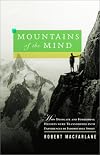
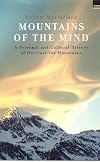
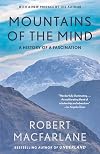
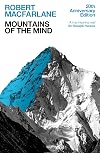
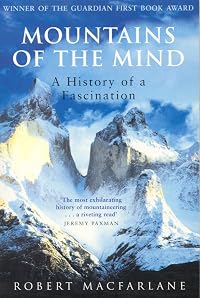
The basis for the new documentary film, Mountain: A Breathtaking Voyage into the Extreme. Combining accounts of legendary mountain ascents with vivid descriptions of his own forays into wild, high landscapes, Robert Macfarlane reveals how the mystery of the world's highest places has come to grip the Western imagination-and perennially draws legions of adventurers up the most perilous slopes. His story begins three centuries ago, when mountains were feared as the forbidding abodes of dragons show more and other mysterious beasts. In the mid-1700s the attentions of both science and poetry sparked a passion for mountains; Jean-Jacques Rousseau and Lord Byron extolled the sublime experiences to be had on high; and by 1924 the death on Mount Everest of an Englishman named George Mallory came to symbolize the heroic ideals of his day. Macfarlane also reflects on fear, risk, and the shattering beauty of ice and snow, the competition and contemplation of the climb, and the strange alternate reality of high altitude, magically enveloping us in the allure of mountains at every level. show lessTags
Recommendations

















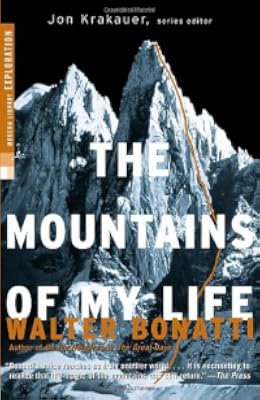
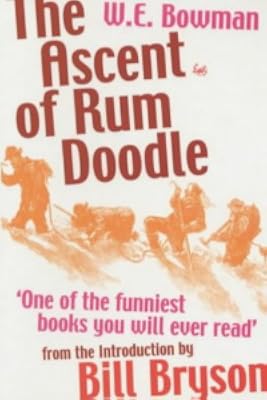
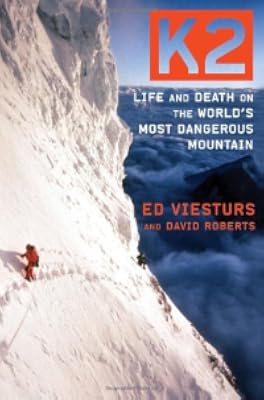
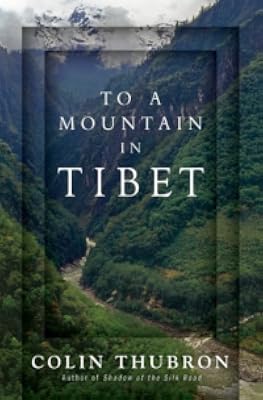
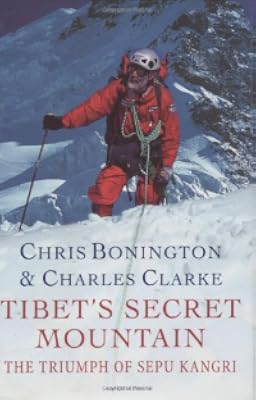

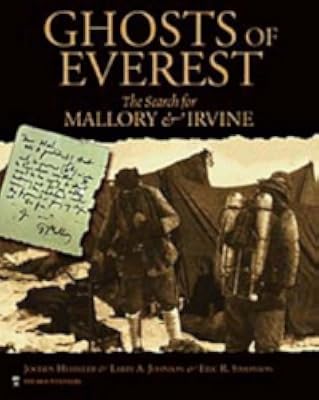
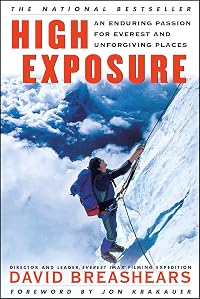

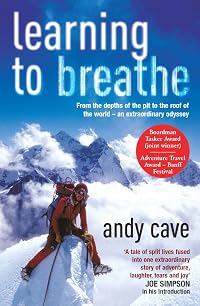
Member Recommendations
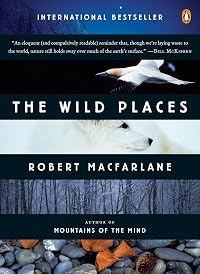
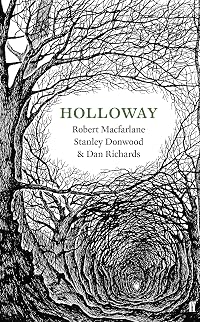
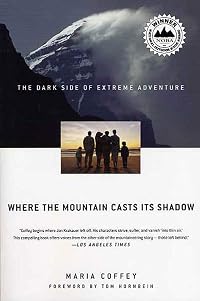
hazzabamboo Both are crafted books, and both deal with the attraction of the extreme, the unknown and the doomed
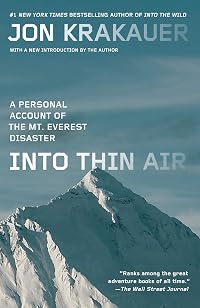
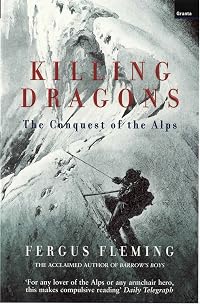
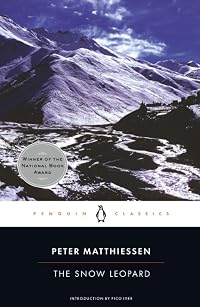
adamhindman Similar theme: a personal memoir exploring why we — humans — are fascinated by mountains and want to be near them.

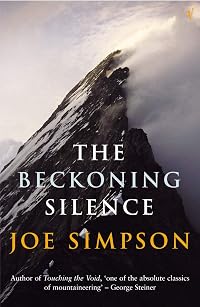
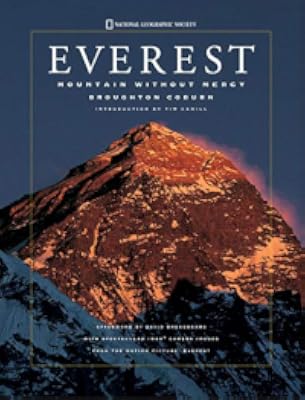
adamhindman Both describe geology in evocative, romantic language mingled with scientific terminology, and make doomed best efforts to express the lure of mountain climbing to a general audience.
Member Reviews
Everyone has their happy place, and for me its the mountains. I'm no climber (I prefer my limbs all in one piece), but there's nowhere I feel more at peace than when I'm taking in the view from a beautiful mountain or hilly peak. In Macfarlane's Mountains of the Mind, he sets out to explain what drives people to the mountains in their droves, and especially what drives those who are prepared to risk their lives in pursuit of a particular summit.
The premise of this book is, potentially, a difficult one. It's one thing to be a lover of the mountains and just 'get' what it's like being amongst the peaks, but it's entirely another to try to explain that over the full length of a book. Hence the mix of climbing history, geology, personal show more memoir and religion which makes up 'Mountains of the Mind', subtitled 'A History of a Fascination'.
I must admit that when I bought this book I missed the subtitle*, so I probably went into this read on the wrong foot. I was expecting (and looking for) a travelogue that would sweep me back up amongst the mountain peaks in this tiresome year of non-travel, but if I'd read the full title properly I'd have realised that this is more of a history of mountain attraction. Some of the history had me riveted (for example the chapter on Mallory's fatal attraction to Everest), but in other places I feel he got too caught up in trying to give a fully comprehensive chronological account of British climbing development. In my mind that's a different book, and I would have loved if he'd spent a little less time back in the 1700s and focused more on modern climbing. For example, what drives 20,000 people - many of them inexperienced tourists - to climb Mont Blanc every year, despite helicopters lifting on average a body a day from the peaks above Chamonix in climbing season?
That said, Macfarlane is both an explorer himself and a talented wielder of the pen, and overall I really enjoyed this book. When he wasn't bogged down in the extensiveness of his own research, Macfarlane's knowledge and passion for the mountains is translated into wonderful writing that brings you shivering to the edge of many a snowy precipice. His own climbing adventures were fascinating - in fact, I'd have loved to have seen more of those memoirs in place of some of the historical detail.
Despite my niggles (and again, my fault for going in with the wrong expectation), this book did teleport me back to the mountains for a few days, and has left me with a hunger for some further mountain reading in 2021. I find myself particularly interested in the climbing history of the sherpas, whose achievements are so often overlooked in climbing history. If anyone has any recommendations on that front let me know.
4 stars - a fascinating read (but you can still keep your crampons - I'm happy to climb by armchair).
* In my defence this book seems to have a number of editions, many of which have 'adventures in reaching the summit' as the subtitle, which is closer to what I was expecting. show less
The premise of this book is, potentially, a difficult one. It's one thing to be a lover of the mountains and just 'get' what it's like being amongst the peaks, but it's entirely another to try to explain that over the full length of a book. Hence the mix of climbing history, geology, personal show more memoir and religion which makes up 'Mountains of the Mind', subtitled 'A History of a Fascination'.
I must admit that when I bought this book I missed the subtitle*, so I probably went into this read on the wrong foot. I was expecting (and looking for) a travelogue that would sweep me back up amongst the mountain peaks in this tiresome year of non-travel, but if I'd read the full title properly I'd have realised that this is more of a history of mountain attraction. Some of the history had me riveted (for example the chapter on Mallory's fatal attraction to Everest), but in other places I feel he got too caught up in trying to give a fully comprehensive chronological account of British climbing development. In my mind that's a different book, and I would have loved if he'd spent a little less time back in the 1700s and focused more on modern climbing. For example, what drives 20,000 people - many of them inexperienced tourists - to climb Mont Blanc every year, despite helicopters lifting on average a body a day from the peaks above Chamonix in climbing season?
That said, Macfarlane is both an explorer himself and a talented wielder of the pen, and overall I really enjoyed this book. When he wasn't bogged down in the extensiveness of his own research, Macfarlane's knowledge and passion for the mountains is translated into wonderful writing that brings you shivering to the edge of many a snowy precipice. His own climbing adventures were fascinating - in fact, I'd have loved to have seen more of those memoirs in place of some of the historical detail.
Despite my niggles (and again, my fault for going in with the wrong expectation), this book did teleport me back to the mountains for a few days, and has left me with a hunger for some further mountain reading in 2021. I find myself particularly interested in the climbing history of the sherpas, whose achievements are so often overlooked in climbing history. If anyone has any recommendations on that front let me know.
4 stars - a fascinating read (but you can still keep your crampons - I'm happy to climb by armchair).
* In my defence this book seems to have a number of editions, many of which have 'adventures in reaching the summit' as the subtitle, which is closer to what I was expecting. show less
Had read it 15 (or more?) years ago for the first time, my first MacFarlane (obviously) and the beginning of a fascination: With the topics he covers, but mostly with his style. I don't know if his playful puns and metaphors sound corny to a native speaker, but they hit a linguistic spot with me. And of course the interwoven character of the subject matter and personal insertions, which diversify and lighten up. Never too scientific anyway, so even someone with limited prior knowledge and mental capacity like me can follow easily and still (pretend to) learn a lot. I was skeptical at first to have it read to me, as I did now, as in his other books the rereading of passages and / or expressions happened regularly. But this, being his show more first, is rather straightforward, really, so no skipping back necessary.
As for "Mountains of the mind" - I know the approach is very obvious and not ingenious (mountains as a projection surface for basically anything over the course of time and aesthetics), but, as I said, the way he pulls it off is so convincing and attractive in the truest sense of the word that it doesn't really matter. So that you even pardon the 30-page or so eulogy-come-elegy of George Mallory at the end, just to make the point that he had something like an obsessive ménage-à-trois going on with his wife and his mountain, before finally leaving the latter for the former for good.
I'm hoping for a new book soon. I don't care what is going to be about, as long as nature is involved. show less
As for "Mountains of the mind" - I know the approach is very obvious and not ingenious (mountains as a projection surface for basically anything over the course of time and aesthetics), but, as I said, the way he pulls it off is so convincing and attractive in the truest sense of the word that it doesn't really matter. So that you even pardon the 30-page or so eulogy-come-elegy of George Mallory at the end, just to make the point that he had something like an obsessive ménage-à-trois going on with his wife and his mountain, before finally leaving the latter for the former for good.
I'm hoping for a new book soon. I don't care what is going to be about, as long as nature is involved. show less
My copy of Mountains of the Mind got wet before I read it. The pages were all buckled and the cover slowly disintegrated over the week or two that I tucked it away while traveling through bush fires. For some reason this gradual erosion fitted the sense of frayed worn-outness that beset the various characters who mountaineer through time in this wonderful book.
I'm a mountain person. I like solitude, cool air, high vantage points, rock under my feet, and the feeling of being enclosed by a broken skyline of crags and cliffs. So, I was looking forward to reading this book and, as with everything I've read so far of Robert Macfarlane's (Landmarks, Underland), I was not disappointed.
He traces the idea of mountains from places to be avoided show more to objects of fascination and compulsion, arriving at Mallory's failed attempts to climb Everest and then, best of all, a fleeting encounter with a hare. I say this because I think Robert Macfarlane is at his best when describing his own experiences, like the Chapter, Red Dancers in Underland. His courage and perceptive sensitivity shine through when he is alone.
I'm a mountain person. I like solitude, cool air, high vantage points, rock under my feet, and the feeling of being enclosed by a broken skyline of crags and cliffs. So, I was looking forward to reading this book and, as with everything I've read so far of Robert Macfarlane's (Landmarks, Underland), I was not disappointed.
He traces the idea of mountains from places to be avoided show more to objects of fascination and compulsion, arriving at Mallory's failed attempts to climb Everest and then, best of all, a fleeting encounter with a hare. I say this because I think Robert Macfarlane is at his best when describing his own experiences, like the Chapter, Red Dancers in Underland. His courage and perceptive sensitivity shine through when he is alone.
show less
Mountains return to us the priceless capacity for winder which can so insensibly be leached away by modern existence.
A cultural history/autobiographical memoir of mountains as human fascination. Macfarlane's crisp, lyrical writing is a real delight, and I'm quite looking forward to more of his books.
Three centuries ago, no one was interested in mountains and other wild places. The land could not be cultivated, nor was there any point in possessing them and the people who inhabited these heights were considered a lesser human. They were considered no go areas. But in the middle of the Eighteenth century, this perception of the mountain began to change. The premise of the sublime, the balance point of fear and exhilaration that could be achieved when climbing, coupled with the sense that the mountains were much, much older than previously thought, meant that the great thinkers of the age became interested in the how and why they were formed.
And so begins Macfarlane’s mountain adventure. He writes about the forces that make show more mountains and the glaciers that populate them. There is lot on our perception of them too, the overcoming of the fear that these immense heights can bring, the fixation of getting to the summit of these peaks. These beautiful peaks can be deadly too, the Alps claim one climber a day during the season, and less people die on Scottish roads than they do in the mountains. But those that conquer the peaks are shown the magnificence and beauty of the world beneath their feet.
Macfarlane ends with an gripping account of Mallory and his obsession with the highest peak in the world, Everest. An avid climber and adventurer, who climbed various peaks including setting one of the hardest routes up Pillar Rock in the lakes. Starting in 1921, he was a member of three expeditions to Nepal where they explored various potential routes up the mountain. No one had tried to climb at this altitude before, and there were an number of fatalities and numerous cases of frostbite, before he returned in 1924 for the final attempt. On the 8th June Mallory and Irvine start for the final ascent. As they do a fine mist descends around them, and they are last seen moving along a ridge as the mist swirls around them.
I have been meaning to read this book for absolutely ages. Macfarlane is one of my favourite writers, and I have read all hi others, but not this, his first. He manages to weave together the mindset of the people that climb these peaks with the cultural history and deep geological time of these places. The writing is lyrical, poetic and engaging, and he describes what he sees with beautiful prose so you can drink in he view too. But in that beauty is danger too; no climb, even in summer is risk free, and even though mountains can bring exhilaration to your life, they can claim it too. For me it is a solid four, not as good as his later books though. show less
And so begins Macfarlane’s mountain adventure. He writes about the forces that make show more mountains and the glaciers that populate them. There is lot on our perception of them too, the overcoming of the fear that these immense heights can bring, the fixation of getting to the summit of these peaks. These beautiful peaks can be deadly too, the Alps claim one climber a day during the season, and less people die on Scottish roads than they do in the mountains. But those that conquer the peaks are shown the magnificence and beauty of the world beneath their feet.
Macfarlane ends with an gripping account of Mallory and his obsession with the highest peak in the world, Everest. An avid climber and adventurer, who climbed various peaks including setting one of the hardest routes up Pillar Rock in the lakes. Starting in 1921, he was a member of three expeditions to Nepal where they explored various potential routes up the mountain. No one had tried to climb at this altitude before, and there were an number of fatalities and numerous cases of frostbite, before he returned in 1924 for the final attempt. On the 8th June Mallory and Irvine start for the final ascent. As they do a fine mist descends around them, and they are last seen moving along a ridge as the mist swirls around them.
I have been meaning to read this book for absolutely ages. Macfarlane is one of my favourite writers, and I have read all hi others, but not this, his first. He manages to weave together the mindset of the people that climb these peaks with the cultural history and deep geological time of these places. The writing is lyrical, poetic and engaging, and he describes what he sees with beautiful prose so you can drink in he view too. But in that beauty is danger too; no climb, even in summer is risk free, and even though mountains can bring exhilaration to your life, they can claim it too. For me it is a solid four, not as good as his later books though. show less
This is subtitled "A History Of A Fascination", which perfectly captures the subject.
Macfarlane evocatively describes how Romantic ideas about nature and the Victorian drive for exploration, combined with new ideas about deep time and geology, replaced the medieval view of mountains as bleak and haunted wastelands. The culmination of the book is Mallory's expeditions to Everest, which bring together all of these themes.
A climber himself, Macfarlane is utterly brilliant at describing the experiences of travelling in high altitudes, the incredible beauty of the places and the fascination, and outright obsession, that they have inspired.
Macfarlane evocatively describes how Romantic ideas about nature and the Victorian drive for exploration, combined with new ideas about deep time and geology, replaced the medieval view of mountains as bleak and haunted wastelands. The culmination of the book is Mallory's expeditions to Everest, which bring together all of these themes.
A climber himself, Macfarlane is utterly brilliant at describing the experiences of travelling in high altitudes, the incredible beauty of the places and the fascination, and outright obsession, that they have inspired.
The peak is Everest, Mallory on Everest. Our route takes us through Petrarch, Shelley, Johnson... how did we, western culture I suppose, become so fascinated, entranced, by mountains, by climbing up mountains? Macfarlane does a very good job of factoring out the components, curiosity, competition, conquering, contemplating... all combined to drive Mallory to his doom.
Very well written, of course. A nice combination of personal experience with cultural history.
Very well written, of course. A nice combination of personal experience with cultural history.
Members
- Recently Added By
Lists

Recommend the 20 best books you've read in the last five years
2,168 works; 607 members

Nature Writing
33 works; 3 members
Author Information

28+ Works 10,113 Members
Robert Macfarlane is the author of Landmarks which made the Samuel Johnson Prize 2015 shortlist. (Bowker Author Biography)
Some Editions
Awards and Honors
Series

Belongs to Publisher Series
Naturkunden (65)
Common Knowledge
- Canonical title*
- Montagne della mente : storia di una passione
- Original publication date
- 2003
- Dedication
- To my grandparents
- First words
- I was a twelve-year-old in my grandparents' house in the Scottish Highlands when I first came across one of the great stories of mountaineering: 'The Fight for Everest', an account of the 1924 British expedition during which ... (show all)George Mallory and Andrew Irvine disappeared near the summit of Everest.
*Some information comes from Common Knowledge in other languages. Click "Edit" for more information.
Classifications
- Genres
- Nonfiction, Sports and Leisure, Travel, Science & Nature, General Nonfiction, Biography & Memoir
- DDC/MDS
- 796.52 — Arts & recreation Recreation, sports, and performing arts Athletic and outdoor sports and games Outdoor leisure Walking and exploring by kind of terrain
- LCC
- GV199.89 .M33 — Geography, Anthropology and Recreation Recreation. Leisure Recreation. Leisure
- BISAC
Statistics
- Members
- 881
- Popularity
- 30,828
- Reviews
- 23
- Rating
- (3.90)
- Languages
- 10 — Chinese, Czech, Dutch, English, French, German, Italian, Polish, Portuguese, Spanish
- Media
- Paper, Audiobook, Ebook
- ISBNs
- 30
- ASINs
- 12