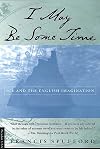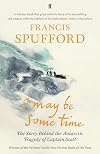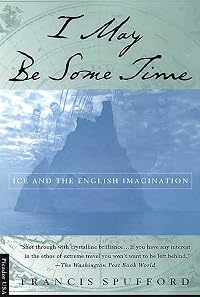
I May Be Some Time: Ice and the English Imagination
by Francis Spufford
On This Page
Description
I May Be Some Time is a richly engrossing cultural history of our obsession with ice, Eskimos and polar exploration. When Captain Scott died in 1912 on his way back from the South Pole, his story became a myth embedded in the national imagination. Despite wars and social change, despite recent debunking, it is still there. Everyone remembers the doomed explorers' last words - 'I'm just going outside, and I may be some time' - and history is what you can remember. Conventional histories of show more polar exploration trace the laborious expeditions across the map, dwelling on the proper techniques of ice-navigation and sledge-travel. But we rarely ask what the explorers thought they were doing, or why they did these insane things. I May Be Some Time is about the poles as they have been perceived, dreamed, even desired. It explores the myth as myth, showing how Scott's death was the culmination to a long-running national enchantment with perilous journeys to the ends of the earth. 'The thrills of desolation, of icy beauty, of challenge, of human courage, of comradeship . . . I May Be Some Time is a truly majestic work of scholarship, thought and literary imagination.' Jan Morris, The Times show lessTags
Recommendations










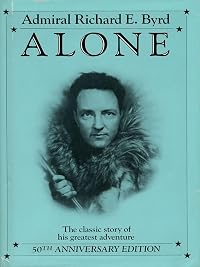
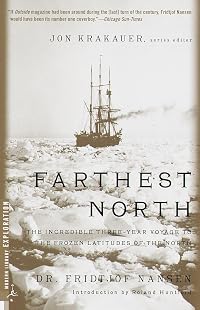
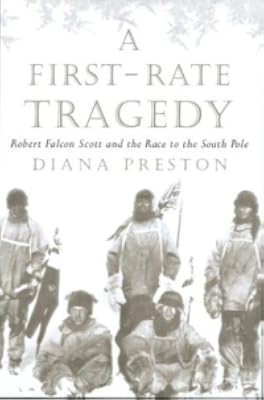
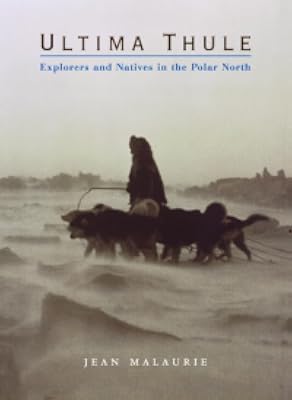








Member Recommendations
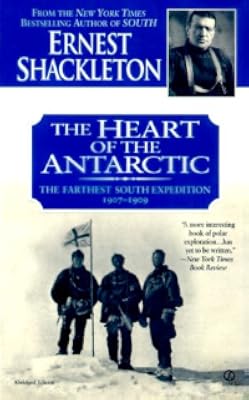
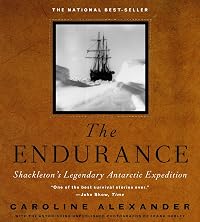
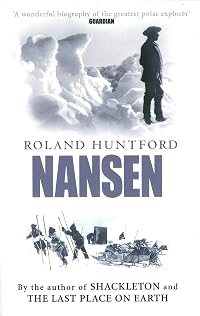
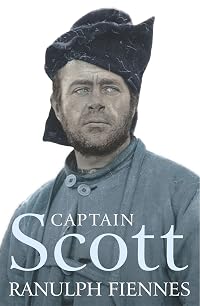
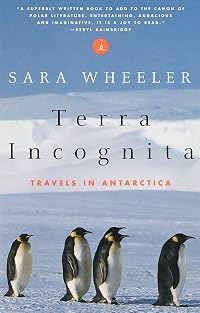
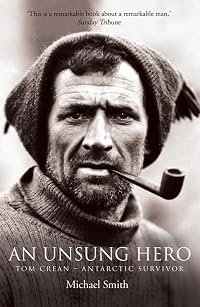
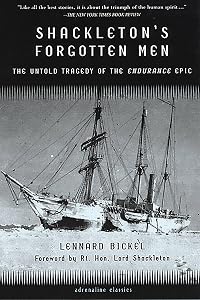
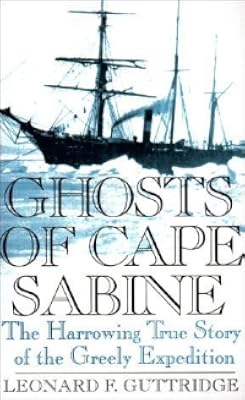
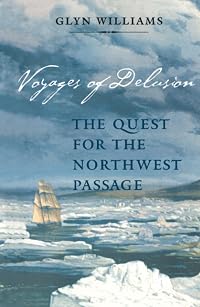
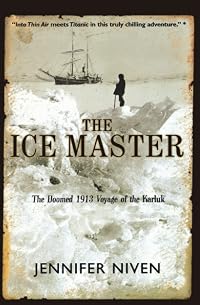
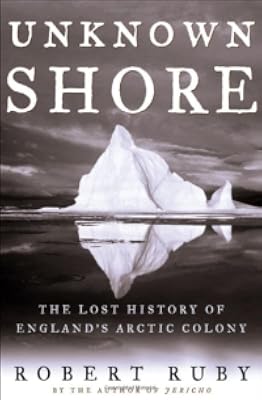
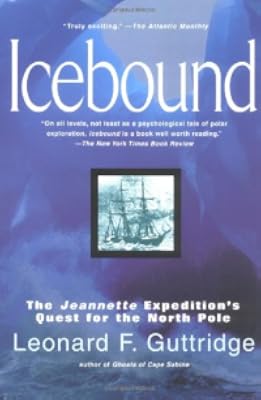
hazzabamboo Both are crafted books, and both deal with the attraction of the extreme, the unknown and the doomed
Member Reviews
All the non-fiction books about polar exploration that I’d read prior to this one were straightforward travelogue-slash-adventure narratives that dwelt on the immediate context of the expedition recounted and the personalities involved. ‘I May Be Some Time’ is a very different sort of book, although it took me a stupidly long time to realise just how much so. Spufford pulls together an idiosyncratic cultural history, not of the expeditions themselves so much as the context in which they took place. Successive chapters discuss in great detail such themes as the nature of the sublime in popular perceptions of the Arctic, the role of expedition wives as patient yet proactive guardians of their husbands’ reputations, and how show more attitudes towards the Inuit became more overtly racist during the 19th century. The penultimate chapter was my favourite. In it, Spufford embarks upon a magnificent, grandiloquent, and sweeping account of what it meant to be Edwardian. This combines such delightful ephemera as the use of ‘North Pole’ as rhyming slang for ‘arsehole’ with insights like this:
The final chapter is entirely different, a brief fictionalised account of Scott’s ill-fated final expedition. This would jar in the hands of a lesser writer, but Spufford carries it off beautifully. The book then ends on a personal note, as he recounts a trip to McMurdo Base in the Antarctic to see the memorial to Scott put up by surviving members of his expedition. It’s a moving epilogue that is somehow more powerful for all the dense and elaborate edifice of cultural and social significance that prior chapters have built around it. For all the wider meanings and significances that it evokes, Scott’s journey to the North Pole was also a tragic, unnecessary waste of lives.
I found the combination of the three elements; thematic history, fictionalised narrative, and personal travelogue; added up to a ponderous yet profound whole. The extended quotations from Victorian sources drag at times, yet Spufford’s infectious fascination with the subject always shines through. I found the reflections on Edwardian society before WWI especially thought-provoking, as I hadn’t previously read much analysis of how that brief era contrasted with Victorian age that preceded it. I liked Spufford’s observation that the Victorians had to deal with such a barrage of technological and scientific developments that their prevailing attitude was one of doubt and uncertainty. The Edwardians, Spufford suggests, had no such comfort with ambiguity and exhibited a callous certainty about the order of things, until WWI smashed that assurance into smithereens. Spufford recounts an anecdote from 1916 I’d heard before that has lost none of its succinct bite:
There is also a madness to arrogant and overconfident amateurs claiming ownership of snowy wastes, based on notions of adventure and empire. The appeal of said snowy wastes cannot be denied, however. Spufford thoroughly delineates the misguided romantic and imperialist subtexts of Scott’s doomed endeavour, while also acknowledging the force that the Antarctic's sere beauty exerts on the imagination then and now. ‘I May Be Some Time’ is a carefully researched and compelling patchwork of a book, well worth the close attention that it demands. show less
For some time British culture had leant towards admiring strength. Self-congratulation played a part here: finding itself on top of the world, as it seemed, Edwardian Britain liked to remind itself of hierarchies and pecking orders. So did the simplified ‘Darwinism’ (actually no such thing) that drew parallels between the struggle of species for survival and the struggle of human nations and individuals against one another. Maybe Nietzsche even had some influence, for his ideas about the ‘will to power’ and the superman were just beginning to be popularised in Britain by a few converts. But Edwardian enthusiasm for toughness, tough tactics, and toughed moral fibres was very widely diffused. They were less willing than mid-Victorians to recognise the delicate and ambiguous kinds of mental endurance, but they admired strength of character.
The final chapter is entirely different, a brief fictionalised account of Scott’s ill-fated final expedition. This would jar in the hands of a lesser writer, but Spufford carries it off beautifully. The book then ends on a personal note, as he recounts a trip to McMurdo Base in the Antarctic to see the memorial to Scott put up by surviving members of his expedition. It’s a moving epilogue that is somehow more powerful for all the dense and elaborate edifice of cultural and social significance that prior chapters have built around it. For all the wider meanings and significances that it evokes, Scott’s journey to the North Pole was also a tragic, unnecessary waste of lives.
I found the combination of the three elements; thematic history, fictionalised narrative, and personal travelogue; added up to a ponderous yet profound whole. The extended quotations from Victorian sources drag at times, yet Spufford’s infectious fascination with the subject always shines through. I found the reflections on Edwardian society before WWI especially thought-provoking, as I hadn’t previously read much analysis of how that brief era contrasted with Victorian age that preceded it. I liked Spufford’s observation that the Victorians had to deal with such a barrage of technological and scientific developments that their prevailing attitude was one of doubt and uncertainty. The Edwardians, Spufford suggests, had no such comfort with ambiguity and exhibited a callous certainty about the order of things, until WWI smashed that assurance into smithereens. Spufford recounts an anecdote from 1916 I’d heard before that has lost none of its succinct bite:
As soon as the three scarecrow-like travellers had established who they were to Mr Sorlle, the manager, and what they were doing wandering through his whaling station frightening children, “Tell me, when was the war over?” Shackleton asked. “The war is not over,” he answered. “Millions are being killed. Europe is mad. The world is mad.”
There is also a madness to arrogant and overconfident amateurs claiming ownership of snowy wastes, based on notions of adventure and empire. The appeal of said snowy wastes cannot be denied, however. Spufford thoroughly delineates the misguided romantic and imperialist subtexts of Scott’s doomed endeavour, while also acknowledging the force that the Antarctic's sere beauty exerts on the imagination then and now. ‘I May Be Some Time’ is a carefully researched and compelling patchwork of a book, well worth the close attention that it demands. show less
Already the recipient of numerous accolades in Britain, Francis Spufford's I May Be Some Time: Ice and the English Imagination arrives on these shores with a keen air of anticipation, and not only among the historians and Polar exploration buffs who are its primary audience. Spufford is in fact the first writer in some time to attempt to give a truly synthetic historical account of England's extended fascination with the polar regions, for while the book's title derives from Scott's comrade Laurence Oates's famously ironic words, the bulk of the book is devoted to giving a history of the literary and ethical figurations of the Arctic in the nineteenth century, which, as much as government funding and unrestrained Edwardian confidence, show more underwrote Scott's attempts at the South Pole. It is an irony of this book that the final section, dealing with Scott's last fatal journey, is by far the least effective, adding little to our understanding of Scott's mindset, but demanding much -- too much -- of most readers' patience for shiveringly purple prose.
Still more curiously, for a book so titled, Spufford's enquiry is not principally into the "English Imagination," but into the ethos that supported and drew from the frequently disastrous forays into the ice that marked the history of British polar exploration. He draws extensively on literary sources, but with the exception of a brief discussion of John Everett Millais's painting 'The North-West Passage' (1874) and a lone cartoon from Punch, there is almost no discussion of the representation of the Arctic in British art or popular culture. This omission becomes most egregious in the chapter on "Imagining Eskimos," where Spufford's chief source appears to be various editions of the Encyclopedia Brittanica, ignoring the dozens of panoramas, dioramas, and public shows -- such as Samuel Hadlock's 1824 display of "Esquimuax Indians" at the Egyptian Hall -- with which the nineteenth-century public was inundated. And yet it is not only art in its popular forms which is notable by its absence, but even such extraordinarily influential images as Landseer's "Man Proposes, God Disposes" (1864), whose harsh elegy of polar bears chewing on a fallen Union Jack is perhaps the single most potent synecdoche of the British polar passion and its failings.
Yet despite the ineptitude of its title, Spufford's book is actually a quite fascinating study of the Polar ethos, and its remarkable ability to feed upon the frozen corpses of its own defeat. Spufford begins by adroitly weaving together the apparently disjunct threads of Scott -- whose lack of any polar experience was considered his first qualification by Sir Clements Markham -- Charlotte Brontë's fascination with the Arctic as evoked in Bewick's History of British Birds, and the genesis of Edmund Burke's theory of the sublime in the brown onslaught of an overflowing River Liffey. The formidable nature of the Arctic, its vast indifference, gives rise with a sublimity that though born of water is drawn to ice -- ice as the implacable foe, the heartless maiden, the overpowering force which reduced brave men to a helpless wish for easeful death. That these men, in the name of Science, died with the implements of knowledge in their hands (chronometers, sextants, telescopes, and compasses), made their suffering transcendent, at least (as Spufford notes) when a sufficient Burkean distance is allowed for.
And what of this willful male masochism, approaching the level of suicide? Spufford finds amazing veins of ore in this ice, making perspicacious leaps between the suffering domesticity of women and the ways in which the Arctic figured men in a womanly condition of domestic confinement (as it became necessary to 'winter over' on board ice-bound ships). The wives of William Edward Parry and Sir John Franklin emerge as far more than supporting actresses in the Arctic drama (as the chivalric language of Polar literature cast them). Jane Franklin, for one, was a world-traveler and political ingenue who adroitly steered the ship of her dear Sir John's reputation through water far icier than the North-West Passage, long after in fact he turned out to have died. Precisely because she was already sutured into her widow's habiliments, and underwritten by the ideological insurance policy of companionate marriage, Jane Franklin was able to take the kind of leading role that Franklin, alive and in person, could never have occupied. Spufford does not add much new information about Lady Jane (though he adds a delightful ballad he found in the library at Cambridge), but by situating her in the context of other 'Arctic wives,' and by being willing to read the gender politics of the era against their ostensible grain, he offers a strong reading of women's roles in the Arctic which at the same time forces a re-assessment of the energetic masculinity which accounts of Polar enterprises so frequently invoke, even to this day.
Spufford is also singular in being the one of the first commentators on the full range of these histories (with the notable exception of that irascible Canadian Farley Mowat) to try to take some account of the role played by the 'Esquimaux' in exploration and its narratives, as well as the fantastically hierarchical racial ontologies set forth by the Victorian "science" of physical anthropology. Yet unlike Mowat, his knowledge of Inuit culture appears superficial at best; he is unaware, evidently, that "Inuit" is a plural noun, and uses the inaccurate phrase "Inuit language" instead of "Inuktitut." More troublingly, though he discusses the question of cannibalism among the crews of Franklin's expedition at some length, he mistakenly asserts that "there would never, in fact, be any confirming evidence of the cannibalism," ignoring the striking evidence of the recent analyses of Franklin expedition remains by Anne Keenleyside and her colleagues, which even if one is a confirmed skeptic deserve mention. Still worse, he strongly implies that the Inuit frequently resorted to accusations of cannibalism to "blacken" the reputation of their enemies, a claim without any foundation outside the blatantly racist invectives of those, such as Charles Dickens, who declared that one could never trust the word of savages, especially those with "a domesticity of blood and blubber."
The book is unfortunately peppered with such errors, both of omission and misstatement. A Cruikshank cartoon of Sir John Ross and his men wearing pasteboard noses is glossed with the claim that they had lost their noses to "frostbite" -- whereas in fact the satire was directed at Ross's statements that he reciprocated in the 'Esquimaux' practice of nose-pulling or nose-rubbing, which he was the first to report. William Edward Parry's wintering over on Melville Island is aptly recounted, but he is said to have been in command of the Hecla and Fury, whereas in fact it was the Hecla and Griper (the Fury would not arrive until Parry's second expedition, and was crushed by the ice on his third). Similarly, Edward Inglefield is said to have commanded "Lady Franklin's yacht the Fox" in his 1852 Franklin search expedition, although that ship had then yet to be built, and would make only one Polar foray (in 1857-59). When Spufford in his acknowledgments makes the customary statement that 'the errors are all mine,' he is acknowledging rather more than the usual, unavoidable, creep of mistakes -- there is considerable carelessness at work.
Yet at the same time, one must in fairness say that there is also a considerable energy here, and energy which when it is at its best (as it is for the first hundred or so pages of the book) is capable of fusing apparently eccentric juxtapositions into deeply resonant and lively realizations. His disquisitions on Frankenstein, on John Cleves Symmes' theory of a hollow earth filled with concentric spheres accessible at the poles, and Dicken's Franklin-inspired work on the 1857 play The Frozen Deep, are thought-provoking and richly contextualized. He has also unearthed some surprising Polar tropes, including a neglected poem of Emily Dickinson's, which give a sense of the surprising ubiquity of the Arctic fascination in the nineteenth century. And he may be one of the few inhabitants of this planet to dig out Chandos Hoskyns Abrahall's obscure 1856 epic poem Arctic Enterprise, though for some reason he neglects the more powerful efforts of Swinburne and R.W. Dixon. Most notably, Spufford is a remarkable observer of historical mood-shifts; his analysis of the differences between the ethos -- polar and otherwise -- of the Victorian and Edwardian eras is as finely-nuanced and memorably described as any I have read.
Spufford's book certainly makes significant inroads into a largely forgotten corner of British history, and he writes effectively and at times quite lyrically. His lyricism boils over only once -- in the last chapter on Scott, which is written in an overcharged present tense that promises immediacy but in fact locks most readers out of the passion he clearly feels for Scott. Like most of the expeditions it recounts, it is itself a kind of failure -- though as Faulkner reminds us, all works of the imagination are, ultimately, shipwrecks. And it is certainly a noble failure. When Sir Clements Markham (here portrayed with remarkable vivacity) was recruiting members for his long-planned expedition to claim the South Pole, he made much of the value of youthful inexperience: "The inexperience and haste in decision of young leaders are disadvantages which sometimes accompany their youthful energy, but they alone have the qualities which ensure success . . . New ideas, new situations meet with cordial welcome when young men are at the helm" (276). One might say the same of Spufford; while his energy and sense of haste leads him to miss many of the historical materials which might have helped him strengthen and deepen his argument, those same qualities make for a reading experience that, in much though not all of the book, is engaging and often surprising. Like the American Arctic explorer, Elisha Kent Kane, he may have missed his announced goal, but he may claim the satisfaction of living to return and write about it well; I would not be surprised to see some far more remarkable writings from this author in the near future. show less
Still more curiously, for a book so titled, Spufford's enquiry is not principally into the "English Imagination," but into the ethos that supported and drew from the frequently disastrous forays into the ice that marked the history of British polar exploration. He draws extensively on literary sources, but with the exception of a brief discussion of John Everett Millais's painting 'The North-West Passage' (1874) and a lone cartoon from Punch, there is almost no discussion of the representation of the Arctic in British art or popular culture. This omission becomes most egregious in the chapter on "Imagining Eskimos," where Spufford's chief source appears to be various editions of the Encyclopedia Brittanica, ignoring the dozens of panoramas, dioramas, and public shows -- such as Samuel Hadlock's 1824 display of "Esquimuax Indians" at the Egyptian Hall -- with which the nineteenth-century public was inundated. And yet it is not only art in its popular forms which is notable by its absence, but even such extraordinarily influential images as Landseer's "Man Proposes, God Disposes" (1864), whose harsh elegy of polar bears chewing on a fallen Union Jack is perhaps the single most potent synecdoche of the British polar passion and its failings.
Yet despite the ineptitude of its title, Spufford's book is actually a quite fascinating study of the Polar ethos, and its remarkable ability to feed upon the frozen corpses of its own defeat. Spufford begins by adroitly weaving together the apparently disjunct threads of Scott -- whose lack of any polar experience was considered his first qualification by Sir Clements Markham -- Charlotte Brontë's fascination with the Arctic as evoked in Bewick's History of British Birds, and the genesis of Edmund Burke's theory of the sublime in the brown onslaught of an overflowing River Liffey. The formidable nature of the Arctic, its vast indifference, gives rise with a sublimity that though born of water is drawn to ice -- ice as the implacable foe, the heartless maiden, the overpowering force which reduced brave men to a helpless wish for easeful death. That these men, in the name of Science, died with the implements of knowledge in their hands (chronometers, sextants, telescopes, and compasses), made their suffering transcendent, at least (as Spufford notes) when a sufficient Burkean distance is allowed for.
And what of this willful male masochism, approaching the level of suicide? Spufford finds amazing veins of ore in this ice, making perspicacious leaps between the suffering domesticity of women and the ways in which the Arctic figured men in a womanly condition of domestic confinement (as it became necessary to 'winter over' on board ice-bound ships). The wives of William Edward Parry and Sir John Franklin emerge as far more than supporting actresses in the Arctic drama (as the chivalric language of Polar literature cast them). Jane Franklin, for one, was a world-traveler and political ingenue who adroitly steered the ship of her dear Sir John's reputation through water far icier than the North-West Passage, long after in fact he turned out to have died. Precisely because she was already sutured into her widow's habiliments, and underwritten by the ideological insurance policy of companionate marriage, Jane Franklin was able to take the kind of leading role that Franklin, alive and in person, could never have occupied. Spufford does not add much new information about Lady Jane (though he adds a delightful ballad he found in the library at Cambridge), but by situating her in the context of other 'Arctic wives,' and by being willing to read the gender politics of the era against their ostensible grain, he offers a strong reading of women's roles in the Arctic which at the same time forces a re-assessment of the energetic masculinity which accounts of Polar enterprises so frequently invoke, even to this day.
Spufford is also singular in being the one of the first commentators on the full range of these histories (with the notable exception of that irascible Canadian Farley Mowat) to try to take some account of the role played by the 'Esquimaux' in exploration and its narratives, as well as the fantastically hierarchical racial ontologies set forth by the Victorian "science" of physical anthropology. Yet unlike Mowat, his knowledge of Inuit culture appears superficial at best; he is unaware, evidently, that "Inuit" is a plural noun, and uses the inaccurate phrase "Inuit language" instead of "Inuktitut." More troublingly, though he discusses the question of cannibalism among the crews of Franklin's expedition at some length, he mistakenly asserts that "there would never, in fact, be any confirming evidence of the cannibalism," ignoring the striking evidence of the recent analyses of Franklin expedition remains by Anne Keenleyside and her colleagues, which even if one is a confirmed skeptic deserve mention. Still worse, he strongly implies that the Inuit frequently resorted to accusations of cannibalism to "blacken" the reputation of their enemies, a claim without any foundation outside the blatantly racist invectives of those, such as Charles Dickens, who declared that one could never trust the word of savages, especially those with "a domesticity of blood and blubber."
The book is unfortunately peppered with such errors, both of omission and misstatement. A Cruikshank cartoon of Sir John Ross and his men wearing pasteboard noses is glossed with the claim that they had lost their noses to "frostbite" -- whereas in fact the satire was directed at Ross's statements that he reciprocated in the 'Esquimaux' practice of nose-pulling or nose-rubbing, which he was the first to report. William Edward Parry's wintering over on Melville Island is aptly recounted, but he is said to have been in command of the Hecla and Fury, whereas in fact it was the Hecla and Griper (the Fury would not arrive until Parry's second expedition, and was crushed by the ice on his third). Similarly, Edward Inglefield is said to have commanded "Lady Franklin's yacht the Fox" in his 1852 Franklin search expedition, although that ship had then yet to be built, and would make only one Polar foray (in 1857-59). When Spufford in his acknowledgments makes the customary statement that 'the errors are all mine,' he is acknowledging rather more than the usual, unavoidable, creep of mistakes -- there is considerable carelessness at work.
Yet at the same time, one must in fairness say that there is also a considerable energy here, and energy which when it is at its best (as it is for the first hundred or so pages of the book) is capable of fusing apparently eccentric juxtapositions into deeply resonant and lively realizations. His disquisitions on Frankenstein, on John Cleves Symmes' theory of a hollow earth filled with concentric spheres accessible at the poles, and Dicken's Franklin-inspired work on the 1857 play The Frozen Deep, are thought-provoking and richly contextualized. He has also unearthed some surprising Polar tropes, including a neglected poem of Emily Dickinson's, which give a sense of the surprising ubiquity of the Arctic fascination in the nineteenth century. And he may be one of the few inhabitants of this planet to dig out Chandos Hoskyns Abrahall's obscure 1856 epic poem Arctic Enterprise, though for some reason he neglects the more powerful efforts of Swinburne and R.W. Dixon. Most notably, Spufford is a remarkable observer of historical mood-shifts; his analysis of the differences between the ethos -- polar and otherwise -- of the Victorian and Edwardian eras is as finely-nuanced and memorably described as any I have read.
Spufford's book certainly makes significant inroads into a largely forgotten corner of British history, and he writes effectively and at times quite lyrically. His lyricism boils over only once -- in the last chapter on Scott, which is written in an overcharged present tense that promises immediacy but in fact locks most readers out of the passion he clearly feels for Scott. Like most of the expeditions it recounts, it is itself a kind of failure -- though as Faulkner reminds us, all works of the imagination are, ultimately, shipwrecks. And it is certainly a noble failure. When Sir Clements Markham (here portrayed with remarkable vivacity) was recruiting members for his long-planned expedition to claim the South Pole, he made much of the value of youthful inexperience: "The inexperience and haste in decision of young leaders are disadvantages which sometimes accompany their youthful energy, but they alone have the qualities which ensure success . . . New ideas, new situations meet with cordial welcome when young men are at the helm" (276). One might say the same of Spufford; while his energy and sense of haste leads him to miss many of the historical materials which might have helped him strengthen and deepen his argument, those same qualities make for a reading experience that, in much though not all of the book, is engaging and often surprising. Like the American Arctic explorer, Elisha Kent Kane, he may have missed his announced goal, but he may claim the satisfaction of living to return and write about it well; I would not be surprised to see some far more remarkable writings from this author in the near future. show less
A great book as it addresses the appeal of the poles rather than how many fingers were lost from frostbite
Bored me to tears; I could barely get past the second chapter before giving up.
Ratings
Members
- Recently Added By
Author Information

16+ Works 5,836 Members
Francis Spufford is also the author of I May Be Some Time. He was named Sunday Times (London) Young Writer of the Year and received the 1997 Somerset Maugham and Writers' Guild awards. He lives in London
Some Editions
Awards and Honors
Work Relationships
Is abridged in
Common Knowledge
- Important places
- Antarctica; Arctic
- Blurbers
- Morris, Jan
- Original language
- English
Classifications
- Genres
- Nonfiction, Travel, General Nonfiction, History
- DDC/MDS
- 910.911 — History & geography Geography & travel modified standard subdivisions of Geography and travel Explorers & Travelers Geography of and travel in areas, regions, places in general Frigid Zones
- LCC
- G580 .S66 — Geography, Anthropology and Recreation Geography (General) Arctic and Antarctic regions
- BISAC
Statistics
- Members
- 305
- Popularity
- 105,334
- Reviews
- 5
- Rating
- (3.71)
- Languages
- English
- Media
- Paper, Ebook
- ISBNs
- 7
- ASINs
- 2