The Deer Park
by Norman Mailer 
On This Page
Description
"Amid the cactus wilds some two hundred miles from Hollywood lies a privileged oasis called Desert D'Or. It is a place for starlets, directors, studio execs, and the well-groomed lowlifes who cater to them. And, as imagined by Norman Mailer in this blistering classic, Desert D'Or is a moral proving ground, where men and women discover what they really want--and how far they are willing to go to get it. As Mailer traces their couplings and uncouplings, their uneasy flirtation with success and show more self-extinction, he creates a legendary portrait of America's machinery of desire." show lessTags
Recommendations


















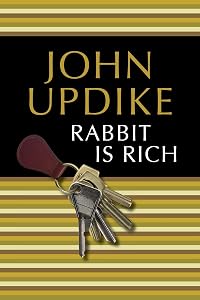
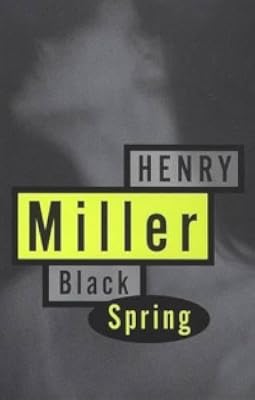
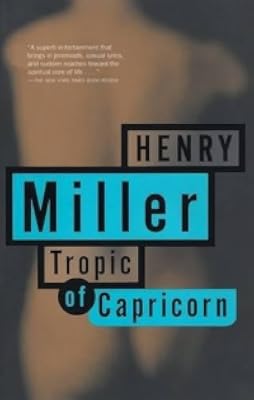




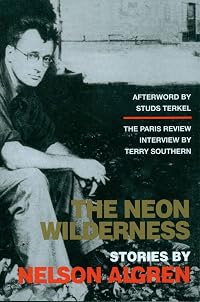










Member Recommendations

Member Reviews
"I went to Palm Springs, and I didn't much care for it." You could, I guess, say that that's "The Deer Park" in a nutshell, but there's more to this book than mere moral censoriousness or lurid exposé. I haven't read much Mailer -- this is just the second book by him that I've ever read -- but the writing here is fantastic: crisp, forceful, masculine, and flowing. Reading it's like watching a really good pianist going after something stern and atonal with marvelously controlled intensity. Mailer's basic tool here is satire, and some film fans will, I suppose, have some fun trying to match the book's characters to their real-life analogues. Beyond that, though, I liked "The Deer Park" because there's so much about people that Mailer show more seems to get right in it: it offers an exquisitely informed description of the egoism of actors, the self-defeating egotism of many who who try to create art, perhaps most frighteningly, the weird mix of sentimentality and greed that motivates so many of the truly powerful. There's also pimp, self-made philosopher, and dead-eyed madnman Marion Faye, a portrait of a thoroughly destructive personality that's enormously chilling and, in its way, far ahead of its time. There is a lot of sex, indulgence, and general moral decay here: the novel's air of plush, seedy degeneracy is one of its attractions. You can see why a publisher of that time might have rejected it as obscene. But much of sexual content manages to be both bracingly frank enormously arousing, and I tend to think that writing about sex without seeming prurient or too self-serious is harder than it sounds. But the book is also an invigorating mix of literary and the unabashedly pulpy, beating writers like James Elroy and Robert Stone to this combination by at least twenty years. There's a recurrent religious analogy here that I think Mailer might take too far, and it is, I think, the only moment in which the book slips a little. Also, I found that the book, for all the scandal it contains, perhaps a bit too long and a bit too slowly paced, though that may simply be a reflection of its louche desert setting. I don't think that "The Deer Park" is one of Mailer's better-regarded books, but perhaps it's due for a revival. Few pieces of real-deal literature I've ever read sizzle so tantalizingly while going so deep. show less
Despite the umbiguous character of an protagonist, Sergius, this book is still a mastery work of Norman Mailer. The scene was set in Hollywood, California, where the sun was always shining. In the world of hypocricy, we have to give ourselves to hypocricy if we want to be saved.
"Yo no era nada. Un falso irlandés surgido de un orfanato auténtico, un boxeador sin pegada, un aviador que había perdido sus reflejos, un chivato en potencia siempre que se tropezara con un policía dispuesto a emplear la fuerza y, lo peor de todo, un joven pasatiempo en la cama. Realmente, todo lo anterior bastaba para obligarle a uno a dejar de pensar de una vez para siempre".
Apr 22, 2026Spanish
En stor roman om kärlek, huvudsakligen om dess fysiska sida.
A roman à clef, the metaphorical "Deer Park" is Desert D'Or, California (a fictionalized Palm Springs). A fashionable desert resort, Hollywood's elite converge there for fun and games and relaxation. The novel's protagonist, Sergius O'Shaughnessy (a recently discharged Air Force officer), is a would-be novelist who experiences the moral depravity of the Hollywood community first hand.
A roman à clef, the metaphorical "Deer Park" is Desert D'Or, California (a fictionalized Palm Springs). A fashionable desert resort, Hollywood's elite converge there for fun and games and relaxation. The novel's protagonist, Sergius O'Shaughnessy (a recently discharged Air Force officer), is a would-be novelist who experiences the moral depravity of the Hollywood community first hand.
Feb 20, 2023Swedish
ספרו השלישי של מיילר על הוליווד. כמו קודמו אחרי ההצלחה הגדולה של כפירי אריות שני אלו לא היו הצלחות לא ביקורתיות ולא פופלריות
Feb 5, 2012Hebrew
Ratings
Members
- Recently Added By
Lists

Animals in the Title
498 works; 11 members

Books Read in 2019
4,052 works; 110 members

Las mejores obras literarias leídas en 2020 -- Magistrales (R. D.)
14 works; 1 member
Author Information

160+ Works 24,796 Members
Norman Kingsley Mailer was born on January 31, 1923 in Long Branch, N. J. and then moved with his family to Brooklyn, N. Y. Mailer later attended Harvard University and graduated with a degree in aeronautical engineering. Mailer served in the Army during World War II, and later wrote, directed, and acted in motion pictures. He was also a show more co-founder of the Village Voice and edited Disssent for nine years. Mailer has written several books including: The Armies of the Night, which won the National Book Award, the Pulitzer Prize, and a Polk Award; and The Executioner's Song, which won the Pulitzer Prize. In 2005, he won the Medal for Distinguished Contribution to American Letters from the National Book Foundation. He published his last novel, The Castle in the Forest, in 2007. He died of acute renal failure on November 10, 2007. (Bowker Author Biography) show less
Norman Mailer has a Legacy Library. Legacy libraries are the personal libraries of famous readers, entered by LibraryThing members from the Legacy Libraries group.
Some Editions
Awards and Honors
Distinctions
Notable Lists
Series
Belongs to Publisher Series
Non Stop-Bücherei (51/52)
Work Relationships
Has the adaptation
Common Knowledge
- Canonical title
- The Deer Park
- Original title
- The Deer Park
- Original publication date
- 1955
- First words
- In the cactus wild of Southern California, a distance of two hundred miles from the capital of cinema as I choose to call it, is the town of Dester D'Or.
- Last words
- (Click to show. Warning: May contain spoilers.)Then for a moment in that cold Irish soul of mine, a glimmer of the joy of the flesh came toward me, rare as the eye of the rarest tear of compassion, and we laughed together after all, because to have heard that sex was time and time the connection of new circuits was part of the poor odd dialogues which give hope to us noble humans for more than one night.
- Original language*
- Inglese
*Some information comes from Common Knowledge in other languages. Click "Edit" for more information.
Classifications
Statistics
- Members
- 527
- Popularity
- 56,901
- Reviews
- 5
- Rating
- (3.19)
- Languages
- 13 — Czech, Danish, Dutch, English, Finnish, French, German, Italian, Polish, Portuguese, Russian, Spanish, Swedish
- Media
- Paper, Audiobook, Ebook
- ISBNs
- 31
- ASINs
- 24