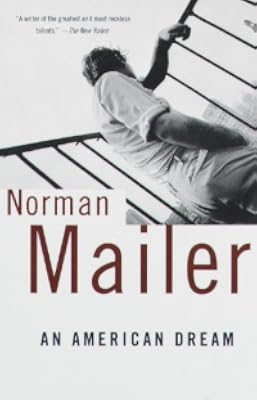
An American Dream
by Norman Mailer 
On This Page
Description
In this wild battering ram of a novel, which was originally published to vast controversy in 1965, Norman Mailer creates a character who might be a fictional precursor of the philosopher-killer he would later profile in The Executioner's Song. As Stephen Rojack, a decorated war hero and former congressman who murders his wife in a fashionable New York City high-rise, runs amok through the city in which he was once a privileged citizen, Mailer peels away the layers of our social norms to show more reveal a world of pure appetite and relentless cruelty. One part Nietzsche, one part de Sade, and one part Charlie Parker, An American Dream grabs the reader by the throat and refuses to let go. show lessTags
Recommendations




















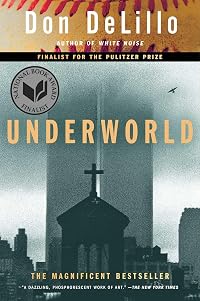






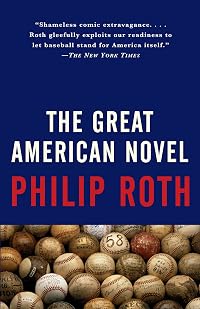


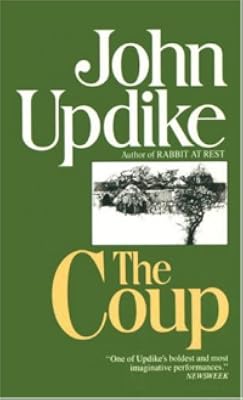
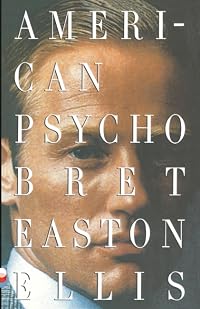


Member Recommendations

by anonymous user

Member Reviews
A bizarre and riveting, albeit incomplete and even too short-sighted, micro-odyssey. First off let me say I have a soft spot/fondness/whatever you want to call it regarding Norman Mailer. He's by no means the greatest man of letters whoever put pen to paper, and his public persona was definitely anything but conducive to admiration (though really really fun to watch, check out his 'debate' with Gore Vidal on the Dick Cavett show). And I will admit that his brilliance as a writer doesn't match his arrogance or loud mouthed nature (whether or not this persona was the 'real' Mailer is up for debate and a question I can't even begin to answer). But the distance between his arrogance and literary skill is not so far as some or most might show more think.
Reading this book I picked up bits and pieces of Hemingway (the stoicism, the machismo, the male gaze) along with more than a few swathes of Faulkner (the ad infinitum descriptions of everything, from physical objects, to patterns of thoughts, to sensations and feelings, running the gamut from the naturalistic to the romantic and even up to the symbolic and surrealistic and and at some supreme moments the mythic, the superstitious and parable-like) Mailer bathes to the point of literary hedonism in so many different pools of thought that the result is at once a beautiful symphonic harmony and a mud slop puddle of what could have been achieved.
Therein lies the main weakness of the book, Mailer collapses under the weight of his own boldness and arrogance. His descriptions while powerful and telling, are near abject blocks of text that slow the rhythm of the story to the point of clogging its arteries and killing it. The feeling that Mailer is flexing his literary muscles, showing off his vast knowledge born from pages, is evident to the point of nausea in some stretches of the book. If the fat had been cut more like Hemingway, or more preferably had Mailer focused the weight of his ideas in a few well placed sections, more like Faulkner, the effect would have been augmented considerably.
But the positives of the book definitely outweigh the negatives. Reading this book I felt echoes of not only Shakespeare's Antony and Cleopatra, but of the fall of decadence, of a grand and grandly hollow empire (Rome came to my mind but I think any could suffice, including the upper echelons of the USA referred to by Mailer) on the verge of a cataclysm paradoxically never before seen but equally inevitable in the face of historical precedent and the weight of humankind and its sins, of decadence and otherwise.
Rojack, the protagonist (tough to call him hero or anti hero), is essentially a defrocked general of a once grand regime, and is hearing voices and seeing images. The easy reading would be is that he's losing his mind due to the nature of his success and ascension to said success and the book is a polemic against the excesses of America's ruling class. Too easy.
The book, to me, is actually a complex telling of intelligent and powerful people being confronted with the supernatural and the unknowable. Some are attempting to either cling to their power within that confrontation and even use that power to their betterment (almost always at the cost of others happiness or lives), and the others are trying to remain human within this, the superstitious, the tribal, the primal world wending its way through the halls of iniquity and power as it nears collapse. Rojack was once the former and is now the latter.
The pulses of sex and avarice pound through this book, constantly challenging our definitions of humanity and morality. Is the image of a 'good' and 'successful' person correct because this is the image put forth by those in charge, the ruling elite, the masters and singers of 'do as we say not as we do'? The book asks this and answers with a resounding no, but offers no consolation, which I think is the perfect and only intellectually truthful way to respond to the question.
I said before that the book was incomplete and shortsighted, and considering the density of the book's descriptions coupled with the relatively basic nature of the story, this makes it a long winded story that just sort of exhales slowly in conclusion, a deep breath with little follow through or resolution in the end, the latter is understandable and even inevitable, but the former is just poor writing.
So, overall, a difficult but more than worthwhile read. Bombastic and over the top like its author but evidencing all the power, the wit, and yes, the brilliance that made him infamous and, once again yes, one of the greater literary minds to have left a signpost for others to follow, ignore, revere or jeer at, questioning our knowledge and our haughtiness, mocking us our complacency and our readiness to assume. show less
Reading this book I picked up bits and pieces of Hemingway (the stoicism, the machismo, the male gaze) along with more than a few swathes of Faulkner (the ad infinitum descriptions of everything, from physical objects, to patterns of thoughts, to sensations and feelings, running the gamut from the naturalistic to the romantic and even up to the symbolic and surrealistic and and at some supreme moments the mythic, the superstitious and parable-like) Mailer bathes to the point of literary hedonism in so many different pools of thought that the result is at once a beautiful symphonic harmony and a mud slop puddle of what could have been achieved.
Therein lies the main weakness of the book, Mailer collapses under the weight of his own boldness and arrogance. His descriptions while powerful and telling, are near abject blocks of text that slow the rhythm of the story to the point of clogging its arteries and killing it. The feeling that Mailer is flexing his literary muscles, showing off his vast knowledge born from pages, is evident to the point of nausea in some stretches of the book. If the fat had been cut more like Hemingway, or more preferably had Mailer focused the weight of his ideas in a few well placed sections, more like Faulkner, the effect would have been augmented considerably.
But the positives of the book definitely outweigh the negatives. Reading this book I felt echoes of not only Shakespeare's Antony and Cleopatra, but of the fall of decadence, of a grand and grandly hollow empire (Rome came to my mind but I think any could suffice, including the upper echelons of the USA referred to by Mailer) on the verge of a cataclysm paradoxically never before seen but equally inevitable in the face of historical precedent and the weight of humankind and its sins, of decadence and otherwise.
Rojack, the protagonist (tough to call him hero or anti hero), is essentially a defrocked general of a once grand regime, and is hearing voices and seeing images. The easy reading would be is that he's losing his mind due to the nature of his success and ascension to said success and the book is a polemic against the excesses of America's ruling class. Too easy.
The book, to me, is actually a complex telling of intelligent and powerful people being confronted with the supernatural and the unknowable. Some are attempting to either cling to their power within that confrontation and even use that power to their betterment (almost always at the cost of others happiness or lives), and the others are trying to remain human within this, the superstitious, the tribal, the primal world wending its way through the halls of iniquity and power as it nears collapse. Rojack was once the former and is now the latter.
The pulses of sex and avarice pound through this book, constantly challenging our definitions of humanity and morality. Is the image of a 'good' and 'successful' person correct because this is the image put forth by those in charge, the ruling elite, the masters and singers of 'do as we say not as we do'? The book asks this and answers with a resounding no, but offers no consolation, which I think is the perfect and only intellectually truthful way to respond to the question.
I said before that the book was incomplete and shortsighted, and considering the density of the book's descriptions coupled with the relatively basic nature of the story, this makes it a long winded story that just sort of exhales slowly in conclusion, a deep breath with little follow through or resolution in the end, the latter is understandable and even inevitable, but the former is just poor writing.
So, overall, a difficult but more than worthwhile read. Bombastic and over the top like its author but evidencing all the power, the wit, and yes, the brilliance that made him infamous and, once again yes, one of the greater literary minds to have left a signpost for others to follow, ignore, revere or jeer at, questioning our knowledge and our haughtiness, mocking us our complacency and our readiness to assume. show less
If this is the dream, PLEASE don't let me see the nightmare!
This is superbly written, with one of the best representations of sex that I have ever read. There is nothing that could offend the most prudish of readers and yet...
The story is one of spiralling destruction. There is never a moment when one expects a happy ending but still, it is not a morbid book.
Well worth a read but, I don't think it goes on my re-read list.
This is superbly written, with one of the best representations of sex that I have ever read. There is nothing that could offend the most prudish of readers and yet...
The story is one of spiralling destruction. There is never a moment when one expects a happy ending but still, it is not a morbid book.
Well worth a read but, I don't think it goes on my re-read list.
A tirade of unhinged masculinity, at times deliciously enjoyable, others a conundrum.
There is rot in the ostentatious world of the privileged: the moneyed autocrats who jostle for their perceived entitlements. Here, the will is king; outside of morality, of destination, of thought. There is some gloriously described psychopathic sex early on. Here Mailer runs rampant and with much relish decimates the female flesh. Steady on, Norman! Everything of note plotwise happens in a vomiting ejection at the beginning of the novel. This leads to the reader chasing echoes, wandering through aftermath looking for an anchor which Mailer is too spent to set for us.
The grandiosity of language is something to behold and justified as a method to convey show more a very direct representation of character. There is an attempt to bring the world of psychoanalysis and Freud into the equation. This, however, is largely unsuccessful and only emphasises the lack of anything but a superficial insight. The reflections on devotional religiosity embolden the allusions to unrestrained inner forces searching for outwards justifications.
I couldn't help but think that Mailer was doing a great deal of zeitgeist chasing. There are constant ticks and shorthands that may have been relevant to the time, though '65 may have been a little late for some of this stuff, but is grating and vacuous. I can see I need to read more Mailer, who is extraordinary stylistically. Not sure if I like the bombast enough to call it anything but a bluff, albeit an invigorating and amusing one. The jury is out. show less
There is rot in the ostentatious world of the privileged: the moneyed autocrats who jostle for their perceived entitlements. Here, the will is king; outside of morality, of destination, of thought. There is some gloriously described psychopathic sex early on. Here Mailer runs rampant and with much relish decimates the female flesh. Steady on, Norman! Everything of note plotwise happens in a vomiting ejection at the beginning of the novel. This leads to the reader chasing echoes, wandering through aftermath looking for an anchor which Mailer is too spent to set for us.
The grandiosity of language is something to behold and justified as a method to convey show more a very direct representation of character. There is an attempt to bring the world of psychoanalysis and Freud into the equation. This, however, is largely unsuccessful and only emphasises the lack of anything but a superficial insight. The reflections on devotional religiosity embolden the allusions to unrestrained inner forces searching for outwards justifications.
I couldn't help but think that Mailer was doing a great deal of zeitgeist chasing. There are constant ticks and shorthands that may have been relevant to the time, though '65 may have been a little late for some of this stuff, but is grating and vacuous. I can see I need to read more Mailer, who is extraordinary stylistically. Not sure if I like the bombast enough to call it anything but a bluff, albeit an invigorating and amusing one. The jury is out. show less
After doing a little research on Norman Mailer, I decided to read something of his. I happened to get this book for free from a friend, so it made sense to start with this one.
Three things come to my mind after reading this book: violence, metaphorical language, and great writing. This book is entirely about violence, but Mailer uses beautiful language techniques (similes and metaphors) that help romanticize violence in a way that I've never experienced before. Also, Norman Mailer knew how to write! His prose is very deep, philosophical, and beautiful...even though he was a horror of a human being while living.
I must say, this book did not let me down. I know I will read others by Mailer now...but I have to take a break after reading show more this bleak view of humanity. show less
Three things come to my mind after reading this book: violence, metaphorical language, and great writing. This book is entirely about violence, but Mailer uses beautiful language techniques (similes and metaphors) that help romanticize violence in a way that I've never experienced before. Also, Norman Mailer knew how to write! His prose is very deep, philosophical, and beautiful...even though he was a horror of a human being while living.
I must say, this book did not let me down. I know I will read others by Mailer now...but I have to take a break after reading show more this bleak view of humanity. show less
Mailer was married to Lady Jeanne Campbell, grand-daughter of Lord Beaverbrook, owner of the "Evening Standard", London. Deborah "the bitch", who is murdered by her husband Steve Rojack at the beginning of the novel, is modelled on Campbell.
It is difficult to reach any kind of conviction about the motivations of both the novelist and about the lasting impression Mailer intended to leave upon the reader.
The tenet of this novel is to suggest that violence (in this case, murder) represents a liberating experience for Rojack despite his ostensible life being a successful one. His success has done nothing to make himself psychically alive until his wild drunk crisis occurs. It is then that he appears to function with a purpose albeit through show more his lying, the corruption of other powerful people and his loading up with alcohol.
An American Dream has the high style of Mailer all over it and it moves at pace. There is no redeeming feature attached to any of the unfortunate characters. They are mired in their own ways by every sort of contemporary human tragedy; except perhaps for Steve Rojack himself who manages to light out for Yucatan and Guatemala after a spot of luck in Las Vegas. show less
It is difficult to reach any kind of conviction about the motivations of both the novelist and about the lasting impression Mailer intended to leave upon the reader.
The tenet of this novel is to suggest that violence (in this case, murder) represents a liberating experience for Rojack despite his ostensible life being a successful one. His success has done nothing to make himself psychically alive until his wild drunk crisis occurs. It is then that he appears to function with a purpose albeit through show more his lying, the corruption of other powerful people and his loading up with alcohol.
An American Dream has the high style of Mailer all over it and it moves at pace. There is no redeeming feature attached to any of the unfortunate characters. They are mired in their own ways by every sort of contemporary human tragedy; except perhaps for Steve Rojack himself who manages to light out for Yucatan and Guatemala after a spot of luck in Las Vegas. show less
This is a Mailer that I read, but did not keep. The story is an extended fantasy on the lines of, "if I really let it all hang out, this is the kind of violence that I would wreak on my world." Kill the wife, and then lunge across the American Media for a summer, and then, why I'd just have the job of being famous for being famous. I don't like the hero, I don't think many of the people he disrespects deserve it, and, while I do dislike the wife, I'm thinkin' all he needed was a divorce and a bender.
Norman Mailer after "The Naked and the Dead" had to keep on being an important writer, and this was his attempt to keep going. But what this book does do, and perhaps that is what it meant to do, was forecast the entire spectacle of the show more decline and fall of O.J. Simpson? show less
Norman Mailer after "The Naked and the Dead" had to keep on being an important writer, and this was his attempt to keep going. But what this book does do, and perhaps that is what it meant to do, was forecast the entire spectacle of the show more decline and fall of O.J. Simpson? show less
Putting American in the title of a book doesn't make it great. This book seemed much longer than its length; I found the writing turgid. The contents of Stephen Rojack's psyche is everything in this novel: what he smells; the plight of the intellectual beating, fucking and drinking all comers under the table. Rojack has a world view I could not identify with, but I did not find him an interesting enough creation to want to look at the world through him eyes, or smell it with his twitching canine nose.
The plot seemed flimsy and contrived, characters would expose to Rojack a story about their past and it often led to a bunch of dead ends - or a pat coincidence - are there only 10 people in all of the United States? At some points I show more thought, maybe this is a satire, is there something darkly comic at the heart of this? Maybe, it didn't make me laugh. If you want to read a book about transgression and haven't yet read American psycho - read that instead of this - it's much funnier. show less
The plot seemed flimsy and contrived, characters would expose to Rojack a story about their past and it often led to a bunch of dead ends - or a pat coincidence - are there only 10 people in all of the United States? At some points I show more thought, maybe this is a satire, is there something darkly comic at the heart of this? Maybe, it didn't make me laugh. If you want to read a book about transgression and haven't yet read American psycho - read that instead of this - it's much funnier. show less
Members
- Recently Added By
Lists

1960s
281 works; 16 members

Books Read in 2008
335 works; 8 members
Author Information

Norman Kingsley Mailer was born on January 31, 1923 in Long Branch, N. J. and then moved with his family to Brooklyn, N. Y. Mailer later attended Harvard University and graduated with a degree in aeronautical engineering. Mailer served in the Army during World War II, and later wrote, directed, and acted in motion pictures. He was also a show more co-founder of the Village Voice and edited Disssent for nine years. Mailer has written several books including: The Armies of the Night, which won the National Book Award, the Pulitzer Prize, and a Polk Award; and The Executioner's Song, which won the Pulitzer Prize. In 2005, he won the Medal for Distinguished Contribution to American Letters from the National Book Foundation. He published his last novel, The Castle in the Forest, in 2007. He died of acute renal failure on November 10, 2007. (Bowker Author Biography) show less
Norman Mailer has a Legacy Library. Legacy libraries are the personal libraries of famous readers, entered by LibraryThing members from the Legacy Libraries group.
Some Editions
Awards and Honors
Distinctions
Notable Lists
Series
Belongs to Publisher Series
Common Knowledge
- Canonical title*
- Een Amerikaanse droom
- Original title
- An American Dream
- Original publication date
- 1965
- Related movies
- An American Dream (1966 | IMDb)
- Dedication
- To Beverly and to Michael Burks
- First words
- I MET Jack Kennedy in November, 1946.
- Quotations
- I had my fill of walking about with a chest full of hatred and a brain jammed to burst, but there is something manly about containing your rage, it is so difficult, it is like carrying a two-hundred-pound safe up a cast-iron ... (show all)hill. The exhilaration comes I suppose from possessing such strength. Besides, murder offers the promise of vast relief. It is never unsexual.
I must have been in some far-gone state because there was an aureole about each electric light, each bulb stood out like a personage, and I remember thinking: of course, this is how they appeared to Van Gogh at the end. - Last words
- (Click to show. Warning: May contain spoilers.)But in the morning, I was something like sane again, and packed the car, and started on the long trip to Guatemala and Yucatán.
- Original language*
- Engels
*Some information comes from Common Knowledge in other languages. Click "Edit" for more information.
Classifications
Statistics
- Members
- 1,172
- Popularity
- 21,338
- Reviews
- 10
- Rating
- (3.38)
- Languages
- 14 — Czech, Danish, Dutch, English, Finnish, French, German, Hungarian, Italian, Japanese, Norwegian, Portuguese, Spanish, Swedish
- Media
- Paper, Audiobook, Ebook
- ISBNs
- 38
- ASINs
- 33