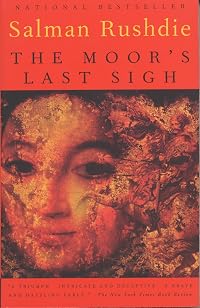
The Moor's Last Sigh
by Salman Rushdie
On This Page
Description
Booker Prize-winning author Salman Rushdie combines a ferociously witty family saga with a surreally imagined and sometimes blasphemous chronicle of modern India and flavors the mixture with peppery soliloquies on art, ethnicity, religious fanaticism, and the terrifying power of love. Moraes "Moor" Zogoiby, the last surviving scion of a dynasty of Cochinese spice merchants and crime lords, is also a compulsive storyteller and an exile. As he travels a route that takes him from India to show more Spain, he leaves behind a tale of mad passions and volcanic family hatreds, of titanic matriarchs and their mesmerized offspring, of premature deaths and curses that strike beyond the grave. show lessTags
Recommendations
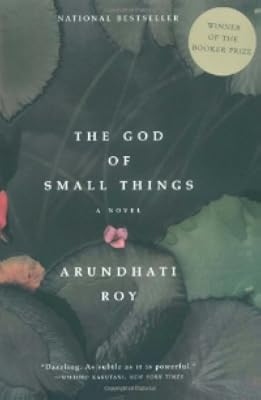
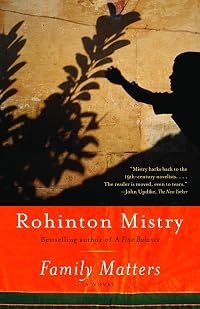
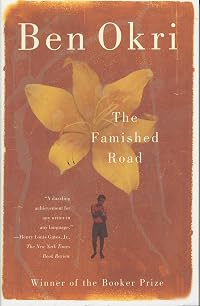
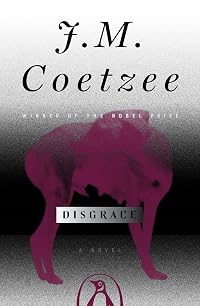
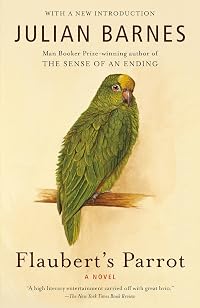
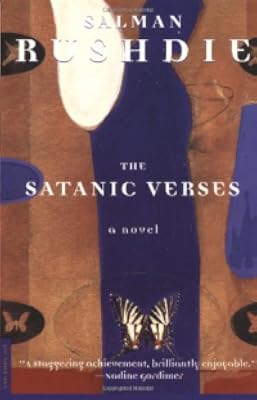
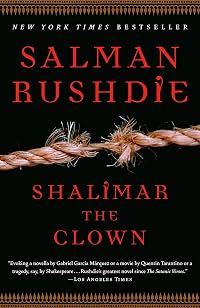
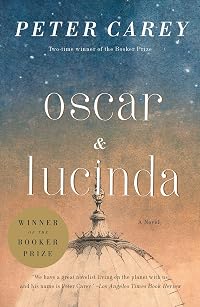


Member Recommendations
wrmjr66 I think The Moor's Last Sigh is Rushdie's best book since Midnight's Children.
20
Member Reviews
Rushdie’s first book after his fatwah is an ambitious and major work, and somewhat underappreciated. It's a statement on the then growing global intolerance. It’s also the story of our poor moor, in high satire.
Our exhausted moor, show more Moraes Zogoiby, looks back on his life and the family he came from. How he left his native Bombay, India and has wound up in a Spanish living-afterlife. And, as maybe you might notice above, is full of literary references. Our self-exiled Indian moor is not Muslim, like moors evicted from Spain in 1492 that he self-identifies with. He is Indian. His mother is catholic, descended from Portuguese traders. His maybe father is Jewish, descended from the Sephardic diaspora, Jews also evicted from Spain in 1492, and who relocated to the Indian coast. An international heritage on an international coastline of the Indian subcontinent. And, eventually a Bombay family. A Christian-Jewish boy who associates himself with Muslim tropes here to tell us about not-so-entirely-Hindu-India.
Rushdie's first novel published after his Fatwah was written while he was in protective exile. He intended this book to be a powerful statement on world's suddenly growing intolerance in the 1990’s, even if he is focusing on India's. Secular idealistic Indian leadership of the era of independence was fading into religious and nationalistic-purist extremism. The 16th-century Babri Masjid mosque was destroyed by a Hindu mob in 1993. Most tragic for Rushdie, personally, his childhood home of Bombay, a multicultural outlet of diversity, if wild and strained diversity, always an outlier, a Gibraltar of India, a last tolerant outpost, was losing its tolerance. These elements are the background to Rushdie's novel, and they are central to what he's addressing.
It’s difficult to read. I think the quote above highlights that a bit. This is Rushdie. Straight lines are momentary illusions, and satire drenches every word. Everything he creates in the text, he's likely to destroy, and he’s going to tell you about it before and afterward, over and over again. It's high satire, like [Midnight's Children]. Characters are strained by the satire and hard to appreciate until we get what he's doing with them. There are reasons he made his characters this way, but it can try the reader. This style and method make reading demanding and slow. We readers must adapt, or try to.
Back to our poor lonely moor. Our moor's is born with a closed right hand, a permanent fist. And he's right-handed, as presumably is Rushdie, so we might imagine this as his handwriting as a fist. But our Moor struggles to find love, to connect with either of his parents or with anyone. His lovers are abusers. His best lover may have tried to kill him. Life is easiest when he can simply use his fist.
Mom, Aurora, our Catholic Indian, the last inheritor of a long successful spice trading house in Cochin, is a distant mom with tough love, and also a serious artist, who fights battles through her art. She kind of stands in for Mother India. She attracts a lot of attention, but no understanding.
Aurora paints herself, and her son, our moor, in different forms. She hovers the story of Boadil, the last sultan, the last Moor, the end of era, forced into exile by fanatic Christian armies. The moor is painted in as Baodil, and herself as Baodil’s lover. Aurora eviscerates things in her painting. She attacks by not painting something or painting them and then painting over it, creating palimpsests, a concept with deep symbolic meaning throughout the text, the overlaying of culture on culture, mythology on mythology, the erasure of pasts and causes, and manipulation of truth, of the story. Her paintings come to symbolize the changing India, and India's rejection of its historical cultural diversity.
Like [Midnight's Children], this was a difficult, but also complex and fascinating it work. I find this more fun to talk about and think about than to read. There is, however, a draw to the language and the Rushdie-style prose. It disarms the reader, relieving us of the sense of ambition within the work. And the book finds meaning through that heavy satire.
It's easy to recommend this to Midnight's Children lovers, but other brave readers who plow through will also be rewarded. And maybe we should all plow through, if for no other reason, then for freedom of expression over fatwahs.
2026
https://www.librarything.com/topic/378447#9126398 show less
Here I stand. Couldn’t have done it differently.
(Here I sit, is more like it. In this dark wood – that is, upon this mount of olives, within this clump of trees, observed by the quizzically tilting stone crosses of a small, overgrown graveyard, and a little down the track from the Ultimo Suspiro gas station – without benefit or need of Virgils, in what ought to be the middle pathway of my life, but has become, for complicated reasons, the end of the road, I bloody well collapse with exhaustion.)
Our exhausted moor, show more Moraes Zogoiby, looks back on his life and the family he came from. How he left his native Bombay, India and has wound up in a Spanish living-afterlife. And, as maybe you might notice above, is full of literary references. Our self-exiled Indian moor is not Muslim, like moors evicted from Spain in 1492 that he self-identifies with. He is Indian. His mother is catholic, descended from Portuguese traders. His maybe father is Jewish, descended from the Sephardic diaspora, Jews also evicted from Spain in 1492, and who relocated to the Indian coast. An international heritage on an international coastline of the Indian subcontinent. And, eventually a Bombay family. A Christian-Jewish boy who associates himself with Muslim tropes here to tell us about not-so-entirely-Hindu-India.
Rushdie's first novel published after his Fatwah was written while he was in protective exile. He intended this book to be a powerful statement on world's suddenly growing intolerance in the 1990’s, even if he is focusing on India's. Secular idealistic Indian leadership of the era of independence was fading into religious and nationalistic-purist extremism. The 16th-century Babri Masjid mosque was destroyed by a Hindu mob in 1993. Most tragic for Rushdie, personally, his childhood home of Bombay, a multicultural outlet of diversity, if wild and strained diversity, always an outlier, a Gibraltar of India, a last tolerant outpost, was losing its tolerance. These elements are the background to Rushdie's novel, and they are central to what he's addressing.
It’s difficult to read. I think the quote above highlights that a bit. This is Rushdie. Straight lines are momentary illusions, and satire drenches every word. Everything he creates in the text, he's likely to destroy, and he’s going to tell you about it before and afterward, over and over again. It's high satire, like [Midnight's Children]. Characters are strained by the satire and hard to appreciate until we get what he's doing with them. There are reasons he made his characters this way, but it can try the reader. This style and method make reading demanding and slow. We readers must adapt, or try to.
Back to our poor lonely moor. Our moor's is born with a closed right hand, a permanent fist. And he's right-handed, as presumably is Rushdie, so we might imagine this as his handwriting as a fist. But our Moor struggles to find love, to connect with either of his parents or with anyone. His lovers are abusers. His best lover may have tried to kill him. Life is easiest when he can simply use his fist.
Mom, Aurora, our Catholic Indian, the last inheritor of a long successful spice trading house in Cochin, is a distant mom with tough love, and also a serious artist, who fights battles through her art. She kind of stands in for Mother India. She attracts a lot of attention, but no understanding.
Aurora paints herself, and her son, our moor, in different forms. She hovers the story of Boadil, the last sultan, the last Moor, the end of era, forced into exile by fanatic Christian armies. The moor is painted in as Baodil, and herself as Baodil’s lover. Aurora eviscerates things in her painting. She attacks by not painting something or painting them and then painting over it, creating palimpsests, a concept with deep symbolic meaning throughout the text, the overlaying of culture on culture, mythology on mythology, the erasure of pasts and causes, and manipulation of truth, of the story. Her paintings come to symbolize the changing India, and India's rejection of its historical cultural diversity.
Like [Midnight's Children], this was a difficult, but also complex and fascinating it work. I find this more fun to talk about and think about than to read. There is, however, a draw to the language and the Rushdie-style prose. It disarms the reader, relieving us of the sense of ambition within the work. And the book finds meaning through that heavy satire.
It's easy to recommend this to Midnight's Children lovers, but other brave readers who plow through will also be rewarded. And maybe we should all plow through, if for no other reason, then for freedom of expression over fatwahs.
2026
https://www.librarything.com/topic/378447#9126398 show less
THERE MAY BE SPOILERS HERE FOR SOME READERS
It’s always interesting to read a book by Salman Rushdie because he so playfully ties so many distinct ideas together, and puts them in a novel light. And I like the fact that the light he chooses is not a conventional Euro-centric one. Using the expulsion of the Moors from Spain as a lens for viewing India’s post-colonial history may be an eccentric model, but it works at many levels.
I knew only the fact of the expulsion of the Moors, but Rushdie adds to that the poetry of loss from the last Moorish ruler’s point of view. Instead of the righteous victory of Christianity over Islam that we typically hear, it becomes a sad story of an artistic culture destroyed by violence. This turns the show more expulsion of the British from India upside down, and I wonder if that’s what Rushdie intended. But it’s also a metaphor for personal loss when the artistic side of the narrator’s family is destroyed by crime, violence and corruption. The family’s history is closely tied to the history of India – from its wealth as an exporter of exotic spices to its corrupt power in independent India. The family ultimately collapses in sectarian violence and expulsion back to a phony Alhambra in Spain. In this, Rushdie goes beyond the poetic to comic irony, and there’s plenty of that throughout the book, too.
Another key metaphor through the novel is the palimpsest – the underpainting that shows through when a canvas is re-used. Rushdie uses several literal palimpsests as the artists in the story paint over embarrassing or rejected earlier works. And other characters similarly cover up parts of their lives, which continue to show through in their work and which ultimately lead to their downfall. This comes back in another form in Rushdie’s repeated references to the invisible people who work behind the scenes in Bombay and make the show of wealth possible. And the novel itself is a kind of palimpsest, too, as the story of the Last Moor of Grenada keeps coming to the surface from beneath the lives of the characters. In this way, the story is a reflection of the way that contemporary life is always built on the past, and however modern we may wish to be, the past keeps coming through. This makes the bizarre story of passion and corruption in India relevant for us in Canada and elsewhere as we grapple with the present effects of our own colonial and racist history.
The story offers many parallels with modern life worldwide, and with Rushdie’s life, too. It was written while his life was under threat from the fundamentalist fatwa, and some of the extremes in the plot are driven by political and religious extremists. His one love turns out to be a death-seeking Christian, and his release from horrifying prison conditions comes at the hands of fundamentalist Hindus. It is an obsessive fundamentalist who destroys modern Bombay and the Moor’s family by blowing it all up.
The complexities of the storyline are reflected in Rushdie’s characteristically rich language of allusions, metaphors and playfulness. I’d need to know a lot more Indian history and world literature to know even half of his references, but it’s still a pleasure to read a creative writer who seems to be having such fun with his craft.
I found both the beginning and the end of the book to be less engaging than the main body that takes readers through the Moor’s life. The introduction lays out his prehistory and forebearers in colourful, but sketchy portraits. Then the final pages wrap up the story in a dash of events that undercuts their own drama and the richness of the earlier parts of the Moor’s life. This is not to say that the beginning and the end are less extravagantly written than the middle – in fact, looking at the first pages again, I love the way that the story starts at the end and then circles around to reconnect. It introduces the key themes and characters and links the narrator with both Luther and Christ at the crucifixion to let us know that we are in for a bold storyline. In spite of the extremes of the Moor’s life, however, in the end all he wants is to rest and find a peaceful end to the divisions in the world. This is a nice ending, and likely true to Rushdie’s feelings at the time, but I’m not sure it lives up to the richness of the rest of the story. show less
It’s always interesting to read a book by Salman Rushdie because he so playfully ties so many distinct ideas together, and puts them in a novel light. And I like the fact that the light he chooses is not a conventional Euro-centric one. Using the expulsion of the Moors from Spain as a lens for viewing India’s post-colonial history may be an eccentric model, but it works at many levels.
I knew only the fact of the expulsion of the Moors, but Rushdie adds to that the poetry of loss from the last Moorish ruler’s point of view. Instead of the righteous victory of Christianity over Islam that we typically hear, it becomes a sad story of an artistic culture destroyed by violence. This turns the show more expulsion of the British from India upside down, and I wonder if that’s what Rushdie intended. But it’s also a metaphor for personal loss when the artistic side of the narrator’s family is destroyed by crime, violence and corruption. The family’s history is closely tied to the history of India – from its wealth as an exporter of exotic spices to its corrupt power in independent India. The family ultimately collapses in sectarian violence and expulsion back to a phony Alhambra in Spain. In this, Rushdie goes beyond the poetic to comic irony, and there’s plenty of that throughout the book, too.
Another key metaphor through the novel is the palimpsest – the underpainting that shows through when a canvas is re-used. Rushdie uses several literal palimpsests as the artists in the story paint over embarrassing or rejected earlier works. And other characters similarly cover up parts of their lives, which continue to show through in their work and which ultimately lead to their downfall. This comes back in another form in Rushdie’s repeated references to the invisible people who work behind the scenes in Bombay and make the show of wealth possible. And the novel itself is a kind of palimpsest, too, as the story of the Last Moor of Grenada keeps coming to the surface from beneath the lives of the characters. In this way, the story is a reflection of the way that contemporary life is always built on the past, and however modern we may wish to be, the past keeps coming through. This makes the bizarre story of passion and corruption in India relevant for us in Canada and elsewhere as we grapple with the present effects of our own colonial and racist history.
The story offers many parallels with modern life worldwide, and with Rushdie’s life, too. It was written while his life was under threat from the fundamentalist fatwa, and some of the extremes in the plot are driven by political and religious extremists. His one love turns out to be a death-seeking Christian, and his release from horrifying prison conditions comes at the hands of fundamentalist Hindus. It is an obsessive fundamentalist who destroys modern Bombay and the Moor’s family by blowing it all up.
The complexities of the storyline are reflected in Rushdie’s characteristically rich language of allusions, metaphors and playfulness. I’d need to know a lot more Indian history and world literature to know even half of his references, but it’s still a pleasure to read a creative writer who seems to be having such fun with his craft.
I found both the beginning and the end of the book to be less engaging than the main body that takes readers through the Moor’s life. The introduction lays out his prehistory and forebearers in colourful, but sketchy portraits. Then the final pages wrap up the story in a dash of events that undercuts their own drama and the richness of the earlier parts of the Moor’s life. This is not to say that the beginning and the end are less extravagantly written than the middle – in fact, looking at the first pages again, I love the way that the story starts at the end and then circles around to reconnect. It introduces the key themes and characters and links the narrator with both Luther and Christ at the crucifixion to let us know that we are in for a bold storyline. In spite of the extremes of the Moor’s life, however, in the end all he wants is to rest and find a peaceful end to the divisions in the world. This is a nice ending, and likely true to Rushdie’s feelings at the time, but I’m not sure it lives up to the richness of the rest of the story. show less
Preliminary: CURSES ARIEHRAIOEHDFOIEADCECEZ. First time I attempt to write a review in ages and of course it disappears, just as I had typed the last word. I'm so happy. I'll try and re-write it, but it will never ever ever be as good.
___________
I always go through the same sensations when I read a Rushdie novel: my English eloquence is lifted into new realms of verbosity, O, I tell you, Sahib, the mellifluence of those orthographic tunes - carefully laid down by the master in zigzag brushstrokes - have me marvel in genuflection and bloat my lexicon in a paramount wise.
Woah, floated off for a bit there. So, yes, sensations; I learn much word. As always, sometimes the "big" words are just there to pinpoint the exact meaning for which show more mr. Rushdie aims. Sometimes it feels like he's showing off. I don't really care. As always, this novel is an intricate web of stories, constantly winking at each other. The prose can get dense and complex, but there's never any doubt to push through, because Rushdie is a linguistic artist. The way he plays with language is clever and refreshing and his storytelling ever colourful.
As always, Rushdie loves references. Some I ignore, some I look up because they intrigue me, some cause me to pat myself on the back for getting them, some he explores and I end up learning a lot. And I always do learn a lot, Rushdie is Wikipedia. Let him show off his knowledge, I say, let him ramble on.
So basically, I learn, I smile, I marvel, I think, I feel, I nod knowingly. I don't get through Rushdie's novels as quickly as I get through most others, but I'm pretty sure I'll keep coming back. I enjoy plummeting into his world and let him teach me, enjoy the man's nonpareil style of writing and stay a while in his madhatter universe. show less
___________
I always go through the same sensations when I read a Rushdie novel: my English eloquence is lifted into new realms of verbosity, O, I tell you, Sahib, the mellifluence of those orthographic tunes - carefully laid down by the master in zigzag brushstrokes - have me marvel in genuflection and bloat my lexicon in a paramount wise.
Woah, floated off for a bit there. So, yes, sensations; I learn much word. As always, sometimes the "big" words are just there to pinpoint the exact meaning for which show more mr. Rushdie aims. Sometimes it feels like he's showing off. I don't really care. As always, this novel is an intricate web of stories, constantly winking at each other. The prose can get dense and complex, but there's never any doubt to push through, because Rushdie is a linguistic artist. The way he plays with language is clever and refreshing and his storytelling ever colourful.
As always, Rushdie loves references. Some I ignore, some I look up because they intrigue me, some cause me to pat myself on the back for getting them, some he explores and I end up learning a lot. And I always do learn a lot, Rushdie is Wikipedia. Let him show off his knowledge, I say, let him ramble on.
So basically, I learn, I smile, I marvel, I think, I feel, I nod knowingly. I don't get through Rushdie's novels as quickly as I get through most others, but I'm pretty sure I'll keep coming back. I enjoy plummeting into his world and let him teach me, enjoy the man's nonpareil style of writing and stay a while in his madhatter universe. show less
Для европейцев Индия была и остается страной чудес. Но какова она при взгляде изнутри? Салман Рушди на сегодняшний день - не только самый скандальный, но и самый авторитетный индийский писатель. Ему и его книге "Прощальный вздох Мавра" читатель может довериться. Место действия этого странного романа - невероятный, причудливый, пряный Бомбей. В его призрачном пространстве и разворачивается полная show more приключений и лишений история жизни главного героя - заблудившегося во времени скитальца Мораиша Зогойби по прозвищу Мавр. "Портрет человеческой души в аду" - эти слова бедного Мавра, пожалуй, вполне могли бы послужить эпиграфом ко всей книге. show less
“I found I could remember very little about the journey. Tied down in the dark, I had evidently lost all sense of direction and of the passage of time. What was this place? Who were these people? Were they truly police officers? Was I really accused of drug trafficking and now also under the suspicion of murder? Or had I slipped accidentally from one page, one book of life, to another? In my wretched disoriented state had my reading finger perhaps slipped from my own story onto this other outlandish incomprehensible text that had been lying, by chance, just beneath? Yes. Some such slippage had plainly occurred.”
Multi-generational family saga set in India and Spain that follows a family of Cochin spice traders, the Zogoiby-Da Gama show more family, from around 1900 to the 1990s. The Moor of the title is Moraes Zogoiby. The Moor’s Last Sigh is also the title of a painting that plays a key role in the narrative. It is densely written in Rushdie’s usual manic style. He is an amazing wordsmith. The storylines are never straight-forward. Rushdie regularly loops back and forth (and all around), taking detours that are interesting and occasionally puzzling. The storyline contains a mix of India’s history, the separation of India and Pakistan, and folklore mixed with magical realism. I always enjoy Rushdie’s writing style. It is erudite, clever, and multi-layered. It is not always the easiest read, but well worth the effort. show less
Multi-generational family saga set in India and Spain that follows a family of Cochin spice traders, the Zogoiby-Da Gama show more family, from around 1900 to the 1990s. The Moor of the title is Moraes Zogoiby. The Moor’s Last Sigh is also the title of a painting that plays a key role in the narrative. It is densely written in Rushdie’s usual manic style. He is an amazing wordsmith. The storylines are never straight-forward. Rushdie regularly loops back and forth (and all around), taking detours that are interesting and occasionally puzzling. The storyline contains a mix of India’s history, the separation of India and Pakistan, and folklore mixed with magical realism. I always enjoy Rushdie’s writing style. It is erudite, clever, and multi-layered. It is not always the easiest read, but well worth the effort. show less
My first Rushdie - and what a book! The man gushes creativity!
The first half of the book is just about flawless - a wonderful family history of the most vivid characters - not all good or all bad, but good and bad in very believable ways; not constant, but very humanly inconsistent. And the story line woven from these characters is just as compelling as the characters themselves, with a weaving of the current characters into a backdrop of historical references.
The second half of the book isn't quite as good. The word play and flourishes become a little undergraduate - the Cashondeliveri family, and the four siblings named in accordance with eeny, meenie, mynie and mo. And the story line goes a little overboard - the Moor's life is lived show more at double speed - his bood is 40 years old when he turns 20; the patriarch extends his successful business career into drug smuggling and nuclear weapon proliferation.
But even with flaws this was a wonderful read.
Read March 2016 show less
The first half of the book is just about flawless - a wonderful family history of the most vivid characters - not all good or all bad, but good and bad in very believable ways; not constant, but very humanly inconsistent. And the story line woven from these characters is just as compelling as the characters themselves, with a weaving of the current characters into a backdrop of historical references.
The second half of the book isn't quite as good. The word play and flourishes become a little undergraduate - the Cashondeliveri family, and the four siblings named in accordance with eeny, meenie, mynie and mo. And the story line goes a little overboard - the Moor's life is lived show more at double speed - his bood is 40 years old when he turns 20; the patriarch extends his successful business career into drug smuggling and nuclear weapon proliferation.
But even with flaws this was a wonderful read.
Read March 2016 show less
Everyone has their favorite Rushdie, and this was mine. It was also my first. Back then it dug deep, left me with vivid imageries of a marred and deceptive world of relationships recounted through the memories of a fabulously flawed and hapless narrator.
Every now and then I like to return to that time when magical realism was still left untouched, and I was still impressionable enough to be awed by Rushdie's lyrical mysticism. While tempted, I dare not read the book again. It just won't be the same.
Every now and then I like to return to that time when magical realism was still left untouched, and I was still impressionable enough to be awed by Rushdie's lyrical mysticism. While tempted, I dare not read the book again. It just won't be the same.
Members
- Recently Added By
Published Reviews
ThingScore 88
So, another brave and dazzling fable from Salman Rushdie, one that meets the test of civic usefulness -- broadly conceived -- as certainly as it fulfills the requirements of true art. No retort to tyranny could be more eloquent.
added by jlelliott
'Such surreal images, combined with the author's fecund language and slashing sleight of hand make it easy, in Mr. Rushdie's words, "not to feel preached at, to revel in the carnival without listening to the barker, to dance to the music" without seeming to hear the message in the glorious song.'
added by GYKM
Lists

1001 Books You Must Read Before You Die
1,448 works; 1,134 members

Unread books
1,063 works; 87 members

Magic Realism
371 works; 52 members

All Things India
95 works; 21 members

BBC's 100 Novels That Shaped Our World
100 works; 22 members

Booker Prize
491 works; 62 members

1990s
309 works; 17 members

Man Booker Prize Longlist 1995
5 works; 2 members

Booker Prize Shortlist: Titles Not Yet Read
161 works; 4 members

AP Lit
363 works; 6 members
Author Information

91+ Works 69,898 Members
Salman Rushdie was born in India on June 19, 1947. He was raised in Pakistan and educated in England. His novels include Grimus, Shame, The Satanic Verses, Haroun and the Sea of Stories, The Moor's Last Sigh, The Ground Beneath Her Feet, Fury, Shalimar the Clown, The Enchantress of Florence, Luka and the Fire of Life, and The Golden House. His show more non-fiction works include Joseph Anton, Imaginary Homelands, The Jaguar Smile, and Step across This Line. He also wrote a collection of short stories entitled East, West. He has received numerous awards including the Whitbread Prize for Best Novel twice, the James Tait Black Prize, the French Prix du Meilleur Livre Étranger, the Booker Prize in 1981 for Midnight's Children, and the 2014 PEN/Pinter Prize. (Bowker Author Biography) show less
Some Editions
Awards and Honors
Awards
Distinctions
Notable Lists
Series
Belongs to Publisher Series
Common Knowledge
- Canonical title
- The Moor's Last Sigh
- Original title
- The Moor 's Last Sigh
- Original publication date
- 1995
- People/Characters
- Aadam Sinai; Francisco da Gama; Epifania Menezes; Camoens da Gama; Isabella Souza; Aires da Gama (show all 11); Carmen Lobo; Aurora da Gama; Abraham Zogoiby; Moor (Moraes) Zogoiby (Moraes); Vasco Miranda
- Important places
- Mumbai, India; Kochi, Kerala, India; Benengeli, Spain (fictional); Arabian Sea
- Dedication
- For E.J.W.
- First words
- I have lost count of the days that have passed since I fled the horrors of Vasco Miranda's mad fortress in the Andalusian mountain-village of Benengeli; ran from death under cover of darkness and left a message nailed to the ... (show all)door.
- Last words
- (Click to show. Warning: May contain spoilers.)I'll drink some wine; and then, like a latter-day Van Winkle, I'll lay me down upon the graven stone, lay my head beneath these letters R.I.P., and close my eyes, according to our family's old practice of falling alseep in times of trouble, and hope to awaken, renewed and joyful, into a better time.
- Original language*
- Englisch
*Some information comes from Common Knowledge in other languages. Click "Edit" for more information.
Classifications
Statistics
- Members
- 4,037
- Popularity
- 3,851
- Reviews
- 41
- Rating
- (3.85)
- Languages
- 20 — Danish, Dutch, English, Estonian, Finnish, French, German, Hebrew, Hungarian, Italian, Latvian, Lithuanian, Norwegian (Bokmål), Polish, Romanian, Russian, Serbian, Spanish, Swedish, Portuguese (Portugal)
- Media
- Paper, Audiobook, Ebook
- ISBNs
- 97
- ASINs
- 29