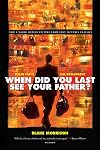
And When Did You Last See Your Father?
by Blake Morrison
On This Page
Description
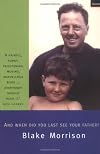
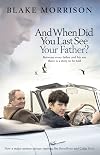
Soon to be a major motion picture, directed by Anand Tucker and starring Colin Firth and Jim Broadbent And when did you last see your father? Was it last weekend or last Christmas? Was it before or after he exhaled his last breath? And was it him really, or was it a version of him, shaped by your own expectations and disappointments? Blake Morrison's subject is universal: the life and death of a parent, a father at once beloved and exasperating, charming and infuriating, domineering and show more terribly vulnerable. In reading about Dr. Arthur Morrison, we come to ask ourselves the same searching questions that Blake Morrison poses: Can we ever see our parents as themselves, or are they forever defined through a child's eyes? What are the secrets of their lives, and why do they spare us that knowledge? And when they die, what do they take with them that cannot be recovered or inherited? show lessTags
Recommendations









Member Reviews
This is a thoughtful and perceptive reflection on the life, and particularly on the death, of the author's father. But unlike many books of this type, this isn't a picture of a dysfunctional family or unhappy childhood: the relationship between Morrison and his father was ultimately a loving one, although one fraught with frustrations.
Blake Morrison was born around 1950 into a prosperous family: both his parents were doctors in partnership in general practice in a small town in Yorkshire. His father was a larger than life character, perhaps not quite the respectable character that his position might suggest:
'This is the way it was with my father. Minor duplicities. Little fiddles. Money-saving, privilege-attaining fragments of show more opportunism. The queue-jump, the backhander, the deal under the table. Parking where you shouldn't, drinking after hours, accepting the poached pheasant and the hoods off the back of a lorry.'
What Morrison captures wonderfully is the rivalry, whether physical or otherwise, between father and son, as the one ages and the other grows. And there are some truly funny moments as the son attempts to deal with some of the excesses of his father's behaviour. But what makes the book stand out are Morrison's reflections on his father's death from inoperable cancer at the age of 75. Morrison depicts each stage in the decline in his father's physical condition with unusual clarity, but rather than being unnecessarily graphic , this is done in a very tender and moving way.
When we discussed this book at my RL book club all but one of the members really enjoyed it. Several people found the description of the realities of death, and of the family's reaction to death, incredibly moving. show less
Blake Morrison was born around 1950 into a prosperous family: both his parents were doctors in partnership in general practice in a small town in Yorkshire. His father was a larger than life character, perhaps not quite the respectable character that his position might suggest:
'This is the way it was with my father. Minor duplicities. Little fiddles. Money-saving, privilege-attaining fragments of show more opportunism. The queue-jump, the backhander, the deal under the table. Parking where you shouldn't, drinking after hours, accepting the poached pheasant and the hoods off the back of a lorry.'
What Morrison captures wonderfully is the rivalry, whether physical or otherwise, between father and son, as the one ages and the other grows. And there are some truly funny moments as the son attempts to deal with some of the excesses of his father's behaviour. But what makes the book stand out are Morrison's reflections on his father's death from inoperable cancer at the age of 75. Morrison depicts each stage in the decline in his father's physical condition with unusual clarity, but rather than being unnecessarily graphic , this is done in a very tender and moving way.
When we discussed this book at my RL book club all but one of the members really enjoyed it. Several people found the description of the realities of death, and of the family's reaction to death, incredibly moving. show less
Unexpectedly enjoyable. Made me laugh out loud on the train as well as bringing tears to my eyes. Very honest about childhood, adolescence & the truth that your children never love you as much as you love them.
Stop Time by Frank Conroy
And When Did You Last See Your Father? by Blake Morrison
These two books offer approaches to the question of how to write about one’s father. Morrison enters into a life at the moment his father, a physician, is diagnosed with terminal bowel cancer. Conrol is more oblique, appropriately, since his father died when Conroy was six. Conroy enters his story finding hemself at mature age, riding London’s suburban highways at a suicidal 100mph in a Jaguar. The two authors weave remembrances of the past into current events, though with nearly opposite methods. Morrison’s present—the days up to and through his father’s death—is the promiment plot thrust. The past comprises about 25% of his narrative; the show more remainder focused on the son’s observations of his father’s decline and candid, slightly gruesome descriptions of the old man’s physical body, approaching, near and after death. Conroy’s present consists of a prologue desribing the driving episodes, a short scene showing a quiet marriage and another driving episode. The remaining 95% of the narrative concerns Conroy’s youth, and though he doesn’t directly convey circumstances in relationship with his father, his dead father remains in focus, in absentia, as the young Frank deals with abandonment and the unusual character of his stepfather.
Despite the large differece in number of pages each author devotes to the pat, the effect is the same: moments in memory enhance the understanding of the adult narrator’s relationship to his father, dying, dead, alive or surrogate, which subsequently fosters insight into the narrator’s character and thinking. What makes these writings stand out from others is the clear writing, a faculty for detail and a willingness to be cmpletely, sometimes baldly honest. Morrison, whose narrative is more recent than Conroy’s memoir of youth, shines “the hard light of truth” particularly brightly on his subjects, himself included, when he admits that he is thinking, “Just die, will you.” Sometimes it feels like too much truth: especially the graphic descriptions of the dead man’s decay and remarks about his father’s penis and bowels in various states and conditions. Is this a sideways attempt to reveal more about Morrison’s relationship to his father? Is it a way to help him distance himself from his grief? It is distinctively graphic enough to notice and make me wonder.
One element curiously missing from Morrison’s memoir is mention of his wife and children, although he says he has them. Surely his wife has a position I the relationship of a son and father, and certainly she would have one during the grieving and mourning of a father’s death. I wondered at Morrison’s changed attitudes toward his own children, now that his father is dead, and he himself is a father?
Conroy, whose life is shaped by the absence of a father, wonders less about what was than about the nature of time and memory, its odd juxtapositions of past and present, and the persistent question about the honesty of memory. He applies interesting techniques in the style of writing and constructs his narrative in a way that reflects the questions about the nature of time. His use of spare and concise language is so deliberate it’s as if it will assist in the veracity of his remembrances, no embellishments, just the facts. He jumps through time, as does real memory, associatively thinking, yet ultimately having it all feed into the harmony about the nature of time and memory.
Both Morrison and Conroy present a complete world that is full and real in its detail—Morrison’s interesting in its distinctly British culture, Conroy’s in its period details in two parts of America. Each also rises above the purported subject of a son’s relationship to his father and an exploration of a boy’s youth by addressing larger questions: Morrison the meaning of what a father is, and Conroy a littler larger in scope: the meaning of time and memory. show less
And When Did You Last See Your Father? by Blake Morrison
These two books offer approaches to the question of how to write about one’s father. Morrison enters into a life at the moment his father, a physician, is diagnosed with terminal bowel cancer. Conrol is more oblique, appropriately, since his father died when Conroy was six. Conroy enters his story finding hemself at mature age, riding London’s suburban highways at a suicidal 100mph in a Jaguar. The two authors weave remembrances of the past into current events, though with nearly opposite methods. Morrison’s present—the days up to and through his father’s death—is the promiment plot thrust. The past comprises about 25% of his narrative; the show more remainder focused on the son’s observations of his father’s decline and candid, slightly gruesome descriptions of the old man’s physical body, approaching, near and after death. Conroy’s present consists of a prologue desribing the driving episodes, a short scene showing a quiet marriage and another driving episode. The remaining 95% of the narrative concerns Conroy’s youth, and though he doesn’t directly convey circumstances in relationship with his father, his dead father remains in focus, in absentia, as the young Frank deals with abandonment and the unusual character of his stepfather.
Despite the large differece in number of pages each author devotes to the pat, the effect is the same: moments in memory enhance the understanding of the adult narrator’s relationship to his father, dying, dead, alive or surrogate, which subsequently fosters insight into the narrator’s character and thinking. What makes these writings stand out from others is the clear writing, a faculty for detail and a willingness to be cmpletely, sometimes baldly honest. Morrison, whose narrative is more recent than Conroy’s memoir of youth, shines “the hard light of truth” particularly brightly on his subjects, himself included, when he admits that he is thinking, “Just die, will you.” Sometimes it feels like too much truth: especially the graphic descriptions of the dead man’s decay and remarks about his father’s penis and bowels in various states and conditions. Is this a sideways attempt to reveal more about Morrison’s relationship to his father? Is it a way to help him distance himself from his grief? It is distinctively graphic enough to notice and make me wonder.
One element curiously missing from Morrison’s memoir is mention of his wife and children, although he says he has them. Surely his wife has a position I the relationship of a son and father, and certainly she would have one during the grieving and mourning of a father’s death. I wondered at Morrison’s changed attitudes toward his own children, now that his father is dead, and he himself is a father?
Conroy, whose life is shaped by the absence of a father, wonders less about what was than about the nature of time and memory, its odd juxtapositions of past and present, and the persistent question about the honesty of memory. He applies interesting techniques in the style of writing and constructs his narrative in a way that reflects the questions about the nature of time. His use of spare and concise language is so deliberate it’s as if it will assist in the veracity of his remembrances, no embellishments, just the facts. He jumps through time, as does real memory, associatively thinking, yet ultimately having it all feed into the harmony about the nature of time and memory.
Both Morrison and Conroy present a complete world that is full and real in its detail—Morrison’s interesting in its distinctly British culture, Conroy’s in its period details in two parts of America. Each also rises above the purported subject of a son’s relationship to his father and an exploration of a boy’s youth by addressing larger questions: Morrison the meaning of what a father is, and Conroy a littler larger in scope: the meaning of time and memory. show less
Never knowing my father to have a last time, the book surprisingly (yes I know) moves me each time I read it. As well as the second volume that tells the story of his mother. Not sure if I have that or if library read? (equally poor if different relationship with my mother so …) Difficult to read at the moment as wife’s father and mother on the same journeys as the author’s were in his books.
Blake recounts his relationship with his father, a physician, and his minor character flaws which annoyed him when he was young, like butting in line, accepting poached pheasant, shortchanging people, etc. and his care for this man as he slowly dies from inoperable cancer.
As mellow as the author, who spoke to my Goldsmiths' Creative and Life Writing class. Interesting and humble.
From the book box that I received from Moem.
It'll be sent on to a new reader soon :-)
It'll be sent on to a new reader soon :-)
Members
- Recently Added By
Lists

Best Autobiographies and Memoirs
370 works; 67 members

Best Biographies, Autobiographies and Memoirs
465 works; 160 members

BBC Radio 4 Bookclub
340 works; 13 members
Author Information

36+ Works 1,474 Members
Some Editions
Awards and Honors
Awards
Common Knowledge
- Original title
- And When Did You Last See Your Father?
- Original publication date
- 1993
- Related movies
- And When Did You Last See Your Father? (2007 | IMDb)
- First words
- A HOT SEPTEMBER Saturday in 1959, and we are stationary in Cheshire. Ahead of us, a queue of cars stretches out of sight around the corner. We haven't moved for ten minutes.
Classifications
Statistics
- Members
- 326
- Popularity
- 97,293
- Reviews
- 7
- Rating
- (3.86)
- Languages
- 5 — Dutch, English, Finnish, German, Portuguese
- Media
- Paper, Ebook
- ISBNs
- 16
- ASINs
- 4