On This Page
Description
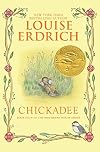
In 1866, Omakayas's son Chickadee is kidnapped by two ne'er-do-well brothers from his own tribe and must make a daring escape, forge unlikely friendships, and set out on an exciting and dangerous journey to get back home.Tags
Recommendations








Member Reviews
I read this for my Never Too Old Book Club, and I chose number 4 for my love of the cheery little bird. I am well-rewarded as the protagonist, a twin Ojibwe boy, is named after the chickadee, who becomes his guide. Once, Chickadee bemoaned having such a small bird as his spirit animal, especially since his twin brother, Makoons, is named for bear. But his wise, Nokomis (grandmother) gently berates him, saying that "Small things have great power." (p. 28) Chickadee is contrite and apologizes to his namesake with an offering of hazelnuts. Later, when the boy is alone and far from home, Chickadee comes to his aid.
Set in 1866, Chickadee is the continuing saga of Omakayas's family as they move west during the European expansion, suffer from show more smallpox and other tragedies, but find their strength and hope in culture and relations. Ms. Erdrich, who is of the Chippewa people, writes with innate knowledge of indigenous ways. In one scene, after Chickadee has been kidnapped, his worried family sits together in silence to think matters through before coming to an action decision. She further explores beliefs as Chickadee learns more about his namesake and comes to rely on the bird for guidance and hope (see the quotation from page 118).
My favorite chapter is "The Small and the Fierce" when Chickadee is in despair at ever finding his way home. The small bird comes to him and teaches the boy his song: "I am only the Chickadee/Yet small things have great power. I speak the truth." He also connects him with two Red-tailed Hawks, whom he saves, and the two sisters become his Mothers. "He [Chickadee] was not so lonely now. He'd been adopted. He had a father, the chickadee, and two mothers who were hawks." (p. 118)
Ms. Erdrich lightens the sometimes tense and sad story with two bumbling brothers who first kidnap Chickadee to be their servant, and later make him their master in trying to impress Two Strike, Chickadee's formidable aunt, whom they wish to marry. She also shows the great love between Chickadee and his twin by writing of the boys' feelings both before and after their separation. Makoons becomes ill with worry the longer his brother is gone.
This is an excellent series to read along with and as an alternative voice to the Little House series by Laura Ingalls Wilder. As Ms. Erdrich states in an interview with Martha Parravano: "The migration across Minnesota into the Dakotas, and the warmth of family life, is something that these books have in common with the Little House series. I am happy that they are being read togehter, as the Native experience of early western settlement is so often missing in middle-grade history classes." show less
Set in 1866, Chickadee is the continuing saga of Omakayas's family as they move west during the European expansion, suffer from show more smallpox and other tragedies, but find their strength and hope in culture and relations. Ms. Erdrich, who is of the Chippewa people, writes with innate knowledge of indigenous ways. In one scene, after Chickadee has been kidnapped, his worried family sits together in silence to think matters through before coming to an action decision. She further explores beliefs as Chickadee learns more about his namesake and comes to rely on the bird for guidance and hope (see the quotation from page 118).
My favorite chapter is "The Small and the Fierce" when Chickadee is in despair at ever finding his way home. The small bird comes to him and teaches the boy his song: "I am only the Chickadee/Yet small things have great power. I speak the truth." He also connects him with two Red-tailed Hawks, whom he saves, and the two sisters become his Mothers. "He [Chickadee] was not so lonely now. He'd been adopted. He had a father, the chickadee, and two mothers who were hawks." (p. 118)
Ms. Erdrich lightens the sometimes tense and sad story with two bumbling brothers who first kidnap Chickadee to be their servant, and later make him their master in trying to impress Two Strike, Chickadee's formidable aunt, whom they wish to marry. She also shows the great love between Chickadee and his twin by writing of the boys' feelings both before and after their separation. Makoons becomes ill with worry the longer his brother is gone.
This is an excellent series to read along with and as an alternative voice to the Little House series by Laura Ingalls Wilder. As Ms. Erdrich states in an interview with Martha Parravano: "The migration across Minnesota into the Dakotas, and the warmth of family life, is something that these books have in common with the Little House series. I am happy that they are being read togehter, as the Native experience of early western settlement is so often missing in middle-grade history classes." show less
I love Louise Erdrich.
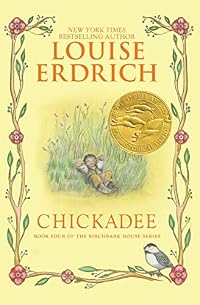
When I decided to order CHICKADEE, it was definitely an impulse buy based on two things: It was by Erdrich and the cover was cute as a button. I didn’t quite realize that it was part of THE BIRCHBARK HOUSE series or I would have read those first but thankfully this one definitely holds up as a standalone.
The story follows Chickadee and his family as spring rolls around once more. While his family is collecting maple sap, Chickadee is kidnapped by two men who are mad that Chickadee’s grandmother and brother insulted their very unlikable father. A series of incidents allows Chickadee to escape and he starts his long journey home. Along the way, he makes friends, is kidnapped yet again (this time by missionaries), show more and finds there is no place quite like home.
While Chickadee is making his way home, his family is rushing to find him. When they realize that Chickadee is missing and figure out who took him, the whole family heads across the plains to reclaim their boy. It was definitely refreshing to see such tight familial bonds in middle grade fiction. Most MG stories these days have distant parents or siblings who don’t get along but Erdrich really captures how much Native families stick together and how unbreakable those bonds are.
I was also pleased with how she presented the missionaries. Yes, not all of them were terrible, but all of them felt that they could “save the souls” of “the savages” and it’s very telling that that instead of trying to find Chickadee’s parents, they just snatched him up from a cabin. While I was reading this with my godkids, Sidda made the remark “It’s like they found a stray puppy and decided to take him home” and that’s exactly how the missionaries treat Chickadee. Like a stray, wild animal.
This has a happy ending that everyone will enjoy and I can’t wait to read the rest of the series! show less
When I decided to order CHICKADEE, it was definitely an impulse buy based on two things: It was by Erdrich and the cover was cute as a button. I didn’t quite realize that it was part of THE BIRCHBARK HOUSE series or I would have read those first but thankfully this one definitely holds up as a standalone.
The story follows Chickadee and his family as spring rolls around once more. While his family is collecting maple sap, Chickadee is kidnapped by two men who are mad that Chickadee’s grandmother and brother insulted their very unlikable father. A series of incidents allows Chickadee to escape and he starts his long journey home. Along the way, he makes friends, is kidnapped yet again (this time by missionaries), show more and finds there is no place quite like home.
While Chickadee is making his way home, his family is rushing to find him. When they realize that Chickadee is missing and figure out who took him, the whole family heads across the plains to reclaim their boy. It was definitely refreshing to see such tight familial bonds in middle grade fiction. Most MG stories these days have distant parents or siblings who don’t get along but Erdrich really captures how much Native families stick together and how unbreakable those bonds are.
I was also pleased with how she presented the missionaries. Yes, not all of them were terrible, but all of them felt that they could “save the souls” of “the savages” and it’s very telling that that instead of trying to find Chickadee’s parents, they just snatched him up from a cabin. While I was reading this with my godkids, Sidda made the remark “It’s like they found a stray puppy and decided to take him home” and that’s exactly how the missionaries treat Chickadee. Like a stray, wild animal.
This has a happy ending that everyone will enjoy and I can’t wait to read the rest of the series! show less
It’s 1866, and Omakayas is married with children!?!?!
That felt like a big jump from where the last novel left off! But I guess it’s been 14 years, so…
She has twin eight-year-old boys, Chickadee and Makoons. And Chickadee is stolen by the Zhigaag brothers! The ENTIRE family packs up camp to chase them down, including Two Strike. And, as Orph Carter says, “…I don’t want to be here when Two Strike comes after this boy.”! Good advice, as Two Strike has grown into a tremendous woman hunter/warrior and her strength rivals any man! It's a good story, with a nice ending, but I must admit that I liked the tales of young Omakayas a little more than the story of her twins. It isn't bad, it's just my preference. Great illustrations show more and great map, as well as a cool song for the twin whose name graces the cover of the book:
"I am only the Chickadee
Yet small things have
great power
I speak the truth."
And good advice from Nokomis: "She said that was how the world should work. We should fix what we break in this world for the ones who come next, our children." Amen! show less
That felt like a big jump from where the last novel left off! But I guess it’s been 14 years, so…
She has twin eight-year-old boys, Chickadee and Makoons. And Chickadee is stolen by the Zhigaag brothers! The ENTIRE family packs up camp to chase them down, including Two Strike. And, as Orph Carter says, “…I don’t want to be here when Two Strike comes after this boy.”! Good advice, as Two Strike has grown into a tremendous woman hunter/warrior and her strength rivals any man! It's a good story, with a nice ending, but I must admit that I liked the tales of young Omakayas a little more than the story of her twins. It isn't bad, it's just my preference. Great illustrations show more and great map, as well as a cool song for the twin whose name graces the cover of the book:
"I am only the Chickadee
Yet small things have
great power
I speak the truth."
And good advice from Nokomis: "She said that was how the world should work. We should fix what we break in this world for the ones who come next, our children." Amen! show less
3.5 stars
This is the 4th in Erdrich’s children’s series. It started with Omakayas as a child during the mid-1800s, but in this one Omakayas is a mother of two 8-year old twin boys, Chickadee and Makoons. They get into a bit of trouble, and for revenge, two large scary men kidnap Chickadee during the night and take him to their cabin to have him as their servant. While Chickadee’s family searches for him, Chickadee has to figure out how to survive and try to get back to them.
I liked this. Chickadee ended up having multiple “adventures” as he tried to find his way back to his family. I liked that there was Metis culture and traditions brought into this one, as well. As with all the books in the series, there are some nice show more illustrations. show less
This is the 4th in Erdrich’s children’s series. It started with Omakayas as a child during the mid-1800s, but in this one Omakayas is a mother of two 8-year old twin boys, Chickadee and Makoons. They get into a bit of trouble, and for revenge, two large scary men kidnap Chickadee during the night and take him to their cabin to have him as their servant. While Chickadee’s family searches for him, Chickadee has to figure out how to survive and try to get back to them.
I liked this. Chickadee ended up having multiple “adventures” as he tried to find his way back to his family. I liked that there was Metis culture and traditions brought into this one, as well. As with all the books in the series, there are some nice show more illustrations. show less
Set in 1866, Chickadee follows the sometimes harrowing journey of an 8-year-old Anishinabe (AH-nish-in-AH-bay) boy, separated from his family. Chickadee travels from the wooded lake country of Minnesota to the Plains and south to St. Paul, surviving mostly on his own.
I enjoyed reading Chickadee's story, especially as the chickadee is my favorite bird. My favorite chapter is sixteen, "The Small and the Fierce." Chickadee, , is alone and weak in the woods, having had no water or food for about two days. He prays to the great, kind spirit, other helpful spirits ,the little people, spirits of the forest and his namesake. It was the little bird who answered him, helped him, gave him his song.
I am only the Chickadee
Yet small things have show more great power
I speak the truth.
The bird tells the boy to walk over the next rise to a stream, where he will find a freshly killed rabbit and two hawks, talons locked and helpless to free themselves. If he helps the hawks, they will help him. He does and they do. This beautiful chapter epitomizes the Native American spirit and respect for the natural world. It is the way I strive to follow.
Includes a map of his travels and a Glossary and Pronunciation Guide of Ojibwe Terms. Louise Erdrich is a member of the Turtle Mountain Band of Chippewa, and this story was inspired when Ms. Erdrich and her mother, Rita Gourneau Erdrich, were researching their own family history. show less
I enjoyed reading Chickadee's story, especially as the chickadee is my favorite bird. My favorite chapter is sixteen, "The Small and the Fierce." Chickadee, , is alone and weak in the woods, having had no water or food for about two days. He prays to the great, kind spirit, other helpful spirits ,the little people, spirits of the forest and his namesake. It was the little bird who answered him, helped him, gave him his song.
I am only the Chickadee
Yet small things have show more great power
I speak the truth.
The bird tells the boy to walk over the next rise to a stream, where he will find a freshly killed rabbit and two hawks, talons locked and helpless to free themselves. If he helps the hawks, they will help him. He does and they do. This beautiful chapter epitomizes the Native American spirit and respect for the natural world. It is the way I strive to follow.
Includes a map of his travels and a Glossary and Pronunciation Guide of Ojibwe Terms. Louise Erdrich is a member of the Turtle Mountain Band of Chippewa, and this story was inspired when Ms. Erdrich and her mother, Rita Gourneau Erdrich, were researching their own family history. show less
Another endearing and enduring story from Erdrich. Twin boys play tricks on elders which leads to repercussions. When one boy is kidnapped, the whole family is affected.
This excellent writing really gets the reader to experience what life was like, e.g. riding on a wooden-wheeled cart over rough trails, being swarmed by mosquitoes, or eating starvation food.
This excellent writing really gets the reader to experience what life was like, e.g. riding on a wooden-wheeled cart over rough trails, being swarmed by mosquitoes, or eating starvation food.
Fourth in the series but the second I've read, Chickadee gives me a similar warm feeling that Birchbark House does. The family connections are so strong and true through even hardship, distance, and disagreement, that it's a joy to read about them. I also relate so well to the father's trepidation then elation at realizing that the lessons he and his wife have taught their children have prepared their son to care for himself.
Members
- Recently Added By
Lists

Books for An American Girl Readers
58 works; 1 member

Kidnapping, Indians of North America -- children's/YA fiction/non-fiction
45 works; 2 members
Author Information

69+ Works 45,180 Members
Karen Louise Erdrich was born on June 7, 1954 in Little Falls, Minnesota. Erdrich grew up in Wahpeton, North Dakota, where both of her parents were employed by the Bureau of Indian Affairs. She is a member of the Turtle Mountain Band of Chippewa. Erdrich graduated from Dartmouth College in 1976 with an AB degree, and she received a Master of Arts show more in creative writing from Johns Hopkins University in 1979. Erdrich published a number of poems and short stories from 1978 to 1982. In 1981 she married author and anthropologist Michael Dorris, and together they published The World's Greatest Fisherman, which won the Nelson Algren Award in 1982. In 1984 she won the National Book Critics Circle Award for Love Medicine, which is an expansion of a story that she had co-written with Dorris. Love Medicine was also awarded the Virginia McCormick Scully Prize (1984), the Sue Kaufman Prize (1985) and the Los Angeles Times Award for best novel (1985). In addition to her prose, Erdrich has written several volumes of poetry, a textbook, children's books, and short stories and essays for popular magazines. She has been the recipient of numerous awards for professional excellence, including the National Magazine Fiction Award in 1983 and a first-prize O. Henry Award in 1987. Erdrich has also received the Pushcart Prize in Poetry, the Western Literacy Association Award, the 1999 World Fantasy Award, and the Scott O'Dell Award for Historical Fiction in 2006. In 2007 she refused to accept an honorary doctorate from the University of North Dakota in protest of its use of the "Fighting Sioux" name and logo. Erdrich's novel The Round House made the New York Times bestseller list in 2013. Her other New York Times bestsellers include Future Home of the Living God (2017). (Bowker Author Biography) show less
Awards and Honors
Awards
Series

Common Knowledge
- Canonical title
- Chickadee
- People/Characters
- Omakayas; Animikiins; Chickadee; Makoons; John Zhigaag; Babiche Zhigaag (show all 8); Batiste Zhigaag; Uncle Quill
- Important places
- Lake of the Woods, Minnesota, USA; St. Paul, Minnesota, USA
- Dedication
- For Netaa-niimid Aamo-ikwe
- First words
- The year was 1866, and the girl whose first step was a hop, Omakayas, sometimes skipped as she chased after her children.
- Quotations
- "The chickadee stays awake all winter in the cold, " said Nokomis. "He survives on the smallest seeds. He is a teacher. The chickadee shows the Anishinabeg how to live. For intstance, he never stores his food all in one place... (show all). He makes caches in various places. He never eats all of his food at once. We do that too. The chickadee takes good care of his family. The mother and the father stay with their babies as they fly out into the world. They stick together, like the Anishinabeg. And there are other things. The chickdadee is always cheerful even in adversity. He is brave and has great purpose, great meaning. You are lucky to have your name." (p. 28)
- Last words
- (Click to show. Warning: May contain spoilers.)I am only the Chickadee/Yet small things have great power/I speak the truth.
Classifications
- Genres
- Kids, Children's Books, Fiction and Literature
- DDC/MDS
- 813.54 — Literature & rhetoric American literature in English American fiction in English 1900-1999 1945-1999
- LCC
- PZ7 .E72554 .C — Language and Literature Fiction and juvenile belles lettres Fiction and juvenile belles lettres Juvenile belles lettres
- BISAC
Statistics
- Members
- 408
- Popularity
- 75,635
- Reviews
- 13
- Rating
- (3.90)
- Languages
- English
- Media
- Paper, Ebook
- ISBNs
- 11
- ASINs
- 3