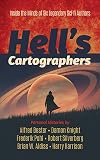
Hell's Cartographers: Some Personal Histories of Science Fiction Writers
by Brian W. Aldiss (Editor), Harry Harrison (Editor)
On This Page
Description
HTML:What motivates great science fiction writers? Why did they choose the genre? Where do they get their ideas? In this illuminating volume, six of the field's bestselling authors present lively personal histories that provide fascinating insights into the creative process — and offer inspiration for aspiring wordsmiths. In the introduction, Brian W. Aldiss observes, "Never have critics and readers in any field been more divided than they are over science fiction." Aldiss goes on to show more define his concept of the difference between fiction and nonfiction in "Magic and Bare Boards." His coeditor, Harry Harrison, reminisces about his bookish childhood in "The Beginning of the Affair." "Ah, science fiction, science fiction!" sighs Alfred Bester in "My Affair with Science Fiction." He notes, "I've read it all my life, off and on, with excitement, with joy, sometimes with sorrow." Other heartfelt and insightful contributions include Robert Silverberg's "Sounding Brass, Tinkling Cymbal," Damon Knight's "Knight Piece," and Frederik Pohl's "Ragged Claws.". Science Fiction. Fiction. show lessTags
Recommendations










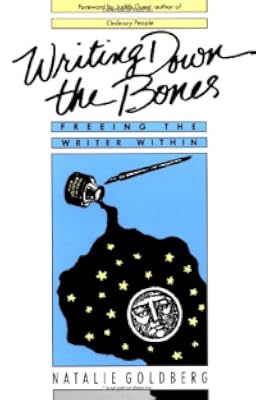
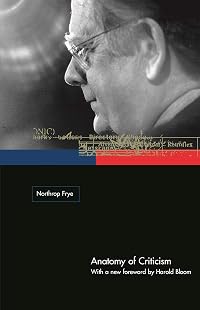

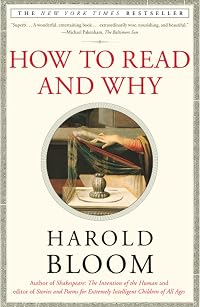









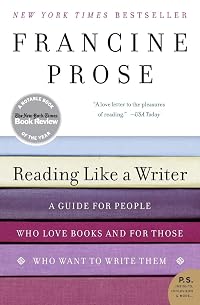










Member Recommendations

Member Reviews
Aldiss, Brian W., and Harry Harrison, eds. Hell’s Cartographers: The personal histories of science fiction writers: Alfred Bester, Damon Knight, Frederik Pohl, Robert Silverberg, Harry Harrison, Brian W Aldiss. Orbit, 1975.
Hell’s Cartographers is a fascinating read for anyone interested in the group of science fiction authors who grew up during the Depression and whose personal histories include World War II, the Cold War, and Viet Nam. Brian Aldiss (1925-2007), Alfred Bester (1913-1973), Harry Harrison (1925-2012), Damon Knight (1922-2002), Frederik Pohl (1919-2013), and Robert Silverberg (b. 1935) grew up reading science fiction pulp magazines edited by the likes of Hugo Gernsback and John W. Campbell. They got their start writing show more and editing for these same magazines and their often-short-lived successors. Their output of pulp short stories was prodigious—it had to be at the standard rate of half-a-cent a word. At his height, Silverberg says he was publishing a million words a year. Many of them were members of a New York group of leftist science fiction fans who called themselves Futurians; they shared beer money, slept on each other’s couches, and promoted each other’s work. They had mixed feelings about the pulp they read and wrote as young men, and as they matured, they looked for ways to deepen and expand their range giving pulp a satirical edge, writing more character-driven stories, researching more deeply, and creating the postmodern style that came to be called New Wave.
In a final section, each of them discusses his writing process. In the mid-seventies they were still working with typewriters, but one of them was looking forward to a time when some of the drudgery would be taken over by computers. They said they were revising more and writing more slowly than they did in their youth.
One small caveat. The title suggests that they like Dante, writing anatomies of human failings and misery. While they do find fault with human foolishness and perfidy, their own stories are upbeat tales of success, and their outlooks are optimistic. 4 stars, an important contribution to literary history. show less
Hell’s Cartographers is a fascinating read for anyone interested in the group of science fiction authors who grew up during the Depression and whose personal histories include World War II, the Cold War, and Viet Nam. Brian Aldiss (1925-2007), Alfred Bester (1913-1973), Harry Harrison (1925-2012), Damon Knight (1922-2002), Frederik Pohl (1919-2013), and Robert Silverberg (b. 1935) grew up reading science fiction pulp magazines edited by the likes of Hugo Gernsback and John W. Campbell. They got their start writing show more and editing for these same magazines and their often-short-lived successors. Their output of pulp short stories was prodigious—it had to be at the standard rate of half-a-cent a word. At his height, Silverberg says he was publishing a million words a year. Many of them were members of a New York group of leftist science fiction fans who called themselves Futurians; they shared beer money, slept on each other’s couches, and promoted each other’s work. They had mixed feelings about the pulp they read and wrote as young men, and as they matured, they looked for ways to deepen and expand their range giving pulp a satirical edge, writing more character-driven stories, researching more deeply, and creating the postmodern style that came to be called New Wave.
In a final section, each of them discusses his writing process. In the mid-seventies they were still working with typewriters, but one of them was looking forward to a time when some of the drudgery would be taken over by computers. They said they were revising more and writing more slowly than they did in their youth.
One small caveat. The title suggests that they like Dante, writing anatomies of human failings and misery. While they do find fault with human foolishness and perfidy, their own stories are upbeat tales of success, and their outlooks are optimistic. 4 stars, an important contribution to literary history. show less
Worth reading just for the frightening description of the birth of Scientology.
Ratings
Members
- Recently Added By
Lists

Science Fiction and Fantasy Autobiographies
38 works; 3 members
Author Information

Brian W. Aldiss was born in Dereham, United Kingdom on August 18, 1925. In 1943, he joined the Royal Signals regiment, and saw action in Burma. After World War II, he worked as a bookseller at Oxford University. His first book, The Brightfount Diaries, was published in 1955. His first science fiction novel, Non-Stop (Starship in the United show more States), was published in 1958. He wrote more than 80 books including Hothouse, Greybeard, The Helliconia Trilogy, The Squire Quartet, Frankenstein Unbound, The Malacia Tapestry, Walcot, and Mortal Morning. His short story Super-Toys Last All Summer Long was the basis for the film A.I. Artificial Intelligence. He has received numerous awards for his work including two Hugo Awards, the Nebula Award, the John W. Campbell Memorial Award, and an OBE for services to literature. He was also an anthologist and an artist. He was the editor of 40 anthologies including Introducing SF, The Penguin Science Fiction Omnibus, Space Opera, Space Odysseys, Galactic Empires, Evil Earths, and Perilous Planets. He was an abstract artist and his first solo exhibition, The Other Hemisphere, was held in Oxford in August-September 2010. He died on August 19, 2017 at the age of 92. (Bowker Author Biography) show less

Harry Harrison was born Henry Maxwell Dempsey on March 12, 1925 in Stamford, Connecticut. He was drafted into the U. S. Air Corps in 1943 and became a sharpshooter, a military policeman, a gunnery instructor, and a specialist in the prototypes of computer-guided bomb-sights and gun turrets. After being discharged, he graduated from Hunter College show more with a degree in art. By the end of the 1940s, he was running a small studio that specialized in selling illustrations to comics and science-fiction magazines. He then moved on to editing some of the magazines. As the market for comics began to shrink, he started writing for science-fiction magazines. He wrote short science fiction stories and novels including Deathworld, Captive Universe, Montezuma's Revenge, Star Smashers of the Galaxy Rangers, Stonehenge, West of Eden, Stars and Stripes Forever. He also wrote the Stainless Steel Rat series and the Bill, the Galactic Hero series. His novel Make Room! Make Room! Was the inspiration for the movie Soylent Green. He also wrote under the pseudonyms Hank Dempsey, Felix Boyd, Wade Kaempfert, Cameron Hall, Philip St. John, and Leslie Charteris. He died on August 15, 2012 at the age of 87. (Bowker Author Biography) show less
Common Knowledge
- Canonical title
- Hell's Cartographers: Some Personal Histories of Science Fiction Writers
- Original publication date
- 1975-05
Classifications
- Genres
- Biography & Memoir, Literature Studies and Criticism
- DDC/MDS
- 813.0876 — Literature & rhetoric American literature in English American fiction in English By type Genre fiction Adventure fiction Speculative fiction
- LCC
- PS129 .H4 — Language and Literature American literature American literature Biography, memoirs, letters, etc.
- BISAC
Statistics
- Members
- 141
- Popularity
- 232,992
- Reviews
- 3
- Rating
- (3.63)
- Languages
- English
- Media
- Paper, Ebook
- ISBNs
- 6
- UPCs
- 1
- ASINs
- 3