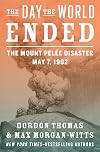
The Day the World Ended: The Mount Pelée Disaster May 7, 1902
by Gordon Thomas, Max Morgan-Witts
On This Page
Description
The spectacular story of the greatest natural disaster ever to strike the Western Hemisphere: the 1902 volcano that destroyed St Pierre on the island of Martinique. This book reveals the story of a city engulfed in flames and plunged into terrifying darkness.
Tags
Recommendations
















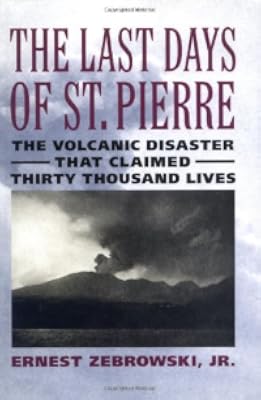




















Member Recommendations

IsolaBlue After reading Hearn's wonderful observations of French Creole culture in the city of St. Pierre, Martinique, circa 1888, it is fascinating - and sad - to read Gordon Thomas and Max Morgan Witts' THE DAY THE WORLD ENDED which tells us about the volcanic eruption that totally destroyed St. Pierre and all but two of its inhabitants in 1902. Reading Thomas and Witts' book on the heels of Hearn's makes us realize that we had the privilege - through Hearns - of meeting some of the wonderful, fascinating and very real people who later died under the ash of Mount Pelee.
Member Reviews
The authors have researched numerous archives around the world to assemble a fascinating account of the eruption of Mount Pelée in 1902, which destroyed the city of St. Pierre on the island of Martinique. This book is a day-by-day account of the chain of events leading to the disaster, covering May 2nd to May 8th. It not only covers the eruption itself, but related events such as a flood of mud that destroys a sugar factory, a prison riot, and a voodoo uprising. It shows the short-sightedness of those in charge due to politics of an upcoming election. This tragedy could have been much less severe in terms of loss of life if action had been taken sooner.
The authors employ the technique of weaving together individual stories with show more descriptions of the bigger picture. The narrative is strictly a historical account and is light on scientific explanations, but it is very readable and flows nicely. The authors provide an extensive bibliography, but no footnotes relating content to sources. I had not read anything about this disaster previously and feel I learned a great deal. show less
The authors employ the technique of weaving together individual stories with show more descriptions of the bigger picture. The narrative is strictly a historical account and is light on scientific explanations, but it is very readable and flows nicely. The authors provide an extensive bibliography, but no footnotes relating content to sources. I had not read anything about this disaster previously and feel I learned a great deal. show less
I added this book to my shelf after a friend had reviewed it. Last week while helping out at the library, I found it in the pile of books they were pulling from the shelves. I sat down and opened it up and the next time I looked up an hour and half had lapsed.
This is a riveting, day by day, account of the eruption of Pelee in 1902. Published in 1969, this book has stood the test of time. It reads more like an engrossing novel then a non-fictional account written by two news reporters. The research that went into this book is evident.
The story combines the everyday emotions and lives of the people living below the mountain, in St. Pierre. The authors also include all of the turmoil that was occurring: vodoo worshipers, the political show more motives, the involvement (or non-involvement) of the Catholic Church. So many lives were lost due to inaction by so many people. Insects and snakes invaded the town, even they were smart enough to come down off the mountain and "get out of Dodge". Political motives fueled those in charge and no evacuation orders were issued. Approximately 30,000 souls were lost, and an entire town wiped off the map. show less
This is a riveting, day by day, account of the eruption of Pelee in 1902. Published in 1969, this book has stood the test of time. It reads more like an engrossing novel then a non-fictional account written by two news reporters. The research that went into this book is evident.
The story combines the everyday emotions and lives of the people living below the mountain, in St. Pierre. The authors also include all of the turmoil that was occurring: vodoo worshipers, the political show more motives, the involvement (or non-involvement) of the Catholic Church. So many lives were lost due to inaction by so many people. Insects and snakes invaded the town, even they were smart enough to come down off the mountain and "get out of Dodge". Political motives fueled those in charge and no evacuation orders were issued. Approximately 30,000 souls were lost, and an entire town wiped off the map. show less
The authors have researched numerous archives around the world to assemble a fascinating account of the eruption of Mount Pelée in 1902, which destroyed the city of St. Pierre on the island of Martinique. This book is a day-by-day account of the chain of events leading to the disaster, covering May 2nd to May 8th. It not only covers the eruption itself, but related events such as a flood of mud that destroys a sugar factory, a prison riot, and a voodoo uprising. It shows the short-sightedness of those in charge due to politics of an upcoming election. This tragedy could have been much less severe in terms of loss of life if action had been taken sooner.
The authors employ the technique of weaving together individual stories with show more descriptions of the bigger picture. The narrative is strictly a historical account and is light on scientific explanations, but it is very readable and flows nicely. The authors provide an extensive bibliography, but no footnotes relating content to sources. I had not read anything about this disaster previously and feel I learned a great deal. show less
The authors employ the technique of weaving together individual stories with show more descriptions of the bigger picture. The narrative is strictly a historical account and is light on scientific explanations, but it is very readable and flows nicely. The authors provide an extensive bibliography, but no footnotes relating content to sources. I had not read anything about this disaster previously and feel I learned a great deal. show less
The Day the World Ended is the compelling story of the most lethal volcanic eruptions of the 20th Century. St Pierre on the French island of Martinique was, at 30,000 people, the largest city on the island and the location of the Governor's Palace. The book follows the course of events from mid-April to May 8th, when St. Pierre, and virtually all of its residents, ceased to exist. The book continues on, following the aftermath of the few survivors. An excellent work.
quite boring, a little racist. illustrations good, colourful but very small.
Ratings
Members
- Recently Added By
Author Information

36+ Works 3,756 Members
Gordon Thomas is a bestselling author of forty books published worldwide, including many on the international intelligence community. He lives in London. You can visit him online at www.gordonthomas-author.com.
13+ Works 1,929 Members
Work Relationships
Common Knowledge
- Canonical title
- The Day the World Ended: The Mount Pelée Disaster May 7, 1902
- Important places
- Martinique, France
- Related movies
- When Time Ran Out... (1980 | IMDb)
- First words
- There had been a rumbling for two weeks. -Prologue
He was always punctual. -Chapter One, The First Victim - Last words
- (Click to show. Warning: May contain spoilers.)Perhaps Pelee will always claim victims. -Epiloue
- Canonical DDC/MDS
- 972.982
- Canonical LCC
- F2081
Classifications
- Genres
- Nonfiction, History, General Nonfiction
- DDC/MDS
- 972.982 — History & geography History of North America Mexico, Central America, West Indies, Bermuda West Indies (Antilles) and Bermuda; Caribbean Windward Islands and other southern islands Martinique
- LCC
- F2081 — Local History of the United States, Canada and Latin America Latin America. Spanish America Lesser Antilles Individual islands
- BISAC
Statistics
- Members
- 138
- Popularity
- 237,613
- Reviews
- 5
- Rating
- (3.94)
- Languages
- English, French, Spanish
- Media
- Paper, Audiobook, Ebook
- ISBNs
- 14
- ASINs
- 5