On This Page
Description
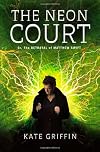
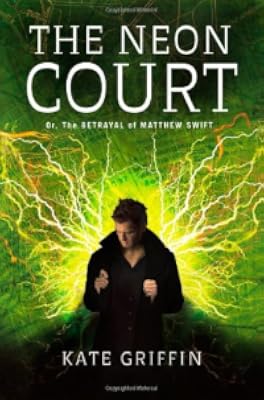
War is coming to London. A daimyo of the Neon Court is dead and all fingers point towards their ancient enemy - The Tribe. And when magicians go to war, everyone loses. But Matthew Swift has his own concerns. He has been summoned abruptly, body and soul, to a burning tower and to the dead body of Oda, warrior of The Order and known associate of Swift.Tags
Recommendations


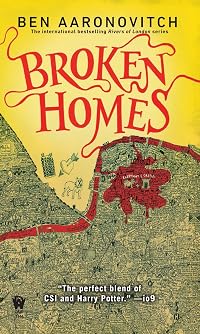
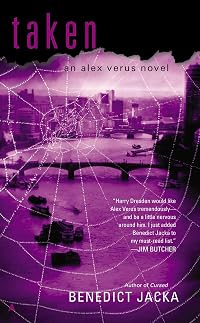
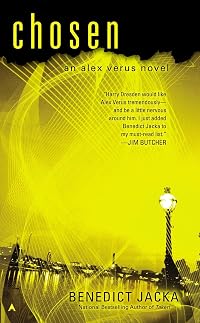
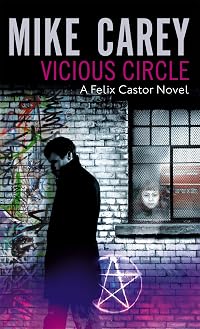



Member Recommendations
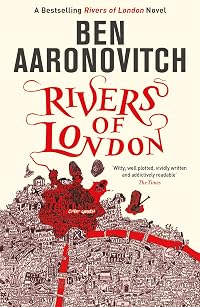
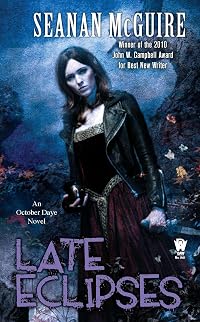
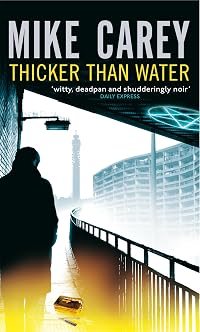
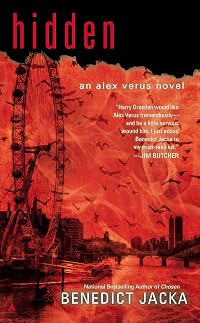
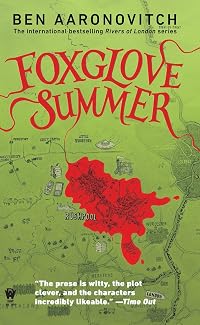
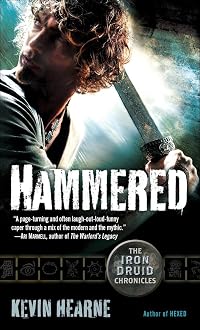
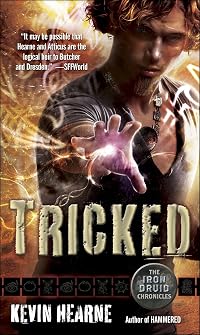
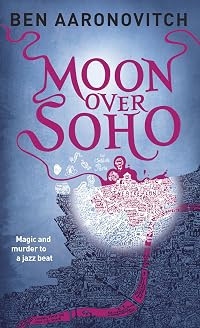
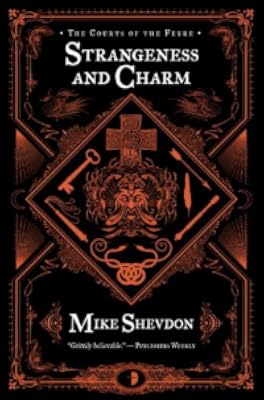
LongDogMom Also known as Midnight Riot, Rivers of London is set in London and filled with unusual beings of Power and magical murders in a similar way to the Swift books
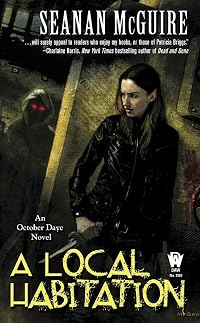
LongDogMom Both books are set in London that has a magical world that few see
Member Reviews
Kate Griffin takes our hero (though that's likely not how he would describe himself), Matthew Swift, on a more traditional adventure in this third book in his series as the host of the Electric Blue Angels, incumbent Midnight Mayor, and general saviour du jour of London. She introduces the idea of the Neon Court - a twist on the Seelie/Unseelie Court structure, with a reigning fey queen dubbed Lady Neon and a typical obsession with looks and glamour - alongside a more modern rival, the Tribe - a group who prides themselves on being the opposite of everything that the Court holds dear: the idea of being outcasts as manifest through bodily mutilations and general "ugliness" - who's most recent conflict stems from their mutual quest for a show more "chosen one." Like all things in the modern world, the concept of a "chosen one" is not as simple as in days of old; gods don't really make the calls anymore, and the general population has wisened up to the concept of divine intervention - both of which Matthew (in his infinite wisdom) rejected loudly from the outset, even as he set off in search of the child in an attempt to stop their impending war.
To complicate matters further, another antagonist is thrown into the mix - the horrifying manifestation of all the things in the darkness that humanity dare not speak of - and surprisingly it is Matthew's almost-constant companion Oda who is taken over by this magical concept. Her transformation into a magical being is seemingly the final straw in her damnation, but Matthew's keen observation that someone else is pulling the strings in both her downfall and that of the chosen one is right on target. It doesn't quite surprise me that Griffin made the Order (and its rather smarmy leader) the brains behind both issues, since he was showing signs of questionable doings from the very outset. Or maybe I just have a healthy scepticism of fundamentalist religious orders, and assume that at some point all of them will pervert the message of belief into one of "one belief, and our belief only" with a quick translation into violence as a means of persueding people to their cause. show less
To complicate matters further, another antagonist is thrown into the mix - the horrifying manifestation of all the things in the darkness that humanity dare not speak of - and surprisingly it is Matthew's almost-constant companion Oda who is taken over by this magical concept. Her transformation into a magical being is seemingly the final straw in her damnation, but Matthew's keen observation that someone else is pulling the strings in both her downfall and that of the chosen one is right on target. It doesn't quite surprise me that Griffin made the Order (and its rather smarmy leader) the brains behind both issues, since he was showing signs of questionable doings from the very outset. Or maybe I just have a healthy scepticism of fundamentalist religious orders, and assume that at some point all of them will pervert the message of belief into one of "one belief, and our belief only" with a quick translation into violence as a means of persueding people to their cause. show less
I loved it. The formula is starting to show, and the story plays with that a little, but it was still impossible to put down. I don't think the title or the subtitle really work for this story. The Neon Court are great but hardly the focus of the book, and I really don't see how anyone betrays Mr. Swift -- to the contrary, virtually everyone is forthright in their blatant manipulation. He gets stabbed in the front every time...
Someone summons Matthew into a burning building, where he uncovers the beginnings of a war between the Neon Court and the Tribe, and the advent of a beast that bring darkness and the end of the city.
Why I picked it up: Griffin's style isn't for everyone, but I love the poetry of her language. Her love of the city brings energy to her language, while it shapes the unusual powers she gives to her unique sorcerer protagonist.
Why I finished it: The writing is getting better, and Matthew is becoming more human. I enjoyed the trick of having Bakker's consciousness ride shotgun in Matthew's mind, prickling him with some hard truths about himself.
I'd give it to: This one might appeal to Harry Dresden fans more than the previous books.
Why I picked it up: Griffin's style isn't for everyone, but I love the poetry of her language. Her love of the city brings energy to her language, while it shapes the unusual powers she gives to her unique sorcerer protagonist.
Why I finished it: The writing is getting better, and Matthew is becoming more human. I enjoyed the trick of having Bakker's consciousness ride shotgun in Matthew's mind, prickling him with some hard truths about himself.
I'd give it to: This one might appeal to Harry Dresden fans more than the previous books.
A solid entry in an interesting series. Matthew Swift gets beat up more than most sorcerer protagonists, but that's a big part of his charm. Without the phsical and emotional pain he so clearly experiences, he'd be just another wise-cracking spell slinger, albeit of the slightly tongue in cheek English sort. We learn more about the factions that exist in his London, and the interplay between Matthew, the Neon Court, the Tribe and The Order elevates the plot above the monster-of-the-moment variety. I'm really looking foreward to the next - strongly recommend but READ THEM IN ORDER... That is all.
Matthew Swift, partially deceased sorcerer, symbiotic host to the electric blue angels of the wires, Midnight Mayor and protector of the city, is not an entity to be summoned lightly. But when he disappears in a blink and awakens in a conjuring of blood, it looks like someone has taken the chance. One perilous rescue, one fight to the death, and one burning building later, Swift's troubles have only begun. Oda, his sometime-enemy, sometime-ally, has been stabbed through the heart, but she seems determined not to go gentle in that good night. Lady Neon, queen of the newly reinvented urban faeries, and the Tribe, self-mutilating individualists, are calling for one another's blood, a sinister darkness is waiting at the end of every alley, show more parts of the city are vanishing from reality, and everyone seems to be expecting Matthew to Do Something about the situation.
As always, Griffin's imagination is breathtaking. From the giant eagles that Matthew summons to rescue him from the fiery abysses of Sidcup, to the metal god of the underworld, to medical history reporting magical treatments from the NHS, Griffin's creativity is astounding, This is my fourth book in Griffin's London and I'm still floored by how many quirky, entertaining magics Griffin manages to introduce. One of the most marvellous aspects was the Neon Court:
The plot follows the pattern of the other books in the series: Swift, aided by an (unfortunately all too disposable) snarky female sidekick, is pursued by an implacable supernatural foe. With the clock ticking and the city at risk if Swift cannot destroy the foe stalking him, he is forced into an alliance with distrustful, threatening, and morally ambiguous supernatural groups. The standard witty banter is still present, as Dees, Swift's Alderman ally, and Penny, his apprentice, are practically slot-in replacements for Oda and Vera. Several characters make their usual cameo appearances, including Sinclair, Charlie, and the inimitable and ever-entertaining Dr Seah. Griffin again tends to interject third-person interludes into the story, but despite the potentially dramatic content, I found these to be exposition-heavy and emotion-lite. hover for spoilerThe plot itself is quite twisty and satisfying, and the malevolent magic is genuinely shivery.
Three books in, I'm still fascinated with Swift's character and the conflict between electric angel and dead sorcerer. In Neon Court, Griffin delves even deeper into the darker aspects of this peculiar fusion of personalities. While the brooding, sarcastic, depressive Matthew is reasonably typical for the genre, the electric angels are something else altogether, a heady mixture of wonder and delight and blazing passion and pride and fury. As one character puts it, "Vengeance and retribution...the blue electric angels don't care for the laws of men, or the practicalities of this world, or what should or should not be. They have the moralities of six-year-olds, stripped of all complexity." The electric angels are inherently amoral; they would destroy a city just to watch the dance of flames amongst the ashes. Griffin does a fantastic job in creating these dual aspects; the moments in which the angels take control are palpable, and not only because of the pronoun switch. When Matthew is overcome by strong emotions--pain, weakness, or bewilderment--the angels tend to step in with a ruthless simplicity. As he explains,
Although dark throughout, the book is sprinkled with Griffin's trademark creativity and wit. Dees, Swift's new assistant, is particularly entertaining, as she manages a riposte in all of her verbal duels with Swift. Take her response to his attempt to angle for a complement: 'Mr Swift, if it's any comfort to you, I can promise you that were I not a happily married woman with a husband I love well,' sighed Dees,'you would definitely be in my top two genders of choice.' hover for spoiler Of course, not all the snark and quixotic imagination in the world can lighten the tone when the blood starts flowing. Almost every named character dies, and by now, this shouldn't be a spoiler. In my opinion, Griffin's bloodbaths have hit saturation point: the deaths have become predictable, an aspect to be expected and endured. In every book, at least one of Matthew's female allies will be spectacularly murdered, conveniently driving Swift over the edge and allowing the angels to take control. As he notes in reference to Madness, "The death of Dana...made complex things simple." This trick to send the villains over the Moral Event Horizon does indeed make things simple, at the cost of all the complexity and depth that might otherwise be explored. It takes more courage to keep your characters alive, to let their personalities and relationships develop and grow, to maintain the suspense without resorting to cheap tricks. Yet no matter how inured I was to my favourite characters' deaths, no matter how accurately I predicted their demises, events still left me with an aching throat. hover for spoiler
One unexpected delight of the book was the way in which it re-examined the events of A Madness of Angels. I've had Swift pegged as an antihero for a while, but it was interesting to see him try to reconcile his own motivations for pursuing Bakker. hover for spoiler One of the other subplots of the book, the exploration of the "chosen one" trope, fits neatly into this theme. I have always been fascinated by the struggle between what is right and what is necessary, the extents and limitations of responsibility, and the role of choice and guilt in maintaining humanity. As one character remarks bleakly, "One has to prioritise when it comes to big feelings. One can only feel big feelings for so many people, otherwise one has to feel lots and lots of little feelings for lots of little people, and then frankly you'd stop being the hero." Perhaps this is the ultimate theme of the book: the struggle to define the line between hero and monster when both do what they think must be done.
Overall, I cannot recommend this series too highly. Although I'm not thrilled with Griffin's decision to repeatedly re-isolate her hero and increase character turnover, there are too many wonderful aspects to these books to resist, from Griffin's incredible imagination to her laugh-inducing humour to her vibrant depiction of London. I've seen Griffin's writing aptly described as a "Marmite style", but if you happen to be a fan of her rather quirky, dialectic and dialogue-heavy stream-of-consciousness, please give these books a try.
P.S.: I read at the gym and tend to pair my books with music. This series is vastly more enjoyable with a soundtrack. In the first two books, I gave Matthew and his angels this themesong ("Septimus" from the soundtrack of Stardust). As the plot has become bleaker, my soundtrack has evolved; personally, I found Jablonski's brilliant soundtracks to Transformers, interspersed with Zimmer's Crysis, to be a wonderful accompaniment.
CAUTION: READING PROGRESS UPDATES CONTAIN SPOILERS! show less
As always, Griffin's imagination is breathtaking. From the giant eagles that Matthew summons to rescue him from the fiery abysses of Sidcup, to the metal god of the underworld, to medical history reporting magical treatments from the NHS, Griffin's creativity is astounding, This is my fourth book in Griffin's London and I'm still floored by how many quirky, entertaining magics Griffin manages to introduce. One of the most marvellous aspects was the Neon Court:
Once upon a time, in that old time when life was still magic and life was lived in the trees and forests and rivers and hills, in the old time of wild, ivy-tangled, rain-dropped magic, before the lights burnt and the spells flickered with electric fury, there existed the Faerie Court...But alas, the Faerie Court did not move with the times, and did not predict how a steam train could carve the landscape, or how a factory could discolour the sky, and, as the times changed, so did the magic, migrating with the people to the cities and becoming rich with smoke and stone and the sound of metal. And so the Faerie Court declined, and those who sought its blessing dwindled, until there was nothing more than a dusty hollow in the carved-out heart of a wood, crumbling with the fall of autumn leaves..[until] an enterprising princess...declared the founding of a new court: the Neon Court, whose heart was in the heart of the cities...And in time Lady Neon herself became little more than a myth: a figure only ever seen by the shadow of a street light, moving between city after city, forever chasing the night and avoiding the sun, a reveller whose lips could seduce any creature they touched.Those in the eternal quest for light and music and superficial beauty are contrasted with the Tribe, people who, seeing themselves as different from the rest of the world, seek to accentuate this divide via self-mutilation and self-augmentation until they are no longer recognisably human:
"Once-humans, or humans that had cut away every outward sign of humanity, skin and flesh, in the hope that when they no longer looked human, they'd no longer have to obey human rules."Griffin explores the themes of self-harm and the very human attempt to reshape the exterior in an attempt to redefine the self. As Matthew notes, both "Thought the key to being perfect was to cut away the bad things." As both the Tribe and the Fey demonstrate, ripping away facets of one's exterior, whether in a quest for beauty or uniqueness, can mutilate and warp the interior as well until all humanity is gone.
The plot follows the pattern of the other books in the series: Swift, aided by an (unfortunately all too disposable) snarky female sidekick, is pursued by an implacable supernatural foe. With the clock ticking and the city at risk if Swift cannot destroy the foe stalking him, he is forced into an alliance with distrustful, threatening, and morally ambiguous supernatural groups. The standard witty banter is still present, as Dees, Swift's Alderman ally, and Penny, his apprentice, are practically slot-in replacements for Oda and Vera. Several characters make their usual cameo appearances, including Sinclair, Charlie, and the inimitable and ever-entertaining Dr Seah. Griffin again tends to interject third-person interludes into the story, but despite the potentially dramatic content, I found these to be exposition-heavy and emotion-lite. hover for spoilerThe plot itself is quite twisty and satisfying, and the malevolent magic is genuinely shivery.
Three books in, I'm still fascinated with Swift's character and the conflict between electric angel and dead sorcerer. In Neon Court, Griffin delves even deeper into the darker aspects of this peculiar fusion of personalities. While the brooding, sarcastic, depressive Matthew is reasonably typical for the genre, the electric angels are something else altogether, a heady mixture of wonder and delight and blazing passion and pride and fury. As one character puts it, "Vengeance and retribution...the blue electric angels don't care for the laws of men, or the practicalities of this world, or what should or should not be. They have the moralities of six-year-olds, stripped of all complexity." The electric angels are inherently amoral; they would destroy a city just to watch the dance of flames amongst the ashes. Griffin does a fantastic job in creating these dual aspects; the moments in which the angels take control are palpable, and not only because of the pronoun switch. When Matthew is overcome by strong emotions--pain, weakness, or bewilderment--the angels tend to step in with a ruthless simplicity. As he explains,
I've got two kinds of magics. I've got the nice, sitting-at-home-not-troubling-anyone kinda magics...and we have the magics of fire and death, of destruction with no chance of return, of blood aflame and flesh turns to dust...which of us do you want to meet?There is only one aspect that the two personalities truly share: a tangible affection for the life within the city.
...
When you're a sorcerer, and Midnight Mayor, and burning fire runs through your veins, you've only really got two modes. You've got diplomatically passive, and you've got apocalyptically destructive. Finding that middle ground--you know, breaking someone's kneecaps without actually causing them to spontaneously combust--can be a delicate business.
Although dark throughout, the book is sprinkled with Griffin's trademark creativity and wit. Dees, Swift's new assistant, is particularly entertaining, as she manages a riposte in all of her verbal duels with Swift. Take her response to his attempt to angle for a complement: 'Mr Swift, if it's any comfort to you, I can promise you that were I not a happily married woman with a husband I love well,' sighed Dees,'you would definitely be in my top two genders of choice.' hover for spoiler Of course, not all the snark and quixotic imagination in the world can lighten the tone when the blood starts flowing. Almost every named character dies, and by now, this shouldn't be a spoiler. In my opinion, Griffin's bloodbaths have hit saturation point: the deaths have become predictable, an aspect to be expected and endured. In every book, at least one of Matthew's female allies will be spectacularly murdered, conveniently driving Swift over the edge and allowing the angels to take control. As he notes in reference to Madness, "The death of Dana...made complex things simple." This trick to send the villains over the Moral Event Horizon does indeed make things simple, at the cost of all the complexity and depth that might otherwise be explored. It takes more courage to keep your characters alive, to let their personalities and relationships develop and grow, to maintain the suspense without resorting to cheap tricks. Yet no matter how inured I was to my favourite characters' deaths, no matter how accurately I predicted their demises, events still left me with an aching throat. hover for spoiler
One unexpected delight of the book was the way in which it re-examined the events of A Madness of Angels. I've had Swift pegged as an antihero for a while, but it was interesting to see him try to reconcile his own motivations for pursuing Bakker. hover for spoiler One of the other subplots of the book, the exploration of the "chosen one" trope, fits neatly into this theme. I have always been fascinated by the struggle between what is right and what is necessary, the extents and limitations of responsibility, and the role of choice and guilt in maintaining humanity. As one character remarks bleakly, "One has to prioritise when it comes to big feelings. One can only feel big feelings for so many people, otherwise one has to feel lots and lots of little feelings for lots of little people, and then frankly you'd stop being the hero." Perhaps this is the ultimate theme of the book: the struggle to define the line between hero and monster when both do what they think must be done.
Overall, I cannot recommend this series too highly. Although I'm not thrilled with Griffin's decision to repeatedly re-isolate her hero and increase character turnover, there are too many wonderful aspects to these books to resist, from Griffin's incredible imagination to her laugh-inducing humour to her vibrant depiction of London. I've seen Griffin's writing aptly described as a "Marmite style", but if you happen to be a fan of her rather quirky, dialectic and dialogue-heavy stream-of-consciousness, please give these books a try.
P.S.: I read at the gym and tend to pair my books with music. This series is vastly more enjoyable with a soundtrack. In the first two books, I gave Matthew and his angels this themesong ("Septimus" from the soundtrack of Stardust). As the plot has become bleaker, my soundtrack has evolved; personally, I found Jablonski's brilliant soundtracks to Transformers, interspersed with Zimmer's Crysis, to be a wonderful accompaniment.
CAUTION: READING PROGRESS UPDATES CONTAIN SPOILERS! show less
Matthew Swift was a sorcerer's apprentice, but he died.
Then he came back.
Now Matthew Swift is the Midnight Mayor, with responsibility for all of London. So when a mystical war threatens between the Neon Court (the fairy court, transformed by the modern age, who prize beauty over truth and style over freedom) and the Tribe (self-mutilating transhumanists whose magic derives only from themselves), he has to deal with it. And when a "chosen one" is prophecied, he has to find her, no matter how silly he thinks the concept. And when the sun goes out, and London is cut off from the rest of the world, it's up to Matthew Swift to find out why.
The magic system is breathtakingly inventive. Swift is a city sorcerer, meaning he draws his magics show more from the rules and legends of London. He draws acid from rain and coalesces it into an attack; he transforms a discarded plastic bag into a flying eagle; he traps monsters on street corners with the rules of the crosswalk. The magic surprises me every time. But there's logic to it, a certain internal consistency that holds it back from just doing whatever would be most convenient for the story.
The characters are pretty fab, too. Matthew, whose idea of diplomacy is to let someone beat him up for a while. Oda, a modern-day palidan. Penny, a sorceress so powerful that she nearly accidentally destroyed the city, who is nevertheless too scared of her aunt to let anyone bleed on her aunt's car. Dees, a financial planner who wears uncomfortable heels and transforms into a metal dragon if threatened.
But truthfully, this just isn't quite as incredibly excellent as the first two books in the series. Most of my disappointment is because Odadies in the first chapter and spends the rest of the book as a vengeful revenant. Until she was gone, I hadn't realized how much I love the interplay between Oda and Matthew: him trying to get her to smile with increasingly witty quips, her monosyllabic put-downs...I missed it in this book! As unique as their characters are, Penny and Dees just can't fill the void. My other problem is that, after all the desperate last stands and clever magic fueled by fairy-tale logic (all of which is stone-cold awesome), the last chapter is Matthew explaining the whole plot to someone. A disappointing end!
I think my standards were just too high for this book. Still, this remains the most entrancing, enthralling urban fantasy series I've ever read. It's both funny and grim, unpretentious but with a lot to say. show less
Then he came back.
Now Matthew Swift is the Midnight Mayor, with responsibility for all of London. So when a mystical war threatens between the Neon Court (the fairy court, transformed by the modern age, who prize beauty over truth and style over freedom) and the Tribe (self-mutilating transhumanists whose magic derives only from themselves), he has to deal with it. And when a "chosen one" is prophecied, he has to find her, no matter how silly he thinks the concept. And when the sun goes out, and London is cut off from the rest of the world, it's up to Matthew Swift to find out why.
The magic system is breathtakingly inventive. Swift is a city sorcerer, meaning he draws his magics show more from the rules and legends of London. He draws acid from rain and coalesces it into an attack; he transforms a discarded plastic bag into a flying eagle; he traps monsters on street corners with the rules of the crosswalk. The magic surprises me every time. But there's logic to it, a certain internal consistency that holds it back from just doing whatever would be most convenient for the story.
The characters are pretty fab, too. Matthew, whose idea of diplomacy is to let someone beat him up for a while. Oda, a modern-day palidan. Penny, a sorceress so powerful that she nearly accidentally destroyed the city, who is nevertheless too scared of her aunt to let anyone bleed on her aunt's car. Dees, a financial planner who wears uncomfortable heels and transforms into a metal dragon if threatened.
But truthfully, this just isn't quite as incredibly excellent as the first two books in the series. Most of my disappointment is because Oda
I think my standards were just too high for this book. Still, this remains the most entrancing, enthralling urban fantasy series I've ever read. It's both funny and grim, unpretentious but with a lot to say. show less
One of my problems with reading books in a completed series is the tendency to read through the books back-to-back. I did that with the Matthew Swift series by Kate Griffin, and I think my first read of The Neon Court suffered, strictly because of a surfeit of Matthew Swift, along with surprisingly similar plotting and characterization to the prior book. Had I been waiting a year between books, I wouldn’t have minded. But I didn’t, so I did. Luckily, my second read was much more enjoyable.
True to format, the story begins with a ringing phone, and the bottom falling out of Matthew’s world. It appears he has been summoned by Oda, the magic-hating, sometimes-bodyguard, fundamentalist to a burning building. Oda, normally human and show more quite mortal, appears to have sustained a major stab wound to her heart, and yet here she is, walking and talking. After an eventful escape, hampered by Penny, Matthew’s new apprentice, and an unknown fae, Matthew’s presence is requested at a meeting with an Alderman, Ms. Dees. She presents the latest magical political crisis to Matthew, which he summarizes in his usual charming manner:
“‘Ms. Dees,’ I said, ‘let me get this absolutely clear. The Neon Court–a bunch of narcissistic wankers who haven’t yet come to terms with the fact that the age of the Faerie Court is over–have this major-league grief with the Tribe, a bunch of self-mutilating wankers who haven’t yet come to terms with the fact that the world isn’t out to get them personally–and someone somewhere is dead, which is very sad, and they’re threatening to kill each other and I care… how?’“
*************************************
Because Goodreads' customer support are also a bunch of wankers who would delete my review if enough people complained, I post my full reviews at my site, Booklikes and Leafmarks.
http://clsiewert.wordpress.com/2014/02/22/the-neon-court-by-kate-griffin/
and
http://carols.booklikes.com/post/800384/the-neon-court-by-kate-griffin show less
True to format, the story begins with a ringing phone, and the bottom falling out of Matthew’s world. It appears he has been summoned by Oda, the magic-hating, sometimes-bodyguard, fundamentalist to a burning building. Oda, normally human and show more quite mortal, appears to have sustained a major stab wound to her heart, and yet here she is, walking and talking. After an eventful escape, hampered by Penny, Matthew’s new apprentice, and an unknown fae, Matthew’s presence is requested at a meeting with an Alderman, Ms. Dees. She presents the latest magical political crisis to Matthew, which he summarizes in his usual charming manner:
“‘Ms. Dees,’ I said, ‘let me get this absolutely clear. The Neon Court–a bunch of narcissistic wankers who haven’t yet come to terms with the fact that the age of the Faerie Court is over–have this major-league grief with the Tribe, a bunch of self-mutilating wankers who haven’t yet come to terms with the fact that the world isn’t out to get them personally–and someone somewhere is dead, which is very sad, and they’re threatening to kill each other and I care… how?’“
*************************************
Because Goodreads' customer support are also a bunch of wankers who would delete my review if enough people complained, I post my full reviews at my site, Booklikes and Leafmarks.
http://clsiewert.wordpress.com/2014/02/22/the-neon-court-by-kate-griffin/
and
http://carols.booklikes.com/post/800384/the-neon-court-by-kate-griffin show less
Members
- Recently Added By
Lists

Best Urban Fantasy
632 works; 78 members
Author Information

6+ Works 2,983 Members
Series


Common Knowledge
- Canonical title
- The Neon Court
- Original publication date
- 2011-02-03
- People/Characters
- Matthew Swift; Penny Ngwenya; Leslie Dees; Oda Ajaja; Robert James Bakker; JG
- Important places
- London, England, UK
- First words
- I thought I could hear footsteps in the darkness behind me.
- Last words
- (Click to show. Warning: May contain spoilers.)Then we watched a little bit more.
- Original language
- English
Classifications
Statistics
- Members
- 368
- Popularity
- 85,506
- Reviews
- 13
- Rating
- (4.08)
- Languages
- English, Polish
- Media
- Paper, Ebook
- ISBNs
- 6
- ASINs
- 7