In the Freud Archives
by Janet Malcolm
On This Page
Description
The narrative of an unlikely encounter among three men, K.R. Eissler, a psychoanalyst and scholar of psychoanalysis, Jeffrey Moussaieff Masson, a Sanskirt scholar turned psychoanalyst and anti-Freudian, and Peter Swales, a former assistant to the Rolling Stone and self-taught scholar.Tags
Recommendations















Member Recommendations

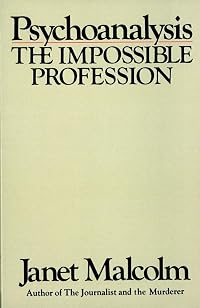
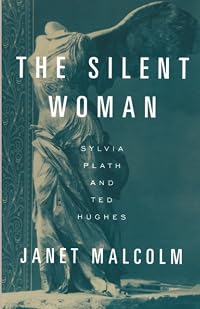
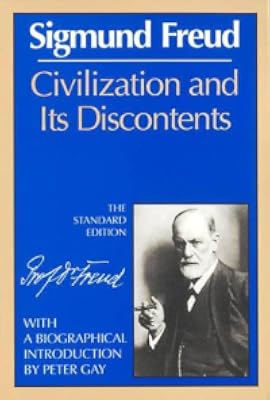
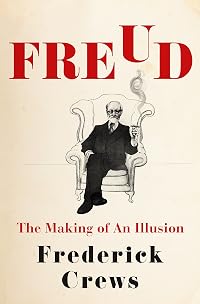
ossicones These two books share the style of an erudite page-turner and characters whose portrayal will likely stick with you for some time after you put them down.
Member Reviews
I am keenly interested in Freud revisionism but found this heavy going, esp at this distance, when the majority of the dozens of analysts whose names are regularly dropped are retired or dead. The Masson story is interesting but not at this length; the Swales material suffers from the subsequent vindication of his assertion that Freud had an affair with his sister-in-law. Malcolm demolishes Swales' case in detail to demonstrate that he is some kind of sociopath; since then documentary evidence (hotel registers) has confirmed Freud's affair. Special pleading is everywhere in evidence, and the self-analysis of so many professional psychoanalysts involved in the narrative induces a sense of infinite regress. I do not recognise the gripping show more account the other reviewers purport to have read. show less
I picked up this book because I was interested in reading something by Janet Malcolm (had heard good things about her work) and it was published by NYRB. Many books that I’ve read lately have made me want to read more on the topic but not this one. The story is entertaining and bizarre and Malcolm wonderfully captures the obsessive, self-aggrandizing, egotistical and willfully blind personalities of her subjects and their petty but far-reaching conflicts. I didn’t feel the need to read more about Freud though.
The first part describes the falling out of Jeffrey Masson and K.R. Eissler. Masson, a brilliant and charismatic but self-involved and blunt professor of Sanskrit, developed an interest in psychoanalysis and won the confidence show more of Eissler. Eissler was a highly regarded Freudian and, along with Freud’s daughter Anna Freud, controlled access to the Freud Archives, a trove of Freud’s letters and writing. Masson was hired by the Archives and planned to publish the complete letters of Freud to Fleiss, a doctor and his confidante. However, a lecture and article in the New York Times where Masson criticized Freud led to a break in his relationship with Eissler and the loss of his position.
The second part adds another character into the mix, Peter Swales. A self-taught obsessive with a knack for finding undiscovered documents, Swales caught the attention of Eissler and Masson. He almost immediately took a dislike to Masson and his constant complaining culminated in a 45-page hate letter that was sent to Masson and others. He was somewhat responsible for Masson’s collapse – he at least set in motion the events having a good idea of how Masson would respond. While Masson comes off as a typical egotistical, rude, intelligent and charismatic man and Eissler as a brilliant and revered elder statesman who had a narrow dogmatic focus, Swales seems as though he could possibly be unhinged. However, Masson was the one who was lawsuit-happy, suing people at the Freud Archives as well as Malcolm which she mentions in a postscript.
I found the debates about Freud’s meanings and though processes to be less interesting that the interpersonal dramas of the academics. I don’t think this is Malcolm’s fault – I have a bit of a bias against Freud. Some of the excerpts printed also show him at his worst – in one case, Freud decided that a patient’s problems can be cured with nasal surgery but this leads to gruesome complications. The book didn’t change my opinion of Freud but I would like to read more by Malcolm. show less
The first part describes the falling out of Jeffrey Masson and K.R. Eissler. Masson, a brilliant and charismatic but self-involved and blunt professor of Sanskrit, developed an interest in psychoanalysis and won the confidence show more of Eissler. Eissler was a highly regarded Freudian and, along with Freud’s daughter Anna Freud, controlled access to the Freud Archives, a trove of Freud’s letters and writing. Masson was hired by the Archives and planned to publish the complete letters of Freud to Fleiss, a doctor and his confidante. However, a lecture and article in the New York Times where Masson criticized Freud led to a break in his relationship with Eissler and the loss of his position.
The second part adds another character into the mix, Peter Swales. A self-taught obsessive with a knack for finding undiscovered documents, Swales caught the attention of Eissler and Masson. He almost immediately took a dislike to Masson and his constant complaining culminated in a 45-page hate letter that was sent to Masson and others. He was somewhat responsible for Masson’s collapse – he at least set in motion the events having a good idea of how Masson would respond. While Masson comes off as a typical egotistical, rude, intelligent and charismatic man and Eissler as a brilliant and revered elder statesman who had a narrow dogmatic focus, Swales seems as though he could possibly be unhinged. However, Masson was the one who was lawsuit-happy, suing people at the Freud Archives as well as Malcolm which she mentions in a postscript.
I found the debates about Freud’s meanings and though processes to be less interesting that the interpersonal dramas of the academics. I don’t think this is Malcolm’s fault – I have a bit of a bias against Freud. Some of the excerpts printed also show him at his worst – in one case, Freud decided that a patient’s problems can be cured with nasal surgery but this leads to gruesome complications. The book didn’t change my opinion of Freud but I would like to read more by Malcolm. show less
I could read Malcolm all day - her prose is quietly masterful, every book she produces a minor masterpiece. This is no exception, and teaches you much of what you need to know about Freud without getting bogged down in specifics.
"You have allowed me, in a show of great confidence, to go through your cupboard."
A very interesting book, full of twists and turns and drama-queens masquerading as Freud scholars. Also, it was quite funny in parts. Ultimately I felt like it was maybe too harsh on Masson and not critical enough of Eissler. I found Eissler's nature to protect Freud's legacy very suspect. And I was never convinced that Masson's theories were wrong (at least we can safely say his main point is blatantly correct, now that we have the benefit of time on our side: that Freud's idea that people's psychological illnesses happened only in their heads and are not related in any way to reality is wrong). So what I'm saying is that Masson made some good (and show more correct!) points, and those points should be evaluated independently of how he treated/manipulated his fellow man. Swales was also an interesting character, uniquely flawed and brilliant. It seems like all involved were cast in a negative light, though Masson gets the brunt of it.
"His narcissism was wounded when you withdrew your approval" / "Well, my narcissism was wounded when I was proved to be a fool!" show less
A very interesting book, full of twists and turns and drama-queens masquerading as Freud scholars. Also, it was quite funny in parts. Ultimately I felt like it was maybe too harsh on Masson and not critical enough of Eissler. I found Eissler's nature to protect Freud's legacy very suspect. And I was never convinced that Masson's theories were wrong (at least we can safely say his main point is blatantly correct, now that we have the benefit of time on our side: that Freud's idea that people's psychological illnesses happened only in their heads and are not related in any way to reality is wrong). So what I'm saying is that Masson made some good (and show more correct!) points, and those points should be evaluated independently of how he treated/manipulated his fellow man. Swales was also an interesting character, uniquely flawed and brilliant. It seems like all involved were cast in a negative light, though Masson gets the brunt of it.
"His narcissism was wounded when you withdrew your approval" / "Well, my narcissism was wounded when I was proved to be a fool!" show less
An incredibly story and character study and it reads like a thriller! I recently reread this, and, it made me want to read more by and about the charismatic and arrogant Masson and the other nutjob Swales (i've read much of their writing before, and it's fascinating). Janet Malcolm is a brilliant, dispassionate writer, who illuminates Freudian and post-Freudian theory so you don't have to read it yourself to understand these books.
In the Freud Archives is Janet Malcolm's celebrated account of the falling-out of two unlikely friends: K. R. Eissler, the formidable director of the secretive Freud Archives, and Jeffrey Moussaief Masson, a 42-year-old wunderkind trained in Sanskrit and psychoanalysis who was, briefly, Eissler's designated successor. This deeply original work of nonfiction is written with the subtlety and insight of a Henry James novel. "From beginning to end it has the coolly accomplished excitement of a thriller." - The Sunday Times (London)
Superb account and read of the pathology of institutional psychoanalysis for which the author endured a ten year law suit and finally won.
Members
- Recently Added By
Published Reviews
ThingScore 100
LIKE her earlier book, ''Psychoanalysis: The Impossible Profession'' (1981), Janet Malcolm's ''In the Freud Archives'' somewhat transcends what it appears to be: superb reportage. Both books are essays in personality, and in the broad sense deserve to be called ''fictions'' of the Age of Freud and Proust, in which we still live. But Miss Malcolm's main characters, this time, seem worthy of the show more grotesque cosmos of the novelist Thomas Pynchon show less
added by danielx
Lists

Mustich's 1000 Books to Read Before You Die: A Life Changing List
1,001 works; 20 members

Books Read in 2023
5,638 works; 147 members

Club Read's Recommended Nonfiction Written by Women
618 works; 30 members
Author Information

20+ Works 4,222 Members
Janet Malcolm is the acclaimed author of many books, including In the Freud Archives; Two Lives: Gertrude and Alice; and Burdock, a volume of her photographs of a "rank weed." She is a frequent contributor to The New Yorker and The New York Review of Books.
Awards and Honors
Series
Belongs to Publisher Series
Work Relationships
Common Knowledge
- Canonical title
- In the Freud Archives
- Original publication date
- 1984
- People/Characters
- Sigmund Freud; Jeffrey Moussaieff Masson (Doctor); Kurt Eissler
Classifications
- Genres
- Nonfiction, General Nonfiction, Biography & Memoir, History
- DDC/MDS
- 150.1952 — Philosophy & psychology Psychology Emotions, Relationships, & Family Theory And Instruction Systems, schools, viewpoints Psychoanalytic systems Freudian system
- LCC
- BF173 .M35653 — Philosophy, Psychology and Religion Psychology Psychology Psychoanalysis
- BISAC
Statistics
- Members
- 480
- Popularity
- 63,418
- Reviews
- 9
- Rating
- (4.19)
- Languages
- 6 — Dutch, English, French, German, Spanish, Swedish
- Media
- Paper, Ebook
- ISBNs
- 17
- ASINs
- 5