On This Page
Description
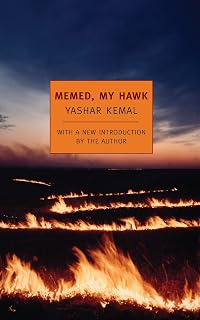
Memed grows up a serf to a vicious overlord on the thistle-clad plains of Turkey's Taurus region. When his plan to escape is dashed, and the young woman he loves murdered, Memed makes for the mountains to become an outlaw. Before long he has transformed from a young rebel to an infamous bandit, the scourge of corrupt oppressors and hero to the poor. With vividness and simplicity, Kemal's classic novel evokes the fierce beauty of his country and the struggles of its oppressed people.Tags
Recommendations




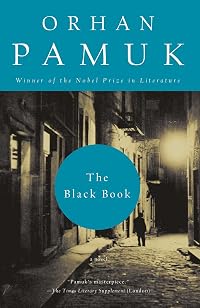
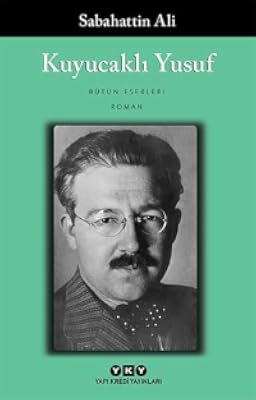


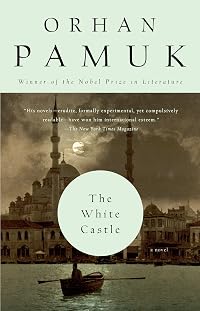

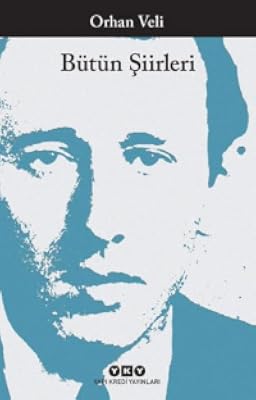
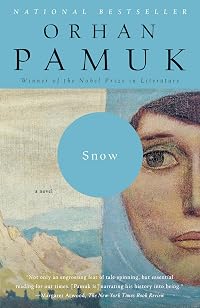
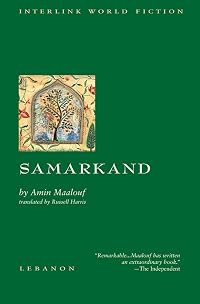
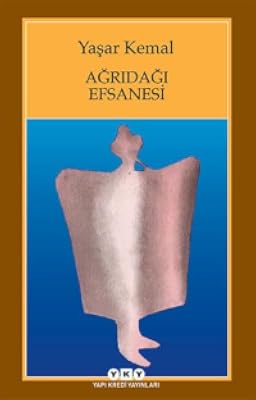
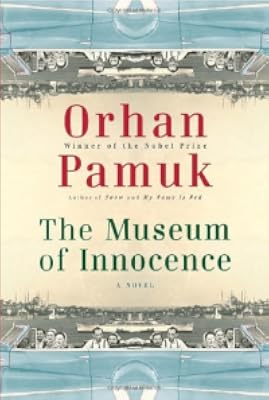
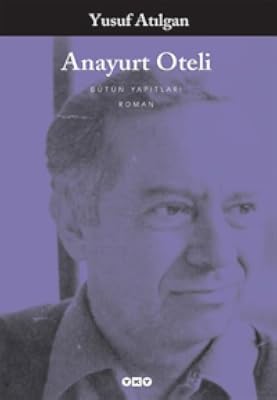
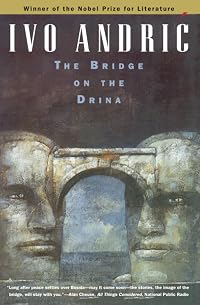
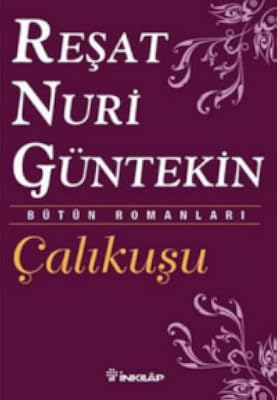

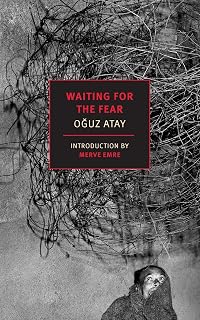






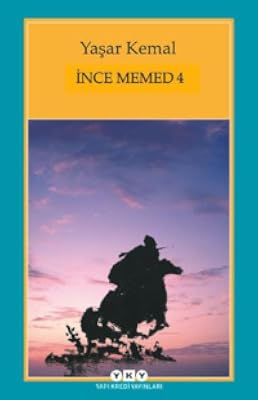





Member Recommendations

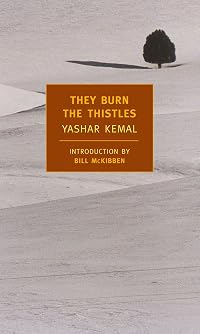
chrisharpe Both are tales of adventure, different in time and place, but equally elegantly told.
Member Reviews
The highlands of Anatolia are a harsh but beautiful land ruled by aghas, far from the reach of Ankara. Young Memed and his mother live in a village under a harsh and despotic agha, who hated Memed's late father, and so treats him particularly cruelly. In desperation, Memed runs away, but is forced to return, and enraged, the agha retaliates until Memed and his mother are barely subsisting. When his beloved is forcibly engaged to the agha's nephew, Memed runs away with her with disastrous results. Forced to take up a life of brigandry, he attempts to find a way to unite the villages against the agha and help them retake their land.
Written in 1955, this novel was both critically acclaimed and popular in Turkey. It's a lively tale of a show more young Robin Hood-esque peasant turned brigand coming of age at a time when Turkey is at the crossroads of feudalism and modernity. It resembles folklore in its tone and its David vs Goliath hero. I enjoyed this romantic, unsophisticated glimpse into a life gone by, and the descriptions of the land remind me of Aitmatov's literary love for the steppe. It's the first in a four-book series, the next of which is They Burn the Thistles. show less
Written in 1955, this novel was both critically acclaimed and popular in Turkey. It's a lively tale of a show more young Robin Hood-esque peasant turned brigand coming of age at a time when Turkey is at the crossroads of feudalism and modernity. It resembles folklore in its tone and its David vs Goliath hero. I enjoyed this romantic, unsophisticated glimpse into a life gone by, and the descriptions of the land remind me of Aitmatov's literary love for the steppe. It's the first in a four-book series, the next of which is They Burn the Thistles. show less
A beautiful, engrossing visit to a time and place that are totally foreign to me as an American. It is a great story and a fascinating exploration of the cruel world created when the basis of all laws is the arbitrary will of the leader. The local Agha is in turn a victim of the arbitrary whims of his superiors. Memed is a terrific character. You cheer the resilience of the villagers and cringe at their struggles. The writing and translation were a pleasure of excellent story telling. I am so glad that I discovered this and that there is more to Memed's story.
Set against the wild Cilician landscape, a rural place of thistle-covered land, brigands and evil landowners ...and the common people reduced to serfs.
Memed is the righteously aggrieved young son of a poverty stricken widow, living under the "rule" of nasty Abdi Agha. When Memed's beloved, Hatche, is chosen as a bride by Abi's nephew, the young couple elope...but there are repercussions. Memed, gradually, finds himself forced into life with a gang of brigands.....and leaves behind his original nickname "Slim Memed" to become the heroic "Memed my Hawk"..
Shoot-outs in the mountains, capturing a prisoner from the guards, coping with other unfriendly outlaws....Pretty good read, which really portrays the scenery and the life.
Memed is the righteously aggrieved young son of a poverty stricken widow, living under the "rule" of nasty Abdi Agha. When Memed's beloved, Hatche, is chosen as a bride by Abi's nephew, the young couple elope...but there are repercussions. Memed, gradually, finds himself forced into life with a gang of brigands.....and leaves behind his original nickname "Slim Memed" to become the heroic "Memed my Hawk"..
Shoot-outs in the mountains, capturing a prisoner from the guards, coping with other unfriendly outlaws....Pretty good read, which really portrays the scenery and the life.
Memed grows up in a small Turkish mountain village run by the cruel Abdi Agha. A feudal system prevails, and the villagers toil and sweat in rocky fields overgrown with thistles with most of the rewards for their labor going to Abdi Agha. Even as a very young boy, Memed recognized the inequity of this, and at one point ran away. He stayed with a kind family on the other side of the mountain for several months, but eventually returned because he missed his mother. Nevertheless, his small act of rebellion was remembered by Abdi Agha, who ever after was particularly cruel to Memed and his family.
When Memed was a young man he fell in love with Hatche. Unfortunately, Hatche was promised to Abdi Agha's nephew. Despite this Memed and Hatche show more decide to elope. They are pursued by Abdi Agha and his men, the nephew is killed and Hatche is jailed.
All of this is set up for the main story of the book, which I admit I did not connect with particularly well. Memed escapes to the hills and joins a band of brigands. During the time the novel was set, brigands, or bands of highwaymen/robbers, were apparently common in the hills of Turkey (and I learned that the red fez is the sign of brigandage). Some brigands are associated with particular pashas or aghas, some are well-tolerated by the police or government authorities, and others are in constant battle with police or aghas. Some brigands are cruel to the common people and some are the heroes of common people. Initially, Memed joined a band of brigands let by a leader who turned out to be one of the cruel brigands. When Memed sets out on his own, with his own followers, he becomes a sort of folk hero, and is mythologized by the villagers and common people who hear of his exploits.
As I was reading of Memed's exploits, his constant skirmishes and near escapes from the police and Abdi Agha's men who are pursuing him, I kept thinking of how much this reminded me of the Robin Hood story. And the episodes were like the adventures that might be described in a boy's own story. There was one battle with the authorities followed by miraculous escape, soon to be followed by another battle, one after the other. None of this I particularly enjoyed, so I have to say, this really wasn't the book for me.
I will say, however, that this is a much-loved classic in Turkey, and there are several sequels delineating the further adventures of Memed. The book itself brought world-wide acclaim to Kemal. It is an influential work in Turkey, and at one point, the Turkish government was considering banning it (or maybe did ban it) because of fears that it may have romanticized "socialism." So, there is that. And if you want to read about the escapades of a Turkish folk hero, this is the book for you.
First line: "The slopes of the Taurus Mountains rise from the shores of the Eastern Mediterranean on the southern coast of Turkey, in a steady ascent from the white, foam-fringed rocks to the peaks."
Last line: "With this fire a ball of light appears on the peak of Alidagn and for three nights the mountain is white, as bright as by day."
3 stars show less
When Memed was a young man he fell in love with Hatche. Unfortunately, Hatche was promised to Abdi Agha's nephew. Despite this Memed and Hatche show more decide to elope. They are pursued by Abdi Agha and his men, the nephew is killed and Hatche is jailed.
All of this is set up for the main story of the book, which I admit I did not connect with particularly well. Memed escapes to the hills and joins a band of brigands. During the time the novel was set, brigands, or bands of highwaymen/robbers, were apparently common in the hills of Turkey (and I learned that the red fez is the sign of brigandage). Some brigands are associated with particular pashas or aghas, some are well-tolerated by the police or government authorities, and others are in constant battle with police or aghas. Some brigands are cruel to the common people and some are the heroes of common people. Initially, Memed joined a band of brigands let by a leader who turned out to be one of the cruel brigands. When Memed sets out on his own, with his own followers, he becomes a sort of folk hero, and is mythologized by the villagers and common people who hear of his exploits.
As I was reading of Memed's exploits, his constant skirmishes and near escapes from the police and Abdi Agha's men who are pursuing him, I kept thinking of how much this reminded me of the Robin Hood story. And the episodes were like the adventures that might be described in a boy's own story. There was one battle with the authorities followed by miraculous escape, soon to be followed by another battle, one after the other. None of this I particularly enjoyed, so I have to say, this really wasn't the book for me.
I will say, however, that this is a much-loved classic in Turkey, and there are several sequels delineating the further adventures of Memed. The book itself brought world-wide acclaim to Kemal. It is an influential work in Turkey, and at one point, the Turkish government was considering banning it (or maybe did ban it) because of fears that it may have romanticized "socialism." So, there is that. And if you want to read about the escapades of a Turkish folk hero, this is the book for you.
First line: "The slopes of the Taurus Mountains rise from the shores of the Eastern Mediterranean on the southern coast of Turkey, in a steady ascent from the white, foam-fringed rocks to the peaks."
Last line: "With this fire a ball of light appears on the peak of Alidagn and for three nights the mountain is white, as bright as by day."
3 stars show less
Written almost as if it is a Kurdish folk tale. The story of youth and powerlessness confronting the powers that be, and village expectations, in an agricultural feudal Turkish periphery.
A high three...read a bit like a swashbuckling '30s Saturday afternoon movie serial. And definitely some amusing characters and touches here and there. If nothing else, those descriptions of landscape...the valleys full of pomegranate trees!
A story that sucks you in. Memed, the main character, stands up against the injustice caused by Abdi Agha in his small village. He joins the bandits in the mountains and one feels almost excited and reliefed when Memed burns a whole village down just to get Abdi Agha killed. Very well written.
Members
- Recently Added By
Lists

The Guardian's 1000 Novels Everyone Must Read
1,005 works; 550 members

Best of World Literature
434 works; 51 members

Hidden Classics
73 works; 15 members

Maybe This Year? Books to Look Forward To
409 works; 9 members

Books Read in 2003
257 works; 7 members

Read in 2003
81 works; 1 member
Author Information

127+ Works 3,157 Members
Kemal Sadik Gokceli was born into a Turkish-Kurdish family in Hemite, Turkey in 1922. He worked as a cotton picker, tractor driver, and threshing machine operator before he took a job at the library in Adana. Since there were few patrons, he spent his time reading world literature. He discovered Marxism and was imprisoned for several months on show more charges of spreading Communist ideas. He moved to Istanbul in 1951 where he worked at the newspaper Cumhuriyet for over ten years and adopted the pen name Yasar Kemal. As a young journalist, he played a key role in stopping the planned destruction of a historic Armenian shrine, the Holy Cross Church on Akhtamar Island in eastern Turkey. In 1962, he joined the leftish Turkish Workers Party, and he served as one of its leaders until quitting after the Soviet invasion of Czechoslovakia in 1968. His novels include the Wind from the Plain trilogy; Memed, My Hawk; and They Burn the Thistles. He received the Presidential Cultural and Artistic Grand Prize in 2008 and the Armenian Ministry of Culture gave him the Krikor Naregatsi decoration to recognize "his tribute to Armenian cultural heritage and his courage, as well as his commitment to universal values related to justice, freedom and human dignity" in 2013. He died on February 28, 2015 at the age of 92. (Bowker Author Biography) show less
Some Editions
Awards and Honors
Series

Belongs to Publisher Series
Work Relationships
Contains
Common Knowledge
- Canonical title
- Memed, My Hawk
- Original title
- İnce Memed
- Alternate titles*
- Memed : Turkse roman
- Original publication date
- 1955
- People/Characters
- Ince Memed; Abdi Agha; Hatche
- Important places
- Turkey
- Related movies
- Memed My Hawk (1984 | IMDb)
- First words
- The slopes of the Taurus Mountains rise from the shores of the Eastern Mediterranean, on the southern coast of Turkey, in a steady ascent from the white, foam-fringed rocks to the peaks.
- Last words
- (Click to show. Warning: May contain spoilers.)With this fire a ball of light appears on the peak of Alidagh and for three nights the mountain is white, as bright as by day.
- Original language
- Turkish
*Some information comes from Common Knowledge in other languages. Click "Edit" for more information.
Classifications
- Genres
- Fiction and Literature, General Fiction
- DDC/MDS
- 894.3533 — Literature & rhetoric Literatures of other languages Literatures of Altaic, Uralic, Hyperborean, Dravidian languages; literatures of miscellaneous languages of south Asia Turkic languages Turkish Turkish fiction 1850–2000
- LCC
- PL248 .Y275 .I513 — Language and Literature Languages and literatures of Eastern Asia, Africa, Oceania Languages of Eastern Asia, Africa, Oceania Turkic languages
- BISAC
Statistics
- Members
- 1,004
- Popularity
- 25,972
- Reviews
- 18
- Rating
- (3.89)
- Languages
- 11 — Catalan, Danish, Dutch, English, Finnish, French, German, Hungarian, Italian, Spanish, Turkish
- Media
- Paper, Ebook
- ISBNs
- 56
- ASINs
- 14