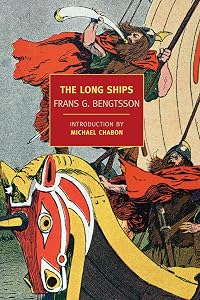
The Long Ships
by Frans G. Bengtsson
On This Page
Description
Bengtsson's hero, Red Orm-canny, courageous, and above all lucky-is only a boy when he is abducted from his Danish home by the Vikings and made to take his place at the oars of their dragon-prowed ships. Orm is then captured by the Moors in Spain, where he is initiated into the pleasures of the senses and fights for the Caliph of Cordova. Escaping from captivity, Orm washes up in Ireland, where he marvels at those epicene creatures, the Christian monks, and from which he then moves on to show more play an ever more important part in the intrigues of the various Scandinavian kings and clans and dependencies. Eventually, Orm contributes to the Viking defeat of the army of the king of England and returns home an off-the-cuff Christian and a very rich man, though back on his native turf new trials and tribulations will test his cunning and determination. Packed with pitched battles and blood feuds and told throughout with wit and high spirits, Bengtsson's book is a splendid adventure that features one of the most unexpectedly winning heroes in modern fiction. show lessTags
Recommendations



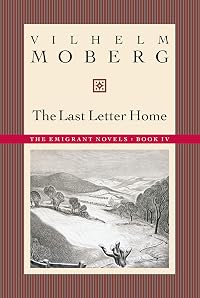




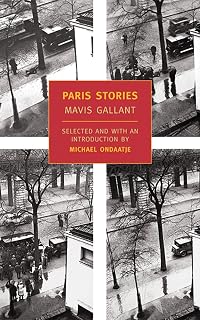
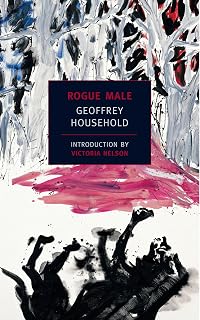

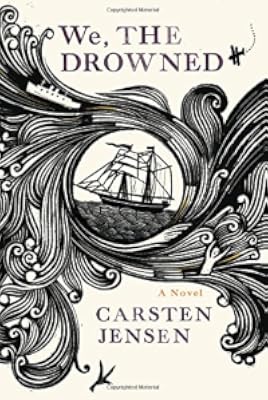



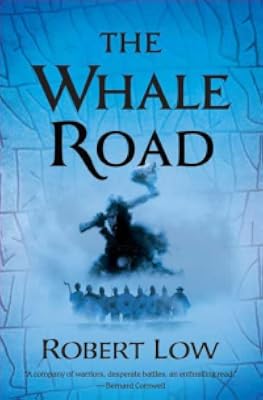





Member Recommendations

andejons Bengtsson translated Linklater's book and was probably partly inspired by it. However, apart from being good novels about seafaring vikings, they are rather different in style, with Linklater reading more like a pastiche of Icelandic sagas.
40

andejons Charlie Christensen has created a comic novel adaptation which follows the original quite close.
30

DCBlack Viking historical fiction with some folkloric and fantastic elements.
The Odyssey by Homer
by chrisharpe
chrisharpe Both are tales of adventure, different in time and place, but equally elegantly told.
11
Member Reviews
Perhaps the most delicious aspect of this delightful novel about marauding Northmen is that the joy Bengsston had writing it radiates from every page. The story begins when youngest son, Orm, seventeen or so and already a strapping fellow, is held back from going on a plundering voyage with his father and brother by his mother. Well, wouldn't you know, raiders come along, led by Krok, and kidnap him. Among these men Orm soon proves himself a valiant and intelligent member of the crew. There are various adventures and misadventures, in Spain, in Ireland and England, in Denmark where King Harald holds court, and beyond, even down the Dneiper to find buried treasure. It is at the court of the King that Orm meets the lovely Ylva, daughter show more of Harald, but he can't have her until he proves himself worthy. But it isn't at all an "and then and then" sort of adventure novel. What makes it rise far above that is the dialogue, the spontaneous poetry, and Bengsston's slyly hilarious way of crafting a description or giving out information of the thought processes of these (mostly) men. At all times these Vikings find hilarious work-arounds to justify their greed and to balance it with their (often self-serving and malleable) concepts of honor. An example: Orm is huge, obviously, and insanely strong and healthy, and yet he is a bit of a hypochondriac. He worries about catching colds, is convinced at one point, when injured, that he is doomed since the lice have left his hair. It's never over-done, but such details make Orm fully human. I took my time reading it so as to savor every word. It is definitely a book I would love to listen to too. ***** show less
This wonderfully entertaining Viking epic is written in a very distinctive, dry style, with lots of action and dialogue and no analysis or moral, obviously in conscious imitation of the style of the Sagas, but also rather reminiscent of Sir Walter Scott at his best. We are encouraged to take the characters at face value, and enter into the surprisingly foreign moral world of the Norse warriors, where violence is always a more powerful argument than law or custom, property belongs to anyone strong enough to keep it, and human life is cheap. Bengtsson follows these ideas through to their logical conclusions and shows us how a society like that could - just about - function. Sometimes we have to admire the strength and determination of the show more warriors who manage to make their presence felt over most of the known world; sometimes it becomes so bizarre that we just have to laugh (rather like the opening of Asterix and the Vikings, where we are shown the practical problems that arise when no-one knows the meaning of fear - kids who won't eat their porridge, ships that keep colliding because no-one gives way, etc.). show less
An absolute classic of adventure fiction, bounding along with energy and bravura and lashings of sly, ironic wit, following the exploits of Red Orm the Danish Viking who, despite his mother's best efforts to keep him at home, ends up haring off on a lengthy voyage against his will. Despite this apparently unpromising start, Orm fairs well at first and it looks as if all is going to go his way, but alas, luck, an all-important component of Viking life, goes astray and he ends up a galley slave for seven years BUT THAT'S JUST THE START. This tale has barely warmed up before they're sneaking across from Spain to Ireland with the biggest bell in Christendom. Modern readers, like myself, may occasionally find one's attention slipping as it show more struggles to find purchase on the largely plotless series of events that unfolds on the page, because this is a Life, and Lives tend to be plotless, though not sub-plotless. It's episodic, but those episodes are juicy and amazing and hair-raising.
There are any number of historical novels and series and fantasies epic and grimdark for which, if one was looking for influences beyond the obvious, this must surely be the motherlode. Judgment on the Viking's antics and atrocities are very much left to the reader, but there is no doubt in their own mind that they are fully in accordance with their own rules and standards of behaviour, and the propensity for violence, rape and pillage is belied by a way of living that works and allows for functioning society with a capacity for justice, redress, fairness and progress. The rise of Christianity features heavily on the story, and while the book doesn't suggest it's a civilising influence per se - though there are occasions when it mitigates against a more sensible ruthlessness - it definitely suggests a transition of sorts, a great sea-change of which the cast are blissfully ignorant.
Big, muscular, funny, fast, filled with speeches about theology, women, law, wisdom, gold, the joys of fighting and ale and all sorts of odd digressions with wandering Irish jesters and forlornly randy magisters, this is a gem of a book that completely immerses the reader in its world. show less
There are any number of historical novels and series and fantasies epic and grimdark for which, if one was looking for influences beyond the obvious, this must surely be the motherlode. Judgment on the Viking's antics and atrocities are very much left to the reader, but there is no doubt in their own mind that they are fully in accordance with their own rules and standards of behaviour, and the propensity for violence, rape and pillage is belied by a way of living that works and allows for functioning society with a capacity for justice, redress, fairness and progress. The rise of Christianity features heavily on the story, and while the book doesn't suggest it's a civilising influence per se - though there are occasions when it mitigates against a more sensible ruthlessness - it definitely suggests a transition of sorts, a great sea-change of which the cast are blissfully ignorant.
Big, muscular, funny, fast, filled with speeches about theology, women, law, wisdom, gold, the joys of fighting and ale and all sorts of odd digressions with wandering Irish jesters and forlornly randy magisters, this is a gem of a book that completely immerses the reader in its world. show less
I adored this. It's the NYRB reissue of two books originally written in the 1940s: the tale of Red Orme, a Viking chieftain, and his 10th-century life of voyaging, plundering, fighting, and—yes—becoming a family man. Swashbuckling, action-packed, but also oddly sweet, with an undercurrent of dry-as-a-bone, deeply funny humor throughout. This was exactly what I needed to read, plus I learned a lot referencing maps and looking up names as I went. For instance, Harald Bluetooth, the great king of Norway and Denmark, gave his name to Bluetooth wireless—"based on an analogy that the technology would unite devices the way Harald Bluetooth united the tribes of Denmark into a single kingdom," according to Wikipedia. But mostly this was show more pure fun, intelligent escapism, and recommended for everyone. show less
Historical allegories are always useful when you live in troubled times but don't necessarily want to talk directly about them because you never know who might be listening, and obviously for painting a bigger picture with older roots than newspapers can do. Sweden was neutral in WWII and eager not to openly piss off our big neighbour in the South, and consequently historical literature got a boost; Vilhelm Moberg's Ride This Night is a thinly veiled anti-fascist tract set in 17th century Sweden, singer Karl Gerhard was blacklisted for likening Nazi sympathisers to the invaders of Troy, and Eyvind Johnson's 1946 novel Return To Ithaca lets Homer's characters live through the aftermath of a war that's ruined everything they've ever show more known.
The Long Ships, on the surface, doesn't have any such pretenses. It's the story of Orm Tostesson, born in what is today southern Sweden in the mid-10th century, and his life and travels as a viking. Kidnapped by vikings at a young age, he travels all over Europe - sold as a slave to the Moors, rises to chiefdom among his men, helps plunder England, goes treasure-hunting in the Ukraine, and eventually settles on a farm in Scania where he becomes old and rich. Along the way, he meets many of the great men of his time (far too conveniently at times, but hey), converts to Islam, converts back to paganism, converts to Christianity, consumes a lot of beer and pork, and makes good use of his sword.
It strikes me about halfway in that this really is a Western novel set in the Viking age. A very ambitious, fun and well-written Western novel, but still; substitute long ships for cattle trails, Englishmen, Swedes and Khazars for Indians, kings for cavalry colonels, long swords for Colt revolvers, and posses for... well, posses, and Orm could easily have been played by Clint Eastwood or James Garner. (Not Gary Cooper, though.) It's a frontier novel, a novel set at a time when new land was being claimed both geographically and philosophically. And it's tremendously entertaining but at the same time occasionally disturbing in its frankness. As anachronistic as it is on some points (more on that below), Bengtsson doesn't try to turn his hero into an enlightened 20th century man, and robbery, violence, rape and slavery are all seen as perfectly normal - though obviously something to be avoided where you yourself is concerned. The protagonists are, at first, more concerned with what's possible than what's right; if you have more gold than us, and we have sharper swords than you, isn't it fair that we should, ahem, trade?
And yet, underneath all the bawdy tales of kidnappings, beheadings, and bearded men dying with a macho one-liner (in runic verse, obviously), there's more to it.
For starters, there's Bengtsson's language, which (at least in the original, I can't speak for the translation) is a marvel to read. Terse, dryly humorous and almost completely devoid of unnecessary adjectives, both his narration and his dialogue somehow manages to carry a feeling of the old sagas despite being written in 19th century Swedish (which has about as much in common with Old Norse as Jane Austen does with Beowulf). It's a wilful anachronism, both for his own time and for Orm's, that's so obvious it seems to mean something; as if Bengtsson is deliberately setting them loose from the time they live in.
Then there's the time he sets it in, a time when everything was changing. Because the years around 1000 AD is when Scandinavia was christianised, and religion is the basis of many conflicts in the book; not only between pagans, Christians and Muslims, but also between hardliners (the missionaries sent to convert the Norse by whatever means necessary, the pagans determined to stick to their old gods) and the secularists (most of the actual vikings). Orm himself and many with him take a very pragmatic view of religion; they just want to live as well as possible (for themselves), and whichever god makes the best offer at the moment gets the nod.
"I've never been so lucky in everything before as I have been since I stuck with Christ" [said Orm]. "All you need to do is to deny the old gods and instead say this: There is no god but God, and Christ is his prophet."
"Not his prophet, his son," said Father Willibald.
"His son," Orm quickly added. "That's it. I knew that."
It's no coincidence that one of Orm's first defining acts is to rescue a Jew who's been enslaved on another ship; he does it for his own winning's sake, sure, but as the novel progresses, the unspoken question of what's fair (to other men, to women, to other peoples) becomes more and more central. Orm starts to compromise, starts to form alliances based on more than mutual greed or lust for revenge, starts to rule by law rather than force. It's not a direct result of becoming a Christian - all sides are portrayed as being equally prone to both kindness and atrocities - but simply of growing up, of seeing more of the world, not buying into extremism but starting to develop something that 1000 years and many ethical discussions later might be called humanism. And somewhere underneath it I bet you can find Bengtsson in 1945, wishing Europe itself would do the same; that there can be another new time, a time when everything can change.
Mind you, that's all very sneakily done. For the most part, it's rustic anecdotes about life on the high seas or in the big halls, big action scenes, strong men, strong-minded women, well-written character drama and just a heck of a good yarn.
Sex and beer and runic verse are very good indeed. show less
The Long Ships, on the surface, doesn't have any such pretenses. It's the story of Orm Tostesson, born in what is today southern Sweden in the mid-10th century, and his life and travels as a viking. Kidnapped by vikings at a young age, he travels all over Europe - sold as a slave to the Moors, rises to chiefdom among his men, helps plunder England, goes treasure-hunting in the Ukraine, and eventually settles on a farm in Scania where he becomes old and rich. Along the way, he meets many of the great men of his time (far too conveniently at times, but hey), converts to Islam, converts back to paganism, converts to Christianity, consumes a lot of beer and pork, and makes good use of his sword.
It strikes me about halfway in that this really is a Western novel set in the Viking age. A very ambitious, fun and well-written Western novel, but still; substitute long ships for cattle trails, Englishmen, Swedes and Khazars for Indians, kings for cavalry colonels, long swords for Colt revolvers, and posses for... well, posses, and Orm could easily have been played by Clint Eastwood or James Garner. (Not Gary Cooper, though.) It's a frontier novel, a novel set at a time when new land was being claimed both geographically and philosophically. And it's tremendously entertaining but at the same time occasionally disturbing in its frankness. As anachronistic as it is on some points (more on that below), Bengtsson doesn't try to turn his hero into an enlightened 20th century man, and robbery, violence, rape and slavery are all seen as perfectly normal - though obviously something to be avoided where you yourself is concerned. The protagonists are, at first, more concerned with what's possible than what's right; if you have more gold than us, and we have sharper swords than you, isn't it fair that we should, ahem, trade?
And yet, underneath all the bawdy tales of kidnappings, beheadings, and bearded men dying with a macho one-liner (in runic verse, obviously), there's more to it.
For starters, there's Bengtsson's language, which (at least in the original, I can't speak for the translation) is a marvel to read. Terse, dryly humorous and almost completely devoid of unnecessary adjectives, both his narration and his dialogue somehow manages to carry a feeling of the old sagas despite being written in 19th century Swedish (which has about as much in common with Old Norse as Jane Austen does with Beowulf). It's a wilful anachronism, both for his own time and for Orm's, that's so obvious it seems to mean something; as if Bengtsson is deliberately setting them loose from the time they live in.
Then there's the time he sets it in, a time when everything was changing. Because the years around 1000 AD is when Scandinavia was christianised, and religion is the basis of many conflicts in the book; not only between pagans, Christians and Muslims, but also between hardliners (the missionaries sent to convert the Norse by whatever means necessary, the pagans determined to stick to their old gods) and the secularists (most of the actual vikings). Orm himself and many with him take a very pragmatic view of religion; they just want to live as well as possible (for themselves), and whichever god makes the best offer at the moment gets the nod.
"I've never been so lucky in everything before as I have been since I stuck with Christ" [said Orm]. "All you need to do is to deny the old gods and instead say this: There is no god but God, and Christ is his prophet."
"Not his prophet, his son," said Father Willibald.
"His son," Orm quickly added. "That's it. I knew that."
It's no coincidence that one of Orm's first defining acts is to rescue a Jew who's been enslaved on another ship; he does it for his own winning's sake, sure, but as the novel progresses, the unspoken question of what's fair (to other men, to women, to other peoples) becomes more and more central. Orm starts to compromise, starts to form alliances based on more than mutual greed or lust for revenge, starts to rule by law rather than force. It's not a direct result of becoming a Christian - all sides are portrayed as being equally prone to both kindness and atrocities - but simply of growing up, of seeing more of the world, not buying into extremism but starting to develop something that 1000 years and many ethical discussions later might be called humanism. And somewhere underneath it I bet you can find Bengtsson in 1945, wishing Europe itself would do the same; that there can be another new time, a time when everything can change.
Mind you, that's all very sneakily done. For the most part, it's rustic anecdotes about life on the high seas or in the big halls, big action scenes, strong men, strong-minded women, well-written character drama and just a heck of a good yarn.
Sex and beer and runic verse are very good indeed. show less
Frans Gunnar Bengtsson’s The Long Ships resurrects the fantastic world of the tenth century AD when the Vikings roamed and rampaged from the northern fastnesses of Scandinavia down to the Mediterranean. Bengtsson’s hero, Red Orm—canny, courageous, and above all lucky—is only a boy when he is abducted from his Danish home by the Vikings and made to take his place at the oars of their dragon-prowed ships. Orm is then captured by the Moors in Spain, where he is initiated into the pleasures of the senses and fights for the Caliph of Cordova. Escaping from captivity, Orm washes up in Ireland, where he marvels at those epicene creatures, the Christian monks, and from which he then moves on to play an ever more important part in the show more intrigues of the various Scandinavian kings and clans and dependencies. Eventually, Orm contributes to the Viking defeat of the army of the king of England and returns home an off-the-cuff Christian and a very rich man, though back on his native turf new trials and tribulations will test his cunning and determination. Packed with pitched battles and blood feuds and told throughout with wit and high spirits, Bengtsson’s book is a splendid adventure that features one of the most unexpectedly winning heroes in modern fiction. show less
The travels, travails, and journeys of Red Orm Tostesson and his crew and faithful friends is great good fun. Set in the late 990's and early 1000's it is tales of Viking daring do filled with swashbuckling, and sometimes slapdash happenings that border on the fantastic. Don't read this book for insightful looks at the culture, history, or politics of Vikings. Read it for the fun of the adventure and the funny stories within the story.
The tale of Red Orm's travels takes the reader from his home in Southern Norway west and south the Moorish Spain where he serves first as a galley slave and then as part of the General Almansur's elite squadron of troops. Eventual escape takes him back home by way of Ireland, where all the gold he has show more brought from Spain makes him a rich man. From there he goes to England and gets more gold. Back home, and eventually all the way down the Dnieper to its cataracts, where he finds more gold to become even richer. Like many Vikings of his time, he was incredibly well traveled.
Orm's greatest talents are for storytelling and making friends. Of course, his crew mates think that he is incredibly lucky and wise and those qualities are the most prized talents of all. The friends that Orm made on his travels serve him well and show up at opportune times throughout the book, providing incredible rescues that enhance his reputation for luck and thereby his accumulation of riches.
What struck me about this story was the humor. It is rampant throughout. Sometimes sly, sometimes backhanded, but always pointed and very funny. The author skewers everybody from the Vikings to Kings to the Church and makes the reader laugh while doing it. The other strength of the story was the wordsmithing talents of the characters. The ability to tell a good story and compose a great poem on the spur-of-the-moment was highly prized and a man was often judged on his abilities with stories and poetry. I would describe this tendency as Homeric in nature. show less
The tale of Red Orm's travels takes the reader from his home in Southern Norway west and south the Moorish Spain where he serves first as a galley slave and then as part of the General Almansur's elite squadron of troops. Eventual escape takes him back home by way of Ireland, where all the gold he has show more brought from Spain makes him a rich man. From there he goes to England and gets more gold. Back home, and eventually all the way down the Dnieper to its cataracts, where he finds more gold to become even richer. Like many Vikings of his time, he was incredibly well traveled.
Orm's greatest talents are for storytelling and making friends. Of course, his crew mates think that he is incredibly lucky and wise and those qualities are the most prized talents of all. The friends that Orm made on his travels serve him well and show up at opportune times throughout the book, providing incredible rescues that enhance his reputation for luck and thereby his accumulation of riches.
What struck me about this story was the humor. It is rampant throughout. Sometimes sly, sometimes backhanded, but always pointed and very funny. The author skewers everybody from the Vikings to Kings to the Church and makes the reader laugh while doing it. The other strength of the story was the wordsmithing talents of the characters. The ability to tell a good story and compose a great poem on the spur-of-the-moment was highly prized and a man was often judged on his abilities with stories and poetry. I would describe this tendency as Homeric in nature. show less
Members
- Recently Added By
Lists

Best Historical Fiction
620 works; 262 members

Top Five Books of 2013
1,562 works; 715 members

Favourite Books
1,820 works; 316 members

water on the brain: maritime fiction
74 works; 18 members

Recommended Viking historical fiction
135 works; 8 members

Books Read in 2017
4,249 works; 129 members

Books Read in 2020
4,379 works; 123 members

Set in the Middle Ages
42 works; 9 members

Books We Love to Reread
695 works; 298 members

Our Favorite Comfort Reads
334 works; 200 members

Books We Discovered On LibraryThing
530 works; 130 members

The "A" List
67 works; 8 members
Talk Discussions
Past Discussions
Group Read: The Long Ships in 2013 Category Challenge (August 2013)
Author Information

72+ Works 3,182 Members
Some Editions
Awards and Honors
Distinctions
Notable Lists
Series
Belongs to Publisher Series
Work Relationships
Is retold in
Is abridged in
Was inspired by
Common Knowledge
- Canonical title
- The Long Ships
- Original title
- Röde Orm
- Original publication date
- 1945; 1954 (English translation) (English translation)
- People/Characters
- Red Orm; Toke Grey-Gullsson; Asa; Father Willibald; Ylva Haraldsdotter; Rapp (show all 10); Harald Bluetooth; Sven Forkbeard; Almansur; Ethelred, King of England
- Important places
- Göinge, Scania, Sweden; Córdoba, Andalusia, Spain; London, England, UK; Jelling, Syddanmark, Denmark; Visby, Gotland, Sweden
- Important events
- Battle of Maldon (Battle of Maeldun)
- Related movies
- The Long Ships (1964 | IMDb)
- First words
- Many restless men rowed north from Skania with Bue and Vagn, and found ill fortune at Jörundfjord; others marched with Styrbjörn to Uppsala and died there with him.
Prologue - How the shaven men fared in Skania ... (show all)in King Harald Bluetooth's time.
Along the coast the people lived together in villages, partly to be sure of food, that they might not depend entirely on the luck of their own catch, and partly for security; for ships rounding the Skanian peninsular often se... (show all)nt marauding parties ashore, both in the spring, to replenish cheaply their stock of fresh meat for the westward voyage, and in the winter, if they were returning empty-handed from unsuccessful wars.
Chapter One - Concerning Thane Toste and his household. - Last words
- (Click to show. Warning: May contain spoilers.)Both Orm and Toke lived to a ripe old age without wearying of life; and never, until the day they died, did they tire of telling of the years when they had rowed the Caliph's ship and served my lord Almansur.
- Original language
- Swedish
- Disambiguation notice
- This book was originally released in Swedish in two parts, in 1941 and 1945. The first part was translated into English by Barrows Mussey as Red Orm in 1943. The whole work was translated into English by Michael Meyer ... (show all)as The long ships in 1954. This is the record for the complete work. Copies of part 1 and part 2 should not be combined with this.
Classifications
- Genres
- Fiction and Literature, General Fiction, Historical Fiction
- DDC/MDS
- 839.7372 — Literature & rhetoric German & related literatures Other Germanic literatures Swedish literature Swedish fiction 1900-1999 1900-1945
- LCC
- PT9875 .B43 .R613 — Language and Literature German, Dutch and Scandinavian literatures Swedish literature Individual authors or works 1900-1960
- BISAC
Statistics
- Members
- 2,309
- Popularity
- 8,645
- Reviews
- 79
- Rating
- (4.18)
- Languages
- 15 — Czech, Danish, Dutch, English, Estonian, Finnish, French, German, Hungarian, Italian, Norwegian (Bokmål), Norwegian, Russian, Spanish, Swedish
- Media
- Paper, Audiobook, Ebook
- ISBNs
- 51
- UPCs
- 1
- ASINs
- 40