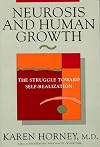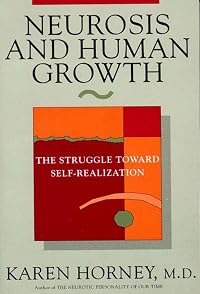
Neurosis and Human Growth: The Struggle Towards Self-Realization
by Karen Horney
On This Page
Description
In Neurosis and Human Growth, Dr. Horney discusses the neurotic process as a special form of the human development, the antithesis of healthy growth. She unfolds the different stages of this situation, describing neurotic claims, the tyranny or inner dictates and the neurotic's solutions for relieving the tensions of conflict in such emotional attitudes as domination, self-effacement, dependency, or resignation. Throughout, she outlines with penetrating insight the forces that work for and show more against the person's realization of his or her potentialities. First Published in 1950. Routledge is an imprint of Taylor & Francis, an informa company. show lessTags
Recommendations


































Member Reviews
German Psychiatrist Dr Karen Horney was part of the splinter group of Neo-Freudians which includes Swedish Psychoanalyst Erich Fromm , Alfred Adler etc. . Karen’s analytic theories and diagnosis revolve primarily around the average neurotic Joe (Jane) going about their daily routine as they struggle with their inner conflicts through various phases of life
While I am quite familiar with psychoanalytic theories from Freud to Lacan and it’s easy to get drawn into dark morbid recesses of the human psyche ; Karen brings to light a different aspect , something that does not get enough attention since on the surface as the “patient” may appear to be functioning “normally” . She holds Freud in high regard yet makes no qualms about show more her disagreement with him.
Considering this must have been written during the early 20 Century – was quite surprised how relevant it still is, the subject matter is quite comprehensive and very insightful , can get a bit repetitive at times . show less
While I am quite familiar with psychoanalytic theories from Freud to Lacan and it’s easy to get drawn into dark morbid recesses of the human psyche ; Karen brings to light a different aspect , something that does not get enough attention since on the surface as the “patient” may appear to be functioning “normally” . She holds Freud in high regard yet makes no qualms about show more her disagreement with him.
Considering this must have been written during the early 20 Century – was quite surprised how relevant it still is, the subject matter is quite comprehensive and very insightful , can get a bit repetitive at times . show less
The author was born in 1885 and trained as a psychiatrist and psycho-analyst. She had fundamental disagreements with Freud and is known as a Neo-Freudian. This book was written in 1950 and is considered her major work.
The author theorizes that unfavorable conditions for growth in a child create a basic anxiety which lead to dysfunctional coping mechanisms classified as neurosis. Her book is a discussion of the basic features and types of neurosis and their practical consequences. Contrary to the language in the title the book is not a work of psycho-babble. It is very accessible to the general reader and I was impressed by her common sense approach to her subject.
I felt that I learned a great deal from this book that applied directly to show more my life. I generally make an effort to avoid being a follower of another person's theory or guide on how to live my life. This book is an exception to my rule. Reading this book I developed a great deal of respect for the author's intelligence and experience dealing with human behavior. One reading of this book just scratched the surface of ideas and insights that will be very useful in my day to day life. Since I first began seeing a counselor when I was eight years old I am sure that I qualify as a neurotic person.
A good example of her approach is her chapter titled "The Tyranny of the Should". I am very familiar with how the things I feel I "should" do can run my life at times. The author explains how people develop a long list of items they should do in response to insecurity about how to be liked and successful. Then the failure to do something they should do brings on self-hate, which is another chapter in her book. There were many other features of neurotic behavior that I found interesting and useful.
The author uses examples from many sources to illustrate the different types of neurotic behavior she deals with in her book. Many of the examples from literature impressed me with her intelligence and the broad application of her theories. Her examples from her practice as a psycho-analyst showed a real compassion for her patients as individuals and that her work was based upon a real caring for people and was not just an intellectual exercise.
The last part of her book discusses the application of her theories in therapy. Combining her theories with these practical applications give me an excellent way to use her book in my life. I think that anyone can benefit from her practical insights into human behavior. I listened to an audio edition of this book and I will be sure to get a print copy for personal use. This is an exceptional book about human behavior. It is the culmination of a life's work from a uniquely intelligent and caring person. It has my highest recommendation.
Edit | More show less
The author theorizes that unfavorable conditions for growth in a child create a basic anxiety which lead to dysfunctional coping mechanisms classified as neurosis. Her book is a discussion of the basic features and types of neurosis and their practical consequences. Contrary to the language in the title the book is not a work of psycho-babble. It is very accessible to the general reader and I was impressed by her common sense approach to her subject.
I felt that I learned a great deal from this book that applied directly to show more my life. I generally make an effort to avoid being a follower of another person's theory or guide on how to live my life. This book is an exception to my rule. Reading this book I developed a great deal of respect for the author's intelligence and experience dealing with human behavior. One reading of this book just scratched the surface of ideas and insights that will be very useful in my day to day life. Since I first began seeing a counselor when I was eight years old I am sure that I qualify as a neurotic person.
A good example of her approach is her chapter titled "The Tyranny of the Should". I am very familiar with how the things I feel I "should" do can run my life at times. The author explains how people develop a long list of items they should do in response to insecurity about how to be liked and successful. Then the failure to do something they should do brings on self-hate, which is another chapter in her book. There were many other features of neurotic behavior that I found interesting and useful.
The author uses examples from many sources to illustrate the different types of neurotic behavior she deals with in her book. Many of the examples from literature impressed me with her intelligence and the broad application of her theories. Her examples from her practice as a psycho-analyst showed a real compassion for her patients as individuals and that her work was based upon a real caring for people and was not just an intellectual exercise.
The last part of her book discusses the application of her theories in therapy. Combining her theories with these practical applications give me an excellent way to use her book in my life. I think that anyone can benefit from her practical insights into human behavior. I listened to an audio edition of this book and I will be sure to get a print copy for personal use. This is an exceptional book about human behavior. It is the culmination of a life's work from a uniquely intelligent and caring person. It has my highest recommendation.
Edit | More show less
The author was born in 1885 and trained as a psychiatrist and psycho-analyst. She had fundamental disagreements with Freud and is known as a Neo-Freudian. This book was written in 1950 and is considered her major work.
The author theorizes that unfavorable conditions for growth in a child create a basic anxiety which lead to dysfunctional coping mechanisms classified as neurosis. Her book is a discussion of the basic features and types of neurosis and their practical consequences. Contrary to the language in the title the book is not a work of psycho-babble. It is very accessible to the general reader and I was impressed by her common sense approach to her subject.
I felt that I learned a great deal from this book that applied directly to show more my life. I generally make an effort to avoid being a follower of another person's theory or guide on how to live my life. This book is an exception to my rule. Reading this book I developed a great deal of respect for the author's intelligence and experience dealing with human behavior. One reading of this book just scratched the surface of ideas and insights that will be very useful in my day to day life. Since I first began seeing a counselor when I was eight years old I am sure that I qualify as a neurotic person.
A good example of her approach is her chapter titled "The Tyranny of the Should". I am very familiar with how the things I feel I "should" do can run my life at times. The author explains how people develop a long list of items they should do in response to insecurity about how to be liked and successful. Then the failure to do something they should do brings on self-hate, which is another chapter in her book. There were many other features of neurotic behavior that I found interesting and useful.
The author uses examples from many sources to illustrate the different types of neurotic behavior she deals with in her book. Many of the examples from literature impressed me with her intelligence and the broad application of her theories. Her examples from her practice as a psycho-analyst showed a real compassion for her patients as individuals and that her work was based upon a real caring for people and was not just an intellectual exercise.
The last part of her book discusses the application of her theories in therapy. Combining her theories with these practical applications give me an excellent way to use her book in my life. I think that anyone can benefit from her practical insights into human behavior. I listened to an audio edition of this book and I will be sure to get a print copy for personal use. This is an exceptional book about human behavior. It is the culmination of a life's work from a uniquely intelligent and caring person. It has my highest recommendation.
Edit | More show less
The author theorizes that unfavorable conditions for growth in a child create a basic anxiety which lead to dysfunctional coping mechanisms classified as neurosis. Her book is a discussion of the basic features and types of neurosis and their practical consequences. Contrary to the language in the title the book is not a work of psycho-babble. It is very accessible to the general reader and I was impressed by her common sense approach to her subject.
I felt that I learned a great deal from this book that applied directly to show more my life. I generally make an effort to avoid being a follower of another person's theory or guide on how to live my life. This book is an exception to my rule. Reading this book I developed a great deal of respect for the author's intelligence and experience dealing with human behavior. One reading of this book just scratched the surface of ideas and insights that will be very useful in my day to day life. Since I first began seeing a counselor when I was eight years old I am sure that I qualify as a neurotic person.
A good example of her approach is her chapter titled "The Tyranny of the Should". I am very familiar with how the things I feel I "should" do can run my life at times. The author explains how people develop a long list of items they should do in response to insecurity about how to be liked and successful. Then the failure to do something they should do brings on self-hate, which is another chapter in her book. There were many other features of neurotic behavior that I found interesting and useful.
The author uses examples from many sources to illustrate the different types of neurotic behavior she deals with in her book. Many of the examples from literature impressed me with her intelligence and the broad application of her theories. Her examples from her practice as a psycho-analyst showed a real compassion for her patients as individuals and that her work was based upon a real caring for people and was not just an intellectual exercise.
The last part of her book discusses the application of her theories in therapy. Combining her theories with these practical applications give me an excellent way to use her book in my life. I think that anyone can benefit from her practical insights into human behavior. I listened to an audio edition of this book and I will be sure to get a print copy for personal use. This is an exceptional book about human behavior. It is the culmination of a life's work from a uniquely intelligent and caring person. It has my highest recommendation.
Edit | More show less
The book that changed my life and comprehension of myself. I learned how to love me "real" and not me "ideal".
Ratings
Members
- Recently Added By
Lists

Tom's Bookstore
346 works; 2 members
Author Information

30+ Works 2,003 Members
Karen Danielsen Horney was a German-born American psychiatrist and psychoanalyst. Educated at the universities of Freiburg, Gottingen, and Berlin, she practiced in Europe until 1932, when she moved to the United States. Initially, she taught at the New York Psychoanalytic Institute, but with others broke away in 1941 to found the American show more Institute for Psychoanalysis. Horney took issue with several orthodox Freudian teachings, including the Oedipus complex, the death instinct, and the inferiority of women. She thought that classical psychoanalytic theory overemphasized the biological sources of neuroses. Her own theory of personality stressed the sociological determinants of behavior and viewed the individual as capable of fundamental growth and change. (Bowker Author Biography) show less
Work Relationships
Is contained in
Common Knowledge
- Original title
- Neurosis and Human Growth
- Original publication date
- 1950
Classifications
- Genres
- Nonfiction, General Nonfiction
- DDC/MDS
- 616.852 — Applied science & technology Medicine & health Diseases, Allergies, Skin Conditions Nervous Disorders: Autism, Anorexia, OCD Miscellaneous Neuroses
- LCC
- RC530 .H73 — Medicine Internal medicine Internal medicine Neurosciences. Biological psychiatry. Neuropsychiatry Psychiatry Psychopathology Neuroses
- BISAC
Statistics
- Members
- 433
- Popularity
- 71,233
- Reviews
- 4
- Rating
- (4.34)
- Languages
- 9 — Czech, Danish, English, German, Italian, Polish, Spanish, Swedish, Turkish
- Media
- Paper, Audiobook, Ebook
- ISBNs
- 25
- UPCs
- 1
- ASINs
- 9