On This Page
Description
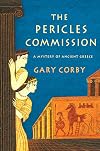
Nicolaos walks the mean streets of Classical Athens as an agent for the promising young politician Pericles. His mission is to find the assassin of the statesman Ephialtes, the man who brought democracy to Athens and whose murder has thrown the city into uproar. It's a job not made any easier by the depressingly increasing number of dead witnesses. But murder and mayhem don't bother Nico; what's really on his mind is how to get closer (much closer) to Diotima, the intelligent and annoyingly show more virgin priestess of Artemis, and how to shake off his irritating twelve year-old brother Socrates. The Pericles Commission is the first in an exciting new series by first-time novelist Gary Corby, who takes us to Ancient Greece at one of the most exciting times in history. In this wonderfully approachable, historically rich novel, Athens is brought vividly to life in a mystery engaging from the first page to last. show lessTags
Recommendations







Member Recommendations
Member Reviews
Of course Ancient Greeks didn't "sound" Australian, but there's nothing wrong with the idea that they had senses of humour, the ability to comment on their own actions, and a strong understanding of the way that the world in which they moved worked and if that feeling has to be imparted in a way that we can "get" why not in our sort of voice? At first the gentle humour and the very Australian voices in THE PERICLES COMMISSION came as a bit of a surprise, albeit a rather pleasant one, but the more I read this book, the more I realised that the voice works. Mixed in with sufficient historical perspective and details, this book could work for fans of historical crime fiction, just as it would be a perfect introduction for readers who have show more steered clear until now.
The story told is as old as the setting though - politicians fighting for power, for their version of politics, for their view of the world. Nicolas, the son of a sculptor is only given the task of investigating this death because he happens to be the man on the spot. His reactions impress Pericles, a supporter of democracy (from the same "side" as the dead man), so Pericles commissions Nicolas. There's a lot of detail in the book about the whys and wherefores of how these sorts of things normally work in Ancient Greek society, as there are details about the various political movements - but the delivery of that detail is not heavy handed. At no stage did I feel like there was definitely going to be an exam at the end of this book, the details just flowed into the narrative.
There is a large cast of characters and one of those cast listings at the front (including a pronunciation guide). More importantly the real-life characters are also indicated and it's interesting to see how Corby has woven fact into fiction in what seems to this reader, at least, a seamless manner. One of the more appealing parts of the book was definitely the way that it seemed to be providing a bit of a history lesson, woven into a really interesting tale - making the history both palatable and very real.
As with all these sorts of lone, private, accidental investigators, a lot of the enjoyment of the book hangs on whether or not a reader can believe the situation. There's something very believable about Nicolas taking up the investigator role - despite absolutely no experience, ability, training, or even much of an idea of how to start. Sure there's a fair amount of him acting as a catalyst for events, rather than a finder of facts, but facts he does discover, and he does garner help from some unlikely quarters including a love interest. Ephialtes, illegitimate but acknowledged daughter of the dead man is a great character, although you are going to have to brace yourself for a bit of that romantic carry on. Not too much thankfully, and nicely balanced out with Ephialtes being no shrinking violet and not afraid to get into the action in her own right.
There are other great characters in this book, and there are some excellent insights into the setting and the period (albeit that I have no way of knowing how accurate any of it is - but it certainly feels, reads and sits well within the context of the story). Ultimately what really works if the character of Nicolas himself. His dogged determination to make his own way in the world, his relationship with his father, mother and younger brother Socrates (make of his name and description what you will), and his way of seeing the world around him made this a really engaging, light, fast and ultimately extremely enjoyable book. show less
The story told is as old as the setting though - politicians fighting for power, for their version of politics, for their view of the world. Nicolas, the son of a sculptor is only given the task of investigating this death because he happens to be the man on the spot. His reactions impress Pericles, a supporter of democracy (from the same "side" as the dead man), so Pericles commissions Nicolas. There's a lot of detail in the book about the whys and wherefores of how these sorts of things normally work in Ancient Greek society, as there are details about the various political movements - but the delivery of that detail is not heavy handed. At no stage did I feel like there was definitely going to be an exam at the end of this book, the details just flowed into the narrative.
There is a large cast of characters and one of those cast listings at the front (including a pronunciation guide). More importantly the real-life characters are also indicated and it's interesting to see how Corby has woven fact into fiction in what seems to this reader, at least, a seamless manner. One of the more appealing parts of the book was definitely the way that it seemed to be providing a bit of a history lesson, woven into a really interesting tale - making the history both palatable and very real.
As with all these sorts of lone, private, accidental investigators, a lot of the enjoyment of the book hangs on whether or not a reader can believe the situation. There's something very believable about Nicolas taking up the investigator role - despite absolutely no experience, ability, training, or even much of an idea of how to start. Sure there's a fair amount of him acting as a catalyst for events, rather than a finder of facts, but facts he does discover, and he does garner help from some unlikely quarters including a love interest. Ephialtes, illegitimate but acknowledged daughter of the dead man is a great character, although you are going to have to brace yourself for a bit of that romantic carry on. Not too much thankfully, and nicely balanced out with Ephialtes being no shrinking violet and not afraid to get into the action in her own right.
There are other great characters in this book, and there are some excellent insights into the setting and the period (albeit that I have no way of knowing how accurate any of it is - but it certainly feels, reads and sits well within the context of the story). Ultimately what really works if the character of Nicolas himself. His dogged determination to make his own way in the world, his relationship with his father, mother and younger brother Socrates (make of his name and description what you will), and his way of seeing the world around him made this a really engaging, light, fast and ultimately extremely enjoyable book. show less
Nicolaos (Nico) is walking along in 5th century BC Athens when a body falls out of the sky onto the path in front of him. The body was Ephialtes, who had been shot with a bow and arrow and fallen off the rock of the Areopagus. Pericles, an up and coming politician and one of Ephialtes's possible successors as leader of the recently introduced democracy, impressed with Nico's, handling of this unexpected situation, asks him to find out who killed Ephialtes.
A witty and exciting journey through the murky underworld of politics in the world's first democracy.
A witty and exciting journey through the murky underworld of politics in the world's first democracy.
This novel had me hooked from the beginning.
How could I resist this opening paragraph?
A dead man fell from the sky, landing at my feet with a thud. I stopped and stood there like a fool, astonished to see him lying where I was about to step. He lay facedown in the dirt, arms spread wide, with an arrow protruding out of his back. He'd been shot through the heart.
Nicolaos recognises the body as Ephialtes, the man who had brought full democracy to Athens. He doesn't however recognise the man who turns the body over, Pericles, part of Athenian aristocracy. Pericles is convinced that his friend and mentor Ephialtes has been murdered at the instigation of the Council of the Areopagus whom he had taken power from.
Nicolaos is just twenty, just show more finished ephebe training, and not really the best person Pericles could have chosen to investigate the death of his friend, but the two seem to hit it off right from the beginning. Athens has no police force (really a modern phenomenon) and such investigations are usually undertaken by families or tribal districts. And so Nicolaos begins his political education, finding out how the Athenian city state really works.
In the blurb on the back cover Kelli Stanley calls THE PERICLES COMMISSION "a rollicking romp" and I enjoyed both that aspect and the detailed background of Athenian history, from the "Timeline to Democracy" and the list of "actors" in the opening pages, to the thoughtfully provided Glossary at the end. In the Author's Note at the end Gary Corby says "Perhaps the greatest joy of writing a book like this is interweaving fiction into the fabric of truth" and I think he does that very well.
This is Gary Corby's debut novel, seemingly at least to have a sequel, if the implications of the final pages come to fruition. show less
How could I resist this opening paragraph?
A dead man fell from the sky, landing at my feet with a thud. I stopped and stood there like a fool, astonished to see him lying where I was about to step. He lay facedown in the dirt, arms spread wide, with an arrow protruding out of his back. He'd been shot through the heart.
Nicolaos recognises the body as Ephialtes, the man who had brought full democracy to Athens. He doesn't however recognise the man who turns the body over, Pericles, part of Athenian aristocracy. Pericles is convinced that his friend and mentor Ephialtes has been murdered at the instigation of the Council of the Areopagus whom he had taken power from.
Nicolaos is just twenty, just show more finished ephebe training, and not really the best person Pericles could have chosen to investigate the death of his friend, but the two seem to hit it off right from the beginning. Athens has no police force (really a modern phenomenon) and such investigations are usually undertaken by families or tribal districts. And so Nicolaos begins his political education, finding out how the Athenian city state really works.
In the blurb on the back cover Kelli Stanley calls THE PERICLES COMMISSION "a rollicking romp" and I enjoyed both that aspect and the detailed background of Athenian history, from the "Timeline to Democracy" and the list of "actors" in the opening pages, to the thoughtfully provided Glossary at the end. In the Author's Note at the end Gary Corby says "Perhaps the greatest joy of writing a book like this is interweaving fiction into the fabric of truth" and I think he does that very well.
This is Gary Corby's debut novel, seemingly at least to have a sequel, if the implications of the final pages come to fruition. show less
'Cozy' mystery set in ancient Athens, at the birth of democracy. I enjoyed it well enough; adjectives I'd use are: silly, farcical, humorous, at different points in the story. A man is shot with an arrow and falls at the feet of Nicolaos, the protagonist. Apparently, the victim has fallen from the sky. Nico is commissioned by Pericles, the politician and one of the founders of democracy, to find the killer. Pericles just happens to come by right then. Nico decides he wants to be a politician and not follow his father into the sculpture business. Through many twists and turns, the young man does find the killer. His young brother, Socrates, who can be annoying at times but has some good insights, along with a priestess-in-training help show more him in solving the crime. He himself is arrested for treason and faces a death sentence, before the denouement.
A good deal of the novel was a satire on politics; politicians haven't changed all that much in millennia. To paraphrase [I loved this sentence]: oh, no, we'd never elect an actor to high office.
Nico's trial was pure farce. I admired how the author took the scanty records from those days and wove his story from those few facts. He has included an extensive 'Author's Note.' I did get somewhat of the flavor of ancient Athens. I thought the explanation of the ancient banking system was well done. The language was very unsophisticated and many expressions were very modern, which spoiled it somewhat for me. I read the novel in a matter of hours. show less
A good deal of the novel was a satire on politics; politicians haven't changed all that much in millennia. To paraphrase [I loved this sentence]: oh, no, we'd never elect an actor to high office.
Nico's trial was pure farce. I admired how the author took the scanty records from those days and wove his story from those few facts. He has included an extensive 'Author's Note.' I did get somewhat of the flavor of ancient Athens. I thought the explanation of the ancient banking system was well done. The language was very unsophisticated and many expressions were very modern, which spoiled it somewhat for me. I read the novel in a matter of hours. show less
Rating: 3* of five
The Publisher Says: Nicolaos walks the mean streets of Classical Athens as an agent for the promising young politician Pericles. His mission is to find the assassin of the statesman Ephialtes, the man who brought democracy to Athens and whose murder has thrown the city into uproar. It’s a job not made any easier by the depressingly increasing number of dead witnesses.
But murder and mayhem don’t bother Nico; what’s really on his mind is how to get closer (much closer) to Diotima, the intelligent and annoyingly virgin priestess of Artemis, and how to shake off his irritating twelve year-old brother Socrates.
The Pericles Commission is the first in an exciting new series by first-time novelist Gary Corby, who takes show more us to Ancient Greece at one of the most exciting times in history. In this wonderfully approachable, historically rich novel, Athens is brought vividly to life in a mystery engaging from the first page to last.
My Review: A Mouldering Mound of ~Meh~ read. Nico's coming of age as an Athenian and a politician was not without interest, and the love-match he wants to make with Diotima is a bit amusing, but the overall action contains few moments of surprise and almost none of suspense.
It passed some time, and I cared enough to finish it, but unless the next one grows wings and flaps in my door by itself, this will do it for me.
This work is licensed under a Creative Commons Attribution-NonCommercial-ShareAlike 3.0 Unported License. show less
The Publisher Says: Nicolaos walks the mean streets of Classical Athens as an agent for the promising young politician Pericles. His mission is to find the assassin of the statesman Ephialtes, the man who brought democracy to Athens and whose murder has thrown the city into uproar. It’s a job not made any easier by the depressingly increasing number of dead witnesses.
But murder and mayhem don’t bother Nico; what’s really on his mind is how to get closer (much closer) to Diotima, the intelligent and annoyingly virgin priestess of Artemis, and how to shake off his irritating twelve year-old brother Socrates.
The Pericles Commission is the first in an exciting new series by first-time novelist Gary Corby, who takes show more us to Ancient Greece at one of the most exciting times in history. In this wonderfully approachable, historically rich novel, Athens is brought vividly to life in a mystery engaging from the first page to last.
My Review: A Mouldering Mound of ~Meh~ read. Nico's coming of age as an Athenian and a politician was not without interest, and the love-match he wants to make with Diotima is a bit amusing, but the overall action contains few moments of surprise and almost none of suspense.
It passed some time, and I cared enough to finish it, but unless the next one grows wings and flaps in my door by itself, this will do it for me.
This work is licensed under a Creative Commons Attribution-NonCommercial-ShareAlike 3.0 Unported License. show less
3.5*
A fictional investigation into a historical murder. Corby does a good job showing his reader daily life in 461 B.C. Athens (and I wish that I had discovered the glossary at the end earlier!) and provided enough explanation of the politics at the time (which were a factor in the murder). I also appreciated his Author's Note at the end which explained which parts where historical, which reasonable guesses and which entirely fictional.
One historically accurate bit took me aback -- in this time & culture, if a man died without sons his widow was required to marry the closest possible male relative. If that man happened to be already married, he was required to divorce so as to marry the widow! The divorced wife would be sent back to show more her family.
One minor complaint is that Nicolaos at times speaks too much as a modern man (referring to shield factories for example, which struck me as anachronistic). show less
A fictional investigation into a historical murder. Corby does a good job showing his reader daily life in 461 B.C. Athens (and I wish that I had discovered the glossary at the end earlier!) and provided enough explanation of the politics at the time (which were a factor in the murder). I also appreciated his Author's Note at the end which explained which parts where historical, which reasonable guesses and which entirely fictional.
One historically accurate bit took me aback -- in this time & culture, if a man died without sons his widow was required to marry the closest possible male relative. If that man happened to be already married, he was required to divorce so as to marry the widow! The divorced wife would be sent back to show more her family.
One minor complaint is that Nicolaos at times speaks too much as a modern man (referring to shield factories for example, which struck me as anachronistic). show less
The idea of a murder mystery in ancient Athens was what drew me to this book, and the plot is quite good. However, there were two drawbacks, at least for me.
First, it is very difficult to keep the characters straight with all the long Greek names. I don't know how the author would overcome that. You can't very well give characters in a ancient Greek story names live Bob and Sam :)
Second, the development of the plot took a long time and was somewhat tedious. It didn't really add to the story to know what each piece of clothing was called and how it was worn.
First, it is very difficult to keep the characters straight with all the long Greek names. I don't know how the author would overcome that. You can't very well give characters in a ancient Greek story names live Bob and Sam :)
Second, the development of the plot took a long time and was somewhat tedious. It didn't really add to the story to know what each piece of clothing was called and how it was worn.
Members
- Recently Added By
Lists

Best Historical Crime
44 works; 16 members
Best Mysteries With a Historical Setting
292 works; 160 members
Author Information

7+ Works 746 Members
Awards and Honors
Awards
Series

Common Knowledge
- Canonical title
- The Pericles Commission
- Original publication date
- 2010-11-09
- People/Characters
- Nicolaos (Son of Sophroniscus); Pericles (Radical politician); Diotima (A priestess of Artemis); Pythax (Chief of the Scythians); Socrates (An irritant); Sophroniscus (Father of Nicolaos) (show all 21); Euterpe (High priced hooker); Xanthippus (Father of Pericles); Archestratus (a legal eagle); Achilles (a slave with sore heels); Ephialtes (A dead man); Lysimachus (Social connector); Phaenarete (Mother of Nicolaos); Conon (The city mayor); Brasidas (A bowyer); Stratonike (A madwoman); Callias (The richest man in Athens); Rizon (A boor); Lysanias (Former archon, now a member of the ruling oligarchy); Telemenes (A dodgy merchant); Ephron (A drunkard)
- Important places
- Athens, Greece (Ancient); Areopagus, Athens, Greece; Piraeus, Greece (Ancient)
- Important events
- The birth of democracy (461 BC); Assassination of Ephialtes
- Dedication
- For Helen
- First words
- A dead man fell from the sky, landing at my feet with a thud.
- Last words
- (Click to show. Warning: May contain spoilers.)No one, that is, except a priestess from Mantinea.
- Publisher's editor
- Kathleen Conn
- Blurbers
- Stanley, Kelli; Saylor, Steven; Doherty, P.C.
- Original language
- English
Classifications
Statistics
- Members
- 224
- Popularity
- 146,126
- Reviews
- 20
- Rating
- (3.68)
- Languages
- English
- Media
- Paper, Ebook
- ISBNs
- 6
- ASINs
- 4