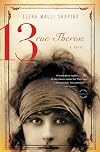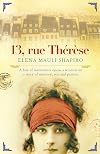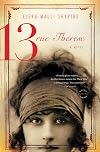
13, rue Thérèse
by Elena Mauli Shapiro
On This Page
Description
American academic Trevor Stratton discovers a box full of artifacts from World War I as he settles into his new office in Paris. The pictures, letters, and objects in the box relate to the life of Louise Brunet, a feisty, charming Frenchwoman who lived through both World Wars. As Trevor examines and documents the relics the box offers up, he begins to imagine the story of Louise Brunet's life: her love for a cousin who died in the war, her marriage to a man who works for her father, and her show more attraction to a neighbor in her building at 13 Rue Therese. The more time he spends with the objects though, the truer his imaginings of Louise's life become, and the more he notices another alluring Frenchwoman: Josianne, his clerk, who planted the box in his office in the first place, and with whom he finds he is falling in love. show lessTags
Recommendations

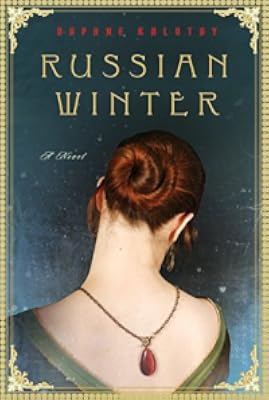


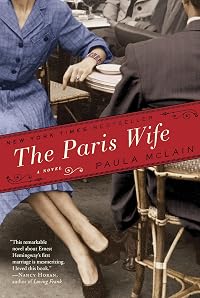






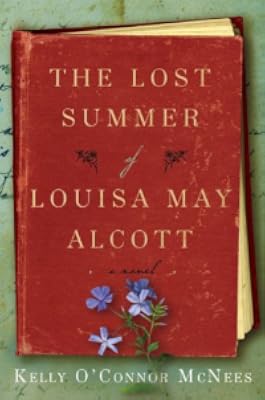
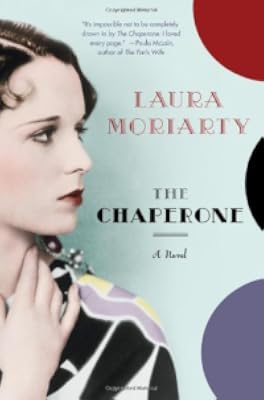
























Member Recommendations
Member Reviews
When author Elena Shapiro was a little girl, she was given a box of mementos that belonged to Louise Brunet, a woman in her apartment building. Louise had recently died, so Shapiro had no way to learn about the mementos or their owner. The contents of the box fascinated her and she turned them loose in her imagination. Years later she wrote a novel that tells Louise's story through the trinkets found in the box.
Louise grew up in wartime France; her father, brother and a cousin/boyfriend served at the front in World War I. She married Henri Brunet, a quiet and unassuming man who worked in her father's jewelry shop. Unable to have children, Louise became resentful and bored. She derived satisfaction from teaching piano to Garance, a very show more talented 15-year-old girl. And Louise had a mischievous side, combating boredom by gleefully making up outlandish, erotic stories to shock priests in the confessional. When a new family moved into her building at 13, rue Thérèse in Paris' 1st arrondissement, Louise was attracted t0 the husband Xavier, and envious of his happy marriage and children. Louise's story is an emotional one; she experienced loss not uncommon for that time period, but searingly painful nonetheless.
But there's another story wrapped around that of Louise. In the present day, American professor Trevor Stratton is working in Paris and finds a box of mementos (his secretary Josianne left it for him, but he doesn't know that). There are love letters from a young man, gloves, coins, photos, jewelry, and a handkerchief. As he pores through the box, his imagination runs away much as Shapiro's must have done. He begins constructing Louise's story, but it's often unclear when the story is true to the contents of the box, and when it reflects Trevor's imagination or even fantasy. What develops is a story within a story intertwining past and present in a most intriguing way. What really happened to Louise? What has Trevor made up, perhaps to satisfy his own longings? His findings are reported in letters to "Sir," who I presumed to be his superior, perhaps back at the American university. But he poured out his feelings so candidly and completely, I could not imagine such letters written in a professional context. When the relationships between Trevor, "Sir," and Josianne became somewhat clearer, the "story within a story" aspect of this novel turned out to be even more complex than I'd thought.
This book left me with lots of unanswered questions about Trevor and Louise which, like the box of mementos, are now left to run amok in my imagination. show less
Louise grew up in wartime France; her father, brother and a cousin/boyfriend served at the front in World War I. She married Henri Brunet, a quiet and unassuming man who worked in her father's jewelry shop. Unable to have children, Louise became resentful and bored. She derived satisfaction from teaching piano to Garance, a very show more talented 15-year-old girl. And Louise had a mischievous side, combating boredom by gleefully making up outlandish, erotic stories to shock priests in the confessional. When a new family moved into her building at 13, rue Thérèse in Paris' 1st arrondissement, Louise was attracted t0 the husband Xavier, and envious of his happy marriage and children. Louise's story is an emotional one; she experienced loss not uncommon for that time period, but searingly painful nonetheless.
But there's another story wrapped around that of Louise. In the present day, American professor Trevor Stratton is working in Paris and finds a box of mementos (his secretary Josianne left it for him, but he doesn't know that). There are love letters from a young man, gloves, coins, photos, jewelry, and a handkerchief. As he pores through the box, his imagination runs away much as Shapiro's must have done. He begins constructing Louise's story, but it's often unclear when the story is true to the contents of the box, and when it reflects Trevor's imagination or even fantasy. What develops is a story within a story intertwining past and present in a most intriguing way. What really happened to Louise? What has Trevor made up, perhaps to satisfy his own longings? His findings are reported in letters to "Sir," who I presumed to be his superior, perhaps back at the American university. But he poured out his feelings so candidly and completely, I could not imagine such letters written in a professional context. When the relationships between Trevor, "Sir," and Josianne became somewhat clearer, the "story within a story" aspect of this novel turned out to be even more complex than I'd thought.
This book left me with lots of unanswered questions about Trevor and Louise which, like the box of mementos, are now left to run amok in my imagination. show less
One of the review clips on the back cover of my edition says "Highly entertaining ... extraordinarily sensual." I didn't find it sensual so much as disgusting. Another review says "A magical Amelie-style love story." I love Amelie and have the DVD so I can rewatch it from time to time. But this was nothing like Amelie. Much of it was unpleasant with graphic, gory descriptions of the horrors of the First World War. When the story began to delve into what seemed like magical realism, a form I seriously dislike, I decided that, even though I was very close to the end of the book, I had had enough. There are very few books that I have read through almost to the end and then just stopped. In fact, I can't think of another. But by this time I show more realized that I really hated the book and I would be better off saving myself the pain of going on to the end. show less
I thought I was going to be reading historical fiction about a woman in Paris in the inter-war years of the 20th century, but there was a lot more going on here. And much of it didn't quite work, though there were intriguing glimmers of how much better this could have been. The framing narrative of an American professor in contemporary Paris didn't work for me, and then it wasn't framing so much as weaving through? I think? Shapiro was trying to do too much and be too clever and had pretensions to a more literary book than she was able to produce. All in all, rather dissatisfying.
I thought this was going to be really good, interspersing memories of war and survival with photographs and objects in a mystery box. It all ended up a bit contrived in my view. There's some bad sex writing in it what with womb-quaking kissing. Louise is a bit of a one, however.
One of the most innovative, imaginative novels I've read in a long time, 13 rue Thérèse is a story within a story, a puzzle, a mystery, and a charming portrait of Paris from World War I through WW II, and up to the present.
Elena Mauli Shapiro, the author actually lived at this address, and found a box of 'treasures' long abandoned there. There's a wonderful conversation on the books webpage where she explains how she came to write the story Using the contents of the treasure box--old pictures, playbills, postcards, lace gloves, a scarf, a rosary, a crucifix necklace, etc--she rebuilds the story of Louise and Henri Brunet the previous occupants. But she also gives us the story of Trevor Stratton, the contemporary American researcher show more who 'discovers' the box, after it is planted by the office secretary Josianne, and his strange reactions to the artifacts as he writes about them. This part of the story-- the relationship between Trevor and Josianne, and his letters to an unnamed "Dear Sir" are the weakest part of the story, but not weak enough to detract from the overall weave of the story.
We are treated to unrequited love, illicit love, an everyday marriage, and a bizarre compilation of coincidences, conflicts and puzzles. We have a wonderful picture of Paris in the 1930's, of women's roles in that period between the two World Wars. It's amazing, fun, and thought-provoking. In addition, Ms. Shapiro has given us a series of QR codes (I had to look that one up!): "Quick response codes" that readers who have such an app on their smart phones can use to bring up enhanced pictures of the treasures in the box. For those of us who don't have such up-to-date skills and/or technologies, there are enhanced photos, audio and video clips available on the books webpage. It's a veritable treasure box itself. It's a tough book to categorize or summarize, just as working a puzzle is difficult to explain. It's a book that is to be experienced rather than read. There is quite a bit of french in the story, but the author does an admirable job of translating without disturbing the flow of the story. show less
Elena Mauli Shapiro, the author actually lived at this address, and found a box of 'treasures' long abandoned there. There's a wonderful conversation on the books webpage where she explains how she came to write the story Using the contents of the treasure box--old pictures, playbills, postcards, lace gloves, a scarf, a rosary, a crucifix necklace, etc--she rebuilds the story of Louise and Henri Brunet the previous occupants. But she also gives us the story of Trevor Stratton, the contemporary American researcher show more who 'discovers' the box, after it is planted by the office secretary Josianne, and his strange reactions to the artifacts as he writes about them. This part of the story-- the relationship between Trevor and Josianne, and his letters to an unnamed "Dear Sir" are the weakest part of the story, but not weak enough to detract from the overall weave of the story.
We are treated to unrequited love, illicit love, an everyday marriage, and a bizarre compilation of coincidences, conflicts and puzzles. We have a wonderful picture of Paris in the 1930's, of women's roles in that period between the two World Wars. It's amazing, fun, and thought-provoking. In addition, Ms. Shapiro has given us a series of QR codes (I had to look that one up!): "Quick response codes" that readers who have such an app on their smart phones can use to bring up enhanced pictures of the treasures in the box. For those of us who don't have such up-to-date skills and/or technologies, there are enhanced photos, audio and video clips available on the books webpage. It's a veritable treasure box itself. It's a tough book to categorize or summarize, just as working a puzzle is difficult to explain. It's a book that is to be experienced rather than read. There is quite a bit of french in the story, but the author does an admirable job of translating without disturbing the flow of the story. show less
Very interesting, strange book. The author inherits a box of possessions from a dead woman and spins a story out of the objects therein. The ending was a bit abrupt but I enjoyed it nonetheless.
This is going to be a review in which I damn a book with faint praise. For starters, the synopsis makes this seem like a much more simplistic story than it is. Then again, perhaps I read the book incorrectly. Yes, it is a story about Trevor Stratton going through this mysterious box of artifacts, flashbacks to Louise Brunet’s life, and his growing interesting in Josianne. However, what I got from the story was a muddled story that bordered on magical realism as the lines between imagination and reality blur. There is talk of a fever, which would indicate hallucinations. Then again, it could all be just a dream. The whole thing is very confusing.
Not helping the situation is the fact that the entire novel is present tense all while show more jumping from time period to time period and narrator to narrator. This makes it extremely difficult to follow who, what, where, and when as the story progresses. The nature of the story is quite choppy, told in vignettes that begin with the introduction of each artifact. Just as you get used to a narrator and his or her story, you jump to a different narrator in a different time and place. The lack of continuity makes this jumbled little story that much more obscure. Adding to the mess are the footnotes, which provide translations of French sentences and other key reveals in the story. They are less footnotes than asides and essentially require you to jump back and forth between them. The only problem is that these footnotes are not at the bottom of the page but at the end of the story. There is nothing worse than having to jump a few dozen pages or more just to find out what is happening.
What I do like is the clever incorporation of the artifacts. There are images of every one of them, and they all look authentic. It is easy to imagine Ms. Shapiro taking her own box of letters, pictures, and other objects and using them to shape the story as she was writing it, for she is careful to include not just a picture of each but also adds a bit of commentary through Trevor about each one. The pictures of these items around which the entire story revolves is actually more interesting than the story itself. This is because they show you a true humanizing image of life in France during and after the Great War.
13, rue Thérèse is a cute novel, which is really my polite way of saying that I did not hate it. Honestly, I continue to struggle to understand what was happening most of the time for me to truly enjoy it. What I am able to glean from the story is not enough to make me want to puzzle out the rest. I just do not care enough to take the time to do so. I do love the artifacts and could have spent the same amount of time as I did reading the book just looking at their images. However, a quick glance at Goodreads makes me think this is an example of the wrong book at the wrong time. I was coming off of a decent book high when I selected 13, rue Thérèse, and this quiet story could not compete with that. When all is said and done, I am glad I can take this off my TBR pile and that I finally got around to reading it. I do not hate it, but neither is it a novel I will recommend to others. show less
Not helping the situation is the fact that the entire novel is present tense all while show more jumping from time period to time period and narrator to narrator. This makes it extremely difficult to follow who, what, where, and when as the story progresses. The nature of the story is quite choppy, told in vignettes that begin with the introduction of each artifact. Just as you get used to a narrator and his or her story, you jump to a different narrator in a different time and place. The lack of continuity makes this jumbled little story that much more obscure. Adding to the mess are the footnotes, which provide translations of French sentences and other key reveals in the story. They are less footnotes than asides and essentially require you to jump back and forth between them. The only problem is that these footnotes are not at the bottom of the page but at the end of the story. There is nothing worse than having to jump a few dozen pages or more just to find out what is happening.
What I do like is the clever incorporation of the artifacts. There are images of every one of them, and they all look authentic. It is easy to imagine Ms. Shapiro taking her own box of letters, pictures, and other objects and using them to shape the story as she was writing it, for she is careful to include not just a picture of each but also adds a bit of commentary through Trevor about each one. The pictures of these items around which the entire story revolves is actually more interesting than the story itself. This is because they show you a true humanizing image of life in France during and after the Great War.
13, rue Thérèse is a cute novel, which is really my polite way of saying that I did not hate it. Honestly, I continue to struggle to understand what was happening most of the time for me to truly enjoy it. What I am able to glean from the story is not enough to make me want to puzzle out the rest. I just do not care enough to take the time to do so. I do love the artifacts and could have spent the same amount of time as I did reading the book just looking at their images. However, a quick glance at Goodreads makes me think this is an example of the wrong book at the wrong time. I was coming off of a decent book high when I selected 13, rue Thérèse, and this quiet story could not compete with that. When all is said and done, I am glad I can take this off my TBR pile and that I finally got around to reading it. I do not hate it, but neither is it a novel I will recommend to others. show less
Members
- Recently Added By
Published Reviews
ThingScore 100
In this, it resembles the work of the great book artist Nick Bantock, whose "Griffin & Sabine" trilogy, complete with letters the reader could pull out and unfold, was a great success in the 1990s. "13 rue Thérèse" also includes embedded Q.R. (quick response) codes, which the reader can use, through the book's website, to enter the world of the novel — explore the house and the show more neighborhood on Google maps, listen to the music of Edith Piaf or Maurice Chevalier, and read recipes that enhance the full sensory experience of this love story. show less
added by vancouverdeb
When I think of works of fiction set in Paris, I immediately enter a mindset that is ruled by excessive imagination and visually concrete detail; I am reminded of Muriel Barbery’s “The Elegance of the Hedgehog” and Antoine de Saint-Exupéry’s “Le Petit Prince.” Also, Édith Piaf is singing somewhere in the background—as is the Eiffel Tower (my imagination tends to run loudly). show more Elena Mauli Shapiro's début novel, "13, Rue Thérèse," combines all these gush-worthy elements.....
I must admit that I enjoy the idea of a novel’s intention being evolved through its pages as well as an interactive Web site; the entire process has an elegant weather of its own. One might call it a visual rendering through language, culture, and sensible surprises. I call it a brilliant and tactile method of marketing. show less
added by vancouverdeb
Author Information

2+ Works 378 Members
Common Knowledge
- Canonical title
- 13, rue Thérèse
- Original publication date
- 2011-02-02
- People/Characters
- Louise Brunet; Henri Brunet; Trevor Stratton; Josianne Noireau; Xavier Langlais; Pauline Langlais (show all 9); Pierre Cleper; Garance Saccard; Camille
- Important places
- Paris, Île-de-France, France
- Important events
- World War I
- Dedication
- For Harris
- First words
- Josianne's gift is a simple square box, its sides about as long as her forearm.
- Last words
- (Click to show. Warning: May contain spoilers.)Still, she gave me the stars. I merely drew the constellations.
- Blurbers
- Ebershoff, David; Semple, Maria
Classifications
Statistics
- Members
- 355
- Popularity
- 89,042
- Reviews
- 30
- Rating
- (3.15)
- Languages
- English, Italian, Polish
- Media
- Paper, Audiobook, Ebook
- ISBNs
- 14
- ASINs
- 4