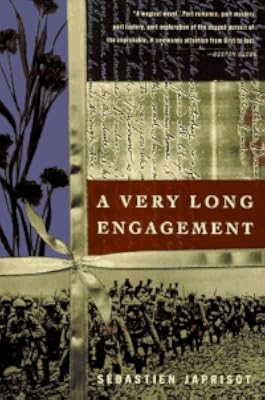
A Very Long Engagement
by Sébastien Japrisot
On This Page
Description
Now a major motion picture from "Amelie"'s director Jean-Pierre Jeunet and featuring Audrey Tautou and Jodie Foster comes a very different love story: "A Very Long Engagement "based on the acclaimed novel by Sebastien JaprisotA runaway bestseller in France and winner of the 1991 Prix Interallie, Sebastien Japrisot's novel about World War I was acclaimed as "a latter-day "War and Peace"" by "The New York Times."Set during and after the First World War, A VERY LONG ENGAGEMENT is the tale of a show more young woman's search for her fiance who she believes might still be alive despite having officially been reported as "killed in the line of duty." Unable to walk since childhood, fearless Mathilde Donnay is undeterred in her quest as she scours the country for information about five wounded French soldiers who were brutally abandoned by their own troops. A VERY LONG ENGAGEMENTis a mystery, a love story, and an extraordinary portrait of life in France before and after the War. show lessTags
Recommendations





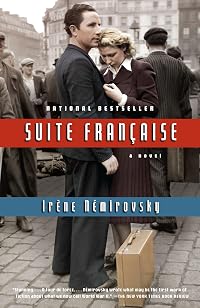
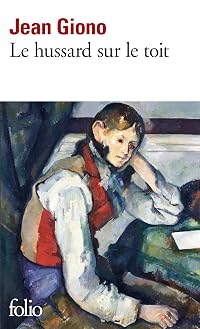
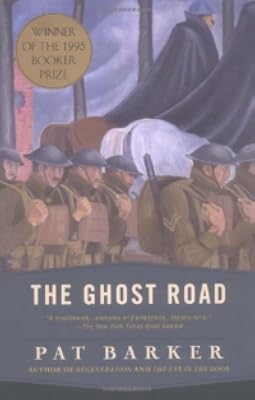
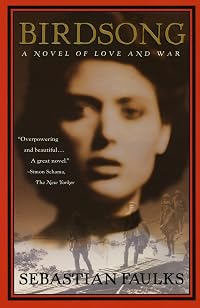








Member Recommendations


Member Reviews
En el frío invierno de 1917, cinco soldados franceses, heridos y maniatados, caminan hacia un destino trágico en un desolado rincón del frente. Matilde sabe, en el fondo de su corazón, que su amado Manech sigue vivo, a pesar del telegrama que anunciaba que había caído en combate junto a tantos otros de sus camaradas. Una certeza que se mezcla con el horror y la indignación cuando, una vez acabada la guerra, un sargento moribundo le cuenta la verdad sobre la última vez en que vio a su novio: Manech y otros cuatro soldados, acusados de herirse a sí mismos para escapar del frente, fueron atados y abandonados en tierra de nadie. A partir de ese momento, Matilde emprende la búsqueda de la verdad. A lo largo de los años, armada de show more un coraje inquebrantable, irá escudriñando las vidas de aquel puñado de hombres entregados a la muerte. Descubrirá historias de amor, de culpa, de abandono, con el trasfondo siempre de la locura colectiva que llevó a los hombres a cometer las peores atrocidades en nombre de la patria. Una conmovedora historia de amor a través del tiempo, envuelta en un apasionante misterio que se va desvelando poco a poco, dejando al descubierto una tupida red de ilusiones, amor y desdicha show less
Five men worn out by the carnage of the Somme take the drastic decision to shoot themselves in the hand. Each man is found guilty at court-martial and rather than lined up in front a firing squad are sentenced to be abandoned at night with their hands tied in no-mans-land between the opposing trenches. The five French soldiers are reportedly killed in battle but after the war, a dying solder raises doubts about their demise and suggests that at least one of them may have survived.
Mathilde Donnay, confined to a wheelchair after a childhood accident and the fiancée of the youngest victim, Manech, sets out to discover the truth about what happened that night. The book consequently isn't really a war story (although it is obviously written show more with that as it's backdrop) but rather one about the determination and resolve of a young woman to uncover the facts.
The novel was initially written in French before being translated into English contains a large cast of characters each adding a fragment to the whole rather like a jigsaw puzzle. As a reader you must either really concentrate or simply go with the flow in the hope that you get the gist of it. Yet despite the complex nature of the plot it ticks along at a decent pace.
The mud and fear that pervaded the trenches in France also pervade this novel. Readers can understand why a few soldiers thought that shooting themselves in the hand might be their ticket out of the madness. As Mathilde traces their stories and meets their families and friends, she shows us that memories that exist after such life changing events are not always totally trustworthy, the so called 'fog of war'. The depictions of the battlefield horrors are pretty graphic as are the psychological effects on the soldiers who were there and the resilience of people who must rebuild their lives in its aftermath. However, each topic is covered sympathetically and are lightened by interludes of subtle humour.
“A glass of wine taken with dinner makes doctor’s purse a little thinner.”
As stated previously there is a large cast of characters some of whom, like Tina and Celestine, are memorable but the weight of the book rests on Mathilde's shoulders and its here that I have a few minor gripes. I just couldn't make my mind up about her. At times I found her plucky and sympathetic but at others demanding and spoilt but I think that everyone can admire is her determination and will root for her as the tale nears its conclusion.
On the whole I found this a thoroughly enjoyable book from and author of whom I previously knew nothing about. Perhaps the over-riding message of this book is that hope and despair are often the flip sides of the same coin both for those who go off to fight but also those who must stay behind. show less
Mathilde Donnay, confined to a wheelchair after a childhood accident and the fiancée of the youngest victim, Manech, sets out to discover the truth about what happened that night. The book consequently isn't really a war story (although it is obviously written show more with that as it's backdrop) but rather one about the determination and resolve of a young woman to uncover the facts.
The novel was initially written in French before being translated into English contains a large cast of characters each adding a fragment to the whole rather like a jigsaw puzzle. As a reader you must either really concentrate or simply go with the flow in the hope that you get the gist of it. Yet despite the complex nature of the plot it ticks along at a decent pace.
The mud and fear that pervaded the trenches in France also pervade this novel. Readers can understand why a few soldiers thought that shooting themselves in the hand might be their ticket out of the madness. As Mathilde traces their stories and meets their families and friends, she shows us that memories that exist after such life changing events are not always totally trustworthy, the so called 'fog of war'. The depictions of the battlefield horrors are pretty graphic as are the psychological effects on the soldiers who were there and the resilience of people who must rebuild their lives in its aftermath. However, each topic is covered sympathetically and are lightened by interludes of subtle humour.
“A glass of wine taken with dinner makes doctor’s purse a little thinner.”
As stated previously there is a large cast of characters some of whom, like Tina and Celestine, are memorable but the weight of the book rests on Mathilde's shoulders and its here that I have a few minor gripes. I just couldn't make my mind up about her. At times I found her plucky and sympathetic but at others demanding and spoilt but I think that everyone can admire is her determination and will root for her as the tale nears its conclusion.
On the whole I found this a thoroughly enjoyable book from and author of whom I previously knew nothing about. Perhaps the over-riding message of this book is that hope and despair are often the flip sides of the same coin both for those who go off to fight but also those who must stay behind. show less
On January 6, 1917, five young men are led to a trench on the front line at "Bingo Crepuscle" in France, then sent over the embankment into enemy territory. They have been court-martialed and condemned to death for self-mutilation, having shot themselves in the hand. Mathilde Donnay, confined to a wheelchair, is the fiancee of one of the men. When she is called to the bedside of a dying soldier who tells her the story of that day and gives her copies of letters the men have written to their loved ones, she decides to investigate to find out if any of the five survived.
I found the beginning of the book difficult to follow, but once the characters settled down, the investigation was fascinating. Mathilde hires an investigator, sends show more letters, speaks to anyone who seems to have any information, then puts the pieces together.
The horrors of war, as if we don't already know them, are spelled out explicitly in this story. The more I read about World War I, the more I wonder how anyone could have ever started another war. show less
I found the beginning of the book difficult to follow, but once the characters settled down, the investigation was fascinating. Mathilde hires an investigator, sends show more letters, speaks to anyone who seems to have any information, then puts the pieces together.
The horrors of war, as if we don't already know them, are spelled out explicitly in this story. The more I read about World War I, the more I wonder how anyone could have ever started another war. show less
Although ultimately a fairly depressing subject, it was a fairly compelling book. I wasn't sure if I liked it but I'm glad I read it and I found it hard to put down. The only big failing was I found the Mathilde character very unlikable and I think that was not the goal.
"Once upon a time, there were five French Soldiers who had gone off to war, because that's the way of the world." So begins Sebastien Japrisot's haunting novel which chronicles not only the horrors of war and the endurance of love, but the ways in which World War 1 forever changed the lives of those who were caught up in the conflict.
I have already read this book several times. For some reason, I seem to find myself returning to it every few years. Japrisot's writing is so beautiful and flows so well in translation (the novel was originally written in French) that it makes me want to take language lessons so that I could enjoy his writing in his native language.
The story concerns Mathilde Donnay, an intelligent and strong-willed show more protagonist who happens to be confined to a wheelchair because of an early childhood injury. Don't let this detail bother you, as it certainly doesn't bother Mathilde. She has far too many fish to fry to let a little thing like partial paralysis get in her way. As a young girl, Mathilde formed a lasting friendship with a boy named Manech, who became her fiancee after their childhood friendship developed into a strong and loving relationship. At the tender age of 19, Manech was sent off to the war, serving as an infantryman on the front of the French lines. Literally driven past the point of endurance by the horrors he has witnessed, Manech arranges for an accommodating soldier in German trench to shoot him in the hand. Manech is sentenced to death for this self-mutilation, along with four other soldiers. Their sentence is to be thrown into no-man's land, the space between the French and German trenches, with no weapons and their hands tied behind their backs. What happened to Manech and his fellow inmates becomes a mystery, one which Mathilde is not willing to let remain unsolved, and spends seven years trying to uncover. In pursuing this mystery she will uncover not only Manech's ultimate fate, but also learn the stories of those who witnessed it.
This is such a beautiful novel, and Mathilde is such a likable character. Each time I read it I find myself furiously turning the pages, hoping for a resolution to lives that were so unfairly interrupted. show less
I have already read this book several times. For some reason, I seem to find myself returning to it every few years. Japrisot's writing is so beautiful and flows so well in translation (the novel was originally written in French) that it makes me want to take language lessons so that I could enjoy his writing in his native language.
The story concerns Mathilde Donnay, an intelligent and strong-willed show more protagonist who happens to be confined to a wheelchair because of an early childhood injury. Don't let this detail bother you, as it certainly doesn't bother Mathilde. She has far too many fish to fry to let a little thing like partial paralysis get in her way. As a young girl, Mathilde formed a lasting friendship with a boy named Manech, who became her fiancee after their childhood friendship developed into a strong and loving relationship. At the tender age of 19, Manech was sent off to the war, serving as an infantryman on the front of the French lines. Literally driven past the point of endurance by the horrors he has witnessed, Manech arranges for an accommodating soldier in German trench to shoot him in the hand. Manech is sentenced to death for this self-mutilation, along with four other soldiers. Their sentence is to be thrown into no-man's land, the space between the French and German trenches, with no weapons and their hands tied behind their backs. What happened to Manech and his fellow inmates becomes a mystery, one which Mathilde is not willing to let remain unsolved, and spends seven years trying to uncover. In pursuing this mystery she will uncover not only Manech's ultimate fate, but also learn the stories of those who witnessed it.
This is such a beautiful novel, and Mathilde is such a likable character. Each time I read it I find myself furiously turning the pages, hoping for a resolution to lives that were so unfairly interrupted. show less
This is a wonderful story about one woman's search for the truth about her fiance's fate in World War I. We learn right at the beginning that in 1917 five men are marched with bound hands to No Man's Land, between the opposing trenches, and left to their fate. Manech, Mathilde's fiance is one of the men. A couple of years later another soldier tells Mathilde this story. From there it is a long search for her as she seeks the truth - could her lover possibly have survived?
Mathilde is very determined and the horrors of the war - physical, psychological and emotional - are slowly revealed to her and the reader. We are also given the stories of the relatives and friends of the five and hear the tales of other soldiers involved in that day. show more This is a convoluted, multi-layered story that is not lightly read - there are many characters but at the centre is Mathilde and her story focuses the plot.
I must say that I first saw the film, many years ago, which might have helped me keep the overall picture in mind. I thought the film was very good but I'm so pleased to have finally read the book - it's brilliant. show less
Mathilde is very determined and the horrors of the war - physical, psychological and emotional - are slowly revealed to her and the reader. We are also given the stories of the relatives and friends of the five and hear the tales of other soldiers involved in that day. show more This is a convoluted, multi-layered story that is not lightly read - there are many characters but at the centre is Mathilde and her story focuses the plot.
I must say that I first saw the film, many years ago, which might have helped me keep the overall picture in mind. I thought the film was very good but I'm so pleased to have finally read the book - it's brilliant. show less
Sebastian Japrisot's novel "A Very Long Engagement," first published in France in 1991 as "Un long divan he de fiancailles," manages to be an unconventional love story, an unconventional war story and an unconventional detective story all at the same time. It succeeds admirably as all three.
As a love story it is unconventional because the two lovers, except in flashbacks, do not come together until the end of the story. The story takes place soon after the close of the Great War, so the war, too, is described in letters and reminiscences and letters. The detective story is unconventional because the detective is a young woman, Mathilde Donnay, who was told her fiancé, Manech, died in the war. She has never believed that, so now, the show more war over, she begins to investigate what really happened in the French trench known as Bingo Crepuscule.
It seems Manech, whom she has loved since childhood, was one of five men condemned to die for self-mutilation. Instead of facing a firing squad, however, they were forced into No Man's Land between the French and German armies. All five are reported dead, their bodies recovered and buried. Still Mathilde maintains hope and hunts down survivors from the trench to try to keep that hope alive. That she was crippled in a childhood accident and confined to a wheelchair perhaps leads her not to easily give up on the one man who loved her, as well as giving her the time to write all those letters and to dig out the truth in all the different versions she hears.
I watched, for maybe the sixth time, the Jean-Pierre Jeunet film based on the novel on the same day I finished the book. He changed a few minor details. Mathilde had polio and can still walk in the movie. She is an orphan in the film, not in the novel. She speaks with the character Tina Lombardi in the movie, not in the book. Still Jeunet stays amazingly true to the story and, in my view, improves on it. show less
As a love story it is unconventional because the two lovers, except in flashbacks, do not come together until the end of the story. The story takes place soon after the close of the Great War, so the war, too, is described in letters and reminiscences and letters. The detective story is unconventional because the detective is a young woman, Mathilde Donnay, who was told her fiancé, Manech, died in the war. She has never believed that, so now, the show more war over, she begins to investigate what really happened in the French trench known as Bingo Crepuscule.
It seems Manech, whom she has loved since childhood, was one of five men condemned to die for self-mutilation. Instead of facing a firing squad, however, they were forced into No Man's Land between the French and German armies. All five are reported dead, their bodies recovered and buried. Still Mathilde maintains hope and hunts down survivors from the trench to try to keep that hope alive. That she was crippled in a childhood accident and confined to a wheelchair perhaps leads her not to easily give up on the one man who loved her, as well as giving her the time to write all those letters and to dig out the truth in all the different versions she hears.
I watched, for maybe the sixth time, the Jean-Pierre Jeunet film based on the novel on the same day I finished the book. He changed a few minor details. Mathilde had polio and can still walk in the movie. She is an orphan in the film, not in the novel. She speaks with the character Tina Lombardi in the movie, not in the book. Still Jeunet stays amazingly true to the story and, in my view, improves on it. show less
Members
- Recently Added By
Lists

Books about World War I
80 works; 14 members

A Good Read (Radio 4)
287 works; 1 member

World War I Fiction
94 works; 15 members
THE WAR ROOM
813 works; 24 members
Talk Discussions
Past Discussions
Found: Novel translated from French in Name that Book (April 2021)
Author Information

21+ Works 3,354 Members
Some Editions
Awards and Honors
Awards
Series
Belongs to Publisher Series
Aufbau Taschenbuch (1407)
A tot vent (426)
Work Relationships
Has the adaptation
Has as a student's study guide
Common Knowledge
- Canonical title*
- Un long dimanche de fiançailles
- Original title
- Un long dimanche de fiançailles
- Original publication date
- 1991
- People/Characters*
- Mathilde Donnay ( fiancée de Manech); Jean Etchevery (dit "Manech" : matricule 9692, pécheur landais); Klebert Bouquet (dit "l'Eskimo", dit "Bastoche" : matricule 2124, menuisier parisien); Francis Gaignard (dit "SIX-Sous" : matricule 4077, soudeur parisien); Benoît Notre-Dame (dit "Cet Homme" : matricule 1818,paysan de Dordogne); Ange Bassignano (dit "Droit Commun" : matricule 7328, petit truand marseillais) (show all 10); Célestin Poux ( soldat "démerdard", va aider Mathilde); Esperanza (sergent, survivant, va mettre Mathilde sur la piste); Benjamin Gordes (dit "Biscotte" : caporal, ami de l'Eskimo, mort à la guerre); Germain Pire ( détective, va aider Mathilde à plusieurs reprises)
- Important places*
- Bingo Crepuscule (en fait byng au crépuscule : tranchée)
- Important events
- World War I
- Related movies
- Un long dimanche de fiançailles (2004 | IMDb)
- Epigraph
- "I see nobody on the road," said Alice.
"I only wish I had such eyes," the King
remarked in a fretful tone. "To be able to
see nobody. And at that distance, too!
Why, it's as much as I can do to see real
Lewis Carroll
Through the Looking-Glass - First words
- One upon a time, there were five French soldiers who had gone off to war, because that's the way of the world.
- Last words
- (Click to show. Warning: May contain spoilers.)Vor langer Zeit.
(Click to show. Warning: May contain spoilers.)He shoved it three-quarters of the way into the earth, after enclosing within a message addressed to whoever should find the grave, a page torn from his notebook on which he had written in pencil, as best he could, resting the paper on his knee:
Here lie
five French soldiers,
who died with their shoes on,
chasing the wind,
the name of the place,
where the roses fade,
and a date,
a long time ago. - Blurbers
- Watkins, Paul; Eder, Richard; Brookner, Anita
- Original language
- French
- Disambiguation notice
- Original title, Un long dimanche de fiançailles
*Some information comes from Common Knowledge in other languages. Click "Edit" for more information.
Classifications
- Genres
- Fiction and Literature, General Fiction, Historical Fiction, Romance
- DDC/MDS
- 843.914 — Literature & rhetoric French Literature French fiction 1900- 20th Century 1945-1999
- LCC
- PQ2678 .O72 .J3613 — Language and Literature French, Italian, Spanish and Portuguese literatures French literature Modern literature 1961-2000
- BISAC
Statistics
- Members
- 1,791
- Popularity
- 12,236
- Reviews
- 36
- Rating
- (3.96)
- Languages
- 17 — Catalan, Chinese, Czech, Danish, Dutch, English, Estonian, Finnish, French, German, Hungarian, Italian, Norwegian (Bokmål), Polish, Portuguese, Spanish, Swedish
- Media
- Paper, Audiobook, Ebook
- ISBNs
- 65
- UPCs
- 1
- ASINs
- 18