
On This Page
Description
Craiglockhart War Hospital, 1917, where army psychiatrist William Rivers is treating shell-shocked soldiers. Under his care are the poets Siegfried Sassoon and Wilfred Owen, as well as mute Billy Prior, who is only able to communicate by means of pencil and paper. Rivers' job is to make the men in his charge healthy enough to fight. Yet the closer he gets to mending his patients' minds, the harder becomes every decision to send them back to the horrors of the front... REGENERATION is the show more classic exploration of how the traumas of war brutalized a generation of young men. show lessTags
Recommendations













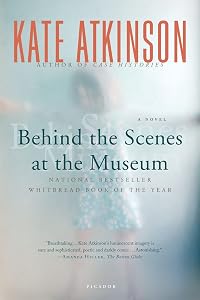
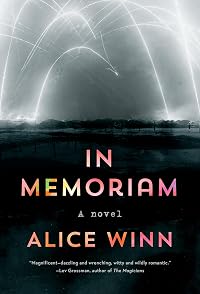

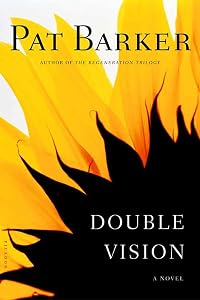
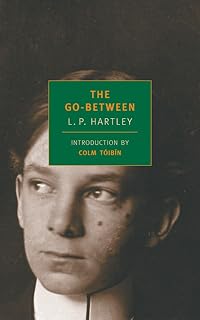


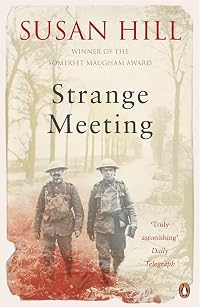

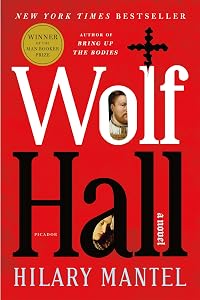




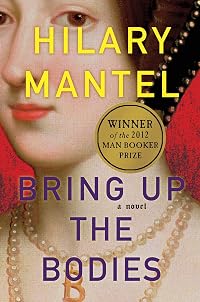

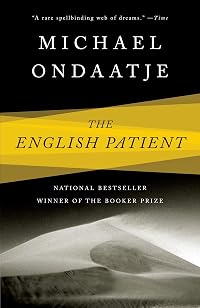

Member Recommendations

ehines I can see someone thinking this is a stretcher, but these two trilogies will always live together in my mind--two different takes on the crises of modernity which, to me, seem harmonious.
31

Smiler69 Both works based on early 20th century psychological and psychiatric findings and research.
31



WeeTurtle Though I prefer "All Quiet..." I found it interesting to view the two books together as representing the fallout from each side of WWI.

pellethepoet Brief biography of Dr. Rivers, the psychiatrist who treated Siegfried Sassoon at Craiglockhart War Hospital
11

Member Reviews
This is a searingly intimate examination of the horrors and the cost of WWI, manifested in the paralyzing physical symptoms -- agonizing nightmares, paraplegia with no injury, incapacity for speech, uncontrollable vomiting, violent twitching, stammering, and hallucinations -- of the severely shellshocked British soldiers sent to Craiglockhart War Hospital after being deemed "mentally unsound." Here they are treated with compassion and gentleness by renowned psychiatrist and anthropologist Dr. Rivers. Rivers's job is to treat the men and make a recommendation to the medical board for their future service to the British military. Ideally, the men should become well enough to return to the front. Rivers learns with some trepidation that he show more is to treat Siegfried Sassoon, a poet and decorated soldier, universally loved and trusted by his men. When Sassoon publishes a declaration opposing the continuance of the war (and accusations that those with the power to negotiate cessation of hostilities choose not to do so at horrific cost to hundreds of thousands of lives), he is declared shell-shocked in an attempt to discredit his views. Rivers treats Sassoon and others, working himself to exhaustion, and eventually having his views altered about the justification for war as he hears his patients' experiences and when considering the cost to human life, health, and sanity. I was surprised to learn that Sassoon, Rivers, and other characters were real people, which makes Ms. Barker's novel even more important and impressive. The big themes explored here are still as relevant today -- justification for continuing war, national consciousness, duty and bravery, sacrifice, horror, trauma, and healing, and especially what next and why? Regeneration is the first book of a trilogy, which I will return to at some point. For the present, this book will stay with me for a long time. show less
I read my last book unusually slowly, which perhaps explains why I got through ‘Regeneration’ in a few hours straight. I chose to read it after coming across a recommendation online; apparently it deals with issues of class better than Faulks’ [b:Birdsong|6259|Birdsong|Sebastian Faulks|https://images.gr-assets.com/books/1349952101s/6259.jpg|1093016] (which I intend to read at some point). It certainly struck me as a profoundly humane, sensitively written book. The story takes place in a hospital for shell-shocked soldiers during the First World War. The reader mainly experiences the recovery of various patients through the eyes of Doctor Rivers, a wonderfully thoughtful and sympathetic character and very effective psychiatrist. show more Amongst his patients is Siegfried Sassoon, who has been committed to the institution after very publicly questioning the morality of the war. Sassoon’s dilemma is played out carefully and very effectively.
Although this novel does not induce the same sense of utter devastation as [b:All Quiet on the Western Front|355697|All Quiet on the Western Front|Erich Maria Remarque|https://images.gr-assets.com/books/1441227765s/355697.jpg|2662852], one of the most upsetting novels I’ve ever read, it is still very moving and powerful. None of it actually takes place at the front, instead examining the terrible aftermath of war upon the surviving soldiers. Rivers contemplates the linked physical and psychological toll on individuals and a generation collectively, in a nuanced and beautifully articulated manner. Although I liked the portrayal of the war poets and other patients, Rivers was the heart and soul of the book. Whilst [b:All Quiet on the Western Front|355697|All Quiet on the Western Front|Erich Maria Remarque|https://images.gr-assets.com/books/1441227765s/355697.jpg|2662852] confronts you with the death toll of the war, 'Regeneration' shows you the fate of the survivors through the eyes of those who care for them.
This is a truly wonderful historical novel and I definitely intend to read the other two in the trilogy. show less
Although this novel does not induce the same sense of utter devastation as [b:All Quiet on the Western Front|355697|All Quiet on the Western Front|Erich Maria Remarque|https://images.gr-assets.com/books/1441227765s/355697.jpg|2662852], one of the most upsetting novels I’ve ever read, it is still very moving and powerful. None of it actually takes place at the front, instead examining the terrible aftermath of war upon the surviving soldiers. Rivers contemplates the linked physical and psychological toll on individuals and a generation collectively, in a nuanced and beautifully articulated manner. Although I liked the portrayal of the war poets and other patients, Rivers was the heart and soul of the book. Whilst [b:All Quiet on the Western Front|355697|All Quiet on the Western Front|Erich Maria Remarque|https://images.gr-assets.com/books/1441227765s/355697.jpg|2662852] confronts you with the death toll of the war, 'Regeneration' shows you the fate of the survivors through the eyes of those who care for them.
This is a truly wonderful historical novel and I definitely intend to read the other two in the trilogy. show less
A TRILOGY that is essential reading for those who have an interest in what stops and what makes a man 'tick' in the midst of unimagined brutal combat. Remarkable writing on a very remarkable subject.
Ms Barker has said she always wanted to write about World War One, but could not for some years find a topic that had not already been covered: Incredibly in this trilogy Barker finds an astonishing new aspect of the 'war to end all wars'! The author found a profoundly disturbing and deeply moving aspect of that vast Total War era. Her complex, harrowing, detailed exploration of the character of real WW1 psychiatrist-clinician Professor Rivers and his role in restoring to "mental/physical fitness" for combat severely traumatised soldiers show more ("shell-shock"/"PTSD" are far too simple terms for what the books describe) is an eye-watering revelation. Men utterly destroyed by war experience forced by experimental science to return to war service.
Within the trilogy she covers landmark literary figures, Siegfried Sassoon and Wilfred Owen who were genuine 'patients/inmates' of Prof Rivers' establishment with its new-science techniques, i.e. brutal electrical shock and intense mentoring methods to get a fellow over uncontrollable shakes so that he might once again re-enter that frontline trench hell on earth, hold a rifle to kill others and risk every sort of only too ghastly death all over again.
Psychological and philosophical discussion by characters throughout among spell-binding scenes of life in and out the trenches.
Fictional characters also play their part in a raw, emotional, almost in parts passion-play of the lives of men who have endured the unendurable and are made to recover sufficiently to have to go and endure it all over again.
Barker's trilogy is not a tribute, but it is a mirror held up to those times when the whole Social Order was being turned upside down by a tragic conflict no one had ever conceived of as humanly possible. Sadly, in our modern world, we all know very differently. show less
Ms Barker has said she always wanted to write about World War One, but could not for some years find a topic that had not already been covered: Incredibly in this trilogy Barker finds an astonishing new aspect of the 'war to end all wars'! The author found a profoundly disturbing and deeply moving aspect of that vast Total War era. Her complex, harrowing, detailed exploration of the character of real WW1 psychiatrist-clinician Professor Rivers and his role in restoring to "mental/physical fitness" for combat severely traumatised soldiers show more ("shell-shock"/"PTSD" are far too simple terms for what the books describe) is an eye-watering revelation. Men utterly destroyed by war experience forced by experimental science to return to war service.
Within the trilogy she covers landmark literary figures, Siegfried Sassoon and Wilfred Owen who were genuine 'patients/inmates' of Prof Rivers' establishment with its new-science techniques, i.e. brutal electrical shock and intense mentoring methods to get a fellow over uncontrollable shakes so that he might once again re-enter that frontline trench hell on earth, hold a rifle to kill others and risk every sort of only too ghastly death all over again.
Psychological and philosophical discussion by characters throughout among spell-binding scenes of life in and out the trenches.
Fictional characters also play their part in a raw, emotional, almost in parts passion-play of the lives of men who have endured the unendurable and are made to recover sufficiently to have to go and endure it all over again.
Barker's trilogy is not a tribute, but it is a mirror held up to those times when the whole Social Order was being turned upside down by a tragic conflict no one had ever conceived of as humanly possible. Sadly, in our modern world, we all know very differently. show less
The Publisher Says: Regeneration, one in Pat Barker's series of novels confronting the psychological effects of World War I, focuses on treatment methods during the war and the story of a decorated English officer sent to a military hospital after publicly declaring he will no longer fight. Yet the novel is much more. Written in sparse prose that is shockingly clear -- the descriptions of electronic treatments are particularly harrowing -- it combines real-life characters and events with fictional ones in a work that examines the insanity of war like no other. Barker also weaves in issues of class and politics in this compactly powerful book. Other books in the series include The Eye in the Door and the Booker Award-winner The Ghost show more Road.
My Review: The Doubleday UK meme, a book a day for July 2014, is the goad I'm using to get through my snit-based unwritten reviews. Today's prompt is to discuss the Great War novel you loved best.
This was *hard* because there have been several, two in the past year!, Great War-themed novels that I really love. I spent a sleepless night thinking about this. I re-read portions of both my recent reads that suit the prompt, and as much as I was enwrapt in [The Daughters of Mars], feeling the swirl and ebb of tidal feeling, I was utterly immersed in [Regeneration], I felt I was *there* and I was simply, unaccountably, invisible to the characters and so not remarked upon.
I know that Ms. Barker was born in 1943...imagine! 1943! Were there *people* then?...and so could not have witnessed the events that so utterly traumatized Wilfred Owen and Siegfried Sassoon and so many thousands of other men, but you couldn't prove it by this:
If that doesn't sound exactly like something a survivor would think, I don't know what does. And yet she's 25 years younger than Armistice Day! Channeling? Spirit possession? Filing clerk for the Akashic Records Office?
That last sounds about right...anyway, there we are mise en scene with the survivors, the ones confronting a world that feels empowered to judge them for their responses to stimuli unknown to mere civilians:
Doesn't that sound like someone who hasn't had to do the job issuing a pronunciamento? An armchair warrior speaking from the privileged place of one who is defended, not one who defends. It was ever thus.
What a horror, then, to be trapped between a world that you fought to save, and that world's utter inability and complete unwillingness to learn what you lived:
That kind of knowledge would devastate Society! Undermine the Divinely Ordained Rules! Heresy!! It must be the case that these damaged men were weak, weak I say, unmanly and unworthy! It cannot be that what they lived through damaged them by its nature, or else codified gender (and skin-color) inequality is Wrong. And we all know that it is Right!
Ugh. But blessedly, the Great War began a process of (wrenching, painful) psychic change that the Ruling Elite has been resisting, beating back, discrediting at every opportunity, and with increasing success, for 95 years:
Look at the returned Iraq War and Afghan War veterans...disillusioned, mutilated in body and in soul even when bodies are whole, record numbers of veteran suicides stand to our national, human discredit, exactly as they did then, and all because:
If that sentence does not make you weep actual physical tears of helpless sadness and empathetic misery, you are wanting in basic human kindness.
In the end, the reason I selected this book as my favorite Great War novel ahead of all others, is this simple distillation of the pointlessness of war in the face of its costs:
My Review: The Doubleday UK meme, a book a day for July 2014, is the goad I'm using to get through my snit-based unwritten reviews. Today's prompt is to discuss the Great War novel you loved best.
This was *hard* because there have been several, two in the past year!, Great War-themed novels that I really love. I spent a sleepless night thinking about this. I re-read portions of both my recent reads that suit the prompt, and as much as I was enwrapt in [The Daughters of Mars], feeling the swirl and ebb of tidal feeling, I was utterly immersed in [Regeneration], I felt I was *there* and I was simply, unaccountably, invisible to the characters and so not remarked upon.
I know that Ms. Barker was born in 1943...imagine! 1943! Were there *people* then?...and so could not have witnessed the events that so utterly traumatized Wilfred Owen and Siegfried Sassoon and so many thousands of other men, but you couldn't prove it by this:
Sometimes, in the trenches, you get the sense of something, ancient. One trench we held, it had skulls in the side, embedded, like mushrooms. It was actually easier to believe they were men from Marlborough's army, than to think they'd been alive a year ago. It was as if all the other wars had distilled themselves into this war, and that made it something you almost can't challenge. It's like a very deep voice, saying: 'Run along, little man, be glad you've survived'.
If that doesn't sound exactly like something a survivor would think, I don't know what does. And yet she's 25 years younger than Armistice Day! Channeling? Spirit possession? Filing clerk for the Akashic Records Office?
That last sounds about right...anyway, there we are mise en scene with the survivors, the ones confronting a world that feels empowered to judge them for their responses to stimuli unknown to mere civilians:
The way I see it, when you put the uniform on, in effect you sign a contract. And you don't back out of a contract merely because you've changed your mind. You can still speak up for your principles, you can still argue against the ones you're being made to fight for, but in the end you do the job.
Doesn't that sound like someone who hasn't had to do the job issuing a pronunciamento? An armchair warrior speaking from the privileged place of one who is defended, not one who defends. It was ever thus.
What a horror, then, to be trapped between a world that you fought to save, and that world's utter inability and complete unwillingness to learn what you lived:
This reinforced Rivers’s view that it was prolonged strain, immobility and helplessness that did the damage, and not the sudden shocks or bizarre horrors that the patients themselves were inclined to point to as the explanation for their condition. That would help to account for the greater prevalence of anxiety neuroses and hysterical disorders in women in peacetime, since their relatively more confined lives gave them fewer opportunities of reacting to stress in active and constructive ways. Any explanation of war neurosis must account for the fact that this apparently intensely masculine life of war and danger and hardship produced in men the same disorders that women suffered from in peace.
That kind of knowledge would devastate Society! Undermine the Divinely Ordained Rules! Heresy!! It must be the case that these damaged men were weak, weak I say, unmanly and unworthy! It cannot be that what they lived through damaged them by its nature, or else codified gender (and skin-color) inequality is Wrong. And we all know that it is Right!
Ugh. But blessedly, the Great War began a process of (wrenching, painful) psychic change that the Ruling Elite has been resisting, beating back, discrediting at every opportunity, and with increasing success, for 95 years:
It was... the Great White God de-throned, I suppose. Because we did, we quite unselfconsciously assumed we were the measure of all things. That was how we approached them. And suddenly I saw that we weren't the measure of all things, but that there was no measure.
Look at the returned Iraq War and Afghan War veterans...disillusioned, mutilated in body and in soul even when bodies are whole, record numbers of veteran suicides stand to our national, human discredit, exactly as they did then, and all because:
You know you're walking around with a mask on, and you desperately want to take it off and you can't because everybody else thinks it's your face.
If that sentence does not make you weep actual physical tears of helpless sadness and empathetic misery, you are wanting in basic human kindness.
In the end, the reason I selected this book as my favorite Great War novel ahead of all others, is this simple distillation of the pointlessness of war in the face of its costs:
And as soon as you accepted that the man’s breakdown was a consequence of his war experience rather than his own innate weakness, then inevitably the war became the issue. And the therapy was a test, not only of the genuineness of the individual’s symptoms, but also of the validity of the demands the war was making on him. Rivers had survived partly by suppressing his awareness of this. But then along came Sassoon and made the justifiability of the war a matter for constant, open debate, and that suppression was no longer possible.show less
A tremendously engrossing, imaginative story of WW1 soldiers sent to a psychiatric facility when various forms of shell shock incapacitate them.
Rivers, the head of treatment in this place, is a real historic figure, as is Siegfried Sassoon, Wilfred Owen, and others. Sassoon is placed there when Robert Graves pulls strings to prevent him from being court-martialed for writing a protest against this interminable war, without stated goals or purpose. As he is an officer and from the upper class, this is a serious offense, but if he can be regarded as mentally unfit, discounted.
The men's damage is all psychological, but no less real. One man cannot eat because of a horrific accident that he associates with food. One cannot walk, although show more not wounded, many cannot speak, some can only stutter, some have become paranoid about spies. One, a doctor, can no longer stand the sight of blood.
Barker's imagined life within this real situation is magical. The dialog is so natural and real, the relationships between the men, and some women, so real. One man goes on a day trip and meets a woman, a munitions worker yellowed by the substances she handles, which even rub off on the sheets, and we learn about how the war has opened opportunities for women who otherwise would have been servants, how the social order is being upended. Rivers and Sassoon, a fictional inmatef named Prior, and others have conversations that deeply affect each other, each knowing that to be proclaimed 'cured' means getting sent back to the horror of trench warfare.
This is the first of a trilogy of WW1, and I intend to read the other two as soon as possible. A powerful read. show less
Rivers, the head of treatment in this place, is a real historic figure, as is Siegfried Sassoon, Wilfred Owen, and others. Sassoon is placed there when Robert Graves pulls strings to prevent him from being court-martialed for writing a protest against this interminable war, without stated goals or purpose. As he is an officer and from the upper class, this is a serious offense, but if he can be regarded as mentally unfit, discounted.
The men's damage is all psychological, but no less real. One man cannot eat because of a horrific accident that he associates with food. One cannot walk, although show more not wounded, many cannot speak, some can only stutter, some have become paranoid about spies. One, a doctor, can no longer stand the sight of blood.
Barker's imagined life within this real situation is magical. The dialog is so natural and real, the relationships between the men, and some women, so real. One man goes on a day trip and meets a woman, a munitions worker yellowed by the substances she handles, which even rub off on the sheets, and we learn about how the war has opened opportunities for women who otherwise would have been servants, how the social order is being upended. Rivers and Sassoon, a fictional inmatef named Prior, and others have conversations that deeply affect each other, each knowing that to be proclaimed 'cured' means getting sent back to the horror of trench warfare.
This is the first of a trilogy of WW1, and I intend to read the other two as soon as possible. A powerful read. show less
“The way I see it, when you put the uniform on, in effect you sign a contract. And you don't back out of a contract merely because you've changed your mind. You can still speak up for your principles, you can still argue against the ones you're being made to fight for, but in the end you do the job."
All around the world but particularly in Europe there are events taking place marking 100 years since WWI and rightly but even today,in our more enlightened age,ex-Servicemen and women are struggling with what they have endured during times of action. Like the professional service people of today all the characters within this book were volunteers rather than conscripts. This then becomes a book about how we,as a society, treat these show more people.
The book largely centres around the events when Siegfried Sassoon was sent to Craiglockhart after he wrote 'A Soldier's Declaration',published in The Times,questioning the motives of those politicians during WWI. The War Office sensibly realise that court-martialing Sassoon, a popular published poet and holder of Military Cross, was likely to hurt the country's morale and so stated instead that he had suffered a breakdown packing him off to Scotland to be 'cured'. There he meets psychiatrist William Rivers who, along with his colleagues, has the job of 'curing' their patients so that they can be packed off to war and the trenches all over again.
There are several themes to this book but madness is the central one. All the patients,all officers, have had breakdowns of some form and therefore fall outside the norms of what's socially acceptable whether it be mutism, paralysis, a fear of blood or an eating disorder. Yet the men themselves generally want to go back and fight, they don't want a 'safe' posting but feel emasculated by their illness.(Sassoon talks of a young man in the hospital bed next to him who was castrated by an explosion whilst Anderson dreams that he's been tied up in corsets). Yet strangely their illnesses are ways in which they are rebelling against their superiors if unconsciously. Mutism also symbolises the struggle of all service personnel who must obey orders unthinkingly no matter how fruitless they may seem to be and are the silent majority.
There is also the question of love between men. Sassoon does not agree with the war motives,feeling that the conflict has gone on to long and it is time to discuss a peace agreement with Germany, yet out of loyalty to and a wish to protect his men he decides to return to the trenches and fight. This caring and camaraderie is of course encouraged by the hierarchy however there are hints that another kind of love,homosexuality, is even less acceptable during war time.
It has been well documented that Sassoon certainly was treated at Craiglockhart during WWI so this becomes a melding of fact and fiction but this has its own inherent dangers. It is not until very late in the book when a London doctor Yealland is introduced that we truly see the horrific treatment that some of these veterans had to endure during their 'treatment'. This an interesting juxtaposition with the more benign Rivers but one which is dangerous to draw too many conclusions from. After all this book was written in 1991 when we were supposedly living in a more enlightened time plus I suspect that Yealland was done something of a disservice by the author in order to make her point.
So why not full marks? Although I enjoyed the book and the author's style at times it just seemed like a who's who of literature at the time (Robert Brooks, Sassoon's friend, fellow poet and writer of I'Claudius and Wilfred Owen,renowned WWI poet feature and even HG Wells gets a mention). This is a book that will no doubt live in the memory but there was just some element missing to make this a great book for me. show less
All around the world but particularly in Europe there are events taking place marking 100 years since WWI and rightly but even today,in our more enlightened age,ex-Servicemen and women are struggling with what they have endured during times of action. Like the professional service people of today all the characters within this book were volunteers rather than conscripts. This then becomes a book about how we,as a society, treat these show more people.
The book largely centres around the events when Siegfried Sassoon was sent to Craiglockhart after he wrote 'A Soldier's Declaration',published in The Times,questioning the motives of those politicians during WWI. The War Office sensibly realise that court-martialing Sassoon, a popular published poet and holder of Military Cross, was likely to hurt the country's morale and so stated instead that he had suffered a breakdown packing him off to Scotland to be 'cured'. There he meets psychiatrist William Rivers who, along with his colleagues, has the job of 'curing' their patients so that they can be packed off to war and the trenches all over again.
There are several themes to this book but madness is the central one. All the patients,all officers, have had breakdowns of some form and therefore fall outside the norms of what's socially acceptable whether it be mutism, paralysis, a fear of blood or an eating disorder. Yet the men themselves generally want to go back and fight, they don't want a 'safe' posting but feel emasculated by their illness.(Sassoon talks of a young man in the hospital bed next to him who was castrated by an explosion whilst Anderson dreams that he's been tied up in corsets). Yet strangely their illnesses are ways in which they are rebelling against their superiors if unconsciously. Mutism also symbolises the struggle of all service personnel who must obey orders unthinkingly no matter how fruitless they may seem to be and are the silent majority.
There is also the question of love between men. Sassoon does not agree with the war motives,feeling that the conflict has gone on to long and it is time to discuss a peace agreement with Germany, yet out of loyalty to and a wish to protect his men he decides to return to the trenches and fight. This caring and camaraderie is of course encouraged by the hierarchy however there are hints that another kind of love,homosexuality, is even less acceptable during war time.
It has been well documented that Sassoon certainly was treated at Craiglockhart during WWI so this becomes a melding of fact and fiction but this has its own inherent dangers. It is not until very late in the book when a London doctor Yealland is introduced that we truly see the horrific treatment that some of these veterans had to endure during their 'treatment'. This an interesting juxtaposition with the more benign Rivers but one which is dangerous to draw too many conclusions from. After all this book was written in 1991 when we were supposedly living in a more enlightened time plus I suspect that Yealland was done something of a disservice by the author in order to make her point.
So why not full marks? Although I enjoyed the book and the author's style at times it just seemed like a who's who of literature at the time (Robert Brooks, Sassoon's friend, fellow poet and writer of I'Claudius and Wilfred Owen,renowned WWI poet feature and even HG Wells gets a mention). This is a book that will no doubt live in the memory but there was just some element missing to make this a great book for me. show less
War is not my usual reading topic but the characters were so interesting. I was unfamiliar with the term "neurasthenia" but consider it the equivalent of PTSD or shellshock. There are wonderful descriptive detail: "the silvery sound of shaken wheat, the shimmer of light on the stalks" (p.6) when passing a windblown wheat field.
It took me a couple weeks to read because I would stop to take in the message, to think about the implications. Barker isn't just writing about soldiering, but also about how our social customs and expectations affect us, and she uses Rivers' experiences as an anthropologist as comparative alternative. Can men be nurturing or express tenderness without being considered deviant (includes homosexual in that era)? show more The biblical story of Abraham sacrificing his son as the basis for patriarchal (Euro-American) societies which imply "If you, who are young and weak, will obey me, who am old and weak, even to the extent of being prepared to sacrifice your life, then in the course of time you will peacefully inherit, and be a ble to exact the same obedience from your sons" (p.149). "The process of transformation consists almost entirely of decay" as the caterpillar in its chrysalis (p.184). The difference in symptoms of the emotional conflict or protest of what they are required to do between those who have power (i.e. upper class officers=stuttering, nightmares, tremors, memory lapses) and those who don't (working class=paralysis, mutism). The similarities of stress symptoms between the soldiers and low-income women: "The look of people who are totally responsible for lives they have no power to save" (p.107). The psychiatric treatment of PTSD in soldiers as really a silencing of them as humans, controlling people not to keep them from engaging in self-destructive behavior but allowing them to resume fighting which is positively suicidal (p.238).
I assumed from the blurb that Barker wanted to protest current wars but chose to clothe this perspective in the WWI era to make the topic more universal. And then I found out after reading the book that Siegfried Sassoon was a real person. Still, it does allow us the hindsight of knowing the WWII consequence of this trying to "shell the militarism out of the Hun". This turns out not to be a pacifist book so much as one which asks us to examine whether the purpose for any particular war is worth the cost.
Unrelated to the main themes, I wondered if Sassoon's advice to Own on writing poetry, and selection of words was advice this author used as her own guide. It is quite admirable writing. show less
It took me a couple weeks to read because I would stop to take in the message, to think about the implications. Barker isn't just writing about soldiering, but also about how our social customs and expectations affect us, and she uses Rivers' experiences as an anthropologist as comparative alternative. Can men be nurturing or express tenderness without being considered deviant (includes homosexual in that era)? show more The biblical story of Abraham sacrificing his son as the basis for patriarchal (Euro-American) societies which imply "If you, who are young and weak, will obey me, who am old and weak, even to the extent of being prepared to sacrifice your life, then in the course of time you will peacefully inherit, and be a ble to exact the same obedience from your sons" (p.149). "The process of transformation consists almost entirely of decay" as the caterpillar in its chrysalis (p.184). The difference in symptoms of the emotional conflict or protest of what they are required to do between those who have power (i.e. upper class officers=stuttering, nightmares, tremors, memory lapses) and those who don't (working class=paralysis, mutism). The similarities of stress symptoms between the soldiers and low-income women: "The look of people who are totally responsible for lives they have no power to save" (p.107). The psychiatric treatment of PTSD in soldiers as really a silencing of them as humans, controlling people not to keep them from engaging in self-destructive behavior but allowing them to resume fighting which is positively suicidal (p.238).
I assumed from the blurb that Barker wanted to protest current wars but chose to clothe this perspective in the WWI era to make the topic more universal. And then I found out after reading the book that Siegfried Sassoon was a real person. Still, it does allow us the hindsight of knowing the WWII consequence of this trying to "shell the militarism out of the Hun". This turns out not to be a pacifist book so much as one which asks us to examine whether the purpose for any particular war is worth the cost.
Unrelated to the main themes, I wondered if Sassoon's advice to Own on writing poetry, and selection of words was advice this author used as her own guide. It is quite admirable writing. show less
Members
- Recently Added By
Lists

The Guardian's 1000 Novels Everyone Must Read
1,005 works; 551 members

1001 Books You Must Read Before You Die
1,448 works; 1,134 members

Best Historical Fiction
620 works; 261 members

Recommend the 20 best books you've read in the last five years
2,168 works; 606 members

BBC's 100 Novels That Shaped Our World
100 works; 22 members
Historical Fiction
889 works; 91 members

Read the book and saw the movie
1,170 works; 195 members
20th Century Literature
1,161 works; 55 members

Top Five Books of 2013
1,562 works; 721 members

Unread books
1,063 works; 85 members
Favourite Books
1,819 works; 310 members

Female Author
1,234 works; 67 members

World War I Fiction
94 works; 15 members
Stories of War and Revolution
143 works; 54 members
500 Great Books by Women
507 works; 60 members

Top Five Books of 2014
1,064 works; 398 members
Banned or Challenged Books
400 works; 41 members

Top Five Books of 2018
802 works; 264 members

War Literature
101 works; 17 members

1,001 BYMRBYD Concensus
723 works; 27 members

Five star books
1,767 works; 110 members
Top Five Books of 2017
757 works; 231 members

Books Read in 2014
2,343 works; 89 members

BBC Radio 4 Bookclub
341 works; 13 members

Lives of the Poets (and Philosophers)
110 works; 5 members

Writers as Characters in Fiction
120 works; 19 members

2022 Christmas Gifts
60 works; 13 members
Historical Fiction Lovers
88 works; 4 members

Books about World War I
80 works; 14 members

World War I books
32 works; 8 members
World War I - fiction & non-fiction
19 works; 4 members

Good LGBT fiction for LGBT folk and friends
551 works; 51 members

Books Read in 2003
261 works; 7 members

Books Read in 2006
422 works; 8 members

My TBR
371 works; 3 members

Books Read in 2018
4,360 works; 110 members

Alphabetical Books
211 works; 3 members
Page Turners
185 works; 11 members
Best War Fiction Books
41 works; 4 members

Mustich's 1000 Books to Read Before You Die: A Life Changing List
1,001 works; 20 members

Puffin Books 70th anniversary handbook recommendations
537 works; 10 members
THE WAR ROOM
813 works; 24 members
BBC World Book Club
265 works; 5 members
Stephen King's 'On Writing' reading list
95 works; 4 members

Books Read in 2024
4,727 works; 128 members

Books We Couldn't Put Down
443 works; 197 members

Books Read in 2026
2,045 works; 68 members

World Book Club (BBC World Service)
212 works; 1 member
Talk Discussions
Past Discussions
***Group Read: Regerneration in 1001 Books to read before you die (November 2010)
Author Information

31+ Works 21,416 Members
Pat Barker's most recent novel is Another World (FSG, 1999). She is also the author of the highly acclaimed Regeneration trilogy: Regeneration; The Eye in the Door, winner of the 1993 Guardian Fiction Prize; and The Ghost Road, winner of the 1996 Booker Prize. She lives in England. (Bowker Author Biography)
Some Editions
Awards and Honors
Distinctions
Notable Lists
Series

Belongs to Publisher Series
Work Relationships
Is contained in
Has the adaptation
Is abridged in
Has as a reference guide/companion
Has as a student's study guide
Common Knowledge
- Canonical title*
- Niemandsland
- Original title
- Regeneration
- Alternate titles*
- Zhong sheng
- Original publication date
- 1991
- People/Characters
- William Rivers; Siegfried Sassoon; Billy Prior; Robert Graves; David Burns; Wilfred Owen (show all 7); Sarah Lumb
- Important places
- Edinburgh, Scotland, UK; Arras, Pas-de-Calais, Hauts-de-France, France; Craiglockhart War Hospital, Edinburgh, Scotland, UK
- Important events
- World War I
- Related movies
- Regeneration (1997 | IMDb)
- Dedication
- For David, and in loving memory of
Dr John Hawkings (1922 - 1987) - First words
- I am making this statement as an act of wilful defiance of military authority, because I believe the war is being deliberately prolonged by those who have the power to end it.
- Quotations
- Anna didn't believe in love. She thought when a man loved a woman it was as the fox loves the hare, and when a woman loved a man it was as a tapeworm loves the gut.
- Last words
- (Click to show. Warning: May contain spoilers.)He drew the final page towards him and wrote: Nov. 26, 1917. Discharged to duty.
- Blurbers
- Weldon, Fay
- Original language
- English
*Some information comes from Common Knowledge in other languages. Click "Edit" for more information.
Classifications
Statistics
- Members
- 4,898
- Popularity
- 2,879
- Reviews
- 123
- Rating
- (4.03)
- Languages
- 14 — Danish, Dutch, English, French, German, Greek, Hebrew, Hungarian, Italian, Polish, Serbian, Spanish, Swedish, Chinese, simplified
- Media
- Paper, Audiobook, Ebook
- ISBNs
- 66
- ASINs
- 18