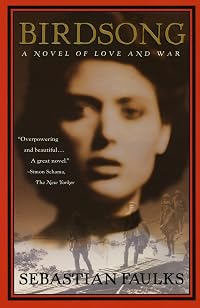
On This Page
Description
Rootless and heartbroken Stephen Wraysford joins the army at the outbreak of World War I. He and his men are given the assignment to tunnel under the German lines and set off bombs. The comaraderie, love, and loyalty of the soldiers contrasts with the horrors of the underground, air, and trench warfare.Tags
Recommendations









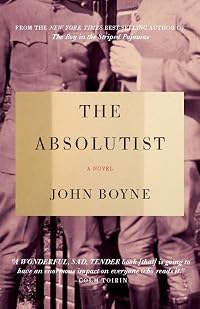
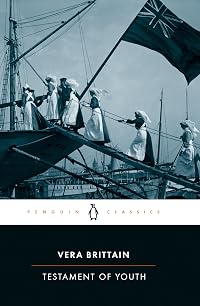
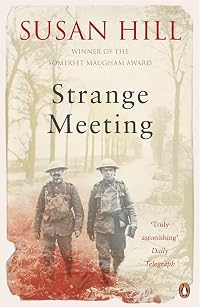

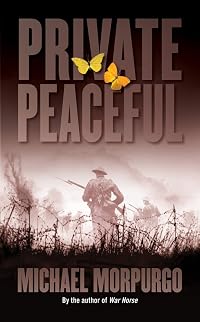






Member Recommendations
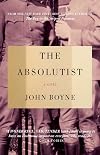


mabith The true story of the tunnelers working during WWI, a little dated in tone but an excellent read.
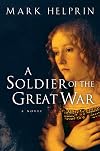


Polaris- For anyone interested in an expertly told history of the background, preparation, and execution of the Battle of the Somme, as well as the aftermath, this will certainly flesh out a lot of the detail behind the central battle featured in Faulks' novel.

Member Reviews
Beautifully written novel about life, love, friendship, and war. It begins with Englishman Stephen Wraysford’s life prior to the start of World War I. He is sent to work in Amiens, France, where he falls in love with the factory owner’s wife. It then moves forward to France in 1916. Stephen is a lieutenant in the British Army, which is engaged in trench warfare. The last part is based in the 1970s. Stephen’s granddaughter, Elizabeth, is attempting to track down what happened to her grandfather after discovering several journals he wrote during the war.
Faulks’s elegant writing is filled with vivid imagery. We follow Stephen to the battlefield, experiencing the sights, sounds, and horrors of war. There is a scene in which Stephen show more and another soldier are trapped in an underground tunnel. I experienced a sense of claustrophobia that was almost palpable. We also accompany Elizabeth as she visits a veteran in an asylum many years later, showing him the tenderness and compassion that he has missed in his isolated environment.
This book contains seven sections and three time periods. It explores a wide variety of themes, including love, heartbreak, loneliness, fear, and courage. It also takes a look at the psychological effects of war and the attempt to maintain some semblance of humanity under excruciating conditions. It is a difficult read in many places, but also feels authentic. The book examines the futility of war and the deep wounds it leaves on society. It also includes a hopeful note about remembrance and the circle of life. The characters seem so genuine that I missed them when I finished the book. I simply loved it and am adding it to my list of favorites. show less
Faulks’s elegant writing is filled with vivid imagery. We follow Stephen to the battlefield, experiencing the sights, sounds, and horrors of war. There is a scene in which Stephen show more and another soldier are trapped in an underground tunnel. I experienced a sense of claustrophobia that was almost palpable. We also accompany Elizabeth as she visits a veteran in an asylum many years later, showing him the tenderness and compassion that he has missed in his isolated environment.
This book contains seven sections and three time periods. It explores a wide variety of themes, including love, heartbreak, loneliness, fear, and courage. It also takes a look at the psychological effects of war and the attempt to maintain some semblance of humanity under excruciating conditions. It is a difficult read in many places, but also feels authentic. The book examines the futility of war and the deep wounds it leaves on society. It also includes a hopeful note about remembrance and the circle of life. The characters seem so genuine that I missed them when I finished the book. I simply loved it and am adding it to my list of favorites. show less
A senseless slaughter of innocent lives, young men, brothers, cousins, family connections living in the same towns and villages, lined up at the front of water logged trenches waiting for the whistle and their date with destiny.
It is 1910, four years before the start of World War 1 and Stephen Wraysford, an industrialist from the north of England, is on a visit to a family in Northern France, in the small town of Amiens where an exchange of business ideas is about to take place. An intorduction to Isabelle Azaire, the wife of Rene Azaire leads to a passionate affair which has repercussions and for reaching consequences long into the future.
We move forward to the assassination of Franz Ferdinand, the enevitable commencement of show more hostilities and a blood bath on a scale never before witnessed. Wraysford's command is that of a Lieutenant in charge of a small group of "tunnel rats". Their function is to infiltrate the German troops by tunnelling underneath their forward line, plant explosives, and in the resulting mayham, offer the allies an opportunity to advance. Given that the same tactic is employed by both sides there is little or nothing to be gained, apart from the inevitable sacrifice of human life.
Birdsong is one of the greatest books ever written and it has been a real joy for me to rediscover again 25+ years after it's debut. Not only is it a statement about the futility of war, war is inevitable it is endemic in the human spirit, but it equally it is a love story, the passion that can bind two people together nomatter the circumstances. Birdsong is a book of good and evil, of love and death, a momumental literary achievement of one of the saddest events in the history of mankind. show less
It is 1910, four years before the start of World War 1 and Stephen Wraysford, an industrialist from the north of England, is on a visit to a family in Northern France, in the small town of Amiens where an exchange of business ideas is about to take place. An intorduction to Isabelle Azaire, the wife of Rene Azaire leads to a passionate affair which has repercussions and for reaching consequences long into the future.
We move forward to the assassination of Franz Ferdinand, the enevitable commencement of show more hostilities and a blood bath on a scale never before witnessed. Wraysford's command is that of a Lieutenant in charge of a small group of "tunnel rats". Their function is to infiltrate the German troops by tunnelling underneath their forward line, plant explosives, and in the resulting mayham, offer the allies an opportunity to advance. Given that the same tactic is employed by both sides there is little or nothing to be gained, apart from the inevitable sacrifice of human life.
Birdsong is one of the greatest books ever written and it has been a real joy for me to rediscover again 25+ years after it's debut. Not only is it a statement about the futility of war, war is inevitable it is endemic in the human spirit, but it equally it is a love story, the passion that can bind two people together nomatter the circumstances. Birdsong is a book of good and evil, of love and death, a momumental literary achievement of one of the saddest events in the history of mankind. show less
Every book I read about World War I fills me with horror but this one is in a class by itself. And yet there is a redeeming quality about the story in that it describes beautifully the comradeship that developed between men under fire. I thought it was a brilliant evocation of the time.
Stephen Wraysford spent time in Amiens France before World War I started. He was there on behalf of his employer to learn all he could about the fabric trade. M. Azaire (a textile manufacturer in Amiens) hosted Wraysford allowing him full access to his business and his home. Mme Azaire was quite a bit younger than her husband being his second wife. As the weeks pass Stephen and Mme Azaire (Isabelle) develop a passion for each other and consummate it with show more wild scenes of lovemaking. They announce their love to Azaire one evening and immediately leave the house. They live together for some time with Stephen earning a living as a woodworker. When Isabelle discovers she is pregnant she decides not to tell Stephen and leaves him to return to her parents’ home. When the war breaks out Stephen joins an infantry unit which takes part in some of the bloodiest battles of the war. Amazingly Stephen survives although he is seriously wounded twice. Once the medical staff disposed of his body with dead men but he was found by someone who knew him. Jack Firebrace was one of the tunnellers who would dig under German lines to listen and to lay explosives. His unit was stationed next to Stephen’s and his commanding officer (Weir) was a good friend of Stephen’s. Almost all of the company who started out with Stephen are killed as time goes along so Firebrace and Weir are some of the few who Stephen knew from the beginning. They have strong ties to each other. This is rare for Stephen as he has no relatives (he was orphaned as a young child) and no friends to speak of since he had severed ties with England to be with Isabelle but when that fell apart he stayed in France getting jobs here and there. Almost all the other men get letters and parcels from home but Stephen never receives anything until a leave spent in Amiens. In a small bar he sees a woman who resembles Isabelle and who Stephen knows is Isabelle’s sister Jeanne. He stops her and learns that Isabelle had returned to Azaire before the war. When the Germans occupied Amiens they required hostages from the able-bodied men and Azaire went to Germany. Shelling damaged their house and then damaged the apartment Isabelle had moved to and injured Isabelle. Jeanne came to look after her. Stephen says he wants to see her and Jeanne agrees to ask Isabelle. The meeting occurs but Isabelle is now in love with a German soldier and plans to live with him as soon as it can be arranged. Isabelle does not tell him of the child. Stephen accepts that his passion for Isabelle is over. However Jeanne starts a correspondence with him and he is glad to have someone to write to and visit. As he continues to lose friends and companions he treasures having a connection with someone outside of the war.
The details Faulks gives of life in the trenches are extremely specific. Like how the lice infest all their clothing and how the trenches are constructed and the different brands of cigarettes the soldiers get. He must have read reams of recollections from soldiers who fought the war as a book published in 1993 could hardly have used much in the way of first-hand accounts. Any veterans still alive then seventy-five years after the war ended would have been ancient and they would be unlikely to talk about such specifics as how their clothing was fumigated or what was in their packages from home (one account that still boggles my mind is that some of them received hand knitted socks almost every week). Yet it is those specific details that make this work so impactful. Truly a masterpiece. show less
Stephen Wraysford spent time in Amiens France before World War I started. He was there on behalf of his employer to learn all he could about the fabric trade. M. Azaire (a textile manufacturer in Amiens) hosted Wraysford allowing him full access to his business and his home. Mme Azaire was quite a bit younger than her husband being his second wife. As the weeks pass Stephen and Mme Azaire (Isabelle) develop a passion for each other and consummate it with show more wild scenes of lovemaking. They announce their love to Azaire one evening and immediately leave the house. They live together for some time with Stephen earning a living as a woodworker. When Isabelle discovers she is pregnant she decides not to tell Stephen and leaves him to return to her parents’ home. When the war breaks out Stephen joins an infantry unit which takes part in some of the bloodiest battles of the war. Amazingly Stephen survives although he is seriously wounded twice. Once the medical staff disposed of his body with dead men but he was found by someone who knew him. Jack Firebrace was one of the tunnellers who would dig under German lines to listen and to lay explosives. His unit was stationed next to Stephen’s and his commanding officer (Weir) was a good friend of Stephen’s. Almost all of the company who started out with Stephen are killed as time goes along so Firebrace and Weir are some of the few who Stephen knew from the beginning. They have strong ties to each other. This is rare for Stephen as he has no relatives (he was orphaned as a young child) and no friends to speak of since he had severed ties with England to be with Isabelle but when that fell apart he stayed in France getting jobs here and there. Almost all the other men get letters and parcels from home but Stephen never receives anything until a leave spent in Amiens. In a small bar he sees a woman who resembles Isabelle and who Stephen knows is Isabelle’s sister Jeanne. He stops her and learns that Isabelle had returned to Azaire before the war. When the Germans occupied Amiens they required hostages from the able-bodied men and Azaire went to Germany. Shelling damaged their house and then damaged the apartment Isabelle had moved to and injured Isabelle. Jeanne came to look after her. Stephen says he wants to see her and Jeanne agrees to ask Isabelle. The meeting occurs but Isabelle is now in love with a German soldier and plans to live with him as soon as it can be arranged. Isabelle does not tell him of the child. Stephen accepts that his passion for Isabelle is over. However Jeanne starts a correspondence with him and he is glad to have someone to write to and visit. As he continues to lose friends and companions he treasures having a connection with someone outside of the war.
The details Faulks gives of life in the trenches are extremely specific. Like how the lice infest all their clothing and how the trenches are constructed and the different brands of cigarettes the soldiers get. He must have read reams of recollections from soldiers who fought the war as a book published in 1993 could hardly have used much in the way of first-hand accounts. Any veterans still alive then seventy-five years after the war ended would have been ancient and they would be unlikely to talk about such specifics as how their clothing was fumigated or what was in their packages from home (one account that still boggles my mind is that some of them received hand knitted socks almost every week). Yet it is those specific details that make this work so impactful. Truly a masterpiece. show less
Birdsong is brilliant, and harrowing, and for once I felt a book with a modern character looking for a connection to her past really did a decent job with that element (although I see many reviewers disagree, and find that part of the novel distracting and dissatisfying). The action takes place in three time periods...1910, 1916-1918, and 1978. Most of the time, the reader is in the trenches, and more significantly under the trenches, of WWI battlefields with Stephen Wraysford, one of the young men for whom Hemingway and Stein created the concept of une génération perdue. Faulks has filled in for me what I always found missing in Hemingway...the hideous reality that took away those young men's understanding of "normal life", and show more replaced it with a sense of bewilderment and disorientation that could not be shaken off by a return to the world they left behind in 1914.
Review written in June, 2014
Read in conjunction with the WWI centenary show less
Review written in June, 2014
Read in conjunction with the WWI centenary show less
It's a book that is full of the possibility of emotion, but it falls short. With cliched scenes, predictable plot, and long, sterile descriptions, the novel lingers on and on. The ending was foretold so long before it happened that I lost all interest; there is no suspense.
After p. 350 it finally picked up, and there are some very beautiful and poignant scenes, but at that point it was too late for me.
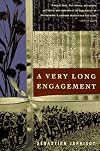
I recommend instead, [Un long dimanche de fiançailles] by Sébastien Japrisot.
After p. 350 it finally picked up, and there are some very beautiful and poignant scenes, but at that point it was too late for me.
I recommend instead, [Un long dimanche de fiançailles] by Sébastien Japrisot.
I have had this book on my radar for a while now, but after seeing some mediocre reviews I wasn't sure I would like it much. With the WWI theme and a group read in the "1001 books to read before you die" group, I decided it was time to try it. I'm so glad I did since I ended up loving it.
This is the story of Stephen Wraysford's war experience. The book begins in 1910 and shows a youthful Stephen in France falling in love with an older married woman, Isabelle. This is the most obvious "love" part of the novel. Next we skip to 1916 and see Stephan's brutal war experience. He is cold and detached, uncaring, perfect for a soldier. He also has luck and as all of his comrades are gruesomely dying around him, he somehow lives on. But for what? show more The next part of the novel takes place in England in 1978 and focuses on Elizabeth who is becoming interested in the history of her grandfather who was a soldier in WWI and who she knows almost nothing about.
The novel is subtitled "A Novel of Love and War" and I found it a significant addition to the title. What really struck me about this book was the idea of love. To me, the idea of love between Stephen and the other soldiers he fought alongside was the real love present in the book. It is an untraditional love - these men don't really know much about each other, they don't share much, sometimes they don't even remember names, but I think you could still say that they do love each other. As they die together and experience the same horrors, they are bound together. It isn't a way I've really thought of love before, but I think it counts. This idea all came together for me when Jack Firebrance says "I could have loved you" towards the end of his life. Then I thought of all the men Stephen had watched die and thought that this was such a deeper love than he ever felt for Isabelle, even though it didn't strike me as love when I was reading those parts.
I did not particularly love the 1970s portion of the book. I thought the main character, Elizabeth, was pretty annoying, and though there was a connection to the war story, I just didn't think it added all the much to the book. I do think, though, that it gave some relief to the horrors of the war sections.
Overall, I really loved this book and would recommend it to anyone looking for some WWI reading during this anniversary year. show less
This is the story of Stephen Wraysford's war experience. The book begins in 1910 and shows a youthful Stephen in France falling in love with an older married woman, Isabelle. This is the most obvious "love" part of the novel. Next we skip to 1916 and see Stephan's brutal war experience. He is cold and detached, uncaring, perfect for a soldier. He also has luck and as all of his comrades are gruesomely dying around him, he somehow lives on. But for what? show more The next part of the novel takes place in England in 1978 and focuses on Elizabeth who is becoming interested in the history of her grandfather who was a soldier in WWI and who she knows almost nothing about.
The novel is subtitled "A Novel of Love and War" and I found it a significant addition to the title. What really struck me about this book was the idea of love. To me, the idea of love between Stephen and the other soldiers he fought alongside was the real love present in the book. It is an untraditional love - these men don't really know much about each other, they don't share much, sometimes they don't even remember names, but I think you could still say that they do love each other. As they die together and experience the same horrors, they are bound together. It isn't a way I've really thought of love before, but I think it counts. This idea all came together for me when Jack Firebrance says "I could have loved you" towards the end of his life. Then I thought of all the men Stephen had watched die and thought that this was such a deeper love than he ever felt for Isabelle, even though it didn't strike me as love when I was reading those parts.
I did not particularly love the 1970s portion of the book. I thought the main character, Elizabeth, was pretty annoying, and though there was a connection to the war story, I just didn't think it added all the much to the book. I do think, though, that it gave some relief to the horrors of the war sections.
Overall, I really loved this book and would recommend it to anyone looking for some WWI reading during this anniversary year. show less
SPOILERS AHEAD
Part One: France 1910
Stephen Wraysford, a young English man, travels to France for business. He stays with Azaire and his family while he complete his work. He soon finds himself falling for Azaire's young second wife Isabelle. She is a few years older than Stephen and the two soon embark on an affair.
We learn that Azaire is cruel to his wife and Stephen had a horrible childhood and was left with no guardian or caretaker for much of his youth. Also, he's got a serious fear of birds, which judging by the title I think might be a bit of foreshadowing.
So Isabelle and Stephen decide to run away together. Leaving her husband and step-children, the two lovers begin a life together in France. Stephen works during the day and show more even though they love each other, they grow a bit distant as they adjust to their new circumstances.
Isabelle, struggling with her guilt over their affair and he fear that she will have a miscarriage, leaves Stephen to go live with her sister Jeanne. That's where we leave the tragic couple.
Part Two: France 1916
Six year later and we are in the midst of World War I now. My first thoughts, where is Stephen, where's Isabelle? Did she have the baby? But I think we'll have to wait awhile for those answers.
We meet Jack Firebrace, a tunneler working for the English. We do soon meet Stephen again, but he's a cold officer in the army. We see Stephen get injured and then dumped with the corpses. Oh my gosh that was a chilling scene! Stephen is terrified of abandonment and so these moments, when he thinks he is about to die, bring that fear into a sharp focus.
“He would die without ever having been loved, not once, not by anyone who had known him. He would die alone and unmourned. He could not forgive them – his mother or Isabelle or the man who had promised to be a father.”
He slowly recovers and we get a horrifying glimpse of other injured soldiers in the hospital. He and his friend Michael Weir are reunited behind the lines when Stephen reuses to take the leave offered to him. We also learn more about Firebrace and tragically about the death of his young son. I was surprised by how heartbroken I was for him. He is surrounded by death and yet it’s miles away, safe in England, where tragedy strikes his family.
The scenes on the battlefield were simply terrifying. I haven’t read another book that showed World War I in such a vivid and frightening way. I’d never thought before of how scary it must have been for the soldiers to come up against tanks and machine guns. These were often quiet farmers and machine warfare was a completely new concept.
“He watched the men harden to the mechanical slaughter. There seemed to him a great breach of nature which no one had the power to stop.”
Part Three: England 1978
We travel forward to the ‘70s where we meet Stephen’s granddaughter, Elizabeth Benson, a successful business woman embroiled in an affair with a married man. She begins to research her grandfather’s time in World War I after finding some of his journals.
Part Four: France 1917:
Back in France we see Stephen return to the small town where he met Isabelle. While there he stumbles across her sister Jeanne and then eventually meets up with Isabelle. She is both physically and emotionally changed; scarred by the war and in love with another man. Stephen soon finds himself corresponding with Jeanne after saying his goodbyes with Isabelle.
Back at the front Weir is once again terrified of what the future will bring. In one scene he tries to say a preemptive goodbye to Stephen in case anything should happen to them and Stephen rebuffs him. Stephen is so cold and dismissive, but he obviously acts that way because he can’t stand the thought of losing someone else he loves. Weir is killed before Stephen can apologize.
Part Five: England 1978-79:
We’re back with Elizabeth as she learns about WW I. A few blind dates, attempts to break Stephen’s journaling code and then an unexpected pregnancy leave her life in turmoil.
Part Six: France 1918
Our finally section with Stephen is so painful to read I could hardly stand it. He and Jack Firebrace find themselves trapped underground after a regular inspection of the tunnels goes awry. The two men take solace in each other, talking about their lives and their loves as they try to dig their way out. Then Jack dies and once again my heart broke. Stephen is found by German soldiers who are grieving the loss of their own men and in that moment it doesn’t matter what color their uniforms are, they are brothers in grief.
Part Seven: England 1979
Elisabeth, pregnant with her child, learns the truth behind her mother’s parentage. She is the daughter of Stephen and Isabelle, but was raised by Stephen and Jeanne. When Elizabeth has her baby, naming him John after her Jack Firebrace’s son who died too young, she brings the story full circle, new life balancing death.
My Thoughts:
The final few chapters are so intense. The whole book feels like it lopes along at a steady pace, then in those final 100 pages there is just such an overwhelming feeling of both joy and sorrow. There’s a constant give and take: Stephen lives, but Jack dies, Elizabeth has a baby, but Jack looses his son. The balance of the destruction and devastation of war is pitted against the enduring nature of love, especially that between a parent and a child. I've never read something that pairs the two so beautifully.
It's not a light read, but it is enthralling. About 3/4 of the way in I wasn't sure how I felt about the book, I really wasn’t loving it, but that final section just moved me. I felt the loss of Weir and Firebrace deeply and my heart went out to Stephen who will always struggle with the guilt of surviving.
In my opinion this book will probably elicit a strong response from anyone who reads it. I think many people would hate it. It’s too slow-going in the beginning, it drastically changes format, from a love story to a war story, there are some unnecessary characters (like that guy Elizabeth was sort of dating in Part Five), there are descriptions of sex that are distasteful at best, etc. And while all of those things affected my reading experience, the thing that I walked away with in the end was an incredibly powerful picture of trench life in WWI and the lifelong impact of friendships born during wartime. The desperation and fear of the men being overwhelmed by their bravery in the crucial moment, the neglect of later generations to learn about and appreciate all that was done for them by soldiers who fought for their country; that is what I will remember.
BOTTOM LINE: It is a flawed novel, but one that left me reeling with its realistic portrayal of war. It is one of very few war novels that I can say impacted me deeply on an emotional level. Don’t expect perfection, but try it if it sounds interesting to you.
“A sense of interest was beginning to penetrate the blankness of his grief; it was like the first, painful sensations of blood returning to a numbed limb.” show less
Part One: France 1910
Stephen Wraysford, a young English man, travels to France for business. He stays with Azaire and his family while he complete his work. He soon finds himself falling for Azaire's young second wife Isabelle. She is a few years older than Stephen and the two soon embark on an affair.
We learn that Azaire is cruel to his wife and Stephen had a horrible childhood and was left with no guardian or caretaker for much of his youth. Also, he's got a serious fear of birds, which judging by the title I think might be a bit of foreshadowing.
So Isabelle and Stephen decide to run away together. Leaving her husband and step-children, the two lovers begin a life together in France. Stephen works during the day and show more even though they love each other, they grow a bit distant as they adjust to their new circumstances.
Isabelle, struggling with her guilt over their affair and he fear that she will have a miscarriage, leaves Stephen to go live with her sister Jeanne. That's where we leave the tragic couple.
Part Two: France 1916
Six year later and we are in the midst of World War I now. My first thoughts, where is Stephen, where's Isabelle? Did she have the baby? But I think we'll have to wait awhile for those answers.
We meet Jack Firebrace, a tunneler working for the English. We do soon meet Stephen again, but he's a cold officer in the army. We see Stephen get injured and then dumped with the corpses. Oh my gosh that was a chilling scene! Stephen is terrified of abandonment and so these moments, when he thinks he is about to die, bring that fear into a sharp focus.
“He would die without ever having been loved, not once, not by anyone who had known him. He would die alone and unmourned. He could not forgive them – his mother or Isabelle or the man who had promised to be a father.”
He slowly recovers and we get a horrifying glimpse of other injured soldiers in the hospital. He and his friend Michael Weir are reunited behind the lines when Stephen reuses to take the leave offered to him. We also learn more about Firebrace and tragically about the death of his young son. I was surprised by how heartbroken I was for him. He is surrounded by death and yet it’s miles away, safe in England, where tragedy strikes his family.
The scenes on the battlefield were simply terrifying. I haven’t read another book that showed World War I in such a vivid and frightening way. I’d never thought before of how scary it must have been for the soldiers to come up against tanks and machine guns. These were often quiet farmers and machine warfare was a completely new concept.
“He watched the men harden to the mechanical slaughter. There seemed to him a great breach of nature which no one had the power to stop.”
Part Three: England 1978
We travel forward to the ‘70s where we meet Stephen’s granddaughter, Elizabeth Benson, a successful business woman embroiled in an affair with a married man. She begins to research her grandfather’s time in World War I after finding some of his journals.
Part Four: France 1917:
Back in France we see Stephen return to the small town where he met Isabelle. While there he stumbles across her sister Jeanne and then eventually meets up with Isabelle. She is both physically and emotionally changed; scarred by the war and in love with another man. Stephen soon finds himself corresponding with Jeanne after saying his goodbyes with Isabelle.
Back at the front Weir is once again terrified of what the future will bring. In one scene he tries to say a preemptive goodbye to Stephen in case anything should happen to them and Stephen rebuffs him. Stephen is so cold and dismissive, but he obviously acts that way because he can’t stand the thought of losing someone else he loves. Weir is killed before Stephen can apologize.
Part Five: England 1978-79:
We’re back with Elizabeth as she learns about WW I. A few blind dates, attempts to break Stephen’s journaling code and then an unexpected pregnancy leave her life in turmoil.
Part Six: France 1918
Our finally section with Stephen is so painful to read I could hardly stand it. He and Jack Firebrace find themselves trapped underground after a regular inspection of the tunnels goes awry. The two men take solace in each other, talking about their lives and their loves as they try to dig their way out. Then Jack dies and once again my heart broke. Stephen is found by German soldiers who are grieving the loss of their own men and in that moment it doesn’t matter what color their uniforms are, they are brothers in grief.
Part Seven: England 1979
Elisabeth, pregnant with her child, learns the truth behind her mother’s parentage. She is the daughter of Stephen and Isabelle, but was raised by Stephen and Jeanne. When Elizabeth has her baby, naming him John after her Jack Firebrace’s son who died too young, she brings the story full circle, new life balancing death.
My Thoughts:
The final few chapters are so intense. The whole book feels like it lopes along at a steady pace, then in those final 100 pages there is just such an overwhelming feeling of both joy and sorrow. There’s a constant give and take: Stephen lives, but Jack dies, Elizabeth has a baby, but Jack looses his son. The balance of the destruction and devastation of war is pitted against the enduring nature of love, especially that between a parent and a child. I've never read something that pairs the two so beautifully.
It's not a light read, but it is enthralling. About 3/4 of the way in I wasn't sure how I felt about the book, I really wasn’t loving it, but that final section just moved me. I felt the loss of Weir and Firebrace deeply and my heart went out to Stephen who will always struggle with the guilt of surviving.
In my opinion this book will probably elicit a strong response from anyone who reads it. I think many people would hate it. It’s too slow-going in the beginning, it drastically changes format, from a love story to a war story, there are some unnecessary characters (like that guy Elizabeth was sort of dating in Part Five), there are descriptions of sex that are distasteful at best, etc. And while all of those things affected my reading experience, the thing that I walked away with in the end was an incredibly powerful picture of trench life in WWI and the lifelong impact of friendships born during wartime. The desperation and fear of the men being overwhelmed by their bravery in the crucial moment, the neglect of later generations to learn about and appreciate all that was done for them by soldiers who fought for their country; that is what I will remember.
BOTTOM LINE: It is a flawed novel, but one that left me reeling with its realistic portrayal of war. It is one of very few war novels that I can say impacted me deeply on an emotional level. Don’t expect perfection, but try it if it sounds interesting to you.
“A sense of interest was beginning to penetrate the blankness of his grief; it was like the first, painful sensations of blood returning to a numbed limb.” show less
Members
- Recently Added By
Lists

1001 Books You Must Read Before You Die
1,448 works; 1,133 members

The Guardian's 1000 Novels Everyone Must Read
1,005 works; 548 members
501 Must-Read Books
529 works; 72 members
BBC Big Read
191 works; 46 members

Historical Fiction
889 works; 91 members

Unread books
1,063 works; 85 members
Folio Society
831 works; 53 members
20th Century Literature
1,161 works; 55 members

Books That Made Me Cry
199 works; 105 members

World War I Fiction
94 works; 15 members
Stories of War and Revolution
143 works; 54 members

BBC Radio 4 Bookclub
341 works; 13 members

BBC Big Read
100 works; 10 members

One Book, Many Authors
441 works; 40 members

1990s
309 works; 17 members

Top 100 to Read before you Die
109 works; 7 members
TML 200 Best Books 1950-1999
202 works; 10 members

Books Read in 2014
2,343 works; 86 members

Blue Pyramid 1,276 Best Books of All Time
1,248 works; 32 members

Best books made into television
66 works; 4 members

1,001 BYMRBYD Concensus
723 works; 27 members

A Novel Cure
742 works; 23 members
My list of 100 books to read next
100 works; 4 members

World War I books
32 works; 8 members

Top Five Books of 2012
55 works; 11 members

Maybe This Year? Books to Look Forward To
412 works; 9 members
World War I - fiction & non-fiction
19 works; 4 members

Books I've read
87 works; 2 members

Books Read in 2022
5,218 works; 112 members

Historical Fiction Lovers
88 works; 4 members

My TBR
371 works; 3 members

Best War Fiction Books
41 works; 4 members

Swinging Seventies
255 works; 18 members

Allie's Wishlist
217 works; 2 members
THE WAR ROOM
813 works; 24 members
BBC World Book Club
265 works; 5 members
'Books You Can't Live Without: The Top 100', The Guardian, 2007
156 works; 7 members

Books Read in 2025
4,092 works; 98 members
KayStJ's to-read list
1,616 works; 11 members

The Modern Library (The Two Hundred Best Novels....
202 works; 1 member

World Book Club (BBC World Service)
212 works; 1 member
Talk Discussions
Past Discussions
Group Read, February 2014: Birdsong in 1001 Books to read before you die (April 2014)
Author Information

37+ Works 21,466 Members
Sebastian Faulks is the author of Where My Heart Used to Beat, which made the New Zealand Best Seller List 2015. (Bowker Author Biography)
Some Editions
Awards and Honors
Awards
Distinctions
Notable Lists
BBC's Big Read (13)
Whitcoulls Top 100 Books (29 – 2008)
Whitcoulls Top 100 Books (68 – 2010)
Torchlight List (#114)
Series

Belongs to Publisher Series
Goldmann (44378)
Work Relationships
Is contained in
Contains
Has the adaptation
Has as a student's study guide
Common Knowledge
- Canonical title
- Birdsong
- Original title
- Birdsong
- Alternate titles
- La canción del cielo; Gesang vom großen Feuer; O Canto do Passaro (Brazilian Portuguese) (Brazilian Portuguese)
- Original publication date
- 1993; 1998 (Brazilian Portuguese) (Brazilian Portuguese)
- People/Characters
- Stephen Wraysford; Isabelle Azaire; Jack Firebrace; Michael Weir; Jeanne Fourmentier; Elizabeth Benson
- Important places
- Amiens, Somme, Hauts-de-France, France; Arras, Pas-de-Calais, Hauts-de-France, France; Western Front in World War I
- Important events
- Battle of the Somme
- Related movies
- Birdsong (2012 | IMDb)
- Epigraph
- 'When I go from hence, let this be my parting word, that what I have seen is unsurpassable.' Rabindranath Tagore, Gitanjali
- Dedication
- For Edward
- First words
- The boulevard du cange was a broad, quiet street that marked the eastern flank of the city of Amiens.
- Quotations
- Madame Azaire had not fully engaged Stephen's eye
I am driven by a greater force than I can resist. I believe that force has its own reason and its own morality even if they may never be clear to me while I am alive
A few yards further on they disinterred Wilkinson. His dark profile looked promisingly composed as Stephen approached. ...but as they lifted him, they turned his body and Stephen saw that his head was cut away in section , so... (show all) that the smooth skin and the handsome face remained on one side , but on the other were the ragged edges of a skull from which the remains of his brain were dropping onto his scorched uniform.
It was like a resurrection in a cemetery twelve miles long. Bent agonised shapes loomed in multitudes on the churned earth, limping and dragging back to reclaim their life.
He seemed a man removed to some new existence where he was dug in and fortified by his lack of natural feeling or response
The chilly, hostile building offered little comfort; it was a memento mori on an institutional scale. Its limited success was in giving dignity through stone and lapidary inscription to the trite occurrence of death. The pret... (show all)ence was made through memorial that the blink of light between two eternities of darkness could be saved and held out of time, though in the bowed heads of the people who prayed there was only submission. (Stephen Wraysford visiting the cathedral in Amiens, p. 59)
Names came pattering into the dusk, bodying out the places of their forebears, the villages and towns where the telegram would be delivered, the houses where the blinds would be drawn, where low moans would come in the aftern... (show all)oon behind closed doors; and the places that had borne them, which would be like nunneries, like dead towns without their life or purpose, without the sound of fathers and their children, without young men at the factories or in the field, with no husbands for the women, no deep sound of voices in the inns, with the children who would have been born, who would have grown and worked or painted, even governed, left ungenerated in their fathers' shattered flesh that lay in stinking shellholes in the beet-crop soil, leaving their homes to put up only granite slabs in place of living flesh, on whose inhuman surface the moss and lichen would cast their crawling green indifference. (Aftermath of the battle on 1st July 1916 near Auchonvillers/Beaumont Hamel, p. 190) - Last words
- (Click to show. Warning: May contain spoilers.)In the tree above him they disturbed a roosting crow, which erupted from the branches with an explosive bang of its wings, then rose up above him towards the sky, its harsh, ambiguous call coming back in long, grating waves towards the earth, to be heard by those still living.
- Blurbers
- Watts, Nigel; Cunningham, Valentine; Crew, Quentin; Gee, Sue; James, Andrew; Schama, Simon
- Original language
- English
Classifications
Statistics
- Members
- 6,534
- Popularity
- 1,863
- Reviews
- 165
- Rating
- (3.97)
- Languages
- 12 — Danish, Dutch, English, Estonian, Finnish, French, German, Italian, Norwegian (Bokmål), Portuguese, Spanish, Swedish
- Media
- Paper, Audiobook, Ebook
- ISBNs
- 75
- ASINs
- 36