
Primo Levi (1919–1987)
Author of If This Is a Man
About the Author
Primo Levi was born on July 31, 1919 in Turin, Italy. He pursued a career in chemistry, and spent the early years World War II as a research chemist in Milan. Upon the German invasion of northern Italy, Levi, an Italian Jew, joined an anti-fascist group and was captured and sent to the Auschwitz show more concentration camp in Poland. He was able to survive the camp, due in part to his value to the Nazis as a chemist. After the war ended, Levi did chemistry work in a Turin paint factory while beginning his writing career. His first book, If This Is a Man (title later was changed to Survival in Auschwitz) was published in 1947 and its sequel, The Truce (later retitled The Reawakening) came out in 1958. These two books recount Levi's story of surviving concentration camp life. Levi also published poetry, short stories, and novels, some under the pen name Damianos Malabaila. His 1985, largely autobiographical work, The Periodic Table, cemented his world fame. Awards in tribute to his writing included the Kenneth B. Smilen fiction award, presented by the Jewish Museum in New York. Ironically, despite his surviving Auschwitz, Primo Levi appears to have died by suicide, in Turin on April 11, 1987. (Bowker Author Biography) show less
Series
Works by Primo Levi
Survival In Auschwitz (Bioarchaeological Interpretations of the Human Past: Local, Regional, and Global) 217 copies, 2 reviews
The Auschwitz Trilogy: If This Is a Man / The Truce (a/k/a The Rewakening) / The Drowned and the Saved (1999) 194 copies, 2 reviews
The Complete Works of Primo Levi - I 5 copies
Opere III 5 copies
De vrijheid verteld : verhalen voor Amnesty International van Adriaan van Dis, Norman Manea, Duoduo, Julio Cortázar, Et (1996) 4 copies
Mijnheer Simpson 4 copies
Autoritratto di Primo Levi 2 copies
Il processo 2 copies
UNKNOWN 2 copies
Uncollected Stories and Essays 2 copies
Pograzeni i ocaleni 1 copy
Flaw of Form 1 copy
Monkey's Wrench 1 copy
The Destiny Thief 1 copy
Le tableau périodique 1 copy
Zar je to čovek 1 copy
De zesde dag Verhalen 1 copy
The Mark of the Chemist 1 copy
Future Anterior 1 copy
Opere II. Romanzi e poesie 1 copy
Entre Sombras - eBook 1 copy
XINTOÍSMO - eBook 1 copy
Present Indicative 1 copy
Essays 1 copy
L'altrui mestiere 1 copy
Trilogía de Auschwitz 1 copy
Tutti i racconti. Volume 2 1 copy
Tåbrud 1 copy
From Lab to Writing Desk 1 copy
Tutti i racconti. Volume 1 1 copy
Luigi Orlando E I Suoi Fratelli per la Patria e per l'Industria Italiana (Classic Reprint) (2017) 1 copy
Primo Levi as witness : proceedings of a symposium held at Princeton University, April 30-May 2, 1989 (1990) 1 copy
STAMPA SERA TERZA ETA' 1 copy
Associated Works
Death Dealer: The Memoirs of the SS Kommandant at Auschwitz (0204) — Introduction, some editions — 750 copies, 19 reviews
Against Forgetting: Twentieth-Century Poetry of Witness (1993) — Contributor — 377 copies, 2 reviews
The Night of the Girondists (1957) — Afterword, some editions; Translator, some editions — 238 copies, 2 reviews
Here I Am: Contemporary Jewish Stories from Around the World (1998) — Contributor — 57 copies, 1 review
After the Holocaust: The Book of Job, Primo Levi, and the Path to Affliction (2009) — Associated Name — 13 copies
Holocaust Memoir Digest, Vol. 3: A Digest Of Published Survivor Memoirs With Study Guide And Maps (2006) — Contributor — 3 copies
Tagged
Common Knowledge
- Canonical name
- Levi, Primo
- Legal name
- Levi, Primo Michele
- Other names
- Λέβι, Πρίμο
MALABAILA, Damiano
Levi, Primo - Birthdate
- 1919-07-31
- Date of death
- 1987-04-11
- Gender
- male
- Education
- University of Turin (PhD|Chemistry|1941)
- Occupations
- chemist
resistance fighter
writer
paint factory Technical Director - Organizations
- Giustizia e Libertà
- Awards and honors
- Premio Bagutta (1967)
Premio Strega (1979)
Premio Viareggio (1982) - Relationships
- Dallaporta, Nicolò (student)
- Cause of death
- a fall
- Nationality
- Italy
- Birthplace
- Turin, Piedmont, Italy
- Places of residence
- Turin, Italy
Milan, Italy
Saint-Vincent, Aosta Valley, Italian Social Republic
Amay, Italian Social Republic
Fossoli, Carpi, Emilia-Romagna, Italian Social Republic
Monowitz, Auschwitz, Poland - Place of death
- Turin, Piedmont, Italy
- Burial location
- Cimitero Monumentale di Torino, Turin, Piedmont, Italy
- Map Location
- Italy
Members
Discussions
A run on If This is a Man - Primo Levi? in Folio Society Devotees (October 2025)
Reviews
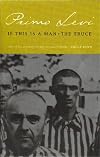
In commemoration of the 75th anniversary of the liberation of Auschwitz, I have read what is probably the most famous memoir from a survivor. If This is a Man is, however, rather different from other such memoirs I have read, as its theme is not so much the detail of his lived experiences, or particular atrocities (though these are of course covered), but what Auschwitz and the Holocaust represented - in the author's words, "the demolition of man": "Imagine now a man who is deprived of show more everyone he loves, and at the same time of his house, his habits, his clothes, in short, of everything he possesses: he will be a hollow man, reduced to suffering and needs, forgetful of dignity and restraint, for he who loses all often easily loses himself."; and "if I could enclose all the evil of our time in one image, I would choose this image which is familiar to me: an emaciated man, with head dropped and shoulders curved, on whose face and in whose eyes not a trace of a thought is to be seen." Notwithstanding these bleak quotes, I did not find this memoir bleak, as throughout his year at Auschwitz, Levi survives by never losing an ultimate belief in human dignity and hope, though, paradoxically, "our wisdom lay in ‘not trying to understand’, not imagining the future, not tormenting ourselves as to how and when it would all be over; not asking others or ourselves any questions." The book ends with the Nazi abandonment of Auschwitz and the notorious death march (which Levi avoided only by virtue of being ill with scarlet fever at the time) culminating, after a ten day period of further struggling with the forces of cold, hunger and disease, with the Red Army liberating the camp on 27 January 1945.
My edition was paired with its sequel the somewhat longer The Truce, which details the author's lengthy enforced peregrinations across eastern and central Europe to eventually get home well into the autumn of 1945. This is less immediately memorable as a read, but does contain descriptions of the many colourful characters of different nationalities with whom he makes his itinerant life. Finally, the book ends with the author providing lengthy answers to some of the most common questions he was asked in the post-war period by audiences to whom he spoke about his books and his experiences, to ensure the events of the Holocaust remained alive in the minds of succeeding generations as: "Strong though the words of If This is a Man are, they are still weak before the will to deny or forget." show less
My edition was paired with its sequel the somewhat longer The Truce, which details the author's lengthy enforced peregrinations across eastern and central Europe to eventually get home well into the autumn of 1945. This is less immediately memorable as a read, but does contain descriptions of the many colourful characters of different nationalities with whom he makes his itinerant life. Finally, the book ends with the author providing lengthy answers to some of the most common questions he was asked in the post-war period by audiences to whom he spoke about his books and his experiences, to ensure the events of the Holocaust remained alive in the minds of succeeding generations as: "Strong though the words of If This is a Man are, they are still weak before the will to deny or forget." show less
International Holocaust Remembrance Day coincides every year with the date of Primo Levi’s liberation from Auschwitz. To mark the 79th anniversary of his liberation, I read If This Is a Man, his memoir of his experiences in Auschwitz. Levi, a chemist by trade, describes the labor camp where he worked as a “gigantic biological and social experiment.” In precise, almost clinical, yet unflinchingly moral language, he shares with us what he learned from his time there about the limits of show more humanity—moral, psychic, and physical. His memoir offers a glimpse not into what a human being is, but what one can be turned into. What remain indelible for me in this story are how people clung to their humanness, and how others deprived them of it, or tried to. show less
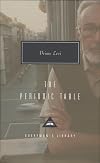
Thomas Mann began his tetralogy, Joseph and His Brothers, with this sentence: "Very deep is the well of the past." Primo Levi's memoir, The Periodic Table, demonstrates this metaphor in a much smaller, compact space. The lives of Levi and his Piedmont ancestors are explored through stories that illuminate the nature of the past and the source of those people's and our own humanity. This is done through vignettes that demonstrate Levi's love of chemistry and literature, his relations and show more relationships, while exploring his own attitude and thoughts.
Some of his thoughts are about reading and its meaning for his life. This is a topic that I especially love to explore and learn about; I will take it up in this introductory commentary on his memoir. His reading is based on his love for great literature particularly his appreciation for the writings of Thomas Mann, whom he holds in the highest esteem.
Early in the narrative during his sojourn as a chemistry student he meets Rita, a fellow student, and is attracted to her although, due to his shyness, he does not know how to approach her. He reaches a point where "I thought myself condemned to a perpetual masculine solitude, denied a woman's smile forever". Yet one day he found beside her, peeking out of her bag, a book. It was The Magic Mountain. He relates, "it was my sustenance during those months, the timeless story of Hans Castorp in enchanted exile on the magic mountain. I asked Rita about it, on tenterhooks to hear her opinion, as if I had written the book: and soon enough I had to realize that she was reading the novel in an entirely different way. As a novel, in fact: she was very interested in finding out exactly how far Hans would go with Madame Chauchat, and mercilessly skipped the fascinating (for me) political, theological, and metaphysical discussions between the humanist Settembrini and the Jewish Jesuit Naphtha." (p 38)
We all may have had a similar experience more than once: finding someone (whether drawn to them by Eros or not) reading a book we love, but not reading the same book.
Levi's love for Mann's writing also provided him solace while working on a demanding project during the war. He was sequestered in a laboratory next to a nickel mine and forced to work long hours. He dared not venture far from the mine, so "Sometimes I stayed in the lab past quitting time or went back there after dinner to study, or to meditate on the problem of nickel. At other times I shut myself in to read Mann's Joseph stories in my monastic cell in the submarine. On nights when the moon was up I often took long solitary walks through the wild countryside around the mine". (p 79)
One can picture Levi pondering while walking by the light of the Tuscan moon finding comfort as did Jacob in Mann's novel when he walked in the moonlight. It is the moonlight with its "magically ambiguous precision" that mirrored for Jacob the way the traditions of the children and grandchildren of Abraham are "spun out over generations and solidified as a chronicle only much later--". ("The Tales of Jacob")
Each chapter of the memoir is named for a chemical element, explores Levi’s work in the laboratory, and relates that work to his personal, social, and political experience. It is a cliché to speak of human chemistry when discussing human nature. The virtue of Levi’s book is that he refreshes the cliché and shows the profound connections between chemical elements and the elements of human behavior. The chapters can be read as a discrete piece of work, concentrating on some episode or period in Levi’s life. Nevertheless, the chapters are also unified by the author’s growth in perception. As he learns more about specific chemical elements and about the procedures required to study those elements, so he also discovers life in more depth, encountering unusual characters who teach him about the meaning of their lives and about existence as a whole. The form of The Periodic Table can be roughly cnaracterized as a chronology; however there are chapters which are difficult to date and some that are fictions in part or in whole. While his experience in Auschwitz is almost entirely avoided (he had written a separate book about this, If This is a Man), he does include a brief episode in the chapter "Cerium" that highlights his friendship with a young man named Alberto whi bouyed his spirits.
By titling his memoir The Periodic Table, Levi suggests that there is a structure to his writing about experience that is analogous to the way elements are analyzed in chemistry. Like the various substances the chemist tests in his laboratory, the author’s experiences have different degrees of purity, different weights, and different reactions, depending on what he uses to stimulate them. Human character in the memoir, in other words, has certain properties from the beginning, but it can be transformed in a number of ways given the changing nature of environments.
Throughout his memoir Primo Levi shares other literature and experiences as he narrates the lives of his friends, family, and ancestors. Just as he is inspired by reading Thomas Mann and the moonlight that inspired Jacob so many centuries ago he is imbued with the life of the people around him. Yes, The Periodic Table is deep, and one wonders at the lives narrated by this brilliant Jewish Italian chemist and humanist.
There are lessons to be learned in the humanity of people, but also in their frailties and foibles. Ultimately this is one of the most humane works of literature that this reader has encountered. With a unique style and appreciation for the importance of both science and literature for humanity The Periodic Table stands as a twentieth-century classic that I would recommend to all readers. show less
Some of his thoughts are about reading and its meaning for his life. This is a topic that I especially love to explore and learn about; I will take it up in this introductory commentary on his memoir. His reading is based on his love for great literature particularly his appreciation for the writings of Thomas Mann, whom he holds in the highest esteem.
Early in the narrative during his sojourn as a chemistry student he meets Rita, a fellow student, and is attracted to her although, due to his shyness, he does not know how to approach her. He reaches a point where "I thought myself condemned to a perpetual masculine solitude, denied a woman's smile forever". Yet one day he found beside her, peeking out of her bag, a book. It was The Magic Mountain. He relates, "it was my sustenance during those months, the timeless story of Hans Castorp in enchanted exile on the magic mountain. I asked Rita about it, on tenterhooks to hear her opinion, as if I had written the book: and soon enough I had to realize that she was reading the novel in an entirely different way. As a novel, in fact: she was very interested in finding out exactly how far Hans would go with Madame Chauchat, and mercilessly skipped the fascinating (for me) political, theological, and metaphysical discussions between the humanist Settembrini and the Jewish Jesuit Naphtha." (p 38)
We all may have had a similar experience more than once: finding someone (whether drawn to them by Eros or not) reading a book we love, but not reading the same book.
Levi's love for Mann's writing also provided him solace while working on a demanding project during the war. He was sequestered in a laboratory next to a nickel mine and forced to work long hours. He dared not venture far from the mine, so "Sometimes I stayed in the lab past quitting time or went back there after dinner to study, or to meditate on the problem of nickel. At other times I shut myself in to read Mann's Joseph stories in my monastic cell in the submarine. On nights when the moon was up I often took long solitary walks through the wild countryside around the mine". (p 79)
One can picture Levi pondering while walking by the light of the Tuscan moon finding comfort as did Jacob in Mann's novel when he walked in the moonlight. It is the moonlight with its "magically ambiguous precision" that mirrored for Jacob the way the traditions of the children and grandchildren of Abraham are "spun out over generations and solidified as a chronicle only much later--". ("The Tales of Jacob")
Each chapter of the memoir is named for a chemical element, explores Levi’s work in the laboratory, and relates that work to his personal, social, and political experience. It is a cliché to speak of human chemistry when discussing human nature. The virtue of Levi’s book is that he refreshes the cliché and shows the profound connections between chemical elements and the elements of human behavior. The chapters can be read as a discrete piece of work, concentrating on some episode or period in Levi’s life. Nevertheless, the chapters are also unified by the author’s growth in perception. As he learns more about specific chemical elements and about the procedures required to study those elements, so he also discovers life in more depth, encountering unusual characters who teach him about the meaning of their lives and about existence as a whole. The form of The Periodic Table can be roughly cnaracterized as a chronology; however there are chapters which are difficult to date and some that are fictions in part or in whole. While his experience in Auschwitz is almost entirely avoided (he had written a separate book about this, If This is a Man), he does include a brief episode in the chapter "Cerium" that highlights his friendship with a young man named Alberto whi bouyed his spirits.
By titling his memoir The Periodic Table, Levi suggests that there is a structure to his writing about experience that is analogous to the way elements are analyzed in chemistry. Like the various substances the chemist tests in his laboratory, the author’s experiences have different degrees of purity, different weights, and different reactions, depending on what he uses to stimulate them. Human character in the memoir, in other words, has certain properties from the beginning, but it can be transformed in a number of ways given the changing nature of environments.
Throughout his memoir Primo Levi shares other literature and experiences as he narrates the lives of his friends, family, and ancestors. Just as he is inspired by reading Thomas Mann and the moonlight that inspired Jacob so many centuries ago he is imbued with the life of the people around him. Yes, The Periodic Table is deep, and one wonders at the lives narrated by this brilliant Jewish Italian chemist and humanist.
There are lessons to be learned in the humanity of people, but also in their frailties and foibles. Ultimately this is one of the most humane works of literature that this reader has encountered. With a unique style and appreciation for the importance of both science and literature for humanity The Periodic Table stands as a twentieth-century classic that I would recommend to all readers. show less

As a concept The Periodic Table may come across as lofty or even obtuse. Upon reading there is a depth that overwhelms these trite notions of judgement. Levi's wit, candor, existential musings, and heartache are all rendered in a constellation of essays that define strict genre categorization. Levi writes that all writing is autobiography, and he's mapped out himself in this book in a way that is bare and buried, much like the elements that guide the reader through his life and memories.
Lists
Italian Literature (10)
. (1)
Non-Fiction (1)
Writers at Risk (1)
1970s (1)
Read This Next (1)
War Literature (1)
2016 UpROOTed (1)
el (1)
1960s (1)
Favourite Books (1)
Jewish Books (5)
THE WAR ROOM (2)
Holocaust (2)
Folio Society (2)
1940s (1)
Five star books (1)
1980s (1)
First Novels (1)
Wishlist (1)
Awards


You May Also Like


Associated Authors
Statistics
- Works
- 168
- Also by
- 31
- Members
- 25,387
- Popularity
- #824
- Rating
- 4.2
- Reviews
- 363
- ISBNs
- 708
- Languages
- 31
- Favorited
- 86


