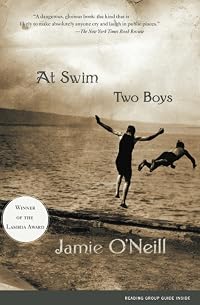
At Swim, Two Boys
by Jamie O'Neill
On This Page
Description
Set in Dublin, "At Swim, Two Boys" follows the year to Easter 1916, the time of Ireland's brave but fractured uprising against British rule. O'Neill tells the story of the love of two boys: Jim, a naive and reticent scholar and the younger son of the foolish aspiring shopkeeper Mr. Mack, and Doyler, the dark, rough-diamond son of Mr. Mack's old army pal. Doyler might once have made a scholar like Jim, might once have had prospects like Jim, but his folks sent him to work, and now, schoolboy show more no more, he hauls the parish midden cart, with socialism and revolution and willful blasphemy stuffed under his cap. And yet the future is rosy, Jim's father is sure. His elder son is away fighting the Hun for God and the British Army, and he has such plans for Jim and their corner shop empire. But Mr. Mack cannot see that the landscape is changing, nor does he realize the depth of Jim's burgeoning friendship with Doyler. Out at the Forty Foot, that great jut of rock where gentlemen bathe in the scandalous nude, the two boys meet day after day. There they make a pact: Doyler will teach Jim to swim, and in a year, Easter 1916, they will swim the bay to the distant beacon of Muglins Rock and claim that island for themselves. show lessTags
Recommendations




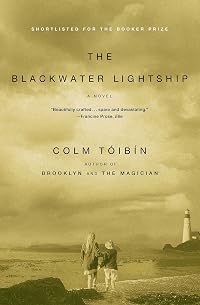
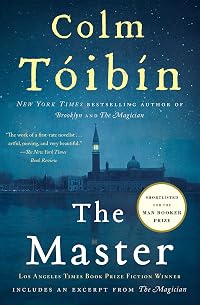
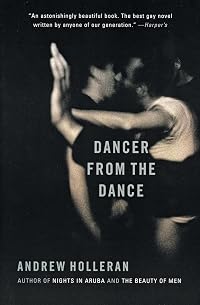
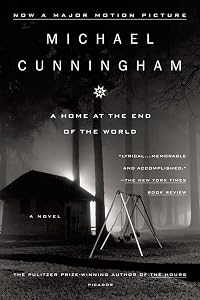

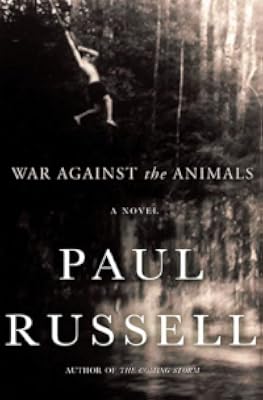

Member Recommendations


Member Reviews
We don't have an equivalent word to "virtuoso" for someone with superior skill with language, do we? Because that's what At Swim, Two Boys is: a virtuoso literary performance. O'Neill seems to understand and experience language on a higher level than the rest of us. He sees how sentences and words fit together, and he tweaks them into combinations startlingly both unexpected and inevitable. O'Neill's prose is all about sound, and his book is all about story. And that's what's so remarkable about At Swim, Two Boys--it is at once a pitch perfect exercise in masterful language art and an engaging story populated with the sorts of characters who I am certain I will find myself thinking about at odd moments for years. Language never trumps show more story and story never trumps language; they are finely intertwined, with each word, each sentence, each character, each event displaying the same care in their crafting. The comparison to Joyce feels inescapable, but O'Neill's prose resists being described as language play and there's nothing clever about the book. I felt when I was reading it that O'Neill had a story to tell and he told it in the way he knew how. And that way is beautiful. I never got the feeling, as I so often do with Joyce, that he was sniggering quietly to himself because he expected me not to get the joke--or even that there was a joke to begin with. show less
I bought this on the recommendation of some of my flist waaaay back in February or March, I believe. It is the story of two young men, Jim and Doyler, friends and eventual lovers, in Dublin 1916. It sat on my bookshelf, patiently waiting for me to get to it. I wanted to be able to give it the attention it deserved, and had been warned that the dialect would be difficult... thus figured I wouldn't be able to bring it to work and truly concentrate on it the way I needed to.
It isn't so much a dialect thing, I discovered, as a cadence to the words... a lovely dance that the writer twirls and spins across the floor. I found the book slow-going at first. Partially because it takes a few chapters to find the rhythm of the words, and partially show more because the tale focuses at first on Jim's father and Jim's gone-to-war brother. It doesn't take long for Doyler to enter the picture, though, and I found myself cursing when a "Mr. Mack" section of the book took the focus off Jim/Doyler. But I then found myself drawn so much into the story that all of the characters meant something. They were all real, all three-dimensional, all with foibles and joys and vanities and pleasures and I could identify with each of them. And -- this is kind of hard to explain -- with each chapter you could see the growth of the characters as they learned from each other. Everything weaved together seamlessly.
Mr. Mack, in particular, really spoke to me. In a world populated by those who pay lip-service to love, devotion, piety and honesty, it is Mr. Mack, outwardly so concerned with appearances and rising above his station, who proves to be a Good Man. It is his nature.
The ending gutted me.
(Reviewed October 2004) show less
It isn't so much a dialect thing, I discovered, as a cadence to the words... a lovely dance that the writer twirls and spins across the floor. I found the book slow-going at first. Partially because it takes a few chapters to find the rhythm of the words, and partially show more because the tale focuses at first on Jim's father and Jim's gone-to-war brother. It doesn't take long for Doyler to enter the picture, though, and I found myself cursing when a "Mr. Mack" section of the book took the focus off Jim/Doyler. But I then found myself drawn so much into the story that all of the characters meant something. They were all real, all three-dimensional, all with foibles and joys and vanities and pleasures and I could identify with each of them. And -- this is kind of hard to explain -- with each chapter you could see the growth of the characters as they learned from each other. Everything weaved together seamlessly.
Mr. Mack, in particular, really spoke to me. In a world populated by those who pay lip-service to love, devotion, piety and honesty, it is Mr. Mack, outwardly so concerned with appearances and rising above his station, who proves to be a Good Man. It is his nature.
The ending gutted me.
(Reviewed October 2004) show less
What a beautiful book altogether. Every character is perfectly drawn, set and completed in this excellent novel. Call it gay lit, or Irish literature, a bildungsroman, or a historical novel, it is Literature with the big "L". It explores the nature of love, of patriotism, of honor, of family, of history, within the context of the Irish independence movement, just before the doomed Rising of Easter Monday, 1916. It ends as you know all along it will, and though it's hard to accept, it's quite right, too. The language is so lovely, I wanted to roll around in it the way a cat rolls in nip.
This is a book that exploits all the clichés of bad Irish fiction - an historical novel set in Dublin in 1915-16 with passages of pastiche Joyce and Flann O'Brien, generous doses of nationalism, gun-running, name-dropping, abusive priests, grinding poverty, alcohol, supercilious English officers, the Easter rising, and plenty of wet weather. It's also a gay coming-of-age novel with lashings of Platonic dialogues, Reading-Gaolery, and Edward-Carpentry for beginners. And it's endlessly long. It should be absolutely awful, but O'Neill somehow or other manages to put these hackneyed bits together in original ways, and tells the whole thing with so much style and confidence that it is all rather fun in the end.
Probably the most interesting show more thing O'Neill does is to give the viewpoint to his Bloom-character, Mr Mack, at all the crucial moments in the story. Mack is Bloomish in his status at the bottom fringes of the lower middle class and his peculiarly isolated view of the world around him, but he's also a refugee from Kipling: born in the workhouse with only half a surname, adopted by the Regiment as a small boy and discharged on the eve of the Boer War as a quartermaster sergeant, his ideas formed by half a lifetime of the troopships and parade grounds of Empire. Once we realise that we are going to be seeing the most iconic moments in the history of Irish independence through the eyes of an Irishman who can't begin to understand why anyone would want to separate themselves from the British Empire, it is clear that this is going to be a novel that pokes a stick into received ideas about political and social revolutions to see what happens when you nudge them a bit. Sometimes the results of this process are interesting, occasionally trite (as in Doyler's quibbling about how the Sacred Band of Thebes actually functioned in practice), but it's something that needs to be done from time to time. show less
Probably the most interesting show more thing O'Neill does is to give the viewpoint to his Bloom-character, Mr Mack, at all the crucial moments in the story. Mack is Bloomish in his status at the bottom fringes of the lower middle class and his peculiarly isolated view of the world around him, but he's also a refugee from Kipling: born in the workhouse with only half a surname, adopted by the Regiment as a small boy and discharged on the eve of the Boer War as a quartermaster sergeant, his ideas formed by half a lifetime of the troopships and parade grounds of Empire. Once we realise that we are going to be seeing the most iconic moments in the history of Irish independence through the eyes of an Irishman who can't begin to understand why anyone would want to separate themselves from the British Empire, it is clear that this is going to be a novel that pokes a stick into received ideas about political and social revolutions to see what happens when you nudge them a bit. Sometimes the results of this process are interesting, occasionally trite (as in Doyler's quibbling about how the Sacred Band of Thebes actually functioned in practice), but it's something that needs to be done from time to time. show less
By rights, this should be a pretty terrible novel. O'Neill takes all the clichés of McCourt-esque Irish fiction—nationalism, abusive priests and English officers, alcohol, grinding poverty, phonetically spelled dialect—and drops in all the references to Wilde and Reading Gaol that you would expect from a gay historical novel. But somehow he manages to pull it off—in large part because O'Neill is as keen to subvert those clichés as he is to use them. One of the main viewpoint characters, for instance, is an Irishman who can't understand why Ireland would wish to separate from the Union; his befuddlement provides a point of view from which to poke sly fun at the earnestness, the sense of inevitability, which often shrouds novels show more like this one.
The other big pleasure of the novel for me is how O'Neill uses language—his prose is beautiful, but used with just enough restraint that it never becomes florid or overblown. That restraint comes across to best effect in his rendering of Dublin dialect. So many writers are not capable of capturing idiomatic speech without it becoming mawkish or awkward—O'Neill has a lightness of touch needed to make the characters' speech ring true, and to make me feel terribly homesick.
This is not a perfect novel. It's got flaws, and none of the plot turns in this sprawling book come as a surprise—but I still needed some Kleenex by the end, and do not regret immersing myself in it for almost 600 pages. show less
The other big pleasure of the novel for me is how O'Neill uses language—his prose is beautiful, but used with just enough restraint that it never becomes florid or overblown. That restraint comes across to best effect in his rendering of Dublin dialect. So many writers are not capable of capturing idiomatic speech without it becoming mawkish or awkward—O'Neill has a lightness of touch needed to make the characters' speech ring true, and to make me feel terribly homesick.
This is not a perfect novel. It's got flaws, and none of the plot turns in this sprawling book come as a surprise—but I still needed some Kleenex by the end, and do not regret immersing myself in it for almost 600 pages. show less
Anthony MacMurrough is the last male scion of a revered Irish family at the time of the Irish uprising of 1916 in Dublin. His aunt Eva wants him to marry a wealthy heiress to carry on the family line but there is the problem of Anthony’s homosexuality which must be overcome. Anthony MacMurrough prefers to go slumming for his lovers and loves Doyler Doyle who lives in abject poverty and yearns for James Mack the son of a shop keeper and Doyle’s lover. If you are afflicted with homophobia or are unable to countenance criticisms of Roman Catholicism, then you’d best not read this book for you’ll be offended. All three are caught up in the Irish uprising of 1916, Anthony MacMurrough in his efforts to keep James Mack out of it, Doyle show more in an official capacity as part of the Irish Citizen’s Army under the banner of the Starry Plough, and James Mack because of his love for Doyle. Doyle and Mack abjure the Roman Catholic Church as part and parcel of the oppression of the Irish while MacMurrough’s admiration of Oscar Wilde extends to a searing criticism of Catholic rites and actions of Catholic priests. Doyler Doyle is especially bitter at the Catholic priests’ refusal to stand by the poor working Irish, “Where were the priests when we called on them? Where were the priests when they locked out the workers? At the pulpit is where, damning to hell the working man” and “the working class is the only class that didn't betray Ireland.”
Anthony MacMurrough has lost all faith in Catholicism with his acerbic heresies; “Male hairy, bull of grace, the lard is with thee.”
At the end of the book, James Mack, looking at the dead rebels laid out in the mortuary, renounces Catholicism by dropping his rosary to the floor, saying “I won’t be needing beads no more.”
Evocative, emotive, exquisite prose describes the spiritual and physical love between MacMurrough and Doyle, James Mack and Doyle, and later between MacMurrough and Mack after Doyle’s death. Five stars and should be on The List. show less
Anthony MacMurrough has lost all faith in Catholicism with his acerbic heresies; “Male hairy, bull of grace, the lard is with thee.”
At the end of the book, James Mack, looking at the dead rebels laid out in the mortuary, renounces Catholicism by dropping his rosary to the floor, saying “I won’t be needing beads no more.”
Evocative, emotive, exquisite prose describes the spiritual and physical love between MacMurrough and Doyle, James Mack and Doyle, and later between MacMurrough and Mack after Doyle’s death. Five stars and should be on The List. show less
I'm divided on this one it is generally very good. The characters are lovingly expressed and the action vividly portrayed. The homosexual sex might be a turn off for a lot of people, in a movie would give it an R rating, I certainly found it gross. But the general story is quite good.
Members
- Recently Added By
Lists

1001 Books You Must Read Before You Die
1,448 works; 1,134 members

Historical Fiction
889 works; 91 members

Recommend the 20 best books you've read in the last five years
2,168 works; 601 members

Favorite Literary Love Stories
182 works; 100 members

Best Contemporary Literary Fiction (Around the Last 30 Years)
388 works; 124 members

Best 21st Century Books (So Far)
670 works; 86 members

Favorite Long Books
330 works; 41 members

Irish writers
87 works; 17 members

Best Friendship Stories
205 works; 16 members

Tour of Ireland
40 works; 11 members

2000s (the decade, not the century)
184 works; 11 members

Global Reads: Books Set in the United Kingdom and Ireland
109 works; 5 members

So You Liked Brokeback Mountain
11 works; 3 members

Best LGBT Fiction
144 works; 25 members

Books With Numbers in the Title
308 works; 13 members

Good LGBT fiction for LGBT folk and friends
545 works; 50 members

Spring Books
12 works; 2 members

Sad Queer Stories
18 works; 1 member

Favorite Books from the 2000s
35 works; 3 members
Books Read in 2015
3,299 works; 129 members
Favorite Romance Fiction
247 works; 115 members

Books in Riverdale
123 works; 3 members

Books Read in 2002
197 works; 8 members

Wishlist
48 works; 1 member

Queer Fiction (Owned TBR)
142 works; 1 member
Author Information

5 Works 2,402 Members
Awards and Honors
Awards
Distinctions
Common Knowledge
- Canonical title
- At Swim, Two Boys
- Original publication date
- 2001
- People/Characters
- Jim Mack; Doyler Doyle; Anthony MacMurrough; Mr Mack; Eveline MacMurrough; Aunt Sawney (show all 7); Nancy
- Important places
- Ireland; Dublin, Ireland
- Important events
- Easter Rising (1916)
- Epigraph
- Part One 1915:
I will make inseparable cities with their arms about each other's necks;... (show all)
By the love of comrades.-------Walt Whitman
Part Two 1916:
ecce abstulisti hominem de hac vita, cum vix explevisset annum in amicitia mea, suavi mihi super omnes suavitates illius vitae meae.
St. Augustine - Dedication
- à Julien
mon ami, mon amour - First words
- There goes Mr. Mack, cock of the town.
- Quotations
- 'Would age forbid them?'
'Rather youth permits. The not knowing and the slowness of days. Lack of imagination may move mountains.'
I wasn’t being thick, nor mean, he wanted to say. It’s not the time for a boy to be a man. Wait till the war was over.
'Damn it all, MacMurrough, are you telling me you are an unspeakable of the Oscar Wilde sort?'
'If you mean am I Irish, the answer is yes.'
Pleasant to swim in the rain, they say. It would lower your temperature already so the rain wouldn’t feel so cold. It would be hard getting in, you’d have to push yourself, but were you in already, that would be pleasant.... (show all) That would be a freedom, to be out in the rain and not to trouble. Your trouble in your pile of clothes.
Freedom was never to be given or argued for: it might only be taken.
Did you not look upon the world this morning and imagine it as the boy might see it? And did you not recognize the mist and the dew and the birdsong as elements not of a place or a time but of a spirit? And did you not envy t... (show all)he boy his spirit? For you know there can be no power over him who freely gives what another would take. Such as one has the capacity to love.
The music was remote and unresolved, wound about with slides and those yearning delays, not notes really, but the lingering between. It was like the harmony of another air whose melody he believed he could catch and maybe, ha... (show all)d he the fingering, might one day play. He closed his eyes and it wrapped round him, the dark timbre that was breathy and warm; and he carried to black waters where a wave washed, or maybe two waves washed, under the star of an evening. The music ended, but a haunt of it hung on the air like the last heat of a grey fire.
Words were floating through his mind like leaves on a water, and like leaves on a water they sometimes gathered, connected into phrases.
‘I’ll find an island where we’ll live. A small island all to ourselves. There’ll be sand and dunes and cliffs. We shall call it Noman. Do you know why we shall call it Noman?’
‘Go on so.’
‘Because no man... (show all) is an island.’
It’s odd, considering the interminable political plight, but Ireland for me has always signified freedom. A lazy freedom which you don’t really know what to do with. - Last words
- (Click to show. Warning: May contain spoilers.)"What cheer, eh?" he called.
- Blurbers
- Ackroyd, Peter; Picano, Felice; Solomon, Andrew
- Original language
- English
Classifications
Statistics
- Members
- 2,269
- Popularity
- 8,809
- Reviews
- 55
- Rating
- (4.19)
- Languages
- 6 — Dutch, English, French, German, Italian, Spanish
- Media
- Paper, Ebook
- ISBNs
- 17
- UPCs
- 1
- ASINs
- 10